
ROUND TABLE 63 – WHAT IS YOUR FAVORITE COACHING “PHRASE” THAT YOU USE REGULARLY AND HOW DO YOU USE IT? – EPISODE 922
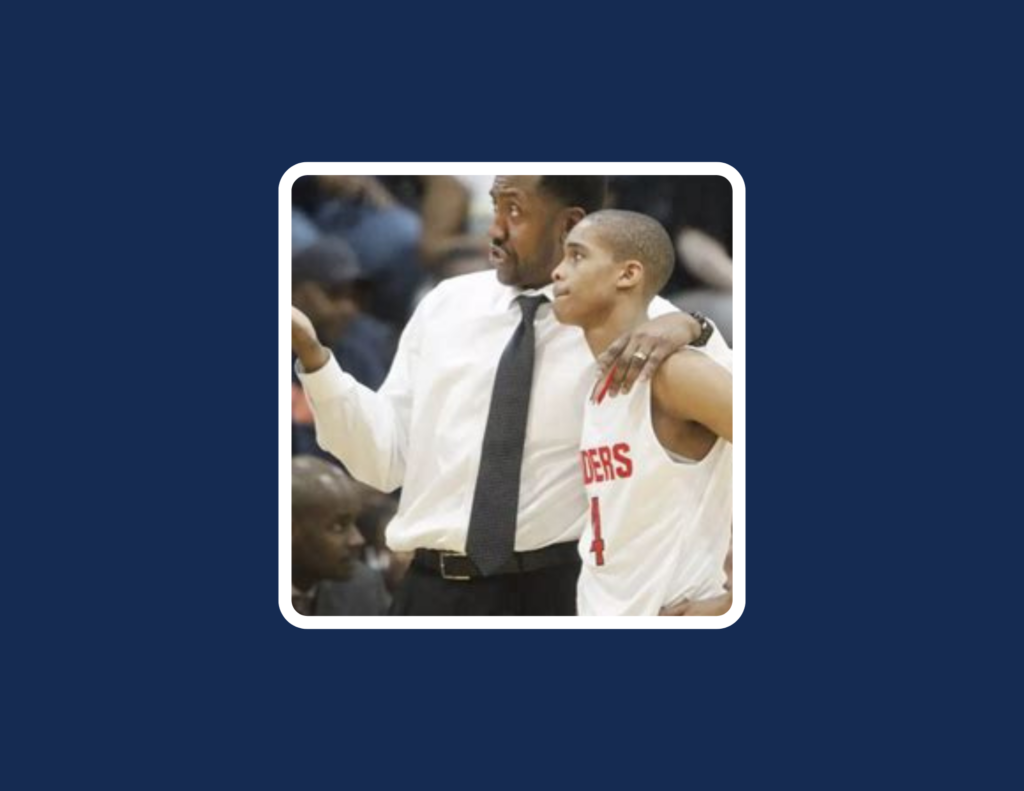

welcome to the 63rd edition of the Coach’s Corner Round Table on the Hoop Heads Podcast. Each episode of the Coach’s Corner Round Table will feature our All-Star lineup of guests answering a single basketball question. A new Coach’s Corner Round Table will drop around the 15th of each month.
March’s Round Table question is: What is your favorite coaching “phrase” that you use regularly and how do you use it?
Our Coaching Lineup this month:
- Dr. Rob Bell – Mental Performance Coach
- Jerry Buckley – Bishop Kenny (FL) High School
- Scott Fitch – Fairport (NY) High School
- Dave Hixon – Amherst College
- Kyle Jurgens – Skutt Catholic (NE) High School
- Bob Krizancic – Mentor (OH) High School
- Joel Lincoln – Game Shots Basketball
- Dave McGreal – Penn State Altoona
- Raul Placeres – Maryville College
- Nate Sanderson – Mount Vernon (IA) High School
- Mark Schult – University of West Georgia
- Don Showalter – USA Basketball
- John Shulman – University of Alabama Huntsville
- Joe Stasyszyn – Unleashed Potential
Please enjoy this Round Table episode of the Hoop Heads Podcast and once you’re finished listening please give the show a five star rating and review after you subscribe on your favorite podcast app.
If you are a basketball coach at any level please check out our Hoop Heads Coaching Mentorship Program. You’ll get matched with one of our experienced Head Coaches and develop a relationship that will help take your coaching, your team, your program, and your mindset to another level.
Be sure to follow us on twitter and Instagram @hoopheadspod for the latest updates on episodes, guests, and events from the Hoop Heads Pod.
If you listen to and love the Hoop Heads Podcast, please consider giving us a small tip that will help in our quest to become the #1 basketball coaching podcast.
THANKS COACHES!
If you enjoyed this episode let our coaches know by clicking on the links below and sending them a quick shout out on Twitter:
Click here to thank Dr. Rob Bell on Twitter!
Click here to thank Jerry Buckley on Twitter!
Click here to thank Scott Fitch on Twitter!
Click here to thank Dave Hixon on Twitter!
Click here to thank Kyle Jurgens on Twitter!
Click here to thank Bob Krizancic on Twitter!
Click here to thank Joel Lincoln on Twitter!
Click here to thank Dave McGreal on Twitter!
Click here to thank Raul Placeres on Twitter!
Click here to thank Nate Sanderson on Twitter!
Click here to thank Mark Schult on Twitter!
Click here to thank Don Showalter on Twitter!
Click here to thank John Shulman on Twitter!
Click here to thank Joe Stasyszyn on Twitter!
Like this show? Please leave us a review here — even one sentence helps! Consider including your Twitter handle so we can thank you personally!
And if you want us to answer your questions on one of our upcoming weekly NBA episodes, drop us a line at mike@hoopheadspod.com.

We’re excited to partner with Dr. Dish, the world’s best shooting machine! Mention the Hoop Heads Podcast when you place your order and get $300 off a brand new state of the art Dr. Dish Shooting Machine!

Prepare like the pros with the all new FastDraw and FastScout. FastDraw has been the number one play diagramming software for coaches for years, and now with it’s integrated web platform, coaches have the ability to add video to plays and share them directly to their players Android and iPhones via their mobile app. Coaches can also create customized scouting reports, upload and send game and practice film straight to the mobile app. Your players and staff have never been as prepared for games as they will after using FastDraw & FastScout. You’ll see quickly why FastModel Sports has the most compelling and intuitive basketball software out there! In addition to a great product, they also provide basketball coaching content and resources through their blog and playbank, which features over 8,000 free plays and drills from their online coaching community. For access to these plays and more information, visit fastmodelsports.com or follow them on Twitter @FastModel. Use Promo code HHP15 to save 15%
Your first impression is everything when applying for a new coaching job. A professional coaching portfolio is the tool that highlights your coaching achievements and philosophies and, most of all, helps separate you and your abilities from the other applicants.
The key to landing a new coaching job is to demonstrate to the hiring committee your attention to detail, level of preparedness, and your professionalism. Not only does a coaching portfolio allow you to exhibit these qualities, it also allows you to present your personal philosophies on coaching, leadership, and program development in an organized manner.
The Coaching Portfolio Guide is an instructional, membership-based website that helps you develop a personalized portfolio. Each section of the portfolio guide provides detailed instructions on how to organize your portfolio in a professional manner. The guide also provides sample documents for each section of your portfolio that you can copy, modify, and add to your personal portfolio.

We know you’re invested in the next generation of athletes, so why not give them the star treatment this season with GameChanger. Introducing GameChanger, a free app that provides you with data to make strategic coaching decisions and to deliver memorable moments to your team and its fans. Engage your players, empower your coaching decisions, and give parents the thrill of watching every play unfold in real time this season. Download GameChanger now on iOS or Android. GameChanger equips your team with the tools they need to succeed. Download it today and make this season one for the books. GameChanger. Stream. Score. Connect. Learn more at gc.com/hoopheads.
With GameChanger you’ll get automated highlight clips for all scoring plays as well as rebounds, steals, assists, and more. Plus free live streaming, advanced scorekeeping, and team management. No complex setups required, just easy, free streaming from your mobile device. AI powered technology will automatically pan and zoom…
Coach: the season just wrapped up and you need a break. Take your family on a much needed trip somewhere and leave the launch of your off season film review to #TeamsOfMen and our brand new #CoachsMirror product. Combining your game film & schematic goals with an experienced coach’s eye and the time saving power of AI, we will have an entire self scout of your film ready for you when you come back refreshed from your time off. Packages are available now breaking down 1, 3 or 5 games from this season.

Pro Skills Basketball is thrilled to announce that they are expanding their reach and seeking driven individuals to join them as City Directors in new cities across the country. This is an exciting opportunity to be at the forefront of revolutionizing youth basketball development and fostering a culture of excellence inspired by European-style basketball academies. Learn more now!
TRANSCRIPT FOR ROUND TABLE 63 – WHAT IS YOUR FAVORITE COACHING “PHRASE” THAT YOU USE REGULARLY AND HOW DO YOU USE IT? – EPISODE 922
[00:00:00] Narrator: The Hoop Heads Podcast is brought to you by Head Start Basketball.
[00:00:21] Mike Klinzing: Hello and welcome to the 63rd edition of the Coach’s Corner Round Table on the Hoop Heads Podcast. Each episode of the Coach’s Corner Round Table will feature our All-Star lineup of guests answering a single basketball question. A new Coach’s Corner Round Table will drop around the 15th of each month.
March’s Round Table question is: What is your favorite coaching “phrase” that you use regularly and how do you use it?
Our Coaching Lineup this month:
- Dr. Rob Bell – Mental Performance Coach
- Jerry Buckley – Bishop Kenny (FL) High School
- Scott Fitch – Fairport (NY) High School
- Dave Hixon – Amherst College
- Kyle Jurgens – Skutt Catholic (NE) High School
- Bob Krizancic – Mentor (OH) High School
- Joel Lincoln – Game Shots Basketball
- Dave McGreal – Penn State Altoona
- Raul Placeres – Maryville College
- Nate Sanderson – Mount Vernon (IA) High School
- Mark Schult – University of West Georgia
- Don Showalter – USA Basketball
- John Shulman – University of Alabama Huntsville
- Joe Stasyszyn – Unleashed Potential
Please enjoy this Round Table episode of the Hoop Heads Podcast and once you’re finished listening please give the show a five star rating and review after you subscribe on your favorite podcast app.
If you are a basketball coach at any level please check out our Hoop Heads Coaching Mentorship Program. You’ll get matched with one of our experienced Head Coaches and develop a relationship that will help take your coaching, your team, your program, and your mindset to another level.
Be sure to follow us on twitter and Instagram @hoopheadspod for the latest updates on episodes, guests, and events from the Hoop Heads Pod.
Hey Hoop Heads! Save $3,500 on the Dr. Dish CT Plus and score free custom graphics during Dr. Dish Basketball’s Push Beyond sales event. Shop this exclusive offer now until March 31st while supplies last. Learn more at drdishbasketball.com and follow their incredible content @drdishbball on Twitter, Instagram, Facebook, and YouTube.
Mention the Hoop Heads Podcast and save an extra $300 on the Dr. Dish Rebel, All Star, and CT models. Those are some great deals Hoop Heads. Get your Dr. Dish shooting machine today.
[00:02:38] Monty Patel: Hey, this is Monty Patel, head boys coach of E-Stem Public Charter School in Little Rock, Arkansas and you are listening to the Hoop Heads Podcast.
[00:02:49] Mike Klinzing: Hey coaches, excited to talk about Coach’s Mirror from Teams of Men. It’s a game changer for your team’s film analysis. Blending Kip Ioane’s coaching expertise with AI. Short on time or staff? This is for you. Send in a game or up to five and get back a detailed report. We’re talking tendencies, strategies, even what opponents might use against you.
It’s like finding the other team’s scouting report in your gym. And here’s a bonus. Intrigued by AI and scouting? Grab our free 10 prompt PDF sheet at teamsofmenmembership.group/coachmirror. It’s a quick download and a great start to revolutionizing your season review. Don’t miss out, coaches. Head to our site and see how Coach’s Mirror can transform your game analysis. Catch you there.
Prepare like the pros with the all new Fast Draw and Fast Scout. Fast Draw has been the number one play diagramming software for coaches for years. You’ll quickly see why Fast Model Sports has the most compelling and intuitive basketball software out there. For a limited time Fast Model is offering Hoop Heads Listeners, 15% off Fast Draw and Fast Scout. Just use the code HHP 15 at checkout to grab your discount and you’ll be on your way to more efficient game prep and improved communication with your team. Fast Model also has new coaching content every week on its blog, plus play and drill diagrams in its play bank.
Check out the links in the show notes for more. Fast Model sports is the best in basketball.
Let’s hear from our panel about their favorite coaching phrase that they use regularly and how they use it.
Dr. Rob Bell – Mental Performance Coach.
[00:04:37] Dr. Rob Bell: This is Dr. Rob Bell, sports psychology coach for the number one ranked. Fishers, Tigers, in Indiana. And what is your favorite coaching phrase that you use regularly and how do you use it this month’s roundtable question? So one of the phrases that we use often is we play like we train we play like we train hence Our training needs to incorporate adversity Obstacles and setbacks that we’re going to encounter when we actually play the game and then how do we mentally?
Adjust and overcome that Hence, we play like we train.
[00:05:21] Mike Klinzing: Jerry Buckley, Bishop Kenny High School, Jacksonville, Florida.
[00:05:28] Jerry Buckley: Hi, this is Jerry Buckley from Bishop Kenny answering this month’s roundtable question. The coaching phrase we like to use in our program is actually the acronym TGHT. The game honors toughness. We got that a few years ago from Brad Stevens, I believe at the time he was still coaching Butler, but really felt like that defined what we want to stand for in our program, both on the court and off the court, as far as that toughness being willing, willing to do hard things the right way and seeing them pay off, whether that be taking a charge, making the extra pass, getting a great offensive rebound and a back.
or whatever the case is. So a lot of times when we feel like we’re getting away from our core principles, we’ll go back to that, say, Hey, the game honors toughness. And ultimately that’s, who’s going to be coming out on top in tough situations. So we felt like that’s been good for us. We actually put it on one of our shooting shirts a couple of years ago too.
So it’s something we like to definitely emphasize. throughout all three levels of our program with our freshmen, JV, as well as our varsity teams.
[00:06:31] Mike Klinzing: Scott Fitch from Fairport High School in New York and USA Basketball.
[00:06:40] Scott Fitch: Hoop Heads, this is Scott Fitch from Fairport High School in Fairport, New York, also with USA Basketball. A phrase that I find myself using quite a bit here recently is I want to coach kids that are passionate, but not emotional. And what I mean by that is I want kids to have energy and personality. Like I want kids to care.
Like those are the kids that are fun to coach, but I don’t want kids that are emotional. Because I don’t think you control emotion. Emotional players say things to teammates or to officials that get technicals. Emotional players don’t play their best when it’s crunch time and there’s a lot of pressure on the line.
So for me, whether it’s at my high school or whether it’s with our national team, I want to coach kids that are passionate, but not emotional.
[00:07:27] Mike Klinzing: Dave Hixon, Basketball Hall of Famer from Amherst College.
[00:07:34] Dave Hixon: Hi Mike and fellow coaches. This is Dave Hixon here, former Amherst College coach. This is a fun question.
I hope I’m addressing it in the right way. One of my favorite expressions that I’ve passed on to all of my former players that are now coaching and all other young coaches and some old coaches is the term weed and feed. And what we do is you know, I’ve always felt since I was a young guy that you needed to get out early and stay late, and so that you could solve problems before they became big problems. And so, I talked about weeding. I read a great article by a football coach, I wish I could credit him, but I don’t recall who it was. But, he talked about weeding, and if you think about your garden, and if you don’t weed, For an extensive period of time the weeds will take it over and then you got to just you know Take out the whole garden start all over again That’s not what we want to do And so if you weed every day and take out whatever weeds are there Beginning of weeds then you solve that problem before it happens And so I thought that was the answer and so I talked about weeding and you know We weeded every day and I thought we did a great job solving problems and And then I finally, I was down at Home Depot one day getting some stuff on my lawn and I saw a bag of weed and feed and the light went off and I said, that’s it right there.
Because weed is sort of the negative. You’re always looking for problems to solve. Feed is a positive term and that you need sometimes to feed kids and you need to sort of help them see things in a positive light. Talk about good things, not just the problems. And so. We came up with the term weed and feed.
I actually have a couple of coaches out there who have given it to whenever they write me a note, they sign off by saying, weed and feed and everyday coach. And so that’s the expression that that I’ve used a lot that I’ve passed on. I think it’s a great expression. I think it solves problems before they start, but it’s also, there’s, there’s that vein of positivity and it, where there may not be any problems, but you’re out there and your kids feel closer to you.
The relationships grow because you’re weeding and feeding. And we used to do that and we, and we did it every day and we did it before practice. We did it after practice. So hope I hit the button on the head. Talk to you, man. Bye.
[00:09:52] Mike Klinzing: Kyle Jurgens, Skutt Catholic High School, Omaha, Nebraska.
[00:09:59] Kyle Jurgens: This is Kyle Juergens, Skutt Catholic high school, Omaha, Nebraska. One of the things we always say is 16 for 32 or 15 for 32, or however many guys we have suited up that year. This year it was 16. There’s no real deep meaning behind it other than we feel like it takes all 16 guys and whatever their part is or whatever their role is for 32 minutes.
So, that’s one of the phrases we coin and put up on the board before every game that it takes everyone and every single play matters so you gotta compete for 32 minutes. And like I said, that’s it’s one of the things that we say to our guys and write up on the board on a daily basis.
[00:10:49] Mike Klinzing: Hey coaches, we know you’re invested in the next generation of athletes, so why not give them the star treatment this season with GameChanger. Introducing GameChanger, a free app that provides you with data to make strategic coaching decisions and to deliver memorable moments to your team and its fans.
Engage your players, empower your coaching decisions, and give parents the thrill of watching every play unfold in real time this season. Download GameChanger now on iOS or Android.
GameChanger equips your team with the tools they need to succeed. Download it today and make this season one for the books.
Game Changer. Stream. Score. Connect. Learn more at GC.com/HoopHeads. That’s gc.com/HoopHeads.
Bob Krizancic, Mentor High School, Mentor, Ohio.
[00:11:51] Bob Krizancic: Coach K, Mentor High School, my favorite phrase, we can’t win with boys, we can’t lose with men. I believe it’s something that could be taught in practices, game experience, I think it’s all a mentality. Something that every young man, every young lady can achieve.
The game of basketball is a tough physical game. And again, I believe it’s a game for young men who mature a little bit quickly to play in this really, really tough game. Best of luck.
[00:12:26] Mike Klinzing: Joel Lincoln, Game Shots Basketball.
[00:12:32] Joel Lincoln: I’m coach Joel Lincoln, lead trainer of Game Shots Basketball. And a phrase I use every single practice and training session is all things are small things. If you can take care of the details from on the court, off the court, in the classroom, at home, you’ll take care of all things. So we really talk about bringing attention to detail, doing everything to the absolute best of our ability.
Following through. If you can take care of the small things, you’re going to take care of all things.
[00:13:04] Mike Klinzing: David McGreal from Penn State Altoona.
[00:13:11] Dave McGreal: What’s up, Hoop Heads Nation? This is Coach David McGreal, Penn State Altoona. Back at you with the Round Table. What’s my favorite coaching phrase and how do I use it? Well, I’m going to give a couple. One is more skill specific and I stole this from my college coach, old Randy Lambert. And I heard it just as recently as last weekend, but with Hope coach Greg Mitchell, he said it as well.
And that is fake a pass to make a pass. Passing, I believe, is one of the lost arts in basketball right now at all levels. Difference from good teams to bad teams is as simple a thing as passing. And, and again, this is a phrase I use all the time, especially when looking to pass it into the post or when you’re looking to pass against the zone.
Fake a pass, make a pass. So fake a pass before you make a pass. And then just general coach speak that you know, first heard this from my guy Kendall Wallace down at LaGrange. I’m sure other people have said it, but he was the first one to really say it a lot, and I use it now, and that’s control what you can control.
And when we talk about it in basketball terms you can control your energy, you can control your effort at all times. You can’t always control the other things, like referees. Or crowd noise. Or whether the ball goes in or out. All you can control is yourself, your effort, how you respond to adversity.
These are things that we need to work on in our program for sure. And it’s a saying that we use a lot and that I do say a lot. So again, there’s a couple that we use a lot here. First, tactically fake a pass, make a pass, and then just culture wise, man, control what you can control. So again, hope you guys have a great March. March Madness around the corner.
Look forward to watching a lot of basketball. Take care.
[00:14:58] Mike Klinzing: Raul Placeres from Maryville College.
[00:15:04] Raul Placeres: This month’s Round Table question, what’s your favorite coaching phrase that you use regularly and how do you use it? Man, so many to choose from to just narrow and just say one. So I’m going to share several here. Correction is not negative. It is necessary. Listen to the right voices so you can make the right choices.
Truth must be able to tell it, live it, and take it. And lastly, habits. The good ones are the most hard and most needed. They are hard to create, but difficult to break. This is Coach Placeres, Maryville College Head Men’s Basketball Coach.
[00:15:42] Mike Klinzing: Nate Sanderson, Thrive on Challenge.
[00:15:48] Nate Sanderson: Hey Mike, this is Nate Sanderson from Thrive on Challenge. When it comes to a phrase that we use a lot with our team, I gotta give you a little bit of a backstory here. When I was at Springville High School, 1A school here in Iowa in 2015, 2016, 2017, we had a freshman class come in that had a great deal of success.
We were runner up in 2015. And won the state championship the following two years, their sophomore and junior seasons. And after that, I left to take another job at a larger school here in the area. But going into their senior year, the local newspaper did a story on this senior class. And they asked them what’s made their experience at Springville so special.
And Alyssa Yeager, class of 2017 at Springville High School. She said this about the culture that we created. She said, We focus more on the memories than the outcomes, and we enjoy the moments while they’re still there. That’s been one of the most powerful statements that I think has come out of my 22 years of coaching here, and we’ve really leaned into especially the last half of that phrase every year in the postseason.
This season, we were fortunate enough at Mount Vernon, my third year here, to make it back to the state tournament. And that’s one of the things that we shared with our players was Alyssa’s perspective. We want to make sure that we enjoy the moments while they’re still there. We talk about that with our seniors every year as we start to sort of build this runway for them around senior night as we get closer to the postseason and The finality of the end of their careers, or at least their high school careers, starts to dawn on them.
They start to realize that this thing isn’t going to last forever, and our encouragement to them is, make sure that you enjoy the moments while they’re still there. When I’m working with our coaching staff, and you know, last year was a special year for us, and it’s not every year that you have a chance to get to the state tournament, or, have an opportunity to make a run at the state championship and the advice for them as we were going through the postseason and after we had qualified for state was Make sure that you enjoy the moments while they’re still there.
And Mike, I gotta be honest with you, when I think about my family, I’ve got a 9 year old and a 7 year old in our house here. They’re not gonna be young forever. They’re not gonna wanna go outside and play with dad or hit wiffle balls or shoot baskets. forever. And so I remind myself even on a daily basis when I think about those opportunities with my kids to enjoy the moments while they’re still there.
I don’t know if there’s another phrase that I could say that has more power or more meaning in the building of our culture in our program other than this. Coaches, make sure that you and your players and your coaches and even the parents in your program enjoy the moments while they’re still there.
[00:18:39] Mike Klinzing: Mark Schult, University of West Georgia.
[00:18:45] Mark Schult: Hey, Hoop Heads. Appreciate you guys having me on again this month. This month’s question, talking about how to build chemistry amongst your teams. You know, the big thing, I’d say you have to be really, really intentional about it. So on the court. You know, whatever you emphasize, emphasize that cohesion, that togetherness I think that can really help and improve the way that your team performs in the gym when coaches aren’t there in the off season when they can’t coach you do that by changing lineups and open gym and letting different guys play with each other, learn their tendencies what they like to do, where they like to cut and those sorts of things.
So you have to have a collective attitude in terms of. Building that togetherness and chemistry. And then the second part off the court there’s a lot of different things you can do. And you know, sometimes there’s limitation with, with budgets but the, the best practices that I’ve seen are doing team dinners even just, just little pizza nights or, or grilling out or something like that.
You know, if your budget allows for it doing group activities, going to a baseball game or doing the escape room, those sorts of things are a lot of fun. And then one that I found to be successful is creating some, some jokes, some, some funny memories, some bonds with your team. So like the example is that one of my, my coaching stops when we would watch film film can be positive.
It can be negative. It depends on what you’re watching. But a lot of times we would end our film session with, with a doppelganger. Like, Getting a funny picture of a celebrity or a professional athlete, putting that on the screen and then asking your team, who do you think this is? And guys are joking and teasing with each other and stuff like that.
And it’s always a good time and it helps to kind of lighten the mood and, and just build a common bond, build something together that, that everybody’s laughing at. So I think be really, really intentional about it. Understand that the, the off the court chemistry will. oftentimes lead to chemistry on the court and that’s what ultimately leads to success.
So appreciate you having me on.
[00:20:54] Mike Klinzing: Pro Skills Basketball is the nation’s premier club basketball organization building a European style youth basketball academy and is looking for the top basketball leaders in major U. S. cities to become our next city directors. Specifically, Pro Skills is looking for women and men of high character and grit who see the problems in youth basketball and want to join an elite team focused on a singular mission to change the culture of youth basketball. This job typically begins as a part time position with the desire and expectation from both the city director and Pro Skills that together they will build it up to eventually support a full time city director position.
If you’re interested in learning more or applying, please visit proskillsbasketball.com/jobs.
Don Showalter, USA Basketball.
[00:21:53] Don Showalter: Hi Don Showalter here from USA Basketball and the question for this month was what is your favorite coaching phrase that you use regularly and, and how do you use it? One of my favorite coaching phrases is figure it out. I think sometimes we get in the habit of telling players everything to do, and really they need to figure things out themselves on the court.
So, like during a practice session, we may, we may come up with a pick and roll situation and, and the player’s not sure if they go over and under. And I always say, look at who you’re guarding and then you figure it out. So they have to think a little bit. I also will ask another player in that same circumstance.
Do you think he did the right thing? So you have some feedback from teammates about that as well. So figure it out is one of my phrases I love to use. The players know that when I say that they have to have an idea in mind how to figure that certain situation out.
[00:23:04] Mike Klinzing: John Shulman, University of Alabama, Huntsville, and the 720 Sports Group.
[00:23:11] John Shulman: Yes, this is John Shulman, head basketball coach at Alabama Huntsville, and this month’s question is, What is a regular phrase that I use in coaching? How do I use it and what does it mean and I’m going to kind of go through three real quick.
You know, right now it’s tournament time and tough games, hard games, hard times, stressful situations. And, and I’ve been on this one lately is tell the guys it’s not going to be easy. It’s not going to be easy. It’s going to be very difficult. And it’s supposed to be anything worthwhile is going to be hard and very difficult, and everything good is on the other side of hard.
And I use that often, but it’s not supposed to be easy. And if it was easy, everybody could do it. And that’s why there’s only one winner and only one team gets a ring and only one team gets to say they’re champions because it’s hard. My big phrase here at UAH and I’ve kind of used it.
I’m not a big reader of books, but I read a while ago, I read a great book about Tony Dungy, and it’s very simple, it’s be uncommon. Why would you want to do what everyone else is doing? If you do what everyone else is doing, you’re going to get what everyone else gets. So be uncommon. Be different. And that’s our big thing here at Alabama Huntsville, is to be different and be uncommon.
And I think it’s vital, and I think it’s probably the best term that we use here at Alabama Huntsville. And, and we had some tough times this year. And this is something that I don’t know, my oldest son, Max, kind of gave me this during the middle of the year, and we’ve kind of used it all year long, and it kind of goes like this.
Hard times make tough men, and tough men make easy times, and easy times make soft men. And soft men make hard times. And then you go back to the start and hard times make tough men. You know, when people, when you’re winning and everything’s going good, it creates soft men and soft men create hard times and then hard times create tough men and tough men create easy times.
You just got to stay. You know I think the toughest team wins. And so hard times, either you quit during hard times or you become tough and the tough people get through the tough times and the hard times, and those are the people that win. So hope this helps. Listen, good luck to everybody as we kind of approach March.
And if you’re done with the season. Take a week or two off. Don’t make any stupid decisions while you’re fatigued. I’ve done that. Take a week or two off. And, and then, and then go back and be your toughest critic. And go back and watch film and be your toughest critic. And change the things you want to change and keep on learning.
And take this summer and study something that will help you become a better basketball coach. Hope all this helps. We appreciate Mike and what he does. And appreciate being part of this group. Thanks. Take care.
[00:26:30] Mike Klinzing: Joe Stasyszyn, Unleashed Potential, Carlisle, Pennsylvania.
[00:26:37] Joe Stasyszyn: Joe Stasyszyn, Unleashed Potential This month’s question is, what is the phrase that you use regularly with your team or players and how do you use it? The phrase that I like to use regularly is, get over mad, sad, and hard. This is a phrase that I got from my mentor and great friend Kevin Eastman many years ago. And I use it all the time when I’m working with individuals, groups, small groups, teams, doing player development, and also with a team that I may happen to be coaching.
Okay. And the first thing of that is get over, get over being mad. You’re going to get mad. You’re going to get mad at your teammates. You’re going to get mad at your coaches. You’re going to get mad at yourself. You know, it’s how you handle that, that emotion that’s going to make you a better player. Doc Rivers used to have a saying and he would say, he or she who makes you mad owns you.
So players and other teams will sometimes try to get under your skin because they know it’s going to affect your game. So get over mad. Get over sad, because a lot of times you’re going to be sad, okay, things aren’t going to go your way during the game, during the season, after the game whatever the case may be, there are going to be times where you’re going to be sad or you’re going to feel sorry for yourself, okay, you have to get over those, get over that emotion also.
And then, and then the third one is get over hard. You know, life is hard. Basketball is hard. Making the team is hard. Getting playing time is hard. Getting that scholarship is hard. Playing on the college level is hard. Playing in the NBA is hard. It’s even harder to stay in the NBA. So you got to get over yourself with things.
They’re going to be hard. Anything worth achieving is usually hard to, to attain. So that, that’s, that’s just those three things I think carry on. Not only in basketball, but in life. And if you can control those emotions, and I always say, if your emotions outweigh how you approach the game, or your intelligence in the game, that’s when things get go south.
So, you gotta learn how to handle your emotions in a good way and not let those things affect you. And we always say how you handle adversity is the important thing. Everybody goes through adversity, but how the great players handle adversity makes them great. And then the last thing I’ll add is I work with Kara Lawson at Duke and her staff on the women’s side and you know, she has a saying that the one that goes with hard is handle hard better.
As players, as coaches, we have to learn to handle things that are hard better. Okay. We got, we got, we got to learn to somehow get past those roadblocks. All right. And not point fingers and blame others and get into our own heads and feel sorry for ourselves because things are hard. Okay, they’re going to be hard.
I mean, anything, anything you do is hard, whether it’s in basketball or in life. So I think that statement can be applied to All aspects of basketball, especially the psychological aspect of basketball, which is a huge, huge part. I mean, some of the best players skill wise lose their heads and end up not being the best player at times because of their emotions get the best of them.
So, I mean, like I said, that can be applied to basketball or life and all aspects of basketball per game, per practice. Per season so I like to use that even in training all the time. You know, players get mad when they miss shots and don’t worry about missing shots worry about shooting the ball correctly using the proper technique, the rest will take care of itself.
So that’s something that, that I use all the time, regardless of who I’m coaching and where I’m coaching, that I think if, if players learn how to, to handle hard better and get over mad, sad and hard, I think that there’ll be better players and actually better people in life. Thank you.
[00:30:27] Mike Klinzing: Thanks for checking out this month’s Hoop Heads Podcast Round Table. We’ll be back next month with another question for our all-star lineup of coaches.
Your first impression is everything. When applying for a new coaching job, a professional coaching portfolio is the tool that highlights your coaching, achievements and philosophies. And most of all helps separate you and your abilities from the other applicants, the Coaching Portfolio Guide is an instructional membership based website that helps you develop a personalized portfolio. Each section of the portfolio guide provides detailed instructions on how to organize your portfolio in a professional manner. The guide also provides sample documents for each section of your portfolio that you can copy, modify and add to your personal portfolio.
As a Hoop Heads Pod listener, you can get your Coaching Portfolio Guide for just $25. Visit https://www.coachingportfolioguide.com/hoopheads to learn more.
[00:31:27] Narrator: Thanks for listening to the Hoop Heads Podcast presented by Head Start Basketball.