ROUND TABLE 84 – HOW DO YOU BALANCE PUSHING PLAYERS TO IMPROVE WHILE ALSO KEEPING THE GAME FUN FOR THEM? – EPISODE 1191
Welcome to the 84th edition of the Coach’s Corner Round Table on the Hoop Heads Podcast. Each episode of the Coach’s Corner Round Table will feature our All-Star lineup of guests answering a single basketball question. A new Coach’s Corner Round Table will drop around the 15th of each month.
December’s Round Table question is: How do you balance pushing players to improve while also keeping the game fun for them?
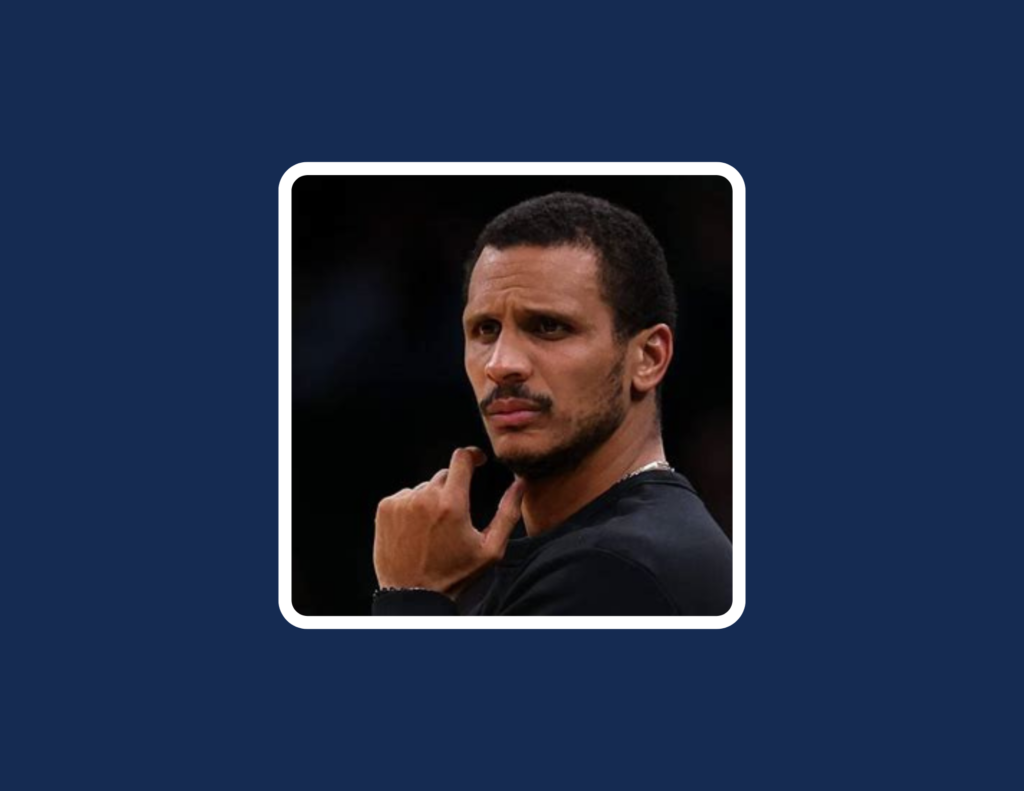
This question came from Mike Koehler, Head Boys’ Basketball Coach at Elkhart Lake High School in Wisconsin after seeing this same question asked of Boston Celtics Head Coach Joe Mazzulla which you can see in the clip below.
Our Coaching Lineup this month:
- Dominic Amorosa – Strake Jesuit (TX) College Prep
- Jake Boyd – Luther College
- Erik Buehler – Arapahoe (CO) High School
- Chris DeLisio – Olmsted Falls (OH) High School
- Mike Grosodonia – St. John Fisher University
- Stephen Halstead – Grace College
- Ryan Hintz – Blue Valley West (KS) High School
- Dave Hixon – Amherst College
- Ron King – Putnam Valley (NY) High School
- Mike Koehler – Elkhart Lake (WI) High School
- Bob Krizancic – Mentor (OH) High
- Josh Merkel – Randolph Macon College
- Don Showalter – USA Basketball
- John Shulman – University of Central Arkansas
- Joe Stasyszyn – Unleashed Potential
Please enjoy this Round Table episode of the Hoop Heads Podcast and once you’re finished listening please give the show a five star rating and review after you subscribe on your favorite podcast app.
Be sure to follow us on twitter and Instagram @hoopheadspod for the latest updates on episodes, guests, and events from the Hoop Heads Pod.

If you listen to and love the Hoop Heads Podcast, please consider giving us a small tip that will help in our quest to become the #1 basketball coaching podcast.
THANKS COACHES!
If you enjoyed this episode let our coaches know by clicking on the links below and sending them a quick shout out on Twitter:
Click here to thank Dominic Amorosa on Twitter!
Click here to thank Jake Boyd on Twitter!
Click here to thank Erik Buehler on Twitter!
Click here to thank Chris DeLisio on Twitter!
Click here to thank Mike Grosodonia on Twitter!
Click here to thank Stephen Halstead on Twitter!
Click here to thank Ryan Hintz on Twitter!
Click here to thank Dave Hixon on Twitter!
Click here to thank Ron King on Twitter!
Click here to thank Mike Koehler on Twitter!
Click here to thank Bob Krizancic on Twitter!
Click here to thank Josh Merkel on Twitter!
Click here to thank Don Showalter on Twitter!
Click here to thank John Shulman on Twitter!
Click here to thank Joe Stasyszyn on Twitter!
Like this show? Please leave us a review here — even one sentence helps! Consider including your Twitter handle so we can thank you personally!
And if you want us to answer your questions on one of our upcoming weekly NBA episodes, drop us a line at [email protected].

We’re excited to partner with Dr. Dish, the world’s best shooting machine! Mention the Hoop Heads Podcast when you place your order and get $300 off a brand new state of the art Dr. Dish Shooting Machine!

Give With Hoops is a groundbreaking initiative that fuses basketball analytics with modern sponsorship. Built for teams who see data as opportunity, from AAU programs to college powerhouses.
By tying on-court performance directly to community and sponsor engagement, Give With Hoops help programs raise more while deepening support from those who believe in the game.
Traditional fundraising disconnects donors from the action. Sell candy bars, wash cars, beg for donations, it’s exhausting and ineffective. Players perform better when their stats matter beyond the scoreboard. That’s why Give With Hoops was created.
Give With Hoops connects game performance to community support. Every basket, rebound, and assist becomes a chance to raise funds. Transparent, exciting, and proven to raise 3x more than traditional methods.
Your first impression is everything when applying for a new coaching job. A professional coaching portfolio is the tool that highlights your coaching achievements and philosophies and, most of all, helps separate you and your abilities from the other applicants.
The key to landing a new coaching job is to demonstrate to the hiring committee your attention to detail, level of preparedness, and your professionalism. Not only does a coaching portfolio allow you to exhibit these qualities, it also allows you to present your personal philosophies on coaching, leadership, and program development in an organized manner.
The Coaching Portfolio Guide is an instructional, membership-based website that helps you develop a personalized portfolio. Each section of the portfolio guide provides detailed instructions on how to organize your portfolio in a professional manner. The guide also provides sample documents for each section of your portfolio that you can copy, modify, and add to your personal portfolio.

Hey coaches — you’ve got a game plan for your team… but do you have one for your money?
That’s where Wealth4Coaches comes in.
Each week, they deliver simple, no-fluff financial tips made just for coaches. Whether you’re getting paid for camps, training sessions, or a full season—Wealth4Coaches helps you track it, save it, and grow it.
It’s time to stop guessing and start building.
Subscribe now at wealth4coaches.beehiiv.com/subscribe
And follow them on Twitter @Wealth4Coaches for daily money wins.
Your money needs a coach.
Start with Wealth4Coaches.
TRANSCRIPT FOR ROUND TABLE 84 – HOW DO YOU BALANCE PUSHING PLAYERS TO IMPROVE WHILE ALSO KEEPING THE GAME FUN FOR THEM? – EPISODE 1192
[00:00:00] Narrator: The Hoop Heads Podcast is brought to you by Head Start Basketball.
[00:00:20] Mike Klinzing: Hello and welcome to the 83rd edition of The Coaches Corner Round Table on the Hoop Heads Podcast. Each episode of the Coach’s Corner Round Table will feature our all-star lineup of guests answering a single basketball question. A new Coach’s Corner Round Table will drop around the 15th of each month.
December’s Roundtable question is, how do you balance pushing players to improve while also keeping the game fun for them?
Our coaching lineup this month includes:
- Dominic Amorosa – Strake Jesuit (TX) College Prep
- Jake Boyd – Luther College
- Erik Buehler – Arapahoe (CO) High School
- Chris DeLisio – Olmsted Falls (OH) High School
- Mike Grosodonia – St. John Fisher University
- Stephen Halstead – Grace College
- Ryan Hintz – Blue Valley West (KS) High School
- Dave Hixon – Amherst College
- Ron King – Putnam Valley (NY) High School
- Mike Koehler – Elkhart Lake (WI) High School
- Bob Krizancic – Mentor (OH) High
- Josh Merkel – Randolph Macon College
- Don Showalter – USA Basketball
- John Shulman – University of Central Arkansas
- Joe Stasyszyn – Unleashed Potential
Please enjoy this round table episode of the Hoop Heads Podcast. And once you’re finished listening, please give the show a five-star rating review after you subscribe on your favorite podcast app.
Be sure to follow us on Twitter and Instagram at Hoop Heads Pod for the latest updates on guests episodes and events from the Hoop Heads Pod.
Hey Hoop Heads, score big on Dr. Dish Basketball’s end of year sale. Give your team the gift of extra more efficient reps this season. It’s a perfect gift to your team. For the holidays during the Dr. Dish end of year sale, everything must go. You’ll get $3,000 to $4,000 off Select Dr. Dish models. Visit drdishbasketball.com and get your Dr. Dish shooting machine today.
[00:02:20] Dr. Rob Bell: This is Dr. Rob Bell, sports psychology coach, speaker, and author of the book, Puke and Rally. It’s not about the setback, it’s about the comeback. You’re listening to the Hoop Heads Podcast.
[00:02:30] Mike Klinzing: Let’s hear from our panel about how they balance pushing players to improve while also keeping the game fun for them.
Dominic Amorosa, Strake Jesuit College Prep in Houston, Texas.
[00:02:49] Dominic Amorosa: This is Dominic Amorosa from Jesuit in Houston. Pushing players while keeping it fun is an important part of coaching. I think having a relationship with kids, being able to talk to them about the things they do well, and then at the same time challenging them to add to their game.
And that’s, to me is the fun part. I love the phrase rewarding versus fun. And I think if you can get kids to understand the rewards of the process, then it ultimately is fun.
[00:03:22] Mike Klinzing: Jake Boyd from Luther College.
[00:03:27] Jake Boyd: This is Jake Boyd from Luther College, answering this month’s round table question. How do you balance pushing players to improve while also making it fun for them?
I want to work with players who want to improve. Those are the ones I love to work with because I love player development. I strive to make that both effective and really enjoyable for players. So I can’t say I would be terribly excited to work with anyone who didn’t want to improve since being better, should make the game more fun to play.
I know that’s kind of stealing Joe Missoula’s answer, but I agree with them. If your idea of fun isn’t doing everything you can to improve even, and dare I say, especially the hard things. It’s probably going to be hard to play at any level after maybe middle school, let alone where he’s at winning championships at the highest level of basketball.
I certainly value and strive to develop great relationships with players because every part of pushing them to improve isn’t always the most easy or glamorous process, and I know that I can push them more if they know that I genuinely care about them and that I’m equally invested in them. Improving humor and laughter work well for me as my counter to pushing.
So ultimately, I believe a unique balance. Is paramount when it comes to being effective in making improvement enjoyable. Thanks for having me, guys. Happy holidays everybody.
[00:04:41] Mike Klinzing: Eric Buehler, Arapahoe High School, Centennial, Colorado.
[00:04:47] Erik Buehler: Hey, what’s going on Hoop Heads? This is Eric Buehler at Arapahoe High School, and this week we were asked how do you continue to push players while keeping it fun?
I think you have to teach younger players that competing is, is what makes competitive sports fun. And then once they kinda understand that and they buy into that you want to get them as many competitive drills as you can. Keep score on as much as you can. Not always having a consequence. Really the only consequence is, is not being the winning team in a any given drill or, or.
Scrimmage setting. When you get a group of kids like that, it’s really fun to coach. It’s easier to coach because they want to do whatever it takes to make those little incremental improvements, and I think that’s how you make it fun. While still teaching kids to improve. Obviously we’re more likely to do something if it’s fun, but competition, competition, competition I truly believe that’s what you tap into with kids and.
They’ll grow and reach their potential. Thanks for having me again, guys. I hope everyone’s doing good. Good luck to all the coaches this season. Talk to you guys later.
[00:06:01] Mike Klinzing: Chris DeLisio, Olmsted Falls High School, Olmsted Falls, Ohio.
[00:06:08] Chris DeLisio: Hey, Hoop Heads Chris DeLsio from Olmsted Falls and answering the question of how you push players to improve while also keeping the game fun for them, I think has a few different layers to it.
I think. Player improvement spans multiple different methods and environments and ways that that players can become the best that they can be. Obviously, there’s a practice aspect during the season that should be fun, but also challenging all the time for your team and your players. I think individually I think kids have to continue to have opportunities to improve with their skills and be given those opportunities and, and hopefully keep it fresh with different opportunities and, and activities and, and skills and drills that they can continue to work on.
And also do it with their teammates. I think that’s a big part of, of the Gambian fun is, is just being with teammates and, and giving them. Kind of the map to not only work on skills with teammates, but to challenge teammates with those skills and, and to work on things like one-on-one games and with, with, with maybe some different rules and, and requirements to be able to work on specific skills.
So I think like anything else, being creative and trying to keep things fresh is the way to go. And you hope kids latch onto that and at the end of the day, just really enjoy playing basketball.
[00:07:34] Mike Klinzing: Mike Grosodonia from St. John Fisher University.
[00:07:41] Mike Grosodonia: I believe a balance of pushing players to improve and keeping the game fun is a challenging thing for coaches. I think what I try to do as a coach, whether it was at the high school or college level was try to. Keep things creative have different variety of drills keep scoring different ways, have different types of, of individual competitive challenges.
for example, certain practices throughout the year. Every team competition we do, there’s a winner and a loser, and we keep the same teams through all practice. And at the end of that practice. Whichever team has the most wins, the other team would have a consequence. it could be a sprint, it could be doing something that the other team doesn’t have to do, something like that.
So that’s one way to try to create a different competition, different type of variety of competition. I think as individual, different types of one-on-one type stuff, whether it’s skill work, whether it’s competing one-on-one, whether it’s shooting those different types of varieties can make things a lot more challenging, but also more fun for the players, especially if it’s something different every day.
it keeps them on their toes, keeps them energetic. I think that’s the, the way that I try to, to push players to improve, but also. Try to keep it fun for them, keep it creative, have different variety of things, keep score a different way as well as create different types of, of environments where they are improving, but they’re having fun at the same time.
[00:09:29] Mike Klinzing: Stephen Halstead from Grace College.
[00:09:35] Dr. Rob Bell: Hey, this is Stephen Halstead tuning in for the Hoop Heads round table 84. I’m an assistant at Grace College an NAIA school in Indiana. And the question this month was how do you balance pushing players to improve, also keeping the game fun. I appreciate this question that Mike Kohler sent in, and that’s a, that’s a really good question.
I think one thing that we do, and we have the luxury of doing just being a college, is we’re able to recruit guides to fit who we are and what our culture looks like. And one advice that we got from a coach a long time ago was. Build a team that you would want to be a part of and play on. And so that is something that we try to do, is we try to get guys that want to be a part of it that, that fit who we are, fit our personalities and what all that looks like.
And then once they’re here and once we’re in season, like we try to play a fun style where we’re going to play a fast paced game, we’re going to be high assist. But I think we’re also aware of the wear and tear on their body. We’re not going to be overly demanding just with practice and what we’re asking of them.
And I do think it’s hard, like it’s a long season, like once you get into January or February, I think sometimes those are the dog days. Like you have to keep it fun, you have to keep it light. Maybe some new drills, maybe some team building drills or, or things like that to really keep them going. And I think the last thing is just highlighting out successes.
Like you have to celebrate all your victories. Celebrate all the little things that players do well, whether it’s you watching film with them and then they have a really good game. I think you have to take time to celebrate that.
[00:11:07] Mike Klinzing: Ryan Hintz from Blue Valley West High School.
[00:11:12] Ryan Hintz: This is Ryan Hints from Blue Valley West High School in Overland Park, Kansas.
This month’s question is, how do you balance pushing players to improve while also keeping the game fun for them? Our program is built around the mantra, have fun, get better. To have fun is first on purpose. At the high school level, it’s important to remember that we’re playing a game we love with our friends.
When times get tough and it’s time to push through adversity and, and we need to challenge them, it’s a good reminder that time is fleeting. enjoy this time that you have left with your friends playing the game you love. I believe it’s important as the adult to remind yourself not to rob the joy from the kids and keep that ego in check.
At the same time we’re here to improve. I love teaching the game and, and kids love competing. So we try and start each day with live games, whether that’s four on four cutthroat one-on-one full court live finishing drills, advantage, disadvantage, like let’s get right to the playing.
And I think that keeps it fun that the guys know first drill’s going to be something where we’re playing basketball when we’re planning practice. We identify what our purpose is for each segment, and then let’s play in something live that attacks that learning. Whether it’s advantage, disadvantage, or applying some constraints.
It’s more fun to play basketball than to do things one on oh for a long period of time. The last thing I’d say is, is understanding the needs of each player. For some guys on the team, this is their second or third sport, and they just want to play ball with their buddies. For other guys they’re headed to the state school to join a fraternity next year.
And then you have your guys that want to chase the dream of playing college basketball. So the fun challenge ratio is, is different for each of those kids. So it’s important for me to understand the needs of each kid and make sure that I keep the balance that fits their needs. To summarize remember, it’s about the kids playing a game with their friends.
Get right to playing basketball, teach through live play, and lastly, understand each player’s needs and adjust your fun challenge ratio to meet those needs. I hope that helps. Thank you.
[00:13:23] Mike Klinzing: Dave Hixon, Basketball Hall of Famer from Amherst College.
[00:13:30] Dave Hixon: Hi, Hoop Heads. Dave Hixon here from sunny Florida. Just answering this month’s question and. I think two things. I think number one, your enthusiasm, your enthusiasm is, is critical in keeping the kids competing to get better but also enjoying what they’re doing or as we say, having fun. And the second one, perhaps as important is to make things competitive.
I mean, I think everything we did in our practice. Had an element of competition in it. And when kids are competing, they’re having fun. If they’re not having fun when they’re competing, you’re probably not going to have a very successful program. Kids have to love to compete. My kids love to compete.
We gave them drills that they could love and could be competitive. And so I think your enthusiasm from beginning of practice to end of practice, to keep the kids in it, and then certainly making things a competitive. Game, like they’re going to get better. They compete against each other, but they’re also going to have fun.
So I hope y’all had a good Thanksgiving and best wishes for Happy Holidays.
[00:14:40] Mike Klinzing: Ron King from Putnam Valley High School in New York and King’s Basketball.
[00:14:48] Ron King: There’s a few ways I go about pushing players and still making it fun for them. One of them is by using small sided games. I think that’s a pretty common way of making the game fun, but still pushing players to be the best that they can be offensively and defensively.
Another way I do it is by doing something I call follow the leader, where I’ll do a game move and then the players have to try to replicate it as best they can go on that game. Speed. And then also when we have some free time, I’ll play one-on-one with two or three of the fellows at a time.
[00:15:29] Mike Klinzing: Mike Koehler from Elkhart Lake High School in Elkhart Lake, Wisconsin.
[00:15:36] Mike Koehler: This is Mike Koehler, varsity boys basketball coach at Elkhart Lake High School in Wisconsin. How do you balance pushing players to improve while also keeping the game fun for them? This is a topic I’ve thought a lot about even before the question was recently posed to Boston Celtics coach Joe Mazzulla.
I view this topic through the lens of many modern topics in which it seems like most reasonable people agree on a term or concept, but have vastly different interpretations of, of what that term or concept. May mean contrast this perhaps with situations of previous generations in which there seemed to be more objective standards.
That sort of became consensus definitions of a lot of terms or concepts. What fun means to a professional basketball player or a college basketball player is likely going to be similar, but yet vastly different to what fun means for a high school basketball player. Even in terms of a high school basketball player, there’s a big difference between making a team through a competitive tryout at a large high school versus what is probably a common scenario in many high school basketball programs.
And that is being on a team regardless of skill level because the school may not have a, may have a no cut policy. These are really vastly different scenarios and the latter scenario is one I am most familiar with given the small public high school. At, at which I coach In thinking about fun in high school basketball, I also think it’s important to compare and contrast participating in an extracurricular activity such as basketball with other aspects of the school day.
In my opinion and experience, some modern educational environments are designed to keep kids happy, comfortable with a focus on fun. Grade inflation is a well-documented phenomena. Retaking tests may be common, and it seems in some settings, standards have been lowered all in the name of fun. So that’s often the backdrop when a student athlete arrives in the gym for an afterschool practice.
However, the standards of basketball have not changed. Well, it may be more fun to have a hoop at nine feet instead of 10 feet because more people could dunk. The hoop is still at 10 feet. Well, it may be more fun to shorten the three point line a few feet because there would be more three pointers. And how fun would that be?
The three point line, if anything, has tended to move further out over time. So I think all reasonable people would probably agree that playing high school basketball should be fun, but what does that really mean? Does it mean. Haha fun, in which case you probably don’t need a coach, but rather an adult who can turn on the lights and roll out the ball and generally just supervise the kids.
And in most situations, certainly in small school, high school basketball, it’s an open question of whether different interpretations of fun can actually coexist at the same time. For instance, let’s just talk about player A. Player A may be a legitimate college prospect. He thinks it would be fun to win a conference championship, a sectional championship, or perhaps even go to state.
That’s certainly a reasonable interpretation of fun. However, player B may be the 12th man on the team who made the team through the school’s no cut policy who simply plays high school basketball for something to do and to be with his friends. Nothing wrong with that. This player may think that fun would be more playing time.
In fact, just as much playing time perhaps as player A. So we have a conflict there, right? If player A is version of fun prevails, player B is unlikely to have fun. But if Player B’s version of fun prevails, player A is unlikely to have fun. So where does this leave the coach? Good question, and if anyone can provide a definitive answer to this question I’d love to hear it.
from my standpoint, we are having fun early in our season in which we’re three and oh. This past weekend we had our third annual road trip game in which we stayed overnight at a hotel. We had several team meals together. We visited a museum and we actually engaged in some axe throwing before returning home.
That was fun. Another final point to consider on this topic is when is the best time to measure fun? I mean, making a game winning shot is certainly fun in the moment, but does drilling defensive, closeouts and a gap help defensive drill fun in the moment? probably not, and that is why in the moment fun is probably not the best way to look at this topic.
My hope for my players is that they find the process of growth and development fund, particularly when they view these topics at the end of the season, and perhaps most importantly a year from now, five years from now or, or 10 years down the road. So there you have it. Those are my thoughts on fun. At the very least, perhaps they leave you confused, albeit on a higher level now.
[00:21:19] Mike Klinzing: Coaches, you’ve got a game plan for your team, but do you have one for your money? That’s where Wealth4Coaches comes in. Each week, we’ll deliver simple, no fluff financial tips made just for coaches. Whether you’re getting paid for camps, training sessions, or a full season, Wealth4Coaches helps you track it, save it, and grow it.
It’s time to stop guessing and start building. Subscribe now at Wealth4Coaches dot beehive. Dot com slash subscribe and follow us on Twitter at Wealth4Coaches for daily money wins. Your money needs a coach. Start with Wealth4Coaches,
Bob Krizancic, Mentor High School Mentor Ohio.
[00:22:06] Bob Krizancic: Coach K, Mentor High School making practice fun. That’s a tough one. We try to make a lot of the drills competitive, but I constantly tell my players the harder we work and it translates into victories than you have amazing amount of fun. That feeling of.
Winning a game of competing and going to war and coming out on top. I think that is really the fun part. I don’t want it to sound arrogant, but that’s exactly what we do. Best of luck,
[00:22:44] Mike Klinzing: Josh Merkel, Randolph Macon College.
[00:22:49] Josh Merkel: What’s up, Mike? Hope you’re doing well. I love this question about fun, and I love the. Video that you attach. Mazzullla is one of my favorite interviewers to listen to. Actually helped recruit him to West Virginia when I was the GA there, so pretty cool seeing his trajectory and knowing him as a small college coach when he was coaching D two back in the day.
Anyhow, I agree. We have a line that says it doesn’t have to be fun, to be fun and we, we are all about type two fun. Which is not the having a pizza type fun or hanging out with your friends as much as doing something hard and experiencing the rewards. I, I kind of hate to hear parents use the word, we just want it to be fun when knowing the research is more about fulfillment than it is fun.
We really want our kids to be fulfilled, and that’s different than having fun. So what do we do for it? I think it’s about creating moments and memories. We have a little birthday tradition where whoever’s birthday it is, gets to pick three teammates and those three form a trio and sing Happy Birthday in front of the team.
So I think fun traditions that create moments and memories. We we definitely did Wiffle Ball. Game one, one practice day. That was phenomenal. And I think the guys loved it way more than I would’ve thought, but we split the teams and just played wiffle ball on the basketball court. Lot of space guys getting hits.
Some guy’s terrible at it, but I think low impact and nobody’s getting hurt. Hopefully, I think you could do it for kickball and dodge ball as well. And then just trying to create those moments and memories with. With the scheduling too. So we’re going to take our team to Nashville for a trip in December, and we’ll go a day early and try and do something fun, have an experience there.
We’re going to go to a VCU game on Monday as a team, like based on our location, we, we go to a VCU game every year and we take them to a Richmond game every year. So for me, that’s where the fun comes in. We do compete in practice. And I know a lot of people say they do, but we try to set up four minute games and six minute games, and also two on two and three on three, especially for low minute guys after game days so that they get the experience of playing.
And to me, that’s one of the things that guys love to do and we build that hopefully that environment. Where they look forward and know that, that they get to compete, which is, which is fun. So I know that’s a lot, but hopefully something in there helps somebody. And I love the question. Take care.
[00:25:33] Mike Klinzing: Don Showalter, USA Basketball
[00:25:39] Don Showalter: Don Showalter here from USA Basketball. And the question for this month is how do you push players? Still retain the fun aspect of playing basketball. First of all, I think you have to define what fun really is. My definition of fun is doing hard things well. So players really like to get pushed. They like to get better, they want to get better.
So when they do get better, that’s fun for them. So I think just reemphasizing the point that as you get better, the game is more fun because you have more skills. And the definition of fun I think needs to be brought to the attention of parents as well as as players because I think fun sometimes is a big excuse that parents give if things aren’t going well for their son or daughter.
So in retrospect, I would say that definition of fun needs to be clarified and then players really want to get pushed and they want to get better. So we use these these aspects for the them to get better. Thank you.
[00:26:47] Mike Klinzing: John Shulman from the University of Central Arkansas.
[00:26:53] John Shulman: This is John Shulman at the University of Central Arkansas.
The question this month is how do you push players to reach their fullest potential while trying to have some fun? It’s a great question. It’s a hard question. I think you better have a good feel. On your players, you better know your players. You better know what makes them tick, and you better know their hot button.
How do you find that out? You better have a relationship with the kid, and it’s harder to have relationships with the kids nowadays. Number one, do they want them? Number two, is this a transaction or number three, is it transformational? If it doesn’t stay transformational, I think you’ll have a tough time with the question.
With an answer to the question. Most kids that want to be pushed love the game anyway, but you it, it can’t be fun all the time. They have to find joy playing the game. What does fun mean? Does it have fun playing a game or is winning fun? And you have to define what fun means. You have to figure out what fun means, and then pushing a kid, pushing a kid.
we’re, we’re all trying to find that balance on how hard we can push a kid and, and how hard you can ride a kid and how hard you can. Try to help him reach his fullest potential. But once again, I would go back to the relationship part. If a kid knows you care for him and you love him, then you can push him harder because he knows that you got his back.
It’s harder to show people that you love and care for him. In today’s world, I’ll just say that I’ve coached for 39 years. It was a lot easier back in the day. It’s hard, so you better find and go to the extra effort to make sure. Those kids know you care for them, having fun. I do believe in breaking up the monotony of this mess and, and playing some wiffle ball or, or having a movie night and getting some pizza.
So I do believe in, in having some fun and, and doing some fun stuff with the kid and, and hopefully you make competition fun and practice. But it’s, it’s a wonderful question by Mike, and hopefully I will be listening to get some better answers than the ones I’m providing. So I would say relationships and if the kid knows you got back, push them, push them, push them, because I’m just going to be honest, I have fun when we really work hard to practice and we get something accomplish.
I don’t know if this helped, but appreciate everybody and hope everybody has. A great holiday season.
[00:29:41] Mike Klinzing: Joe Stasyszyn, Unleashed Potential, Carlisle, Pennsylvania.
[00:29:48] Joe Stasyszyn: Joe Stasyszyn, Unleashed Potential. This month’s question is how do you balance pushing a player to improve while also keeping the game fun for them?
In my role now as a player development team, development coach, development coach. This is really something that I really focus a lot on trying to help players improve by keeping it fresh. A lot of that falls on the coach. You have to be able to change up different things that you do for a certain skill.
In other words, there are many different ways to teach a skill, and I think one of the, the biggest things that coaches have to learn how to do is be creative with how they’re coaching their players or their team. A lot of times we, we do, we train different skills. We work on different skills, but every day we use different techniques to teach that same skill.
And part of that is, I think, adding competition to their development, whether it’s competition against themselves, against the clock, something like that, or having a competition against. Another player maybe that you’re working with, a couple of players rather than an individual. I think that keeps it fresh because otherwise players come in and they get, they get bored or they get stagnant because you’re doing the same things over and over and over again, which part of that is appropriate.
You need to master a skill. I think the best way to master a skill is incorporating some decision making, incorporating competition, incorporating various different ways of teaching the same skill. I have found that to be very effective. Regardless the level I’m working with. I work with players who are been on the NBA level and the professional European level.
High school, college, middle school beginners. It really doesn’t matter. But I really think that that falls on the coach learning how to be creative. I, I’ve done some work in Canada and I’ve spoken at the Canada Super Clinic, and I once heard this from a very good Canadian coach who once says, sometimes you have to hide the vegetables and the sauce.
And what that means is players a lot of times. They’ll, they don’t realize that they’re getting better at a skill because they’re having fun. So especially with the younger players, they have to have fun. You’re going to use, you’re going to lose players at a very young age if you are coaching them with player development and trying to get them to improve and they’re not having fun.
So you can have fun by competing. We have a model we use here at Unleash Potential called our competitive edge model. Where we have competitions for every single skill that we do with or without a ball. We even do performance training without a ball, and we teach competition and we’re working on speed, agility, quickness.
And, and they’re having fun while they’re doing it. So doesn’t matter if it’s shooting, doesn’t matter if it’s ball handling, doesn’t matter if it’s defense. Whatever the skill you’re trying to teach or passing, there’s some way to add a competition to that skill. So it makes it more fun for the player.
And ultimately, at the end of the day, it doesn’t matter. I mean as long as they’re having fun and they’re getting better, that’s, that’s the ultimate goal. because they’re going to continue to want to do it. So for me. The biggest thing is really being creative as a coach. I have two rules when I work with players, coach players for player development improvement is they’re not allowed to get tired.
They’re not allowed, like, not allowed to get bored, but a lot of that falls on the coach, okay? You have to change things up. You cannot come in and do the same things over and over and over again. So that’s my philosophy on it, and it’s worked very well. I’ve used this. Nationally with some of the clinics that I’ve spoken at for USA basketball worldwide, and I get a very good response with, with the model that we use on teaching skills and also having fun and also competing.
because at the end of the day they need to compete. So if you can incorporate competition into every skill that you’re working on, I think you’re going to, you’re going to see a big bonus through all that. Thank you.
[00:34:03] Mike Klinzing: Thanks for checking out this Month’s Coaches Corner round table on the Hoop Heads podcast.
We’ll be back next month with another question for our all-star lineup of guests.
Your first impression is everything. When applying for a new coaching job. A professional coaching portfolio is the tool that highlights your coaching achievements and philosophies, and most of all helps separate you and your abilities from the other applicants. The coaching portfolio guide is an instructional membership based.
That helps you develop a personalized portfolio. Each section of the portfolio guide provides detailed instructions on how to organize your portfolio in a professional manner. The guide also provides sample documents for each section of your portfolio that you can copy, modify, and add to your personal portfolio.
As a Hoop Heads Pod listener, you can get your coaching portfolio guide for just $25. Visit coaching portfolio guide.com/hoopheads to learn more.
[00:35:04] Narrator: Thanks for listening to the Hoop Heads Podcast presented by Head Start Basketball.