
STEPHEN HALSTEAD – GRACE COLLEGE MEN’S BASKETBALL ASSISTANT COACH – EPISODE 990

Website – https://gclancers.com/sports/mens-basketball
Email – halstesc@grace.edu
Twitter/X – _CoachHalstead
If you listen to and love the Hoop Heads Podcast, please consider giving us a small tip that will help in our quest to become the #1 basketball coaching podcast.
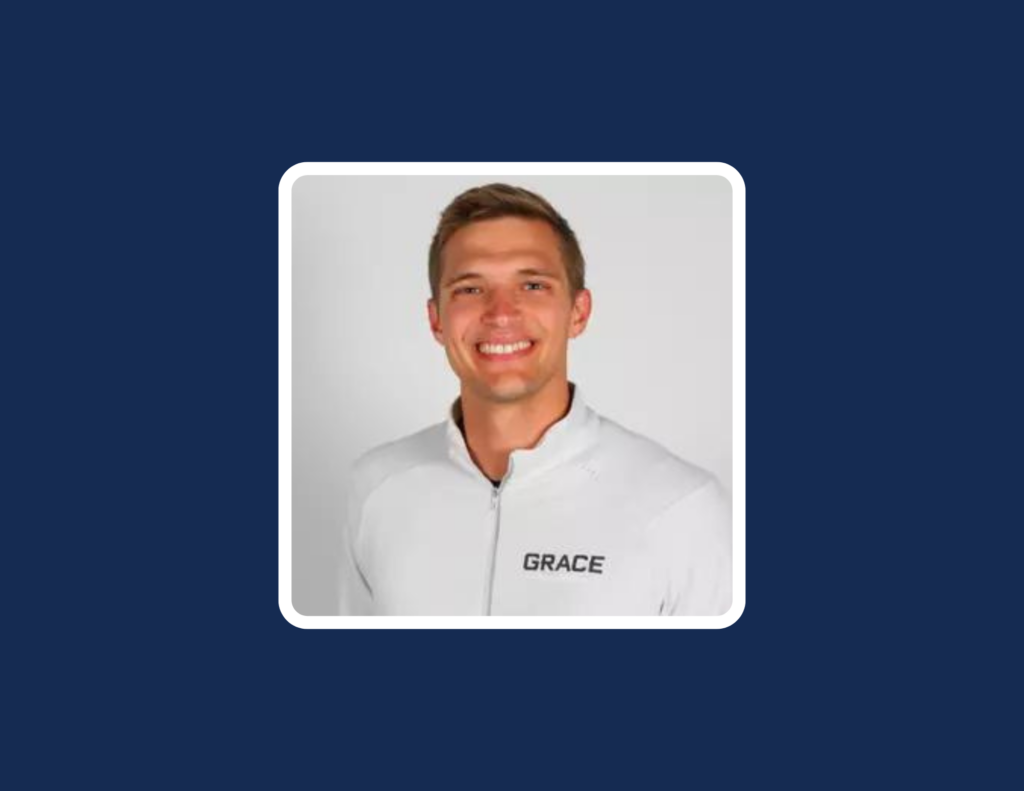
Stephen Halstead is entering his fifth season as a men’s basketball assistant coach at NAIA Grace College in Indiana. Halstead served as a graduate assistant for his first two seasons, leading Grace’s junior varsity squad while assisting with the varsity.
In 2023-24 Grace was ranked as the No. 1 team in the country for much of the season. The Lancers won the regular season and postseason championships in the Crossroads League and were the overall No. 1 seed in the NAIA tournament. Grace then enjoyed its deepest run in the NAIA Div. I tournament era, reaching the Final Four.
Halstead was a four-year member of Grace’s basketball squad. He played from 2014-18 and finished his career with 151 made 3-pointers. Over the course of his 115-game career, he shot 42 percent on 3-pointers and 83 percent on free throws.
If you’re looking to improve your coaching please consider joining the Hoop Heads Mentorship Program. We believe that having a mentor is the best way to maximize your potential and become a transformational coach. By matching you up with one of our experienced mentors you’ll develop a one on one relationship that will help your coaching, your team, your program, and your mindset. The Hoop Heads Mentorship Program delivers mentoring services to basketball coaches at all levels through our team of experienced Head Coaches. Find out more at hoopheadspod.com or shoot me an email directly mike@hoopheadspod.com
Be sure to follow us on Twitter and Instagram @hoopheadspod for the latest updates on episodes, guests, and events from the Hoop Heads Pod.
Make sure you’re subscribed to the Hoop Heads Pod on iTunes or wherever you get your podcasts and while you’re there please leave us a 5 star rating and review. Your ratings help your friends and coaching colleagues find the show. If you really love what you’re hearing recommend the Hoop Heads Pod to someone and get them to join you as a part of Hoop Heads Nation.
Grab pen and paper to take some notes as you listen to this episode with Stephen Halstead, men’s basketball assistant coach at Grace College.
Like this show? Please leave us a review here — even one sentence helps! Consider including your Twitter handle so we can thank you personally!

We’re excited to partner with Dr. Dish, the world’s best shooting machine! Mention the Hoop Heads Podcast when you place your order and get $300 off a brand new state of the art Dr. Dish Shooting Machine!

Prepare like the pros with the all new FastDraw and FastScout. FastDraw has been the number one play diagramming software for coaches for years, and now with it’s integrated web platform, coaches have the ability to add video to plays and share them directly to their players Android and iPhones via their mobile app. Coaches can also create customized scouting reports, upload and send game and practice film straight to the mobile app. Your players and staff have never been as prepared for games as they will after using FastDraw & FastScout. You’ll see quickly why FastModel Sports has the most compelling and intuitive basketball software out there! In addition to a great product, they also provide basketball coaching content and resources through their blog and playbank, which features over 8,000 free plays and drills from their online coaching community. For access to these plays and more information, visit fastmodelsports.com or follow them on Twitter @FastModel. Use Promo code HHP15 to save 15%
Your first impression is everything when applying for a new coaching job. A professional coaching portfolio is the tool that highlights your coaching achievements and philosophies and, most of all, helps separate you and your abilities from the other applicants.
The key to landing a new coaching job is to demonstrate to the hiring committee your attention to detail, level of preparedness, and your professionalism. Not only does a coaching portfolio allow you to exhibit these qualities, it also allows you to present your personal philosophies on coaching, leadership, and program development in an organized manner.
The Coaching Portfolio Guide is an instructional, membership-based website that helps you develop a personalized portfolio. Each section of the portfolio guide provides detailed instructions on how to organize your portfolio in a professional manner. The guide also provides sample documents for each section of your portfolio that you can copy, modify, and add to your personal portfolio.
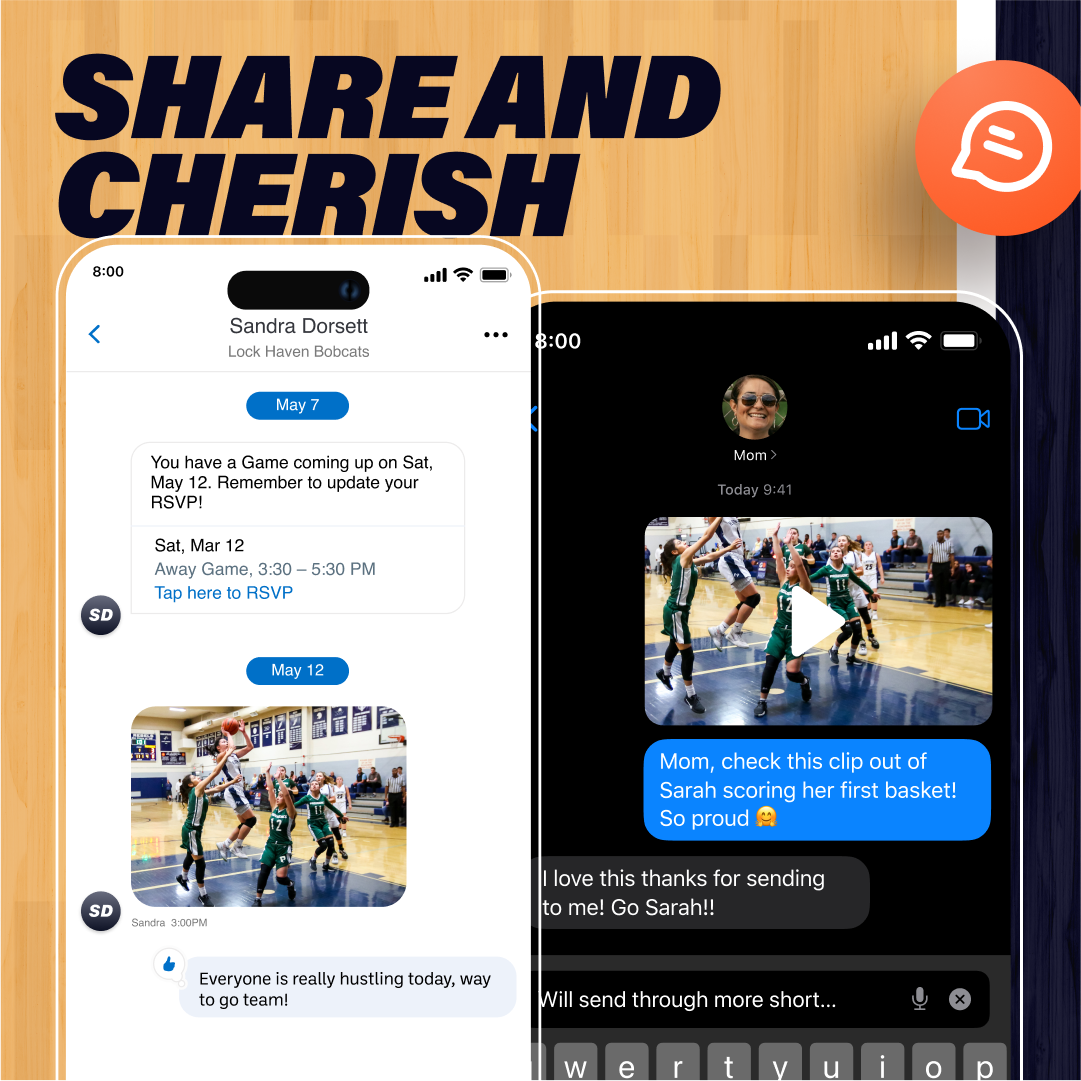
Hey, coach! Want to take your team to the next level this season? Introducing GameChanger, the ultimate game-day assistant with tools to give you a winning advantage. With GameChanger, you can track stats, keep score, and even live stream games, all for free! Get the stats and crucial game video you need to lead your team to victory, all from the palm of your hand. Coach smarter this season with GameChanger. Download GameChanger today on iOS or Android and make this season one to remember. GameChanger. Stream. Score. Connect. Learn more at GC.com/HoopHeads
THANKS, STEPHEN HALSTEAD
If you enjoyed this episode with Stephen Halstead let him know by clicking on the link below and thanking him via Twitter.
Click here to thank Stephen Halstead via Twitter
Click here to let Mike & Jason know about your number one takeaway from this episode!
And if you want us to answer your questions on one of our upcoming weekly NBA episodes, drop us a line at mike@hoopheadspod.com.
TRANSCRIPT FOR STEPHEN HALSTEAD – GRACE COLLEGE MEN’S BASKETBALL ASSISTANT COACH – EPISODE 990
[00:00:00] Mike Klinzing: Hello and welcome to the Hoop Heads Podcast. It’s Mike Klinzing here this morning without my co-host Jason Sunkle, but I am pleased to be joined by Stephen Halstead, assistant men’s basketball coach at Grace College. Stephen, welcome to the Hoop Heads Pod.
[00:00:16] Stephen Halstead: Mike, thanks for having me on. Big fan.
[00:00:19] Mike Klinzing: Thrilled to have you on. Looking forward to diving into all the things that you’ve been able to do thus far in your career. Let’s start by going back in time to when you were a kid. Tell me about some of your first experiences. With the game of basketball, what made you fall in love with it? How’d you get introduced to it at first?
[00:00:36] Stephen Halstead: Yeah, for first experiences. So I grew up in Fort Wayne, Indiana and when I was in kindergartener age, my first experience was, it was called hot shots. So it’s through Blackhawk Christian schools, but you’d go, you’d play, you’d guard the other person with the same color wristband. And then at halftime, you would actually recite scripture, whatever the passage was for the week. So you’d go to halftime, the score is eight to four and you come out and if you get your verse right, you get two points or something that. So you go in, it’s eight to four, you come out and you got a barn burner. That’s 44 to 40 going into the second half, but that was kind of the first experience.
And from there, man, just loved it. And it’s kind of been a passion of mine ever since.
[00:01:19] Mike Klinzing: When you think about what you loved about the game, did you play other sports as well?
[00:01:24] Stephen Halstead: Yeah, yeah. Played multiple sports growing up. Played baseball for a while, was a runner, and then played tennis in high school as well as basketball.
Was basketball always number one? I think it was just always a favorite. I mean, just growing up in Indiana, I was just around it so much. So, I mean, we’d go to high school games on Friday nights and things that. So, it was always a passion., but yeah, definitely was something that I was naturally just attracted to with basketball, just the team aspect as well, tennis, it’s a lot of fun and running, those are individual sports that you can do a lot of training for, but there was something about the team camaraderie that just really always drew me back to basketball.
[00:02:04] Mike Klinzing: Who would you say from either a coaching standpoint or maybe one of your parents, who was kind of the driving force as an adult for you early on that you remember having an influence on your basketball career?
[00:02:16] Stephen Halstead: Yeah, it would definitely, definitely be my dad. My dad would take me outside, just go shoot hoops, whether it was at the park or anything that and, sign me up for all of those leagues. And we ventured through the AAU journey and just learned lessons along the way, but definitely he was kind of that influence for that. He had a passion as well. And I think it was one of those things that it kind of, I was able to live a lot of those moments with him by my side. I mean, he didn’t miss any games or anything that. So that was definitely the one that influenced the most, I would say.
[00:02:49] Mike Klinzing: When you think about your career in the middle school, high school age, what were some of the things that you did to try to improve your game and how did you go about trying to get better? I know that there’s obviously all different ways that you can do that and clearly things from the time that I was playing, I’m a lot older than you and things have changed tremendously since I was playing, but just what was your upbringing in the game in terms of you trying to get better.
Were you a guy that was by yourself in the gym, on the driveway? Were you playing a lot of pickup, AAU? Just how did you get better?
[00:03:27] Stephen Halstead: Yeah, good question. I think everybody has different, just ventures with that. You have different backgrounds. And for me, when it was middle school timeframe, I just love playing.
SoI would go and play with friends at the park all the time, and we would just play pickup, and it was just kind of the neighborhood crew that would go and play. But I would say it was probably when I got to high school, eighth grade to high school, that I was seriously interested in getting better.
So, my dad was a pastor all while I was growing up, and while our church didn’t have a gym, he was friends with other, their church had a gym. So it was, I think it would have been going into my freshman year of high school, I got a key to a gym, which was a dangerous thing for a high school kid at that age.
I mean, the amount of times I got kicked out of Brookside church because they were trying to set up for an event or they had something going on that night, or they had already put the security code and locks on for the evening and I wasn’t able to get in, but. I would say that was that timeframe. It was that beginning of high school where I seriously just wanted to get better.
I would go and maybe it was a DVD that I saw, or maybe it was a YouTube video and I would just go in and I’d go shoot for hours at a time. Sometimes I’d be able to convince a friend. My poor mother had to rebound way too often for me of a drill I would want to do or something that. And,, I always joke with, My mother just rebounding.
She would, she never really played basketball. And by that point, she would get too tired to pass it back to me, consistently, so I would make it or shoot it and miss it. And she would just roll the ball back to me. So I got used to those low passes to say the least.
[00:05:06] Mike Klinzing: She probably got, she probably got really good at reading the ball off the rim.
She probably could have been a great rebounder late in her career. For sure. For sure. When did college basketball get on your radar in terms of feeling it was a realistic option for you to be able to move on and continue playing after high school?
[00:05:26] Stephen Halstead: Yeah, it was probably early on in that high school process.
So as you go in, you’re a freshman and you’re trying to make the JV team or the varsity team, and I was able to have some success when I was younger. And I think it was probably that freshman, sophomore year that I started to realize , man, this could be something. I could really do. And I kind of had the dream for, so went to Snyder high school there in Fort Wayne and had an awesome experience.
And I would bet it was probably around that sophomore year timeframe that I started really wanting to play in college. I was always passionate. I mean, I grew up a massive Indiana Hoosiers fan and just always thought that was the dream. I mean, when I was in high school, that was the Brad Stevens era at Butler.
So you’re living and watching all of that. So that was really cool. And it was probably that. Early high school phases that I knew I’d want to play in college or at least tempt to play in college and just kind of learn the process from then on.
[00:06:24] Mike Klinzing: What were some of the steps that you took, or who did you kind of rely on as an adult at that point to sort of guide you in the right direction of what you might have needed to do in order to make that dream a reality?
[00:06:35] Stephen Halstead: Yeah, it’s one of those things looking back on, it would have been great to have more advice now that I’m on the other side as a college coach. My dad always joked that when I graduated high school and I went off to college, I just wish you had a younger brother. Cause , I think we would be able to know and do so many things so differently.
And I think it’s great. I know you just recently did a podcast with your son, Cal, who’s going to Ohio Wesleyan. And I think sometimes that is probably the biggest thing that high school students probably need to hear is just people that have gone through it because it’s a whole different world that people don’t know. I tell this to recruits parents all the time. I hope to be an avenue just for them to answer questions because it is something that’s totally different. And if you’re not in it every day, you don’t know what’s worthwhile and what’s a good program and good coaches to be around because there’s so many different options.
But yeah, looking back. It was kind of, we tried to figure it out on the fly. I mean, I had a high school coach that I’m sure helped with the process a little bit, and we had others, just in the city. I mean, Fort Wayne’s a pretty connected community that you’re able to reach out and ask questions, but yeah, it was one of those things.
My dad and I kind of went through it and tried to figure it out as we went by it year by year.
[00:07:52] Mike Klinzing: Why Grace? Obviously it ended up being a great choice. You’re still there. Tell me a little bit about the decision making process.
[00:08:00] Stephen Halstead: Yeah, so I grew up, my dad was a pastor and I went to a public high school at Snyder High School and Snyder was awesome.
I mean, I had some of the best teammates, some of the best classmates, to this day, my best friends from middle school are my best friends today. So that was one of the biggest blessings for me. And then even playing at Snyder, I mean, it is just a talent hotbed. Looking back at the team my junior and senior year, of the 12 guys on varsity, 11 guys played a college sport.
So you have these guys that are just really talented. I mean, Jesse Bates, who’s a Pro Bowl safety for the Atlanta Falcons, he was a year beneath me. Malik Williams played a game with the Toronto Raptors this last year, got his first call up. He was a freshman when I was a senior. So I had all this awesome experience from Snyder from the public school aspect, but I knew I wanted to go to a Christian college, that was something I was always pretty passionate about just,, growing up in the church. And that was something I was pursuing. Man, little did I know how talented the Crossroads League was. Now that I’ve been in it for 10 years ago is when I graduated high school. But now that I’ve been in it, you see all the talent there, but the Crossroads League is just an awesome, awesome area.
A lot of awesome schools with really strong beliefs. And then just geographically, it’s phenomenal to play so many games, just an hour, hour and a half away when you have. These small colleges that have to travel so far. So, Grace kind of checked all the boxes., Coach Kessler was the head coach at the time, and he just was a legend in those parts.
He coached there for 44 years, was the longest tenured coach at any level, and I got there for the tail end of his career. And Grace just seemed like a seamless fit. It was only an hour from Fort Wayne, was a beautiful campus right on a lake, has probably the best gym in small college basketball, and it was one of those things that checked all the boxes, and I just was really excited to get on campus there.
[00:09:57] Mike Klinzing: As you head into college, what are you thinking about academically? Career wise, do you have any idea or are you most kids where you’re kind of going in and saying, man, I really don’t have any idea where I’m going to go after I get done with this four years, but I’ll figure it out as I go along. How did you look at just your future career in academics?
[00:10:16] Stephen Halstead: Yeah. So I was always good at math growing up. So when I went to Grace, my mom suggested I be an accounting major and I just kind of went with it. I didn’t think much of it. I thought she had the best interest in mind for me. And it was a really good decision.
Anybody that says they have their life all figured out by 18 is lying. Anybody who says they have their life all figured out by my age now at 29 is lying. you don’t, you go day by day. I would argue that you don’t have everything all figured out.
[00:10:47] Mike Klinzing: I’m 54, Stephen. I have no idea. So I’m with you.
[00:10:50] Stephen Halstead: I think that is sometimes reassuring to hear as a kid, because when I went through it, I just didn’t know. And I think I saw a statistic recently that it’s 70 percent of college students change their major at least once. So this idea that you need to have it all figured out is, is just, it’s not a realistic expectation.
So. Thankfully for me, the accounting thing actually worked out. I really enjoyed it. I had an amazing accounting professor at Grace that was a great teacher, but also just really cared about the individuals on a personal level. , he would start each,, Each lecture with a devotional and just kind of pour what he had learned through his life.
And I had a really, really awesome experience with that was an accounting and finance major at Grace and the business school there just does such a good job. we have the orthopedic industry here in Warsaw, which is going to be knee replacements, hip replacements. We have a couple of fortune 500 companies that just really help out with internships and everything like that.
So I really, really enjoyed, and the accounting background really worked out for me.
[00:11:57] Mike Klinzing: Before we get to the transition and thinking about coaching, tell me a little bit about what you enjoyed being. A college basketball player. What made it special for you? Maybe if you just throw out a memory or something that sticks out from your time playing at Grace.
[00:12:12] Stephen Halstead: Yeah. It’s funny when you look back, I played in over 120 games. You have so many games and I always tell this to recruits of , I only remember details of 10 of them, distinct details of 10 games that I could tell you everything that maybe happened throughout the course. But, I’ll tell you what, I can tell you every single thing about all the Christmas trips we went on, whether we went to San Francisco, we went to Orlando, I can tell you about the missions trip our team went on to France.
That was just an otherworldly experience., and then I just can tell them all about my teammates., I think that’s the biggest thing when you go through,, college is you’re building your network., whether you realize it or not, those are going to be your friends for the rest of your life.
My roommate for three years was the best man at my wedding. Those are the things that you’re able to experience and the relationships that you’re able to build no matter the level that you’re at. And I think that’s one thing That especially at our level, the NAIA, the Crossroads League, our schools are trying to preach that, yes, we’re competitive and yes, we’re going to want to win every single basketball game, but I also think you’re really wanting to develop young men and just being able to have them grow in their relationship with Christ, being able to have them grow, just as a student as well as a basketball player. And I think that’s one thing that looking back on, those are lessons that you’re able to learn and take with you.
I would do anything to go back with the guys I played with to go through another preseason, guys are getting gearing up in college, ready to go through right now, those are the things that you just really love and appreciate. Those relationships that you’re able to build and everything like that.
And trust me, the games are fun and we try to win every single one of them, but I think those are the things that kind of stand out more than anything else are those relationships and being able to just grow deeper with your teammates and the coaches around you.
[00:14:15] Mike Klinzing: It is funny to hear you say that you only remember details from 10 games because I can completely relate to that sentiment.
And obviously in the moment. It feels like the games are the most important, right? You’re, you’re playing and your performance, your team’s performance, that’s what you’re focused on. You’re not focused on the relationships that you’re building with your teammates. You’re not necessarily focused on, hey, this trip, we’re going to go and be able to hang out and do all those things.
But Yet, when you look back to your point, you remember those sort of, I don’t want to say ancillary things, but those things that in the moment didn’t feel like they were the most important, but in the end, they ended up being very, very important to the rest of your life. And it’s funny because people will come up to me and not so much anymore, but when I was younger and people would say, Hey, do you remember that game you guys played against Ohio University and whatever?
And I’m , look, I played against Ohio University 10 times. There’s maybe one or two moments when Dave Jamerson scored 60 on me. I remember that, but there’s things that there’s things that I don’t remember. That people who are in the stands or friends or whatever, they have things that stick out and just , look, it all kind of runs together, which is interesting because again, just you said, you feel you’re trying to win every game and it’s super important to you in the moment.
And yet, when you look back, there is very few details that you can remember. I’ll, I’ll go back and be like, what year was that? Or did we play that team twice? Or I can’t remember which game was that. It just. It’s amazing how the memories of that stuff fades. But as you said, the memories of your teammates and the trips and the off the court stuff, and just the camaraderie that you feel being a part of a team, that that’s the stuff that sticks.
[00:16:03] Stephen Halstead: For sure. And in the moment, trust me, after every game I’d go, we’d go out to eat afterwards, teammates, and you analyze every little detail of everything that happened and you analyze every little coaching decision. And trust me, it’s all important, but yeah, you saying all that, I mean, it just takes me, makes me think of the quote, enjoy the little things in life because one day you’ll look back and realize they were the big things.
And I think that’s, that’s what you’re trying to, what we are trying to sell to recruits, but also , that’s the true thing. you want these guys to be able to build these relationships. And it’s something about that team aspect where you just have that select group. You only get 15 guys on a team.
So those relationships, you’re able to develop them pretty deep and those are some times and memories that you’re never going to forget.
[00:16:53] Mike Klinzing: When does coaching become something that you’re considering for a career? When does it get on your radar? Is it something that. Even though you’re majoring in accounting, as you’re going through the program, you’re thinking, Hey, maybe coaching is something that I might want to get into.
Or was it not till Your career ends and you’re looking around, you’re , Hey, I can either go get a job as an accountant, or maybe there’s a way for me to stay in the game of basketball. Which one of those best describes you?
[00:17:21] Stephen Halstead: Yeah, I think I always loved basketball and knew I’d be around it. I thought it was probably one of those things.
It’s more I’ll coach my kids when they grow up. I didn’t think I had a passion to coach. So right out of school, I had a lot of different accounting internships, ended up working at Zimmer Biomat as a financial analyst. And I did that for a couple of years. Ultimately just realized , man, this is not what I want to see my life through.
I would see kind of the career path at the corporate world. And I’m looking five, 10 five to 10 years down the road. And I’m seeing what these people lives look like. And I want no part of that. it was a struggle. It was a struggle for me to be in the office and to go through that grind.
And I had a good experience and some good coworkers that I was with, but as I was going through it, I kind of just, I was coaching an AAU team. I was trying to get my fill in other places and I didn’t know what it necessarily looked . So it was kind of crazy timeline. My wife and I got married in 2020.
It was in the summer of 2020. So. It was the beginning of that year. I kind of had got to the point where I was a little just fed up with the job and I didn’t want to get to the point where, hey, I’m 10 years down the road. Now I have a wife and kids and I’m not able to make a career change just because we’re so dependent on a specific salary.
So I had a conversation with my fiance at the time and I was like, Look, I think I want to do this coaching thing. I want to just go all in. And if I do it and it doesn’t work out at least I can say I did it. I won’t have any regrets. I have this degree I can go back to. I won’t have any issues finding a job.
So at that time, Coach Moore, who’s the head coach at Grace Now, He had just become the head coach. He was going through his first year as the head coach at Grace. And we had conversations, we were meeting monthly, just grabbing lunch, catching up because he was an assistant all my four years when I played there, so we had been staying in touch and it was one of those things I finally brought, he kept bringing the idea up to me if I would be interested.
And I was like, you know what? I think I’m ready to do that. So it was about March, 2020. I put in my two weeks at Zipper Biobank. I say, Hey, I’m going to go into this coaching. I’m going to go into this coaching thing. My father in law, they’re actually a family of farmers. So they have a pig farm and a beef calf farm.
So I had worked it out with him. I was going to work part time to do their accounting and book work. And then I put in my last, Two weeks, I’m done. And then literally the world shut down immediately after. So I should have waited probably a year. If I could have known a little more, I would have gladly worked remote for another year and then made the switch when it was a little more normal.
But that’s when I got, I made the switch. I was a GA at Grace for a couple of years and then just finished my fourth year on staff there with coach Moore as well.
[00:20:15] Mike Klinzing: So obviously when you get the job. The COVID circumstances are completely different from normal circumstances, but yet for you, you kind of walk into it and that’s the first experience that you get on a college staff.
So what do you remember about that time? The challenges that were presented that now, when you look back, After having gone through a couple of quote, normal seasons, what were some of the challenges in that first year that you guys faced when you’re just, again, dealing with all the COVID stuff?
[00:20:50] Stephen Halstead: Yeah. Thankfully, I don’t remember much. it was such a blur and it was, it was chaos. If I remember anything the most, it’s just that your schedule would change every other day because the game got moved or anything like that, but no, we were fortunate. We got to play a lot of games. I know a lot of guys on our team,, actually were able to get a COVID year from that.
But we played 30 games. We are able to have a season that our league did a really good job of making it as normal as you could. I know it really wasn’t, but,, a couple of guys on our team now are even taking COVID years from that season that just graduated for us this past year. So in hindsight, yeah, it was a little different, but still fortunate, we were one of the fortunate schools to have a full season and everything like that.
[00:21:38] Mike Klinzing: What did you like initially in those first experiences from a coaching standpoint? What about it when you got in there, you were , man, I really, I love it as much as I thought this is some of the stuff that is going to keep me in this for the rest of my career.
What stood out, different aspects of coaching that you really love right from the get go?
[00:22:00] Stephen Halstead: Yeah. So at Grace, we have a JV program as well. So as the GA, you were in charge of heading that up. You do all the recruiting, all the scheduling, it is very much your team. It’s separate from the varsity team.
And I think that biggest thing for me that first couple of years was just learning through that experience of, Hey, these kids actually listen to me. So, whatever I’m telling them, they’re going to go out and try to try to do that. And I think the JV was just really eye-opening for me because, I look back on that first year and I’m like, yeah, I would never do that again.
But you don’t know what you don’t know. And I was going through that trying to figure things out and it kind of helps mold that coaching philosophy. And then obviously we’ve had a lot of success with our varsity team. We’ve had a lot of success these first four years. And I think just the biggest thing is just being.
I think that’s been my favorite part of being a coach is you’re able to pour into these guys. And I just think that ages 18 to 22 are such an important time. Just building habits, building the character of young men in their lives, and just being able to build up godly men. And I think that’s probably been one of my favorite things is just being able to develop those relationships.
Now that I’ve been able to recruit guys and now they’ve been here for all four years, you’re really able to experience them growing up and maturing. And I think that’s probably been one of my favorite things off the court. Obviously you get to be a part of their maturing and development on the court.
And that’s a lot of fun. But I think as you look at just that level, that small college coaching level. People are in for it. They’re in it for more than just coaching basketball. They’re truly wanting to impact and have a good relationship and mentorship with those players coming in.
I can guarantee you one thing. We don’t do it for the money. I should have stuck with accounting for a long time. If that’s what I was in it for.
[00:24:01] Mike Klinzing: There’s no question about that. Tell me about how you go about building those kinds of relationships that you’re talking about and how you create space in your life and your players lives in the day to day of being a part of the Grace basketball program.
How do you create the space and opportunity To be a mentor and build those relationships like you were describing.
[00:24:30] Stephen Halstead: Yeah. I think, I think you just have to be genuine and authentic. You have to want to get to know them. You have to want to know them deeper than just on the basketball court. And in saying that, you also have to see them as well off the court.
So Coach Moore, we do an awesome job just when our guys get on campus in the fall of, it’s a little, it’s not a normal toughness week that teams go through. ours is probably way more fun than most teams. So all of our three coaches, we actually draft a team. So we each get five guys on our team.
We’ll each take a manager and we do a ton of different competitions. And some of them are really physical. there’s an Ironman. They’ll do their qualification stuff where you have to get a mile time and all these different lifts and things that, but we’ll sprinkle in a handful of fun ones.
So maybe we go to the beach volleyball courts here in town and they do a sand workout with our strength coach for 30 minutes. And then after that, we’re playing six on six beach volleyball coach Halstead’s team against coach Widener’s team. And I think that’s just fun because you get to see the guys.
Off the court a little bit, and you see their characters just develop. And after those 10 days of a ton of different fun competitions that have nothing to do with basketball, and then a handful of conditioning ones, at the end of it we’ll do a team retreat, and I think that’s just where the upperclassmen do such a good job of just being vulnerable.
And I think the coaches have to as well. You want people to be authentic and just share where they’re at. And then I think that also just helps developing those relationships. And,, after that, it can’t just be at, at the, at a practice type thing. we do a good job of just coaches having guys over to their house for dinners.
I have a super supportive wife who loves baking. So she’ll make stuff for them. And there is a. Team is kind of her guinea pig. Well, she’ll make a lot of things and they’re super appreciative and they’ll come over and play games and I’ll go to campus, eat lunch with guys. And I think it’s just being that consistent,, just face throughout the year.
Cause trust me, there’s a lot of ups and downs throughout the year, just with injuries and classes and off the court things. You have to kind of know what’s going on, just to have those good relationships with them, but also to be able to manage your team. Well, if the team is exhausted after a first couple of days of practice, these things, we want to be coherent of that.
And we want to be able to plan practices around that rather than , It’s not the coaches against the players. After that toughness week where we separated into three teams, we have to remind the guys, look, we are all on one team. There’s no us versus you or anything like that.
We are all trying to move this train in one direction. So, I think it’s really just finding those times and, taking interest in what guys really, I think it’s nice that I have a diverse background and just of things I and being able to connect with people. And it’s been fun to just be able to meet people where they’re at and then just pour into their relationship and ask good questions.
I think players are always willing to share. It’s probably more so just finding a good question to ask and then they’re able to open up.
[00:27:47] Mike Klinzing: To me, that’s always, when I think about what is valuable. in coaching. It kind of goes back to the discussion that we had 15 minutes ago about what you remember. And I just think as a coach that building those relationships with your players and then having an opportunity 10 years down the line to have one of your players stop by your school and say hello or invite you to their wedding or just send you an email and update on what’s going on or getting together and having lunch with them.
those kinds of things to me, right? That’s the stuff that. really matters. And again, obviously wins and losses matter. You want to keep your job, especially if you’re coaching at the college level, you got to win some games, which obviously you guys have had a tremendous amount of success and been able to win a lot of games since you’ve been there.
I think it’s, again, investing in the people that are a part of your program, investing in your fellow coaches, and obviously investing in the players who are a part of what you’re doing. When you think about the start of your coaching career and then up to where you are now. What do you think has been your biggest area of growth?
Obviously transitioning from being a player than being in the The business world and then coming into coaching, what’s an area that when you look back at the start of your career to where you are now that you feel you’ve really improved a tremendous amount as a coach?
[00:29:09] Stephen Halstead: Yeah, good question. I think the thing that is probably one of my biggest strengths is I’m just always wanting to learn more.
It’s just one of those passions of mine that I’m wanting to learn, whether it’s common up to date trends that the NBA teams are running or overseas teams are running on offense, defense, whether it’s a new set or series, how to get guys and I think those are the basketball things I love, but it’s also been one of the biggest things for me has just been, I’ve developed a love for reading books and learning from others.
If you would have asked me in high school or college, I might have read one total book on my own. And it was probably the hunger games. It had nothing to do. But now I really just have a passion of just trying to learn how to be a great leader and what that looks like.
And it’s so funny because I feel each year my vision of the best basketball coach totally changes. It went from, man, it is. Whoever is the best at X’s and O’s on offense, I’m an offensive guy. I always going to kind of be attracted to that, but now I realize , I think the best coaches are actually sometimes just the best leaders and they’re able to empower maybe their insistence, or maybe it’s the players where the players kind of have to go and learn and figure things out, because as you keep going into the season, plays can be scouted, there’s things that can be taken away. And I think that’s one thing that we really try to teach and emphasize is, we’re trying to teach guys how to play, maybe early in the year it needs to be a set call, but we love looking back on film that, we maybe show recruits of telling them, look, these aren’t sets. These are guys just going out, making plays, reads, reacting, and getting to things that we’ve talked about that we , so I think that’s, that’s such a key thing is just, you gotta always keep learning. Whether it’s on the court stuff, whether it’s leadership stuff, whether it’s relationship stuff.
Um, I just finished reading a book called Anxious Generation that talks Just the phone based childhood that has kind of developed in the last 10 years or so, that now kids are in front of iPads and things that, and what that changes to them as they grow up and develop. And I think that’s probably the biggest thing for me is just being this lifelong learner.
I’m finally. Nobody’s telling me what I have to read now and I finally love it and I want to pick up anything.
[00:31:44] Mike Klinzing: Yeah. I would say that I’m sort of the same way in that respect. I love getting in and being able to, to read about things that aren’t necessarily specific. to coaching, but are things that just helped me to improve as a human being in lots of different areas.
I’ve been reading a lot of Ryan Holiday, ego is the enemy and the obstacle is the way. And just, he’s got a series of four books that are the daily stoic. series of, before the last one I read was about, just about having good character. And those are all things that you can apply to yourself.
I try to apply it to my own kids. And then anytime I’m involved in coaching, you’re obviously trying to apply those things to your players. But yeah, being able to grow and, and learn, I think, and develop that’s something that as a coach is, is really key. Where do you go when you’re talking about learning On the basketball floor, what are some sources, what are some places that you go to in terms of watching film?
I know you mentioned you’re watching some EuroLeague stuff, you’re watching NBA. Where do you go? Do you have specific sites, specific teams, specific people that you’d to go and grab stuff off their channel or are you just kind of picking and choosing when you see something you ?
[00:32:57] Stephen Halstead: Yeah, I think it’s, it’s kind of twofold. It’s a little bit of everything. So this summer, I was able to make some rounds and just talk with some other college coaches that I really respect and admire what they do and just be able to pick their brain. So , some of it was small college. I was able to go to a couple of local D3s. Trine, obviously coming off a national championship, got to talk with Coach Miller and his staff.
And really just pick their brain. They play a totally different style than,, and I think it’s fun to kind of learn from that. So some of it’s just going around. I’ve also had some connections just with, as you coach, you meet some other people. So gone to some division one practices where you’re able to watch and just see and,, pick up some things.
And then honestly, there’s so many quality, just YouTube accounts, Twitter accounts, where you’re able to go, just off the top of my head, Thinking basketball is one that does NBA breakdowns that is always kind of on top of the latest trends, the X’s and O’s, chess match kind of between coaches.
Obviously on Twitter, you just have so many guys that,, just post some actions they and things that, Ryan Pannone is an assistant at Alabama and , he posts a set every single day and he, they’re from all over the world and Alabama, obviously. Has had a ton of success, but I mean, he’s been all over the world, how he’s coached, he came from the G league and then NBA, and now he’s over at Alabama.
But I think it’s just finding things like that, as well as other podcasts, Slapping Glass is one that it’s, I mean, dude, they’re incredible. they’re always on top of things and trying to find the next trend that’s coming and,, obviously when you play a certain style, you’re going to be giving up something else and just kind of the balances of that.
But those are a few off the top of my head that, man, you can get and take bits and pieces from just about everywhere. I have to set aside a certain hour in my week where I’ll send all these things that I’ve seen throughout the week and I , but it’s , Oh, I didn’t have time to dive into it.
So I typically have an hour or two set up where it’s, Hey, I’m going to look through all the stuff I saw this week and really pin down, Hey, this is what I really to take away. And I think it’s part of that of just continually wanting to learn and putting that into your schedule that you’re trying to make time for it.
[00:35:09] Mike Klinzing: Yeah, it’s overwhelming. I mean, I think from that standpoint, as a coach, there’s stuff that you can look at and watch and see, and that’s just outside of your own team. Besides evaluating your own team on film and your own players, you’re talking about looking at all that stuff. It’s kind of how I feel when I walk into a bookstore and I’m looking at a whole rack of books and I’m just , I could, there’s 50 books here that I could pull off the shelf and read at any given moment.
Whatever I think about players today, just. the access that they have to sort of, again, all the training stuff that’s out there. And yet at the same time, it almost feels in some degree it’s, it’s overwhelming, right? Just you kind of have to curate for yourself as a coach, what, what’s valuable and what I can actually take the time to, to look at.
And I think players experience that same thing. You guys have had a tremendous amount of success the last couple of years. So I want to wrap this up with one final two part question. So obviously with the success you guys have had over the last couple of years. I’m sure there’s an ultimate goal in mind of, of what you guys hope you’re going to be able to accomplish here in the next couple of years.
But what is the biggest challenge that you see ahead of you in the next year or so? And then the second part of the question is when you think about what you get to do every day, what brings you the most joy? So your biggest challenge and then your biggest joy.
[00:36:27] Stephen Halstead: Yeah. Maybe the biggest challenge for us, it’s just going to be getting a new group of guys.
So, we’ve had a very similar team the last three years, and obviously had a lot of success. And,, Elijah Malone was national player of the year, and he’s using his COVID year at Colorado this year., the Gibbs twins, they had been with us for five years, and they’re using a COVID year at Marshall University.
And then Jake Wadding was another senior who was just as talented. Tremendous as a player who just graduated, as well. So I think it’s going to be just developing, what we’d been doing with a new group of guys. This year, it’s going to be a little bit easier of a transition because we still have seven seniors.
five guys are going to be heavy in the rotation, that are upperclassmen there. And then we have a really good young core of guys. We had two freshmen in the rotation last year that got to play., so they were able to pick up. On a lot of things, and they’re going to have breakout years, engage Seth Denny and Rash.
So I would say the biggest thing is just moving forward of continuing the success that we’ve had just with a new group of guys, we already have five commits for the 2025 class and it’s awesome. I don’t know if we’ve ever gone after our top five or so recruits. It got them all, but it’s going to be one of those things where, look, now that we have them next year, after this year goes, we’re going to have a really young group. We won’t have any seniors., and it’s going to be making sure that this culture piece just continues over with those younger guys. our upperclassmen have been so, so phenomenal and just setting the expectations of what it’s to, what it’s like to be a Grace Lancer basketball player.
I think that’s been painted now. So it’s going to be continuing that having those young guys take the ownership and continue to grow with it., but that will be a fun challenge. , I think that’s the fun thing with college is that you’re going to have new guys every four years or so. And it’s not I’m a high school coach.
We get to go out and pick the guys we want. So we kind of get to choose the strengths with it as well as the weaknesses and the things we’re going to have to learn with it. And then for the second part of your question, what brings me the most joy? I mean, it, it’s probably just everything with the Grace College program.
Our coaching staff is just fun to be around those are genuine friends of mine that we hang out off the court, it doesn’t feel you’re working when you’re with our staff., it’s being able to pour into the players, just being able to have those relationships, coaching them in practice, getting to know them, and just being able to, the basketball is the fun part of it, but I mean, it’s also not the biggest thing.
I think one thing to end with, easily the highlight of me coaching thus far was this past season. We had a senior and a junior, who got baptized this past year and they asked me to baptize them. And , I don’t know if there’s anything that can top that in terms of why I coach. That is easily the coolest thing knowing that they view me as a godly influence just being able to pour into them and just have that relationship with them.
I think that’s really cool. And just being able to show up every day, I’m excited. They get back this weekend, the freshmen get on campus and you get to gear up and go through the grind of a six, seven month season. But, there’s a lot of joy that comes through that. Just seeing those guys every single day and walking through life with them.
[00:39:58] Mike Klinzing: Absolutely. Very cool. Before we get out, Steven, I want to give you a chance to share how people can reach out to you, connect with you, find out more about you and the program there, Grace. So if you want to share social media, email, website, whatever you feel comfortable with, and then after you do that, I will jump back in and wrap things up.
[00:40:15] Stephen Halstead: For sure., if they wanted to reach out on Twitter, I’m @_CoachHalstead. And then if they wanted to reach out through email,, they could go to gclancers.com. My email will be there, on the Grace basketball page with that. And I would love to be in contact with anyone, whether it’s coaches, whether it’s recruits,, happy to help anyone out with any questions they would have.
[00:40:38] Mike Klinzing: Perfect. Stephen, cannot thank you enough for taking the time out of your schedule this morning to join us. Really appreciate it. And to everyone out there, thanks for listening and we will catch you on our next episode. Thanks.