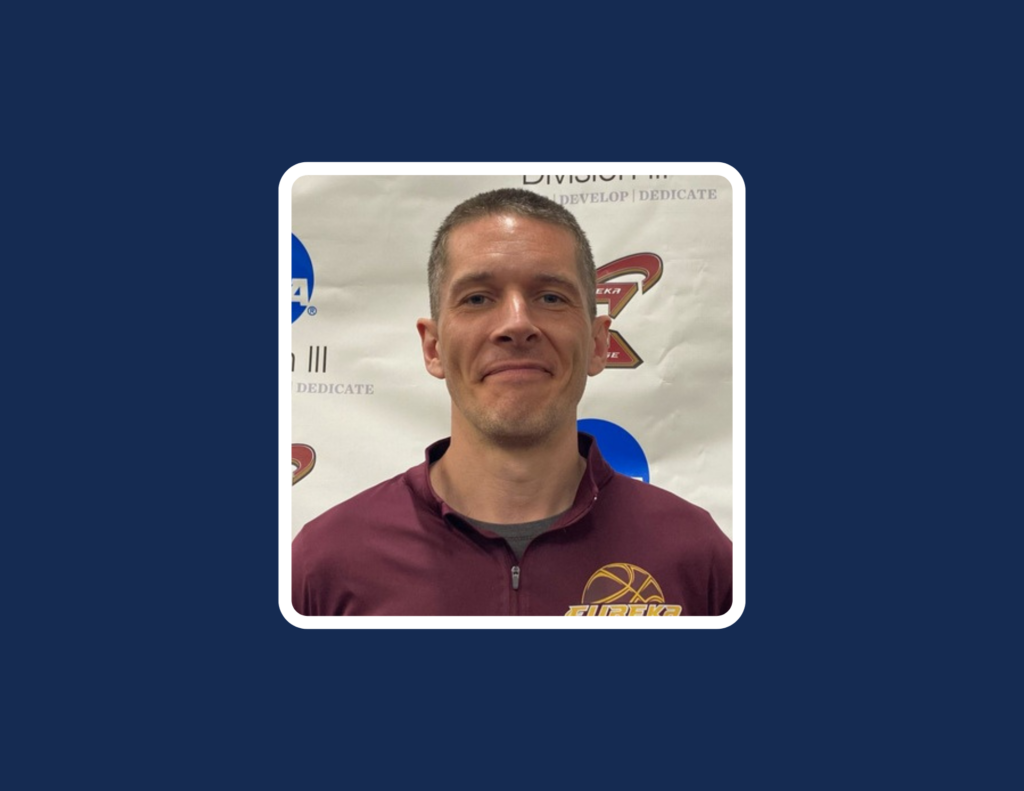
JAKE BOYD – EUREKA (IL) COLLEGE MEN’S BASKETBALL ASSISTANT COACH – EPISODE 973

Website – https://www.eurekareddevils.com/sports/mbkb/index
Email – coachjakeboyd@icloud.com
Twitter – @CoachBoyd3
If you listen to and love the Hoop Heads Podcast, please consider giving us a small tip that will help in our quest to become the #1 basketball coaching podcast.
Jake Boyd is entering his second season as an Assistant Men’s Basketball Coach at Eureka College (IL). Previously Jake coached for Illinois State University’s Laboratory School, University High School in Normal, IL for four seasons from 2019-2023. Jake also works in player development for Handle University and coaches AAU basketball for Beyond Ball Basketball both based in Des Moines, Iowa. Jake began his coaching career with youth basketball programs in Iowa and Illinois after playing college basketball at Dana College (NE).
If you’re looking to improve your coaching please consider joining the Hoop Heads Mentorship Program. We believe that having a mentor is the best way to maximize your potential and become a transformational coach. By matching you up with one of our experienced mentors you’ll develop a one on one relationship that will help your coaching, your team, your program, and your mindset. The Hoop Heads Mentorship Program delivers mentoring services to basketball coaches at all levels through our team of experienced Head Coaches. Find out more at hoopheadspod.com or shoot me an email directly mike@hoopheadspod.com
Be sure to follow us on Twitter and Instagram @hoopheadspod for the latest updates on episodes, guests, and events from the Hoop Heads Pod.
Make sure you’re subscribed to the Hoop Heads Pod on iTunes or wherever you get your podcasts and while you’re there please leave us a 5 star rating and review. Your ratings help your friends and coaching colleagues find the show. If you really love what you’re hearing recommend the Hoop Heads Pod to someone and get them to join you as a part of Hoop Heads Nation.
Grab a notebook and pen before you listen to this episode with Jake Boyd, Men’s Basketball Assistant Coach at Eureka College.
What We Discuss with Jake Boyd
- The early influences of his brother and his sister’s boyfriend on his dream of playing college basketball
- Getting to help with the business side of AAU and coaching middle school AAU teams while he was playing AAU in high school
- “I was probably not a very good prospect at all, but thank heavens I was around some good guys and some good coaches that gave me a lot of the knowledge that they had acquired over many years of coaching and experience.”
- The opportunity he had to play college basketball at Dana College in Nebraska
- Leaving college early to start his career working for State Farm Insurance and coaching youth basketball at the YMCA
- Advice for coaching your own kids
- Running a youth basketball program in Bloomington, Illinois and getting started training players
- Getting the chance to coach freshman basketball at University (IL) High School
- “I think that it becomes very important to have those guys be in situations when you’re training with them in a way that turns around and benefits them in the five on five.”
- “The more calculated you can be about what a player’s intention and what their goals are and what their role is, you can really serve them a lot better.”
- “I love to get like level guys in there, two on two, three on three, play with a defender, figure some things out because at the end of the day, you’re trying to succeed in a five on five game with a lot of moving bodies.”
- “You should put as much time into planning as you’re going to be on the floor with them.”
- “I just take and look at what smart people have already figured out and cut my learning curve and try to make that applicable to what we do.”
- How his AAU and training connections led to the chance to jump from freshman basketball to college
- The “freshness” of the experience in his first year as a college coach
- ” Every minute of every practice seemed to matter a lot more. Everything was much more intentional at the college level.”
- The breakdown of responsibilities on a staff
- “Sometimes coaches just need to get out of a leader’s way”
- The role differences between a head coach and an assistant
- Connecting player development to the systems your team runs
- “I think my biggest challenge is just that I want to be better. I want to get better. I want to be able to help more.”
Like this show? Please leave us a review here — even one sentence helps! Consider including your Twitter handle so we can thank you personally!

We’re excited to partner with Dr. Dish, the world’s best shooting machine! Mention the Hoop Heads Podcast when you place your order and get $300 off a brand new state of the art Dr. Dish Shooting Machine!

Prepare like the pros with the all new FastDraw and FastScout. FastDraw has been the number one play diagramming software for coaches for years, and now with it’s integrated web platform, coaches have the ability to add video to plays and share them directly to their players Android and iPhones via their mobile app. Coaches can also create customized scouting reports, upload and send game and practice film straight to the mobile app. Your players and staff have never been as prepared for games as they will after using FastDraw & FastScout. You’ll see quickly why FastModel Sports has the most compelling and intuitive basketball software out there! In addition to a great product, they also provide basketball coaching content and resources through their blog and playbank, which features over 8,000 free plays and drills from their online coaching community. For access to these plays and more information, visit fastmodelsports.com or follow them on Twitter @FastModel. Use Promo code HHP15 to save 15%
Your first impression is everything when applying for a new coaching job. A professional coaching portfolio is the tool that highlights your coaching achievements and philosophies and, most of all, helps separate you and your abilities from the other applicants.
The key to landing a new coaching job is to demonstrate to the hiring committee your attention to detail, level of preparedness, and your professionalism. Not only does a coaching portfolio allow you to exhibit these qualities, it also allows you to present your personal philosophies on coaching, leadership, and program development in an organized manner.
The Coaching Portfolio Guide is an instructional, membership-based website that helps you develop a personalized portfolio. Each section of the portfolio guide provides detailed instructions on how to organize your portfolio in a professional manner. The guide also provides sample documents for each section of your portfolio that you can copy, modify, and add to your personal portfolio.
Hey, coach! Want to take your team to the next level this season? Introducing GameChanger, the ultimate game-day assistant with tools to give you a winning advantage. With GameChanger, you can track stats, keep score, and even live stream games, all for free! Get the stats and crucial game video you need to lead your team to victory, all from the palm of your hand. Coach smarter this season with GameChanger. Download GameChanger today on iOS or Android and make this season one to remember. GameChanger. Stream. Score. Connect. Learn more at GC.com/HoopHeads
THANKS, JAKE BOYD
If you enjoyed this episode with Jake Boyd let him know by clicking on the link below and thanking him via Twitter.
Click here to thank Jake Boyd via Twitter
Click here to let Mike & Jason know about your number one takeaway from this episode!
And if you want us to answer your questions on one of our upcoming weekly NBA episodes, drop us a line at mike@hoopheadspod.com.
TRANSCRIPT FOR JAKE BOYD – EUREKA (IL) COLLEGE MEN’S BASKETBALL ASSISTANT COACH – EPISODE 973
[00:00:00] Mike Klinzing: Hello and welcome to the Hoop Heads Podcast. It’s Mike Klinzing here without my co-host, Jason Sunkle tonight, but I am pleased to be joined by Jake Boyd, men’s basketball assistant coach from Eureka College in the state of Illinois. Jake, welcome to the Hoop Heads Pod.
[00:00:17] Jake Boyd: Mike, thanks so much for having me. I’m super excited to be here.
Really looking forward to this tremendous opportunity. Thanks a bunch.
[00:00:24] Mike Klinzing: We are thrilled to be able to have you on and Jake was actually out here in Ohio with us working camp a couple of weeks ago, and that was a new one for me to be able to have somebody who listened to the podcast, connected with us through the podcast, and then shows up in real life and is working camp.
So that was a lot of fun. Believe it or not, as much fun as maybe you had at camp, it was a thrill for me to be able to have you. Somebody that, again, found us through this crazy platform to be able to have you come out and join us. It was, it was a blast. I hope you had as much fun as we did.
[00:00:56] Jake Boyd: I thoroughly enjoyed it. Everything as advertised, man, it was, it was just as good to meet you guys in person as all the info that I’ve got from listening to the pod. So it was an amazing connection to make. I had an absolute blast.
[00:01:07] Mike Klinzing: Well, thank you. And we’re going to start with you by going back in time to when you were a kid.
Tell me a little bit about your first experiences with the game of basketball growing up. What do you remember?
[00:01:19] Jake Boyd: I think I probably really, really fell in love with basketball around probably second or third grade. I grew up in a split family household. So when I was at my mom’s, I had an older sister that I lived with who had a boyfriend that was going to school to play basketball at Ball State.
And so he was kind of around older brother style, really kind of took me under his wing and would shoot with me and talk to me about basketball. And you know, kind of, I could see like, man, that’s a path that I would love to take, this guy’s really got something special here with basketball.
And when I would visit my dad’s in the summer, my cousin, Joe, who was also a college basketball player would live with us. His dad did some work overseas in England. And so in the summer times and the end of his high school and first year of his college, he lived with us. And so those guys really kind of helped me enjoy the game and, and gave me some confidence and showed me some things.
And I suppose that’s probably where it really all started for me, Mike.
[00:02:16] Mike Klinzing: I won’t hold it against you. And he was from Ball State. So no offense, Ball State, not my favorite school. I know, right off the jump, I’m hitting a little too close to home. I apologize for that. One of my, one of my rivals during my, during my first two years at Kent, Ball State was, that was their, probably the two best years in the history of their program.
And they went and they played, they played the UNLV. Team that ended up with Larry Johnson and Stacey Auman and Greg Anderson and that whole, that whole group and Greg Anthony, sorry. And man, we had some good battles with them first two years that I was at that I was at Kent.
And then when I was a freshman, they beat us in the championship game to go to the NCAA tournament. And so just one of those things that, man, when I hear, when I hear Ball State, I still kind of cringe.
[00:03:00] Jake Boyd: I ripped the bandaid off fast. We’ll move on.
[00:03:01] Mike Klinzing: Yeah, you did. You did, man. No, you did. So. As you’re working with those guys and they’re talking to you and they’re kind of going through, tell me a little bit about how, how did you develop as a player? What’d you do to get better? Where were you playing? Were you, were you a, I’m in my driveway guy? Were you going and finding pickup games?
Are you working in the gym? Obviously it’s a different time in terms of trainers and all that kind of stuff. But just when you think about yourself as let’s say, A middle school, high school player. How are you getting better at the game? What are you doing to get, improve yourself?
[00:03:30] Jake Boyd: Middle school I really, I moved around a lot. I went to four different schools. And so basketball was kind of a nice way to, to make friends. I wasn’t an amazing player, but I wasn’t a terrible player. So it was usually always easy to get picked up. And we did a lot of that. I’ve listened to the pod enough to know the difference that we talk about with the guys that played pickup in their come up and the guys that spend a little bit more time in the gym, I’ve got to think that I’m, I’m probably more of a park guy and an outside guy in the driveway. Playing at guys houses who had nice setups or playing at the park and playing pickup. Really didn’t do a lot of individualized work, didn’t really focus on any individualized skills, really just played a lot and thoroughly enjoyed that definitely on the bike. The moment I could in the morning and we had lights at a couple of courts in town.
So you’d get home as late as you could and just play as much as possible. But, definitely not nothing like the, the focus on individual skill that there is now.
[00:04:30] Mike Klinzing: As a high school player, what’s one of your favorite memories from high school basketball? Could be a moment on the court, could be a moment with a teammate in a locker room, something that.
you had with a coach. Just tell me a little bit about a memory that you have from high school basketball.
[00:04:47] Jake Boyd: I think one of my favorite memories in high school basketball was going up against we, we played against the state champion, the defending state champion, which was six miles down the road from where I went to high school.
And on the opening tip I got an OOP that I caught and went on the front page of what was the Iowa Prep Report, which was a big deal for us, a big deal for guys in our area. And that kind of connected me eventually to an AAU program and some other opportunities that were very amazing just a right place, right time thing.
Full disclosure, we lost by at least 40 that night, but for the first 30 seconds, it was really neat. And then the picture also was really cool in hindsight.
[00:05:31] Mike Klinzing: Are you thinking about, obviously you had some influences early on in your life, guys who played college basketball at a pretty high level.
Were you at any point thinking about college basketball when you were younger? When did it get on your radar? Tell me a little bit about the process for you of thinking about the opportunity to play beyond high school.
[00:05:50] Jake Boyd: I think it became a reality when I started playing AAU basketball freshman year of high school.
I moved to Iowa as a freshman and moved to a wrestling heavy school in Southeast Iowa. And so it certainly wasn’t ever from a school standpoint. I don’t think I ever thought that that was an avenue. But then when I got around a bunch of other guys that wanted to play basketball, love to play basketball, were driving, traveling to practice, doing all these extra things, I thought, okay maybe I fit in with these guys on a level where, this next level, this thing is maybe a possibility for me.
And then obviously as you play and you get better and you find holes in your game and you work on those, it becomes more and more of a reality. But I would say that’s certainly where it started.
[00:06:37] Mike Klinzing: Your AAU experience, how do you compare what your AAU experience compared to, let’s say, the players that you’re coaching at Eureka now.
How do those two AAU experiences compare?
[00:06:49] Jake Boyd: I was incredibly lucky with my AAU experience. The gentleman who ran the AAU program that I was lucky enough to play for was able to we, we had a very special relationship and he covered all of my expense, all of my cost. So my AAU experience is probably unlike almost everyone’s in that regard, just because it’s usually a large commitment for families and especially now monetarily.
And so my ability to, to do that. And then obviously all the things that I was able to experience in playing. I was also very lucky to be taken under his wing from the business side. So in order to, to kind of pay back some of the investment that he’s making for me to play. I worked for them, so I would help with scheduling referees, did some advertisements, helping to recruit players, schedule hotels, anything I could do to help. But as a freshman, sophomore, junior in high school, a very neat look at the business of AAU and kind of the behind the scenes. And you get to talk to some of these coaches and hear things that guys are talking about with recruiting.
And you just you kind of making notes in the background and in some of those conversations that you know you’re privileged to be in. But my AAU experience, I guess, long story short probably considerably different in those regards from anything my guys are doing that are playing at Eureka.
[00:08:13] Mike Klinzing: Yeah, absolutely. That trumps just about anybody’s experience. When you think about. What you were getting from both the playing standpoint and then that opportunity to, as you said, go behind the scenes and do some of that work that, again, is typical for maybe somebody who’s an AAU director or an AAU coach.
Is coaching at all on your radar as you’re going through that experience or are you still just focused on playing at this point?
[00:08:38] Jake Boyd: I certainly up until about my junior year was very heavily focused on playing and developing and then helping on the business side and definitely did have some interest in that and what the future might hold on that side.
And then the director came to me and said, Hey, I think we’re going to expand and start to do some middle school teams. I would love to be able to lean on you and some of our other top guys to coach some of those teams. And immediately I was absolutely and just incredibly nervous to do that because I had never done anything like that before.
As much as I fancied myself a halfway intelligent basketball player, I wouldn’t have even known where to start as far as a coach was at that point. And so, we got right into that and I was lucky enough to have a great group of kids. Amazing group of parents and they were fantastic. And so for the last two years that of my high school AAU experience, I was also able to coach some middle school guys.
And right away was like, I’ve got to probably find some way to work this into the daily routine. This is a pretty fun gig.
[00:09:46] Mike Klinzing: Was it the kids? Was it the basketball strategy, competitive side of it? Was it a combination of both? What was it that was the most exciting, the most interesting part of it to you from the coaching standpoint?
[00:10:01] Jake Boyd: I think there were probably elements of all of it. My friends are some of the other coaches. So you’re looking to you’re kind of talking with them a little bit and you’re having some competitive fun and the wins and losses and talking about players and those connections that you already have.
And then obviously working with those guys was amazing. They were so willing to be coached. I think that’s a big testament to our director in the program that he found a lot of really good kids and a lot of quality parents which is sometimes an issue in the AAU game then and now.
And so I imagine it’s probably just a healthy dose of both being real comfortable around everyone and everyone kind of making it a more enjoyable experience for each other. It was just overall a great experience.
[00:10:47] Mike Klinzing: So how did the AAU experience for you as a player, how did that lead to an opportunity for you at the college level from a basketball standpoint?
[00:10:59] Jake Boyd: I suppose like a lot of people in basketball and in coaching through a couple of situations that stand out to me where I was incredibly humbled. I played on a not very good high school basketball team. No disrespect to those guys. We just didn’t win a lot of games. And so playing AAU competitively and winning a lot of games was a new experience for me and learning through some difficult times of people explaining to me when to take shots and how to do this and, and how to put yourself in a position to succeed and how to make other people better. I think I was molded into a college basketball player that that these guys knew coaches would like. And so I don’t know that I was probably a very good prospect at all, but thank heavens I was around some good guys and some good coaches that gave me a lot of the knowledge that they had acquired over many years of coaching and experience, and certainly trimmed my learning curve down quite a bit.
All the way to the point where my AAU coaches and directors were on a lot of my visits and trips with me and had pretty in depth conversations about what that decision was going to look like and what it was going to entail. Because my dad was fantastic, but he said, you should go where you want to go.
And that was about all the more input I got from that side. So I wanted a little bit more basketball input and those guys were great with that all the way up to the finish line.
[00:12:18] Mike Klinzing: What were the things that you were looking for? What was important to you? What was important to them? What kind of advice were they giving you?
[00:12:25] Jake Boyd: The things that were important to me were probably the things that are important to guys before someone with a little more sense comes in. I wanted to play. I wanted to win. I wanted a lot of things that you usually get after a while right away. I think they did a good job of explaining to me and taking me out to some games and showing me some film and kind of explaining where I was physically and mentally in the game and where some of these other guys were.
And they did a much better job of finding a good fit for me instead of me finding a place that I wanted to play. If that makes sense, I probably wouldn’t have gone to the same place had I made my own choice without some of their input
[00:13:08] Mike Klinzing: When you eventually make the choice to go to Dana How do you come to that conclusion?
What is it about that particular school that particular program that? Attracted you that attracted the guys that were helping you. What was it about Dana?
[00:13:26] Jake Boyd: I think the biggest thing was Coach Fear was there at the time, Coach Chris Fear, and he was wonderful. He was on the phone, one of the only guys. Guys were either, I don’t want to say negative, but they either focused on what needed to be improved to be a factor there.
Or they were very compliment heavy. And I feel like in life, a lot of times the best recipe is balance. And I feel like coach Fear really did that. He really complimented parts of my game that I knew I was working hard on and talked to me about how that could compliment their team and provide me some opportunities.
And then at the same time, he was very upfront about some of the things that I would have to clean up and do in order to be there. And I thought, well if this guy can have some of those difficult conversations, while also agree with me that like, I’ve worked really hard and I’m good at these things, this, this is probably the best place for me, out of the opportunities I have.
[00:14:21] Mike Klinzing: What are you thinking about in terms of a career as you head into college. Are you thinking already that coaching is where you want to end up? Are you thinking something else academically? Where are you at in terms of your plan for what you’re going to major in?
[00:14:36] Jake Boyd: So the coaching bug had definitely already been in the AAU term. So I thought definitely I needed to do some things education wise, if, if possible to continue to chase that dream. I went to school with an idea to major in elementary education with a minor in special education. And that was an amazing experience as well. The main goal at the end of the day was to teach first or second grade and coach basketball.
And I thought, man that that’d really be a nice way to get through your days to retirement. And so that’s kind of what I started with. And then I also was lucky enough with coach fear to take over our interim since basketball players had to stay there, I took a coaching philosophy class with him.
And I think that’s probably really what. my desire to delve into more coaching knowledge and coaching education and kind of making that connection between educating kids in the classroom and educating kids on the basketball floor and, and kind of the wheels really started to turn for me as I finished up my time there.
[00:15:38] Mike Klinzing: What was the transition like from high school basketball to college basketball? What was that like for you? And how did it kind of set you up for the rest of your career there?
[00:15:49] Jake Boyd: Oh, man, if I’m being really honest, Mike, it was a rude awakening. I still talked to a few guys that I played with and I just had a really tough adjustment period.
I’m a smaller guy. You get there probably one of the first things that everybody talks about is that physical piece to the game and how much it changes and how much different it is when you’re 17, 18 years old, and some of these guys are 22 and in their fourth year of doing this and so that piece was just really powerful.
A tough piece for me. And then right about the time that I felt comfortable with that and felt comfortable with things coming into our first game I sprained an ankle really bad. And really kind of set myself back for about six or eight weeks. And you know, the old cliche that everything happens for a reason, then you start looking at, at things and go, okay, well, how can you.
How can you get better when you can’t move around? And so you start looking at film and you start making sure you know where you’re at and all your sets and you start doing those sorts of things. And I think that kind of even furthered the desire to coach and the desire to be able to help guys and so on.
So I think that’s probably the biggest piece of my transition or the biggest hurdle I had.
[00:17:00] Mike Klinzing: As you go through your four years and your relationship with Coach Fear and knowing that you wanted to coach, as you get ready to finish up, what is the initial conversation with your family, with Coach Fear kind of in your own head in terms of career wise and looking for that first job. What was the initial job search like for you?
[00:17:28] Jake Boyd: So I actually had to leave Dana early. After my second year, I had a family emergency and I had to come home and leave school. And so those guys were great in helping me do some things. And after I got home and things settled I got a job with state farm insurance and I decided to go the adult route and start taking care of business while I was looking to get into coaching.
And so. Everyone was very supportive of that in my family. I reached out to coach fear now I’m not sure how many reference letters I asked for, but I’m pretty sure he obliged to all of them. And I eventually ended up taking a job coaching just At the YMCA I was, I was doing their, their travel program.
They wanted to get into travel and I was back home. Like I said, I was working at State Farm. I was in working out one morning early working with a couple of kids that I had connected with through somebody at work, just kind of putting them through a few things. And the gentleman who was the director there asked.
You know, if I had any desire to coach and I said, well I kind of always have. And that was kind of the end of that. And, and we started rolling with doing the travel program there through the, the YMCA here in Bloomington. What’s the best part of working with young kids?
The fact that every single basket they make is the best thing that’s happened to them all month. I’ve just, there’s nothing better than that. I mean, you could put them in front of the hoop all day and everyone that goes in is better than the one that went in before. So I think just the sheer joy, the sheer enjoyment, the happiness that comes from it, regardless of how well or not well it is going for them, that that’s probably the most enjoyable for me.
[00:19:10] Mike Klinzing: As you get started with that coaching at the Y and you’re working at State Farm, are you looking around and thinking about how you can maybe continue in your coaching career and thinking about what’s going to be maybe the next opportunity at basketball? Are you actively looking for something or are you just kind of happy with where you’re at and maybe something will come to you? Kind of what was your mindset at that point?
[00:19:37] Jake Boyd: I was really happy with that. I enjoyed it. I think that at the in the back of my mind, I certainly had aspirations to coach at a higher level. I also knew that some of the things that were really neat was the connection that you made at that younger level and trying to keep that all the way through.
So I think I had a real desire to continue to do it at that level and then maybe at a higher level kind of seeing what we had done in our camps or what guys had done with AAU and having programs. I really kind of, I guess, wanted to have my cake and eat it too. Like, wow, could I coach at all these levels?
Is there a way that you could find a way to get the best part of all this stuff from high level AAU all the way down to this? And so certainly had my ear to the street and, and wanted to make sure that I was looking for any opportunities actively but also at the same time it was incredibly happy and that was incredibly fulfilling and my wife and I even coached our youngest son in, in that program.
Actually, both of our sons played in that program. So, it was an amazing experience albeit a means to a bigger end.
[00:20:41] Mike Klinzing: Talk about coaching your own kids. What’s the best part of it for you and what do you find to be challenging?
[00:20:48] Jake Boyd: Well, in that program, it was amazing because I think the only basket either one of them scored was in the wrong basket.
And so, the highlight reel is short and very to the point but amazing. And we had a lot of fun with that. I’ve coached my older son who is 16 now at other times throughout his career. And honestly it has been fantastic. I know there are some guys who have different relationships with their son.
And then you, you have some different challenges with coaching them and holding them accountable and then maybe having a bad game and some of the emotions that come up. But I”ve just been incredibly lucky in that regard. And my son has also been incredibly lucky with some of the teams that he plays with.
That they’ve won a lot and they’ve had a lot of talent and as well as anybody that sure cures a lot of ails. Everybody’s having fun when there’s trophies and medals for everybody.
[00:21:37] Mike Klinzing: There is no doubt that winning certainly, certainly helps without question. When I know that just for me, as I’m coaching my kids, I think one of the things that whenever you talk to somebody who.
As coach their kids on a team, there’s always that balance of how, how hard do I push my own kid versus how much do I try to make sure that everybody else doesn’t see what they’re getting as being favoritism. I think that’s always it is. Trying to strike that balance between how much do I push them and then that obviously impacts the relationship between me as the coach and my kid.
And then you also have the other piece of it where the other players are looking at how I’m coaching my kid. So how did you guys navigate that part of it? Just making sure that You were giving him the appropriate amount of coaching, if that even makes sense.
[00:22:31] Jake Boyd: No, totally. I think that a lot of times when you’re in the gym alone, the tone is a little bit different than it is there.
I think that just making sure that we had those conversations to echo that, I think there’s a lot more love and a lot more support in the empty gym where we’re there together. And then he understood that sometimes. It is very convenient for me to be able to hold anyone else accountable if I can hold him accountable.
Lucky for me, he must’ve got his smarts from his mom or somewhere else. So he, he picked up on that pretty quick and, and was really, really helpful to me in that regard that he allowed me to coach him in a way that helped make his teammates better. And also it made me Better as a coach allowed me to do some things, but it’s a very interesting piece.
And you’re always in situations where you obviously, you love your child, but if you’re in the game of coaching, you love all these other guys and you want them to have a great experience, but not at the cost of your son and vice versa. And you see all that happen and you hear people talk about it in a really negative light.
You just hope that you’re not one of those people for yourself and the kids playing for you, obviously your son included. So definitely a difficult set of balls to juggle.
[00:23:44] Mike Klinzing: Yeah, it’s a tight rope to walk. There’s no question about that, that you can. easily do it well, and it’s very easy to make mistakes.
I think most people kind of feel like you do, Jake, and it’s the same way that I feel that when you get an opportunity to coach your own kid and you’re doing it obviously in an environment with basketball that you love, that your kid loves, there’s nothing better than being able to share That time, because as you know, coaching takes up a lot of time.
And if you can be sharing that time with members of your family, I mean, that’s something that really obviously can be a huge positive. And I think most people, despite the fact that there are some challenges to trying to be able to. negotiate as you go through there that ultimately it ends up being a positive experience in most cases.
But it is something that you have to be without question thoughtful about in order for it to turn out the way that you want it. So let’s jump back to your timeline. You’re at the Y, you’re coaching kids, you’re building up that program, you’re looking around for other opportunities, keeping your eye open in case anything pops up. What pops up next?
[00:24:47] Jake Boyd: So the Flyers goes well for a couple of years. It’s really enjoyable. Guys are coming back to you and you’re getting your first little bit of confidence boost and Hey, we’re making our school teams and we really liked playing for you. And wow, this is really fun.
And your’e getting a little bit of the rewarding from it and it’s very enjoyable. And there’s a, another program in town who runs a little bit bigger outfit and has a few more teams. And they, they call. And a friend of mine was running their program, was running their 10 to 12 teams that they had and had to step away from the program and gave my name to the director and said, Hey, would you call this guy and see if he’d be interested?
And so I’m offered a position here in Bloomington at Game Time Gym to be their director of their youth league, their youth program. And so. I moved over there. I got some kids that follow me from the Y, which is neat. I’m running their program. I’m coaching a couple of teams. I get approached by a parent to start doing some private training at a gym that they have at their home.
I’m really feeling like, wow, what a fast forward button these are. So many of the things that I hope to be doing in the future and they’re all happening with this new opportunity. And so that was absolutely fantastic. I met a lot more kids and a lot more folks in the community. And I did that for a couple of years.
Incredibly fulfilling met a ton of people, had a ton of fun, coached at, at two very different levels. I coached a fourth grade team and then an eighth grade headed into freshman team. And just absolutely had a blast with it. And after my second year there the, the owner of the, the building pulled me into the office and said I’m not sure if you know or not, but my son is the varsity coach at university high school here in town.
And they are looking for a freshman basketball coach. If you’d be interested, I’d love to give him your name. And. You know, again, like we talked about, I always looking for, for an amazing opportunity and that sure sounded like one. So we, we connected and it’s actually a funny story. We had a coffee date to get together and find out if it’d be a good fit to coach together.
I told my wife, I said, Hey, I’m going to go have coffee with this coach from here in town, from a high school and look at maybe having a high school job. I’ll talk to you when I get back and I go and I have coffee and it’s great. And coach McDowell is fantastic. I think there’s probably going to be a job offer there.
I come home and I talked to my wife and I said, yeah, I met with, with coach McDowell and she said, well, hold on. I think I went to high school with him and it took me a second to put together that this is my wife’s Alma mater that I am applying to coach at, and I hadn’t put the pieces together cause I’m not from the area but, but this is a place where my wife went and, and went to state and soccer every year.
All the pieces kind of come together that it looks like that I’m going to get an opportunity to coach. So we had a lot of fun with that and obviously they had a lot of fun reconnecting when I got the job.
[00:27:51] Mike Klinzing: What’s that like coaching a school team for the first time? Compare and contrast that with coaching on the AAU side of it.
[00:27:58] Jake Boyd: Coaching the younger kids was, was so much different than coaching at the high school level. I think it’s just so much more development and so much more player focused. I think especially south of like fifth grade, you just really have to keep it fun for them. So many things are going to happen for them personally you just don’t want them to leave the game before they get a chance to see what it can do for them.
And then obviously the, I think the middle school, you’re just kind of more preparing them for high school and probably being a little more intentional about doing that. And then obviously on the opposite side of that coin, Boy, U High is not your average run of the mill high school. It’s a laboratory school connected to Illinois State, so the resources and the people and the facilities are absolutely top notch.
So I certainly, From my high school experience, AAU experience, all the basketball experience I had, that was that was an absolutely wonderful, wonderful place to, to coach. And the kids like I said, all the way up through the administration were, were absolutely wonderful very high level academic institution as well. So the kids were just amazing to work with.
[00:29:03] Mike Klinzing: As you get into that and you’re coaching at that level… How much do you feel like the reps that you got as a head coach in AAU helped you to be prepared for running your practices, managing your games when you’re at the high school level? Because I know one of the things that I’ve talked to a lot of coaches about, Jake, is just that Guys who spend a lot of time coaching, whether it’s in their off season when they’re early in their career coaching AAU or somebody who like yourself starts out coaching on the AAU side, where again, maybe you’re coaching 40, games in a summer if you’re coaching multiple teams and all those reps just really help you to prepare as you get into more of the scholastic coaching, whether again, it’s at the high school or eventually the college level.
So just talk a reps in those early years of coaching AAU, how that helped you when you got into coaching at the high school level?
[00:29:58] Jake Boyd: I think it really does help to your point. I really do think I felt comfortable from the game side of things and the game coaching. I think my biggest adjustment was, was the practicing.
Not so much even the practice planning, but just what needed to be done. We, we tried not with a lot of our younger guys to run a lot of sets and to do a lot of those things, kind of just more motion and actions and reading those actions and what you do afterwards. Because as a guy who, who loves to train guys and help them get better individually and in small groups on their way to five on five, I think that it becomes very important to have those guys be in situations when you’re training with them in a way that turns around and benefits them in the five on five.
And I think that it’s different when you get to the high school level because you have to focus more time on some of the sets or some of the defensive coverages or some of the things that they will need quicker when they may go to varsity. Some of those guys that I had right away as freshmen, they spent two weeks with me in the summer and then they went and played JV or they went and played varsity.
So I think a lot of the differences are some of the times and some of the things that you have to focus on in the preparation where I definitely was able to call on some of my coaching experience from games and it was very relevant once I got to high school. But I suppose long form answer was just a little different in, in practice and in development.That’s it.
[00:31:30] Mike Klinzing: Alright, so talk to me a little bit about what you like to do when you’re training players. Tell me about sort of the process that you go through. with a player that you’re working with. So let’s say you have a new player, a new family that approaches you. Hey, Coach Boyd, we want to work with you in your training.
Tell us a little bit about what you do, how you do it. Just give me the onboarding process and sort of how you design what you do. Cause as you said, it’s clearly different when you’re training an individual player. And trying to help prepare them to go back and be a more productive member of their team and whatever, earn a starting spot or improve their position on the team, whatever, you’re focused on that individual and what they can do versus when you’re coaching a team, obviously, So, Yeah, you want every individual player to improve, but your greater loyalty is to the team as a whole and how those players can contribute versus when you’re training.
Your loyalty is to that player to try to help them to develop, to be able to be a better part of their team. So just tell me a little bit about your training philosophy and kind of how you go about helping a kid improve. What are the things that you do to bring them into your program with the training and then just how you work with them?
[00:32:46] Jake Boyd: I think it’s super important right off the jump to just make sure you know what their goals are and where they’re at as a person to start. I think it’s also pretty important. I like if at all possible to get either from the parents or from them, some type of idea as to what they’re going to do for the team they are trying to improve for.
Are you trying to work on passing for your AAU team? Are you trying to clean your shot up a little bit for your high school team because it’s going to get a little faster next year? Which just helps me spend the most time focused on those things. I know everybody wants to expand their game and do those things, but I think it’s super important to spend the appropriate amount of time on that.
If you’re only gonna shoot 23s all season, we probably shouldn’t spend half of our sessions. shooting threes. It’s a disservice to you and, and your folks money and, and, and my time and everything else, as opposed to, I think the more calculated you can be about what their intention and what their goals are and what their role is, you can really serve them a lot better.
And then obviously you can really delve into exactly how to go about doing that. I’m certainly a big proponent of as little one on 0 as I can get. I know there’s some benefit to that stuff and I certainly do like it and I’ve spent a lot of time with guys in that realm. But if I can at all, I love to get like level guys in there, two on two, three on three, play with a defender, figure some things out because at the end of the day, you’re trying to succeed in a five on five game with a lot of moving bodies.
[00:34:25] Mike Klinzing: That decision making, I think, is something that is really, really important. And it goes to something that I always find to be sort of interesting, and it’s a conversation that. We’ve had so many times here on the podcast, just about when you think about going one on oh and working on a particular skill.
And you’ll see that, again, if you watch Twitter, you watch any kind of social media, Instagram, and you’ll see trainers putting stuff out there and you’ll see guys going one on one on oh or going against a cone or going around a chair or whatever. And when you see that, it always looks, it always looks really nice and it always looks really clean.
And then you think about going two on two or three on three, or even just one on one and the difference that in terms of appearance of how that looks, because again, clear, if you’re going two on two or three on three or one on one, there’s going to be a lot more missed shots. There’s going to be a lot more dynamic environments where kids are going to make more mistakes than they are when they’re just going against the cone.
And yet when you start talking about how does that translate, I mean, clearly it’s going to translate better when there’s a defender in front of somebody when you’re working on a particular skill. Because again, basketball, so much of it is, yeah, there is the ability to execute the skill is important, but you also have to be able to execute the skill in context, which means I have to, first of all, know.
Well, when should I do this? And then two, once I know when I should do it, can I do it based on what the defense and my teammates, and there’s just so many pieces that go into the decision. I think the less, as you said, the less one on zero that you can do, ultimately, you’re probably going to be better off and it’s going to be more beneficial.
As you’re trying to put together a plan for a player or let’s say a small group of players, What’s your, what’s the planning process like? I know you mentioned that you’re talking to the kid, you’re talking to their family about, Hey, what kind of role do you think you’re going to play? What are you going to do?
But then when you’re going to actually sit down and think about, okay, I got to have this kid for an hour. What are we going to do? What does that process look like for you in terms of, sitting down and planning it out? Are you coming to the training with a written plan? Are you sharing a written plan with the player?
How do you go about just kind of devising what you’re going to do in that given hour?
[00:36:41] Jake Boyd: Boy, I could go on this one for a while. This is probably my favorite thing to do. I took something from coach fear in our coaching philosophy class that, that really kind of stuck with me to this day where he was talking about if you have a two hour practice, in my opinion, you should plan for two hours.
You should put as much time into planning as, as you’re going to be on the floor with them. Now, obviously, at some points in time, that becomes a little bit difficult, but as a rule of thumb, I like to do that. Then I feel like I’m prepared. I feel like I’ve given some thought to what we’re going to do. I’m pretty intentional about it.
I’ve looked at it and touched it enough times that I can be pretty fluid with it and not take a lot of time away during that time that I have with the player. And so that’s what Obviously, like we had talked about before, you try to be specific to that player with what they’re doing, with what they’re trying to work on.
And then, I try to do everything that I can, like I said, to have active guys in there, even if that’s me playing some defense in one on one situations versus a one on oh, I’ll try very rarely to do one on oh stuff with guys, unless it’s specifically requested. And so we’ll start and, and my biggest thing is I feel like with all the information that’s available on the internet today, it’s my job, whether as an assistant coach or whether as a trainer or anything that I’m doing to help guys.
There’s enough stuff out there that I almost feel like I’m just tricking you into getting better. Nobody wants to come in and like pound that ball through the floor and do that every day, even though there’s a place for it. And even though you’ll see, to reference Twitter and Instagram, well, you’ll see Danny Hurley out there with those guys doing it.
And the caption underneath is like, all the high school guys don’t want to do this, but this is what wins national championships. They’re right. That is what wins national championships. You can’t get 17 and 19 year old guys to believe that though, all over the place. It’s a lot easier. I think when, I don’t know, when Danny shakes your hand with all those rings on, I’m not sure what seals the deal there on the fundamentals, but I know that guys have referenced that to me.
I always ask them for feedback. Did you like that? Did you not like that one though? Oh man, that was fun. I liked that. And so there are so many guys. that you’ve had on the podcast that are around the game of basketball that have so much knowledge and so much intelligence. And I just take and look at what smart people have already figured out and cut my learning curve and try to make that applicable to what we do.
So I find drills or things that I really like from guys and maybe they’re one on O and I just add a defender or they’re two on two and I go, well, we don’t do a lot of ball screen stuff. Maybe I’ll make that a handoff and see if that works for us. So I’m really just trying to be. A glorified middleman between information and education for our guys applicable to what they’re doing and their level.
But, but I think that’s the, the best way to do it nowadays. I don’t think anyone is reinventing the wheel with a new way to train somebody from zero to hero in a couple days. So I think we’re just all trying to figure out the best way to help guys the fastest with the information available.
[00:39:42] Mike Klinzing: How do you communicate with your players at your training before and after the training session?
So just, I guess, how do you talk to them about what they need to do in their time away from you? Because clearly, again, even if somebody’s working with two or three times a week, which even that is probably pretty rare, that there’s still a lot many, there’s still a lot of other days in the week where they have to be working.
So how do you kind of help them think about what they need to do outside of the time that they’re spending with you so that they can continue to improve and get the most out of The training that you’re giving them. Cause obviously if they’re only seeing you once or twice a week for an hour, they’re not going to get better the way that they probably need to.
So how do you help them to understand that and sort of give them the framework to be able to work outside of the time that they’re working with you on the things that you’re working with them on while you have them.
[00:40:40] Jake Boyd: Mike that’s a great question. And honestly, I probably could be, and will be, now I’m making a note here.
I will be a little bit better about some of those things, but I have been lucky enough with the guys that I have worked with. Most of the time the guys that really want to get after it, your two, three, four times a week guys, I have had a really unique relationship with them. You know, I’ve, I’ve had those guys since back in the flyers days when they were third graders.
And so you’re connected to them. And I think if you really are, it is easier to talk to them about the things that they’re not good at or the things that they need to do more of. I just think so much of anything that you can do to make a guy better. Like there’s so many guys that have more knowledge than me.
There’s so many guys that have exclusive and extensive knowledge of this that It comes down to the relationship. Like, do they trust that you’re trying to do your best by them? I don’t think they expect me to be Phil Handy. I think they just expect me to like, he’s really trying and he’s really looking at this and he really thinks that this will make me better.
And this other thing that we’ve worked on did make me better. I think a lot of that is rooted in the trust and the relationship that I have with those guys. And luckily if I get a guy that’s a referral or a new guy, I have been lucky enough to create that relationship, that connection pretty quickly to where they mixed with maybe some of your basketball resume and some of your ability to get a laugh out of somebody and kind of lighten the mood makes it easier to talk about some of those things they need to do in the downtime or some of the things that they’re deficient at.
But honestly, like I said, I probably could be a little better too about maybe being more intentional about the things they do when they’re away versus just the things that we’re working on when we’re in the gym, for sure.
[00:42:26] Mike Klinzing: I think that it’s really key that you talked about just being able to connect with players, because I think oftentimes as a trainer, It’s easy to overlook that, right?
Where you, Hey man, I’ve got this guy coming in and we’re going to work on basketball and whatever. But so much of, again, basketball coaching, so much of it is just building relationships. And I think sometimes on the training side, that’s overlooked. And so you mentioned humor and just getting to know the kid and talking to them and all that.
Those things to me are, are really, really important. I think that’s what helps you, A, from a business standpoint, just as a trainer, if people like you and you build connections that obviously helps you to get more clients. But I think it also, again, helps you to get buy in from the players that you’re training.
That if they’re like, Hey, I like this guy, this guy believes in me, this guy’s taking the time to get to know me. It makes a difference. I think it’s just like camp, right? Like one of the things that I was trying to do is learn all those kids names at camp because that way when they come in, I can call them by their name and they, I feel like I’m getting to know them and their families feel like I’m getting to know them.
And so when they walk in, it makes a difference. And I think on a training side of it, it’s. It’s very similar. Like, I remember, I’ll give you, I’ll give you a good story. So, there’s a guy at the gym where we sometimes go and work out that the guy hasn’t been around for a while, but he would be doing training.
And there was a kid that had come to my camp maybe, I don’t know, like two, three years before and he was older and I could, I saw the kid’s face, I couldn’t remember his name and I knew this guy had been working for a little while. And so. Like, Hey what, what’s that kid’s name that you’re working with?
You know, and I know you’ve been working with for a while. He’s like, say, I don’t know, man. He goes, I just call him big dog. You know, like, but you’ve worked with this kid for like four months and you don’t know his name, you just call him, you just call him big dog. I’m like, that’s, I’m not sure that that, I mean, he might, kid might like being called big dog, but probably would like to, Know that his trainer knows his name.
So I think from that standpoint, how much do you think that that personality side of it, just really getting to know kids, how much does that make a difference in your training business?
[00:44:27] Jake Boyd: I think it’s the reason why I have one. I think that most of the guys that I started out with and worked with gave raving reviews to friends.
And then I was able to take those guys and connect them with an AAU program that I coached with. And so then they kind of went and spread the word for me in that environment. And my friend who ran that program said, Hey, here’s now another opportunity for you to expand your reach. In the, in the training realm.
And so I would say that almost all of it is, is a credit to having no big dogs. So I think that’s a big one for me.
[00:45:08] Mike Klinzing: All right. So you’re coaching at the high school level. Is college coaching on your radar? Is it something that you’re thinking, Hey, someday I want to get to the college level or how does the opportunity at Eureka
[00:45:25] Jake Boyd: Mike, I am still pinching myself right now. I just did when you asked. It’s still it’s still absolutely a dream come true. I didn’t think I would ever probably be able to play in college and now having been able to have had the experience to coaching college is absolutely amazing. At the high school level, it was never at all a thought.
After my second year of coaching in high school I connected at a Pangos event in Chicago with an old AAU teammate who brought me on to coach some AAU and do some amazing things. He’s allowed my son to play for his program. We’ve done some great things and had some amazing experiences in, in doing that.
And at that point in time. When those things started to happen, I thought maybe, maybe eventually you could coach a varsity team. Maybe you could get into this AAU piece and do this training. And maybe that avenue opens up and some, some bigger things happen because I did have some, some amazing opportunities through that to work with some pros and be at some high level showcases.
And I was like, wow, this is if you love anything. At its highest level, it’s really awesome. And so I dabbled in some thought about that. And I discussed some things with my wife and, and my friend who ran that program beyond ball out of Des Moines, it had some varsity offers over there and kind of wanted me to get closer to him and be able to help out and we entertained them and nothing seemed like the right fit to answer your question.
It was no place on the radar. Coach in college. And so I suppose it came about and like a lot of my stuff does just connections and, and relationship. When I very first started coaching the Flyers, one of the kids that I was working out real early in the morning was the older brother of a kid who played for me with the Flyers.
And those boys, mom is now the assistant coach or one of the assistant coaches with me at Eureka. We coached together a little bit with the Flyers. She helped me out. She followed me over to game time while we were at game time, when I left and went to U High, there was an opening at Eureka and I actually introduced her and our head coach to each other and she has actually been there.
I think this will be her fourth year, my second year. So that’s kind of how it. It came to fruition. They at Eureka had an assistant coach move on to a new position. And so there was an opening and they were looking to do some more in the departments of player development and maybe looking to expand some of their film stuff a little bit.
And those were a couple of things that I really enjoyed doing mixed with my existing relationship, doing some training and some work with the team. Coach Jess, who they already had on staff ended up with a conversation and a situation where I had to come home and tell my wife, I can’t imagine there are a lot of guys that are freshmen basketball coaches getting an opportunity to go coach at the college level.
So I’m going to go do that and I hope that you’ll still be Mrs. Boyd in March. And she is, so no worries there. But that’s kind of how that came to came to be. And then obviously we took advantage of that opportunity and we’re extremely happy to be there now.
[00:48:43] Mike Klinzing: What was the best part of your experience last season, your first one at the college level?
[00:48:51] Jake Boyd: Honestly, I would say every part of it. I’m sure that your fourth and fifth and sixth year doing the laundry, but like, I was excited to take two bags of laundry home and do the practice gear like again, I doubt that two years from now it will be as exciting. I’m sure that will wear off, but every part of it was so new.
And so exciting and challenging and it just, there was something new every day and I was just so eager to learn and probably a little bit to prove myself that I belonged there and I could help and a lot of those things that you have when you make a jump like that albeit, I’m not sure how often that sort of jump happens.
But I loved it. And coach was great. I learned a ton. I came in at an amazing time. We went to Canada in the pre season. We’re a D3 that’s lucky enough to play three D1 schools every year. Had a bunch of very unique experiences in my first year. And even without those would have been awesome. So I had a great time with everything.
[00:49:56] Mike Klinzing: Where do you think that? Your learning was the greatest. In other words, in what area of coaching do you feel like you learned the most during this first year?
[00:50:08] Jake Boyd: I think I learned the most about how important the time is. I think in high school you can waste some practices.
I want to say that quietly. Cause I don’t, I don’t want anybody to like, I wasn’t, I didn’t not show up for practice, but like sometimes it’s just not as big of a deal to, to do some of those things where like every minute of every practice. Seemed to matter a lot more. Everything was much more intentional.
Everything was so much more meaningful as far as the time was concerned. You just, it always seemed like we didn’t have enough time. I guess maybe that’s a better way to put it. Where in high school I was like, I got plenty of time. These parents are awesome. If I need to take an extra 10 or 15 minutes with end of practice, they’re super supportive.
Their kids want to be in the gym in high school, in college. I’m thinking, man, I got to get these guys out of here. They got 7 a. m. class, or they got to get to chow. Time management and the time was, was so much more important.
[00:51:10] Mike Klinzing: Yeah. It’s interesting. I think that when you start talking about college basketball and especially at the division three level where they added the eight days last year, which I know every division three coach that we’ve talked to is just ecstatic with the opportunity to be able to get their players in.
It’s funny because the number of coaches that I had, Jake, told me they’re like, yeah you recruit these guys, you’re talking to them all the time, you’re talking to them, talking to them, and all of a sudden they get to campus. And part of the reason why they’ve come to your campus is because of basketball.
And suddenly now we can’t talk to them until the first official day of practice in any kind of context. And so I know that everybody’s excited about those eight days, but it’s also just, again, because there’s such limited access to the players for the coaching staff, that to your point, I do think that the time That you get on the practice floor is extremely valuable.
And then you start talking about the academic piece. And as you said, making sure that you’re getting your guys in class and then depending upon what their majors are and what time you practice and whether there’s labs and all these different things, and obviously division three, the academic piece of it is, is a huge part of it.
And so I think you’re a hundred percent spot on that the time. It’s so precious and valuable. And I think about the experiences that I had back when I was playing college basketball a long time ago. And then just from all the guys that I’ve talked to on the podcast. The amount of preparation, it goes back to what you said a little bit ago about, hey, you got to plan for as long as whatever the practice is, whatever the training is, I think about the amount of prep and planning that goes into a college practice.
And as a player, it’s something that I don’t think you ever really necessarily understand. It’s like, ah, coaches show up at three o’clock and we’re going through practice and we’re doing this, we’re doing that. And players, I think oftentimes, they’re probably smarter now than they used to be. But I still think in a lot of ways, players just kind of take it for granted that they don’t see what is going on in terms of the prep work to make sure that the practice is being the run the way that it’s supposed to.
So can you tell me a little bit about how, how did you guys plan practices? Was that just coach doing the practice planning and then sharing it with you? Was there meetings? How do you guys get input from you two assistants? Just what’s the practice planning process like?
[00:53:40] Jake Boyd: So coach would do a lot of the preliminary practice planning and then would, would leave us blocks.
And so I was lucky enough to be able to do a lot of our player development stuff. Coach Jess is, is real savvy in like the strength, conditioning, the stretching stuff, so. So we would usually start practice. So we’d have anywhere between like the first 30 and 40 minutes of our practice. Coach is going to do some stretching, some, some stuff that she likes.
I would usually come in afterwards and do some player development stuff in tin the office before practice. We’re going to probably talk about those sorts of things. Or text messages throughout the day and things like that. Coach works away from campus as well as I do, but Coach Wilde’s on campus.
So a lot of times we’re texting earlier in the day about some things we’ve seen on film, some things he wants to work on, something specific to an opponent we have coming up in our you know, individual blocks. And then we would kind of solidify that stuff and let him know. Early in the season Hey, this is what we’re kind of planning on doing.
That’s what we’re thinking about. And he would give that the okay, maybe, Hey, well, what about adding a defender? You know, give his two cents, which was great. And then the second half of practice was more specific to exactly what he wanted to get in and what he thought he had to have accomplished.
And he would kind of. and say, Hey I need you guys to help me watch the offense or I need you to take the third team over here for this. So you kind of preliminary meeting before practice. But at the same time, one of my favorite things was, I never asked a question I didn’t get an answer to.
He was a wealth of knowledge as long as he’s coached there 17 years and then did 10 years around some division ones before that. And was more than willing to share that. Probably the coolest part for me was that he was more than willing to kind of give me the keys to the car and go, yeah, that’s your 20 minutes and let me do some things with it.
And I don’t know if I did right by the guys with some of it and some other stuff, they all came up and said, man, we really liked that. Hopefully we let them do that again next time. And so I probably learned more from Mike. Everyone than anybody got from me and I suppose that’s unfortunate for them, but again, an amazing experience for me in, in something as small as practice planning and all the things that I learned in just those pre practice meetings and just his takes on things.
Oh, that’d be great. But actually normally we pass the ball from that side of the floor. So what if we just flipped your drill? So, that piece was a great learning experience for me. All things considered, just a small part of everything we did though.
[00:56:11] Mike Klinzing: Understood. How about, what role did film play for your team?
And then kind of what did you do in terms of your role? Whether it’s watching film, sharing it with the players, how did you go about doing that with the film with your team?
[00:56:25] Jake Boyd: Film was great. That was another thing so many of these things obviously in reference to your earlier question are a step up from your high school needs and necessities to the college game whether that be recruiting or whether that be the practice planning.
And then when you talk about film We did some in high school hudl, a lot smaller, a lot lesser. And then we got we got to use Synergy, which was absolutely amazing. I can definitely see why all these guys are all over the analytics and all over the stats. The, the things that you can see from that now, just like the information on the internet, obviously you can get lost in the weeds and it can get very complicated.
But it was one of my top two or three favorite things that changed from the high school game. And so we would just kind of split our stuff between the two assistants. It worked pretty well for Coach Jess would do most of our weekday games. So our Tuesday or Wednesday game would do the, the film the day before for that.
And we obviously all shared synergy. So I’d take a look if there was anything I had or a clip that I saw that I thought was good. I could drag and drop in on hers and, and she, for me, But we pretty well split that about 50 50. And then coach would always give us kind of input. Hey from what I’m seeing, this guy’s doing a lot of this.
Can we find some clips of this guy doing this so we can point that out? But kind of again, a thing where it didn’t throw us to the wolves, but let us have that experience. And I think that was kind of new for coach Jess as well. I don’t know that she split quite as evenly with the previous coach.
So we both really got to grow and learn in that. But I really, really enjoyed that piece. I thought that was a really neat way to be able to help some of our guys who were maybe deficient in something that you could help them be efficient in with the way they guarded a guy or the way they took advantage of him defensively.
And so I really did enjoy that part of the breakdown and then leading those film sessions for our guys and doing those things. It was one of the opportunities where I did feel like I could help and I wasn’t taking more than, than I was giving. So that was nice.
[00:58:30] Mike Klinzing: Yeah, that’s cool. I mean, I think to be able to sit down and it is amazing synergy, I mean, I always think back to when I first started coaching and when I was playing and you’re using VHS tapes and you’re hitting the rewind button and it’s just, you’re trying to get to where you want to go. And you’re seeing the same play like seven times before you can actually get to the one you want to see.
And it’s just, you can be so much more efficient now with the tools that we have. And to your point, I Same thing with analytics and just being able to break down film and being able to utilize it in a way to be able to help teams, but also to help your individual players to be able to get better out on the floor.
How did you guys handle the leadership piece of your team? And how do you try to develop the leaders? Because I think at the Division III level, clearly where the off season is a time where the coaches are not as involved and they have to kind of put the trust in, hey, our players got to be able to get out there and work on the things that they need to work on to improve, to eventually make our team better.
And from talking to a lot of Division III coaches, so much of. What ends up being the off season is sort of directed by the leaders of the team. And obviously throughout the course of the season, leadership’s important too. So just how do you as a coach think about leadership and then how did you guys collectively as a staff try to develop leaders within your program?
[00:59:56] Jake Boyd: You’re right. It’s super important, especially in reference to the off season. It’s a bummer for us that we can’t work with those guys directly and help them and do some of those things. But I think just like anything, if you look at it on the opposite side, it can be an amazing positive if that does then indeed fall.
You know, for some of those guys to lead more and those guys to be together and those guys to figure out problems. You hear all the coaches say that a player led team is way better than a coach led team, and I think that’s one of your opportunities to take advantage of. putting that in place and allowing players to lead something, albeit as simple as just open gym or, hey, we’re going to come in and lift at 6:30 together.
And we’re going to text you if you’re not there and we’re going to kind of Hey man, you need to be here. And even some, some light leadership, if you will is a great opportunity in the summertime. During the season we were lucky enough and I think obviously with the portal and a lot of things that go on and division three being its own unique being by itself we have shorter term players than, than we’ve had before.
And obviously I’ve done a short stint, so I can’t speak from a ton of experience, but our two leaders last year were transfer guys two of our guys that are our most productive offensive and defensive players. that we’re looking to when things kind of go sideways or are these older guys that have leadership ability and desire.
And so I think that a lot of times. Not that coaches don’t develop leadership and have to work through some of the difficult times of allowing kids to be leaders I think a lot of times you get lucky that people are good in Leadership and sometimes the biggest favor you can do for them is to just get out of their way and allow them to do that.
And luckily in the time that I’ve been there we’ve had some guys do a really good job of that. There hasn’t really been any issues that, that have stemmed from a lack of leadership, in my opinion.
[01:02:04] Mike Klinzing: To go along with that, how do you develop the camaraderie between teammates? What does that look like?
Is there anything that, again, for you thinking back to your experiences, the high school, AAU level, and then kind of what you saw this past year at the college level? What do you think are some key things that coaches can slash should do to make sure that their players are bonding together and being good teammates.
How do you kind of approach that piece of it?
[01:02:34] Jake Boyd: I think we kind of touched on that before. I just, I think everything that you can has to be fun, right? Like some, some of that stuff is just dirty stuff. Like the, the weight room and throwing around a bunch of weight is probably just not going to be fun.
Charge, drill. It’s you can make it as fun as you want. You can hoot and holler. It hurts. And a lot of that stuff is hard. So I think anything that you can do to add some fun, to lighten the mood, to, to make things enjoyable for the guys really helps. I think be in the butt of the joke, man be, being, being okay with, with being a guy who does something goofy, be okay with dribbling it off your foot in front of everybody and everybody having a laugh and a lightening of the mood at your expense, I think is just an Easy way to get there and make sure that those guys don’t get overwhelmed by how difficult of a job that they’re trying to do. Just anytime I can. And again, obviously easier for me from an assistant standpoint coaches. things under the sun. I think my thing is just to come in and hoot and holler and be positive and make it fun.
And, and you’ll bang into them a little bit and, and try to help them when I see something. I mean, my job is the easiest and most fun in the world when you’re comparing it to a head coaching.
[01:03:51] Mike Klinzing: Yeah, there’s no question that as an assistant coach, you have, you have a different role. I mean, that’s the honest truth is right.
You’re charged with, again, bringing that enthusiasm. You’re charged with trying to make it fun. You’re charged with sort of being the, the ear that a player can go to maybe when they don’t want to go to their head coach and you can have those conversations. And it, the relationship just is, again, it’s different when the head coach determines the playing time.
You know, that ultimately I think does change sort of that relationship that an assistant can have with a player versus what a head coach can have with a player. And so I think that anytime you start looking at what are the relationships like between coaches and players, you have to look at, okay, what role is that particular coach?
And then what kind of role is the player in? Because clearly there’s a different role or a different relationship between a player who’s the star on the team and a player who’s towards a guy who maybe doesn’t play as much. Mike Klinzing. You have to, as a coaching staff, you have to show both of those guys that they’re valuable and important parts of the team and build relationships, but sometimes you have to do it in a slightly, I think a slightly different way.
When you look back over the course of this season and just what you were able to experience, What’s something that when you look back, you think, Oh man, at the beginning of the season, I wasn’t really very good at that. But man, over the course of the year, I really started to pick up on it. Now I feel like it’s, it’s something that that, that I’ve gotten a lot better at over the course of the season.
[01:05:27] Jake Boyd: I think a big change for me was, was a lot of our sets and our offensive stuff. I’ve always been a guy that was really well prepared and really well studied and really felt like I knew my stuff upside down and backwards and coming in and having all of these duties mixed with that. I had a hard time.
And then throwing that player development piece in there. I felt like I struggled at the beginning to know what we were doing and then be able to translate that to my player development stuff at the beginning of practice and make sure it was connecting. Well, I knew my drill would maybe make us better shooters, but I, man, is that, I don’t know.
Where would that come from in our offense? Should I use it this way? Should I do that? And then obviously as the season progressed and we started to run more things and I started to see more guys and I started to know what they did better. I feel like at the end of the season we had a couple of times where coach was able to handle some other things that needed to be handled.
And I was able to run that session completely by myself. And so I would assume that that is a testament to the fact that, that that connection and those sorts of things got better. And my knowledge and abilities kind of grew over the season. So that’s probably one of the most glaring ones that would stand out to me as far as deficiency to efficiency.
[01:06:44] Mike Klinzing: Yeah, that makes a lot of sense. All right, before we wrap up, I want to ask you a final two part question. Part one, when you look ahead to the next year and you got one under your belt now, what do you see as being the biggest challenge heading into the next year? And then number two, when you think about what you get to do every single day, what brings you the most joy about getting to coach a game of basketball?
So your biggest challenge and then your biggest joy.
[01:07:12] Jake Boyd: Okay. So the biggest challenge is pretty easy. You’re just getting better, getting, better to serve the coach as a mouthpiece between the players and him to better serve the players to better serve these guys that I’m training with every day.
Befuddled by somebody that has come up with something new or talks about something in a different way. There’s just so much basketball knowledge and so many intelligent people out there that I think my biggest challenge is just that I want to be better. I want to get better. I want to be able to help more.
So that’s probably the most challenging piece for me as far as in the game of basketball. And then I would say I mean, my greatest joy is getting to do stuff like this. I mean, this is the coolest way to spend a Wednesday evening, as far as I’m concerned here, talking hoops with a guy who’s talked hoops with some of the best people to do it.
I have a very amazing situation with support from my wife and kids, and I’ve been able to do it. basketball has treated them so well that I think my biggest joy is just how wonderfully basketball has treated me in in all facets and hopefully whatever I’m doing, I can keep doing it and it’ll keep doing the same for me.
[01:08:27] Mike Klinzing: It’s amazing, the game of basketball, when you think about just the impact that it’s had on your life, I know the impact that it’s had on my life. And I just think about all the people that I’ve been fortunate enough to come in contact with over the course of my time in the game and just the number of people that share that same sentiment that you just shared.
Man, to be able to be, just be a part of the game and then consequently be a part of the people who were part of that game and then the relationships that grow from that, I think is, is really truly amazing. And I think that’s, that’s very well said, Jake. I want to give you a chance to share. How can people connect with you?
Social media, email, website, whatever you feel comfortable with sharing. And then after you do that, I will jump back in and wrap things up.
[01:09:17] Jake Boyd: Sure thing. Again, thanks so much for this. What an amazing experience. I had an absolute blast. The easiest way to, to get in touch with me social media @coachBoyd3 on X or Instagram.
If you want to catch me there coachJakeBoyd@iCloud.com if you want to do email and I love connecting with guys, love to share anything from drills to ideas to offense and defense, anything you want.
[01:09:45] Mike Klinzing: Jake, can I thank you enough for taking the time out of your schedule tonight? Truly appreciate it.
Again, it was awesome getting to meet you in person, having you a part of our Head Start basketball camp this summer was, was truly just, again, an incredible experience for me to think that this silly podcast connected me with someone who then ends up working camp and something that’s been a part of my life for 32 summers and, and to have you be a part of it again, is one of those things that when you start talking about relationships and what makes the game of basketball special.
That’s what makes the game of basketball special. So thank you for that. Thank you for your time tonight. Truly appreciate it. And to everyone out there, thanks for listening and we will catch you on our next episode. Thanks.