TYLER COSTON – FOUNDER OF SAVI PERFORMANCE ON TEACHING SHOOTING TO BEGINNERS, ACTION BASED PLAYER DEVELOPMENT, & LOCK LEFT DEFENSE – EPISODE 972

Website – https://www.skool.com/savicoaching/about
Email – [email protected]
Twitter – @tylercoston

If you listen to and love the Hoop Heads Podcast, please consider giving us a small tip that will help in our quest to become the #1 basketball coaching podcast.
Tyler Coston is the Founder of Savi Performance. On this episode we talk with Tyler about shooting for beginners, action based player development, and Lock Left Defense. He is known as a thought leader in player development, curriculum creation and teaching methodology. Tyler spent 13 years providing leadership as Director of Basketball Development for PGC Basketball. Tyler coached the women’s basketball team at Trinity Western University from 2005-2007, while simultaneously running a skills-development program that produced five Division I (USA) athletes. In 2007, he accepted a position as an Assistant Coach at Portland State University. During his first year at Portland State, the Vikings won the Big Sky Conference with an overall record of 23-8. After Portland State captured the Big Sky Conference tournament, they went on to the NCAA Tournament where they lost to the eventual 2008 champions, the Kansas Jayhawks.
If you’re looking to improve your coaching please consider joining the Hoop Heads Mentorship Program. We believe that having a mentor is the best way to maximize your potential and become a transformational coach. By matching you up with one of our experienced mentors you’ll develop a one on one relationship that will help your coaching, your team, your program, and your mindset. The Hoop Heads Mentorship Program delivers mentoring services to basketball coaches at all levels through our team of experienced Head Coaches. Find out more at hoopheadspod.com or shoot me an email directly [email protected]
Be sure to follow us on Twitter and Instagram @hoopheadspod for the latest updates on episodes, guests, and events from the Hoop Heads Pod.
Make sure you’re subscribed to the Hoop Heads Pod on iTunes or wherever you get your podcasts and while you’re there please leave us a 5 star rating and review. Your ratings help your friends and coaching colleagues find the show. If you really love what you’re hearing recommend the Hoop Heads Pod to someone and get them to join you as a part of Hoop Heads Nation.
Have pen and paper by your side as you listen to this episode with Tyler Coston from Savi Performance.
What We Discuss with Tyler Coston
- The 5 step process for teaching shooting to beginners
- Action-based player development
- Why your team should play Lock Left Defense
Like this show? Please leave us a review here — even one sentence helps! Consider including your Twitter handle so we can thank you personally!
We’re excited to partner with Dr. Dish, the world’s best shooting machine! Mention the Hoop Heads Podcast when you place your order and get $300 off a brand new state of the art Dr. Dish Shooting Machine!

Prepare like the pros with the all new FastDraw and FastScout. FastDraw has been the number one play diagramming software for coaches for years, and now with it’s integrated web platform, coaches have the ability to add video to plays and share them directly to their players Android and iPhones via their mobile app. Coaches can also create customized scouting reports, upload and send game and practice film straight to the mobile app. Your players and staff have never been as prepared for games as they will after using FastDraw & FastScout. You’ll see quickly why FastModel Sports has the most compelling and intuitive basketball software out there! In addition to a great product, they also provide basketball coaching content and resources through their blog and playbank, which features over 8,000 free plays and drills from their online coaching community. For access to these plays and more information, visit fastmodelsports.com or follow them on Twitter @FastModel. Use Promo code HHP15 to save 15%
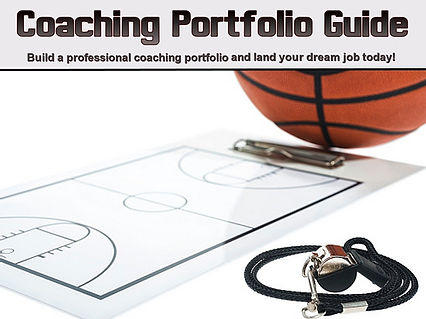
Your first impression is everything when applying for a new coaching job. A professional coaching portfolio is the tool that highlights your coaching achievements and philosophies and, most of all, helps separate you and your abilities from the other applicants.
The key to landing a new coaching job is to demonstrate to the hiring committee your attention to detail, level of preparedness, and your professionalism. Not only does a coaching portfolio allow you to exhibit these qualities, it also allows you to present your personal philosophies on coaching, leadership, and program development in an organized manner.
The Coaching Portfolio Guide is an instructional, membership-based website that helps you develop a personalized portfolio. Each section of the portfolio guide provides detailed instructions on how to organize your portfolio in a professional manner. The guide also provides sample documents for each section of your portfolio that you can copy, modify, and add to your personal portfolio.
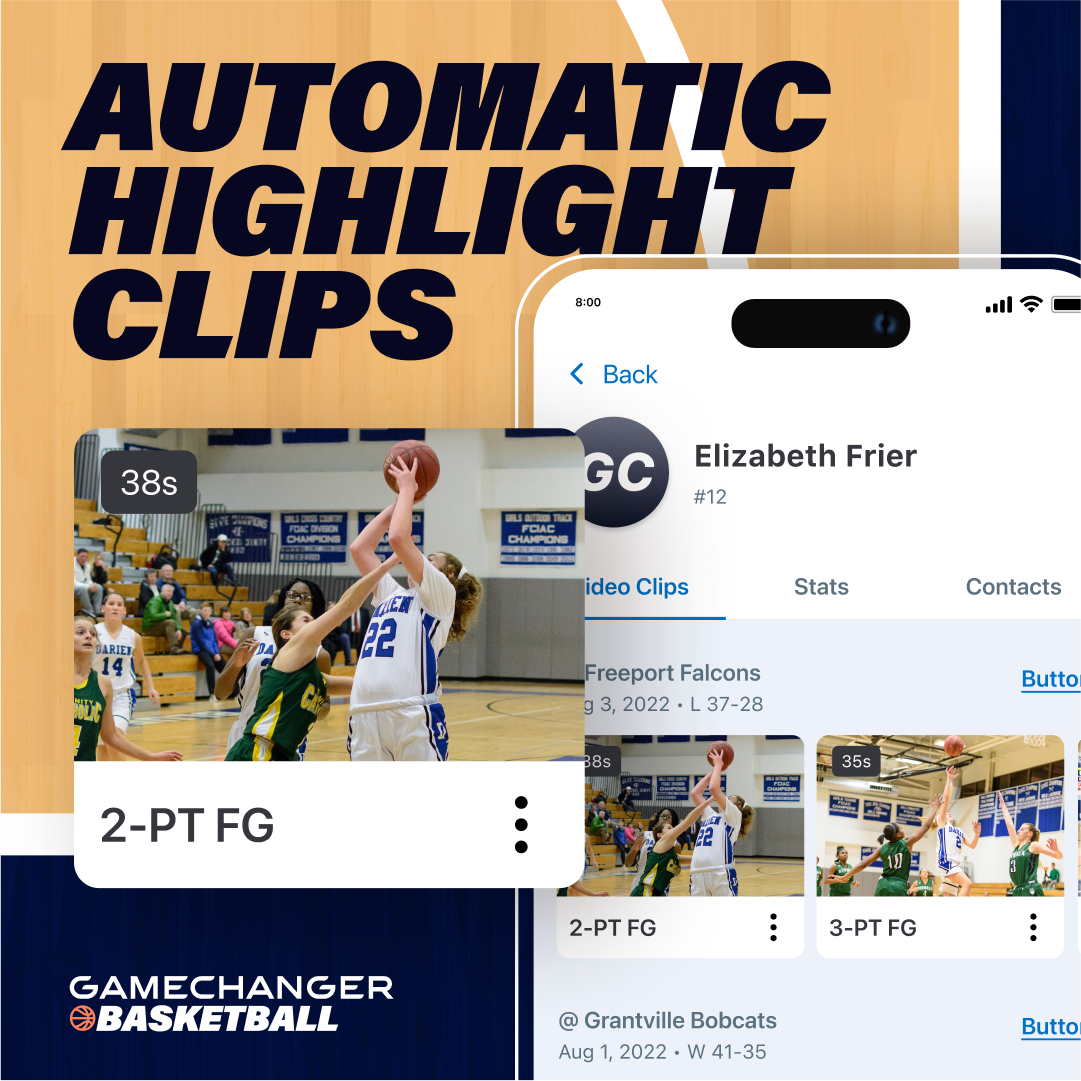
Hey, coach! Want to take your team to the next level this season? Introducing GameChanger, the ultimate game-day assistant with tools to give you a winning advantage. With GameChanger, you can track stats, keep score, and even live stream games, all for free! Get the stats and crucial game video you need to lead your team to victory, all from the palm of your hand. Coach smarter this season with GameChanger. Download GameChanger today on iOS or Android and make this season one to remember. GameChanger. Stream. Score. Connect. Learn more at GC.com/HoopHeads
THANKS, TYLER COSTON
If you enjoyed this episode with Tyler Coston let him know by clicking on the link below and thanking him via Twitter.
Click here to thank Tyler Coston via Twitter
Click here to let Mike & Jason know about your number one takeaway from this episode!
And if you want us to answer your questions on one of our upcoming weekly NBA episodes, drop us a line at [email protected].
TRANSCRIPT FOR TYLER COSTON – FOUNDER OF SAVI PERFORMANCE ON TEACHING SHOOTING TO BEGINNERS, ACTION BASED PLAYER DEVELOPMENT, & LOCK LEFT DEFENSE – EPISODE 972
[00:00:00] Mike Klinzing: Hello and welcome to the Hoop Heads Podcast. It’s Mike Klinzing here without my co-host Jason Sunkle tonight, but I am pleased to be joined for the third time, Tyler, third time, Tyler, threepeat, Tyler Coston. From Savi Performance. Tyler, welcome back, my man.
[00:00:20] Tyler Coston: It’s a pleasure to be here. I’ve always loved the name of your podcast.
I’m a hoop head. So I just identify with Hoop Heads. Let’s go.
[00:00:28] Mike Klinzing: Yeah, that’s a go. I mean, it’s one of those that it’s one of those things when you, I’m sure you have run into it when you’re trying to name and you’re coming up with the ideas, you’re always trying to brainstorming and thinking about it.
You’re like, okay, is this a good name? Is it not a good name? And then you’ll see somebody else’s thing that they put together. You’re like, yeah. That’s a really good name. Why didn’t I think of that one? So, yeah, so I’m glad there’s somebody out there that likes it besides, besides Jason and I, but anyway, we thought we’d jump have Tyler jump on with us tonight and just hit on a couple of different topics that are relevant out there in the basketball world that he’s got some expertise in.
So we’re going to just go through one at a time. Each of these three topics, talk for about 10 or 15 minutes on each one and hopefully we can provide some good value to our audience of coaches. So let’s start with shooting development for beginners. There’s a lot of people out there, clearly way more coaches coaching.
At the beginning level of the game that there are at the highest levels of the game. And sometimes I think that gets overlooked in terms of how do we teach a kid to shoot the ball properly? What are some of the things that are important when it comes to that? So kind of give us your thoughts there.
[00:01:38] Tyler Coston: Yeah. Well, first off, a big thank you to anyone that is investing in beginners, because everyone tends to gravitate towards the highest level of the game, but that’s not where you can have the greatest impact. It’s not the greatest opportunity. And we lose so many players at the youth level. So thank you.
You are doing God’s work at the beginning level of the game. I just did a camp in Idaho, Southern Idaho, and I had a couple of my coaches with me. And every time I walked into the youth gym or the freshman gym, because I was with the varsity group, the freshman gym, I didn’t stay long.
I did not stay long because they’re so far behind and it takes so much more energy. And so I was so grateful to my coaches that were investing and serving those players because it is less energizing as a coach. And it takes you giving way more of yourself. So it’s so valuable. But there’s no way that any varsity head coach can expect to only have a successful program.
If they only coach the varsity squad, you have to build the feeder program. It takes, it takes the marathon, not the sprint of one season, takes the marathon of year after year. So a big shout out to those of you that are investing with youth basketball players. It’s, it’s been wonderful to get to dive into this with my daughters who have decided to play basketball nine and 11. They started when they were eight and 10. And so I’m invested in this age group. And so I’ll start with this. I was I was hit up on Twitter recently by a coach that sent me a screenshot of Caitlin Clark’s shot. And one screenshot was where it was very abnormal.
It was, it was not the classic technique or form. And they said, would you fix this? And I first responded, it was someone that was with ESPN, huge following, like 300,000 followers. And I said, well, first off, I think the question is wrong when you say fix. And I’ve used fix in my marketing because it’s a trigger word, but let’s leave that aside for a moment.
I said, when you use the word fix, you imply that something’s broken. And when you apply that something’s broken, you imply that there’s one right way to do something, a wrong way to do something. And so I said, no, I wouldn’t fix it. But I think that everyone can tune their shot. Like you might tune an instrument.
You can get it to be a little bit more in rhythm or in sequence or whatever. And so I think that each musical instrument, just like each shot is unique and a little bit different. But we got to tune it. And with use or disuse, it gets out of tune. So five common things that I’ve used with youth players, five common errors and their fixes.
I’ll fire through them real quick now. This is like my first framework that I’ll view a youth player shot through really any player shot through when they first come into my gym and they say, I want to work. I’ve used this with pro players all the way down to youth players. First one is basically this.
Line. So do they commonly miss left or right? Or is there a common miss short or long? If there are misses left and right, let’s not even worry about power. Let’s get some alignment in. Left misses I found tend to be with stacking their body. So traditional coaching, as we all know, has been 10 toes to the rim shooting off the chest line.
And I’ve instead offered up that we should shoot off the line of our shoulders instead of shooting from the ground up, but shoot from the shoulders down. The shoulders are where you establish your line. And so most players that miss left are actually way too square and they end up shooting across their body because the arms connect to the shoulder.
So we’ll establish that first. If they tend to miss right, well, the main reason that players tend to miss right on the flip side is actually a path issue. So it’s what I would call a catapult. So when players tend to miss right, they tend to actually start the ball very far away from their body.
They tend to bring the ball very close to their chest and they tend to push out from their chest. These aren’t a hundred percent, but they’re common and they’re likely, and it’s just the lens. So once we can establish Okay, we can shoot in a straight line. We have eliminated left and right misses.
Well, then we can address power. Once you can shoot in a line, then you can start to address power. And so the two most common misses that are short first and long second short first tends to be a sequence issue that the upper body is on a sequence with the lower body. The upper body is actually behind the lower body.
So we lose power and transfer. So we just try to improve our sequence if we’re missing short. If we tend to miss long, it tends to be a posture issue. Actually, a lot of times their posture, their spine tilt will vary significantly throughout their shot. And so we can stabilize the posture. We can eliminate a lot of long misses.
So once we get through the left, right, misses. To common errors and common fixes, and then we eliminate the power issues to common errors and common fixes. Usually the fifth one really has to do with their hands. The hands are important. It’s how we touch the ball. It’s how we go force down the center line of the ball.
And so a lot of times players, when they react to pressure, Or speed or defense, they don’t actually get the ball set in their hands correctly. And so the ball will tend to come off the side of their hand or they’ll get they’ll get a little bit too much of a two handed shot or whatever. And so we work a little bit with their hands and their grip.
So that’s kind of the five step process that we use with youth shooters as well. My nine year old daughter, for example. is on to the posture step. She can she, she has eliminated left and right misses. But she has not eliminated the left, the short and long misses. So we’re on the posture step. Whereas my 11 year old daughter, she doesn’t spend as much time in the gym.
She’s still in the left, right miss stage. And so for her, we’re still working on path for her. So that’s kind of the five step process. And if you want to check it out, YouTube savvy coaching, I’m actually going through these five misses right now. I think we’ve debuted the first. three videos. The last two or the last two videos are coming out this Saturday and next Saturday, and I’ve got two pros, two college players, and one youth player that I take through all five of these misses.
So anyway, that’s kind of the that’s kind of the process that we use it at our academy locally.
[00:07:55] Mike Klinzing: What do you think about in terms of having youth players shoot on a lower basket? What’s your feeling? Because here’s what happens is You can have conversations with people that have wildly different opinions on that particular thing.
Especially when you start talking to parents of youth players who are often widely misinformed about what makes a good shooter. So just give me your thoughts on that.
[00:08:23] Tyler Coston: So I put out a video on YouTube about having players shoot on lower baskets for their long term and marathon success. And I got significant pushback.
Saying, oh, entitled much? Like, you have a special hoop height for gym players or you’re super soft. Give him a heavy ball and have him shoot at 10 feet. I was tracking up all of that is a microwave mentality. And it’s honestly, I think what’s wrong with youth basketball is that my youth player needs to be better than the youth player down the street or in our area or in our county.
Basketball development is a marathon and not a sprint, right? It’s a crock pot and not a microwave. Anything that is, I need to get better right now to be able to compete or perform right now, I would say is misguided. No one cares who the best, well, the wrong people care who the best is. That is true.
That is very true. We don’t want to go there, Tyler. You’re right. You’re right. But nothing matters until high school. Nothing matters to varsity. At the varsity level, I think that’s the first time that you need to actually shift your focus to competition. And that’s the point where college coaches actually care.
I mean, we have a local academy in Phoenix and I had my 15 year olds. My 15U team, national team, probably the best or second best team in all of Arizona. Have, I, I set up recruiting calls with them for multiple division one schools and every division one coach that I get our group on with, they’re all going to be college basketball players.
They say, we’re not going to offer you a scholarship this year. We don’t care. We’re not recruiting your class right now. Like the only people we would talk to in your class are five stars. You know, there’s 20 of them in the country. Stay the course, get better. We won’t offer you until after your junior year.
And that’s from division one college coaches and all the division two and IA and D three coaches are later than that. So parents, it doesn’t matter till high school, till varsity. So make every decision at a marathon level, nothing matters until later. And so like any shortcuts you hope to take.
Shooting at taller hoops or being better than the person down the street right now or playing at a club where the best players are, it’s the development lens that you need to adopt.
[00:10:49] Mike Klinzing: Yeah. I want to piggyback off two things you said. So one is when you start thinking about a lower basket and the pushback that you get when you put that out there.
To me, it always comes down to, you want the game to be fun for kids. And when you watch a bunch of eight year old kids where 75 percent of them can’t even get the ball up to the basket, let alone get a shot to go in. Why did any of us fall in love with the game of basketball? Because we’d like to see the ball go through the basket.
And so if you can have a youth three on three half court game and play it on an eight and a half foot basket or a nine foot basket, and the score can be 30 to 28 versus I play it on a 10 foot basket, and the score is eight to six, guess which game those kids are going to have more fun in and guess which kids are going to want to keep playing more basketball.
And ultimately, if your goal is to make the kids better, well, guess what? If they’re playing more basketball, they’re going to get better. And so to me, it’s just a simple fact. And there’s, there’s some easy counterarguments, but too often people don’t want to hear them. And that’s, I think, Sort of a sad statement.
And then the second thing that you said about the recruiting part of it, and I went through this with my son and it’s super interesting. So he just graduated from high school this past June, and he’s going to go play division three college basketball at Ohio Wesleyan and very fortunate to be able to have an opportunity to do that.
But he played on a very good AAU team. And when they were heading into their junior years, they went 37 and three during that season. And. I mean, we, again, we have, I think four or five of those kids are going to play college basketball and the other four or five probably could have played at some level and just opted not to play.
Nonetheless. When those kids were going into their junior year and they’re going 37 and three, there was nobody watching them play. Literally no one. And it goes back to the reason that you just said is that those schools are all recruiting the cycle of kids heading into They’re senior year who’ve completed their junior year of high school.
And so then this past spring, or I guess now two springs ago, whenever we were playing, there was always coaches watching us because again, we were rising seniors at that point. So it is a great point to keep in mind for any parent that’s out there listening, that anybody who is selling you that, Hey, you need to be here or be doing this because Coaches are going to be watching you and seeing you and offering you.
It’s not true. It’s just not true until you are a senior. And I’m glad you made the point that, Hey, we’ll talk to five stars because that is true and people will try to, people, people will try to make that argument to you, like, Oh, I just and I’m like, yeah, but look, if you’re that good that you’re going to be going to North Carolina or Duke, you’ve already been identified by the time you’re in like eighth or ninth grade.
So it’s that you’re not, you’re not sneaking up on anybody. So. Again, I think those are two great points that you made in terms of youth development.
[00:13:46] Tyler Coston: Awesome. Thank you. Yeah. Thank you for highlighting those. Cause parents and coaches need to hear it over and over again. And the coaches that are, that are selling you on, Oh, come to this program because we’re going to play a national schedule at the eighth grade level. It’s an absolute, it’s about their ego, not about your, yeah.
[00:14:05] Mike Klinzing: Yeah, absolutely. And even like, again, so the team that my son played on, you’re talking about like kids that played at the highest level. We didn’t have any guys that signed division one.
We had a couple of division twos and division twos and division threes. If you’re traveling across the country, Those schools, for the most part, unless you’re talking about super high academics, those schools are recruiting at the local level. So like for us, for us here in Ohio, we didn’t travel outside of the Midwest.
I mean, you’re talking about states that were contiguous to Ohio. Any other trip for us would have been a complete waste of time because there’s no division threes, really, that are going to be recruiting our kids from Ohio. It’s just, there’s plenty of division threes right here, division twos. Right here for us to be able to be seen by.
So again, it’s just, you start talking about all that travel piece of it. And it’s just, there’s a lot of misconceptions out there. So hopefully we at least clear it up a couple. All right. We’re on to question number two. All right. Number two, action based player development. So tell me a, for people who don’t know what that is, define it, and then tell us how we can utilize it as coaches to help make our players better.
[00:15:15] Tyler Coston: If you look at any trainer. You look at nearly any trainer on Instagram, and what they’re showing you is not action-based player development. They’re showing you stationary dribbling moves, on air finishing moves stationary shooting. The opposite of that would be a progression. I’ll be very, very clear and simple on this.
A progression would basically be this. TLC. Teach, learn, compete. Okay. Teach them a skill. The skill could be a dribble move, finishing move, shooting footwork, whatever. Okay. Teach them that. Okay. Then let’s learn that in the context of an action. So when would you actually use this in a game like action?
The reason why a lot of players can’t transfer the skills that they work on on their own or with a trainer or in a practice, they can’t translate it to a game is because they do it in an. Non game like scenario. So what’s the context in which this would actually happen in the game? Let me give you a specific example.
One of our triggers in the race and space offense is our blast series. So anytime a player blasts from the corner to the 45 or the wing, and they catch the basketball in neutral, two phases of offense, advantage in neutral, Advantage is dominoes. Neutral is action. When we have no advantage, we run in action.
So if you blast from the corner of the wing and we’re neutral, it triggers an action. We have a series of actions when you catch the ball in the 45 and the race of space offense. Okay. One of our actions in blast series, when you blast it to the wing is a zoom or get action, which is basically a pass and sprint off to get the ball back, zooming off of a handoff.
So, that’s a scenario when you might move, use a skill. So one of the skills that we use is our point five catches. We use a skill we call a go step. A go step is a little bit different than a stampede. A stampede you catch while running. A go step is how you get into a sprinter stance off of a stationary catch.
And we just try to get a little bit more explosive and a little bit more straight line. off of this so we don’t have to fake. Okay. So TLC, teach, learn, compete, teach, go step, really focus on the technique. Can we get our stance split? Can we get the ball outside of our frame and outside of our hips? Can we get our nose over our toes into a sprinter stance?
Can we push with 90 percent of our weight off of our front foot? Let’s teach that. Let’s feel what that feels like. Okay. Now. Let’s do it out of a Zoom, because that’s a scenario a lot of our players are going to be in. It’s action based development. So now we just do it out of a Zoom, but with a single Defender.
And the Defender is actually showing them a read. A read is how can we acquire information. And so the read’s going to be, am I going to go step to the left? Am I going to go cross? Am I going to go pull up? Am I going to go finish off of one because the defense is behind me? Am I going to go finish off of two because the defense is on the side of me?
So we do it out of an action based pattern that they’re going to realize in a game. Then the C, compete, right? TLC, teach, learn, compete. The C is let’s compete off of zooms using the go step. And so we have completely live defense. We’re playing to five points by ones and twos. I always play by ones and twos.
Side note, little tip, because I really value the three pointer. So I want to, I want to highly accentuate and value it in training. It’s worth twice as much as I want players to shoot from three in training. So we compete to five by ones and twos out of the zoom action. The defense is catching. We have a coach or another player in the training session doing the handoff.
Then we clear it and we compete out of it. So that TLC progression would be like an action based scenario for a go step. Apply that to anything that you want to teach. Do it out of a game like action. You’ll see more transfer.
[00:19:08] Mike Klinzing: All right. So I guess to piggyback on that, what I would say is, and this is something that I feel like is really different from maybe the way that I was coached way back when, in terms of a lot of what you’re talking about to me always requires a lot of preparation and thought on the coach’s part to design those particular steps that you just outlined, right?
I have to think about, okay, what am I running? What are the actions that we run in our offense? How can I design? this smaller section of what we do in the totality of our offense. I have to put that prep work in before practice and then present that to my players. And then kind of let them sort of figure it out.
Not that I’m standing there completely silent, but I’m letting them kind of, okay, here’s the skills that we worked on. Now you’ve got to apply these in a dynamic situation. And the old school would have been, I’m going to dynamic, I’m going to tell you exactly what, well, this is what you should see. This is what you should do.
This is the exact read. This is exactly where I want you to put your foot. This is how I want you to do it. As opposed to I’ve presented this. environment. I’ve created this environment which then allows you to sort of experiment and utilize the skills and techniques that we’ve talked about, but do it in such a way that it reacts to the environment that I’ve created as a coach.
Which again, to me goes back to I got to be prepared when I set foot on the practice floor with all those things that you just described. Does that make sense?
[00:20:45] Tyler Coston: Yeah. Absolutely. And it really just comes down to being comfortable with the mess. Traditional coaching is you feel like a good coach.
If you run a really clean practice, the lines are straight. There aren’t a lot of mistakes. There aren’t turnovers. Balls aren’t bouncing, but the game isn’t that way. And I think modern coaching and modern basketball is being comfortable with messiness because it’s just more like the game. So that, that’s what I would challenge and argue for is being comfortable with the mess.
[00:21:23] Mike Klinzing: Yeah, totally. And I think, again, it goes back to, as a coach, you have to be okay with mistakes because you want your players to stretch what they do. You want them to be trying to do just a little bit more maybe than what they’re capable of right now. And as they do that, it’s not always going to look pretty.
It’s not always going to come out of practice going, Oh man, that way we were so crisp today. Instead, it’s going to be like, Hey, we were, we were making mistakes, but we were making mistakes based on action and based on trying to do things, which again is going to expand each player’s skill set. And then eventually, obviously, expand the team’s ability to compete.
[00:22:02] Tyler Coston: All right. For sure. I just did a screen share. I’m not sure if you go audio only or not, but there’s one of my favorite visuals. Can you see it right now, Mike? I see it. Yeah. Yeah. Most traditional coaches want the left, which is a pencil that is sharp and unused.
Whereas I think great coaches and effective training sessions look more like the pencil on the right, which is worn down to a nub. It’s all dirty and messy. It’s easy to look sharp when you haven’t done the work. The work makes you messy. So I just want to share that with you real quick. It’s one of my favorite images we use in a lot of our teaching and presentations.
[00:22:38] Mike Klinzing: I love that. It’s a really good way to sort of simplify what it looks like and make it realistic in terms of an analogy that coaches and players can both understand. Topic three, lock left, lock left defense. Give me the idea behind it, where it came from, and then why you think it’s so effective and why more coaches should be using it.
[00:23:01] Tyler Coston: Every time I go into a clinic, a training session, anything we’ll, we’ll have multiple scenarios. I’ll ask a question like, how many of you are right handed? I’ll ask a question like where are we attacking when we run this drill? And it’s always right. The answer is we’re right handed. I’ll ask how do you feel more comfortable finishing?
I’ll add, we’ll, I’ll say, okay, when we start ball handling drills, what hand do you start with? When we do vision testing, right? Where do you have more vision when I’m dribbling with my strong hand? And so I always just respond, hashtag lock left. Because of all of these reasons, I was recently emailing with a coach.
I won’t share the school that this college coach coaches for division two they went to the national championship a few of the last five years, and they emailed me recently, like, Hey, we’ve been using lock left principles for the last. We love it. We continue to use it in both our base and all our alternative defense.
If there’s any high school program that is not locking left, they are missing the boat. They did, they just emailed me that. So they said, Hey two of the division one programs, men’s programs that continue to use it. Lock Left Principles, if any coach wants to check it out. University of Northern Colorado and South Dakota State both use Lock Left Principles on the women’s side. Oklahoma State, Montana State. A couple of programs that I’ve worked with. It works at the highest levels and it only works better at the lowest levels. Because the lower and lower level you go, the weaker and weaker they are with their weak hand and the vast majority are obviously right handed with our national team, our savi academy national team.
We’re going to be in Iowa actually here in a little bit. We’ve got probably six, six players on it. There’ll be power five players. We won the Nike tournament of champions by 30 plus points in the championship game. Didn’t lose a game in that one. And our whole verbal cue is sit, S I T, sit. It’s what our players are yelling on the bench.
And over and over and over again, we just want them to sit in a stance. Just sit on the right hand. Sit. Don’t stand up out of your stance. And don’t give up sitting on the face or sitting on the left hand. Just sit on the right hand. And it’s unbelievable. Basketball is a game of opposites. On offense, You want to cross the street or switch sides of the floor.
On defense, you want to keep the ball on one side of the floor. Lock left is not just an on the ball defense. It’s about keeping the ball on one side of the floor or the left hand side of the floor. When we keep the ball on one side of the floor and it never crosses the street, our success rate is unbelievable.
When the ball crosses the street or we give a right hand drive, the other team usually scores or gets fouled. It’s very simple. So I’ll just turn to the bench and be like, why did we get scored on? And they all say, we let a right hand drive easy. So, I mean, that’s just kind of been both my anecdotal and and actually the experience of many many, many teams, but I am constantly flabbergasted by any high school or lower program would consider doing anything else.
And I think it’s still pretty revolutionary. It’s still pretty rare. So anyway, that’s my that’s my answer to your question.
[00:26:25] Mike Klinzing: I have not seen it really done here in the Cleveland area by anyone. And what I will say, my personal anecdote that is not related to, from a team standpoint, but from an individual standpoint.
So my son had a pretty good defensive season this past year as a senior, and I like to think that he has at least a semi decent basketball IQ that maybe something from his dad rubbed off on him at some point. And but anyway, there, there would be lots of times where he would whenever a game would end and, or he’d say to me, like, I, like, dad, this guy only goes, he only goes right.
And he’s like, watch, when I pick him up here on the film, Like, I’m, to your point, I’m sitting on his, I’m sitting on his right hand, I’m making him go left. And he’s like, well, and look when guy X picks him up, like he doesn’t, he doesn’t favor him. You know, he doesn’t force him to go to his left. He’s just, he’s trying to play him straight up.
And he’s like, I just don’t understand how guys don’t immediately, either, you know that from the scouting report or you don’t pick it up and just say, Hey, I got to force this guy to his weak hand. And that was a conversation that my son and I had frequently. During the season of like, Hey, you got to know, and again, we’re talking about an individual level, not as a, on a team level, like we’re talking about here, but just even on an individual level, like if a, you should have it in the scouting port of a B, even if you don’t have it on the scouting port, if you’re paying attention and you played a guy for a quarter, by that point, you should know like, okay, which way does this guy like to go?
And I got to take that strength. away from him. And at least I can do it on an individual basis as a defender. But yeah, I can totally, again, understand why, if you can apply all those Lock Left principles and keep everything moving to the left. First of all, just in terms of practice, right? We just talked about how.
The things that you practice are the things that are going to translate better to games because the learning is going to be better. And most teams, I would argue that if you charted their practices, how many times are they starting, even if the play could go either direction, how many times in practice are they starting that play going to the game?
the right. I would guess it’s well north of 75 percent of the time that that play is starting to the right, even though it could go either direction. So to me, it just makes, it just makes sense.
[00:28:49] Tyler Coston: Yeah. And what we found having done this for a year plus now with our academy in Phoenix, Our players, because we’re locking our own players left every practice, they developed their weak hand and more successful offensively with the ability to go both ways, which is the biggest benefit from my end of just overall player development. I feel like we’re doing other teams a favor. Yeah, right. By forcing them…
[00:29:17] Mike Klinzing: Wait, but, but, but in long term development, not in short term development, that is, that is long term development. In that particular, in that particular game, they may not, may not appreciate the ability to develop their players in such a way, but in a long term, I completely agree, which goes back to everything that we’ve been talking about tonight.
That’s good, man. That’s really good. That’s funny. I like it. I like it. All right. Well, those were the three and we reached our goal. We just crossed the 30 minute mark. We are before Midnight Eastern time. Come on. So before we get out, Tyler, I want to give you a chance, share how people can connect with you, find out more about what you’re doing with Savi, subscribe to all the stuff you’re doing.
Just tell people how they can connect with you.
[00:29:58] Tyler Coston: Well, I appreciate it. We actually are just shifted over and every coach in the world Should join our coaching community. It’s free. It’s on a new platform called school. It’s a free coaching community. We just launched it a couple of weeks ago, actually, because we realized that while we are serving a few thousand coaches with our paid products, we wanted to have a bigger impact.
So our community where you can ask myself and my partner, Mark Cascio and our other coaches in the community, ask us any question at any time. We want to be a part of the revolution to modern coaching. So you can get with us SaviCoach.com. You can get directed to our free coaching community. There’s a ton of free resources in there and we want to serve every coach for free.
And from there, there’ll be plenty of ways that you can go deeper with us, whether you want consulting or clinics or our courses or whatever. But our, for us, impact is first. And if we offer value, then you’ll find a way to go deeper. So check us out, SaviCoach.com Savi Coaching on YouTube, @SaviCoaching on Twitter, Instagram.
It’ll all filter you to our free community. Go check us out. We would love to interact with you and get to know you through there and serve you in any way that we can.
[00:31:13] Mike Klinzing: Hoop Heads audience, if you are listening tonight and then you have just gotten a taste of. what Tyler brings to the table in terms of his passion for coaching, for coach education, and for making the game of basketball better for all of us.
So please go and check out all the things that Tyler is doing, grab all the resources that he has, pick his brain. As you saw tonight, there’s just a tremendous amount of knowledge that he is willing to share. And Tyler, I don’t know if I shared this story with you. I’m going to share it. I don’t know if I shared it on either of the last two times that we had you on, but I had a girl that she came to my basketball camp when she was younger. She’s probably, she’s actually an optometrist now, so she’s probably getting close to 30 years old. At one point, she came to my basketball camp. Then she was working my basketball camp and she had on some PGC shorts. And I’m like, Oh, PGC whatever.
This was, I don’t know, this is probably, man, it’s probably close to eight, nine years ago at this point. And somehow. I was talking about Mano and talking about you, and she’s like, Tyler Coston . She’s like, I love that dude. She’s like, I love that guy. I just love him. And I’m like, what do you love about him?
She’s like, he just brings it every day. And so whenever I think of you, I always picture her, her name was Carly Thomas. I’m sure you probably don’t remember, but anyway, whenever I think of you. I think of Carly telling me at camp, Tyler Coston, I love that dude. So that’s one of those stories, right? That’s it. Carly Thomas.
[00:32:50] Tyler Coston: I’m going to bring it tomorrow for Carly Thomas.
[00:32:53] Mike Klinzing: That’s it. That’s it. So that’s a good story to end it on. So again, Tyler can’t thank you enough for taking the time out tonight to jump on and share your knowledge on those three topics.
And again, If you’re out there listening, please check out all the things that Tyler has to offer. An incredible basketball mind. Tyler, thank you. Really appreciate it. And to everyone out there, thanks for listening and we will catch you on our next episode. Thanks.