
ROUND TABLE 77 – WHAT ARE THE KEY PRINCIPLES YOU TEACH TO ENSURE SPACING AND TIMING ON OFFENSE? – EPISODE 1098

Welcome to the 77th edition of the Coach’s Corner Round Table on the Hoop Heads Podcast. Each episode of the Coach’s Corner Round Table will feature our All-Star lineup of guests answering a single basketball question. A new Coach’s Corner Round Table will drop around the 15th of each month.
May’s Round Table question is: What role do analytics and statistics play in shaping your strategic decisions?
Our Coaching Lineup this month:
- Erik Buehler – Arapahoe (CO) High School
- Chris Delisio – Olmsted Falls (OH) High School
- Stephen Halstead – Grace College
- Dave Hixon – Amherst College
- Chris Kreider – Rice University
- Bob Krizancic – Mentor (OH) High School
- Josh Merkel – Randolph-Macon College
- Don Showalter – USA Basketball
- John Shulman – University of Central Arkansas
- Joe Stasyszyn – Unleashed Potential
Please enjoy this Round Table episode of the Hoop Heads Podcast and once you’re finished listening please give the show a five star rating and review after you subscribe on your favorite podcast app.
Be sure to follow us on twitter and Instagram @hoopheadspod for the latest updates on episodes, guests, and events from the Hoop Heads Pod.
If you listen to and love the Hoop Heads Podcast, please consider giving us a small tip that will help in our quest to become the #1 basketball coaching podcast.
THANKS COACHES!
If you enjoyed this episode let our coaches know by clicking on the links below and sending them a quick shout out on Twitter:
Click here to thank Erik Buehler on Twitter!
Click here to thank Chris DeLisio on Twitter!
Click here to thank Stephen Halstead on Twitter!
Click here to thank Dave Hixon on Twitter!
Click here to thank Chris Kreider on Twitter!
Click here to thank Bob Krizancic on Twitter!
Click here to thank Josh Merkel on Twitter!
Click here to thank Don Showalter on Twitter!
Click here to thank John Shulman on Twitter!
Click here to thank Joe Stasyszyn on Twitter!
Like this show? Please leave us a review here — even one sentence helps! Consider including your Twitter handle so we can thank you personally!
And if you want us to answer your questions on one of our upcoming weekly NBA episodes, drop us a line at mike@hoopheadspod.com.
We’re excited to partner with Dr. Dish, the world’s best shooting machine! Mention the Hoop Heads Podcast when you place your order and get $300 off a brand new state of the art Dr. Dish Shooting Machine!
Your first impression is everything when applying for a new coaching job. A professional coaching portfolio is the tool that highlights your coaching achievements and philosophies and, most of all, helps separate you and your abilities from the other applicants.
The key to landing a new coaching job is to demonstrate to the hiring committee your attention to detail, level of preparedness, and your professionalism. Not only does a coaching portfolio allow you to exhibit these qualities, it also allows you to present your personal philosophies on coaching, leadership, and program development in an organized manner.
The Coaching Portfolio Guide is an instructional, membership-based website that helps you develop a personalized portfolio. Each section of the portfolio guide provides detailed instructions on how to organize your portfolio in a professional manner. The guide also provides sample documents for each section of your portfolio that you can copy, modify, and add to your personal portfolio.
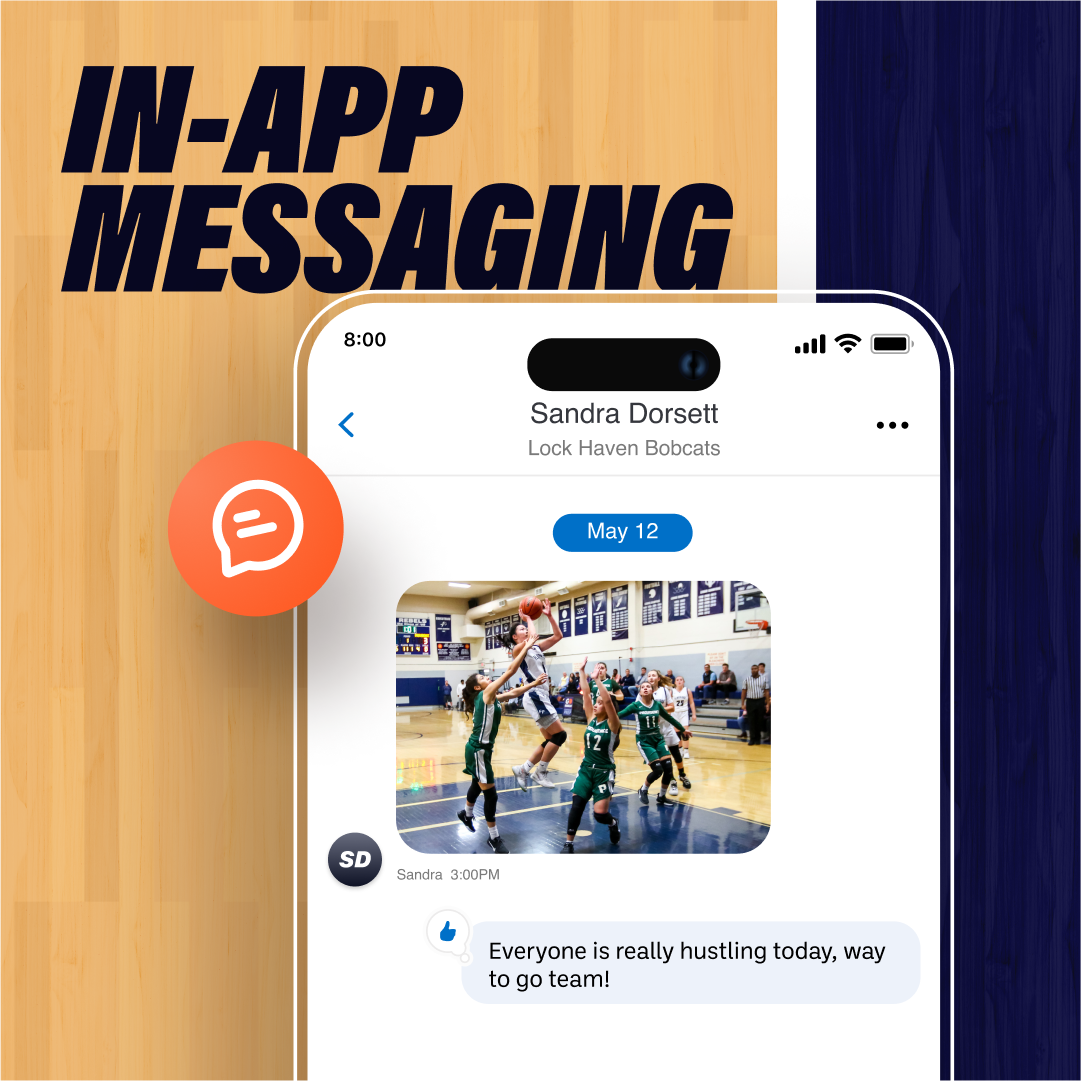
Hey, coach! Want to take your team to the next level this season? Introducing GameChanger, the ultimate game-day assistant with tools to give you a winning advantage. With GameChanger, you can track stats, keep score, and even live stream games, all for free! Get the stats and crucial game video you need to lead your team to victory, all from the palm of your hand. Coach smarter this season with GameChanger. Download GameChanger today on iOS or Android and make this season one to remember. GameChanger. Stream. Score. Connect. Learn more at GC.com/HoopHeads
TRANSCRIPT FOR ROUND TABLE 77 – WHAT ARE THE KEY PRINCIPLES YOU TEACH TO ENSURE SPACING AND TIMING ON OFFENSE? – EPISODE 1098
[00:00:00] Narrator: The Hoop Heads Podcast is brought to you by Head Start Basketball.
[00:00:19] Mike Klinzing: Hello and welcome to the 77th edition of the Coach’s Corner Round Table on the Hoop Heads Podcast. Each episode of the Coach’s Corner Round Table will feature our all-star lineup of guests answering a single basketball question. A new Coach’s Corner Round Table will drop around the 15th of each month.
May’s Round Table question is, “What are the key principles you teach to ensure spacing and timing on offense?”
Our Coaching Lineup this month:
- Erik Buehler – Arapahoe (CO) High School
- Chris Delisio – Olmsted Falls (OH) High School
- Stephen Halstead – Grace College
- Dave Hixon – Amherst College
- Chris Kreider – Rice University
- Bob Krizancic – Mentor (OH) High School
- Josh Merkel – Randolph-Macon College
- Don Showalter – USA Basketball
- John Shulman – University of Central Arkansas
- Joe Stasyszyn – Unleashed Potential
Please enjoy this round table episode of the Hoop Heads Podcast. And once you’re finished listening, please give the show a five-star rating and review After you subscribe on your favorite podcast app.
Be sure to follow us on Twitter and Instagram at Hoop Heads Pod for the latest updates on episodes, guests and events from the Hoop Heads Pod.
Hey hoop heads, our friends at Dr. Dish Basketball are here to help you transform your team’s training this off season with exclusive offers of up to $4,000 off their Rebel Plus, All Star plus and CT plus shooting machines. Unsure about your budget, Dr. Dish offers schools only buy now, pay later payment plans to make getting new equipment easier than ever.
Learn more at drdishbasketball.com and follow their incredible content at Dr. Dish B Ball on Twitter, Instagram, Facebook, and YouTube. YouTube, mention the Hoop Heads podcast. Save an extra $300 on the Dr. Dish. Rebel All Star and CT models. Those are some great deals. Hoop Heads. Get your Dr. Dish shooting machine today.
[00:02:14] Darin Ford: Hi, this is Darin Ford, boys basketball head coach at Nordonia High School and you’re listening to the Hoop Heads podcast.
[00:02:24] Mike Klinzing: Coaches, GameChanger is making your game feel more valuable than ever. New this season to GameChanger, Film Room allows team staff to analyze full game videos, add comments to specific moments, and quickly share feedback with other coaches, team members, or families. The number one youth sports app automatically skips downtime in the game film, condensing event video into active play so you can focus on the moments that matter.
The best part? It’s completely free for coaches. Download GameChanger now on iOS or Android and take your coaching to the next level with Film Room on Game Changer. Game Changer. Stream. Score. Connect.
Let’s hear from our panel about the key principles they teach to ensure spacing and timing on offense.
Eric Buehler, Arapahoe High School, Centennial, Colorado.
[00:03:23] Erik Buehler: Hey, what’s going on at Hoop Heads? This is Erik Buehler assistant coach at Arapahoe High School. And this month we were asked what are some key points and some points of emphasis that we use to teach spacing in our offense.
Probably specific to kind of our philosophy and what we focus on, but we run the Villanova offense, and so we have some key spots, wing, wing, slot, slot, dunker position that we have to fill every single time down unless we score and transition. And in transition, we send our wings to the corners to get as much space for an early attack, early kickout transition three.
But the way we emphasize our points is every teaching moment, whether it’s ball screens or it’s a shortsighted game, or an advantage short, shortsighted game, we put our players in those five positions and we rep it, we rep it, we rep it, we rep it. We watch it on film from practice. We watch it on film.
From games just to show our guys like, are we starting in our key positions? Are we not starting in our key positions and all of our sets? We usually start from that initial formation, and then we will obviously transition into whether it’s a horn set or an ISO ball screen set that we’re running.
Something along those lines. But every time we run our offensive stuff, it may be three positions. Three with three players, or it might be five on oh, four on five, whatever the situation. We put our guys in those situations so they get used to being in those spots. And then we point out where we want ’em spaced and how we want ’em spaced just about every rep until it becomes more of a habit and they are getting in those positions on their own.
Probably not too unique, but that’s how we do it. Thanks for having me again. Talk to you guys next time.
[00:05:18] Mike Klinzing: Chris DeLisio, Olmsted Falls High School, Olmsted Falls, Ohio.
[00:05:25] Chris DeLisio: Hey, Hoop Heads, Chris DeLisio, Olmsted Falls. Teaching spacing and timing on offense I think is one of the most difficult things to do as a coach to try to get players to work as a single cohesive unit, and I think that’s what the basis of your teaching has to be.
I think principle wise, in order to teach spacing, I believe you have to really show spacing and teach spacing and help players understand how they need to be configured on the court. I. While they’re still trying to be a threat on the offensive end, and I think timing plays into that as well to understand that you’re, you are one single unit working together and as teammates are moving or doing something, you have to be able to move as well.
And they are all related and, and go into that. So many kids are good at one-on-one. They’re good in their own offensive world, but once put with other players and, and asked to be a team on the offensive end can sometimes be a struggle. So helping them understand some of those principles to understand where to move, how to move and when to move, I think is a very difficult task for a coach on the offensive end,
[00:06:46] Mike Klinzing: Stephen Halstead from Grace College.
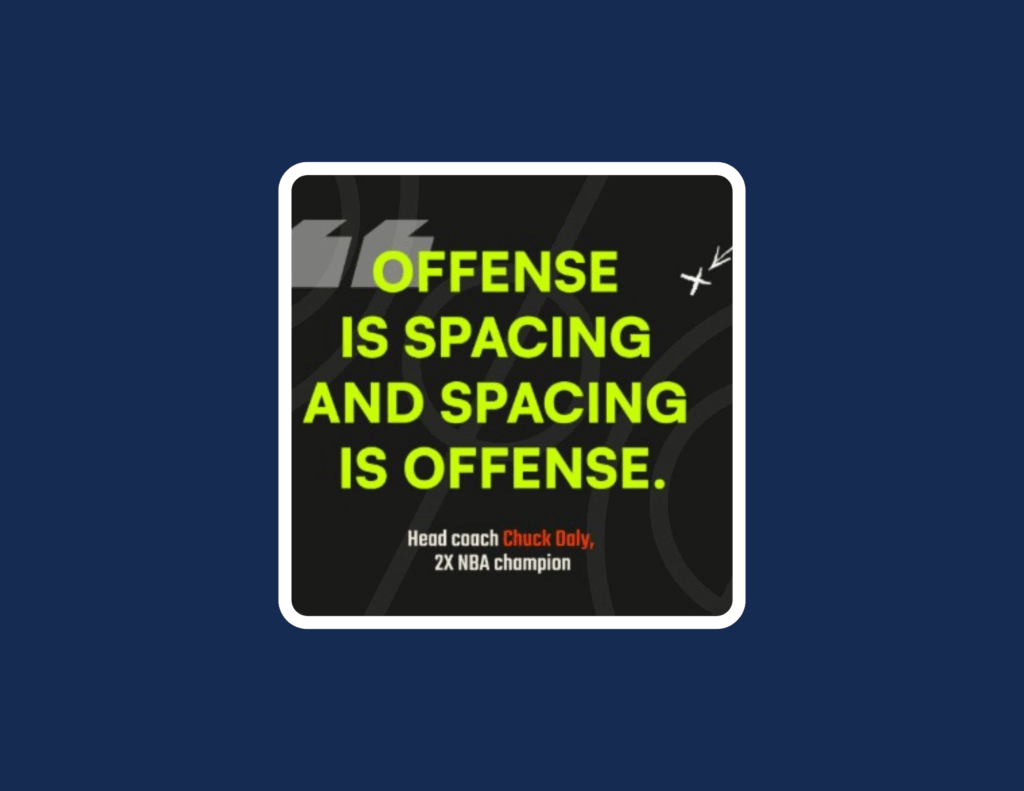
[00:06:51] Stephen Halstead: Hey, this is Stephen Halstead, assistant coach at Grace College tuning in for Round Table number 77. And the question this week was, what are the key principles you teach to ensure spacing and timing on offense? And that question made me immediately think of the quote that spacing is offense and offense.
Offense is spacing. And, and one thing. That we really try to teach our guys is just being able to read and react to the others on the court. So there’s a lot of different triggers or common actions that our offense will get through throughout of a possession. And at the beginning of the year, we’ll kind of teach where we want each of their guys to be spaced at and where you could be at on that.
And then as you start to dive into your offense more, you can start talking about your cutting and when, when is a good time to cut, whether it’s a 45 cut on a baseline drive, or maybe it’s a cut to the rim from a corner. And all of that just ties together with the spacing and the timing of your offense.
But I would say first spacing is what you want to do and you want to have at all times. And then from that, you need to be able to just read and react and be able to play off your teammates.
[00:08:00] Mike Klinzing: Dave Hixon, Basketball Hall of Famer from Amherst College.
[00:08:07] Dave Hixon: Good morning, Hoop Heads. Dave Hixon here. Retired Amherst Happy Mother’s Day to everybody when we were teaching you know, sort of spacing and things like that and our offenses, and I thought we did a really good job with it.
John Wooden’s quote, be quick but don’t hurry was sort of the beginning piece to that, which says so much about it. We used to try to teach patients, wait your turn, read. But when you do make a basket cut, we want you to make it like it’s, it’s the only cut that’s going on in the offense all the way to the basket full out, looking to receive a pass.
And again, then be patient. It’s not always your turn to make the cut read what’s going on, learn to read what’s going on, and so it can be a mess for a bit. But once people understand and learn to slow down to read. To think about spacing, but when you make basket cuts, make ’em hard. The timing of and the spacing of what you’re trying to teach comes together, probably the most beautiful thing. So hope that helps. Thanks a lot. Happy Mother’s Day. Bye-bye.
[00:09:16] Mike Klinzing: Chris Kreider from Rice University.
[00:09:22] Chris Kreider: Proper spacing and timing are both so critical when it comes to good offense. Spacing starts immediately in transition trying to win the race, get to the corners, have corner patients use the four point line as a landmark, but we want to create that space early so we can not only attack it for the early dominoes, but retack it to try to keep the blender going.
We always want to think about anytime we’re inside, three, we’re underwater. That reminds us that we have three seconds. To get outside three and re space properly to our four outer five out spacing. We want to read the ball handler. When the ball’s coming at us. We want to push away. When the ball’s going away from us, we want to pull behind that constant push.
Pull is a teaching point of ours. Any baseline drive, any middle drive, we want to fill the spots properly. The worst thing we can do is let a ball handler get stranded on a drive without having the proper outlets when it comes to the timing within a possession. Any two-man action needs to be scripted.
And there’s different components that you can break down from a two on oh to three on oh to five on, oh setting. But just always remembering timing’s important. You want to play with pace and speed, but there is something to be said for changing speeds. You want to know how to have a act, have a setup. Know what the coverage is going to be.
Know what our solution to that coverage will be, not only within the two man game, but then also off the ball On the weak side. What are we doing? Are we holding space? Are we cutting? If we’re cutting, when are we cutting? Or if we’re screening, and then the reads involved in each of that. But all of those interactions, the timing is so important.
And once again, 2 on 1, 3 on 1, 5 on 0. The teaching, the progression, the buildup, and then the carrying over to live play is where you make your money.
[00:11:25] Mike Klinzing: High school and middle school basketball program directors, listen closely. Coaches are expected to do far more than just coach. You know this. It doesn’t matter if you’re doing the coaching yourself or you have a full staff of coaches with you. You know very well that coaches handle scheduling, academic issues, parent communication, leadership development.
Even mental health concerns for athletes. A lot to deal with, and when coaches are stretched too thin, it impacts the development of athletes, team morale, and the overall success of the program. There are several ways to prevent you or your coaches from feeling overwhelmed. However, I’ll tell you one of our favorite ways to keep coaches firing on all cylinders.
That’s athlete driven accountability and organization. Instead of coaches constantly reminding players about assignments, grades, and practice schedules, the program at Playmaker Planner puts the responsibility back on the athletes by tracking their own academics goals and commitments. Student athletes become more self-sufficient, which of course allows the coach to focus on what they love doing most, Coaching. Let’s find out if the programs from Playmaker Planner can be a compliment to what you’re already doing. Visit playmaker planner.com/stop-is-this-for-you to find out more?
Bob Krizancic – Mentor High School, Mentor Ohio.
[00:12:48] Bob Krizancic: Coach K, Mentor High school spacing is absolutely huge. In any program we tell our players it’s ridiculous to have one defensive player guard, two offensive players on our team because of poor spacing to teach it. We run open post two corners, two wings point at the top, and we just tell our players, this is.
The amount of space that we should constantly have no matter what we’re in Jim Venos numbered fast break from the eighties. We teach on the break as far as one guard going left, one going right, the two trailers, the first one going to the block, and the second one to the top of the key. And the point guard dictates everything from there, but without the spacing.
We’re not a very, very good basketball team, so huge basketball iq, huge in your program, and it’ll translate into W’s. Best of luck.
[00:13:51] Mike Klinzing: Josh Merkel. Randolph-Macon College.
[00:13:56] Josh Merkel: What’s up, Mike? Josh Merkel to answer the question for the round table. Love that you continue to pour into coaches and players out there, but key principles to ensure spacing and timing on offense. I’m going to be diving in and listening on this one too ’cause we need to get better at it.
But one thing is probably no different than most putting down the X’s. So you’ve got the, the corners and we try to even go those deep corners. In line with the backboard as you kind of extend that out. So corners and then we’ll put ’em down in the slots at the NBA spacing. So if you kind of drew a line.
From the free throw line going up towards half court, we’d put an X down there, those two slots extended at the NBA spacing. So even off the college line is what I’m saying. And another one that’s important to us would be the shoulder. And we define the shoulder as the area between the wing and the slide.
And I think Villanova used to call it the shoulder. That’s probably where we got the language, but having some Xs there. So there are times when we really want guys to catch it in the slot because then they can drive at one with that guy being in the corner. And then there’s other times maybe for a ball screen where catching in the shoulder with a guy in the corner is good.
And now we can come ball screen or twist that ball screen. Timing is a good one. I’m not sure how much, or I might not spend enough time on the timing, but the way that we would drill that is by getting within our five on oh stuff and just having attention to detail there. Sometimes we’ll give a point system or a pass fail.
If if you’re not doing it with the right timing, then then it’s no good and maybe the other team gets a point or we have that team that messed it up. Go again. One other way that we might do it is. You know, you fly it down in transition and then on the way back you’re running a play. And if they mess up the play, then they do the whole series over so it can provide a little peer pressure to make sure that guys are locking in and getting the timing down because it’s going to cost you if you don’t. But hope that helps, brother. Take care. All the best.
[00:16:14] Mike Klinzing: Don Showalter, USA basketball.
[00:16:20] Don Showalter: Hi, Don Showalter here from USA Basketball. What are some of the principles used to teach spacing? This is a great question. I think with youth basketball we use a lot of spots on the floor or cones just to, so they can visualize what the spacing is like when playing a game. We do we do a lot of three on three action for youth and for high school players as well, as well as our elite players with USA basketball.
And we put Xs on the floor so they can see, alright, here’s where the spacing needs to be. And as we continue to do that, they get a great idea of how spacing is very important part of the total offense. So that’s, that’s the main thing that we use. We also use film. We show ’em videos of here’s, here’s great spacing, here’s not such good spacing.
Not only of themselves, but with other teams as well. Thank you.
[00:17:21] Mike Klinzing: John Shulman from the University of Central Arkansas
[00:17:28] John Shulman: This John Shulman head coach at Central Arkansas. And this month’s question, what are the key principles you teach to ensure spacing and timing on offense? We are a little different.
I wasn’t an offensive guy till I went to Huntsville and really fell in love with the Princeton offense. And the timing and spacing of that is so important. What are the key principles? I mean, we put tape, we put tape out there on spots that we demand our guys to be in. And, and we just demand them doing exactly what they’re supposed to be and where they’re supposed to be and why they’re supposed to be there.
We do a lot of dummy offense, a lot of dummy offense, and people get bored with it. But I think it’s important, especially with that offensive concept of prints and stuff and whenever that ball moves whether it be off a chin or, or, or rub stuff or. I guess most people call that rub stuff is point is are you going to the stretch?
And that’s another thing I think you have to know, terminology, dummy offense and terminology. I think your terminology has to be on point and whether you’re in the rub spot or you’re snaking or you’re in the stretch, it’s you’ve, you’ve got to. They’ve have to understand your language. And with our Princeton offense, our language, I think is the most important thing that we, we do.
So I think a, a principal would be language tape demanding, perfection, but I, I think everybody knows spacing and everybody knows how important it is, but. When you want we call our, the dead corner, the stretch for us. Are you in the dead corner or are you two feet from the dead corner? I personally think that if you want to be special, you have to do things exactly right.
So if you’re in the stretch, you better be in the dead corner. And if you’re not, you don’t deserve success, just to be honest. And sometimes we deserve success and sometimes we don’t. And so I just think language demanding perfection, using visuals as in tape on the court, I think can really help your spacing and your timing.
We do incorporate an awful lot of our spacing and timing offensively in our shooting drills. So our shooting drills are not just shooting, just not working on shooting. We’re working on offense at the same time that we’re working on shooting, and I think that has been very, very beneficial to us. Tough question.
Hard question. Hopefully this helps everybody. Have a great, may have a great beginning of your summer. Thank you.
[00:20:26] Mike Klinzing: Joe Stasyszyn – Unleashed. Potential Carlisle, Pennsylvania.
[00:20:33] Joe Stasyszyn: Joe Stasyszyn – Unleashed Potential. This month’s question is, what are the key principles you teach on offense to ensure spacing and timing on offense?
The first thing that I, that I would say is, and I just saw this two days ago when I was doing some work on player development with the Duke coaching staff, is a lot of teams are, are putting a four point line down on their floor with tape. Duke now currently has that down there. And I’ve been to NBA practice facilities, like the Sixers practice facility, and I know they, they’ve marked their practice court with some tape for a four point line.
So I think if you get your players used to playing in spacing at a four point line in practice, then you know, to transfer that over to a game. You might have some slippage and you know, they might come in a little bit closer to like, around the three point line where you really want to have spacing. I think that really helps your, your offensive spacing development.
So I would encourage coaches to. To, to put some, just put some markings, maybe a foot beyond a three point line for a four point line, and get your players to, to work on spacing at the four point line. I think that would be a, a, a huge help. And again, that’s one of the things that I, that I talk about when I talk about spacing, using a four point line for spacing instead of a three point line.
The other thing is action off the ball for timing. One thing that I would say is one thing that I really like to teach players is when you’re off the ball maybe on the opposite wing and the ball and, and, and, and your defender turns his head or her head and they look at the ball, that’s when you make a burner cut to the, to the middle of the kill zone or the paint.
And a lot of times. The timing on that works really well because it catches your defender off guard. As soon as you see their head turn to watch the ball, you make that cut and that really sets up some nice. Backside action out of your offense. So that’s something else that I would encourage players to do, and that’s something that’s not talked about or taught enough, is some backside action off the ball when a defender is not paying attention to you, but they’re watching the ball.
And that’s something that has to be taught and something that has to be practiced for offensive players to, to notice and implement in their game. Another thing that I’ve really been working on. And here again with college teams and Feba national teams and Olympic teams. When I, when I do coach and player development with them is learning how to create space, going east and west.
Everybody likes to go downhill and that’s, that’s obviously a very big part of the game, getting into the kill zone. But another thing that that needs to be taught is learning how to escape, dribble, and. Create some space by going east to west also, and not always north and south going downhill.
And one of the techniques that I teach is even in transition, is catching the ball on the perimeter in transition 0.5 basketball. As soon as you catch the ball, we’re going to what I call race to space. And, and that is like as soon as you catch the ball, you’re going to create space by immediately. A burst east or west with the ball, whether it’s on a on a three point line and anywhere you catch the ball on the perimeter.
So I just think that’s another aspect that will really help your spacing. And I call that you need to be a space getter. Okay, we have to look, look for ways to, to get to spaces rather than always looking to go north and south downhill. And then the last thing that I would say. In terms of, of creating space and timing is, and again, when I do player development, I really work on this.
We work on movements player movement. We don’t work on moves. We work on movements and ball movements. And one of the things that we really spend a lot of time is getting to the rim and, and stride stopping. And when you pass out of the paint to the perimeter, relocating to space. So that also helps your timing and your spacing by teaching players that once they pass the ball, they get to the rim and they make a pass.
That we don’t just stay or stand, we actually relocate to space. So I think that’s another important concept to teach your players offensively for, for timing on offense and also for spacing on offense. So I think they’re just some really key points that I’ve been really working hard with, with the, the players and the teams that I’ve worked with.
I, again the big one is creating space going east and west and not always north and south, because that makes you very hard to defend if they, they don’t know if you’re going to be going north or south or east or west or, or shooting the ball. And again, they are movements and actions that you have to practice.
You know, you, you have to show players what that looks like. I’m a firm believer in showing them what that looks like and why you do you do, you do that. I think you’ll find that that use of the escape dribble and going east and west will be a, a, a great addition to your offensive movements. Thank you very much.
[00:26:05] Mike Klinzing: Thanks for checking out this month’s Hoop Heads Podcast Round Table. We’ll be back next month with another question for our all-star lineup of coaches.
Your first impression is everything. When applying for a new coaching job, a professional coaching portfolio is the tool that highlights your coaching, achievements and philosophies. And most of all helps separate you and your abilities from the other applicants, the Coaching Portfolio Guide is an instructional membership based website that helps you develop a personalized portfolio. Each section of the portfolio guide provides detailed instructions on how to organize your portfolio in a professional manner. The guide also provides sample documents for each section of your portfolio that you can copy, modify and add to your personal portfolio.
As a Hoop Heads Pod listener, you can get your Coaching Portfolio Guide for just $25. Visit https://www.coachingportfolioguide.com/hoopheads to learn more.
[00:27:05] Narrator: Thanks for listening to the Hoop Heads Podcast presented by Head Start Basketball.