
ROUND TABLE 74 – WHAT FRUSTRATES YOU THE MOST AS A COACH AND WHAT ACTIONS DO YOU TAKE TO OVERCOME THAT FRUSTRATION? – EPISODE 1060

Welcome to the 74th edition of the Coach’s Corner Round Table on the Hoop Heads Podcast. Each episode of the Coach’s Corner Round Table will feature our All-Star lineup of guests answering a single basketball question. A new Coach’s Corner Round Table will drop around the 15th of each month.
February’s Round Table question is: What frustrates you the most as a coach and what actions do you take to overcome that frustration?
Our Coaching Lineup this month:
- Jim Baker – Cannon (NC) School
- Jake Boyd – Luther College
- Erik Buehler – Arapahoe (CO) High School
- Chris DeLisio – Olmsted Falls (OH) High School
- Hannah Dewater – Union Mine (CA) High School
- Dave Hixon – Amherst College
- Chris Kreider – Rice University
- Bob Krizancic – Mentor (OH) High School
- Michael Rejniak – NCSA & We Are D3 TBT
- Don Showalter – USA Basketball
- Joe Stasyszyn – Unleashed Potential
Please enjoy this Round Table episode of the Hoop Heads Podcast and once you’re finished listening please give the show a five star rating and review after you subscribe on your favorite podcast app.
Be sure to follow us on twitter and Instagram @hoopheadspod for the latest updates on episodes, guests, and events from the Hoop Heads Pod.
If you listen to and love the Hoop Heads Podcast, please consider giving us a small tip that will help in our quest to become the #1 basketball coaching podcast.
THANKS COACHES!
If you enjoyed this episode let our coaches know by clicking on the links below and sending them a quick shout out on Twitter:
Click here to thank Jim Baker on Twitter!
Click here to thank Jake Boyd on Twitter!
Click here to thank Erik Buehler on Twitter!
Click here to thank Chris DeLisio on Twitter!
Click here to thank Hannah Dewater on Twitter!
Click here to thank Dave Hixon on Twitter!
Click here to thank Chris Kreider on Twitter!
Click here to thank Bob Krizancic on Twitter!
Click here to thank Michael Rejniak on Twitter!
Click here to thank Don Showalter on Twitter!
Click here to thank Joe Stasyszyn on Twitter!
Like this show? Please leave us a review here — even one sentence helps! Consider including your Twitter handle so we can thank you personally!
And if you want us to answer your questions on one of our upcoming weekly NBA episodes, drop us a line at mike@hoopheadspod.com.

We’re excited to partner with Dr. Dish, the world’s best shooting machine! Mention the Hoop Heads Podcast when you place your order and get $300 off a brand new state of the art Dr. Dish Shooting Machine!

Prepare like the pros with the all new FastDraw and FastScout. FastDraw has been the number one play diagramming software for coaches for years, and now with it’s integrated web platform, coaches have the ability to add video to plays and share them directly to their players Android and iPhones via their mobile app. Coaches can also create customized scouting reports, upload and send game and practice film straight to the mobile app. Your players and staff have never been as prepared for games as they will after using FastDraw & FastScout. You’ll see quickly why FastModel Sports has the most compelling and intuitive basketball software out there! In addition to a great product, they also provide basketball coaching content and resources through their blog and playbank, which features over 8,000 free plays and drills from their online coaching community. For access to these plays and more information, visit fastmodelsports.com or follow them on Twitter @FastModel. Use Promo code HHP15 to save 15%

Your first impression is everything when applying for a new coaching job. A professional coaching portfolio is the tool that highlights your coaching achievements and philosophies and, most of all, helps separate you and your abilities from the other applicants.
The key to landing a new coaching job is to demonstrate to the hiring committee your attention to detail, level of preparedness, and your professionalism. Not only does a coaching portfolio allow you to exhibit these qualities, it also allows you to present your personal philosophies on coaching, leadership, and program development in an organized manner.
The Coaching Portfolio Guide is an instructional, membership-based website that helps you develop a personalized portfolio. Each section of the portfolio guide provides detailed instructions on how to organize your portfolio in a professional manner. The guide also provides sample documents for each section of your portfolio that you can copy, modify, and add to your personal portfolio.
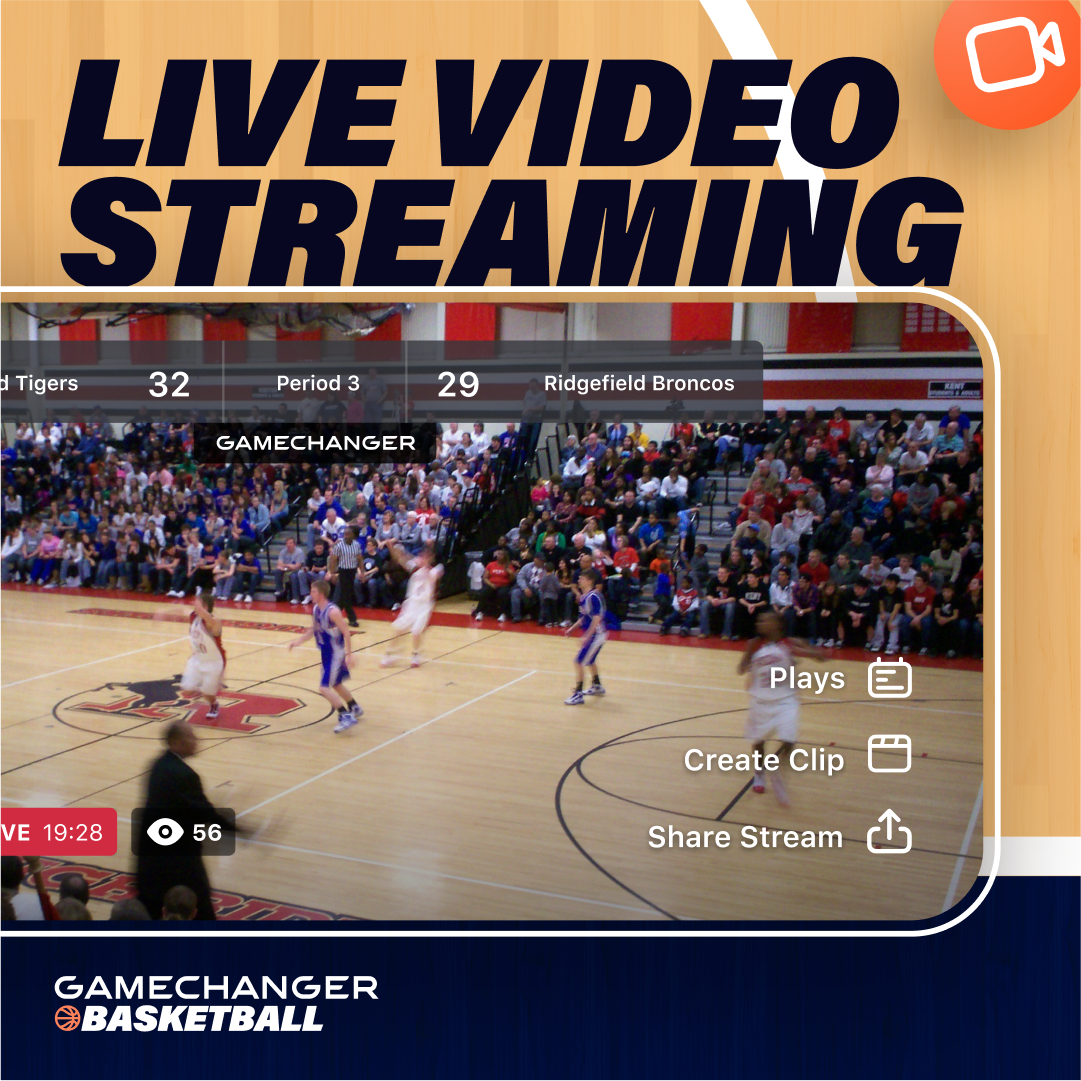
Hey, coach! Want to take your team to the next level this season? Introducing GameChanger, the ultimate game-day assistant with tools to give you a winning advantage. With GameChanger, you can track stats, keep score, and even live stream games, all for free! Get the stats and crucial game video you need to lead your team to victory, all from the palm of your hand. Coach smarter this season with GameChanger. Download GameChanger today on iOS or Android and make this season one to remember. GameChanger. Stream. Score. Connect. Learn more at GC.com/HoopHeads
TRANSCRIPT FOR ROUND TABLE 74 – WHAT FRUSTRATES YOU THE MOST AS A COACH AND WHAT ACTIONS DO YOU TAKE TO OVERCOME THAT FRUSTRATION? – EPISODE 1060
[00:00:00] Narrator: Head Start Basketball is brought to you by Head Start Basketball.
[00:00:15] Mike Klinzing: Hello and welcome to the 74th edition of the Coach’s Corner Round Table on the Hoop Heads Podcast. Each episode of the Coach’s Corner Round Table will feature our all-star lineup of guests answering a single basketball question. A new Coach’s Corner Round Table will drop around the 15th of each month.
February’s Round Table question is: What frustrates you the most as a coach and what actions do you take to overcome that frustration?
Our Coaching Lineup this month:
- Jim Baker – Cannon (NC) School
- Jake Boyd – Luther College
- Erik Buehler – Arapahoe (CO) High School
- Chris DeLisio – Olmsted Falls (OH) High School
- Hannah Dewater – Union Mine (CA) High School
- Dave Hixon – Amherst College
- Chris Kreider – Rice University
- Bob Krizancic – Mentor (OH) High School
- Michael Rejniak – NCSA & We Are D3 TBT
- Don Showalter – USA Basketball
- Joe Stasyszyn – Unleashed Potential
Please enjoy this Round Table episode of the Hoop Heads Podcast and once you’re finished listening please give the show a five star rating and review after you subscribe on your favorite podcast app.
Be sure to follow us on twitter and Instagram @hoopheadspod for the latest updates on episodes, guests, and events from the Hoop Heads Pod.
Coaches, are you looking to get a shooting machine for your team but don’t have a lot of budget left? This month our friends at Dr. Dish are making a shooting machine purchase more affordable than ever. Secure your own Dr. Dish CT Plus for as low as $3,900 down. When using Dr. Dish’s, buy now, pay later payment plan options.
These plans are for schools only and have zero interest, no monthly payments and no hidden fees. Take advantage now while supplies last.
Learn more at drdishbasketball.com/financing. You can also follow their incredible content @drdishbball on Twitter, Instagram, Facebook, and YouTube. Mention the Hoop Heads Podcast and save an extra $300 on the Dr. Dish Rebel, All Star, and CT models. Those are some great deals Hoop Heads. Get your Dr. Dish shooting machine today.
[00:02:26] Tuck Taylor: Hey, this is Tuck Taylor with NeuroBeast, and you’re listening to Hoop Heads Podcast.
[00:02:34] Mike Klinzing: Prepare like the pros with the all new Fast Draw and Fast Scout. Fast Draw has been the number one play diagramming software for coaches for years. You’ll quickly see why Fast Model Sports has the most compelling and intuitive basketball software out there.
For a limited time Fast Model is offering Hoop Heads Listeners, 15% off Fast Draw and Fast Scout. Just use the code HHP 15 at checkout to grab your discount and you’ll be on your way to more efficient game prep and improved communication with your team. Fast Model also has new coaching content every week on its blog, plus play and drill diagrams in its play bank.
Check out the links in the show notes for more. Fast Model sports is the best in basketball
Let’s hear from our panel about what frustrates them the most as a coach and what actions they take to overcome that frustration.
Jim Baker from the Cannon School in Concord, North Carolina.
[00:03:37] Jim Baker: I think what frustrates me the most as a head coach are players that do not go hard in practice every day. If a young man or woman is not able to play as hard as they can in practice, when they get into the game, They are going to not be able to play at the speed and IQ necessary to be good.
If players take days off in practice, they’re constantly unable to play at the speed that the game is played at. We have a saying that we want our players on the edge. We’re constantly saying, get on the edge, get on the edge. And there’s reference to playing at the speed. That they’re almost going to make a mistake.
We reference that if someone walks up to a cliff to get the best view, you have to be out on the edge to see everything. There’s some risk you may fall. Likewise, in practice, if you’re practicing on the edge, there’s a chance you’re going to mess up. And we do not penalize our players if they do mess up, if they’re practicing as hard as they can.
I think this is especially true for players that are going to move up from instance, middle school to JV, JV to high school, high school to college, and the different levels in college. As you move up the ladder, the game gets faster, more physical, and the IQ that you have to be able to play at totally changes.
We constantly are saying, get on the edge, get on the edge, and we’re referenced to play as hard and practice as you possibly can, and don’t be afraid to make a mistake if you’re playing. As hard as you possibly can.
[00:05:34] Mike Klinzing: Jake Boyd from Luther College
[00:05:44] Jake Boyd: This is Jake Boyd, assistant coach at Luther College answering this month’s round table question. What frustrates you the most as a coach and what actions do you take to overcome that frustration? Player development probably frustrates me the most. Think we all want to help our players get better. My attempt to overcome that frustration would be educating myself with all the information available on skill acquisition and motor learning.
I’ve tried to mix fundamental drills with new techniques like CLA, mixing competitive fundamental skill building with game situations and reads in hopes of creating an environment where players enjoy the expansion of the deficiencies in their skill set. I think this not only helps me in the player development space, but also with player relationships as they appreciate me trying to make the process enjoyable while also being effective.
Thanks for having me guys. Best of luck to everybody as you gear up for the postseason.
[00:06:42] Mike Klinzing: Erik Buehler, Arapahoe High School, Centennial, Colorado.
[00:06:48] Erik Buehler: Hey, what’s going on Hoop Heads? This is Erik Buehler with Arapahoe High School boys basketball. And this month we were asked what frustrates us the most as a coach and what actions do we take to handle it?
So there’s a lot in coaching that’s frustrating and I want to try to be politically correct as I can with my response, but I would say in coaching. And not just basketball, but all my friends who coach other sports as well, I would say the most common thing we talk about is just kind of the lack of communication at times.
And there’s times I’m guilty of lack of communication. So I really try to work on over communicating as much as I possibly can. And when I hear that there’s a misunderstanding or I hear there’s frustration with families or players or coaches or just people in our community with something, I try to go and approach those individuals and have sit down meetings.
And one of my mentors he always says, like, right time, right place, right tone, and try to have those type of conversations. And things are never really things can get out of hand after competitions, and so try to sit down in an office or over a coffee and just kind of hash things out I think is the best practice.
Reach out to people if you’re hearing some buzz out in the community or some rumors or things like that. But that’s something that really frustrates me and I think it’s one of the hardest parts of the job, but I think the best practice is to just kind of head those things head on and kind of walk into the storm.
And nine times out of ten, it’s not as bad as it seems it’s going to be, so. That’s what I got this month. Thanks again for having me, guys, and I will talk to you next time.
[00:08:49] Mike Klinzing: Chris DeLisio, Olmsted Falls High School, Olmsted Falls, Ohio.
[00:08:57] Chris DeLisio: Hey, Hoop Heads. Chris DeLisio at Olmsted Falls. And for today’s round table question, The things that are most frustrating as a coach sometimes tough to narrow it down to just one or two but if I would say the maybe the number one thing is just a lack of effort It’s the thing that I think as a coach that you can never allow it’s frustrating because it’s it’s as a As a coach and as a former player, it’s hard to understand why you wouldn’t play at a really high level for your teammates, for your coaches, for your community.
But the most important thing is what, what actions do you have to take? And I think that it’s got to be a constant battle with your team and maybe battle is the wrong word. Just expectation that you’re not going to accept anything less than someone’s best effort. So they do it for their teammates. For, you know, the success of your basketball team and that’s the thing I think has to be a constant in your practice every day is just full effort all the time and a lot of the other stuff will take care of itself.
[00:10:00] Mike Klinzing: Hannah Dewater from Union Mine High School.
[00:10:06] Hannah Dewater: Hey coaches, this is Hannah Dewater from Union Mine High School answering the question, what frustrates me most as a coach and what do I do to overcome that frustration? For me, the thing that’s most frustrating is when players are not playing to their potential.
Especially if it happens somewhat consistently. We do everything we can to put our players in a position to succeed. And we’re asking them to do things that we believe they are capable of. So when they are underperforming or underbelieving or whatever it may be, Yeah, it’s just frustrating because we need them to be at their best to help the team.
And for them to be at their best also makes it a more meaningful experience. For them right they want to be successful as well So it’s not like they’re doing it on purpose necessarily, but it has a lot of potential fallout So what I do when this is happening is I start with trying to break it down and Find one thing that they can focus on that they can be excellent in so find that one thing Challenge them to rise to the occasion and then on the other side, it’s like, figure out, you know, is there, is there some sort of mental block happening?
Is there something happening off the court that’s coming onto the court? Why is it that there’s been a drop off with that player? And usually when I’m able to break it down, able to have a conversation with them, able to give them something tangible that they can do, it kind of pulls them out of that.
And, you know, even if I just tell them to rebound and focus on that or whatever it is. It usually ends up translating to the rest of their game.
[00:11:42] Mike Klinzing: Dave Hixon, Basketball Hall of Famer from Amherst College.
[00:11:49] Dave Hixon: Hey, Hoop Heads, it’s Coach Hixon here. Good morning. And thought a lot about this question the last couple days. As a coach, what frustrates you the most and what do you do to remedy it? And, you know, there’s a lot of things that frustrate all of us, but I would have to say Bottom line for me is when your kids aren’t playing, you know, real hard at a hundred percent.
I know people use the expression a hundred and ten. We, I don’t think there’s any more than a hundred, but they you know, when they’re not pushing to a hundred percent, and so you look at your, and sometimes they don’t know that they’re not playing at a hundred percent unless you let them know. And so that was my frustration.
Occasionally we wouldn’t be playing as hard as we should play and we’d go through a couple games like that and you could start to see Whether we were winning by fewer or maybe even losing that, it was having an effect. And so we’d go back and we ran this drill two verses two continuous play drill that is super aggressive, super intense.
The assistant coaches get into it. We’re on the kids during the whole thing to play harder. And by the end, I think every single one of my assistants runs it. Now, my former assistants and former players that coach run the two versus two drill, it is a great drill teaches multiple facets of the game, but all the while, probably the most important thing it gets your kids to do is to really play hard.
And I, and I emphasize really, because that’s the way this, this, this drill is so competitive. If you don’t play hard, you lose. And so different than a lot of drills. If you lose, you’re not out, you stay in and continue to get beat up. So it’s a wonderful drill. I use that to help me with my frustrations when our kids aren’t playing hard.
Good luck down the stretch to guys that are still coaching.
[00:13:37] Mike Klinzing: Coaches, GameChanger is making your game feel more valuable than ever. New this season to GameChanger, Film Room allows team staff to analyze full game videos, add comments to specific moments, and quickly share feedback with other coaches, team members, or families. The number one youth sports app automatically skips downtime in the game film, condensing event video into active play so you can focus on the moments that matter.
The best part? It’s completely free for coaches. Download GameChanger now on iOS or Android and take your coaching to the next level with Film Room on Game Changer. Game Changer. Stream. Score. Connect.
Chris Kreider from Rice University.
[00:14:30] Chris Kreider: The biggest source of frustration in coaching in today’s day and age, for me personally, would have to be the management of the tension when it comes to time. For me, my faith and my family are the two most important things. I also have a passion for coaching and want to be the absolute best coach I can be for our players and our program.
And I know to do that, it requires a lot of time, energy, and a lot goes into that. And you always look for this feeling of balance, but you never can really find it. So when I heard somebody put it as a tension that will always exist, that helped me out. And when I feel that tug, I always try to talk to friends of mine in the profession, mentors of mine, have a conversation that might help me in those moments.
And I also try to look for quality time with my family. New and creative ways to do that, especially. Right now during the season when just not a lot of time exists But constantly remembering that the balance is hard to find the tension will always be there Finding ways to manage the tension is really all we can do
[00:15:47] Mike Klinzing: Bob Krizancic Mentor High School, Mentor, Ohio
[00:15:52] Bob Krizancic: Coach K Mentor High School most frustrating thing for me and in my coaching career Has been when players want to come in, stay after come in on a weekend and work on their skills and they don’t go game speed. And I constantly tell them that it’s a waste of their time if they’re not going to go at the speed of the game.
And it’s tough to do. To rectify it, you know, we show them exactly what game speed shooting is, what game speed defense is, what one on one limiting dribbles, and how tough you have to be. You know, hopefully that does work, but it’s something that I believe every coach goes through and you know, just explain speed of the game is everything.
Best of luck.
[00:16:43] Mike Klinzing: Michael Rejniak, Coach Rej from NCSA, and We Are D3 TBT.
[00:16:50] Michael Rejniak: Hey, Hoop Heads Nation, this is Coach Rej, from We are D3 TBT. My response to this month’s round table question, what frustrates me most as a coach, I think a player that doesn’t achieve the most out of their abilities that you, the coach, see in them. Like, you see greatness in them, and they just fall short.
Although I don’t think you can prevent it. I think you can do a lot of things to combat it to limit and really have players thrive in your environments. I think first things first, as a coach, you gotta really Connect with your players and when you’re recruiting them, not, not just on the basketball front, but, you know, be curious about their academics, be curious about their family life, be curious about what they like to do in their fair spare time.
So really develop that bond with them. Further, kind of, you know, making sure that you always have open dialogue and open door policy with your players so that they feel comfortable talking to you. That goes hand in hand with building that relationship piece. And I think the third piece is you’ve got to provide them with opportunities to get better.
You can’t force them to do it. But you gotta provide them with opportunities so that they themselves on their own can choose to be great. And I think when that starts to happen, then they start to see, you know, things that they maybe thought they couldn’t do or, you know, were limited in. Then they start to have success. And now we’re really cooking here with gasoline.
[00:18:29] Mike Klinzing: Don Showalter, USA Basketball.
[00:18:36] Don Showalter: Hi, Don Showalter here from USA Basketball. Obviously, some of the frustrating pieces of coaching would be, you know, parents and parents involvement and unrealistic expectations of parents. But I just found out that the more honest you are with them, I think the better it is. Sometimes you, if you let things go with parents, they think what they’re doing is The right thing.
And so I would have conversations with parents throughout the year. If I felt it there. unrealistic expectations were hindering our team or, or their son or daughter. So I think, you know, trying to avoid confrontation sometimes is not the best thing. You know, the other thing I think was a frustrating piece to it is getting your best player to play hard and You know, I always said and coach wouldn’t always made a big point of the biggest the biggest aspect of motivation is the bench.
And so many times I would certainly bench our best player if I didn’t feel he was doing the correct things on the court or playing hard, because I really felt that he needed to be understand. That he had a gift of being very skilled, but he had to use that gift to his advantage and our team’s advantage.
So you confront those things on an individual basis. And I think that has really helped. Thank you.
[00:20:07] Mike Klinzing: Joe Stasyszyn, Unleashed Potential, Carlisle, Pennsylvania.
[00:20:14] Joe Stasyszyn: Joe Stasyszyn, Unleashed Potential. This month’s question is. What frustrates you the most as a coach and what actions have you taken to relieve this frustration?
I would say the biggest thing that frustrates me as a coach and as a former high school head coach and now as a player development coach, is communication among the players on the team. Basically, you know, it’s even gotten worse today. I don’t know if it’s because of the the social media generation, the, the telephone, the texting.
But most players today, whether you’re working in, with a team, small groups whatever it is that you’re working in practice or in player development players today are not, are not talking. And I think it’s not just in the youth. I talked to college coaches and I get the same thing from them that they have to teach players how to talk when they get to college.
And I know being around the Duke basketball program for a long time and coach K. He had been doing this for a long time and his his big thing was always been if you’re not talking you’re being selfish You’re only caring about yourself and he got to the point and you know, this is basketball at the highest level He got to the point where he would spend time and practice Literally practicing what to say how to say it with his players, I mean, literally teaching them what to say because we can all tell our players to talk, but we need specific talk and I know when, when when we do player development we actually will tell our players when we’re doing small groups or large groups or working with teams.
We will tell players rather than saying, you know, open, I’m open you know, be specific, talk specifically, call out the wing, wing, corner, corner, top, top, you know, so I think. We all need to do a better job of teaching kids what to say, because just telling them to talk is not going to get it done. And again, I just think that with social media and technology today, kids are not spending enough time face to face talking to each other, especially when they’re playing.
You know, I just did a big clinic yesterday with an AAU organization and we talked about being loud in the gym and that a quiet gym is a losing gym. And then also recently, it’s not just here in the United States. About two weeks ago, I was in Hong Kong doing a clinic with you know, with a bunch of Asian players and, you know, we had the same conversation that, you know, we need to be, we need to communicate more with our teammates.
And we also talked about things that we need to say, and it’s not only what you say, but how you say it to your teammates. So that’s the, that’s the next level of not only communicating, but communicating in the right way. One of the things that we do with USA basketball, we have something called communication circles.
And I did this when I was in Hong Kong two weeks ago. We spend time in practice after a practice session, we will form a circle with each other and we will go around with topic of the day might be, Hey, tell me something good that one of your teammates did today or something that they got better at.
And we would spend time doing that. And then another day topic might be, Hey, give me one thing that we could, that you could do better as a basketball player, something you need to improve on. You could change the topic daily, but have a daily communication circle with your team. You know, after practice, after the workout whatever the case may be to encourage communication.
And also that helps to develop relationships. You know, among your teammates. And then the other thing is nonverbal communication. There’ve been studies done that, you know, the teams that touch the most, the high fives, the fist bumps, the pat on the back, those teams seem to win more. So it’s not only verbal communication, but nonverbal communication.
And that goes with your, with your teammates and your coach. You know, I, I talk to players about, you know, sometimes I help evaluate, I assist evaluating for USA basketball’s junior national teams. One of the first things that we look at is your nonverbal communication. You know, how are you reacting to your coach?
How you’re reacting to your teammates? How you’re reacting to officials. So, you know, they’re all things that, you know, you, you got to show players what that looks like, whether it’s telling them, helping them with what to say and how to say it. And also how to act on the basketball court. So I would say to me the biggest, my biggest frustration in coaching today is the lack of communication, the verbal and the nonverbal, the body language the bad body language, things like that.
So I just think that’s a constant battle that you have to have. And you’ve got to fight with your team to not let them be complacent with not talking, not communicating. So that is, that is the thing that I like to see And I hope I was able to give you some ways to improve that because I think that that’s a com a common thing that I hear in my, when I do coaching, coaching development and coaching clinics, not only here in the United States.
But around the world, that’s a, that’s a frustration that most coaches share. So I hope that was helpful for you. Thank you.
[00:25:30] Mike Klinzing: Thanks for checking out this month’s Hoop Heads Podcast round table. We’ll be back next month with another question for our all-star lineup of coaches.
Your first impression is everything. When applying for a new coaching job, a professional coaching portfolio is the tool that highlights your coaching, achievements and philosophies. And most of all helps separate you and your abilities from the other applicants, the Coaching Portfolio Guide is an instructional membership based website that helps you develop a personalized portfolio. Each section of the portfolio guide provides detailed instructions on how to organize your portfolio in a professional manner. The guide also provides sample documents for each section of your portfolio that you can copy, modify and add to your personal portfolio.
As a Hoop Heads Pod listener, you can get your Coaching Portfolio Guide for just $25. Visit https://www.coachingportfolioguide.com/hoopheads to learn more.
[00:26:29] Narrator: Thanks for listening to the Hoop Heads Podcast presented by Head Start Basketball.