
ROUND TABLE 67 – WHAT IS THE BIGGEST MISCONCEPTION THAT HIGH SCHOOL PLAYERS HAVE ABOUT COLLEGE BASKETBALL RECRUITING? – EPISODE 976
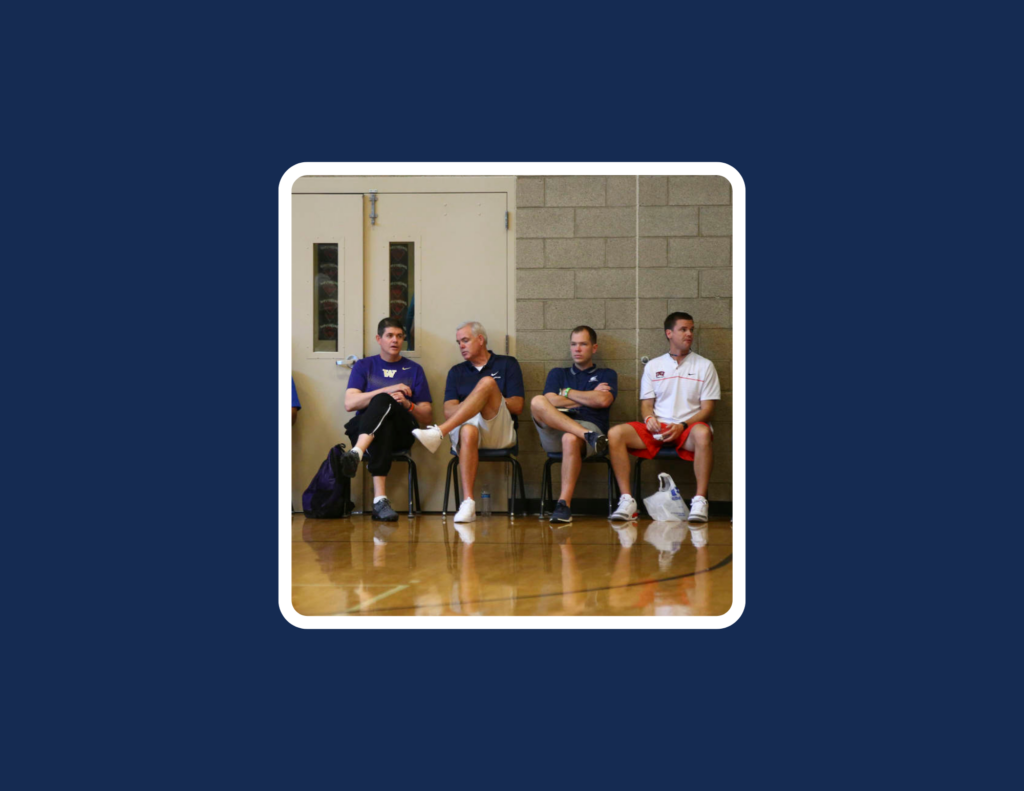

Welcome to the 67th edition of the Coach’s Corner Round Table on the Hoop Heads Podcast. Each episode of the Coach’s Corner Round Table will feature our All-Star lineup of guests answering a single basketball question. A new Coach’s Corner Round Table will drop around the 15th of each month.
July’s Round Table question is: What is the biggest misconception that high school players have about college basketball recruiting?
Our Coaching Lineup this month:
- Dominic Amorosa – Strake Jesuit (TX) College Prep
- Kamal Assaf – The Bishop School (CA)
- Jake Boyd – Eureka College
- Jerry Buckley – Bishop Kenny (FL) High School
- Erik Buehler – Arapahoe (CO) High School
- Joe Burke – Skidmore College
- Joe Harris – Lake Chelan (WA) High School
- Dave Hixon – Amherst College
- Tim Jackson – Author of “Understanding College Athletics Through The Eyes Of College Athletes”
- Bob Krizancic – Mentor (OH) High School
- Dave McGreal – Penn State Altoona
- Dan Miller – San Marcos (TX) High School
- Don Showalter – USA Basketball
- John Shulman – University of Central Arkansas
- David Sloan – Bard College
Please enjoy this Round Table episode of the Hoop Heads Podcast and once you’re finished listening please give the show a five star rating and review after you subscribe on your favorite podcast app.
If you are a basketball coach at any level please check out our Hoop Heads Coaching Mentorship Program. You’ll get matched with one of our experienced Head Coaches and develop a relationship that will help take your coaching, your team, your program, and your mindset to another level.
Be sure to follow us on twitter and Instagram @hoopheadspod for the latest updates on episodes, guests, and events from the Hoop Heads Pod.
If you listen to and love the Hoop Heads Podcast, please consider giving us a small tip that will help in our quest to become the #1 basketball coaching podcast.
THANKS COACHES!
If you enjoyed this episode let our coaches know by clicking on the links below and sending them a quick shout out on Twitter:
Click here to thank Dominic Amorosa on Twitter!
Click here to thank Kamal Assaf on Twitter!
Click here to thank Jake Boyd on Twitter!
Click here to thank Jerry Buckley on Twitter!
Click here to thank Erik Buehler on Twitter!
Click here to thank Joe Harris on Twitter!
Click here to thank Joe Burke on Twitter!
Click here to thank Dave Hixon on Twitter!
Click here to thank Bob Krizancic on Twitter!
Click here to thank Tim Jackson on Twitter!
Click here to thank Dave McGreal on Twitter!
Click here to thank Dan Miller on Twitter!
Click here to thank Don Showalter on Twitter!
Click here to thank Joe Shulman on Twitter!
Click here to thank David Sloan on Twitter!
Like this show? Please leave us a review here — even one sentence helps! Consider including your Twitter handle so we can thank you personally!
And if you want us to answer your questions on one of our upcoming weekly NBA episodes, drop us a line at mike@hoopheadspod.com.
We’re excited to partner with Dr. Dish, the world’s best shooting machine! Mention the Hoop Heads Podcast when you place your order and get $300 off a brand new state of the art Dr. Dish Shooting Machine!

Prepare like the pros with the all new FastDraw and FastScout. FastDraw has been the number one play diagramming software for coaches for years, and now with it’s integrated web platform, coaches have the ability to add video to plays and share them directly to their players Android and iPhones via their mobile app. Coaches can also create customized scouting reports, upload and send game and practice film straight to the mobile app. Your players and staff have never been as prepared for games as they will after using FastDraw & FastScout. You’ll see quickly why FastModel Sports has the most compelling and intuitive basketball software out there! In addition to a great product, they also provide basketball coaching content and resources through their blog and playbank, which features over 8,000 free plays and drills from their online coaching community. For access to these plays and more information, visit fastmodelsports.com or follow them on Twitter @FastModel. Use Promo code HHP15 to save 15%
Your first impression is everything when applying for a new coaching job. A professional coaching portfolio is the tool that highlights your coaching achievements and philosophies and, most of all, helps separate you and your abilities from the other applicants.
The key to landing a new coaching job is to demonstrate to the hiring committee your attention to detail, level of preparedness, and your professionalism. Not only does a coaching portfolio allow you to exhibit these qualities, it also allows you to present your personal philosophies on coaching, leadership, and program development in an organized manner.
The Coaching Portfolio Guide is an instructional, membership-based website that helps you develop a personalized portfolio. Each section of the portfolio guide provides detailed instructions on how to organize your portfolio in a professional manner. The guide also provides sample documents for each section of your portfolio that you can copy, modify, and add to your personal portfolio.
Hey, coach! Want to take your team to the next level this season? Introducing GameChanger, the ultimate game-day assistant with tools to give you a winning advantage. With GameChanger, you can track stats, keep score, and even live stream games, all for free! Get the stats and crucial game video you need to lead your team to victory, all from the palm of your hand. Coach smarter this season with GameChanger. Download GameChanger today on iOS or Android and make this season one to remember. GameChanger. Stream. Score. Connect. Learn more at GC.com/HoopHeads
TRANSCRIPT FOR ROUND TABLE 67 – WHAT IS THE BIGGEST MISCONCEPTION THAT HIGH SCHOOL PLAYERS HAVE ABOUT COLLEGE BASKETBALL RECRUITING? – EPISODE 976
[00:00:00] Narrator: The Hoop Heads Podcast is brought to you by Head Start Basketball.
[00:00:21] MIke Klinzing: Hello and welcome to the 67th edition of the Coach’s Corner Round Table on the Hoop Heads Podcast. Each episode of the Coach’s Corner Round Table will feature our all-star lineup of guests answering a single basketball question. A new Coach’s Corner Round Table will drop around the 15th of each month.
July’s Round Table question is: What is the biggest misconception that high school players have about college basketball recruiting?
Our coaching lineup this month includes:
- Dominic Amorosa – Strake Jesuit (TX) College Prep
- Kamal Assaf – The Bishop School (CA)
- Jake Boyd – Eureka College
- Jerry Buckley – Bishop Kenny (FL) High School
- Erik Buehler – Arapahoe (CO) High School
- Joe Burke – Skidmore College
- Joe Harris – Lake Chelan (WA) High School
- Dave Hixon – Amherst College
- Tim Jackson – Author of “Understanding College Athletics Through The Eyes Of College Athletes”
- Bob Krizancic – Mentor (OH) High School
- Dave McGreal – Penn State Altoona
- Dan Miller – San Marcos (TX) High School
- Don Showalter – USA Basketball
- John Shulman – University of Central Arkansas
- David Sloan – Bard College
Please enjoy this Round Table episode of the Hoop Heads Podcast and once you’re finished listening please give the show a five star rating and review after you subscribe on your favorite podcast app.
If you are a basketball coach at any level please check out our Hoop Heads Coaching Mentorship Program. You’ll get matched with one of our experienced Head Coaches and develop a relationship that will help take your coaching, your team, your program, and your mindset to another level.
Be sure to follow us on twitter and Instagram @hoopheadspod for the latest updates on episodes, guests, and events from the Hoop Heads Pod.
Coach, do you have an old shooting machine sitting in your storage closet right now? If you do, our friends at Dr. Dish Basketball can help. Trade in your machine, any make or model, in any condition, even if it’s a competitor’s model, and get $4,000 off the Dr. Dish CT equipped with advanced stat tracking, competition based training capabilities, and the industry’s largest touchscreen.
Learn more at drdishbasketball.com and follow their incredible content @DrDishBBall on Twitter, Instagram, Facebook, and YouTube. Mention the Hoop Heads Podcast and save an extra $300 on the Dr. Dish Rebel, All Star, and CT models. Those are some great deals Hoop Heads. Get your Dr. Dish shooting machine today.
[00:02:52] Dave Hixon: Hi, this is Dave Hixon, Basketball Hall of Famer and former men’s basketball head coach at Amherst College, and you’re listening to the Hoop Heads Podcast.
[00:03:05] MIke Klinzing: Prepare like the pros with the all new Fast Draw and Fast Scout. Fast Draw has been the number one play diagramming software for coaches for years. You’ll quickly see why Fast Model Sports has the most compelling and intuitive basketball software out there.
For a limited time Fast Model is offering Hoop Heads Listeners, 15% off Fast Draw and Fast Scout. Just use the code HHP 15 at checkout to grab your discount and you’ll be on your way to more efficient game prep and improved communication with your team. Fast Model also has new coaching content every week on its blog, plus play and drill diagrams in its play bank.
Check out the links in the show notes for more. Fast Model sports is the best in basketball
Let’s hear from our panel about the biggest misconception that high school players have about college basketball recruiting.
Dominic Amorosa – Strike Jesuit College Prep in Houston, Texas.
[00:04:10] Dominic Amorosa: This is Dominic Amorosa from Strike Jesuit in Houston, Texas. Biggest misconception that high school players have about college basketball recruiting is levels.
Everybody thinks they’re division one, but I think a lot of kids don’t realize how good basketball is at D2, D3, NAIA, and even JUCO. So the biggest misconception is the lack of knowledge about the different levels of basketball and how talented kids are from all over the country and all different levels.
[00:04:36] MIke Klinzing: Kamal Assaf from the Bishop’s School in La Jolla, California.
[00:04:43] Kamal Assaf: Good morning. My name is Kamal Assaf. I coach at the Bishop’s School in La Jolla, California. And I wanted to respond to the question about the biggest misconception that college basketball, high school basketball players have about college basketball. The biggest misconception would be that because they’re getting recruited by whatever school has offered them, they’re
I think the hardest part for a high school player is to realize that whatever level, Division 2, Division 3, Division 1, is not just one step above their high school, it’s four or five or six steps, meaning that playing in college is really difficult. And even if you were coming from a big high school, going to a small college.
Division III, it’s a big jump and not every player’s skills translate, not every player’s size and speed translate to that level. The second thing I would say is that the colleges are recruiting your type or prototype. So if you are a point guard between 511 that’s probably someone who is going to play that position and they’ll have several of them.
So a lot of times playing in college is about just waiting your turn and fighting to improve. And that’s a much harder task for a lot of high school players who’ve been stars and haven’t had a challenging road. I remember when I went to Division III UCSD, it was a real difficult undertaking because there were three guys who looked just like me ahead of me.
And so it was more mental than physical in a sense. You had to spend more time. You had to really discipline yourself. And it was a challenge to move up because they just kept getting more and more people that were like you. That’s kind of what they do is they recruit the prototype. The last thing is just that I think high school players think that college is an extension of high school.
And it’s really not. It’s a much greater commitment In Division 3, we used to practice sometimes twice a day over Christmas break. Division 1, the hours are excessive. So I think that understanding that you have to love the game and you have to be able to put in hours that are uncommon and that you’ve never really done before means that you have to really devote yourself to improvement during the season and afterwards.
[00:07:04] MIke Klinzing: Jake Boyd from Eureka College.
[00:07:10] Jake Boyd: This is Jake Boyd, assistant men’s basketball coach with Eureka College in Eureka, Illinois. The biggest misconception in recruiting that I’ve run into recently Is that if you’re good enough, you’ll be found. Sure. That’s probably true for top 100 guys or girls, but for us at the D3 level with all the effect that portal and transfers have with us and our recruiting, I think the kids that do some legwork in marketing themselves and showcasing their abilities have a better time finding a home, especially at the smaller school level.
Given their limited resources, players that reach out to us or post their film and schedules really aids our ability as coaches to find those guys and give them a legitimate look in the sea of talent and the parity in that talent that exists right now in the game. Hopefully that’s a helpful tidbit for prospective college athletes and their families. Thanks for having me guys.
[00:08:04] MIke Klinzing: Jerry Buckley from Bishop Kennedy High School
[00:08:14] Jerry Buckley: Hi, This is Jerry Buckley from Bishop Kennedy High School talking about misconceptions in recruiting. I think probably one of the biggest ones I would say for high school players looking at the college level will be how much College coaches worry about scoring or at least how it translates to them on the college level. Obviously, if you’re a really good player in high school there’s going to be some ways you naturally score.
But if you look at most college rosters, somewhere between three and five guys are averaging So that means probably over half of your team is not. And there’s a lot of other things obviously that go into winning. Defense, rebounding, taking care of the basketball, assists, all those different things.
So we used to go down here to University of Florida for team camp and Billy Donovan was there and they used to have a sign. It just said 95 percent on the wall and that represented that 95 percent of the time during the game. You do not have the ball in your hands. So again, to try to emphasize how are you impacting winning without scoring.
So I think for high school kids to understand that most of them, their role on the college team will not be necessarily scoring. So. Understanding there’s so many other things that go into impact and winning and what college coaches are looking for.
[00:09:32] MIke Klinzing: Erik Buehler, Arapahoe High School, Centennial, Colorado.
[00:09:38] Erik Buehler: Hey, what’s going on Hoop Heads? This is Erik Buehler assistant coach at Arapahoe High School here in Colorado, and This month we were asked, what is the biggest misconception that players have when it comes to recruiting? First of all, I love this question. I think it’s going to be a great one for a lot of hoopers out there to listen to.
Because I know all the coaches on here have a lot more experience in this world than I do. But that being said, I do have a little information I think that I can share just with former players and current players. And, Just talking with college coaches and friends that are college coaches that can help them out in this situation.
I think the biggest misconception out there that high school players have is that they’re, they think they can be passive and they’re recruiting and they will get recruited. And what I mean by that is they think they can just show up to AAU tournaments or showcases and they will get noticed. It’s a flooded market out there and it’s even more so flooded now with the transfer portal for high school kids.
And to get noticed, you have to be probably not aggressive, but you need to be very active in promoting yourself. And that’s not just your highlight tape on social media, that’s going out and scouting colleges and coaching staffs that you want to play at and play for. And being active in sharing game film from the season, not just from the summer of yourself.
Highlighting things that you know are good attributes about yourself, whether it’s your GPA, your test scores quotes from your coach sharing your coach’s information, like people that can advocate in your behalf on who you are as a person, a player. As a student and, and then going and reaching out to those programs and letting them know where you’re playing and when you’re playing so that if they have the ability to come see you, they can come watch you.
But always, and always keeping them up and updated on what you’re doing and how you’re playing, not just getting caught up, getting caught up in stats and like highlights. I think that’s, that’s another thing that you could talk about in this conversation as well. But like actually going out, finding the school that you want to be at, promoting yourself to them, being active in conversations with those coaches.
And if they are taking interest, to remain connected with those coaching staffs, I think that gives you your best chance. And it’s not easy. It adds to your plate, but if you really want to play at the next level, I think for the majority of kids that aren’t in the D1 level, the D2 level, you got to go out and reach out to the smaller schools and connect with those staffs all over the country.
Not just in your region or in your area. That’s all I got this month. Thanks for having me on again, guys. And look forward to the next one. Have a good day.
[00:09:32] MIke Klinzing: Joe Harris, Lake Chelan High School
[00:12:47] Joe Harris: What is the biggest misconception high school players have about college basketball recruiting? I believe it’s critical that both parents and players understand that really only a small percentage of high school players actually play on collegiate teams, let alone receive a scholarship. A problem is that many people really don’t understand the process and how difficult it is to play, whether it’s at the NAIA, NCAA, or even the JUCO level.
It’s even more difficult, I believe, with the transfer portal in the current landscape of college sports. And many recruits are really driven by the goal of just being seen more than they are by being better. If you’re a good player, again, I believe that you will be seen. And oftentimes it comes down to being better at the little things that stand out to programs.
Some of these things you can work on, like a skill. What kind of grades do you have? What’s your, what’s your attitude like, regardless of circumstance. How’s your body language? What’s your energy and effort all the time, whether you’re on the court or off? What are, are there issues? These are some things that I think will help set you apart in the recruiting process.
And I appreciate the opportunity to share my thoughts with you this evening.
[00:14:02] MIke Klinzing: Dave Hixon, Basketball Hall of Famer from Amherst College.
[00:14:09] Dave Hixon: Hey Hoop Heads, Dave Hixon here, retired Amherst College. The question being what’s the biggest misconception? that kids have about being recruited in college basketball.
And I think that’s just basically understanding the level of the recruitment. And I think that when kids get an introductory letter, that’s a form letter some kids take that to mean that being recruited full out and that’s too bad. And then when a coach calls you and talks to you, again coaches vary on how much they put out there.
How much they have to put out there to recruit kids, but you know, for the most part, at least through my experiences, is that kids get involved much quicker, very often than a coach does. And the problem is, as a coach you have to be talking to 25, 30, whatever it is, kids and you might have your top 10, but even then it’s a 10 or a five, and maybe you’re only going to take three, maybe you’re only going to take four, and so You know, I think what kids misinterpret a lot is the level of recruitment that’s being put forward and just how much the coach wants them.
And I know parents get confused in it as well. And sometimes that’s the problem with the kids understanding is that the parents You know, don’t understand and they, and they get the kid more hopeful than, than most. So anyway, that’s what I think. Hope you’re all having a great summer.
[00:15:42] MIke Klinzing: Hey coaches, we know you’re invested in the next generation of athletes. So why not give them the star treatment this season with GameChanger. Introducing GameChanger, a free app that provides you with data to make strategic coaching decisions. And to deliver memorable moments to your team and its fans.
Engage your players, empower your coaching decisions, and give parents the thrill of watching every play unfold in real time this season. Download GameChanger now on iOS or Android. GameChanger equips your team with the tools they need to succeed. Download it today and make this season one for the books.
Game Changer. Stream. Score. Connect. Learn more at GC.com/HoopHeads. That’s GC.com/HoopHeads.
Tim Jackson, author of Understanding College Athletics Through the Eyes of College Athletes.
[00:16:47] Tim Jackson: This is Tim Jackson. Author of Understanding College Athletics Through the Eyes of College Athletes. This month’s roundtable question, what is the biggest misconception that high school players have about college basketball recruiting? I have four. The number one misconception is that division one is the end all be all.
In other words, if I don’t go to division one, I’m a failure. The truth is that nearly 4 percent of boys and girls go on to play at any level collegiately. The second misconception is that parents should not be involved in the recruiting process. I think it’s important that students, athletes be the focus, but parents need to be supportive and provide guidance and encouragement without overstepping the boundaries.
The third misconception is you can meet with a Division I coach on an unofficial campus visit at any time. Again, this is incorrect. There are stricter rules and colleges are Limited to the number of visits you can have and the coach and contacting the coach is not always allowed during this this time.
So make sure athletes exactly when you are permitted to talk with and meet with coaches and finally. It’s a small misconception, but a lot of players think that if they receive mail from a college, that that mail means that they’re being recruited. I think a lot of family members get letters from college.
But it’s sometimes a marketing ploy by the school and not by the basketball team.
[00:18:36] MIke Klinzing: Bob Krizancic, Mentor High School, Mentor Ohio.
[00:18:42] Bob Krizancic: Coach K, Mentor High School, biggest misconception high school players have about college recruiting. Is I think it’s mostly about offense, shooting, scoring. Where college coaches really, I believe, look at defense, definitely hustle.
Character comes into play and that’s obvious in just watching. body language. I think passing is definitely something that’s looked at. Just overall skills of the game. Best of luck.
[00:19:20] MIke Klinzing: David McGreal from Penn State Altoona.
[00:19:25] Dave McGreal: What’s going on Hoop Heads Nation? Coach David McGreal, Penn State Altoona back at you with this month’s round table. And the question this month is what is the biggest misconception that high school players have about college basketball recruiting? Well that’s, that could take up a whole episode itself, right?
The biggest thing that I think is a misconception for the youth out there today not only high school players, but their parents is just a misconception of it’s D1 or bust you know, that that’s a mentality that I really think hurts a lot of student athletes with their ability to explore different options to be a college basketball player.
The biggest thing for our student athletes that we talk about is coming to college to get a degree. You know, very few players are going to play professionally. That’s just the reality of it. Very few players are going to get full rides. That’s just the reality of it. I think the misconception that going D2, D3, NAIA, whatever it may be, some of the other smaller levels or not as popular levels, I should say you know, aren’t worth your time.
There is nothing that’s more damaging to a young kid. When people that they trust and listen to tell them not to look at offers or listen to coaches unless they’re D1. I think that’s the biggest misconception out there right now. Most of us are going to college to get a degree to help us for our future after basketball.
So, you can get a great degree at any school, D2, D3, NAIA, whatever it may be. And that’s what you’re looking for. Obviously, cost and obviously location and things of that do hold some families back. But I think that if you give certain schools and institutions an honest attempt, I think you’ll see that some of the schools that aren’t D1 can also provide your son or daughter with a great experience, both athletically, but most importantly, academically.
So again, I think the biggest misconception right now for high school players is it’s a D1 or bus mentality and I think that just needs to be talked about and given these young student athletes. more of a open mind when it comes to their college search.
All right, guys. Thank you. Hope everybody’s doing well. Looking forward to the kids coming back. Talk to y’all soon.
[00:22:11] MIke Klinzing: Dan Miller, San Marcos High School in San Marcos, Texas.
[00:22:18] Dan Miller: I believe there are a lot of misconceptions when it comes to high school recruiting. I think one of the big ones is the kids think that they’re going to be recruited.
At this early age, freshmen, sophomore, even junior year in their AAU tournaments, and they might be playing 16 or 15U and thinking, where are the college coaches? Because their AAU coach told them that they would be there watching them when in reality, the only people that are being recruited at that level or at that age, I should say, are the McDonald’s All American types and there’s probably 25 or 30 of them in every class.
Just grinding, I think is the best advice. If you want to be recruited to play college basketball all the way through high school and then your senior year, that’s when you’re going to get in front of probably coaches that are really looking at you. And the reality is probably most of those coaches and players are going to be division three and it’s still high level basketball.
But I think the main misconception there is just be patient. Don’t think everything’s going to happen quickly. And if you’re meant to play college basketball, it’s going to happen.
[00:23:32] MIke Klinzing: Don Showalter, USA Basketball.
[00:23:38] Don Showalter: Hi, Don Showalter here from USA Basketball. What’s the biggest misconception high school players have about college recruiting? Well, I think the first thing is they receive a letter, and I think they’re being recruited, and that’s a huge misconception because thousands and thousands of players receive the letters, and that really means nothing.
I think after that, if they receive a letter, they should turn in their information sheet, obviously, to the college to let them know that their college is of interest to them as a player. But really they’re not being recruited until the coach will give them a call wanting to know more about them and their career and then.
Maybe invite them to on campus for a for a visit on their own time. They’re really not being recruited until they get a, get an invitation to visit the campus. At the college expense. And then, that’s not even guaranteed a scholarship until of course after that. So, I think the biggest misconception is the fact that they’re getting, think they’re getting recruited when they get a letter.
or even a phone call from that school. I think the second biggest misconception that high school players have is if, if, if they’re fairly well skilled and a college coach sees them play and makes a comment or suggestion to them that they’re being watched closely college coaches watch so many players and so many kids playing basketball, that you really have to be a standout To be noticed. Thank you.
[00:25:23] MIke Klinzing: John Shulman from the University of Central Arkansas.
[00:25:29] John Shulman: This is John Shulman, head basketball coach at the University of Central Arkansas. And question of the month. It’s one of the biggest misconceptions I guess from high school players dealing with college basketball recruiting. I would say two things number one, I would say here comes a college coach and I’m at a big AAU game or a high school game and I got a bunch of coaches there and I’m going to show them what I can do.
I think that’s probably the number one problem. Just be who you are. If college coaches are at that AAU game or that high school game, then you’ve probably done enough already. Just be who you are. I think kids think they gotta score, gotta score, and gotta, gotta show this and gotta show that. You can hurt yourself.
You can look selfish. You can hurt yourself by showing them what you can’t do instead of what you can do. So my advice would just be, just be, be you. Dominate the game. Impact the game. How you impact the game. If it’s impacted the game passing a ball, just keep doing that. If you impacted the game defensively, keep doing that.
You just can’t be a great defender and then all of a sudden a bunch of college coaches are coming and then you take it and jack it. What if you are not a great shooter and ended up having a tough night? Then you’re not going to get recruited, period. So I would think keep the things that you don’t do well a secret.
And do what you do well. The other thing is and it’s hard and we get a lot of emails about kids that are 20, 27 and 28 and 26 and we’re in survival right now on just trying to fill our 24 class. And so, I think probably a misconception is, is that we’re working three you know, maybe we were two or three, four, five years ago old.
But right now it’s a little bit more difficult to work on your 2025 class or even 2026 class when you’re trying to finish up your 2024 class. Things are different. Back in the day another misconception is back in the day, if, if you weren’t getting recruited in the summer previous to your senior year, God, you, you were toast.
Now that’s not the case. If you didn’t have an offer by January, you were toast. That’s not the case. So, there’s a lot of negatives in recruiting right now, but there’s also a lot of positives. But patience is, is needed. And remember this is the last year of COVID. So I you know, I heard a number, almost 50 percent of all college basketball players after this year are done.
So there’s going to be more opportunities for high school kids. So hang in there and hope this helps and just be you cause everyone else has taken and have a, have a great year and everybody have a great rest of the summer. Thanks.
[00:28:31] MIke Klinzing: John Shulman from the University of Central Arkansas.
[00:28:37] John Shulman: This is John Shulman, head basketball coach at the University of Central Arkansas, and question of the month. What are the biggest misconceptions I guess from high school players dealing with college basketball recruiting? Would say two things. Number one, I would say here comes a college coach and I’m at a big AAU game or a high school game and I got a bunch of coaches there and I’m going to show them what I can do.
I think that’s probably the number one problem. Just be who you are. If college coaches are at AAU game or that high school game, then you’ve probably done enough already. Just be who you are. I think kids think they gotta score, gotta score, and gotta, gotta show this and gotta show that. You can hurt yourself.
You can look selfish. You can hurt yourself by showing them what you can’t do instead of what you can do. So my advice would just be, just be, be you. Dominate the game, impact the game, how you impact the game. If it’s impacted the game passing the ball, just keep doing that. If you impacted the game defensively, keep doing that.
You just can’t be a great defender and then all of a sudden a bunch of college coaches are coming and then you take it and jack it. What if you are not a great shooter and ended up having a tough night, then you’re not going to get recruited, period. So I would think keep the things that you don’t do well a secret, and do what you do well.
The other thing is and it’s hard, and we get a lot of emails about kids that are 20, 27, and 28, and 26, and we’re in survival right now on just trying to fill our 24 class. So And so I think probably a misconception is, is that we’re working three maybe we were two or three, four or five years ago.
But right now it’s a little bit more difficult to work on your 2025 class or even 2026 class when you’re trying to finish up your 2024 class. Things are different. Back in the day another misconception is back in the day of. If you weren’t getting recruited in the summer previous to your senior year, God, you, you were toast.
Now that’s not the case. If you didn’t have an offer by January, you were toast. That’s not the case. So there’s a lot of negatives in recruiting right now, but there’s also a lot of positives. But patience is, is needed. And remember this is the last year of COVID. So I heard a number, almost 50 percent of all college basketball players after this year are done.
So there’s going to be more opportunities for high school kids. So hang in there and hope this helps and just be you cause everyone else has taken and Have a great year and everybody have a great rest of the summer. Thanks.
[00:31:40] MIke Klinzing: David Sloan from Bard College.
[00:31:46] David Sloan: By far the biggest misconception that players have about college coaches and recruiting is that we immediately and only look for players that can score the basketball. It’s just not true. Yes, in today’s game you have to be a threat and you have to be able to score. But, as we’re at events, as we’re watching, we want to see and find players that understand the game, that can make the right pass, make the right decision, that don’t need the ball in their hands and they don’t need to score to affect the game.
You know, we talk all the time. There’s only one player that can be the leading scorer or leading shot taker, right? And so we’re looking for players that have a wider skillset and that understand and are self aware enough to know how they fit and know how they can impact winning beyond shooting the basketball.
[00:32:34] MIke Klinzing: Thanks for checking out this month’s Hoop Heads Podcast roundtable. We’ll be back next month with another question for our all star lineup of coaches.
Your first impression is everything. When applying for a new coaching job, a professional coaching portfolio is the tool that highlights your coaching, achievements and philosophies. And most of all helps separate you and your abilities from the other applicants, the Coaching Portfolio Guide is an instructional membership based website that helps you develop a personalized portfolio. Each section of the portfolio guide provides detailed instructions on how to organize your portfolio in a professional manner. The guide also provides sample documents for each section of your portfolio that you can copy, modify and add to your personal portfolio.
As a Hoop Heads Pod listener, you can get your Coaching Portfolio Guide for just $25. Visit https://www.coachingportfolioguide.com/hoopheads to learn more.
[00:33:17] Narrator: Thanks for listening to the Hoop Heads Podcast presented by Head Start Basketball.