
ROUND TABLE 56 – HOW DO YOU BUILD CHEMISTRY AMONGST THE PLAYERS ON YOUR TEAM? – EPISODE 832
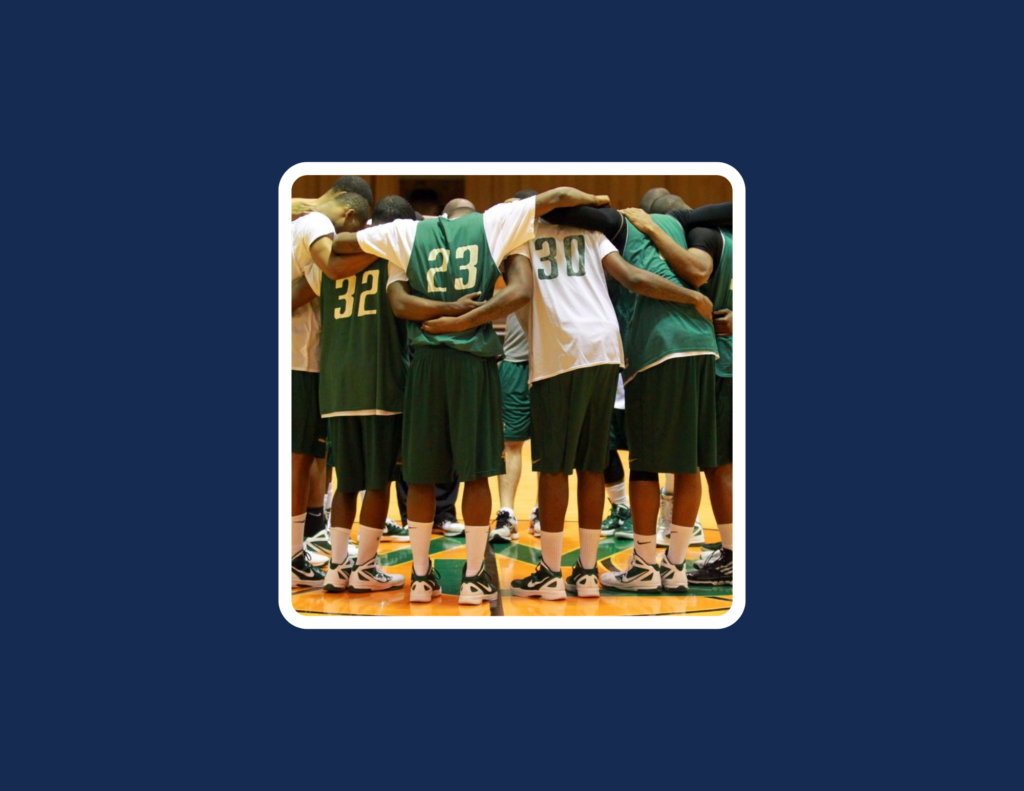

Welcome to the 56th edition of the Coach’s Corner Round Table on the Hoop Heads Podcast. Each episode of the Coach’s Corner Round Table will feature our All-Star lineup of guests answering a single basketball question. A new Coach’s Corner Round Table will drop around the 15th of each month.
August’s Round Table question is: How do you build chemistry amongst the players on your team?
Our Coaching Lineup this month:
- Jerry Buckley – Bishop Kenny (FL) High School
- Erik Buehler – Chatfield (CO) High School
- Toby Frazier – Color Analyst for Jacksonville University Men’s & Women’s Basketball
- Nick LoGalbo – Lane Tech (IL) High School
- Bob Krizancic – Mentor (OH) High School
- Peter Lonergan – Director of High Performance Coach Development for Basketball Australia
- Dan Miller – San Marcos (TX) High School
- Nate Sanderson – Mount Vernon (IA) High School & Thrive on Challenge
- Mark Schult – Centre College
- Don Showalter – USA Basketball
- John Shulman – University of Alabama Huntsville
- Phil White – Co-Author of The Leader’s Mind
Please enjoy this Round Table episode of the Hoop Heads Podcast and once you’re finished listening please give the show a five star rating and review after you subscribe on your favorite podcast app.
If you are a basketball coach at any level please check out our Hoop Heads Coaching Mentorship Program. You’ll get matched with one of our experienced Head Coaches and develop a relationship that will help take your coaching, your team, your program, and your mindset to another level.
Be sure to follow us on twitter and Instagram @hoopheadspod for the latest updates on episodes, guests, and events from the Hoop Heads Pod.
Like this show? Please leave us a review here — even one sentence helps! Consider including your Twitter handle so we can thank you personally!
We’re excited to partner with Dr. Dish, the world’s best shooting machine! Mention the Hoop Heads Podcast when you place your order and get $300 off a brand new state of the art Dr. Dish Shooting Machine!

Prepare like the pros with the all new FastDraw and FastScout. FastDraw has been the number one play diagramming software for coaches for years, and now with it’s integrated web platform, coaches have the ability to add video to plays and share them directly to their players Android and iPhones via their mobile app. Coaches can also create customized scouting reports, upload and send game and practice film straight to the mobile app. Your players and staff have never been as prepared for games as they will after using FastDraw & FastScout. You’ll see quickly why FastModel Sports has the most compelling and intuitive basketball software out there! In addition to a great product, they also provide basketball coaching content and resources through their blog and playbank, which features over 8,000 free plays and drills from their online coaching community. For access to these plays and more information, visit fastmodelsports.com or follow them on Twitter @FastModel.
Your first impression is everything when applying for a new coaching job. A professional coaching portfolio is the tool that highlights your coaching achievements and philosophies and, most of all, helps separate you and your abilities from the other applicants.
The key to landing a new coaching job is to demonstrate to the hiring committee your attention to detail, level of preparedness, and your professionalism. Not only does a coaching portfolio allow you to exhibit these qualities, it also allows you to present your personal philosophies on coaching, leadership, and program development in an organized manner.
The Coaching Portfolio Guide is an instructional, membership-based website that helps you develop a personalized portfolio. Each section of the portfolio guide provides detailed instructions on how to organize your portfolio in a professional manner. The guide also provides sample documents for each section of your portfolio that you can copy, modify, and add to your personal portfolio.
Whether you’re a beginner basketball player looking for a place to start or a seasoned vet looking to level up your skills, your new go-to secret weapon is Train.
Train is a basketball training and education platform that gives you on-demand access to premium basketball courses created by expert coaches and trainers from around the world.
Want to get better at blowing by your defender? Learn setup drills with NBA & international pro trainer Marius Williams or how to use the punch drag with NBA trainer Kerry Darting.
Looking to level up your catch and shoot skills? Practice space shooting workouts with former lead female trainer for Kobe Bryant’s Mamba League, San Dixon.
Or if you’re just starting out, learn the basics of shooting and finishing at the basket from international champion, 3 time Romanian player of the year, and Train co-founder, Vlad Moldoveanu.
Train has 32 (and counting) actionable, expert-led, on demand basketball training courses that teach you exactly how to improve your ball handling, shooting, attacking, and more!
For a limited time, Hoop Heads listeners get 35% off monthly, annual, and lifetime plans. Click the button below to start a 7-day free trial and claim your discount.
THANKS COACHES!
If you enjoyed this episode let our coaches know by clicking on the links below and sending them a quick shout out on Twitter:
Click here to thank Jerry Buckley on Twitter!
Click here to thank Erik Buehler on Twitter!
Click here to thank Toby Frazier on Twitter!
Click here to thank Bob Krizancic on Twitter!
Click here to thank Peter Lonergan on Twitter!
Click here to thank Dan Miller on Twitter!
Click here to thank Nate Sanderson on Twitter!
Click here to thank Mark Schult on Twitter!
Click here to thank Don Showalter on Twitter!
Click here to thank John Shulman on Twitter!
Click here to thank Phil White on Twitter!
Click here to let Mike & Jason know about your number one takeaway from this episode!
And if you want us to answer your questions on one of our upcoming weekly NBA episodes, drop us a line at mike@hoopheadspod.com.
TRANSCRIPT FOR ROUND TABLE 56 – HOW DO YOU BUILD CHEMISTRY AMONGST THE PLAYERS ON YOUR TEAM? – EPISODE 832
[00:00:00] Narrator: The Hoop Heads Podcast is brought to you by Head Start Basketball.
[00:00:22] Mike Klinzing: Hello and welcome to the 56th edition of the Coach’s Corner Round Table on the Hoop Heads Podcast. Each episode of the Coaches Corner Round Table will feature our all-star lineup of guests answering a single basketball question. A new Coaches Corner Round Table will drop around the 15th of each month.
August’s Round Table question is, “How do you build chemistry amongst the players on your team?”
Our Coaching Lineup this month:
- Jerry Buckley – Bishop Kenny (FL) High School
- Erik Buehler – Chatfield (CO) High School
- Toby Frazier – Color Analyst for Jacksonville University Men’s & Women’s Basketball
- Bob Krizancic – Mentor (OH) High School
- Nick LoGalbo – Lane Tech (IL) High School
- Peter Lonergan – Director of High Performance Coach Development for Basketball Australia
- Dan Miller – San Marcos (TX) High School
- Nate Sanderson – Mount Vernon (IA) High School
- Mark Schult – Centre College
- Don Showalter – USA Basketball
- John Shulman – University of Alabama Huntsville
- Phil White – Co-Author of The Leader’s Mind
Please enjoy this Round Table episode of the Hoop Heads Podcast and once you’re finished listening please give the show a five star rating and review after you subscribe on your favorite podcast app.
If you are a basketball coach at any level please check out our Hoop Heads Coaching Mentorship Program. You’ll get matched with one of our experienced Head Coaches and develop a relationship that will help take your coaching, your team, your program, and your mindset to another level.
Be sure to follow us on twitter and Instagram @hoopheadspod for the latest updates on episodes, guests, and events from the Hoop Heads Pod.
Hey Hoop Heads, start this school year off strong with up to $4,000 off Dr. Dish basketball shooting machines. Huge back to school savings with Dr. Dish up to $4,000 off their professional shooting machine lineup. Dr. Dish Basketball is here to help you make this school year the best yet with exclusive offers on their All Star Plus, Rebel Plus, and CT Plus shooting machines, all designed to give your team the ultimate training experience. Learn more at DrDishBasketball.com and follow their incredible content @DrDishBball on Twitter, Instagram, Facebook. and YouTube. Mention the Hoop Heads Podcast and save an extra $300 on the Dr. Dish Rebel, All Star and CT models. That’s a great deal, Hoop Heads. Get your Dr. Dish shooting machine today.
[00:02:39] Peter Lonergan: Hi this is Peter Lonergan, Basketball Australia’s Head of High Performance Coach Development. And you’re listening to the Hoop Heads Podcast.
[00:02:50] Mike Klinzing: Prepare like the pros with the all new Fast Draw and Fast Scout. Fast Draw has been the number one play diagramming software for coaches for years. You’ll quickly see why Fast Model Sports has the most compelling and intuitive basketball software out there. For a limited time Fast Model is offering Hoop Heads Listeners, 15% off Fast Draw and Fast Scout. Just use the code HHP 15 at checkout to grab your discount and you’ll be on your way to more efficient game prep and improved communication with your team. Fast Model also has new coaching content every week on its blog, plus play and drill diagrams in its play bank.
Check out the links in the show notes for more. Fast Model sports is the best in basketball.
Let’s hear from our panel about how they build team chemistry amongst their players.
[00:03:45] Mike Klinzing: Erik Buehler, Chatfield Senior High School, Littleton, Colorado.
[00:03:51] Erik Buehler: Hey, what’s going on Hoop Heads? This is Erik Buehler from Chatfield Senior High and this week we were asked what do we do to build chemistry amongst our team and between our players?
We do a lot and I think you constantly have to be working on this. So we try to sprinkle things throughout the year ramp things up before, during, before and during the season. We do things together. We go to Topgolf. We go throw axes. We do a lot of team meals throughout the year. Try to do things that aren’t just basketball.
They’re off the court. We have started doing a leadership class and we’re looking to build off of that and actually try to build some more structure and some ownership amongst our team. But I think the chemistry is built off the court. And then it’s also built on the court. So obviously practice builds that chemistry playing together.
Kind of having a like minded basketball IQ for our program is important for that chemistry. But obviously we all know if. Players like each other. They will play better together and they’ll play harder for each other. And I think that’s the most important thing is getting a group of guys that will play hard for each other and then take ownership over the team.
So hope this helps. I’m excited to hear what everyone else does and talk to you guys next time.
[00:05:15] Mike Klinzing: Jerry Buckley, Bishop Kenny High School, Jacksonville, Florida.
[00:05:22] Jerry Buckley: This is Jerry Buckley from Bishop Kenny answering this month’s question about building team chemistry. A number of different things we do throughout the course of the year.
First, starting with our summer program in June. We feel like the workouts, the summer league games, the team camp events, traveling to different events out of town, really gives us a good foundation once we get going in the summer. When we get back to school with our preseason conditioning, as Don Meyer used to say, there’s that shared suffering component to it of really going through some difficult workouts.
You start to see your different leaders arise. And build that chemistry as well. In team, in season team building would be anything we can do really off the floor. A lot of times it’s great at building relationships, whether that be going bowling. Playing miniature golf, going to a local college team to watch them play or practice.
We felt that that’s been really effective as well. And then probably our best thing all year we do is usually our Christmas trip where we get out of town play in a tournament, get to spend a couple nights in a hotel with classes on break, and really just focus on basketball and continue to build those relationships.
So, we find that really gives us a great springboard. Typically to the second half of the season as well.
[00:06:36] Mike Klinzing: Toby Frazier, color analyst for Jacksonville University men’s and women’s basketball.
[00:06:44] Toby Frazier: As a head coach, one thing that I did to build and sustain a great team chemistry was a preseason beach workout and then a mid season community service event in which we would go and feed the homeless. And my experience is I realized that the more activities you can do with your team away from basketball really, really helps your chemistry on the basketball court. When you can get your players communicating and having fun and sharing and experiences with each other off the court. It has a tendency to really translate on the basketball court.
[00:07:26] Mike Klinzing: Bob Krizancic, Mentor High School, Mentor, Ohio.
[00:07:34] Bob Krizancic: Coach K, Mentor High School. Chemistry, absolutely huge in our program. Two areas of chemistry off the court, on the court. On the court, we do tons of reps. And we watch a lot of film and I hate to say scrimmage, but in order to know your teammates, know their strengths and weaknesses you’ve got to put as much time as you can on the court.
Off the court, we love the socialization part. We do team dinners every day before a game. We do events such as bowling and we love to go away during Christmas. At a tournament, anywhere from two to six days. And in the summer we make sure that we have a couple overnight events. Just our players spend that time with each other. Best of luck.
[00:08:25] Mike Klinzing: Nick LoGalbo, Lane Tech High School, Chicago, Illinois.
[00:08:31] Nick LoGalbo: This is Nick LoGalbo from Lane Tech High School in Chicago, Illinois. This month’s round table is how do you build chemistry. With players on your team. And I think, you know, for us, chemistry is a very real living thing. And I think it’s gotta be organic.
I think when things are forced, people feel that, and it doesn’t really allow for growth to happen the way you’d like. So I think trying to create as many authentic and organic opportunities for guys to bond and get to know each other. So obviously in the off season, doing team outings and doing barbecues and doing things like that are great.
But obviously I think when you get back in an off season mode, we’re starting school. At Open Gyms you know, having, having different guys just kind of run the Open Gym and get guys into groups and in our weight training, have different guys take the lead. And obviously things like communication circles where guys voice things and you ask some questions that are deeper layer stuff instead of just like, why do you love basketball, but like things about themselves, things about their journey, things about, you know, what they’re interested in.
And I think that builds relational trust and it builds chemistry. Then, then just kind of like, okay, go hoop, you know what I mean? So those are some things that we do and I’ll be interested to hear what everybody else does.
[00:09:49] Mike Klinzing: Peter Lonergan, Director of High Performance Coach Development for Basketball Australia.
[00:09:56] Peter Lonergan: Hi, this is Peter Lonergan from Basketball Australia. I think developing chemistry in your team is obviously so important and it starts with more conversations, not meetings, not lectures, but just individual conversations and taking the opportunity.
At any time you can to get across a player’s flight path, ask them non basketball questions and develop that trust. Encourage them to have conversations with their teammates and the staff. And, and really just use that ethos of having more conversations more often is a key part of developing chemistry.
Other things that you can do in terms of team building is team dinners are obviously very effective. Just that, that practice of breaking bread, spending some time in a non-competitive, non-threatening environment is very valuable. And being positive. Positive in your communication, positive in your body language, positive in the way you go about things.
They’re all small things that can go a long way to developing chemistry.
[00:11:02] Mike Klinzing: Hey Hoop Heads Nation – whether you’re a beginner basketball player looking for a place to start or a seasoned vet looking to level up your skills, I want to tell you about your new go-to secret weapon. It’s called Train.
Train is a basketball training and education platform that gives you on-demand access to premium basketball courses created by expert coaches and trainers from around the world.
Want to get better at blowing by your defender? Learn setup drills with NBA & international pro trainer Marius Williams or how to use the punch drag with NBA trainer Kerry Darting.
Looking to level up your catch and shoot skills? Practice space shooting workouts with former lead female trainer for Kobe Bryant’s Mamba League, San Dixon.
Or if you’re just starting out, learn the basics of shooting and finishing at the basket from international champion, 3 time Romanian player of the year, and Train co-founder, Vlad Moldoveanu.
Train has 32 (and counting) actionable, expert-led, on demand basketball training courses that teach you exactly how to improve your ball handling, shooting, attacking, and more!
For a limited time, Hoop Heads listeners get 35% off monthly, annual, and lifetime plans. Just go to gotrainbasketball.com/hoopheads to learn more and sign up for a 7-day free trial.
[00:12:23] Mike Klinzing: Dan Miller, San Marcos High School in San Marcos, Texas.
[00:12:29] Dan Miller: Wow. Chemistry on a basketball team. So important. You know, great teams are going to have great chemistry. It starts with the people, you know, like everything, right? Relationship driven. Good people staff that wants to be together, modeling, good chemistry on a staff is very important and an underrated thing on basketball teams.
You know, if you have, if the players see the staff get along that helps a lot. I don’t think there’s a magic formula to have great chemistry, you know, paintball courses or ropes courses, you know those things are fine. But I think ultimately it’s just spending quality time in the locker room, bus rides.
meals, pregame meals. You know, when you’re having meals, you know, talking to people and just having real conversations outside of the gym time. And then, you know, when you’re in the gym competing together being there for each other, handling adversity with each other. All is going to lead to great chemistry, which is so important on a basketball team.
[00:13:33] Mike Klinzing: Nate Sanderson, Thrive on Challenge.
[00:13:38] Nate Sanderson: Hey Mike, this is Nate Sanderson from Thrive on Challenge. You know, when the question comes up about how we build team chemistry, I think there’s a couple of different ways to think about that, both on the court. and off the court. And I think those two things are related. For me, a lot of what we did changed when I read the book, The Culture Code by Daniel Coyle.
And in that book, it’s kind of divided up into three sections in terms of how great cultures are built. And the first key ingredient that he talks about there is the need for connection, simple connections between people in your organization. For us, that means between players. Coaches and players and coaches together.
So how do we do that? Well, Coyle talks a lot in his book about these little collisions that happen every time there’s an interaction between players on your team or coaches on your staff, or certainly your coaches with your players, that trust and connection starts to build. So for a long time, we just.
Things would happen somewhat organically or on their own, but over the last few years, we’ve been very intentional about trying to script opportunities for our players to connect with each other. Here are a few ways that we do that. Before every practice, we start our players in triangles and groups of three or in pairs, and we have them just simply share.
The best and worst of their day so far. Sometimes we’ll start practice probably once a week. We do a partner walk where I hand out playing cards that randomly assign players to chat with each other. We put two minutes up on the clock and for two minutes, those that during that time, players will walk in a circle around the gym.
And they’ll talk about a discussion question that we have for them for that day. And then typically before we get started, we’ll go around and we’ll just share something that we learned about our teammate. Now, these might seem like simple things, or maybe you think I don’t have five minutes at the beginning of my practice that my players just stand there and talk to each other, but we found that the more our players have the opportunity to connect and we give them different questions to talk about, sometimes they’re silly questions, sometimes they’re serious questions, sometimes they’re about their past or their goals for their future, whatever it might be, that players tend to bond better. And of course, then when they are more connected off the court, they’re more likely to play better, to play with that elusive chemistry that so many of us are chasing on the court. Now, when it comes to that on court chemistry, goodness gracious, we could do a whole clinic talking about all the things we do in the background to try to help our players be able to play better on the floor.
I think it comes down to a couple of things. Number one, we’ve got to be driving toward a common goal. If you want to have great chemistry, you’ve got to take some time to orient your players and to mold their individual goals into a collective purpose. If they’re not willing to embrace their role, if they’re not willing to do what’s necessary for the team to be successful.
It’s going to be very hard to get past a certain level of team chemistry. I love this quote from Bill Belichick when he said, you know, everybody that walks through these doors at some point or another is going to have to make a decision between what’s best for themselves and what’s best for the team.
And he says, in New England, we expect everyone. to choose what’s best for the team. I think to get to that chemistry, that special chemistry, you have to start there. I think secondly, part of the reason that we invest so much in the connections between players is because we’re trying to create a place of psychological safety where communication, open and honest communication can take place between coaches and players, but also player to player.
So that they can be in a sense of vulnerable enough to ask for help, to ask for suggestions, to take feedback and to offer ways of improving the offense, the defense, our coverages, our matchups. We want as much player input into our problem solving and decision making process as we can. I think that helps to build chemistry when they’re able to work together and communicate with each other, but that doesn’t just happen overnight.
It’s the result of the investment in those relationships so that they can begin to trust one another. I think finally, at least for us, our style of play really matters. We want to share the ball and we emphasize that a lot in the games that we play in practices and the values that we talk about on and off the floor.
Gratitude is one, love is one. Those both imply that there’s a connectivity, that there is a mutual working together here. That is required for us to be successful. And so, you know, we celebrate when the ball moves, when all five players touch it and results in a made shot. We celebrate when a player turns down a good shot to give their teammate a great shot.
We talk about those things on film. We show some of the best examples of those from every game in every film session, because we want to reinforce the things that manifest that chemistry on the floor. So that they’re more likely to be repeated. Same thing at the defensive end. When we notice a player that’s communicating or a player that’s given up their body or a player that’s making the extra effort to deflect a ball or to cover over for a teammate or to hustle after a rebound.
Like all of those things, when we’re committed together, when we celebrate them, when we point them out in film or in practice, they’re more likely to happen again. And finally, Mike, I think there’s just a constant dialogue in our program about where our chemistry is at. When I meet with our captains every week, the first question that we talk about is there any drama on the team right now?
And then we talk about how to address that. And if we don’t get any farther in our meeting, then I really think that’s the most important thing that we can try to deal with from a week to week basis is to try to mitigate and keep those fires from spreading. When we have periodic one on ones with our players, we always ask them about how team chemistry is going.
How’s their team experience? How are they being treated by the upperclassmen? How are the underclassmen fitting into what we’re trying to build? And so there’s this ongoing both conversation where we’re getting feedback about things that maybe need some attention from the coaching staff or But also our players begin to realize and understand this is one of the most important things that we do in our program is to try to build that chemistry and that’s reinforced because it’s something that is a constant piece of communication, something that we’re always looking for feedback.
We’re always looking for our players to be engaged in. Because they know ultimately, yes, we’re trying to win basketball games on the floor, but at the same time, we’re trying to create a great experience for them. A place where it feels like they show up and they are competing and playing with their friends every day, and so that investment in chemistry is paramount for us in our program at Mount Vernon.
[00:20:29] Mike Klinzing: Mark Schult, Centre College.
[00:20:35] Mark Schult: Hey, Hoop Heads! Appreciate you guys having me on again this month. This month’s question talking about how to build chemistry amongst your teams, you know, the big thing I I’d say you have to be really, really intentional about it. So on the court, you know, whatever you emphasize, emphasize that cohesion, that togetherness.
I think that can really help and improve the way that your team performs in the gym, you know, when coaches aren’t there, you know, in the off season, when they can’t coach you do that by changing lineups and open gym and letting different guys play with each other, learn their tendencies, you know, what they like to do, where they like to cut and those sorts of things.
So you have to have a collective attitude, you know, in terms of building that togetherness and chemistry. And then the second part off the court there’s a lot of different things you can do and, you know, sometimes there’s limitation with, with budgets but the, the best practices that I’ve seen are.
You know, doing team dinners, you know, even just, just little pizza nights or, or grilling out or something like that you know, if, if your budget allows for it, you know, doing group activities, going to a, a baseball game or, or doing the escape room, those sorts of things are, are a lot of fun. And then one that, that, that I found to be successful was, you know, creating some, some jokes, some, some funny memories, some bonds with your team.
So like the example is that one of my coaching stops when we would watch film, you know, film can be positive. It can be negative. It depends on what you’re watching. But a lot of times we would end our film session with, with a doppelganger, like getting a funny picture of a celebrity or a professional athlete putting that on the screen and then, you know, asking your team, who do you think this is?
You know, guys are joking and teasing with each other and stuff like that. And it’s always a good time and it helps to kind of lighten the mood and just, you know, build a common bond, build something together that everybody’s laughing at. So, I think be really, really intentional about it. Understand that the off the court chemistry will…
Oftentimes lead to, to chemistry on the court and that’s what ultimately leads to success. So, appreciate you having me on.
[00:22:43] Narrator: Don Showalter, USA Basketball.
[00:22:49] Don Showalter: Hi, Don Showalter here from USA Basketball. And the question is, how do you build chemistry amongst your players for, for your team? Well, first of all, I think chemistry and culture are two completely different things. Chemistry is how well your players get along with each other. And culture is how you do things.
So I think the chemistry is determined by your culture. How you do things is really builds your chemistry amongst your players. So if you have a good culture and you’re doing things with your team such as… Things outside the playing games, et cetera, practices like, you know, bowling nights picnic nights, whatever.
I think that adds to your culture, but then I think your chemistry follows that. And players don’t necessarily. like, have to like each other, you know, off the court to get good chemistry. I think they have to learn to play together and learn to like each other on the court which is really the most important thing.Thank you.
[00:23:57] Mike Klinzing: John Shulman, University of Alabama Huntsville.
[00:24:04] John Shulman: This is John Shulman, head basketball coach at the University of Alabama in Huntsville. And this month’s question is how do you build team chemistry within your team? You know, I think in college, I think you can kind of recruit to that. And you end up recruiting kids that fit your culture. And, you know, it’s kind of like we, we had kids move in on campus yesterday, and I didn’t tell our old guys what time the young guys were moving in the Dorms, but they found out anyway, and they were there to help our kids move in.
That’s our culture. And that goes straight into chemistry, is that our kids are like minded kids who get along, and, you know, the team, the team is bigger than the individual. And, and that’s what you, that’s how you develop chemistry. Everybody like minded people, it’s a little harder in high school where you have different guys and you don’t pick and choose your team and everybody’s kind of on a different agenda.
So how do you build chemistry? You got to do things together. You know, honestly, you have to be through the tough times together. You know, it’s great to go to Topgolf. It’s great to go eat pizza. It’s great to go on a. On a retreat over the, over the weekend, or those are all great things or a scavenger hunt or, but it’s, you got to go through the tough times and the good times, but you got to go through that together.
You got to feel the pain together and how people react. So everything’s got to be done together. But, you know, if I was in a high school situation, you know, I would be doing things, but, you know, maybe put. The two kids or three kids you’re most worried about together, or maybe put them with two of your great chemistry people and put them as a third party and they have to figure out stuff together.
They, they have to accomplish something together or they have to have pain and lose together. It has to be together. And once you have something together. Then you can get some chemistry, but it’s really, I think it’s really difficult. I, I think besides your team having chemistry, I think your staff has to have chemistry.
I’ve been on coaching staffs where we’ve had no chemistry and it’s been a disaster and you walk on the court and the kids fill it. And so I think it starts with you and your staff have to have amazing chemistry. And once again, that’s hiring people that are like minded people like you. They don’t have to agree with you.
But they are, have to be like minded but we’ve got great chemistry here. We’ve got great staff chemistry here at UAH and it goes on the court. And if, if you’re, if we don’t have, if there’s one person sabotaging the chemistry, to me, that’s called a cancer. And I’ve talked about it on many different things.
If you have a cancer, you have to talk to that cancer and that’s chemo. And that’s going to work for about a week and a half, or then you, you talk to them again or have another coach talk to them and that’s radiation and that’s going to work for about a week and a half. And most of the time you have to cut the cancer out to save the team and that’s kicking the kid off the team.
And that’s always hard for all of us. But just be honest, that helps chemistry the most is getting rid of the cancers on your team. But it’s, it’s, you know, it’s a great question. You know, Mike comes up these questions, it’s a great question. And I don’t think there’s a simple. I don’t think there’s a simple answer.
You can try all you want to go to Topgolf and go eat pizza together and do all this stuff together, but if they’re not like minded, you’re always going to have a tough time with chemistry. And if you really want to fix your chemistry, get rid of the people that aren’t like minded. Hope this helps.
Good luck. If y’all ever need anything, yell to us down here in Huntsville, Alabama. Thank you.
[00:28:04] Mike Klinzing: Phil White, Emmy nominated writer, co host of the Basketball Strong podcast, and co author of The Leader’s Mind.
[00:28:14] Phil White: Ask each player to name a hardship, a childhood hero, and a highlight from their past. The highlight will help to build confidence, the hardship shows vulnerability, and the hero, and the chance to explain why that hero was inspirational to them, will help inspire the rest of the group. You can go first as the coach, or team captain, and then ask every player,
[00:28:42] Mike Klinzing: Thanks for checking out this month’s Hoop Heads Podcast Round Table.
Your first impression is everything. When applying for a new coaching job, a professional coaching portfolio is the tool that highlights your coaching, achievements and philosophies. And most of all helps separate you and your abilities from the other applicants, the Coaching Portfolio Guide is an instructional membership based website that helps you develop a personalized portfolio. Each section of the portfolio guide provides detailed instructions on how to organize your portfolio in a professional manner. The guide also provides sample documents for each section of your portfolio that you can copy, modify and add to your personal portfolio.
As a Hoop Heads Pod listener, you can get your Coaching Portfolio Guide for just $25. Visit https://www.coachingportfolioguide.com/hoopheads to learn more.
[00:29:41] Narrator: Thanks for listening to the Hoop Heads Podcast presented by Head Start Basketball.