TOBY FRAZIER – JACKSONVILLE UNIVERSITY COLOR ANALYST FOR MEN’S & WOMEN’S BASKETBALL – EPISODE 759

Website – https://judolphins.com/sports/mens-basketball
Email – [email protected]
Twitter – @Toby1Frazier

Toby Frazier is the color analyst for Jacksonville University Men’s and Women’s Basketball. He was previously the Head Boys’ Basketball Coach at his alma mater, Paxon High School in Jacksonville, Florida from 2013-2021. His teams at Paxon won back to back District and Regional Championships while making Final Four appearances in 2019 and 2020. Toby had 9 players that went on to play college basketball and coached 2020 Florida’s Mr. Basketball, Isaiah Adams.
Toby started his coaching career at NAIA Edward Waters College in 2004 and then went on to be an assistant coach at various high schools from 2005-2013.
As a player Toby was a 5 year varsity starter and a high major recruit in 1997. He was a Prop 48 at Georgia Southern University, then transferred to Kilgore College, before finishing his career at Jacksonville University from 200-2002 playing for Hall of Fame Coach Hugh Durham.
If you’re looking to improve your coaching please consider joining the Hoop Heads Mentorship Program. We believe that having a mentor is the best way to maximize your potential and become a transformational coach. By matching you up with one of our experienced mentors you’ll develop a one on one relationship that will help your coaching, your team, your program, and your mindset. The Hoop Heads Mentorship Program delivers mentoring services to basketball coaches at all levels through our team of experienced Head Coaches. Find out more at hoopheadspod.com or shoot me an email directly [email protected]
Be sure to follow us on Twitter and Instagram @hoopheadspod for the latest updates on episodes, guests, and events from the Hoop Heads Pod.
Take some notes as you listen to this episode with Toby Frazier, the color analyst for Jacksonville University Men’s and Women’s Basketball.
What We Discuss with Toby Frazier
- Growing up and playing the game in the park with older players who mentored him and taught him the game
- “Kids are more caught up now in showcasing what they can do. Well the college coach is going to always want to win because his salary is tied to wins and losses.”
- Bringing in older players to play with his high school teams in open gym to bridge the mentoring gap
- The joy of passing the ball
- Starting varsity as an 8th grader at a k-12 school before transferring to Paxon High School in Jacksonville, Florida
- “When you make a good pass, everybody compliments you.”
- His experience as a high school player at ABCD Camp
- Signing with Georgia Southern out of high school and eventually transferring to Kilgore College a JUCO in Texas before finishing his career at Jacksonville University.
- Why helping younger players in high school appealed more to him than college coaching
- As an assistant, support your head coach and make his life easier
- Why coaching at Paxon High School, his alma mater, was his dream job and the only head coaching job he wanted
- Building his teams to be smart, tough, and unselfish
- Using the summertime to experiment and try things with his team
- His practice philosophy and skill development
- The reasons he stepped away from coaching
- Just being able to enjoy the game and admire it as a color analyst
Like this show? Please leave us a review here — even one sentence helps! Consider including your Twitter handle so we can thank you personally!

We’re excited to partner with Dr. Dish, the world’s best shooting machine! Mention the Hoop Heads Podcast when you place your order and get $300 off a brand new state of the art Dr. Dish Shooting Machine!

Prepare like the pros with the all new FastDraw and FastScout. FastDraw has been the number one play diagramming software for coaches for years, and now with it’s integrated web platform, coaches have the ability to add video to plays and share them directly to their players Android and iPhones via their mobile app. Coaches can also create customized scouting reports, upload and send game and practice film straight to the mobile app. Your players and staff have never been as prepared for games as they will after using FastDraw & FastScout. You’ll see quickly why FastModel Sports has the most compelling and intuitive basketball software out there! In addition to a great product, they also provide basketball coaching content and resources through their blog and playbank, which features over 8,000 free plays and drills from their online coaching community. For access to these plays and more information, visit fastmodelsports.com or follow them on Twitter @FastModel. Use Promo code HHP15 to save 15%
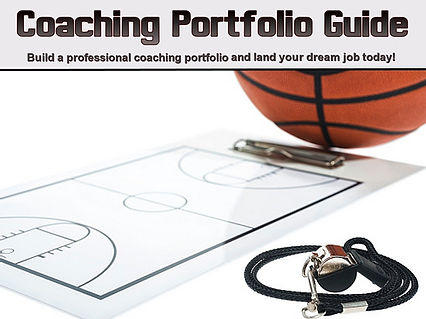
Your first impression is everything when applying for a new coaching job. A professional coaching portfolio is the tool that highlights your coaching achievements and philosophies and, most of all, helps separate you and your abilities from the other applicants.
The key to landing a new coaching job is to demonstrate to the hiring committee your attention to detail, level of preparedness, and your professionalism. Not only does a coaching portfolio allow you to exhibit these qualities, it also allows you to present your personal philosophies on coaching, leadership, and program development in an organized manner.
The Coaching Portfolio Guide is an instructional, membership-based website that helps you develop a personalized portfolio. Each section of the portfolio guide provides detailed instructions on how to organize your portfolio in a professional manner. The guide also provides sample documents for each section of your portfolio that you can copy, modify, and add to your personal portfolio.
The first Training Camp – Elite Skill Development and Performance Combine will be held on the campus of Western Reserve Academy, just outside of Cleveland, OH powered by Unleashed Potential & the Hoop Heads Podcast. The camp is designed for boys rising to grades 6-9 and will take place June 29 – July 1, 2023. An emphasis on improving your individual skills in the context of a team environment will be the hallmark of the Training Camp.
Mike Klinzing from Head Start Basketball/The Hoop Heads Podcast & Joe Stasyszyn from Unleashed Potential will serve as the Camp Directors of this inaugural Training Camp.
Campers can expect 3 days of hard work, intense skills instruction, and learning how to be a great teammate on and off the court at the Training Camp. Players will participate in 10 Elite Skill Development Sessions led by some of the best coaches from across the country. Visit headstartbasketball.com to get registered.
THANKS, TOBY FRAZIER
If you enjoyed this episode with Toby Frazier let him know by clicking on the link below and sending him a quick shoutout on Twitter:
Click here to thank Toby Frazier on Twitter
Click here to let Mike & Jason know about your number one takeaway from this episode!
And if you want us to answer your questions on one of our upcoming weekly NBA episodes, drop us a line at [email protected].
TRANSCRIPT FOR TOBY FRAZIER – JACKSONVILLE UNIVERSITY COLOR ANALYST FOR MEN’S & WOMEN’S BASKETBALL – EPISODE 759
[00:00:00] Mike Klinzing: Hello and welcome to the Hoop Heads Podcast. It’s Mike Klinzing here with my co-host Jason Sunkle tonight, and we are pleased to welcome to the podcast Toby Frazier, currently the color analyst for Jacksonville University men’s and women’s basketball, former coach at both the high school and college levels.
Toby, welcome to the Hoop Heads Pod
[00:00:18] Toby Frazier: Hey, thank you for having me, guys.
[00:00:21] Mike Klinzing: Absolutely excited to have you on. Looking forward to diving into all the things that you’ve been able to do throughout your basketball life. Want to go back in time to when you were a kid? Tell us a little bit about your first experiences with the game of basketball, what you remember from an early age.
[00:00:35] Toby Frazier: So my first experience was around five years old. Luckily for me, my parents, the house that they decided to move into when they moved into a new neighborhood was a street over from the park. So I can’t remember this, but from what I’m told from neighborhood people and family members that I was leaving the house on my own at five years old going the park by myself.
So discovered the game there, just trying to hang out with other kids and we would play basketball every day. And my life changed one day around eight years old where we had two sides in my park. We had the kids side and then had the side by side full courts. And one day the older guys, they only had nine.
So I was the better out of the kids in my, in my age group. So one of the guys said, Hey, he could play with us until somebody else shows up. So it was, it was my first audition and I didn’t want to mess it up. And I played well, just didn’t turn the ball over. Of course I didn’t take the shot. you weren’t allowed to take shots as a kid at that age.
But the older guys kind of accepted me in and from there it just took off. You know, continued to play with the older guys. Always played with the older guys. One of the guys took a liking to me. He was the best player in our neighborhood. He became a high school pheno, one of the best point guards that we’d ever we’ve ever had in Jacksonville.
A guy by the name of Mark felt. So Mark would take me to the high school Paxon High School, which I up going and where I up coaching. He would take me with him in the summer and I would with the, with the high school kids. And from I was one of the continued play with the boys. Playing, playing my first regulation basketball game at 11 in a police athletic league.
And from there I was selected to play on the travel team and we ended up playing in a national tournament was the thing back then in Jacksonville more so than a was from there ended up being one of the better, better players in the league. Played a year after that. I played year, my age group.
During that, I was fortunate enough to be introduced to the head coach at Edwards College, NAIA School here in Jacksonville. And he took me under his wing and he introduced to everybody that he knew. Jacksonville basketball introduced to this guy named Jim LA who was varsity coach at a private school in Jacksonville.
And after seeing me play pickup, the guy’s like, Hey, he can play varsity for me next year as a eighth grader. And I was blown away I’m like, varsity, like you can’t do that. He was like, yeah. And the school is K through 12. We have a varsity team. You can play varsity. I’m the coach. So I up playing varsity as eighth, started as eighth playing varsity.
Did very well from
Academy High School, began and did some good stuff in high school. Was regarded as one of the best point guards in Southeast went ABCD Camp Adidas
Lamar was the from, from that point on just the, the start of it. All I would say is the, the, my background from starting in the park. And meeting the older guys and having those older guys just take me by the hand and welcome me in it just kind of guided me on that path that I ended up on.
[00:04:26] Mike Klinzing: So I want to get to your high school career and some of those experiences that you talked about at ABCD and that kind of thing. But I want to go back to two points that you made as you were talking there that kind of stuck with me. And one is something that we talk about with a lot of people that maybe are a little bit in the age bracket closer to mine as opposed to the age bracket of somebody who might be in their twenties today or their teens, somebody who grew up in a different era of basketball.
And obviously you mentioned playing with the police athletic league. You mentioned playing a season of aau, but the majority of your basketball, it sounds like, was learned at the park on the playground, playing with older guys. And that’s the way I grew up. And clearly it’s different from the way that kids grow up in the game today.
Clearly it’s different from the way that. As you were coaching at the high school level just a couple years ago, different from the way that your players came up in the game. So when you think about that, and I always think this is just an interesting question to kind of ponder and get people’s opinions on, how do you think about the way that you grew up in the game and how it helped you versus the way that kids grow up in the game today where you’re kind of playing with your own age group and obviously there’s more access to gyms, there’s more access probably to better coaching and resources and all those things.
But I still feel like kids miss out on some of that mentorship and some of that sort of learning the old man tricks from people that you’re learning and playing with on the playground. So just gimme your perspective on sort of the old way that basketball was when you were a kid versus the way it is now for youth players coming up.
[00:06:00] Toby Frazier: Well I think the, the main thing is Mike is to me the education that is missing. So I remember being 11 years old and Otis Smith. The player played at for Orlando State Warriors back in the day. I had a chance to spend time with Otis. So Otis taught me how to walk in the gym and up he’s like, look, you don’t walk in gym free throws.
You start at the, you start with the drill, then you take a step back, then you end up at the free throw lot. You know, I was introduced to guys that played overseas. They tell you how to tie your shoes up, how to bring a bag to the gym, bring extra t-shirt, soak.
How to earn your weight because you’re playing on the court with older guys, you can’t shoot all the shots. So it makes you have to you have to move without the basketball. You have to, you have to be focused on defense because you don’t know if they’re going continue to let you play with them.
So you are always under evaluation, prove a point, which in turn makes you better as a player. And then the biggest thing I think that kids miss today that, that I felt like the way I grew up was playing in the park and playing pickup with older guys, you don’t want to lose because you have five or six guys that have, so we lose.
That’s like four or five games that we may have to sit if we don’t win. So the intensity level is high and there’s more value put on the games. Cause if we don’t win, nobody wants to. So it’s intense selection, criticized a lot. You can’t take a bad shot. We’re trying to win. You know, and I think now with AAU tournaments there’s a game minimum.
No matter what happens, we, we guarantee four games win or we’re play Sunday. When I was playing basketball, if you didn’t win Friday and first thing Saturday, we were hit home Saturday afternoon. You know, there were no minimum game guarantees. And I think one thing that’s being lost today is the value in winning.
And kids are more caught up now in to showcasing what they can do. Well the college coach is going to always want to win because his salary is tied to win and loss. And I think that’s the gap that we’re seeing today where kids showcase and coaches learn how to play the right way.
[00:08:36] Mike Klinzing: How did you try to bridge that gap as a high school coach? So you see that that’s something that kids are missing, that mentorship, that leadership, that passing down of knowledge. So as yourself, when you’re coaching both as an assistant and as a head coach at the high school level, what are some of the things that you’re doing, whether it’s just through conversations or the way you design your practices or drills, what could you point to as far as things that you did to try to help bridge that gap that we’re talking?
[00:09:03] Toby Frazier: Well, what I did was what I saw my high school coach do. So my high school coach was a former college player at Jackson University prior to becoming a high school coach in our area, and when I was in high school, gym was for overseas college to play in the summertime. So once I became a head coach, I made sure that any local guys that were playing overseas that was playing college ball, that was home for the summer, You had to come and play pickup with my kids.
Cause I wanted them to get pushed around. I wanted them to see the physicality of the next level. I wanted them to see a better brand of basketball or how division one players play or how college players play or overseas, how they play. So I tried to create, recreate that environment that my high school coach created for me.
And then we did stuff like in the summertime, we would make the kids play one. We would split up three baskets, put three kids out of basket and make them play one, make them have to fight, rebound, try to score on one another. We would play king on the court of the court. For bragging rights. I just try to do everything I could to recreate that environment of competitiveness.
And we had situations where we just played practice days where we just played pickup. Like we literally, it was during the season and I would tell the kids, Hey, we going pick first two guys that make it. Are captains and then you guys pick teams. And two things I wanted to accomplish. I wanted the, the kids that got picked last, I wanted them to see that it’s not just me that think what I think of their game, their peers also don’t think too much of their game because they get picked last by them because they’re trying to win at that point.
So you’re killing a lot of birds with, with this stone by doing it this way. But I, to answer your question, I just try to recreate my childhood and bring it into my personal high school situation when I was coaching.
[00:11:00] Mike Klinzing: Yeah, well said. And I think that’s something that if you can do that, I love the idea of bringing in guys to participate in your open gyms that can give some of that mentorship that you talked about and man, having kids play 21, I’m not sure that kids, they even know what 21 is in a lot of places.
It’s crazy when I think about how much time I played 21 in my driveway, or we used to have a. Court in the neighborhood that had these steel rims that you could go and we’d play on these eight and a half foot rims, then you’d be trying to dunk on everybody and getting the follow up dunks off the off the miss and can remember doing that from the time I was pretty young and just got a lot of good memories of 21.
And it’s funny that kids today, I don’t think they even know or understand what it is. I’m sure you had to teach what that game was all about. . It’s funny just how, again, how things sort of turn and, and go through cycl go through cycles and it’s awesome when you can bring back something that was good for you and obviously is good for kids developing their game and toughness and all the things that go along with the game of 21.
But let’s talk a little bit about your experience as a high school player. First thing I want to touch on is you playing on the high school varsity as an eighth grader. So I think one of the things that it feels like today, it’s maybe not as big of a deal as it was probably back when you were playing or when I was playing, where how’d you fit in as an eighth grader?
Not so much as a player, obviously as a player. If you have the ability to do that, great. But then there’s also this whole sort of off the court and in practice and in the locker room where, hey, we got seniors and now here’s this eighth grader. That’s a part of it. So what do you remember about trying to fit in?
Not so much as a basketball player, but more just as a human being trying to find your place on that team.
[00:12:39] Toby Frazier: Well, well first off I was blessed. God actually birthed me up as a point guard, so I haven’t had too many problems in my life with basketball. Cause I just always had a joy for passing the ball.
There you go. So nobody has any issues with the guy that loves to the ball all the time. My teammates at that time, I was welcomed in with, with open arms. They were some very, very nice guys. I remember the senior on that team, a guy by the name of Isaac Wilber. He could flat out shoot the basketball, very soft-spoken, had a real old soul.
Was a silent leader. He was the one that I was intimidated by the most, for obvious reasons. He was the best player on the team, and he was a senior, and he didn’t say too much to me initially, and then I come to learn. That’s just his personality. He didn’t mean anything by it. But the, the thing that I, what shocked me the most was I got a lot of grief from the opposing teams.
Fans and coaches because there was a lot of fanfare around me. Like, Hey Southern Baptist has his eighth grade kid, they have his eighth grade kid. So when I would games I’ve had some opposing coaches actually
being a kid, you, you, you just think that everybody is for you and everybody just enjoys the play. So that was my first taste of the real world, like, nah.
Overall it was a great experience though. I, I can’t, I can’t say there were any, any negatives from within the team within the school. A great basketball experience for me. I started every game. So you, great game experience and coaching experience. Coach was a great guy. Have lost contact with that guy.
I would love to find him. I just lost contact with him. Didn’t see him after that year at all.
[00:14:35] Mike Klinzing: Passing the ball makes all the difference.
[00:14:35] Toby Frazier: Yes.
[00:14:38] Mike Klinzing: I mean, you and I both know, and I’ve had this conversation with numerous people on the podcast and off the podcast. There’s some people that you get in a pickup game with or you playing a team with and you instantly know.
After like 30 seconds, I never want to play with this dude again because they’re just dribbling between your legs 47 times and then they’re going to hoist it up and they’re only going to pass as the last resort. James Harden. There you go. Jason you pop in, versus you have somebody who passes the ball and is unselfish and is thinking about getting their teammate the best possible opportunity.
And it’s just such a contrast. And so I think if you can be a player and any players who are out there listening, and obviously coaches know this, but any players out there listening, if you can become a person who loves to pass the ball, man, you just, you find so many more opportunities. If you’re a guy that can pass the ball and you have a high iq, it just, it makes all the difference.
[00:15:37] Toby Frazier: And I’ll say this about that, what stimulated me as a player, especially as a high school player, when you make a good pass, everybody compliments you. Your teammates compliment you. People in the stands say, good pass. When you make a shot, you feel good. Your mom may feel good, but very rarely do people outside of your circle, like your family circle say good shot.
But if you make a good pass especially if it’s a good, no look, something you see it before it happens. Five seconds before it happens. Everybody says good pass. Even if you can get opposing parents to say, man, I was a good pass. Yep.
[00:16:23] Mike Klinzing: And it’s so much fun to play on a team or coach a team when a ball moves.
And man, it makes such a difference when you, whether you’re playing on a team, whether you’re coaching a team, if you have players who are unselfish and are willing to pass the ball, it just makes the game so much easier. No, I agree. I totally agree. All. Tell me a little bit about your experience at B C D playing with some of the guys and the big names that you mentioned.
Obviously that’s another thing that’s gone away. You don’t have the five star, the ABCD in the same way that they had it back in the day. So tell me a little bit about that experience.
[00:16:57] Toby Frazier: Yeah, I’ll tell you, Mike, I was so grateful for that opportunity. I wrote Sonny Vaccaro a letter on like the little hotel stationary just thanking him.
Like I wrote it, I kept it in my pocket and I saw him on the elevator and I was like, Mr. Vaccaro and I so grateful opportunity and at understand, don’t this going be tac. We don’t know that this is going to be Lamar. Om I didn’t know we had a group called the Florida Boys me. Keon Dooling, Anthony Teddy Dupay.
Brent Wright. Wright. So we were the Florida boys and we just were trying to represent for Florida. We just, everybody would watch each other’s and be supportive of each other. And then in hindsight, when you look and you, man, that dude being a, a all-star, that dude end up being a hall of famer. Like the Kenny Smith was just hanging around.
Kenny the Jet was just hanging around. Our camp counselors at the time, funny story, the reason why I, I got a tattoo, Chauncey was one of our counselors. So the, the college guys, I think Chauncey. I think one of those Bannon brothers, I can’t remember if it was Charles, I think the younger brother, Charles.
Ok. They would, the, the counselors late at night, they would play pickup and George Karl from the nba, I can’t remember what he was coaching. He would take them through stuff like drills and NBA stuff. CHS had this tattoo with this lion or a, or something, and they said, king of the jungle. And I saw that.
I was like, I have to get a tattoo. Tattoo basketball
Hanging around eating, talking. You go play games. It just was an awesome experience, like it was the ultimate basketball experience row. Boo Williams, Billy Donovan, all these amazing experience.
[00:19:17] Mike Klinzing: Tell me a little bit about your recruitment, your college decision, what that was like, what you remember about that phase of life.
[00:19:24] Toby Frazier: So probably the most disappointing as well as the most gratifying time of my life was around making a college decision. So I played my way into having Wake Forest, Alabama, and Florida State, give me house visits and on cloud nine.
Love Florida. Love Alabama. Grew up watching Hollywood Robinson chew the bubblegum, blowing the big bubbles, big hot Alabama fan coach OEM was, was at wake Forest at the time. I love Randolph Childress. So for me it was a great situation to be in with these three schools. And when it was all said and done, I was a non qualifier.
And I can remember, like it was yesterday, I was supposed to take everybody on this particular, and I’m Bob Marlin, who’s was an assistant coach at the time, and he’s like, tickets should be there by Wednesday. We’re sending it FedEx. So we comes, no, no ticket. Thursday afternoon, no tickets. So Thursday, coach Marlon calls and.
I’m like, what’s up coach? He said, we were also recruiting a kid out of Savannah that plays the, he was supposed to visit South Florida this weekend. You were supposed to come here. He canceled his visit and committed to us. And you haven’t qualified yet. And man, it was devastating. Same situation with wake Forest.
They ended up signing, actually, they ended up signing a guy that was on my team, James Griffin, at Wake Forest. He and I were on teams. Pat Kennedy ended up getting fired at Florida State at the end of the year. I still didn’t have a 10 score, so it didn’t make a difference. Minnesota came in late and they were entertaining trying to prop me, but they just, the guy called a couple times and ended up calling anymore.
So how I ended up at, I ended up signing with Georgia Southern University. At the time, the head coach at Georgia Southern was Greg Politsky. He’s an assistant at Tennessee now with Rick Barnes. He was on the previous staff with Dave Hobbs at Alabama, that, that was recruiting me and Alabama basically told him, coach Hobbs basically told me we had kid in Jacksonville, he’s not going to qualify see if you can make a play on them.
So they came in and they, they wanted to prop me. My mom, when she got a whiff of what was going on, she didn’t want me to do anything. She was like my old school mom, she was like, you didn’t do you not doing anything that’s going prep school. You’re not going junior college. You, I, she was like, she was livid.
She was like, I can’t believe you know, all these people giving you all this attention, burning their gas and all this stuff . So was what it was and it just wasn’t. I love the school. Like I love the school, like I love my teammates. Being a student, just, it was the ultimate experience, but the basketball was just not what I was used to.
Like I went immature. I grew being Adidas. I’m Adidas in the sweatsuit shoes. And they were wearing Russell uniforms, , like wear Russell uniform, like wear Russell uniform with Nike shoes. So I’m like, nah man, I can’t I can’t. It just, it just never went well, and I sat out that year, I got stronger, got better.
And then the, the year that I, my follow my second year after sitting out, we played Florida. At Florida and we put Florida on the schedule for me to come back home. Jacksonville is like an hour from Gainesville and I played about eight minutes and all these people at the game and I played two more games.
The last of that, out of those two. I think I played maybe three minutes. And just communication between me and coach. I couldn’t get any feedback. I couldn’t, I just felt like I was on, on my part. So I decided, I went in the office like a man I said, Hey coach this is not working for me. I’m leaving when I home for Christmas.
I won’t be back. And he tried to me, didn’t work already.
[00:23:57] Mike Klinzing: Kilgore Junior College. What was the JUCO experience like?
[00:24:02] Toby Frazier: JUCO experience was the best experience. Basketball experience, basketball experience that I had. And I say that specifically basketball experience cause the living situation.
Wasn’t the best, the cafeteria wasn’t the best. The, the town that we were in wasn’t necessarily the, the most exciting place. But from a basketball standpoint, I grew up as a man. You’re out there in Texas, I don’t know anybody and every night in junior college basketball, you’re playing against some guy that you never heard of and he can flat out play.
And he’s, it’s like we were trying to get out of prison the way we were playing against each other. It’s like, man, everybody, you have to get out. Like, this is my last chance and tonight that I’m playing against you, may the night that the coaches here recruiting me to get me a last look. So it was, it was cutthroat every single night.
And I, I left that situation feeling like junior college basketball is some of the most underrated basketball in the country. Like it’s some guys that just in some bad situations, some unfortunate situations. That can flat out play all over the country.
[00:25:17] Mike Klinzing: Then you get a chance to come home to Jacksonville.
[00:25:20] Toby Frazier: Yeah. So funny story about Jacksonville when I’m leaving Kilgore my teammate. So we had transferred at Christmas. We had two guys on team. I was, when was sitting out, they went to Trevor Dig, Sylvester Dotson. They went to, so Bill Bayno’s the coach at the time. So Bayno comes back the following year and he gets my shooting guard Jermaine Lewis.
So they sent the assistant coach and then came to the deal and we’re playing pickup that day. And I’m killing it. I’m, I’m chilling it, man. I’m, I’m just doing what I do. Running the show, getting guys looks, talking, defending the ball’s, like, Hey man you and I said, I’m. I’m going back home and I said, I actually called them, I called Jacksonville University and asked they need a guard.
They didn’t recruit me. I made a phone call. I had a high school friend that was playing on team at the time. I called was I come back and they came out and yeah, come back home. That particular day, Bayno was like, you, you can’t, he was like, you can’t go, you’re too good. You can’t go back to Jacksonville.
And I’m like, I just was over the whole, I was over it. Like you older, you mature to see things for what they are. You know, I had Louisiana Tech, south Florida, Northeastern Charlton Young, who’s the, at Missouri. He was the head at Northeastern. And I like you. I was kind of over it.
Who’s the analyst now for espn? Seth Greenberg. He told me to my face, he was like, I like you. I’ll sign you, but you won’t start. He’s like, no matter what you do, you won’t start. For me. I was like, really? So I was like, I don’t know if this was some type of challenge, was I was over the whole trying to prove myself.
So I’m like, he’s the head coach. She said, you’re not going to start. I’m like I’m not. I’m not. And it wasn’t a cop out. I just was over the whole, I was a high major recruit. I did the ABCD thing. I had respect for my peers. My sister had just had my nephew, my mom had only seen me play like twice in, in two years.
I was like, I was just ready to go home I just was ready to go home and my junior college coach gave me the best advice he asked me, he said, When it’s all said and done, where would you want to live? He said, even if you went to the league, where would you want to live? And I said, Jacksonville. He said, you need to go back to Jacksonville.
He said to go start building your relationships, letting people know you’re back around. He said, it’s help you in the long run. He was absolutely right about that.
[00:28:11] Mike Klinzing: What were you thinking about in terms of a career? Was that something that you were considering? Were you talking about coaching at this point?
Or where were you at in that respect?
[00:28:20] Toby Frazier: You know, in that regard, Mike is, I’ve die basketball. Are you uncles? You know, I had an uncle he used to always say, Hey man, I want a Maserati when you make it. I want a Maserati . You know? So it’s just always. Basketball, like it was so much basketball that I felt like I was cheated out a lot of my childhood.
Cause nobody ever said, Hey, what else do you want to do? What other talents do you, is there anything Basketball assumption was basketball into it? It, so I had a period of time where, when I got out of college you’re speaking of that time, even when I got out of college, I kind of wandered for a couple years.
Because I wasn’t sure, I had never tried to tap into any other sector or career or, you know I had this wild dream in college and wanted be a marriage counselor. Cause I used to help all my teammates with their relationship prior . So my nickname was Dr. Phil. And you know, I just used to try to help, Hey man, look, you need to do this.
You can’t do that. You need to tell her this. You know, she probably said this . You know. So outside of that, I never thought about anything else.
[00:29:45] Mike Klinzing: So when does coaching get on your radar? When, when do you start to look at it and say, okay, like the game has been such a huge part of my life. How do I keep the game centered in my life? When did you get to coaching?
[00:30:01] Toby Frazier: have to coaching when I tried to, I did a couple rounds with pro basketball. Had an opportunity to go play in England, which was cut short by the car accident that I was in. And I just, I asked myself at that point, I was like, do you really want to keep doing what you’re doing with no guarantee?
Because I was a go hard guy, like, no work at the issues. I’m up at 6:00 AM I’m running, I’m doing weights, I’m doing all this stuff independently. Like, I didn’t, I didn’t need a trainer and all that kind of stuff. So once I decided that I kind of was done with, with playing, I was satisfied with, with playing, I felt like I had a, a debt that I owed to the community.
So, so many older guys that helped me along the way, gave me so much good information, spent time with me, taught me the game, taught me how, how to play, right teammate. The community deserved for me to give something back. So of course with my last stop being kind of like college, that was the first push was like, Hey man, you need to try to get on a, on a college staff.
So I went to the local NAIA we have here, which I was familiar with the coaching staff cause they were full of guys that I’ve been around for a while. And I volunteered over there for a couple years and my experience from coaching in college turned me to high school because some of the players were coming into college so deficient.
And I was like I rather be on the level to help guys get to this level so they’ll be better, they can survive more or they’ll be better. For this level versus getting guys in college and trying to change and mold them and you know, get stuff out of their game or change their attitude when they’re younger, the high school level.
[00:32:06] Mike Klinzing: What did you learn your time as an assistant coach at the high school level that you feel like eventually helped you when you took over and became a head coach? What were the lessons that you learned as an assistant that really helped you to thrive as a head coach when you finally got that opportunity?
[00:32:27] Toby Frazier: Early on as an assistant coach, it was tough because you always had those moments where you feel like you have the better idea. So what I learned was, and this is what I tell young guys now, you want to be the type of assistant coach that you would want to have. So what I learned from, and I actually learned this just from out of frustration I would think we should be doing this in practice and we’re not doing this, or I think we should be running this in the game and we’re not running it.
I was like your job is to support this guy. Like, just support him, coach the kids, keep the kids upbeat and try to figure out how can you make his life easier. Rather it be you washing the uniforms tonight, whether it be you doing pre-game meal taking kids home, whatever you could do. So I changed my mindset to more of a servant mindset versus from a coaching mindset.
Because you can always disagree with basketball stuff, philosophies what plays we should be running, who should be in the game, all that type of stuff. And what I, what I wanted was, I wanted a peace of mind when I became a head coach. I didn’t want to be looking over my shoulder cause I felt like I treated all of my head coaches when I was assistant.
I felt like I did right by them. So see, one of my assistant coaches having a conversation with a parent, I don’t certain I didn’t have against head coaches. You know, I learned, the biggest lesson that I learned through my, some of my basketball frustrations was, Hey man, it’s not about you at the end of the day, it’s his team.
You’re his assistant. Support him and serve him to make his life easier.
[00:34:15] Mike Klinzing: That loyalty piece, I think is something that we’ve had a lot of coaches, both that are assistant coaches and head coaches talk about where, just like you said, you have to present at United Front. You have to, even though you might disagree behind closed doors with your head coach as an assistant, when you step out into the public eye, everybody’s have to be on the same page.
And I think that’s a case where, You want somebody who’s going to be loyal, you want somebody who, as you said, has that servant mindset where they’re going to do what it takes to be able to support their head coach and to be able to support their program and support their players. And I think that’s a huge, huge piece of it.
As you think about that time while you’re working as an assistant coach, what were some of the things that you did to grow as a coach? Where did you go to learn the game? Were you studying a lot of film? Were you reading books? Were you talking to mentors? Were you doing all those things? Just how did you try to improve your craft during that time while you were an assistant?
[00:35:17] Toby Frazier: So during that time most of the time of during my tenure as an assistant coach in Jacksonville Clifford Warren was the head coach at Jacksonville University. He’s now assistant at smu. So he and I became when he got the job here at JU and I use him a lot I would call him, Hey coach how do you guys defend the block to block screen and coach how do you guys decide how you going to defend the ball coach?
You know, what do you guys do to make sure that practice is upbeat or what do you guys do when guys are struggling? So he was a big source. He as well as my junior college coach Scott Schumacher, who’s at, who’s college right now. I would reach out to Coach Shu for any drama issue. Junior college coaches, they deal with a lot of drama, a whole lot of drama.
So we had any type of drama going on. Parents or kids beefing with each other. I would call coach and say, Hey coach, this is the situation well, what how do you handle it? How, how should we attack it? So I always try to improve. Course you go to coaches, clinics here and there you know, you stay online, you watch games, you watch the tournament, especially that don’t during that time livestream and ESPN and all that stuff wasn’t really around.
So you to physically go to college games, go to college practices reach out to your resources online just to ask questions and stuff.
[00:36:53] Mike Klinzing: And obviously over time you improve as a coach, you fine tune your craft and eventually you get an opportunity to be a head coach and in a rather unique situation, you get an opportunity to be a head coach at your alma mater. So tell us a little bit about the process of how that came to be.
[00:37:10] Toby Frazier: I don’t know, it was in 2013 and I think I remember going to, I was still an assistant coach at the time and I remember we played in a summer league event with Paxon and then maybe the guy quit who was coaching.
And when I found out the job came open I was like, I have to have it. Like I have to get the job because that was the only place really, honestly, that I would want to be a head coach in Jacksonville. I didn’t want to be a head coach in any other high school.
I could stay being assistant and just helping kids and helping other kids around the, the city at different schools without having to be tied down. But when it came open, got resume ready, started making phone calls start rallying up the alumni. And rightfully so, when I finally got a chance to interview the athletic director said, I’ve phone calls, we can’t hire anybody.
But that made me feel good. Cause at the career that I had as a high school player at Paxon, just was I had a good reputation. People like seeing me. I was successful good at what I did running the. And you know, just had a good high school career. Always kept my nose clean, always been positive so the opportunity to presented itself I went after it and I applied for other jobs during the years, but the Paxon interview was my first interview that I got.
Other jobs I applied for, I didn’t even get an interview.
[00:38:57] Mike Klinzing: Well, you did a lot of things right there to try to get yourself in the door. And obviously I think anybody who coaches at their alma mater, I think there’s a special feel to that, right? You have just one more strong connection to that job and you feel a sense of pride of having gone through the program and wanting to get it to reach the heights that you know that it’s capable of.
And so I think when you coach at your alma mater, it’s always a special thing when you think back to that first year. As the head coach, what was the biggest adjustment, surprise thing that maybe was different as a head coach than what you anticipated it was going to be before you became a head coach?
[00:39:42] Toby Frazier: It was all of the non basketball stuff. So it was the making sure that we have somebody to work concession stand, making sure that your bus is ordered for road games making sure that we have fundraisers in place. Just it was, it was a lot of things in place. So I’ll say this, Mike, and don’t you guys don’t fall out your chair.
My first two years as head coach, I didn’t have Keys to the gym. Wow. Crazy. Yeah. Some were previous. Regime that the administrators felt like they, they didn’t know who had keys, so they wanted to and I’m thinking like, well, I’m the basketball coach, at least I should have. So I did that for two and only did that cause was school.
But there was a of things, there were a lot of things that I went through as a coach that I don’t, I don’t think my peers understood that I was going through, I just underestimated all of the administrative stuff that takes place outside of basketball. And when you get these jobs, your first inclination is, I want get in, I want to get my kids situated.
We’re going to, I implement my system. And then you get an email and like, Hey coach where the kids going to be at for study hall? Like it just, and then after that first year though you kind of cross your t’s with everything. The administrative, a lot more administrators, lot more supportive, became more of group effort for each other, each other.
But that was the big underestimation man. All of the logistics, all of the other administrative duties definitely went over my head at first.
[00:41:32] Mike Klinzing: Yeah, that makes a ton of sense. I think that as an assistant, you don’t always get a feel for the amount of time that the head coach is spending on some of those things that are non basketball related.
It’s a common theme that we hear when we ask that question. It’s just, yeah, I didn’t know that there was all these off court, non basketball things that my head coach had previously dealt with. And man, now that I’m stepping up into this chair, I realize that there’s a lot more to the job than just the basketball side of it, but talking about the basketball side, When you got the job, did you feel like you had a pretty good handle on sort of what your philosophy was in terms of how you wanted your teams to play?
Or was that something that sort of developed over the first few years of you being the head coach? Obviously you had some things in mind as an assistant you get a chance to watch and learn and see what other coaches are doing. But when you take over that program yourself, how solid were you on your philosophy from the beginning and and when did you feel like you really had kind pinned it down and and got your teams doing what you really truly believed in?
[00:42:32] Toby Frazier: Well, first year. The first year it was just my identity. So I told, I was like, I don’t care how good you guys are bad has to be me. I say, so because of my reputation, people remember me being smart. They remember me being tough, and they remember me being unselfish. So we’re going to be those three things cause that’s going to be the expectation.
One of my teams, the unselfish piece was like the biggest thing. I’ve always passed the ball. I love to pass the ball, so I, no way, I’m coaching a selfish group. So once we got that implemented, I always wanted to play fast. I come from a pressure defense man to man, full court running jump background offensively.
I like a good mix of we can run some sets, but I also like to keep the floor spread with kids understanding to move, keep the white, keep the out occupied on your own. Don’t stand if you don’t have basketball. You know, create space for your teammates. I didn’t want everything to come from the sideline, but I also wanted enough structure to help them get through some tough times.
They couldn’t do it on their own, but to answer your question, yeah, I had it back in my head, you know how I wanted it to look. It took about four years for me to actually see it. To where we had some possessions during some games or we had some stretches at the end of quarters, but we were go eight or a 12 run and the other team was just gassed.
And you know, we were just blowing by cause we were just so much good condition. And you, I always wanted to b in a situation I could, my junior college coach, we sub five at a time and the two groups would kind of compete against each other. Like when you sub that first group that first group is telling the second group, look, we’re by 10, don’t, don’t blow the up 20.
So I created an environment where I was playing 10 kids consistently. And I always believed that I didn’t want to keep a kid that I knew, I know this kid is not going to play for me. I wouldn’t keep those kids around cause it just ends up being salty towards the end of the season. Or some type of gripe or feeling.
You know, those last few years that I coached really had a role in where I was playing 10 kids consistently.
[00:44:51] Mike Klinzing: That’s a huge point. It’s one of the things that I learned really early on in my coaching career. I was an assistant varsity basketball coach at the school where I teach, and we had a kid, this is probably my first or second year coaching.
We had a kid that we sat in the coach’s office after maybe the second or third day of tryouts and we said, are we going to keep this kid? And we brought the kid into the office and we talked to him and said, Hey man, we like you. We’re probably not going to have much room for you to be able to play, but we like you.
You’ve been a part of the program, I think we’re going to keep you around. And even though you’re not going to play very much, and it ended up that we probably. 60% of our time as coaches talking about this kid for the rest of the season and dealing with his parents and dealing with him and his attitude and this and that.
And we sat down at the end of that season and we’re like, we’re never going to make that mistake again. That if there’s a kid that we know is not going to play, even though, yeah, maybe sometimes it might work out that the kid’s going to be fine. The reality is most of the time the kid’s not going to be fine. And we just ended up from that point forward, just as you said, cutting those kids and not keeping them around because inevitably if they’re not going to play, it ended up being more of a problem then it should have been.
And you end up spending a lot more of your time on players who aren’t really impacting whether you win or lose. I mean, they are because they’re infecting your locker room and doing other things that aren’t good. But yeah, it’s a good lesson to learn, especially early on in your career. And I think you make a good point about.
Having your philosophy in place, and then as you start to build your program and you put together what you do in the summertime and guys start to be around you, and they’re not only around when they’re a junior or senior, but now they’re kids that you’ve had that have come up through your system and they understand what it is that you expect.
I think that’s when you can really kind of get things rolling and you can really sort of take off and do what you need to do. How did you approach what you did in the summertime with your players? And maybe just lay out for people what the rules are like in Florida in terms of what you can and can’t do, but just talk about how important it was for you to get guys doing things in the summertime in order to get your program where you wanted to go.
[00:47:04] Toby Frazier: So what I used the summertime for summertime was for me to take the hand for, for me to take the handcuffs off me, that, that the kids may put on me. So you hear coaches say, sometimes there’s a phrase sometimes your kids can handcuff you with what, what you can’t run, what you can’t run because of what they can’t remember.
So I made the decision during the summertime, I would spend as much time as I needed to spend to put offenses in to dry run, to go over and over and over and over whatever sets that I wanted to run, to give the kids ample enough times to it to understand it, the drills. That way when the season rolled around, we hit the ground running.
Tried to find a good balance of playing. Took more control of that. I think sometimes as a young coach, you, you feel a little anxious if you’re not planning certain events or kids are on Instagram saying that they’re going here and your kids see that and say, Hey coach, why are we going here?
And they can make you feel a little insecure sometimes. So I put my hands around the program, we’re going to do this. We’re only going here and the rest of this time is going to be skill development conditioning. And we spent a lot of time dry running and executing our offense because I wanted to do a lot of complicated.
So I wanted to be able to do what I wanted to. I shouldn’t say just complicated stuff. I wanted to run what I wanted to run. So, because in certain situations I believe that you have to be able to combat whatever’s thrown at you on a defensive. I never believed the kids can’t remember. I’m like, the kids can remember.
All of these songs, they can remember all of these CDs, all of these codes to the video games. They can remember a play that has three phases to it if they want to. So I spent my summertime dedicated more so to the kids growth and development and as well as the stuff that would take a lot of time during the season.
I didn’t want to spend a lot of time during the season going over plays and kids learning stuff. There wasn’t a lot of learning. I wanted to continue doing development, skill development and practice. So our practices were split. The first 45 minutes was shooting, ball handling, dribble moves, finishing at Rim.
We would split up kids at two basket, three basket, and we would do skill work for five to 50 minutes. I never believed in practicing long. We had a lot of 45 minute practices hour and a half at the most cause of the way we played defense. I know it was taxing on my kids’ body, so I was conscious of that.
By the time January, late January roll around, we’re stretching. We’re shooting, literally we’re stretching, shooting, stretching, shooting and, and getting out of there. So, and we do film on the phone a lot of film work on the phone. All the kids had iPhones, so I would create folders. We did a lot of scouting through the phone, through Zoom.
So just to have my own unique way of running that.
[00:50:16] Mike Klinzing: When you think about putting together a practice plan, what was your process for doing that? Are you sitting down at the computer by yourself? Are you talking to your staff? Are you using pen and paper? Just what’s your process for putting together a plan?
[00:50:32] Toby Frazier: So my process, I felt like we have ongoing issues. So, and, and it may be, it may not be a team issue, it may be four kids that’s struggling with a particular concept, rather offensive defense. So those things linger. So those are going to be things that we’re probably touch every day.
But from a planning standpoint, I would sit down in the morning and thinking about next opponent. As well as those lingering things that, hey, no matter who we play going forward, we’re going to have to tighten this up. I’m not happy with the rotation on this. I’m not happy with the movement on this. The rest of it is more of finding the balance between game planning and then just making sure I’m keeping it fresh for the kids to where they’re not coming and practicing, ok, well, we know what we’re about to do today to where they’re getting bored.
So I try to keep it fresh for them and I try to make sure we’re hitting some scout stuff and we’re continuing to cover some stuff that we’re just, I’m just not satisfied with, with how we’re executing it. Rather on the defensive end.
[00:51:45] Mike Klinzing: When you look back on your time as a head coach at Paxon, if you had to point to one or maybe two things that you’re most proud of about what you were able to accomplish, what are things that come to mind?
[00:51:57] Toby Frazier: Full lemonade with two lemons. You know, I’m proud of what I was Paxon is not a neighborhood school. Kids don’t go to Paxon for athletics solely. I inherited a group of kids that were just at the school that they’re at. There was not a lot of belief in basketball as far as what could be.
I think district championships were farfetched. I think final four appearances were farfetched. We were local news darlings. We stayed on the news. You know, our kids got a lot of attention and I, you. The thing that I’m most proud of is the light that I felt like I was a part, I was able to help bring back to my old high school that was basically like a laughing stop when it came to basketball and the things that we were able to do and have kids that played for go off to play college basketball.
And for me to coach a kid that won Florida’s missed basketball. You know, coming out of Paxon the respect that we have now as a program throughout the state of Florida is, it’s one thing, one of the biggest things that you know, stands out to me. Because when we first started traveling my first year, people were asking me where we were from.
And by the time we were done, they wasn’t asking anymore. It was like they go Paxon.
[00:53:25] Mike Klinzing: That’s very cool. I mean, I think when you can establish that and get your name on the map and how people know that, hey, Paxton’s here and they know what you’re all about. And I think back to the three things that.
You talked about that sort of epitomized you as a player when people can walk in a gym and know that those are the three things that they’re going to see from you and your team as a coach. To me, I think that’s something that, man, the pride that you have to have in that and being able to build that from, from nothing to the point where you didn’t have keys to the gym in your first two years, to, you’re getting to the point now where people kind of see you coming, and that’s a tremendous accomplishment as a head coach.
And yet you decide eventually that you’re going to walk away from that and now you got a new gig. So tell us a little bit about what you’re doing now and, and what’s exciting about that and why you decided to step away from coaching for at least a time being.
[00:54:18] Toby Frazier: I just felt like for stepping away from coaching Mike, I just felt like my values and morals with basketball, it became too much of a struggle for me to get across to the kids.
And I feel like it’s their time. And though I feel like I have a lot to offer, I could offer a kid, a group of kids. When you have to butt heads with kids to get them to get somewhere that they say they want to go, it becomes frustrating and it’s not fun anymore. So in my mind I said, I’m not too big to remove myself from the situation.
It’s just one of those where it became a lot more grueling and a lot more frustrating than it was having fun. Because it’s just the way the game is being played now, and you’re having to say no to so many more shots now you have to say no.
To a lot of kids want to take pictures before the game. They want to have a videographer come to the game and I’m like, God, you’re on jv. Like, somebody’s coming to video you like, like how do you know you’re going to get in? You know? So, and when you, when you push back, you can see the, you can see the disappointment in the kid’s face, like coach.
I mean, so when I see that, I’m like, I didn’t mean hurt the kids’ feeling, but you really, I’m like, dude, I could really was coming. Video you hired, video come. So it was those types of things that I just was like I don’t want to, I don’t want to, maybe my time has. Know, maybe I’m the, the old guy.
Maybe I’m Mick from Rocky, or something like that, maybe I just don’t understand how it is so I decided to step away and I was luckily asked to do the color analysis at, at Jackson University, my alma mater. Last year I did some women’s games, and then this year they asked me to do the women’s and the men’s game.
So I’ll tell you, Mike, its hardest thing that I’ve done with basketball because you know the game. But speaking it in a timely manner, in an efficient manner, in an articulate manner. Sometimes it gets tough because you can’t manufacture words or concepts. You have to speak what you’re, and sometimes you disagree.
Like you, I’m trying to call the. And a guy takes a wild shot and I’m like, in my mind I’m like, how does he take that shot? Right? But I can’t say that. It’s like, I’m like, well coach, what doing? Why is he No, don’t put him in right now. Why we not throwing ball all these preconceived notions as player and the same, that’s not what I’m supposed to be doing.
I’m just supposed to be analyzing what I’m seeing and speaking about what I’m seeing and trying to enlighten the audience on what’s going on or what kind of, that was floppy or whatever may, but I myself caught I should be happening, which is which not. But it’s fun.
[00:57:50] Mike Klinzing: There’s a lot of thinking on your feet.
I’m sure anybody who’s ever tried, and I know that I haven’t done it in a long time, but I know there was a time. I’d put on a game and just try to commentate just for fun and maybe even back in the days of a tape recorder. And man, it is hard to watch a game and as you said, take in what you’re seeing and then understand what it is that is going to be valuable to the audience as opposed to just what your thoughts and critiques are.
I think it’s a great point for anybody who’s ever tried it. It is, it is extremely challenging and I, I feel for you as you’re doing it and you’re kind of getting into it, and that at first it’s have to be just a huge challenge as you’re kind of going through it and trying to figure it out. And so as you’ve gone through and, and gotten know sort of a little bit better of getting a feel for when you’re, when you’re, when you’re talking what you’re saying, how you’re saying it, what’s been the most fun part of it for you?
Like what have you enjoyed the most as a part of just being. Around the team, and yet not being responsible for it in the same way that you are when you’re a coach.
[00:59:03] Toby Frazier: I get to enjoy the game itself. Like when you’re a coach, you’re emotionally invested.
You have something to win. When you’re a player, the same thing. You, you’re invested, you have something to win or lose. But the perspective that I’m involved now I actually get to enjoy seeing a kid that I never heard of, and I’m like, oh man, this kid can play. Like, I could just sit and compliment the kid.
And the style of play and the coaching of some of the coaches and the sets that are being run, I get to experience the admiration part of the game. It’s. Versus watching a game and saying well, how would I defend that? I would’ve defended that screen way I would like, I don’t have to worry about that at all.
I could just enjoy the,
that’s what’s I’ve been waiting to get to, to actually try to be a fan of the game after being a student. You know, having to be a student for basically all of my life.
[01:00:13] Mike Klinzing: What’s it been like being around the coaching staff and the kids, and I don’t know how much access or how much time you’re spending getting to know them on a personal level or getting to interact with them, but what’s that been like for you when you have had an opportunity to sort of get to know the kids?
And obviously you’re not with them in the same way that you are when you’re coaching, but I know that a lot of times guys, especially at the college level, when you’re traveling with the team and doing that kind of, that you get an opportunity to, to really get to know those kids and, and sort of build that relationship with them.
[01:00:46] Toby Frazier: It’s interesting cause you try to take yourself back to when you were in that time and you think about how you and your teammates were. So you trying to figure out which guy was your teammate, right? And which guy’s the quiet guy, which guy is the guy that you know?
Is the crazy one, or whatever the case may be. So I think that’s been fun. Just trying to learn the different personalities and compare them to some of my old teammates. And then you also just, you’re learning, like you’re learning so much about how kids have changed in the sense of how they communicate.
Whereas to I’ve been in practice after practice, me and my teammates may have been playing one-on-one or either just joking around or playing with each other. All these guys are sitting around on their phone, you know what I’m saying? So we didn’t have phones on the floor after practice. We didn’t, they were in the locker room and then we got them when we got to, there was no rush to hurry up and go get our phone and then get just come back around and sit around.
Cause we didn’t have anywhere to go. So that part is different. The interaction that they have with each other is interesting for me to see.
[01:01:55] Mike Klinzing: Yeah, absolutely. It’s clearly completely different. Just like we talked about at the very top of the podcast, the difference of how kids grow up in the game in terms of AAU versus growing up on the playground.
Obviously that’s a big change and clearly the locker room scene with phones versus no phones has changed a lot. And we know that our young people have grown up in a completely different era than the era we grow up in. And I see it with my own kids and I see it with players that I’ve coached at various levels.
It’s just interesting how the dynamics have shifted and now you’re getting to see it on a completely different level from a, from a different perspective. I want to wrap up, Toby, by asking you a final two-part question. Part one is when you think about the next year or two and you kind of look ahead and who knows if you’re going to stay with this, or maybe at some point the coaching bug will jump back up and bite you, but when you think ahead, what is the biggest challenge?
That you have in front of you over the next year or two. And then the second part of the question is, what brings you the most joy about what you get to do every, each and every day now? So your biggest challenge and then your biggest joy.
[01:02:58] Toby Frazier: My biggest challenge right now is, is actually trying to find something that give me that rush.
That preparation of competitiveness, that coaching provided is just, it’s just nothing like it. The anticipation of a game, preparing for your opponent, watching film, going to scout, being around your kids, making sure that they’re prepared, making sure that they have what they need. It came with a, just a, an unexplainable feeling that they came with trying to find.
Remotely close to that to keep me engaged in that way, I would say is the search. And as far as joy the biggest joy just right now is just being able to be with my wife more. Like, I didn’t realize how much time we didn’t spend together. Not able to take trips between October and March, cause of the season.
All that stuff you kind take for granted. And now it’s just like, we kind of do what we want to do we want to go somewhere, we can we want to go to dinner after work, we can, we want to sit around the house. We want to go work out. Like it’s just the, I’ve enjoyed having that time back.
And that’s been bringing me the most joy just being able to have this, the family time, even with with my extended family, my, my dad, my in-laws just having them and having that time to spend with them.
[01:04:28] Mike Klinzing: That’s well said. And I think it’s something that all coaches think about and wonder about and you know, you try to figure out ways to incorporate your family into what you do, but anybody who does it and does it well knows that it’s a challenge to be able to, to find that balance.
And when you finally step away from it, you realize, wow, there’s a lot of time here that comes back to me as you said that it’s good that you’ve been able to take advantage of that and spend that time with your family. Before we wrap up, I want to give you a chance to share how people can connect with you, whether you want to share social media, email, whatever you feel comfortable with.
And then after you do that, I’ll jump back in and wrap things up.
[01:05:05] Toby Frazier: My email is [email protected] and Twitter, @Toby1Frazier.
[01:05:22] Mike Klinzing: Toby, I can’t thank you enough for taking the time out of your schedule tonight to jump on with us. Really appreciate it, and to everyone out there, thanks for listening and we’ll catch you on our next episode. Thanks.