
ADAM GONZALES – CONCORDIA UNIVERSITY TEXAS MEN’S BASKETBALL ASSISTANT COACH – EPISODE 747

Website – https://athletics.concordia.edu/sports/mens-basketball
Email – coachag1181@gmail.com
Twitter – @CoachAG1181
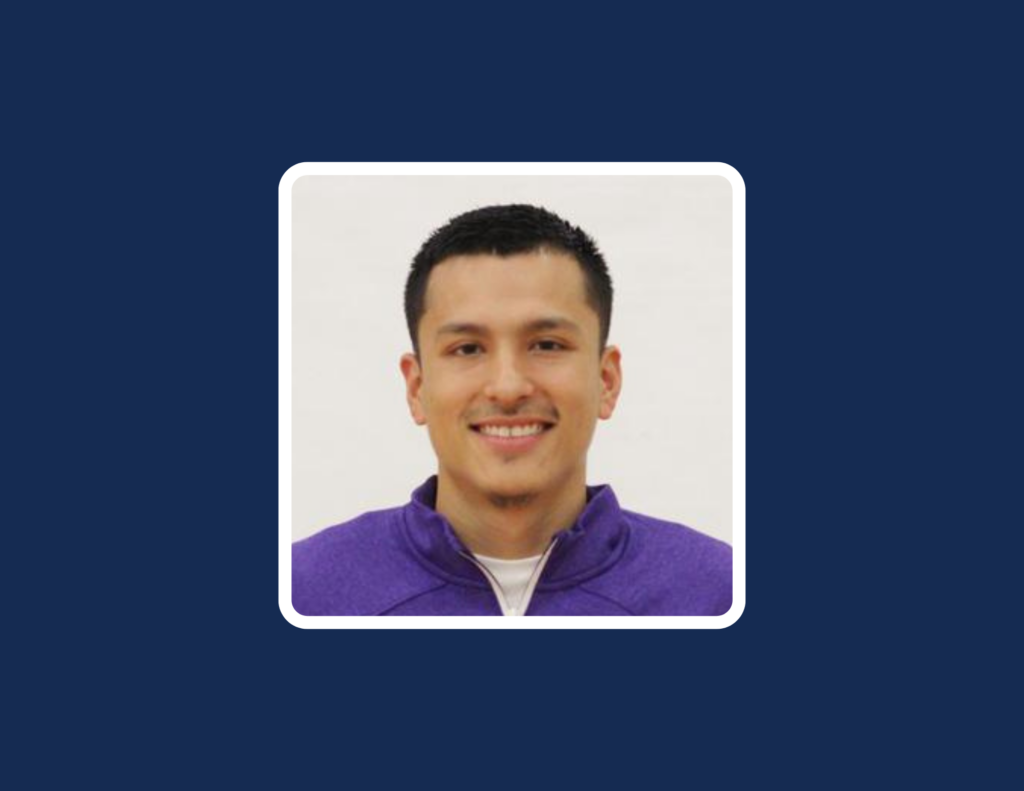
Adam Gonzales is in his second season as an assistant coach for the men’s basketball program at Concordia University Texas.
Gonzales joined the coaching staff during the 2016-17 season as a student assistant coach, working on scouting reports, practices, player development and summer camp itineraries for the program. He has also been a coach with the AAU team CenTex Attack for the past four years. Gonzales was promoted to the role of assistant coach on April 5, 2021.
Prior to Concordia Texas, the Austin, Texas native played basketball at Richland College and St. Philip’s College before returning back home to finish his degree in Multi-Disciplinary Studies.
If you’re looking to improve your coaching please consider joining the Hoop Heads Mentorship Program. We believe that having a mentor is the best way to maximize your potential and become a transformational coach. By matching you up with one of our experienced mentors you’ll develop a one on one relationship that will help your coaching, your team, your program, and your mindset. The Hoop Heads Mentorship Program delivers mentoring services to basketball coaches at all levels through our team of experienced Head Coaches. Find out more at hoopheadspod.com or shoot me an email directly mike@hoopheadspod.com
Be sure to follow us on Twitter and Instagram @hoopheadspod for the latest updates on episodes, guests, and events from the Hoop Heads Pod.
Take a second to grab a notebook before you listen to this episode with Adam Gonzales, men’s basketball assistant coach at Concordia University Texas.
What We Discuss with Adam Gonzales
- How some of his mentors, including Nelson Terroba, helped guide him into coaching.
- Being able to experiment with different tactics as an AAU Coach
- “I think you have to love coaching, you can’t look at it as a status thing.”
- Volunteering at Concordia Texas and eventually moving up to a paid assistant position
- The financial challenge of being a volunteer coach
- Learning from Stan Bonewitz at Concordia Texas
- “I like to open the floor for questions because what I don’t want to do is surprise somebody and they get here and then it doesn’t work out.”
- “You don’t really find out who players are until you see how they respond to adversity.”
- What he looks for as a recruiter when it comes to high school games and AAU.
- Looking for transferable skills in recruits
- Niche, motor, and defensive ability
- Using video to show players what their role looks like
- “We’re trying to do is build the best team where guys are the best at their role, the best at what they do.”
- Bringing the every day fight to coaching
- The pace and physicality of D3 Basketball
- “What I love about coaching the most is preparing. I love the preparation of it. I feel like that’s what coaching is.”
- His gameday and practice responsibilities
Like this show? Please leave us a review here — even one sentence helps! Consider including your Twitter handle so we can thank you personally!

We’re excited to partner with Dr. Dish, the world’s best shooting machine! Mention the Hoop Heads Podcast when you place your order and get $300 off a brand new state of the art Dr. Dish Shooting Machine!

Prepare like the pros with the all new FastDraw and FastScout. FastDraw has been the number one play diagramming software for coaches for years, and now with it’s integrated web platform, coaches have the ability to add video to plays and share them directly to their players Android and iPhones via their mobile app. Coaches can also create customized scouting reports, upload and send game and practice film straight to the mobile app. Your players and staff have never been as prepared for games as they will after using FastDraw & FastScout. You’ll see quickly why FastModel Sports has the most compelling and intuitive basketball software out there! In addition to a great product, they also provide basketball coaching content and resources through their blog and playbank, which features over 8,000 free plays and drills from their online coaching community. For access to these plays and more information, visit fastmodelsports.com or follow them on Twitter @FastModel. Use Promo code HHP15 to save 15%
Your first impression is everything when applying for a new coaching job. A professional coaching portfolio is the tool that highlights your coaching achievements and philosophies and, most of all, helps separate you and your abilities from the other applicants.
The key to landing a new coaching job is to demonstrate to the hiring committee your attention to detail, level of preparedness, and your professionalism. Not only does a coaching portfolio allow you to exhibit these qualities, it also allows you to present your personal philosophies on coaching, leadership, and program development in an organized manner.
The Coaching Portfolio Guide is an instructional, membership-based website that helps you develop a personalized portfolio. Each section of the portfolio guide provides detailed instructions on how to organize your portfolio in a professional manner. The guide also provides sample documents for each section of your portfolio that you can copy, modify, and add to your personal portfolio.
The first Training Camp – Elite Skill Development and Performance Combine will be held on the campus of Western Reserve Academy, just outside of Cleveland, OH powered by Unleashed Potential & the Hoop Heads Podcast. The camp is designed for boys rising to grades 6-9 and will take place June 29 – July 1, 2023. An emphasis on improving your individual skills in the context of a team environment will be the hallmark of the Training Camp.
Mike Klinzing from Head Start Basketball/The Hoop Heads Podcast & Joe Stasyszyn from Unleashed Potential will serve as the Camp Directors of this inaugural Training Camp.
Campers can expect 3 days of hard work, intense skills instruction, and learning how to be a great teammate on and off the court at the Training Camp. Players will participate in 10 Elite Skill Development Sessions led by some of the best coaches from across the country. Visit headstartbasketball.com to get registered.
THANKS, ADAM GONZALES
If you enjoyed this episode with Adam Gonzales let him know by clicking on the link below and sending him a quick shoutout on Twitter:
Click here to thank Adam Gonzales on Twitter!
Click here to let Mike & Jason know about your number one takeaway from this episode!
And if you want us to answer your questions on one of our upcoming weekly NBA episodes, drop us a line at mike@hoopheadspod.com.
TRANSCRIPT FOR ADAM GONZALES – CONCORDIA UNIVERSITY TEXAS MEN’S BASKETBALL ASSISTANT COACH – EPISODE 747
[00:00:00] Mike Klinzing: Hello and welcome to the Hoop Heads Podcast. It’s Mike Klinzing here without my co-host Jason’s Sunkle this morning. But I am pleased to be joined by Adam Gonzalez, men’s basketball assistant coach at Concordia University, Texas. Adam, welcome to the Hoop Heads Pod.
[00:00:13] Adam Gonzales: Hey Mike. Thank you for having me. I’m excited.
[00:00:16] Mike Klinzing: Absolutely. We are thrilled to be able to have you on after a few technical difficulties this morning. We are ready to go. Adam, just wanted to start by asking you how you got into the game of basketball as a kid. What were some of your first experiences with the game?.
[00:00:30] Adam Gonzales: You know, just the neighborhood, honestly, that’s what we did.
We played every sport, football, basketball. My dad was a boxer, so I was heavy into boxing as well. But basketball was something that was always challenging to me. It was probably a sport I was the least best at. So in a weird way, it motivated me to kind of stay in the gym, stay working on my game.
So that’s kind of how I got started into it.
[00:00:56] Mike Klinzing: As you were going through your playing career, was there a time where you knew that at some point you wanted to be a coach? Or was that something that came to you a little bit later?
[00:01:04] Adam Gonzales: Came to me a little bit later. Honestly, I was so headstrong on playing college basketball.
I had no idea I was going to be a coach. I just knew I wanted to be in the game in some form or fashion, be around it, even after I stopped playing.
[00:01:23] Mike Klinzing: What was your first thought process after you got done playing when it came to being a coach? What sparked you saying, Hey, I really want to get into coaching.
I think it’d be the right place for me. Was it just the fact that, hey, my playing career’s coming to an end? Just talk a little bit about what made you make the decision.
[00:01:40] Adam Gonzales: Yeah, I was already kind of jumping from to a juco to another one. I wanted to finish school obviously, and some of my mentors like you’ve met Nelson Terroba who got me into coaching.
I’ve always done camps. Even when I played and he was my assistant coach in high school, and he kind of made me look at things and have a certain perspective on basketball and just the way you prepare for it. And it kind of got me interested in wanting to coach just that approach.
It gave me a certain level of confidence when I played, looked at the game. You know, when I was done playing, I immediately jumped into coaching with him with an AAU program, summer program called CenTex Attack, and that’s kind of what got me jumpstarted into it.
[00:02:23] Mike Klinzing: What’d you like about coaching aau?
[00:01:40] Adam Gonzales: It was all like an experiment. I feel like I prepared the same that I would now, but it was fun. Everything was new, everything I was learning was new and dealing with different personalities, and I was fresh off of playing.
So I still kind of had like a certain level of confidence, like that kind of, Hey, I could still play type of thing, but I love just the rapid Games. The rapid game, okay, I have to try this next time. Or maybe I’ve tried these type of lineups or maybe I’ll try this type of office and, and so it just was a big experiment and that that’s what I loved about it the most.
[00:03:24] Mike Klinzing: What was something that, when you think back to that time and those first couple experiences. What was something that you felt. , Hey, I’m pretty good at this aspect of coaching, but maybe there’s something else that I struggled with or that was maybe a little bit more difficult. So what was something that you were good at right out of the gate?
Maybe something that you had to really learn and, and work on your craft when it came to coaching?
[00:03:43] Adam Gonzales: Just understanding, not everybody was like me. Not that I’m like this amazing and perfect person, but just my approach, my desperation to find the right answer or my desperation to get something right.
You know that’s something I had to learn and just try to motivate different personalities and spend a little time learning who they are so that I know how to motivate them.
[00:04:12] Mike Klinzing: Yeah, that makes a lot of sense. I think as you get to know your players and especially. Depending on what level you’re at, the amount of time that you get to spend with them, building those relationships is something that is really, really important because as you know, you can reach those kids better and get more out of them once you build that relationship both on and off the basketball court.
It just makes it easier for you to push them harder and and get more out of them. As you are moving through and continue to coach aau, what’s the first opportunity that you get on a more formal level to go and, and coach, and how do you end up getting to Concordia?
[00:04:46] Adam Gonzales: The first opportunity I got was Hill Country Christian.
It was a private school middle school level seven and eighth grade. One of the parents I coached in aau. She kind of suggested to the ad that they’ll give me an opportunity interview me, and that was kind of my first opportunity to kind of build a program and have a more formal season.
And from there, you know coach Sheba, as I mentioned, he had a connection with Coach Bonewitz at Concordia, and Coach actually recruited me out of high school. So he knew me from there. And that’s kind of how I got that opportunity there at Concordia. Volunteered there for three years before I got hired onto a full-time.
[00:05:31] Mike Klinzing: So there are a lot of young coaches out there that are listening. Talk about your experience as a volunteer and just why you felt it was important to do that. And again, what the challenges were as you were going through it because there’s a lot of coaches out there as you know that are trying to break into it.
So just give us a little bit of what your experience was like and maybe some advice that you might give for somebody else who’s in a similar position to where you were.
[00:05:58] Adam Gonzales: I think you have to love it. And you can’t look at it as a status thing. You have to strictly look at it like an opportunity.
Everything that you get is an opportunity. And so when I first got there at Concordia, I was literally just wiping the floor off when somebody fell. I was doing the laundry, I was just a fly on the wall. I did zero basketball the first couple months.
And I was just learning what was going on. And I think the toughest part for me was the financial piece because you’re not getting paid and you got school still. You’re trying to work, you’re trying to pay your own bills. So I was doing everything from doing Uber Eats.
I had a side job on the weekend. I would do plasma . Like I would take anything I could because I just knew it was not a lot of people got to have that kind of opportunity, you know? It wasn’t about getting paid for me at first I just wanted to get as much information as I can, especially from somebody like Coach Bonewitz who’s had such a great playing career and been at Concordia for now 20 years.
And his unique pressing style that I’ve never really been around. So it was very interesting to me at first. He gave me an opportunity and then he allowed me to do scouts and asked for my suggestions every once in a while and let me do player development.
So it was, it was kind of just one opportunity. I got to lead to another, and I just wanted to be around as much as I could early on.
[00:07:50] Mike Klinzing: In those first couple months as you’re in there, and obviously as you said, there’s a lot that you have to do outside of the basketball arena to be able to, yes. To be able to just make a living and sustain yourself.
How much time were you spending. When I say basketball, I mean watching the floors, doing the laundry, all that stuff. How much time were you spending in that volunteer position on a daily basis? Can you ballpark? Like how much time you were around the office and around practice and doing the laundry and all the things.
In other words, how much time did you have outside of basketball to be able to work your other jobs? And just give us an idea what your schedule was like.
[00:08:27] Adam Gonzales: Oh man. I don’t suggest everybody do this, but . But I would wake up probably at 6:00 AM because I had to have fine time to do my homework and I was coach Bon whiz, if he.
He basically told me you can be around as much as you want to. So if I wasn’t in class, if I wasn’t studying, if I wasn’t working, I was just going to sit in the office and wait until he gave me something to do. I wanted to make sure I woke up as early as I could to get done with my responsibilities.
Whether that was okay, I’m going to Uber now at 6:00 AM. Before he gets to the office at nine or I got homework, let me just knock that out this morning so that I don’t miss out on any time in the office during the day. And so I’ll sit in the office, class at 11, get out of class, come back to the office.
If he had any player development opportunities, I would ask him. I would ask guys if they needed to get worked out or you don’t want to get shots. So I’ll be in there for two to three hours. Sometimes I’ll eat my lunch in there and then we’ll have practice at 4, 5, 6 o’clock sometimes.
Get out of practice. Go Uber at night. And then repeat, do the same thing you know, every day. So that was kind of it,
[00:10:00] Mike Klinzing: I can only imagine what that was like. I can only imagine. And you’re not the only one. There’s lots of guys that have been in that position. You know that. There’s, as you said, it’s an opportunity and there aren’t that many of them out there.
And so there are times, certainly, I think I’ve heard a lot of coaches give the advice of, look, you have to be willing to travel, you have to be able to work for, for free to kind of get your foot in the door. And I think your story really illustrates that pretty well when you were going through those.
Early times, and you’re just sort of learning, you’re around Coach Bonewitz and you’re hanging around the office. Were you taking notes and formally writing stuff down or were you just kind of committing things to memory? How’d you go about sort of internalizing all the things that you were learning?
[00:10:41] Adam Gonzales: Definitely notes.
I don’t really depend on my memory too much on things. I try to write as much as I can. And whether it be on the laptop, Google Docs, or just on straight. Or trying to get copies of the practice plans and video. Every once in a while he’ll allow me to take videos of the practice just so I can start connecting things and, and just try to ask him as many questions as I could without annoying him.
I have to practice, but, but yeah, definitely, definitely notes. I suggest that everybody you know, take notes and, and you know, try to document and keep them as much as you can because I, I wasn’t always the best at that either just kind of keeping them organized and folders or whatnot.
[00:11:31] Mike Klinzing: In the moment. That’s not always easy to do. Like you might have good intentions, but yeah, trying to keep all your stuff organized and thinking, Hey, I just saw that, or I need to write this down. And then obviously as you’re running around and doing a million jobs and everything that you had to do with the basketball program as well, I can imagine where sometimes it’s easy for things to slip past anybody.
It’s certainly somebody who is as busy as you. Completely understandable how trying to keep all that straight and organized can be a challenge as you transition into, I’m going to say a quote unquote real position, what did that look like? What was the conversation like when you became an official member of the staff?
[00:12:11] Adam Gonzales: Recruiting, that was the conversation. Just recruiting and how important it is because initially I didn’t have any interest in recruiting. I just wanted to be a head coach or a high school coach, and I wanted to learn as much as I could from his style.
Going into it and trying to get as much as information as it could about how to run a program. I had no interest in coaching college basketball, to be honest. But you know, after a while I gained a lot of interest in that. And then coming into my full-time position. I fell in love with recruiting and just the process of it and the opportunity to help build our team and the kind of pieces we’re bringing in, the kind of culture we’re creating.
Like all that stuff. I fell in love with recruiting.
[00:13:02] Mike Klinzing: All right. Let me go back to the recruiting in a second. But I want to ask you about the idea of wanting to be a high school coach versus wanting to be a college coach. So when you set out on this journey, and you have in your back of your mind that I want to coach at the high school level, what was it about high school at that time that appealed to you more than college basketball as you were kind of getting into it?
Starting to getting a feel for the coaching world was all about why high school.
[00:13:29] Adam Gonzales: Having the opportunity to develop young people and building a program from the ground up. Taking freshmen, building up that communicating with different coaches to build that program and to share one one voice, one mindset.
And just the everyday. I was interested in teaching as well. And just my experience in high school. I had a great experience in high school. I had great coaches and I kind of wanted to follow up with that and I thought college was going to be a lot of other things outside of coaching that you had to do.
But obviously all the high school coaches listening. There’s a lot of stuff you have to do as a high school coach too. Absolutely.
[00:14:23] Mike Klinzing: Absolutely. There’s a lot of high school coaches out there that, like my six hours of teaching every day, if I could just get the hoops part.
[00:14:27] Adam Gonzales: No doubt. No, and I learned that when my former. Head coach in high school, he allowed me to be around the program throughout the year, go to booster clubs and kind of mirror their whole day. And I was like, oh man, don’t get to do basketball. You have to be in these meetings.
You have to go to class, you have to prepare for your class and almost cram in. Coaching was an afterthought of your day job. So that was all interesting to me as well.
[00:15:02] Mike Klinzing: Now let’s talk a little bit about the recruiting piece of it. How do you go about once you identify players that you guys are interested in. One of the keys obviously, is then building a relationship with that player and their family so that they feel comfortable and that eventually they want to sign on and, and come to Concordia. How do you go about, what’s the key for you in terms of building relationships with players and their families in the recruiting process?
[00:15:29] Adam Gonzales: Definitely being honest with them. Letting them know the challenges of being there at Concordia in terms of the things we do, the everyday work we do. I like to get that out the way. I like to see their expressions, their reactions. I like to open the floor for questions because what I don’t want to do is surprise somebody and they get here and then it doesn’t work out.
I want to see if they fit our culture. I want to see if they’re willing to do the things we want to do to push our team. And I want to know if they’re a good person. I want to know if we’re bringing in somebody who’s not only talented. somebody who’s going to contribute to our culture and contribute to what we want to accomplish.
Number one is making sure that their head is on right, that their goals to finish school, not just be here for basketball. And just try to get a feel for what kind of person they are, because you get to recruit them over time and you text with them, talk to them, go watch them play.
But you don’t really find out who they are until you see how they respond to adversity and when they get there. So I try to expedite that by just being straight up front. What do you think about this day when we have to wake up in the morning, you have to go to class.
You got study hall at nine, individual study hall, you have to workout at 11, you got weights at three. And then we got practice at six. What does that sound like to you? How does that sound? Like if you had a bad day and then you have to do that, how are you going to respond to that?
That’s not every day, but I would like to know how they would respond to those type of things.
[00:17:24] Mike Klinzing: Definitely a different world from high school basketball, let’s put it that way, without questioning. When you are evaluating players, do you have a preference in terms of watching them with their high school team, with their AAU team?
Are you looking for similar things, different things? Are there tips or just what are you looking for in AAU versus high school basketball And do you prefer one setting over the other?
[00:17:50] Adam Gonzales: No, not at all. I think, I guess when, when I go see AAU basketball, I want to see just what their ability is.
I think that there is a little bit of, not every AAU program, but there’s more freedom out there for them to explore some of their skill sets. But it’s the same three things I look for just niche, motor and how they defend whether you’re playing summer ball or high school ball.
It is nice to see them in high school ball, just from an execution standpoint and talking to coach, maybe asking him, Hey, what are y’all trying to do here? What is y’all offense, how has he contributed?
And, now when I watch the game, I can kind of put those things together and see how much that player is trying to follow his coach’s plan.
[00:18:45] Mike Klinzing: Talk about those three things that you said you look for mm-hmm. . So, and give us a breakdown of, when you talk about niche and you talk about motor and you talk about being able to play defense.
Just give us a detail or two about each one of those, why they’re important to you and what you’re looking.
[00:19:03] Adam Gonzales: I think with their niche, that for me means what, what’s your transferrable skill at the college level? I think if you go to any park in America or any high school game there’ll be a guy out there that tries to do everything and drop 20 every game.
But what do you do that’s going to transfer to the next level? Are you a elite rebound? You know, are you are you an elite shooter? Can you score it at the college level? Are you a creator? Are you creating and playmaking for other people? So that’s what I want to see. I don’t want to see you doing things that that aren’t really transferable.
And that’s not always that kid’s fault, right? He doesn’t necessarily know what that means and what that looks like. So that always helps if they have a coach or somebody around them who reminds them like, Hey, this is what you do. This is what can carry you to that next level. So that’s what I look for.
Do they weigh into that niche? Like they really put time in on that. Especially shooting is one of those ones that that pops immediately. And then motor, I think motor, that’s what we look for. And our team culture is how much do you want to win?
Are you diving on the floor for balls? Are you willing to take charges? Are you willing to gas out? Are you drenched in sweat when you’re playing and you’re still going? It just really shows how much you want to win when you’re that motor. And I think everybody should have that at the college level.
You’re playing at an elite level. And the third one, defense, those two things can go together, but off ball, are you engaged? Are you detail oriented? Do you put yourself in good position and that is also an effort thing. Are you getting in the stance?
Are you putting it all on the line? Does every possession look like the last possession? And not everybody’s going to have that, especially again, it’s not always the kids fault to necessarily know what that looks like, but it is something that we look for.
[00:21:19] Mike Klinzing: Let me ask you about niche, cause I think this is one that, especially when you’re talking about high school players and their parents, I think there’s always confusion about, well, what does that mean? Cause I think the perception is right, that when a college coach is at the game, when kids are out there performing, whether it’s at the high school level or the AAU level, everybody. Thinks that they need to score right? And they think that that’s what they want to show coaches.
And clearly if a player is coming and playing at the college level, most of the time they’re probably going to be a really good scorer. Now, I’m sure there are exceptions to players who are just super Talented on the defensive end of the floor. Maybe they do lots of other things, or again, they’re a great rebounder.
Maybe their offense hasn’t come around yet. But for the most part, we’re talking about good high school players that can score. So then when you bring those guys into your program, now you’re bringing in a kid who’s a scorer or who’s been a scorer primarily in his career. So how do you guys have conversations with those players when they first get on campus or in the recruiting process about, Hey, I know you might be scoring 25 a game, but when you get here, This is kind of where we see you or how you fit.
So what do those conversations look like?
[00:22:30] Adam Gonzales: Well, we would first address, how are you scoring? Are you a point guard? You score off of pick and rolls and you get downhill and, and you just do a good job finishing. Are you a guy who scores primarily off the ball where you’re now coming off of screens, you read space?
Well you’re a quick shooter. You’re. A good one, bounce all mid range shooter, you know I think it’s how you’re scoring and we kind of try and lean in on that because our goal is to build a good team, you know? Okay. We already have this, and I think we have about a few of those guys, but you can do this really well to help our team.
You can shoot the ball really well. We don’t really need you on the ball as much. We have two of those guys. Or you’re a versatile four. Okay. Are you a scoring four? Are you a physical rebounding guy? But you think you’re a versatile guy.
We also put video behind it too. With our recruits, when we bring them on, we show a video of a guy who we think they play like in our system or in the past to give them an idea or feel for, Hey, this is what we’re running for this guy, or This is how he’s scoring.
This is where he’s had success. This is kind of where we see you. Not to say we put you in this box, but initially this is where you’re going to. You know, your production, this is where we see you as. Hey, and if you want to get out of that box, work on your game outside of practice, you know what I mean?
Or an individual’s. This is what you need to be working on if you want to get outside that box. But in the meantime, don’t run away from that box . Like, this is what’s going to help you and our team. So that’s kind of what we mean by niche, what are you going to do for our team to help us? and it be fun for you as well.
[00:24:36] Mike Klinzing: I think it’s interesting whenever I have this type of conversation with a coach and I don’t care really what level. Once you get beyond high school, we’re not talking about the different, we’re talking about the different levels of college basketball or even we’ve had discussions with guys who have worked at the pros and you know, for so long when a kid’s younger, when they’re in middle school and they’re in high school, Most kids, when they’re working on their game, they’re working to develop their all around game, right?
They’re working on handling the ball, they’re working on their shot. They’re working on being able to do different things with the ball in their hands. They might be working on shooting on coming off screens or working on pick and roll. There’s all these different things that players work on when they’re younger, because you want to develop your complete skillset.
And then so many coaches. Talk about exactly what you just talked about, which is you have to understand and know your niche, your role on this team. And when you talk to pro guys, it’s especially interesting because obviously those guys are the best in the world. You’re talking about the top, whatever, 450 players in the entire world, and yet there’s really only 20 guys, 30 guys in the league that kind of get to do.
Everything and get to do what they want. And the pro guys always talk about you have to be really, really good at what it is that you do that helps the team win. And whether that’s just being able to defend multiple positions and shoot corner threes, or maybe you’re just a rebounder or maybe you’re the backup point guard and your job’s to come in and distribute and whatever.
Everybody has this role and so it’s interesting that once you get beyond the high school level, that so much of what makes a successful team. Is getting guys to buy into your role. And then you make another good point of, hey, if you want to expand that role, then you have to work outside the confines of the team.
So how do kids react to that type of conversation? Obviously it’s different for every kid, right? But when you’re having those conversations and kids are sort of coming to the realization, whether it’s through the conversation or just over the course of their freshman year, how do kids react to going from, Hey, I’m a star to now I’ve have to fit this role, and, and how do you guys help them adjust to.
[00:26:37] Adam Gonzales: You know, it’s all based off of maturity level, I think, and just what their support system is. I honestly think it’s getting a little better. I think like summer ball programs are doing a better job of communicating that stuff, especially the D three level stuff.
You know how you see that on Twitter and social media now you, they talk about not caring about what level they play at, and I think. Kind of those things are kind of aligned with each other. But as far as how we help them transition to that, I think we just champion that and we talk about our own experiences.
Like me, I was like the third best player on my high school team, but our best player played at Gonzaga . And our second best player could have played at the college level four best player could played at the college level, my role wasn’t to do everything, so I embraced it and we had a successful team and that’s what we try tell our recruits is, Hey, we want to have a good team. Now if you want to go score 15 or 20 somewhere, you can, you might even do that here one day. But what we’re trying to do is build the best team where guys are the best at their role, the best at what they do, what their niche is.
And if we have about eight to 10 of those guys just really laying into what their role is, man, just imagine how good we can be, and that we mean it and Coach Bonewitz, I’m sure you talked to him, he’s played at one of the highest levels. He was Mr. Basketball. He was that guy. But he also understood when he went to the next level, he had to lay into his own role.
He wasn’t scoring 30 points a game like he was in high school, in college and he had a lot of success in college. So both of us telling our stories and, and kind of championing that and giving a layout of what our goal is with the team.
[00:28:47] Mike Klinzing: I think it’s interesting when you start talking about kids, making that adjustment from star player to making sure that they fit the role so that you can build a good team.
And obviously as you said, coach Bonewitz and the success that he had as a player at a and m, and just, again, not many guys get the opportunity to play at that level and then be as successful as he was and mm-hmm. , I think back to my own situation when I was a player a long, long, long time ago, but in high school I was kind of one of those kids.
You described earlier that we were talking about that I scored and you know, I played some defense occasionally, but you know, I Right. Had the ball in my hands and was kind of the do everything guy. Right. And then I got to college, my freshman, freshman year, barely played. And then I started looking around.
And I looked at what we had coming back and I said if I’m going to get on the floor, like what we need is not another guy who can score. And not to your point, not that I wasn’t capable of doing that, but Right. I looked at it and said, my role on this team, if I’m going to play as a sophomore, I have to be able to defend.
And so I just kind of flipped the switch and just change my mentality of who I was and what was important. And I figured out if I want to get on the floor, this is what’s going to do it for me. And sometimes I look at it and I say, wow, that. Pretty amazing that I was able to do that. And then the other part of me says, I’m not sure why more players don’t just kind of figure that out and do what, right.
Do what the coach is like, it seems obvious like, Hey, the coach wants this. Maybe that’s what I should try to do. And, and seems like some guys are stubborn. So I don’t know what you, what your thought process is on that. And just as, as you see kind of both sides of that equation of guys who come in and they’re just stubborn and they won’t change.
And then the other guys who, who adapt really quickly. Yeah. Have you had both of those situations come?
[00:30:27] Adam Gonzales: Absolutely. I think I’m still young. I’m still learning a lot, but one of the biggest things I learned was just accepting that people are different. People’s mindset are different.
There’s some things that we won’t acquiesce to that things that are just completely unacceptable. Just like not being competitive or being disrespectful things, obvious. Things like that, but people are going to be different. Their maturity levels are different. When you get to meet their parents or where high school they come from and the players they play around you, you get an understanding of, okay, he’s coming from this.
You know what I mean? So he doesn’t necessarily, let’s give him a chance to act, to accept, embrace this culture. Let’s let him feel success with this. You know culture that’s around him. Let’s give him a chance to at least feel what that feels like and him get to see, okay, I could be successful doing this.
I could be successful in this role. There is success here because that’s one thing that I kind of learned early, just cause I’ve been the best player on my team, but I’ve also not been the best player on my team. So you got to accept it early. Some of the guys don’t, some guys don’t experience that until they get to college.
So one, one thing that that helped me, that amazed me was you think about LeBron James and how ball dominate, how dominant he is, period. Whatever team he’s ever played on. But I remember a coach told me, how long do you think the balls in LeBron James hands. And I was like, man, it has to be in his hand at least 20 minutes, 25 minutes for how long a game is, right.
It has to be, Nope, six minutes. Yep. I was like, whoa, six minutes. This is LeBron James, nobody has the ball in her hand more than LeBron. You know what I mean? But I didn’t know that prior to. You kind of have to give these, you have to give these kids a chance to learn that kind of stuff and not be so dismissive towards that, you know?
But if we get to a point where you’re just not accepting it, you have to also know. Okay. He’s probably not going to develop this level of maturity within four years. That’s fine. We’re not going to get rid of him, but, right. But there is guys in line ready to accept that level of maturity and who are you’re going to produce for us.
So you have to make decisions like that as well.
[00:33:09] Mike Klinzing: That number with LeBron, I think is telling in a few ways. And what I. Always strikes me when I hear those numbers is there’s so much more to the game than just when the ball’s in your hands and the players that only want to play hard when they have the ball.
Those guys are killers because you look at what happens just in terms of movement and off the ball and, and how valuable a guy like you think about curry and you think about how dangerous he is with the ball, but what really makes him dangerous is the fact that when he gives the ball up, He’s moving.
There’s nobody with better movement or better footwork or better just making guys chase. And obviously the shooting makes, makes chasing him even more important. But just the fact that he doesn’t give the ball up. And you think about James Harden in Houston, passes the ball and then just goes and stands somewhere.
Well, which guy’s more dangerous? Which guy’s more valuable to their team? It’s no comparison. And then you factor in the other end of the floor where, let’s face it, there are high school guys. Play good defense that are hard, nos that are tough, but playing defense at the college level is something completely different that most college players have to make a big adjustment to.
And I think helping, to your point, helping players to be able to see that there’s more to the game than just having the ball in their hands. That’s so critical for them to understand. Like you said, some guys probably you’ve experienced it, some guys never understand it. Yeah. And they go through four years wondering, well, how come I, how come I don’t play?
And how come I don’t get the ball and how come I don’t get to do what I want to do? And then there’s other guys who just kind of figured out like, look, if I set screens and roll harder the basket and rebound, then I can get. 18 minutes a game, even though Right. I may not score very much, but let’s face it, it’s a lot more fun to be out on the floor playing than it is sitting on the bench.
No matter what you think your role is.
[00:34:57] Adam Gonzales: Right. You just want to be in the mix.
[00:35:02] Mike Klinzing: Absolutely. When you’re working with coach Bonewitz, I know one of the things that is really important to young coaches is developing yourself as a coach and getting ready for whatever your next opportunity, whether that’s the opportunity to advance on your current staff, whether that’s the opportunity to go and maybe advance a level, maybe that’s it. The ability to go from being the second assistant to the first assistant, or from the first assistant to getting your first head coaching job. So when you’re working with Coach Bonewitz, what are some of the things that you try to absorb from him or conversations that you try to have with him to help you to develop and grow as a coach, When you’re working with Coach Bonewitz and you’re thinking about yourself as a young coach, somebody who’s trying to grow in their career, look for Yeah. And get ready for that next opportunity. Yeah. What do those conversations with Coach Bonewitz look like in terms of you trying to gather knowledge. Obviously you’re watching what he does, you’re seeing what he does every day, but when you guys sit down and talk, is there ever a time where you’re talking about, Hey, here’s where I want to go in my career. Can you help me to understand what it takes to get to that point?
[00:36:18] Adam Gonzales: I spend so much time with coach B. I’ve worked with him for seven years. I kind of just watch his actions. Yep. We talk constantly. We talk a lot. We talk so much that it’s not like a formal sit down conversation about stuff like that. It just happens in our daily conversations and it happens in, oh, okay.
I got you, coach. Now I see what you were talking about then or it might even be a couple years thing where I’m like, okay, coach, I see. I see what you meant a couple years ago when this happened and I disagreed with you, and I didn’t understand it. Now I see why you said that.
How many things come to fruition in the future, and I learned more honestly off of those kind of things than we do informal conversation because if you’re around Coach Bonewitz, you’re going to get so many conversations about so many things that it won’t even need to be sit down.
Hey, let’s talk about my career, they just naturally come or us being around other coaches, so many conversations just hanging out, like stuff like that. Honestly, we’ve talked so much more about that kind of stuff than us just having like a formal conversation.
[00:37:42] Mike Klinzing: What are some things that you’ve picked up and when you look forward in your career what are some things that you feel you’ve picked up from him through those conversations, through observation that you think are going to be with you if we were to revisit this conversation five years from now, and you’re 50 years old and you’re looking back on your career.
Yeah. What are some things you think are still going to be influencing you at that point?
[00:38:07] Adam Gonzales: Definitely. I mean, definitely the every day. When I say fight, I don’t mean like literally fight, but the every, he’s willing to fight every day. You know, you won’t catch him sleeping ever. You know, he’s willing to go at it every day.
And you have to be that way as a coach, right? I think my personality is different, and I’ve learned that from him. Just kind of, okay, I can’t you have to be on it every day. You have to be able to fight for not only your culture, but what your team stands for, what your principles are. You have to be ready to go at it every day.
We’ll be in the classroom coach will talk with the guys, talk to him about sports, talk to him about everything. But basketball sometimes and, but when we get in the gym, boom, it’s, it’s on, right? Like, if you’re not doing what you’re supposed to be doing, you’re not getting to your you’re five to a side, you’re midline defense.
You’re not pressing up, you’re not getting in somebody’s bubble. He’s willing to fight. His energy’s always high. No matter what whether we were recruiting the night before and we’re both going off of four or five hours of sleep. You know, he’s getting his workout in, he’s getting in the gym and he’s ready to go.
You know what I mean? That’s what I’m going to learn from him, and obviously a bunch of different X’s and o’s offensive wrinkles stuff and defense. But in terms of like a belief system and just what I’ve observed from him consistently every.
[00:39:43] Mike Klinzing: Is that to go along with that, what do you love about the division three level of college basketball?
What, in your mind, makes it special when you talk to players, whether it’s on the recruiting trail or when you guys are sitting in the coach’s office talking to each other, or you’re talking to players during the season? What do you love? What’s your main selling points for what makes Division three basketball so special?
[00:40:05] Adam Gonzales: I think the intimacy. I go to some of these, division one, division two, you have like seven to eight staff members and just so many different people involved. I love specifically here at Concordia, it’s just me and coach. It’s just me and Coach B. So we get to have a really tight-knit culture.
Really tight-knit voice, you know what I mean? I feel like we pull in the same direction a lot easier because of. As far as D three basketball, I honestly wish I had a better answer than that. I could tell you the misconception. I love seeing guys reaction to it, especially recruits when we come and bring them to a game and they’re just like, oh, this level is kind of tough.
And I remember my first reaction seeing a Division three game. You know, it was like, oh, did you see a lot of it growing up or, I honestly didn’t, I just hooping around the rec centers and things like that. I’ve known guys who play at the division one level and I’m competing with them.
So in my head I’m like thinking, okay, I’m holding my own against these guys. Not really understanding, like division one guys don’t go recruit people who are just holding their own. You have to produce. When I went to go watch a division three game, I’m like, whoa, like this pace is different. Like that guy could have easily played at a higher level.
And you get a bunch of those guys, you get enough of those guys, you got a really successful division three team. Because I think it does take that like a higher level guy than what you may think a division three player is. But, I just remember being wowed by the physicality of Division III basketball and the pace of it.
[00:42:02] Mike Klinzing: I know we’ve talked to a couple different Division III coaches and one of the stories that several of them told is just that number of times is they’re sitting down with the kid and recruiting him, and maybe the kid initially has. A negative reaction to division three because everything that they hear is division one.
And so that’s obviously what most kids are focused on. It’s what they see on tv, it’s what everybody’s talking to them about and this and that. The coaches will say, well, have you ever even seen a Division three game and the number of kids that get recruited by division three schools that have never even been to a Division three game, to actually watch it and see it. And I think both players, and to your point, I think anybody who goes in and sits and watches it, the players parent, the player themselves. You’re going to be stunned by the high level of basketball that’s being played and the pays the physicality. It’s just a totally different game than what high school kids are used to seeing.
[00:42:57] Adam Gonzales: Yes, yes. No, It’s one of my favorite things to see not in a bad light, but just, you already know what the consensus is. You already know what they’re thinking prior to that game. You know, like, oh, okay, that’s almost like, that’s cute type of thing. It’s like, okay, wait till you watch this game.
The parents and everything is like they, they end up liking it a lot and I love when the guys get on campus and our guys do a good job of just kind of welcoming them, but also at the same time like, Yeah, you’re competing with me every day. You know? This is fun to watch.
[00:43:42] Mike Klinzing: What does game day look like for you? What’s your role? On the day of a game, what are some of the things, responsibilities that you have to make sure that the team’s getting ready and that Coach Bonewitz has all the things in place that he needs. I’m sure there’s a million things, but maybe highlight Yeah, just some of the things that, that are most important for you on game day.
[00:43:59] Adam Gonzales: For sure. Going over Scout with the guys. We do video slide shows with them. We use the Synergy, synergy shot chart for that and going over that, going over teams based on how to balance and what they’re going to do that day on shoot around in the morning. That’s my favorite time.
What I love about coaching the most is preparing. I love the preparation of it. I feel like that’s what coaching is. It’s how you prepare. So doing that stuff is my favorite part. And you know, after that it’s just a team meal. Bringing them back in and talking to them about matchups and things like that.
But the game day stuff is, is pretty fluent, especially when we get in conference. You have the women playing before you, so there’s very limited time of what you can do on the floor prior to your game. So it’s more about that morning session, the scout going over teams defense and baseline balance their offense and going over our stuff.
[00:45:04] Mike Klinzing: What about on the practice floor? Do you guys, how do you divide up what your responsibilities are? Just what’s going on on the practice court when you guys are working together, obviously division three level, as you talked about, you don’t have the division 1, 7, 8, 9 people and 10 managers and everything else going on. So how do you guys manage that and make sure that you’re getting the maximum out of out of your guys for a practice session?
[00:45:26] Adam Gonzales: Well, we spend a lot of time talking about practice prior. So whether I’m doing post guard split, he takes the post, I take the guards, or Hey this defensive session, he’ll tell me, I want you to introduce this one.
I want you to do this one. And if it’s my scout, hey, let you know. Tell the team what we’re doing of what they’re doing offensively how regarding that. And then Honestly, it’s after that, it’s kind of both of us coaching, both of us seeing what, what we see. He gives me the freedom to stop it. If I see something we’ve talked about prior to you know, practice being able to just stop it.
I pretty much have that freedom to do that. Obviously, as an assistant, you don’t want to be stopping it all the time, but for the most part, coach Bonewitz gives me the same amount of freedom to stop things as he does.
[00:46:18] Mike Klinzing: How do you guys balance out? I think that’s one of the things that I always find to be interesting is when you’re talking about coaches and being able to balance out when you stop it versus when you want to keep the flow of practice going because clearly you can’t stop everything because you’d be blowing the whistle every two seconds.
Yeah. You’ll miss the flow up of prayer. Right. Exactly. So how do you guys balance when you talk about that, is there a particular focus in a practice where, hey, today we’re focusing on boxing out on the weak side, and anytime that doesn’t happen, we’re going to stop it. Is that kind of how you guys approach it? Or what’s, what’s the tactic that you guys use?
[00:46:52] Adam Gonzales: Yeah, I would say that obviously we go, we, we do about eight to 10 different things in practice, but there’s like always two to three things that we really spent time talking about that we know, like we’re just itching to stop it when we see it.
So whether he catches it first or I catch it first, we’re stopping that. But it honestly, I just kind of gained a feel for when to stop it, when not, because I know what’s been, I, I know when something’s been bothering Coach B about our team, so I kind of don’t stop I let him do that. I don’t even mess with it, you know what I mean?
Yeah. Okay. You got like, I’m not even touching. I’m motivating. Okay. I know Coach B’s been fired up about this one, so he’s about to go on this. But you know, then the rest of the practice I got a feel for, Okay. We need to keep flow here. That last session, we had to stop it a few times.
We need to get some flow here. So I’m just going to motivate, I’m just going to kind of, what I think about just. Touching this, I’m going to just touch on this, but I’m going to say it in passing. I’m not going to just stop the whole flow of practice. I’m going to just say it in passing. Or a guy’s coming to the sideline, Hey, you might want to look for this.
Or, Hey, you didn’t get all the way over to your low hole. Like, things like that. You just kind of get a feel based off the prior session or category we just went over. So just getting a feel for that stuff.
[00:48:26] Mike Klinzing: Yeah, it makes sense. Right? And since you’ve been with him for seven years, you guys start to have a little bit of understanding of what the other one does, doesn’t do, and you obviously have to defer to Coach Bonewitz and how he runs things.
And so you’ve learned, I’m sure over the years that when your time is to step in and when your time is to lay back and when you can, when you can hop in and be vocal, when it’s better to just wait for a guy to come to the sidelines and have that conversation. It probably varies from player to player too.
[00:48:52] Adam Gonzales: Right? Yes, for sure. For sure. It does. Definitely Some players are better to talk to after some players that you can lay in in front of everybody and they handle it well because they’re mature. So you kind of get a feel for that too.
[00:49:05] Mike Klinzing: Absolutely. All right, before we wrap up, I want to ask you one final two part question.
So part one, when you look ahead over the next year or two, what do you see as your biggest challenge? And then when you think about what you get to do every day at Concordia, What brings you the most joy? So your biggest challenge and then your biggest joy.
[00:49:25] Adam Gonzales: My biggest challenge. My biggest challenge I would say I always want to get more and more organized with my systems, whether that be recruiting or collecting information on stuff we’ve done in prior years so we can use it. So I would say that that’s my biggest challenge. I want to get better and better at being more organized and collecting things, and building better systems for what we do to make things flow and make it easier in the future.
[00:50:00] Mike Klinzing: That makes sense. All right. Biggest joy.
[00:50:03] Adam Gonzales: My biggest joy is just, I mean, honestly, coming in every day and recruiting and, and being able to see these guys grow and working with them and developing them and just the grind of the season. I just love it so much.
[00:50:18] Mike Klinzing: That’s awesome. I mean, obviously not everybody gets to do that in their life.
Get up and do something that they love. So to be able to do that day in and day out is special. Before we get out, Adam, I want to give you a chance to share how people can reach out to you, find out more about what you’re doing. So if you want to share social media, email, whatever you feel comfortable with.
And then after you do that, I’ll jump back in and wrap things up.
[00:50:40] Adam Gonzales: Yeah, you find me @CoachAG1181 on Twitter and Instagram.
[00:50:48] Mike Klinzing: Hopefully we’ll get some people reaching out. And again, Adam, can’t thank you enough for taking the time out of your schedule this morning to jump on with us. Truly appreciative.
And to everyone out there, thanks for listening and we will catch you on our next episode. Thanks.