
GREG BERGE – LINCOLN (LAKE CITY, MN) HIGH SCHOOL BOYS’ BASKETBALL HEAD COACH – EPISODE 746
Website – gregberge.carrd.co
Email – [email protected]
Twitter – @gb1121

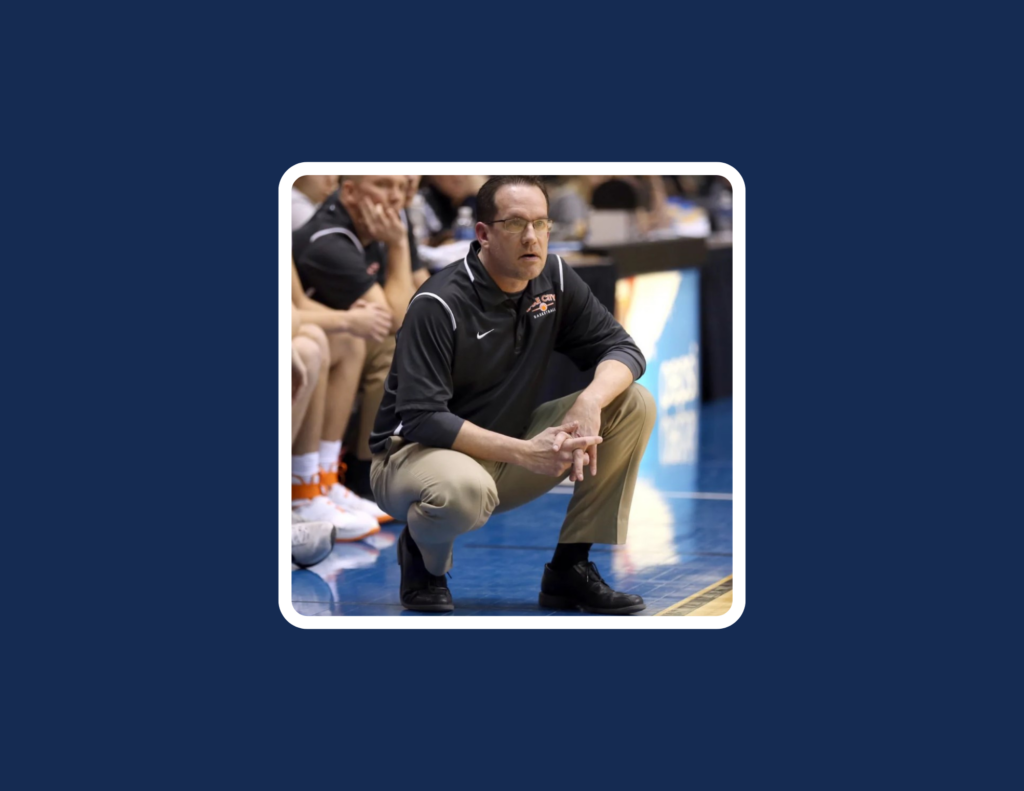
Greg Berge is the Boys’ Basketball Head Coach at Lincoln High School in Lake City, Minnesota. Greg has been a teacher, coach, and school administrator for the last 28 years and currently serves as the High School Principal at Lincoln High School
Greg’s 17 years as a Varsity Basketball Coach and many other years as an assistant coach in multiple sports have given him tremendous insight into what makes great teams.
Berge’s teams have won ten conference championships (eight consecutive) and two section championships. As an assistant varsity coach, he has also helped coach teams that won multiple section championships in both football and girl’s golf. Greg has been fortunate to coach multiple players who played college basketball at all levels (NCAA Division I, Division II, NAIA Division II, and Division III).
Berge is also a Licensed Sports Leadership Facilitator through the Janssen Sports Leadership Center.
If you’re looking to improve your coaching please consider joining the Hoop Heads Mentorship Program. We believe that having a mentor is the best way to maximize your potential and become a transformational coach. By matching you up with one of our experienced mentors you’ll develop a one on one relationship that will help your coaching, your team, your program, and your mindset. The Hoop Heads Mentorship Program delivers mentoring services to basketball coaches at all levels through our team of experienced Head Coaches. Find out more at hoopheadspod.com or shoot me an email directly [email protected]
Be sure to follow us on Twitter and Instagram @hoopheadspod for the latest updates on episodes, guests, and events from the Hoop Heads Pod.
Grab a notebook and pen before you listen to this episode with Greg Berge, Boys’ Basketball Head Coach at Lincoln High School in Lake City, Minnesota.
What We Discuss with Greg Berge
- Growing up in Minnesota and how his Mom saying no to hockey led him to basketball
- How coaching B squad football in college convinced him he would love coaching
- “It is almost impossible to have a great season if you do not have good leadership.”
- “Collective leadership is really important because kids lead different ways.”
- Step one in leadership is leading by example
- The characteristics of a great leader
- Captains as junior firefighters
- Leadership is influence
- “A captain is nothing more than a title unless, unless you talk about what leadership is.”
- The 5 types of leaders
- Game Leaders
- Practice Leaders
- Locker Room Leaders
- Humor / Communication Leaders
- Energy / Pride Leaders
- Culture is what you allow and emphasize every day
- “Coaching is not about plays, it’s about players.”
- “We teach concepts, we teach how to play, we teach decision making.”
- “I think the kids have to know how are we going to win and what are you going to emphasize?”
- No paint, contest shots, rebound
- Three ways to work inside-out on offense
- Preach the three things that are most important to you over and over
- Why a good youth coach focuses on the experience and teaching the game rather winning and losing
- Finding good youth coaches for his program
- The 300 Hour Club
- Using a pre-season self perception form
- The Lake City Basketball Experience to involve youth players in the varsity program
- “Parents have to know that you care about their kid. They have to know that you’re committed yourself and that you put a lot of time in and you’re dedicated.”
- “The worst thing that we can do as a coach is not be honest or as honest as we need to be with every kid.”
- How coaches can help guide parents whose kids aren’t playing
- “Assistant coaches have to be poised and composed. I don’t ever want an assistant that’s gets out of control.”
- “I want my assistants to throw ideas my way, whether they think they’re good or bad, I want to hear everything. And I think that’s important to hear different perspectives.”
- Simplicity wins
- “We try to develop complete players and then use them in the flow of our motion offense.”
- How he uses film during the season
- Being adaptable as a coach and building an adaptable team
- His role in the recruiting process as a high school coach
- “When you get to college, guess what? Everyone’s a role player.”
- His Twitter page, his books, and committing to writing for a year
- “What I love most about coaching is getting a group of kids to find a way to work together, to compete and find a way to be the best that they can be.”
Like this show? Please leave us a review here — even one sentence helps! Consider including your Twitter handle so we can thank you personally!

We’re excited to partner with Dr. Dish, the world’s best shooting machine! Mention the Hoop Heads Podcast when you place your order and get $300 off a brand new state of the art Dr. Dish Shooting Machine!

Prepare like the pros with the all new FastDraw and FastScout. FastDraw has been the number one play diagramming software for coaches for years, and now with it’s integrated web platform, coaches have the ability to add video to plays and share them directly to their players Android and iPhones via their mobile app. Coaches can also create customized scouting reports, upload and send game and practice film straight to the mobile app. Your players and staff have never been as prepared for games as they will after using FastDraw & FastScout. You’ll see quickly why FastModel Sports has the most compelling and intuitive basketball software out there! In addition to a great product, they also provide basketball coaching content and resources through their blog and playbank, which features over 8,000 free plays and drills from their online coaching community. For access to these plays and more information, visit fastmodelsports.com or follow them on Twitter @FastModel. Use Promo code HHP15 to save 15%

Your first impression is everything when applying for a new coaching job. A professional coaching portfolio is the tool that highlights your coaching achievements and philosophies and, most of all, helps separate you and your abilities from the other applicants.
The key to landing a new coaching job is to demonstrate to the hiring committee your attention to detail, level of preparedness, and your professionalism. Not only does a coaching portfolio allow you to exhibit these qualities, it also allows you to present your personal philosophies on coaching, leadership, and program development in an organized manner.
The Coaching Portfolio Guide is an instructional, membership-based website that helps you develop a personalized portfolio. Each section of the portfolio guide provides detailed instructions on how to organize your portfolio in a professional manner. The guide also provides sample documents for each section of your portfolio that you can copy, modify, and add to your personal portfolio.

The first Training Camp – Elite Skill Development and Performance Combine will be held on the campus of Western Reserve Academy, just outside of Cleveland, OH powered by Unleashed Potential & the Hoop Heads Podcast. The camp is designed for boys rising to grades 6-9 and will take place June 29 – July 1, 2023. An emphasis on improving your individual skills in the context of a team environment will be the hallmark of the Training Camp.
Mike Klinzing from Head Start Basketball/The Hoop Heads Podcast & Joe Stasyszyn from Unleashed Potential will serve as the Camp Directors of this inaugural Training Camp.
Campers can expect 3 days of hard work, intense skills instruction, and learning how to be a great teammate on and off the court at the Training Camp. Players will participate in 10 Elite Skill Development Sessions led by some of the best coaches from across the country. Visit headstartbasketball.com to get registered.
THANKS, GREG BERGE
If you enjoyed this episode with Greg Berge let him know by clicking on the link below and sending him a quick shoutout on Twitter:
Click here to thank Greg Berge on Twitter!
Click here to let Mike & Jason know about your number one takeaway from this episode!
And if you want us to answer your questions on one of our upcoming weekly NBA episodes, drop us a line at [email protected].
TRANSCRIPT FOR GREG BERGE – LINCOLN (LAKE CITY, MN) HIGH SCHOOL BOYS’ BASKETBALL HEAD COACH – EPISODE 746
[00:00:00] Mike Klinzing: Hello, and welcome to the Hoop Heads Podcast. It’s Mike Klinzing here with my co-host, Jason Sunkle tonight, and we are pleased to welcome the head boys basketball coach at Lake City High School in Minnesota, Greg Berge. Greg, welcome to the Hoop Heads Pod.
[00:00:13] Greg Berge: Hey, thanks Mike. Thanks for having me. I’m excited to be here.
[00:00:16] Mike Klinzing: We are equally excited to have you as a guest. Looking forward to diving into all the things you’ve been able to do in your coaching career, but also talk about some of the things that you’ve been able to do and put out both in terms of your books, what you do on social media, and just all the things that you’ve done to be able to help the coaching profession and help coaches to build a stronger culture with their team.
Let’s start by going back in time to when you were a kid. Tell us a little bit about your upbringing and how you got into the game of basketball when you were younger.
[00:00:50] Greg Berge: Yeah, well, I grew up in the Twin Cities area. The home of hockey. I remember very fondly being, I don’t know, third grade, second grade, asking my mom and dad if I could play hockey.
My mom did not want to go through what I think what needed to happen in Minnesota hockey with the schedule. And so a lot of friends in my neighborhood played hockey and I played basketball and the funny thing with that is about a year later as I started playing basketball, we couldn’t find a coach for our team.
And so I went back to my mom and my mom ended up coaching our team. She knew nothing about basketball, but she knew. I wanted to play. She knew much it meant to me. And so she kind of, in third grade, got us off the ground and then we kind of grew from there. I was a three sport athlete in high school, football player, basketball player, golfer, went to college, was kind of a tweener athlete from being a college player, or not maybe a D three type of player.
And I decided to go the coaching route. And through college I coached assistant varsity football. I was kind of a volunteer for a couple years and I coached traveling basketball through college. I got my first job in Lake City as a teacher. We had a hall of Fame basketball coach in Lake City that I took his teaching job.
But he continued coaching for a few years and then he retired three years into my teaching job. And I took over the head basketball position at the age of 26, 27 years old replacing a legend, a hall of fame coach in Minnesota, Jerry Snyder. And then I went through the teaching route.
I coached for seven years. I’ve always had a passion for leadership. I think that’s why I’ve gotten into what I’m into kind of right now. And I got my administrative license and I had to make a call and I had to get out of coaching and teaching at a young age, at the age of 33 years old.
And that was the hardest decision I had to make. But it ended up being a great decision and fortunately for me a few years later I was able to get back into coaching. And now I’ve been doing both as the high school principal and the varsity basketball coach in Lake City. I’ve been doing both of them for the last 10 years.
And that’s a quick summary of my Basketball background. There’s a whole lot more that goes into that, but I guess we’ll start with that.
[00:03:11] Mike Klinzing: This is all because your mom didn’t want to get up at 5:00 AM is that right?
[00:03:13] Greg Berge: That’s where it all started is mom said, no. That’s hilarious.
[00:03:18] Mike Klinzing: It’s funny how life takes twists and turns, right?
It’s amazing that sometimes it’s something as small as that, and then your mom coaching your team and getting you off to a good start. Was coaching something that you always knew you wanted to do? Because obviously as a three sport athlete, you’re busy doing all your sports and, and being focused on being a player, but was coaching something that you knew you wanted to do from a young age or did that come a little bit later, like when you got into college?
[00:03:43] Greg Berge: You know, that’s another good story because I originally went to college in going to business and a year after college, I knew it wasn’t a good fit for me and I didn’t really know what I was going to do. And I went to my high school football coach and I was a high school quarterback. We were a Triple options true wishbone team.
And in the month of August before I left for school, I asked him if I could help out and he said, absolutely. He let me coach the B squad and he let me call the plays in our first B Squad football game. I was there for the first three weeks. and that experience of three weeks of coaching and connecting with kids, I knew at that moment, this is what I wanted to do.
This is what I was meant to do, was to coach and to lead and to teach. And from that point, I decided, okay, what am I going to teach? And I went the math route. You know, it was,
[00:04:39] Jason Sunkle: Yeah, Greg, that’s why I like to hear math.
[00:04:41] Greg Berge: Are you a math guy?
[00:04:43] Jason Sunkle: I teach algebra.
So yeah, I was a, a math teacher.
I taught geometry. I taught AP calculus for a few years. I taught some computer classes and I loved what I taught. It was a great challenge. I loved coaching and the leadership piece I’ve always been drawn to and I think I was a captain in multiple sports. I think that’s what drew me to get into administration and, and coaching.
But the leadership piece has been really important to me for a long time.
[00:05:12] Mike Klinzing: Let’s start there with the leadership because I think this is something that I find to be pretty interesting and I think it’s something that coaches don’t always necessarily do a great job of. We talk about, and I just, on our last pod that we recorded tonight with Jason Smith, he and I talked a little bit about sort of the void in leadership that sometimes coaches will complain about.
Our team doesn’t have any leaders. That’s something that if you talk to coaches and their teams are struggling, a lot of times you’ll hear coaches say that, we just don’t, we don’t have any leaders. And I always push back on that and just say, well, sometimes we as coaches, we just say, Hey, we want leaders, but we’ve never really taught kids what leadership looks like, or we haven’t given them the space to be able to lead.
We haven’t given them areas where they can lead. So when you think about leadership with your teams and you’re trying to develop leaders on your team, what does that look like for you? How do you go about making sure that. You’ve given those kids the space, and you’ve also not just said, Hey, we need leaders, but you’ve actually talked to them and taught them this is what leadership looks like.
[00:06:19] Greg Berge: Yeah, I think you hit the nail on the head. I think as coaches a lot of us, and I’ve been guilty of it, especially in the past, I’m a lot better at this now, but we take the magic eight ball approach to leadership and we shake the eight ball before the season starts and we ask, are we going to have great leaders this year?
And if it comes back as a yes, we’re excited and, and we roll with it. And if it comes back as a no, we’re like, all right, let’s just grind our way through it. I think all too often as coaches, we just hope that we have leaders come and we have to develop leaders. Like you said, it’s a process and it’s not easy.
And I think you could ask any coach, and I know it’s true for me. If we look at all the most successful teams that we’ve ever had me, it always goes back to we had great leadership. It is almost impossible to have a great season if you do not have good leadership, good player leadership on your team.
And so I think there’s a lot of misnomers about leadership. I think one of them, and I’ve written about this on online, there are many types of leaders on a team, and it’s never one kid. And collective leadership is really important because kids lead different ways. For example, you have game leaders.
Those are the kids that need the ball in their hand. When the game is on the line, they may not be your best practice players. They might not be your practice leader. They might not be your locker room leader. They may not be your bench leader. They may not be a connector, but they lead in a different way.
And I think acknowledging that with kids and letting them know that we are all leaders and collectively we all have to do our part. It gives kids ownership in it. And I think that’s really important because I think all too often we name a kid, a captain, we think that you get the title and it’s your job to now lead.
And they may not have the skills or aptitude to do it, and it ends up fizzling out. So one important thing to me is just talking about collective leadership with kids. And then the other big thing, and I could talk forever about all of this, but. Leadership starts really, really young. Like I am on our kids in elementary school when they come to camp, I can tell who that influencer in that grade is going to be.
And I am developing a relationship early. It’s a benefit of being a high school principal because we’re a seven 12 building. We’re a smaller school. Those kids are in our building in seventh grade. Every interaction I have with them is purposeful. It’s about developing them into a leader and hopefully through time and doing that you’ve built them up.
So by the time they get to your level at the varsity level they’re the type of leader that you need them to be.
[00:09:08] Mike Klinzing: What are some of the things, maybe some characteristics that kids have that leads them to be better leaders. Are there things that you look at where there’s a kid who, who that kid has what it takes to be a great leader?
And obviously you can develop all kids and develop their leadership skills, and that’s what you’re talking about with collective leadership. But as you’re starting to identify, hey, this is the kid who’s going to be the key cog in developing the kind of culture in our program or in our school that we want to do, what are some of those characteristics that you look for?
[00:09:42] Greg Berge: You know, first and foremost, they have to be able, they have to lead by example. I mean, they, that’s step one in leadership. And so what does leading by example mean? It means having good character. You don’t have to be perfect, but you have to make the right decisions in school, outside of school, in the classroom.
You have to make good choices and you don’t have to be perfect, but it starts with that. I think leading by example. You have to be a positive energy type of guy. You don’t have to be ra ra. You can’t be a Debbie Downer. You can’t be someone that’s bringing negative energy to the environment or whatever they’re in.
You have to be committed, if you’re not committed, it’s hard to lead others in your sports, I think you have to have a confidence. You have to have a little swagger about you, and you have to have poise. You can’t be a hothead, you can’t be a kid that’s getting teed up all the time.
Those are the general baseline things that kids need to lead by example, and then that’s step one. And so that’s really what I’m working on developing with these kids from a really young age, is the character piece, holding them accountable laying a standard for them and for other kids in the program, developing their commitment level to basketball, building their confidence talking about these things a lot.
And then as they get older, and this is the hardest thing for at any level, to leave leading out loud. How do you connect, be a connector for your teammates? How do you be that cheerleader when they need you? How do you confront issues and how do you challenge your teammates to be better?
That’s what leading out loud is to me. And when you get that all together, you get a great leader. But it all starts with leading by example.
[00:11:23] Mike Klinzing: Alright. Let’s talk a little bit about that confrontation piece, that ability to call out your teammate, that ability to confront a teammate when maybe they’re cutting corners or maybe they’re nursing an injury a little bit longer than they probably should.
Yeah, I think that’s one of the things that kids struggle with. I think adults struggle with it. Absolutely. And so when you start having conversations with kids on your team about making sure that their teammates are living up to the standard that you have as part of your program, what do those conversations look like?
What’s some of the language that you use when you’re having those conversations?
[00:12:04] Greg Berge: I have one of the best leaders I’ve ever coached on our team. Right now. He’s a junior. He is a great, great kid. He is a very committed kid. And it’s having these ongoing conversations because I don’t care how good of a season we’re having a great season right now.
We’re undefeated. We’re actually and I hate rankings, but we’re a top ranked team in the state right now. And yet there’s day-to-day things. I mean, culture and when we talk about culture is every single day we are making decisions that are impacting the culture of our team.
And I think that that’s a whole another topic. But from a leadership perspective I go through a team leader to-do list with our kind of captains or leaders at the beginning of the year. And one of the things I tell them is you guys are like junior firefighters. So your job is to put out all the little fires in the locker room and outside of school as best you can.
But if you can’t put something out, then your job is to come let me know and to make sure that I put it out. Because if we don’t put out those little small fires that happen behind the scenes, they turn into infernos and big fires. And that’s when you start hurting the team. And this leader has done a great job of that.
He’s not afraid to confront and challenge his teammates, but he’s had to come to me a time or two, and we’ve had to address some things as a team. And that’s with a great team and a great culture. But that’s how it works. That’s what culture is addressing those things each and every day.
But yeah, having talking them through it, some kids can handle it better than others. I think you, you have to kind of coach them through it. You have to give them scenarios, you have to give them ideas and they have to be willing to do it. And if they can’t do it they take it up the chain of command and it goes to the coach to intervene.
[00:13:53] Mike Klinzing: What are some small things that you’ve had players confront other players about over the course of your career, again, without getting into specifics with this player or that player, but just some common scenarios that you might share with some of your leaders as you’re working with them to be able to do this confrontation in a positive way.
[00:14:11] Greg Berge: A few years ago, I had a kid who was a really good leader that wasn’t, I think another teammate, a friend of his kind of got caught up, maybe, I don’t know if it was badmouthing him or teasing him or something like that. And he went right up to him one-on-one after or before a practice and just flat out said I don’t appreciate what you’re doing here and this is what you’re doing and this is how it’s impacting me.
And the kid right away, as soon as he heard it, I mean, he backtracked, he felt bad. You know, it was addressed. And I think so much of it is just, it feels so hard for kids or anyone for that matter, to address and confront someone, but so much of it is communication. And if people don’t know the impact that something they’re doing is having on them, it’s hard for them to change.
And so just addressing it and talking about it changed that whole situation. And it was over in a heartbeat. But if it wouldn’t have been addressed, if he wouldn’t have said that, it would’ve lingered and it would’ve hurt our team. You know, so that’s one example. But there’s a lot of little examples like that.
I mean, leadership is influence and talking about that with kids that’s all it is. And you can influence kids in a lot of ways. You can influence them as a teammate just by changing the topic. You can influence your teammates bringing positive energy, you can influence your teammates in so many ways.
And so talking to kids about what leadership is and how you can influence them, I think is, is really important. I tell this story and I’ve written about this my own son he was like the ninth man on a state tournament team for us. So he, he really wasn’t in our rotation. He didn’t play I played about seven, eight guys consistently.
He was kind of that odd man, but he was one of the best leaders on our team. He was our bench leader and he was the kid that, he was a connector and he was kind of a humor leader, but he always kept our whole team connected. And so when things happened behind the scenes that I didn’t know about, he was that guy that kept our team connected all season long and had a huge impact on our team and why we won, even though he wasn’t on the court a lot.
And so we’ve had a lot of leaders like that that maybe don’t play a lot, but they know their value and they know their impact and they address things as needed and they help keep the team connected.
[00:16:44] Mike Klinzing: All right, so to go along with that, I think this is an important point, is you talked about a kid who doesn’t play a lot and yet is still a leader.
And I think most people from the outside who aren’t in coaching might look at that and say, well, how can a kid who plays two minutes a game or a kid who doesn’t get in unless it’s a blowout, how can that kid possibly be a leader? How can that kid. Bring value to their team. So when you’re having conversations with those players, with those kinds of leaders, what are you talking to them about and how do you make sure that they garner the respect of their teammates even though they’re not playing as many minutes as probably they would like?
[00:17:27] Greg Berge: I think you really have to talk about what leadership is with, with kids, and I think, and coaches, adults for that matter, there are so many coaches when they name a captain, it becomes a title. A captain is nothing more than a title unless, unless you talk about what leadership is. I mean, we have captains, but I tell the kids, just because you’re a captain, you’ve earned the title of a captain because of maybe a lot of things that you’ve done leading up to being committed and all of this and that.
But that doesn’t mean you’re our best leaders. I mean, everyone on the team has to understand the impact they have, the influence they have, and how they can all be leaders. And as a coach, I mean, I talk about this all the time. Like our, our bench guys, our bench mob, our energy guys, those guys can be leaders on your team.
They’re just as much a part of your team as the kids that are playing all the time. They may be just as committed, they just maybe aren’t as talented. But they probably have great character. They might have confidence. They have poise and positivity and they impact the team and influence the team.
And I think as coaches, we have to value that. We have to share that with kids and let the team know, and everyone know on the team that these kids are our leaders. We all want the perfect leader. We want the kid who’s the best player, the highest character kid, the straight A student who’s also our most talented player.
I mean, we might get that once in a generation and, and talking about leadership with the kids and letting them know they all have an impact on leadership and collective leadership, I think is step one. Once you have those conversations, you can now lean on kids and acknowledge them and reward them and encourage them and have an impact on a lot of people.
[00:19:17] Mike Klinzing: All right. Now I’ve heard you mention a bunch of different types of leaders, and I know that you put out on social media the five different types of leaders that. Every team needs. So let’s go through each of those one at a time for coaches out there, because I think it’s a good reference point for coaches as they’re thinking about how do I develop leaders?
And I’ll just read them off one at a time and let you sort of talk about what that leader does and how you envision their role on your team. So start with number one, the game leader. What’s a game leader?
[00:19:47] Greg Berge: When the game is on the, I mean, we had this happen the other night. We had a game we were now nine points with, with six minutes to go in the game.
And our, our point guard who’s one of our better players and actually probably our best leader on our team, the one I was talking about was not having a great game. Had won two points in the first half. We got four or five minutes to go in the game and I just basically, we called some sets to put the ball in his hands and said, Yeah, your turn, time to go.
And, and he stepped up because he knew that was his role and he willed us to that win. He had some great shots, he made some great decisions and, and he’s the game leader because he’s the guy that you need to have the ball in his hands at that time. I’ve had players, we got a guy playing at University of Northern Iowa Nate Heise.
He’s been hurt this year, but he started as a freshman, started as a sophomore. Great player. He was a game leader. I mean, everyone knew ball’s going to be in his hands and, and he was going to be the decision maker. He might not have been our locker room leader. He might not have been our practice leader, but he was our game leader.
And so those are the kids the guys that you have to lean on in those situations. I think it’s important to know that. Ideally, those kids can lead in a lot of different ways, but sometimes they don’t, they’re not ready yet in high school I’ll talk about Nate. Nate wasn’t maybe ready to be a practice leader in high school or that other type of leader he is now.
He’s a great leader on their team now, but he just maybe wasn’t quite ready at that point. But other kids were. My son was on that team. He was ready to lead. And he did it in his way. So to me, that’s what the game leader’s all about.
[00:21:31] Mike Klinzing: All right. Number two, the practice leader, which you just mentioned.
[00:21:33] Greg Berge: Yeah. Those are the people that just bring the energy and set the tone and, and temple for practice each and every day. They’re the, they’re the a hundred percenters, the guys that are going to bring positive energy to practice and make other people better.
[00:21:45] Mike Klinzing: Number three, the locker room leader.
[00:21:47] Greg Berge: Those are the ones that behind the scenes are putting out the small fires.
As coaches, we’re really not around a lot when you think about it. I mean, we get. Hour and a half, two hours with the kids at practice on the bus. But the reality is we’re not in the back of the bus with them, we’re not in the locker room. We’re not in class with them. We’re not outside of school with them.
That locker room leader is the one that is making sure that you know the right things are happening. They’re able to you know, if something’s going in the wrong direction, they can move the team in a better direction. They’re putting out the small fires. They may not be the leader on the court.
They may not be the guy that’s got the ball in his hands all the time, but they’re leading in a different way because they know it’s the right thing to do.
[00:22:32] Mike Klinzing: All three of those are definitely leaders that, whether I’ve named them that or whether I’ve thought about them in that particular way, that y’all are things that I think we all can sort of see where that leadership comes into.
Number four. I’m not sure that many coaches, and I know for me, I don’t necessarily, I hadn’t thought about this as a particular type of leader, and that is the humor / communication leader. I don’t think I’ve ever thought of, Hey, who’s our humor leader? So tell us a little bit about that.
[00:23:04] Greg Berge: Well, and I I’ve talked about my son a couple times.
He was this type of leader great communicator, high emotional intelligence, was a connector of people understood that the14th, 15th guy on our roster and the first guy on the roster had to be together and connected for us to be successful, that’s a skillset that you need a lot of emotional intelligence to be able to understand and, and do and connect people and, and basketball’s a long grind of a season.
And you need sometimes someone to lighten the mood, someone to bring positive energy, to keep people connected. You need that person, I think to really get through a season because I mean, we would much rather deal with a whole lot of positive energy on our team than try to pull energy out of our kids.
And so that the humor leader, I think just. Has a high emotional intelligence and is able to keep people connected, lighten the mood when you need to lighten the mood. But just understands group dynamics and human interaction and it’s a really important part of a team because that’s really what a team is.
It’s a bunch of individuals getting together. There’s going to be issues that pop up. You need people like that.
[00:24:23] Mike Klinzing: As I go back and I think about teams that I played on a long, long time ago, or I think about teams that I’ve coached, I think I can always, I can almost always find a kid who fits that description.
But it’s interesting to me that I never really thought of that kid as a leader. I think you can always find or think about, okay, yeah, this kid knew sort of had. Comedic timing or new, when to say the right thing to kind of get everybody loosened up before a game or just to Yeah. Lighten the mood after a loss or just, I, I don’t know that I think necessarily thought about that kid as, as a leader, but it makes a ton of sense after I hear you explaining that.
[00:25:02] Greg Berge: Yeah. And if you go back to the very simple definition of leadership, and this is a John Maxwell definition and leadership is influence. And so if that’s what leadership is, being able to influence others when those kids make that comment at the right time or crack that joke at the right time, they’re influencing their team and others because they know, they feel, they get that the team needs.
And that’s influence. Just like the practice leader is going to bring a hundred percent to practice and hopefully pull others up with them. The game leader is going to influence the team on the court when they need them the most. They’re all influencing people in different ways, and there’s not one person that is out there that can probably influence in all these different ways.
It’s very, very rare. So that’s why I think that collective leadership’s so important.
[00:25:58] Mike Klinzing: All right, let’s hit number five, which is the energy / pride leader.
[00:26:00] Greg Berge: Yeah. And that to me is, is the, sometimes it’s the same guy we just talked about, but oftentimes it’s that kind of the rah rah, the, the, the guy on the bench that’s going to get people going, that’s going to bring a lot of spirits, kind of competitive spirit to your team.
Their energy is contagious. And we talk about, I mean, I read the energy bus to the kids, the first practice of every season. The John Gordon book, it’s a phenomenal story on the impact that energy has on other people. And that leader brings that positive energy when tough times in a season.
They keep people positive, they keep people uplifted and they bring that positive energy each and every day.
[00:26:44] Mike Klinzing: Do you talk to the kids specifically about these roles? So in other words, are you having a conversation with the whole team of, Hey, these are the five types of leaders that we’re looking for in our program, on our team.
Maybe ask them to self reflect on which area might be their strength, or is that a conversation that you’re having individually with kids of, Hey, we view you as this particular type of leader. Just how do you go about using those, I don’t know if labels is the right word, but how do you go about using those different categories of leadership with your team?
[00:27:18] Greg Berge: Yeah, we definitely talk about that. I think at the beginning of the season, I talk about the different types of leaders and I go through those five collectively with the team, and then it’s a lot of individual conversations throughout the season. It’s acknowledging kids that are those different types of leaders when they maybe show it or share it.
It’s making them feel valued as best as you can. And it’s a lot of little, I mean, I think so much of coaching is you’re managing a group. You’re leading and managing a group of individuals towards a common goal. And every little conversation you have with people is purposeful. And it has an impact and it has meaning.
And so I mean, we do a lot of group stuff but I’m not a big rah rah type of coach. I mean, I’m not out there giving all this, and we talk about culture a lot, but I’m not the rah rah type of culture guy. I’m the culture. I define it as what you allow, what you emphasize every day.
And I think every decision we make as a coach impacts our culture and we have to think of it that way and, and I have these conversations we have with kids, I think that’s the art of coaching and teaching is these individual conversations that again, influence kids and our team in the direction we want it to go.
[00:28:40] Mike Klinzing: That’s one of the things that, when I think about both my experiences as a player and then I think about my experience as a coach and then obviously with your background in education and Jason is an education just like the two of us are. You realize that there’s such a huge impact in the things you say and you can have those things be a positive impact on a kid, or you can have those things be a negative impact on a kid.
And I know that there are things that I remember that coaches said to me. Whether they’re positive or negative that I will never, ever forget. And I can go back to those coaches and say, Hey coach, do you remember when you said to me? And they would say, no, I have no recollection of that. And yet that’s something that I’ll take to my grave with me.
And I know as teachers, it’s the same way. And I think one of the things that I have to, I don’t know if catch myself, but you just have to be intentional about it, is thinking as you said, that everything you share with the kid, everything that you say to them, they’re going to listen to that, they’re going to process it, and are they going to remember everything you said?
No, but they’re going to remember some weird thing that you said that’s going to have an impact. And so I just think it’s important to be intentional in your conversation. I, I hear you saying that same thing just in a slightly different way, that you have to be really conscious of what you’re talking to kids about and what the words that you’re choosing.
[00:30:06] Greg Berge: Yeah. With without question and you know, I mean, even now, I mean, we say things that maybe are taken the wrong way and you know, all the time. I mean, that’s why communication is so important and being open with kids and having these conversations with them, so much of coaching has nothing to do with Xs and Os.
I mean, the, the longer I coach, the less I do with Xs and Os. And I still go through this struggle every year as a coach. Like I love X’s and o’s. I’m the guy that, on my wedding when we’re at the honeymoon in August in Jamaica, I’m pulling out the napkin writing football and basketball plays at the bar, whatever it was.
And my wife is like, really? I mean, I’m that guy, but, and I go through this process every year where I catch these sets or actions all off season that I love, I love, I love, I got pages of them and then I get to the season and we run five and I have to go through it. Cause I think my mind makes me go through it.
But less is more. And coaching is not about that at all. It’s not about plays, it’s about players and it’s. Putting the kids in the position and teaching them how to win at anything, not just the game, but how do you win at life? How do you, how do you compete? How do you get your mind ready and your mindset ready?
How do you play as a team? How do you win? And that’s really nothing to do with X’s and o’s. It’s a lot to do with a mindset and getting them in a position to compete and achieve at the highest level they can.
[00:31:49] Mike Klinzing: All right. So what does that look like on a daily basis in practice or in an off-season workout?
When we’re talking about the Xs and Os, there’s a certain degree of what you have to do, but as you said, it goes way beyond that when you’re talking about competitiveness. We’ve all seen teams that have talent that we think should be winning games, but that for whatever reason, they just can’t finish things off.
They haven’t learned how to win. So what does that look like for you day to day? Can you give us some concrete examples of things that you do to help your kids with that competitiveness slash learning to win?
[00:32:25] Greg Berge: Yeah. I think a couple things. One little story. My first go around coaching we were good.
I mean, we were above 500. We had one really good year. We won the conference a couple times. This was my first seven years. But we ran a continuity based offense. At the time, I thought I was a pretty good defensive coach, offensively I didn’t like what we did. And then I got out of coaching a little bit when I became a principal.
And I had a lot of time to reflect and I, I coached my son’s team when they were really young, like first, second, third grade. And then I got back into being a head coach. And I knew I had to do something different, my whole approach to offense. And, and we went years ago to the five out you know, motion read and react type of offense.
And it totally changed how I think about the game of basketball. And it’s made me such a better coach because we just teach how to play. We teach concepts, we teach how to play, we teach decision making. You know, in my summer off season, all we do at our camps is shoot, ball handle and play a lot of three on three and a little five on five and some one-on-one.
It’s all offense. I don’t touch defense at our summer camps. And that was the exact opposite of how I coached my first go around. You know, I have the mindset it’s a lot harder to put the ball in the hoop at this level than it is to teach kids how to play defense. I can teach them how to play defense, but teaching them how to play our practices right now you know, they’re short.
If we go an hour and a half, that’s a long practice right now. An hour to hour, 15 minutes is a perfect practice for me. I don’t do, and I’m maybe a little odd this way. We don’t do a ton of skill development in practice. I don’t do much I don’t do a lot of that. It’s all about team. We talk about skill development in the off season.
We talk about that’s where you become a better player. That’s where you work to change your role. That’s where you put in your time. We get in the season. It’s about team, it’s about us. It’s about decision making for the team. And I think that’s the approach. And then I think coaching is what you emphasize.
So what’s important to you and how are you going to win? We, I’d say, have been known for the last 5, 6, 7 years of being a great three point shooting team. We’ve had some great shooters and that’s kind of how we played this year’s team. We’re not a three point shooting team. We’ve got a couple, three point shooters that we play differently.
I think the kids have to know how are we going to win and what are you going to emphasize? For years it was shot selection, it’s defense, and it’s value the ball and don’t turn it over. And that was our recipe this year. It’s a little bit different recipe for us, but there is a recipe and the kids have to know what that recipe is.
And to me that’s just what happens at practice is what is our recipe? Who are we as a team? How are we going to win? And then you have to emphasize that, talk about it. That’s where you bring the data in, and the numbers and the analytics in, and you preach what you need to emphasize with your team that year.
[00:35:37] Mike Klinzing: How many things do you think a team can handle in terms of that emphasis? How many things over the course of a season are you dialing into, Hey, these are the two most important things, or these are the five most important things. How specific, how much do you have to drill down to get to those numbers?
[00:35:53] Greg Berge: Well when I was a young coach, I had 11 defensive principles that we were going to use on d and man, I thought I taught them so well. And that’s an example of too much and less is more. And now it’s simple. It’s three things. It’s no paint, contest, and rebound. It’s that simple.
That’s what they hear from me all the time. No paint, contest shots, rebound. I don’t worry about forcing corner or forcing to the middle and the pack line or this or that. It’s just I hate straight line drives. Stay in front of your man. Okay. Be in the gap. And we’re going to emphasize no paint, contest and rebound.
And you have to keep it simple for kids. And I think the more I’ve simplified, the better we’ve become on offense, we simplify our offense too. It’s we talk about spacing. We talk about inside out and we talk about shot selection. There’s our offense, and that’s what the kids hear from me. We have to keep great spacing.
We have to work inside out. How do you work inside out? You can get inside out two ways. You, well, three ways really. But you can get it through a post touch, a post feed. You can get inside out through dribble penetration or you can get inside out by being a great cutting team. But that’s, that’s our offense spacing.
Now we have principles and concepts that we teach to do it. But that’s what they hear from me are, are those simple messages each and every day. And you know, I, I wholeheartedly agree this, you are what you emphasize. We could not do a rebounding drill all year long, but if I preached rebounding every day and it was what I believed in and what I was passionate about, we would be a great rebounding team because we talk about it.
And I think as a coach, you have to figure out, and I would simplify it and say three things that are important to you. And just preach that over and over again.
[00:37:44] Mike Klinzing: How long into your head coaching career were you before you realized that you were trying to do too many things?
[00:37:52] Greg Berge: Well, I think my first go around coaching was those seven years.
So from age 26 to 33 until I became a principal, I didn’t feel I was a great coach. We had good teams. I didn’t feel I was a great coach. What really helped me is, number one, I was out for about eight years as a principal, and I wasn’t coaching, but then I coached my son’s team when they were young.
And so how do you teach first, second, and third graders how to play basketball? That’s not easy to do. How do you teach the game? How do you teach spacing? How do you teach defense? You know, when you have to really drill it down to a first grade level, I think you learn a lot about how you teach things.
And so that, and just stepping away and reflecting and watching the game from the outside really had a big impact on me. And then when I came back in I had a totally different approach to how I taught the game. I wasn’t teaching or coaching through a continuity based offense. I was teaching kids how to play.
And when you teach kids how to play and how to adapt to situations, that’s where I think you get your biggest bang for the buck because basketball is a free flowing game. It’s not football where you go back, you huddle up, you make an adjustment, you call a play. It’s free flowing and you have to teach the game that way.
And I think when you teach the game that way, you get the most out of your kids.
[00:39:19] Mike Klinzing: Let’s go backwards to coaching your son’s team. because this kind of hits on. I know something that you’re passionate about, and I know that I’m passionate about it too, is how do we develop Good coaches at those youth levels.
And what should coaches who are coaching at that level, whether they be experienced coaches, whether they be the parent who’s coaching for the first time, what should people out there be looking for in a youth basketball coach, a youth basketball program. In your mind, what are some of the keys to being a good youth coach?
[00:39:56] Greg Berge: You know, first and foremost, you have to be a, a teacher of the game. I mean, fundamentally you need to make it fun for kids. You can make it fun and you can play everybody. And you can teach them how to play the game and do it through fundamentals. You can do all of that.
It’s not about winning and losing, with my son’s grade, we played them up a level, a lot of tournaments because we wanted them to lose. They were a talented team, but we wanted them to experience losing because that’s how you get better and you learn a lot through that. And so I think people get so obsessed with winning at that level and you want to teach kids how to compete and how to win, but you need to do it through having fun, through letting everyone get the opportunity to play and to grow.
And you can do that. One thing we would do all the time is we only bring nine kids to a tournament. And when those kids go, they’re all playing. If we had 15 kids on our fifth grade or fourth grade team, we’re still bringing nine, four kids are sitting out because when you’re there, you’re playing, you’re getting the experience to play.
And so I just think. So many coaches get hung up on Xs and Os at a youth level. They get hung up on winning and losing. And really it’s about teaching fundamentals, teaching them how to play, making sure they get a good experience, teach them how to be a good teammate, teach them how to understand their role on a team, teach them how every role is valuable.
Teach them all the life lessons of sports that keep them excited and engaged. The competitive winning stuff. I mean, they’re naturally going to want to win. That’s a natural thing. But to me that’s the beauty of coaching is guiding kids through this and navigating through the dynamics of a season and a game.
That’s the fun part of it, teaching kids how to adapt and learn and grow. So I don’t know. I mean, I kind of highlighted a few things there, but I don’t know if that’s what you were looking for.
[00:42:05] Mike Klinzing: Yeah, it is. What do you do with your youth program. When you’re thinking about you being not just the varsity coach, but you’re the coach of the program from K to 12, what does that look like for you?
[00:42:21] Greg Berge: You know, I’m fortunate and we don’t have a basketball booster club in our school district. We’re like the only one in the area. We’re the only one I know of really anywhere. We have one booster club for our entire school, all sports, and that’s been purposeful. Now there’s some, a lot of positives to that.
There’s some negatives too, but I’m in charge of our youth program, so it’s a lot of work on my part, but what I do get to do is I get to pick our coaches. I get to handpick our coaches, and we’re a smaller community, so you get to know people and, and we’ve been very fortunate where we’ve had some really good parents that get it, that understand the game, that were good players themselves, that everything I just talked about they got it.
And that when you have good youth coaches, guess what? It makes our job at the varsity level a whole lot easier. We’ve also had years where maybe didn’t have that caliber of a youth coach and you can see how that impacts that team later on as well. And so it’s hard. I mean, it’s finding those good youth coaches are incredibly important because they can make or break kids as they get older.
But how do you train them? I don’t have time to do that, but no one really does finding good ways to teach the game to those coaches is important. So it all starts with selecting the coach. I have camps I run in the off-season for the youth kids. We have a off-season program that’s a little bit unique.
We call it a 300 hour club. And at the youth level, it’s 150 hour club. The kids get a lot of hours for a lot of different things. They get weight room hours, basketball related hours, they can put 20 hours of community service. They get hours if they make the honor roll, they get hours if they play another sport.
So if they play a fall sport, if they play football, they get 50 hours. If they play baseball, they get 50 hours. We’re encouraging kids to be multi-sport athletes, but we also want put their time into basketball and that’s been a really successful part of our program, is committed kids that are putting in time.
And that starts even at the youth level, getting those kids excited about putting in time and being committed at a young level.
[00:44:34] Mike Klinzing: How do you reward the kids that do that?
[00:44:36] Greg Berge: We give them a t-shirt and we recognize them before our. Varsity game at center Court before we talk about it a lot, so I’ll bring it up at our parent athlete meeting, I’ll bring it up at our end of season meeting. I mean, we talk about it, encourage it and basketball is I view it each season you’ve have to build your team around a couple kids. You’re, I call them our creators, the guys that things are going to run through.
And then you have your role players that kind of develop around whatever your offense is going to flow through. And so it’s not like football where it’s a numbers game, like we need to develop kids. And we’ve had some kids that have been really, really committed and we’ve also rewarded kids that have been really, really committed in our program.
We’ve won our conference the last eight years, and so we’ve had some really good teams, but in all eight of those years, we started a freshman or sophomore on our varsity. Prior to those eight years, we had never started a freshman in the history of Lake City basketball, but we did because we had really, really committed kids.
They earned that, right? And the kids knew it. And what it’s done is it’s created this kind of self-fulfilling thing. So you talk about leadership, these ninth or 10th graders are starting on our varsity with juniors and seniors, and all of a sudden they’re, they become a junior senior and they’ve become a good leader.
They’re committed kids, and there’s another 10th grader there. Is taking their place in that leadership role. And it’s kind of perpetuated itself a little bit for us. But we’re rewarding kids that are committed, that are putting in the, the time in this, in our 300 hour club program.
[00:46:25] Mike Klinzing: Yeah, that makes a ton of sense. How much, when you’re building those relationships with families, so obviously as the high school principal, and you mentioned how your school is seven through 12, so you’re getting to know those kids. Talk about your connection with the youth players in your community and their families, and just how you as the varsity coach interact with those kids and families.
And then also how your varsity players interact with the youth players in the community. What you do to build that connection between the younger generation and the generation of kids who are currently a part of your varsity. So your relationship with your youth players and families. Then the relationship with your varsity players and the youth players.
[00:47:10] Greg Berge: Yeah, that’s a big part of our culture and I’m going to tell you one thing one story here quick. We have, and this is a free thing that I have online, that 300 hour club I mentioned. It’s a free document on my Twitter feed that, that people can download and, and use. The other thing that’s free on, on online that I give away is, excuse me, our preseason, self-perception form.
And what I do is I have, I give this at the beginning of the season, all of our players fill it out. It asks them questions about our team and ask them about their role. It asks about who the leaders are on our team, like who are the who, who are the three best kids that lead by example on our team, who are the three best locker room leaders.
I ask those questions to the kids, cause I want to hear what they all have to say. I don’t share this with anyone. But then what I do, which is I think interesting to a lot of people is I ask them questions like, How many shots per game have you earned the right to shoot? How many minutes per game have you earned the right to play?
And then the third thing I do is I say, if we had a game tomorrow, okay, who is our starting lineup tomorrow? Who is our first tier off the bench? Who is our second tier off the bench? And I want you to list every t every player on our team, including yourself in that list. And I take all that, and this is where my math nerd side comes out.
I put it in a spreadsheet. And so I have everyone’s answers in a spreadsheet, and it’s basically numbers one through 15. And I average them out, and I get to the, to the side, and I put them down. I say, well, here, according to our team is our starting lineup tonight. Here’s our first few guys off the bench.
Here’s our second tier off the bench. And then I put next to that where that individual athlete put themself. So this is before the season starts, right at the beginning. And so if Johnny has himself as number five, and the whole team has him as number nine, and I have him as number nine, I know I have to have a conversation with Johnny about his role and where he thinks he’s at.
In all honesty, I have never had to do that in every year that I’ve done this because the kids know, and when they fill this out, there’s some accountability. I don’t share it with anyone, but it always sorts itself out. And in all these years that I’ve had these young kids come up and start, I’m not kidding when I say this.
I’ve had, we’ve started a ninth grader, like four of those eight years. Every single year that ninth grader was in the top five by the rest of his team. And that’s juniors and seniors that want to be playing that know that that kid. Has earned that. Right? They’ve seen him play in the summer, they’ve played with us in the summer.
They know that that kid’s ready and they put them there. And to me, that’s the culture. And that gets to what you’re talking about because at our youth camps, our varsity guys, a lot of them are there helping out. When these kids are in fourth, fifth, sixth, seventh, eighth, ninth grade, they get to know these kids really, really well.
They know how good they are and what their talent level is. And it just perpetuates itself and creates a culture where we’re all in this together and we’re going to put the best team on the court that our school can provide. And the second piece of that, you talked about with the youth.
This happened yesterday. We have our Lake City Ed Foundation has a big gala event where they auction off and make a lot of money in the fall. And one thing we give away is a Lake City basketball experience. And so people pay money for this. And we had two families, one this Lake City basketball experience for their kids.
So yesterday at practice we had two fifth grade boys that came to our practice and, and they participated in our practice and it affected our practice. It wasn’t a normal practice, it wasn’t an intense practice, but it was important because it creates the culture and there was a little bit of more goofing around and we let the kids be involved in drills and it wasn’t a super serious practice for us.
And that was knowing that today we had a snow day and we weren’t going to have practice. And we got a game on Friday, Saturday, but. I knew that this was really important for our kids, for our program and our team. And I wasn’t worried about one practice and how that was going to impact it. I think it might help us to be honest, on, on Friday and Saturday.
So these kids were part of the whole program. They went to our team dinner they’re going to be a part of the game Friday night, and we sacrificed a little bit of practice to help create a culture that we want in our program.
[00:51:53] Mike Klinzing: Yeah, it’s really cool. Those connections to me are so important when you start talking about making sure that the youth players know you as the varsity coach and then making sure that they know the varsity players so that there’s this level of aspiration of, someday I want to be able to suit up and I want to be able to play for that varsity team.
I want to be able to play for Coach Berge because I’ve seen him, I’ve known him since I was in second or third grade, and I came to his camp. And that stuff becomes important. And I think especially when you’re talking about at a public school, You have to have that connection and you have to have that aspirational piece of it in order to be able to have success.
And it sounds like that’s what you’ve been able to build. And then I think the second piece of that is not only do you have to be connected to those youth players and have your varsity players connected to them, but then I know one of the things that I’ve seen you talk about in terms of being very important to the successful high school coach is your ability to connect and communicate with the parents of the players who are in your program.
So can you tell us a little bit about your philosophy when it comes to including parents in your program and what that looks like? What are some of the things that you try to do to engage parents and get them so that they’re rowing the boat in the same direction as you, the coaching staff and the players because we know oftentimes there’s lots of different agendas that are out there.
[00:53:19] Greg Berge: Yeah, absolutely. And it all starts with relationships at a young age, the same way that I’m trying to connect with kids at a really, really young age. You know who your core players are in each grade, you pretty much have an idea.
The kids that are going to be there at the end, the kids that are committed, the kids that are putting time in developing a relationship with those parents at a young age is critical. They have to know that you care about their kid. They have to know that you’re committed yourself and that you put a lot of time in and you’re dedicated.
And so that relationship is really purposeful and it’s really important at a young age. And you have to be incredibly honest. I think all too often, especially young coaches we want to make people happy or please people or we want to promise playing time, whatever it may be.
That is the worst thing that we can do as a coach is not be honest or as honest as we need to be with every kid. And with the parent piece we have a parent athlete meeting at the beginning of the year. I’m brutally honest with parents. I mean, I tell them everything I told you, I tell them I’m typically at a competitive game.
We’re going to play seven, eight kids and I now have the story of my son that I can use with parents. Because it’s about the whole experience of being on a team. And I’ve written a long post and actually my newsletter next week is going to dive deeper into this, but how do parents deal with it when their kid isn’t playing?
And what can we do as coaches to help guide them through it? And the first thing that we talk about is you have to accept the fact that being a part of a team sport’s going to be a struggle. Like you get 15 people on a team with different egos and attitudes and skill levels, and you’re trying to come together.
That’s what team sports is all about. There’s going to be struggles. It’s part of it. And our job is to teach kids how to, how to work through these struggles and remember, it’s their experience, not yours as a parent. And what is your role with, with this. And if it was all about playing time, then maybe people need to go play intermurals and, and do things like that because this is part of a team and it’s a competitive situation and playing time is earned.
And so having those discussions and being upfront at your parent athlete meeting, I mean, I honestly, I have een coaching now, I think 17, 18 years total as a head coach, I could probably count on one hand the number of parent conversations I’ve had. I just have been fortunate, but I think a lot of it is I’m organized.
I connect well with people. I’m very proactive, I’m honest, and I think when you do that, you eliminate a lot of the issues that some people have to deal with.
[00:56:08] Mike Klinzing: I think that proactive piece is really important. And when you say that, what I’m envisioning is talking about heading off difficult conversations, about playing time during the season where a kid’s now playing as much as they hoped.
How do you go about having that conversation with the player and the parent? What does that look like for you? I know obviously you talked a little bit earlier about the survey that you’re taking with your players and that gives you and them a pretty good indication of where. People stand, but as you’re looking at it and you’re, and you’re going through, and there may be a kid that thinks, ah, I should be playing a little bit more.
What does that conversation look like with them? And then what does that look like with their parent?
[00:56:51] Greg Berge: Well, first and foremost, I don’t think I’ve ever had that conversation with a parent in the season. I’ve had a conversation about playing time in the off season with a parent. Right. A couple times.
I’ve never, during the season, I’ll talk to the kid. I mean, that it’s the kid’s experience. It’s not the parents. So the first thing I, if that ever came up and I think parents know this about me, so if you open the door to that, you’re going to have people coming left and right.
Right. And so I’ll talk to the kids a lot and, and it’s the individual conversations I tell the kids every year, if you’re in that eighth ninth spot on our team, it is the hardest position to be in because you don’t know in a given game if you’re going to play or not. You know it, thi game might warrant where you get an quite a bit of playing time and this game it might warrant where you don’t even see the floor.
And that’s really hard as a kid when you don’t know if you’re going to get in or not. You’re in that tweener spot if you’re kind of in that top five or you’re the first couple off the bench, you get in this rotation, you get in this flow, you kind of expect you’re ready that eight. And if you’re at 10, 11, 12, you probably know you’re only going to get in a game if it’s becomes a less competitive game.
But those guys are the ones I feel the worst about. Cause they have to be ready and they just never know. And so having ongoing conversations with them and just being honest with them and making sure they know their value and how important they are, I think that’s an important part because that’s a tough spot to be in.
[00:58:28] Mike Klinzing: Yeah. It just feels to me like when you can have those conversations early and often, and as you said, Be completely honest in situations that I’ve been in, that I’ve seen both from a player standpoint, a coaching standpoint, a parent standpoint, I think oftentimes what happens is, is that the message is mixed or the message isn’t communicated well, and then you get these misunderstandings and then that’s where things sometimes can balloon and get out of control as opposed to what you’re describing where I’m going ahead and I’m having that conversation long before you’re talking about discussing, playing time in the summer, you know where you’re, where you’re two, three months, four months removed from even stepping out on the floor to play a game.
And I think when you do that, it just allows you to be able to have a tremendous amount of success and allows you to eliminate the problems. As you described, you’re not having those conversations because you’ve proactively communicated just like you would want to do, right? I’m sure in your role as a principal or as a teacher, you’re having similar conversations with parents.
You want that interaction that you have with the parent to be positive in that relationship so that if there is an issue, at some point when you do call them up, you don’t want that first interaction to be, Hey, your kid’s in trouble, or, Hey, your kid’s failing, or, Hey, we need to retain your kid, or whatever it is.
You want to already have that relationship built up where there’s some positive equity there. And I think it’s the same thing. Coaching, teaching doesn’t matter really where you’re at.
[01:00:00] Greg Berge: Yeah.100%. It all starts with relationships and communicating and being proactive and being honest and I couldn’t agree more with what you just said, that you have to be proactive, you have to be honest. And you parents and kids have to know that you care about their kid. Like, yeah, I would love to play all of our kids. I mean, we have 15, it just can’t happen. That’s not how this works. But those kids have to know that you care about them and you know, they’re just as important to you as anyone else on the team is.
[01:00:34] Mike Klinzing: How do you go about putting together your staff and what do you look for in a good assistant coach?
[01:00:42] Greg Berge: Yeah, I mean, it’s getting harder and harder to find assistant coaches. I wrote one of my more popular tweets I wrote, and I think early November this year was head coaches have great assistant coaches.
What do great assistants do? And first and foremost, they support the head coach. You know, being a head coach is really hard and until someone’s in that role, they have no idea. I’ve told everyone, and I will say this 100%, the thing that prepared me for being a high school principal more than anything was being a head basketball coach.
It’s a lot of the same skills. It really is. You mentioned it in talking about communication with parents and so forth, it’s almost the identical skillset. And so that experience helped me a ton. But assistants you know, you have to be supportive of the head coach. You have to be loyal.
I think it’s, seasons are tough. There’s ups and downs and you need a coach that you can trust and is going to be loyal to you as a head coach. They have to be relationship builders with players. Sometimes there’s that good cop, bad cop that has to happen and. Sometimes the coach has to be the bad cop and push the buttons.
But you need that relationship builder on the bench to kind of build the kid up when you need to. To me, I think assistant coaches have to be poised and composed. I don’t ever want an assistant that’s gets out of control. I mean, I’ve never gotten a technical in my life, ever, and II tell my parents this at our parent athlete meeting, I said, I’ve never gotten a technical in the thousands of games I’ve probably coached, and I’m never going to get one.
And so that’s, I can guarantee that’s going to happen to me. It better happen with your kid and it also better happen with you in the stands. And then doing the little things. I think assistants, details win. So anything they can do to help the team win, I think is really important. Being committed just like you want from our kids and not be afraid to share their voice.
I mean, I want my assistants to throw ideas my way, whether they think they’re good or bad, I want to hear everything. And I think that’s important to hear different perspectives.
[01:02:48] Mike Klinzing: How do you develop your assistant coaches and make sure that you’re giving them responsibility? Because obviously there are assistant coaches that have different desires in terms of what they want from their coaching career.
You may have somebody who wants to just remain as assistant. You may have somebody that was a longtime head coach that is later in their career and they’re happy being an assistant. Or you may have a young coach who’s 23, 24, 25 years old who has designs on someday being able to be a head coach themselves.
So what do you take as your responsibility as a head coach? We’re developing your staff the same way you develop your players.
[01:03:25] Greg Berge: Yeah, and we have a little bit unique arrangement in that. I do not have a varsity assistant that works with me. I have a JV coach, but they have their own team and they practice most of the time separate from us.
We have a c squad coach that has his own team and practices separate, or seventh and eighth grade coaches practice separate. So I do not have the luxury of having a varsity assistant with me. So I have my own team of 15 or so kids, which I is a challenge. So if I had a varsity assistant, I would certainly use them.
But I’ve had to adapt and be able to coach and build our team basically from a practice perspective, not having assistant with me. But to your point and your question, Still finding out what they want, what are their goals and how can I help you reach your goals?
If your goal is to be a head coach, someday, I’m going to do whatever you want to help you grow as a coach. And if you want to put more time, if you want to scout more, if you want to do film analysis, if you want to do all this stuff I’ll I’ll do whatever I can to help you be the best version of you that you can be.
[01:04:38] Mike Klinzing: Alright. So that’s an interesting point of you being a coach with not having an assistant, because I go back to, whenever I hear that, I go back to my very first experience as a coach and I had gotten done with my playing career and I became the JV coach at a high school near me where I had grown up.
And I walked in there and it was my first day of practice and I had 12 kids and it was just me and there was no assistant. I had really never been in any situation where there wasn’t. And assistant coach, both as a player and then as the limited amount of coaching that I had done, just sort of on the side.
And I remember standing there on the sideline and just thinking to myself, okay, we just ran this drill for like three minutes and I saw 500 things that I wanted to fix. Yeah. In that, in that three minutes and just being completely overwhelmed. And I think it goes back to what you talked about earlier where you have to figure out what it is that you want to emphasize, and those are the things that you have to look for.
Those are the things that you have to coach. And not that you are completely letting everything else go, but there are some things that. You have to let go. And I’m sure that you’ve learned to train your mind over the years to focus on the things that you’ve learned are the most important. And sort of let the other things, again, not let them go to the point where things are sloppy or things aren’t being coached or being taught, but you just know what you want to emphasize and figured out what that looks like day to day on the practice floor.
[01:06:16] Greg Berge: Without question. And I mean, I was the other way for a long time when I was younger. I’m a math guy. I’m analytical mind by nature. Like I could analyze anything. I could spend countless hours watching film and breaking every little detail down. And I kind of did that when I was younger, and so I still have that mind.
But yes. Less is more. I mean, if there’s one thing you learn as a coach, the more you’re in it is simplicity wins. Less is more. And you don’t want to do paralysis through analysis. I mean, if I throw tons of stuff at the kids, they’re high school kids. How much of it are they really going to remember?
I mean, really, how much do they really remember? If you throw too much at them, then they’re thinking, and I don’t want our kids to think, I want them to react and, and play off instinct. And I think that’s one thing we do really, really well, is we teach kids just how to play. I mean, we’ve had a number of kids play at the college level the last five, six years.
And, and I mean, most of them have been like three and four year starters at college. We had two kids starting at Jamestown right now. One of them has been a four year starter point guard. We had a kid starting at Waldorf for four years. Nate Heisey I mentioned. I mean, we’ve had a number of kids and I think it’s because we kind of teach them how to play and we don’t overcomplicate it. And so when they get in situations, they just know how to react. They know what the team needs. They understand the impact of a role on a team and they can find their role because that’s how we’ve taught the game to them.
And less is more, I mean, I’m not kidding. We will not practice over an hour much more the rest of the season. And I think, I mean, people think I’m crazy, but we get everything we want accomplished in an hour.
[01:08:12] Mike Klinzing: What does your practice planning process look like?
[01:08:16] Greg Berge: I mean, I’ll give you a typical practice plan for us.
AndI’ve often wanted, I mean, I go to college practices, I don’t get to see obviously a lot of other high school practices. At this point in the season you know, we’re going to do a warmup. We’re going to get them going up and down a little bit. We usually do a transition defense type of drill every day because that’s important to us. Gets the kids up and down. We do quite a bit of shooting. We’ll, I do a lot of team stuff. So I’ll do a lot of like three possession where we’re going to, we’re going to run an action and then our, our defense is going to push the ball and, and try to score on us. And then we’re going to come back and transition, and then we’re going to reset and start over.
And we will break down and we’ll do some three on three stuff. I rarely, I never split post and guards. We run five out every drill that we do, any type of skill development, drill we do. Everyone does it. And we got a six nine kid right now who grew up as a point guard. We, I mean, he does every drill and our point guard’s going to do any post moves drill that we do. We try to develop complete players and then use them in the flow of our motion offense. But I mean, all honesty, that’s pretty much it. We’re a man-to-man team. We’ll do some, some breakdown of the team we’re playing and kind of go through that defensively.
And then offensively we’ll talk about what we’re going to do and we’re really teaching decision making and that’s what I spent a lot of time talking about. And I just simplify things for kids. I don’t remember the last time we’ve played a zone possession, probably once a year we’ll throw a zone in just to keep people honest, but yeah, it’s less is more and, and do what you do well and teach them how to compete and adapt. And to me that’s more important than anything else.
[01:10:10] Mike Klinzing: How do you use film with your players? So obviously you’re watching a good amount of film, but how much of that are you sharing with either individual players or with the team?
[01:10:19] Greg Berge: Yeah, so once we get to about this point in the season, we start watching more film. And so yesterday after practice we practiced for about an hour, and then we watched film for about 20 minutes. Then we had a team dinner. And what I’ll do on our scouting report is I’ll give the kids a scouting report with info on players and then we use hudl.
And so I will tag some actions or baseline out of bounds plays that they run. Not a lot of them, but I’ll just, I’ll tag some of them and I’ll put them in a playlist and it might be 15 actions or sets. I put that on the scouting report. That’s what we’ll go through in the 20 minute film. We’ll just kind of walk through those.
And then what I’ll do is I’ll take each player, like, let’s say they’re starting five and I’ll tag the shots that that player has shot this year, and I’ll put that in the Scouting report. And I ask the kids to watch that. So if they’re guarding a certain kid you can go into Hudl and you can click on this button and you can watch the 72 shots they’ve taken in the last seven games.
And I want them to just get a feel for are they going left all the time? They going right, what do they like to do? And that’s really what I ask the kids to do on their own. And that’s really kind what our film now, as we get closer to the tournament, we start getting more detailed.
If we’ve played a team once and we have film on them with us playing them, we’ll, we’ll watch some of that. And I spend a lot more time on film as we get closer to the playoffs than I do at the beginning of the season.
[01:11:47] Mike Klinzing: So I’m guessing based on that, that. early in the season, you’re focused on what do we do and can we do that well?
And then as you get more towards the end of the season, towards the post season, where I don’t want to say you’ve mastered, but you have a better handle on what you do well, then you can start to make some adjustments based on opponent.
[01:12:09] Greg Berge: Yep. And I would say 95% of our discussion on our opponents in terms of a scouting reporter film, is with us playing defense.
I, for whatever reason, my offensive philosophy is we’re going to run our motion offense and we’re going to find we’re our strength or weaknesses throughout the game, whether we need to post someone up or we need to do this or that. I rarely find like, Hey, we’re going to attack this guy, or we’re going to do this before a game, and then we do it.
It seems like it never works that way, anyway, so it’s like, why waste time on that? Like, just teach kids to adapt. But defensively, that’s where we spend time. Like, Hey, who do we need to who do we need to take away? How are we going to defend this? That’s where we, we really spend our film time.
[01:13:01] Mike Klinzing: Yeah, it makes a lot of sense. I think when you start talking about what you do well offensively, if you can run your stuff and you can have good decision makers, then they can adapt to whatever type of defense is being thrown at them. And then conversely, when you’re on the defensive side of it, you want to be able to understand what the other team’s tendencies are.
You want to be able to understand their personnel and who you want to be able to try to take out of the game. Cause we know in high school, look, you take out the, the best or the second best player, or at least make it really hard on them players three, four, and five. Again, unless you’re talking about a really, really great team, there’s, if you stop the, the best one or two players on a team, your chances of winning are pretty good at the high school level.
[01:13:43] Greg Berge: Yeah. You have to commit to taking something away and make them do something different. We had a game the other night they came out with a matchup zone. It’s hard to prep against a matchup zone, . I mean, it just is. And we kind of struggled for a good chunk of the game, but then we kind of found our groove and heck at the end of the game, I ended up going one four low against the matchup zone because they dropped their guys to the corners and.
And that’s what won the game for us. So it’s thinking outside the box a little bit. And I’ll do that against his own. We’ll just run one four low and see what, how are you going to defend it? And it’s interesting how that opens up a lot of different holes. But yeah, I mean that’s part of adapting in a game and you can’t prep for that really in practice, in my opinion.
[01:14:32] Mike Klinzing: Yeah, it’s really hard. I think when you’re talking about a team that plays a defense that you don’t see all the time, at a certain point I think it’s diminishing returns because one, how are you going to teach your team to run it in any semblance of way. Like a team that works on it all the time in practice.
So you’re just kind of wasting time teaching your reserve group how to run a particular defense. I think if you teach kids how to adapt and you’ve taught them how to play and make decisions, I think they can probably adapt fairly well on the fly. And again, especially if you’re making adjustments as a coach to what you’re doing based on what you see, I think ultimately that’s going to allow you to have more success than spending hours of your practice time trying to teach your players eight through 12, how to run a matchup zone.
It just doesn’t, it’s not a good, efficient use of time, in my opinion. I think it would be a struggle to do that anyway, and you wouldn’t get much benefit out of it. You’ve mentioned a couple times about players that you have playing at the next level as college players, so I’m curious for your perspective as a high school coach, how do you see your role in helping those of your players who are a capable of playing at the next level and B, That they have the skillset to be able to play at the next level.
What’s your role as a high school coach in helping them to reach their dream of, of playing college basketball?
[01:15:53] Greg Berge: Yeah. I took a much more we had a couple players, I’m going to say this is probably 6, 7, 8 years ago, maybe six, seven years ago. It bothered me because we had kids go to play in college whose college coach not once called me.
You know, as they’re being recruited, because the whole AAU thing, it bothered the heck out of me that you don’t want to talk to the coach that has known this kid since he’s been third grade. And I mean, it just really bothered me. So I took a lot more proactive role. I put together a one page document for our kids that have aspirations of playing in college.
I share it out. I’ve developed a lot of good relationships with a lot of the D two coaches in Minnesota. And so I have more people reaching out directly to me. And I’m a lot more proactive, a lot more involved because, I mean, to me, that’s who they should be talking to, not an AAU coach that might get to know them for a few months in the spring.
So I try to be pretty assertive with that. And I think that’s really important. And with the kids, we talk about team all the time. We say, you know what if we have a great team that’s going to make your ability to play at the next level even, even greater.
And that’s tough with kids because you know, they’re thinking as an individual, but they need to think as a teammate. And it can be a challenge, but you just have to be honest about those conversations and you know, team wins. You win. And that’s how this works.
[01:17:35] Mike Klinzing: Yeah, it’s so true. I mean, all the college coaches we talk to always talk about they want to recruit winning players.
They want them coming from winning high school programs. They want them coming from winning on the AAU side of things and. It makes sense, right? If you’ve already learned how to win at a younger age, it’s not a foreign concept to you when you get to college. If you’ve been a player that hasn’t played on winning teams and now suddenly you’re supposed to show up at college and be able to figure out how to win, I just don’t think it works that way.
And it’s interesting there that you said some of your players ended up going to schools where you never even talked to the college coach. I know early on we had a coach here in the Cleveland area who had a player that he felt like this kid was a division one player. He blew out his knee as a junior and he ended up going to a division two school.
And that coach from that school had never once talked to him as the high school coach. And I remember at that time, this is probably 2019 maybe, that we did this interview. I remember being flabbergasted like I, I can’t even fathom that. A school would take a kid and not talk to their high school coach.
But I’ve heard that happen more often and I’m, I’m oftentimes surprised how many college coaches value AAU so highly, and I understand it to a certain degree, right, because you’re playing with kid. One thing from a college perspective is it’s so much easier to see so many more kids in a shorter period of time, as opposed to driving to a high school game and seeing one game, and who knows how much that kid’s going to play if it’s a, a blowout or if it’s a close game or whatever.
There’s all different kinds of things, but it, to me, it just still blows my mind that, as you said, here’s somebody who maybe has known the kids since they were in first or second grade, and you don’t even have a conversation with that person. It seems that that seems almost ne negligent on, on the part of a college coach to not talk to a high school coach.
[01:19:34] Greg Berge: Well, especially when you’re doling out scholarship money right. To a kid. And you know, a real positive example of that is Ben Jacobson at Northern Iowa when they were recruiting Nate. I mean, I had been talking to the assistant for a while. He came up and watched Nate in a workout and everything going right. And then Ben the head coach went to watch Nate play and Nate didn’t really he might’ve had six points in an AAU game and didn’t really do a whole lot. And they offered him a scholarship shortly after that. And you know, Ben called me before that and he had a long conversation with me asking about Nate, asking about his character, asking about everything.
I mean, I really appreciated that because it really mattered to them. They wanted the right kid. But one of his comments about Nate in that game was and this is what kids don’t really understand when they’re recruiting you, they already know you can score. They already know what you can do as a basketball player when it gets to that level, they’re looking at everything else.
Right. And one thing you know, he said is the reason I knew that Nate was right for us is he was in a game and he realized he didn’t have to do everything. He didn’t need to try to do too much. He had six points, maybe four rebounds, but he just played within the flow of the offense and made the right decisions.
That’s what they want to see. Because you get to college, guess what? Everyone’s a role player. And you have to be able to accept your role and that’s what they look for. They look for that and body language and leadership and all the stuff that goes with it.
[01:21:13] Mike Klinzing: Yeah. It’s so interesting.
I think that’s a great point about going from the high school level to the college level. You think about there’s not too many guys at the college level that just get to have the ball in their hands and do whatever they want. So as a high school player, you’d be able to better be able to figure out and adapt to, Hey, this is my role, this is what I need to do.
And I think college coaches do they look for that. They’re not worried about, Hey, who can score 25? Because anybody at whatever level, if you’re a high school player and you’re going to play in college, chances are you’re one of the better players that’s going to be on the floor in any high school game. Yeah.
And yet you may not get to do those same things that you do at the high school level. You may not get to do those at coll in college. And so can you adapt and be just as effective If you’re going to play 15 minutes and you’re only going to get three shots a game, can you be effective in that role? And I think that’s a question that college coaches are asking themselves all the time, and they’re out recruiting players.
And that’s a great point, great point that you brought up. We are coming up here on an hour and a half, so I want to ask you, Greg, one final two-part question. Okay. And part one is, when you look ahead over the next year or two, what do you see as being your biggest challenge? And then part two, when you think about what you get to do every day as a principal, as a high school basketball coach, what, what brings you the most joy?
So your biggest challenge and then your biggest joy.
[01:22:36] Greg Berge: Ooh, good questions. I think. You know, The challenge I’ve started and we haven’t talked a little bit about my writing and, and just sharing kind of my experiences and I think it’s resonated with a lot of people on my Twitter.
I basically committed in the end of March last year that I was going to write every day for a year. And it’s amazing what has happened and how it’s grown from 500 people following me to over 11,000 and a newsletter that I’m writing that is growing beyond belief as well. And I love talking about this.
I love writing about it. And so from the challenge where does this go for me, because it’s already opened doors like me talking with you today. That would’ve never happened if I hadn’t started writing online. And so I’m real excited about this because it’s resonating and I love making an impact with a lot of different people.
And so that’s my challenge is where is this going to go? What gives me the most joy? I love connecting with kids. I love coaching. I love competing. I love competition. And I think that’s what I love most about coaching is getting a group of kids to find a way to work together, to compete and find a way to be the best that they can be.
I love that and I’ve always loved that. I’m a very competitive guy that way, and I love what we were talking about today, that that’s the art of coaching and that’s what really motivates me each and every day and, and why I love my job and how I get to do that as a principal and also get to do it as a coach.
[01:24:18] Mike Klinzing: It’s well said, and I think it reflects perfectly on sort of our entire conversation. Before we get out, I want to give you a chance to share how people can a, subscribe to your newsletter. I want you to talk about how they can get your two books, Coaching Gold and Culture Wins. Those are both, again, titles that are out there that I think anybody who’s gotten a taste of what you’re all about from the pod tonight can see the value that.
You bring and that you’ll bring in those two books. So just share how people can find those things and then how they can connect with you on Twitter and email, whatever you want to share. And then after you do that, I’ll jump back in and wrap things up.
[01:24:58] Greg Berge: Yeah, I mean, I’d say everything points to Twitter for me, if you go to @GB1121, follow me there.
You’re going to see all that I’ve written, you’re going to have a lot of value, I think, as a coach, as a leader, as an athlete. There’s a lot of good stuff I feel that I’ve shared and is out there, and there’s a link there. If you click on that link, you can subscribe to my newsletter. And that’s really where it all starts for me.
I think the books, you can get that through that link as well. It’s amazing. If you would’ve told me last March, I’m going to write a book. I mean, I had aspirations at some point in my life of writing a book, but again, starting writing online opened up all these doors for me. I’ve written two books in about six months and they’re short little reads, but they’re very practical.
It’s no theory, it’s just practical stuff for coaches. And it’s the stuff that I like reading. I don’t want the warm, fuzzy stuff. I just want, gimme the goods of what I can use as a coach today. And that’s what I’ve tried to do in those books. So yeah, just go to Twitter and that link and my profile will take you to all the different options that are out there.
So, Thank you for that.
[01:26:15] Mike Klinzing: Absolutely. Greg, cannot thank you enough for taking the time out of your schedule to jump on and join us tonight and share all these great things about what you’ve been able to do, not only with your program, but just talking about culture and leadership, which anybody who’s listened to our podcast knows, it’s something that Jason and I are for sure passionate about and it’s something that has kind of been a thread that’s run through our entire podcast.
So thank you for your time. Truly appreciate it. And to everyone out there, thanks for listening and we will catch you on our next episode. Thanks.