ROUND TABLE 86 – HOW DO YOU MAKE SURE YOUR CULTURE SHOWS UP WHEN YOU’RE NOT IN THE GYM? – EPISODE 1214
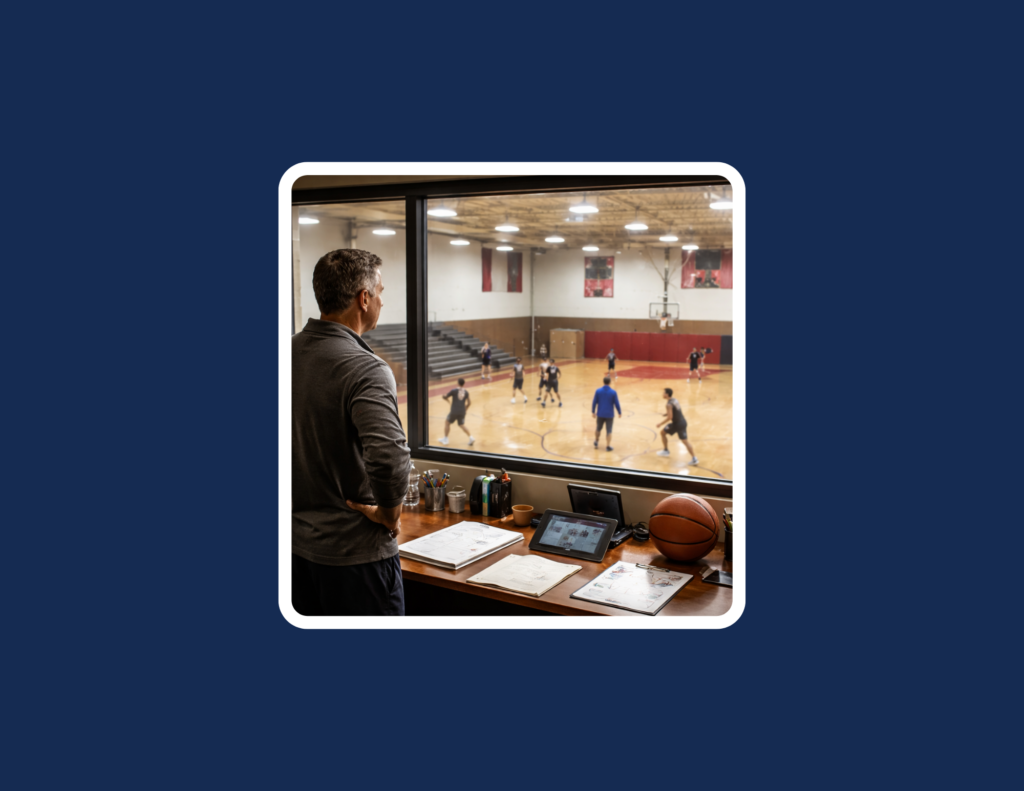

Welcome to the 86th edition of the Coach’s Corner Round Table on the Hoop Heads Podcast. Each episode of the Coach’s Corner Round Table will feature our All-Star lineup of guests answering a single basketball question. A new Coach’s Corner Round Table will drop around the 15th of each month.
February’s Round Table question is: How do you make sure your culture shows up when you’re not in the gym?
Our Coaching Lineup this month:
- Jerry Buckley – Bishop Kenny (FL) High School
- Stephen Halstead – Grace College
- Chris Hicks – Midwest Basketball Club & Bleacher Prospect
- Bob Krizancic – Mentor (OH) High
- Dave McGreal – Penn State Altoona
- Michael Rejniak – We Are D3
- Chris Richardson – Wheeling University
- Don Showalter – USA Basketball
Please enjoy this Round Table episode of the Hoop Heads Podcast and once you’re finished listening please give the show a five star rating and review after you subscribe on your favorite podcast app.
Be sure to follow us on twitter and Instagram @hoopheadspod for the latest updates on episodes, guests, and events from the Hoop Heads Pod.
If you listen to and love the Hoop Heads Podcast, please consider giving us a small tip that will help in our quest to become the #1 basketball coaching podcast.
THANKS COACHES!
If you enjoyed this episode let our coaches know by clicking on the links below and sending them a quick shout out on Twitter:
Click here to thank Jerry Buckley on Twitter!
Click here to thank Stephen Halstead on Twitter!
Click here to thank Chris Hicks on Twitter!
Click here to thank Bob Krizancic on Twitter!
Click here to thank Dave McGreal on Twitter!
Click here to thank Michael Rejniak on Twitter!
Click here to thank Chris Richardson on Twitter!
Click here to thank Don Showalter on Twitter!
Like this show? Please leave us a review here — even one sentence helps! Consider including your Twitter handle so we can thank you personally!
And if you want us to answer your questions on one of our upcoming weekly NBA episodes, drop us a line at mike@hoopheadspod.com.

Give With Hoops is a groundbreaking initiative that fuses basketball analytics with modern sponsorship. Built for teams who see data as opportunity, from AAU programs to college powerhouses.
By tying on-court performance directly to community and sponsor engagement, Give With Hoops help programs raise more while deepening support from those who believe in the game.
Traditional fundraising disconnects donors from the action. Sell candy bars, wash cars, beg for donations, it’s exhausting and ineffective. Players perform better when their stats matter beyond the scoreboard. That’s why Give With Hoops was created.
Give With Hoops connects game performance to community support. Every basket, rebound, and assist becomes a chance to raise funds. Transparent, exciting, and proven to raise 3x more than traditional methods.
The D3 Recruiting Playbook is your step-by-step guide to getting recruited as a college athlete at the NCAA Division 3 level. This course is designed by former D3 Athletes to take you from zero interest from college coaches to securing your first offer and putting you on the path to committing.
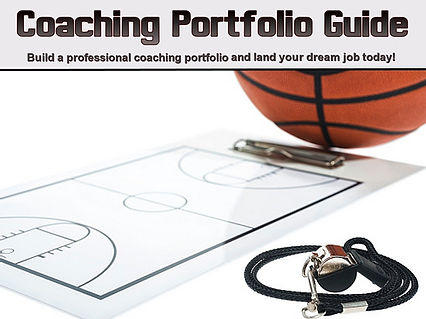
Your first impression is everything when applying for a new coaching job. A professional coaching portfolio is the tool that highlights your coaching achievements and philosophies and, most of all, helps separate you and your abilities from the other applicants.
The key to landing a new coaching job is to demonstrate to the hiring committee your attention to detail, level of preparedness, and your professionalism. Not only does a coaching portfolio allow you to exhibit these qualities, it also allows you to present your personal philosophies on coaching, leadership, and program development in an organized manner.
The Coaching Portfolio Guide is an instructional, membership-based website that helps you develop a personalized portfolio. Each section of the portfolio guide provides detailed instructions on how to organize your portfolio in a professional manner. The guide also provides sample documents for each section of your portfolio that you can copy, modify, and add to your personal portfolio.

Hey coaches — you’ve got a game plan for your team… but do you have one for your money?
That’s where Wealth4Coaches comes in.
Each week, they deliver simple, no-fluff financial tips made just for coaches. Whether you’re getting paid for camps, training sessions, or a full season—Wealth4Coaches helps you track it, save it, and grow it.
It’s time to stop guessing and start building.
Subscribe now at wealth4coaches.beehiiv.com/subscribe
And follow them on Twitter @Wealth4Coaches for daily money wins.
Your money needs a coach.
Start with Wealth4Coaches.
TRANSCRIPT FOR ROUND TABLE 86 – HOW DO YOU MAKE SURE YOUR CULTURE SHOWS UP WHEN YOU’RE NOT IN THE GYM? – EPISODE 1214
[00:00:00] Narrator: The Hoop Heads Podcast is brought to you by Head Start Basketball.
[00:00:20] Mike Klinzing: Hello and welcome to the 86th edition of The Coaches Corner Round Table on the Hoop Heads Podcast. Each episode of the Coach’s Corner Round Table will feature our all-star lineup of guests answering a single basketball question. A new Coach’s Corner Round Table will drop around the 15th of each month.
February’s Round Table Question is, How do you make sure your culture shows up when you are not in the gym?
Our Coaching Lineup this month:
- Jerry Buckley – Bishop Kenny (FL) High School
- Stephen Halstead – Grace College
- Chris Hicks – Midwest Basketball Club & Bleacher Prospect
- Bob Krizancic – Mentor (OH) High
- Dave McGreal – Penn State Altoona
- Michael Rejniak – We Are D3
- Chris Richardson – Wheeling University
- Don Showalter – USA Basketball
Please enjoy this Round Table episode of the Hoop Heads Podcast and once you’re finished listening please give the show a five star rating and review after you subscribe on your favorite podcast app.
Be sure to follow us on twitter and Instagram @hoopheadspod for the latest updates on episodes, guests, and events from the Hoop Heads Pod.
Are you or an athlete planning to go D3? Check out the D3 recruiting playbook from D3 Direct. Their playbook gives you a clear step-by-step roadmap to the recruiting process. What coaches value key milestones from early high school through application season? And how to build a targeted list of schools that fit your needs.
The playbook demystifies, researching D3 programs and how to stand out without chasing every camp or showcase the modules. Cover things like writing emails to coaches. Building an effective highlight tape using social media, well planning camps and visits and navigating application strategy. You’ll get templates, checklists, and an outreach plan to communicate confidently.
Learn how to compare financial packages and avoid common missteps. By the end, you’ll have a prioritized school list and a decision framework you can use to land your best fit opportunity. Click on the link in the show notes to get your D3 recruiting playbook from D3 Direct.
[00:02:28] Billy Hansen: This is Billy Hansen, author of Harder Than I Thought, Easier Than I Feared, and you’re listening to the Hoop Heads Podcast.
[00:02:39] Mike Klinzing: Give with Hoops is the first platform turning basketball analytics into fundraising impact. Every stat tells a story and now every story drives sponsorship engagement and team growth programs nationwide are transforming basketball stats into funding power. Learn to use performance data to attract sponsors, engage fans, and raise more with.
Every play Give with Hoops will help you raise three times more money for your program as their stat based pledges consistently outperform traditional fundraisers. Visit give with hoops.com/hoop-heads-podcast to learn more and take your fundraising to the next level. Give with Hoops.
Let’s hear from our panel about how they make sure their culture shows up when they’re not in the gym.
Jerry Buckley, Bishop Kenny High School, Jacksonville, Florida.
[00:03:36] Jerry Buckley: This is Jerry Buckley from Bishop Kenney talking about culture when you’re not in the gym. Number one thing I think is trying to establish early on.
A player led program. As the saying goes, a player led program is usually more successful than the coach led program. So that’s an important thing as far as establishing what our routine is and having them take ownership of it. And like I said, routine, whether it be off season workouts or in season practice guys should know kind of how we get ready, how we get locked in for practice, all those different things.
And, and again, that hope of that carries through whether or not there’s a coach in the gym at any time.
[00:04:14] Mike Klinzing: Stephen Halstead from Grace College.
[00:04:19] Stephen Halstead: Hey, this is Stephen Halstead from Grace College tuning into the hoop heads round table number 86. And the question this month is how do you make sure your culture shows up when you’re not in the gym?
And one thing our staff often talks about is your culture is what you allow throughout practices. So there’s some non-negotiables of things that we don’t allow in practices, in terms of just play style and things like that. Like one example is jump passes. It is known anytime there’s a jump pass afterwards.
Coach is going to blow his whistle and have them go over and do pushups. The same thing with defensively. We’re not going to jump at shot fakes, offense, rebounds, blow bys, like those are things that if it happens against the defense, uncontested shots, those things automatically count as baskets. So I think the more that you can have some of those things that your players know what you stand for when you’re not in the gym, that’s also going to show up.
Effort is one of those things that we don’t typically coach. That’s something that we typically in the recruiting process, make sure we have guys that are high energy, high effort. And that’s one thing that I think when we’re not in the gym, that’s something that continues to show up even when the players are just there competing.
[00:05:30] Mike Klinzing: Chris Hicks from Midwest Basketball Club and Bleacher Prospect.
[00:05:37] Chris Hicks: Hey guys. Chris Hicks513 on Twitter. today we’re talking about a part of coaching that really matters. what happens when you’re not in the gym, not on the bench, not sending out reminders to your team. And in a a u it, it’s really different the schedules, hotels, restaurants, group chats, the culture either carries on or it’ll fall apart.
And my goal is always simple and, and often in a microwave to build a culture that players own and maintain on their own. There just a, a couple of practical ways, in my opinion to make that happen. you first start out with your non-negotiables it’s compete every possession, support your teammates.
There’s no egos become prepared for everything that we do. You put your team first, no matter what, and you represent the program well, and when I say that, it’s on the court, but it’s off the court. It’s in social media, it’s in it’s in discussions with other people and assuring that what you’re doing.
It’s presenting our organization and your team in, in the highest possible manner. you have to be consistent with these, you have to reference these things often in practice. eventually over time players begin to use the same language themselves and they start to hold each other accountable for, for those behaviors.
you have to demonstrate the standard consistently yourself as a coach, you have to show what you expect. You have to arrive early, you have to stay positive even through the tough moments. Recognize effort consistently. And once players start doing the same without you prompting, give them space, let them lead, let them take over.
that shift will happen gradually. They take over because they’ve seen it work. They feel and understand the difference. there’s other things that you can do with the team group chat guidelines. Effort post and positive shoutouts. At the end of the day, like, like for me, I only track what I think are, are those hustle type stats.
We never talk about points after a game. We only talk about rebounds and deflections and steals and those type of things. bench expectations, they have to be involved. as you, as you check in and check out, it’s, it’s running off the floor. It’s going down through the bench. And giving recognition to every single player that’s there and coming back and setting beside your coach and asking for feedback.
You have to address any slippages of it quickly. When the standard drops could be tardiness, negativity, lack of effort on the court, it has to be addressed immediately. you have to frame it as protecting the entire group. consistent follow through from the coach shows how it shows that it’s serious and there’s no exceptions.
the bottom line is at the aau level, culture shows up when you’re not around. Only if the players believe in it, benefit it, benefit from it, and take, take responsibility for it. Clear rules, shared leadership, steady rituals, simple systems and quick corrections. Make that possible.
When it works, you’ll see it in the text they send to each other the way they. They stay locked in on the bench to support after a tough loss, all without your direction. That’s when you’ll build that you’ve built something really special. Thanks for listening. If it resonates, drop a note. Keep building guys.
[00:08:37] Mike Klinzing: Bob Krizancic, Mentor High School, Mentor, Ohio,
[00:08:43] Bob Krizancic: Coach K, Mentor High School. One of the better questions, I believe our culture is why we win. It’s everything in our program. And the major part of our culture is trust. Trust in our program, trust in each other. So I have absolutely no doubt that when no one is watching, our player’s character is so strong that they believe in our culture and we’ll do the right things.
We constantly tell them the character is what you do when no one is watching. So best of luck. Remember, culture is everything in your program.
[00:09:24] Mike Klinzing: Coaches, you’ve got a game plan for your team, but do you have one for your money? That’s where Wealth4Coaches comes in. Each week, we’ll deliver simple, no fluff financial tips made just for coaches, whether you’re getting paid for camps. Training sessions or a full season. Wealth4Coaches helps you track it, save it, and grow it.
It’s time to stop guessing and start building. Subscribe now at Wealth4Coaches.beehive.com/subscribe and follow us on Twitter at Wealth4Coaches for daily money wins. Your money needs a coach. Start with Wealth4Coaches.
David McGreal from Penn State Altoona.
[00:10:10] Dave McGreal: What’s up Hoop Heads nation? Coach Dave McGreal, Penn State Altoona answering this month’s round table question. How do you make sure culture shows up in the gym even when you’re not there? That’s a great question and it’s something that I’m sure coaches at every level may struggle with at times, and that’s just you.
Count on your leaders, hopefully especially if an assistant coaches aren’t there as well as the head coach. And it’s have to be your captains, it’s have to be your upperclassmen, the guys that should know the routine, know the culture, know the expectations of what I would want. we’re getting pretty good at that these days need to hopefully continue to improve on that.
and I’ll, I’ll leave you with a quote that I think I’ve, I think I said on this podcast before, and it’s the, the, the bad teams, no one leads the average teams and good teams. The coach leads on great teams. The players lead. So this is a perfect example, man. You have to have players that are going to be an extension of you.
If you’re not there just in case those situations may arise in the game. So again that’s my round table answer. Hope everybody’s doing well, heading in the final few weeks of the season. Hope to see some of you guys in Indianapolis. Take care,
[00:11:49] Mike Klinzing: Michael Rejniak from We are D3 and Prep Girls Hoops.
[00:11:56] Michael Rejniak: Hey, Hoop Heads this Coach Reg, We are D3 and Prep Girls Hoops. And my answer to this month’s round table question, how do you make sure your culture shows up when you’re not in the gym? I think first things first, you have to establish like what your culture should look like the ideals. What does your program want to stand for?
And it’s have to match your personality as a coach and what you want your team to look like. And I think the biggest piece after that is you’ve have to be able to choose and recruit the right mentors for your program, the captains, and then have that mentorship. Take place from coach to player to help them with their leadership skills when you’re not around.
And obviously making sure that those personalities match with your team as well. Obviously, there’s no right answer to any of this any of these questions, but hopefully. You guys have the right leaders in your places at respective programs. Take care and have a great end of the season here, everybody.
[00:13:12] Mike Klinzing: Chris Richardson from Wheeling University.
[00:13:17] Chris Richardson: This is Chris Richardson, head men’s basketball coach at Wheeling University. For this month’s round table question, how do you make sure your culture shows up when you’re not in the gym? I don’t think that’s done the day that you’re not going to be at the gym or in the days leading up to knowing you’re not going to be at the gym.
I think that’s done through the people that are in your program. Obviously the college level we have the luxury of recruiting those type of people and we have to be very intentional about the type of people that we want. We want to make sure that they embody what we stand for. Every day on and off the floor.
And a big part of that is what you do when nobody’s watching. So if you have good people in your program and you promote having good character and, and you emphasize that, that comes first, I think it shows up when you’re not in the gym. I think the other way that it can be done is through your, your leaders.
And obviously every team has leaders. Every team has players who have a larger voice in the locker room than others. And. I’m here to tell you whatever their habits are when they go in the gym or what your team habits are going to be. You can punish people if they don’t go in at certain times. You can say you have to make this many shots and write it down.
But ultimately you have to have guys that love ball that, that love being a part of what every day entails in a program, whether you’re winning or losing. And then you have to have leaders that reinforce that with their own habits. And so that’s how your culture shows up when you’re not in the gym. Is is through the people in your program, the standards that you set and the standards that they carry out.
as the leaders
[00:14:29] Mike Klinzing: Don Showalter, USA Basketball
Don Showalter here from USA basketball, how do you make sure your culture is evident when you’re not there? I think one of the things during the season that we always did was have the team and led by two captains or seniors or whatever, actually do have a practice. They organized a practice. Sometimes coaches were there, sometimes we weren’t.
I think this really benefited us as far as figuring out. What kind of culture you do have when you have them organize a practice. So I think you can kind of tell as the season goes on, as the year goes on, what kind of culture you have when this happens. Thanks.
[00:15:38] Mike Klinzing: Thanks for checking out this Month’s Coaches Corner round table on the Hoop Heads Podcast.
We’ll be back next month with another question for our all star lineup of guests.
Your first impression is everything when applying for a new coaching job. A professional coaching portfolio is the tool that highlights your coaching achievements and philosophies, and most of all helps separate you and your abilities from the other applicants. The Coaching Portfolio Guide is an instructional membership based website that helps you develop a personalized portfolio.
Each section of the portfolio guide provides detailed instructions on how to organize your portfolio in a professional manner. The guide also provides sample documents for each section of your portfolio that you can copy, modify, and add to your personal portfolio. As a Hoop Heads Pod listener, you can get your coaching portfolio guide for just $25.
Visit coaching portfolio guide.com/hoopheads to learn more.
[00:16:27] Narrator: Thanks for listening to the Hoop Heads podcast presented by Head Start Basketball.