
ROUND TABLE 73 – WHAT IS AN UNCONVENTIONAL TACTIC, PROCESS, OR STRATEGY THAT YOU’VE USED THAT MORE COACHES SHOULD BE WILLING TO TRY – EPISODE 1047

Welcome to the 73rd edition of the Coach’s Corner Round Table on the Hoop Heads Podcast. Each episode of the Coach’s Corner Round Table will feature our All-Star lineup of guests answering a single basketball question. A new Coach’s Corner Round Table will drop around the 15th of each month.
January’s Round Table question is: What is an unconventional tactic, process, or strategy you’ve used that more coaches should be willing to try?
Our Coaching Lineup this month:
- Jerry Buckley – Bishop Kenny (FL) High School
- Erik Buehler – Arapahoe (CO) High School
- Hannah Dewater – Union Mine (CA) High School
- Stephen Halstead – Grace College
- Dave Hixon – Amherst College
- Tim Jackson – Author of Understanding College Athletics Through The Eyes Of College Athletes
- Bob Krizancic – Mentor (OH) High School
- Dell Leonard – Mountain Home (AR) High School
- Dan Miller – San Marcos (TX) High School
- Katie Pate – George Mason University
- Don Showalter – USA Basketball
- Joe Stasyszyn – Unleashed Potential
Please enjoy this Round Table episode of the Hoop Heads Podcast and once you’re finished listening please give the show a five star rating and review after you subscribe on your favorite podcast app.
Be sure to follow us on twitter and Instagram @hoopheadspod for the latest updates on episodes, guests, and events from the Hoop Heads Pod.
Let’s hear from our panel about an unconventional tactic, process, or strategy they’ve used that more coaches should be willing to try.
.
If you listen to and love the Hoop Heads Podcast, please consider giving us a small tip that will help in our quest to become the #1 basketball coaching podcast.
THANKS COACHES!
If you enjoyed this episode let our coaches know by clicking on the links below and sending them a quick shout out on Twitter:
Click here to thank Jerry Buckley on Twitter!
Click here to thank Erik Buehler on Twitter!
Click here to thank Hannah Dewater on Twitter!
Click here to thank Stephen Halstead on Twitter!
Click here to thank Dave Hixon on Twitter!
Click here to thank Tim Jackson on Twitter!
Click here to thank Bob Krizancic on Twitter!
Click here to thank Dell Leonard on Twitter!
Click here to thank Dan Miller on Twitter!
Click here to thank Katie Pate on Twitter!
Click here to thank Don Showalter on Twitter!
Click here to thank Joe Stasyszyn on Twitter!
Like this show? Please leave us a review here — even one sentence helps! Consider including your Twitter handle so we can thank you personally!
And if you want us to answer your questions on one of our upcoming weekly NBA episodes, drop us a line at mike@hoopheadspod.com.
We’re excited to partner with Dr. Dish, the world’s best shooting machine! Mention the Hoop Heads Podcast when you place your order and get $300 off a brand new state of the art Dr. Dish Shooting Machine!

Prepare like the pros with the all new FastDraw and FastScout. FastDraw has been the number one play diagramming software for coaches for years, and now with it’s integrated web platform, coaches have the ability to add video to plays and share them directly to their players Android and iPhones via their mobile app. Coaches can also create customized scouting reports, upload and send game and practice film straight to the mobile app. Your players and staff have never been as prepared for games as they will after using FastDraw & FastScout. You’ll see quickly why FastModel Sports has the most compelling and intuitive basketball software out there! In addition to a great product, they also provide basketball coaching content and resources through their blog and playbank, which features over 8,000 free plays and drills from their online coaching community. For access to these plays and more information, visit fastmodelsports.com or follow them on Twitter @FastModel. Use Promo code HHP15 to save 15%
Your first impression is everything when applying for a new coaching job. A professional coaching portfolio is the tool that highlights your coaching achievements and philosophies and, most of all, helps separate you and your abilities from the other applicants.
The key to landing a new coaching job is to demonstrate to the hiring committee your attention to detail, level of preparedness, and your professionalism. Not only does a coaching portfolio allow you to exhibit these qualities, it also allows you to present your personal philosophies on coaching, leadership, and program development in an organized manner.
The Coaching Portfolio Guide is an instructional, membership-based website that helps you develop a personalized portfolio. Each section of the portfolio guide provides detailed instructions on how to organize your portfolio in a professional manner. The guide also provides sample documents for each section of your portfolio that you can copy, modify, and add to your personal portfolio.
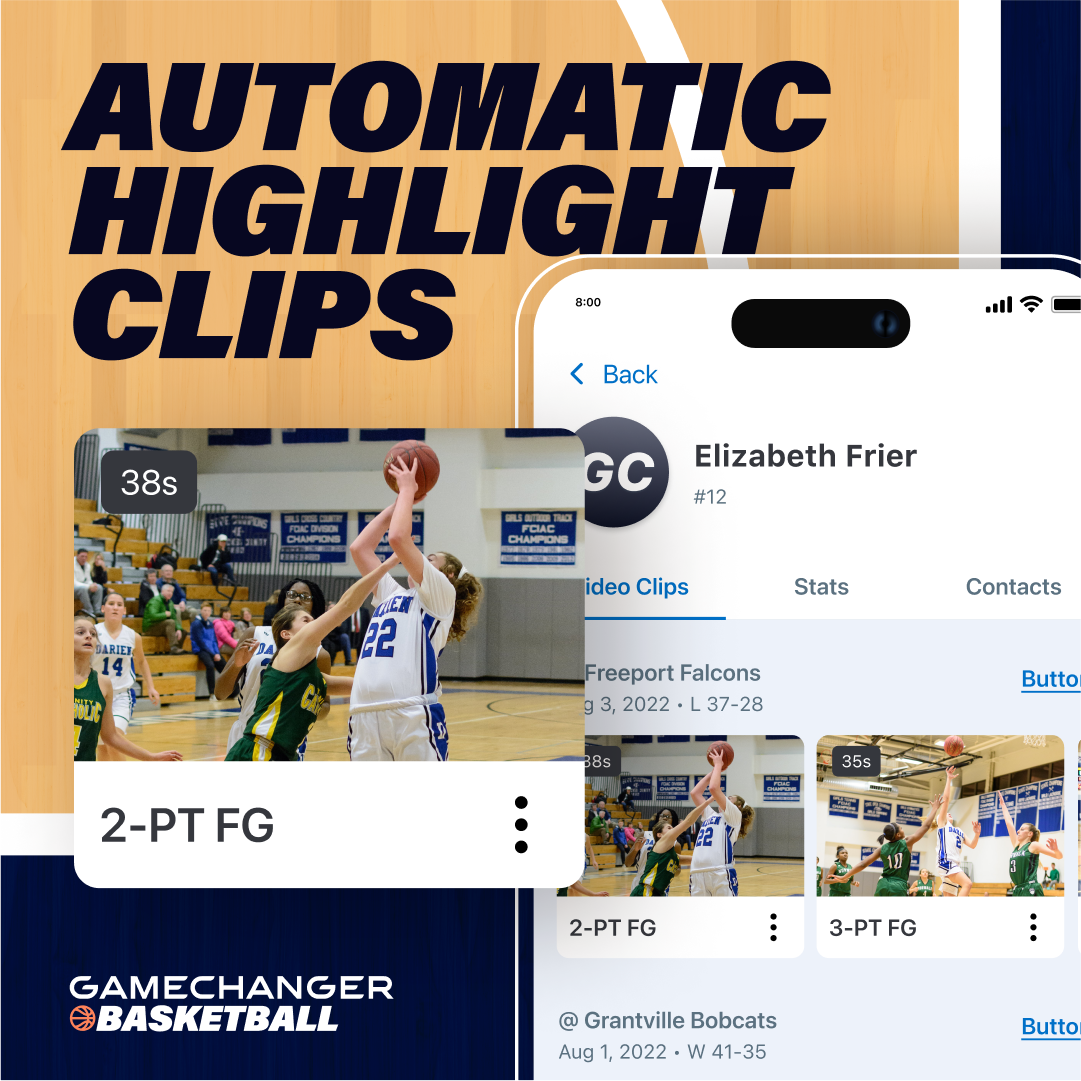
Hey, coach! Want to take your team to the next level this season? Introducing GameChanger, the ultimate game-day assistant with tools to give you a winning advantage. With GameChanger, you can track stats, keep score, and even live stream games, all for free! Get the stats and crucial game video you need to lead your team to victory, all from the palm of your hand. Coach smarter this season with GameChanger. Download GameChanger today on iOS or Android and make this season one to remember. GameChanger. Stream. Score. Connect. Learn more at GC.com/HoopHeads
TRANSCRIPT FOR ROUND TABLE 73 – WHAT IS AN UNCONVENTIONAL TACTIC, PROCESS, OR STRATEGY THAT YOU’VE USED THAT MORE COACHES SHOULD BE WILLING TO TRY – EPISODE 1047
[00:00:00] Narrator: Head Start Basketball is brought to you by Head Start Basketball.
[00:00:20] Mike Klinzing: [00:00:00] Mike Klinzing: Hello and welcome to the 73rd edition of the Coaches Corner Round Table on the Hoop Heads Podcast. Each episode of the Coach’s Corner Round Table will feature our all star lineup of guests answering a single basketball question. A new Coach’s Corner Round Table will drop around the 15th of each month.
January’s Round Table question is, What is an unconventional tactic, process, or strategy you’ve used that more coaches should be willing to try?
Our coaching lineup this month includes:
- Jerry Buckley – Bishop Kenny (FL) High School
- Erik Buehler – Arapahoe (CO) High School
- Hannah Dewater – Union Mine (CA) High School
- Stephen Halstead – Grace College
- Dave Hixon – Amherst College
- Tim Jackson – Author of Understanding College Athletics Through The Eyes Of College Athletes
- Bob Krizancic – Mentor (OH) High School
- Dell Leonard – Mountain Home (AR) High School
- Dan Miller – San Marcos (TX) High School
- Katie Pate – George Mason University
- Nate Sanderson – Mount Vernon (IA) High School
- Don Showalter – USA Basketball
- Joe Stasyszyn – Unleashed Potential
Please enjoy this Round Table episode of the Hoop Heads Podcast and once you’re finished listening please give the show a five star rating and review after you subscribe on your favorite podcast app.
Be sure to follow us on twitter and Instagram @hoopheadspod for the latest updates on episodes, guests, and events from the Hoop Heads Pod.
Hey Hoop Heads, find the shooting machine that meets your team’s exact training needs this New Year’s with Dr. Dish Basketball’s 2025 Super Sale. Shop now until January 31st to unlock their biggest offer ever. Buy one Dr. Dish. Get one free. Learn more at drdishbasketball.com/financing. You can also follow their incredible content @drdishbball on Twitter, Instagram, Facebook, and YouTube. Mention the Hoop Heads Podcast and save an extra $300 on the Dr. Dish Rebel, All Star, and CT models. Those are some great deals Hoop Heads. Get your Dr. Dish shooting machine today.
[00:02:23] Ryan Mee: Hi, this is Ryan Mee, head men’s basketball coach at Vassar College, and you’re listening to the Hoop Heads Podcast.
[00:02:34] Mike Klinzing: Prepare like the pros with the all new Fast Draw and Fast Scout. Fast Draw has been the number one play diagramming software for coaches for years. You’ll quickly see why Fast Model Sports has the most compelling and intuitive basketball software out there.
For a limited time Fast Model is offering Hoop Heads Listeners, 15% off Fast Draw and Fast Scout. Just use the code HHP 15 at checkout to grab your discount and you’ll be on your way to more efficient game prep and improved communication with your team. Fast Model also has new coaching content every week on its blog, plus play and drill diagrams in its play bank.
Check out the links in the show notes for more. Fast Model sports is the best in basketball
Let’s hear from our panel about an unconventional tactic, process or strategy they’ve used that more coaches should be willing to try.
Jerry Buckley, Bishop Kenny High School, Jacksonville, Florida.
[00:03:38] Jerry Buckley: This is Jerry Buckley answering this month’s roundtable question about an unconventional tactic or strategy that we used in the past. Ours was for practice and we’ve done it a bunch of different times over the years, typically in mid to late January, early February when the season is getting long.
We’ll bring them in for practice and just either play wiffle ball or dodge ball with some type of nerf ball so they’re not getting hurt, but just have a break mentally and physically from practice. And usually kids get excited. They have a great time. And like I said, it’s a nice break from the regular stretch of practice and kind of refreshes them.
So always good surprise that the kids are. You know surprised when it happens, and I think that gives it a great little break during the season. Hope everybody’s doing well.
[00:04:27] Mike Klinzing: Erik Buehler, Arapahoe High School Centennial, Colorado.
[00:04:32] Erik Buehler: Hey, what’s going on hoop heads? This is Eric Buehler assistant coach at Arapahoe High School and This month we were asked what’s an unconventional tactic process or strategy you’ve used that more coaches should be willing to try I got a couple ideas.
The first one is I’m not afraid to use I like to call them a different defense or some people call it or use the box in one or they use the. Triangle and two. A lot of people call them junk defenses. Which they kind of are, but I think if you can eliminate a team that relies heavily on one or maybe even two players and you can collectively teach your team to be aware when those players have the ball in their hands.
It can really mess up their offense. It can take them out a lot of their sets. It takes time out of their practice that they have to prepare for you if they know that you’re a team that does things like that. I’ve seen other things that are effective too, like the lock left defense, things like that, where you’re basically eliminating part of the floor for a team.
The other thing that I’m a big believer in is At least practicing your press on a daily basis. If a team knows that you have that in your arsenal and they’ve seen it be effective, they gotta practice it themselves, they gotta be aware of it. So, that’s just something that I believe in as part of my philosophy.
So, anyways, I hope you guys are doing good. And I’ll talk to you guys next time.
[00:06:09] Mike Klinzing: Hannah Dewater from Union Mine High School.
[00:06:14] Hannah Dewater: This is Hannah Dewater from Union Mine High School. And one unconventional process I’ve used is having a 100 percent player led practice. Where I give them some parameters of the practice has to include these components of the game, whether it’s rebounding defensive footwork, something like that.
But then I let them come up with the plan, and it’s very interesting because it gives me insight on what they think they need to most work on. And it usually ends up being A very competitive practice because they have ownership of we, as a group decided that these are the things that we need to work on.
The first time I did it, I was worried it was just going to be free throws for two hours or something kind of soft, but they actually were really thoughtful about what they need to work on and yeah, created a really competitive and engaging environment for everybody.
[00:07:12] Mike Klinzing: Stphen Halstead from Grace College.
[00:07:16] Stephen Halstead: Hey Mike, this is Stephen Halstead from Grace College. I’m checking in for the hoop heads round table number 73. And the question this month was what is an unconventional tactic process or strategy that you’ve used? That more coaches should be willing to try. And now, one thing that we’ve done at Grace, and this has been going on since I was a player and Coach Kessler was a coach here, is at the end of practice, he will just call someone to the middle.
So you just call one of the members of the team, it can be a player, it can be a manager. You guys call them to the middle of the circle. At the end of practice when you guys are just kind of reviewing the day and just leave it a little open ended But we kind of start by just saying like what do you guys appreciate about this player or this manager?
And some of the guys responses are gonna be pretty funny They’re gonna be pretty goofy with what they’re gonna say about them But also some are gonna be able to point out a lot of good things about them Whether it’s their work ethic or whether it’s things that they’ve been dealing with on and off the court And things like that, and I think it’s a good way to just uplift that player.
Maybe they’ve been going through a slump a little bit, and just to be able to get that encouragement from their teammates, their coaches. Is always good for us. So that’s one thing that we do to just try to keep the mood light. Gosh, probably once a week, maybe something like that. Get guys to the middle where we’re encouraging them, saying what we appreciate about them, what they do really well and what values they bring to our team.
[00:08:40] Mike Klinzing: Dave Hixon, Basketball Hall of Famer from Amherst College.
[00:08:47] Dave Hixon: Hey, Hoop Heads Dave Hixson here unconventional strategy process. So, water over the dam, but in 1994, we’re playing a team that just ran motion beautifully and brought three guys together and nobody could cover it. And we started switching.
And back then, of course, Bobby Knight said, if you switched, you were weak. you weren’t tough. And we decided to switch by the end of the year. We were switching two, three, four, sometimes five. And it’s water over the dam now, but back then nobody was switching and people looked at me like, what are you doing?
That’s soft, that’s, that’s not tough. Anyway, that’s one. Two, we do this little thing at the beginning of the year where I have the players rank each other and that includes themselves. They don’t really like it. And that’s okay because they grow into it, but and what you create is you create pluses and minuses a kid might rank himself 11th and the team might rank him 7th. And that’s a positive disconnect of four. And we talk about that, maybe confidence or whatever it might be. There goes the other way too, where a kid might rank himself 5th and the team ranks him 13th. Now you get an issue and you have to address that, but it really does nip things in the bud.
It allows for great conversation. We throw a couple. cool questions in at the end as well to, that we can talk about. The last thing, which is a funny thing we’re going to play this team. And it was an NCAA game and we hadn’t played a team like that. They had two guards that were just too quick for us to cover.
And I’m wringing my hands, whether I should put in the zone and I didn’t like zones. And so we were walking out of our gym to go watch some film. And we have a door that’s 10 feet wide, 9 feet wide, something like that, double door. And I got to it, and I looked at it, and all of a sudden it hit me.
So I turned around and my team was following me. I said, hey guys, line up here. I said, look at it. And I stood in the middle of the door facing him, and I stood right in the middle, my hands at my sides. I said, can you go by me left? Can you go by me right? And they said, yeah, coach, plenty of room. Put my, put my hands out, extended my arms out to the side like you should defensively.
And I said, can you go by me now? And they all looked at it and said, no. You can’t go by left or right. I said, that’s right. So when we play, these guys, I want you to put your arms out, and they’re going to look, and they’re not going to see the seams that they usually see. And so, sure enough, we we played the game, and because of that sort of vision, walking through that door, and that example to those kids.
Guys played with their arms out and we negated them driving, which boggled my mind, but it worked. And so, anyway, three things there one over, one in the very far past. Everybody switches now. The other one is really a cool thing to do with your program. And the third one is just if you see something, I don’t think anything’s too crazy to try and to mention.
So that’s what I got. Hope everything’s well. Hope you keep on winning. Bye.
[00:11:47] Mike Klinzing: Tim Jackson, author of Understanding College Athletics Through the Eyes of College Athletes.
[00:11:55] Tim Jackson: This is Tim Jackson, author of Understanding College Athletics Through the Eyes of College Athletes. This month’s roundtable question. What is the unconventional tactic process or strategy that I use that more coaches should be willing to try the strategy that I used?
Frequently actually always was no not using layup lines I think layup lines are Unproductive and meaningless. So, instead of layup lines, we did the drills that we did pre practice. Defensive, offensive, shooting, free throws. All the things that we would do before practice, we would do before the game. And it got my players to understand all the strategies that we’re doing in the basketball game.
We practiced them, so now we’re going to implement them in the game. To me, layup lines take away meaningful time, effort, and energy, and they’re just a waste of time.
[00:13:08] Mike Klinzing: Bob Krizancic, Mentor High School, Mentor, Ohio.
[00:13:14] Bob Krizancic: Coach K, Mentor High School, Ohio. The one unconventional thing that we do as a staff, and even as players, We rate our players probably three to four times a year. Exactly in the order of priority. Who we need most on the floor, second, third, fourth. I think it’s a reality check on a number of players.
Some coaches don’t like it because, or feel funny, because it tells people exactly where they’re at and you might offend somebody’s feelings, but I think it’s a great tactic, little unconventional, but we privately rate and then accumulate and tell them exactly where they are as far as coaches and their teammates.
This is my second one on unconventional tactic at our practice. Every time that we get the basketball, especially full court, we have seven seconds of score are Manager slash trainer will have the seven seconds ready. And as soon as we touch it, or even on a make, we have seven seconds to score. So in a game we are just so used to blowing it up the floor.
And trying to get a quick bucket. Have a great day.
[00:14:34] Mike Klinzing: Coaches, GameChanger is making your game feel more valuable than ever. New this season to GameChanger, Film Room allows team staff to analyze full game videos, add comments to specific moments, and quickly share feedback with other coaches, team members, or families. The number one youth sports app automatically skips downtime in the game film, condensing event video into active play so you can focus on the moments that matter.
The best part? It’s completely free for coaches. Download GameChanger now on iOS or Android and take your coaching to the next level with Film Room on Game Changer. Game Changer. Stream. Score. Connect.
Dell Leonard, Mountain Home High School, Mountain Home, Arkansas.
[00:15:27] Dell Leonard: Dell Leonard, Mountain Home, Arkansas. This month’s round table question. What is an unconventional tactic, process, or strategy you’ve used that more coaches should be willing to try? Well, maybe we’ve, there’s been a lot of coaches that have done this.
It’s something that we really got outside the box on. And I think it’s probably been used a lot more since. But we were playing a team at one point that had about seven girls going to play at the next level. And they could all shoot the lights out of the three point shot. And they were basically five out dribble drive.
They’d get deep, kick it for a three if you did help and recover. to the shooter. They’d make one more and they just shot threes and they were really good at it. And I watched a couple of game films before we played them and they were averaging the high eighties, low nineties and just shooting threes.
And it’s also very difficult to rebound because the shots that were missed came off so long and they were so quick and athletic, they would chase them down. So we decided as a staff that We were just gonna play one on one, like, pretend like you were in the gym, by, by yourself, playing one on one. And you were on defense, and when your man drove to the rim you were just gonna chest up, throw your hands straight up in the air, do the best you could to, to vertically challenge the shot, and then we were gonna block out and, and try to get the rebound.
And we were not going, this was the unconventional part, we were not going to help off. Then In several games before, we may have had one player we didn’t help off of. But in this case, we told our kids we are not helping off of anybody. And, so, we did that, and they were forced to to shoot two pointers, opposed to getting a ton of rhythm three point shots.
And believe it or not, a lot of times they didn’t make the shot and as long as we didn’t foul them and put them at the line where they could set up in their press, which they were also so good at, we tried to take away their three point attempts and ended up working for us on that night. We also really did not run to the lane in transition.
We ran to the three point line, but again, probably not something that is considered maybe unconventional, but it was for us. Because we were a hard core pressure on the ball deny one pass away, always it helped two passes away, help across cover down, push the ball the outside. So. It was unconventional for us at the time, and it was a strategy that, that helped us.
[00:18:15] Mike Klinzing: Dan Miller, San Marcos High School in San Marcos, Texas.
[00:18:22] Dan Miller: One unconventional thing that we did in the fall was we had our players of our varsity team. design a practice plan for a practice, and it was neat to hear them talk it over which drills to put in, which ones not to use, how much to scrimmage, and we did that two different times this fall, and the players really took ownership, and it also gave me as a coach a chance to look inside the players minds a little bit, how they view practice, what they enjoy and what they get out of it, what they want to get out of it.
And it helped in the future, me plan and design our practices. We’re not going to give them everything they want, but of course input from your players goes a long ways.
[00:19:12] Mike Klinzing: Katie Pate from George Mason University.
[00:19:17] Katie Pate: Katie Pate, former college women’s basketball coach, now senior associate athletics director for development at George Mason University, member of the Atlantic 10 Conference. Unconventional tactic or strategy. My hope is that this isn’t as unconventional as I think it is. But it starts with valid self analysis by the head coach of the program.
Towards the latter part of my coaching career, I had to look in the mirror and really determine where I was not great. And I was not great at late game situations. So I made the decision to hire an assistant coach who was. Furthermore, the unconventional piece of the hire is that I decided to reach into high school basketball.
Instead of the old school lines on the college side. I had watched, observed, and witnessed this particular high school coach excel in pressure cooker situations. In situations where I tended to struggle. The solution? Hire the guy and get good at late game situations.
[00:32:27] Mike Klinzing: Don Showalter, USA basketball.
[00:32:33] Don Showalter: Hi, Don Showalter here from USA basketball. An unconventional tactic that we have used a lot with our both our junior national teams and high school teams is playing a triangle in two. On baseline and sideline out of bounds plays we, we like to put the two take the two best players out of the mix with a man to man, and then play a triangle zone with the other three players.
This has been really really good for us and good for the kids. They kind of like something different on that, but it is really, kind of enforce the fact that the other team does not know really how to attack it. So the triangle and two has been really good defensively for any out of bounds place that we have come across. Thank you.
[00:33:21] Mike Klinzing: Joe Stasyszyn, Unleashed Potential Carlisle, Pennsylvania.
[00:33:31] Joe Stasyszyn: Joe Stasyszyn, Unleashed Potential. This month’s question is what unconventional strategy or tactic should more coaches attempt to use in practice? I have a couple of things. One thing that I, that I really believe in, and I speak on this nationally and internationally is a model we call our competitive edge model.
This is a model that is used in practices. During season, pre season, post season, something that could really be used during season to enhance your team in terms of competitiveness, player development, skill development, and team development. Basically, at USA Basketball, we talk about all coaches in their practices should spend one third of their time on skill development.
A lot of times you see teams and players and coaches. that get away from skill development in a season. And I think that that is a, that is a big mistake because I think, I think kids will regress skill development wise if they’re not, if they’re not using that skill development time during the season to continue to get better.
So, our competitive edge model is we take ball handling, shooting, all aspects of passing, all aspects of skill development. And we put it into a competitive situation. So they’re not only getting skill development in practice, but they’re being able to compete while they’re also getting better with their skills.
And I think that that’s a unique situation that I’ve had a lot of success with across the country and internationally sharing with coaches that have incorporated that you can even incorporate some performance training segment in that also in terms of speed, agility, quickness with, and without a ball.
So basically you’re competing as you would in a normal practice, but you’re competing with the skill development aspect of practice. So I think that is a win win. For any team or any coach in terms of getting better during the season with their skills and also incorporating the aspect of always competing, because as we know, we’re competing during the game.
So we must be competing during practice also, whereas just doing basic skill development without any kind of competition. I think that is sort of limited during the season when you could also incorporate the competitive aspect into that. So I think that’s a different strategy that most people. I’ve never heard of before.
And like I said in my speaking at USA basketball academies and my FIBA national team coach work from around the world, I have found great success with that model. And teams incorporating that model to enhance not only their off season, but their in season practices. Thank you.
[00:36:23] Mike Klinzing: Thanks for checking out this month’s Hoop Heads Podcast Round Table.
We’ll be back next month with another question for our all-star lineup of coaches.
Your first impression is everything. When applying for a new coaching job, a professional coaching portfolio is the tool that highlights your coaching, achievements and philosophies. And most of all helps separate you and your abilities from the other applicants, the Coaching Portfolio Guide is an instructional membership based website that helps you develop a personalized portfolio. Each section of the portfolio guide provides detailed instructions on how to organize your portfolio in a professional manner. The guide also provides sample documents for each section of your portfolio that you can copy, modify and add to your personal portfolio.
As a Hoop Heads Pod listener, you can get your Coaching Portfolio Guide for just $25. Visit https://www.coachingportfolioguide.com/hoopheads to learn more.
[00:37:22] Narrator: Thanks for listening to the Hoop Heads Podcast presented by Head Start Basketball.