
ROUND TABLE 57 – HOW DO YOU GET YOUR PLAYERS TO BUY INTO A TEAM-FIRST MENTALITY? – EPISODE 844
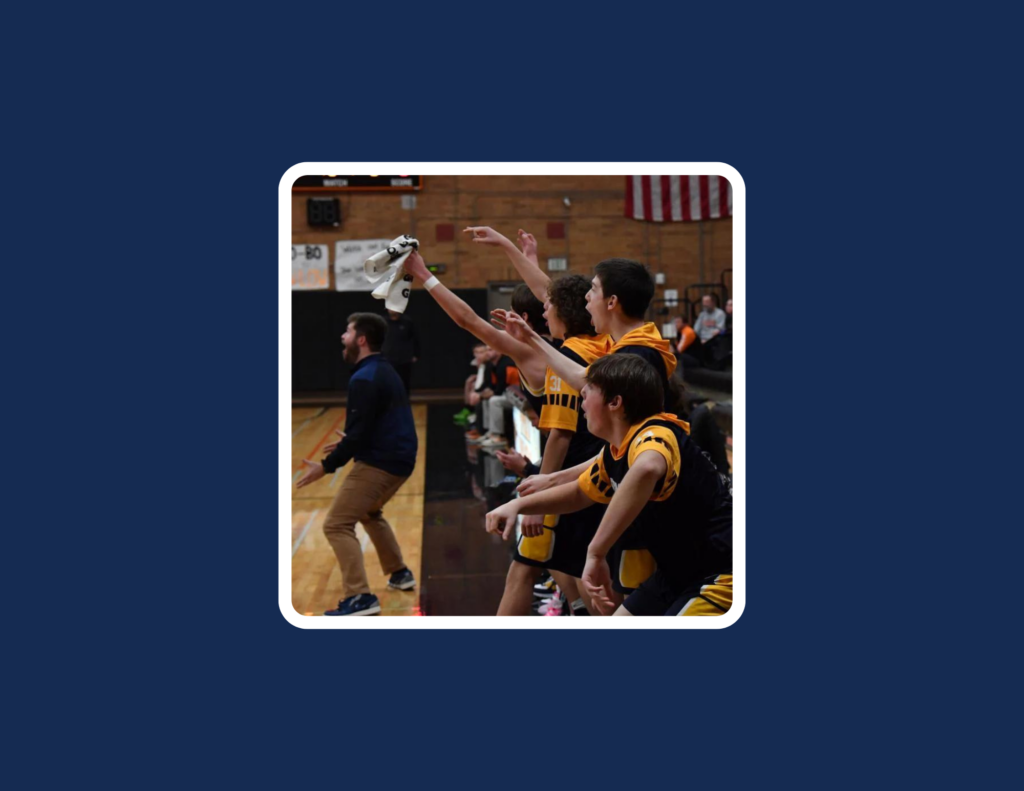

Welcome to the 57th edition of the Coach’s Corner Round Table on the Hoop Heads Podcast. Each episode of the Coach’s Corner Round Table will feature our All-Star lineup of guests answering a single basketball question. A new Coach’s Corner Round Table will drop around the 15th of each month.
September’s Round Table question is: How do you get your players to buy into a team-first mentality?
Our Coaching Lineup this month:
- Erik Buehler – Chatfield (CO) High School
- Chris DeLisio – Olmsted Falls (OH) High School
- Joe Harris – Lake Chelan (WA) High School
- Bob Krizancic – Mentor (OH) High School
- Jack Leasure – McQuaid Jesuit (NY) High School
- Matthew Raidbard – Author of “Lead Like a Pro”
- Nate Sanderson – Mount Vernon (IA) High School
- Don Showalter – USA Basketball
- John Shulman – University of Alabama Huntsville
- Joe Stasyszyn – Unleashed Potential
- Mo Williams – Salisbury University
Please enjoy this Round Table episode of the Hoop Heads Podcast and once you’re finished listening please give the show a five star rating and review after you subscribe on your favorite podcast app.
If you are a basketball coach at any level please check out our Hoop Heads Coaching Mentorship Program. You’ll get matched with one of our experienced Head Coaches and develop a relationship that will help take your coaching, your team, your program, and your mindset to another level.
Be sure to follow us on twitter and Instagram @hoopheadspod for the latest updates on episodes, guests, and events from the Hoop Heads Pod.
Like this show? Please leave us a review here — even one sentence helps! Consider including your Twitter handle so we can thank you personally!

We’re excited to partner with Dr. Dish, the world’s best shooting machine! Mention the Hoop Heads Podcast when you place your order and get $300 off a brand new state of the art Dr. Dish Shooting Machine!

Prepare like the pros with the all new FastDraw and FastScout. FastDraw has been the number one play diagramming software for coaches for years, and now with it’s integrated web platform, coaches have the ability to add video to plays and share them directly to their players Android and iPhones via their mobile app. Coaches can also create customized scouting reports, upload and send game and practice film straight to the mobile app. Your players and staff have never been as prepared for games as they will after using FastDraw & FastScout. You’ll see quickly why FastModel Sports has the most compelling and intuitive basketball software out there! In addition to a great product, they also provide basketball coaching content and resources through their blog and playbank, which features over 8,000 free plays and drills from their online coaching community. For access to these plays and more information, visit fastmodelsports.com or follow them on Twitter @FastModel.
Your first impression is everything when applying for a new coaching job. A professional coaching portfolio is the tool that highlights your coaching achievements and philosophies and, most of all, helps separate you and your abilities from the other applicants.
The key to landing a new coaching job is to demonstrate to the hiring committee your attention to detail, level of preparedness, and your professionalism. Not only does a coaching portfolio allow you to exhibit these qualities, it also allows you to present your personal philosophies on coaching, leadership, and program development in an organized manner.
The Coaching Portfolio Guide is an instructional, membership-based website that helps you develop a personalized portfolio. Each section of the portfolio guide provides detailed instructions on how to organize your portfolio in a professional manner. The guide also provides sample documents for each section of your portfolio that you can copy, modify, and add to your personal portfolio.
Whether you’re a beginner basketball player looking for a place to start or a seasoned vet looking to level up your skills, your new go-to secret weapon is Train.
Train is a basketball training and education platform that gives you on-demand access to premium basketball courses created by expert coaches and trainers from around the world.
Want to get better at blowing by your defender? Learn setup drills with NBA & international pro trainer Marius Williams or how to use the punch drag with NBA trainer Kerry Darting.
Looking to level up your catch and shoot skills? Practice space shooting workouts with former lead female trainer for Kobe Bryant’s Mamba League, San Dixon.
Or if you’re just starting out, learn the basics of shooting and finishing at the basket from international champion, 3 time Romanian player of the year, and Train co-founder, Vlad Moldoveanu.
Train has 32 (and counting) actionable, expert-led, on demand basketball training courses that teach you exactly how to improve your ball handling, shooting, attacking, and more!
For a limited time, Hoop Heads listeners get 35% off monthly, annual, and lifetime plans. Click the button below to start a 7-day free trial and claim your discount.
THANKS COACHES!
If you enjoyed this episode let our coaches know by clicking on the links below and sending them a quick shout out on Twitter:
Click here to thank Erik Buehler on Twitter!
Click here to thank Chris DeLisio on Twitter!
Click here to thank Joe Harris on Twitter!
Click here to thank Bob Krizancic on Twitter!
Click here to thank Jack Leasure on Twitter!
Click here to thank Matthew Raidbardon Twitter!
Click here to thank Nate Sanderson on Twitter!
Click here to thank Don Showalter on Twitter!
Click here to thank John Shulman on Twitter!
Click here to thank Joe Stasyszyn on Twitter!
Click here to thank Mo Williams on Twitter!
Click here to let Mike & Jason know about your number one takeaway from this episode!
And if you want us to answer your questions on one of our upcoming weekly NBA episodes, drop us a line at mike@hoopheadspod.com.
TRANSCRIPT FOR ROUND TABLE 57 – HOW DO YOU GET YOUR PLAYERS TO BUY INTO A TEAM-FIRST MENTALITY? – EPISODE 844
[00:00:00] Narrator: The Hoop Heads Podcast is brought to you by Head Start Basketball.
[00:00:22] Mike Klinzing: Hello and welcome to the 57th edition of the Coach’s Corner Round Table here on the Hoop Heads Podcast. Each episode of the Coach’s Corner Round Table will feature our all-star lineup of guests answering a single basketball question. A new Coach’s Corner Round Table will drop around the 15th of each month.
September’s Round Table question is, “How do you get your players to buy into a team first mentality?”
Our coaching lineup this month includes:
- Erik Buehler – Chatfield (CO) High School
- Chris DeLisio – Olmsted Falls (OH) High School
- Joe Harris – Lake Chelan (WA) High School
- Bob Krizancic – Mentor (OH) High School
- Jack Leasure – McQuaid Jesuit (NY) High School
- Matthew Raidbard – Author of “Lead Like a Pro”
- Nate Sanderson – Mount Vernon (IA) High School
- Don Showalter – USA Basketball
- John Shulman – University of Alabama Huntsville
- Joe Stasyszyn – Unleashed Potential
- Mo Williams – Salisbury University
Please enjoy this Round Table episode of the Hoop Heads Podcast and once you’re finished listening please give the show a five star rating and review after you subscribe on your favorite podcast app.
If you are a basketball coach at any level please check out our Hoop Heads Coaching Mentorship Program. You’ll get matched with one of our experienced Head Coaches and develop a relationship that will help take your coaching, your team, your program, and your mindset to another level.
Be sure to follow us on twitter and Instagram @hoopheadspod for the latest updates on episodes, guests, and events from the Hoop Heads Pod.
Hey Hoop Heads! Get your team ready for this season by shopping Dr. Dish’s All In Sales Event and receive an exclusive $3,000 off their top training solution, the CTplus. Dr. Dish is here to help your players have no regrets, just results, and be All In this upcoming season with exclusive offers on their top shooting machines now during the Dr. Dish September All In Sales Event. Learn more at DrDishBasketball.com and follow their incredible content @DrDishBball on Twitter, Instagram, Facebook. and YouTube. Mention the Hoop Heads Podcast and save an extra $300 on the Dr. Dish Rebel, All Star and CT models. That’s a great deal, Hoop Heads. Get your Dr. Dish shooting machine today.
[00:02:22] Shiva Senthil: Hi, this is Shiva Senthil, head men’s basketball coach at Oberlin College, and you are listening to the Hoop Heads Podcast.
[00:02:50] Mike Klinzing: Prepare like the pros with the all new Fast Draw and Fast Scout. Fast Draw has been the number one play diagramming software for coaches for years. You’ll quickly see why Fast Model Sports has the most compelling and intuitive basketball software out there. For a limited time Fast Model is offering Hoop Heads Listeners, 15% off Fast Draw and Fast Scout. Just use the code HHP 15 at checkout to grab your discount and you’ll be on your way to more efficient game prep and improved communication with your team. Fast Model also has new coaching content every week on its blog, plus play and drill diagrams in its play bank.
Check out the links in the show notes for more. Fast Model sports is the best in basketball.
Let’s hear from our panel about how they get their players to buy into a team first mentality.
Erik Buehler, Chatfield Senior High School, Littleton, Colorado.
[00:03:41] Erik Buehler: Hey, what’s going on hoop heads? This is Erik Buehler from Chatfield Senior High. And this month we were asked, what do we do to get our players to buy into a team first mentality?
Probably one of the hardest things to…I’m a big believer that by nature, humans are pretty selfish and basketball is one of those ultimate team sports where if you’re not sacrificing and you’re not working to row the boat in the same direction, it’s really hard to have a lot of success. I think we started at a really young level. We try to motivate that and all the way from our youth programs through our freshmen teams, our JV teams. And I think that by the time most kids get to varsity in our program, they understand that. In order to compete, in order to have success, in order to win more than you lose, I think that you have to play together offensively, defensively in transition, all of those things.
And then it really helps if you like each other. I think if you like each other. You’re more willing to go sacrifice your body. You’re more willing to go sprint the lane hard. You’re more willing to go get that tough rebound. We talk about it all the time. It’s not one answer. It’s a lot of little things that we try to do throughout the year in our leadership and in our off season workouts and our in season practices.
I think it has to be on your mind at all times because there’s a lot of distractions today. And when you’re young, those distractions can kind of sweep you up and you can have a tendency to do selfish things. So anyways, thanks for having me again, guys. And we’ll talk to you again soon.
[00:04:50] Mike Klinzing: Chris DeLisio, Olmsted Falls High School, Olmsted Falls, Ohio.
[00:04:56] Chris DeLisio: Hey, Hoop Heads. Chris DeLisio, Olmsted Falls here. Talking about players buying into a team first mentality. I think that’s got to be something that’s a constant point of emphasis as you go through all your team building, all your activities in the offseason, and then during the season, you need, you know, kind of a mindset of addressing it, talking about it, rewarding.
And in different ways, the players who do have that team first mentality and pass up shots to get their teammates better shots and something that you do at practice every day so that you can get your guys playing together, not being about the individual. And rewarding the individual for stats and things of that nature.
And get that idea across that when it’s about the team, then it’s all moving in the right direction.
[00:05:05] Mike Klinzing: Joe Harris, Lake Chelan High School, Lake Chelan, Washington.
[00:05:11] Joe Harris: Hello Hoop Heads, this is Joe Harris at Lake Chelan High School. With this month’s roundtable question, I’m glad to be jumping back in again. How do you get your players to buy into a team first mentality?
As you build your program with a team first mindset, there are things you should and should not do. You need to educate your players and your parents on the value of being on a team and learning to appreciate the accomplishment that happens through hard work, sacrifice, and devotion. Our program philosophy had its foundation embedded in the belief that all of our players are dedicated to the contributions that they can make to the team.
Building great teams really involves many steps, and whether you like it or not, we’re all going to be known for something. And each year our players and coaches would set standards for us to live by throughout the season. In reality, the ownership in our program begins with each of us, coaches and players, and we should have a vision for what we want our team to resemble.
For We then share in each other’s successes and failures. You must constantly promote the team over being an individual. You don’t reward talent without effort or allow a casual effort instead of all out hustle. You don’t condone acting like you’re really too cool to be there. Instead of being sincerely invested in an enthusiastic for your teammate’s success and your team’s success at all times because teams of significance really begin with the end product in mind. They see a bigger picture. They then create memories and lifetimes of friendships. Our focus really is not on winning games, but on building great teams and letting the outcomes speak for themselves. Hope these thoughts have been something to help us out, and good luck as your season comes forward.
[00:07:50] Mike Klinzing: Bob Krizancic, Mentor High School, Mentor, Ohio.
[00:07:56] Bob Krizancic: Bob Krizancic, Mentor High School. To get our players to buy into team first, and always team first, Is from day one and we constantly tell them that they’re much more apt to get accolades and have colleges look at them if we win and we win big. Being rated, playing for a league title, possibly top 10 in the state is definitely a plus.
We also bring in alum to tell them how important it is to be a team first mentality and we show them films of regional wins and state titles.
[00:08:49] Mike Klinzing: Jack Leasure from McQuaid Jesuit High School in Rochester, New York.
[00:08:55] Jack Leasure: Hey Mike, this is Jack Leisure with McQuaid Jesuit Basketball in Rochester, New York and Jack Leisure Shooting Skills Camp. I think the question about trying to get your team to buy into a team first mentality is a great question. I think probably one that everyone from John Wooden to, to now has been trying to master.
But one thing that I found in my 10 years is the teams that we have had that have really done that well are A, the teams that have won, but also B they, they’ve kind of bought into this little quote that we use, which is strive for significance, never be satisfied, strive for contribution, always be full.
You know, I think those groups, whether first guy, you know, first starter to the last guy on the bench, have looked at their approach to practice and games as how can I contribute and help my team in any little way and, you know, that adds to, you know, a group that is doing a lot of little things to help each other win.
Not the magic answer for sure, but one little quote that might help some kids sort of look at it from the right angle.
[00:011:24] Mike Klinzing: Matthew Raidbard, author of Lead Like a Pro.
[00:02:50] Matthew Raidbard: Hey, Hoop Heads Nation, this is Coach Matt Raidbard with you. Back again this month for another Hoop Heads Round Table. Excited to talk to you about the question of, how do you get players to buy into a team first mentality? Getting your players to buy into a team first mentality starts with you buying into a team first mentality.
That means you demonstrate in everything that you do that the team comes first. It’s a really powerful aspect of servant leadership. It’s putting the needs of others above your own. Putting the needs of the team and your players above your own. By you demonstrating your commitment to a team first mentality and the needs of others, you’re laying the foundation for your players.
to do the same thing. What you’re also doing is you’re setting a clear standard expectation for how you believe your players should act to one another and within the team culture and construct. The other part of that is, is that as the coach, you have to hold everybody to those same standards and expectations so that everybody knows that no matter whether they’re the First person off the bench scoring all the points or whether they’re never going to get into the game and they’re just cheering on their teammates.
We’re all held to those same standard expectations. The other side of that is, is that as the coach, if you’re going to build a team first mentality, Everybody, and everybody’s going to buy in, everybody has to know their role and they have to know that their role has value. And that means you value the player’s scoring points, getting rebounds, getting assists, but you also value the players who are on the bench, cheering on their teammates, helping them to be in the right spot and pushing them at practice.
That’s how you build a culture where everybody buys in because everybody sees that you’re bought in first and foremost, and then they buy in because they know whatever their role that you’ve assigned to them or the role they’ve taken on the team. Has value and is important to winning and accomplishing team goals.
[00:013:35] Mike Klinzing: Nate Sanderson, Thrive on Challenge.
[00:13:41] Nate Sanderson: Hey Mike, this is Nate Sanderson from Thrive on Challenge. Love your question this month about how to get players to buy into a team first mentality. And let me tell you, sometimes that can be a challenge, especially in today’s day and age with so much. influence from social media and other places on players trying to get theirs and fulfill the role that they want.
It can be difficult to get players to buy into what’s best for the team first. I think there are a few ways to approach this and maybe one is just beginning with the end in mind. You know, we think about where we’d like our season to finish and obviously the goal of every team, right, is to compete for a championship and make it to the state tournament or regional or sectional final at the end of the year.
Some of those goals, they can only be accomplished together. They, you know, there are very few individual players that are literally going to just carry an entire team to a state tournament or to a place where they can compete for a championship. And so starting to recognize that to compete at the highest level.
We really do have to work for each other. We have to play for each other. That chemistry and how we get along in our relationships and connectivity, it does matter and it does translate on the court in terms of how we defend, how we share the ball and those types of things. And I think that leads us to our second thing is.
We use a lot of film to reinforce some of those values. So when we see possessions where all five players touch the ball or a player gives up a good shot for a great shot or makes the extra pass or is creating for somebody else on purpose, you know, we really try to celebrate that. And emphasize that, not only in our film sessions with our team, but those are the clips that we use on social media to promote our games, or the highlights that we post on Facebook when we post a game wrap up.
No, we really want to emphasize that togetherness, and when we see it, we want to celebrate it, and we want to share it. I think the same is true of the defensive end. You know, if we’re gonna get up and try to pressure the ball a little bit, that means that we’re gonna be reliant on others to be able to help us.
If and when we get beat, and obviously we’re not telling kids to get beat, but we are trying to defend as five players tied together. And so when we see that happen, when we see that connectivity result in a defensive stop, a shot clock violation, some kind of a turnover, a deflection, you know, a charge taken where somebody’s giving up their body for the benefit of the team.
We continue to try to celebrate those things and pull those things out of film when we have the opportunity. Another thing that I’ve been intrigued by here this off season is, is studying and reading a little bit about Jason Caldwell. And he, he’s a guy that owns the world record for rowing across the Atlantic Ocean in a four man rowing crew and rowing across the Pacific Ocean in a four man rowing crew.
And so he’s kind of become this professional, this expert at building. Teams that perform at a high level. Jason’s written a couple of books. He’s been on the Rich Roll podcast. We’ve had him on our podcast on Thrive on Challenge. And so I’ve got to know him a little bit here. And one of the things that he talks about in building teams and getting everybody to row in the same direction, literally, is to really understand every individual’s why on the team.
And he shared this with our team. Last year in February, we had a chance to connect with him, spent about an hour with him before we went into the postseason. And I thought it was interesting that he said, you know, everybody comes to the table. Oftentimes with different motivations, they have different goals, they have different aspirations, they’re on the same team, but maybe not for the same reasons.
And while Jason was driven to try and accomplish a couple of world records, he’s had members on his teams that that wasn’t necessarily the most important thing to them. For some, it was loyalty to Jason that motivated them to work hard and to try for that record. For others, it was past failures where they had fallen short of.
making an Olympic team or winning a particular championship. And so they felt like there was some unfinished business that drove them to drove them to perform at a high level for his team. But he said, we really have to, as leaders and as coaches, continually check in on why are our players out for our sport?
What do they want to get out of their experience on our team? And when I started asking this question a year ago, I was really surprised at the diversity of answers. That came from our kids. And I think that’s an important thing to understand because it allows us then to try and help frame and steer some of those individual motivations into kind of the team goals as well.
And they aren’t necessarily always mutually exclusive. Sometimes it’s up to us to try to figure out how to make both of those things happen. And that brings me to just another example. I think about Nick Nurse’s book after the Toronto Raptors won a championship. He wrote a book, an autobiography called Rapture.
15 teams, four countries, one NBA championship and how to find a way to win damn near anywhere. And there’s an anecdote in the book where Nurse talks about going to the Raptors and the difficulty sometimes in the NBA of guys that are coming in and. Some are looking to win a championship. Some are working for their next contract.
Some are just trying to survive and stay in the league. And so you’ve got these guys that are all across the spectrum in terms of their own personal ambitions that he’s trying to mold into a successful team at the highest level of the game. In the book, he talks about sitting down with some of his role players in particular and basically saying, look, man, I know you’re trying to get paid and I want you to get paid.
I want you to be able to take care of your family. I want you to be able to find some financial security. But in order for you to do that, here’s what you need to do for us. You need to be able to rebound and shoot at a high efficiency and move the basketball. And if you do those things, man, those things are valued by every team in the league.
And you might find it a contract extension here. We might be able to afford to keep you and give you a raise, but even if we can’t, it better positions you in the market next year when your contract is up, where other teams can look at what you’ve done for us, the role that you’ve fulfilled for us to help us to be able to win more games.
And potentially be able to reward you financially for that. And I thought that was such an interesting way to take what sometimes we would perceive as selfishness, a player that’s just playing for their own financial benefit and really try to focus it within the context of the team so that the Raptors obviously could benefit, but that player also, you know, their need and their desire for that financial security is not just ignored.
It’s not, they’re not telling them to suppress that for the betterment of the team. They’re really working hard to be able to incorporate that individual motivation into what benefits the team most. Now, there’s one more quote that we’ll share with our team at the start of every year. And we revisit this during the year as well from Bill Belichick.
And he does not do a lot of podcasts. I wish I could tell you, Mike, that we’ve had him on our podcast. We have not yet. But he did do a podcast for an associate of his that is a business kind of executive coach. And also played lacrosse. And if you know anything about Bill Belichick, he’s kind of a closet lacrosse fan played lacrosse himself when he was in college and so kind of connected with this individual, went on his podcast.
And one of the questions he was asked was, how do you define the patriot way? I mean, what is that thing? You know, you bring a new guy in, you sign a free agent, you bring in a rookie from the draft class. How do you get them sort of into the mold of what has become the expectation for the Patriots for the last two decades?
And of course, Belichick is going to hem and haw a little bit about this, but the way that he answered this question, I love this quote. He said, we tell them when they come in that there’s going to be a time sometime during the year where they’re going to have to make a decision between what’s best for them and what’s best for the team.
And here we expect everyone to choose what’s best for the team. And here’s what I love about that. It’s just, it’s an honest take. It’s an honest approach that says, look, we all, all of our players, they have their own goals. They have their own ambitions. They have their own desires. They want more shots.
They want more time. They want to start, they want a bigger role. Goodness gracious. That’s a great motivator. For kids to give more, but at the same time in reality, not everybody’s going to be able to start. Not everybody’s going to be able to get everything that they want. And so when you are in that point of tension and it happens for everybody, I don’t care if you’re a starter, you’re a long term veteran, you’re a new guy on the team, there will be times where we ask you to do something that’s best for the team.
Even if it may not be best for you individually. And that’s the thing that makes us special is that we choose the team first. And I just love using that to frame those moments that we know are going to happen with our team, with our players, right? Who are going to experience that tension. We’re not excusing it.
We’re not pretending it doesn’t exist. We’re acknowledging it. And we’re saying, look, if we want to be special, if we want to get to that magical place at the end of the year. At some point, people are going to have to choose what’s best for the team, and when we do that, it creates a special experience. It creates a special feeling when everybody’s pulling for each other, when everybody’s working for each other, when everybody’s playing for each other.
Finally, if I could leave you with one more thing, Mike, I think creating great dialogue on your team sometimes starts with that question. I mean, we’ll sit down with our high school players… Team meeting and ask them to describe the closest team experience that they’ve ever had. It might be in basketball.
It might not, it might be in softball. It might be at the league. I mean, who knows what level, but think about that team and what did it feel like to be a part of that team? And what did those teammates do for each other to help create? That kind of environment. And if we can draw from their best team experiences and start to identify some of those characteristics of things they can do for each other, boy, that really helps them to connect with, yeah, it’s more fun to play.
When we’re not selfish, when we’re playing for each other. And so I think, you know, having those conversations early in the season, talking about your goals, talking about the player’s individual goals, talking about the tension that we experienced between what I want and what’s best for the team, and then just really getting them to, you know, explore what does it feel like to be a part of a team that, that cares about each other, that plays for each other, that sacrifices for each other, and that makes it possible to achieve.
Special things. I think all of those can help drive our players toward a more team first mentality.
[00:25:01] Mike Klinzing: Hey Hoop Heads Nation – whether you’re a beginner basketball player looking for a place to start or a seasoned vet looking to level up your skills, I want to tell you about your new go-to secret weapon. It’s called Train.
Train is a basketball training and education platform that gives you on-demand access to premium basketball courses created by expert coaches and trainers from around the world.
Want to get better at blowing by your defender? Learn setup drills with NBA & international pro trainer Marius Williams or how to use the punch drag with NBA trainer Kerry Darting.
Looking to level up your catch and shoot skills? Practice space shooting workouts with former lead female trainer for Kobe Bryant’s Mamba League, San Dixon.
Or if you’re just starting out, learn the basics of shooting and finishing at the basket from international champion, 3 time Romanian player of the year, and Train co-founder, Vlad Moldoveanu.
Train has 32 (and counting) actionable, expert-led, on demand basketball training courses that teach you exactly how to improve your ball handling, shooting, attacking, and more!
For a limited time, Hoop Heads listeners get 35% off monthly, annual, and lifetime plans. Just go to gotrainbasketball.com/hoopheads to learn more and sign up for a 7-day free trial.
Don Showalter, USA basketball.
[00:26:17] Don Showalter: Hi, Don Showalter here from USA basketball. And the question for this session is how do you get your players to buy in to a team first mentality? I think there’s several things you need to do. First of all, you need to develop a big, big amount, large amount of trust. Between coaches and players and players and players and coaches need to develop that trust with their players largely based on making promises and delivering.
I always say it’s much, much better to over deliver and under promise to your players. Until they trust you, they’re not going to really buy into any. Team first mentality. Secondly, I think you need to convince your players on a daily practice that, you know, making the extra pass is going to benefit not only our team, but it’s going to benefit them in the long run because it’s going to help them out be a better teammate and if they’re being recruited, obviously, then that’s going to be a major factor in.
And being recruited is becoming a better teammate. So I think those two factors are really necessary. And then just doing things off the court with your team, I think lets them, gets them to know each other better and they trust each other more. And then they see you in a different light. I think that’s really important as well.
So the team first mentality is something that we have to work on all the time with. USA basketball because the players are so good that they can come in and basically score anytime they want to. But knowing that they are playing for something much bigger than them is what we’re looking for. Thank you.
[00:28:38] Mike Klinzing: John Shulman, University of Alabama, Huntsville and the 720 Sports Group.
[00:28:44] Mike Klinzing: This is John Shulman, head basketball coach at Alabama Huntsville. And the question this month is how do you get your kids to buy into a team first mentality? I think one, in college, I’ll speak from college and in high school, college, recruit guys who have a team first mentality, recruit guys who are used to winning recruit guys who are team first guys show me a guy averaging 35 a game and his team doesn’t win and I’ll show you.
Probably not a team first guy. You know, it’s recruiting wise. You can play games with your head and just focus on talent or you can really dive into it, you know, at Chattanooga, very simple. When I was the head coach there, we, when you win, nobody in 20 years remembers how many points you can lie about how many points you scored in the championship game.
You can’t lie about winning the championship or not. You know, we win, you win, and that’s got to be your motto, and that’s got to be the deal. We win, you win. So, I think you probably need to recruit that and have that in your culture in college. Our culture here at UAH is completely team first. We redshirt a lot of guys, and they cheer for each other, they care for each other.
I guess caring and loving for each other is vital. And if they don’t care for each other and love each other, you know, with your chemistry, you got no shot at having a team first mentality. And it’s harder today. I would say this, it’s harder today, back in the day. And when I first got into coaching, there was no social media.
There was no comparison games. Your, your stuff was in the paper. It wasn’t maybe on in the paper, in the news, it wasn’t on social media as soon as it happened. So really it was a lot easier to be team first back then. Now it’s very difficult. I will say that in high school, team first mentality, it’s still got to be, we win, you win.
If we win, you’re a part of a winning program, it’s got to be bigger than, than you as an individual, but it’s really hard. You got parents involved. You’ve got friends and family involved. You know, remember this, there’s in a high school game, there’s not fans in the stands. There’s fams, fam, family in the stands.
And they’re there to watch their kid, and they’re there, yeah, to cheer the team on, but they’re there to watch their kid, or they probably wouldn’t be at your games. So, it’s really hard, I think, to have a team first mentality. You may have to go on a retreat here and there in high school to get that, and try to get that thing figured out us against the world.
But I think it’s really hard. How do you do that in high school? Boy, I don’t know. I don’t know. I think that’s a tough one. You better have great kids. And you, you better sit down, just to be honest with the parents and have a meeting on the front end and talk about the team and talk about that we don’t talk about playing time with parents because you just got to keep the parents as much as everybody goes.
I have the parents are talking here, your boy, let me just say something. You’d rather them be talking for you. Than against you. You know, you can do all you want as a coach. And once they get in that car after that game they’re going to hear a completely different narrative most of the time why aren’t you shooting it more?
And these are great people and these are intelligent people, but you’re talking about their kid. And until you have kids that are playing, you really don’t understand. Have a child and you’ll really understand the unconditional love. They’re not meaning to screw your program up. They just love their kid and they want the best for their kid.
And most of the people don’t know better. And so understand that, don’t judge, be curious, and try to face it and approach it that way, if that makes any sense. So I know I haven’t said a lot of great answers, I just think it’s an unbelievable topic, and I think it’s hard. And I think at the end of the day, it’s we win, and you win.
Do you want to be part, you know, do you want to be part of a championship? program, or do you want to score 23 points a game and, and lose every game? College coaches are looking for winners and people most of the time like winners and winning a championship or maybe putting up a banner, not putting up, not retiring numbers, but putting up banners for teams championships are a lot better than putting up retired jerseys.
Hope this helps. Good luck. Hope y’all are. Getting ready to have a great season and getting ready for some great preseason work. Thanks.
[00:34:18] Mike Klinzing: Joe Stasyszyn, Unleashed Potential, Carlisle, Pennsylvania.
[00:34:24] Joe Stasyszyn: Joe Stasyszyn, Unleashed Potential. This month’s question is, how do you get your players to buy into a team first mentality?
The first thing that I would say is when I was a head coach, high school coach for many years, we used to say to our team all the time, it’s amazing what you can do as a team when you don’t care who gets the credit. That’s a famous quote from one of our former presidents of the United States. And I think that really says it all.
Players have to understand that it’s not about who scores the most points, who gets their news, their, their name on social media or in a newspaper, on the news. I think as a coach, you have to find different ways to positively, you know, give credit to different players for different things. And I think if you do that, that helps you get them to buy in the team, a team first attitude.
And also you have to hold your best player accountable. I think a lot of times coaches are afraid to hold their best player accountable. I think you have to coach your best player as hard or maybe even harder than the other players on the team. So they see it’s all about the team. It’s not about one individual.
I think that is really the, the blueprint in terms of getting them to buy in. And, and the other thing is, you know, I work with USA basketball and we have something called communication circles. And after practice, we would get our team in a circle and just one by one talk about different things. Like you can always change the subject topic, but talk about different things about that practice, about the team, about the individuals.
So they understand as a team that you’re communicating. You know, getting to know each other on a, on a, on a team basis and and, and also I think as a coach, you have to be intentional in how you, you list goals for each player on the team. What, what, what their goal is, what their role is and what their individual goals and team goals are, like maybe, you know, this player is your best rebound or talk to them about directly being intentional about how many rebounds.
We need for them to be successful. How many defensive stops we need as a team to be successful. How many paint touches we need as a team to be successful. I think intent, being intentional and deliberate in how you communicate to players on your team will also help them to buy in and understand what we need from each and every one of them.
As a team to be successful. I think being direct, being truthful, establishing roles, holding your best players accountable, communication circles, all those different I call them many skills or techniques that you can use as a coach to get them to buy in as, buy as buy in as a team first, rather than individuals, I can share a quick story with you that you know, about two years ago.
I was meeting with a coaching staff of a high major division one basketball program, and they had a, their best player leave towards the beginning of the season after the team had just won six games. And the reason he left was because he said he wasn’t getting enough social media. Love from the, the the basketball team, social media account.
And then he left, he left the team and immediately everything went south. So I think there’s a lot of different factors today that, you know, affect a team first buy in, but you know, social media even complicates it even more and also now with the NIL. In college basketball. So that’s, it’s something you have to work on daily because, you know, there’s so many different distractions to distract individuals from the team that you have to continue, continue to build upon a team first, because if you don’t, things like that can happen and they may happen anyway.
But I think you can head some of that off by doing some of the things that I talked about. Because, you know, we’re living in a different world today with basketball, especially on the college level. Even on the high school level, NIL is now coming into play. So it even makes it more difficult to become, you know, a team first type of team and get players to buy into that.
Thank you very much.
[00:39:52] Mike Klinzing: Mo Williams from Salisbury University.
[00:39:58] Mo Williams: Hi, this is Mo Williams, head men’s basketball coach at Salisbury University. For today’s roundtable, how to get our guys to buy into a team mentality. Well, I think the first thing for us is really breaking down that word buy in, buy in. I want our guys to understand you don’t buy things even in life without knowing the cost.
So we really spend a lot of time explaining to them the cost is yourself. The cost is your way. You are going to have to give that up. That’s what it’s going to cost. But what you’re buying is an opportunity to compete for a championship. You know, what you’re, what you’re buying is an opportunity to grow as a player, as a man.
Your game’s going to expand in ways that it’s never had before, but we constantly enforce to our guys what we’re doing defies human nature. You know, human nature is all is, is, is self seeking, it’s comfortable it is a me first mentality. So we try to get them to understand that it’s actually not your fault that you are selfish, or that you do seek yourself.
And kind of how we do that is we do something in the preseason called boot camp. You know, just like the military has their way of training and preparing the our, our military force to… Be in intense battles. And when these types of adversities come, they don’t try to just go off of what they know.
They trust their training. And it’s the same thing with our guys. We want them to trust their training. And at first we try to train them on being a connected unit. So what does that mean? The fact that we actually need the person next to you. I think the second thing is we want to train their vocabulary.
So how do we speak to one another? What are we saying to one another? And the third thing is we want them to understand that this is fun. So while we’re having fun, what do we want this to look like? We want people when they watch us play to be, why do these guys look like they’re having the best time of their lives?
And it all starts back to that word of buying in, what am I buying? So we spent a lot of time with that. It takes time. It really is a self seeking journey to understand how important this mentality is. Some of the guys we have and coaches as well we learn when we do our boot camp that some of the ways and ways we think come from past experiences, but we all just try to make sure that we’re all on the same page and what does that mean to us by defining everything.
It’s been a lot of time with them and really trying to get each other’s walls down as much as we can.
[00:43:27] Mike Klinzing: Thanks for checking out this month’s Hoop Heads Podcast Round Table. We’ll be back next month with another question for our all star lineup of coaches.
Your first impression is everything. When applying for a new coaching job, a professional coaching portfolio is the tool that highlights your coaching, achievements and philosophies. And most of all helps separate you and your abilities from the other applicants, the Coaching Portfolio Guide is an instructional membership based website that helps you develop a personalized portfolio. Each section of the portfolio guide provides detailed instructions on how to organize your portfolio in a professional manner. The guide also provides sample documents for each section of your portfolio that you can copy, modify and add to your personal portfolio.
As a Hoop Heads Pod listener, you can get your Coaching Portfolio Guide for just $25. Visit https://www.coachingportfolioguide.com/hoopheads to learn more.
[00:44:41] Narrator: Thanks for listening to the Hoop Heads Podcast presented by Head Start Basketball.