ROUND TABLE 58 – WHAT ARE THE THREE MOST IMPORTANT ELEMENTS OF A CHAMPIONSHIP PRACTICE ENVIRONMENT? – EPISODE 860
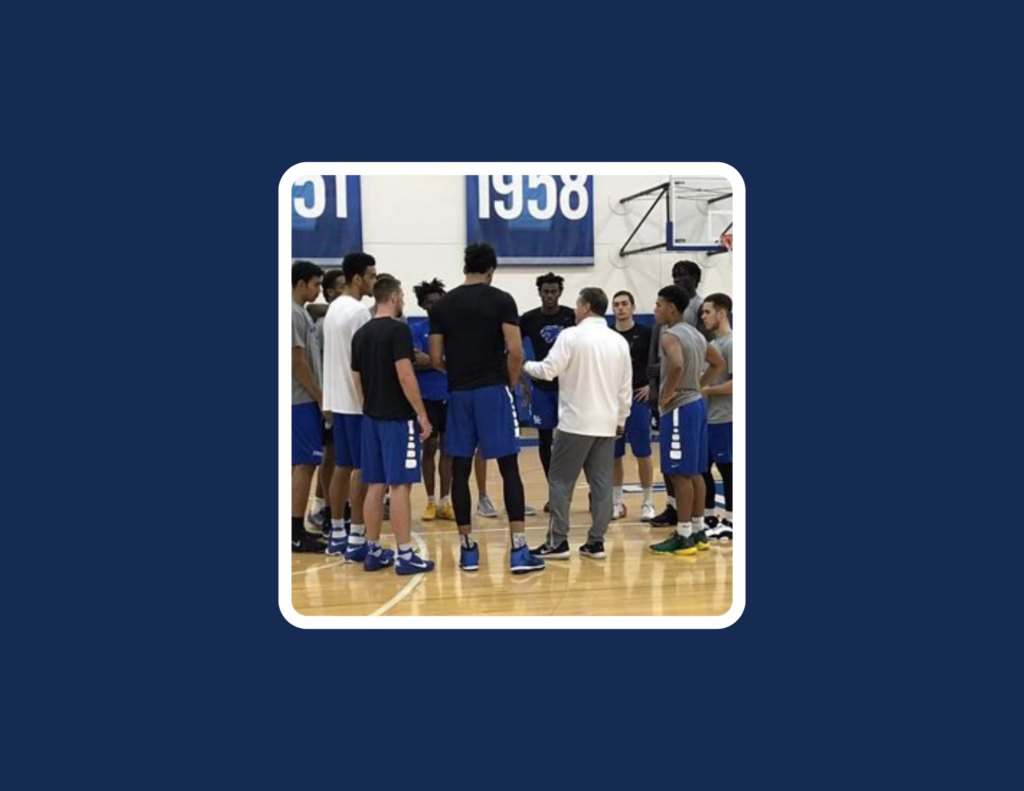
Welcome to the 58th edition of the Coach’s Corner Round Table on the Hoop Heads Podcast. Each episode of the Coach’s Corner Round Table will feature our All-Star lineup of guests answering a single basketball question. A new Coach’s Corner Round Table will drop around the 15th of each month.
October’s Round Table question is: What are the three most important elements of a championship practice environment?
Our Coaching Lineup this month:
- Mark Christner – Calvin College
- Chris DeLisio – Olmsted Falls (OH) High School
- Matt Goldsmith – The College of New Jersey
- Dave Hixon – Basketball Hall of Famer from Amherst College
- Jeff Huber – Elyria Catholic (OH) High School
- Bob Krizancic – Mentor (OH) High School
- Dell Leonard – Mountain Home (AR) High School
- Dave McGreal – Penn State Altoona
- Dan Miller – San Marcos (TX) High School
- Raul Placeres – Maryville College
- Matthew Raidbard – Author of “Lead Like a Pro”
- Nate Sanderson – Mount Vernon (IA) High School
- Don Showalter – USA Basketball
- John Shulman – University of Alabama Huntsville
Please enjoy this Round Table episode of the Hoop Heads Podcast and once you’re finished listening please give the show a five star rating and review after you subscribe on your favorite podcast app.
If you are a basketball coach at any level please check out our Hoop Heads Coaching Mentorship Program. You’ll get matched with one of our experienced Head Coaches and develop a relationship that will help take your coaching, your team, your program, and your mindset to another level.
Be sure to follow us on twitter and Instagram @hoopheadspod for the latest updates on episodes, guests, and events from the Hoop Heads Pod.

If you listen to and love the Hoop Heads Podcast, please consider giving us a small tip that will help in our quest to become the #1 basketball coaching podcast.
THANKS COACHES!
If you enjoyed this episode let our coaches know by clicking on the links below and sending them a quick shout out on Twitter:
Click here to thank Mark Christner on Twitter!
Click here to thank Chris DeLisio on Twitter!
Click here to thank Matt Goldsmith on Twitter!
Click here to thank Dave Hixon on Twitter!
Click here to thank Jeff Huber on Twitter!
Click here to thank Bob Krizancic on Twitter!
Click here to thank Dell Leonard on Twitter!
Click here to thank Dave McGreal on Twitter!
Click here to thank Dan Miller on Twitter!
Click here to thank Raul Placeres on Twitter!
Click here to thank Matthew Raidbard on Twitter!
Click here to thank Nate Sanderson on Twitter!
Click here to thank Don Showalter on Twitter!
Click here to thank John Shulman on Twitter!
Like this show? Please leave us a review here — even one sentence helps! Consider including your Twitter handle so we can thank you personally!
And if you want us to answer your questions on one of our upcoming weekly NBA episodes, drop us a line at [email protected].

We’re excited to partner with Dr. Dish, the world’s best shooting machine! Mention the Hoop Heads Podcast when you place your order and get $300 off a brand new state of the art Dr. Dish Shooting Machine!

Prepare like the pros with the all new FastDraw and FastScout. FastDraw has been the number one play diagramming software for coaches for years, and now with it’s integrated web platform, coaches have the ability to add video to plays and share them directly to their players Android and iPhones via their mobile app. Coaches can also create customized scouting reports, upload and send game and practice film straight to the mobile app. Your players and staff have never been as prepared for games as they will after using FastDraw & FastScout. You’ll see quickly why FastModel Sports has the most compelling and intuitive basketball software out there! In addition to a great product, they also provide basketball coaching content and resources through their blog and playbank, which features over 8,000 free plays and drills from their online coaching community. For access to these plays and more information, visit fastmodelsports.com or follow them on Twitter @FastModel. Use Promo code HHP15 to save 15%
Your first impression is everything when applying for a new coaching job. A professional coaching portfolio is the tool that highlights your coaching achievements and philosophies and, most of all, helps separate you and your abilities from the other applicants.
The key to landing a new coaching job is to demonstrate to the hiring committee your attention to detail, level of preparedness, and your professionalism. Not only does a coaching portfolio allow you to exhibit these qualities, it also allows you to present your personal philosophies on coaching, leadership, and program development in an organized manner.
The Coaching Portfolio Guide is an instructional, membership-based website that helps you develop a personalized portfolio. Each section of the portfolio guide provides detailed instructions on how to organize your portfolio in a professional manner. The guide also provides sample documents for each section of your portfolio that you can copy, modify, and add to your personal portfolio.

SportsLab360 is an online platform that empowers youth basketball players to increase their Basketball IQ. It is made up of engaging, interactive modules that focus on different tactical concepts, from the basics of reading a ball screen, to specific offenses such as the dribble drive. Coaches assign these modules as basketball homework for their players, and can track player progress and scoring, as well as input custom notes within the modules.
By working through the modules before practice, players arrive with a cognitive head-start on the topic, and coaches can get much more out of a single practice. Simply put, rather than having to try and progress from A all the way to Z, SportsLab360 takes care of the first letters of the alphabet, allowing coaches to more quickly move on to the next layer, imprinting their own philosophy and style of play.
SportsLab360 launched in soccer about 6 years ago with lots of success, and have just recently launched in basketball.
TRANSCRIPT FOR ROUND TABLE 58 – WHAT ARE THE THREE MOST IMPORTANT ELEMENTS OF A CHAMPIONSHIP PRACTICE ENVIRONMENT? – EPISODE 860
[00:00:00] Narrator: The Hoop Heads Podcast is brought to you by Head Start Basketball.
[00:00:21] Mike Klinzing: Hello and welcome to the 58th edition of the Coach’s Corner Round Table on the Hoop Heads Podcast. Each episode of the Coach’s Corner Round Table will feature our all-star lineup of guests answering a single basketball question. A new Coach’s Corner Round Table will drop around the 15th of each month.
October’s Round Table question is, “What are the three most important elements of a championship practice environment?”
Our coaching lineup this month includes:
- Mark Christner – Calvin College
- Chris DeLisio – Olmsted Falls (OH) High School
- Matt Goldsmith – The College of New Jersey
- Dave Hixon – Basketball Hall of Famer from Amherst College
- Jeff Huber – Elyria Catholic (OH) High School
- Bob Krizancic – Mentor (OH) High School
- Dell Leonard – Mountain Home (AR) High School
- Dave McGreal – Penn State Altoona
- Dan Miller – San Marcos (TX) High School
- Raul Placeres – Maryville College
- Matthew Raidbard – Author of “Lead Like a Pro”
- Nate Sanderson – Mount Vernon (IA) High School
- Don Showalter – USA Basketball
- John Shulman – University of Alabama Huntsville
Please enjoy this Round Table episode of the Hoop Heads Podcast and once you’re finished listening please give the show a five star rating and review after you subscribe on your favorite podcast app.
If you are a basketball coach at any level please check out our Hoop Heads Coaching Mentorship Program. You’ll get matched with one of our experienced Head Coaches and develop a relationship that will help take your coaching, your team, your program, and your mindset to another level.
Be sure to follow us on twitter and Instagram @hoopheadspod for the latest updates on episodes, guests, and events from the Hoop Heads Pod.
Hey Hoop Heads, start the season off strong this October with scary good deals of up to $4,000 off the top training solutions from our friends at Dr. Dish Basketball. Prepare your team for success this preseason with spooky savings of up to $4,000 off Dr. Dish Basketball’s shooting machines designed for schools and programs.
Learn more at DrDishBasketball.com and follow their incredible content @DrDishBball on Twitter, Instagram, Facebook, and YouTube. Mention the Hoop Heads Podcast and save an extra $300 on the Dr. Dish Rebel, All-Star, and CT models. That’s a great deal, Hoop Heads. Get your Dr. Dish shooting machine today.
[00:02:49] BJ Dunne: Hi, this is B. J. Dunne, Head Men’s Basketball Coach at Gettysburg College, and you’re listening to the Hoop Heads Podcast.
[00:00:21] Mike Klinzing: Hey coaches, check out our newest sponsor, SportsLab360, an online platform made up of interactive modules that focus on different tactical concepts, from the basics of reading a screen, to specific offenses such as the dribble drive. Especially for our high school coaches out there with such limited practice time with your players, assigning the SportsLab360 modules to them before practice can save you tons of time from having to stand there and explain these concepts, and you can move more quickly on to the next layer while your competition is still stuck on the fundamentals.
As a coach you can also put customized notes into the player’s interactive modules, and you can track how they’re scoring on the modules, making it a valuable tool to help identify areas that need development. These guys have had major success in soccer, and just recently launched in basketball, and I’d urge all of our listeners to go check them out.
Through October and November, you can use the code hoopheads to save 15% off any SportsLab360 plan. Head over to www.sportslab360basketball.com to check them out.
[00:04:08] Mike Klinzing: Prepare like the pros with the all new Fast Draw and Fast Scout. Fast Draw has been the number one play diagramming software for coaches for years. You’ll quickly see why Fast Model Sports has the most compelling and intuitive basketball software out there. For a limited time Fast Model is offering Hoop Heads Listeners, 15% off Fast Draw and Fast Scout. Just use the code HHP 15 at checkout to grab your discount and you’ll be on your way to more efficient game prep and improved communication with your team. Fast Model also has new coaching content every week on its blog, plus play and drill diagrams in its play bank.
Check out the links in the show notes for more. Fast Model sports is the best in basketball.
Let’s hear from our panel about the three most important elements of a championship practice environment.
[00:05:04] Narrator: Mark Christner from Calvin College.
[00:05:10] Mark Christner: For this month’s roundtable question, what are the three most important elements of a championship practice environment, I would suggest these three things. First being competitive balance, competitive nature in the drills, competitive balance on teams, creating an element of competition, and all that goes on in practice.
The second thing that I would say would be the communication component of how that gets stressed. The ability for great teams to be able to communicate early, loud, consistently, on both ends of the floor, and in transition. I’d say the last component. And an element of a championship practice environment, in college especially, would be score, time, situations.
Being able to win sideline out of bounds, the last minute of a quarter, the last minute of a half. Off a free throw, do you have anything special that you do? Really honing in on stealing a basket or two and being able to defend certain situations without a timeout. And increasing your player’s knowledge of score, time, situations.
[00:06:19] Mike Klinzing: Chris DeLisio, Olmsted Falls High School, Olmsted Falls, Ohio
[00:06:26] Chris DeLisio: Hey Hoop Heads, Chris DeLisio, Olmsted Falls. Talking about championship practices and the three most important elements of a championship practice. Really hard to narrow down to just three. But I think when you look at the overall of a championship practice, I think there’s three things in addition to many others that are definitely going to be in there.
I think competition has got to be one, that competitive fire has to come into every drill or segment that you do. I think your segments have to be game focused. In other words, the players have to be able to connect those. skills and things that you’re doing to how it makes you better in games and makes them better as players to translates to games.
And then I think there’s have to be leadership. I think the best teams, championship teams have leadership in every practice to keep the level high, to keep it moving in the right direction, handling when things don’t go the way you want them to. So I think those three things Can really play a role in a championship team.
[00:07:35] Narrator: Matt Goldsmith from the College of New Jersey.
[00:07:42] Matt Goldsmith: What’s up Hoop Heads. This is Matt Goldsmith head coach from the College of New Jersey. Three most important elements of a championship practice environment. Number one, super simple, super obvious, compete. You got to compete. How can you make every drill into a competition? How can you time and score everything?
Every drill you run, you can convert into some type of competition. You just have to get creative. Number two, urgency. I think again, scoring everything and timing everything creates a certain sense of urgency that demonstrates live game play better than just the practice environment. So how can you create that urgency?
How can you create that nervousness that comes with an actual game and the jitters that come with big moments? So creating some urgency would be number two and number three, you have to be comfortable with conflict. You have to encourage it. You have to resolve it. You have to be okay with it getting maybe a little chippy out there, but make an environment that is comfortable resolving and experiencing conflict with each other between players, between opponents between teams in the practice.
And if you have those three things, a compete level, a sense of urgency and an awareness and a comfortability with Conflict. You’re going to be in a really good spot. Thanks fellas.
[00:09:28] Mike Klinzing: Dave Hixon, Basketball Hall of Famer from Amherst College.
[00:09:35] Dave Hixon: Hi, Dave Hixon here, Amherst College, retired. Just a couple of thoughts on what championship teams do for practice.
And the first thing that we did, it starts before practice is it’s a thoughtful organization with a purpose. What are your goals for your team that day? In other words, we would spend time you know, knocking things around deciding what we wanted to do that day for practice. Is it a game prep day?
Is it a teaching day for something else? Is it just a competition type day because you’ve got a few days before you play again? What are your goals for that day? And You know, just a really thoughtful organization of, of what you’re going to do at practice that day. That may take longer than the actual practice.
And then focus naturally you want your players to focus. It’s the only way they can really learn, but your coaches have to be in focus throughout the practice. And you know, again, when coaches become unfocused, they let bad habits slip by. And so it’s, it’s two hours of focus. And you’re working with big men, foot footwork type drills.
If you’re letting kids get away with certain things because you’re not tuned in and focused, they won’t tune. And in focus and you let bad habits go and they get created. The third thing is you know, competition, competitiveness intensity. That’s what we always try to do. It’s very hard to get game intensity.
I understand that. But the closer that you can get to that sort of intensity and competitiveness, the better the kids will understand how to execute the things that you’ve taught them under that sort of pressure. It’s easy when, when the defense is playing half ass and all your stuff works.
Well, then you get in the game and you know, the other team is playing at a higher level because people want to win the game now. And so in practice, you want to win things. You know, it’s got to be competitive. There’s got to be intensity in there. And I’m going to break the rule and slip in a fourth. But just sort of a reminder you have to make sure that, that they have learned what you’re teaching for the day.
In other words, if you’re teaching an offensive pattern, if you’re teaching some reads, if you’re teaching breaking a zone, have they learned it? And I’ll have to tell you the closer you watch it to make sure that they have learned it and not just run through it, but they’ve thoroughly learned it against some sort of pressure.
You might look at it and say we got to tweak that a little bit. And so we were constantly doing that. We were constantly trying different things. We’d put something in. That we’d sort of put together before practice and we’d look at it and you know, we’d walk away from it and say, well, that was good, but you know, we need to do this to make it a little bit better.
And so whether it was you know, the kids learning what, what what we wanted them to learn for that day and learning it properly, or whether it was us going back to the drawing board and say 90 percent of it’s good, but we got to change this last 10%. So those are the things that I think that we tried to do to make us a good and competitive team.
[00:12:41] Mike Klinzing: Jeff Huber, Elyria Catholic High School, Elyria, Ohio.
[00:12:47] Jeff Huber: Hi, this is Jeff Huber from Elyria Catholic High School. And this month’s round table question is, What are the three most important elements of a championship practice environment? The first thing that comes to mind for me, It’s going to be a competitive environment.
I think the best teams and the best practice environments, you see guys and girls who are really getting after it. And that could mean competing against each other and there’s a lot of value in that where winning is important, winning is valued and players are striving to win in every drill.
But it doesn’t have to be against an opponent. It could also be competing against themselves where in a drill, Are they always pushing themselves to their absolute limit to try and beat their previous score or do their best in whatever it is they’re doing? So that’d be the first thing that comes to mind.
The second element I would say is enthusiasm. Are the players excited and the coaches as well excited about being there? When you walk in using their voice where it’s loud, where people are you getting touches, high fives, things like that you just, that energy becomes contagious and it’s almost impossible in my experience to have a really poor practice when players are enthusiastic and excited about being there and, and practicing with a pep in their step and ready to learn and ready to get after it.
And my third element. Would be is the practice environment purposeful? You know, there’s a million things you can do in basketball practice and they all have some value But most of them don’t apply to any given team so when you walk into a practice and you’re designing the practice or Carrying out a practice does it align with the things that you do that will help your team be the most successful on game nights.
So I think if you’ve got an environment that’s competitive, that’s enthusiastic and purposeful you’re off to a great start. Thanks.
[00:14:38] Mike Klinzing: Bob Krizancic, Mentor High School, Mentor, Ohio.
[00:14:45] Bob Krizancic: Coach K, Mentor High School, for us to compete for a state title, we constantly talk about having state championship practices.
Three things that are a must. Number one. Every drill, every time we step on a floor, game speed. Not going 70, not going 80, but the speed we need in games to win those games. Two, great communication, 24-7, meaning all the time. I’m a great believer in communication and energy go hand in hand. And third, Execution. We could have the greatest plays in the world, greatest press breakers, greatest presses, but until we execute we’re not going to win games.
[00:15:31] Mike Klinzing: Dell Leonard, Mountain Home High School, Mountain Home, Arkansas.
[00:15:38] Dell Leonard: Dell Leonard, Mountain Home, Arkansas. This month’s round table question, what are the three most important elements of a championship practice environment?
We think that, first of all, our players have to bring energy every day. We also expect our coaches to bring energy. But we cannot rely solely on the coaches. Players have to come in and bring a tremendous amount of energy every day. We think that effort is something that we got to have. Coaches obviously are going to prepare and get ready for practice, but the players have to come out and they have to give tremendous effort every day.
Even on days when they don’t necessarily feel like it. And then the third thing we feel like we have to have, and it’s, we think the first two things help develop this, but toughness. So you have to have energy, effort, and toughness. And over time, if your practices are ran the right way or the kids are doing things the right way, then you’re going to develop that toughness.
So energy, effort, and toughness. We feel like those are the three most important elements of a championship practice environment.
[00:16:43] Mike Klinzing: Your first impression is everything. When applying for a new coaching job, a professional coaching portfolio is the tool that highlights your coaching, achievements and philosophies. And most of all helps separate you and your abilities from the other applicants, the Coaching Portfolio Guide is an instructional membership based website that helps you develop a personalized portfolio. Each section of the portfolio guide provides detailed instructions on how to organize your portfolio in a professional manner. The guide also provides sample documents for each section of your portfolio that you can copy, modify and add to your personal portfolio.
As a Hoop Heads Pod listener, you can get your Coaching Portfolio Guide for just $25. Visit https://www.coachingportfolioguide.com/hoopheads to learn more.
[00:17:34] Mike Klinzing: Dave McGreal from Penn State Altoona.
[00:17:40] Dave McGreal: What’s going on everybody? Coach McGreal, Penn State Altoona here. Back on Hoop Heads Round table. Question this month, what are the three most important elements of a championship practice environment? I think the three things that we would talk about would be having energy the practice is to be player led and then again, the third thing would be competitive.
It’s got to be competitive, so obviously you want a lot of energy in practice. We talk about it all the time, of, of being enthusiastic about being at practice. You know, energy is contagious, positive energy and negative energy, so we want a lot of positive energy. We want that positive energy to be player led.
I said this recently coaches can’t be the only energy givers the players, the leaders, they have to be the energy givers at practice as well. So that’s one thing we’re really trying to push is, is having player led energy, player led practices. And then the third thing is we’ve probably… Heard before old saying is that practices need to be more competitive and tougher than games.
So the games are easy. We try to preach that as best we can. We want things to be competitive, every drill to be competitive. Everything we’re doing from running lines to layup drills to 5 on 5. We want it to be competitive. And we want guys to take it seriously to try and get better.
So those are three things we look at. Again, having a high energy level, player led, and then obviously we want it to be very competitive at practice. Hope this helps. I look forward to talking to you guys soon. Take care. Have a great day!
[00:19:16] Mike Klinzing: Dan Miller, San Marcos High School in San Marcos, Texas.
[00:19:23] Dan Miller: Elements that go into a championship practice. I think I’m just tying to letter C. The first one would be commitment. I think everyone has to have a commitment successful practice, obviously, all the stakeholders, the coaches the players you’re committed to learning, to teaching, to competing to just having a great championship practice together.
If everyone’s buying into that commitment part, you’re going to have success. The second C then would be competing, competition. You got to compete to make each other better. Iron sharpens iron. There’s going to be teaching moments, but of course we got to go live. We got to compete.
And then the last C is community, which is another way to say unity. Everyone has to be united. And together as a family, as a brotherhood, a sisterhood we’re a community that wants to have a great practice and get better for those two hours or however long that is.
[00:20:29] Mike Klinzing: Raul Placeres from Maryville College.
[00:20:35] Raul Placeres: Coach Placeres, Maryville College, what are three of the most important elements of a championship practice environment? I don’t know if these are the most important, but we definitely feel like it puts us in a better position year in and year out to have success. And that’s just having a strong sense of mission, purpose, and clarity in everything that we do from the practice schedule, to how we go about our drills how, and how we approach the weight room and the And from a basketball sense, I think anytime you go watch a practice or see a team play, there has to be the element of how they value ball sureness.
They’re on the ball pressure defensively rebounding and shot selection. I think ball sureness and rebounding are essential elements to championship caliber basketball. The more possessions you get. The more opportunities you can get to shoot the basketball, which in turn gives you a better chance to win basketball games. Hope this helps.
[00:21:40] Mike Klinzing: Matthew Raidbard, author of Lead Like a Pro.
[00:21:47] Matthew Raidbard: Hey, Hoop Heads Nation, this is Coach Matt Raidbard back here with you for another Hoop Heads Round table. This month, discussing the question of what I think are the three most important elements of a championship practice environment. The first element that immediately came to mind when I saw this question was competition.
Having a competitive environment, having your players push one another, having your subs push your starters, having your players on the end of the bench pushing to get into the rotation. Doing that in a positive and supportive way, but making sure things are competitive is extremely important. That’s how teams continue to improve over the course of a long season, is by always having that element of competition in their practices, and having every player being committed to improvement and pushing one another every day to improve.
The second element that came to mind was positivity. I really firmly believe that practice needs to be a positive environment. That doesn’t mean that you don’t give criticisms or feedback. That doesn’t mean sometimes that you have to get into your players a little bit to motivate them. But always end everything on a positive uptick.
Alright? Always find the positive in what’s happening. Again, when you go through a long season, it’s easy to fall into the negative. You lose a game, we have to fix things. We lose a couple of games. We have to change a bunch of things. We have to change the lineup. And sometimes those things happen and sometimes they’re necessary.
But always try to stay positive because your team is going to feed off of you. They’re going to be a reflection of you. And if you get down, if you get negative at practice, that’s going to be reflected in the attitudes of your players. And then the third element that I believe is extremely important to a championship practice environment, in addition to competition and positivity is energy.
Again, that through line up, it’s a long season. In order to stay focused and stay motivated. You need to bring the energy again, your players feed off of you. If you’re high energy, your players are going to feel that, and they’re going to be higher energy. But having that energy over the course of the season, keeping your team up, keeping your players up, having that energetic, positive, competitive practice, that’s how you form.
That’s how you sculpt. That’s how you cultivate. And that’s how you have a championship environment.
[00:24:22] Mike Klinzing: Nate Sanderson, Thrive on Challenge.
[00:24:26] Nate Sanderson: Hey Mike, this is Nate Sanderson from Thrive on Challenge. Your question here about three elements that make for a championship practice environment is an interesting one and I’m going to take this in two different directions here. First of all, I asked some of our senior leaders here as we’re getting ready to start practice in a couple of weeks here in Iowa, what they would say to that question, what makes a championship practice environment.
And the three things that they came up with from a player perspective was number one, just having a positive atmosphere where players are positive with each other, where coaches are coaching in a positive manner. Related to that, their second thing that they mentioned was just having high energy. We have high expectations when it comes to the tempo in our practice and how we compete and how we cheer and celebrate each other in games and in practice and all of that contributes to an environment that has a lot of energy in it and I think that players certainly appreciate that.
The last thing that they mentioned was just having a place that’s fun to be at. We talk a lot about how we want to create a place that players look forward to going to at the end of their school day. And when they know they’re going to a place where we do value fun, and we try to create room for players to be a little bit silly and a little bit goofy at times while still trying to get better at the game they talked about just that light hearted atmosphere is something that they really appreciate and I know over the past couple of seasons our players have actually gone back through the practice film at times on Huddle and pulled clips of their teammates doing embarrassing things and posting those in the group chat for the team.
All of those things contribute to an environment, a place that they like to be part of, that they look forward to, and that they enjoy. Now, if you’re asking me to consider this from a coaching perspective, certainly I think all the things that my players shared are important. You know, one of the things that I’ve been thinking a lot about here in the offseason, and particularly in the run up to the start of this season now, is trying to really invest in a learning environment.
And I think that’s tied into how we practice and the fact that we do a lot of very intentionally designed games in order to learn our skills and to be able to get better as quickly as possible. But we are really giving a lot of consideration this year to how do we create an environment of exploration where players problem solve and they discover together solutions to problems that other teams may present to us in our games during the year. And that’s a combined effort between what we do in practice, as well as the feedback that we’re giving them on our scouting reports and in the film room. I think one of the things that I’ve been guilty of over the course of my career is often trying to provide the solutions to some of those challenges for players and then dialing them into a particular skill set.
We certainly still do some of that, but we’re really trying to move away from coach provided answers to some of these challenges. And really creating a place where players are discovering some of those things for themselves because ultimately we want them to be equipped to be able to problem solve on their own during games and now we’re starting to think a lot more about how do we structure our practices to be able to help them develop some of those skills as well.
I know a lot of coaches are probably going to talk about competition and trying to have a place where players can really go at each other or hold each other accountable to certain standards, and I think all of those things are really good. I’m going to give you a couple others here, Mike, that maybe coaches don’t necessarily think about.
And that is… For us this year, we’re really going to emphasize that practice needs to be a place of service as well. And when I talk about service, I’m not saying, Look, we have to pick up the basketballs and put stuff away at the end of practice or helping set up the gym before practice. There are times where our players, our scout team, is going to have to make sacrifices to help our rotation get ready for games.
Our numbers are going to be lower this year, so our rotation is going to have to help our JV at times give them some quality repetitions in our stuff. So that they can get better. There are times where we’re going to be broken out into different groups and sometimes the older more experienced players are going to have to lead a little bit more rather than always being challenged by playing against the other better players in our practice.
And I think if you have an environment where players are only looking out for their own interests. They’re only keeping track of their own scores, their repetitions, the amount of time that they’re in a particular drill or going against the better players. You’re really setting yourself up for potential disaster down the road, because we know this, over the course of a season, everybody’s going to have to sacrifice at some point.
And so, that’s going to be a big point of emphasis for us, is really helping players to recognize when we’re asking them to do things that are for the betterment of the team, or even in our case, the program itself, 9 through 12. That may not necessarily be the thing that they want in that moment for themselves.
Now, I know you asked this question specifically about the environment, but I can’t talk about practice without emphasizing how much we pay attention to our efficiency in practice. And what I mean by that is, if we’re doing a shooting drill, and we have 14 players in the gym and six baskets, We obsess over the number of reps that a player’s going to get in that three or four or five minute shooting drill.
We are constantly trying to figure out the fastest way to transition from one drill to the next to save time so that I’m not talking too much that our assistants aren’t talking too much because we just believe that players are going to get better the fastest by doing much more than by listening or by watching somebody else execute something.
And so we’ve taken a fine tooth comb to our practices from last year, going over the video literally with stopwatches and tally marks to see how many reps are players actually getting in the drills and games that we play in our practice and then trying to be as creative as possible. to maximize those repetitions here going forward given the constraints that we have with the number of players, the number of rims, and the size of our gym that we’re working with on a daily basis.
Final thought here, Mike, I know that a lot of this we put on the players to try to establish this environment but I don’t know if there’s a bigger variable when it comes to building that, that championship culture environment than how the coach shows up every day. And we’ve got to make sure that whatever we are asking, whatever standards we are holding our players to, that our coaches are doing the same thing.
So when it comes to being positive, bringing energy, creating a fun and lighthearted environment. That all starts with us. Seniors will follow and the team will follow the seniors after that. So we certainly can’t put all of that only on the players when it comes to what kind of environment we’re going to get to enjoy every day. We’ve got to show up and make sure that we are doing our part.
[00:31:23] Narrator: Don Showalter, USA Basketball.
[00:31:29] Don Showalter: Hi, Don Showalter from USA Basketball. Question today is, what are the three most important elements of a championship practice session? And to break these down, I would say one of the most important things is getting a pace to your practice. Getting a good pace to your practice is really…
If you let the players determine the pace, it’s going to be a different pace, slower pace than you as a coach would like. So I think the pace to your practice is extremely important because that carries over directly to the pace of a game. Second thing I think that’s really important that makes up a good practice is continuing to work on skill development.
And I always say that really practices can be divided up into three parts. Skill work, whole offense, whole defense, and skill work should make up one third of that practice. And so you’re working on skill work. Not necessarily a chunk of that practice is all skill development, but you intersperse it with working on your offenses and defenses.
So I think the second thing is. Continuing to work on skill development is a really important part of championship practice session. As I watch guys like Jay Wright and Coach K and Tom Izzo and Fran McCaffrey practice, a lot of skill work is intertwined in their practice schedule that they have.
And so it makes it a great schedule. The third thing I say is, is keep your practices competitive. One of the things that that really works in your skill development is if you have competitive practices, you find out what skills you need to work on. So making skills competitive, making your practice competitive with time and score for drills is extremely important in a championship practice session. Thank you.
[00:33:23] Mike Klinzing: John Shulman, University of Alabama Huntsville and the 720 Sports Group.
[00:33:29] John Shulman: This is John Shulman, head basketball coach at Alabama Huntsville and the question this month is three things that you need to have a kind of a championship practice.
Great question as we’re all starting practice now. I think the first thing is, and I think it’s really hard to coach. Your kids have to bring it, but a loud gym is a winning gym. And a silent gym, a quiet gym is a losing gym, and I really firmly believe that. Your kids need to bring enthusiasm. I don’t think you can coach enthusiasm.
It has to be an enthusiastic gym. It has to be a loud gym. It has to be a positive gym. And I think that’s the first thing. A loud gym is a winning gym. I think if you want to have a championship environment, Besides being loud and enthusiastic, I think it’s got to be a competitive deal.
Especially these days. Even drill work. Something’s got to be on the line. You probably need to have a winner or a loser. And consequences for the loser and whatever for the winner. But I think if you’re going to learn to win and you want to be a champion, you’re going to have to…
You’re going to have to take some L’s along the way and not like it. But I think every kid wants to be able to compete and practice rather than just go through the drill. I’m very guilty of this for many years, but now we try to make everything that we do. Competitive with a winner and a loser. I think you’ll get more out of them if you do that.
Attention to detail you know, whatever that may be for you, whether you’re running sprints and touching the lines, whether you want your kids, if you want all your kids to have their shirts tucked in, then you can’t have some that aren’t, whatever’s important to you. I’m not saying you have to have that to be a champion, but whatever’s important to you as a coach.
The attention to detail, whether it be starting behind the line and touching every line, if you’re running a sprint or a suicide. Just the attention to detail. And then focus. I will tell you this, I went to a practice at Belmont with Rick Bird. He did not have a whistle. They’re going through practice and they’re going hard.
And he says quietly, And then everybody shut up and everybody eyes on him. And he said his piece, and they went back and played hard. You know, I do have a whistle, and I use a whistle in our practice, but when that whistle blows, everybody needs to stop. All eyes on whoever’s talking, whether it be a player talking, whether it be an assistant talking, whether it be a coach talking.
Guys aren’t screwing around talking behind the coach’s back or getting some water or whatever. I think just attention and focus, attention to detail and focus. When it’s time to really, really focus on what’s being taught and what’s being said. Hope this helps. Have a great start of the year and hope this helps. Take care.
[00:36:41] Mike Klinzing: Thanks for checking out this month’s Hoop Heads Podcast Round Table. We’ll be back next month with another question for our all star lineup of coaches.
[00:36:50] Narrator: Thanks for listening to the Hoop Heads Podcast presented by Head Start Basketball.