ROUND TABLE 80 – DO YOU INVOLVE YOUR FORMER PLAYERS IN YOUR PROGRAM, AND IF SO, HOW? – EPISODE 1140
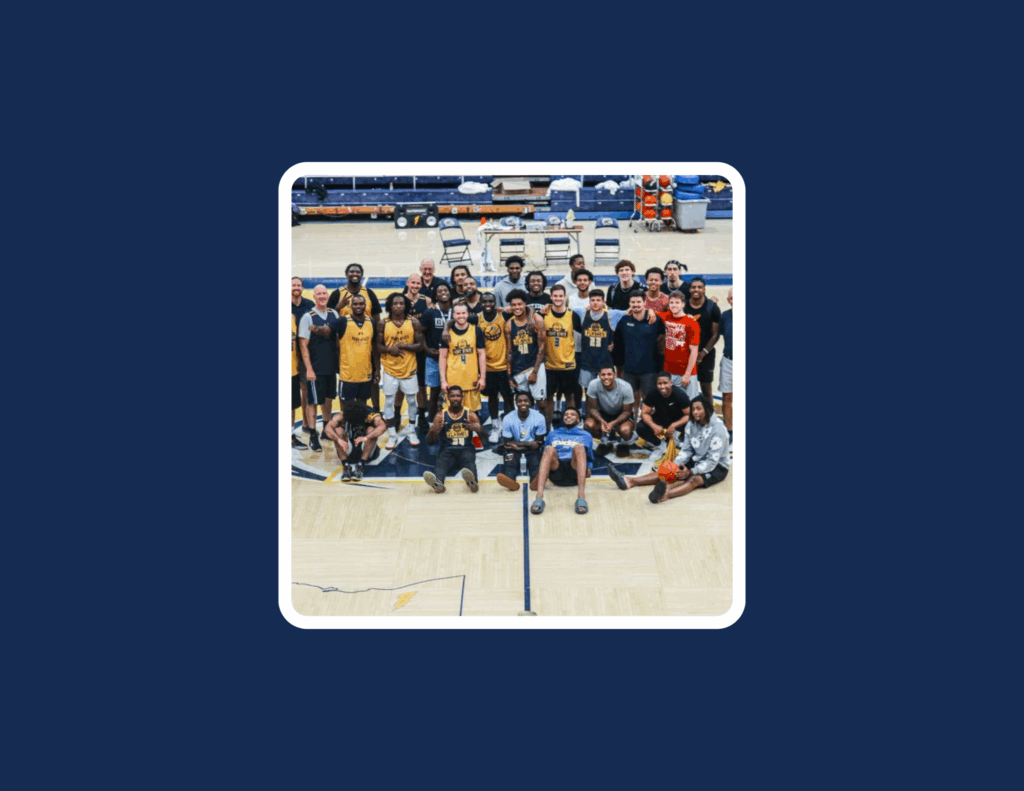
Welcome to the 80th edition of the Coach’s Corner Round Table on the Hoop Heads Podcast. Each episode of the Coach’s Corner Round Table will feature our All-Star lineup of guests answering a single basketball question. A new Coach’s Corner Round Table will drop around the 15th of each month.
August’s Round Table question is: Do you involve former players in your program, and if so, how?
Our Coaching Lineup this month:
- Dominic Amorosa – Strake Jesuit (TX) College Prep
- Jake Boyd – Luther College
- Coretta Brown – Eastern Kentucky University
- Jerry Buckley – Bishop Kenny (FL) High School
- Erik Buehler – Arapahoe (CO) High School
- Toby Frazier – Riverside (FL) High School
- Stephen Halstead – Grace College
- Joe Harris – Lake Chelan (WA) High School
- Chris Kreider – Rice University
- Bob Krizancic – Mentor (OH) High School
- Josh Merkel – Randolph Macon College
- Deronte Polite – Hood College
- Don Showalter – USA Basketball
- John Shulman – University of Central Arkansas
Please enjoy this Round Table episode of the Hoop Heads Podcast and once you’re finished listening please give the show a five star rating and review after you subscribe on your favorite podcast app.
Be sure to follow us on twitter and Instagram @hoopheadspod for the latest updates on episodes, guests, and events from the Hoop Heads Pod.

If you listen to and love the Hoop Heads Podcast, please consider giving us a small tip that will help in our quest to become the #1 basketball coaching podcast.
THANKS COACHES!
If you enjoyed this episode let our coaches know by clicking on the links below and sending them a quick shout out on Twitter:
Click here to thank Dominic Amorosa on Twitter!
Click here to thank Jake Boyd on Twitter!
Click here to thank Coretta Brown on Twitter!
Click here to thank Jerry Buckley on Twitter!
Click here to thank Erik Buehler on Twitter!
Click here to thank Toby Frazier on Twitter!
Click here to thank Stephen Halstead on Twitter!
Click here to thank Joe Harris on Twitter!
Click here to thank Chris Kreider on Twitter!
Click here to thank Bob Krizancic on Twitter!
Click here to thank Josh Merkel on Twitter!
Click here to thank DeRonte Polite on Twitter
Click here to thank Don Showalter on Twitter!
Click here to thank John Shulman on Twitter!
Like this show? Please leave us a review here — even one sentence helps! Consider including your Twitter handle so we can thank you personally!
And if you want us to answer your questions on one of our upcoming weekly NBA episodes, drop us a line at [email protected].
We’re excited to partner with Dr. Dish, the world’s best shooting machine! Mention the Hoop Heads Podcast when you place your order and get $300 off a brand new state of the art Dr. Dish Shooting Machine!
Your first impression is everything when applying for a new coaching job. A professional coaching portfolio is the tool that highlights your coaching achievements and philosophies and, most of all, helps separate you and your abilities from the other applicants.
The key to landing a new coaching job is to demonstrate to the hiring committee your attention to detail, level of preparedness, and your professionalism. Not only does a coaching portfolio allow you to exhibit these qualities, it also allows you to present your personal philosophies on coaching, leadership, and program development in an organized manner.
The Coaching Portfolio Guide is an instructional, membership-based website that helps you develop a personalized portfolio. Each section of the portfolio guide provides detailed instructions on how to organize your portfolio in a professional manner. The guide also provides sample documents for each section of your portfolio that you can copy, modify, and add to your personal portfolio.

Hey coaches — you’ve got a game plan for your team… but do you have one for your money?
That’s where Wealth4Coaches comes in.
Each week, they deliver simple, no-fluff financial tips made just for coaches. Whether you’re getting paid for camps, training sessions, or a full season—Wealth4Coaches helps you track it, save it, and grow it.
It’s time to stop guessing and start building.
Subscribe now at wealth4coaches.beehiiv.com/subscribe
And follow them on Twitter @Wealth4Coaches for daily money wins.
Your money needs a coach.
Start with Wealth4Coaches.
TRANSCRIPT FOR ROUND TABLE 80 – DO YOU INVOLVE YOUR FORMER PLAYERS IN YOUR PROGRAM, AND IF SO, HOW? – EPISODE 1140
[00:00:00] Narrator: The Hoop Heads Podcast is brought to you by Head Start Basketball.
[00:00:20] Mike Klinzing: Hello and welcome to the 80th edition of the Coaches Corner Round Table on the Hoop Heads Podcast. Each episode of the Coach’s Corner Round Table will feature our all-star lineup of guests answering a single basketball question. A new Coach’s Corner Round Table will drop around the 15th of each month.
August’s Round Table Question is, do you involve former players in your program, and if so, how? How?
Our coaching lineup this month includes:
- Dominic Amorosa – Strake Jesuit (TX) College Prep
- Jake Boyd – Luther College
- Coretta Brown – Eastern Kentucky University
- Jerry Buckley – Bishop Kenny (FL) High School
- Erik Buehler – Arapahoe (CO) High School
- Toby Frazier – Riverside (FL) High School
- Stephen Halstead – Grace College
- Joe Harris – Lake Chelan (WA) High School
- Chris Kreider – Rice University
- Bob Krizancic – Mentor (OH) High School
- Josh Merkel – Randolph Macon College
- Deronte Polite – Hood College
- Don Showalter – USA Basketball
- John Shulman – University of Central Arkansas
Please enjoy this round table episode of the Hoop Heads Podcast and once you’re finished listening, please give the show a five star rating and review after you subscribe on your favorite podcast app. Be sure to follow us on Twitter and Instagram @hoopheadspod for the latest updates on episodes, guests and events from the Hoop Heads Pod.
Hey Hoop Heads! Train smarter and win more this upcoming season with the number one selling shooting machine in America, Dr. Dish. This month grab a certified pre-owned machine for as low as $3,995. You’ll get a three year warranty, 250 plus drills. And quick three to five day shipping from Minnesota Inventory moves fast so don’t miss out on these savings from our partners and friends at Dr. Dish Basketball.
Learn more at drdishbasketball.com and follow their incredible content @drdishbball on Twitter, Instagram, Facebook and YouTube. Mention the Hoop Heads Podcast and save an extra $300 on the Dr. Dish Rebel All-Star and CT models. Those are some great deals, hooped. Get your Dr. Dish shooting machine today.
[00:02:26] Kent Washington: Hi, this is Kent Washington. author of Kent-o-Mania, and you are listening to Hoop Heads Podcast.
[00:02:34] Mike Klinzing: Let’s hear from our panel about how they involve their former players in their program.
Dominic Amorosa Strake Jesuit College Prep in Houston, Texas.
[00:02:49] Dominic Amorosa: Dominic Amorosa, Strake Jesuit in Houston, The way we involve our former players is they’re always invited to open gym in the summertime at the beginning and end of the school year.
When they’re back in town, they’re invited to speak to our players. Got our older veteran, more veteran alums who we’ve partnered up as mentors. To our current players, love trying to get, make sure all of our players, whether they’re a star player or not, remain connected. Have an alumni board that when they do come back, they come and sign it and it’s a great thing for our program at Strake Jesuit to include our alums and make them feel a part of it moving forward. Take care. Thanks
[00:03:33] Mike Klinzing: Jake Boyd. Luther College
[00:03:38] Jake Boyd: Hey, this is Jake Boyd, assistant men’s basketball coach at Luther College, answering this month’s round table question. Do you involve former players in your program, and if so, how? We have former players littered throughout our program, and it’s one of the things that makes our program amazing. From assistant coaching to coaching support roles, strength and conditioning, to professionals that come back to speak to our team.
Whether that’s to pass on some of our traditions expectations, or maybe to help us connect some of our core principles to some of the things that will be applicable to life after basketball For our guys, we believe that it is a huge benefit to have our former players involved in the program. I know that the environment and the excitement that Coach Franzen has created there throughout their time as players on the floor has made it great for them to come back and help us support the players of the future.
Always a blast doing this, guys. Thanks so much. Have a great one.
[00:04:40] Mike Klinzing: Coretta Brown from Eastern Kentucky University.
[00:04:45] Coretta Brown: I think involving former players in your program is a great tool for recruiting that can look in in different ways. Obviously you have your alumni day, but maybe creating a video of former players and why they chose the school, what they liked about the school, what they’re doing now. To kind of help create that sense of family for someone who may be considering joining or being a part of your program.
[00:05:11] Mike Klinzing: Jerry Buckley. Bishop Kenny High School, Jacksonville, Florida.
[00:05:13] Jerry Buckley: This is Jerry Buckley from Bishop Kenny High School answering this month’s question about evolving alumni with our program. There are three major ways we do that. Number one is having an alumni game every year. Which I feel like always engages our former players.
It’s great to see them and catch up with guys, see their families guys that have just gotten married or had children or just catching up with them and seeing all their accomplishments. And we try to have our current players come out and watch that too, just so they can see the family atmosphere of our program.
Number two we started doing a few years ago, which I think has been really good for us, is we have a retreat at the beginning of every season with all three teams, freshmen, jv, and varsity. And we bring in an alumni panel of former players to talk to them about their experiences in our program and at our school, and also answer any questions at the current players have.
So. We feel like that’s been really beneficial for us over the last few years. And then finally we’re lucky enough to have, right now it’s up to six former players on our staff at the different levels. Like I said, our freshman JB and Varsity, so five of them have played for me in the last 20 years.
And we also have an assistant coach has been with us for a long time, who’s from the mid eighties. So. I feel like that has a great connection to our past of our program. And they do a really good job of relating to the players, like I said, as far as experiences they’ve had in their career, going to our schooling and playing in our program.
Hope this helps. Hope everyone’s doing well.
[00:06:46] Mike Klinzing: Erik Buehler, Arapahoe High School Centennial, Colorado.
[00:06:53] Erik Buehler: Hey, what’s going on? Hoop Heads. This is Erik Buehler with Arapahoe High School here in Denver, Colorado. And this month we were asked do we involve former players in our program? And if so, how? Yes, we absolutely do. I’m a big believer in bringing those former players back that especially know your standards.
They know the expectations. They lived it. They’re a part of it. And they can help set that example of what comes after being a high school basketball player. In our program, we bring a lot of former players back that are still college age or maybe a little older in college age to work our camps in the summer.
We invite them to come to games, especially when they’re home from school around the holidays on our staff that we have right now, our head coach has. One former player coach on a lower level and another player who played for me at another high school is another one of our assistants. So it is nice having those former players come back and either work camp or even be assistants because they already know what the head coach expectations are.
They probably know basketball pretty well and they can help be a leader in and around your program outside of the head coach or what the coaches are saying. They can help reinforce. All those things from second graders all the way up to seniors and varsity players in your program. That’s how we do things.
Thanks for having me on again, and we’ll talk to you guys next time. Thank you.
[00:08:26] Mike Klinzing: Toby Frazier from Riverside High School.
[00:08:33] Toby Frazier: I certainly involve former players in my program. As a matter of fact, I think it’s their best testimony to your program when you can have former players involved. Two things that I’ve always done. I’ve made a pact with my current players that when they’re done playing for me. They will come back and speak to the new guys or come back and play pickup or visit a practice.
Anything that they can share about their experience during their time for playing for me. And it doesn’t matter if those players went on to play college basketball or never played basketball again, or even if they were players that didn’t get that much playing time, I think they can come back and just share their thoughts in there.
Their experiences with the new guys and with the parents, and I think that opens eyes to the current group, what you’re trying to do as a coach, what you’re trying to get done, and they can see the fruits of your program by seeing how those young women or young men have moved on. And come back and talk about the impact that you’ve made in their life as a coach.
So for me, it’s very imperative to have former players come back around, whether it’s just in a speaking capacity or able to come play pickup or visit a practice and just share their thoughts and their feelings about their time. With me as a coach,
[00:09:52] Mike Klinzing: Stephen Halstead from Grace College.
[00:09:57] Stephen Halstead: Hey, this is Stephen Halstead from Grace College here for the Hoop Heads Round Table number 80.
And the question this month is, do you involve former players in your program? And if so, how? And this is one thing that we actually do quite a bit at Grace, and there’s different ways you can do it. A couple ways just that are coming up in our future that I know we are involving former players in our program.
We have a golf outing each year, and that’s one thing is the graduates, if they enjoy it or if they were players here and enjoy it, we always invite them back and try to have them get a team and then be around the guys. But one of my favorite things that we do is. We are a Christian school, so we do devotionals every single game day.
And so Saturdays throughout the season we’ll actually have alumni come in and give a devotional and it helps our head coach played at Grace. I’m an assistant, I played at Grace, so we know a lot of people in the community and just former players, and it’s a great way to have them connect and be able to share some stories and some lessons they learned with the current people in the program wearing the jersey.
[00:10:58] Mike Klinzing: Joe Harris Lake Chelan High School, Lake Chelan, Washington.
[00:11:05] Joe Harris: Hey, Hoop Heads. This is Joe Harris at Lake Chelan with this month’s round table question. Do you involve your former players in your program and how do you do that? I think if you’re trying to develop tradition and build team culture throughout an over years of time, that it’s important for you to bring those players back into your program at different times.
Whether it’s the beginning of the season, speaking to your team on the expectations they may have, or whether it’s before or after a big game or a big loss maybe before leading into those, the playoffs season or the state playoffs. And again stressing what tradition means to them and how, how it means to the, the team culture that has been built before you.
One of the things that we’ve also established is we’ve named a number of our drills after our former players. Instead of just a rebounding drill or a closeout drill, these are now Carlson rebounding or Dobbs closeout or money shots, again named after our players. Creating that tradition of excellence in the tradition of giving yourself to others is embodied in those, those drills that are now named after somebody.
And I think these are great ways that. That you can use to help your former players give back to the program. That was good to them. Hopefully this is something that helps for you and you’re looking forward to the start of the school year.
[00:12:28] Mike Klinzing: Coaches. You’ve got a game plan for your team, but do you have one for your money? That’s where Wealth4Coaches comes in. Each week, we’ll deliver simple, no fluff financial tips made just for coaches. Whether you’re getting paid for camps, training sessions, or a full season, Wealth4Coaches helps you track it, save it, and grow it.
It’s time to stop guessing and start building. Subscribe now at Wealth4Coaches.beehive.com/subscribe and follow us on Twitter @Wealth4Coaches for daily money wins. Your money needs a coach. Start with Wealth4Coaches,
Chris Kreider from Rice University.
[00:13:15] Chris Kreider: I really believe that involving former players in our program is a huge part of what we’re trying to do. You are always looking to connect these young guys kind of showing ’em the end of the movie what it’s going to look like. when the ball does stop bouncing, you try to bring guys back not only to share their experiences, whether it was they played for you or a different coach there at that same school, but I think just having, creating environments where they can share their experience with your current players and kind of giving them some advice, both good and bad about.
Their experience, how they were able to use what they learned at your institution moving forward. so whether that be inviting guys back for a golf outing, a dinner, attending, a practice, a game, home or road just knowing where you, what guys are up to. I think maintaining a database of where everyone is and what they’re doing is a way that you can connect your current players For us here in college.
Just with where our guys are trying to go who’s doing that right now, currently in that field, and how can you help your current players with some former players get connected and even start a mentorship program, but you want all former players to feel like they’re still involved with the program to feel a part of things.
using zooms group texts or individual phone calls and texts just to get everyone connected. I think now with technology you can do unique. And creative things in addition to bringing guys back for physical, obviously in-person meeting and time, and just genuine appreciation for what they did in the past and how they can continue to be a part of the program moving forward.
[00:14:58] Mike Klinzing: Bob Krizancic, Mentor High School Mentor, Ohio
[00:15:04] Bob Krizancic: Coach K. Mentor High School. We absolutely involve our ex-players in everything we do. During Christmas and Thanksgiving, they come in, they work out against our players. They’ll come in and they’ll talk about their experiences at Menor High School. We invite them to our golf outing.
We invite them to our reverse raffle. We have an alumni night where we introduce all our ex-players. We try to have that during Christmas or first week in January when they’re all home from school. Three of our ex-players are on our staff at Menor High School. Our favorite saying is, once a card, always a card. Best of luck.
[00:15:50] Mike Klinzing: Josh Merkel. Randolph Macon College.
[00:15:56] Josh Merkel: Hey, Mike, Josh Merkel. Hope you’re doing great. How do we involve former players in the program? We have a newsletter that we send out three times a year to keep people in the loop. We have an alumni game in, usually in February for the young alums and we host a friends of basketball dinner for former players and supporters.
Kind of a kickoff. To the beginning of the season. So we’ll do that. And then man, outside of that, just trying to get them to games through the newsletter. And there’ll be times too where we’ll have those former players speak to our guys. No real rhyme or reason to that, but like I just found out, there’s an alum 45 minutes away in Fredericksburg.
Spent 27 years in the military. And so I’m reaching out to him just to kind of get, gain some insights from him and what he would tell our guys and see if that’s a potential fit for him to speak to our team. So, as always, appreciate your commitment in making the game better, educating coaches and doing what you do.
So thanks and I hope this is helpful. Have a great one.
[00:17:17] Mike Klinzing: DeRonte Polite, Hood College
[00:17:22] DeRonte Polite: DeRonte Polite Head Women’s Basketball Coach Hood College. I definitely love to involve former players with my current program, no matter where I coach those players at. And so it could be a player that maybe I had a player that exemplified something or they, they went through like a similar struggle or whatnot.
Like I had one player who. I mean, looking back on her career, she just really, she fought for her confidence, right? So things didn’t always go her way. But she fought to stay confident. She fought to remain confident in knowing that she was working hard and then a lot of times when I look back on a lot of great memories I have is of her play.
And so I had her talk to a former player, a, I mean a current player a couple of years ago. I had another player who was just great with leadership and had her to have conversations with my leadership group, and so I do, I believe it’s big. A lot of times I’ll have like new point guards’ coming in, former point guards.
They’re getting on the phone with them to talk to them about what is it like playing point guard for me and things like that. So I definitely think it’s a big thing to do to help keep those connections. It’s cool that years later you can call on the former player and they’re able to make that, that have that conversation with the current player.
I think that speaks to the current player as well, so I definitely think it’s a big thing. Involve those former players as much as you’re able to
[00:18:46] Mike Klinzing: Don Showalter USA basketball.
[00:18:53] Don Showalter: Hi Don Showalter here from USA Basketball. The topic for this month is how do you get your former players involved? I find out always that former players really enjoy being. Coming back and being involved with the program. And most of ’em have a lot of pride in, in the culture they set and their teammates and their coaching staff.
So when they’re back in town or when they’re around, I always, I like to have a couple of ’em come and speak, talk to our kids, either practice before games or whatever. It works out, especially the ones that played college basketball or played at a high level. I think it’s really good for players that are now playing to hear their how they came about getting where they are. also things like alumni nights or you recognize special teams throughout the year, conference championship teams, state tournament teams, whatever it is. I think those players that have played in those really enjoyed coming back. Alumni game is a huge hit always.
I think having an alumni game for even 30, 40 years, alumni really enjoy playing in games. So that’s, that’s a real common thing for, for us to do as well. I think other things you can do is always when you’re interviewed, recognized players that have played for you and how they set the tone for your program makes a big difference.
They, I know they always pick that up. Then also include them in, when you maybe have team outs where you have players get together and if there’s players in the area, have them come with you sometimes too. I think that’s important. Thank you.
[00:20:37] Mike Klinzing: John Shulman from the University of Central Arkansas.
[00:20:43] John Shulman: This is John Shulman, head basketball coach at the University of Central Arkansas. And this month’s question is, do you involve former players in your program? If so, how? I think it’s, I think it’s vital to involve former players, even if they’re not your guys. They have been through the wars. They know what the program’s all about and they can help even if you didn’t coach ’em.
And I say that from experience out here at the University of Central Arkansas. We have a former player, Jordan Howard, that played actually against the Olympic team last year in the Olympics. He played for Puerto Rico and he came to Central Arkansas. I think they went, I think they won one game their first year.
He ended up winning 18 his last year and having a great pro career, and we did a Zoom with him and it was vital for our kids to hear his message. Had another former player meet with them. Meet with our team. anytime that you can get your alums to want to come back to practice and want to be involved, I think it’s huge.
Invite ’em to a game. Invite ’em for a weekend. Invite ’em on a Zoom call. Invite ’em for a practice. Anything. They just want to feel like they’re a part and that they’re valued, but they can do so much. it’s, you’re doing that for them, but they can do so much for your, your kids just providing a network.
Alabama Hunts full. Our kids were so close and they would hire each other at a certain business near Huntsville. And so involve your former players in your program. I think it’s vital. It doesn’t really matter. H how, even if they’re your, not your former players, then they’re not your players, former players that have played at your institution need to feel valued, need to feel appreciated, and need to be involved anyway.
Anyhow. It may be a networking type thing. It may just be. Helping your kids that you presently have playing for you. So any way possible involve them. I think it’s important enough. I think you as a head coach, you got so many things on your brain. We actually have, one of our assistant coaches, one of his jobs is to be reaching out and just kind of forming a liaison to the alums and former players.
I think it’s that important. I hope this helps. I hope everybody’s getting ready for school. Good luck kids. You start school and your workouts and value those kids. Value the best player. Value the last player value all in between. Try to talk to ’em daily. It’s a hard time to be a young kid right now. A hard time to be a coach.
So if y’all need anything, yeah, thanks. Take care.
[00:23:47] Mike Klinzing: Thanks for checking out this month’s Hoop Heads Podcast Round Table. We’ll be back next month with another question for our all-star lineup of coaches.
Your first impression is everything when applying for a new coaching job. A professional coaching portfolio is the tool that highlights your coaching achievements and philosophies, and most of all helps separate you and your abilities from the other applicants. The Coaching Portfolio Guide is an instructional membership based website that helps you develop a personalized portfolio.
Each section of the portfolio guide provides detailed instructions on how to organize your portfolio in a professional manner. The guide also provides sample documents for each section of your portfolio that you can copy, modify, and add to your personal portfolio. As a Hoop Heads Pod listener, you can get your coaching portfolio guide for just $25.
Visit coaching portfolio guide.com/hoopheads to learn more.
[00:24:47] Narrator: Thanks for listening to the Hoop Heads Podcast presented by Head Start Basketball.