
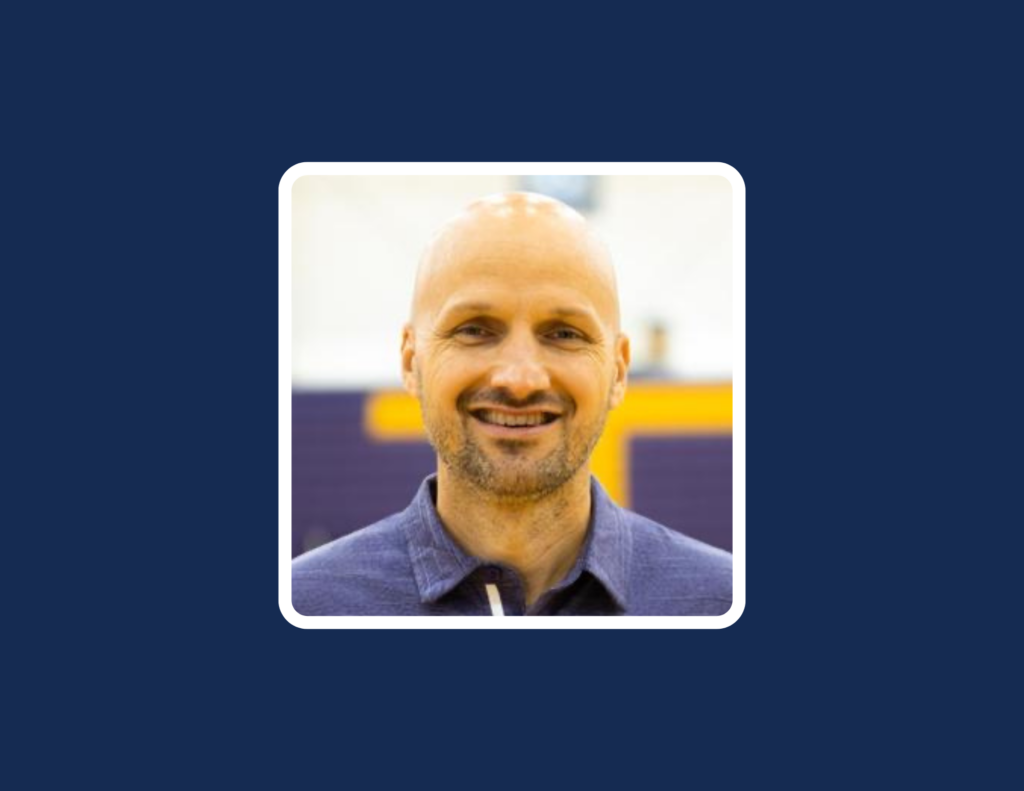
STAN BONEWITZ – CONCORDIA UNIVERSITY TEXAS MEN’S BASKETBALL HEAD COACH – EPISODE 723

Website – https://athletics.concordia.edu/sports/mens-basketball
Email – stan.bonewitz@gmail.com
Twitter – @StanBonewitz
Stan Bonewitz is in his 19th season as the head coach of the Concordia University Texas men’s basketball program. He also is in his 9th year as the department’s associate director of athletics.
In his 18 previous years at the helm, the Tornados have registered the program’s first-ever NCAA postseason victory, captured one league championship and made three conference tournament title game appearances. Bonewitz earned his 200th career victory on Jan. 25, 2018.
Prior to his arrival in Austin, Bonewitz was the assistant men’s basketball coach at South Plains College in Levelland, from 2003-04. He also served a stint as an assistant men’s basketball coach at St. Edward’s from 2002-03.
Bonewitz was a decorated collegiate student-athlete at Texas Tech. He garnered All-Southwest Conference Freshmen Team honors in 1995-96 and earned honorable-mention All-Big 12 honors two years later. As a point guard, Bonewitz led the Red Raiders to a 30-2 ledger, SWC title and a NCAA Sweet Sixteen appearance in 1995-96. He graduated as the all-time assist leader for Texas Tech.
While being coached by his father on the scholastic level, Bonewitz led San Antonio’s East Central High School to the 1995 Texas state championship with a perfect 35-0 record. He was also named Mr. Texas Basketball that season and was later inducted into the Texas Sports Hall of Fame.
If you’re looking to improve your coaching please consider joining the Hoop Heads Mentorship Program. We believe that having a mentor is the best way to maximize your potential and become a transformational coach. By matching you up with one of our experienced mentors you’ll develop a one on one relationship that will help your coaching, your team, your program, and your mindset. The Hoop Heads Mentorship Program delivers mentoring services to basketball coaches at all levels through our team of experienced Head Coaches. Find out more at hoopheadspod.com or shoot me an email directly mike@hoopheadspod.com
Be sure to follow us on Twitter and Instagram @hoopheadspod for the latest updates on episodes, guests, and events from the Hoop Heads Pod.
You’ll want to take some notes as you listen to this episode with Stan Bonewitz, Men’ Basketball Head Coach at Concordia University Texas.
What We Discuss with Stan Bonewitz
- Growing up a coach’s son
- The influence of his Dad on the high school basketball scene in San Antonio
- Success comes from opportunity
- The innovative style of play of his Dad’s high school teams
- “Develop your skill set and be more than just a position, be a basketball player.”
- “Trying to have a vision for our players that maybe is outside of what has been given to them in the past.”
- The positives and challenges of playing for his Dad as a high school player
- “Don’t ever hold the parent against a kid.”
- Navigating parent influence and social media during the recruiting process
- “I never felt like I was good enough to not work.”
- Working in radio at Texas Tech and having the chance to watch Bob Knight practices
- “Being really successful, I think it can be really lonely. You don’t don’t take vacations. You don’t go on trips.”
- The ability to see what players can do beyond what maybe they’re seeing themselves
- Understanding the needs of a head coach when you are an assistant
- The story of how he got the job at Concordia
- “Take your job serious, but not yourself.”
- “It’s not as important to everybody else as what you think it is.”
- “Don’t let the fact that we were losing these games steer us off course from what I knew we were doing.”
- Focusing on the process rather than the outcome and not worrying so much about the results
- Don’t tie your identity to win and losses
- “I was so concerned or so consumed with winning because of what I thought it meant for my reputation, for how others viewed me as a coach.”
- “Who do I want to be on that bus with and who do I want to be at that that restaurant with when we’re eating after a tough loss?”
- “I’d rather be my authentic self and create an environment of trust…of realness. That is what is how you go win tough games.”
- Getting strength and conditioning certification for him and his assistant so they can see their players in the fall
- Teach it, Rep it, Scrimmage it
- Urgency – move fast, move quick, and, and don’t waste much time
- Tracking points in practice to make drills competitive
- Giving players the experience they signed up for
- Maintaining relationships with alumni
- The demands on players at the D3 level and hoe it prepares them for life
- “My job just doesn’t feel like a job. It’s hard at times and it is stressful and all that. But I mean, I’m going to spend majority of my day tomorrow thinking about basketball, watching basketball and being in the gym.”
Like this show? Please leave us a review here — even one sentence helps! Consider including your Twitter handle so we can thank you personally!

We’re excited to partner with Dr. Dish, the world’s best shooting machine! Mention the Hoop Heads Podcast when you place your order and get $300 off a brand new state of the art Dr. Dish Shooting Machine!

Prepare like the pros with the all new FastDraw and FastScout. FastDraw has been the number one play diagramming software for coaches for years, and now with it’s integrated web platform, coaches have the ability to add video to plays and share them directly to their players Android and iPhones via their mobile app. Coaches can also create customized scouting reports, upload and send game and practice film straight to the mobile app. Your players and staff have never been as prepared for games as they will after using FastDraw & FastScout. You’ll see quickly why FastModel Sports has the most compelling and intuitive basketball software out there! In addition to a great product, they also provide basketball coaching content and resources through their blog and playbank, which features over 8,000 free plays and drills from their online coaching community. For access to these plays and more information, visit fastmodelsports.com or follow them on Twitter @FastModel. Use Promo code HHP15 to save 15%
Your first impression is everything when applying for a new coaching job. A professional coaching portfolio is the tool that highlights your coaching achievements and philosophies and, most of all, helps separate you and your abilities from the other applicants.
The key to landing a new coaching job is to demonstrate to the hiring committee your attention to detail, level of preparedness, and your professionalism. Not only does a coaching portfolio allow you to exhibit these qualities, it also allows you to present your personal philosophies on coaching, leadership, and program development in an organized manner.
The Coaching Portfolio Guide is an instructional, membership-based website that helps you develop a personalized portfolio. Each section of the portfolio guide provides detailed instructions on how to organize your portfolio in a professional manner. The guide also provides sample documents for each section of your portfolio that you can copy, modify, and add to your personal portfolio.

United Basketball Plus has over 3,000 plays, 45 Deep Dive Courses with some of the best minds in the game including Tyler Coston, Paul Kelleher, Tobin Anderson, Dave Love and more. You can also view United Basketball Clinics, and receive 50% off in-person clinics. United Basketball Plus partnered with Jordan and Joe Stasyzyn from Unleashed Potential to create their Skill Development Curriculum. United Basketball Plus is a one stop shop to help you grow as a coach, leader and culture builder. Use the code ‘clinic’ and receive an annual membership for $50.
The first Training Camp – Elite Skill Development and Performance Combine will be held on the campus of Western Reserve Academy, just outside of Cleveland, OH powered by Unleashed Potential & the Hoop Heads Podcast. The camp is designed for boys rising to grades 6-9 and will take place June 29 – July 1, 2023. An emphasis on improving your individual skills in the context of a team environment will be the hallmark of the Training Camp.
Mike Klinzing from Head Start Basketball/The Hoop Heads Podcast & Joe Stasyszyn from Unleashed Potential will serve as the Camp Directors of this inaugural Training Camp.
Campers can expect 3 days of hard work, intense skills instruction, and learning how to be a great teammate on and off the court at the Training Camp. Players will participate in 10 Elite Skill Development Sessions led by some of the best coaches from across the country. Visit headstartbasketball.com to get registered.
THANKS, STAN BONEWITZ
If you enjoyed this episode with Stan Bonewitz let him know by clicking on the link below and sending him a quick shoutout on Twitter:
Click here to thank Stan Bonewitz on Twitter!
Click here to let Mike & Jason know about your number one takeaway from this episode!
And if you want us to answer your questions on one of our upcoming weekly NBA episodes, drop us a line at mike@hoopheadspod.com.
TRANSCRIPT FOR STAN BONEWITZ – CONCORDIA UNIVERSITY TEXAS MEN’S BASKETBALL HEAD COACH – EPISODE 723
[00:00:00] Mike Klinzing: Hello and welcome to the Hoop Heads Podcast. It’s Mike Klinzing here without my cohost Jason Sunkle tonight. But I am pleased to be joined by Stan Bonewitz, the head men’s basketball coach at Concordia University, Texas. Stan, welcome to the Hoop Heads Pod.
[00:00:15] Stan Bonewitz: Mike, thanks for having me on. Looking forward to having this conversation with you.
[00:00:18] Mike Klinzing: Absolutely. We are looking forward to diving in and getting to know more about you and learning more about your journey to the point where you’ve gotten in your college basketball coaching career. Let’s start though by going back in time to when you were a kid. Tell us a little bit about some of your first experiences with the game of basketball.
[00:00:36] Stan Bonewitz: I grew up I guess just in the environment. My dad was a high school coach and coached for over 30 years. He coached multiple sports baseball. He started out at a private school in San Antonio where he went to high school, he played basketball, baseball, football there. And then transitioned from there to the public school arena and coached at a 5A high school, which is the biggest classification at the time in Texas.
Coached there for 20 plus years. So my experiences were the experience of a lot of coaches’ sons. I was at practices from the time it made sense for me to be there. I was riding on the bus, I was sitting on the bench, and so I was getting inside look and perspective on just kind of what the game was about and had a lot of different Influences during that time.
It was great because my father took over a program that wasn’t a very strong program when he took over. It had been kind of toward the bottom in the city actually, and he was there a couple years and he implemented a system of play, a present style that kind of revolutionized the game in the city for about 10 or 12 year stretch.
And it was something that was different. It was something that the city hadn’t seen before. And so to be able to be a part of that and see what that did for the school, for the city, the excitement it brought was pretty cool. So I always tell people, man, that like I had just an inherent advantage over a lot of people because I had access to a gym and to a team from such a young age kind of year round, you know? So it kind of definitely helped shape and kind of without me even realizing it.
[00:02:27] Mike Klinzing: Yeah. How old were you when you realized kind of how lucky you were? Cause I think a lot of times you’re a kid and it’s just, it is what it is, right?
That’s just the situation that you grew up in. Was there a time when you started to realize like, hey, Not a lot of other guys have this opportunity like I’ve had.
[00:02:44] Stan Bonewitz: Yeah, I think I think it took me probably till I was maybe in college or maybe in post college. It is probably just something, honestly in the last maybe 10 years or so that I’ve kind wrapped my brain around.
As you get older and I’ve been fortunate to be the recipient of some accolades for my playing career. And when you take time to really reminisce and you think about it, it kind of helps put perspective on the fact that and coaching. Because when you coach you see a lot of guys who you feel like work really hard and you realize that you’re not special in that way as a player.
Even though when you’re a player you think you’re working harder than everybody, but you realize as you get older and you can have some perspective that it wasn’t so much that I worked harder. I just had more opportunity. And again, I don’t think, like you said, You don’t know you’re in it cause you’re just going, you’re waking up and you’re going to school.
And it’s just a routine. Your dad’s practice afterward. You’re shooting with a guy, you’re playing the clock with him afterwards and the next thing you know, you’re playing on the team. Next thing you know, you’re having success and it just kind starts running together. And it’s not, again, like a lot of people think of success is byproduct of you Right?
Of the hard work I’ve done and what I’ve done and then once you can develop and mature and kind of some perspective to see that. Yeah. I mean it was some of that, but it was also just I was learning lessons about the game when nobody else at a much earlier age than other people.
So I’ll say it was, it’s probably been five to that I’ve, that I’ve able mature and, and reminisce. And I mean, I was really fortunate.
[00:04:40] Mike Klinzing: Have you had the opportunity or did you have the opportunity to talk to your dad about where his style of play came from, where the inspiration was?
Was he watching something? Did he see something? Was it just coming out of mind? Where did he come up with the idea? How did he say, Hey, we’re going to play this style that just hasn’t been played in this area ever.
[00:05:03] Stan Bonewitz: Yeah. You know, I was completely out of his brain. My dad is one of the most, he’s the opposite of me.
He was extremely successful, extremely confident in what wasn’t constantly searching for ideas and I’m paralysis analysis sometimes for him. He was at a school that usually had smaller players, smaller athletes in San Antonio. They were competing against bigger, larger bodies.
And he they kind of struggled. They would get in opponent against some of those opponents who were just physically superior. And so he started in 1984, I believe. He started putting a group together. He called them the Wild Bunch and he would put these five guys in the five hardest he’d put in for two minutes and they just, and run crazy, whatever. He just decided, you know what, we’re going to do this for the entire game. Like, hey it seems to give us a joke, it seems to fit our, what the makeup of athlete we’re going to have and the type of player we’re going to have, and maybe off the playing field. And from 1985 to the year we won in 95.
I think he may have missed the playoffs one time had three state tournament appearances, and really from the years of 86 to like 89, the city of San Antonio, he almost got more news coverage in than some of the collegiate teams that were in the city because it was just so different.
They were averaging, averaging 108 points a game in a high school game. And it wasn’t the Loyola, that was kind of the time when Loyola was kind of Paul West Head was kind making his mark with the uptempo. It was a different system. It was based on defensive pressure and there wasn’t a lot of script to the offensive side of things.
And so it was a very simple offensive plan, but it wasn’t as traditional if guys running lanes and all the stuff that, that they did with the Marymount. But so when he did that, again, you just. I mean, we would have literally, there would be games. I remember, this is the stuff you remember from when you were a kid.
I remember being so excited to get done with school and get over to the high school because they’d be playing the game. And like the JV game was start at 5:30, the varsity game at 7:30. Well, at 5:15 the lines wrapped around the building to get into the JV game so they could be there for the varsity game and it was just something infectious and something about it that just there were news coverage. Everywhere we’d go on the road, it would be, gym would be packed in. It was just a, a phenomenon that hadn’t been seen. And so, Again, not only was I fortunate to be a coach’s son, I was fortunate to be the son of a coach who was relatively successful and was an innovator and you know, his methods influenced how I played and how I coach.
[00:08:11] Mike Klinzing: What do you remember about how your dad handled the notoriety and the attention of all those people being at the games and obviously different era, we’re not talking about the internet age and social media and all those things, but at that time I’m sure there was plenty of local news coverage and.
Newspaper coverage and he, he was getting asked questions. What do you remember? And again, obviously as a kid, you’re not looking at it from the same perspective as you might if you were able to look back on it retrospectively now. But just what do you remember about how your dad handled that notoriety?
[00:08:42] Stan Bonewitz: Man, it was interesting that you asked it cause he never, he never, he never changed. He’s not a very outgoing. He’s not, he’s probably more of an introvert. And so it was just part of what his job was. He, he never it clearly was important to him and it clearly was a big deal, but he was humbled or grateful to just have people caring. And so he was one that like, prices were open in the media. He was an open book. And he never let the perspective, he never lost perspective, which I think also helps helped influence me too to, to just stay grounded with whatever’s going on.
He was much better, I will say, at handling losses than I am. A lot of I know are compartmentalized because He set an expectation for success through intensity and practice and how he approached things. But it was never after a game, like he was really good about the disappointment of losing being, because the expectation was so high, being greater than maybe tongue lashing or something after the game.
I don’t remember him ever really after losses or after wins, really changing his, his attitude. But I do remember us feeling a certain like burden or a certain expectation to carry on a disappointment we had in ourselves. But that was, I think that, but that wasn’t influenced by necessarily his words of frustration.
He was really good about after losses, not making it about him, you know what I mean? Like not making it to where, you never felt like you were playing for him. You really felt like you were playing with each other for the legacy of what the program was you were trying to carry. All you were to was previous and was just kind of the orchestrator, but was never like, oh, I did all this work and that’s not like fraudulent, but it’s always been a, a real thing with him. And so I think that also indirect, I don’t know if he even mentioned, it’s just his personality. That’s just how he thought and operated. And I think that kind of helps motivate us to have us excited and other players excited too on that.
[00:11:27] Mike Klinzing: I think to be even keeled and not get too high and too low. There’s some people that have that ability that yeah, there’s others that there’s others that don’t. And to your point, I think you clearly, you have to coach to your personality. Mm-hmm. , it sounds like he was able to do that and to be able to just to, to motivate and to be able to just sort of pass on like, Hey, here’s what we’re doing, here’s what we’re doing it, here’s what’s happened in the past.
And, and you guys, and I’m sure especially you growing up and being as close to it as you were and, and seeing it firsthand and just, I’m sure from the time you could be in that gym, you wanted to be a part of that team. You wanted to suit up and play for your dad. And as you look back on those years, what, what was the best.
About playing for dad? What did you, what did you love about playing for him?
[00:12:17] Stan Bonewitz: I think the again, you don’t realize it until you’re finished and you start playing and, and operating in different systems. The freedom, the encouragement of expansion of your game. Like, he was really good about always getting us to develop our skill set and to be more than just a position, but be a basketball player.
And he just encouraged creativity and he just encouraged growth. And I think the fact that he got that out of us and the fact that that was such a big thing for him and I. When you go other places and you see that’s not how it is everywhere. It’s kind of shocking because when we were playing for him it was so much about expanding your game being creative, figuring out ways to do things differently and you learn to shoot with both hands and put I mean, you’re going through what would be normal warmup drills add something to it that had a little flavor, little bit.
He was just really, I don’t know, just encouraged all of us to kind of express ourselves as players and feel comfortable doing that without the fear of if you screw up something doing it that way, you’re coming out. It’s like, no. Like if it’s the right idea, the right intention then we can live with it.
And I think that’s something that has influenced me as a coach is the idea of trying to have a vision for our players that maybe is outside of what has been given to them in the past. I don’t know if that makes sense.
[00:14:11] Mike Klinzing: No, it does. I think what’s interesting about what you said there is, and I could certainly relate to this, when you think about yourself, I’m sure as a coach, and we’re going to dive into this a little bit more, but as a player, right, you can only experience the programs and the coaches that you’ve actually played for. And so you played for your dad and you don’t know what’s going on every place else. And you can imagine that maybe it’s different or maybe there are some parts that are the same or whatever, but the reality is you don’t really know. And let’s face it, as a high school player, you’re probably not even processing it or thinking about it in any way, shape, or form of, Hey, I wonder what rival school X is doing during, right.
You’re just, you’re just not thinking about it in that way. But no, your greater point when you go out and you start. You go look and you start looking at college programs and we’ll talk a little bit about your recruitment here in, in a minute. But you start looking at, okay, well what does this coach do and how does this coach approach it?
What does this program look like? And then when you yourself become a coach, now you’re seeing, man, there’s a million different ways that we can skin a cat. And you just think about how fortunate you were to be able to grow up and be able to play for your dad and play in the system that you did. And just as you said, all the advantages that you have that you probably took for granted in the moment.
But now looking back retrospectively, you can see again how lucky you were. So let me flip the question around, and I’m not going to use the word, what’s the worst part of playing for your dad? But how about what’s the most, what was the most challenging part? Was there a part of it that made it tough that he was your dad and not just your basketball coach?
[00:15:48] Stan Bonewitz: Yeah, yeah. There was a couple, like my dad while being. How he was after, before and half games during practice. Like my dad was pretty relentless. Like he was he was tough. He is a big burly guy and he’s a very serious guy and he wants you doing things a certain way.
And as his son, that expectation again, was, I don’t want to say if it was greater, but I definitely felt it. And so, and having you’re 15 or 16, you’re just not or I wasn’t, some people maybe you’re not, like, developed cognitively enough to separate those worlds, you know? And so just for two hours you’re getting harped on by your dad.
And it’s hard to realize, man, I’m not at home. You know, this is, I have to flip that switch. And I probably wasn’t always, I know I wasn’t understanding that or processing that. So that was tough. I think again, as a freshman, like I moved up halfway through my freshman year, me and another freshman teammate.
And you know, the immediate, first of all, it’s so important to you as a basketball player. What you do is who you are, what identifies you, so, or you identify yourself as, and so there’s already this internal pressure to be successful and you’re moving up to a group of seniors who were good but not great.
And we’re moving up there and there’s already this the feeling of like, well, we know why this kid’s moving up. And so you’re fighting the coach’s son narrative for a couple years. And it was tough, relatively speaking to people who have struggles. I mean but it was for my freshman and sophomore year, it was a challenge to navigate those feelings of the pressure of playing the game, not playing well and hearing the chatter in class or in school the next day about why you’re up there and coach’s son and all this stuff. And then the other thing that’s interesting is you start to, it’s great in a way because you find out at a young age, again, another thing you don’t realize that you find out who your friends are.
You find out like who people are that are really who care about you, connect to you. Cause you cause as soon as your friend is not playing well it makes it a little bit of a weird situation because of the relationship with my dad. And so all of a sudden there’s a little different maybe feeling that that person has toward me.
Or you start seeing players’ parents who start treating you different whenever you’re having success that maybe their son isn’t. And you don’t understand why, but then you start to realize why. And so I think that’s another great thing I learned is, is you can start to kind of read through some people when you’re raised by a coach, you see you see the true side of a lot of people, of a lot of parents.
You know, you see the real side of like, of everything’s great. Oh we love, and then son’s not playing. And there’s, I remember sitting in the locker room one night, my dad was just getting from, and he was just going in on, I remember sitting out there with the guy and, and you know, we were kind of friends and it was an awkward space we were sitting in.
But the player felt terrible cause he realized that his mom was ridiculous. Cause the player wasn’t doing, I knew it, but like so you see at that age and you just realize. That you know, parents are parents and that’s just the nature of coaching and kind of what comes with it.
So I just think you going through all that and it took a couple years, I think, too, for me to, to feel comfortable that that for me to feel like I could play and block that other stuff out of my mind with all the chat and all that stuff.
[00:20:00] Mike Klinzing: So did you talk to your dad about it in the moment or have you talked to him about it?
Just in terms of how he handled that situation from his perspective?
[00:20:09] Stan Bonewitz: You know, we’ve talked as I’ve gotten into coaching and he always just his big thing is don’t ever hold the parent against a kid. I don’t hold that against a kid or against a player. It’s not the player’s fault. You know, every parent loves their kid, and every parent expresses that differently. And at the end of the day, if the player’s trying and doing what he’s supposed to be doing, and it’s good for the team, then you can’t hold that other factor against them. You have to just coach through it and realize a lot of times those kids didn’t want to hear that anymore than I did, and my dad did.
He just realized that and so that’s his big thing. He’s like, Hey if you got somebody upset, obviously. You know, there’s boundaries that have to be created, which I, again, I saw it at a young age, how you don’t mix those two. And then if it does come to be an issue, make sure it doesn’t bias your treatment of that player in a good or bad way.
Because sometimes it can buy, she may be in a good way or in a way that’s good for the player, but bad for the team because all of a sudden maybe you do feel, or you could feel some internal pressure to, to change some things based on this stuff. And so just blocking that out and understand how to navigate through that stuff was, was something I kind I get from that.
[00:21:47] Mike Klinzing: Yeah, that’s not easy to do. I think that’s a challenge. Any coach to be able to sort of keep your, keep yourself neutral in those situations where parents driving you crazy and man, yeah, it’s hard to sometimes separate that, but, but so often I think, and I think you’ll agree with this so often, when the parent may have an idea of what they think is going on, but I think more often than not, the player deep down I think knows and understands what the truth is and what the coach is trying to do.
Not every single time, but I think in a lot of cases there is a separation between the kid, the kid kind really knows if, if, if you injected ’em with truth serum, you really sat ’em down. They, they’d come to the realization that, hey, this kid’s better than me, or whatever it might be. And the parent was the unrealistic one,
[00:22:33] Stan Bonewitz: 100%. And you know, unfortunately at the college level, I haven’t had to deal with as much. Like my dad had to deal with it at the high school level, but you know, but there have been some, some of those meetings and, and I’ve always found it’s best to have full transparency with the player. And if it ever gets to that point and you have to have a sit down, have the player in, and I mean, nine out of 10 times the truth will come out and things get resolved because some part of the story usually hasn’t been told
I’ve been very fortunate. I think too, it really helps as a coach if, well, I mean, again, as a player, you appreciate when your coach is being honest with their efforts and being honest with their follow through of expectations for the team. And I think if you, and that’s across the board, all players treated like I say equal, but not or fair, but not equal.
Not fair to say. I think there is true to that. And I think that helps avoid some problems too, is that the players know as a coach, that you’re working for the best interest of the team and the best interest of them. And I think that allows some of those things to work themselves out.
[00:23:59] Mike Klinzing: Have you seen, over the course of your college coaching career, have you seen a change in the amount of parent involvement in players careers? Because obviously when you started, I think we probably want to talk a little bit about your experience as. As a player and just what you did to get better and how the system was clearly a lot different than it is today.
And you probably grew up in a similar way to me where you were, you were working on your game by yourself and you were playing pickup games and you were doing those things as opposed to working with a trainer and playing AAU and doing what kids do today. But the way the system’s set up today, parents are much more invested in their kids’ careers from a younger age, both in terms of the time that they put into those basketball careers of their kids, but also the money that they put in.
Have you seen any change in the amount of parent involvement that you see as a college coach?
[00:24:53] Stan Bonewitz: I’ve seen it more from a recruiting standpoint, yes. Okay. I’ve seen I’ve seen parents be more engaged, be more aware in some instances of kind of how the process works of what the levels are like.
Having a little more knowledge of those scenarios. I do think you’ve seen more communication that comes from parents over maybe non basketball through the recruitment process of whether there’s paperwork that needs to be completed or orientations that need to be signed up for, or whatever it may be.
I see that probably more the administrative side of getting things done with guys when they’re in the process of coming here. I’ve seen that really you know, on an uptake recently. You know, but I definitely, I think the immense, we all know the, the amount of playing, the amount of games and all, that’s just, I mean, I remember, yeah, whenever I was playing, first started coaching the tournaments and.
And just kind of the whole organization of the recruitment in summer, which is completely different than what it’s now. And in some ways it’s better, some ways opportunities are better and chances to play and get exposures is clearly better than what it’s been. But in some ways it’s also made it to where know parents expectations have gotten to where they’re a little hard maybe to sometimes meet some of those expectations.
But also you want give it’s tough with some of the social media stuff and the kids posting if they visit, getting offers and you know, the big commitment page at all levels. But at the same time it’s their experience and you want ’em to have a good experience. And if that’s part of what their experience is, even though it may be outside the comfort zone of myself or the coach, it’s like, man, this is a special moment for them. Must make it special. And so adapting to that is something that you know, we’re trying to get better at.
I’m trying to be better as things evolve.
[00:27:22] Mike Klinzing: All right. Let’s go backwards to you as a player and think about the way that you grew up in the game and how you went about getting better. Just tell me a little bit about your experiences as a high school, college player, how you developed your game, what you did to continue to improve and give yourself an opportunity after you finish playing in high school.
You obviously go on and have a great career at Texas Tech. So just talk a little bit about how you got better as a player. What was your process?
[00:27:52] Stan Bonewitz: My dad had saying it’s if you’re going to play, it’s an obsession, not a hobby, and he gets on the back of shirts. Now it’s kind of mantra that the program on.
And so it started as young as probably six seventh grade with the Pistol Pete homework, basketball videos that I’m sure you had. Those were things that were done. So you started, I was just in the gym, but it wasn’t until I became probably a freshman in high school that I started to really commit myself to the year round process of six days a week.
I gave myself one day off a week. But I was I was going to be in a gym getting some type of work in and I became the goal became, hey, be the first to the gym, the last one to leave. And so I was going to make sure nothing else. That would be kind of my edge, I guess was the fact that I was just going to put time in and I was going to make sure I felt like that was out working everybody whoever I was in competition with and so it was, whether it was me in the gym my dad would’ve a thing where we do last ones in. I had shot him, I literally would shoot the lights out because if I hit a shot, he’d turn two off and then if I missed, he’d turn one off.
And we had this so switch. So I was literally by the end of the shoot pitch and if I had to, we’d start back over. So still that kind stuff. It was had the shrink and was in the run with a parachute on. And, and just, I did what I did. I wanted to make sure because I wasn’t physically that gifted.
I think I tested my vertical one time. it was like inches or something. You’re right. Was unbelievable. The ultimate land, you know. And so I wasn’t going to out physical anybody. I wasn’t going to outrun anybody and that stuff. So I had to have something. And my, something was, I was going to have a, even if it was not real, it was real to me.
It was inner. Put the time in. To where I deserve to be on the floor with and against anybody. And that carried on through college. And I just tried to stick with it because I felt like if I didn’t then then my opportunities were going to be lessened. And I didn’t have a I was good or bad, but when I first started playing, my ultimate goal was just to be a varsity player by my junior year.
And then it was like, okay, hey, my dad played at St. Mary’s in San Antonio, division two program was in their hall of fame. If I could go, if I could be recruited by someplace like St. Mary’s and have a chance to play college basketball somewhere, it would be phenomenal. And so it was, it was never about working to, to play at this and this level as those opportunities came.
It was great. But that was the goal was just, I mean, I wanted to, I never felt like I was good enough to not work, you know? And so that was kind of my thing. I think if you asked guys that I played with, I think they would echo that I was at the time I guess a gym rat or whatever you want to call it, and was just somebody that stayed in there.
I had some innate ability that came with being in the gym of just understanding how to play and some IQ things that, with working pretty hard gave me those opportunities I think.
[00:31:28] Mike Klinzing: How’d you balance your time between working on your game by yourself versus finding pickup games to play?
[00:31:34] Stan Bonewitz: I was very much about getting my personal work in. I was going to get that in, I was going to supersede a pickup if it had to. Now, ideal. But what we would do in the high school in the summers is we’d, in the morning, we’d get up there at this gym at maybe nine o’clock and work nine to noon, eat lunch, and then all the older, since we were first at East Central Gym, they gyms in the summer refuge guys come over cities.
College guys would come back, guys would come in and they’d get there about, so me and two, three other guys that were freshmen. So we’d get up there early and we’d spend the, doing whatever and then they’d show up, we’d one to 3:30, 1 to four. And then as we got older and started having driver flight stuff, then we’d go make dinner, then we would go two, three nights a week to another gym in the city. Cause back then, high schools would’ve the open gym. So you would just find, ok, we’re playing at Alamo Heights, they playing at John Jay, they’re playing at whatever. So that’s where we’d go that evening. So you would just kind of shift around your afternoons and evenings, would be spent somewhere else.
And then weekends there were a couple military bases in San Antonio that were always good spots to go on weekends, and we’d go there and play. And so I was going to 100% play pickup. But, I was so obsessive about getting in my individual work that I was never going to sacrifice that and miss that.
And I always felt a little bit empty if I didn’t get my skill work in for that day and just played pickup, I don’t know. I’d almost feel. Yeah. like I maybe cheated today, you know? Yep. And so there was definitely, I would say I was definitely more lean.
I leaned more toward making sure I got the individual stuff in. And then especially as I got older, that was something that I would kind of carry on of making sure that then I implemented weights in college.
[00:33:56] Mike Klinzing: Were you putting together your workouts? Were you consulting with your dad who just, again, obviously today kid wants to put together a workout. You just go on, you search, you find some drills, or you can go work with a trainer. But back in the year when you’re playing.
You’re kind of on your own. So how’d you put together or figure out what you want to work on during those individual workouts that you do?
[00:34:16] Stan Bonewitz: Some were initially my dad would have some ideas for me that I follow. I had an older cousin who coached and played Division three at Abilene, and he kind of took me under his wing and he would he’d put me through some stuff, some college level stuff.
And then as I was getting recruited, I was lucky. I still remember that University of Tennessee was kind of recruiting me. They’d send me letters and there’s a difference between letters and they were sort of recruiting me, but they did see Kevin O’Neill, I think was the coach at the time, and he had a, a workout plan that he sent out and just a sample what they would do.
And it was a Tennessee, and, I mean, to this day I could probably, the majority that was, and I started doing that. My junior summer, I think is when I got that. And it was about an hour long workout that consisted of lay ups, midrange, jumper threes stuff off the balance stuff off the, and it was good.
And it was one that I just always felt exhausted after doing. And so yeah, now that guys can have so many resources to go and find that stuff. And if you’re in the gym a lot, you also, it’s, it’s like anything you kind of start creating your own for sure.
You know, you kind of start coming up with your own ideas and, and your own things you felt like you needed to improve on. I was really big was I used to line up in my driveway. I would blind these, like I’d get four trash cans and a cone in the middle. And I would like in a diamond shape of those trash cans and that cone would be in the middle and I would attack that cone like it was a defender.
Then make a quick move that next trash can and turn right back around and do that for like 30 seconds. Just to work on trying to gain my first step and something I do with guys now I do. It’s interesting. Some of that stuff that I kind of created as a player I use now felt like it was pretty beneficial.
[00:36:20] Mike Klinzing: Yeah, absolutely. When does coaching get on your radar? At what point do you start thinking about being a coach? Was that something that was always in the back of your mind because of the influence of your dad? Or was it more like, Hey, I’m a player. I’m not really seeing the coaching piece of it. Did it come to you gradually just to, how would you describe your arrival on the fact that, hey, I want to, I want to get into coaching?
[00:36:43] Stan Bonewitz: I think it started kind of popping in my brain, my junior, senior year of college. I wanted to play as long as I could and when I got finished at Tech, I had a chance to go with the Rockets and play. It was the Rocky Mountain out in Utah. And I saw there that that jump to that next level was going to be obviously really difficult.
And I kind of was at a crossroad of, do I go, by the time there was no G League, there was no developmental league. I don’t know if I could have played in it, but that wasn’t an option. So it’s like, ok, do I go play over in Australia or go somewhere? And I just, that didn’t sound as tempting to me at the time.
As you know, maybe it should have just cause of the life experience you get out doing that. But I just, at that point I started thinking, yeah I know I have to stay in the game. I just don’t know how. I spent a couple years finishing up school in Lubbock at Tech and during that time had a chance to be kind of away from the game a little bit and realize how much I miss being a part of it.
And so it just kind drew me back into it. And I ran some camps during that time. And it’s interesting, during that time I got to really study my dad always had the Pete Newell videos and I got to really study that stuff and get on the phone with him a couple times and his son and was really studying footwork and all that.
And so I was my fix of that and then had a chance to do radio. When Bob Knight got hired in Texas Tech and, and getting a chance to be at his practices a couple days a week was really kind of excited me and it was just something different and something new and it was really from a basketball perspective, it was just a great experience, you know?
And so seeing that kind of got me excited and, and kind of got me where I was kind of rev back up and ready. You, I think part of it too, when I got done playing, I had put so much of my life into it. I think I was a little bit tired, honestly. Like that’s the only probably negative of. I’m not taking, like, I miss, I always tell people, man, being really successful, I think it can be really lonely.
Cause you don’t you don’t take vacations. You don’t go on trips. Like in college, I never made to a spring break. I never made it to a family trip or any of that stuff, you know? Cause I didn’t want to miss those days. So I think it’s great. But also I think at some point when you’re done, you feel you’ve run a marathon and you need to take a little time to get your body back. And I think that kind of was where I was when all that wrapped up for me, it was like, man, that was a whirlwind. That was all in, I was 100% committed and probably need to re fuel my drive for that.
And, and so that a couple of years I think helped me do that and helped me get excited to start the next journey.
[00:39:53] Mike Klinzing: What about coaching did you love right from the very beginning?
[00:39:57] Stan Bonewitz: The competition, I think that’s what I realized I missed Doing I did radio that year with Texas Tech.
It was fun. And I have to work with a, with an all time legend guy named Jack Gay, who had done it for 49 years and got to travel and be around the team and, and learn from coach I in practice. But it’s different when you have zero impact or influence on the game. And I was so used to having an impact on it.
So the competition was initially what was great about it. And as I’ve gotten older, I think it’s all the other pieces of it the relationships you build in the profession with other coaches is terrific. I mean, it’s one of the things that kind of keeps you going and then obviously the relationship with players.
And as you get older you think you learn to appreciate that more and you learn to enjoy those moments. More with the team and not the you can kind of separate yourself a little more and not put so much of yourself into it. I think you learned that, but, but yeah. No, I think just, just being back into building something was, was something I had missed, even though I didn’t really know what I was building.
It was just fun to be going through the process of acting like you’re trying to build something.
[00:41:21] Mike Klinzing: What influences from your dad do you still feel like are a part of your coaching today? What have you taken from him at all the time that you spent with him and watching him and playing for him, talking with him, that has become an integral part of who you are as a coach?
[00:41:39] Stan Bonewitz: Oh, I think we press and we try to play fast. Try to play with tempo and that. So I think that was part of it, and the flexibility of within the coaching construct or whatever, to think outside the box and to try to try to see players. I think I got this from him, but the ability, and I’ve recognized it, I back and watched his team with the play once I was done playing the ability to see what players could do beyond what maybe they’re seeing themselves be able to do and know a of coaches probably do that, but I, I, I think the system he created allowed players with certain skill sets to maybe flourish more than they did or what have in other systems.
And so seeing that and now trying to recruit to that and watching guys play and seeing some things that. You think you can maybe work with and allow some guys to maybe have success doing some things they didn’t realize they could do based on a vision that you have for ’em, knowing how they fit in the system you’re trying to play.
[00:42:57] Mike Klinzing: That makes a lot of sense. I mean, I think when you talk about the influence that somebody that you spent as much time with as you spent with your dad, I mean, you can’t help but think that there’s probably a million things that rubbed off on you that you just absorbed through osmosis of just being around him for such a long period of time.
When you think about your stints as an assistant at the college level, what are one or two things that you picked up during your time as an assistant that when you got the job at Concordia, that you feel have made you a better head coach because of what you learned as an assistant?
[00:43:37] Stan Bonewitz: I think obviously the value of recruiting and you know, how important that can be.
Seeing programs that had good players and what, what that, what that meant and what that was difference. That I think also just learning how involved you have to be with players day to day activities in order to keep things moving. I think that’s one things I struggled with probably early on consistent, was I just didn’t understand that these guys are different than I was.
And so in some ways good too. Cause it’s not like I was always the most focused academic student and you I had my priorities in life cause I didn’t, but.
You think all guys will have that they just maybe don’t understand or don’t know how to have. And so being involved with getting help with, with, with get, making sure assigns are getting turned in, just the academic side of things and, and realizing, and also just realizing how to how to organize a practice and run a practice and, and how to create expectations for the style and the way you want to play and how, how you conduct yourself daily in a practice influences that. And so I think being around that and being able to observe that for a couple years helped me. At least have a head start on, okay, like how involved I got you have to be in a lot of the administrative processes, whether it’s the recruiting side of things, whether it’s the eligibility side, whatever it may be, like you have to just have to make sure. That if you need something done, it gets done. And you not assuming that because a player says something is good, it’s good and I think all that was kind of eye opening to me when I first started as an assistant.
And again I think I’d be a lot better now, honestly, as an assistant, because I understand so much more of all those pieces that come together to form that pie that a head coach is trying to make and trying to put together. And just, just how important it’s to help take some of those off the plate of the head coach.
[00:46:16] Mike Klinzing: There’s no doubt that being able to understand the needs of your head coach, I think is probably one of the best qualities of an assistant. Whenever I talk to somebody who is an assistant, has been an assistant and is, is working their way out the coaching ladder, I think that’s one of the things that they consistently say is, look, I try to add the most value that I possibly can by trying to anticipate the need, what my head coach is.
And I think if you can learn that as an assistant, that helps you then when you become a head coach. Because conversely, now you kind of know what, what you’re looking for in a, in a good assistant and how they can help you and make your program better. How does the opportunity that Concordia get on your radar?
What, what does that process look like?
[00:47:02] Stan Bonewitz: You know I’d always, I played ironic, Concordia. High school met halfway in between the two spots in Temple. It’s sounded right outside of way. At the time, they were number one or two in the state. It was year and we were number maybe six or seven. Well, we actually played and we beat ’em on a second. This a was a game and a great, but so I knew of the school and I knew my cousin played at McMurray, which was the division he coached at.
Had a ton of success there as an assistant, and I knew players that had played at Concordia. So when the job popped open during my second year as an assistant my first I was at South Plain. You know, the opportunity was there and I knew that it was a job or I felt like it was was potentially gettable.
It was closer to San Antonio, which is where I was from. And it was in a great city. And so I was in town and I just happened to have, I had put together my, myself and walked in to the gym and the AD happened to be there that day. And I just gave her my info and introduced myself. And we talked for a minute or two and said they’d be going through the process of getting candidates in line.
And then it was just through the interviewing process, I worked really hard at trying to. Create a hand book to give them with all my philosophies. And I mean, I didn’t mean who knows what those of those philosophies were worth it. You know, you’d think you’re, and it, I’m follow philosophies this point in, but, this all that stuff out and, and had some good references and was able to you know, they give Linda Lowry’s a lady who hired me and I can’t thank her because I was 26, but I was in my head I was qualified, but I don’t really know if I was qualified for the job. I probably wasn’t. And you know, it was, it was a job. Paid very, very low. And it was it didn’t have a, it had tradition, but it didn’t have a ton of recent success, I guess.
And so they took a chance. And my first couple years we really struggled. But I felt like we were on a good path and, and slowly but surely over time kind of, kind of built it up. But you know, it was a definite break that I got. And I know that having been a successful player in the state man and having some of the history really helped me. Cause I’m sure there was, from a coaching standpoint, more qualified candidates, but I think the thing that was I did have going for me was, I was very, very low maintenance and I wasn’t concerned about salary. I didn’t or anything toI think come with very little strings. And again, I was other thing too, when you take a job like that, like you’re, I mean, I was the basketball coach, but I was a game day administrator, so I was working soccer games and working baseball and volleyball and, and teaching freshman life and leadership class and doing multiple things that I think there may have been more qualified who just didn’t want to mess some stuff. , they didn’t want to, didn’t Saturday afternoons out at the, the soccer field from noon to seven while being in the process of trying to do stuff, being a part of all those different events. Cause you know, it’s a chance to learn and a chance to get connected and you know, really open my eyes to a different level, to a different idea of what a university could be.
And it’s been great since, since I’ve been here.
[00:51:08] Mike Klinzing: What’s something that over the course of your career you feel like you weren’t very good at when you first started as a head coach, that now you feel like you’ve gotten a handle on and you’ve really improved?
[00:51:19] Stan Bonewitz: I really hope it’s segment and Coach Cook talk about, we talk about take your job serious, but not yourself.
And I think that’s something I hope I’ve gotten better at is, is understanding that that this is really important. But to me that it doesn’t, it’s not as important to everybody else as what you think it is. And I think I’ve gotten better at using that perspective to help me remove myself self from outcomes.
Like, I don’t know. I feel like I don’t really care about my records. I mean, I do, but I don’t, I just think I’ve done this for a long enough period of time. I know that that does not define the job you’re doing as a coach that you know, it’s so much is about, are you improving? Are the guys getting better, are they figuring it out?
Or are we learning from previous experience and are we not focusing on winning? It’s like trying to make a shot. You can’t focus on trying to make a shot. Cause if you all you’re trying to make it, you’re aiming, you’re never going to make you guys just you have to follow the steps, put the work in, and then if it’s open shooting, hope it goes in.
And I think it’s the same thing with coach. And I think you follow the steps. You work, you do your prep, you don’t cheat the system, you don’t cheat what you’re doing, and then you hope when the ball is tipped you know, you’re going to adjust and you’re going to coach, but you also can make more shots in the opponent or keep them from scoring more.
And it’s really, it’s not a reflection, I think so much. Becomes the idea of like, you as a coach get so frustrated with what’s going on because it can be an insecurity about the performance being a reflection directly on you. And I think when that happens, when you start the team, cause it makes you act out of character.
So I’ve kind adopted the idea. I want to coach teams, guys who I want to lose with as, as weird that may sound like cause because when you, I mean it’s easy to be around people when you win, right? Like everybody’s for the part, it’s just when you lose, who are the people you want to surround yourself with?
And so trying to recruit to that and still recruit talent, but recruit talented guys who are with things. I think that helps you stay in the process when you’re all on the same page about that. And so I think we’ve gotten better about that. I still get upset when we get beat and I’m still I have a hard time with it, but I’ve been able to I guess, recover from it.
10, 12 years ago, I’d want to go lay the fetal position and the off be in a dark place. And now it’s hey we did what we could do. We have to get these guys better. And at the end of the day, like, again, it doesn’t make the, that you’re playing sometimes it’s just there’s that.
I just remove the ego from it and helping and having your guys do that. I think if you do that, your team can do that and they can really not be dictate, you’re going to celebrate the wins. But like last year we went through a skid, we lost non strike. But it was great because we learned and we valued sort value moving our feet.
We started to value guarding the ball, blocking. We were eight and four to start the season last year and brought us how good we were, but we weren’t like, and I knew we weren’t, we weren’t doing things. I knew we lost nine games and three or four of ’em were literally one possession games or free, like literally free throw line to win games, just seal games, missing free throws.
They come down his shop and like we were prepared ultimately can’t make the free throw for the guys. And, and we stayed the course to where we got in our conference tournament and we played the number one seed. Mary Hardin Baylor was really good. And, and right now they write number two in the country preseason.
But you know, we played those guys and we’re tied two minutes and in the conference tournament, miss a blockout and we lose the game by five, but, I mean, we, we got better. And I saw that and I didn’t let the fact that we were losing these games steer us off course from what I knew we were doing, you know?
And so I think just being able to, to keep myself locked in on the day to day steps of it is something that, that I do better now and not more so than whenever I first started to think as I first started, it was, if you don’t win, you’re not good. Right. And, and I’ve, I think I matured. Cause I think when you think that weight also impacts how you recruit because then you’re going to recruit whatever, Hey, I’m going to just go get the best guy, right?
I don’t care what, what may come with it, what you may have to deal with. I don’t what I’m, what principles I’m going against to campus. My record was this, this, cause I don’t want to have to explain why it wasn’t so you want to just cover that, but you’re not, but you’re really not, you’re not, you’re not able. That’s, that’s only temporary, I think. And so I think I’ve become a little more in touch with that, which has made Coach in the last several years.
Honestly, it hasn’t been the most successful from a win loss standpoint, but it’s been, it’s been fun. Each year, I feel, by the end of the season we’re playing our best basketball for like, we’re, we peak at the right times. And I dunno if we’ll this year, but I feel like we have, and I feel like the relationships we have with our guys have been probably better than ever based on staying true to who we’re trying to be.
[00:57:31] Mike Klinzing: And that’s the process, right? I mean, that’s the thing where you start looking at it and saying, we’re going about it. We’re doing it the right way. We’re doing it the right way. From the moment we start recruiting a kid, we’re bringing in good people that we think are going to be a good fit in our program.
And obviously you want ’em to be talented and they’re going to be talented players and, but ultimately that character piece of who you want to be around day in and day out, that’s a huge part of it. And then you start going to. We’re going to prepare our team and we’re going to do the things that we need to do in practice to put ourselves in the best position to win.
And sometimes you’re going to win games and sometimes you’re not. And look, I, I get it from talking to you and from talking to any coach that everybody loves to win games and, and everybody’s out here. And ultimately at some point you get judged to some degree on your one loss record. But there’s really more to it.
And I think the more you as a coach can focus in on that process piece of it, of, Hey, we’re doing things the right way. We’re doing things the right way in terms of the kids we’re bringing into the program, in terms of the positions that we’re putting ’em in out on the floor in terms of helping them to not just become better basketball players, but also become great students and better people.
And all those things, I think all add up to, it sounds like from what you’re saying, that there’s, I get the sense that there’s a level of satisfaction that you have at this point in your career that you might not have ever been able to get to when you were younger.
[00:58:58] Stan Bonewitz: No, 100%. I think I think again, so much of what I was so concerned or so consumed with winning because of what I thought it meant to what I thought it meant for my reputation, for how others viewed me as a coach. And I really don’t care at this point, honestly. I don’t. You know how we did, and I mean, it’s never a fun conversation, but like at the end of the day, it’s like, this is what it’s, and people who know, you know and the people who don’t matter. And so I just think we’re moving that from yourself as a coach. And again, still being competitive.
You still want to win and you’re not never just going to roll. I mean now you still put all the time and you work harder in some ways. But it doesn’t, again, it makes it strictly about the process of improvement for your guys. And I know everybody says process, process has become kind of a, a niche thing to say, but I started, I was reading, I was audio booking this was like four or five years ago, a book by Ryan Holiday.
It’s ego is the enemy and it, what the name of its, and that it just, yeah, it just kind of shaped my thinking and kind of allowed me to realize, yeah, I mean all this concern, all this pressure, that’s just my ego, that that’s getting in the way of all this, and I have to remove that and I have to not care.
Like, and I have to truly do this for the right reason and live with the results. It doesn’t make it always easier, but again, I just think it helps with perspective and helps you be able to navigate the profession a little bit easier.
[01:01:02] Mike Klinzing: When do you think that as a head coach, you got to that realization that we’ve been talking about and, and sort of were able to pin down what your philosophy, for lack of a better way of saying it, both in terms of the kind of culture you wanted to build and in terms of what you wanted to do out in the floor Xs and Os. I know there’s going to be adjustments and things that you do differently year to year, depending on your personnel, but how long did it take you into your stint before you felt like, Hey, I’ve got an identity I in inside.
I know who I am, I know what kind of coach I am, and I know what kind of product that I want to put out on the floor, what kind of coach I want to be for the kids that are part of my program? How long did that take?
[01:01:45] Stan Bonewitz: I think the idea of style, how I wanted that I, right away I knew kind of what we wanted do.
I knew the type of game I wanted to play, but as far as becoming like comfortable with approach and how I was going coach the guys and. Again, perspective and all that stuff. I think that’s honestly been the last four or five years that I’ve been able to really kind of take on that, that mantra of, again, I want to recruit the best we can, but we also want to recruit guys who, when we’re coming back on that bus and we got an eight hour trip and we lost that game, like, who do I want to be on that bus with and who do I want to be at that that restaurant with when we’re eating after a tough loss?
Who do you want to be around? And I think that has taken me a while to grasp, and I think that’s only been the last couple of years probably, that I’ve really become more and more comfortable with that idea of I’m willing to sacrifice some of this for a guy to get some of this.
You know, like even if that means we may have, because I also know ultimately, if you’re not alignment, you’re right. You know, if you don’t have guys who you really feel that way about at some point that disconnect between your philosophy as a coach and the players not matching can cover for a little while, but at the wrong time, in the wrong moment, that disconnect is going to rear its head.
And it’s going to hurt because it’s going to come at a time whenever you need the most. And I’d rather, at the time, I need the most know what I got, you know? And know what I’m in that moment with and be comfortable with that. And, and have confidence that in that moment I got the right guys with me to get through this moment together as opposed to just masking it and just coexist.
I don’t want to coexist with them. And I don’t think you can do that in any relationship if you can’t be your authentic self, you know? And so I’d rather be my authentic self and create an environment of trust of realness. That is what is how you go win tough games, you don’t win tough games with an idea of what a team is or culture is.
Now it’s real. You have to have real conversations. You have to able have talks and you can’t do with who know who you believe in and who you have good relationships with.
[01:04:54] Mike Klinzing: What does that look like on the recruiting trail? When you’re going out, you’re trying to evaluate what players you want to bring into your program.
Are there intangible things that you’re looking for from the player? Are there questions that you’re asking of them, their family, their high school coach or AAU coach? Just what’s your process like when you’re recruiting a player to figure out whether or not they’re going to be a good fit for your culture?
[01:05:17] Stan Bonewitz: You know, I think. Part of it starts with the evaluation of watching ’em play clearly the talent piece, but also like, just how are they carrying themselves throughout a game. And it’s how are they responding after success, after failure? How are they responding to coaching?
And then when you’re having conversations with them, do they have some I really like it when a player has some hubris, has some humility, some self-awareness. I think that’s like when you can tell players self-aware through conversations and when they’re able to communicate about the success or failures, I think that’s really, really important.
And I think we through conversations with the coaches there’s cues that we pick up on. You know, as far as how player on campus, how they communicate with you, with parents, with and when we’re at lunch are you able to talk to ’em?
Are you able to have a conversation with them, are you able to get below the surface level of just the answer that the answers they think they’re supposed to, and can we create that connection there where there can be some real talk and some jokes and some seriousness, but something that kind of creates an avenue like, okay, I can see spending time around this guy. They’re not just checking off boxes whenever we are talking, they’re not just getting through it, but there’s some actual genuineness with it. I wouldn’t say we have specific questions or we have anything specific that we put ’em through.
As much as we’re watching for the trait, we know we value. And it’s good when I’ve had British put the guy now I thinks terrific, and he’s all about the same stuff. And so when he’s out watching, when he tells me the wouldn’t, he’s, but man, we I’ve to
t didn’t answer and then this and this. It’s like we start marking guys off, right? We just know, okay, yeah, he’s not, he’s. Meet this in this box or it’s just certain things that you kind of pick up on that it helps when, again, it really, really helps, obviously the big news. But when your staff is in alignment it makes things much easier to get through.
[01:07:58] Mike Klinzing: Watching a kid in AAU versus watching them play with their high school team.
Are there different things that you’re looking for, depending on the environment? Do you prefer one environment over the other when it comes to evaluation? How do you approach that piece of it?
[01:08:10] Stan Bonewitz: You know, I think with the AAU piece I like watching that because a lot of times, depending on who it is and where it’s the level competition when you see em, you’re going to probably.
You a pretty high level that they’re going to, they’re so high could hit or so high school I really liked being in Texas my whole life, I got a pretty idea of how high school programs were run. And so being able to see players play in certain systems under certain coaches and know how they respond to those coaches is really, really good.
And it’s really a positive for me, and it’s something that we lean on a lot, is knowing whether kids in Houston, Dallas, wherever knowing the program from the coach you’re playing for and, and being able a conversation knowing kind of of what their expectation it’s something that for this time,
[01:09:18] Mike Klinzing: Once you get a kid on campus, one of the challenges that we talk to division three coaches here on the pod, clearly the rules and how much you guys can have contact with your players when you’re not in season can be challenging to build those relationships where you don’t have as much unfettered access as they do at the division one level, which I guess I would kind of argue almost is, is too much.
But thinking about from the division three level, just what do you do? What are some things, some ways that you try to go about building relationships to your guys?
[01:09:55] Stan Bonewitz: Well, and, and for us recently, me and my assistant got our strength and condition certification. And so we’re able to work, we have to work with the entire athletic department, but we’re able to work with our guys in the fall, which helps cause that allows us to initially That’s awesome.
Build relationships and start when they first get to campus communicating with them and talking to ’em. That helps. We have mandatory study hall guys come to where he gives us a chance, somebody see ’em two or three times a week, and then we’ll do individual meetings at the of just to kind of guys and talk to about kind of their transition, kind of how that’s going.
Even in the summer we’ll have a lot of summer camps and we’ll hire some of our players and recruits to come and work that. And just trying to get ’em on campus and just be around em as much as we can before October 15th, just so we’re not strangers to ’em.
I think doing all that together has helped because before we were certified, we really, we’d have to study halls and we would have maybe a community service activity we would do, but we weren’t able to be with them in any kind environment. Be with them in once we, once we actually start practice.
And so that’s helped being able to see in that second week of school we’re up in the weight room.
[01:11:23] Mike Klinzing: For your returning players where yeah, you’ve already got built in relationship with them, but I would think. With freshmen, with incoming guys, and here you have to have such limited contact with them.
That’s have to be, that’s have to be a challenge. I’m sure that by the time you get to October 15th with those guys before you were able to get in with the strength and conditioning piece of it, that man, you’re like ready to go with those, with those freshmen who you’ve, who you’ve brought in and, and you want to start getting to know ’em and build that relationship and just to not be able to have as much time with them as you like. I’m guessing that was pretty tough.
[01:11:58] Stan Bonewitz: Yes. No, 100% like you again, you recruit em and you tell how much you want here and you almost, you almost see em more when you recruit, when you know. Right. And so they get there and it’s like, I thought we were going to be, I thought we were going to be doing this and this.
Like, well, we’ve got a couple months and then we’ll see. So yes, it definitely just having that allows even though it is different once you go to court, it’s. Just to see him for 45 minutes five days a week out in a somewhat of a sports arena, and so that was part of it was, Hey, we need to get this certification so that we can get stronger in shape when we start season, but also just, just so we can be around them and you can I mean, it’s all volunteer stuff, but you can see when those guys show up then, like who is you know, some of those characteristics pretty early. What you’re, it dynamic and teaming of that set together.
[01:13:01] Mike Klinzing: What’s your philosophy as far as practice design and trying to make sure that you’re creating the most competitive intense practices that you can? What is your, what’s your routine look like when you’re putting together a practice plan? You can either take it for. Pre-season, kind of before you start playing games, or if you want to take it into the season where you’re preparing for a particular opponent, what’s just, how do you go about sitting down and putting together a practice plan?
When do you do it? How do you do it? What’s the process?
[01:13:31] Stan Bonewitz: Man, me and my assistant will. It can be a tedious one, obviously. It’s one of my least enjoyable parts of the day. I know it’s, it’s never going to be simple process, but me and my assistant will sit down and kind of have things know before certain days, certain times and we’ll you know, we’ll sit down and, and kind of want to mix in.
You know, I’ve always been in the past I was a part, whole, part guy and this is the first year we’re doing kind whole part whole. And so you know, we’ve done more of that this year of, of trying to show the big picture to guys and then you know, from there break it down into drills. And so I think it’s just, we try to.
Teach it you know, maybe rep it and then scrimmage it and really try to put point systems on as much as we can. But also we’ve started implementing certain non-negotiables we want in whatever we’re doing, whether it’s our practice used to be a breakdown of about 80, and now it’s probably kind of what we’re doing.
But you know, we’ll we’ve gotten the point now where so much of what we value we’ll just gets out. And if guys aren’t doing it, then they know they got tail slides, whatever that may be. So you know, whether it’s getting right now everything is blow bys. If we miss a blockout or if we don’t move on off flight, like there’s two or three things as we’re seeing.
If it doesn’t happen, get mad and getting frustrated, we just go get a towel and go, go, go push it. And so we try to early on we want to instill for us with pressing a big part of our early prices as mindset. So, we’ll sacrifice maybe a little bit technical to make sure we’re really emphasizing mindset and selfness and competition and really trying to instill.
How we want to play, how we want to get after people, how we want to guard effort to speed. Big thing with us is urgency. So whatever we’re doing, we want to be, whether we’re going through a some skill work, whether we’re going through defensive work or, or whatever it may be, it’s, we’re trying to, trying to move fast, move quick, and, and not waste much time.
And so I think if you can, you would see a practice of urgency. I think you’d understand what we’re trying to do.
[01:16:23] Mike Klinzing: How do you recognize those things that you’re looking for in practice? Do you go in with an emphasis on, okay, hey, we’re struggling with box outs, so do you put a focus like that on practice?
In a particular day where, hey, we’re looking for this thing. And then when you do notice those things, cause we all know what you can praise is going to get repeated. And so as you’re going through, how do you, how do you make sure that the players know what’s important to you on a given day? I mean, obviously over the course of playing for you, they can start to understand what are the things that are most important to you, but day to day, how do you make sure that, that the things that you want to emphasize are the things that the players are feeling?
[01:17:00] Stan Bonewitz: I think for us this year, what we’ve started doing is I spent a lot of time over the summer clipping and, and putting together off synergy some things that, that we value on both sides of the ball. And so we’ve started kind of bringing guys in and, and having a 15 minutes film session with them over whatever it may be.
Whether it’s you know, our 2-2-1 press and first level conversion and understanding that first level conversions really, really important and trying to be a good pressure defensive team. And so we’ll show ’em five minutes, clips, the first level conversion, and then they know throughout that practice as we’re working in our, that this is what we’re going to design drills, we’re going design games that are going to compete and guys who are conversion and there’s winners and losers in competition.
And then we’re take from there to. More of a 4, 4, 5 on five. Where again, all those times when we’re doing that, there’s a high, and if you’re not doing it again there’s, there’s usually a how involved with it. And if you are doing it, then it’s going to, your reward, some type of point, it’s going to give a chance to win, whatever.
It’s, so again, it may be that next day, it may be, Hey, we’re going to really emphasize our, our offensive spacing and movement plan and making sure whenever we have advantages, we’re doing this and this, we’re going to show you some video on it, and then we’re going to expect you to do it. And same type of thing.
We’re going to set up a competitive drills for you to do it where you’re, you’re, you’re, you’re being rewarded for and you’re planning for it. And then we’re do five on five. We’ve, we’ve, we’ve really tried to, to find those things daily. Now we feel like are really important points that maybe we’ve struggled at either last year or we’re sitting in practice.
And then we’ll try to film it show it, go out there, emphasize it, and then put some type of value system toward it once we’re starting.
[01:19:12] Mike Klinzing: When you’re watching film, and obviously you as a coach, you’re putting a lot more time on the film and looking through whether it’s opponents or looking at your own stuff.
But when you’re sharing with players, how do you balance out how much you show ’em of Hey, here’s what we’re doing really well, and those positive clips versus showing ’em, Hey, here’s where we fell short of what the expectation is. How do you balance those when you’re sharing film with players?
[01:19:37] Stan Bonewitz: I think it’s I think it kind of depends on time of the season.
I think early on it’s probably. Trying to maybe be a little more balanced with it because you’re trying to encourage success and show ’em what success looks like. I think as the season goes on, you may fall more of a pattern where we aren’t doing it. Cause I feel like at that point we should understand it.
And if we’re not we need to, we need to show ’em where it’s not happening and then try to fix it.
[01:20:12] Mike Klinzing: What do you think, when you look over the totality of your time at Concordia, what do you think has been. The one or two things that you can point to that you’re most proud of, that you think have had the most impact on your success as a program and as a head coach?
[01:20:31] Stan Bonewitz: I think I think the couple things, I think one is, is the satisfaction that guys feel when they’re finished with the level of work that we put in and the idea of not being cheated from what they signed up for.
Cause I think most guys leave the program feel pretty satisfied that they got their minds books, that there is time put in by them, by coaches and, and their opportunity to succeed was done with a pretty high level of intention. So I think that’s one thing I think I think the other thing is just the alumni, the relationship base we’ve been able to form with players over the years and the way that has kind of grown and, and you see it now generationally passed down and you see guys from different eras coming together and connected and all having that, that same bond over having gone through some of the same stuff they’ve gone through during their time.
So I think, I think those areas of knowing that the guys have had a good experience, they’ve been able to share that with people and are able to come back and share it with guys who we’ve done before.
[01:21:52] Mike Klinzing: What’s the best part of being a division three head coach?
What do you love about the division three level?
[01:22:00] Stan Bonewitz: Oh, I love the fact that it’s a collegiate level. You know, you can recruit to it. And you’re able to recruit guys who have it feels like able to keep pretty good perspective on, on things. I feel like it has stayed for the most part pretty true to what the game is supposed to be, you know?
I also love the fact that like you see a lot of guys who just have so much more grit than you, than I have when I was in school. You just appreciate guys that are working jobs and taking classes and coming to practice and just some of these guys were really tough stuff they do to play.
People have no idea. Like, it’s really hard. It’s really hard man, for these guys are paying rent every month at their apartments that are off campus and they’re leaving practice on the 31st of October and spring. They have to get home and make sure they rent check in and they’re doing that well.
Maybe some guys are working on campus dining hall and some guys were working off-campus and it’s impressive all the time they’re 15 hours and it’s like, man I was not near their toughness. Man. These guys, it’s, I always tell’em they harder. Think guys are at higher levels, but man, they’re going to have it much easier when they’re done because they’re prepared. They’re having already balanced so much in their life that majority of college athletes don’t have to balance. So I’ve really, again, as I’ve gotten older, I think I’ve really grown to respect that and just admire the fact that guys are, are able to do that.
It’s really an impressive thing.
[01:23:58] Mike Klinzing: Yeah. That’s unique to the division three level. I think when you start talking about, How different it is. And I mentioned a second ago, and I know you know better than anybody, just the way that division one is set up now and the amount of access that the coaching staffs have to players today and the workouts in the summertime and all this, and it just sort of becomes again that that’s, that’s your full-time job.
And at the division three level, you can actually have a player who can have a job and just be involved in other things on campus. And there’s certainly the opportunity to be. Have a more well rounded, I think, college experience than you can have maybe at some of the higher levels, which again, is something that not everybody thinks about when they’re trying to make a decision about where they’re going to go to school.
We’re coming up, staying here close to an hour and a half. I want to wrap up by asking you one final two part question. First part is, when you look ahead over the next year or two, what’s the biggest challenge that you see in front of you? And then the second part is, when you think about what you get to do every day, what brings you the most joy about being the head coach at Concordia?
So your biggest challenge, and then your biggest joy?
[01:25:01] Stan Bonewitz: Biggest challenge would be just you know, I think like always continuing to just have that sustained level of energy and, and, and enthusiasm that every day as you, as you go to work and as you get it. And with your team, the challenge, having those guys, having your team continue to have that that level of energy and excitement on a daily basis is tough for six months to do it every day is challenging, but I think why it’s important for me personally, I try to stay in shape and try to keep body right and all that stuff.
Cause I think that definitely contributes to that. And I think also just keeping the guys moving forward and trying to continue to live with that process mindset and continuing to try to get the guys to be a hundred percent committed to that. I think biggest joy is just my job just doesn’t feel like a job.
It’s hard at times and it is stressful and all that. But I mean, I’m going to spend majority of my day tomorrow thinking about basketball, watching basketball and being in the gym. So it’s pretty it’s pretty cool that that’s what I’ve been able to do for 17 or 18 years now.
I think as I get older, I appreciate the relationship with our players more. I really do feel like as the years have gone on, I’ve been able to appreciate those more than I did probably when I was younger. So just continuing to form those and develop those is something I’m looking forward to continuing to do this year.
[01:26:53] Mike Klinzing: Yeah, that’s good stuff. I think those relationships, there’s nothing better than 5, 10, 15 years after a kid leaves you that you’re getting those calls and you’re still in contact with them, and you still have those relationships. That’s, you love winning games, but ultimately that impact and those relationships, that’s really what it’s all about.
And it’s been fun. That’s what this podcast has kind of become, is just, again, getting an opportunity to know coaches and people from all over the country and all different facets of the game, and being able to have conversations just made it so much fun. Before we wrap up I want to give you a chance to share how people can reach out to you, whether you want to share social media, email, website, whatever, whatever you feel comfortable with. And then I’ll jump back in and wrap things up.
[01:27:41] Stan Bonewitz: Yeah, myself. Every, anybody ask questions. 512-796-9278 Email is my first name Stan@concordia.edu. And you can follow me @stanbonewitz on Twitter. But yeah, if anybody ever has questions or anything, feel, I’m always reaching out and trying to, to learn from other people. So if I can ever be of any assistance, be more than happy to, and I appreciate you having me on and taking time to ask these questions and get to know.
About me as a, as a person and coach and professional is really you know, thoughtful of you. And I appreciate you thinking of me.
[01:28:33] Mike Klinzing: Absolutely. We cannot thank you enough for taking the time out of your schedule. I’m glad that Andre Cook connected us and really thankful that there are coaches like you that are out there that are willing to share their story and willing to share the game and jump on here with us and have a conversation.
So again, thank you for your time tonight and to everyone out there, thanks for listening and we will catch you on our next episode. Thanks.