
ROUND TABLE 82 – WHAT’S YOUR PHILOSOPHY ON BUILDING AN EFFECTIVE TRANSITION OFFENSE AND DEFENSE? – EPISODE 1164
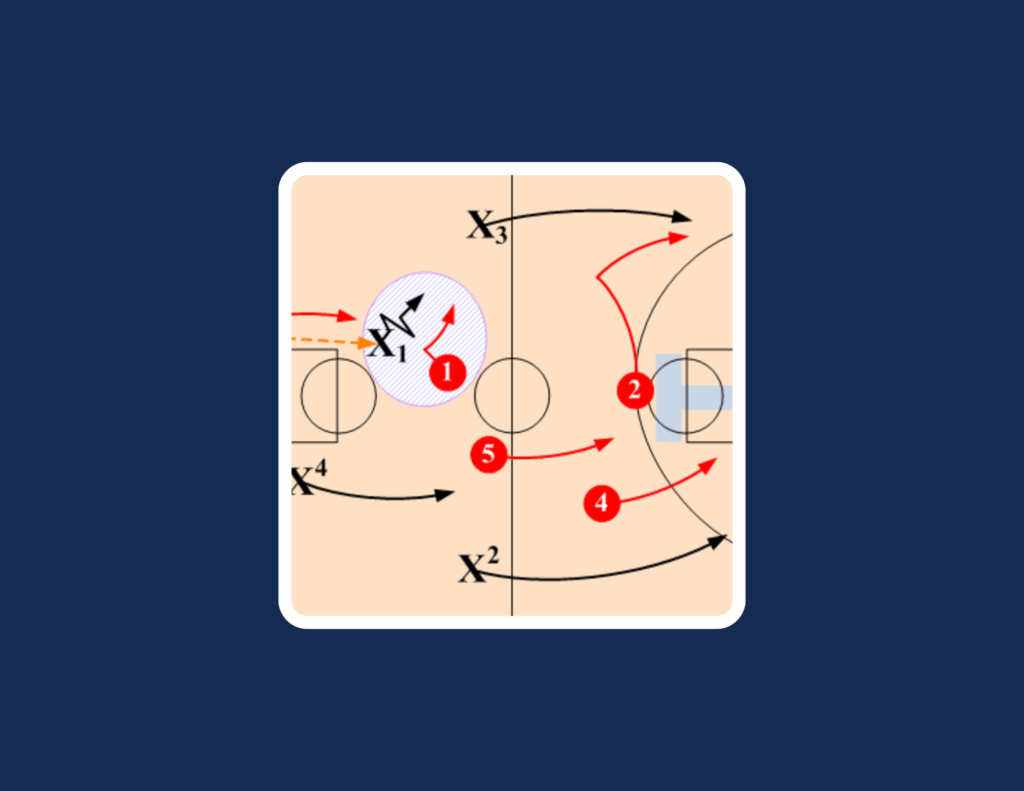
Welcome to the 82nd edition of the Coach’s Corner Round Table on the Hoop Heads Podcast. Each episode of the Coach’s Corner Round Table will feature our All-Star lineup of guests answering a single basketball question. A new Coach’s Corner Round Table will drop around the 15th of each month.
October’s Round Table question is: What’s your philosophy on building an effective transition offense and defense?
Our Coaching Lineup this month:
- Dominic Amorosa – Strake Jesuit (TX) College Prep
- Jake Boyd – Luther College
- Erik Buehler – Arapahoe (CO) High School
- Stephen Halstead – Grace College
- Mike Koehler – Elkhart Lake (WI) High School
- Bob Krizancic – Mentor (OH) High School
- Raul Placeres – Maryville College
- Chris Richardson – Wheeling University
- Don Showalter – USA Basketball
- Kevin Snyder – Cherry Creek (CO) High School
- Mo Williams – Salisbury University
Please enjoy this Round Table episode of the Hoop Heads Podcast and once you’re finished listening please give the show a five star rating and review after you subscribe on your favorite podcast app.
Be sure to follow us on twitter and Instagram @hoopheadspod for the latest updates on episodes, guests, and events from the Hoop Heads Pod.

If you listen to and love the Hoop Heads Podcast, please consider giving us a small tip that will help in our quest to become the #1 basketball coaching podcast.
THANKS COACHES!
If you enjoyed this episode let our coaches know by clicking on the links below and sending them a quick shout out on Twitter:
Click here to thank Dominic Amorosa on Twitter!
Click here to thank Jake Boyd on Twitter!
Click here to thank ErikBuehler on Twitter!
Click here to thank Stephen Halstead on Twitter!
Click here to thank Mike Koehler on Twitter!
Click here to thank Bob Krizancic on Twitter!
Click here to thank Raul Placers on Twitter!
Click here to thank Chris Richardson on Twitter!
Click here to thank Don Showalter on Twitter!
Click here to thank Kevin Snyder on Twitter!
Click here to thank Mo Williams on Twitter!
Like this show? Please leave us a review here — even one sentence helps! Consider including your Twitter handle so we can thank you personally!
And if you want us to answer your questions on one of our upcoming weekly NBA episodes, drop us a line at [email protected].

We’re excited to partner with Dr. Dish, the world’s best shooting machine! Mention the Hoop Heads Podcast when you place your order and get $300 off a brand new state of the art Dr. Dish Shooting Machine!
Your first impression is everything when applying for a new coaching job. A professional coaching portfolio is the tool that highlights your coaching achievements and philosophies and, most of all, helps separate you and your abilities from the other applicants.
The key to landing a new coaching job is to demonstrate to the hiring committee your attention to detail, level of preparedness, and your professionalism. Not only does a coaching portfolio allow you to exhibit these qualities, it also allows you to present your personal philosophies on coaching, leadership, and program development in an organized manner.
The Coaching Portfolio Guide is an instructional, membership-based website that helps you develop a personalized portfolio. Each section of the portfolio guide provides detailed instructions on how to organize your portfolio in a professional manner. The guide also provides sample documents for each section of your portfolio that you can copy, modify, and add to your personal portfolio.

Hey coaches — you’ve got a game plan for your team… but do you have one for your money?
That’s where Wealth4Coaches comes in.
Each week, they deliver simple, no-fluff financial tips made just for coaches. Whether you’re getting paid for camps, training sessions, or a full season—Wealth4Coaches helps you track it, save it, and grow it.
It’s time to stop guessing and start building.
Subscribe now at wealth4coaches.beehiiv.com/subscribe
And follow them on Twitter @Wealth4Coaches for daily money wins.
Your money needs a coach.
Start with Wealth4Coaches.
TRANSCRIPT FOR ROUND TABLE 82 – WHAT’S YOUR PHILOSOPHY ON BUILDING AN EFFECTIVE TRANSITION OFFENSE AND DEFENSE? – EPISODE 1164
[00:00:00] Narrator: The Hoop Heads Podcast is brought to you by Head Start Basketball.
[00:00:20] Mike Klinzing: Hello and welcome to the 82nd edition of The Coaches Corner Round Table on the Hoop Heads Podcast. Each episode of the Coach’s Corner Round Table will feature our all-star lineup of guests answering a single basketball question. A new Coach’s Corner Round Table will drop around the 15th of each month.
October’s Round Table question is, What’s your philosophy on building an effective transition offense and defense?
Our coaching lineup this month includes:
- Dominic Amorosa – Strake Jesuit (TX) College Prep
- Jake Boyd – Luther College
- Erik Buehler – Arapahoe (CO) High School
- Stephen Halstead – Grace College
- Mike Koehler – Elkhart Lake (WI) High School
- Bob Krizancic – Mentor (OH) High School
- Raul Placeres – Maryville College
- Chris Richardson – Wheeling University
- Don Showalter – USA Basketball
- Kevin Snyder – Cherry Creek (CO) High School
- Mo Williams – Salisbury University
Please enjoy this round table episode of the Hoop Heads Podcast. And once you’re finished listening, please give the show a five star rating and review After you subscribe on your favorite podcast app.
Be sure to follow us on Twitter and Instagram at Hoop Heads Pod for the latest updates on episodes, guests and events from the Hoop Heads Pod.
Hey, Hoop Heads. When a player becomes unguardable, the game shifts, the defense breaks, the crowd roars, and your team takes control. Great players don’t just get lucky. They stoke the fire within. They’re built in practice, accelerated with the right reps, the right motivation, and the number one selling shooting machine in America, Dr. Dish. Feed your fire.
Follow their incredible content @drdishbball on Twitter, Instagram, Facebook and YouTube. Mention the Hoop Heads Podcast and save an extra $300 on the Dr. Dish Rebel, All-Star, and CT models. Those are some great deals Hoop Heads. Get your Dr. Dish shooting machine today.
[00:02:13] Munch Williams: Hi, this is Munch Williams from Pro Scholar Athletics and the author of our PSA and you’re listening to the Hoop Heads podcast.
[00:02:23] Mike Klinzing: Let’s hear from our panel about how they build an effective transition offense and defense.
Dominic Amorosa Strake Jesuit College Prep in Houston, Texas.
[00:02:38] Dominic Amorosa: Dominic Amorosa, head basketball coach at Strake Jesuit in Houston, Texas. Key to effective transition offense is teaching guys to win the first three steps, both offensively and defensively. I think once you got guys committed to winning their race, going down and back, you can build from there offensively.
We want to throw the ball ahead as much as we can, defensively. We want to load to the ball side and communicate, talk and point, and that’s my philosophy. Thank you.
[00:03:07] Don Showalter: Jake Boyd from Luther College.
[00:03:11] Jake Boyd: This is Jake Boyd with Luther College, answering this month’s round table question. What’s your philosophy on building an effective transition offense and defense?
Our philosophy on building defensively in transition is probably fairly standard in wanting to sprint back and stop the ball, but might differ slightly as we also simultaneously aim to cover certain areas we designate as the most essential pieces of our half court scheme for that particular opponent.
For example, we played a really good big last year and wanted to double him each possession. So we wanted two specific guys to run back, find him, and position themselves accordingly with no other specific responsibilities. Offensively, our philosophy is dictated by our defensive philosophy, so we’re more measured, but we want to attack with great spacing from wide angles that make for easy scoring opportunities at the rim.
Aiming also to avoid overpassing. I really like a rule coach show Walter shared of not making more passes than the number of defenders you’re facing in transition. So I stole that. There are so many ways to be successful in transition, but I think your personnel always plays a huge part in your philosophy on transition.
I’m excited to hear everyone else’s thoughts on this. Best of luck to everyone as the season begins. Thanks always for having me, guys.
[00:04:34] Mike Klinzing: Eric Buehler, Arapahoe High School, Centennial, Colorado.
[00:04:40] Erik Buehler: Hey, what’s going on Hoop Heads? This is EriK Buehler at Arapahoe High School, and this month we were asked what our philosophies are in building our transition offense and defense. And on the offensive end, I think it’s paramount that you get kids to believe in running the floor hard.
Looking to run and trying to create running opportunities every chance they can. I think that’s just hard to instill in kids and to create a new habit with them. A second is being comfortable playing in space. I think a lot of kids grow up and they run sets or they run half court offenses and they don’t quite understand how to use the, the full length of the court to their advantage or how to gain an advantage in transition.
And then the next thing we do on offense is we encourage Playmakers to get to spots. If you can get a kid that can create a head and you can pitch it ahead to them we always like those one-on-one opportunities or two-on-one opportunities with our best, most skilled players in transition. And then if you want to get in the nitty gritty of it, you just, you can get a lot of great offensive looks by.
In the Rim runner or some go screens or a trailing ball screen or transition automatically into pin downs. All of those type of actions with flow and pace can be really deadly on the offensive end Defense I feel, is a lot simpler. It’s not quite as hard to instill in kids but obviously you, you kind of look to see what you can get away with d or rebounding on the offensive end.
If, if you’re a tag up type person, which we’ve done at times when we had really good guards that could rebound. We had some height that could create tips and deflections, loose balls coming off the glass. We would send four or five guys sometimes the glass to create extra opportunities for us.
Other years when we knew we didn’t have kids with that type of mentality or that ability. You have one back or two back depending on who you’re playing, what the scout is, game by game. But typically you have, have your, your point guard or, or the person that’s farthest back, they get back and they kind of help build that wall and help communicate what needs to be done in that defensive transition.
Look, just some things we’ve done over the years. Thanks for having me on again, guys, and look forward to talking to you again. Bye.
[00:07:10] Mike Klinzing: Stephen Halstead from Grace College.
[00:07:14] Stephen Halstead: Hey, this is Stephen Halstead from Grace College. Tuning in for the Hoop Heads Round Table number 82. And this question this week is regarding what your philosophy on building an effective transition offense and defense is.
And this is one thing that we feel really passionate about at Grace, is we have really excelled in our transition offense the last few years. A lot of it has been personnel based. We’ve had a lot of really good players that operate best in transition, where they just have space. And the way that we’re able to build an effective transition offense and defense is.
First and foremost, we do something with it every single day. In practice, it is normally you warm up in practice, you do your dynamic, you do some finishing, passing, shooting drills, and then you get into live play and we’re playing 10 to 15 minutes out of a transition segment every single day. And with that, you’re going to get a lot of reps with having the advantage is typically how we’ll set it up.
Offense will have an advantage and you’re trying to just make the right read and decision and get good looks and defensively, it’s a lot about just effort. I think getting back, hustling in. Getting back and keeping the ball in front is such a key part of building an effective transition defense as well.
[00:08:24] Mike Klinzing: Mike Koehler from Elkhart Lake High School in Elkhart Lake, Wisconsin.
[00:08:31] Mike Koehler: Mike Koehler, head boys basketball coach at Elkhart Lake High School in Wisconsin. In transition offense, we generally want anyone who gets the defensive rebound to push the ball up the court and have a sprinting rim runner to put pressure on the rim and then sprint to fill the corners to expand the defense.
Now, given how an offense, a possession may start, that may not always be possible with a rim runner, in which case we, we still want to sprint the floor to five out. The general goal is to try to create an advantage within the first six to seven seconds of the possession, whether an entry pass into the room runner to collapse the defense, or creating an advantage through ball screens, dribble handoffs, or other actions, and then plane out of those advantages defensively in addition to the standard sprint back and have each player get their butt facing the baseline within four seconds or so.
We try to limit the opponent in transition even before the possession begins by quality shot selection and by crashing the boards.
[00:09:45] Mike Klinzing: Bob Krizancic, Mentor High School, Mentor, Ohio,
[00:09:51] Bob Krizancic: Coach K, Mentor High School. Offensive and defensive philosophy. Offensively, we never want to let the defense set or we never want to play five on five defensively. We want to trap and force the quickest, lowest percentage shot possible. In practice. We use this shot clock, seven seconds, six seconds, where offensively we want to get a high percentage shot off within that amount of time.
And defensively, we want them to get a shot or we want to get a turnover. We’ve led the state probably seven out of the last 10 years in scoring. It’s not about scoring, it’s about just doing all the little things, the hustle, the intensity, the fundamentally sound program that we are. And if everything goes right, we will score a lot of points.
We will win basketball games, and that definitely is our philosophy. Thanks.
[00:10:56] Mike Klinzing: Coaches, you’ve got a game plan for your team, but do you have one for your money? That’s where Wealth4Coaches comes in. Each week, we’ll deliver simple, no fluff financial tips made just for coaches. Whether you’re getting paid for camps, training sessions, or a full season, Wealth4Coaches helps you track it, save it, and grow it.
It’s time to stop guessing and start building. Subscribe now at Wealth4Coaches. Dot beehive.com/subscribe and follow us on Twitter at Wealth4Coaches for daily money wins. Your money needs a coach. Start with Wealth4Coaches
Raul Placers from Maryville College.
[00:11:42] Raul Placeres: This is Coach Raul Placeres, Maryville College head coach. Our philosophy on building an effective transition offense and defense. We’ll start with transition offense first. I think it’s just taking advantage of numbers using our speed to create high percentage scoring opportunities. It’s important to make quick decisions and capitalize capitalizing on numerical advantages.
I think, again, conditioning. It is paramount in the fall to get ready for game play. Communication and execution are critical especially to avoid turnovers as you’re playing a fast pace offense On the defensive end, I think it’s about rapid recovery neutralizing your opponents fast break.
I think it starts with springing back, protecting the paint and forcing the offense to. To tougher decisions without fouling. I think that’s critical. Avoiding fouls and transitioning and giving easy points up. Strong transition defense for us it’s about anticipating, it’s about disrupting rhythm and we just have to be aligned whether you’re a pressure man to man or you’re covering gaps, whatever it is, have to do it at a high level.
While you are also fatigued I think transition basketball. I think speeding and conditioning, like I said, are very important. It’s a race. Offensive players must sprint beat defenders down the floor and take advantage of mismatches on the defensive advantage. It’s about beating the offense to the paint and protecting the basket.
So those are keys in transition. Again, decision making under pressure I think defines success. We try, in, in our program, we, we thrive on quick smart reads. We better know when to attack pass and pull back when needed. And it’s about making split second choices to the best of your ability.
On the defensive end, communication is critical and I think it’s important for the point guard to establish that from the beginning, right? Communication creates proper and clear. Trust so that that’s important to us. We’ll drill it a lot in practice and then having a team that from a spacing and a versatility standpoint create the flexibility in what you can do.
So those are things that we try to do on, on both sides of the floor. I think for the most part is emphasizing the preparation of those things, the awareness. And the adaptability of, of the things you do on, on offense and defense. So appreciate the opportunity and wishing everybody the very best as the year starts.
[00:14:08] Mike Klinzing: Chris Richardson from Wheeling University.
[00:14:13] Chris Richardson: This is Chris Richardson, head men’s basketball coach at Wheeling University, answering this month’s round table question. We’ll start with transition offense. The same thing that we look for in a half court offense, which is optimal spacing and creating an advantage.
It’s the same thing we look for in transition. And the beauty of transition is you have the entire court to work with. We want to take advantage of that. We want to put the defense in situations in transition where they cannot stop the ball and close out to the next pass. And so whatever we have to do from a spacing standpoint, there’s a number of things we look for.
That’s what we’re looking to do. That’s what we drill, that’s what we work on. That’s what we drive home every day that we work on transition. we want the defense in a situation where no matter what they do, we have an answer. They’re never right. And we drill this eight seconds at a time.
We feel like we can get a great shot in eight seconds in transition if our spacing is right. And we’ve taken the advantage and run with it. Like I said, offense is all about creating an advantage. Transition. You automatically have an advantage once you get the re, once you get the rebound because you have more people converting than they have back.
So create that advantage, keep it, and then punish it. That’s, that’s our whole key offensively. A ball handler needs to look ahead. Who has the best opportunity to attack space? Is it you? Have they not stopped the ball? If they haven’t stopped the ball, it’s still you. What about a teammate? Are they loaded up to the paint so much that if you kick it ahead we’re either going to attack a long closeout or get a rhythm?
Three. Those are the things that we’re thinking about in transition. And then if we do push it, do we have a matchup advantage? We, we know going into a game who we want to attack, we’re not going to hunt that. We’re not going to slow our offense down just to look for the guy that we want to attack or the multiple guys we want to attack defensively.
But if we see that in transition, we certainly want to exploit it. We drill everything in an advantage disadvantaged situation. So four on two, four on three, five on three, five on four. Somebody wins every possession. Like I said, it’s only eight seconds at a time. One possession at a time. And then we go back the other way.
Say the red team was on offense. Now the red team will be on defense at a disadvantage. Speaking of transition, defense offense is all about attacking space. Defense is about shrinking it. How can we shrink the space to hold down the fort until we are evenly matched? Number one is take great shots.
Bad shots are out passes for the other team. Point blank period. Number two is pickup point. Where can we responsibly stop the ball? We’re not going to turn the guy loose by picking it up too high, and we’re not going to get too deep to where we’re stopping the ball at the free throw line or inside the three point line.
And we never have an opportunity to get back to five on five. So what is that responsible pickup point? That’s something we work on a lot in the preseason, and again, we drill in a disadvantage. We want to win those first. Eight to 10 seconds offensively really the first eight seconds. And then defensively, we want it to be a lot quicker than that.
We want to be back within four to five seconds so that we can get matched five on five and play as much five on five as possible on the defensive end. Couple other thoughts. Again, if your transition defense is struggling, look at three things. Shot selection pickup point, and then no man’s land. No man’s land to us is people that don’t crash, but they don’t get back.
They’re kind of stuck there in the middle of nowhere, just loitering around in no man’s land. We’re a very aggressive, offensive, rebounding team. We’re not real big, but we’re aggressive on the glass. That could put our transition defense at risk, but we’re big on charting what we call do your job. If you’re a rebounder and you don’t go we mark it down.
If you’re a get back guy and you either crash or you stay in no man’s land, we mark that down when you grade it out. When you look at the overall percentage of the time that we do our job, it really correlates to success. The, the games that we have a high do your job rate or, or successful in the games that we don’t typically are not what gets measured gets done. Hope this was helpful.
[00:18:07] Don Showalter: Don Showalter, USA Basketball.
Hi, Don Showalter here from USA Basketball and my philosophy on building an effective transition offense and defense. First of all, it starts with your team. if you’re going to have a really good offensive rebounding team that will take care of a lot of your transition defense. And you don’t have to send as many people back if you’re going to be a poor, offensive rebounding team.
And the opposition’s going to get a lot of defensive rebounds. You probably need to send two or maybe even three players back on defense to stop the in defensive transition. So I think it kinda depends on your team. If you’re a really good rebounding team I would crash four guys to the boards.
And get one back and go from there because they really, the offensive rebounding you have is, is your best defensive transition as far as transition offense, I think, again, it depends a little bit on your team. If you have really good players that can take the ball off the board and power dribble out or down a court, that is really the fastest way to.
Start your offensive transition. We always run two people, the corners on each side. We like to get that court spread out. Spacing is really important. Three things we look for in an offensive transition are we want layups, of course, first. Second thing we look for is free throws. Get to the free throw line.
So be aggressive, go to the basket. And the third thing is uncontested three. So those are three things that we really look for on our offensive transition. Thank you.
[00:19:55] Mike Klinzing: Kevin Snyder from Cherry Creek High School in Greenwood Village, Colorado.
[00:20:02] Kevin Snyder: Hey, Mike. Kevin Snyder here from Cherry Creek High School Boys Basketball in Colorado. This month’s question is, what’s your philosophy on building an effective transition offense and defense? Starting offensively. I first look at the level of talent that I have compared to the rest of the league.
If I have more talent, I’m going to play faster. That’s a Goliath strategy. If I have less talent, I’m going to play slower. That is a David strategy. Think North Carolina versus Virginia. Second thing I’m going to look at is personnel. Am I playing three out, two in four out, one in five out in the half court. That will determine where I want my guys running in the full court, what spots they need to go to flow into half court offense.
And then third and final thing is just personal philosophy. my own beliefs about transition is going to influence how I’m going to set up running lanes and where guys are going to go and what secondary actions, if any, were going to run on the defensive end. First thing I think about is how many guys am I sending to the offensive glass?
That’s going to determine rules and roles for guys on defensive transition at the high school level. You have to get really good at protecting the rim. There’s not as many three point shooters, so we make sure that we run back to the paint and then match up from there. Our communication has to be on point.
And then last but not least, the area between the two free throw lines is the racetrack That is a race against the other team. Whether it’s transition offense or transition defense, you’re trying to beat your man down the floor on the racetrack. All right, Mike. Be well. And go Bruins,
[00:21:38] Mike Klinzing: Mo Williams from Salisbury University.
[00:21:43] Mo Williams: Hi, this is Coach Mo Williams from Salisbury University. I’m here to answer the round table question for this week. How do we build an effective offense and defensive strategy? Well, I think number one, what we really want to focus on is before anything, anything we do, it has to be based on what fits with the players that we have.
So every year, based on the recruiting and the players that we get, we’re really focused on how we want to play on both sides of the floor. What I’ll say is I think it’s very important that both sides of the floors have to match. So if you’re going to be a fast pace offense, you have to play and do some things defensively to speed the other team up to create some of those.
But I’ll tell you, for us it’s, it’s rooted first into the players that we have in recruiting to it. The second thing is just making sure that on both sides of the ball, it matches. And then the third thing is being convicted that it works even when it’s not going well. Coaching with conviction that it works.
The last point of what we try to really do is after we have that conviction and believing that it works, so the players see it and hear it from us as, as coaches we have to have very tangible evidence that it works and how they can improve. So that’s where we’ll build our analytics and what we track.
Based off of those things. So if we’re playing fast, how fast do we want to play? Can we track it? And then defensively, what are ways that we can create turnovers and how can we track it? So I’m a firm believer of what gets measured gets improved. If you believe in it, it works. If you have the right players, it works.
And lastly, if it’s balanced on both sides of the ball, it could be effective.
[00:23:41] Mike Klinzing: Thanks for checking out this Month’s Coaches Corner Round Table on the Hoop Heads Podcast. We’ll be back next month with another question for our all-star lineup of guests.
Your first impression is everything when applying for a new coaching job. A professional coaching portfolio is the tool that highlights your coaching achievements and philosophies, and most of all helps separate you and your abilities from the other applicants. The Coaching Portfolio Guide is an instructional membership based website that helps you develop a personalized portfolio.
Each section of the portfolio guide provides detailed instructions on how to organize your portfolio in a professional manner. The guide also provides sample documents for each section of your portfolio that you can copy, modify, and add to your personal portfolio. As a Hoop Heads Pod listener, you can get your coaching portfolio guide for just $25.
Visit coaching portfolio guide.com/hoopheads to learn more.
[00:24:41] Narrator: Thanks for listening to the Hoop Heads Podcast presented by Head Start Basketball.