ROUND TABLE 64 – HOW CAN COACHES HELP IMPROVE A PLAYER’S BASKETBALL IQ? – EPISODE 935

Welcome to the 64th edition of the Coach’s Corner Round Table on the Hoop Heads Podcast. Each episode of the Coach’s Corner Round Table will feature our All-Star lineup of guests answering a single basketball question. A new Coach’s Corner Round Table will drop around the 15th of each month.
April’s Round Table question is: How can coaches help improve a player’s basketball IQ?
Our Coaching Lineup this month:
- Dominic Amorosa – Strake Jesuit (TX) College Prep
- Jerry Buckley – Bishop Kenny (FL) High School
- Erik Buehler – Chatfield (CO) High School
- Joe Harris – Lake Chelan (WA) High School
- Ryan Hintz – Blue Valley West (KS) High School
- Dave Hixon – Amherst College
- Bob Krizancic – Mentor (OH) High School
- Nate Sanderson – Mount Vernon (IA) High School
- Mark Schult – University of West Georgia
- Don Showalter – USA Basketball
- John Shulman – University of Central Arkansas
- Mo Williams – Salisbury University
Please enjoy this Round Table episode of the Hoop Heads Podcast and once you’re finished listening please give the show a five star rating and review after you subscribe on your favorite podcast app.
If you are a basketball coach at any level please check out our Hoop Heads Coaching Mentorship Program. You’ll get matched with one of our experienced Head Coaches and develop a relationship that will help take your coaching, your team, your program, and your mindset to another level.
Be sure to follow us on twitter and Instagram @hoopheadspod for the latest updates on episodes, guests, and events from the Hoop Heads Pod.

If you listen to and love the Hoop Heads Podcast, please consider giving us a small tip that will help in our quest to become the #1 basketball coaching podcast.
THANKS COACHES!
If you enjoyed this episode let our coaches know by clicking on the links below and sending them a quick shout out on Twitter:
Click here to thank Dominic Amorosa on Twitter!
Click here to thank Jerry Buckley on Twitter!
Click here to thank Erik Buehler on Twitter!
Click here to thank Joe Harris on Twitter!
Click here to thank Ryan Hintz on Twitter!
Click here to thank Dave Hixon on Twitter!
Click here to thank Bob Krizancic on Twitter!
Click here to thank Nate Sanderson on Twitter!
Click here to thank Mark Schult on Twitter!
Click here to thank Don Showalter on Twitter!
Click here to thank John Shulman on Twitter!
Click here to thank Mo Williams on Twitter!
Like this show? Please leave us a review here — even one sentence helps! Consider including your Twitter handle so we can thank you personally!
And if you want us to answer your questions on one of our upcoming weekly NBA episodes, drop us a line at [email protected].

We’re excited to partner with Dr. Dish, the world’s best shooting machine! Mention the Hoop Heads Podcast when you place your order and get $300 off a brand new state of the art Dr. Dish Shooting Machine!

Prepare like the pros with the all new FastDraw and FastScout. FastDraw has been the number one play diagramming software for coaches for years, and now with it’s integrated web platform, coaches have the ability to add video to plays and share them directly to their players Android and iPhones via their mobile app. Coaches can also create customized scouting reports, upload and send game and practice film straight to the mobile app. Your players and staff have never been as prepared for games as they will after using FastDraw & FastScout. You’ll see quickly why FastModel Sports has the most compelling and intuitive basketball software out there! In addition to a great product, they also provide basketball coaching content and resources through their blog and playbank, which features over 8,000 free plays and drills from their online coaching community. For access to these plays and more information, visit fastmodelsports.com or follow them on Twitter @FastModel. Use Promo code HHP15 to save 15%
Your first impression is everything when applying for a new coaching job. A professional coaching portfolio is the tool that highlights your coaching achievements and philosophies and, most of all, helps separate you and your abilities from the other applicants.
The key to landing a new coaching job is to demonstrate to the hiring committee your attention to detail, level of preparedness, and your professionalism. Not only does a coaching portfolio allow you to exhibit these qualities, it also allows you to present your personal philosophies on coaching, leadership, and program development in an organized manner.
The Coaching Portfolio Guide is an instructional, membership-based website that helps you develop a personalized portfolio. Each section of the portfolio guide provides detailed instructions on how to organize your portfolio in a professional manner. The guide also provides sample documents for each section of your portfolio that you can copy, modify, and add to your personal portfolio.
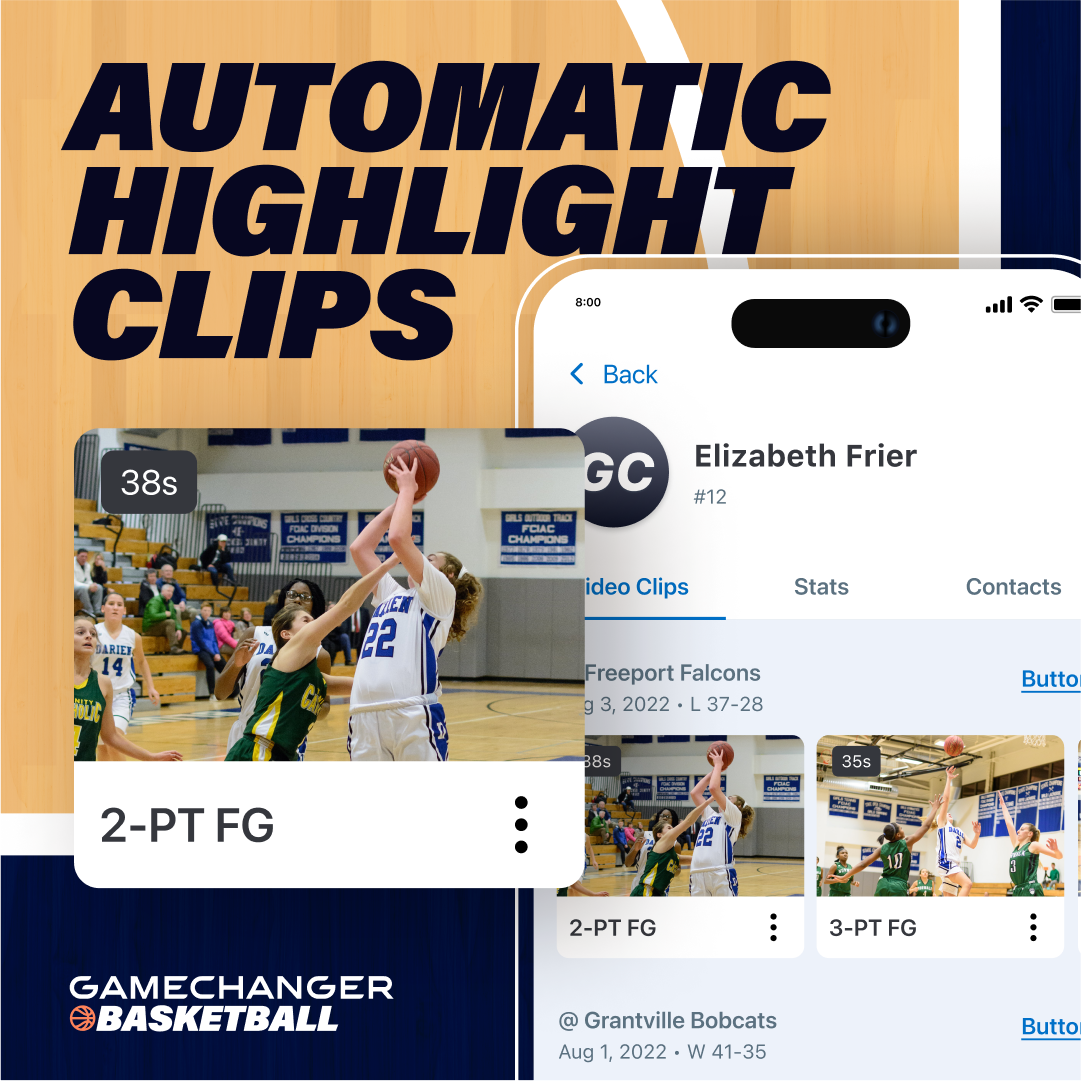
Hey, coach! Want to take your team to the next level this season? Introducing GameChanger, the ultimate game-day assistant with tools to give you a winning advantage. With GameChanger, you can track stats, keep score, and even live stream games, all for free! Get the stats and crucial game video you need to lead your team to victory, all from the palm of your hand. Coach smarter this season with GameChanger. Download GameChanger today on iOS or Android and make this season one to remember. GameChanger. Stream. Score. Connect. Learn more at GC.com/HoopHeads
“Integrity Insight” is a transformative mini-course designed for coaches, focused on examining and improving team conduct in alignment with core values and ethical standards. This course encourages coaches to engage in a reflective and analytical journey, examining past behaviors and incidents to foster a culture of integrity and accountability in their teams.
TRANSCRIPT FOR ROUND TABLE 64 – HOW CAN COACHES HELP IMPROVE A PLAYER’S BASKETBALL IQ? – EPISODE 935
[00:00:00] Mike Klinzing: Hello and welcome to the 64th edition of the Coach’s Corner Round Table on the Hoop Heads Podcast. Each episode of the Coach’s Corner Round Table will feature our all-star lineup of guests answering a single basketball question. A new Coach’s Corner Round Table will drop around the 15th of each month.
April’s Round Table question is, “How can coaches help improve a player’s basketball IQ?
Our coaching lineup this month includes:
- Dominic Amorosa – Strake Jesuit (TX) College Prep
- Jerry Buckley – Bishop Kenny (FL) High School
- Erik Buehler – Chatfield (CO) High School
- Joe Harris – Lake Chelan (WA) High School
- Ryan Hintz – Blue Valley West (KS) High School
- Dave Hixon – Amherst College
- Bob Krizancic – Mentor (OH) High School
- Nate Sanderson – Mount Vernon (IA) High School
- Mark Schult – University of West Georgia
- Don Showalter – USA Basketball
- John Shulman – University of Central Arkansas
- Mo Williams – Salisbury University
Please enjoy this Round Table episode of the Hoop Heads Podcast and once you’re finished listening please give the show a five star rating and review after you subscribe on your favorite podcast app.
If you are a basketball coach at any level please check out our Hoop Heads Coaching Mentorship Program. You’ll get matched with one of our experienced Head Coaches and develop a relationship that will help take your coaching, your team, your program, and your mindset to another level.
Be sure to follow us on twitter and Instagram @hoopheadspod for the latest updates on episodes, guests, and events from the Hoop Heads Pod.
Our friends at Dr. Dish Basketball are bringing back their big buy one get one offer to help fuel your team’s off-season training efforts. From now until April 30th, Buy one Dr. Dish All-Star Plus shooting machine. Get one All-Star Plus for a thousand dollars. Take advantage of this offer while supplies last. Learn more at drdishbasketball.com and follow their incredible content @drdishbball on Twitter, Instagram, Facebook, and YouTube.
Mention the Hoop Heads Podcast and save an extra $300 on the Dr. Dish Rebel, All Star, and CT models. Those are some great deals Hoop Heads. Get your Dr. Dish shooting machine today.
[00:02:34] Robbie Lehman: Hi, this is Robbie Lehman, Content Manager at Fast Model Sports, and you’re listening to the Hoop Heads Podcast.
[00:02:44] Mike Klinzing: Prepare like the pros with the all new Fast Draw and Fast Scout. Fast Draw has been the number one play diagramming software for coaches for years. You’ll quickly see why Fast Model Sports has the most compelling and intuitive basketball software out there. For a limited time Fast Model is offering Hoop Heads Listeners, 15% off Fast Draw and Fast Scout. Just use the code HHP 15 at checkout to grab your discount and you’ll be on your way to more efficient game prep and improved communication with your team. Fast Model also has new coaching content every week on its blog, plus play and drill diagrams in its play bank.
Check out the links in the show notes for more. Fast Model sports is the best in basketball.
Let’s hear from our panel about how they help players improve their basketball IQ.
Dominic Amorosa, Strake Jesuit College Prep in Houston, Texas.
[00:03:46] Dominic Amorosa: This is Dominic Amorosa from Strake Jesuit in Houston. The way you can improve a player’s IQ is by asking them questions, putting them in situations and then asking them questions about how it went.
[00:03:58] Mike Klinzing: Jerry Buckley, Bishop Kenny High School, Jacksonville, Florida.
[00:04:05] Jerry Buckley: Hi, this is Jerry Buckley from Bishop Kenny talking about how to improve a player’s decision making. There’s a couple different things we do. Number one, we’ll be putting them in as many decision-making drills as possible, whether that be one on one, two on one, four on three. Obviously 5 on 5 and again putting them in situations where they’ve got to make decisions in live play.
We definitely also try to practice end game situations, whether that be when to foul, how to foul, shot selection in close games, how to handle final possessions, all those different things that come up in key situations. And then the final thing would be we try to encourage them to watch regular games, not just highlights.
Especially close games to see how players handle late game situations. Nowadays a lot of kids just watch, obviously, a lot of stuff on social media. Maybe 5 to 10 second clips. But to watch a true basketball game, especially like I said, late game situations, how teams handle that, how individual players handle that would be a key thing in developing their decision making qualities as well.
[00:05:14] Mike Klinzing: Erik Buehler, Chatfield Senior High School, Littleton, Colorado.
[00:05:21] Erik Buehler: Hey, what’s going on Hoop Heads? This is Erik Buehler and this month we were asked what do we do to help improve player IQ? I think there’s a lot of things you have got to do.
I think you have got to have players watch basketball. Whether it’s pros in college, other high school teams, film of themselves, scout film of teams they’re going to play. And then I think another big one is watching film of themselves in practice, if you can. Or even if it’s just off your phone, watching them in different situations and how they interacted in open gym or practice.
And then I think just every situation where you can pull a kid aside and you can show them a situation and you can kind of break it down for them. That helps IQ a lot. Short sighted games, small sided games are really crucial in that. I think that teaches kids how to make choices and that’s a huge piece of IQ.
And the faster you can have them make those choices, usually the better basketball player they’re going to be. So that’s what we do. That’s what I like to do. Thanks for having me on. And I’ll talk to you guys next time.
[00:06:27] Mike Klinzing: Joe Harris, Lake Chelan High School, Lake Chelan, Washington.
[00:06:34] Joe Harris: Hello, Hoop Heads. This is Joe Harris from Lake Chelan with today’s Round Table question.
How can coaches help improve a player’s basketball IQ? There are a number of ways to really help your players boost their basketball IQ. Start by watching games and have them watch those games with the intent to learn. They can do this by really focusing on specific parts of the game with the goal of really improving their basketball knowledge.
You can watch and break down film together as a player and coach, as a player spending more time just playing and being on the court, and as coaches, just routinely incorporating game like situation and game awareness into your practice plan. Players can also learn from experienced players and coaches in your program, just by asking questions.
Feel that players should also know the scouting report. To learn the game, you really need to know the strengths and weaknesses of your opponents and your teammates. You also need to understand your team system and players should spend time learning the roles and responsibilities of multiple positions. Thanks again for the opportunity to share those thoughts with you.
[00:06:27] Mike Klinzing: Ryan Hintz from Blue Valley West High School
[00:06:34] Ryan Hintz: This is Ryan Hintz from Blue Valley West High School in Overland Park, Kansas. This month’s Round Table question, how can coaches help improve a player’s basketball IQ? When we talk about basketball IQ we talk about how important it is to be aware of all 10 players on the court. Most people only have 20 percent of the court in their awareness themselves in their matchup, so our goal is to expand their awareness until they know where all 10 guys are at all times.
Three ways we intentionally do this. Number one we teach all of our guys how to play chess. We talk about thinking two moves ahead of your opponent in chess. We translate that to the basketball court to think two passes ahead. What’s the next most logical move or pass? Additionally in chess, there are 32 pieces on the board.
16 on my team, 16 on my opponent’s team. So in chess, you can’t just pay attention to your pieces. You have to have an awareness of your opponent’s pieces. So again, that just increases the awareness of all ten players. The second way we teach all of our players how to draw plays on the whiteboard.
Oftentimes in drills, we’ll give the players a board with no coach. They can draw their own plays up. This helps them learn and take ownership of the playbook, but it also allows ’em to teach each other and transfer knowledge during a game. A team goes zone, I can hand the board down to the bench ask a, a high basketball IQ player to drop some zone quick hitters and refresh the bench’s mind in case they get in.
So if you can draw the sets up where all five guys are again then we can add the defense and, and get to all 10. The third way when we watch film. We talk about training your eyes not to watch the ball or yourself. We say that the ball does what it does. If the ball does something cool, we can go back and replay it.
So when we watch film, we want to train ourselves to watch all ten guys. Offensively, we’re looking at the spacing and looking at the movement. Defensively, we’re looking at their positioning and their rotations. And so, by training your eyes to watch all ten players. You’re increasing your awareness and I think increasing your basketball iq.
So hopefully these ideas can help. I think if we can do things intentionally off the court outside of practice we can increase our players’ awareness of all 10 guys on the court. And then in practice it’s increasing their basketball iq. Thanks.
[00:07:42] Mike Klinzing: Dave Hixon, Basketball Hall of Famer from Amherst College.
[00:07:49] Dave Hixon: Hey coaches Dave Hixon here from Amherst College, retired. Great question today about improving players IQ, basketball IQ. You know, it’s interesting because there’s always that debate that some kids are born with it.
One of my sons was like that. But I do think that he started looking at the game very early like a coach. And so by the time he became seven and eight and nine through 12 or 13 or whatever, everybody looked at him and said, wow, what a great basketball IQ. Don’t know if it was him watching all of my games and talking to me like a coach that helped them develop that or if it was just a natural thing. But anyway, we did a couple of things. We watched a lot of film. I would say that’s, that’s probably number three. And we talked to kids, we talk kids through the film and so that they understand choices and what we’re trying to do. I think number two is when we teach an offense or a defense, we tell them why.
We actually teach it, repeat it over and over again. We play a lot of possession and go, which reinforces it. But the choice is in there. They understand why they’re making the choices. They understand how a zone moves. They understand how to beat this and how to beat that. As opposed to just telling them, I think we’re actually teaching them.
Which in cue, which I think improves their basketball IQ in those situations. And then we had drills that started out very simple and added more options to them where kids had to make choices. So they started to realize and make IQ type choices. We did some four out type stuff and you penetrate by your guy, which was set up and created to allow you to penetrate by.
And you start out first with the big guy and do you drop it or just take a layup? Then you start out with the shooter in the corner. And if this helped, okay, then whether to go to the basket and rack it or to drop it to the big or to kick to the corner. Who’s coming up into the window?
So, in other words, in all these different situations, you’re starting to actually have to read. And when we first started to do the drills, of course, the kids weren’t very good at it. As we got going, we’d have three and four choices at the end of those drills that kids had to recognize. And by the end of the season three quarters, halfway through the season, the kids got really good at it.
And I just think that that does increase your recognition of the different situations and the different choices that you have, which I think is basketball IQ in the end. So hope that was helpful and good luck to all of you and I’ll be watching. Talk soon.
[00:10:33] Mike Klinzing: Bob Krizancic, Mentor High School, Mentor, Ohio.
[00:10:39] Bob Krizancic: Coach K, Mentor High School, best way to improve a player’s basketball IQ. Which is unbelievably important, especially your guards. Every practice, put them in special situations. Five seconds down one, 12 seconds down three, up 30 seconds by two, just make sure they make the right decisions all the time or the vast majority of the time. Then the other way is just sit, watch films.
[00:11:15] Mike Klinzing: Hey coach, want to take your team to the next level this season? Introducing GameChanger, the ultimate game day assistant with tools to give you a winning advantage. With GameChanger, you can track stats, keep score, and even live stream games all for free. Get the stats and crucial game video you need to lead your team to victory.
All from the palm of your hand. Coach Smarter this season with GameChanger. Download GameChanger today on iOS or Android and make this season one to remember. GameChanger. Stream. Score. Connect. Learn more at GC.com/HoopHeads. That’s GC.com/HoopHeads.
Nate Sanderson -nThrive on Challenge.
[00:12:07] Nate Sanderson: Hey Mike, this is Nate Sanderson from Thrive on Challenge. Your question this month is an interesting one, and I think one that really challenges a lot of coaches. We look at our players and we start to think, golly some of the decisions that they make on the court. We don’t necessarily understand, we can’t figure out how some players come through the program with a tremendous IQ and others just seem to struggle to pick up on concepts and I think it’s a worthwhile discussion to think what can we do as coaches to help our players to develop a better IQ. And I do think that there are some things that make that a little bit more difficult in today’s game or with today’s players for them to develop their own in the sense that they’re not playing as much pickup basketball as they once were. No kids aren’t growing up in the neighborhood and in the driveways playing a lot of two on two and three on three and learning nuances of the game that kids don’t watch basketball on television as much anymore.
You know, so much of what they consume is broken down into clips and highlights that they’re finding on social media, and I do think that does create a little bit different challenge maybe than for those of us that were coaching 15, 20 years ago, when players might have gotten to our programs at the high school level with a little bit more experience in the team game, and that’s probably even made even more difficult with the Emphasis on individual skills and the emphasis on getting a trainer to work on your dribble moves and your shot and your step backs and all those types of things that really aren’t done in the context of the game which is necessary for a player to really develop their IQ on the court. So when we think about that, we’re like, all right, there’s some challenges here. Well, what can we do as coaches? And I’m going to put this in the context of when a player gets to our program as a freshman or gets to our varsity program, here are some of the things that, that we do to try to help them to better understand the game and be able to make better decisions within the game.
First of all, if we just back up for a second here and take a bit more of a 10,000 foot view of what basketball IQ truly is, I think what we’re really talking about here is pattern recognition. And one of the best analogies, I think, to understand how am I trying to help a player read the game, then make good decisions within the game.
Well, it really is a lot like learning to read and the difference between my six year old that looks at letters on a page and she can identify the letters, but she can’t yet group those letters instantaneously into words. Now, eventually she works on her sight words. She learns to group letters by sound.
And of course, this is how we learn how to read, but really what we’re doing here is we’re training the brain to recognize patterns, in this case, letter combinations that become words, so that when we look at a book, when we look at something that’s written, the brain is chunking together the letters to form the patterns of the words, and therefore we’re able to process much more quickly.
Well, if you think about that as an analogy for what a player experiences in the game, let’s just take a fast break situation, alright? Let’s say that a player is coming down in a two on one. Well, if they’re looking at the pieces of the two on one individually, in other words, they’re orienting themselves to the rim, they’re recognizing where the defender is at, and then they’re looking at where their offensive teammate is coming down the floor.
And they’re trying to interpret all three of those variables separately from one another, or make sense out of them together in the context of dribbling down the floor and trying to score. Well, a novice, a new basketball player is not really going to be able to make great decisions in that case, because they’re literally processing it for the first time, or they haven’t processed it enough to be able to see those individual variables, those letters if you will, as a common word. Now there’s advanced players who have been playing for much longer, that have more experience, they come down and immediately they recognize a two on one. And as soon as they see that, they understand that if I pull the defender to me, that’s going to create space for my teammate, and they can make a play quickly, they can make a good decision quickly, because their brain has learned to recognize the pieces of that circumstance, or the pieces of that context, And group it into a two on one situation, a word, if you will, that now they can process much faster.
So when I think about the idea of pattern recognition, what are some of the things that we do to help players recognize those patterns and be better in them when they occur in the game? Well, first of all, we use a lot of film, a ton of film, right? So during the week at the high school level. We play on Tuesdays and Fridays, our pregame days are Mondays and Thursdays, and we typically will spend somewhere between 15 and 20 clips from Hudln our opponent. That’s part of our scout. And then I get about 10 to 15 clips at the most from our previous game to do some teaching. And when I say teaching, I really mean to ask some questions because I want the players to have discussions about what they see again, when it comes to the patterns, I, I not only want them to recognize those patterns individually, but I want them to do it collectively. As they come down the floor, for example, we always play in a four out alignment. It orients us into our offense, it makes our actions much easier to get in and out of to have that common alignment and spacing to start more or less every possession when we transition down the floor to offense.
It’s providing a shortcut and a pattern that allows them to see the game collectively. Everybody’s seeing the same thing. So when we’re in film, I’ll give you some examples of things that we might do. Let’s say that we are getting ready to play a team that runs a certain kind of zone offense and we run almost exclusively 2-3 zone defense.
We’ll pull some clips of what our opponents will do in zone offense against another team that’s playing zone. And rather than say, here’s what we have to do, we ask our players and they’re in discussion groups in the classroom, how would we guard this or how would we guard this differently? Let’s say that it’s another team playing a 2-3 zone, but the rules are different from ours.
We’re asking them to analyze maybe three, four clips in a row here of our opponent’s zone offense. They’re looking to recognize their patterns and then interpret that into what we would do on the floor. How would we do it differently based on our rules? So they talk it over and then we just cold call different players from different groups to have them contribute to the conversation.
When we look at things maybe that we could do better, like we turn the ball over, we take bad shots, we make mistakes on offense in particular. We’re not going to show a lot of those to shame our team. I mean, we never have that intent of trying to embarrass a kid or humiliate a kid to make, trying to motivate them to be better.
That’s ridiculous, right? We’re trying to teach through the film. So if we see, let’s say, for example, we went through a spell last year where we took a lot of pull up jump shots that were semi contested outside of the lane, and we don’t shoot a very good percentage in those areas, and quite frankly, we try not to shoot in those areas when we can avoid it.
So when we start to ask, well, what could we do differently? How do we get into those areas? What do we do? What did we see? How did we end up there? We’re teaching them, again, training their perception to try to get them to understand what defenses are doing to us to keep us out of the lane and get us off of the three point line.
And the more we have those conversations together, the more we start to see those patterns together, I think that accelerates our ability to make better decisions within those patterns as we recognize them on the court. Now, we’ll also take a lot of these same principles and apply them when we watch individual film with players.
And there are times during the season we don’t have a ton of time to do this, but I would say last year we had 8 players in a rotation. I probably sat down with 8 of them. Five or six of them, at least once, some twice during the year where we would pull again, 10 to 20 clips of something that they’re working on or something that we’re trying to get them to play through or make better decisions and sit down with them one on one.
And again, we’re talking through, what do you see? We’re talking through what options would you have here, right? Because sometimes players. that they aren’t even aware of other things that they could do in a particular situation until we sit down, we watch it in slow motion, we watch it a couple times, we start discussing what we could have done, what did we not see, and then that also creates language and it also creates examples for us to be able to come back to in our practices or in games with those individual players remember when we saw this, remember when we talked about that, that allows them to be able to, again, identify those patterns more efficiently.
Now that probably seems like common sense to most coaches that are listening here, the use of film, but I think the challenge is how do we do that most efficiently? And how do we do that in a manner that allows kids to have conversation and engage with the film? rather than just trying me to make a demonstration or give a lecture based on clips from the games.
We’re trying to create a better learning environment so that they can become better problem solvers to have better IQ when they’re on the floor together. Now, Mike, we take this same kind of philosophy and we really apply it a lot in our practices as well. So we play. Well, basically all games in our practice, we don’t really do any drills.
We don’t do any conditioning. We just play a lot of different basketball games and we shoot a ton. So when we’re playing in a teaching phase in our practice, so let’s say that we’re working on a couple of our triggers to get into our offense, a couple of entries, if we screw something up in the learning phase or when we’re going, kind of experimenting with it.
Rather than stopping and always talking and trying to correct, we use a remote control language here that I really like. So in other words, if we’re playing five on five and let’s say that player drives off a ball screen to the left slot and is attacking the basket down the lane line and our five man fails to roll to the block, okay?
Well, we might stop it and rewind it and say, okay, let’s back up. So just rewind, bring the ball back to the top. Here’s the screen, put the shooters in the corner. And now ask, what do we do next? Or what ways do we want to attack the offense? Or what are our options from here? Or what do you see when the defense looks like this?
And we have found just like in the classroom, that if I just leave a question out there, nobody’s going to volunteer. Or maybe one or two players will always be the ones that volunteer. And so we’ve done a lot of, let’s pause for a second. Turn to the person next to you. Talk to the person who’s guarding you and tell me what you see.
What are the options? What are the opportunities here? You know, if we were to attack this again, what could the five do differently? Then we cold call again, just like we might do in the classroom. And then from that point, we say, okay, if we roll hard to the basket with a high hand and we shake the backside and lift the shooter, Let’s see what that creates when we do that live.
And so we rewind, we start from that spot. We do exactly what we talked about, and then we let it play out live from there. And again, we’re trying to fast forward their ability to see on the floor. By asking them to engage now this time in a more kinetic way where they’re actually on the court playing.
We’re just using that remote control to pause, rewind. Sometimes we’ll go in slow motion, right? In terms of being able to show them something. Then we back up to the place where we pause and then we let them play live from there. And we found that to be a good way again, to be able to ask good questions in the midst of what we’re doing in practice.
Now, here’s the last thing in terms of what does a coach control. Okay. When I was at a PGC clinic a couple of years ago, Sam Allen asked a great question that I think more coaches need to spend time thinking about when it comes to developing the IQ of their players. And Mike, if I’m being honest with our roster this past season we have maybe three or four basketball first kids.
We’ve got a lot of multi sport kids and we didn’t have a lot of kids that are playing a lot of club or AAU basketball on the side. So the level of their experience was pretty limited. Now we had good athletes. We had good size. We had speed. We had a lot of great attributes, but we really had to simplify the game as much as possible and try to constrain the game or limit the game, what we’re doing offensively and defensively to a few things, to a common pattern, to a common alignment, to a few actions and get really good at sewing those things together. So the question that Sam asked at this clinic was, coaches, do you know what the most common decisions are that are made in your offense? I just thought that was an incredibly profound question.
If I’m going back through and I’m looking at where are the decision points in our offense? Well, obviously when they catch it, they’ve got to make a decision. Are they going to shoot it? Are they going to drive it? Are they going to move it? Are they going to wait for a trigger to get some action, to try to create an advantage?
Okay. But what about when they do drive it? You know, where are they driving it? Where are they driving it from? What’s the angle to the basket? What’s in front of them? What’s behind them? What’s the defense doing? Where’s the help coming from? Like, there are all these variables, right, that make it difficult, that muddy the waters, that complicate the patterns for them to be able to recognize what happened.
So what we’ve really tried to do is we’ve said, okay, here’s the most common decisions that we see in our offense. One is, we are trying to get downhill to attack the rim, put pressure on the rim, with shooters in the corners and somebody on the backside block. Sometimes that’s the post, sometimes that’s the dunker.
In that spot it might be a backdoor cut from the 45 or from the opposite wing, but essentially we just call this decision or this game Dunker Spacer. We want somebody in the dunker spot. We want somebody in the spacer spot. Now, we can get into that in all kinds of different ways. Straight line drives, ball screens, give and goes, back cuts, whatever it is.
But when the ball gets to a block, we have to make a decision. Are we going to shoot it? Are we going to drop it off? Are we going to kick it to the corner or to the player behind me? And so, Everything that we do, we try to get into that decision, that one pattern, downhill, dunker spacer, downhill, dunker spacer.
Okay. Even when we throw the ball into the post, we’re trying to fill similar spots to make the post reads as simple as possible. Our post player is a division one volleyball player. We’re quite frankly, very fortunate that she’s out for basketball and has chosen to stay out for basketball through her senior year.
And we’re very fortunate She’s a first team all state basketball player and Mike, she never touches a ball in the offseason. From the last game of the year last year, February 17th, to the start of practice November 12th, she never came into the gym and did nothing with a basketball. So we really have to be intentional about trying to develop, number one, just her ability, but number two, to simplify the game and make the reads as easy as possible so that her IQ It, isn’t it?
It’s not great if you were to just throw in a pickup game somewhere, but in our system, we’ve been able to simplify it down to here are really the three or four reads or decisions that she has to make in what we do. And she’s gotten pretty good at those. So I think coaches can take a little more responsibility for saying, okay, am I asking our players to do too much, to make too many reads, or are there ways that I can simplify the game for them, that I can reduce the number of patterns, if you will, that I’m asking them to read and recognize and allow them to get better in those situations before we start layering in more and more on top of that. But boy, I really appreciate the question, Mike. It’s one that I think coaches, it’s worth wrestling with in the off season. And really, again, coming back to that question that Sam asked at the PGC clinic, do you know what the most common decisions are that are made in your offense and in your defense.
I think that’s a great staff conversation and can really help to guide us and start to think about how can we help our players to develop a better IQ.
[00:28:36] Mike Klinzing: Hey coaches, today let’s talk about Integrity Insight, a mini course crafted for coaches focused on team conduct and values from our friends at Teams of Men. Why Integrity Insight? This course is a journey into your team’s climate and culture. You’ll reflect on past incidents, assess your team’s communication, and plan for a future where integrity is at the core of decision making, on and off the court.
Integrity Insight comes with practical guides and digital tools for effective planning and collaboration to empower you to lead a team where ethical conduct and character growth are paramount. This course is about transforming your team culture, embedding values and ethics in every aspect. Ready to dive deeper into team integrity?
Email us at [email protected] with the subject. Integrity Deep Dive to get started.
Mark Schult, University of West Georgia.
[00:29:34] Mark Schult: What’s going on Hoop Heads? Appreciate you having me on again. This month’s question, how can coaches help improve a player’s basketball IQ? I think you just have to be real intentional about it. Film is a huge, huge piece. When players do something well or they don’t do something well giving feedback that they can see that you can sit with them and kind of break down the play of what they did well or didn’t do well.
I think getting that experience is helpful. And then even if you don’t have the opportunity and you need to sit down and watch it with somebody with the hours in the day like just texting them a clip here and there and maybe a sentence or two of thoughts I think that can really help.
You need to have equal praise and equal criticism when players make decisions Ultimately basketball IQ it’s knowing when to dribble, when to shoot, when to pass on the offensive side and kind of just reinforcing that positive and negative is a huge piece. And then, same thing really defensively it depends on how your team plays, what your principles are defensively, but when they miss a rotation you need to show them that with film. When they do it well, you need to show them that and reinforce it. Again, if you’re able to on the practice floor, actually walking through it yourself or jogging through it and showing them, I think can be beneficial and you ultimately have to know your players, know what they respond to.
Obviously not everybody can be called out in front of the group. But the guys who can handle that that’s how you help correct them and help praise them so you have to be intentional and consistent about it, ultimately hope that they pick it up and learn how they pick it up. So appreciate you having me on and we’ll see you next time.
[00:31:37] Mike Klinzing: Don Showalter from USA Basketball.
[00:31:43] Don Showalter: Don Showalter here from USA Basketball. Answering the question of the month. How can you, as a coach, help improve players IQ? I think there’s several things that you can do, especially during the offseason, is a great way to do that. First of all, watch film together as a coach and the player. So you evaluate things that happen, not necessarily film of the player himself, but maybe an NBA game, maybe a college game, and just talk about what is important in that sequence that just happened on the film, and the high IQ that was shown.
So, I think that’s really important. So, film study. Secondly you know, during your summer workouts, I think it’s important to put them in situations where the advantage disadvantage situations, where you start out going maybe 5 on 4 with your partner. Trailer coming in and go 5 on 5.
So you give that player an opportunity to make decisions when they have an advantage. 3 on 3 advantage, disadvantage is a huge, huge thing to do as well. Where you start the defender behind the guy with the ball. And so as he dribbles in, you have a defender in the back of him trying to catch up, but now it’s basically three on two with that third defender coming in.
So I think that’s an excellent way to help improve IQ. So film study is really one good way. Advantage, disadvantage drills is a great way. And then I think a third way to improve IQ in my estimation would be to, maybe during the season as well, ask your players a lot of questions. You know I might ask a player Johnny, was that a good shot by Billy?
And then he has to answer whether he thought it was a good shot. Or what can we do to make this different or better? So you get feedback from the players about situations. And I think that really helps the IQ of a player as well. Have a, have a restful, peaceful time this off season. And I know that players want to get better. So coaches must get better as well.
[00:34:10] Mike Klinzing: John Shulman from the University of Central Arkansas.
[00:34:16] John Shulman: This is John Shulman. I guess I need to say a different school. Head coach. at the University of Central Arkansas, and this month’s question is how can you help a player’s basketball IQ? And that’s hard. So I’m going to give you a couple things that we try to do is, I mean, first, you’re going to have to watch film, a lot of film, whether it be individual films or, with the team, watching film. And while you’re watching film, I don’t think you can spoon feed them. I really think that you need to make an effort as you’re watching film, is to ask them questions about film. Let them lead film. Or, asking questions, and not just telling them the answer, but asking, Hey man, where does Tommy belong right here?
Why? What’s the reason? Is he not in the right spot? Where should he be? And why should he be there? You know, just asking questions during film. I think that is, I think watching film, and I think it’s really important. And that kind of goes into my second thing is having terminology that is consistent, and having all the coaches with the same consistent terminology.
On whatever you all are doing, whether it be two paths away, being on the tape, all right which is the midline for us or, or whatever. You know, term you want to use, whether getting to the midline to make the pass into the rub spot on a chin drift to wait until the ball sees you or on a, on a on a pick and pop, the next guy’s got to burn, when does he burn when the ball sees you, that’s when you got to burn, burn late, not early.
Just all kinds of terminology. I think if it’s the same terminology can really help a kid’s IQ. And then I think a lot of breakdown drills, working on certain things and describing and making sure that you’re using the same terminology in breakdown drills, whether it be two on two or three on three, and the reason why, why are you stunning on help?
What’s the reason? We think it’s fine if we know the answer, but it really doesn’t matter if the coach knows the answer. The only person that really needs to know is that kid knowing the answer and knowing what’s right and what’s wrong and exactly what you want as a coach.
Hopefully that’s three ideas. Hopefully that helps. It’s a good question. Watching games, just to be honest, watching games, watching college games, watching certain things I think can help the basketball IQ. And I just think watching film is so important and the terminology is important and just breaking everything down, hope it helps.
Hope you’re having a great spring. Getting ready to roll and trying to get ready for the summer. Hopefully this helps. Thank you.
[00:37:18] Mike Klinzing: Mo Williams from Salisbury University.
[00:37:24] Mo Williams: Hi, this is Mo Williams. I’m the head men’s basketball coach at Salisbury University. And I’m tapping in here with this week’s or this month’s round table question. How can a coach improve a player’s basketball IQ? Well, I would say for us, coaching in questions and lesson statements. Asking players constantly these two questions.
What did you see there? And what could you have done better? I think the other thing that we try to do is use film as much as possible. As a teacher, I’m a firm believer you can’t improve what you’re doing if you don’t see what you’re doing. I also think basketball IQ is highly, highly dedicated on putting them in situations that they’re going to be in the most.
Also, I think it’s very individualized. So certain guys might struggle with certain decisions. So putting certain players in those types of situations and celebrate when they’re doing good. If they struggle, continue to ask those two questions that I kind of started with. So those are my ways. Those are our ways we do with our program.
[00:38:42] Mike Klinzing: Thanks for checking out this month’s Hoop Heads Podcast Round Table. We’ll be back next month with another question for our all-star lineup of coaches.
Your first impression is everything. When applying for a new coaching job, a professional coaching portfolio is the tool that highlights your coaching, achievements and philosophies. And most of all helps separate you and your abilities from the other applicants, the Coaching Portfolio Guide is an instructional membership based website that helps you develop a personalized portfolio. Each section of the portfolio guide provides detailed instructions on how to organize your portfolio in a professional manner. The guide also provides sample documents for each section of your portfolio that you can copy, modify and add to your personal portfolio.
As a Hoop Heads Pod listener, you can get your Coaching Portfolio Guide for just $25. Visit https://www.coachingportfolioguide.com/hoopheads to learn more.
[00:39:42] Narrator: Thanks for listening to the Hoop Heads Podcast presented by Head Start Basketball.