
ROUND TABLE 47 – HOW DO YOU ASSIGN BENCH ROLES TO THE COACHES ON YOUR STAFF? – EPISODE 717
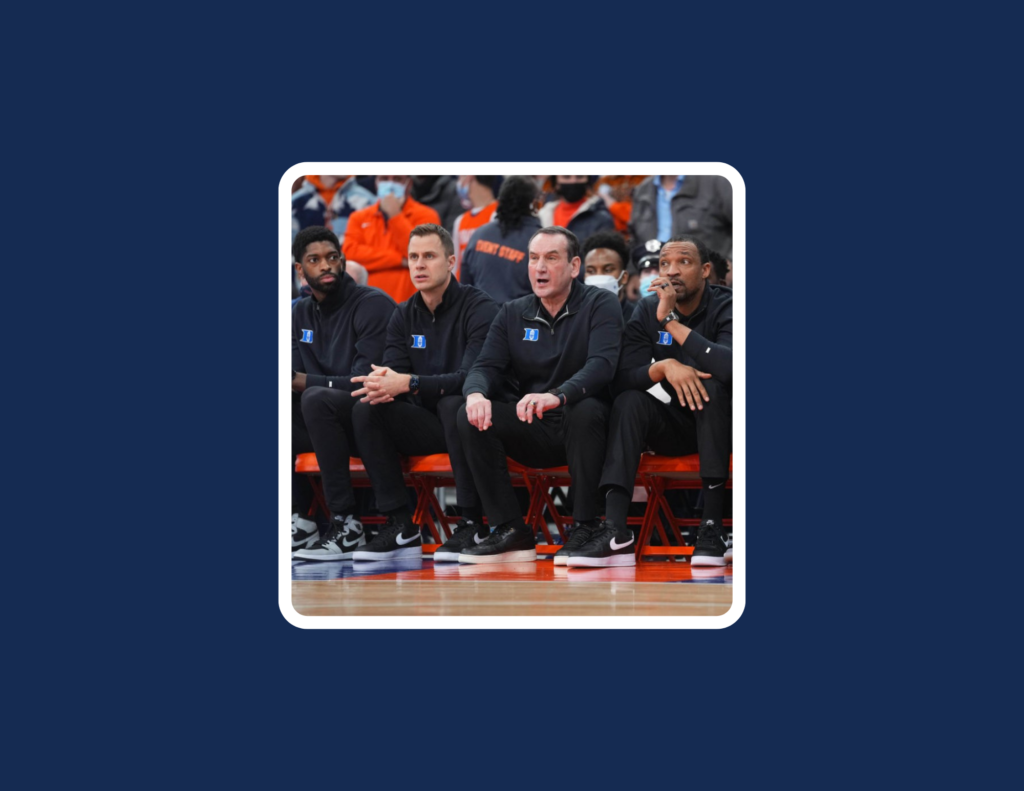

Welcome to the 47th edition of the Coach’s Corner Round Table on the Hoop Heads Podcast. Each episode of the Coach’s Corner Round Table will feature our All-Star lineup of guests answering a single basketball question. A new Coach’s Corner Round Table will drop around the 15th of each month.
November’s Round Table question is: How do you assign bench roles to the coaches on your staff?
Our Coaching Lineup this month:
- Erik Buehler – Chatfield (CO) High School
- Joe Crispin – Rowan University
- Andy Farrell – University of Dayton
- Joe Harris – Lake Chelan (WA) High School
- Bob Krizancic – Mentor (OH) High School
- Don Showalter – USA Basketball
- John Shulman – University of Alabama Huntsville
- Ben Thompson – Emory & Henry College
Please enjoy this Round Table episode of the Hoop Heads Podcast and once you’re finished listening please give the show a five star rating and review after you subscribe on your favorite podcast app.
If you are a basketball coach at any level please check out our Hoop Heads Coaching Mentorship Program. You’ll get matched with one of our experienced Head Coaches and develop a relationship that will help take your coaching, your team, your program, and your mindset to another level.
Be sure to follow us on twitter and Instagram @hoopheadspod for the latest updates on episodes, guests, and events from the Hoop Heads Pod.
Like this show? Please leave us a review here — even one sentence helps! Consider including your Twitter handle so we can thank you personally!
We’re excited to partner with Dr. Dish, the world’s best shooting machine! Mention the Hoop Heads Podcast when you place your order and get $300 off a brand new state of the art Dr. Dish Shooting Machine!

Prepare like the pros with the all new FastDraw and FastScout. FastDraw has been the number one play diagramming software for coaches for years, and now with it’s integrated web platform, coaches have the ability to add video to plays and share them directly to their players Android and iPhones via their mobile app. Coaches can also create customized scouting reports, upload and send game and practice film straight to the mobile app. Your players and staff have never been as prepared for games as they will after using FastDraw & FastScout. You’ll see quickly why FastModel Sports has the most compelling and intuitive basketball software out there! In addition to a great product, they also provide basketball coaching content and resources through their blog and playbank, which features over 8,000 free plays and drills from their online coaching community. For access to these plays and more information, visit fastmodelsports.com or follow them on Twitter @FastModel.

United Basketball Plus has over 3,000 plays, 45 Deep Dive Courses with some of the best minds in the game including Tyler Coston, Paul Kelleher, Tobin Anderson, Dave Love and more. You can also view United Basketball Clinics, and receive 50% off in-person clinics. United Basketball Plus partnered with Jordan and Joe Stasyzyn from Unleashed Potential to create their Skill Development Curriculum. United Basketball Plus is a one stop shop to help you grow as a coach, leader and culture builder. Use the code ‘clinic’ and receive an annual membership for $50.
Your first impression is everything when applying for a new coaching job. A professional coaching portfolio is the tool that highlights your coaching achievements and philosophies and, most of all, helps separate you and your abilities from the other applicants.
The key to landing a new coaching job is to demonstrate to the hiring committee your attention to detail, level of preparedness, and your professionalism. Not only does a coaching portfolio allow you to exhibit these qualities, it also allows you to present your personal philosophies on coaching, leadership, and program development in an organized manner.
The Coaching Portfolio Guide is an instructional, membership-based website that helps you develop a personalized portfolio. Each section of the portfolio guide provides detailed instructions on how to organize your portfolio in a professional manner. The guide also provides sample documents for each section of your portfolio that you can copy, modify, and add to your personal portfolio.
THANKS COACHES!
If you enjoyed this episode let our coaches know by clicking on the links below and sending them a quick shout out on Twitter:
Click here to thank Erik Buehler on Twitter!
Click here to thank Joe Crispin on Twitter!
Click here to thank Andy Farrell on Twitter!
Click here to thank Joe Harris on Twitter!
Click here to thank Bob Krizancic on Twitter!
Click here to thank Don Showalter on Twitter!
Click here to thank John Shulman on Twitter!
Click here to thank Ben Thompson on Twitter!
Click here to let Mike & Jason know about your number one takeaway from this episode!
And if you want us to answer your questions on one of our upcoming weekly NBA episodes, drop us a line at mike@hoopheadspod.com.
TRANSCRIPT FOR ROUND TABLE 47 – HOW DO YOU ASSIGN BENCH ROLES TO THE COACHES ON YOUR STAFF? – EPISODE 717
[00:00:00] Narrator: The Hoop Heads Podcast is brought to you by Head Start Basketball.
[00:00:21] Mike Klinzing: Hello and welcome to the 47th edition of the Coach’s Corner Round Table on the Hoop Heads Podcast. Each episode of the Coach’s Corner Round Table will feature our All-Star lineup of guests answering a single basketball question. A new Coach’s Corner Round Table will drop around the 15th of each month.
November’s Round Table question is: How do you assign bench roles to the coaches on your staff?
Our Coaching Lineup this month:
- Erik Buehler – Chatfield (CO) High School
- Joe Crispin – Rowan University
- Andy Farrell – University of Dayton
- Joe Harris – Lake Chelan (WA) High School
- Bob Krizancic – Mentor (OH) High School
- Don Showalter – USA Basketball
- John Shulman – University of Alabama Huntsville
- Ben Thompson – Emory & Henry College
Please enjoy this Round Table episode of the Hoop Heads Podcast and once you’re finished listening please give the show a five star rating and review after you subscribe on your favorite podcast app.
If you are a basketball coach at any level please check out our Hoop Heads Coaching Mentorship Program. You’ll get matched with one of our experienced Head Coaches and develop a relationship that will help take your coaching, your team, your program, and your mindset to another level.
Be sure to follow us on twitter and Instagram @hoopheadspod for the latest updates on episodes, guests, and events from the Hoop Heads Pod.
Hey Hop Heads! This November, our partners and friends at Dr. Dish Basketball are offering $3,000 off the CT, the best shooting machine in the world. And you can also get a thousand dollars off their Home Machine.
Dr. Dish shooting machines are undoubtedly the most advanced and user friendly machines on the market. Learn more at drdishbasketball.com and follow their incredible content @drdishbball on Twitter, Instagram, Facebook, and YouTube. Mention the Hoop Heads Podcast and save an extra $300 on the Dr. Dish Rebel, All-Star and CT models. Visit drdishbasketball.com for details.
You can also check out their holiday gift guide to make shopping for the hooper in your life as easy as can be
Hi, this
[00:02:30] Jack Agostino: Hi! This is Jack Agostino, Head Boys Basketball Coach at Bayshore High School in New York, and you are listening to the Hoop Heads Podcast.
[00:02:40] Mike Klinzing: Prepare like the pros with the all-new Fast Draw and Fast Scout. Fast Draw has been the number one play diagramming software for coaches for years. You’ll quickly see why Fast Model Sports has the most compelling and intuitive basketball software out there. For a limited time, Fast Model is offering Hoop Heads listeners 15% off Fast Draw and Fast Scout.
Just use the code HHP15 at checkout to grab your discount and you’ll be on your way to more efficient game prep and improved communication with your team. Fast Model also has new coaching content every week on their blog, plus play and drill diagrams in its play bank. Check out the links in the show notes for more. Fast Model Sports is the best in basketball.
Let’s hear from our panel about how they assign bench roles to the coaches on their staff.
[00:03:37] Mike Klinzing: Eric Buehler, Chatfield Senior High School, Littleton, Colorado.
[00:03:41] Erik Buehler: Hey, what’s going on Hoop Heads? This is Eric Buehler at Chatfield Senior High, and this month we were asked how do we assign our roles for coaches on our bench?
I don’t think we do anything special, and I’m honestly hoping to listen to this later on and get some ideas. I have a coach that is in charge of Substitutes. I have another coach who’s also in charge of timeouts and fouls. And then after that I kind of let coaches pick the rules that they want and where they kind of fit in as the season goes.
If they’ve been around a while, obviously they kind of have the same role. If they’re new to our staff they kind of figure that out as we go. But every once in a while I’ll have certain coaches watch things like rebounding or transition. But we are definitely looking to get better at it. Hope everyone else out there is doing good and talk to you guys next time.
[00:04:36] Mike Klinzing: Joe Crispin, Rowan University,
[00:04:40] Joe Crispin: Joe Crispin, Rowan University. How do I organize my staff for bench roles during the game? I have a pretty big staff for a division three program and I have some managers, so we have a lot of things that we can keep track of, but I think the temptation. when you have that to keep track of more things than you need to.
But my basic principle since becoming a head coach is that I want to outsource as much off my brain as possible. I am better when I’m focused on the big picture. What’s the flow of the game and the feel of the game? Are we creating it in our favor? Are we getting good shots? What are they doing defensively that we can counter?
What about defensively that we can do better? I try to stay focused on that. Our rotations, who’s playing well, just keep track of those things so that I don’t, I might know foul trouble, but I don’t want that on my brain. I want a coach keeping track of that. So naturally we have one coach right next to me keeping track of fouls.
Also. Focuses a little more on offense though I do the most on that. I have another coach right next to us who is solely focused on rotations and who works well together, who’s played well. Who does he like? He’s somebody who needs to have a feel for our players. He keeps track of the lineups plus minus during the game.
Another coach close by who’s focused more on defense. Our energy and our toughness. That’s where he specializes and he’s got a good rapport for the game. And then we have two other coaches who are closest to our players, just focus on the guys focus on how they’re feeling, what the conversations are, anything they need to communicate with me.
One keeps track of shot selection for both teams because that’s important to us. What kind of shots we’re giving. And taken ourselves. And the other really is just focused on the, the feel of the team and trying to be encouraging. And naturally there’s other things we keep track of with managers, but on the whole that’s how we organize our staff and it’s the basic principle to return to is, If it’s up to me to keep track of all those things, I’m gonna miss some things like foul trouble maybe.
That is important. So it’s important for me, just like an organization to write everything down to get it off my plate. So hopefully that’s helpful.
[00:07:01] Mike Klinzing: Andy Farrell from the University of Dayton.
[00:07:06] Andy Farrell: Great question. How do you assign bench roles to the coaches on your staff? Well, first of all, I think you have to figure out how many people are on your staff.
I think that’s a really important thing because you don’t want to delegate too many things because you’ve got to be really, really good and specific at the things that you want for the staff to accomplish. So I would say that the, the first thing you have to do is figure out how many staff members you.
Second of all, you have to figure out what are their strengths. There are some people that are really, really good at, you know figuring out play calls for the other teams. Some people are really, really good from a number standpoint. So analytics and some of the more important things that you value from a coaching staff standpoint, from an efficiency perspective would be things that that staff member should be doing.
Who has the scout. I think that’s always important as well, because you want them to be focused on the scout itself and knock bogged down by some of the other things that you have going on with throughout the course of the game. So I think those are all factors that are definitely going to contribute to what the staff responsibilities are.
I would say in short, you’re going to have one person in charge of the defensive identity that you have. What are some of those non-negotiables? No matter what the team is that you’re playing. So you have one defense coach, one offense coach. What’s the pace? What’s the shot locations that you guys are taking?
Shot, shot, value, turnover rate, offense, rebounding rate, things like that. Those, whatever your values. As a staff from your offensive identity standpoint, and then one of those people may have the scout too. So they’ve got to be really, really good at focusing in on the matchups. I think whoever has the scout should always be focused in on the matchups and then the adjustments that the coaching staff should be able to be making.
So, I would say that those are the things for sure, for a coaching staff. And then if you have a larger staff where you have graduate assistants or managers, obviously some hustle stats are important depending on what you’re valuing. Maybe it’s deflections, maybe it’s forced turnovers, 50 50 balls, whatever those are.
I guess hustle stats would be something as you, as you go down the list of graduate assistants and manager. And then, you know, some of the, the other things that you’re looking at, if, if, if you’re trying to keep track of opponent, play calls for repeat opponents, especially in conference you’re trying to look at how many fouls, timeouts, who has the jump ball in terms of the possession arrow.
Those are all things that someone on staff has to be doing at all times. So, You’re probably going to be delegating some of that to a director of basketball operations or the top support staff position, because those are things that, that can get you beat if you’re not keeping track of your team fouls, individual fouls, and then time outs and possession errors.
So you’re probably going to want to give those to someone with a higher credential on the support staff because those are really, really important things. Just my thoughts.
[00:09:53] Mike Klinzing: Joe Harris Lake Chelan High School, Lake Chelan, Washington.
[00:09:59] Joe Harris: Hello, Hoop Heads. This is Joe Harris from Lake Chelan High School with tonight’s roundtable question asking, how would you assign your bench roles to your assistant coaches?
I firmly believe that if you develop this bond with your coaches, a trust that you have their back and they have yours, then assigning roles kind of comes naturally a little bit. If you’ve got a long time assistant that’s been with you, maybe they have your ear a little bit more about the strategic part of the game.
You know, when to switch up, when to change, change offensively. What are you coming out of a time out with? What are you coming out of a dead ball situation with? If you’ve got younger coaches you know, giving them some responsibility to make decisions or track things that you’re looking for, maybe on the stat perspective of things you know, how many fouls does somebody have on ’em?
How many timeouts do you have? How many ball reversals, you know, how many deflections you’ve got? Whatever fits your style of your, of your program, but, I also think that this has to come forth in practice too. You’ve gotta be able to ask your assistant coaches for help in practice to build that trust on and off the court.
Hope this helps you and hope everybody’s having a great start of the season. Best of luck.
[00:11:12] Mike Klinzing: Looking to grow your coaching? United Basketball Plus has over 3000 plays and 45 deep dive courses with some of the best minds in the game, including Tyler Coston, Paul Kellerher, Tobin Anderson, Dave Love and more. You can also view their United Basketball Clinics and receive 50% off in-person clinics.
United Basketball Plus partnered with Jordan and Joe Stasyszyn for their skill development curriculum. United Basketball Plus is a one-stop shop to help you grow as a coach, leader and culture builder. Follow the link in the show notes and use the code clinic to receive an annual membership for just $50.
[00:11:57] Mike Klinzing: Bob Krizancic, Mentor High School, Mentor, Ohio.
[00:12:02] Bob Krizancic: Bob Krizancic, Mentor High School. We definitely use our assistant coaches during a game, naturally fouls and timeouts. We have one charting press breakers for the other team. One coach charting the presses. We do the ob’s offensively, defensively, some of the side outs.
We have a couple guys doing analytics and we’ve also had at certain games, had one coach track individual referees on how many fouls they called against our guys and against the other guys. That’s an interesting one. Best of luck
[00:12:38] Narrator: Don Showalter USA Basketball.
[00:12:44] Don Showalter: Hi, Don Showalter here from USA Basketball. Question was, what specific duties do you give your assistant coaches during the gameplay? I think both for my high school and for USA basketball. One of the specific duties I gave my assistants was one was in charge specifically of. The guard area perimeter players and one was in charge of the post forward areas, and I gave them pretty much control of when to sub, when to get him out, visiting with them, talking with them about.
Areas that when they came out, areas that they need to go back in and do better job at. So I think it gave them, gave the assistance, some ownership in, in what we were doing as a team. Plus it gave a new voice, a different sound to the players as well as just hearing me. So obviously there are occasions where I don’t let the sub go in that assistance wanted, but for the most part they were in control of who subbed in, who subbed out.
And I noticed that know that when that happened I was much more free to pay attention to things on the court as opposed to substituting. Thank you.
[00:13:59] Mike Klinzing: John Shulman, University of Alabama, Huntsville, and the 720 Group.
[00:14:06] John Shulman: This is John Shulman, head basketball coach at the University of Alabama in Huntsville.
The question is, how do you assign roles for your coaches for the bench? I think everybody’s different. We’ve actually, the last couple years here we’ve had offensive coordinators and all I want them to think about is offense and making the calls and looking just atthe opponents d and where we can attack that, those, those people there.
I think everybody’s different. You know, I, I think it’s very important that you have roles, so they feel important sometimes as an assistant, in my years, I didn’t feel real important on a bench. Sometimes I felt very important on a bench. The times I felt very important on a bench, I was more engaged and, and felt like I was making an impact.
I think everybody needs to have a role, whether it is just as important fouls and timeouts. And where is the ball? After a timeout, whose ball, where is it? I, I need somebody that, that dealing with fouls. Is somebody in the game with two fouls or someone in the game with one foul at the end of the first half?
Do we, can we take them? Make those people feel important. So, thousand timeouts, I think that’s important. Whether you want to, you know, a substitution pattern, whether they’re in charge of the substitution pattern, getting guys in and out. I would just say this, I’m a 36 year veteran of coaching as a head coach.
If you try to do it all yourself, you ain’t going to be worth. And as young coaches, and I was young at one time as a head coach, I tried to do it all and I wasn’t worth a flip. And so I’m just telling you this right now. Delegate responsibilities during a game. Stop trying to sub, trying to do this and do that and do that.
You better manage the game. All right. Now I’m, it’s important to me on the defensive end that I try to manage what we’re doing on the defensive end. Now, if I want to sub somebody, if I have a gut feel, I sub somebody. But you need to have somebody kind of dealing with that, so you don’t have to feel like you’re in charge and you have to sub and you have to call offense, and you get to call defense and you get to do.
Nobody really gives a rip. They just care if you win or lose. So take some time before your games and give them responsibilities that you can deal with, that they can deal with. And then let them have, take ownership of those responsibilities and they will be better for it. So stop trying to do everything as a head coach and making sure you’re standing up and everybody’s seeing you.
It ain’t about you. It’s about those kids. And if you have a staff, give that staff some important duties during a game. Whatever’s important to you is important to you. Getting to the offensive class. Make sure you have an offensive. If it’s important to you getting back on D in transition, D, have a transition D coach.
Have whatever you want. Give those people responsibilities and I think you’ll have a blast doing it and I think they will have more fun. Hope this helps. Thanks
[00:17:17] Mike Klinzing: Ben Thompson from Emory and Henry College.
This is Mike Klinzing stepping in for Ben Thompson, the head men’s basketball coach at Emory and Henry College, who was feeling a little bit under the weather.
So you’re going to hear his response in my voice At Emory and Henry, we have an offensive efficiency chart, a defensive efficiency chart, and game sheet stats with foul and timeouts. The defensive efficiency chart goes to the coach who has the scout for that game. The other two are divided amongst the staff members.
Thanks for checking out this month’s Hoop Heads Podcast Round Table. We’ll be back next month with another question for our all-star lineup of coaches.
Your first impression is everything. When applying for a new coaching job, a professional coaching portfolio is the tool that highlights your coaching, achievements and philosophies. And most of all helps separate you and your abilities from the other applicants, the Coaching Portfolio Guide is an instructional membership based website that helps you develop a personalized portfolio. Each section of the portfolio guide provides detailed instructions on how to organize your portfolio in a professional manner. The guide also provides sample documents for each section of your portfolio that you can copy, modify and add to your personal portfolio.
As a Hoop Heads Pod listener, you can get your Coaching Portfolio Guide for just $25. Visit https://www.coachingportfolioguide.com/hoopheads to learn more
[00:18:51] Narrator: Thanks for listening to the Hoop Heads Podcast presented by Head Start Basketball.