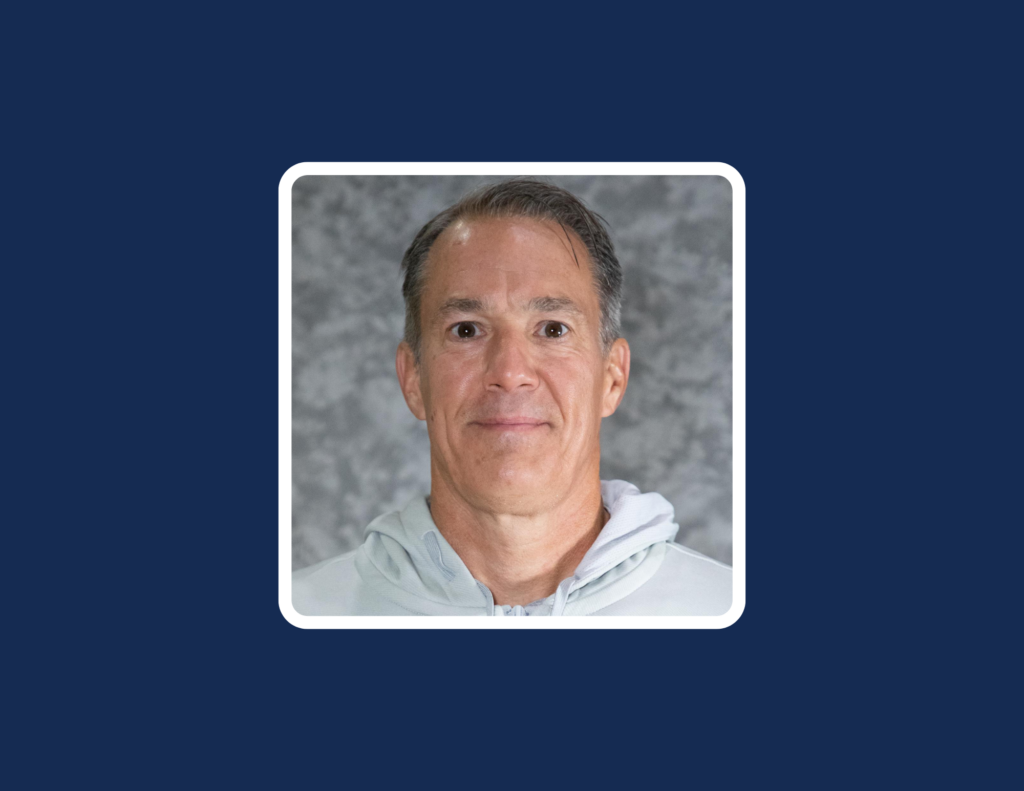
MIKE WILLIAMS – GRAND VALLEY STATE UNIVERSITY WOMEN’S BASKETBALL HEAD COACH, D2 2025 & 2026 NATIONAL CHAMPIONS – EPISODE 1247

Website – https://gvsulakers.com/sports/womens-basketball
Email – willimi@gvsu.edu
Twitter/X – @Mike_WilliamsGV @gvsuwbb
If you listen to and love the Hoop Heads Podcast, please consider giving us a small tip that will help in our quest to become the #1 basketball coaching podcast.
Mike Williams is the Head Women’s Basketball Coach at Grand Valley State University where he just led the Lakers to back to back D2 National Championships in 2025 and 2026. In his 11 years at the helm of the Laker program, he has amassed a 314-50 (.863) overall record and a 188-28 (.870) record in the GLIAC. He has led the Lakers to six GLIAC regular season titles, four GLIAC Tournament titles, four Midwest Regional titles, and two National Championships.
This is the second stint for Williams at GVSU, as he was an assistant coach with the Lakers from the 2002-2007 seasons, which included winning the 2006 Division II National Championship.
Williams spent four seasons as the head coach at Davenport, where he compiled an outstanding 130-11 (.922) overall record. Before becoming the head coach at Davenport, Williams spent four seasons as an assistant coach at Michigan. He was also responsible for starting the women’s basketball program at Finlandia (NCAA Division III) in Hancock, Mich. In his three seasons as head coach (1999-2000 to 2001-02), the team owned a 44-33 (.571) record.
Williams coached for a number of years at the high school level, where he was head coach of the girls varsity team at Hancock High School from 1989 to 2000. Those teams recorded a 207-51 (.802) mark, winning eight district championships and four regional titles. For five seasons, he was also the head coach of the varsity boys team at Hancock, owning a 72-36 (.667) record.
He began his coaching career at Ironwood High School, as head coach of the girls varsity team in 1986. A few years later, Williams moved to the collegiate ranks, serving as an assistant coach during the 1988-89 season with at Michigan Tech.
On this episode Mike and Mike discuss how Grand Valley State won consecutive Division II national championships in 2025 and 2026. Williams shares the importance of fostering a unique team identity and the necessity of cultivating leadership among players, particularly following the loss of seasoned seniors. Coach Williams shares poignant reflections on the emotional landscape of victory, contrasting it with the weighty burden of defeat, and articulates the strategies employed to mitigate pressure while promoting a culture of continuous improvement and resilience. Our discussion also highlights the meticulous preparation required during tournament play, underscoring the balance between individual player development and team cohesion. Williams offers listeners a profound understanding of the dedication and strategic thinking that lead to back to back National Championships.
Follow us on Twitter and Instagram @hoopheadspod for the latest updates on episodes, guests, and events from the Hoop Heads Pod.
Make sure you’re subscribed to the Hoop Heads Pod on Spotify or wherever you get your podcasts and while you’re there please leave us a 5 star rating and review. Your ratings help your friends and coaching colleagues find the show. If you really love what you’re hearing recommend the Hoop Heads Pod to someone and get them to join you as a part of Hoop Heads Nation.
Get ready to take some notes as you listen to this episode with Mike Williams, Head Women’s Basketball Coach at Grand Valley State University, back to back D2 National Champions in 2025 and 2026.
What We Discuss with Mike Williams
- Winning back-to-back national championships requires a unique mental approach, focusing on creating a distinct identity for each season
- The mentality of a championship-winning team must focus on creating its own identity, separate from past successes
- The importance of leadership development among players, particularly seniors, to guide younger teammates effectively
- Balancing skill development with game preparation during practice
- Keeping players fresh during a long season
- Film study plays a vital role in game preparation, focusing on both team dynamics and individual player matchups to ensure comprehensive understanding
- The joy and pride felt by both players and coaches in the post-championship locker room
- Maintaining motivation and leadership continuity as the team transitions into a new season with less experienced players
- Effective leadership emerges when players take initiative to guide their teammates during practice and games
- Balancing intensity with recovery to ensure optimal performance
- Why the coaching staff prioritized the development of younger players to ensure depth and experience across the entire roster
- The team was able to maintain a positive mindset throughout the season by focusing on day-to-day progress rather than the weight of expectations from previous championships
Like this show? Please leave us a review here — even one sentence helps! Consider including your Twitter handle so we can thank you personally!
Give With Hoops is a groundbreaking initiative that fuses basketball analytics with modern sponsorship. Built for teams who see data as opportunity, from AAU programs to college powerhouses.
By tying on-court performance directly to community and sponsor engagement, Give With Hoops help programs raise more while deepening support from those who believe in the game.
Traditional fundraising disconnects donors from the action. Sell candy bars, wash cars, beg for donations, it’s exhausting and ineffective. Players perform better when their stats matter beyond the scoreboard. That’s why Give With Hoops was created.
Give With Hoops connects game performance to community support. Every basket, rebound, and assist becomes a chance to raise funds. Transparent, exciting, and proven to raise 3x more than traditional methods.
Aiming to go D3? The D3 Recruiting Playbook gives you a clear, step-by-step roadmap to the recruiting process – what coaches value, key milestones from early high school through application season, and how to build a target list of schools that fit your needs.
We’ll demystify researching D3 programs and how to stand out without chasing every camp or showcase.
The modules cover things like writing emails to coaches, building an effective highlight tape, using social media well, planning ID camps and visits, and navigating application strategy.
You’ll get templates, checklists, and an outreach plan to communicate confidently, learn how to compare financial packages, and avoid common missteps. By the end, you’ll have a prioritized school list and a decision framework you can use to land your best-fit opportunity.
Your first impression is everything when applying for a new coaching job. A professional coaching portfolio is the tool that highlights your coaching achievements and philosophies and, most of all, helps separate you and your abilities from the other applicants.
The key to landing a new coaching job is to demonstrate to the hiring committee your attention to detail, level of preparedness, and your professionalism. Not only does a coaching portfolio allow you to exhibit these qualities, it also allows you to present your personal philosophies on coaching, leadership, and program development in an organized manner.
The Coaching Portfolio Guide is an instructional, membership-based website that helps you develop a personalized portfolio. Each section of the portfolio guide provides detailed instructions on how to organize your portfolio in a professional manner. The guide also provides sample documents for each section of your portfolio that you can copy, modify, and add to your personal portfolio.
THANKS, MIKE WILLIAMS
If you enjoyed this episode with Mike Williams to let him know by clicking on the link below and thanking him via Twitter.
Click here to thank Mike Williams via Twitter
Click here to let Mike & Jason know about your number one takeaway from this episode!
And if you want us to answer your questions on one of our upcoming weekly NBA episodes, drop us a line at mike@hoopheadspod.com.
TRANSCRIPT FOR MIKE WILLIAMS – GRAND VALLEY STATE UNIVERSITY WOMEN’S BASKETBALL HEAD COACH, D2 2025 & 2026 NATIONAL CHAMPIONS – EPISODE 1247
Narrator
00:00:14.240 – 00:00:17.520
The Hoop Heads Podcast is brought to you by Head Start Basketball.
Mike Williams
00:00:20.560 – 00:00:41.130
I lost in the state championship in high school, lost in the Nashville championship, got to a few Final Fours as a head coach and finally win it. You don’t know what that’s going to be like. You win, I’m like, oh you’re in tears, you’re choked up and nobody’s crying.
Everybody’s excited and they’re happy and hey, let’s go celebrate. So it’s a different locker room after winning it than losing it.
Mike Klinzing
00:00:42.010 – 00:03:04.340
Mike Williams is the head women’s basketball coach at Grand Valley State University, where he just led the Lakers to Back to back D2 national championships in 2025 and 2026.
In his 11 years at the helm of the Laker program, Mike has amassed a 31450 overall record, a 188 and 28 record in the Great Lakes Intercollegiate Athletic Conference. He has led the Lakers to six GLIAC regular season titles, four GLIAC tournament titles, four Midwest Regional titles and two national championships.
This is the second stint for Williams at Grand Valley, as he was an assistant coach with the Lakers from 2002 to 2007, which included winning the 2006 Division 2 national championship. Williams spent four seasons as the head coach at Davenport where he compiled an outstanding 13011 overall record.
Before becoming the head coach at DAvenport, Williams spent four seasons as an assistant coach at Michigan. He was also responsible for starting the women’s basketball program at Finlandia in Hancock, Michigan.
In his three seasons as the head coach, the team owned a 4433 record.
Williams coached for a number of years at the high school level where he was the head coach of the girls varsity team at Hancock high school from 1989 to 2000. Those teams recorded the 207.51mark, winning eight district championships and four regional titles for five seasons.
He was also the head coach of the varsity boys team at Hancock, owning a 7236 record. Mike began his coaching career at Ironwood High School as head coach of the girls varsity team in 1986.
A few years later, Williams moved to the collegiate ranks, serving as an assistant coach during the 1988-89 season at Michigan Tech.
Give with Hoops is the first platform turning basketball analytics into fundraising impact Every stat tells a story and now every story drives sponsorship, engagement and team growth. Programs nationwide are transforming basketball stats into funding power.
Learn to use performance data to attract sponsors, engage fans and raise more with every play.
Give with Hoops will help you raise three times more money for your program as their stat based pledge consistently outperform traditional fundraisers. Visit givewithhoops.com hoop heads podcast to learn more and take your fundraising to the next level. Give with Hoops.
Doc Eslinger
00:03:09.180 – 00:03:11.780
Hi, this is Doc Eslinger, Head Men’s Basketball Coach at Caltech And you’re listening to the Hoop Heads Podcast.
Mike Klinzing
00:03:17.380 – 00:04:48.470
Are you or an athlete Planning to go D3?
Check out the D3 recruiting playbook from their Playbook gives you a clear step by step roadmap to the recruiting process, what coaches value, key milestones from early high school through application season, and how to build a targeted list of schools that fit your needs. The playbook demystifies researching D3 programs and how to stand out without chasing every camp or showcase.
The modules cover things like writing emails to coaches, building an effective highlight tape, using social media well planning camps and visits, and navigating application strategy. You’ll get templates, checklists and an outreach plan to communicate confidently. Learn how to compare financial packages and avoid common missteps.
By the end, you’ll have a prioritized school list and a decision framework you can use to land your best fit opportunity. Click on the link in the Show Notes to get your D3 recruiting playbook from D3 direct.
Get ready to take some notes as you listen to this episode with Mike Williams Ed Women’s Basketball Coach at Grand Valley State University. Back to back Division 2 National Champion in 2025 and 2026. Hello and welcome to the Hoop Heads Podcast.
It’s Mike Cleansing here without my co host Jason Sunkel this morning.
But I am pleased to be joined by Mike Williams, head women’s basketball coach of the Division 2 back to back National Champions at Grand Valley State. Mike, welcome to the Hoop Heads pod.
Mike Williams
00:04:49.110 – 00:04:51.910
Hey, thanks for having me on here. Good to be here.
Mike Klinzing
00:04:52.070 – 00:05:10.960
Excited to have you on. Looking forward to diving into this national championship season.
Let me start by asking you, obviously coming off a championship last year, what’s the mentality back in the fall? What are you and your coaching staff talking about? What are the conversations like with your players? What’s the mindset going into this season?
Mike Williams
00:05:12.400 – 00:06:02.600
I think we right from day one it was we’re a different team. We’re not last year’s team. We don’t have to be last year’s team.
We’re our own team, our own identity talked some people that had won a national championship then tried to win another one. As far as heard Jay Wright talk about some things.
I had done it as an assistant coach Back in the day, we won like Grand Valley and what’s that process for the next one? And I think the. The big thing, the big takeaway was that we weren’t going to put pressure on ourselves to win a second championship.
We’re just going to treat this like a new season. Last year never happened, even though it did. These guys were all major part of that last year, so they knew that.
But I think they handled really well. As far as this is new. We’re approaching this day by day. Let’s see how we do. And we didn’t put a lot of pressure on ourselves to try and do it again.
Mike Klinzing
00:06:03.720 – 00:06:34.840
What were the conversations like between you and your players and talking to them about just going into the season, how do you change?
Obviously, again, coming off that national championship, as you said, you don’t want to put pressure on the team and have it say, hey, we got to live up to what we did this previous year. So how do you go about doing that where you sort of ease the pressure, make it feel like a different season? What does that look like?
What’s the conversations like? How does that impact how you put together practices and just how you approach the season in general?
Mike Williams
00:06:35.640 – 00:10:10.450
Yeah, I think, number one, you don’t really address it as far as last year. You don’t really bring it up a lot. it’s more like, what are we going to do this year?
What’s our progression as far as what needs to be done? And first off, it started with, with our leaders, and we had every year you have different leaders.
For us, it’s been our seniors, basically, and you don’t know how they’re going to do. You don’t know because they really haven’t been in that spot before. But they’ve seen it.
And it’s not that they can’t lead when they’re younger, it’s just that they kind of defer to the upperclassmen. And this year’s group came in day one and said, hey, we want to be leaders. We want to shape this program and keep it moving in the right direction.
And so I thought from that first week when they came and we talked about that we’re going to be in good shape with our leadership and we aren’t allowed to do anything planned in the summer. we can’t work with our players in the summer, but our players are here.
A lot of them, they set times up in the morning when they come in and do skill stuff. They usually go from 7 to about 8:30. They do weights. They do some conditioning with our strength coach that’s allowed.
And then on their own, they do some skills or three on three, four and four. And then they have a couple nights when they do pickup. And so.
And that’s when those guys get that first chance to be leaders as far as not. Not necessarily running that, but be being the vocal part of all of that.
And so that was kind of the first step to make sure we had that leadership in place. We also went through a book called the Twin Thieves, and it was, ironically, should have been done a year before.
It was about a football coach in Wisconsin who had been really good teams, but kind of put too much pressure on his players, and they would always seem to falter in the. In the. In the post season. Now, we had won a championship, so we didn’t falter.
But it’s almost like it was really a good book because now it’s that added. Like you talked about, that added pressure. And it was really a we kind of coach shares and Coach Parker kind of facilitated it.
And we kind of did two or three chapters a day. I think it was two chapters a day. And up until the first scrimmage session, we went through it. But it was a really good book.
And I think some good points were made, things that we could. We could take with us throughout the season. And each chapter, you had to come up with one major point of the chapter.
And then we have this neon board in our locker room, and then they wrote that point or that phrase on that board so we could refer back to it. So I thought that was the second step and maybe trying to have our own identity, be our own team and not put pressure on ourselves.
And then I think a lot of it’s how you. Your staff handles the practices as far as.
And even the games and the scrimmages up into then you don’t want to compare them to last year’s team, although there are times you do. You say, hey, last year you guys did this, and now these are the things that we want to we need to do better.
But I think a lot of it was just trying to stay focused and positive and not negative and not really look too far ahead. Although you and I both know that these teams start seeing where they’re at early on and knowing what could be.
And so you can’t get away from addressing that animal. But it’s something where you just don’t you don’t want me think of that. We want to stay in the moment, stay in the, stay in the day.
And I thought they did a good job with that and I thought they liked to practice. again, these guys like days off. I like days off.
But when we were there to practice, I thought we enjoyed it and we accomplished a great deal in every practice session that we had.
Mike Klinzing
00:10:11.170 – 00:10:32.210
Me a little bit about your practice philosophy and how you go about designing a day to day practice, whether it’s, let’s focus on, I guess, the preseason first.
When you’re putting together a practice before your first game, what’s that process look like for you and do you have it structured the same way every day? Is it more, hey, we got to figure out what we need on a particular day. How do you go about putting together a practice plan for your team?
Mike Williams
00:10:33.420 – 00:13:33.130
Yeah we get a little unique. We get four hours a week until our first official day of practice, which is. Was about first week in October somewhere in there.
So we had about five weeks where we get four hours of basketball, four hours of conditioning and weight training. And so we do a lot of skill development in that time period. We had again, we had some returnees.
We had about six players that had played a lot and then everybody else did not play last year. It was a completely, it was like it was the team that won that championship.
We had 11, 12 players been playing a lot of minutes, a lot of games. So we had everybody back. It was like they knew what they were doing this summer. We went to Italy that year.
We had 10 practices thrown there. So we were prepared. Day one, we were ready to go like it was.
We were day one the previous year we were here and I think maybe we got to there with this year’s team. I thought started off a little bit lower on the scale because of just the inexperience and those veterans really had to carry us early.
But in that, in that scope of the week, we try to hit five days a week, whether it’s a a 40 minute skill session, two days, half a team for an hour, one day, and then maybe a hour and a half to hour and 45 minutes full team workout.
So we’re getting the skills, we’re getting some it might be the bigs and then the littles split the day and then we combine the whole team like on a, on a Friday or a Thursday and work together. So when you’re touching on a lot of offensive stuff in the Skill work, but then also some defensive things.
you’re just working on you build your defense. Might be, might be on ball defense for this segment of this practice. Then it might be off ball gap defense and recovery.
Then it’s help side defense and it’s post defense. And offensively, again, same thing. Whatever, whatever it is you’re breaking down to might be post work on this day.
It might be getting to the basket, a lot of, lot of, a lot of penetration, a lot of lot of baskets, a lot of finishing around the rim. On this segment, this might be footwork and shooting, shooting off the dribble, shooting off the move, shooting off the catch, reading a screen.
And then you try to combine that on that Friday we get, like I said, you get about an hour and a half, hour and 40 minutes the way the time works out. And you try to run like a full practice.
So we probably get before our first official day of practice and that first week of October, we probably got four full practices in. So it gives you a little bit. But again, if you’re at that upper level, division one level, they’re practicing year round.
And so you got to really be creative too. there’s some things that we do without a ball. There’s some positioning stuff we do without a ball.
There’s some movement stuff we do without a ball. In that, in that segment, that four hours without a basketball, we get really creative with that, doing some of those things to help us out.
But you’re trying to jam, especially in an inexperienced team, you’re trying to jam a lot in a short period of time to get yourself ready for game one.
Mike Klinzing
00:13:34.970 – 00:14:01.860
When you looked at this team and you thought about where they could get to, and you’re trying to evaluate strengths and weaknesses going into the season. If there was going to be one area that you felt might hold you back from accomplishing what this team obviously ended up accomplishing.
But what was the one thing that you were concerned about heading into the season? And then how did you try to plan for and remedy that going into your going into the season?
Mike Williams
00:14:03.380 – 00:18:17.630
Yeah, that’s a good question. We, we, we knew pretty early on that we were, we were really talented.
we had really good players, a lot of length, a lot of athleticism, good size. Our guards were solid. We knew that the talent was there.
I think the one thing we weren’t sure was our depth and somewhat of our experience inexperience in the backup roles. like we had six players Coming back, boom, they’re ready to go. they were ready to roll.
They had played minutes, they had played in the national championship games. You got six, a core of six really good players. You’re in pretty good shape at our level.
And then now what’s that going to look like 7, 8, 9, 10, 11, 12 down the line. And so that was kind of our question mark as far as what’s that depth going to be? What’s an experience going to look like?
Where can we get them there?
Like I said, a lot of our early season practice was, was focusing on that the 7 through 12, those players, whatever, 13, 14, 15, whoever was going to be. Because we had some players redshirt as well this year that just weren’t going to get the minutes they need to get.
And so they decided to redshirt. But so it was a lot of focusing on that. A lot of drills in practice, a lot of reps for these young players.
A lot of our seniors did a great job communicating to these youngsters that haven’t played a lot are coming off an injury of what it needs to be. And then there had to be a lot of pay attention to detail in practice. I thought, I thought coaching wise we really explained things.
We were very clear because we had to be clear not for those top six, the returnees, but for everybody else. So it was very, it was precise in our explanations. Here you’re doing this drill.
Here’s the two points you have to remember and you have to remember them. You can’t forget them because you’re going to need them down the road.
And so thought we did a really good job with that and I thought our players did a really good job paying attention. We do something different. We like to since we had numbers, we set up some scrimmages.
We’re able to play some teams back to back because you get a, you get a four hour segment to scrimmage. Usually you go play one team, you play four quarters and you’re kind of focusing more on your upperclassmen.
Well, this year we had a chance to to scrimmage some division ones and piggyback and play a NEI team or Division 3 team on top of it. So we end up getting out of our four three scrimmage dates, we end up getting six scrimmages.
And in those scrimmages, those younger players played a lot. The players that were experienced play got a lot of time in those scrimmages. And so, and again, this is, this all helps.
we, we’re, we’re, we’re really into a little doing a little many times over can mean a lot.
and so getting those players in just those scrimmages, getting those minutes we did a lot more film this year, a lot of film breakdown before and after practice and on off days to really get points across for those younger players. And then I thought we did a good job early in the year of playing those players that hadn’t played as much in the previous year.
We got them in, we got them in situations where maybe in the past I wouldn’t be as as eager to put them in because at our level we’re not the BCS level, you’re playing the, you’re in the Big Ten. The Big Ten is good, but they’re getting 13 teams in the NCAA tournament. You’re going to play, you’re going to 500 your Big Ten.
You buy seven money games, schedule a couple others. You win your 20 games, you’re in the NCAA tournament.
For us in our deal, and our region is so strong every year, you got to win your games, you got to win to get in the NCAA tournament, you got to win those non conference games. And then in our level, you can host, obviously, if you do really well, which we did last year and the year before.
So if you do really well and you don’t lose any of those in those preseason games, you can host the region tournament, which is a big advantage in Division 2. So we’re kind of under that microscope of not being able to lose if you want all those things to fall in place. So it’s hard to throw players in.
Well, throw them in. If you lose early, it helps you out later on and it might, but it might hurt you because you don’t get the NC tournament hosier regional.
That makes sense.
Mike Klinzing
00:18:17.950 – 00:19:17.580
No, it totally makes sense. And I think, right. That’s a balance that all the coaches are trying to find out, right.
You’re trying to say, hey, how can we get our players who aren’t as experienced that we may need at some point down the road in the season to fortify our returning players and yet at the same time, like you said, the winning piece of it. And I know that at the Division 2 and the Division 3 level, that ability to be able to host those early rounds of the NCAA tournament is huge. Right.
When you’re trying to make a Run, especially when you’re a good team and you have national championship aspirations, to be able to make that path, whatever percent easier it will be by playing at home, you certainly, you certainly want to do that.
So when you look at your season, was there a moment in the season where you and your mind, and you probably didn’t share it directly with your players, based on our conversation, but when you and your mind thought, hey, I think this team, I think this team has a chance to win a second one, was there a specific moment or was it just kind of a slow build over the course of the year?
Mike Williams
00:19:18.380 – 00:21:14.760
Yeah, there was two defining moments. And we went over and did a demonstration for B Cam and we put our players out there.
We did, went through kind of a mini practice and we did some defensive things and some drills, some competitive drills and coach shares, did a couple offensive things and we went for about an hour and 15 minutes and I got done with that and I thought, oh, my, this team is extremely talent. It was really, really.
And we had some coaches come and say, whoa, you guys, your length, your athleticism, your size is really is different in our level. So that was one moment I thought, wow, this team is, is, is really good.
And we were, there was a lot of concern because our conference is so dang good and our region’s so dang good that we were like where are we going to stack up? Because Northern Michigan had returned, a lot of their players were really good. Wisconsin, Parkside return a lot of their players.
Ferris State return a lot of their players. Wayne State return a lot of their players. And good players. these guys, these were all, all conference players.
And so Michigan Tech had a banner year. So we knew that early on, like, we were pretty good, but our conference was really good as well.
we knew they all had a lot of star power and they’re well coached and in battle tested. So there was concern, but we knew we’d be pretty good, talented.
And then we went, we had a couple, we screwed a couple of scrimmage games early on and played really well, better than we did probably the previous year against some really good couple Division one teams and, and some good NAI teams and, and, and thought, what, this team’s, this team different and again, you gotta, you gotta hope you the officials don’t blow a game for you, which they, they always tend to do. And you gotta hope you don’t get injuries. You gotta hope that you don’t have a off game. And something happens.
But I think with those two scenarios, early in the season, we thought we had a chance to be pretty good.
Mike Klinzing
00:21:15.640 – 00:21:56.480
I think when you’re putting together your schedule and obviously when you have your league and how good the league is and you’re.
You’re trying to balance out, again, it’s what you talked about before, where you want to have your team prepared and play a great schedule so that when you get to the tournament, that your team is prepared. And at the same time, like you said, it’s important to be able to win games so that you can have that opportunity to.
To host the tournament and be able to sort of, again, ease your road in whatever possible way that you can, whether that’s a 1%, 2%, to make the road a little bit smoother.
So when you get to the tournament, talk to me a little bit about the tournament, the way it broke for you in terms of the draw and where your mindset was going into the NCAA tournament.
Mike Williams
00:21:57.440 – 00:25:27.250
Well again, we’re. We’re hosting the region. Okay. And I don’t know if anybody’s feeling like Division 2, but it’s Division 1’s got to figure it out.
Division 3’s got to figure out any. Has got to figure it out. Division two. Just can’t seem to. To figure this whole thing out. And I’m gonna make a case here if you. I.
Because I just think it’s. It’s got to change. And so basically, you’re. It’s not really a national term. You see, you won the national championship. No, not really.
It’s really a regional tournament, basically, because you’re. You’re picking the teams in your region who might be. you might have 15 teams, your region that should be in the top 64, only eight get in.
And then in your region, you might have four or five of the top 10 teams in the country like we did this year, and you’re all in the same region. So you basically Northwood or Wayne State, whoever we beat along the way. Wow. They only made this. No, they didn’t.
They played the national championship. These. These could have been playing the final Four lead eight. So you look at that draw when it. When it. And when it comes out.
And again, we were fortunate enough that first round you draw, you’re the one seed. And then Maryville’s eight seed, they won. Their. Their conference tournament, got in. So now our kids are excited because they’re playing.
So they hadn’t played before. They’re excited. These Guys are like, finally, they’re not playing Ferris State for the fourth time. Northern Mission for the fourth time.
Wayne State for the fourth time. You just got done playing these teams in the GLIAC tournament. They’re going to play them again a week later. just the.
I, the foolishness of the whole thing is crazy. And again, your kids aren’t excited to play Wayne State the fourth time, and neither is Wayne State. They don’t play each other.
They want to play somebody else. So we get to play Maryville. So our kids are excited. And then we, we beat them. And all of a sudden now we got to go play Wayne State.
Who’s really good. Who, who we want at home by one. Maybe it’s the third place by one. And I think it ain’t going to happen.
And we’re thinking here two of the best teams in the country playing round to the NC tournament, and you’re playing for the fourth time. So anyway, Panzo, we end up winning that game, played very well. And again, we’re at home. They’re not. That’s. That’s an advantage for us, no question.
and again, that’s another thing too Wayne State, really good, has to play us on, on our home floor and we had a heck of a crowd. So we went now. And then also we’re going to play Northwood in the regional final. Who again? We played again. We played it before, so.
And again, you only played them once. Your kids are excited. But you win that now you get a chance.
You go to Pittsburgh and they take the eight teams left and they see them on the RPI or the KPI and so we end up being the one and Newman ends up being the eight. And now we know we’re going to play three teams we never played before. And so you just, you’re excited to play.
And I think the draw worked out really well.
I think we ended up winning each game pretty handily, but we played at a level we just got a little bit better as the year went on and we were playing at a high level at the end of the year when we got the Elite eight in Pittsburgh and indianapa played them in the final. They had a really good team. They played a really good schedule. They had to tangle with Gannon, who was a tough team.
They had to beat them two out of three times to get there. They beat Kyler Mace was really good. They beat them in the, in the semis.
So the Final game was a great game against Indiana, Pennsylvania and two good teams. And like I said, I think our kids were, were playing at a really high level in that, in that final.
Mike Klinzing
00:25:27.330 – 00:25:45.090
Elate 8 what does your prep look like during the tournament when you have a relatively short back to back time in between games? What’s the film study look like for you?
What are the things that you specifically look for in each team in terms of your preparation for your team for the next game and a tournament run?
Mike Williams
00:25:45.570 – 00:28:06.860
Yeah, so the good thing is with our staff, we got every team broken down. We’re going to play before we play them, which is really good. So we kind of, we’re ahead of the game.
I think everybody else probably does that as well. But our big thing is we, we, we like to use more time but we don’t wear our players legs out. So that’s big on us.
this year, the way it worked out this year we would practice like it was a GLIAC game. We practice pretty hard on Monday, taper on Tuesday and then on Wednesday we really didn’t do anything. We just walked through.
We just did a walk through shot around, did some film maybe, maybe 35, 40 minutes at the most. It was kind of that day before the game we just did nothing, really nothing on the legs.
And then we do a shooter on the day of the game which is pretty lively. It’s 45 to 50 minutes. We go through drills and we guard their stuff and we do some offensive movements. So there’s a lot to the shooter on.
But that day before is really a day of really not doing much. And we kind of, we continue that. Yeah, in the in lead eight. you played on that. We played on that Tuesday and then Wednesday off.
So Wednesday was film walk maybe a dynamic drill or something but nothing much. And then that day of the morning of the game, we end up getting about a 50 minute shoot on time. That was pretty lively. Pretty.
A lot of pop to it. get go through things and we played the game. Then you, you didn’t play. We played on Thursday, we won. So now we’ve got Friday same thing.
just really a lot of film go through things.
No personnel know what they do know in guard every situation offensively look do they press and where’s your what spaces, what spots you get to against the press? Where your looks against that press. What press Brick? We’re going to run.
offensively we’re going to we’re going this some high Low action against this team.
here, here’s where the doubles are coming from, all that stuff but nothing live on that Friday and then again Saturday morning get up pretty lively shoot around. It’s, It’s. It’s a 45 minute practice. people watch our shoot ons go wow, you guys go pretty hard the day of the game. And, and we do, we do.
But it seemed, it’s something we kind of stuck with through the year and it seemed to work. And as long as you didn’t get that shoot on too close to our game time.
Our kids seem to get that, that four or five hours to recover and, and really felt good during the game.
Mike Klinzing
00:28:07.580 – 00:28:19.900
That film work are you look mostly looking at team, team stuff and actions that you have to defend. Are you looking more at showing individual players who their matchup might be personnel wise? What kind of film work are you showing the players?
Mike Williams
00:28:20.860 – 00:31:07.970
Yeah, we do both and our, we’re really basic like our, it’s funny because we got to the tournament, in men’s. Our men’s program uses when they do a scouting report like number 11 is, is Steph Curry can’t let him shoot.
We use GLIAC players because they’re so doggone good. it was like this player is McKenna Ferguson, this player JC Weiss, but this player’s Caleb Blanchard.
that was kind of our Maeve St. John from Northwood. And so because our players recognizing like oh okay this is what this player does. But kudos to GLIAC is such, such a good conference.
But it was more or less okay. This player can’t get a shot off. This player is going to, wants to pull up dribble going left.
This player wants to get all the way to the rim going right or left. You maybe gave them two things on each player on the personnel. So we show a bunch of clips.
They, they, we would put jerseys on of our, the second the group that would run the other team stuff we put a jersey number on.
So they get used to that the number they’re guarding because they, sometimes they don’t know who by face who they’re guarding when you, when you play them one time. But they know the number to get them acclaimed. Okay, we’re not flying at this. This is, this is 13 non shooter red driver don’t fly at them.
so a lot of personnel stuff and then yes there was more a lot of team stuff. what, what do they do offensively? Was it a. They want to go low block? Do they want to, they want to space the floor?
Is it, Is it ball screen actions and handoff action? Is it, is a down screen action? Is it what are they running on offense that we need to guard? What is, what do they like to do?
are they a team that wants to get to the rim? Do they want to shoot it so all those points come in, you work on those. Then offensively how do they guard the ball screen?
How do they guard the high low? Do they front the post? They play behind? Do they double from a certain area that we look forward? Do we got to cut the backside?
We got to cut the strong side on the doubles? are they a team that wants to get in you and pressure you, or do they like to lay off and let you get your shot? Do they want to press you?
and sometimes when you have time to prepare, Northwood through a really good little, little two, two on three quarter court press against us, the regional final, that didn’t have a chance to prepare for and it was really a good look for us. Took us some time to figure it out.
So all those different things you’re kind of looking at and you put together and hopefully a, a condensed scouting report that your players can understand. I’m not a guy that can understand a lot of stuff. You can’t give me 42 plays and six things about each player. This guy likes to dribble, spin back.
You give me two things, maybe three. And so that’s kind of what we, that’s how I coach is we can’t overload these players.
We just give them some basic things so they, they don’t they, they can understand them and they’re able to, to carry them out in the game.
Mike Klinzing
00:31:08.290 – 00:31:54.780
Absolutely.
If what you give them isn’t actionable and you’re overloading them, it probably ends up going the other way and being detrimental instead of positive, without question.
I think that’s a, that’s a really good point for any coach out there trying to learn something today that if you just keep it simple and get things that you give them two or three things that their play at, your players can actually learn and execute, then you’re probably ahead of the game. All right, you win the national championship back to back. You’re in the locker room. You didn’t really talk about it all year.
You said at the beginning here that right from the start of the season, you tried to put the previous year’s national championship to the side and make this its own team. So now you finally get to that national championship game, you win it. What do you talk about with your team in the locker room after the game?
Mike Williams
00:31:56.300 – 00:33:53.440
there wasn’t a lot.
It’s funny because when you lose that last game and you talk longer, you just, you do, you go through things because you feel for these players that lost their last game And I watched a little special on Jerry west and he just said, jerry west says basketball is about sports, about dealing with losing. Because you lose, only one team wins your last game. That’s it. Everybody else loses their last game. So you got to deal. How do you deal with losing?
And so and you, and when you win it, these guys have won it all. They didn’t lose. So they’re in there, they’re happy. They’re not, they’re not sad. They’re. They’re in a good mood. You’re in a good mood.
You tell them some great things, talk about a few things. for me, this year was a little bit more of a relief. I don’t know, last year was. You celebrate a little bit more.
The first and second was like a relief that you want it because you’re, for some reason you’re expected to win it again. I don’t know. But there was, there wasn’t a lot said there wasn’t a lot. Just how proud you are, these players and what they did.
And you, you, you hit on a couple of those things.
Like, you talk a lot about your seniors because they’re done and the things that they’ve done as far as what they accomplished and what great leaders they were and how they, they really kept this team together. And and then you, you talk about now what it’s like.
And you guys have, some of you have been part of this two times, some of you one time. But now this is, this is your. Keep this in your mind because this is what you’re striving for next year. can you, can you do this again?
But it’s a, it’s different and only one time I said I lost in a state championship in high school, lost in NI national championship, got you a few final fours as a head coach and finally win it. what that’s going to be like? You win it like, oh cuz you’re in tears, you’re choked up, your kids and nobody’s crying.
Everybody’s excited and they’re happy and hey, let’s go celebrate. So it’s, it’s a, it’s a different, different locker room after winning it than losing it.
Mike Klinzing
00:33:55.200 – 00:34:41.210
That’s good stuff.
And I think it does hit on right that when you lose it, there’s a lot more trying to process what just happened and help everybody to deal with the fact that you put in all that blood, sweat and tears and it didn’t end up the way you wanted to. And then when it does, like you said, everybody, you look around and everybody’s happy. There’s not much explanation that needs to go on.
You’re just enjoying the emotion of getting that victory. And that winning locker room is always a great place to be. All right, before we get out, I want to ask you a final two part question.
So part one, when you look ahead over the next year or two, what do you see as being the biggest challenge? Obviously you come back next year as back to back national champ. So your biggest challenge.
And then the second part of the question, when you think about what you get to do every day, what brings you the most joy? So your biggest challenge and then your biggest joy.
Mike Williams
00:34:42.490 – 00:39:12.960
Yeah, I think looking next year again, you gotta, you gotta fight that, that complacency that, well we wanted winning we’ve done already. Coach, you told us to be hard to win back to back. And look, we did this, so now let’s go again. But I think our, I think our players are different.
I don’t know this. We had a postseason, we end up getting five days to work with our players in the postseason. I thought it was different.
I thought they, I think they understand what’s ahead. I don’t think they’re taking for granted. I think they really want to make their own mark, whatever that means.
It might be a 15 win season, might be 21 season, might be a deep run. We don’t know that. But I think they’re ready to, to be their own team. And I think they saw that last year that that team was their own team.
They want to be like that so fighting some of those things we lost some really, really solid perimeter players so to really replace that, to really get these players up to speed on the perimeter, some of these new players is going to be a challenge and I think they’re up for it. I think that’s, I think they understand that. I think the good thing with this team is they understand these things. They’re not offended by it.
Like, okay, well, this is what we got to do. Then they want to do it and so now will they do it? I don’t know. It’s easier said than done, .
But if they’re willing to do it, I think we got a chance to be pretty good again. But it’s going to take a lot of work and then where’s the leadership going to come from again?
it’s the same thing now next year we don’t have any seniors. We’re two steps removed. And we went through this two years ago and we had a pretty good team but we lost in the regional final affairs state.
They went on to the lead aid but we didn’t have any leaders. And so I think as far as our staff, we could do a better job of working with them. And we can’t do a ton of the summer.
We can send them information and some things to guide them along but you can’t really deal individually with the basketball end of it. But we know we can start practice in the fall. We gotta be very pointed in how we help these leaders, work with these leaders.
we talked about having whatever the saying is or some type of theme going into the next year and our players are working on that. So those can be the three challenges as we move forward. I think the biggest joy is is to see these players when they come back.
number one, I guess there’s two, two fold number one is to see these players progress from when they come in as freshmen, to leave here as seniors or fifth year seniors or redshirt seniors.
To see them progress and grow as people, to get close to them, to get to know them, to get to know their families, I think is, really, is really rewarding and it, there’s a lot of I’m a, I’m such a pessimist type guy and glass half full guy that these players have helped me try to change a little bit. at least now there is something in that glass.
Whenever I thought there was before, but just to, just to grow with these players over the five years if they’re here and get to know them and see them.
And then I think the second part that’s rewarding is when they come back we had, and I get so teary talking about our players that come back, even thinking about it.
But we go to the lead eight and there’s we had probably six to eight players, former player, maybe more than that, maybe a dozen former players that came to the game and some came with their families and some showed up unattended. And you see them after the game and then you’re invited to their weddings and you see them out and someone’s deer hunting on your property.
And just the different relationships that you make with your players and their families and the people is, it’s, it’s often. It’s unbelievable. It really is. You don’t, I don’t know, I’m not in any other profession.
I waited tables in college and mowed some lawns, but that stuff.
But as far as, is there another profession when you connect with people this intimately and closely and, and just the number of connections because you’re, you’re. It’s five or six every year and, and to get a text message from, in an email from.
My first job was in Iowa, Michigan, coaching girls basketball. I take the tennis team and one of the freshman’s on my tent, he was three doubles, he sends me an email. So I went last time to Congratulations.
You don’t know who I am. Remember me? I do remember you. You were three doubles and your partner was Dale Pisani. I remember you.
Okay, but just to get those emails and you correspond with them 42 years later, it speaks volume of this profession.
Mike Klinzing
00:39:13.710 – 00:40:04.170
It’s awesome and it’s really well said.
I always like to talk about the fact that there’s nothing better as a coach than to get a text, get a phone call, get an email that starts with hey coach. Because it’s somebody that, from your past that you had an impact on.
And sometimes, right, you’re sitting there and sometimes you wonder what kind of impact am I having in this moment? And, and then you look back in retrospect and you realize that you did have a huge impact on the young people’s lives that you touched.
And the fact that you get to do it with a game you love and use basketball as the vehicle to be able to do that is, is special. Last thing before we wrap up, if you wouldn’t mind just sharing how people can reach out to you, connect with you.
Find out more about your program, whether you share email, social media, school, website, whatever you want. And then after you do that, I’ll jump back in and wrap things up.
Mike Williams
00:40:05.460 – 00:42:14.740
Yeah we obviously people email me, we get emails all the time about people that want to come and just watch practice.
And when you watch practice and you converse you come and watch a practice, you talk after you talk before you get coffee, whatever after we’re always open to that. We probably get 10 to 12 people come and watch a practice and see how things are doing and we kind of coordinate it too.
Where you’re coming to watch a practice that’s worth watching, just don’t come to something that’s not going to be there. But we go hey, what are you going to do today? And our practices are pretty loaded.
a segment, offensive segment, defensive segment, skill building segment and then a team portion of it and then a special situation. So we go through a lot in the practice, in our two hour practice and cover a lot of areas.
You kind of see how intense the practices are, how you move from drill to drill, what it’s not so much sometimes what you work on because we all work on different things. But someone let a couple, a couple coaches come back three, four times to watch what we do pressing wise hey, can we come watch?
Yes. It would be a big press segment today. We’re 45 minutes, break it down, things like that or whatever.
But I think that’s a good way to get in touch with, to just see some things. And again, we always think you got to watch. Tom, I’m not saying I’m going to say names.
We, we always got to watch the, the BCS coaches, they know everything and they are, they’re good, they’re good coaches.
But man, I’ll tell you the stuff I got, some press work stuff I got two years ago from Keith Haske, was a high school coach up in Lower Peninsula and some offensive stuff from Scott Carlson and just different people that you watch.
I watch teams we play I, we lost to Kim Calvo who’s now at Tennessee, but she was at Glenville State and she pressed and we used some stuff that she did so I think you can learn from anybody. We had this, that we got us. The guys at the top are the smartest, the best, whatever. Yeah, maybe.
But sometimes they’re just lucky sometimes you get lucky and, and you get to the top and you’re pretty good.
But these high school coaches and small college coaches, man, there’s some really, really good ones and they’re the ones that have been through the ring, they grind it they got to work with players that aren’t elite. So they got to figure out different ways and you can learn a lot from a lot of, a lot of different people.
Mike Klinzing
00:42:15.220 – 00:43:51.360
There is no question that there is outstanding coaches at every level of the game.
It’s for sure one of the things that I knew going into the podcast, but certainly after having talked to so many coaches at so many different levels, the the basketball knowledge and expertise is not limited to the highest levels of the game. There are outstanding coaches at every single level of the game of basketball.
Mike, once again congratulations on the Back to back Division 2 Women’s National Championships. Really appreciate your time this morning and glad we had the opportunity to talk with you and to everyone out there.
Thanks for listening and we will catch you on our next episode. Thanks. Your first impression is everything when applying for a new coaching job.
A professional coaching portfolio is the tool that highlights your coaching achievements and philosophies and most of all helps separate you and your abilities from the other applicants. The Coaching Portfolio Guide is an instructional membership based website that helps you develop a personalized portfolio.
Each section of the Portfolio Guide provides detailed instructions on how to organize your portfolio in a professional manner. The guide also provides sample documents for each section of your portfolio that you can copy, modify and add to your personal portfolio.
As a Hoop Heads Pod listener, you can get your Coaching Portfolio Guide for just $25. Visit coachingportfolioguide.com/hoopheads to learn more.
Thanks for listening to the Hoop Heads Podcast presented by Head Start Basketball.