JEFF WEBB – FORMER NBA PLAYER & WORLD CHAMPION WITH THE 1971 MILWAUKEE BUCKS – EPISODE 762
Website – https://en.wikipedia.org/wiki/Jeff_Webb_(basketball)
Email – [email protected]

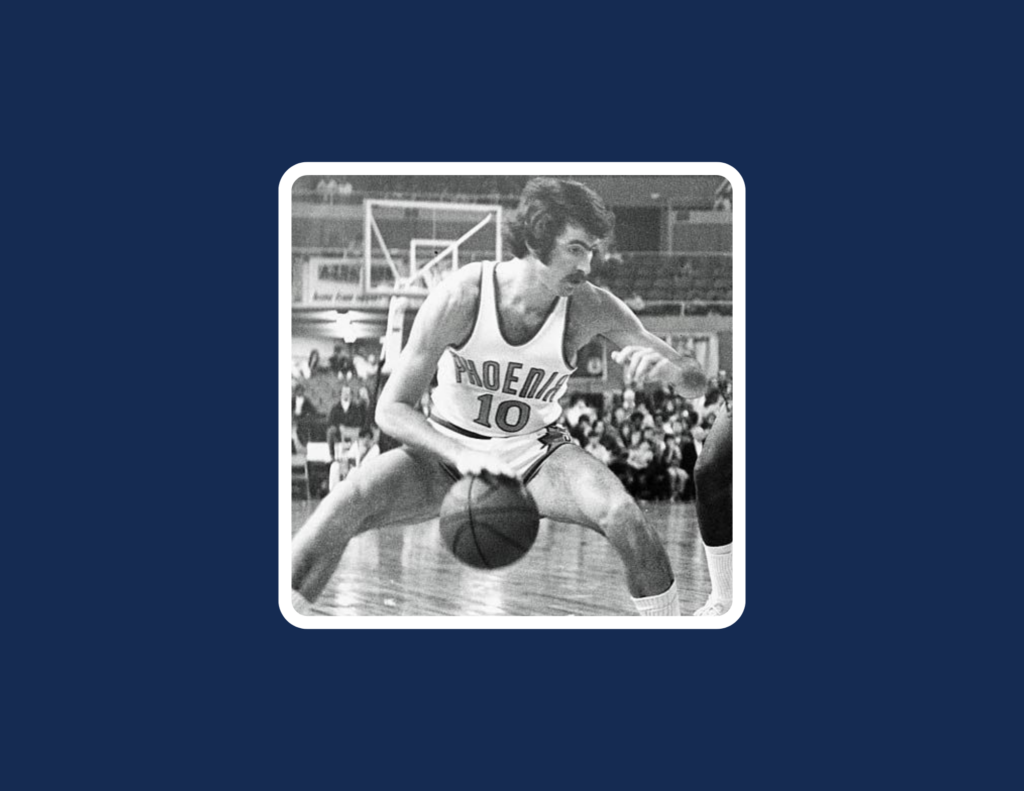
Jeff Webb is a retired NBA player who played for both the Milwaukee Bucks and the Phoenix Suns. He won an NBA Championship with the Bucks in 1971 playing alongside Kareem Abdul-Jabbar and Oscar Robertson.
As a college player at Kansas State University he played for two coaching legends in Tex Winter and Cotton Fitzsimmons.
Following his playing career Jeff worked as a rep for Converse and worked on some of the earliest shoe deals with schools and coaches across the country.
If you’re looking to improve your coaching please consider joining the Hoop Heads Mentorship Program. We believe that having a mentor is the best way to maximize your potential and become a transformational coach. By matching you up with one of our experienced mentors you’ll develop a one on one relationship that will help your coaching, your team, your program, and your mindset. The Hoop Heads Mentorship Program delivers mentoring services to basketball coaches at all levels through our team of experienced Head Coaches. Find out more at hoopheadspod.com or shoot me an email directly [email protected]
Be sure to follow us on Twitter and Instagram @hoopheadspod for the latest updates on episodes, guests, and events from the Hoop Heads Pod.
Get ready to hear some great stories from the game’s history as you listen to this episode with former NBA Player Jeff Webb.
What We Discuss with Jeff Webb
- “I wish everybody could play sports Because it not only teaches you discipline, but it teaches you how to deal with people and how to deal with adversity, how to deal with success.”
- Riding his bike as a kid all over Milwaukee to find pick up games
- Being recruited sight unseen to Kansas State University by Tex Winter
- Planning to become a PE teacher and coach and actually teaching for 60 days while trying out for the Bucks
- Playing the entire game and overtime to beat JoJo White and Kansas
- Stories from his time as teammates with Kareem and Oscar Robertson
- The greatness of Wilt Chamberlain
- Working for Converse as a sales rep after his playing career
- “You can’t ever show your opponent that you’ve lost your cool.”
- “Through adversity you grow stronger.”
Like this show? Please leave us a review here — even one sentence helps! Consider including your Twitter handle so we can thank you personally!

We’re excited to partner with Dr. Dish, the world’s best shooting machine! Mention the Hoop Heads Podcast when you place your order and get $300 off a brand new state of the art Dr. Dish Shooting Machine!

Prepare like the pros with the all new FastDraw and FastScout. FastDraw has been the number one play diagramming software for coaches for years, and now with it’s integrated web platform, coaches have the ability to add video to plays and share them directly to their players Android and iPhones via their mobile app. Coaches can also create customized scouting reports, upload and send game and practice film straight to the mobile app. Your players and staff have never been as prepared for games as they will after using FastDraw & FastScout. You’ll see quickly why FastModel Sports has the most compelling and intuitive basketball software out there! In addition to a great product, they also provide basketball coaching content and resources through their blog and playbank, which features over 8,000 free plays and drills from their online coaching community. For access to these plays and more information, visit fastmodelsports.com or follow them on Twitter @FastModel. Use Promo code HHP15 to save 15%

Your first impression is everything when applying for a new coaching job. A professional coaching portfolio is the tool that highlights your coaching achievements and philosophies and, most of all, helps separate you and your abilities from the other applicants.
The key to landing a new coaching job is to demonstrate to the hiring committee your attention to detail, level of preparedness, and your professionalism. Not only does a coaching portfolio allow you to exhibit these qualities, it also allows you to present your personal philosophies on coaching, leadership, and program development in an organized manner.
The Coaching Portfolio Guide is an instructional, membership-based website that helps you develop a personalized portfolio. Each section of the portfolio guide provides detailed instructions on how to organize your portfolio in a professional manner. The guide also provides sample documents for each section of your portfolio that you can copy, modify, and add to your personal portfolio.
The first Training Camp – Elite Skill Development and Performance Combine will be held on the campus of Western Reserve Academy, just outside of Cleveland, OH powered by Unleashed Potential & the Hoop Heads Podcast. The camp is designed for boys rising to grades 6-9 and will take place June 29 – July 1, 2023. An emphasis on improving your individual skills in the context of a team environment will be the hallmark of the Training Camp.
Mike Klinzing from Head Start Basketball/The Hoop Heads Podcast & Joe Stasyszyn from Unleashed Potential will serve as the Camp Directors of this inaugural Training Camp.
Campers can expect 3 days of hard work, intense skills instruction, and learning how to be a great teammate on and off the court at the Training Camp. Players will participate in 10 Elite Skill Development Sessions led by some of the best coaches from across the country. Visit headstartbasketball.com to get registered.
THANKS, JEFF WEBB
If you enjoyed this episode with Jeff Webb let him know by clicking on the link below and sending him a quick shoutout on Twitter:
Click here to thank Jeff Webb on Twitter
Click here to let Mike & Jason know about your number one takeaway from this episode!
And if you want us to answer your questions on one of our upcoming weekly NBA episodes, drop us a line at [email protected].
TRANSCRIPT FOR JEFF WEBB – FORMER NBA PLAYER & WORLD CHAMPION WITH THE 1971 MILWAUKEE BUCKS – EPISODE 762
[00:00:00] Mike Klinzing: Hello and welcome to the Hoop Heads Podcast. It’s Mike Klinzing here without my co-host Jason Sunkle tonight. But I am pleased to be joined by Jeff Webb, former NBA player, a guy who grew up in the same hometown as my dad, West Allis, Wisconsin. Jeff, welcome to the Hoop Heads Pod.
[00:00:26] Jeff Webb: Thank you, Mike. It’s nice to be here.
[00:00:30] Mike Klinzing: Excited to have you on. Looking forward to talking to you about all the different things that you’ve been able to do throughout your basketball career and your post basketball career. Let’s start by going back in time to when you were a kid growing up in the Milwaukee area. Tell us a little bit about some of your first experiences with the game of basketball, what you remember.
[00:00:41] Jeff Webb: Well, we’re talking many, many years ago, obviously. My memory serves me correct. I didn’t start playing basketball till I was probably in fifth grade, which would’ve been somewhere in the fifties. And back in those of that time, did more than just play basketball. I mean, we were involved in baseball, football, track, golf, tennis, you name it, bowling, pool bad horses, you name it.
We did everything, but that’s just what everyone did. So we just traded in one pair of shoes for another pair of shoes, and I was a pretty small kid. I was only 80 pounds maybe back then, so I was pretty small at the time. So I was still struggling to kind of even be able to shoot the basketball. So my memories of it were basically in grade school.
[00:01:37] Mike Klinzing: How do you feel about the basketball system that we have today where kids, they specialize earlier? They’re playing pretty much basketball year round compared to the way you grew up is similar to the way I grew up, where I played everything in the neighborhood, chasing around with kids, and obviously I played a lot of basketball and it was my favorite.
But at the same time, I was playing pickup baseball down in the sandlot and I was playing tackle football in the backyard and playing tennis with friends and all those kinds of things. So just when you think about your own upbringing and maybe even distancing itself, the self from basketball, but just in terms of your childhood around sports, just talk a little bit about how much that impacted you as an athlete and just how much you enjoyed your childhood.
[00:02:30] Jeff Webb: Well, and that’s an excellent question, Mike. I wish sometimes that I say to myself, I wish everybody could play sports. Cause you know, it not only teaches you discipline, but you know, teaches how to deal with people and how to deal with adversity, how to deal with success. You know, you learn through the rewards of your preparation and your dedication and sacrifice and, and the more that you can be a little bit more well-rounded regarding just not strictly one sport.
You meet many different people from all different walks of life. And I think it just blends you into a much better person because of it. And all those different sports and all those different disciplines, I think can help you in the long run.
[00:03:17] Mike Klinzing: When you were playing, I’m assume that while you were out in the neighborhood playing, you guys made up your own rules and you kind of had to figure things out on your own.
And I know I see this as a phys ed teacher. Every single day when I go into school, the kids have a hard time today organizing themselves into teams and sort of trying to navigate how to make sure that the game is being played fairly. Whereas you think back in time to when you were out, were growing up and we kind of figured that stuff out on our own.
Cause there just wasn’t parents around in the room we’re today. And I feel like kids today kind of rely on the adults and we sometimes cheat them out of that ability to lead and figure things out on their own. Do you remember anything making special rules for your baseball games and basketball games?
[00:04:03] Jeff Webb: Oh sure. You know, I mean, sand baseball just up into teams and just throw it out. You were terrible, muddy and bumpy. You don’t have the manicured that they do now, but you Basketball
I would ride my bike to different parts of Milwaukee to play against all different types of players. And you learn that way. You meet different people from all over the city and who does that nowadays?
[00:04:37] Mike Klinzing: Nobody does. I can tell you that. It just, especially when you’re talking about playing outdoors kids today, especially at a high level, those players for sure don’t play outdoors.
I think you still see occasionally kids, at least in this neighborhood here in Cleveland, I’ll sometimes see kids playing on the driveway. But you’re talking about high school or college players playing outdoors. You just don’t see that anymore. And of course the other part of that is kids have a lot more access.
There’s a lot more gym access than there was when you and I were kids where basically the gyms were locked up. You were forced to play outside if you wanted to play. Whereas kids today, they can get into a gym, but it is the pickup basketball scene. Is just not the same anymore because a a u has kind of taken that over.
And so kids, my son’s a junior in high school and he spends a lot more time going to high school practices, a AAU practices playing in a a u tournaments than he does going and playing pickup basketball. And I still, for me, I feel like the way that I grew up, I wouldn’t have wanted to change it because just like you, I felt like I got to go to lots of different places, play with lots of different people, different ages, different demographics, all that kind of thing.
Which I think in the long run made me a better player, but it also I think made me a better person because I had to kind of figure that stuff out. It sounds like you feel the same way.
[00:06:08] Jeff Webb: 100%. Yeah. I think you have to be a little street smart. Especially if you live in, now were you raised in Cleveland?
[00:06:16] Mike Klinzing: I was raised in a suburb of Cleveland Strongsville, so I started out, my dad was just full disclosure for our listeners. Jeff and I, as I was doing my research Jeff and my father grew up in the same part of Milwaukee and my dad moved away. He actually went to Ohio State for grad school. He had started out teaching in the, in the Milwaukee area and then he ended up going back to Ohio State to get his doctorate and he ended up being a professor at Cleveland State.
So I grew up in a suburb of Cleveland, started out, was born in Columbus and then ended up coming up here to a suburb of Cleveland. But again, went and traveled all over the place to be able to find games as I got older and I was able to either hitch a ride with one of my older friends in their car or eventually when I could drive, just try to go and find, find games so I could play and get better.
[00:07:06] Jeff Webb: So true. Yes. Summer leagues were real big when especially when I was in high school and college. And then ironically for whatever reason, they stopped doing that. I guess that’s when things all started changing, where kids didn’t play outdoors. AAU Basketball, I guess, came into play. I’m not quite sure.
[00:07:30] Mike Klinzing: I think it was a combination. I think it was a combination of just club basketball kind of taking over. I also think it’s, we parent our kids differently. Certainly I know that I keep, my wife and I keep closer tabs on our kids than my parents kept on me, at least in terms of knowing exactly where they are and they’ve got their phone and you can be in touch with them at any moment.
So it’s certainly different from that respect. When you think back to your time as a high school player, what do you remember about just how you went about. Getting better. As you got more serious about the game, how much time were you spending playing versus kind of working on your game on your own or just what was your methodology for trying to improve yourself?
[00:08:16] Jeff Webb: Well, and again, that’s another question.
As I said, I didn’t have my driver’s license until late in my life. And so I actually rode my bike and I rode the different lo locales at locations that were known to be the best places to play. And learned early on that you wanted to be the best type of player you had to play against the African-American basketball player cause they’re the best and they’re have always been the best.
And so my game was predicated upon finding the best play places to play against the African-American basketball player. And I cut my teeth on that and. And you know, it came a fruition because of it.
[00:09:08] Mike Klinzing: Did you have somebody that was older than you that kind of served as your mentor? Was there anybody that was playing maybe in college while you were in high school or just somebody that you looked up to, an adult that kind of took you under their wing at any point?
[00:09:23] Jeff Webb: Well, not really, but I mean, being from Milwaukee we, we did not have a professional basketball team. We did in the early fifties. Milwaukee Hawks played was all look up to Marquette University. Al McGuire came in and did a pretty good job of bringing attention to, and that’s who we used to follow. And I would go down to Marquette and play. Gyms all long I names had jumped out at me basically. I mean, I remember downtown Fred Brown who played at the University of Iowa, John Clarence, who at the University of Wisconsin who played Marquette. A Few were contemporaries my time.
[00:10:32] Mike Klinzing: How does your decision to go to Kansas State, does that come to pass? Obviously not necessarily geographically close. So what was it about Kansas State that attracted to you, attracted it attracted you to Kansas State and just what was your recruitment like?
[00:10:50] Jeff Webb: Well I back up bit when I went to high school.
I went to high school, was not successful sports across the board for whatever teams we were very unsuccessful, won. So back in the sixties if you didn’t win nobody came to recruit you because it just wasn’t that sophisticated. I remember going the state high basketball championships in with my dad and 60 was first time I went and all the major college coaches were there recruiting.
They very seldom and they certainly weren’t.
A lot of recommendation. University of Wisconsin showed a little bit of interest, very little interest. Cause at that time, Al McGuire was mainly taking kids from Chicago and New York, which I don’t him, that’s where he from. So I had a few interests from some local schools in the state of Wisconsin.
Fortunately there was a coach in our league by the name of Chuck, sorry, Jack used to Whitefish School, Milwaukee. And my college coach, Tex Winter and Jack Nael coached together at Marquette University between 1950 and 1953. So Tex had a little bit of a connection here in Milwaukee. Consequently they offered me a scholarship sight unseen and I jumped on it and thank goodness it worked out pretty well for me.
[00:12:45] Mike Klinzing: Did you know anything about Kansas State before you went there?
[00:12:48] Jeff Webb: Not really.
[00:12:53] Mike Klinzing: What were your first impressions you remember? Just of the campus, the team? What were you thinking?
[00:13:01] Jeff Webb: That in the early sixties they were pretty good? I mean, they went to the final fours in one nine. They went to Final Four. So Tex had a pretty good reputation. I didn’t realize that because I wasn’t at that point, historian of the game became. And so there was a lot of pride and they played in the Big Eight conference.
So we played against Kansas, which has a plethora when basketball. So I had opportunity, some division one.
[00:13:50] Mike Klinzing: Obviously Tex Winter, one of the giants in the history of the game, credited with the triangle offense, and obviously then that connects to Michael Jordan and Phil Jackson and the Bulls and his time there. What can you tell us about Tex Winter? What was he like as a coach? What was he just like as a person when you got there and, and what was the experience like playing for him?
[00:14:17] Jeff Webb: Well you know, he was originally born in the Texas, hence the name Tex. Grew up in Los Angeles area. Eventually went to usc, played basketball, was a pole vaulter. I actually pole vaulted myself too, so had something in common. He worked for Jack Hartman in the early years.
Which led to working with Phil Jackson and winning, what was it? Nine NBA Championships were the Bulls and the Lakers. Yep, absolutely. Yep. So you know, was, what can I say for itself?
[00:15:22] Mike Klinzing: When you’re there and you’re obviously thinking about going and improving and being the best basketball player that you can be, what was your thought process in terms of what you were trying to do for a career academically.
[00:15:39] Jeff Webb: Well, at that time going to a four year college I had to get pretty serious.
Cause you’re not going to stay in school unless you study and do what you’re supposed to do. You’re a student athlete. And my intentions were to, at that time, I thought I wanted to be a coach and teach. And I majored and physical education. So I thought I would until I graduated played professional basketball. I assigned a teaching contract that, as I said, Washington Park High School in Wisconsin for the tidy sum of hundred in case, in case I didn’t, in basketball I could fall back and a teacher. And so I only taught for 60 days, which is another whole story.
But while I was trying out and so I can’t really say I had much of a teaching career.
[00:16:46] Mike Klinzing: A little different from how guys approach their NBA careers today in terms of prepping. You were teaching students out of high school and now guys are going through all the training and different things that they do to prepare themselves for the draft and get ready for their first season.
Obviously a lot different experience. When you think back to your time at Kansas State, do you have a favorite memory that stands out? Maybe a basketball memory that sticks out for you?
[00:17:13] Jeff Webb: Yeah. I think the one that stands out for me was more of a team. What we accomplished as a team we were fortunate to win the Big Eight championship, went to the Sweet 16. Because back in those days, only 16 teams would go to the March Madness, which they call now because you had to win your conference championship.
17,000 people would attend every game. Always a sellout. It was 68. We were playing there. We were Seven and three at the time. And we were tied with Kansas to going toward the last part of the season and it was a regional TV game. So not only did they have thousand fans, but also the Big eight conference were watching.
So it was memorable because all five starters played the whole game. Plus we played an overtime game and none of us ever substituted. And Tex had gone on record saying it was he had some great victories in his career, but that one topped him all. So I think that says a lot, but it’s almost hard to believe that we played the whole game and overtime and never won substituted.
And we beat him 61 to 60. Jojo White later went on Boston Celtics. That game number of other people
[00:19:06] Mike Klinzing: Being able to play that entire game and play overtime, you obviously don’t see that very much. Just like the season one wilt averaged 48 and half minutes per game and now you look at it, things are a lot different in terms of that just, I guess there’s, there’s probably some science behind it and yet at the same time going back to our earlier conversation, you think about how much time you spent just basically playing all day. And obviously there’s a different level of intensity when you’re playing an NBA game then when you’re a 16 year old playing pickup basketball.
But by the same token, it’s just interesting how, how the game has evolved and it’s different and we’re, we’re obviously never going to see anybody average 48 and a half minutes per game in NBA seasons. The way we’ll do that one year. So it’s kind of crazy. It’s fun that you got a chance to do that.
I know in my college career I played and at some point, I don’t know, in the last year or two I was kind of looking back and I think I averaged like 37 and a half minutes or something like that. My, my last for sure, my last two years I think actually all three of the years that I started. So my sophomore through senior year, and you just look at that.
Really? Yeah. It’s kind of crazy when I think about, man, it’s pretty much I didn’t come off the floor and it’s one of those things that you don’t really, I don’t think I appreciated it as much in the moment and, but then looking back at it retrospectively, now having coached and having kids who have gone through the game you realize what a luxury that was to just be able to play and know that you, you could play through mistakes or you could play through missed shots and the buzzer wasn’t going to sound and you weren’t going to come out.
And I think that, no. Yeah, that’s one of those things that if, if you have that, it’s a luxury. And I think sometimes I know I took it for granted, let’s put it that way.
[00:20:59] Jeff Webb: Oh, I agree wholeheartedly.
[00:21:02] Mike Klinzing: Much easier to play without looking over your shoulder .
[00:21:07] Jeff Webb: Isn’t that the truth?
[00:21:08] Mike Klinzing: Alright, so tell me a little bit about your 60 day teaching career.
Gimme the, gimme the quick synopsis. I’ve got a 27 year teaching career going, so gimme your 60 day synopsis of what it was like to be a teacher.
[00:21:19] Jeff Webb: Well, I would teach during the day and this was while I was trying out with the Bucks. And in those days they would have rookie camp and they would have two or three other camps, one at Marquette, one at all over. And you had to constantly get through each camp? Well I was fortunate in the summertime I wasn’t teaching then. So I got to camp. Ok. I wasn’t drafted. There was 16 of us. I had walked in, I was a free agent and I had the last of the 16 in Wisconsin where they had the veterans get involved. So they had two. And during the day I was teaching, so I couldn’t attend the two, the morning session, but session, so in Fon Du Lac, Wisconsin, which was about. I don’t know, 40, 50 miles one way. And I would participate in the evening practice, turn around, go back home and teach school during the day.
This went on for a good seven, eight days while camp was, and every day you didn’t know if you were going to make it or not. You’d read about the results in the newspaper and if you made it, you’d stuck around if you if you didn’t, you were let go. And that’s how, how, that’s how that was that, that year when I was a rookie.
[00:23:05] Mike Klinzing: It’s just funny again, I, I think when you really stop and think about it, Here’s a guy trying out for professional basketball and you’re slogging your way through a teaching day, , and then, and then making it to the, making it to the second of two a day practices. It really is unbelievable. When you look at, you go to an NBA game today and you just see the vast number of people who have jobs, careers associated around the team, around the game, around the players, and it really is amazing the industry that it spawned considering sort of the humble beginnings back when, when, back when you were involved in, like I said, you’re teaching during the day and then try to make an NBA team later on.
[00:23:53] Jeff Webb: It’s pretty crazy when you think of it compared way they, their you players nowadays. And I don’t blame.them.
[00:24:03] Mike Klinzing: Yeah, no, absolutely.
[00:24:05] Jeff Webb: They deserve it. You know, the game has gone on. We stand on the shoulders of giants to the people before us. And the ones that you know, that, and you know, that’s the way it is.
[00:24:16] Mike Klinzing: Tell me how you felt when you made the, what was that like, the moment when they tell you, Hey, you’re going to be on the team, you’ve made it into the NBA, you’ve accomplished your dream.
[00:24:29] Jeff Webb: Yeah, that’s true. Well, back to the final practice we had that one evening. My dad happened to be watching, I guess don’t quite, they people, the gym, whatever, wasn’t that big of a deal back then, but, and the coaches were all standing around in the corner and they were talking and I think they called me over and told me, well, Go ahead and give notice at your your school.
You’ve made the team we’re getting ready to leave for preseason. We’re going to Hawaii and play, at that time we played 10 preseason games,
turning around and up. Who was in you up? You know, that was how I told him. That’s cool. And, and again, back in those days, you used to, they would talk to coaches, management newspapers was going on. And I, I’d wake up the next morning, read about it in the newspaper. Nobody ever told you anything. they’d say Webb beat out, so and so, or whatever is still a whatever. And that’s how you learned you were making it.
[00:25:52] Mike Klinzing: What’s that first training camp like in Hawaii?
[00:25:56] Jeff Webb: Well, that was, needless to say. It was quite a wonderful experience having That’s a good venue. Yeah. Not too bad. You know, and so it just the, first of all, the odds of even making an NBA team, I, I mean, I know you know this, but you know, the statistics are pretty mindboggling to, what is it? Think the did a study years, maybe back in 2020 I read something where only out of 50,000 male high school basketball players only.
3.5% ever move on a division play basketball out of maybe only 18. Go on play. And out of those, when I played teams 17 NBA teams and they had 12 players each, which was what approximately, I dunno, maybe players out all that played college basketball. There’s 30 teams, there’s roughly,
so you knows, are pretty small, are even going to get a chance to play on an NBA team, let alone win a championship. And I don’t need to tell you how difficult it’s to win a championship. It Took the Chicago Cubs one hundred and eight years to win a World series. The Red Sox, what, 86 years?
[00:27:39] Mike Klinzing: I was there for that Cubs win.
[00:27:41] Jeff Webb: Were you really?
[00:27:43] Mike Klinzing: Yeah. So I can, I don’t even know if I’ve ever told this story on the podcast, but I’ll, I’ll, I’ll tell it quick if you don’t mind. No, go ahead. So obviously it’s the Cubs and I’m from Cleveland, so it’s the Cubs and the Indians. And I have a friend that I played college basketball with. His name’s Greg Darbyshire, and he runs the company Pro Camps now.
So he runs basically camps for pro athletes all over the country, different sports, basketball, football, baseball, whatever. He runs, he runs sort of their, their summer camp. So he’s done one with James Harden and Durant and Kyrie Irving and different people and whatever. So he and I were talking back and forth, and at that point we had.
Just been in touch. I think I had worked at Kyrie camp with him relatively recently. And so we were talking quite a bit and my family and I, we were set up. My kids were, I guess whatever they were, they were, they were significantly younger than they are now. So they were probably in elementary school, maybe one of ’em was in middle school.
And so we were all kind of set up, we had some signs set up to support the Indians, and we were all getting ready to wa sit down and watch, watch Game seven of the World Series. And my friend Greg calls me, he says, Hey. He goes, I I got a ticket for tonight’s game. And you know, it’s not, it’s not a very good ticket, but at least, at least I got one.
And I’m like, oh, that’s great. I’m like, that’s awesome that you’re, you’re going to be there and you’re going to be able to sit in on game seven. He goes, no, for you. And this is like at maybe 7:20 PM and the game was slated to start at eight.
[00:29:20] Jeff Webb: So, so he had a ticket for you?
[00:29:23] Mike Klinzing: So he had a ticket for me. So, I said, well the family, we’re all we’re all set up and you know, the kids are all excited I’m like, I don’t I don’t know if I can just get up and go.
I said, I don’t think I can take it. So I told him no. Hung up the phone and like, the kids and my wife were like, who is that? And I’m like, oh, that’s Greg. And you know, he said he is got a World Series ticket for the game tonight. And they’re like, dad, dad, dad, you have to go. You have to go. So I called him back, I’m like, you didn’t give the ticket away yet?
And he’s like, no, I didn’t give it away yet. And I’m like, well, if you still are going to give it to me, I’ll, I’ll take it. So family drives me down to downtown Cleveland. So it’s about a, I dunno, probably about a 25, 30 minute drive. So I get, we get down there at five minutes to eight, maybe they dropped me at the corner outside the stadium and I’ve have to walk to, I’ve have to get the ticket cuz it’s a physical, at that point it was a physical ticket.
It wasn’t one that he could just transfer to me. So I’m trying to get to. The stadium and be able to get where I can, where he can hand me the ticket, like through a fence. But the way it was, there was this huge crowd of people outside the stadium that were just there hanging out outside whatever game seven in this plaza between the Cavs arena and the Indian stadium.
So I had to fight my way through this crowd. And then I finally get to a place where under normal circumstances, you could be right by the fence on the outside, but cuz of security, they had it blocked off by like, maybe 10 feet. And so I kept having to try to tell these security guards, like, the guy over there has my ticket and security guard after security guards.
Like, no, you can’t, you can’t go over there. You can’t go over there. So finally I found after my maybe fourth or fifth security guard, I found a sympathetic security guard who let me kind of break through the security line to go near the, to go near the stadium where I could reach and get the ticket from my friend Greg.
So he hands me the ticket and as he’s handing me the ticket, there’s this huge cheer. And I was like, oh, the game just had to have started. So the Indians must have had a big strikeout or got a double pl double play or whatever. But turned out that once I got in the stadium, I realized that the stadium was half filled with Cubs fans.
And so it was the weirdest experience because , it was seriously 50 50 between the Cubs and the Indians. So whenever anything would happen for either team, it would just be so loud and crazy. And obviously both fan bases starved for winning a World series clearly. So it was just a very, very unique experience.
And then obviously the Indians,
[00:32:00] Jeff Webb: oh yeah. It’s actually almost better to have 50 50 away.
[00:32:04] Mike Klinzing: It was strange. It was strange to be in a home stadium and have the visiting team score or do something and have people. Cheering that. It was a little disconcerting. It was weird.
That’s true. But it was also, it also made the atmosphere, unlike any sporting event I’ve ever been to. It was just no matter what happened, it was super loud and then obviously there was a rain delay and the Indians hit the home run off for all this Chapman to tie it, which was probably the loudest building I’ve ever been in my entire life.
And then the Cubs winning it. And so it was just, it was a crazy night.
[00:32:35] Jeff Webb: So they won it in Cleveland?
[00:32:38] Mike Klinzing: They won it in Cleveland. Won it in Cleveland. Oh, they did? Yeah. Won it in Cleveland. And it went to extra innings. There was a rain delay, I think between the, I think after the, after the ninth, maybe.
It was either after the eighth or the ninth. And then it went extra innings and Cub scored a couple runs. And that was, that was it. That was it. So, but it was,
[00:33:00] Jeff Webb: It was a lot fun. Mike did Cleveland win it in 1948?
[00:33:06] Mike Klinzing: Yeah, 48 was the last time. Yep. Was that Bob Feller? I believe so. I believe
[00:33:12] Jeff Webb: I’m not sure, but I just, they went in 48,
[00:33:16] Mike Klinzing: I believe.
Yeah, I believe that’s the last, I believe that’s the last one. So, and then we got one with the Cavs. So that was, that was fun. I never thought I would see that in my lifetime, to be honest.
[00:33:27] Jeff Webb: It doesn’t happen a lot.
[00:33:33] Mike Klinzing: It just does not happen. It’s not as easy as you think. Well, you did have two pretty good teammates that helped you to accomplish what you accomplished in Milwaukee. So talk a little bit about what it was like to play with, at that time he was still Lew Alcindor and the big O.
What was it like playing with those two guys? Just, again, obviously incredible players, but just tell me a little bit about being their teammate and what that was like.
[00:34:03] Jeff Webb: Well I’ll start with Kareem. Little bit. I know. I mean as you know, take your mind back to when he was young. He was probably the most famous recruit ever.
If you think about it. He went to school and I’m sorry, he to school in New York. And I didn’t realize at the time, but I mean, he never lost. I mean, he, he only, they won 71 wins in high school and won loss in high school. They won 88 times in college and only lost twice in years of college. I mean, he just they changed the, because in what was 67, they, this dunking cause of him.
So he comes in the coin toss and fortunately Wisconsin, Milwaukee got that fortunes for the. And after his first year leading the winning
come on board and Oscar had played 10 years with Cincinnati Royals before averaging period, long before anybody really knew what before the,
[00:35:48] Mike Klinzing: Before the triple was a thing, right? Before it was a thing. Yeah, exactly. Well before that.
[00:35:53] Jeff Webb: And so they were. A great team together, and I think Oscar was smart enough to know that how to get Kareem to the back the basket with his, and they didn’t need to do you pick and roll just didn’t work for them.
So they would Larry set up, set often actually had bit triple to it. You, we would pass to Kareem and then cut off. He would, didn’t anybody, he would,
you know, we were lucky to, we had 16 game winning streak one time. We had a 10 game winning streak that year and we had a 20 game winning streak which set the NBA record which the year before with 18. And We swept the Washington Bullets, four straight games in the finals, which only had happened once before.
So it was a special year thanks to those two guys.
[00:37:01] Mike Klinzing: Both of those guys kind of had a reputation as being maybe a little bit prickly, a little bit sort of reserved and, and kind of not you know, maybe not as outgoing with the media at least. What do you remember about them as teammates, sort of behind the scenes?
What kind of guys were they to be teammates with? Maybe not so much on the court, but in the locker room and just sort of hanging out?
[00:37:29] Jeff Webb: Well Kareem, I think just the fact that he was so tall and people It was difficult, challenging for him, I’m sure when he was, and so he introverted
himself
But I will, I’m here to tell you that he was not that in person. He was unbelievable. Nice. He was a captain. He us in every single that we did. He was first
tremendous individual gentleman all the way, and the most intelligent person he’d ever won. I mean, he was well versed in everything. Books, music, you name it, Chaz. Oscar, I mean, Oscar on the other hand is, I don’t need say, everyone said everything there about him. He was a professor on this, he orchestra, he would everyone where Right.
Sure. Was a bit, he was a general, but needed that direction and it showed him the results. And I just I can remember rookie playing against and all, all I knew at the guard was, and I was 190 pounds, so I bounced them and, but yet, what else can you do? So it just, I fortunate.
And I have a ring to show for it thanks to them.
[00:39:28] Mike Klinzing: Do you have a favorite game in that run to the championship? One that stands out?
[00:39:31] Jeff Webb: Well, lemme see. One part was, it was in February, I think we were doing quite well. We might have been 14 of hurt his back. And I had a chance to move up to play third guard and give either John McLaughlin or Oscar.
But we were playing against in San Francisco playing Warriors And Larry Costello commented on it. And I ended up being the third guard, obviously at that time. And we game and we went home. The next day I, the next game, weeds and my former college coach, cotton Fit, who was the head coach of the Phoenix Suns at that. And I had one of my better games scored eight points.
We won that game. And again, being the third guard, and the whole point of this is that we proceeded to go on 20 game winning streak, which set the NBA record. I’m not saying it was, but the point is we started ironically winning during that time and we ended up winning 20 games. And you know, that was the time that I feel that I had a something to do or regarding that successful run of victories.
[00:41:31] Mike Klinzing: Who were some of the opponents that when you think back to that time that. Really impressed you, guys that you played against, who stood out, and obviously there’s lots of big names, but just who are some of the guys that, when you think about, man, that guy was unbelievable.
Obviously Kareem and Oscar fit the bill, you’re playing with them every single day, but who are some of the opponents that stick out for you?
[00:41:54] Jeff Webb: Well, I think you, lemme just say we, we always had a challenge playing against the Knicks, at that time Willis Reed Clyde Frazier, Bill Bradley Dave Debuscherre always played us very tough and they ended up losing to the Washington, I mean the Baltimore Bullets in the semifinals
Chamberlain. I mean Connie Hawkins, I mean you had Dave Bing, you had John Havlicek, you had mean just so many the choose It’s hard to I mean, Pete came out in, when I was rookie, he was rookie
[00:43:04] Mike Klinzing: Let me ask you this about Wilt, so I’ve maintained, and again, will predates. Most of what I’ve seen of Wilt is grainy highlights and me reading about him and hearing things and whatever. But I’m always curious because when I look at Will Chamberlain and I look at the numbers and I look at the athleticism and I watch him play with his contemporaries guys who were the very best at that time, and his athleticism to me just stands out.
And I always have told people that I think if there was any player from the past that you could just take them. And I don’t mean take them and raise them in this era where they could have the benefits of the nutrition and the weight training and all the different things that we know about today. But just take 1962, wilt Chamberlain and plop him into an A N B A game today.
And he’s the one person that I feel like because of just what an unbelievable athlete he is, that he could hold his own. Easily in an NBA game today just because of his athleticism. So, am I crazy or is that something that you saw close and personal? Just I’m curious to get your take on that. No, Mike, you’re
[00:44:24] Jeff Webb: No, Mike, you’re absolutely right. The guy was phenomenal volleyball player. I mean, he fastest guys on at University of Kansas. Same thing with Kareem guys, were
don’t. You know, you hear old time players always say, oh, when I played you, but it’s all relative. I mean, at the time, I mean, some points game scored Michael Jordan rebound year, so I mean, he did it.
[00:45:06] Mike Klinzing: Yeah, absolutely. I mean, I think again, we talked about it earlier, but averaging 48 and a half minutes a game, and I the, the a hundred points obviously is ridiculous and it’s hard to even fathom or imagine what that would’ve looked like. And it’s such a shame that there is no video of that.
But I even think that the idea of averaging 50 a game, to me, is even more remarkable because you have a bad game and you get 30 and you have to get 70 the next game to keep your average. That’s, that’s a pretty high, that’s a pretty high standard hold yourself
[00:45:40] Jeff Webb: Yeah. I mean, when it’s mind boggling what he had to do, you know?
Yeah.
[00:45:47] Mike Klinzing: It really is. It’s incredible. All right. Let’s talk about the end of your career and then where you go after you finished playing. So I’m sure your career didn’t last quite as long. As you hoped. So talk a little bit about the end of your career and then the transition from the NBA into what you ended up doing next.
[00:46:12] Jeff Webb: Well, I was fortunate to play for the Phoenix Suns. My college coach, as I mentioned, Cotton Fitzsimmons had commented, actually commented after that one good game. He said, if, if ever an opportunity to pick up, I’m going to do it. And he did. And so I was fortunate to just about a year in Phoenix with him 1972.
And so not only did I play with the, but I also play with the son. So, and then he left the following. At that time the, it was called Kansas City, Omaha had an NBA team and he went to coach there and then obviously went on many other after that. But, and when I got done there, I didn’t the team, the following, so I was approached by gentleman by the name of Hot Rod Huntley, who had played with Jerry West at West Virginia and Hot Rod had played in the nba.
And he said, Hey, there’s an opportunity to go to work for a company called, and in those days was the basketball shoe like Nike is. And they had an opportunity for, at that time, they were hiring former players and coaches to act as consultants throughout the United States. And I was took a position in Dallas, Texas to cover the universities and teams, Texas, Oklahoma, Arkansas.
And I did that for seven years. And that was kind of the beginning of you know, where. Pay players to wear your shoes. And that was just the start of it. This was before Adidas and before Nike was even a player. So that’s how you know, we used to, everyone played in Converse as you probably, maybe you remember that.
Maybe you don’t.
[00:48:01] Mike Klinzing: I do, for sure. I started out on my driveway in my Chuck Taylors and eventually, I remember when I got my, I had pind a way for the Dr. J Leather All Stars for probably a year and a half or two years before I finally got my first pair. I think I was in seventh grade, so that would’ve probably been like 1981, 82, somewhere in there.
And then I got my first pair of, of leather Converse basketball shoes. And I was always a Converse guy growing up. I don’t think I switched to Nike until. I think when air, I think Air Jordan is what switched me over. So when I was in 10th grade, which would’ve been 19, 19 86 1986,
[00:48:46] Jeff Webb: I think that’s when Air Jordan came out
[00:48:47] Mike Klinzing: Yep. And so the first my first pair of non-converse shoes were Air Jordans. And then obviously the, the basketball world slowly over time kind of transitioned. But when you’re working for Converse, who are some of the coaches that you had an opportunity to interact with and talk to in the course of that job?
[00:49:10] Jeff Webb: Well, one that jumps out on me is Eddie Sutton used to be at well he was at Creighton when I was in college. You left there and went to Arkansas and then he eventually went to Kentucky. And so it was had retired at Oklahoma State University. But all the schools that were in the Southwest Conference back in those days university of Texas and and Arkansas and Oklahoma, and those are obviously long, we wear our shoes.
I can remember Mike when Nike had just come out and they were going in and Congress had probably business and Nike was coming in. Wear this one, one, wear this shoe. It’s a brand. I have to laugh now where they’re, they’re today, they were struggling or two, wear their suit and I can’t, that’s, I’m
promoting it now.
[00:50:25] Mike Klinzing: Yeah. Crazy. Again, you’ve just hard work, a lot of hustle, a lot of effort, and eventually a good product. But yeah, it’s, it’s kind of incredible. Again, when you think about just how Converse had the market completely cornered and, and slowly over time, obviously things change and taste change and so it’s not completely surprising.
And yet in some ways what’s interesting is that kids today, they don’t wear their converse, Chuck Taylors to play basketball in, but they wear ’em. Everywhere. All over the place. You see, you see way more Chuck Taylors today than you did certainly 10 years ago. It’s like we went from 1976 and they kind of disappeared for a long time. I got a high top black pair of leather that, that’s leather that, no, and I actually went to a, I think this was maybe two years ago, I went to AE outlet store in, in Columbus, Ohio. And I probably bought, I don’t know, four or five different pairs of converse and one of ’em was the black leather Chuck Taylors.
But I also bought a couple other different pairs of Converse, kind of like a blast from the past. I’m like, here I am a 50 year old guy and I’m in the sneaker store just buying. Buying Converse shoes, trying to relive my relive my youth. And it’s funny because for for many years I taught in the classroom and so I wore dress clothes to work every day.
And then about 10 years ago I had an opportunity to move and teach phys ed at my school. And now I dress like I’m 15, I can go out and buying t-shirts and sneakers and all kinds of stuff. So it’s, it’s definitely been a it, it’s definitely been like a renaissance for me to go back and kind of relive my youth.
It’s kind of funny how that how that all works.
[00:52:27] Jeff Webb: Mike, are you still teaching now?
[00:52:29] Mike Klinzing: I’m still teaching, yeah. I’m still teaching. So I teach elementary school phys ed, so I’m in a K to. Building and I’ve been doing it, yeah, I’ve been doing it 27 years at the same school. I taught third grade in the classroom for four years, I guess.
And then I taught about 15 years as a fifth grade teacher in the classroom. And then, like I said, had an opportunity to move from the classroom into the gym about 10 years ago. It was a good change for me, and I’ve been there ever since. And state of Ohio changed the retirement rules, so I would’ve been able to retire at 30 years.
And I actually have two years in like another retirement system, so I’d have been, I’d have been probably less than a year away from retirement or the old system, but now I’ve got an extra, an extra five years to go. So, but I’ll, I’ll make it through. I’ll make it through.
[00:53:22] Jeff Webb: You’re still young enough. Sure. I’ve got teachers in my family. My daughter just retired from 30 years of teaching. My brother was retired teaching. I tried to carry on, but obviously, yeah. No, I think it’s a noble career and I really respect anybody who is involved in it. Very challenging nowadays. I understand, but good for you.
[00:53:47] Mike Klinzing: Yeah. Well, thank you. Yeah, it’s definitely challenging. I think it gets more challenging every year. I think the combination of it just does get more challenging every year. And I think every year you, you get a little bit older you maybe have a little less patience than you did when you were 25. And so I think you have to, you have to fight that and, and figure out ways to, to make it work and, and still realize and remember that you’re, you are having an impact on the students that you have in front of you every day.
And that’s what, that’s what I try to start my day every day with, is just thinking about how can I make that positive impact for the kids that I’m working with despite, despite the challenges. So, it’s all good. It’s all good.
[00:54:24] Jeff Webb: Mike, let me ask you a question. Sure. How do you know Tim Gallagher?
[00:54:30] Mike Klinzing: I know Tim Gallagher through, I have a friend. His name is Kim Otten and Kim’s sons go to, or went to my basketball camp when they were younger. So that’s how I initially met. Met Kim. And so Kim had actually his two sons that they’re adopted so long Family story, but nonetheless he’s raising them as his two sons and they have come to my basketball camp for years and years and years.
And so in the course of that, I got to know Kim and have had conversations with him. And at some point Kim started listening to the podcast and he told me, Hey, I’ve got a guy that I think would make a really interesting guess. And he gave me Tim’s name. He also gave me the name of the high school coach at Centerville High School here in the state of Ohio, which is where Tim and Kim went to high school.
They both grew up in Centerville, Ohio. And. Then went to Centerville High School. So Kim said you should talk to Tim. So I ended up getting in touch with Tim and talking to him back and forth, kind of like what you and I did before the podcast and got to know him. And then he came on the show and we did an hour, hour and a half.
I can’t even remember how long the episode was back when we did it. And I got to hear some of his stories about card collecting and just getting autographs and all the different things and people that he’s been able to get in contact with. And then what’s been really fun, and I think this is one of the things that, we didn’t really know this when we started the podcast, but it’s been something that has been really special to us, is that we’ve been able to develop relationships with the people who have come on because you have a conversation with somebody and you make a connection and then you’re able to stay in touch with ’em.
So Tim and I have stayed in touch. And we’ve texted back and forth and just like Tim recommended you as a great guest to come on the podcast, he’s recommended numerous other people. And so he and I have texted back and forth multiple times since he’s been on, and he’s been nice enough that as he kind of thinks of people that would be good guests, he opens up his Rolodex and sends me their contact information.
And here we are. So it’s a connection indirectly through somebody that I know, again, through obviously basketball, which as you know, is a very small and tight-knit circle, doesn’t take very long to get from one person to the next.
[00:57:00] Jeff Webb: No, it doesn’t. And isn’t it, excuse me. It’s a nice common denominator. I mean, it’s gotten me through my life and as it has you as far as making friends and acquaintances and lifelong people that you’ve respected.
And thanks to basketball, that’s what it’s done.
[00:57:19] Mike Klinzing: So tell me your connection to Tim.
[00:57:23] Jeff Webb: Well I met Tim years ago. I, between, let’s see, 1985 and 1990. I lived in La Jolla, California, and Tim was out there and we played basketball at the local rec there. And, and we got to know all kinds of guys that played basketball out there.
And I’m sure Tim’s shared with you his time there and still, as lives there. And and then we’ve stayed in touch. Just like you said, you did. You know how you have Tim now, and we’ve, he’s so full of information when it comes to basketball and stories. He, they’re interesting. Keeps me, keeps me abreast what’s.
Thanks to him. Keeps you in the loop, right? Yeah, he does.
[00:58:21] Mike Klinzing: How much do you follow the game at all now?
[00:58:23] Jeff Webb: From a distance I mean, it’s
in sports for over five my years. You’ve, every kind of, you’ve involved in every kind of game. They all, particularly with you, maybe the finals on my college I enjoy, but I’ve actually enjoyed more college football than I do basketball. But I do know enough about it to, I guess to be in trouble.
[00:59:10] Mike Klinzing: It’s just enough to be dangerous. Right?
[00:59:11] Jeff Webb: Yeah. You know what I mean? So I know exactly. I guess you know, you’re in it. You’re always in it.
So who am I kidding? .
[00:59:20] Mike Klinzing: When you look back on your life in basketball and you think about some of the lessons that the game taught you over the course of your time, both as a player and then what you did with Converse and just as a fan and watching it, can you kind of quantify or maybe put how the game has impacted your life for the better?
Cause I think that anybody who loves the game always feels like that they took more from the game than what they were able to give back. That the game gave them so much. So I don’t know if you can put into words just what the games meant to you and the impact that it’s had on your life.
[01:00:01] Jeff Webb: I mean, it’s meant everything when you think about it.
I mean, again, it’s, and you throwing hoops, everything that was playing that game. And I think probably the, one of the, as far as personality trait, I can remember when I was a young kid and I was, was a hothead and I hated losing and I would lose my, and I realized early on cause of it, I said, you can’t ever show your opponent that you’ve lost your cool.
Once you do that, you’re done. And I’ve made myself to be even keel and never, ever show your opponent that you’ve lost it once. You lose it. And I think it’s just through adversity that you grow stronger. And I think maybe some of the younger kids today need to be, don’t lose your cool, you know? That’s all I can say.
It’s just been a attribute of the wonderful game and I wouldn’t be where I am today without it.
[01:01:23] Mike Klinzing: I could not agree more. I think that when I look at my experience as the game, I think that ability to maintain your cool is definitely something that I developed over time. I can remember being a real young kid and shooting free throws with my dad and having a contest of who could make more of a hundred and losing.
Slamming the ball down and yelling and screaming. And then gradually, I think as I matured as a player, I, I came to that same realization that you did. That I had to be able to maintain my composure in order to be at my best. And I do think that what the game has given to me, just like it’s given to you, is I, I can’t imagine my life without it.
Like, all the things that I’ve done in some way, shape, or form always kind of lead me back to the game of basketball. And it’s just interesting how many people have that same experience. And I’m going to give you a, a book recommendation that Sure. A guy we just recently had on the podcast, and he’s a professor at New York University and the book is called How Basketball Can Save the World.
And the author’s name is Dave Hollander. and it’s a book that kind of summarizes what you and I just talked about, how the game has been so important to so many people, but he kind of frames it in a sense of how can the things that we’ve learned through basketball help us to solve and understand real problems in the world?
And it’s just a super interesting book, the way he weaves stories of the game into stories of geopolitical things and stories of how we can solve some of the world’s crises that are out there. And it’s just a really interesting book, and it’s one that since I had Dave on the podcast, that I’ve been recommending to tons of people.
And I, I feel like after talking to you, you’re somebody that would really enjoy that book.
[01:03:21] Jeff Webb: How Basketball Save the World by Dave Hollander. That’s correct. Okay.
[01:03:29] Mike Klinzing: So highly, I would highly recommend it.
[01:03:32] Jeff Webb: Okay. No, I’ll follow up on that. Mike. Perfect. Thank you so much.
[01:03:36] Mike Klinzing: Absolutely. Jeff, I cannot thank you enough for taking the time out of your schedule tonight to jump on with us. It’s been an absolute pleasure getting a chance to talk to you, learn a little bit more about your journey as a basketball player and as a person. And I really want to say thank you and to everyone out there, thanks for listening and we will catch you on our next episode. Thanks.