
DAVID HOLLANDER – NEW YORK UNIVERSITY PROFESSOR & AUTHOR OF THE BOOK “HOW BASKETBALL CAN SAVE THE WORLD” – EPISODE 749
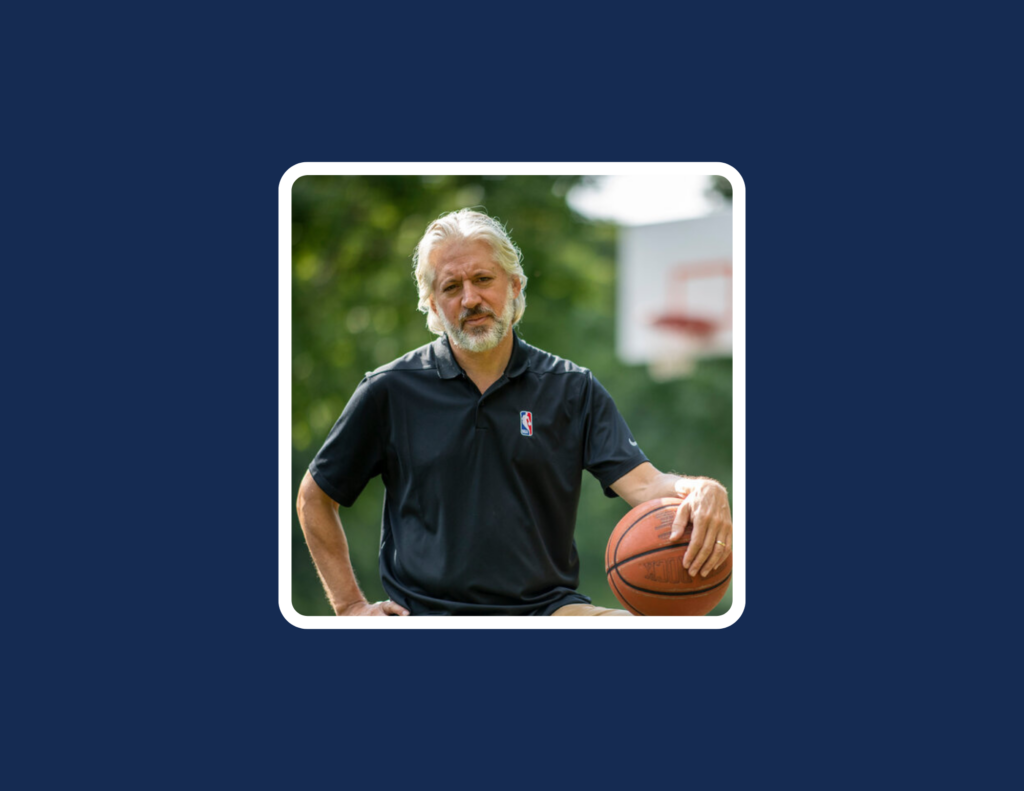

Website – https://howbasketballcansavetheworld.com/
Email – dah13@nyu.edu
Instagram – https://www.instagram.com/howbasketballcansavetheworld/
David Hollander just released his new book: How Basketball Can Save the World: 13 Guiding Principles for Reimaging What’s Possible. Hollander is in his 15th year at New York University where he serves as the Assistant Dean of Real World and Clinical Professor with the Preston Robert Tisch Institute for Global Sport. His only-of-its-kind humanities course “How Basketball Can Save the World” received international media attention including features from CBS News, SLAM, The Associated Press, The Washington Post and The New York Times. On April 12, 2022, major Italian media credited Hollander and his class for helping sway the Vatican to recognize the first-ever Patron Saint of Basketball!
David is a sought-after advisor to top brands in marketing, sports, entertainment, culture, and education. He frequently comments in top-tier media including Los Angeles Times, The Boston Globe, Chicago Tribune, USA Today, ABC News, CNN, Bloomberg, NPR. He sits on a number of advisory boards including for espnW, The Earl Monroe New Renaissance Basketball School, and the NYU Entrepreneurial Institute.
One of NYU’s most popular professors, Hollander is the recipient of NYU’s highest faculty honor, 2019 NYU Distinguished Teaching Award. Hollander’s signature innovative experiential program Real World is one of the hottest programs at NYU, partnering with 45 A-list organizations like Nike, Porsche, JetBlue, Ace Hotel, and Samsung. Axios has called Real World “the future” of higher education.
If you’re looking to improve your coaching please consider joining the Hoop Heads Mentorship Program. We believe that having a mentor is the best way to maximize your potential and become a transformational coach. By matching you up with one of our experienced mentors you’ll develop a one on one relationship that will help your coaching, your team, your program, and your mindset. The Hoop Heads Mentorship Program delivers mentoring services to basketball coaches at all levels through our team of experienced Head Coaches. Find out more at hoopheadspod.com or shoot me an email directly mike@hoopheadspod.com
Be sure to follow us on Twitter and Instagram @hoopheadspod for the latest updates on episodes, guests, and events from the Hoop Heads Pod.
Be prepared to take some notes and challenge your mind as you listen to this episode with Dave Hollander, NYU professor and author of the book, “How Basketball Can Save the World.”
What We Discuss with David Hollander
The Thirteen Principles
1. Cooperation
2. Balance of Individual and Collective
3. Balance of Force and Skill
4. Positionless-ness
5. Human Alchemy
6. Make it Global
7. Gender Inclusive
8. No Barrier to Access
9. For the Outsider,the Other,and the Masses
10. Urban and Rural
11. Antidote to Isolation and Loneliness
12. Sanctuary
13. Transcendence
- Learning to love the game on a 12 x 12 slab in his backyard playing with his brothers
- Growing up watching Dr. J and Walt Frazier
- “This game asks you to elevate, asks you to go up, asks you to go beyond what we’re allowed to do as earthlings.”
- “When you talk about pickup, to me, that’s the purest form of what the game was intended to be.”
- “If you can’t alchemize with us, then we’re not going to get along. It’s not going to go well. If you do alchemize with us, this is going to be a beautiful experience.”
- “I’m going to explore basketball as a new vocabulary, a new language to solve old problems that have been governed by old ideas.”
- The story behind Dr. James Naismith and the invention of basketball
- Naismith’s decision to elevate the goal
- An open run is like an open democracy
- Looking for different types of leaders
- “An open democracy is probably a better reflection of the body politic in America than if we just have five leading scorers on one team and nobody getting rebounds.”
- “I don’t see basketball simply as a part of my identity. I see it as an existential matter as if without it, I’m not really even here.”
- “When I’m playing, I’m feeling about as complete, as joyous as I feel doing anything.”
- How Wilt Chamberlain demonstrates the balance of force and skill
- Evaluating talent and seeing the whole picture both in sports and in leadership
- ” One thing that I think basketball stands for is this shared common love in both urban and rural communities.”
- “There’s no way you’re going to have any type of friendship or communal of any kind unless I really trust you, which requires me to have some significant emotional experience with you.”
- “Ubuntu, it’s a word in the culture, which is spread across Africa, which means I am because you are, in other words, I’m inseparable from you.”
- “Bill Russell couldn’t conceive of himself in that game doing anything without being connected to the four other guys on his team.”
Like this show? Please leave us a review here — even one sentence helps! Consider including your Twitter handle so we can thank you personally!

We’re excited to partner with Dr. Dish, the world’s best shooting machine! Mention the Hoop Heads Podcast when you place your order and get $300 off a brand new state of the art Dr. Dish Shooting Machine!

Prepare like the pros with the all new FastDraw and FastScout. FastDraw has been the number one play diagramming software for coaches for years, and now with it’s integrated web platform, coaches have the ability to add video to plays and share them directly to their players Android and iPhones via their mobile app. Coaches can also create customized scouting reports, upload and send game and practice film straight to the mobile app. Your players and staff have never been as prepared for games as they will after using FastDraw & FastScout. You’ll see quickly why FastModel Sports has the most compelling and intuitive basketball software out there! In addition to a great product, they also provide basketball coaching content and resources through their blog and playbank, which features over 8,000 free plays and drills from their online coaching community. For access to these plays and more information, visit fastmodelsports.com or follow them on Twitter @FastModel. Use Promo code HHP15 to save 15%

Your first impression is everything when applying for a new coaching job. A professional coaching portfolio is the tool that highlights your coaching achievements and philosophies and, most of all, helps separate you and your abilities from the other applicants.
The key to landing a new coaching job is to demonstrate to the hiring committee your attention to detail, level of preparedness, and your professionalism. Not only does a coaching portfolio allow you to exhibit these qualities, it also allows you to present your personal philosophies on coaching, leadership, and program development in an organized manner.
The Coaching Portfolio Guide is an instructional, membership-based website that helps you develop a personalized portfolio. Each section of the portfolio guide provides detailed instructions on how to organize your portfolio in a professional manner. The guide also provides sample documents for each section of your portfolio that you can copy, modify, and add to your personal portfolio.

The first Training Camp – Elite Skill Development and Performance Combine will be held on the campus of Western Reserve Academy, just outside of Cleveland, OH powered by Unleashed Potential & the Hoop Heads Podcast. The camp is designed for boys rising to grades 6-9 and will take place June 29 – July 1, 2023. An emphasis on improving your individual skills in the context of a team environment will be the hallmark of the Training Camp.
Mike Klinzing from Head Start Basketball/The Hoop Heads Podcast & Joe Stasyszyn from Unleashed Potential will serve as the Camp Directors of this inaugural Training Camp.
Campers can expect 3 days of hard work, intense skills instruction, and learning how to be a great teammate on and off the court at the Training Camp. Players will participate in 10 Elite Skill Development Sessions led by some of the best coaches from across the country. Visit headstartbasketball.com to get registered.
THANKS, DAVID HOLLANDER
If you enjoyed this episode with David Hollander let him know by clicking on the link below and sending him a quick shoutout on Twitter:
Click here to thank David Hollander on Instagram
Click here to let Mike & Jason know about your number one takeaway from this episode!
And if you want us to answer your questions on one of our upcoming weekly NBA episodes, drop us a line at mike@hoopheadspod.com.
TRANSCRIPT FOR DAVID HOLLANDER – NEW YORK UNIVERSITY PROFESSOR & AUTHOR OF THE BOOK “HOW BASKETBALL CAN SAVE THE WORLD” – EPISODE 749
[00:00:00] Mike Klinzing: Hello and welcome to the Hoop Heads Podcast. It’s Mike Klinzing here without my co-host Jason Sunkle tonight. But I am pleased to be joined by Dave Hollander, New York University professor, teacher of the class, the 13 principals and How Basketball Can Save the World, and also the author of the new book of the same name, “How Basketball Can Save the World.”
Can’t Wait to talk to Dave Hollander. Dave, welcome to Hoop Heads Pod.
[00:00:24] David Hollander: Mike, I know we’ve been waiting to do this for a while, so I’m really excited to be here. Thank you.
[00:00:29] Mike Klinzing: Absolutely. I’m thrilled to have you on. I can’t wait to see where this conversation is going to go for all of our audience out there. I think this is going to be one of our most unique and interesting episodes.
I am looking forward to diving in. Dave, let’s start by going back in time… to write a book like this. To teach a course like this, you obviously have to have a love for the game of basketball. So tell me about where that love started back when you were a kid.
[00:00:53] David Hollander: Yeah, I mean it’s in the backyard where my father did something.
Yeah, I want to say unusual, but he, he, he took he says it’s 15 by 15, it felt more like 12 feet by 12 feet blacktop square. And he put down a double stanchion hoop. Not one of these shell hoops, like a full backboard. And I had two older brothers, and I think when I was about six years old, I was trying to heave that thing underhand.
And that court became a family center and later became a personal sanctuary and later became just a neighborhood gathering point where I could access the game myself, my imagination. And I think that’s where it began.
[00:01:56] Mike Klinzing: When you were a kid, who was the player that resonated with you the most? Was there a guy that you watched that you were like, yeah, that’s the guy.
That’s who I want to be,
[00:02:06] David Hollander: Yeah. I was fortunate to have a lot of role models. My brother Andy, primarily who I thought was , like the greatest basketball player I’d ever seen. But I also grew up in the era where there were two professional leagues, the ABA and the NBA. I grew up in Northwestern jersey, so we rooted for the New York teams and Walt Frazier for the New York Knicks.
And Julius Erving, Dr. J for the New York Nets were everything to me. They were the artists. They were the Picasso Andis of my world.
[00:02:50] Mike Klinzing: My first recollection of basketball on TV is the Dr. J dunk contest in 1976, and I can still, you know how you have those seminal pictures in your mind that just Yeah.
Sort of are flashpoints that they just stick with you. And I don’t have any context around that, Dr. J foul line dunk, but I still remember I have a picture of me sitting on the couch watching that dunk in the All-Star game, and I don’t have any context to it. But yeah, Dr. J was my guy when I got the first pair of Dr. J Leather Converse shoes when I was in seventh grade. I think I was over the world. There was nothing better. Doc was my guy for sure.
[00:03:39] David Hollander: Yeah. No, and I’ll give you another image. My first professional sports experience. First game I ever went to professional sporting of any kind was game seven in the Nassau Coliseum, 1974 when the New York Nets Dr. J, Mr. K Larry Keenan Super John Williamson, Billy Paultz won their first ABA championship. I was there screaming myself with my two older brothers and I told J this when he was a guest in my class last year and it was a nice moment for both of us, I’m sure.
[00:04:23] Mike Klinzing: Yeah, it’s incredible. I think ABA Dr. J is sort of lost to history because there just isn’t much film of that era, but by the time Doc got to the nba, obviously he was incredible what you think about what an athlete, and I’m sure you know it better than anybody else, just what an athlete Doc was during those ABA days and then when he got to the league and just the way he carried himself and just how just artistic he was as a player just is what made him so special.
I think historically, he’s still chronically underrated how good he was when you factor in, especially what he did in the aba.
[00:04:57] David Hollander: Yeah, that’s right. All this stuff Jordan did, Dr. J invented it.
[00:05:06] Mike Klinzing: You have to look at the shot around Kareem and Lansbury. Right. That is probably, probably the most incredible shot in the history of basketball.
I love, I know you’ve seen it, but the photo that’s taken from above when he’s got the ball like way outside the baseline and you’re just looking at it going, how does the guy get from that position where he is to being able to actually finish that shot is just, it’s unreal.
[00:05:29] David Hollander: That’s one of the beauties of basketball to me is that that defiance of gravity which you know, is one of those principles that I’m big on transcendence.
It’s what basketball stands for. Not just because other sports have phenomenal moments of human achievement, but this game asks you to elevate, asks you to go up, asks you to go beyond and what we’re allowed to do as earthlings, which stands for the idea that we do more, we must see beyond what’s in front of our face.
That’s the only way a world goes forward that kind of thinking.
[00:06:19] Mike Klinzing: It’s so true. I think during my day job. I teach elementary physical education, and I’ve taught also in the elementary classroom. And I think that transcendence principle that you talk about is something that is a challenge with a lot of today’s youth and getting them to see beyond what’s right in front of them, whether that’s the next three seconds, what I have to do to defend myself or go after someone, or whether I just need to be able to, to see what I do, the choices that I make, what the consequences of those choices are, whether they’re good or bad.
And I think that transcendence of basketball, of going in and just being able to elevate yourself, as you’ve said throughout the book. I think one of the things that goes along with that, that’s another theme that came through to me, is you talk about a lot in a lot of the different principles about the fact that basketball has played on a much smaller.
In this case court compared to a field of like soccer or football. And the players are out there and shorts in a tank top and the fans are close. And so you get to see them I think as human beings. And to me that’s one of the things that separates basketball, but also then connects the players on the court with the fans.
And you get to see these moments. Not only do you get to see them performed athletically, but you’re also seeing the human side of them. And to me, I think that’s what makes basketball special compared to, I’d say other sports, if that makes any sense.
[00:07:40] David Hollander: Well, it makes total sense to me. That’s, look, I love sports, consume and play other sports and find great meaning in all them, but basketball, as you just explained, is more human in size.
It’s all about space and sharing space and negotiating space with space. And there’s you. Immediately you start thinking about each other and you’re forced to interconnect if you do it right. And that kind of mind, well, it goes to like this higher level human relationship called empathy. Basketball’s an empathy lab. We’re all constantly, the Mojave poet Pulitzer Prize winner, Natalie Diaz, who played in two final fours.
Amazing. She talks about how when you walk on a court with total strangers who you don’t know, what happens in basketball is immediately fluidly. Continuously. You have to find ways to know them and they, you, and in that way, you enact a kind of family in that time, in that space.
[00:09:11] Mike Klinzing: I love the connection that you make throughout the book.
And one of the things that I’ve found to be the most compelling for me is the fact that you weave in a lot of stories about NBA players and college players and WNBA players and lots of names that people would’ve heard of. But I do think that so many of the stories and the principles in the book come from playground pick up basketball.
And I’ve always said on the podcast here that I got an opportunity to play high school basketball as a good high school player, and I got an opportunity to play Division one basketball and I was a pretty good college player. And yet when I think back to some of my most favorite moments in the game, those moments took place on a playground, in a park, on my driveway with friends, with people that I didn’t even know.
And you start talking about one of your principles is human alchemy and just being able to put together five different people and have them figure out, okay, what do we have to do to be able to win? If you’re at the playground, obviously you have to win so you can keep playing. And I always sort of transpose that and go the other way.
And I’m just curious to hear your response to this, but I know you’ve played in games where you get on a team with somebody that you’re, like, after playing with them for three trips up the court, you’re like, I never want to play with this person again because they don’t understand the process of human alchemy when it comes to a team.
They are very much an individual in a collective game, which I know is another one of your principles. And just talk a little bit about, from the perspective of pickup basketball and how much it can work when you have people that get it. And then unfortunately you have some people that don’t get it.
[00:10:57] David Hollander: That’s what basketball is about The course I teach how basketball can save the world looks at what the game was intended to do and how the game is operated in the world, what the world is told as it means. You’re right, that there’s these elite levels of play, nba, division, aau, and that’s a real special kind of level of achievement.
But the game was actually meant as a social institution. It was meant to allow people who were in cramped environments or unable to have recreational or social relationships with other people. It wanted them to have a space that they could easily access and in the exercise of playing this game be better people. It wasn’t about going to the nba, it wasn’t about winning a championship, it was about the experience of playing the game, of not running over people, but passing the ball and moving and sharing space.
So when you talk about pickup, to me, that’s the purest form of what the game was intended to be. You show up in a public space with other people, strangers, nobody checks your id. There’s no membership card required. No passport. No citizenship check. No credit check no gatekeeper. And you put together with four other people.
And the point is to figure out how to do what each of you does. In a way that alchemizes you. And what that means is, yeah, it’s not about you get to stay who you are and they get to stay who they’re, no, it’s about you all have to become something else, something different, and thus better in order to achieve the goal and win. I believe that that’s what it takes for society to go to the next place.
It ought be we just got out of a pandemic. A lot of people forget, but I bet during that time when we were all forced to kind of isolate or distance or behave in ways that were really scary and not comfortable. I bet a lot of us said, you know what, when this is over, I’m going to change.
The whole thing’s have to change. All these institutions have to change. Nothing’s working. We have to change this whole thing. That’s the alchemy a society now is talking about how do we repurpose these office buildings? How should people go back to work? What should we really do about healthcare? You know, how should we reevaluate, reset reform, imagine that’s a basketball mindset.
That’s a basketball mindset. That’s the way citizens are supposed to look at the world. And I list some examples in the book. But pickup that’s a society that says, listen man, If you can’t alchemize with us, then we’re not going to get along. It’s not going to go well.
If you do alchemize with us, this is going to be a beautiful experience. And thus is the challenge of just being here with other people. It’s a basketball game.
[00:15:11] Mike Klinzing: All right. Let’s go back because I want to, before we dive deep into some of the concepts in the book, take me back to when this idea first started to percolate in your mind of putting the course together, of thinking about, hey, how can basketball relate to some of these bigger societal issues that we’re facing, that we’re talking about, that we’re going to talk about more tonight?
Yeah. Just when did the idea come to you and did it come in a moment? Was it something that grew on you over time? Just what was the process for putting this whole concept together?
[00:15:49] David Hollander: I mean, I’ve been thinking about this since I was six and then around 15 years ago I read a book called How Soccer Explains the World by Franklin Ford, it’s a great book.
And he was trying to talk about this new idea called globalization. And he used the World Cup as a peg to analyze each country through the way it plays soccer, which could tell you about that country, which was going to help us understand this idea of globalization. And I thought to myself, and I read that book years, this is great.
I know basketball actually does this better and can not just explain the world, but save the world can help us solve century problems. And as I looked around, I said, there’s a lot of things that are broken around 2016. This was going through head. There’s so much division. The media is broken, governments are broken.
Schools are higher education, the environment. And then I thought about how I felt when I played basketball and how that experience gives me peace and balance and my relations with others gets right. I feel my whole self integrated. I feel like there’s a sense of the world has gone away and I’m existing in a really harmonious space.
I get quiet. And I said, oh, there have to be a way that I can And I know other people, basketball we’ve talked about, we feel the same way. So I’m a Professor, my job is to about these things and research and see if there’s validity.
And I said, I’m going to explore basketball as a new vocabulary, a new language to solve old problems that have been governed by old ideas, from the same kind old archetypes of leadership. And that’s how this course start.
[00:18:26] Mike Klinzing: Did people get it right away or were people kind of looking at you side eye when you first brought the idea?
[00:18:32] David Hollander: Most people like, oh great, we’re going to talk about the NBA . And I was like, no, we’re not. In fact, we’re almost not going to talk about that at all. I want to talk about this thing, this institution, this social form. So I mean, people were in higher education. It took me a minute to push it through and then people were like, well just let him go, let him try this thing.
But I think most people did get it. Most people were like, I think I know what he’s going to say. I think I know what this is all about. Because so many people had felt, had intuited what basketball meant to them, and. All the things that I talked about, peace and sanctuary and balance. They had felt it too.
And they wanted that articulation of it. They wanted that language. And so I think people showed up. Some were skeptical, some felt like it was an attack against their other favorite sport, whether it was soccer or baseball, but it wasn’t that at all. They soon found that there was a lot of depth and it just kind of gave voice to what they had kind of already understood.
[00:20:02] Mike Klinzing: How much did you already know about the story of James Nathan Smith and the invention of the game? Cause again, that’s one of the themes that runs through the book is, The intent of James Naismith and what he developed as he developed those 13 original rules, and then kind of as he went on in his life and had an impact on other people who were giant figures in the game.
Did you know a lot of that already before you started to sort of do your research for the course and the book, or was that something that as you got into it more, you were able to see the connections between sort of his original vision and then where the game eventually evolved, and then how it played into the principles that you came up with?
[00:20:47] David Hollander: I didn’t know, how much was a gift that kept on giving. How everything about his lived experience and everything about his vision that came out of that lived experience. His vision for this game was even more than I could have possibly imagined. You know that there’s two things. One is, He invented the game in a historical time that was a lot like it is now.
We were going through a technological revolution where all these new industries and new technologies were being heralded by the people who were, coming to the world with them as something that was going to make us more democratic. Someone was, make everyone wealthier, everyone free lives so much better.
And of course, that began something called the Gilded Age, which did the opposite. It created the greatest wealth inequality that had seen up to that time. It created the greatest government corruption here. It was a time when the was kind falling to pieces. China had just gotten through a civil war called the Boxer Rebellion.
Russia had its and weakest Europe was in that time of secret alliances. And so you saw the greatest amount of immigration that the United States had ever seen, which resulted in all kinds of hate and resentment toward newcomers, which was already on top of. The trauma of the Civil War and emancipation, the awful horror of Jim Crow and the Chinese Exclusion Act.
I mean, this was a country in division social fabric shredded. And here comes this guy who’s an immigrant himself, who was traumatized from the loss of his parents at a young age, who was an intellectual, misfit wanderer, went to divinity school because he was trying to find a way to make the world a better place.
And thought that actually, no, I’m not going to go to the ministry. I’m not going to be a clergy. I’m going to go teach gym. Remarkable. And when he got there, he was tasked with coming up with an invention that would help people who couldn’t access. Well originally it was like, Hey, let’s help the guys exercise indoors.
But he was thinking more missionary. He was thinking more, how can I create something that allows people to be better people? I couldn’t believe how much this guy had thought through everything.
[00:24:14] Mike Klinzing: One thing that I didn’t know that you had in the book was a story of the, what he used to do, the little game he used to play as a kid that made him think about just the concept of, of basketball.
Talk a little bit about that and where you came across that bit of information. Cause that to me was something I had never read or heard about the story of Naismith and
[00:24:35] David Hollander: Naismith was trying to create a different game, a less violent game. And so the first thing he did, said, nobody can run with the ball. Can’t run, they’re not going to chase you and tackle you. And then his second rule was, well, how advance the ball? Then third, totally innovative concept. Unprecedented. He elevated the goal and he got that idea from a game he used to play called Duck on a Rock with other boys in rural Benny’s Corners Ontario.
And the idea with Duck on Rock was there was all the boys were kind of on one side and then there was another boy kind of guarding the goal on another side. And the idea is you had to throw your rock over where the boy was guarding. And you had to do it in a way that he’d have to chase the rock so you could get to the goal before he’d get to you.
And so you had to throw it on a certain kind a that was high enough, but not too far and not too fast. That gave you the time to get to the rock. He thought about arc, he thought about finesse. He thought about a way to balance power and skill force and finesse. And it was this little game that he played as a boy that inspired him to create an elevated goal.
There’s no other sport where the goal is elevated. Every other goal to score a touchdown, a goal in hockey, a strike in baseball or get to the base in baseball, a goal in soccer. It’s about me running past you, rugby, running past you, over you with more power or more speed. Basketball speed under control,
of course. But it’s that way. The arc, the shot in basketball, the looking up. It’s a unique quality among team sports.
[00:27:11] Mike Klinzing: That’s definitely a perspective that, again, I don’t think that I had necessarily ever thought of it in that way that you describe of every other sport with a goal.
You’re trying to put that ball or put yourself past through that goal with the maximum amount of force. And it’s all on the same plane as opposed to basketball where yes, as you said, power and speed are still real important parts of the game and probably even more important parts than nay Smith would’ve ever imagined.
But at the same time, you have to have that skill and dexterity to able to get that ball up to where it needs to go and drop through the net. The way we all love to hear the swish when, when it goes through. So again, it just made me think of something that in a different way different from the way that I had thought about it.
[00:28:05] David Hollander: That principle of force and skill. It’s a principle that allowed all different kinds of athletes to play in this game and star in this game. It wasn’t just who was the strongest, wasn’t just who was the fastest. This is a game that allows all kinds of people, which stands for the principle.
It’s almost like a human resources principle. It’s a broader lens of who can do what in this world. We’ve for so long relied on a certain kind of leader, a certain kind of star, a certain kind of ceo. And I think what basketball says is you should be looking at a range of types to do all the things that we need done.
[00:29:11] Mike Klinzing: It’s a remarkable inclusion of the human potential you talked about in the book, and again, going and trying to relate to the game of basketball, but also relating it to issues that we face out there in the world. And you talked about one of the challenges that we have as. Both a society here in the US but just in general that most of our leadership tends to look a certain way and fall into a certain category.
And because of that, even though we theoretically have a representative democracy, we’re not necessarily representative of who the people are that are governing us. And so just talk a little bit about a, what the challenge is with that and how basketball relates to what could be a potential solution.
[00:30:01] David Hollander: Yeah. I talk in a book about a equate open run with open democracy. There’s this idea of open democracy. It’s different than the democracy we have now. There’s an argument that we have a representative democracy right now. We elect congress people and senators, but it seems like, and particularly when to, they’re all a certain type, they’re handsome.
They’re charismatic, mostly male wealthy. And we say, well, they represent us, but do they represent us? Is that really what we look like? Open democracy is this idea that, well, maybe we should just have like a, almost like you’re, you’re drafted for the jury. A random draft of US citizens across the spectrum, a far greater number, and we have to serve, and we have to come together and figure it out.
Like open run. That’s the idea that there’s a gym or a court open to the public. Anybody can come and you’re together with other people to figure out collectively how you are going to stay on, which is the problem to solve. And when that tend to like connect with other people that you’ve never met before in a much more meaningful way, you tend to value a range of ideas and options in that pickup game. Just like an open democracy that you may never have considered. What comes of it is probably a more accurate reflection of the five of you.
Just like an open democracy is probably a better reflection of the body politic in America than if we just have five leading scorers on one team and nobody getting rebounds. And I think that’s the beauty of basketball is that you into this as and calculate what your needs are versus else’s. And in that calculation, if you want success, You may have to give up things, you may have to let some things go.
You may have to share the ball cause there’s only one and five of you. And on defense, there’s no, you all have to do something. So I’m no longer interested in these old words. Capitalism, socialism, communism, they’re words that have gotten us to the place we’re in now, which is a perpetual argument.
I’m interested in the principle of basketball that says you balance the individual period, figure it out among strangers. And if you took away the constitution, if you took away the socialist document, if you whatever, governing your country right now, you’d pretty much be left with that basic principle. Look around you look at your neighbors, balance yourself and them. That’s it. That’s pickup basketball.
[00:34:11] Mike Klinzing: That’s really well said. And I think that anybody who’s experienced pick up basketball and you experienced the opportunity to go and put together a team and get on the court and win some games. And as I said earlier, I was very fortunate to be able to have lots of experience as a kid and a young adult with pick up basketball.
And I think that when you start to look at the people that you interact with in the course of pickup basketball and depending on where you play, I probably started out when I was, nah, 13 or 14 years old, going up to the. Riding my bike up to the local rec park and sort of being befriended by different guys.
And I try to get there early so I could always be the first one there so I could get in that first game at 10 and then stick around and be the last guy there. So they’re like, Hey, the kids still wants to play so we can throw them into this game. And then you sort of start to find your way and, and figure it out.
And guys know that, hey, this is what this person can do, this is what that person can do. And you just, I think about the diversity of people that I met through basketball and just how it exposed me to people of all different ages, how it exposed me to people of all different races and how it exposed me just to people who played the game differently and had different personalities.
And you learned to figure out how do you play with this person so that you can still. And then, like I said earlier, how do you avoid the people that you know don’t cooperate and don’t understand the balance of the individual and collective and some of the other principles? And I think there’s, there’s really no better, to me, it’s one of the things that when I look at basketball the way it is today, I think one of the things that a lot of kids miss out on, and this is something that I’m just curious to get your perspective on too, is because kids don’t play as much pickup basketball as you I’m sure did and as much as I did.
So often now they’re in a gym with a coach and referees and their parents and people in the stands and a scoreboard that I think a lot of the things that makes pickup basketball great. I think sometimes kids don’t get as much of that today in the system that we have now where those kids who used to be just playing on the playground, now they’re kind of.
Forced into this other alternative system that’s more run by adults. And it’s kind of just an interesting, it’s a conversation. We’ve had a lot on the podcast, Dave, with different coaches that we’ve had on. And you know, obviously I think as, as the, so as the proverbial old guy I look back on the way that I grew up and think that was, that was superior.
And there’s certainly good things about the system that we have today. But I think a lot of the principles when I’m reading this book, I’m looking at it going, I’m not sure that all the kids are getting like my own kids. I’m not sure they got the same amount of all this stuff that we’re talking about.
[00:37:10] David Hollander: Yeah. You know, first of all, I love what you described for yourself and, and what you learned as you individual. You know, Mike Klinzing brought your body up to that court and participated with these other people. The way you learned to get along with other people, the way you learn to be a citizen among different age groups, asked me earlier, like colleagues in higher education when course, and this is exactly the conversation I want to start having, which is people need to understand that what you and I are talking about, what you did when you rode your bike up to that court and had that experience became a community member and learned how to be with others.
That’s academic. That’s what they’re trying to teach people in civics 101. That’s what they’re trying to teach people in, in the history of Western civilization. Well, this is how we came to, you know give people rights and give people freedom. You learned all that by going up and walking onto a basketball court with nine other people of different ages, of different orientations.
They might not even have spoken the same language as you. You don’t know. This is, to me, you weren’t just playing, you were learning. And I mean, it’s what this, this whole idea of a specialization for young kids when they’re nine. Eight years old
Researching after he left Springfield College and he went to Kansas, he heard about a young guy who was just tearing up and promoting and winning games, basketball, and quickly offered to Baldwin College. And he comes and tells Naismith, I’m going to leave. I’m going to, and they says, where you going? He says, I’m going to go coach Baldwin College. And Smith laughs. And he says, basketball’s not a game you coach. It’s a game you play. Now, you and I both know how important good coaching is.
That wasn’t what he was saying. What he was saying is that there’s, this is a very unusual kind of game where you have to figure stuff out. You have to understand how to move your body in spatial relationship to other bodies. You have to on the fast break, there’s no pulling you over, stopping the clock.
There’s no getting in a stepping out of the you’re stuff as the facts and circumstances on the ground. This is the training that they give entrepreneurs is that kind of training? They’re trying to give in leadership courses.
This is what you learn on a basketball court. And I only know that the more you let people just kids play, and now I think they should focus on winning until they’re like 16, 17. I think they should just be falling in love with the way their body moves with other bodies in the space. The way they, they have that humanizing experience, the way they feel a citizen in that community of the court and of the players the way they solve problems with nobody telling them how to solve those problems.
I think that’s the way you learn how to play basketball. Intergenerational,
[00:41:56] Mike Klinzing: I could not agree more. I think that. As I’ve said many times, when I think about the experiences that I had both in becoming the person that I was and becoming the player that I was, I attribute so much of that to my upbringing and the game and just the people that I played with that were, again, all different ages, all different races from all different places and, and I learned little tricks of the trade from each and every person that I came in contact with.
And then I think to your point, you take it a step further and you say, how did I learn how to interact with other people? And I think that’s something that I obviously wasn’t processing that as you’re going through it. Right. But I think that when you look back on it retrospectively and you think about the character traits that you have as an adult and how sports, and in this case basketball in particular for me, how it shaped who I was.
And I want to read something that. As I was going through the book, and this is on the very first page, and when I told you that I read the introduction and so much of that introduction completely resonated with me. But right here on the first page, I’m just going to read a quote from the book, Dave, because it just, it sort of summarized how I think I see myself and how important the game of basketball has been to me.
But not just again, as the game, but just sort of as, I just can’t imagine what things would be like without it. So this is what you wrote and I just wanted you to hear it, that how much it impacted and resonated with me. And I think a lot of people resonate with the same thing. So what you wrote was, I don’t see basketball simply as a part of my identity.
I see it as an existential matter as if without it, I’m not really even here. So many understand this yet. It takes one to know one, and when we meet, it only takes a moment for one of us asks the other. Do you still play? This is our handshake. This is our measure. It’s our check against weather and how, and how much.
We still, we really are still here. We ask because we know the value of playing. And it’s funny because I’m 53 or almost 53, 52 and you know, people, I’m out there walking around and I’ll run into guys and, Hey, do you still play? It’s a question that I don’t care, how old you are. I don’t just people, people still ask.
Unfortunately my answer now is, my answer is no, I still don’t play. Unfortunately, I tore my ACL like 10 years ago and that was my retirement date. So now I just kind of helped my kids and do my coaching and that kind of thing. But inevitably we all still ask, I still ask, I ask people, even though I know my answer is no.
I still ask people that I run into that haven’t seen for a while, Hey, do you still play? But I think just thinking about basketball and as, as if. Without it, I’m not really even here. Like I look around at just everything. I look at my house, I look at my family, I look at my job, I look at this podcast, I look at the people that I know, and so much of it has just come from the game of basketball.
And it’s just, it’s incredible to me. And it sounds like you’ve had a similar experience with the game.
[00:45:09] David Hollander: It means so much to me that you seized upon that passage in particular. I think it’s one of the most truthful things I’ve ever written.
I get so much back, so much of myself back, even if I just shoot around that there’s something like restorative. There’s something that like, I was blown away when you probably remember like in the pandemic when it first and everybody started freaking out. Right. Can’t you’ll die
basketball courts that? Yeah, absolutely. And like the mayor of Chicago, governor New York, like all the, all around the world. Like I read this article, like they had to take down the rims because, People didn’t, they were like, I’ll lose my life. I don’t care. I still, I’m playing basketball today. Cause they needed it.
They had to it.
All I know is when I’m doing it, I’m feeling about as like complete, as joyous as, as I feel doing anything. And I come out of that space healthier. Like I’m kinder to animals, to everyone I see.
[00:47:31] Mike Klinzing: I’m going to give you a good example of that. So one of your principles is sanctuary.
And so you think about people. Talk about, and again, this could be players that we’ve all heard of that maybe they had a tough upbringing and the court was the place where they went for solace to get away from a bad family situation, or just because they needed to have a place where they could go or where they felt comfortable, where they felt safe, where the world around them sort of recognize what they were.
But it’s just sometimes it’s a place you need to go. So when I was in college, and I’m from Cleveland, Ohio, so I was a calves man and I, I love Michael Jordan. And there was an intersection where Michael Jordan in the calves met up in the playoffs in 1989 and Jordan hit the shot after the calves had swept the bulls for, they were five and oh against him in the regular season.
Then Michael hits the, the famous shot over Craig Ehlo and I was in college. Craig Ehlo. Yeah. And I was in college at the time. And my reaction to that game, and again, keeping in mind that. I was a huge Michael Jordan fan, but I was rooting for the calves at that particular time. And I went out to, there were some courts that were on campus that had lower baskets.
And even though I was division one player, I was not a dunker, so I was a shooter stamina guy and not a guy that was playing above the rim. So this particular court had rims that were probably, I don’t know, eight and a half, nine feet. And when that game ended and the shot went in, I took my ball and I went out to those courts and.
Just dunked my way into oblivion to try to get out my anger and frustration over that game. So again, I chose basketball, wound up my emotions in one direction, and then I used the game of basketball to go back and release some of those emotions. So I think it’s just, there’s so many people that, as I was reading, and again, it’s a theme that runs through the book, is how many people use the game to be able to, not even necessarily escape, but you go to a place that makes you feel comfortable.
And sometimes that allows you to escape from your real world, your real life and just experience something that is completely on another plane, on another level. And I think so many people who play the game kind of understand it. And it also goes to something else that you talk about, which is basketball is really the only sport where it’s pretty fun to play by yourself and you can work on the game and you can get better at the game by yourself. Whereas most other team sports, it’s pretty hard to do that. And anything else besides basketball? So I know I hit on a couple different principles in that story, but I just thought it was relevant to kind of what we’ve been talking about.
[00:50:23] David Hollander: Well, the book is these 13 principles that I’ve drawn from basketball. These kind of like big ideas that I think basketball stands for. They’re only good if we can use them and I believe that they address 21st century problems. And one of those problems is this thing that people seem to get from basketball.
This place you can go, this safe space, this space that you can just get away from whatever you away from or escape or
I’m in human history where that has been so needed and necessary in this time when this digital oppression, this surveilling of us, this requirement that you tracked, updated, counted, measured you know, all these analytics, this algorithmic never ending. Kind of feedback. We need spaces, we need the kind of thing that so many people, as you said have said, this is what basketball does for me.
We need, like I in the book Fundamental Something Constitution, but we must on from this because if you don’t, you start to lose your mind. I don’t mean you go crazy, I mean you give up your mind to this larger kind of algorithmic. I came upon a story that Gary Smith wrote for Sports Illustrated about one of the only people who didn’t drink the Kool-Aid in Jonestown and Guyana were a group of basketball players that were in the.
Somehow basketball had separated their consciousness from the cult consciousness that led to mass. Now, why was it the basketball players? I know why. And you know, this space where we’re not connected to all this other stuff, we’re only connected to the other human and ourself, which allows us to be, to have some kind of sense of our humanity, which allows us to shut off from all that bullshit.
It’s freedom. Just like those guys could find the ability to break free from the cult. Basketball stands for Sanctuary. It stands for like we must. This space to not be subject to this. I mean, unbelievable geotracking and again, it’s, I’m not against technology. I’m for humanity. So I think it’s a powerful thing that basketball has done for a lot of people.
And it stands for a really important thing which we need as society. We’re lost in in a kind of digital hostage taking of our lives. It’s think time to me.
[00:54:36] Mike Klinzing: That’s right. I think people miss out on, I think when you look at the generation of, my oldest child’s 18, my youngest is 13, and so they’ve grown up and they were the last kids in their grade probably to get a phone.
My daughter got one when she was in ninth grade. My son got his when he was in 10th, and I have a seventh grader who still doesn’t have one. Yeah. And we’re oddities. They’re oddities. Yeah. In their world. And I think one of the things, and look, I’m as guilty of it as anybody where there’s times that I’m going for a walk or I’m walking from one room to another and my phone’s in my pocket, and what do I do?
I pull it out and I’m looking at N B A scores, or I’m scrolling through Twitter for 15 seconds or whatever it is. And I think that if you look back to the time when you and I grew up, those were times where. You were thinking, or you were on the basketball court and you were imagining you were pretending to be this player or that player.
You were replaying game seven of the NBA finals or the NCAA championship game. And now I think kids, instead of reaching into their mind, they reach for their phone. And it’s completely understandable. It’s yeah, tempting for us as adults. And I think that this idea of sanctuary, this idea of providing people away a means to be able to detox from that digital world that we all spend so much time in, it’s hard, but it’s definitely something that’s needed.
I think that what we’ve done is we’ve replaced our own thinking with, again, this algorithm. Concept that you’re talking about where we know what social media does and once you click on one thing, they just keep feeding you more and more and more of that same thing. And that’s where we get this sort of ideological divide that we’re in right now as a country, which you talked a lot about in the book of just ways that we can try to combat that.
And I think that, I just think thinking is something that we underrate and it’s something that we don’t get a lot of both as kids today and then certainly us as adults are just as guilty.
[00:56:49] David Hollander: Well I’ll give you some hope. I, I read two stories within a week. One was that there’s a study that just came out that showed that the biggest trend in toy buying is from a new segment, demographic segment that they had, they call kid adults, basically adults who want toys and this consumer behavior is driven by adults who just, they can’t take it anymore and story I read was about a group of kids in Brooklyn. They formed a club and they call themselves the Luddites and they meet in the park in Prospect Park. And the requirement for membership is Can’t bring you phone.
[00:57:59] Mike Klinzing: That’s very cool.
[00:58:00] David Hollander: Yeah. They’re starting to be this kind of under, I, I think, I think we’re hitting a breaking point where everyone’s saying enough you and I are sitting here saying on your podcast, well we know . Like, cause we’re into this game. That kind of does that and that’s why we love it.
[00:58:29] Mike Klinzing: It’s such a powerful force that we have and as a society and just as parents and looking at where we are from a technology standpoint and, and just making sure that our kids are, again, as you said, I’m not against technology and I’m clearly using it all the time. And it’s something that I think in many ways has brought us the ability to, to do things that clearly we never could before.
But it’s such a danger when you start thinking about if that replaces free and independent thought and being able to figure things out on your own instead of just having things fed to you. And I think that’s, That’s the concern. And I think that basketball and certainly the sanctuary that it provides is definitely something that if we think about it in that realm and we can get people to think about it in that way, I think the world would be a better place.
Yes. All right. I want to ask you about Wilt Chamberlain, because in your, one of your principles is the balance of force and skill, and in that chapter you talk a lot about wilt and what made him so unique as a player. And you have one page where you cite some of his records. And I know one of the things that I was not young enough, I was not old enough to be able to, to see Wilt at his best.
And clearly there are highlights out there, but more of my knowledge of wilt comes from just reading and looking at the statistics and. And thinking about these statistics compared to everything else that I see, just don’t, they don’t look real. And you hear the stories about how his contemporaries describe Will as an athlete, but just talk about what made Will Chamberlain to you so compelling of a figure that you wanted to include them in the book and just how that plays into the balance of force and skill.
[01:00:27] David Hollander: Yeah, the balance of force and skill. We, we talked about it, how it’s kind the special appreciation that basketball insisted on of the widest possible range of athletic gifts. Not just power and speed but the ability to do all different kinds of skillful things. I think Will Chamberlain was a perfect example of someone whose talent wasn’t recognized.
His full town. He was only seen as a kind of freakish Goliath. Just a tremendously tall and powerful figure. And no one was as tall or as powerful, and that was Wilt Chamberlain, but that simply wasn’t true. Wilt was a gifted athlete all around athlete. He could do the finesse. He invented the finger roll.
He loved to pass the ball. He was completely misunderstood and never appreciated. And I make the point where even one season he like, like you know, averaged over 48 minutes a game because he had played an overtime, like every minute of every game. His points per game and his rebounds for game were off the charts.
Something like you 50 points game. Unbelievable
was on the way. He was powerful. It was almost, of course, he should be doing what he should be doing. He almost had to root against him. I’m not going to go into Wilt Chamberlain’s character. I can’t vouch for that. All I can say is that, Wilt was so far ahead of his time and he was actually what the game looks like now.
Chamberlain stands for the wider lens that we should have for all the things, all the societal institutions, college admissions job applications leadership types. We have to stop measuring by standards of new sheer numeric or sheer charisma. And we, the principle, the balance of force and skill as embodied by Will Chamberlain is you’ve have to work a lot harder to see the full person.
And when you do that, you’re going give more people the opportunity to lead, give more people a seat at the table. It’s an inclusion principle. And it’s one that’s based on Nate Smith’s original idea to make the game based on passing and movement and scoring in an elevated goal and requiring the, the understanding of your ability to.
Share space with other people. And, and he created a game that gave a lot more of us the chance to do a lot more. And so it’s simply a breakthrough principle, not just in athletics, but in the way we evaluate talent.
[01:05:06] Mike Klinzing: I think that’s a great point about evaluating talent. Cause I think that’s one of the things that you hear about a lot in sports, obviously, where that’s where we typically tend to think of talent.
But obviously we can think of talent in many, many different areas besides just the sports world. And to your point, I think too often we look for whatever those telling marks or those telling signs or those telling characteristics that we think we associate with success in a particular area. And too often then we end up excluding people who could be very, very successful, but for whatever reason the screening process eliminates them before they even get a chance to get started.
I know there’s. Things out there about youth sports, how, depending upon your birthday, and that’s the Malcolm Gladwell, the birthday’s early in the year, then you get picked because you’re a year older than the kids who are born later in the year. And just, again, we’re not selecting truly for talent, we’re just selecting for kids who are more physically mature.
And there’s all kinds of examples throughout, right? That, of those things that happen. It’s just, it’s so interesting that you cho to me, it’s so interesting that you chose Wilt Chamberlain as sort of the poster child for that. Because in my mind, if you had asked me before I read this, I would almost say that Wilt was sort of almost the antithesis of that in that he, he checked off, if you just looked at him, he checked off every box of exactly what you would want.
But your point is, is that you need to see him in a more nuanced way. That he wasn’t just this brute force Goliath. So much bigger than everybody else. But he was also a guy that had that skill, had that technique, had that finger roll, had the fade away, jumper off the backboard, had the ability to long jump and high jump, and all the different things that he could have done as an athlete.
I’ve said a million times to people that if I look at players in the past, cause obviously there’s always this comparison of, well, how would players in the past be able to play today and this guy couldn’t play? And you know, you got the Jordan versus LeBron debate and clearly the evolution of athletes, athletes collectively as a group today in 2023 are better than they were in 1960.
I mean, there’s just no question about that. But I’ve always told people that if you look at players in the past in the nba, if you want to take one guy and drop that one guy into today’s nba, that could still athletically play on an NBA court today without any question and play. Probably not quite to the dominant level that he was, but pretty close to me.
Wilts the guy. I think you could take him. Yeah, you could take 1960, will Chamberlain and drop him into a game in 2023 and he would not look out of place. Whereas I think there are lots and lots of guys who were stars in their era, who you dropped him into a game today and they would look out, place, wilt would not look out of place.
[01:08:11] David Hollander: Yeah, you’re right. I think you’re hundred percent right, Mike. And even old photos can tell you that. You look at the guy like, oh, ok.
[01:08:23] Mike Klinzing: So true. Another principle that I loved that we haven’t really hit on, and I think it’s relevant to what we’re talking about and and something that I think kind of relates to both our experiences is the idea that the game is both urban and rural. And I think it’s something that is unique in that it appeals to people who grew up in the city and it appeals to people who going, grew up in the country. You think about the history of New York City playground basketball, and then you think about the history of Indiana basketball and kids growing up and shooting on the barn versus kids growing up and going Rucker Park.
So just talk a little bit about urban and rural and a, how that relates to basketball, but then how you related it to some of the issues that we have in society today.
[01:09:11] David Hollander: Yeah, it’s equally in Kentucky, Indiana, West Virginia as it is in Harlem, Compton and Watts. It’s an urban and rural game.
There’s certainly different legends in that come out both places, but this is a game that has lots of legend and love in both those environments. And I make the point again that we have a particular first century problem that is division, and there seems to be great division between urban and rural.
We find people kind of actively moving to communities either urban or rural. So they can be around people who agree with them and think like that these disagreements and divisions are reflected in the way people vote and the kind television shows they watch, the food they eat, the cultural attitudes you know values, all kinds of things.
How do we, and, and by the way, it’s not just the United States. I mean it’s, it, this urban world divide is true in European countries, Asian countries. It’s a thing. How do we bridge that divide? How do we start somewhere to find something that we all have in common? And the one thing that I think basketball stands for is this shared common love in both urban and rural communities.
And when folks from urban places go to rural places, and folks from rural places go to urban places, and they worry that like, where am I going to go? What am I going to do here? How where can I find my people? If you go to a basketball court, it’s almost like going to a castle that has your coat of arms.
You know, it says You’re welcome here. You can pray at this altar. You can participate in this ceremony. And I don’t know how many things there are that are like that, but if we can find this one thing, if we can get on a basketball court and understand each other well, okay.
We can at least admit we have that, which may allow us to like at least consider that there may be other things which may get us to more things that we see we have in common, which may lessen. I’m not ever going to say it’s ever going to eliminate, but at least lessen the divide between us that seems to be insisted upon.
I used the one example of Magic and Bird who everybody wanted to say how different they were and then they actually spent some time together and they became best friends for life. I think we need to find solutions to the century’s going to be a major continuing problem, I think basketball for finding things that are urban and rural.
And so that’s what that principle’s about.
[01:13:07] Mike Klinzing: What’s the pickup basketball scene look like in New York City today?
[01:13:11] David Hollander: I think some people would feel like it’s not what it used to be. That it’s not healthy enough. But that has a lot to do with, oh, where’s the college basketball in New York City? Where’s the great high school programs everybody’s going to the prep schools in Jersey or the prep schools all over the country.
They’re going to Toronto. But I don’t think that’s what makes this thing healthy. I think the pickup basketball scene is really strong because there’s a lot of basketball courts. People ask me, how do you make a community better? You know, after I have a talk about this book and. They say, what’s the one thing we should do?
What’s the thing we should do next? I’m like, you should build courts. Cause you build courts, people come and when people come, they have the experience that we’ve been talking about. And its community, its it together. And so I, I think the pickup scene, I don’t know if the organic home legends of,
I don’t know if that’s still happening cause it’s just a very different world now. But I think there’s still pretty robust pickup. I walk by the cage almost every day on West fourth Street. And there’s ball being played. My friend Bobbito Garcia , he’ll tell you, there’s ball being played everywhere, in every corner as long as those rims are up.
[01:15:15] Mike Klinzing: That’s good to hear. I think there’s certainly, at least here in Cleveland, I know it’s not nearly what it was back when I was a kid in terms of like the quality of player to what you described that you find playing, especially outdoor pickup. Pickup. I think the other thing is different.
I don’t know how this is New York City, but one of the things that I feel like is different here is that there’s a lot more access to gyms and indoor space than there was in the seventies and eighties where those things were locked up tight when school ended or whatever. They, you weren’t getting in there no matter what, unless you really were good friends with the janitor or your dad was a coach.
Otherwise, it was really tough to get gym space and so people. Played outside. And I don’t see, at least around here, I don’t see the number of people playing pickup playground basketball as, yeah, they used to. I see them playing still again, inside people find, find places, play inside. A lot of people are playing in organized when you talk about look at men’s league or that kind of thing.
So it’s just interesting the way that the game has shifted in some way to, to being more of an indoor game than an outdoor game. Especially for some of the better players at the high school and college level that you say, Hey, we used to play, I worked on my game all the time. Outside, they kind of look at you like you’re crazy.
What? You know, I mean, because they just have more gym access than I think certainly, and I did, and probably your experiences is similar. I want to ask you one final question related to the book. and then we’ll talk a little bit about where people can get it and go into that at the very end. But the last principle I want to talk about is actually the first one, which is cooperation.
And I think it speaks to all the things that we’ve been talking about, which is a, when you’re on a basketball court, you have to cooperate with your teammates. I think that goes without saying, but you talked a little bit about a bigger piece of it, which is just sort of putting people, and you mentioned it with the magic and bird part too, that just putting people together in places, especially when you’re talking about kids, where you have kids from two diverse backgrounds that maybe their cultures.
Could clash or clash in the world. And then you put those kids together and you see that melt away. And you talked about peace players international, but just tell us a little bit about how just putting people in proximity to one another on a basketball court leads to more cooperation, understanding, which ultimately can lead to a better world, which is kind of the whole premise behind the book.
[01:17:45] David Hollander: I love that. You went to the first principle last. I really do. Because it’s simple. Basketball is built on a very simple principle of cooperation. But there’s one requirement, you have to be in the same space, same small, intimate space. And when you do that, you have a human experience and we keep saying humanize. What does that mean? It actually means that I see you and all your reactions and you see all my reactions. And it’s happening in real time. And it’s happening at like, like in, in milliseconds and, and there’s all kinds of synchronicity and reactions to reactions that are reactions.
This has been called, you know it’s a neurological as well as physiological thing going on mirror neurons where you look at me and kind of smile and then I look at you and nod my head and then I kind of move my shoulder and then you, all these things matter in the way we communicate. They are social cues.
And the better we are at kind of understanding each other in that way, the higher we go in what we’re able to do together in that exquisite communication. But that only happens in person. That only happens when I can really see you. Basketball insists on being in space together. And I believe if you extend that principle, and so that’s the principle of cooperation.
And, and so you call it empathy. You can call it communication, you can call it understanding, call it cooperation. But what’s happening is, is that you’re having a connection to another human being in really fulsome. Detailed
and there’s no other way in my opinion, that you’re have an excellent work experience unless you do. That’s in my, that you’re going create international relations unless the people from those nations see each other in a room for some quality amount of time. There’s no way you’re going to have any type of friendship or communal of any kind unless I really trust you, which requires me to have some significant emotional experience with you.
Peace players is an organization and they use basketball as a tool to help young people in the highest conflict spots on earth. You know, Northern Ireland, Israel Palestine, Turkey, Cypress South Africa, to help these people see each other because they believe that if you see each other and you’re in this positionless scheme that you’ll begin to break,
person was, which wasn’t, and the person vigil peace players did a seven year randomized controlled study. The kind of study you do on medicine. Cause it’s have to be right, which, Particularly they, they, they studied their Israel Palestinian kids, that these kids left their programs believing much more positively about kids from other cultural backgrounds.
They left their programs with pro-social behaviors going back to their communities and standing up and saying no, don’t say that. That’s not true because I’ve been with them. You know, the South African Zulu based principle called Ubuntu, it’s a word in the culture, which is spread across Africa, which means I am because you are, in other words, I’m inseparable from you.
That’s the only thing that makes me. Maybe that’s what I mean when I say basketball existential to me because I understand whether I like it or not that we’re on this earth with other people who are not me, who are not my family.
And the best times are when I feel in sync with the best things get done when I’m basketball in, which means I’m with them not on Zoom. I’m with them in a room on a court. And that’s what that principle, that powerful principle, it’s the beginning, it’s in every morning you put on your shoes to kind of be with other people in a way that where you see each other or you can go.
Million social media posts or something else, which leads to less environment, less production, all the things that we want.
[01:24:29] Mike Klinzing: I think basketball takes us and them and makes it we. Yeah, and when you look at this principle of cooperation, to me that’s really what it’s all about. When you think about circling back to the beginning of our conversation and pick up basketball and you bring a group of five people together, and at first it’s me and them, and after you play together and you win a game or two, all of a sudden it’s.
Me and them. It’s we. It’s we. And that’s powerful. And on a pickup basketball court, it happens quickly. And obviously in the real world, it’s a much slower process, but I think it’s a process that basketball proves can work.
[01:25:13] David Hollander: And as you said there’s that one story that I hit on in the book. I was lucky enough to just, I was in a parked car in Philadelphia and I was listening to the show’s, a great hall fame player out of Philadelphia, and was the time that Shaquille O’Neal was just dominating.
No one stop him, Fallon, he was, was just so physically just, just so much bigger and, and stronger than everyone else. Sonny Hill was interviewing Bill Russell. Bill Russell has won more championships than anyone by far. And he haded the Goliath of this day, who we had talked about the caricature as Goliath Chamberlain.
So he said, bill, you’ll what do ask Bill Russell how to stop Shaquille O’Neal I’ll,
before Russell answered, and he was like, I wouldn’t. And sudden goes like, what? You wouldn’t Bill, come on. He goes, I wouldn’t, he goes, my team would. That’s what you’re talking about. That’s basketball where you can’t, Russell couldn’t conceive of himself in that game doing anything without being connected to the four other guys on his team.
That’s how it works. That’s a really high consciousness.
[01:26:52] Mike Klinzing: You can’t really adequately describe it with words, although you did a heck of a job doing that. But I think it’s one of those things that, you know it when you feel it, and you’ve probably played on teams just like I have, that had that level of cooperation and that alchemy and all the things that we talked about tonight, and then you played on other teams where that’s not there.
But that Bill Russell story, I think sums up what makes basketball so great. And what makes it so special is when you have. Five individuals that come together and cooperate and they create something new, something better, something bigger than themselves. That’s what coaches, we talk to coaches on the podcast, Dave, all the time about that is one of the greatest things about being on a team and planning a team sport is that it gives you an opportunity to be a part of something that’s bigger than yourself.
Something that you couldn’t possibly accomplish on your own, but this group of individuals that come together and form something new can, and to me, that’s, that’s the magic of basketball. Amen. All right, brother, let’s go ahead and tell people about the book. When’s it going to go on sale? Where are they going to be able to find it?
Give us any other relevant information. Share your website, your social media, everything, how they can reach out to you. Find out more. This has been a lot of fun, but just share how people can connect with you and how they can get the book.
[01:28:19] David Hollander: Thank you, Mike. You’ve been incredibly gracious and kind. My book is called How Basketball Can Save the World, 13 Principles, 13 Guiding Principles To Reimagine What’s Possible, how Basketball Save the World.
13 Guiding Principles To Reimagine What’s Possible. You can buy wherever books are sold. It releases on February 7th. There’s the Kindle version, audio version, audible version, every kind of version. You can go to the website, howBasketballCanSavetheworld.com on Instagram @howbasketballcansavetheworld.
And you can call Mike Klinzing and he’ll tell you where to buy it.
[01:29:03] Mike Klinzing: Absolutely. I’ll be more than happy to do that. I, this is a book that I can honestly say that for anyone who loves the Game of Basketball, It’s not a coaching book, it’s not an Xs and o’s book, it’s not a building culture book.
But I can guarantee you that if you love the game of basketball, you will love this book. It will make you think, it will have tons of aha moments where you will be reading and you will recognize experiences, things that resonate with you, that you experience in your own life as a basketball player, a basketball coach.
You will recognize those things in this book. And Dave, it is extremely well done. I cannot thank you enough for taking the time out of your schedule to jump on with us and talk about the book and talk about all the different principles and just. Give me an opportunity to share some of my stories and impressions that came rushing back to me as I read the book.
So again, thank you. I’m truly appreciative. And to everyone out there, thanks for listening and we will catch you on our next episode. Thanks.