
BEN KAPLAN – CO-AUTHOR OF “PIPELINE TO THE PROS: HOW D3, SMALL COLLEGE NOBODIES ROSE TO RULE THE NBA – EPISODE 932


Website – https://www.amazon.com/Pipeline-Pros-Ben-Kaplan/dp/1637274335
Email – bkaplan09@gmail.com
Twitter – @bkaplan4
If you listen to and love the Hoop Heads Podcast, please consider giving us a small tip that will help in our quest to become the #1 basketball coaching podcast.
Ben Kaplan is the co-author of Pipeline to the Pros: How D3, Small-College Nobodies Rose to Rule the NBA. For the first time in league history, NBA coaches and general managers are just as likely to have played Division III basketball as they are to have played in the NBA. While the number of former D3 players working in the NBA is higher than ever, small college alums have served in leadership positions since the league’s founding. Their improbable and inspiring journeys tell a bigger story – the history of small college athletics, the evolution of coaching and management in the NBA, and the hiring practices in the most competitive fields.
Kaplan is an analytics executive in the sports and entertainment business. He graduated from Amherst College, where he gained an intimate understanding of Division III athletics as both a member of the varsity basketball team and a student assistant in the sports information department. Ben’s writing has appeared in D3Hoops dot com, the authority on Division III men’s and women’s basketball.
If you’re looking to improve your coaching please consider joining the Hoop Heads Mentorship Program. We believe that having a mentor is the best way to maximize your potential and become a transformational coach. By matching you up with one of our experienced mentors you’ll develop a one on one relationship that will help your coaching, your team, your program, and your mindset. The Hoop Heads Mentorship Program delivers mentoring services to basketball coaches at all levels through our team of experienced Head Coaches. Find out more at hoopheadspod.com or shoot me an email directly mike@hoopheadspod.com
Be sure to follow us on Twitter and Instagram @hoopheadspod for the latest updates on episodes, guests, and events from the Hoop Heads Pod.
Make sure you’re subscribed to the Hoop Heads Pod on iTunes or wherever you get your podcasts and while you’re there please leave us a 5 star rating and review. Your ratings help your friends and coaching colleagues find the show. If you really love what you’re hearing recommend the Hoop Heads Pod to someone and get them to join you as a part of Hoop Heads Nation.
Grab a notebook and jot down some knowledge as you listen to this episode with Ben Kaplan, co-author of Pipeline to the Pros: How D3, Small-College Nobodies Rose to Rule the NBA.
What We Discuss with Ben Kaplan
- How did a bunch of former D3 college basketball players end up running teams in the best league in the world?
- The unpredictability of the career paths followed by former D3 players
- “They were really just happy to be where they were, happy to be working in basketball, and doing the absolute best they could, pouring everything they could into it, and the job they had at the time, without an eye on whatever the next job might be.”
- The journeys of Jeff Van Gundy and Frank Vogel
- The Five Star Basketball Camp Connection
- How connections and relationships advanced the careers of so many D3 coaches
- The value of “weak ties” in a person’s network
- Using Andrew Olson as the central character in the book
- The evolution of coaching and management throughout NBA history
- Bill Fitch and the bubble gum card story
- The impact of Carl Scheer during the period of the NBA-ABA Merger
- The advantages that former NBA players have in getting jobs within the league
- The need for NBA Head Coaches today to manage their larger staffs compared to the smaller staffs of the past
- The ability of coaches today to take the complex and make it simple
- The unlikely career path of former Sonics’, Blazers’, and Seahawks” executive Bob Whitsitt
- Gregg Popovich‘s D3 history at Pomona-Pitzer
- “The driving force and the why behind all these guys as they embark on these coaching careers where they don’t have grand plans, they don’t expect to land in the NBA. They’re just trying to be a part of the game and a part of a team and competing on a daily basis.”
- “The lesson of this book is that there are no secrets, that you just put your head down and work and pick up the skills that are required for your job and skills that may not be required for your job because they might be valuable later on down the road. Because you never know when you’re going to get those opportunities. And when those opportunities come you want to make sure that you are fully prepared to seize them.”
Like this show? Please leave us a review here — even one sentence helps! Consider including your Twitter handle so we can thank you personally!

We’re excited to partner with Dr. Dish, the world’s best shooting machine! Mention the Hoop Heads Podcast when you place your order and get $300 off a brand new state of the art Dr. Dish Shooting Machine!

Prepare like the pros with the all new FastDraw and FastScout. FastDraw has been the number one play diagramming software for coaches for years, and now with it’s integrated web platform, coaches have the ability to add video to plays and share them directly to their players Android and iPhones via their mobile app. Coaches can also create customized scouting reports, upload and send game and practice film straight to the mobile app. Your players and staff have never been as prepared for games as they will after using FastDraw & FastScout. You’ll see quickly why FastModel Sports has the most compelling and intuitive basketball software out there! In addition to a great product, they also provide basketball coaching content and resources through their blog and playbank, which features over 8,000 free plays and drills from their online coaching community. For access to these plays and more information, visit fastmodelsports.com or follow them on Twitter @FastModel. Use Promo code HHP15 to save 15%

Your first impression is everything when applying for a new coaching job. A professional coaching portfolio is the tool that highlights your coaching achievements and philosophies and, most of all, helps separate you and your abilities from the other applicants.
The key to landing a new coaching job is to demonstrate to the hiring committee your attention to detail, level of preparedness, and your professionalism. Not only does a coaching portfolio allow you to exhibit these qualities, it also allows you to present your personal philosophies on coaching, leadership, and program development in an organized manner.
The Coaching Portfolio Guide is an instructional, membership-based website that helps you develop a personalized portfolio. Each section of the portfolio guide provides detailed instructions on how to organize your portfolio in a professional manner. The guide also provides sample documents for each section of your portfolio that you can copy, modify, and add to your personal portfolio.
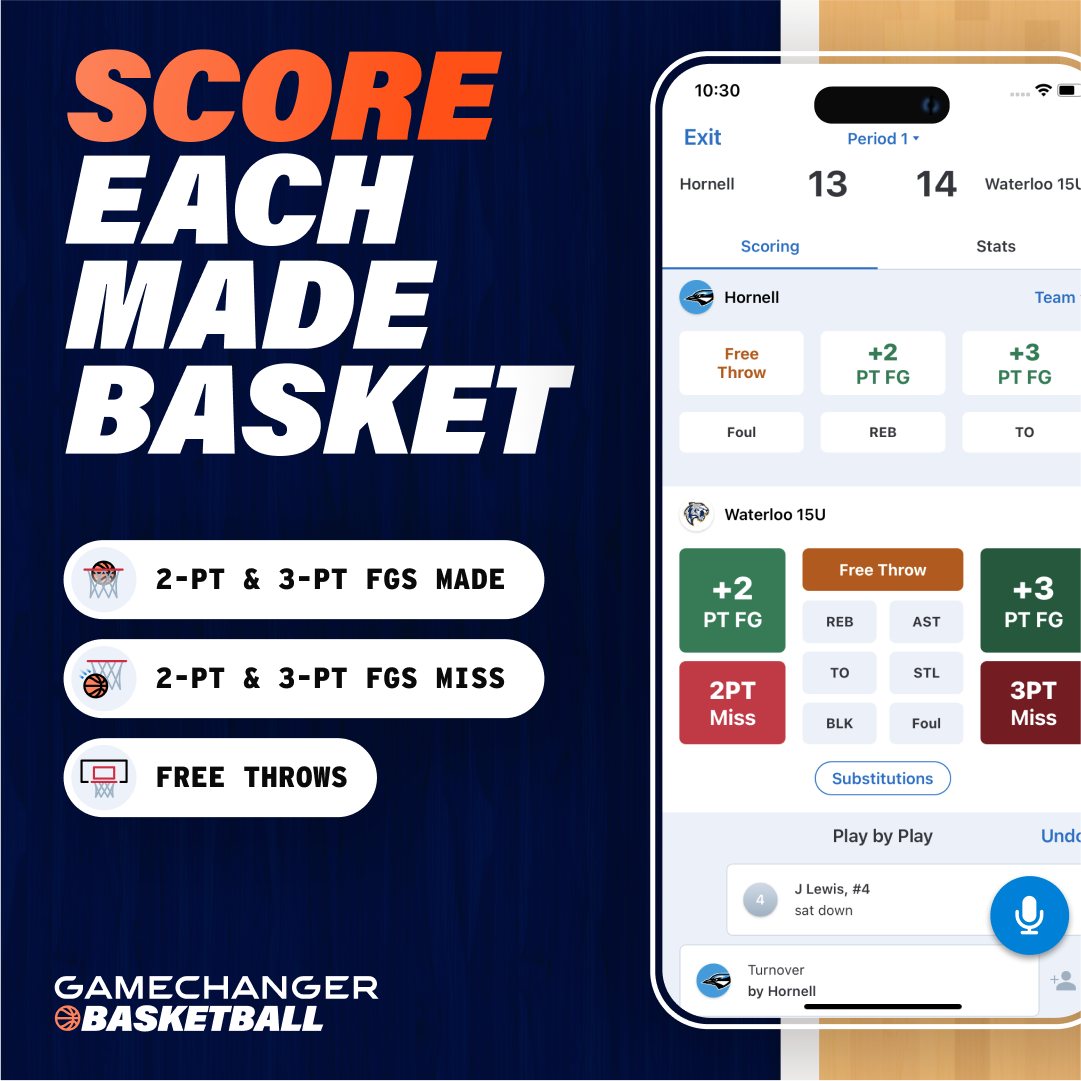
Hey, coach! Want to take your team to the next level this season? Introducing GameChanger, the ultimate game-day assistant with tools to give you a winning advantage. With GameChanger, you can track stats, keep score, and even live stream games, all for free! Get the stats and crucial game video you need to lead your team to victory, all from the palm of your hand. Coach smarter this season with GameChanger. Download GameChanger today on iOS or Android and make this season one to remember. GameChanger. Stream. Score. Connect. Learn more at GC.com/HoopHeads
“Integrity Insight” is a transformative mini-course designed for coaches, focused on examining and improving team conduct in alignment with core values and ethical standards. This course encourages coaches to engage in a reflective and analytical journey, examining past behaviors and incidents to foster a culture of integrity and accountability in their teams.
THANKS, BEN KAPLAN
If you enjoyed this episode with Ben Kaplan let him know by clicking on the link below and thanking him via email.
Click here to thank Ben Kaplan via Twitter
Click here to let Mike & Jason know about your number one takeaway from this episode!
And if you want us to answer your questions on one of our upcoming weekly NBA episodes, drop us a line at mike@hoopheadspod.com.
TRANSCRIPT FOR BEN KAPLAN – CO-AUTHOR OF “PIPELINE TO THE PROS: HOW D3, SMALL COLLEGE NOBODIES ROSE TO RULE THE NBA – EPISODE 932
[00:00:00] Mike Klinzing: Hello and welcome to the Hoop Heads Podcast. It’s Mike Klinzing here without my co-host Jason Sunkle who remains in Walt Disney World, but we are pleased to be joined tonight by Ben Kaplan, the author of the new book, Pipeline to the Pros, How D3, Small College Nobodies, Rose to Rule the NBA. Ben, welcome to the Hoop Heads Pod.
[00:00:24] Ben Kaplan: Thanks, Mike. Appreciate you having me.
[00:00:27] Mike Klinzing: Thrilled to have you on. Looking forward to diving into the book. As I told you before we jumped on, I finished the book about an hour ago. It is an outstanding book. If you love basketball, at any level, I can guarantee that you will love this book. It is extremely well done.
There is a ton of great stories in it, a ton of familiar figures to people who are fans of college basketball and the NBA. And we’re going to dive into all of that. Ben, let’s start by just letting you talk a little bit about generally what the book’s about, where the idea came from, and let people know where they can get the book, and then we’ll start diving in.
[00:01:04] Ben Kaplan: Yeah, sure. So really started with noticing I’ve played division three basketball for a couple of years and just noticing former division three players taking more and more high ranking positions in the NBA. And then during COVID, I started looking into it more and realized that I think it was around that time, 12 of the 30 NBA teams had either their head coach, and or their general manager, having been a Division 3 player.
So, I was like, how did this happen? How did a bunch of people like me end up running teams in the best league in the world? So, the book really tries to explore that, and it ended up, surprisingly, taking us all the way back to the very beginning of the league where some small college players, huge roles and going from there.
And so it’s a story about how that network formed and the different ways all these outsiders got in and then became like the ultimate insiders. It comes out April 16th, but it’s available for pre order. You can get that on Amazon, Barnes and Noble, and then should be available in bookstores everywhere in just a couple of weeks here.
[00:02:16] Mike Klinzing: Beautiful. Once it becomes live. I would highly recommend anybody in our audience, if you like basketball, which if you’re listening to this podcast, I’m assuming you do, you will love this book Pipeline of the Pros by Ben Kaplan. So I want to start by maybe talking a little bit about some of as I’m reading through the book, some themes that jumped out to me and then let you kind of talk about how the different stories and different people that you talk to throughout the book, how they sort of illustrated those themes.
So I think one theme that comes through loud and clear is that no matter where you are or no matter how connected you are, the idea of working really, really hard at whatever job you are currently in, in order to Not necessarily be noticed or at least not with the purpose of being noticed but just with the idea of I have to excel and put in a ton of hard work at my current job if I ever want to have a chance to advance.
So talk a little bit about that in terms of some of the different figures in the book and how they really demonstrated that need to work hard in order to get to that next step in their careers.
[00:03:33] Ben Kaplan: Yeah, so many of the guys we talked to a common theme from all of them was like, they weren’t plotting out their career path.
They weren’t saying, okay, I’m going to go work here, and then after a couple good years that’ll take me to this bigger job, and then that’ll take me to this bigger job, and then boom, I’ll be in the NBA. They were really just happy to be where they were, happy to be working in basketball, and doing the absolute best they could, pouring everything they could into it, and the job they had at the time, without an eye on whatever the next job might be.
Talking to guys like Stan and Jeff Van Gundy, they really embody this. They were, their goal was to be a high school or a small college coach. That’s what they wanted to do. That’s what their dad did, that’s what their dad’s friends did, that was what they were surrounded by. So one of my favorite parts of the book is talking about Jeff Van Gundy’s first coaching job, which was right when he was out of college at McQuaid Jesuit in Rochester in all boys school.
So he was 23 years old, head coach of a pretty good varsity program and he poured everything into that job. He was a special education teacher but he was running the players through individual workouts, which is like unheard of at the high school level at that time. He was doing study halls for them.
They were going to dinners. He was taking them to practices at Syracuse. He was doing events at the school’s football games. I mean, he was fully dedicated to making that that team as good as it could be by building a camaraderie. And and it was through that that led to his other opportunities.
It wasn’t because he was plotting his career. It was because he poured himself into that job at the time. I mean, so many of these guys talk about like their favorite time coaching, their favorite year coaching. It’s not in the NBA. It was the year or the years they had at a small college or the year they had at a high school.
It was an amazing thread that I certainly wasn’t expecting when we talked to them, before we talked.
[00:05:33] Mike Klinzing: And what comes through there with Jeff Van Gundy is he’s working with one of his players, right, who ends up being a major college talent. And that brings coaches in the door to watch him conduct a workout with this player.
And all of a sudden now he gets an opportunity to get connected, right? It just is an opportunity for people to see him. He didn’t set up the workout or design it for himself. He’s doing it for the player. And yet, By working hard, doing what he’s supposed to do and being creative, that gave him an opportunity to be in connection with people who then got him his next opportunity.
Its amazing how many stories in the book kind of lay that out. That, hey, here I am, I’m doing what I’m supposed to do and then that next opportunity. comes to me as a result of that. I know that towards the end of the book, Frank Vogel is a character that you dive into. And he obviously starts out playing division three basketball, plays three years, and then gets an idea that, Hey, maybe I can go and chase a division one dream.
Maybe as a walk on or maybe get in as a manager. And he really tries to get in with Kentucky and he wants to get in with Rick Patino. And the book kind of lays out the process that he goes through and doing that. And eventually when he does get that lower level or that next level opportunity, it’s all about not him trying to parlay that into something bigger.
It’s just he kind of pours himself into what he’s doing and creates value. So talk a little about Frank Vogel’s journey there.
[00:07:07] Ben Kaplan: Yeah. And I think his journey is so interesting because you look at the division one tournament, which is about to play off here, and So many guys have Division III ties, whether in their playing background or in their coaching background.
And that was certainly not the case when Frank Vogel was in college and he was looking at it as like, okay, I’ve decided I want to coach. If I stay here and finish up my career in Division 3 I’m going to be a high school or Division 3 coach. Like, that’s just what it’s going to be. There’s no way for me to bridge this humongous gap between my Division 3 world and Division 1 where I want to be.
And so he took an outrageous risk and threw a lot of things at the wall to try to get in front of Coach Pitino and get into the Kentucky program because he was really enamored with Coach Pitino and the way he led through positivity and you know, managed to get, get an introduction and get into that program.
And it took an awful lot of perseverance and incredible amount of perseverance. That’s for sure. Way more than I would ever have took a lot of no’s before he got a yes. And then as soon as he got that yes, he was like, I am going to work as hard as I absolutely can. That’s for sure. And that was one of the things he told us that once he got that opportunity, whatever he did with it, it was not going to fall short because of a lack of hard work from him.
And so he worked his tail off and proved indispensable and formed a really close bond not only with coach Pitino, but especially with, with Jim O’Brien, who kind of became his, his guy that took him through the NBA. And that led ultimately to you know, Jim O’Brien brings him to the Pacers.
He gets fired and then Frank Vogel is the interim coach. And then the rest is history. He’s an NBA champion. A few years later.
[00:08:54] Mike Klinzing: There’s a lot of those interim coach opportunities that guys either parlay into something bigger, or it just keeps them involved in the game. in the league. And when you start talking about the Richie Adobato and Ron Rothstein and guys that again, we’re attached to, and look, it’s funny when you go through and you read the book and as you know, basketball, and you clearly don’t know every single story and every single connection, but it’s, there’s so many threads that connect different people to other different people.
And it’s like, When I think about the podcast that we’ve been so fortunate to be able to do and however many episodes, 900 and some that we’ve done at this point, the connections of this person’s connected to this person, or this person knows this person, or this person is sort of from this particular family of coaches, or this person knows this person.
This guy and that guy knows that guy and you get how it all goes. I think when I look at just the threads that go through the book, I think the five star thread is really an interesting one because kids growing up today don’t really understand the impact that five star. Had on the basketball world and how influential it was up until kind of the shoe companies Took over that elite high school market, but for most of the 60s 70s 80s, even early 90s You had five star basketball was the place where the best high school basketball players went, but it was also the place where Some of the greatest coaches in the game went to kind of get their start Maybe when they were a high school coach or they were a small college coach or they were connected to somebody or they just were a young coach at the division one level and they were able to kind of work their way up and All the people in the book that are connected to five star.
I think it probably traces back to Hubie Brown And then you get some of his disciples that come on after him. So talk a little about Five Star and just your research, what you learned from, from going down that particular pathway when it comes to division three basketball.
[00:11:04] Ben Kaplan: Yeah. The Five Star part was especially fascinating to learn about. This was one of like probably 10 different things where you know, doing the research, end up writing it up and then realizing that I’m on pace for like a 600 page book and nobody’s going to read that. But like the five, the five star piece was just I had no idea about the history.
I obviously knew about the camp the famous orange shirt. But really getting an understanding of like, wow, every basketball camp that I went to when I was growing up in like the late nineties and early two thousands. Every single one of those camps was set up the way Five Star was set up.
I took it for granted. Like, that was something that I think Bobby Knight was a huge influence there and like setting up the stations and you do the stations and then there’s the coaches draft the team and there’s a tournament and like that’s the way the camps I went to were. And so to see that influence was, was really cool and understand where that came from.
And then beyond that, just where all these coaches, a few of them said this to us, that was their doctorate program. They would coach at their high schools, or maybe some of them were college assistants at the time, and then they would all come together.
They would show off their teaching chops, they were all super competitive with each other, so they wanted their station to be the best. They wanted it to be the most electric, the most dynamic, the one where the players learned the most and were the most engaged. And then, the camp would end, each day.
They’d go down the hill, they’d go have some burgers and beers and just like X and O and compete with each other and share information and try to one up their coaching knowledge until the place closed at two in the morning and they’d roll back up to their dorms and then wake up the next morning and do it again.
And that was a piece throughout the book that became apparent was You know, just how important it is, whether you’re coaching or doing any other job, just to have those opportunities to meet with like minded individuals and share ideas and pick up new ideas. And just how valuable that is.
They’re really like sharpening, sharpening each other and sharpening each other’s minds throughout each of those summers.
[00:13:10] Mike Klinzing: What’s funny is, and I don’t know if you ever thought about this when you were a kid going to basketball camp, but I know that when I would go to camp and you’d get up, especially if it was an overnight camp, which I know they’re not quite as prevalent maybe as they used to be, go to camp, you’d get up, you get the wake up call, go to breakfast, you get to the gym about 7am and I had no idea that that went on at all. And I remember I worked when I was, I think 19 in my sophomore year in college, I worked at Ohio State’s basketball camp and I was then behind the scenes of, Hey, now I get to go to these coaches gatherings at the bar after camp is over. And my eyes were just completely wide open.
I was stunned that I’m like, wow, this is really what is happening. Like these guys are just in and everybody’s talking hoops and everybody’s trying to. meet and make connections. And I think that goes to another theme that runs through the book, which is the relationships that these guys have. from division three schools built, whether it’s by accident or by happenstance or it’s intentional, somebody who was their teammate or somebody they competed against or someone that they knew.
But I think the importance, and this is something that we’ve learned throughout the podcast too, Ben, is just the importance of building relationships with people, not with the idea that you’re going to be able to utilize that relationship to help you get the next job or use that person as a reference or whatever, but just the idea of building that relationship, which allows you to a grow as a coach through your interactions with that person.
But then also there is that ancillary benefit of at some point that person may be able to help you, or maybe you’ll be able to help that person. Depending on how your careers go. So I don’t know if you can pick out maybe a story that is one of your favorites about just somebody who built a relationship that they had no idea was going to help them later in their career.
And then it turned out that that relationship ended up being their big break.
[00:15:42] Ben Kaplan: Yeah. I mean, there were like, there were so many of those, that was a lot of the stories. It’s either a really good friend that lifts them up. So you talk about five star and like Mike Fratello and Hubie Brown were kind of tied at the hip and.
Hubie brought Mike along, and he got him the job at Five Star Hubie coached against Mike in Jersey High School basketball, football, and baseball so he had seen his potential from a young age as a leader and an athlete, and he, he’s the one that lifted Mike into the NBA and made him an assistant.
But then you get the like, more kind of random meetings. I think the Van Gundy tree is a really good example of that, where like Steve Clifford and Jeff Van Gundy met, I think it was at Syracuse basketball camp. They were at stations next to each other. They were both in college and and running their stations and chatting in between stations and that’s how they got to know each other.
And then the relationship evolved from there, but it wasn’t like they were ever best friends. And then Jeff ends up hiring Steve to work as a scout for the Knicks. Similar thing with Tom Thibodeau he got to know Jeff because he was coaching at Harvard as an assistant. The Ivy League started later than other D1s rather than taking that time and gearing up for the season.
Resting a little bit. He was like, Hey, this is a great opportunity for me to go observe other D1 programs. So he went to watch Providence when Jeff Van Gundy was there and that’s how they met. And the coaching staff was impressed with this young coaches initiative that he was taking to, to go watch them.
And then he got into the NBA eventually because he decided to go watch Albany Patroons practices. And that’s how he met Bill Musselman, who when he gets a job with the Minnesota Timberwolves, he lifts up Tibbs, and then Tibbs is bouncing through the league, and Jeff Van Gundy ends up getting the next job, they have a preexisting relationship, Jeff hires Tibbs to be his assistant in New York.
So, I mean, there are just countless stories and it really is amazing. There’s a part of the book where we talk about, like, different kinds of connections that you build, and there’s the strong connections. And those are obviously very valuable, but usually when you have a strong connection with someone, your networks are very similar.
But it’s those weaker ties that really expand your universe of opportunities because they know people you don’t know, and that might lead to opportunities that you wouldn’t have had otherwise.
[00:18:09] Mike Klinzing: The basketball world is just so small. It seems like you can talk to just about anybody and that person knows someone who knows someone.
And then before you know it, you can get connected to pretty much whoever you want to be connected to. And I think that ability goes back to what we talked about a second ago, that ability to vouch for somebody of, Hey, I know this guy, and I know how hard. This guy works at his current job, or I know the value that he’s brought to the current position that he’s in.
And man, that’s going to allow me to recommend him for that next position. And again, those are those weak ties that you’re talking about where we’re not best friends, we’re not running in the same circle. So we’re not necessarily connected to all the same people. And that expands. that reach that you have when you know and have those kinds of acquaintances.
So I do think that the relationship piece of it is so critical and it goes along with, again, how hard do you work in your current spot? Again, not with your eye on the next thing, but on doing exactly what you’re supposed to do. And to me, those were two of, if I’m trying to take a lesson from The book as a coach, as a current college athlete, if I want to break into the NBA or I want to break into the coaching profession, I think those are two really, really good lessons that the book does a fantastic job of laying out for a, with a variety of stories, like some of the ones that you already talked about, that those are two things that young coaches who want to get into the profession or young executives who want to eventually work in a front office, Those are definitely two good lessons that you can learn.
I want to talk a little bit about Andrew Olson, who has been a guest on the podcast and he kind of went through and told his story, but you guys picked in a unique way to sort of design the book where there’s a little bit about Andrew at the beginning of every chapter. And you kind of walk through his story from being a high school player in San Diego, who when he’s a freshman, sophomore, he’s playing really well, thinks he’s probably going to be a division one basketball player.
He gets to his senior year and all of a sudden he’s small. He’s maybe not super athletic and as good as he is, those D1 offers never materialized. And so he ends up looking all the way across the country. at Amherst College. Goes there, has a tremendously successful career, tries to figure out, okay, I graduated now, what do I do?
And a lot of his friends and buddies are making lots of money. They’re working on wall street, their consultants, they’re doing whatever. And he still wants to be involved in the game. And so he gets started with his own thing and I’ll let you pick it up from there. But just why did you decide that Andrew was kind of going to be?
I don’t want to say he was the focus of the book because there’s lots of other stories and different things that go through it. But putting Andrew at the beginning of each chapter, what was the thought process behind that design? And then you can kind of finish Andrew’s story from where I picked up on it.
[00:21:14] Ben Kaplan: Yeah. So the first thing that we wrote for the book and the way the book was always going to start was with Andrew you know, in a bar having lunch. Nobody knows who he is. And, and then kind of teasing like, well, he’s, he’s going to the United Center tonight because he’s part of the Cleveland Cavaliers organization.
Originally it was, it was just going to be a short thing and then explain his background and use him as an example of someone who got this unbelievable opportunity in the NBA, thanks to some of these networks that have been built out and then explain the networks. And then throughout the writing process, I didn’t want to include it. It’s interesting to me because I was Andrew’s teammate and I know him I didn’t know how interesting it would be to other people. We got some good feedback on it. They were like, hey, we want a little bit more of this. And then this is the first book that I wrote this with my good friend Danny Parkins, who’s a radio host.
This is the first book either of us have written, so we were seeking advice from people that have written books before and an author gave us the advice of like, he’s like, hey, who’s your main character? And we didn’t really have a good answer. And he’s like, well, are you writing a list or are you writing a book?
And so in thinking about who the main character could be. Andrew really stood out and then it became apparent different ways that we could tie his journey that was taking place from the nineties and two thousands and early 2010s and tie that to the journey that was happening within the NBA and these guys that were coming through the league from the beginning of the league until today.
And then it all kind of meets up at the end where he, through connections that he primarily made within the division three world, Ends up getting the opportunity to interview with a few teams and becomes a shooting coach for the Cleveland Cavaliers, which is where he is today.
[00:23:05] Mike Klinzing: So I think what makes Andrew a really compelling choice, and I don’t know if this is how you guys thought about it or if the authors that you talked to thought about it in this way, but the way I kind of looked at it as I was reading the book is, okay, so the title says, How D3 Small College Nobodies Rose to rule the NBA.
So if the focus of the book is on Hubie Brown or Jeff Van Gundy or Brad Stevens or Frank Vogel, like these are guys that at this point in the basketball world are household names or very close to household names. And so with the title being Small College Nobodies, Andrew is probably a guy that unless you’re a big fan of division three basketball, you probably have not heard of Andrew Olsen.
And so to me, I feel like it was a really good choice because it sort of captured the title. and took a guy who went from, all right, he’s got D1 dreams. All right. He’s playing division three college basketball. All right. He’s graduated. Now he’s trying to figure out how to stay involved in the game and he’s doing training.
And now he comes up with this really interesting way of being able to analyze and teach shooting and nobody will really listen to him. And then boom, eventually he finds his way through, as you said, with his connections and eventually gets an opportunity with the Cavs. And so he’s almost the perfect definition of D3 small college.
Again, I don’t want to insult Andrew, but a D3 small college, nobody that most people in the basketball world have not heard of. And yet, I think anybody who reads the book understands that his story really does an excellent job of illustrating what that pipeline that you guys are talking about, what it illustrates.
And so did you have anybody from that standpoint in terms of authors talk about, Hey, you want to get somebody who’s maybe not famous kind of as the main character, was that any part of the thought process?
[00:25:12] Ben Kaplan: No, not really. Part of the reason why he was a compelling choice, it was just, I knew him, so I knew his story and I could talk to him.
But B was you know, in trying to get people to read, when it’s a historical book and it’s a lot of stories that are tied together you know, hopefully there’s a thread, but you know, we want to keep people reading. I want there to be a little bit of a mystery and if we did it with Frank Vogel, most people who are picking up this book know where Frank Vogel ends up.
Hopefully the journey is interesting to learn about, but there’s not a lot of like mystery. And so that was part of it was just trying to keep people engaged and like, Hey, here’s this little story that might keep you moving along a little bit of a mystery. Try to figure out how this all happens.
As you’re reading the stories about people that really well, maybe you don’t know the stories that you’re hearing, but you know where it ended.
[00:26:06] Mike Klinzing: Right. You know the names exactly. Let me go back to the beginning of the book, because one of the things that. I told you before we jumped on here is it’s super interesting the arc that the book follows from the very, very early days of the league when the Los Angeles Lakers moved from Minneapolis and you got a D3 guy leading the league.
The Los Angeles Lakers in those years when they first get to LA and you’ve got a couple stories about Bill Fitch that I want to touch on here in a second that were among my, that were among my favorite stories in the entire book. And you just think about how unsophisticated the league was in its early days.
Again, when there’s No information. There’s no real knowledge of what works, what doesn’t work. Everybody’s kind of flying by the seat of their pants. And this guy who maybe his background is he’s a promoter, but now he’s running the basketball side of it. Or you got a basketball guy trying to do the business side of it.
And there’s all these different things that are kind of overlapping. None of it really makes a whole lot of sense or is based on anything. And then as the league transitions slowly, but surely over the course of the book, you work your way towards where we are today, where. We’re hyper aware of statistics.
We’re hyper aware of data. Everybody is trying to collect and utilize the information that’s out there to give both their team on the floor, but also their business of basketball, as many advantages as they can. What did you find to be the most interesting part of that transition from the early years of the league?
Where it was a little bit more or a little bit less sophisticated to the era that we’re in now, where it seems like, I don’t even know if overanalyze is the right word, but certainly the amount of data that’s available to teams and players and coaches is at a whole nother level. So just maybe talk about the transition that as you guys put together the book, how you thought about conveying that to the reader.
[00:28:19] Ben Kaplan: Yeah. So before we get to that, like a big decision that we had to make, Before really diving into the project, was what to do with like the pre Division 3 era, because people that went to the small colleges they weren’t technically Division 3 athletes if they graduated before the mid 1970s, and then some of the schools that are Division 3 now, like, people might have gone there in the 1980s when they were still NAIA.
So, we decided to just basically put a line in the sand. It’s like 2021, like alright, as of this time, anything that’s Division 3 now, we’re just counting that as Division 3. We’re going to go back in time, we’re going to bring everybody under our umbrella. And that allowed us to tell something that I’ve never seen in a book, which is something I was excited to do.
Which was to talk about really the evolution of coaching and management throughout NBA history. And yeah, I mean, it started out where it was a business we need to focus as much energy from an organizational standpoint on getting butts in seats, getting ticket sales and making sure that we’re making money.
That was the focus. That’s why I had a lot of people that were in public relations, a lot of publicity people, promoters. That’s why they were running the teams in the 1950s. And now you get to where we are today, where we’ve almost swung too far to the other side, where the focus is basketball, the focus is on winning games, and sometimes that’s at the detriment of understanding what this is at the end of the day, which is it’s an entertainment product.
And to see that evolution from having the people that were promoters and the guy that we focus on in the first chapter, Lou Mose, who played like, he played four sports. I want to say he played like 16 sports at St. Thomas in Minnesota. And he was the one who was the general manager of the Lakers when they moved from Minneapolis to Los Angeles.
He saw this switch where he was someone who had the promotional background. He had the business background that was needed to get that team running in Los Angeles, which was no sure thing. And he was able to use his passion for sports and, and scouting, which was really cutting edge at the time.
And then by the time he’s leaving the, the league, that’s when we start seeing some of that like scouting and more of like former NBA players stepping into the role he had. And then there are ebbs and flows over time. That’s on the management side, on the coaching side it used to be, Nobody cares about coaching.
Just roll the balls out. They’re pros. They don’t need any education. And then all of a sudden you get people like Bill Fitch, which we can talk about him more. Certainly a lot of good stories. These college X’s and O’s guys. So I talk about in the book, it’s not the X’s and O’s, it’s the Jimmy’s and Joe’s.
So we thought about it as a spectrum. And the league really pushes back and forth along that spectrum. We’re like, coaching matters. No, you have to cater to the players. No, it’s all about strategy. Coaching matters. Let’s get teachers back in here. No, you have to cater to the players. It’s more about the former NBA guys.
So we try to chart that out throughout the book just to anchor people into understanding what’s going on at that time when we’re telling stories about the certain characters.
[00:31:35] Mike Klinzing: Well, as we get to The Bill Fitch stories. I grew up in Cleveland, so I was born in 1970. So I obviously don’t remember the year that the Cavaliers become a part of the NBA because I’m just being born at that point.
My first recollection of the Cavs and professional basketball is with Bill Fitch as the coach. And then obviously he goes on to coach the Celtics and coach the Rockets and has a tremendous amount of success, but he starts out as a small college basketball player and and a small college coach. And eventually through his connections and through hard work, like we talked about before, he ends up getting an opportunity because he’s connected to the Cavaliers owner, Nick Mileti, who went to Bowling Green here in the state of Ohio and Bill Fitch coached at Bowling Green for a season.
And that connection ends up getting him an opportunity to coach the expansion NBA Cleveland Cavaliers. And there were two stories from Fitch that stood out to me, which again, speaks to the evolution of coaching. The one was where, and I think you even said in the book, you weren’t a hundred percent sure that it was entirely accurate, but that Fitch kind of lined up his starting lineup and gave everybody a slap across the face, which clearly a different era.
I don’t think you’re getting away with that one today. Talked about that. Yeah. No, you’re not getting away with that. You’re not getting away, you’re not getting away with the first slap. Let’s put it that way. I think after the first slap, everybody scatters and gets to their phone and it’s, it’s over right there, but certainly a different era and that’s.
A really good illustration of that. But then the other story that I, I think it was my favorite story in the book is when he’s trying to figure out, okay, I’m sort of in charge of the basketball operations and we got to put this team together. How do I figure out which players from other teams we might want to pick up in the expansion draft?
Just tell us how he went about trying to figure that out. It’s to me, I had never heard this story and I thought it was the funniest story in the book by far.
[00:33:45] Ben Kaplan: Yeah. So Bill Fitch gets hired by the Cavaliers as their head coach and their lead executive which wasn’t out of the ordinary at that time.
You know, crazy to think about today that an NBA team starts up and they get a guy who spent most of his time coaching at mid level programs, has like one or two years of Big Ten experience, and then give him the keys to an NBA franchise. But that was the NBA back then. And he got hired pretty late it was the end of, after the college season.
And so he didn’t have any time to scout any NBA players between the time he was hired and the time that the expansion draft happened. There’s also, basketball reference doesn’t exist back then. There’s no there’s no database of statistics anywhere. There’s no film. You know, he can’t go on Synergy and check out the guys he wants to draft and see how they do in pick and roll situations.
So one of his assistant coaches has the idea Hey my son gets cards in his bubble gum packs. They’ve got stats on the back. So they send this guy out and they say, buy as much bubble gum as you can. And he comes back with tons and tons and tons of bubble gum. They rip it open. They look at all the cards, they flip it over and they have.
Most of the NBA covered, and they’re able to look at the stats and try to figure out who they want to draft. And, I mean, the NBA is not an old league. That was a little over 50 years ago. It seems like we’re telling a story from the Stone Age in terms of where we are today. But just an example of how these guys needed to use a little bit of ingenuity to figure out how to win.
[00:35:23] Mike Klinzing: I mean, that story is hysterical in and of itself. If you really think about, if you could somehow have video of, first of all, them coming up with the idea of, Hey, kids getting a lot of bubblegum, and there’s cards in there with statistics on it. Hey, that’s a good idea. Let’s, let’s start buying bubblegum and finding all these cards, and then to have them sitting like at their kitchen table rifling through the cards and looking at statistics and comparing this player to that player and deciding who they might want to bring on to their expansion franchise. I mean, it’s just when you look at, again, the sophistication of where we are today. It really is incredible how far we’ve come in such a short period of time.
And you think about the evolution of, again, front offices and executives and how they go about their job. You think about the evolution of coaches and the game itself and how much it’s changed. It really is incredible how quickly That’s changed. And I know that another thing that you talk about in the book that sort of ushered in a new era was the merger between the NBA and the ABA and how the ABA franchises that eventually were absorbed into the NBA.
And you tell a few stories about the guys that were running those franchises. So I don’t know if you have a favorite story from that NBA, ABA merger era that you want to share with us. Did one of them stand out as being the most interesting kind of as it relates to the arc of the story and the arc of the book?
[00:37:08] Ben Kaplan: Yeah, you’re asking me again to talk about a stretch of the book that could have taken us into 800 page territory. But the ABA was like just an that’s why the reason I don’t know if you’ve read Loose Balls, but like it’s one of the more popular sports books out there. Like, the story is Terry Pluto.
[00:37:27] Mike Klinzing: Great, great book.
[00:37:29] Ben Kaplan: Yeah. The story is about the ABA or it almost seems made up, some of the things that happen. There’s someone that we researched who, there’s a little bit about him in the book, but we had to cut a lot of it out who Harry Weltman, who his son Jeff is now the head of basketball operations for the, the Orlando Magic.
Like, they’re the first, small college father son NBA executive duo in NBA history. But Harry’s, the way Harry got into basketball, he was a sports marketing guy. He got connected with a group of people that had some money and wanted to buy an ABA franchise and then they didn’t want to move out to St.
Louis and so he ends up running the Spirits of St. Louis. That team, there’s a great documentary about them. They had a whole cast of characters and we talked to Danny, my co author, he talked to Marv not to Bob Costas about this cause Bob Costas, his first job out of college was as the announcer for the spirits.
So he had some great stories about Harry and just trying to figure out how to run a basketball team, basically, with no experience. But the character from the ABA that we really focus on was a man named Carl Scheer. And so Carl was someone who played basketball at Middlebury. He got married.
Moved down to where his wife was from and near Charlotte, became a lawyer, and I talked to his son. Carl has since passed, but his son was like, yeah, my dad hated law. So for fun, he was announcing games at Guilford College. Guilford College had a really good player who got drafted third in the NBA draft, Bob Kaufman.
He says, hey, I know the announcer’s a lawyer. I’m trying to figure out if I need to how to handle these ABA contracts and NBA contracts. Had Carl become kind of like a precursor to what an agent was. There weren’t really a ton of agents back then. The NBA people were impressed with him and that got Carl started in this world of basketball.
And he was really instrumental in getting the ABA and the NBA to merge. The Denver Nuggets are called the Denver Nuggets because of him. They were the Denver Rockets. He Larry Brown is a, I mean, he probably would have been inevitable, but Larry Brown’s first professional head coaching job was because Carl Scheer hired him.
The two of them really did a lot to legitimize the ABA. Carl invented the dunk contest. And then when they merged with the NBA, he had all these outside ideas. You know, ways that he could try to build the business of the ABA when they were struggling and he tried to bring them to the NBA and some of those things got adopted.
He was the one who really pushed All Star Weekend that exists primarily because of Carl Scheer’s initiative. He was one of the people that helped push along the three point line. So having that, it’s kind of like the, the ethos of what the NBA was 20 years before where it’s like, Hey, we got to throw a bunch of stuff at the wall, see what sticks.
Cause we need to get people in the building. Having that outsider mentality really became valuable when he moved over to the NBA, which was getting a little bit stuck.
[00:40:32] Mike Klinzing: Well, and that goes to, I think another thing that runs through the entire book is sort of this. How does ebb and flow between former players in the league being in head coaching positions and being in executive front office positions versus guys who were not players in the league?
And how over the course of time, that’s kind of flowed back and forth between there’s eras where former players seem to hold most of those positions. and then you have other eras where it seems like it was more. of those outsiders who didn’t hold, or who didn’t play in the league previously, as you guys looked at that and you started to really dive into sort of the why behind having former players in those positions versus having guys who didn’t have that experience playing in the league, what were some of the things that people told you as you were interviewing them in terms of why teams at certain eras really like to have players in those positions versus a time like we’re in sort of today where you have more executives that are coming from outside of the league.
Is this just as the league got more sophisticated and understood that just because you could play the game didn’t necessarily mean you could coach it or evaluate talent? Is it as simple as that or was there something more to it?
[00:42:02] Ben Kaplan: No, there’s definitely a lot more to it and it changed in every era. One of the things The NBA merging with the ABA did is it exploded the black population of the league. And I don’t think it’s a coincidence that you saw that happen where rosters are getting having more and more black players on them and owners are deciding, Hey, I need a disciplinarian. I need someone like coach Fitch to get my guys in order.
I need one of those X’s and O’s college mavens that can take care of my team and get them in line. You know, that’s what happened then. And then you get into the, to the nineties when the salaries start exploding and. All of a sudden you see a shift back towards a lot of players former players coaching.
And I think there was a thought that we need coaches that can relate to our players. You can’t coach them with a heavy hand. You can’t have the, the Hubie Browns of the world that are going to force you into their system be the ones that are coaching players like this, that are making so much money.
And then you might shift back where it’s like, okay strategy and, and the importance of that and being able to incorporate analytics and thinking about the job less as like a coach and more about like you’re managing a giant team of assistants and shooting coaches and nutritionists and analytics people having the complicated skill set that you need in order to handle that role.
And that’s kind of where we are today. And so you just see these ebbs and flows as the roles change. And I think what’s really interesting that’s happening today is You’re starting to see a lot of former players getting jobs, big executive jobs. And they’re not the star that just got handed the keys to the car.
It’s not the Joe Dumar situation where he retired and then a year later he’s running the Pistons. It’s guys who have really had to grind and work their way up after their playing careers ended. And I think that makes a lot of sense because the job has become so much more complex. And needing that first hand experience is almost a requirement if you’re going to come in straight from the league to understand how everything works in order to get your arms around it.
But one thing that the Division 3 guys former Division 3 guys that we talked to, They would all say, being a former NBA player, that’s like, invaluable experience. And yes, I bring something else to the game, but like, I can never replicate that experience of sitting in a locker room and knowing what it’s like to play in those games and have that pressure.
So like it’s going to evolve, but it’s always going to be a huge advantage for the former NBA players if they’re interested in really putting in the time and pursuing those roles.
[00:44:51] Mike Klinzing: Yeah. I mean, that speaks to exactly the point that you just made a minute ago where a former player has an advantage over somebody who didn’t play at that level.
It’s something that Someone who did not play never has that experience, never can say, Hey, I know what it’s like. I know what that feels like. That experience just isn’t there. And yet at the same time, it’s critically important, especially in the game, the way it is today, both from a coaching perspective and especially from a front office perspective, there’s no way that you can walk off an NBA court after 10 years.
Now, maybe there are guys that are preparing and thinking about it, knowing that, Hey, when I retire, maybe I wanted to get to coaching, or maybe I want to work in a front office. And maybe those guys are spending their off days and their off seasons, taking the time to really study that part of the game.
But I’m guessing those guys are, Relatively few and far between. So if you can combine a guy who has playing experience with somebody who, as you said, is willing to put in the time and the effort to grow through the profession, just like somebody who maybe didn’t have that experience, works hard at a job and slowly moves up the ladder.
Then you’re kind of getting the best of both worlds when it comes to a former player who’s put in that time to gain the experience. Because as you said, the game today, and just the way that it’s organized, both from a coaching standpoint and from a front office standpoint, and the level of specificity that each particular job requires, would make you believe that it would be very difficult to completely walk in blindly from playing the game to think that, all right, I can suddenly be able to coach at the highest level with guys who have been doing that particular aspect of basketball for the last 10 years, 20 years, 30 years, whatever it might be.
And same thing on the executive side, just makes it extremely difficult. And then I think the other thing, Ben, that’s interesting to me is that when you look at, and you talked a little bit about the X’s and O’s versus the Jimmy’s and the Joe’s, right? And so you have, if you go back in the history of the league, you have some guys who are considered to be this guy’s an X’s and O’s coach, right?
He can diagram and out scheme the other guy. And then you have other coaches who they’re players coach, they’re building relationships, they’re guys like that’s why they kind of play hard. And I think now we’re seeing. And correct me if I’m wrong, but I feel like in order to be a great head coach today, you have to certainly have both of those things.
You have to have an ability to X and O and you also have to have an ability to motivate and coalesce a team and bring guys together. And then you think about how big the staffs are. So you can have people who are specific. Maybe you got an assistant who’s just, a great X and O guy on offense, or maybe you have an assistant coach who’s really good about massaging egos and getting guys to work together and build teamwork.
And so how do you think about that aspect of it in terms of just the size of staffs today and how each particular job, I’m especially thinking about the coaching front that you kind of got to have in the head coaching job. Somebody who has a little bit of both of those ends of the continuum for lack of a better way of saying it.
[00:48:22] Ben Kaplan: Yeah. I mean, This might have been ignorant of me, but before I started this project, I thought about coaches the way I think most NBA fans think about coaches. It’s like, who makes the best adjustments? Who calls timeouts at the right time? Who has the right substitution patterns? And in talking to these guys, like, for all of them, like, the basketball part is table stakes.
Everybody has the basketball parts. We all know what adjustments to make. We all know how to handle this stuff. It’s really the management ability. And not just managing the players. Figuring out how to motivate everybody, get everybody firing at the right time, but you’re a manager of a staff of a few dozen at this point in the NBA.
And being able to properly delegate to all your assistant coaches. When Hubie Brown first came into the league, he was he was with the Milwaukee Bucks. He was Larry Costello’s assistant. They had one assistant. He was also their advanced scout. He’d go fly out, watch a team, fly back on the red eye, go to practice.
Like, he knew what he needed to do. It was pretty easy for Larry Costello to manage one person. But now, what you have, where you’ve got a Manage all these different people that are all trying to figure out not only how do they help the team, but they’re interested in their own career and you’ve got to figure out how to get them going and figure out how to give them tasks to develop them so that they feel like their career is progressing and that they’re contributing to the team and to understand the right questions to ask an analytics person to get the best answers out of them to help your players.
I mean, it is an unbelievably large task to ask. And it’s changed the nature of that job from when there were just one or two assistant coaches. And I think that’s why you see such a different profile succeeding in those roles today.
[00:50:22] Mike Klinzing: Really interesting that you talked a little bit about how you’re having to manage a much, much larger group of people than NBA coaches ever did in the past.
And so I think that at least in my estimation, that part of the job, I think on any level, I think probably particularly on the NBA level, because you do have the egos that are involved. You do have the salaries that are involved. And let’s face it, the best teams, the teams that win championships are teams that are connected.
They’re teams that are willing to sacrifice for one another. And sometimes that comes from your players and who they are and what they’re all about. Regardless of that, the coach kind of has to take a leadership role in that. And then conversely, I think you look at the X’s and O’s side of it, right? And as the guys that, You interviewed and talked to, told you, it’s like everybody kind of has that.
And when you think about it, it makes sense, right? Because You got how many guys working in the video room? You got how many assistant coaches? All those coaches on the staff are watching film. They’re watching film of their own team. They’re watching films of other teams in the league. They’re watching teams in Europe.
They’re watching college coaches. There was, I mean, nothing is a secret. If you were an X is an O genius 40 years ago, you might’ve been able to keep some things hidden from people and not share it. Hey, I got this secret system that we’re running that nobody else can figure out. Now, I mean, everything’s on video.
So it feels like, yeah, you still have to analyze it. You still have to go through it. You still have to be able to match the X’s and O’s to your, personnel, but it feels like to me that the shift from a head coach has definitely gone from a guy who is strictly a tactician to a guy, as you said, who’s going to be somebody who can oversee and manage that entire process.
And I think when you look at that, and I think about a couple of the characters in the book who have those characteristics to me, I think about Greg Popovich and Brad Stevens. So I don’t know if you have. a favorite story or thought from the book about each of those guys. But when I think about somebody who kind of acts as the CEO of their team, those two guys really pop out or come to mind of the people that you guys wrote about in the book.
[00:52:59] Ben Kaplan: Yeah, absolutely. And you think about like someone like Hubie Brown and he’s recounting his time in the NBA and talking about how thick the playbook was and all the different variations you had on all your different offenses, and all the different sideline out of bounds and baseline out of bounds plays you had to install.
And in a sense it was like, let’s find a way to take the game from being simple to complex and that’ll give us an edge. And you know, we talked to Brad Stevens for the book, we talked to Will Hardy, who’s a good he comes from the Popovich School, spent a lot of time there, but also worked with Brad Stevens in Boston.
I think he exemplifies this a lot too. Where they’re saying, there’s so much information right now, I can’t overload my players, I need to figure out what’s relevant, I need to distill it down, I need to figure out how to deliver a simple message. And that’s something that both of them talked about.
And I think that’s the key, it’s figuring out what information matters, and then finding the simplest way to deliver it to the players. Will Hardy has spoken about this in other interviews. And he says, I really want my players to focus on a few things. Like, we need to say, hey, these are the things that are really important to us.
You’ve got to do these things. And then everything else, like we’ll work on. And one of the more, one of the more surprising things that came out of any of our interviews was I talked to Will right before he started coaching with the Jazz. So he had just taken that job and I was like you’ve got to manage all these different people.
Like, are you worried about that? And he was like, nah, not at all. They’re all good at what they do. I just need to talk to them and they’ll get it done. And then I just need to figure out how to communicate that. And that ability to be like, no, I’m not worried about managing all these different people and, and all their expertise is that I’m certainly not a an expert in and being, but he’s like, yeah, that’s my job. Talk to them, ask the right questions and distill it down.
[00:54:59] Mike Klinzing: Funny because this is a topic that we often talk about with coaches that come on the podcast is your ability to delegate and almost to a person, those coaches that We dive into this question on, they say, when I was a young coach, I kind of wanted to do everything and I wanted to micromanage everything.
And I wanted to have my hand in everything. And I didn’t really understand what it meant to do what you just described, which is you got to give those people that You hire that are good at their job. You got to give them an opportunity to do what they do. And then as you said a little bit earlier, you want to be able to develop those people who are on your staff so that they can be ready for whatever their next opportunity is.
And so many coaches have said that they weren’t good at that early in their career. And then as they age and they get more experience and they understand that When you put together a staff and particularly at the NBA level, at the high school level, it maybe is a little bit more difficult, but certainly at the NBA level, you’re getting an opportunity to hire the best people for those positions.
I mean, you’re certainly in position to be able to try to find the best people. And so the key is as a coach, as the overseer, can you give those people direction and then Let them utilize their expertise and do their job. And that’s, that’s a lot harder skill than I think most people would consider. I know for myself, so I run a basketball camp business in the summertime and I always think about, Hey, how could I expand this thing and grow it out?
And then I’m always like, well, what makes the camp good is that I’m pretty good at what I do. And if I give this to somebody else, it’s not going to be the same. And like, that’s, that’s, I don’t want to say character flaw, but it’s a flaw that I need to probably let go and just say, Hey, I got to hire somebody good.
And maybe they don’t do it exactly the same way I do, but maybe they add 20 percent of value here and make things even better. And it’s interesting for Will Hardy, a guy who hasn’t been or hadn’t at the time you talked to him, been a head coach in the league to sort of already have an understanding, which I’m sure he learned as a part of that staff with the Celtics.
[00:57:20] Ben Kaplan: Yeah. And that’s something he said, like, Coaching is a profession. He’s like, I had everything to learn. That’s where you talk about kind of the disadvantage that former players are at today. It’s managing those staffs and figuring out how to delegate and seeing how, okay, I learned from Greg Popovich.
I saw how he handled me when I was a video coordinator. I know like what I appreciated that he did with me. I saw how he built my own confidence. How can I do that with the rest of the people on my staff? How can I create an environment where people feel free to share their ideas so that we’re really getting to the best answer.
It’s definitely way different than when Bill Fitch was looking at the back of cards.
[00:58:09] Mike Klinzing: Which one of the people that you interviewed, do you feel like had the most unlikely rise to the position? that they ultimately ended up in. So as you heard their story, you researched their story, is there one that stood out as being sort of the most unlikely?
Like, I can’t believe that this coincidence or this connection or this relationship ended up with this guy who started here And ended up here. Is there one guy that sticks out to you?
[00:58:44] Ben Kaplan: There are a few and a lot of these are, so my co author Danny, he did we split up the interviews and a lot of these are the ones that he did.
But John Hammond is one where just amazing how like his connections were just constant flotation devices keeping him in the league. But the one that sticks out to me, cause it makes sense when Oh, you ran into this person or you know this person or you grew up with this person and they end up in the NBA and they get you a job and you prove confident and there’s success in that organization, which leads to more opportunities for you.
Like that story kind of makes sense. are more unbelievable are the ones where guys kind of had to forge ahead on their own. And one that stands out there is Bob Whitsitt, who became the general manager of the Seattle Supersonics and then the Portland Trailblazers. And he, I mean, he really just forged ahead on his own and he did it through being able to see around corners and understanding that like, hey, I need to figure out the business side of this.
And be an expert in that, because that’ll add value to me, to an organization, and then I can get into the player side. And understanding how to take risks and calculated risks, and building a roster. And the value of how to manage a salary cap, which he did a really good job of before that was every team had multiple capologists on staff.
So, it’s less the stories about like Knowing people that were surprising. Obviously those are all random and kind of fun, but it was more of the ones where like people were able to put their head down and, and get ahead without necessarily having the initial leg up that might’ve happened with some of the other guys.
[01:00:31] Mike Klinzing: With Whitsitt and some of those guys in the past, I mean, they rose to Positions of power at a very young age. I know the Indiana Pacers, right? When they came over to the NBA, refresh my memory on the two guys names who were 24 and 22, and they’re negotiating contracts and talking to other owners. And so tell a little bit of what those guys story were that here we have, I mean, clearly today, a completely different story, but you have a 24 year old and a 22 year old guy that are kind of running an NBA franchise in 1977 or whatever it was in Indiana.
[01:01:10] Ben Kaplan: Yep. And here’s another thing that I really wanted to include in the book, but would have been expanded it out to be really long. But so,
[01:01:18] Mike Klinzing: It sounds like you got a second book here, man. That’s what it sounds like. That’s what it sounds like to me.
It sounds like you’re cutting room floors. You just got to figure out how to organize all this stuff into another book.
[01:01:28] Ben Kaplan: Yeah. Yeah. Maybe that’d be good. Cause that would make me feel a lot better about spending all the time writing it. So the name of the guy is slipping my mind, but the Pacers were owned by a guy from LA who was actually buddies with Jerry Buss.
So when Jerry Buss was looking at the Lakers, he was also looking at the Pacers as kind of a negotiating ploy. And so he brought his buddy out, they looked at the Pacers, and the guy bought the team. And the lawyer that helped And by the team was this guy Bob Salyers who ran a private practice and I think the story was he had never seen an NBA game until he was helping with the purchase of the Pacers.
And then all of a sudden someone leaves the team and the owner likes this guy, so Salyers is installed as the team’s general manager. He’s running a private law practice. He had seen his first NBA game a few years ago. Certainly not a basketball expert. So, hey, there’s this young kid. He’s taking on anything I give him.
Great. I’ll give him more and more responsibility. And that’s really how Bob Whitsitt rose up through the pacers. And that leads to him, it was more on the business side at first, but then it’s like, hey, let’s bring you in on the basketball side too, since you seem to be adept at handling just about everything we’re throwing at you.
There’s a great story in there about how they drafted Clark Kellogg and the owner’s like, Hey, this is how much we have to pay him. I don’t care if he goes back in the draft, I don’t care if we don’t sign him, we don’t have more money. So it gave the young Bob Whitsitt a really big negotiating win, even though it wasn’t really like he was negotiating, he just had a number and he had to stick to that number and Clark Kellogg eventually had to say yes.
[01:03:09] Mike Klinzing: And then there was the poll right where he was mentioned as the toughest, I forget, it was like the categories were toughest negotiator and most difficult guy to deal with or whatever. And he was mentioned on twice as many ballots as anybody else in the league as far as an executive for being I guess a challenge to deal with, which is probably a good thing if you’re on the management side of it.
Maybe not so good if you’re on the player side of it, but in his defense you want to be a tough negotiator if you’re going to, if you’re going to be on the executive side of this thing. Right?
[01:03:40] Ben Kaplan: Yeah. Yeah. And you know, he’s someone where his legacy now, he built these Seattle supersonics teams, like he drafted Sean Kemp, which was a tremendous risk at the time, built those fantastic teams that made the NBA Finals. And then when he was with Portland, he took a lot of tremendous risks and that led to the team that was eventually known as the Jailblazers, which has kind of given his career a black eye. And part of what we wanted to do with the book was not argue that these guys are better coaches or executives than non division three background guys.
To say someone’s good or bad, it’s, it’s really hard to make those arguments. It was more about just like trying to learn from their journeys and like marveling at how they got there. And even with someone like him where I’m sure there are plenty of people in Portland that don’t like hearing the name, but to look back at how he got to that position where he was not only running the Portland Trailblazers, but also running the Seattle Seahawks.
[01:04:38] Mike Klinzing: Yeah, right. Exactly.
[01:04:39] Ben Kaplan: Yeah. It’s a long way from playing football at Wisconsin Stevens point.
[01:04:46] Mike Klinzing: Correct. And kind of crazy. And then he got turned down right at Ohio University when he was going to go into their sports management program, and then went back and applied a second time and got in and then said, I don’t think I’m going to go.
And I think I’ll go to Ohio state. I got a kick out of that part of the story too, that he just there’s, there’s a million different ways to get to where you want to go. And I think that you said it earlier. in your description of, these guys didn’t necessarily sit down and plot out. And I don’t think you could.
I mean, if you read the stories in the book, there’s no way that any of these guys, even if they would have wanted to, if they’d have sat down when they were 18 years old and said, okay, let me write out what the next 20 years or the next 30 years or the next 40 years of my life are going to look like.
None of these guys would have been able to even begin to concoct the stories that ended up being real life and what they were. And I think when we look at Greg Popovich, who You dedicate a large portion of the back end of the book to Pop’s story and kind of where he came from and what he was all about.
And there’s at least once in the book where you just talk about and he kind of said, Hey, I would have been more than content just to continue to be Mike Klinzing is a division three head coach. And through a series of circumstances, he ends up getting an opportunity to first become the GM. Then all of a sudden he walks on the bus and tells Bob Hill, Hey, you’re out as the head coach.
And I’m going to take over. And boom, all of a sudden you have David Robinson, you have Tim Duncan, you get Ginobili, you have Tony Parker, and all of a sudden you got the Spurs dynasty. And now look, everybody a year or two thought the guy was going to retire. And now it certainly appears like he has.
another generational talent on his hands. What was the most interesting part of diving into Popovich’s story? Was there one part of it that stood out to you, a quote, just something that you found to be memorable that maybe you didn’t know before you started doing the research?
[01:06:54] Ben Kaplan: Yeah. So it was a challenge with the Spurs and with the Thunder because Presti’s very much from the Spurs world where like, Information is sacred. Nobody talks. Even for a project like this. I had over a year long back and forth with the Thunder PR person where it seemed like we would get Presti to do this and then eventually it was a no. So we weren’t going to be able to have in depth sit downs with those guys.
But being able to talk to people from their past was really interesting to learn about like what made them who they are today. And yeah, I think some of the favorite interviews that we had were with some people that worked with Pop at Pomona. A couple professors that one was the team’s academic advisor, and another guy played on, on Pop’s intramural team.
And just how in awe they were at him as a person in terms of like the breadth and depth of his knowledge, like what he could be an expert on and really just his interest in people who they were, what made them tick and how to simultaneously be really tough and demanding with them. But also find a way to form great relationships with them.
And I think he’s been fortunate with the players that he’s gotten in the NBA that he’s been able to take so many of the lessons and methods that he used to build Pomona into a good basketball program from where it was when he first started and kind of apply some of that to the San Antonio Spurs and build that into what is now like held up as the paragon of NBA franchises.
[01:08:50] Mike Klinzing: Think what’s interesting about Pop’s story and it gets to an idea. that surrounds the coaching profession. And it’s something that you hear all the time, which is that there are great coaches at every single level of basketball. And we’ve been fortunate enough on the podcast to talk to coaches in the NBA, to talk to coaches at the high school level, at all levels of college basketball, AAU coaches.
And there really are great basketball minds at every single level. And you look at a guy like Gregg Popovich, who maybe he stays at Pomona for the entirety of his career. And he becomes one of the greatest division three coaches in the history of that level of college basketball. He ends up moving on and getting a break and eventually being with the Spurs.
And then now suddenly he’s overseeing an NBA dynasty. And yeah, sure. The games are different and there’s different. things that go into being a great NBA coach that you maybe don’t have to or do have to deal with at the division three level. I think that in many cases, guys who succeed at one level would be able to adjust and adapt and succeed at any level.
And Through the ways that you guys detail in the book, there are some guys who end up getting these bigger opportunities that they weren’t necessarily seeking, but yet they end up at the highest levels of the game. And Then there’s other great, great, great coaches who are very, very happy to continue to coach at the high school level or the college level or whatever level that they’re at.
And that strange break or that person that they grew up with, or maybe they didn’t have a coach that they played for who eventually moved up the ranks themselves. And I mean, it’s kind of the story of life, but I guess my point here is, is that there are so many great coaches out there. And although in the book, you end up detailing lots of stories about people who go to higher levels.
There’s a lot of players who played division three basketball that are still coaching division three, or they’re coaching high school basketball. And it’s amazing how The D3 experience, I think, gets guys to think about, Hey, I want to give somebody, meaning players, that they might eventually coach that same experience and talk a little bit about your experience as a division three athlete and kind of how that shaped who you are and then how you feel like your experience is sort of related to the guys that you talk about in the book, just in terms of what you feel like it gave you as a person to be a division three athlete.
[01:12:00] Ben Kaplan: I think so my own division three athletic experience is a little bit unique in that I played two years, which happens all the time in Division 3, but I played my last two years.
So I played basketball my junior and senior year. I showed up knowing the coach, expecting to walk on, him expecting me to try to walk on. And got there and the level of commitment was higher than I was expecting it to be, which is a little bit foolish. I wish I had done a little bit more research into what Division III was so I was more prepared.
But I was ready to enjoy college and explore other things and write for the newspaper and focus on classes. So decided not to try out and who knows, I might not have made the team cause there were a lot of really good players trying to make it just for a few spots. But when I ended up going back and trying to walk on and eventually making the team gave me such a unbelievable experience to be a part of a winning program.
To be around winning at a really high level and learn what that takes. And understand just how special it is to be a part of a team. And I think that’s something that keeps all these coaches staying in the game. Is understanding the how fleeting it is to be a part of a team and how rewarding it can be.
And that’s the thing that everybody talks about them missing when they either leave playing or coaching behind. So that’s definitely one thing that in my own experience is really valuable and I think becomes. The driving force and the why behind all these guys as they embark on these coaching careers where they don’t have grand plans, they don’t expect to land in the NBA.
They’re just trying to be a part of the game and a part of a team and competing on a daily basis. And then the other thing is when you’re a Division III athlete, you’re carrying a full academic course load. You’re not always taking classes that are being passed down to and understood will help you.
Do what you need to do to stay academically eligible, but you know, not necessarily take away too much time. There was a tacit understanding, I shouldn’t say tacit, there was an explicit understanding that if you had a lab or if you had too much schoolwork, that that came first. That was rarely taken advantage of on our team, but something that could happen.
And it was just the ability to have to balance that full academic load and also give everything you had to the team that you were a part of and make sure that you weren’t letting your teammates down and pursuing your goals as a group. I think it proves just how much you have in you and how much you can pour into something if you care about it.
And that’s something that helped me when I was doing this book. I think it’s something that helps former athletes in whatever their profession is. It’s knowing the joys of giving your all to something and seeing it pay off.
[01:15:12] Mike Klinzing: I think you also, especially when you’re talking about Division III basketball, I think you learn how to learn.
And when you start talking about just the real world today, and you look at how I’m 54 years old, and you look at how sort of career arcs and jobs and professions have changed where today, if you’re graduating from college, the odds that you’re going to work in one job for 30 years or 35 years and then retire, and that’s going to be a job that fits perfectly with whatever you majored in, the odds of that are, are pretty high against you.
So what you’re doing in essence is you’re learning how to learn. And then that makes you a much more employable person, whether you’re talking about somebody on the coaching side of basketball, when you’re talking about somebody on the front office side of basketball, or whether you’re talking about somebody just going out, writing a book like yourself or having a job in the business world or whatever it might be.
And so I think when you start talking about how did this happen, how did these division three guys get these opportunities to move up into the highest levels of basketball, I think being able to understand, being able to learn, being able to adapt, being able to figure out what was necessary in order to be able to move on.
I think that’s something that you clearly see in the stories that you guys tell throughout the book. So before we wrap up, Is there a story, a point, something that we didn’t talk about that you can kind of put a bow on the book and then after that you can share again how people can find the book when it’s coming out and then I will jump back in and wrap things up.
[01:17:11] Ben Kaplan: Yeah, I think the story and the bow to put on the lesson from the book is that I think there are a lot of business books out there that Say, hey, here are the secrets and if you do all this stuff, you’ll be successful. And I think the lesson of this book is that there are no secrets, that you just put your head down and work and pick up the skills that are required for your job and skills that may not be required for your job because they might be valuable later on down the road.
Because you never know when you’re going to get those opportunities. And when those opportunities come you want to make sure that you are fully prepared to seize them. There were people in the book. And then I think about someone like my own college coach, Coach Hixon, who he started out as a head coach when he was 24 years old.
I don’t know if he wanted the opportunity that early. Maybe you want a little bit more seasoning. Jeff Van Gundy his big break came when he was 23 and fortunately he had put in the work and he was ready to take advantage of it. So you never know when it’s going to come and you need to do everything on your side to make sure that when those lucky breaks come that you’re ready to go for it. And then in terms of the book and, and where it is, comes out in a couple of weeks, April 16th. We are really fortunate that we were able to find a publisher that believed in the story, it’s an NBA book, but it’s also a small college book. Small college stories aren’t things that publishers are champing at the bit to get out there.
And so pre orders matter a lot for the success of a book. And I’m hoping that we can prove that small college stories resonate with people and that there’s an audience for them. So that this is the first of many.
[01:18:58] Mike Klinzing: If you’re listening to the Hoop Heads Podcast, I know that you will enjoy this book.
Again, it is called Pipeline to the Pros, How D3 Small College Nobodies Rose to Rule the NBA. And. Ben, I just want to say congratulations to you and Danny. The book is extremely well done. I think anybody out there who reads it, you will find yourself laughing at stories like the Bill Fitch bubblegum, looking at the stats on the back to really learning some things about people that you may know, but you may not know everything about the story of how they got to where they are.
So, I cannot thank you enough, Ben, for taking the time out of your schedule to join us. Please go out and pick up a copy of the book when it comes out on April 16th. Pre order it if possible. And again, Ben, thank you very much. And to everyone out there, thanks for listening and we will catch you on our next episode. Thanks.