ROUND TABLE 71 – WHAT IS SOMETHING YOU TRY TO AVOID AT ALL COSTS AS A BASKETBALL COACH? – EPISODE 1024
Welcome to the 71st edition of the Coach’s Corner Round Table on the Hoop Heads Podcast. Each episode of the Coach’s Corner Round Table will feature our All-Star lineup of guests answering a single basketball question. A new Coach’s Corner Round Table will drop around the 15th of each month.
November’s Round Table question is: What is something you try to avoid at all costs as a basketball coach?
Our Coaching Lineup this month:
- Dominic Amorosa – Strake Jesuit (TX) College Prep
- Jerry Buckley – Bishop Kenny (FL) High School
- Joe Burke – Skidmore College
- Chris DeLisio – Olmsted Falls (OH) High School
- Stephen Halstead – Grace College
- Joe Harris – Lake Chelan (WA) High School
- Ryan Hintz – Blue Valley West (KS) High School
- Katie Pate – George Mason University
- Bob Krizancic – Mentor (OH) High School
- Don Showalter – USA Basketball
- John Shulman – University of Central Arkansas
- Ido Singer – BLOBinhood Newsletter
- Jonathan Yu – International Basketball Coach
Please enjoy this Round Table episode of the Hoop Heads Podcast and once you’re finished listening please give the show a five star rating and review after you subscribe on your favorite podcast app.
Be sure to follow us on twitter and Instagram @hoopheadspod for the latest updates on episodes, guests, and events from the Hoop Heads Pod.
Let’s hear from our panel about what they try to avoid at all costs as a basketball coach.
.

If you listen to and love the Hoop Heads Podcast, please consider giving us a small tip that will help in our quest to become the #1 basketball coaching podcast.
THANKS COACHES!
If you enjoyed this episode let our coaches know by clicking on the links below and sending them a quick shout out on Twitter:
Click here to thank Dominic Amorosa on Twitter!
Click here to thank Joe Burke on Twitter!
Click here to thank Jerry Buckley on Twitter!
Click here to thank Chris DeLisio on Twitter!
Click here to thank Stephen Halstead on Twitter!
Click here to thank Joe Harris on Twitter!
Click here to thank Ryan Hintz on Twitter!
Click here to thank Katie Pate on Twitter!
Click here to thank Bob Krizancic on Twitter!
Click here to thank Don Showalter on Twitter!
Click here to thank John Shulman on Twitter!
Click here to thank Ido Singer on Twitter!
Click here to thank Jonathan Yu on Twitter!
Like this show? Please leave us a review here — even one sentence helps! Consider including your Twitter handle so we can thank you personally!
And if you want us to answer your questions on one of our upcoming weekly NBA episodes, drop us a line at [email protected].

We’re excited to partner with Dr. Dish, the world’s best shooting machine! Mention the Hoop Heads Podcast when you place your order and get $300 off a brand new state of the art Dr. Dish Shooting Machine!

Prepare like the pros with the all new FastDraw and FastScout. FastDraw has been the number one play diagramming software for coaches for years, and now with it’s integrated web platform, coaches have the ability to add video to plays and share them directly to their players Android and iPhones via their mobile app. Coaches can also create customized scouting reports, upload and send game and practice film straight to the mobile app. Your players and staff have never been as prepared for games as they will after using FastDraw & FastScout. You’ll see quickly why FastModel Sports has the most compelling and intuitive basketball software out there! In addition to a great product, they also provide basketball coaching content and resources through their blog and playbank, which features over 8,000 free plays and drills from their online coaching community. For access to these plays and more information, visit fastmodelsports.com or follow them on Twitter @FastModel. Use Promo code HHP15 to save 15%
Your first impression is everything when applying for a new coaching job. A professional coaching portfolio is the tool that highlights your coaching achievements and philosophies and, most of all, helps separate you and your abilities from the other applicants.
The key to landing a new coaching job is to demonstrate to the hiring committee your attention to detail, level of preparedness, and your professionalism. Not only does a coaching portfolio allow you to exhibit these qualities, it also allows you to present your personal philosophies on coaching, leadership, and program development in an organized manner.
The Coaching Portfolio Guide is an instructional, membership-based website that helps you develop a personalized portfolio. Each section of the portfolio guide provides detailed instructions on how to organize your portfolio in a professional manner. The guide also provides sample documents for each section of your portfolio that you can copy, modify, and add to your personal portfolio.
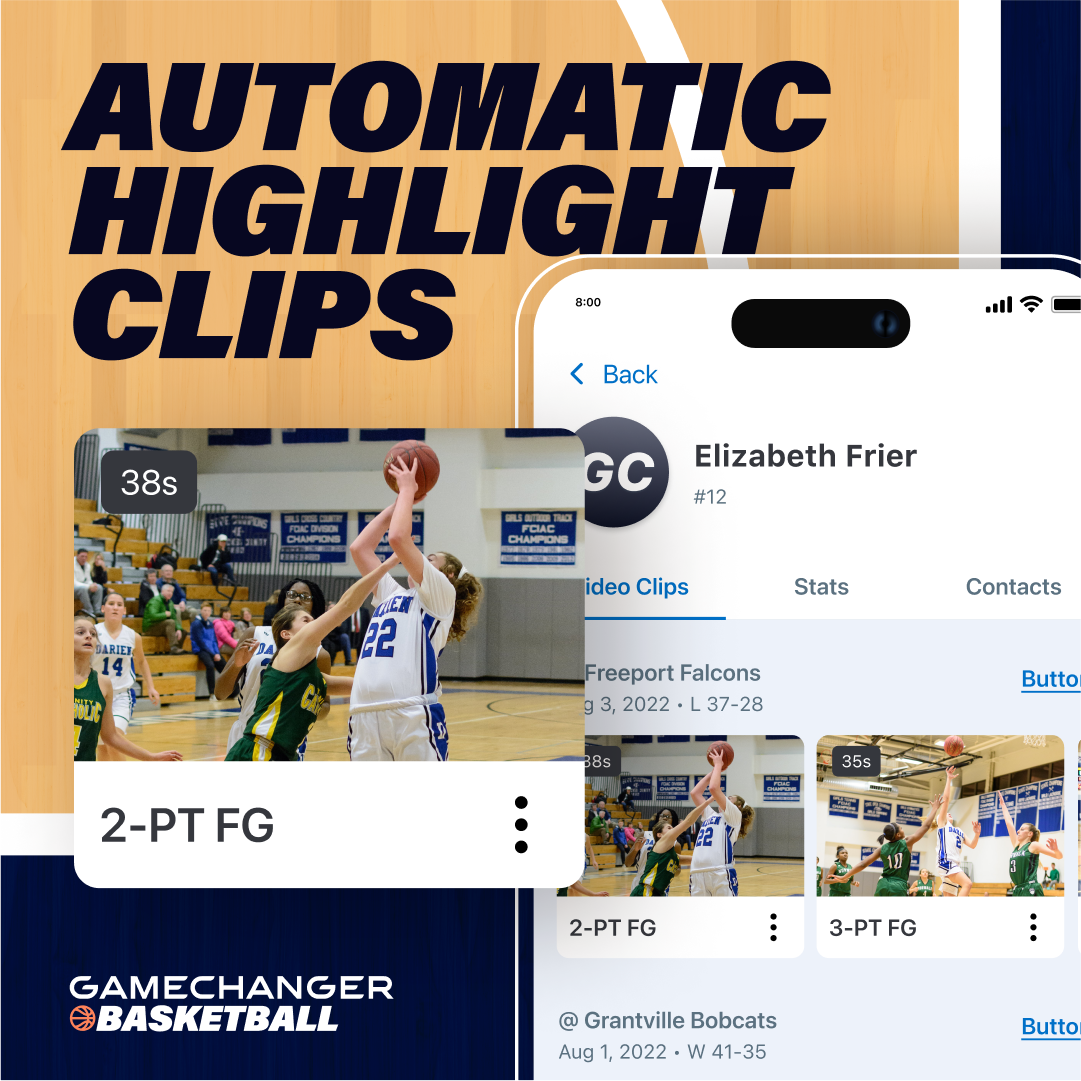
Hey, coach! Want to take your team to the next level this season? Introducing GameChanger, the ultimate game-day assistant with tools to give you a winning advantage. With GameChanger, you can track stats, keep score, and even live stream games, all for free! Get the stats and crucial game video you need to lead your team to victory, all from the palm of your hand. Coach smarter this season with GameChanger. Download GameChanger today on iOS or Android and make this season one to remember. GameChanger. Stream. Score. Connect. Learn more at GC.com/HoopHeads
TRANSCRIPT FOR ROUND TABLE 71 – WHAT IS SOMETHING YOU TRY TO AVOID AT ALL COSTS AS A BASKETBALL COACH? – EPISODE 1024
[00:00:00] Narrator: The Hoop Heads Podcast is brought to you by Head Start Basketball.
[00:00:21] Mike Klinzing: Hello and welcome to the 70th edition of the Coaches Corner Round Table on the Hoop Heads Podcast. Each episode of the Coach’s Corner Round Table will feature our all star lineup of guests answering a single basketball question. A new Coach’s Corner Round Table will drop around the 15th of each month.
November’s roundtable question is, “What is something you try to avoid at all costs as a basketball coach?”
Our coaching lineup this month includes:
- Dominic Amorosa – Strake Jesuit (TX) College Prep
- Jerry Buckley – Bishop Kenny (FL) High School
- Joe Burke – Skidmore College
- Chris DeLisio – Olmsted Falls (OH) High School
- Stephen Halstead – Grace College
- Joe Harris – Lake Chelan (WA) High School
- Ryan Hintz – Blue Valley West (KS) High School
- Katie Pate – George Mason University
- Bob Krizancic – Mentor (OH) High School
- Don Showalter – USA Basketball
- John Shulman – University of Central Arkansas
- Ido Singer – BLOBinhood Newsletter
- Jonathan Yu – International Basketball Coach
Please enjoy this Round Table episode of the Hoop Heads Podcast and once you’re finished listening please give the show a five star rating and review after you subscribe on your favorite podcast app.
Be sure to follow us on twitter and Instagram @hoopheadspod for the latest updates on episodes, guests, and events from the Hoop Heads Pod.
Hey Hoop Heads! The basketball season is here and so are big savings from our friends at Dr. Dish Basketball. From now until November 29th, you can get an exclusive $3,500 off the Dr. Dish CT Plus. In addition, take advantage of Dr. Dish’s schools only buy now, pay later payment plans for even more savings.
Simply put half down and shipping and then have 12 months of zero interest to pay the rest. Learn more at drdishbasketball.com/financing. You can also follow their incredible content @drdishbball on Twitter, Instagram, Facebook, and YouTube. Mention the Hoop Heads Podcast and save an extra $300 on the Dr. Dish Rebel, All Star, and CT models. Those are some great deals Hoop Heads. Get your Dr. Dish shooting machine today.
[00:02:30] Narrator: Hey, this is Monty Patel, head boys coach of eStem Public Charter School in Little Rock, Arkansas. And you are listening to the Hoop Heads Podcast.
[00:02:41] Mike Klinzing: Prepare like the pros with the all new Fast Draw and Fast Scout. Fast Draw has been the number one play diagramming software for coaches for years. You’ll quickly see why Fast Model Sports has the most compelling and intuitive basketball software out there.
For a limited time Fast Model is offering Hoop Heads Listeners, 15% off Fast Draw and Fast Scout. Just use the code HHP 15 at checkout to grab your discount and you’ll be on your way to more efficient game prep and improved communication with your team. Fast Model also has new coaching content every week on its blog, plus play and drill diagrams in its play bank.
Check out the links in the show notes for more. Fast Model sports is the best in basketball
Let’s hear from our panel about what they try to avoid at all costs as a basketball coach.
Dominic Amorosa, Strake Jesuit College prep in Houston, Texas.
[00:03:44] Dominic Amorosa: Dominic Amorosa, Strake Jesuit, Houston, Texas. The one thing I try to avoid as a basketball coach is speaking in absolutes. I love using the word yet, and I love trying to explain as many things as possible without Making them seem absolute, especially as it relates to player development and growth. Thank you.
[00:04:06] Mike Klinzing: Jerry Buckley, Bishop Kenny High School, Jacksonville, Florida.
[00:04:08] Jerry Buckley: Hi, this is Jerry Buckley from Bishop Kenny answering this month’s question about what I try to avoid at all costs. For me on the high school level, It’s trying to always remember and never forget that everything you’re doing is for the kids on your team.
Whether it be wins and losses, fundraising, travel, uniforms, scheduling, my own ego, parents, other coaches, etc. Whatever duties or frustrations I have, I always try to remember it’s all about giving my players the best possible experience they can have. While they’re in high school and obviously wins and losses are a part of that, but you want them to look back on being a part of our program 20 30 years from now as a special time in their lives from which they have great memories and they feel like they got something from the experience that helped them later on in life outside of basketball.
So again, not the easiest thing to always remember. But I try to stay focused on that and always try to remember putting everything for the kids first.
[00:05:15] Mike Klinzing: Joe Burke, Skidmore College.
[00:05:20] Joe Burke: One of the things I’ve always tried to avoid as a coach, and this goes beyond basketball, is singling out individuals not just from a negative standpoint, but from a positive standpoint as well. And we try and keep everything about the group, so if we’re talking in public or to the media I want the focus to be on the team and our family.
It’s never one person to blame. It’s never one person who gets this done. we get this done together, and I think if your messaging is consistent with that, your players really appreciate that. So I really try and avoid singling out individuals. At the after game after a season and just keep it about us and how we either accomplished something great or came up short
[00:06:06] Mike Klinzing: Chris DeLisio Olmsted Falls High School, Olmsted Falls, Ohio.
[00:06:14] Chris Delisio: Hey Hoop Heads Chris DeLisio from Olmsted Falls here answering the question What do we as a basketball coach try to avoid at all costs? Even though there’s a lot of basketball related ones might be turnovers or offensive rebounds by the opponent I think Probably speaking about your basketball program is in general cultural problems.
I think that that’s one thing as a basketball coach, you have to be, you have to have your finger on all the time is what’s the culture of your program in the locker room, at home the things that will behind the scenes destroy your program that you got to spend a lot of time on because those are the things that are going to ruin any of your X’s and O’s and any of the things that happen on the basketball court.
Whether those things are good or bad and eventually things won’t always go perfect on the basketball court and If you have a great culture that exists in the other areas Then I think you got a chance to survive when those things don’t go as well on the basketball court as you want them to.
[00:07:20] Mike Klinzing: Stephen Halstead from Grace College.
[00:07:25] Stephen Halstead: Man, great question this week. What is one thing you should try to avoid as a basketball coach? This is Stephen Halstead from Grace College and I’m That question made me think of the book Mindset by Carol Dweck. And I think one thing that can get really challenging as a basketball coach is That you have this fixed mindset of what your players can be or what your team can be.
You don’t see maybe the potential or you don’t know what the season can uphold or the talent level that players can achieve. And sometimes I think we’re able to put our teams in ourselves in a box just because we have a fixed mindset of what we’ll be able to do, rather than having a growth mindset and that we’re gonna be able to continue to improve and that who the players are this day isn’t gonna be who they are.
By the time they graduate and that that can be something that we can continue to work on there. So I think having a growth mindset instead of a fixed mindset is one thing. All coaches should do. We need to avoid having that fixed mindset as well as just with that goes kind of the player’s identity or a coach’s identity with how the game of basketball goes.
No coaches identity should be. Tied into their win loss record. I don’t think that’s sometimes a trap people get into as well as the player’s identity being caught up in their stats. So those are a couple of things that I think we should always try to avoid as a basketball coach.
[00:08:46] Mike Klinzing: Joe Harris, Lake Chelan High School, Lake Chelan, Washington.
[00:08:53] Joe Harris: Hello, Hoop Heads. This is Joe Harris from Chelan, Washington with this month’s round table question. What is something you try to avoid at all costs as a basketball coach? Avoid is not really a term I would use because I feel as a coach you really need to address things head on. But there are a number of things that coaches can try to avoid, and every one is different.
One thing that really comes to my mind for me is, don’t make the game too complicated or overthink it. There is so much info out there for us to gather, but find what works for you and stay with it. Refine it. Refine what you have and make it better. And by keeping the game simple, I really feel like it’s something that extended my career and also allowed me to stay excited and really enthusiastic about the process that you go through.
Really at the end of the day, if we are not teaching life lessons, then really what are we teaching our players? A real task as a coach is to develop great men and women out of our players. Hope this is something that will help you out and good luck as your season begins. Thanks again.
[00:09:57] Mike Klinzing: Ryan Hintz from Blue Valley West High School.
[00:10:02] Ryan Hintz: This is Ryan Hintz, Blue Valley West High School in Overland Park, Kansas. This month, what is something you try to avoid at all costs as a basketball coach? I’ve got three things for you. The first one is thinking we don’t have enough. you look around the league and you, and you see maybe some other teams have more talent.
You might not. Be able to stack up don’t, don’t focus on that. Don’t use that as an excuse. I think about the Roosevelt quote, do what you can with what you have, where you are so get to work, develop your kids. another team in your league or around the city might be playing with a full house and you’re sitting there with a couple of jacks, but bluff your way through the first part of the season while you’re developing your guys and then take pride in the fact that when the playoffs roll around.
You’ve turned those jacks into aces or you’ve built some other guys up and now you have a flush. you can go to battle. So never think that we don’t have enough. The second thing I want to avoid is making it about yourself instead of remembering it’s about the kids. We all have egos as, as competitive, successful coaches, where you have to have a healthy ego, but make sure that you check your ego at the door remind your assistants to do the same.
And really it’s about the kids intentionally teach life lessons, serve the kids in your program rather than Being all about wins and losses. And the last thing that I want to avoid is copy and pasting the same year over again. This is my 8th year at Blue Valley West so I hope I’ve had 8 different years instead of 1 year, 8 times.
being a lifelong learner, adapting and growing questioning how you do things seeking to find a better way of doing those things. I think it’s just important for me personally. Not to get on autopilot and do the same thing every year adapt and grow and change with the kids, keep things fresh so that I can stay excited about every season and give the kids everything that I can to give them a great season.
So, those are my three things I want to avoid. Hope that helps. Thank you.
[00:12:14] Mike Klinzing: Hey coaches, we know you’re invested in the next generation of athletes. So, why not give them the star treatment this season with Game Changer? A free app that provides you with the tools to help your players improve. Review game film, game stats, and cumulative season statistics with your team to keep improving.
Live stream your games for free and enjoy automatic highlight clips. Download Game Changer now on iOS or Android. Game Changer equips your team with the tools they need to stay engaged. Download it today and make this season one for the books. Game Changer. Stream. Score. Connect. Learn more at GC. com slash Hoopheads.
That’s GC. com slash Hoopheads.
Bob Krizancic, Mentor High School, Mentor Ohio.
[00:13:09] Bob Krizancic: Coach K, Mentor High School. Something that we avoid at all costs is labeling a player. We demand that every one of our players has a skill to guard anybody smaller, bigger, quicker, stronger. On the offensive end, they’re able to handle the basketball, create, they’re able to shoot the three.
They’re able to power it. So our players understand that we do have a point guard. We do have people that run the guard and center and the forward positions, but they need, and we demand that they have all the skills to be a complete player. Best of luck.
[00:13:51] Mike Klinzing: Katie Pate from George Mason University.
[00:13:56] Katie Pate: Katie Pate, Senior Associate Athletics Director for Development, George Mason, former college women’s basketball coach. What would I avoid today as a basketball coach? A couple quick things come to mind. The first is, I don’t know how necessary it would be for me to meet with a player one on one with my office door closed anymore.
I’m inviting a sport administrator into those meetings, perhaps an assistant coach, or even leaving the door open. Out of self preservation, I think it’s really important that we think about optics and how those meetings can be perceived, construed, and frankly often misunderstood. Having a little bit of backup can go a long way.
The second thing is how I used to evaluate player potential in the recruiting process, especially during junior and senior seasons of high school players. Oftentimes, I would look at a player and think, wow, if I could get her in great shape, or we could hit the weight room hard, or what if we worked on that left hand, and all the things that fall in the category of player and personal development.
Spending a little bit less time on what could be, and focusing a little bit more on what is now. Often would lead to over awarding of scholarships, if you’re a Division II or Division III coach and you’re dealing with partials. Sometimes I would give too much money based upon a player’s current level of skill in hopes of what they might be.
So later on in my career using potential as just a marker of where we want to get to instead of what the scholarship is worth. Saved saved some disappointments. And it certainly led to some pleasant surprises as well.
[00:15:45] Mike Klinzing: Don Showalter, USA Basketball.
[00:15:51] Don Showalter: Hi, Don Showalter here from USA Basketball. And the question is, what is something you try to avoid at all costs as a basketball coach? A couple of things come to mind right away. First of all never make any promises you can’t keep. I think this is something to try to avoid at all costs, whether it be playing time, whether it be what you’re going to do for a player, what, just any promises you make you gotta be really careful that you follow through on that.
If not, this erodes the trust immediately between you as a coach and the player. Second thing I think really comes to mind is you should avoid, you should avoid confrontations, In a place where other people can see you, you should avoid confrontations in a place where your emotions are running high and you need to get you need to get a plan and a thought process to how to handle these.
many times coaches get in big trouble because something happens between a parent and a coach. Immediately after a game, for instance, and the coach flies off the handle and says things they should not have said because they didn’t think about it first and because they didn’t go through the process of, of thinking how they were going to handle those things.
So I think at all costs, you need to be avoid situations where. You put yourself in a bad position with, with parents or administrators and make it a non angry type of situation. I think that gets coaches into a lot of trouble and a lot of situations they wish you wouldn’t got in. Thirdly, I think nowadays.
I think you, you need to avoid at all costs. You need to avoid having a player, just a player in you, in a in your office. Just bet just by yourself with them. I think obviously if you coach girls athletics and your, your male male, this is, goes without saying, but even if you’re.
Male coach and coaching male players. I think you need to have an assistant with you or somebody in an office when you have a heart to heart talk with players on an individual basis. This really protects you as a coach. So I’m thinking those three things come to mind right away. You should avoid at all costs.
[00:18:46] Mike Klinzing: John Shulman from the University of Central Arkansas.
[00:18:52] John Shulman: This is John Shulman, Head Basketball Coach at the University of Central Arkansas, and the question this month is, give me some things that you should avoid doing at all costs. As a basketball coach and a great question. Once again, Mike, really good question.
I’ll go, I’ve kind of got four different ideas and four things. That you cannot do as a basketball coach, no matter how bad it gets is number one Don’t lose your team in the preseason. Don’t lose your team in November when all the good stuff happens in January and February. And I say that to start with because we’re going through it right now.
We just we’re out here at Central Arkansas trying to rebuild this program. And really what matters is how we do in the ASUN and trying to win three or four games in March. And we just opened at BYU in Utah and got pounded in each of them. And now our goal is to get better and not lose our team because we just got pounded in both those games.
So don’t lose your team early. You cannot lose your team early. There’s no reason to lose your team early. You either win or you learn. Next is you’ve got the power as a coach to impact kids. Don’t destroy kids. Now they need disciplined and they need to be challenged, but know where that line is, know where the line is.
So you don’t destroy a kid and destroy a relationship in the meantime. I have done that and I have regrets about that. Don’t destroy relationships because of this game. You’re supposed to be helping relationships and impacting kids. Be careful about that at all costs. Challenge kids, don’t destroy kids.
You can be tough without being demeaning demanding without being demeaning for teams, taking away confidence, taking away confidence. can kill a basketball team. Give them belief. I had a, I wasn’t a real good athlete, but I had one man in particular that really believed in me. And all he did was just give me belief and encourage.
What does encourage mean? I learned this at church the other day. What does encourage mean? It’s to give someone courage. So, encourage kids. Encourage kids and give them belief. Don’t take that away. Give them belief. Now, they have to earn it. I get that, but give them belief. And the last one kind of as a team thing, and I did this a couple years ago you have to have a reason to lose, I thought, and we lost a tough one on the road at Huntsville, and I said the only thing that I guess we screwed up with is, is shot selection, and so I, I talked about shot selection for three days, and if you got good kids and we got to take the perfect shot, and you got.
Well, the next game we, like, we never shot the ball. I took, I took their confidence away. I took their ability to just go play the game free flowing away and it, we were a disaster. So, so you cannot do that as a basketball coach. Take that away. So just, just some thoughts and ideas. I think it’s a great question.
I think it’s some makes you think and good ideas. And once again what’s something you try to avoid at all costs as a basketball coach don’t destroy relationships. Number one don’t lose your team early. Don’t take away kids confidence and, and you got to be careful with shot selection.
Hope this helps. Good luck. And think good thoughts out here in Conway, Arkansas, as we battle through. Trying to, trying to rebuild a program. Thank you. Take care.
[00:22:47] Mike Klinzing: Ido Singer, the author of the BLOBinhood Newsletter.
[00:22:52] Ido Singer: This is Coach Ido singer, former assistant coach at UNCG Women’s Basketball, and now the creator of the BLOBinhood Newsletter.
Question of what I would avoid at all cost as a basketball coach is something that I’ve learned the hard way. And the thing I would avoid at all cost is providing criticism before earning. The player’s trust. Until they trust you, until they understand where this criticism or tough love is coming from, it’s really not going to drive your point home, it may even drive a wedge between you and that player, because you have not spent enough time building that relationship, cultivating that trust to the point where you can have that raw moment with someone in the game.
And really talk to them eye to eye about things that are important. And so really, really important to build that trust first, before you approach any of those situations,
[00:23:59] Mike Klinzing: Jonathan Yu, international basketball coach,
[00:24:04] Jonathan Yu: Something that I try to avoid as a coach is boxing myself into decisions. I know a lot some teams maybe have rules.
If a player is late to practice, maybe they’re benched the first half of the game, for example. I think it’s, as a coach, it’s my responsibility to look at each individual case by case. And determine kind of what the next step is. I think that we can kind of put ourselves in tough positions if we make it black and white, where every time you’re late, you’re benched.
Well, maybe that individual has a valid excuse, or maybe there was something out of their control that came up. So I think at least for me as a coach that’s a big thing is trying to give myself the flexibility to look at each individual, look at each individual situation in order to make the best decision and kind of help propel our team forward.
[00:24:55] Mike Klinzing: Thanks for checking out this month’s Hoop Heads Podcast Round Table. We’ll be back next month with another question for our all-star lineup of coaches.
Your first impression is everything. When applying for a new coaching job, a professional coaching portfolio is the tool that highlights your coaching, achievements and philosophies. And most of all helps separate you and your abilities from the other applicants, the Coaching Portfolio Guide is an instructional membership based website that helps you develop a personalized portfolio. Each section of the portfolio guide provides detailed instructions on how to organize your portfolio in a professional manner. The guide also provides sample documents for each section of your portfolio that you can copy, modify and add to your personal portfolio.
As a Hoop Heads Pod listener, you can get your Coaching Portfolio Guide for just $25. Visit https://www.coachingportfolioguide.com/hoopheads to learn more.
[00:25:42] Narrator: Thanks for listening to the Hoop Heads Podcast presented by Head Start Basketball.