
ROUND TABLE 69 – WHAT ROLE DO CAPTAINS PLAY IN YOUR PROGRAM? – EPISODE 999
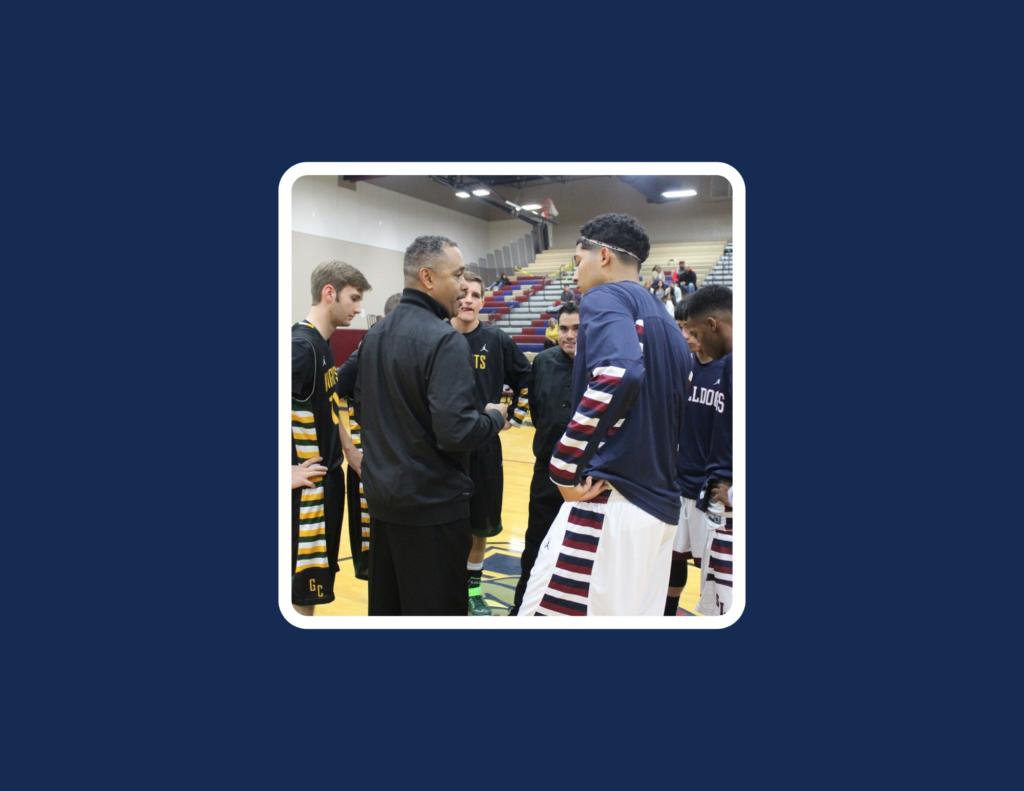
Welcome to the 69th edition of the Coach’s Corner Round Table on the Hoop Heads Podcast. Each episode of the Coach’s Corner Round Table will feature our All-Star lineup of guests answering a single basketball question. A new Coach’s Corner Round Table will drop around the 15th of each month.
September’s Round Table question is: What role do captains play in your program?
Our Coaching Lineup this month:
- Jake Boyd – Eureka College
- Jerry Buckley – Bishop Kenny (FL) High School
- Erik Buehler – Arapahoe (CO) High School
- Joe Burke – Skidmore College
- Chris DeLisio – Olmsted Falls (OH) High School
- Stephen Halstead – Grace College
- Joe Harris – Lake Chelan (WA) High School
- Bob Krizancic – Mentor (OH) High School
- Josh Merkel – Randolph-Macon College
- Dan Miller – San Marcos (TX) High School
- Nate Sanderson – Mount Vernon (IA) High School
- Don Showalter – USA Basketball
Please enjoy this Round Table episode of the Hoop Heads Podcast and once you’re finished listening please give the show a five star rating and review after you subscribe on your favorite podcast app.
Be sure to follow us on twitter and Instagram @hoopheadspod for the latest updates on episodes, guests, and events from the Hoop Heads Pod.
Let’s hear from our panel about the role captains play in their program.
.

If you listen to and love the Hoop Heads Podcast, please consider giving us a small tip that will help in our quest to become the #1 basketball coaching podcast.
THANKS COACHES!
If you enjoyed this episode let our coaches know by clicking on the links below and sending them a quick shout out on Twitter:
Click here to thank Jake Boyd on Twitter!
Click here to thank Jerry Buckley on Twitter!
Click here to thank Erik Buehler on Twitter!
Click here to thank Joe Burke on Twitter!
Click here to thank Chris DeLisio on Twitter!
Click here to thank Stephen Halstead on Twitter!
Click here to thank Joe Harris on Twitter!
Click here to thank Bob Krizancic on Twitter!
Click here to thank Josh Merkel on Twitter!
Click here to thank Dan Miller on Twitter!
Click here to thank Nate Sanderson on Twitter!
Click here to thank Don Showalter on Twitter!
Like this show? Please leave us a review here — even one sentence helps! Consider including your Twitter handle so we can thank you personally!
And if you want us to answer your questions on one of our upcoming weekly NBA episodes, drop us a line at [email protected].

We’re excited to partner with Dr. Dish, the world’s best shooting machine! Mention the Hoop Heads Podcast when you place your order and get $300 off a brand new state of the art Dr. Dish Shooting Machine!

Prepare like the pros with the all new FastDraw and FastScout. FastDraw has been the number one play diagramming software for coaches for years, and now with it’s integrated web platform, coaches have the ability to add video to plays and share them directly to their players Android and iPhones via their mobile app. Coaches can also create customized scouting reports, upload and send game and practice film straight to the mobile app. Your players and staff have never been as prepared for games as they will after using FastDraw & FastScout. You’ll see quickly why FastModel Sports has the most compelling and intuitive basketball software out there! In addition to a great product, they also provide basketball coaching content and resources through their blog and playbank, which features over 8,000 free plays and drills from their online coaching community. For access to these plays and more information, visit fastmodelsports.com or follow them on Twitter @FastModel. Use Promo code HHP15 to save 15%
Your first impression is everything when applying for a new coaching job. A professional coaching portfolio is the tool that highlights your coaching achievements and philosophies and, most of all, helps separate you and your abilities from the other applicants.
The key to landing a new coaching job is to demonstrate to the hiring committee your attention to detail, level of preparedness, and your professionalism. Not only does a coaching portfolio allow you to exhibit these qualities, it also allows you to present your personal philosophies on coaching, leadership, and program development in an organized manner.
The Coaching Portfolio Guide is an instructional, membership-based website that helps you develop a personalized portfolio. Each section of the portfolio guide provides detailed instructions on how to organize your portfolio in a professional manner. The guide also provides sample documents for each section of your portfolio that you can copy, modify, and add to your personal portfolio.

Hey, coach! Want to take your team to the next level this season? Introducing GameChanger, the ultimate game-day assistant with tools to give you a winning advantage. With GameChanger, you can track stats, keep score, and even live stream games, all for free! Get the stats and crucial game video you need to lead your team to victory, all from the palm of your hand. Coach smarter this season with GameChanger. Download GameChanger today on iOS or Android and make this season one to remember. GameChanger. Stream. Score. Connect. Learn more at GC.com/HoopHeads
TRANSCRIPT FOR ROUND TABLE 69 – WHAT ROLE DO CAPTAINS PLAY IN YOUR PROGRAM? – EPISODE 999
[00:00:00] Narrator: The Hoop Heads Podcast is brought to you by Head Start Basketball.
[00:00:21] Mike Klinzing: Hello, and welcome to the 69th edition of the Coach’s Corner Round Table on the Hoop Heads Podcast. Each episode of the Coach’s Corner Round Table will feature our all-star lineup of guests answering a single basketball question. A new Coach’s Corner Round Table will drop around the 15th of each month.
September’s Round Table question is, What role do captains play in your program?
Our coaching lineup this month includes:
- Jake Boyd – Eureka College
- Jerry Buckley – Bishop Kenny (FL) High School
- Erik Buehler – Arapahoe (CO) High School
- Joe Burke – Skidmore College
- Chris DeLisio – Olmsted Falls (OH) High School
- Stephen Halstead – Grace College
- Joe Harris – Lake Chelan (WA) High School
- Bob Krizancic – Mentor (OH) High School
- Josh Merkel – Randolph-Macon College
- Dan Miller – San Marcos (TX) High School
- Nate Sanderson – Mount Vernon (IA) High School
- Don Showalter – USA Basketball
Please enjoy this Round Table episode of the Hoop Heads Podcast and once you’re finished listening please give the show a five star rating and review after you subscribe on your favorite podcast app.
Be sure to follow us on twitter and Instagram @hoopheadspod for the latest updates on episodes, guests, and events from the Hoop Heads Pod.
Hey, Hoop Heads, prepare to push beyond what you thought was possible this season with the best training solutions for your team at the best prices ever. From now until September 30th, score $3,000 off the Dr. Dish Rebel Plus, $3,000 off the Dr. Dish All Star Plus, and $3,000 off the Dr. Dish CT Plus during the Dr. Dish semiannual sales event. See all offers at drdishbasketball.com and follow their incredible content at @drdishbball on Twitter, Instagram, Facebook, and YouTube. Mention the Hoop Heads Podcast and save an extra $300 on the Dr. Dish Rebel, All Star, and CT models. Those are some great deals Hoop Heads. Get your Dr. Dish shooting machine today.
[00:02:18] James Jones: Hello, this is James Jones from the Yale men’s basketball program, and you’re listening to the Hoop Heads podcast.
[00:02:27] Mike Klinzing: Prepare like the pros with the all new Fast Draw and Fast Scout. Fast Draw has been the number one play diagramming software for coaches for years. You’ll quickly see why Fast Model Sports has the most compelling and intuitive basketball software out there.
For a limited time Fast Model is offering Hoop Heads Listeners, 15% off Fast Draw and Fast Scout. Just use the code HHP 15 at checkout to grab your discount and you’ll be on your way to more efficient game prep and improved communication with your team. Fast Model also has new coaching content every week on its blog, plus play and drill diagrams in its play bank.
Check out the links in the show notes for more. Fast Model sports is the best in basketball
Let’s hear from our panel about the role captains play in their program.
Jake Boyd from Eureka College.
[00:03:28] Jake Boyd: This is Jake Boyd, assistant men’s basketball coach at Eureka College. Eureka College. Answering this month’s question, what role do captains play in your program? Captains played maybe an unconventional, but huge role for me personally, last season as a first year assistant, in addition to the usual captain’s duties.
Those guys taught me all about our program. I gained such a unique insight from those guys about personalities of our players offensive and defensive tendencies of their teammates and opponents all the way down to places guys absolutely did not want to eat postgame. I know I was a better assistant to our head coach and to our guys because of them being willing to help me.
So huge shout out to those guys for bringing a little extra value in that role. Thanks for having me guys.
[00:04:17] Mike Klinzing: Jerry Buckley, Bishop Kenny High School, Jacksonville, Florida.
[00:04:24] Jerry Buckley: Hi this is Jerry Buckley from Bishop Kenny addressing this month’s question about captains. I think for us it’s pretty straightforward. The captains are always going to serve as a link between the coaches and the team to make sure everyone is on the same page.
You always want them to be a presence in the locker room to make sure we’re all pulling in the same direction. And they can obviously work with any disgruntled players if needed, keep the coaches aware of anything that’s going on, any issues before they get out of control. Obviously on the court, they will represent the team if they need to communicate with officials.
So that’s pretty straightforward. And then ultimately we need them to serve as leaders on and off the floor. And they’re always going to be a voice to represent the players and keep everyone focused on what’s important moving forward.
[00:05:10] Mike Klinzing: Erik Buehler, Arapahoe High School, Centennial, Colorado.
[00:05:17] Erik Buehler: Hey, what’s going on Hoop Heads? This is Erik Buehler at Arapahoe High School. And this month we were asked what role do captains play in our program? In the past, besides just being that kind of that novelty, go out and talk with the officials, shake the other captain’s hands I’ve asked captains to one, be chosen by their peers.
They need to not just be a leader, but they need to be like kind of a, a leader and our second coach out on the court, someone who can interact with their teammates. And get things straightened out without a coach interaction. Someone who can talk to the officials in an appropriate way and kind of be an advocate for our team in some of those moments in the middle of a game.
And it, it’s kind of evolved for me over the years from just being a captain and you get the title to More of like a leadership council where even if you aren’t a captain, but you are a leader in the program I want you to have input on practices and games and kind of just give me the pulse of the team on a daily basis or weekly basis.
And I think it’s something that is ever changing not just for me, but I know for a lot of coaches out there. So that’s what captains do for now in our program. And I know that. That’ll look probably different over the next few years as I kind of hone in on what I want that to look like. Thanks for having me again, guys, and I’ll talk to you soon. Bye.
[00:06:49] Mike Klinzing: Joe Burke, Skidmore College.
[00:06:55] Joe Burke: Captains play a huge role on our team. It’s a position that I take very seriously and it’s one that I don’t automatically I do subscribe to the head coach picking the captains because for me the biggest aspect of that role is to understand the head coach and to be an extension of him and a voice for him in the locker room.
Again, it’s not a knock on teams that allow their players to pick the captain. But from my standpoint, I want a guy that I know I believe in, in that locker room and relays my message the way I want it delivered. My best teams have had guys that We’re captains that just saw eye to eye with me and understood exactly how this program works.
[00:07:41] Mike Klinzing: Chris DeLisio, Olmsted Falls High School, Olmsted Falls, Ohio.
[00:07:49] Chris DeLisio: Hey, Hoop Heads. Chris DeLisio from Olmsted Falls. For us in our program with leadership, we don’t name captains. We actually run a leadership program where we try to develop leaders throughout the year at all levels of our program, and hope that leaders emerge throughout the year but hopefully those leaders that do emerge can do things like support our coaches as, as we go through the year in the locker room, on the court.
Also, be a leader to their teammates as. They’re in the basketball game, on the bench in the weight room, all the different roles and, and, and areas that we need leadership in our program. So I think that they provide a variety of uses for us and, and for their teammates and hopefully develop those leadership skills as they go through our program and take them with them once they leave here.
[00:08:45] Mike Klinzing: Stephen Halstead from Grace College.
[00:08:51] Stephen Halstead: Mike, this is Stephen Halstead from Grace College. For your Hoop Heads roundtable topic of what role do captains play in your program when thinking what we do at Grace, I think I like the setup that we have. So at the end of the season, in May, March, April timeframe, before the guys go home in May, they actually vote on who the team captain will be for the next year.
We’ve had it in the past where we’ve had three different team captains. We almost always send out like two for like the pregame ritual, but typically we’ll have one player be represented at least, maybe two, depending on how the voting goes of like, Hey, what, who is the team captain for the following year?
And that captain plays a good role. Just through the summers. Cause our guys aren’t on campus all the time. Like we just assign them with reaching out, giving phone calls, checking in with guys on the team, making sure things are going well, things like that. And then when we get back and we get started, like right around this timeframe, September, and then when the season gets full go in October, our captain really just is a sounding board for us of what’s going on in the locker room, what the team is like, how they’re feeling physically, and we want to make sure that we’re accommodating that, just making sure that if their bodies are tired, we’re not just running them into the ground.
And I feel like we have a good feel for that as coaches sometimes, but it’s always great to One, the players feel like they get a little bit more of that ownership of going in and saying, Hey, what do you like that we’re doing in practice? Hey, what do you think we need to be doing more? And that kind of just con continues throughout the year because it’s a long season and obviously there’s going to be ups and downs and ebbs and flows and I think it’s really good to just have those captains have a big say. Obviously coaches are going to have that final say, but it’s good to just be able to have those one to two guys on the team that connect the coaching staff to all of the players.
And he’s the one that can maybe come forward and any issues or anything like that, just bring those to the coaching staff,
[00:10:45] Mike Klinzing: Joe Harris, Lake Chelan high school, Lake Chelan, Washington.
[00:10:53] Joe Harris: Hey, this is a Joe Harris from Lake Chelan, Washington with this month’s round table question. What role do captains play in your program?
I firmly believe you cannot just expect your captains to fill the role. You must coach your captains on how and really when to lead, because being a captain is a position that really indicates honor and respect from their teammates, and it is a recognition as a leader by those same teammates. Your captain should really reflect the standards your program is built on.
As a leader, they’re responsible for many things. Some of these would be their voice to not only the coaches, but on the field. What is their leadership like? Are they ones to set the tone offensively and be one of the most verbal on defense? What are they like off the field in leadership? Are they serving as a good role model to the team?
Do they motivate their teammates? Your captain should always uphold the standards of your program. One, they should be accountable. We expected our captains to be responsible for holding teammates accountable. For their behavior, both on and off the field. Do they display teamwork? The captain is responsible for promoting a positive team atmosphere and helping revolve conflicts that sometimes occur throughout the season.
Are they an example for their teammates? The captain should be a model of excellence for their teammates at all times. And lastly, do they accept responsibility? Is the captain accountable for the team’s performance? And do they set the standard for what it means to be a great teammate? Thanks again for having me and hopefully everyone’s doing well.
[00:12:29] Mike Klinzing: Bob Krizancic, Mentor High School, Mentor, Ohio.
[00:12:37] Bob Krizancic: Coach K., Mentor High School, Captains are extremely important in our program. They definitely are an extension of our coaching staff. Number one, we expect to have the best locker room in the state of Ohio with very, very few problems and very, very limited egos. On the court, definitely an assistant type player.
Great leadership. And after games, meet with myself and the staff. We talk about what went right, what went wrong, and how we can improve upon that. Our senior captains absolutely have a huge say in who the captains will be for the next year. We definitely want our players to have a voice in everything we do in our program.
[00:13:29] Mike Klinzing: Josh Merkel, Randolph Macon College
[00:13:30] Josh Merkel: Hey, Mike. Great question. What role do captains play in our program? First thing is, we don’t use that word very often. We don’t have count captains. We don’t appoint captains. We have leaders. We want to develop and build all of our men as leaders. I do think certain guys are going to be better at it, have had more reps.
Some guys may really struggle with it their whole career in a lot of ways, but I do think it’s something you can continue to get better in if you’re committed to it. And so we really talk about everyone should be modeling the way, but that leadership is not just that, that’s just the bare foundation that leadership is influence.
And so I would say for our leaders, if we get away from the semantics of the word captain the role that our leaders play is huge. And there can be, we could have different leaders. We can have a leader in the weight room, guy that really takes pride in that. And we can have a leader in the locker room, a guy that you know, a leader for our skill workouts a leader when it comes to nutrition, I think you can have different areas, but I would say it’s a liaison that the biggest role would probably be helping me with the heartbeat of the team. Are we being too tough? Are we being too easy? What does the team need most? That’s a huge role, hammering home and reinforcing the message from coaches to players in the locker room.
Being forward thinking is something that we really want from our leaders to, to think about and anticipate problems before they happen and to bring the young guys along and be closing those gaps. Hope that helps. Love the podcast. All the best. Take care.
[00:15:26] Mike Klinzing: Dan Miller, San Marcos High School in San Marcos, Texas.
[00:15:33] Dan Miller: The role of captains in programs that I’ve been the head coach for has changed throughout the years. Some, some years in the past I’ve had true captains, team vote these two or three guys would be our captains. Then there was a time where we just didn’t have any captains when I was Letourneau University and everyone was a captain.
Everyone was a stakeholder in our program. And that’s really the way I’ve shifted. Sometimes it naturally forms that you’re two best players, maybe seniors. And C on the chest and those are your captains. But ultimately I think it happens organically. The guys who are going to be more vocal in their leadership will assume a bigger role as captains in your program.
And it’s up to the coach. They can designate them the captain or they can just let them lead and you don’t even need to really say it. The guys know in the locker room who their leaders are though. In that locker room. And we always want to promote positive leadership. And give the guys a true stakeholder let them know that they’re true stakeholders in our program as leaders.
[00:16:46] Mike Klinzing: Hey coaches, we know you’re invested in the next generation of athletes. So why not give them the star treatment this season with GameChanger, a free app that provides you with the tools to help your players improve, review game film, game stats, and cumulative season statistics with your team to keep playing.
Live stream your games for free and enjoy automatic highlight clips. Download GameChanger now on iOS or Android. GameChanger equips your team with the tools they need to stay engaged. Download it today and make this season one for the books. GameChanger. Stream. Score. Connect. Learn more at GC.com/hoopheads.
That’s GC.com/hoopheads.
Nate Sanderson, Thrive on Challenge.
[00:17:41] Nate Sanderson: Hey Mike, this is Nate Sanderson from Thrive On Challenge. You know, this month’s question about what role does the captain or Captain’s Council play in your program? It’s really an interesting one for me because it’s changed a lot over the course of my career for probably the first 15 years that I was a head coach.
We had captains like everyone else, that was kind of a popularity contest. They went and they met with the officials before the games, but they didn’t really have any responsibility other than that. They were ceremonial at best, and we didn’t really get a lot from a captain’s council. They were just usually the seniors, usually the most popular players, oftentimes the best players.
And all they did was go and do the pre-game meeting, and that was really the extent of it. Well, I remember back in 2014 We were having an okay year, a 500 season. We were getting a little bit better after Christmas break, but our, our practices were really stale. And I just remember like, not really understanding what was going on, but just, we didn’t have a lot of energy.
There wasn’t a lot of enthusiasm that the grind was getting to the players a little bit. And so I called what really became the first captains meeting that I’d ever called as a head coach. And I brought our three captains in and again, this was unusual for me to do this. And I just said. You know, tell me what’s going on.
It just doesn’t seem like we’re getting as much out of practice as we could. And players, the captains, they kind of looked at each other for a couple of minutes and finally one of them said, well, coach, nobody’s having any fun. And this was news to me, Mike, because I was having a great time. I mean, we were breaking down the film.
We were blowing people’s sets up. We were competing, we were playing with, against and with some of the best teams in the state. And though we weren’t winning, we were definitely in a lot of basketball games and we were clearly getting better. All of those things were fun to me, but for whatever reason, the process, the grind, the January doldrums were getting to this team and I really wasn’t aware of it until I asked the question to the captains, what’s going on with the team?
And so we changed a few things for kind of the last month of that season that helped a little bit, but it really opened my eyes to a new perspective on the role of the captain. And ever since then, starting in the 2015 season, the following year, I’ve started meeting with our captains typically every week.
That first year we met for lunch once a week. And really since then I’ve met mostly on Saturday mornings. It just works well into our schedule. But we have a captain’s council that Talks through the week. How did the week go? Tell me about any drama or team chemistry issues. You know, it’s really allowed me to be able to better understand the player experience in our program because it is quite different than maybe what we see or what we’re experiencing as coaches.
And I would say over the last 10 years, my reliance on the captains has only grown. And so I want to share two things with you just about the role of the captains now in our program. Number one, I think this is really important. We choose our captains differently than we used to. You know, when JP Nerbun and I work with coaches and different athletic programs, I would say most commonly, Coaches will just hold a ballot, right?
I mean, they just ask players to write down three names on a note card in order to select their captains. And as I said before, most of the time, that’s either the best players or the seniors or the most popular players, but it doesn’t necessarily indicate or choose somebody that’s really qualified to do more as a leader.
And so we’ve changed our captain selection process over the years so that now it’s much more about, The job description of the captain. And so here’s how we choose our captains. I’ll explain to the team that the captain has three essential roles in our program. Number one, they are to be the embodiment of our culture.
When we talk about gratitude and effort and love, we ask the players, who do you think best exemplifies those values in our practices and in our games and in the locker room, I want you to list those players one, two, and three. In rank order, first, second, and third of who you think best exemplifies who we want to be.
The second role of the captain is that they will meet with me once a week, as I mentioned before, typically on Saturday mornings, and they will help be part of our decision making process as a coaching staff. I’ll be honest with you now, Mike, 10 years after, after starting this for the first time, there is not a single decision that I won’t vet through our captains or through our counsel, and that covers from schedule changes to handling drama on the team to playing time decisions.
Now I’m not necessarily taking them all the way inside, but if we’re going to make a significant change to the rotation or the starting lineup, I’m going to get perspective from at least one, if not all of the captains in a situation like that. I’ve even brought some parent situations to the captain’s council just to see how it’s playing out in the locker room.
So they’re really essentially serving as another assistant coach that I will lean on because I understand that they have the perspective of the players. And one of the great things that’s come out of our exit interviews over the year is when I’ve asked players about How the captain’s council has served them.
It’s been cool to hear them say coach, we felt like if there was an issue in the locker room or there’s something that just we thought needed to change or be different or be addressed, we knew it would get to you because we knew the captains would bring it to your weekly meeting and you guys would figure out how to deal with that.
And I think that’s pretty cool that the team really values the role that the captains play in that situation. So I described this rule to the team and then they again, select first, second, and third, the players that they would trust to be part of that meeting on Saturday mornings to help us make decisions.
Then there’s a third criteria for our captains. And that is really kind of like the team mom. And we asked them if there was somebody that you would go to, or who would you go to if you’re struggling on or off the court, if there’s something challenging going on, if you weren’t sure about. You know, just maybe your role or maybe you don’t understand what coach is asking, or maybe there’s things at school that are bothering you.
Who would you go to on the team? Just for some encouragement and maybe for some wisdom. And so I asked them to list those players first, second, and third. And I’ll be honest, most of the time they’re going to list their closest friends on the team and that I think makes sense based on that description of the job.
But I think that’s also valuable for me to know who is friends with the majority of the players on the team and who do they look to when they’re struggling as we go through the season. And so they’ll list first, second, and third. Well, then we collect those ballots and we do ask on the bottom, if you were chosen to be a captain in this way, would you be willing to serve your team?
And ask them why. So, they do write that on the bottom. And then we tabulate the votes. If you got a first place vote in any of the three categories, you get three points. A second place vote is worth two and a third place vote is worth one. And we add up the totals. And usually there’s a pretty clear break.
After third place or fourth place, and that’s where we draw the line. And typically we’ll have three or four captains on the council each year. So what else do the captains do as part of their responsibilities besides meet with me? Well, they’re involved in a lot of planning. When we do a parent experience night, they will plan what happens in the gym and they run the practice for the parents.
Last year, when we made the state tournament I sat down with the captain’s council, even before I sat down with our assistant coaches, And talk through kind of the two week schedule and what we wanted to do with practices and hotels and who rooms with who, and what are the expectations on the bus and all of those kinds of things all went through the captain’s council.
We also use it as an opportunity to really teach them how to lead. And I think that’s one misnomer sometimes that coaches want better leaders in their program. And so they’ll reach out to us and they’ll say, what books should we read? Well, the reality is that for players to become better leaders, for your captains to become better leaders.
They need opportunities to lead. You need to give them things to do. You need to give them responsibilities. And so as we’ve done that, I think certainly being part of the decision making process, but also there are times that we will dispatch our captains to go and talk to somebody that might be frustrated with their role, or we’ll give them a segment of practice and have them, have them lead us in the shooting segments or whatever it might be, we give them opportunities try to lead.
And then we coach them through that, just like we would coach them through what happens on the basketball court. Now there’s one other aspect to this that I’d like to talk about real quickly here, Mike. And I apologize if this is going long. Over the years, typically one leader will emerge out of our captain’s council as kind of the leader of the leaders.
I think back to my second year at Mount Vernon, there were two players that really took ownership and responsibility and started being more comfortable voicing their opinions. Last year we had one senior that everybody really looked to, went to. She took care of the freshmen. She gave them rides home.
You know, everybody looked to Peyton during the season when things were going sideways or they weren’t sure what’s going on. And so, I’ve really leaned into that a little bit as well. So, I will meet with all of the captains on Saturday mornings, but If I need an opinion or perspective on something during the week between those meetings, I will often go to what I kind of refer to as the captain of the captains or the leader of the leaders.
And again, quite frankly, there is nothing that I decided last year. There’s nothing that we did last year. That did not go through Peyton Simpson first. And it, again, went through the captain’s council as well, but I would often go to Peyton before a practice and say, Hey, is there anything you really think we need to work on tonight?
I would often grab her on her way out of the gym and just say, Hey, how did practice go? Do you think we understood this, that, or the other? Very similar conversations to what I’m having with my assistant coaches, but getting the player’s perspective. has been so valuable. I cannot emphasize how much better I am as a coach in the last 10 years because we have empowered our captains and given them not only responsibilities and roles and a bit of mentorship when it comes to being a leader, But the team understands that we value their perspective.
We value their experience. We value their feedback. And I don’t know what it’s like to be a teenage girl in these days. I don’t know what it’s like to go to high school in today’s environment. I don’t know what it’s like to play for me. And so there are oftentimes things that I think would be great things that decisions that I think makes sense to me.
We have changed for the better. Because they’ve gone through the captains before we’ve implemented them with the team. So, Mike, to sum up, our captains have a huge role in our program and it has definitely made me a better coach as we’ve learned how to work together for the betterment of the team.
[00:28:45] Mike Klinzing: Don Showalter, USA Basketball.
[00:28:52] Don Showalter: Hi, Don Showalter here from USA Basketball. What role do your captains play in your program. First of all, I think this varies year to year. Some years you have really strong leadership, real strong captains, and some years you don’t. So I think this could vary a little bit every year. But I think you can lean on your captains to get what the locker room’s like, and you can lean on them to give you some feedback as far as.
What you should be doing as a coach to help team chemistry, team culture. I think they always have some good ideas. You can lean on them to organize off court team bonding. such as a bowling night or a basketball night somewhere else. But you can really lean on them for those kinds of things.
Overall, I’m not sure that designate captains as much as they kind of come to the forefront. We’ve had captains that are. Really, if we had a captain that wasn’t even a starter, he’d be a really good captain. Of course, they would help out the captain who wasn’t a starter. We usually have two captains, and so they would work together. Hope this helps. Thank you.
[00:30:04] Mike Klinzing: Thanks for checking out this month’s Hoop Heads Podcast Round Table. We’ll be back next month with another question for our all-star lineup of coaches.
Your first impression is everything. When applying for a new coaching job, a professional coaching portfolio is the tool that highlights your coaching, achievements and philosophies. And most of all helps separate you and your abilities from the other applicants, the Coaching Portfolio Guide is an instructional membership based website that helps you develop a personalized portfolio. Each section of the portfolio guide provides detailed instructions on how to organize your portfolio in a professional manner. The guide also provides sample documents for each section of your portfolio that you can copy, modify and add to your personal portfolio.
As a Hoop Heads Pod listener, you can get your Coaching Portfolio Guide for just $25. Visit https://www.coachingportfolioguide.com/hoopheads to learn more.
[00:31:04] Narrator: Thanks for listening to the Hoop Heads Podcast presented by Head Start Basketball.