ROUND TABLE 65 – WHAT ARE THE THREE MOST IMPORTANT THINGS YOU DO IN THE SUMMER TO PREPARE YOURSELF AND YOUR TEAM NEXT SEASON? – EPISODE 948
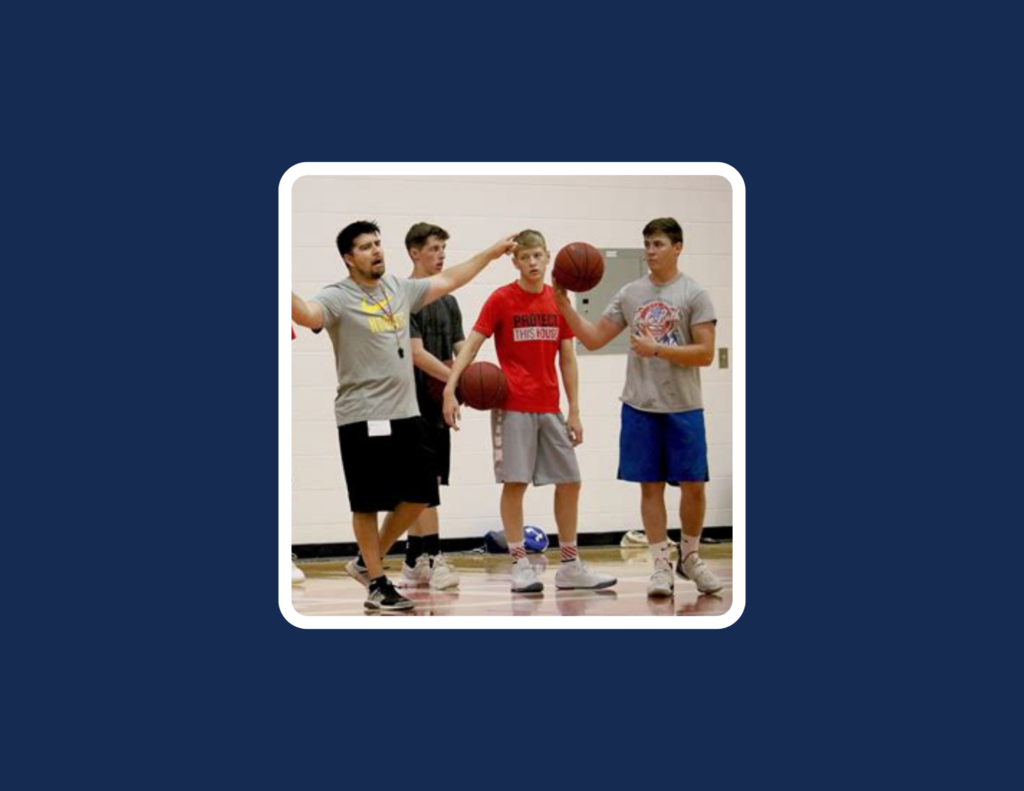
Welcome to the 65th edition of the Coach’s Corner Round Table on the Hoop Heads Podcast. Each episode of the Coach’s Corner Round Table will feature our All-Star lineup of guests answering a single basketball question. A new Coach’s Corner Round Table will drop around the 15th of each month.
May’s Round Table question is: What are the three most important things you do in the summer to prepare yourself and your team for next season?
Our Coaching Lineup this month:
- Dominic Amorosa – Strake Jesuit (TX) College Prep
- Jerry Buckley – Bishop Kenny (FL) High School
- Erik Buehler – Arapahoe (CO) High School
- Joe Burke – Skidmore College
- Chris DeLisio – Olmsted Falls (OH) High School
- Mark Downey – Arkansas Tech University
- Ryan Hintz – Blue Valley West (KS) High School
- Dave Hixon – Amherst College
- Mike Jagacki – SUNY New Paltz
- Kyle Jurgens – Skutt Catholic (NE) High School
- Bob Krizancic – Mentor (OH) High School
- Dell Leonard – Mountain Home (AR) High School
- Dave McGreal – Penn State Altoona
- Dan Miller – San Marcos (TX) High School
- Matthew Raidbard – Author of Lead Like a Pro
- Don Showalter – USA Basketball
- John Shulman – University of Central Arkansas
Please enjoy this Round Table episode of the Hoop Heads Podcast and once you’re finished listening please give the show a five star rating and review after you subscribe on your favorite podcast app.
If you are a basketball coach at any level please check out our Hoop Heads Coaching Mentorship Program. You’ll get matched with one of our experienced Head Coaches and develop a relationship that will help take your coaching, your team, your program, and your mindset to another level.
Be sure to follow us on twitter and Instagram @hoopheadspod for the latest updates on episodes, guests, and events from the Hoop Heads Pod.

If you listen to and love the Hoop Heads Podcast, please consider giving us a small tip that will help in our quest to become the #1 basketball coaching podcast.
THANKS COACHES!
If you enjoyed this episode let our coaches know by clicking on the links below and sending them a quick shout out on Twitter:
Click here to thank Dominic Amorosa on Twitter!
Click here to thank Jerry Buckley on Twitter!
Click here to thank Erik Buehler on Twitter!
Click here to thank Joe Burke on Twitter!
Click here to thank Chris DeLisio on Twitter!
Click here to thank Mark Downey on Twitter!
Click here to thank Ryan Hintz on Twitter!
Click here to thank Dave Hixon on Twitter!
Click here to thank Mike Jagacki on Twitter!
Click here to thank Kyle Jurgens on Twitter!
Click here to thank Bob Krizancic on Twitter!
Click here to thank Dell Leonard on Twitter!
Click here to thank Dave McGreal on Twitter!
Click here to thank Dan Miller on Twitter!
Click here to thank Don Showalter on Twitter!
Click here to thank John Shulman on Twitter!
Like this show? Please leave us a review here — even one sentence helps! Consider including your Twitter handle so we can thank you personally!
And if you want us to answer your questions on one of our upcoming weekly NBA episodes, drop us a line at [email protected].
We’re excited to partner with Dr. Dish, the world’s best shooting machine! Mention the Hoop Heads Podcast when you place your order and get $300 off a brand new state of the art Dr. Dish Shooting Machine!

Prepare like the pros with the all new FastDraw and FastScout. FastDraw has been the number one play diagramming software for coaches for years, and now with it’s integrated web platform, coaches have the ability to add video to plays and share them directly to their players Android and iPhones via their mobile app. Coaches can also create customized scouting reports, upload and send game and practice film straight to the mobile app. Your players and staff have never been as prepared for games as they will after using FastDraw & FastScout. You’ll see quickly why FastModel Sports has the most compelling and intuitive basketball software out there! In addition to a great product, they also provide basketball coaching content and resources through their blog and playbank, which features over 8,000 free plays and drills from their online coaching community. For access to these plays and more information, visit fastmodelsports.com or follow them on Twitter @FastModel. Use Promo code HHP15 to save 15%
Your first impression is everything when applying for a new coaching job. A professional coaching portfolio is the tool that highlights your coaching achievements and philosophies and, most of all, helps separate you and your abilities from the other applicants.
The key to landing a new coaching job is to demonstrate to the hiring committee your attention to detail, level of preparedness, and your professionalism. Not only does a coaching portfolio allow you to exhibit these qualities, it also allows you to present your personal philosophies on coaching, leadership, and program development in an organized manner.
The Coaching Portfolio Guide is an instructional, membership-based website that helps you develop a personalized portfolio. Each section of the portfolio guide provides detailed instructions on how to organize your portfolio in a professional manner. The guide also provides sample documents for each section of your portfolio that you can copy, modify, and add to your personal portfolio.
Hey, coach! Want to take your team to the next level this season? Introducing GameChanger, the ultimate game-day assistant with tools to give you a winning advantage. With GameChanger, you can track stats, keep score, and even live stream games, all for free! Get the stats and crucial game video you need to lead your team to victory, all from the palm of your hand. Coach smarter this season with GameChanger. Download GameChanger today on iOS or Android and make this season one to remember. GameChanger. Stream. Score. Connect. Learn more at GC.com/HoopHeads
TRANSCRIPT FOR
[00:00:00] Mike Klinzing: Hello and welcome to the 65th edition of the Coach’s Corner Round Table on the Hoop Heads Podcast. Each episode of the Coaches Corner Round Table will feature our all-star lineup of guests answering a single basketball question. A new Coaches’ Corner Roundtable will drop around the 15th of each month.
May’s Round Table question is, What are the three most important things you do in the summer to prepare yourself and your team for next season?
Our coaching lineup this month includes:
- Dominic Amorosa – Strake Jesuit (TX) College Prep
- Jerry Buckley – Bishop Kenny (FL) High School
- Erik Buehler – Arapahoe (CO) High School
- Joe Burke – Skidmore College
- Chris DeLisio – Olmsted Falls (OH) High School
- Mark Downey – Arkansas Tech University
- Ryan Hintz – Blue Valley West (KS) High School
- Dave Hixon – Amherst College
- Mike Jagacki – SUNY New Paltz
- Kyle Jurgens – Skutt Catholic (NE) High School
- Bob Krizancic – Mentor (OH) High School
- Dell Leonard – Mountain Home (AR) High School
- Dave McGreal – Penn State Altoona
- Dan Miller – San Marcos (TX) High School
- Matthew Raidbard – Author of Lead Like a Pro
- Don Showalter – USA Basketball
- John Shulman – University of Central Arkansas
Please enjoy this Round Table episode of the Hoop Heads Podcast and once you’re finished listening please give the show a five star rating and review after you subscribe on your favorite podcast app.
If you are a basketball coach at any level please check out our Hoop Heads Coaching Mentorship Program. You’ll get matched with one of our experienced Head Coaches and develop a relationship that will help take your coaching, your team, your program, and your mindset to another level.
Be sure to follow us on twitter and Instagram @hoopheadspod for the latest updates on episodes, guests, and events from the Hoop Heads Pod.
Hey Hoop Heads, our friends at Dr. Dish Basketball are here to help you transform your team’s training efforts this summer with exclusive offers of up to $4,000 off their Rebel Plus All Star Plus and CT plus shooting machines. Unsure about budget, Dr. Dish offers schools only financing to make getting new equipment easier than ever.
Learn more at drdishbasketball.com and follow their incredible content @drdishbball on Twitter, Instagram, Facebook, and YouTube. Mention the Hoop Heads Podcast and save an extra $300 on the Dr. Dish Rebel, All Star, and CT models. Those are some great deals Hoop Heads. Get your Dr. Dish shooting machine today.
[00:02:56] Todd Kowalczyk: Hi, this is Todd Kowalczyk, Head Basketball Coach at the University of Toledo and ou’re listening to the Hoop Heads Podcast.
Let’s hear from our panel about the three most important things they do in the summer to prepare themselves and their team for next season.
Dominic Amorosa, Strake Jesuit College Prep in Houston, Texas.
[00:04:13] Dominic Amorosa: Dominic Amorosa, Houston Strake Jesuit. Three most important things to do during the summer is rest. Plan out your progressions for teaching and install for the start of the school year. And then do some after action review with systems, personnel, and various things you did during the season, so that you can really hone in on things that team and individual players can do better. So those are my three.
Thank you.
[00:04:47] Mike Klinzing: Jerry Buckley, Bishop Kenny High School, Jacksonville, Florida.
[00:04:54] Jerry Buckley: Hi, this is Jerry Buckley from Bishop Kenny talking about three things we do in the summer to get ready for next season. Number one would be establishing our offensive and defensive systems. Typically we’ll have between six and eight new players to the varsity.
Usually our freshman and JV teams are very similar to us as far as what we do, but obviously getting to the varsity level can be different with some different adjustments. So, always trying to make sure that we do a lot of different things in the summer to get ready for the next season. Number two, we like to experiment with lineups and even positions.
We don’t like to pigeonhole kids into necessarily different spots or who they play with or whatever the case is. So, we definitely try different starting lineups, different guys in the game at the end. Obviously not a lot of emphasis on wins and losses in the summer. So, we really try to make sure that We really experiment and put different guys together and see how we look with different lineups.
And then finally, the biggest thing for us is giving opportunity and freedom over the summer. Being aggressive, especially offensively, seeing kids really trying to get out of their comfort zone and try to do some things, especially in the summer when, again, we’re not focused on wins and losses to kind of establish.
Who potentially our best scorers would be, who our best defensive players will be, guys who handle the ball, whatever the case is. So having an opportunity in the summer, really getting playing time for all of our players and also freedom to feel like they’re playing not super structured so some of their talents can come out and then it gives us a good idea by the end of the summer, looking towards the following year, we start to get an idea of what our actual what 7 8 man rotation would be, and then, again, what we’re going to emphasize offensively and defensively for the upcoming season.
[00:06:37] Mike Klinzing: Erik Buehler, Arapahoe High School, Centennial, Colorado.
[00:06:44] Erik Buehler: Hey, what’s going on Hoop Heads? This is EriK Buhler at Arapahoe High School here in Centennial, Colorado. And this month we were asked, what are three things that we do to prepare ourselves? For our team in the off season, I would say the number one thing that we try to do with our teams is just build individual skill.
We’ve, we take a big focus on the individual and the team takes a little bit of a backseat. We still work on team stuff. We still play in team camps and in spring leagues and things like that. But we focus on building the individuals within our program. The second thing I would say is we work on those individuals really changing their body.
Hopefully by now, some of the kids that have been in high school for a few years, understand that. Lifting and nutrition and all those things really, really matter. And if you can do that and you can maximize your athletic potential going into being a varsity player and before the, the four years is up at, at the high school level, that’s a major thing.
And then the last thing I’ll add is something that I do for myself as a coach is I definitely think about next season and try to build up playbooks and see what offenses and defenses will fit our personnel, but I take some time away from the game and I love coaching camps. I think it’s a great way to go network and meet new coaches and get to hear new ideas and meet more experienced coaches and do all those things, but just get away from the teams I coach and get to go coach some kids that aren’t necessarily in our program.
Snow Valley has been a wonderful opportunity to do that. J. Billis camps have been a great opportunity to do that. Just something for myself to get away, take a breath of fresh air and just coach some other kids that love hoops. So that’s what I think is important in the off season. It’s what I do to try to prepare our teams.
Thanks for having me on again, guys. And we’ll talk to you next time.
[00:08:47] Mike Klinzing: Joe Burke, Skidmore College.
[00:08:53] Joe Burke: I’m going to give you three things for our players that we talk about. And one that I talk about with our coaches. Number one, from a player standpoint is the strength and conditioning piece. We obviously find that to be. An incredibly important aspect of, of where college basketball is today. And we emphasize it all year long, make sure the guys have the mentality and understand the importance of it.
Our strength coach does a great job with that as well. We expect these guys to come back bigger, faster, stronger. They obviously have some goals set out for themselves individually. They do some testing in the spring and they have some goals to shoot for in the fall. But again, as long as that emphasis is there and they understand the importance of it, especially from that freshman year to sophomore year, which we have a large freshman class here.
And so that growth is going to be important. You know, we want them to come back better basketball players, but they need to understand what it takes physically to compete throughout the season, especially for the longevity of it. So that’d be number one. Number two would be improving our culture and chemistry.
We emphasize why we can’t mandate the guys come back in the summertime. We talk. To them all about if they had that opportunity to break away for a week, two weeks, three weeks, come back and work camp and, and hang out together. That’s really, really important. And it helps develop number one leadership for your guys, their leadership skills.
And number two, their chemistry and just the culture in the locker room. They’re here, they’re working out together. They’re hanging around with the campers in town that are. Our biggest fans. So it just really helps promote everything that we’re about here at Skidmore and what we’re trying to achieve in so much of that as, as culture based.
So that would be number two, I think number three for us. And we’ve done a better job as my time has gone on here is really giving the guys something specific to go home and improve on it’s easy to say, Hey, go home and be a better basketball player when you come back in September. I think if you can really narrow down and give them a thing or two to say, Hey, go home and really work on this.
If you’re better at this. Then you can come back and make a better impact on the team and help us succeed. And we’ll be able to put you in a position position to succeed as an individual. I think sometimes we, we, we don’t give them enough focus. And, and then as a result some guys just don’t come back better at any specific skill.
So we’ve done a better job of that. And then the last thing would be as a coach you know, we, like I said, we have a pretty busy operation here between recruiting, which everybody does. And then July, we have a very. A lot going on with camps and the guys coming in and out. I think it’s important to just rest your mind in August.
You know, we often talk about. Making sure our guys have enough left in the tank in February. We always want to be playing our best basketball in February. We’re not a goal oriented team, but we want to be playing well in February. In order to do that, you have to be fresh in mind and in body. And so we constantly talk about that.
And I think that’s just as important as a coach. So I always try to you know, take August and just kind of decompress a little bit and get my mind ready for that long run which now starts in September. And hopefully ends in March. And I want to be in shape for that as well, just like I would want my players to be.
[00:12:09] Mike Klinzing: Chris DeLisio, Olmsted Falls High School, Olmsted Falls, Ohio.
[00:12:16] Chris DeLisio: Hello Hoop Heads. Chris DeLisio from Olmsted Falls. And we believe that summer, is mostly about culture, team building, and forming roles. Even though the basketball stuff is good and you might get a little bit of a head start, you don’t find a ton of connection between the schematic things that happen during the summer and it translating over to the year in a perfect form.
It always needs work in November anyway. So our focus typically is about Building that team culture. Team building with new set of bodies and mindsets and personalities. And then those kids finding roles. Roles have changed from the year before for some kids. Roles are new for some kids that haven’t had a role before.
And everybody’s trying to find their way. So those three things usually make up our summer mindset and our goals. And they definitely translate to success on the basketball court regardless.
[00:13:17] Mike Klinzing: Mark Downey, Arkansas Tech University.
[00:13:22] Mark Downey: Mike, it’s great to take part in this this podcast again. And just wanted to give you some ideas, our three things that I think are pretty important in the summer. I think one. Being that we want our team and our guys to be prepared for when they arrive back in August. We are trying to get it to where we bring them back in the summer, but we’re not quite there yet.
We will have some on campus this summer for a month, six weeks. But we want them to be prepared. So I think the biggest thing with that is they have to be prepared all summer where they have to know what they’ve got, got to do all summer. They have to have a plan. And then we talk about it as a staff all the time.
We always have recruiting going into the summer to finish. Maybe one or two guys. And I tell my staff all the time, you can’t fix your team, you can’t trade your players once school starts. So we’ve got to be diligent in putting together a team and getting the best team available because there are no trades.
There are no Call ups. That just doesn’t happen. You can’t change your team once that season starts. So we have to be prepared and know that we have enough. So we have to turn over every stone and be prepared in that way with recruiting. I think the other thing, the number two, is relationships. I think the summer is the time, even though they’re not here, to build a relationship.
Constantly texting our guys, calling them, checking on them, making sure that they’re okay. One, Making sure that they’re, they’re, they’re working on their game and they’re doing what they have to do and following our plan for the summer. And then three I think it’s personal. I challenged myself this year and I told my guys right before they left for summer break that I’m going to make a commitment to them.
I’m asking them what, what are they going to do every day to make sure that we’re an NCAA tournament team trying to buy for a national championship next year? What are you going to do every day? And they know we work at it. They know we’re recruiting. They know we’re trying to make them the best play, best team possible.
But I wanted to challenge myself. So I told them I’m going to be in the best shape of my life. Come October 7th or 8th, whenever we start practice next year, I’m going to be in the best shape of my life. So every day when I wake up, that’s what I’m going to do. to prepare myself to help you guys get into the NCAA tournament and play for a national title.
And it’s going to be a focus of mine. And I want you guys to see that. I want you to see me eat right. I want you to see me work out every day. And, and personally, I think that’s where I need to be, especially getting up in age. That’s where I need to be. To be ready to coach this team and give them all of my energy.
I remember Keith Dambrot did that when I was at Bowling Green and he was at Akron. Got in the best shape of his life and lost a bunch of weight before practice started because he felt like he owed that to his guys to be in the best shape possible. So I feel like I owe that to myself. I owe that to my guys and I want my team and my staff to see me making that commitment all summer and all fall preparing for practice just like they are.
So hopefully that helps. Those are three things that we focus on this summer both individually and as a team, and hopefully it will pay off in the fall and in the winter. All right. Thanks so much.
[00:16:27] Mike Klinzing: Hey coach, want to take your team to the next level this season? Introducing GameChanger, the ultimate game day assistant with tools to give you a winning advantage. With GameChanger, you can track stats, keep score, and even live stream games all for free. Get the stats and crucial game video you need to lead your team to victory.
All from the palm of your hand. Coach Smarter this season with GameChanger. Download GameChanger today on iOS or Android and make this season one to remember. GameChanger. Stream. Score. Connect. Learn more at GC.com/HoopHeads. That’s GC.com/HoopHeads.
Ryan Hintz from Blue Valley West High School.
[00:17:17] Ryan Hintz: This is Ryan Hintz from Blue Valley West High School in Overland Park, Kansas. This month’s question is, what are the three most important things you do in the summer to prepare yourself and your team for next season? So those three things, create your environment, seek out new experiences, and invest in your youth.
Creating your environment. We want to have the gym be an environment conducive to learning, growth, exploration, and self discovery. After each season, it’s good to reset your culture. It allows you to build space for new leaders to emerge as some of your previous leaders have graduated. Reset your expectations of having fun and getting better in the gym.
I think of it from a level 5 leadership. I want to set it up so that in the summer months, I don’t have to be there every day. We’ve set the expectations. So people are getting better on their own, whether it’s an assistant coach or whoever’s there. So the time can be fruitful. Number two, the seek out new experiences.
If you learn and grow, so will the people in your program. So I’ve always found it’s really important to get out of your comfort zone and go work at camp you’ve never worked before, or visiting a coaching friend, work their camp. I go to Snow Valley in Iowa every summer. And there’s great people, great learning up there, so.
Get out of your comfort zone and find some new experiences so you can learn from them. And then the third would be invest in your youth. Again, high school kids graduate, so it’s important to plant those future seeds, instill a lifelong love of basketball, so that when, when the current guys graduate, you’ve got a new crop.
Ready to bloom. I always make sure to have a couple youth camps late in the summer. This way I can experiment and teach the new concepts that I’ve learned that summer. So, if you take your learning and you apply it right away it helps you know what gaps you have left to fill in and your knowledge.
Additionally, youth camp is a great time to experiment and try new drills and concepts that you’ve seen from those other camps or, or you’ve stolen from somebody else. So, the youth camp late in July is always a fun one to experiment. So create your environment, seek out new experiences and invest in your youth. Hope that helps. Thank you.
[00:19:36] Mike Klinzing: Dave Hixon, Basketball Hall of Famer from Amherst College.
[00:19:43] Dave Hixon: Hi guys, Dave Hixson here. Question being, What three things did you do to get your team ready for the next season? And that’s a really long, long answer. I’m going to try and keep it really short. And so what I did was put it into three categories and it just so happened, they came out with three A’s analyze, adopt and apply.
And what we do first is we take and we analyze What we did, what our opponents did what others may have done that we saw along the way or that we watch other films. I used to watch a lot of European stuff and, and try to figure out, analyze that figure out what our needs are, figure out what our talent is, what can they do.
Maybe figure out how so and so played a certain defense and you had trouble breaking it. How, what can you do, or what can you find that will help you break their zone, the way they play man to man, the way they trap the ball, whatever it may be. And so the first part of it really is a, is a heavy duty.
Film and note taking sort of session to find things that you think might be able to. And then step two, apply, apply to your program. In other words, you take that stuff after you analyze all that. And what can you apply to your program? You know, figure it out. You can’t do everything. And so how can you make it so that it fits your comfort level as a teacher?
Don’t take things that you can’t teach, but take things that you feel a certain comfort level that would fit into your style. And your team’s style. And then finally apply. So it’s analyze, adopt and then apply. You know, put it in concrete terms. You’ve got a lot of loose ends out there that you like the looks of, you’ve analyzed it you’ve adopted it into your talent and your coaching style.
And now you want to put it in a concrete terms. So you apply it. And what that means is that you put it into a solid plan that come September, you’re ready to teach it. And so to keep it simple, analyze, adopt, and apply.
[00:21:47] Mike Klinzing: Mike Jagacki, SUNY New Paltz.
[00:21:50] Mike Jagacki: Hey guys. Mike Jagacki here, assistant coach at SUNY New Paltz, and I want to talk about the three most important things we do to maximize our summer off season. Now at the Division three level, we aren’t allowed to work with our players during this time. So the number one thing has to be giving each of our guys individualized workout programs.
These include everything from on-court skills to strength training and conditioning. As coaches, it helps guide our players on how best to utilize their off-season development. with what we believe will help them elevate and expand their role headed into the next season. I also want to highlight the focus on defensive development too, as each guy also gets a defensive agility and defensive footwork program as well.
And what I’ve seen in my work with lockdown defense and throughout my coaching career is that a focus on defensive development Especially in the offseason, can completely transform a player’s defensive abilities come season time. Whether that’s elevating a liability to a capability, or turning an average defender into an elite one.
The offseason is a great time for defensive development, and certainly sets the tone come season time for what we value and what we emphasize. Moving on to number two, is that self-reflection aspect as coaches. We want to individually and as a staff dive into the film, reevaluate everything we’ve done.
Specifically, this is a great time to evaluate our base systems of offense and defense and forecast the fit for next year’s team. This is a great time to throw around ideas as staff tweaks adjustments. What we think will be most beneficial to the team we’re going to be coaching next year, next season.
With these, with these ideas, we can start compiling teaching tapes, so that once the season starts, we can hit the ground running with our teaching process. And lastly, number three, is that self-development time. The summer is a great time to connect or reconnect with other coaches, attend or watch coaches clinic, watch new teams even explore new sports and teaching approaches, so that I can come back to the year with new ideas and better approaches, and of course, can’t forget a little off time, a little detachment so that we come back refreshed and eager to get going.
[00:24:20] Mike Klinzing: Kyle Jurgens, Skutt Catholic High School, Omaha, Nebraska.
[00:24:27] Kyle Jurgens: This is Kyle Jurgens, Skutt Catholic High School, Omaha, Nebraska. Three of the things that we stress Going into the summer, number one strength and conditioning and skill work. We really pride ourselves on the defensive end of the floor. And so we feel like the summer is a great opportunity to really compete in the weight room to get bigger, stronger, faster, more explosive.
So we can do some of the things that we want to do on the defensive end and then get in the gym skill work wise. Really hone in on handling the ball and attacking the basket and shooting the ball. All the things that, that go along with winning basketball games in the winter. Number two, we like to get our group in a few team camps and actually play against some of the Better competition in the area.
I do not think you need to play a million games, but we usually play 12 to 15 games in the month of June against some pretty high level competition. And I feel like it makes our guys better. We also do something called alumni open gym where once a month in June, we have our alumni come up and play against some of our top guys and just some pick-up basketball and it gets very competitive.
And I think our current guys benefit a ton from it. I also think our it bridges a gap between our alumni and our guys who are in our program now. And we’ve seen our seniors get really excited to come back to alumni open gyms and, and it keeps them connected to our current guys. So that’s always fun to see those guys up there.
And then number three, just compete at multiple sports. We want them playing baseball, basketball, football, soccer, whatever. There’s no substitute. I feel like competing in, in various sports. And so the summer we kind of feel like is for everyone and. We want them competing and, and all the things that, that they can.
So those are the three things that we really emphasize in our meeting going into the summer.
[00:26:47] Mike Klinzing: Bob Krizancic, Mentor High School, Mentor Ohio.
[00:26:54] Bob Krizancic: Coach K, Mentor High School, our three top priorities every summer is number one, Playing hard. Physical energy drives everything in our program. Second is really stressing taking care of the basketball, not turning it over.
We definitely want more possessions every single game, even if it’s summer. And number three is identifying and pinpointing exactly the skills that every individual has to work on from July to November. Have a great summer. Thanks.
[00:27:29] Mike Klinzing: Dell Leonard, Mountain Home High School, Mountain Home, Arkansas.
[00:27:36] Dell Leonard: Dell Leonard, Mountain Home, Arkansas.
What are the three most important things you do in the summer to prepare yourself and your team for next season? Number one for us is we’re going to continue to build and grow in the weight room. We’re not necessarily looking to get bigger as much as we are. To use the weight room to become more explosive, faster, and also help us with endurance and conditioning.
The next thing is developing players. Obviously, you’re going to continue to work on things with the team, but the summer is the off season. A lot of that is for individual development. And we’ll try to use our staff to help players as much as possible to develop according to their strengths and their position.
Then we’ll try to attend some team camps. And it depends on how much of a veteran team we have coming back or how much of an inexperienced team we have coming back. If it’s a veteran team, with a lot of kids or at least a few kids that will play at the next level, then we’re going to try to attend some colleges to help those kids be recruited and reinforce that.
If it’s a really young team, they’re going to be careful as far as what team camps we go to. We want to get better. We want to be challenged. We also don’t want them to necessarily get beat down and lose their confidence. I’d throw one more in there and that is Just education as a coach. It’s a great time to be around other coaches and learn from them as well.
Thank you so much Hoop Heads for all you do and appreciate y’all.
[00:29:19] Mike Klinzing: Your first impression is everything. When applying for a new coaching job, a professional coaching portfolio is the tool that highlights your coaching, achievements and philosophies. And most of all helps separate you and your abilities from the other applicants, the Coaching Portfolio Guide is an instructional membership based website that helps you develop a personalized portfolio. Each section of the portfolio guide provides detailed instructions on how to organize your portfolio in a professional manner. The guide also provides sample documents for each section of your portfolio that you can copy, modify and add to your personal portfolio.
As a Hoop Heads Pod listener, you can get your Coaching Portfolio Guide for just $25. Visit https://www.coachingportfolioguide.com/hoopheads to learn more.
David McGreal from Penn State Altoona.
[00:30:15] Dave McGreal: What’s going on Hoop Heads Nation, Coach McGreal back at you, Penn State Altoona Men’s Basketball. Talking about today’s round table question what are the three most important things you do in the summer to prepare yourself and your team for next season? Well, I’ll be honest, the first thing I do to prepare myself for the next season is rest.
Take some time to myself spend some time with my family, some quality time with them. Obviously visit relatives, reconnect with my family and, and, and the people that you kind of distance yourself from during the long season that we have in men’s basketball. So the first thing I do is you know, try to recharge my batteries by taking a break, visiting family and friends.
I think that’s very, very important. Second thing basketball related is get with my assistant coaches. You know, review our scheme review what we’re doing offensively, review what we’ve done defensively. And then obviously try to look at new ways to implement whether it’s a new thing on offense whether it’s a new defense that we might want to try and just continue to do research and, and, and learn from other coaches.
The great John Wooden said, man, you’re never too old to learn. And I believe that you know, this summer, especially we need to do a better job of. of implementing some new things. So that’d be the second thing we, we take care of. And then the third thing in response to how we keep our team prepared, obviously it’s a lot of hands off during the summer, especially if kids aren’t on campus.
So you just staying updated with them talking to them on phone, text making sure that they’re doing what they said they were going to do you know, when we have our exit meetings. Making sure that they’re working hard and coming back in the best shape possible so when we get back on campus in August, those guys are ready to roll.
So those are the three most important things that I do in particular first and foremost is spend some quality time with your family and friends, recharge your batteries. You know, get ready for the upcoming season. Second thing with coaching staffs look at ways we can improve our offense and defensive systems.
Then thirdly, just try to have an open communication with your players. Better back home and making sure that they’re staying focused and staying hungry and come back to campus ready to go. So I hope that helps everybody. Hope everybody has a great summer. Look forward to the next round table.Take care guys.
[00:33:02] Mike Klinzing: Dan Miller, San Marcos High School in San Marcos, Texas.
[00:33:09] Dan Miller: In the summer, I think it’s very important, first of all, that you’re able to take some time for yourself. To recharge, to get some time with your family, whatever it is that’s going to make you get to your best point. So when you start back with your team in the fall that you’re ready, also, of course, being a lifelong learner, growth mindset you need to take time to study the game, whether it’s going into attend some D1 practices in the summer, or going to a clinic or watching podcasts.
Just locking in and getting your thoughts and everything ready. And then, of course from a team standpoint, I think it depends on your state rules if you’re a high school coach or a college coach, but you want to get some time for skill development, for strength building and some time for unity where you can get your team.
Coming together in the summer to be one team ready for the fall to embrace the, the new season, the new year and the new challenge. So take time for yourself study the game get the skills and weightlifting done and then come together with some unity.
[00:34:19] Mike Klinzing: Matthew Raidbard, author of Lead Like a Pro.
[00:34:26] Matthew Raidbard: Hey, Hoop Heads Nation. This is Coach Matt Raidbard back for another Hoop Heads Round Table. This month discussing what are the three most important things you do in the summer to prepare yourself and your team for next season. Number one, and I can’t emphasize this enough, is that it’s so important for coaches to take a step away from their team, away from their sport, recharge, refresh, reframe.
Coaches who are 24/7/365, not only does that increase your burnout, but it keeps blinders on. It doesn’t allow you that time to take a step back and get some perspective. Learn from others. Do other things outside of your sport. Learn from other people outside of your sport. Read some books. Catch up on TV shows.
Just do things that you didn’t get a chance to do during the season. That type of refreshing and reframing is really going to help you when it gets to that grind of the season. Second most important thing to do is really take time to reflect on the decisions that you made in the previous season that impacted winning and losing.
Positive experiences, negative experiences. Start with the big things. Start with some big games. Start with some big decisions. Work your way down to the little details. And really be honest with yourself and really reflect and do it incrementally. You don’t have to sit there for a week and just watch all the film and really dive into every little decision you make.
And don’t be too hard on yourself because remember decisions that you made in the moment, you’re going back hindsight 2020. So give yourself a break for some of those decisions, but also be open to learning from them. And then the last thing is really take some time to assess what are the strengths and weaknesses of your team.
Okay. and the individuals on your team that you want to emphasize as soon as you get back together. You know, what do you want to start working on when you get back for individual workouts? What do you want to work on with your team culture? How do you want to build some leadership? Really look at all of those individual components and pick out a few really important ones.
You can’t fix everything in the preseason. You can’t fix everything over the course of a season. But by really honing in on some of those important factors about individuals and team You can really focus yourself, focus your decision making, so that when you get to the season, when your team is back, when you’re with your athletes, you have a vision, and you have a really clear path forward for how you want things to go.
[00:37:08] Mike Klinzing: Don Showalter, USA Basketball.
[00:37:13] Don Showalter: Hi, Don Showalter here, USA Basketball. And what are three things that you should do this summer to help your team and to help yourself as a coach? First of all, obviously you get a, get your team organized for the summer games and summer contests and summer tournaments and see who’s available and try and work with the schedule out, which does take some time.
Secondly, as a coach, I think you should look over your past practice plans. I always took notes on my practice plans throughout the year. So in the summertime, I can go back and look them over to help improve those practice plans. I think that’s real key. Thirdly, I think you need to evaluate what you do in practice, but also your assistants and how they helped you in practice.
Evaluate the whole program, what you can do better as far as communication, what you can do better as far as communication. Dealing with parents, what you can do, what you can do as far as building your culture. I think those are some real keys for your summertime activities.
[00:38:20] Mike Klinzing: John Shulman from the University of Central Arkansas.
[00:38:26] John Shulman: This is John Shulman head basketball coach at the University of Central Arkansas. Question of the month is what are the three things that we do, or I do, to get prepared for the season, to help our team and help us Hopefully have a good year. So three things in the summer that we do that, that I think you should do is number one, I I think watching, I try to watch every one of our games.
I try to watch every one of our games. It’s not emotional. Season’s over and watch our games and see what we would do different. Or see what we were good at and see what we were bad at and see what I liked and see what I didn’t like. So I think number one, I think you watch every one of your games and kind of review everything.
I think you pick a subject or a topic that you want to learn more about or that be zone D or zone O or. Under OB stuff or a different kind of offense and you learn and you take time in the summer to learn and get better and study. I think that, I think it’s vital. I don’t think you can stay the same. I think I’ve said this many times, you ask your kids and your players to work on their game.
I think you have to work on your game. I don’t think you can just keep doing the same thing over and over again. That’s pretty lazy. I remember going to Furman. We had to meet with Furman’s staff last year. And how do we maintain, how do we maintain excellence? And how do you maintain staying good?
I don’t think there’s any such thing as maintaining. I think you, You’re either probably going to get better or you’re going to get worse. There’s no maintaining. So I think you just still got to keep improving and improving on what you’ve done. And you know, this is the first summer that in a long time, well, in a while, maybe forever, because when I was a division one head coach, the last time we weren’t able to work them out in the summer.
It’s the first time that we’ve had an opportunity to work our team out in the summer, being at Central Arkansas here. We’re going to install offense, and we’re not going to worry about what we’re doing, a defensive philosophy. I think defense is a grind, and I think it’s about habits, and I don’t see us getting great habits in the summer.
On the defensive end. And also if you do create great habits, one, you’re going to forget about them, but when they go back home from school and then get back ready to go in, in August, the other thing is you want to be good in January, February, if you’re working on D in, in July, you’re probably going to be a little fatigued.
And that’s just my opinion. In January, February, a lot of people do it different. I’m just giving you my thoughts. And the other thing is, and we haven’t had a whole lot of this. I think you got to find time to have a little balance and rest. You know, I think you, you better be juiced up and you better be excited going into the year.
You can’t be fatigued right now. We’re fatigued. We just took over at Central Arkansas. We’ve worked nonstop to try to get this thing figured out. But we’re going to have to find some time this summer to rest, so we can be excited. Because if the coach isn’t excited, the kids are going to have a hard time following suit.
They may be excited, but you’re going to be Debbie Downer. And so, you better find some time in the summer to rest, and not take yourself too serious right there in the middle of the summer, so you can be excited and juiced up for the season. Hope this helps. Appreciate you, y’all, everybody giving their input and appreciate Mike doing this.
Take care. Appreciate it. Thanks.
[00:42:02] Mike Klinzing: Thanks for checking out this month’s Hoop Heads Podcast Round Table. We’ll be back next month with another question for our all-star lineup of coaches.
[00:42:10] Narrator: Thanks for listening to the Hoop Heads podcast presented by Head Start Basketball.