ROUND TABLE 61 – BESIDES WINNING, WHAT ARE YOUR NEXT THREE COACHING PRIORITIES? – EPISODE 899
welcome to the 61st edition of the Coach’s Corner Round Table on the Hoop Heads Podcast. Each episode of the Coach’s Corner Round Table will feature our All-Star lineup of guests answering a single basketball question. A new Coach’s Corner Round Table will drop around the 15th of each month.
January’s Round Table question is: Besides winning, what are your next three coaching priorities?
Our Coaching Lineup this month:
- Dominic Amorosa – Strake Jesuit (TX) College Prep
- Scott Fitch – Fairport (NY) High School
- Joe Harris – Lake Chelan (WA) High School
- Bob Krizancic – Mentor (OH) High School
- Dave McGreal – Penn State Altoona
- Raul Placeres – Maryville College
- Don Showalter – USA Basketball
- John Shulman – University of Alabama Huntsville
- Joe Stasyszyn – Unleashed Potential
Please enjoy this Round Table episode of the Hoop Heads Podcast and once you’re finished listening please give the show a five star rating and review after you subscribe on your favorite podcast app.
If you are a basketball coach at any level please check out our Hoop Heads Coaching Mentorship Program. You’ll get matched with one of our experienced Head Coaches and develop a relationship that will help take your coaching, your team, your program, and your mindset to another level.
Be sure to follow us on twitter and Instagram @hoopheadspod for the latest updates on episodes, guests, and events from the Hoop Heads Pod.

If you listen to and love the Hoop Heads Podcast, please consider giving us a small tip that will help in our quest to become the #1 basketball coaching podcast.
THANKS COACHES!
If you enjoyed this episode let our coaches know by clicking on the links below and sending them a quick shout out on Twitter:
Click here to thank Dominic Amorosa on Twitter!
Click here to thank Scott Fitch on Twitter!
Click here to thank Joe Harris on Twitter!
Click here to thank Bob Krizancic on Twitter!
Click here to thank Dave McGreal on Twitter!
Click here to thank Raul Placeres on Twitter!
Click here to thank Don Showalter on Twitter!
Click here to thank John Shulman on Twitter!
Click here to thank Joe Stasyszyn on Twitter!
Like this show? Please leave us a review here — even one sentence helps! Consider including your Twitter handle so we can thank you personally!
And if you want us to answer your questions on one of our upcoming weekly NBA episodes, drop us a line at [email protected].

We’re excited to partner with Dr. Dish, the world’s best shooting machine! Mention the Hoop Heads Podcast when you place your order and get $300 off a brand new state of the art Dr. Dish Shooting Machine!

Prepare like the pros with the all new FastDraw and FastScout. FastDraw has been the number one play diagramming software for coaches for years, and now with it’s integrated web platform, coaches have the ability to add video to plays and share them directly to their players Android and iPhones via their mobile app. Coaches can also create customized scouting reports, upload and send game and practice film straight to the mobile app. Your players and staff have never been as prepared for games as they will after using FastDraw & FastScout. You’ll see quickly why FastModel Sports has the most compelling and intuitive basketball software out there! In addition to a great product, they also provide basketball coaching content and resources through their blog and playbank, which features over 8,000 free plays and drills from their online coaching community. For access to these plays and more information, visit fastmodelsports.com or follow them on Twitter @FastModel. Use Promo code HHP15 to save 15%
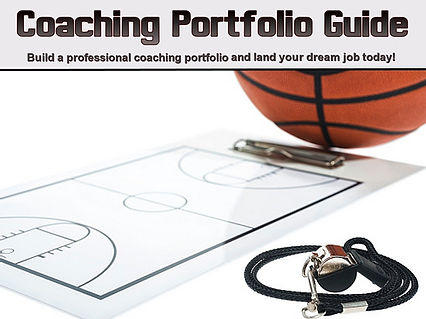
Your first impression is everything when applying for a new coaching job. A professional coaching portfolio is the tool that highlights your coaching achievements and philosophies and, most of all, helps separate you and your abilities from the other applicants.
The key to landing a new coaching job is to demonstrate to the hiring committee your attention to detail, level of preparedness, and your professionalism. Not only does a coaching portfolio allow you to exhibit these qualities, it also allows you to present your personal philosophies on coaching, leadership, and program development in an organized manner.
The Coaching Portfolio Guide is an instructional, membership-based website that helps you develop a personalized portfolio. Each section of the portfolio guide provides detailed instructions on how to organize your portfolio in a professional manner. The guide also provides sample documents for each section of your portfolio that you can copy, modify, and add to your personal portfolio.

We know you’re invested in the next generation of athletes, so why not give them the star treatment this season with GameChanger. Introducing GameChanger, a free app that provides you with data to make strategic coaching decisions and to deliver memorable moments to your team and its fans. Engage your players, empower your coaching decisions, and give parents the thrill of watching every play unfold in real time this season. Download GameChanger now on iOS or Android. GameChanger equips your team with the tools they need to succeed. Download it today and make this season one for the books. GameChanger. Stream. Score. Connect. Learn more at gc.com/hoopheads.
With GameChanger you’ll get automated highlight clips for all scoring plays as well as rebounds, steals, assists, and more. Plus free live streaming, advanced scorekeeping, and team management. No complex setups required, just easy, free streaming from your mobile device. AI powered technology will automatically pan and zoom…
TRANSCRIPT FOR ROUND TABLE 61 – BESIDES WINNING, WHAT ARE YOUR NEXT THREE COACHING PRIORITIES? – EPISODE 899
[00:00:00] Narrator: The Hoop Heads Podcast is brought to you by Head Start Basketball.
[00:00:21] Mike Klinzing: Hello and welcome to the 61st edition of the Coach’s Corner Round Table on the Hoop Heads Podcast. Each episode of the Coach’s Corner Round Table will feature our all-star lineup of guests answering a single basketball question. A new Coach’s Corner Round Table will drop around the 15th of each month.
January’s Roundtable question is, “Besides winning, what are your next three coaching priorities?”
Our Coaching Lineup this month:
- Dominic Amorosa – Strake Jesuit (TX) College Prep
- Scott Fitch – Fairport (NY) High School
- Joe Harris – Lake Chelan (WA) High School
- Bob Krizancic – Mentor (OH) High School
- Dave McGreal – Penn State Altoona
- Raul Placeres – Maryville College
- Don Showalter – USA Basketball
- John Shulman – University of Alabama Huntsville
- Joe Stasyszyn – Unleashed Potential
Please enjoy this Round Table episode of the Hoop Heads Podcast and once you’re finished listening please give the show a five star rating and review after you subscribe on your favorite podcast app.
If you are a basketball coach at any level please check out our Hoop Heads Coaching Mentorship Program. You’ll get matched with one of our experienced Head Coaches and develop a relationship that will help take your coaching, your team, your program, and your mindset to another level.
Be sure to follow us on twitter and Instagram @hoopheadspod for the latest updates on episodes, guests, and events from the Hoop Heads Pod.
Hey Hoop Heads, Dr. Dish Basketball is ringing in the new year with big savings. This January, buy one Dr. Dish, get one free. Or unlock exclusive single unit discounts during their 2024 Super Sale. Learn more at drdishbasketball. com and follow their incredible content a@drdishbball on Twitter, Instagram, Facebook, and YouTube.
Mention the Hoop Heads Podcast and save an extra $300 on the Dr. Dish Rebel, All Star, and CT models. Those are some great deals Hoop Heads. Get your Dr. Dish shooting machine today.
[00:02:24] Jack Agostino: Hi, this is Jack Agostino, head boys basketball coach at Bayshore High School in New York. And you are listening to the Hoop Heads Podcast.
[00:02:35] Mike Klinzing: Prepare like the pros with the all new Fast Draw and Fast Scout. Fast Draw has been the number one play diagramming software for coaches for years. You’ll quickly see why Fast Model Sports has the most compelling and intuitive basketball software out there. For a limited time Fast Model is offering Hoop Heads Listeners, 15% off Fast Draw and Fast Scout. Just use the code HHP 15 at checkout to grab your discount and you’ll be on your way to more efficient game prep and improved communication with your team. Fast Model also has new coaching content every week on its blog, plus play and drill diagrams in its play bank.
Check out the links in the show notes for more. Fast Model sports is the best in basketball.
Let’s hear from our panel about their three biggest coaching priorities. Besides winning.
Dominic Amorosa, Strake Jesuit College Prep in Houston, Texas.
[00:03:37] Dominic Amorosa: Dominic Amorosa from Strake Jesuit in Houston. Three next coaching priorities after winning is development of the person, teaching of life lessons, and building of a team where kids and players are excited about someone else’s success.
[00:03:56] Mike Klinzing: Scott Fitch from Fairport High School in New York and USA Basketball.
[00:04:05] Scott Fitch: Hoop Heads, this is Scott Fitch from Fairport High School and also USA Basketball responding to the topic, besides winning, what are the next three coaching priorities? And I think they change throughout the season. So I’m going to refer to the priorities at this point in the season, which is just past halfway.
Number one is, are we improving? I think everybody wants to peak at the end in the playoffs, but to do that, you got to be improving throughout the year. And so not only team wise, but individuals, are they getting better? Is the bottom of your bench getting better? Cause if they’re not, then practices aren’t getting better.
And I’ll always do a deep dive analytically right now. You know, I’ll look at what’s causing us games or what’s making games difficult to win. Is it because of our turnovers? Giving up often to rebounds. Is there a baseline out of bounds? Efficiency what is it? And then get better at them and put focus and practice to those.
Number two, what’s the care factor? Like, is this team all in are the guys on the bottom of the bench totally engaged? Are they having fun, but also competing at a high level. And if that care factor is not high, then I don’t think you compete at your best at the end of the year. The teams that care more, they win more.
And so I make sure that our care factor is very high. And then the third thing would be, I reassess myself. At this stage, this is the grind of the season. You know, what am I doing to stay fresh, to stay positive, to really embrace this team? You know, some seasons are harder than others on that. And I think that I always try and transition the leadership of the team to the players around this time.
I think the best teams are the ones that are. You know, player driven. And so, that’s a focus of mine at this point as well. I hope you guys have a great rest of your season. Take care.
[00:05:49] Mike Klinzing: Joe Harris, Lake Chelan High School, Lake Chelan, Washington.
[00:05:55] Joe Harris: Hey, Hoop Heads! This is Joe Harris with this month’s Round Table question. Besides winning, what are your next three coaching priorities? Let winning take care of itself. First of all, the top priority should be creating great people on and off the court. As coaches, we have a tremendous opportunity to teach so many life lessons through basketball and other sports. You can teach them to show up on time, to say please and thank you.
Are they reliable, trustworthy, and devoted to others? We shouldn’t waste this opportunity to help our athletes be better men or women. Secondly, you need to invest in your players. By getting to know your players away from the game, coaches can develop Lifetime relationships, and you can send a clear message that first and foremost, we are going to know and value one another, wherever that may be.
Thirdly, I believe it’s about the long run. Keep the bigger picture in mind. Work on the fundamentals and the basic things in your program. Your focus should not be on winning games. But I’m building great teams and letting outcomes speak for themselves as a coach. Just pour yourself into your players and be transparent with them.
Tell them when they’re wrong, correct them, and then love on them and make sure they understand how they have to prepare themselves to be successful. Thanks for having me on. I hope these thoughts can help you in some way and best of luck to you all as your season progresses.
[00:07:24] Mike Klinzing: Bob Krizancic, Mentor High School, Mentor, Ohio.
[00:07:31] Bob Krizancic: Coach Bob Krizancic, Mentor High School. Besides winning, our three priorities, definitely number one is effort. We want to be the hardest working team and to be in better shape than anybody in the state of Ohio. Second, definitely would be execution. Anything that we run press breaker wise, sets, OBs, we want to make sure that we execute and know first option, second, third, fourth.
Third, building relationships. Playing for your brother, playing for your teammate, so important. Best of luck.
[00:08:11] Mike Klinzing: David McGreal from Penn State Altoona.
[00:08:18] Dave McGreal: What’s going on everybody at Hoop Heads Nation? Coach McGreal, Penn State Altoona here. With today’s this month’s Round Table question. Besides winning, where are your three? Priorities as a coach, obviously the first one that I would think of at the collegiate level is making sure these young men graduate, get a degree, understand what they’re really here for and that’s to get a college education.
The second thing that priority that we have is to try and prepare these young men to be successful outside of basketball and once they’re done Playing basketball, moving on into society as a well rounded individual, hoping that we can help create young men that are positive influences on society.
And the third thing really is just kind of encompasses all those and that’s build relationships. I said this before, being able to share these young men’s. Life’s after they’ve left you know, getting letters back from them about things that you might’ve said to them years ago that they’re still putting into effect today being invited to weddings and seeing your former players have families of their own and things of that nature is, is just as important as winning.
So again, building relationships. So graduating college is one, two making sure that they’re ready to be positive influences on society. And three, just hoping to build lasting relationships that Extend beyond our, our years here as a player coach. Alright guys, hope you guys have a, the rest of the year for you and we’ll talk to you soon.
[00:10:03] Mike Klinzing: Hey, coaches, we know you’re invested in the next generation of athletes, so why not give them the star treatment this season with GameChanger. Introducing GameChanger, a free app that provides you with data to make strategic coaching decisions and to deliver memorable moments to your team and its fans.
Engage your players, empower your coaching decisions, and give parents the thrill of watching every play unfold in real time this season. Download GameChanger now on iOS or Android. GameChanger equips your team with the tools they need to succeed. Download it today and make this season one for the books. GameChanger. Stream. Score. Connect. Learn more at gc.com/hoopheads. That’s gc.com/hoopheads
[00:10:59] Mike Klinzing: Raul Placeres from Maryville College.
[00:11:04] Raul Placeres: What three things are important to us besides winning? Well, number one, That our guys graduate from college. That is the most important thing when you get to our program. God willing, we do it on time and that you do it in four years and you have a degree that you can use and better your life. Number two, as a coach, as the head coach of the program to give our players the best experience as possible.
We’ve been very fortunate to give an example in the last four years, our senior point guard has been able to play in Las Vegas. Daytona Beach, Florida. Play at the Great Lakes Invitational, which is one of the best D3 tournaments in the country. We’ve been to Mount Union. You know, try to play the best teams in the country, so Your guys can say they had a great experience while they did this through their four years.
And then the last thing is that they grow, that they grow not only on the floor, but off the floor and that they’re ready to tackle the real world. And that they use all these experiences from the film room, weight room, pre game, post game talks on the floor to use those things to help them in the most important game, which is the game of life.
This is Coach Placeres, Head Coach, Maryville College
[00:12:15] Mike Klinzing: Don Showalter, USA Basketball.
[00:12:24] Don Showalter: Hi, Don Showalter here from USA Basketball. Besides winning, what are your next three coaching priorities? Well, I’ve said before that winning should not be a goal. Winning is an objective rather than a goal. If that’s your only goal you’re certainly going to be disappointed many times. As well as the players being disappointed and feeling let down.
So I think other than winning, I think your priorities, first of all, make the game fun. Basketball is a fun game. So I think really that it’s got to be at the forefront, make it a fun experience for all the players, one through 15, not just your top five or six. Or seven. Number two, build relationships. I think relationships at the end of the day are what really carries you as a coach and carries your players in order to make them a much better player.
And, and I think third then is you enjoy, make it so you enjoy the journey. It’s a, it’s a journey. And that’s a coaching priority is to enjoy that journey each and every day to get better. to emphasize, have an emphasis on getting better with the players. And I think this has to be a coaching priority. So I would say those are the top three in my estimation.
[00:13:47] Mike Klinzing: John Shulman, University of Alabama Huntsville and the 720 Sports Group.
[00:13:56] John Shulman: This is John Shulman, head coach at Alabama Huntsville. This month’s question is besides winning, the three things that you’re trying to teach, most important things you’re trying to teach. Besides trying to win a basketball game. It’s getting harder. And, and I think just be honest, the more you focus on winning, the less of winning that you probably do.
So I think focusing on the other things are probably way more important than focusing on winning. But the, the, the first thing is to me, you got to make sure that they’re, that these young people are able to fight through adversity. We talk about it all the time losing a basketball game is one thing.
How are you going to react of it? What are you going to do when you have a tough day at work and you got a wife and three kids? Are you going to get in a fetal position and bag it? Or are you going to keep on battling through it? And find a way to go back to work, and your boss yells at you, and the same thing as a coach yelling at you, and how can you fight through adversity?
So that, to me, that’s I understand. You know, I’ll put number two making sure these kids get an education. I personally think that number one is an education in life better than an accounting class. Anybody can learn accounting. Can anybody fight through adversity? No, and life’s going to get hard, and basketball’s going to get hard, and the season’s going to get long and hard, and we’re getting ready to play Valdosta State tonight, and half our team’s got the flu, and nobody cares.
And we’re coming off a loss, and it’s a tough time, and it is what it is. And so, can we fight through adversity? Can our kids fight through adversity? Because they’re going to need to do that. But number two they got to be able to get an education and, and it’s vital in college that you’re making sure that they’re on track and that it is important.
And the same thing in high school and, and not cutting corners and, and making sure they do what they’re supposed to do and not let making sure that winning is the most important thing that you got to make sure you do the other stuff. Knowing the difference, I put number three, knowing the difference between right and wrong.
And we’re teaching that we teach that all the time. Whether it be in practice what we think is right and doing the right things on the court, off the court. I believe in karma. I believe in that if you do enough right things, you’ll get rewarded for it. And if you do enough wrong things, you’ll hit the other direction.
So just knowing the difference between right and wrong. Whether it be on the court or off the court and understanding that others, other people that are counting on you. So if you make a decision or a selfish decision that other people are counting on you and you affect other people. And that’s kind of our fourth thing that the world doesn’t revolve around you, that there’s other, the team is a bigger deal than your individual accomplishments and that just the world’s a big place and the world doesn’t revolve around you.
You have to join it and you’ve got to make a difference in the world. With a group, not just about you. So I just winning’s important. I understand. So we can all keep our jobs, but I’m just going to tell you that you focus on making sure they know the difference between right and wrong.
Making sure they’re doing what they’re supposed to in school and making sure they can fight through adversity and making sure that they understand the world doesn’t revolve around them. You’re going to win games. And so I would put winning down the line a little bit and make sure that you help them in life.
Hope this helps. Good luck the rest of the way, as we all head through January and stay healthy. Stay happy and stay successful, whatever that means to you. Thanks.
[00:18:00] Mike Klinzing: Joe Stasyszyn, Unleashed Potential
[00:18:10] Joe Stasyszyn: This month’s question is, besides winning, what are your three next coaching priorities? I would say besides winning, probably the biggest coaching priority for me is helping players to develop and get better every day.
Looking at the big picture a lot of coaches focus on winning. I really believe the process in getting there to winning is the biggest, is the biggest thing that you need to do. Because I think you have to one of the things that I know when I was a high school coach for many, many years is I enjoy practice a lot more.
Then the games, because I really enjoyed seeing players getting better. So I think you have to approach coaching on a daily basis of making each individual better. And then in return, the team will become better. So it’s more of a marathon than a sprint. I just think you have to look for team improvement every day and you should be playing your best basketball.
By the end of the season, that’s something that I’ve always tried to do. And that was sort of the, the gauge that I, that I looked at in terms of how our season’s going to go before, not constantly improving throughout the year, if we’re playing our best basketball early and then falling off mid-season and towards the end of the year.
Then that has a direct impact on whether you’re winning or not. So, we never really talked about winning. We talked about getting better every day. I just think that’s a really, really important aspect of coaching that is missed sometimes. That sometimes coaches get so focused on tunnel vision on winning.
But you’re not, you’re not looking at the processes. That’s the most important part of winning is a constant improvement on a daily basis. And I think as a coach good coach development leads to good player development. So part of this process starts in the off seasons, coaches making themselves better.
So in return, they can make their teams and their players better. So I’ve always, like I said, I’ve always focused on the process of team development and player development in terms of having a direct impact on the end result, which is, which is winning. The other thing I think that and I talk about this a lot.
In player development and talking to coaches all over the country when I speak for USA basketball and, and everywhere I go is today’s players one of the other things that you got to focus on is having them understand that working hard is the, is your ticket inside the door. So that’s the bottom rung of the ladder.
So that’s one thing I think you have to show kids today and players today, what working hard looks like. Okay. Cause if you ask a player they come into the gym, say, are you working, you’re going to work hard today? Are you, did you work hard today? They’ll all say, yes, I did. But I think a lot of times they don’t really understand what that looks like.
So, I think you have to spend time showing them what hard work looks like and having them understand that today’s basketball landscape is so competitive, more so than any other time, that that’s the bottom rung of the ladder. That’s just expected when you walk on the floor. Just working hard is not going to be good enough in terms of having an impact, a direct impact on your winning.
So showing them what that looks like, working hard, and then building up from there. On your skills and all those other aspects that go into being a good basketball player. But if they don’t come in and understand that they have to work hard to start with, then you’re fighting an uphill battle.
So I think that’s a really, really important aspect. The other things that, that I like to talk about besides winning that they need to understand. And then the the third one that I think also is a blueprint. And I really believe this cause I’ve used this all over the country.
We have what we call a competitive edge model where we take every part of a skill and break it down in some type of competition. I think you got to show players cause some players are competitors and some players aren’t. But I think you have to show them what competing looks like also.
And by incorporating different things in your practice, like I said, I have a whole system that I use for practices called the competitive, competitive edge model, where players have to compete in all aspects of the game, whether it’s ball handling, whether it’s shooting, having competitions, whether Three on three during practice, having a competition for every aspect of the game.
I think that really tends to build competitors in your program because when teams are competing, that’s what they do, that’s what they do in games. So you can do drills and do drills and do drills all you want, but unless you’re having competition in those aspects. And showing them what competition looks like in every aspect of the game.
Then they develop a mindset of having to compete for everything because, I mean, obviously during the game, that’s what you’re doing, you’re competing. So I think that you really have to incorporate competition. Into whether it’s going against someone going against the clock whatever the case may be, there has to be some type of competition and as much competition as possible.
If you want to be, if you want to have more success in terms of winning. So we could talk about winning all we want, but at the end of the day, there are many, many other aspects that go into winning. And if you take care of those things. Then I always say winning will take care of itself because I think if you get if you get tunnel vision for winning and that’s all you, when that’s all you focus on, you’re missing a huge part of the blueprint or pieces of the puzzle that will lead to more success in terms of winning games.
Thank you very much.
[00:23:48] Mike Klinzing: Thanks for checking out this month’s Hoop Heads Podcast Round Table. We’ll be back next month with another question for our all-star lineup of coaches.
Your first impression is everything. When applying for a new coaching job, a professional coaching portfolio is the tool that highlights your coaching, achievements and philosophies. And most of all helps separate you and your abilities from the other applicants, the Coaching Portfolio Guide is an instructional membership based website that helps you develop a personalized portfolio. Each section of the portfolio guide provides detailed instructions on how to organize your portfolio in a professional manner. The guide also provides sample documents for each section of your portfolio that you can copy, modify and add to your personal portfolio.
As a Hoop Heads Pod listener, you can get your Coaching Portfolio Guide for just $25. Visit https://www.coachingportfolioguide.com/hoopheads to learn more.
[00:24:43] Narrator: Thanks for listening to the Hoop Heads Podcast presented by Head Start Basketball.