JOHN O’CONNOR – BENNINGTON (NE) HIGH SCHOOL GIRLS’ BASKETBALL HEAD COACH – EPISODE 896

Website – https://sites.google.com/bennps.org/athleticsandactivities/athletics
Email – [email protected]
Twitter – @BHSbadgersbball

If you listen to and love the Hoop Heads Podcast, please consider giving us a small tip that will help in our quest to become the #1 basketball coaching podcast.
John O’Connor is in his 9th season as the Girls’ Basketball Head Coach at Bennington High School in Nebraska. During his tenure at Bennington John was named the 2020 Metro Basketball Coaches Association (MBCA) Class B Coach of the Year and was selected a 2021 Nebraska Coaches Association. (NCA) All-Star Game Assistant Coach.
John previously spent 3 years as a boys’ assistant at Bennington and 2 years as a volunteer at Millard North HS.
If you’re looking to improve your coaching please consider joining the Hoop Heads Mentorship Program. We believe that having a mentor is the best way to maximize your potential and become a transformational coach. By matching you up with one of our experienced mentors you’ll develop a one on one relationship that will help your coaching, your team, your program, and your mindset. The Hoop Heads Mentorship Program delivers mentoring services to basketball coaches at all levels through our team of experienced Head Coaches. Find out more at hoopheadspod.com or shoot me an email directly [email protected]
Be sure to follow us on Twitter and Instagram @hoopheadspod for the latest updates on episodes, guests, and events from the Hoop Heads Pod.
Grab pen and paper before you listen to this episode with John O’Connor, Girls’ Basketball Head Coach at Bennington High School in the state of Nebraska.
What We Discuss with John O’Connor
- The family sporting goods store owned by his father
- What he learned from his father being a basketball official
- Building rapport with officials
- “Growing up in a small town allowed us to have the opportunity to play different sports.”
- Entering college knowing he wanted to be a teacher and a coach
- “As a volunteer, you don’t really care. You’re just wanting to get involved and learn a lot, be a sponge, take as much information in as you can.”
- The excitement he felt getting his first teaching position after subbing for a couple of years.
- What he learned as an assistant coach under Luke Olson, the boys’ head coach at Bennington
- Taking the girls’ job at Bennington when it opened up
- The uncertainty of being a first time head coach
- Putting together a staff
- Delegating responsibilities to your assistant coaches
- The pre-practice difference between boys and girls
- “I think girls go out for basketball because they love basketball, but I think the reason why they stay out for basketball and they continue to work hard is because of their teammates.”
- Ideas for team building activities
- The strength and conditioning program at Bennington
- “We use the word relentless a lot. Just continue to be relentless.”
- Learning from coaches his teams played against
- “All gas, no brakes.”
- “You want them to play not nervous to make mistakes, but at the same time, you also have to learn from mistakes.”
- “What I can get from watching one game live is maybe the equivalent of three or four games on film.”
- Pre-game, halftime, and post-game talks
- “The girls have worked hard and when you win, you deserve to enjoy it, but 24 hour rule, you wake up the next day, you move on to the next play or the next practice or the next game.”
- Watching the film before overreacting to what you thought happened in a game
- Practicing with grades 9-12 together
- Building Bennington’s youth basketball program
- “Every decision you make, isn’t just about their daughter. Every decision you make is about the program.”
- What he includes in his weekly parent newsletter
- “I wouldn’t do this if I didn’t absolutely love it. And if I didn’t love our players and spending time with them.”
Like this show? Please leave us a review here — even one sentence helps! Consider including your Twitter handle so we can thank you personally!
We’re excited to partner with Dr. Dish, the world’s best shooting machine! Mention the Hoop Heads Podcast when you place your order and get $300 off a brand new state of the art Dr. Dish Shooting Machine!

Prepare like the pros with the all new FastDraw and FastScout. FastDraw has been the number one play diagramming software for coaches for years, and now with it’s integrated web platform, coaches have the ability to add video to plays and share them directly to their players Android and iPhones via their mobile app. Coaches can also create customized scouting reports, upload and send game and practice film straight to the mobile app. Your players and staff have never been as prepared for games as they will after using FastDraw & FastScout. You’ll see quickly why FastModel Sports has the most compelling and intuitive basketball software out there! In addition to a great product, they also provide basketball coaching content and resources through their blog and playbank, which features over 8,000 free plays and drills from their online coaching community. For access to these plays and more information, visit fastmodelsports.com or follow them on Twitter @FastModel. Use Promo code HHP15 to save 15%
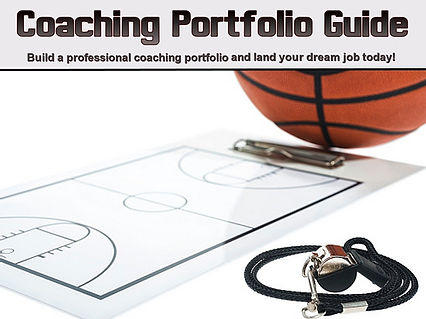
Your first impression is everything when applying for a new coaching job. A professional coaching portfolio is the tool that highlights your coaching achievements and philosophies and, most of all, helps separate you and your abilities from the other applicants.
The key to landing a new coaching job is to demonstrate to the hiring committee your attention to detail, level of preparedness, and your professionalism. Not only does a coaching portfolio allow you to exhibit these qualities, it also allows you to present your personal philosophies on coaching, leadership, and program development in an organized manner.
The Coaching Portfolio Guide is an instructional, membership-based website that helps you develop a personalized portfolio. Each section of the portfolio guide provides detailed instructions on how to organize your portfolio in a professional manner. The guide also provides sample documents for each section of your portfolio that you can copy, modify, and add to your personal portfolio.
THANKS, JOHN O’CONNOR
If you enjoyed this episode with John O’Connor let him know by clicking on the link below and thanking him on Twitter:
Click here to thanks John O’Connor on Twitter
Click here to let Mike & Jason know about your number one takeaway from this episode!
And if you want us to answer your questions on one of our upcoming weekly NBA episodes, drop us a line at [email protected].
TRANSCRIPT FOR JOHN O’CONNOR – BENNINGTON (NE) HIGH SCHOOL GIRLS’ BASKETBALL HEAD COACH – EPISODE 896
[00:00:00] Mike Klinzing: Hello and welcome to the Hoop Heads Podcast. It’s Mike Klinzing here with my co-host Jason Sunkle tonight and we are pleased to welcome in John O’Connor, head girls basketball coach at Bennington High School in Bennington, Nebraska.
[00:00:14] John O’Connor: John, welcome to the Hoop Heads Pod. Thank you, Mike. And Jason, appreciate you having me on and yeah, just looking forward to it. Thank you.
[00:00:24] Mike Klinzing: Thrilled to be able to have you on and I think, Jason, I didn’t do any research on this, but I believe, John, you are now the first, you are part of the first set of brothers to ever be on the Hoop Heads Podcast with your brother TJ coming on a couple months ago.
[00:00:34] Jason Sunkle: Yeah, we’ve had father and son, we’ve had father and son, but I don’t think we’ve ever had brothers, Mike.
[00:00:40] Mike Klinzing: I don’t think so. So I think this is a first. So John, you’re breaking new ground, buddy.
[00:00:46] John O’Connor: All right. Well, I appreciate that. That was good. I thought you were. I’m sure he probably.
[00:00:51] Jason Sunkle: I thought you were going to say he’s the first coach for Nebraska, Mike, and I didn’t know about that one.
[00:00:57] Mike Klinzing No, he’s not. No, come on. Give me a little bit more credit than that. So, but it’s fun. No, we’re still going have a brother and brother. So John, first of all, again, welcome and excited to have you on. Let’s start by going back in time to when you were a kid. Tell us a little bit about your experiences growing up with the game of basketball.
[00:01:14] John O’Connor: Yeah. So you mentioned I had a brother. I mean, that’s kind of what we grew up with was just sports all the time. We grew up in a small town where you kind of had to play everything or you got the opportunity to play everything. So we were year round all the time. And now we talk, we talk now that we’re older about how growing up, that’s just what we did.
Our idea of family vacation was going to the College World Series or going to the final four those kinds of things. So that’s just what we did and basketball just kind of, for some reason kind of became my favorite as I got older and just wanted to continue being a part of the game as I got older.
[00:01:58] Mike Klinzing: What was your parents background in sports?
[00:02:01] John O’Connor: Kind of the same thing. I mean, they actually were born and raised in the same town that my brother and I in North Platte, Nebraska. And my mom was a really good athlete, but she was kind of coming up when female sports weren’t regulated or like Title IX and stuff like that hadn’t been introduced as far as providing the same amount of sports and stuff.
So my mom. I think maybe her senior year in high school they actually had like sanctioned sports for girls. And then my dad kind of same thing, just played everything. And so that was kind of our background. Definitely. We got a little bit of that from our parents for sure.
[00:02:40] Mike Klinzing: What do you remember about the influence of either your mom, your dad, both just in terms of your sports career, what you did, how you did it, how much influence did they have in sort of impacting you as an athlete?
[00:02:55] John O’Connor: Well, I don’t know if this I mean, it had to have a little bit of an effect on it, but our family business was a sporting goods store that was started by my grandma and grandpa, my dad’s mom and dad, and then he took it over. So we grew up with a sporting goods store. It’s called the sport shop, really crazy name for it.
But we just grew up with literally sports all around us and working at the store, living at the store, hanging out at the store. My dad was an official, a basketball official, so I remember going to games watching him referee and so it was just kind of always a part of us.
[00:03:35] Mike Klinzing: Were people nicer to referees back when you were a kid? Do you remember?
[00:03:40] John O’Connor: Not really, and I wish it was my story. My brother might have told you it, but He had, my brother had a good story of when he went to a game and obviously the fans don’t realize that his dad is refereeing and that he’s sitting there watching him. And so this fan was just on my dad yelling, yelling, yelling. And finally he turned around and he was young enough, but old enough also to turn around and be like, Hey, that’s my dad out there. So that was kind of a funny story. Yeah,
[00:04:06] Mike Klinzing: Yeah, it’s funny. I mean, I was at a game that my son played in. I think it was, might’ve been their last game that they played last week.
And we were sitting in the stands and in front of us was the official’s family. And he had young kids and probably, I don’t know, they were probably somewhere between five and seven or eight, maybe. And they’re all, as dad comes out on the court, he’s standing there for the national anthem and they’re all waving to him.
And it was just, it was funny to see, again, I think sometimes, unfortunately with some of the behavior, and you know it as well as anybody that when you see the behavior in the stands from parents and fans directed at officials and then you sit behind an official’s family and you, it’s easy to sometimes forget that those people are such an important part of the game, that they have families and lives just like the rest of us who are involved in the game.
And so it, it really brought it back home to me. Not that I’m someone that’s yelling at officials cause I’m not, but it was just nice to see, Hey, there’s the official’s family and his kids were blissfully unaware, hopefully of whatever abuse he might’ve had to take that night. So it was kind of cool.
[00:05:19] John O’Connor: Definitely, I think my dad’s background as an official definitely helped me as a coach. Cause then I’m not too hard on the officials. I know where they’re coming from.
[00:05:42] Mike Klinzing: This is a discussion, honestly, that Jason and I have all the time, more so on our NBA podcast.
Actually, when you watch a lot of NBA games, you see so many. Coaches that they spend so much time trying to talk to the officials and work the officials and complaining about the officials.
[00:05:58] Jason Sunkle: J. B. Bickerstaff, stop it. You see, stop it. Yes. J. B. Bickerstaff. I’m calling him out, John. We’re living in Cleveland. I was at the game last night and all he did was complain. We were up by 30. He was complaining.
[00:06:12] Mike Klinzing: This has become a running topic for Jason and I, and I always felt when I was coaching that you’d go against these coaches and they’d spend so much time arguing with the officials or trying to work the officials or talk to the officials.
And meanwhile, you’re like, Hey man, there’s your team over there. Like just coach your team. And I think that’s probably a good lesson that you learned from your dad early on and I’m sure has influenced you as a coach.
[00:06:38] John O’Connor: Yep, absolutely. And it’s kind of frustrating too. When you see like sometimes other coaches doing that and it working, like it having an effect on the officials and you’re kind of sitting over there quiet and just focusing on your team and that kind of stuff, but then at the same time, we’re pretty lucky where we’re at, we get some really good officiating and they understand it. And it’s kind of nice. They kind of joke with them about as they run by, Hey, you should tell that other guy to be quiet a little better so we have Pretty good rapport with them
[00:07:08] Mike Klinzing: I’ve seen that before. Yeah, that’s important. It’s definitely important. All right. Going back to you as an athlete, what’s your, what are your favorite memories of, of high school athletics? And it doesn’t even necessarily have to be basketball. What stands out for you when you think back to your time as a high school athlete?
[00:07:26] John O’Connor: Yeah. I mean, again, somehow basketball definitely became a favorite, but some of my favorite experiences, I remember playing football. I’m really glad. I mean, I was not super athletic, super tall or strong or anything like that, but growing up in a small town allowed us to have the opportunity to play different sports and things like that.
And I remember just having a really good experience playing football had great coaches, great teammates. I remember some the experiences of night before games, the team getting together and watching football movies, watching film, having food, stuff like that. Just those kinds of experiences with your teammates is always a lot of fun.
One of my favorite memories, I guess, is so I tore my ACL in a football game, the second football game of the year my junior year, and I had to. Kind of worked my way back going through the rehab and stuff like that. And my goal the whole time was I want to get back for basketball.
I want to get back for basketball, even though I knew it was only going to be a short amount of time. So I kind of rushed it a little bit, but about six months later, I was able to suit up again for basketball and had to work my way back in very, very slowly, but we happened to make the state tournament that year and because I was injured for so long, one thing I practiced a lot of was free throws because that’s a lot of all I could do on most days. And anyway, down at the state, down at the state tournament, there was kind of a situation where I was able to get into the game. It was a close game. I think the other team probably thought, all right, here’s this kid that hasn’t played all year, play and let’s foul him.
And so I was able to go to the free throw line and make a few free throws down the stretch. And so it was just one of those things that I hated being hurt and I hated always having to practice free throws and I was bored and all that, but it was kind of cool to see that pay off, I guess, at the end.
[00:09:21] Mike Klinzing: Yeah, absolutely. I mean, that’s exciting and to be able to contribute and have something that you actually worked on pay dividends for you in that particular moment. When did coaching get on your radar? When you ended up going to college, what was the thought process? Was coaching and teaching something that was on your mind from the time you got to school? Was it something that came to you a little bit later? Just how did you work your way towards becoming a coach?
[00:09:49] John O’Connor: Yeah, I think even in high school, I knew that that was something I wanted to possibly look into. One of our uncle’s coaches at the community college in North Platte, been a coach there for a long time.
Again, sports were always in our background. And so really out of high school, when I went into college right away my major was education. I knew I wanted to be a teacher and then, I knew a part of that, one of my passions was definitely going to be coaching. And I thought being a teacher and a coach was just the, the path I wanted to go down.
So right away, when I got to college, that was my major, never wavered from it. And then just continued to stick with it. So I think I always had kind of a passion for it.
[00:10:33] Mike Klinzing: Once you graduate, what was the job search like for you?
[00:10:37] John O’Connor: Well, it’s kind of weird. So now teaching jobs a lot more available.
I don’t know if that’s a good thing, but there’s more jobs. But when I graduated college, jobs were very, very far and few between. I’m a social studies teacher. And so at the time, even more, there were even fewer social studies jobs, math and science, there were maybe a little bit more opportunities, but social studies was definitely kind of a hard job to come by.
So I ended up subbing for two years. I still wanted to stick with it, teach and coach. And I just want to find the right opportunity. So I continued to sub while I was subbing. I was a volunteer coach, a freshman volunteer. And again, I like all coaches you don’t do it for the money.
And so right away, I just wanted to get involved and it didn’t matter to me if it was a volunteer position, a paid position, but I just kept looking and ended up landing on my feet teaching and coaching after subbing and volunteering for a couple of years.
[00:11:38] Mike Klinzing: What was the volunteer experience like? Obviously that’s probably your first formal experience coaching. So what do you remember about those first few seasons and what that was like in the moment working with those players for the first time and kind of getting your feet wet?
[00:11:53] John O’Connor: Yeah, I mean, I thought it was an awesome experience. You mentioned my brother. He was actually an assistant coach. The high school staff at a school in Omaha. And so I didn’t work a lot with him, but getting to work at the same school and stuff like that. And then just getting that first opportunity to coach. I remember again, as a volunteer, you don’t really care.
You’re just wanting to get involved and learn a lot, be a sponge, take as much information in as you can. And you don’t, you don’t know what you don’t know. You just kind of ready to learn. And I just thought it was a great opportunity, great experience.
[00:12:29] Mike Klinzing: What’s something that you felt like you were pretty good at that you took to naturally right out of the gate?
[00:12:35] John O’Connor: I think being competitive super competitive I think helped me Well for one it helped me want to continue to pursue coaching and teaching because after you know a couple job interviews and they go another direction or whatever it might be you kind of have to have a little bit of competitiveness to want to stick with it, handle some of that adversity And then I always thought I related pretty well to the players.
I don’t know if it was because I was young and they were I’m just a recent college grad and they’re in high school, so the age gap was pretty small there was in the in that the first couple of years. And so it felt like I related well to the players and that helped me connect with the players a little bit.
[00:13:22] Mike Klinzing: What was something that maybe you weren’t as strong at or what was something that you found to be challenging that first year or two?
[00:13:28] John O’Connor: Oh, I mean, everything. I was terrible at everything, probably. You go in with one thought process. You certainly don’t know how much time even as a volunteer assistant.
And then as you kind of work your way up into different roles, you realize the, the amount of time continues to grow and grow and grow. As a player, I think I probably got away with just playing the game where now as a coach, you’re, you’re looking a little bit more at the X’s and O’s at the scouting side of things just.
Kind of more of the details in the ins and out. And I mean, you walk in as a volunteer coach for the first time. And yeah, I probably felt like I didn’t know anything.
[00:14:14] Mike Klinzing: How’d you learn? What was the process for learning? Was it seeking out the other coaches on that staff? Was it reaching out to and learning from your brother and maybe some of his contacts?
How did you go about learning the game? Were you watching a lot of film? Were you going out and trying to get to clinics and get to other coaches practices? Just what was your methodology for trying to improve as a coach?
[00:14:38] John O’Connor: Yeah, I mean, just trying to help out in every area that you could whether that’s going to camps. I remember working a Creighton camp early, like just those types of opportunities in the summers and stuff like that. I was literally the lowest person on the totem pole at that time, which is a great thing because everybody ahead of me taught me something. I got to kind of learn on the fly, sit, listen a lot, watch a lot.
You could have the freshmen practices in the morning and then go attend the varsity practices in the afternoon and kind of get to learn from both practices, both those areas. I mean, the coaches that were there at the time were, and still are some of the best coaches that I know today.
And so just getting to watch them and see them and learn from them was definitely how I learned anything.
[00:15:37] Mike Klinzing: Talk a little bit about the interview process that you remember for the actual first. paid coaching and teaching position that you got. What do you remember about that experience? And then the moment when you found out that you were going to get hired for real and be able to have a full time salary instead of a substitute salary?
[00:15:56] John O’Connor: Right. It was yeah, it was a great feeling because again, you’re kind of getting to the point where like, gosh, I know I want to do this, but is it right for me? And is there going to be something out there that’s going to be a good opportunity? And I just remember going into that interview at Bennington, it was actually a part time, it was like a 75 percent part time teaching position at the time, which again, that to me sounded like winning the lottery. I’m like, let’s go. Yeah. And so, yeah, I definitely remember getting that call. Extremely humbled, extremely excited. I remember calling my parents just saying, Hey, you guys are probably worrying as much as I was, but we got it. We got a job.
I can’t thank the people at Bennington enough for giving me that first opportunity and that was just teaching. So I was still volunteering. Now I, at this time I had been volunteering for a couple of years and now I was at Bennington on the boys side. And I was still volunteering, but I guess you could say I kind of moved up as far as what level I was coaching at.
I was kind of a JV assistant, varsity assistant but still volunteering and still not really caring about that. Just wanting to coach and be around it. So. Really excited to get that to get that first teaching gig. And then I volunteered, I think for another year and then maybe the year after that I was able to get on as a staff member on the coaching side, a paid staff member.
[00:17:31] Mike Klinzing: Yeah, What was the first paid position?
[00:17:32] John O’Connor: Varsity and JV assistant. Yeah. Boys varsity.
[00:17:43] Mike Klinzing: What did you learn in your time as an assistant that has helped you? Once you became a head coach, what are some things that you learned about what makes a good assistant, what an assistant can do to help a head coach?
Just think about the things that you learned as an assistant and share some of those with us.
[00:18:01] John O’Connor: Yeah. So the first thing, I mean, so Luke Olson, Coach Olson was and still is the head boys basketball coach at Bennington. And I mean, I learned so much from him. I still to this day learn a lot from him.
He’s been a great mentor in a lot of ways. I think one of the things that I really enjoyed doing as an assistant with scouting, going to games and just kind of breaking down different players, strengths and weaknesses, seeing what defenses and offenses they run. And then, I mean, that’s just kind of the X’s and O’s type of stuff that you learn.
A little bit of game management here and there. Coach Olson did a fantastic job of, he knew that someday I wanted to be head coach. So he really helped me. Just kind of knowing that was one of my goals really. Help me do some things throughout as an assistant to kind of help me grow as a coach.
[00:18:50] Mike Klinzing: In practice, what was your role at that time? How did Coach Olsen break down the responsibilities of the staff in practice?
[00:19:02] John O’Connor: Yeah, I remember one of the responsibilities was, Indy work, bigs or post players. And so I did a lot of work with them. And it was a lot of fun. I’m not very tall, but again, I’ve mentioned going to a small school.
I actually was having to be a post in some ways and a guard in some days. And so I think that kind of helped me a little bit of having a little bit experience but then I got to obviously. Go do a lot of camp work and stuff like that to become a better bigs coach. Again, I don’t know if I taught those players anything, but I definitely enjoyed kind of working as a during that indy work, working with the posts.
And then we would do some situational ball and situations at practice and getting to take a group and, and help walk them through the situation. And that’s kind of some game management stuff that I got to learn along the way.
[00:19:52] Mike Klinzing: What about in game? What was your role in game as an assistant?
[00:19:53] John O’Connor: In game was mainly like keeping track of fouls, keeping track of timeouts you know, just constantly being a communicator to Coach Olsen. In the JV games a little bit more involved just because it was me and the JV head coach, whereas in the varsity game we had Two or three other assistants and so, but that’s really good because then you get a few different roles, a few different opportunities in each of those roles.
[00:20:26] Mike Klinzing: How many seasons are you with Coach Olsen before the opportunity with the girls program opens up? I was with Coach Olsen for three years. When that opportunity with the girls program What’s the thought process in terms of coaching boys versus coaching girls, the opportunity to be a head coach? What was your mindset at the time as you’re considering whether or not to make that jump?
[00:20:54] John O’Connor: Yeah, I knew again, I had two goals, I guess you could say professional goals.
One was to someday be a head coach. I never really thought about boys or girls as coaching boys in the past as a volunteer and stuff like that, the last few years, it never really crossed my mind. It didn’t even think to me like, Hey, what happens if a girl’s job opens up? Would you take it?
Like that thought never even came across my mind. I just knew I wanted to coach. And then the other thing that I wanted was to just raise a family in a good community and in a nice place, nice town, good school district. And then all of a sudden, kind of unexpectedly. You know, I was already working in a great school district in Bennington.
I knew this is the place I wanted to be and eventually raise a family. And then next thing the, the head girls position opens up and again, never even thought about it, never even crossed my mind. Then all of a sudden, both boxes, both goals kind of presented themselves. I talked, the hardest part was talking to coach Olson about it because he was a mentor.
He helped me get my foot in the door at Bennington, helped get my foot in the door as far as coaching. And I felt in some ways that I was kind of not bailing on him, but you know, like I definitely needed his approval, I guess you could say. And I knew he of course would have supported me either way, but there was definitely a part of me that wanted to, I didn’t want to let him down if I was leaving his staff or anything like that, but as great of a head coach as he is, he was in 100 percent in support because he knew that that was a goal. So anyway, long story short, all of a sudden, both of those opportunities presented themselves, teaching and working, raising a family in a great district, and at the same time, getting to be a head coach. And really glad that it worked out that way.
[00:22:55] Mike Klinzing: Had you been looking at all at that point for potential head coaching jobs? Had you gone on any interviews for head coaching jobs? And then I guess to go along with that, when the job at Bennington opens up, how prepared do you feel like you were for? the interview process and kind of having a feel for talking about what you envision for a program where you are the head coach.
So I know I threw a lot of things at you right there, but just how prepared were you? Were you already looking? And then just kind of going into the interview, how prepared did you feel?
[00:23:26] John O’Connor: Yeah, I honestly was not looking. I knew that a goal was to be a head coach. And was not actively pursuing it, but at the same time opened the idea of if something again happened to, I was so happy being a teacher in Bennington that I didn’t want to leave that.
And I wasn’t actively pursuing any other head coaching positions. And then again, this one just kind of happened to open up. Must’ve been luck, I guess or, or just fate that that’s how it worked out. And then going into the interview process I had a lot of really good help from Coach Olson, my brother, like you mentioned other coaches that have helped me out along the way definitely gave me a lot of a lot of help and good insight into not just the interview, but what being a head coach is all about. And so I think that helped prepare me for the interview. I think I did okay in the interview and was able to get the job. But at the same time, once you get the job, I think most head coaches would tell you that they had no idea what they were getting themselves into as an assistant, you get to see a glimpse of what it takes.
But then as a head coach, you definitely put on a lot more hats. And so it was, I was not prepared at all to be the head coach I say that and coach Olson, other coaches definitely help prepare me. Don’t get me wrong, but you know what I mean? As far as just like, you don’t realize everything that goes into it.
So I’m very thankful for having the support system that I had. So once I did get the head job, I said, okay, can you help me out with this? Or can you help me out with that?
[00:25:18] Mike Klinzing: So what were a few things that were sort of overwhelming in the first couple of months on the job that you were kind of like, man, I had no idea that I was getting myself into this part of it.
[00:25:27] John O’Connor: Yeah, I mean, it was in the springtime. And so right away you’re okay, you’re going to meet the team. And then you’re sending out communications for parents. You’re sending out communications for summer stuff. So you’re right away, you start planning on, Hey, here’s what we got to do this summer.
You’re communicating with the strength and conditioning coaches about, Hey, what’s the plan for this summer you’re communicating with leagues and summer camps. And so just, I think the scheduling and the communication, even to this day takes up a lot of the time just to be organized with those kinds of things.
[00:26:06] Mike Klinzing: What about hiring a staff? How’d you go about that? Did you bring back some of the people who were part of the previous staff? Was there anybody that you knew and had contact with in the coaching world that you brought over that you tried to hire? Just what was that process like for you?
[00:26:22] John O’Connor: Yep. So the previous staff had some really good coaches The head coach had been coaching for a long time, but he was stepping away from basketball.
And then another assistant actually got a head job at another school. Not too long after I had gotten a job we had a middle school coach who is still one of our assistants. Now Teresa Rischling is her name. And she actually is a Bennington grad. She’s the all time, we always say her claim to fame.
She’s the all time leading scorer at Bennington. And one of our players needs to break that record here, hopefully sometime. But so anyway, she was a middle school coach at the time. And she had coached as an assistant at the high school for a couple of years too. And so she was one of the first calls that I made just to see if she would be interested and thank goodness she was. And then we had another young assistant. She was an elementary school teacher, but young and could relate to the girls. You know, that was definitely a big part of it was having, as a male, having two female assistants on staff that could.
Help me out with kinds of situations that I might not know much about.
[00:27:28] Mike Klinzing: As a head coach, thinking back to your time as an assistant and what coach, what coach Olson did for you to try to help you to prepare for a head coaching job. How do you think about that in terms of working with your coaching staff and helping to prepare them in the, in the event that one of them might want to move on and eventually be a head coach? How do you pour into your assistants as a head coach?
[00:27:51] John O’Connor: Yeah, absolutely. I think one of the biggest things is we do a good job of splitting up scouting duties looking at other teams and stuff like that at practice, again, kind of some of the same things that Coach Olson allowed me to do, having different situations, maybe a scout team where one of the assistants takes on the, the scout team and, and they are responsible for Seeing what the other team does on film and then implementing that with a scout team at practice bringing different ideas to, to practice different drills to practice.
Teresa, like I mentioned, she is the head JV coach as well. And so definitely she gets, she gets a lot of opportunities with coaching the JV. We have another assistant who was a former head coach Ron Coughlin’s his name and Coach Coughlin, obviously, being a former head coach has basically allowed us to, to operate like co head coaches in many ways, you know he, he does a lot of the, the game planning, the scouting practice ideas, drills, that kind of stuff as well.
[00:29:03] Mike Klinzing: Thinking back to those first couple of months on the job. Making the transition from coaching on the boy’s side to coaching on the girl’s side. What were some of the things? that you noticed that were the same, different, just when you’d make the comparison between the two,
I know oftentimes the answer is coaching basketball is coaching basketball, but having coached both my son, my daughter in the game, I think there are definitely some things that maybe just in the way that you approach it or the way that the girls or the boys approach certain things. Just what was that like for you, that transition?
[00:29:34] John O’Connor: Yeah, I think I mean, on the girls side, they’re very, very coachable. They are like sponges. They want to learn, ask great questions want to understand the game and are really good at those kinds of things. I always laugh.
One of the biggest things I noticed, and I have no idea if this is an actual thing or not, but I always remember being an assistant. And even to this day, this happens a lot, but when you’re getting ready for practice and there’s 15 minutes before practice or whatever it might be.
There’s 25 guys in the gym and you can hear. You can hear 25, 50 basketballs bouncing, shoes squeaking. And then in the girls practice, it’s a lot quieter. there’s like, I don’t know if it’s a 10 minute grace period of kind of chit chatting a little bit, getting together, talking about how the day was, and stuff like that.
And then, I mean, when it’s time to go, they’re ready to go. But it’s just, I just thought that was so funny. Like, here I am, maybe one of the very first practices or first days, you walk down to the gym and you’re expecting to hear the same thing and all of a sudden it’s quiet and you’re like, where’s everybody at?
Or what’s going on? And that was just one of those first things. Now, again, like I said, once they get done chatting a little bit and getting dressed, maybe a little bit slower boys, they just throw crap on and go or whatever. But I just always thought that kind of stuck out and I laugh about it now.
[00:31:12] Mike Klinzing: What are some things that you do on the team bonding side or team building side that maybe some other coaches could learn from some of the experiences that you’ve had with your team in terms of team building?
[00:31:23] John O’Connor: Yeah, I mean, that’s something that I continue to work on. I think that’s really, really important because especially on the girl’s side.
Or at least in my experience at team building, having those relationships amongst the team and the girls, it goes a long way. I think girls go out for basketball because they love basketball. They might know the coach and stuff like that, but I think the reason why they stay out for basketball and they continue to work hard is because of their teammates and because of the team that they’re on and the relationships that they have, I think that’s what keeps them going. Especially during the rough times of the season or whatever it might be. And so we definitely need to continue to work in this area, but we also try to do a pretty good job of, of doing different types of things. Over the summer, well, our strength and conditioning program does a phenomenal job of putting together a workout program.
The athletes work out together over the course of the summer. We have open gyms so kind of when you’re sweating and you’re working hard together and you’re sacrificing together, that builds a lot of that that bonding. We always try to have a get together or two over the course of the summer.
We have some things where the girls play in a couple of things. So, this group you’ve put together a plan for the team to get together and this group put together a plan for the team to get together. So those are some opportunities that we do. We have another assistant coach Sarah Goodwin’s her name.
She does a great job of organizing some other opportunities. We do a Thanksgiving drive where we fill boxes full of Thanksgiving meals. We do that about a week before Thanksgiving. And that’s something that the girls always look forward to and love doing. So we’re basically just kind of like an assembly line.
Just all, all the things that you can imagine that go into a Thanksgiving meal for families in need. We’re just putting them all into boxes. Girls are walking around with boxes. You’re dropping stuff in, dropping stuff in, you’re taping boxes up. And that’s a really. Rewarding and humbling team building opportunity.
We do an adopt a family around the Christmas time. We actually just did that obviously about a month ago where we the girls and their families all pitch in in order to go. Get some gifts for a family here in town that’s maybe going through a rough time or whatever it might be and they go shopping.
We come back, we eat, we play some games and wrap presents. And that’s another really good one. We recently went and watched the Huskers play Nebraska. Women’s basketball team play, they played Creighton. So we got to see kind of the two of the bigger schools here in the state play each other.
So yeah, those types of things we still are always trying to learn and look for opportunities for team building, but those are a few of the things that we do over the course of the year.
[00:34:20] Mike Klinzing: I think those charitable things are always great on a number of levels, right? Because it brings your team together as part of an event, but then you’re also given back in the community, which I think anytime you can give your players an opportunity to do that and sort of the lessons that they learn transcend basketball.
When you put them in those situations. And I think that that again, clearly strengthens the bond between teammates. And I think it also can help to bring and improve the relationship between coaches and players and then players in the community. Again, when the community sees the team out doing things like that.
I just think it brings a tremendous amount of goodwill to your program. What are the rules like for you guys in Nebraska in the summertime as far as how much contact you can have with your players?
[00:35:07] John O’Connor: Yeah, that’s a great question. I always need to brush up on that kind of stuff and they recently changed it too because in the past it was something along the lines of four athletes at a time with a coach doing something.
So it can’t technically be like an organized practice. They just recently in Nebraska changed it to where you can have it’s a little bit more flexible over the course of the summer. There’s a kind of a beginning date and an end date. And as long as you’re in between those dates then you’re okay to have a little bit more of structured open gyms and those types of things, and that definitely helped. I think a lot of other places already were doing that. I think you want, you’re giving your players the right coaching and the right message. And I think sometimes when you’re not allowed to do that and they have to go outside of that not that there’s not great opportunities outside of what we do.
In fact, there’s definitely a lot of great stuff that they go out and do. But it’s just kind of nice to be able to work with your athletes a little bit more during that timeframe.
[00:36:13] Mike Klinzing: It’s one of the things that’s really interesting when you look across the country at the different states and the different rules and just how some states have almost complete freedom.
I know in Kentucky, they can pretty much practice full team as much as they want. And then here in the state of Ohio right now we have 10 coaching days in the summertime. And then you can do some of those four man workouts like you described. But it’s just interesting when you talk to coaches from different States.
And when we talked to Scott Ruthsatz, who’s at Covington Catholic in Kentucky, and he’s like right across the border from Cincinnati. And so a lot of times I’ll play teams in Cincinnati and we had, we had him on and he was talking about, yeah, we’re playing. Basically practicing year round and then he’s going against teams early in the season in Cincinnati where they’ve only been able to practice for three weeks and basically he’s been practicing every day through the month of September.
Just again, because the rules are different in the different states. It’s always interesting to hear how different states go about and. You mentioned as part of your summer program that you have a strength and conditioning program there at your school, which obviously is a tremendous advantage that not every school has.
So just tell us a little bit about how that works and what your relationship is like with the strength and conditioning coach and how you guys kind of put together a program for your players in the summer.
[00:37:35] John O’Connor: Yeah. So it’s a really good program that benefits all athletes. So you know, we’re a growing school district.
But at the same time, we definitely. Are in a position where we share athletes among different sports. We try to encourage multi sport athletes. And so the strength and conditioning program definitely focuses on the overall athlete. Coach Mimic Brandon Mimic is one of the head strength and conditioning coaches, and then Jocelyn Sewing is another one.
Both of them are coaches in other sports. And so again, they try to work on the overall athletes. So your girls basketball player is also going to be, and volleyball player is going to be getting the same workout a football player and a baseball player are going to be getting the same workout.
So it’s really focusing on the overall athlete not just sports specific. And then we do have a lot of athletes And kudos to them that after that workout, they do maybe go do their sports specific workouts and go do even more on top of that. But we are, like you mentioned, we are very lucky to have, I mean, that’s something that is kind of taken off our plate in the summer.
Our coaches do a great job of attending weights and stuff like that just as supervision and support for our athletes, but just to have a strength and conditioning program that is tailored to all of the athletes that we don’t necessarily have to put together ourselves is really beneficial.
[00:39:05] Mike Klinzing: Yeah, that’s a tremendous resource to be able to have at the high school level. Not every school is fortunate enough to have that, so it’s great that your kids have access to that. Thinking about yourself as a head coach and kind of putting together your philosophy. Offensively and defensively and getting a feel for how you wanted to play when you first took the job versus where you are now, how has your style of play and your philosophy in terms of how you want to play?
Has it evolved? Has it changed? Did you kind of have an idea of here’s how I want to play, but we’re not ready to quite play this way yet. Just where are you at in terms of putting together your offensive and defensive philosophy and how you want your team to play?
[00:39:44] John O’Connor: Yeah, absolutely. I mean, the first couple of years it was a huge learning experience.
And to be honest, when we would play really good teams and see their style of play and I’ve talked to some of these coaches since about likewe’re trying to be what they’re doing. After they pressed us and after they’ve played a certain defense and stuff like that, I’m like, that’s the style. That’s what we’re looking for. After you get your teeth kicked in a little bit by some of these coaches and some of these teams, it’s like taking notes on, Hey, that’s what we’re trying to get to. So I always kind of laugh if, I don’t know if you remember the movie, we are Marshall, but they go to West Virginia and ask for their film and their rivals. And it’s like they’re, they want to learn. They go into Bobby Bowden’s office and ask for the film on how to run their offense and, and stuff like that. And that’s kind of how I felt early in those years was asking coaches that knew a lot more than me and that were very successful and kind of just wanted to adopt a lot of those things. I think, I guess if we have a philosophy, if I have a philosophy, it’s, we want to play really fast on offense obviously under control and things like that, but we want to play up tempo.
We want to play fast. I want girls to have confidence shooting the ball. Defensively, we want to play high pressure full court the whole game with some traps here and there, and just kind of in your face relentless. We use the word relentless a lot. Just continue to be relentless.
We use a phrase, all gas, no brakes. So both on offense and defense, we’re putting the pedal to the metal, trying to go as fast as we can. Now, obviously, you might have teams or you might have certain situations where you do have to slow it down because you have to be more, you have to be under control at the same time.
You can’t play we can’t play faster than you’re able to. And so there have been times where we’ve adjusted. But if I were to say I have a philosophy that would definitely be kind of the style, I think this year, so far this season we’ve got a really good group that’s been able to try and do some of those things.
[00:42:03] Jason Sunkle: Wait, I got to stop real quick. John, I got to tell you, you referenced the movie from 2006. There’s no way in heck that Mike has seen it.
[00:42:10] Mike Klinzing: Okay, that’s true. That’s true. I have not seen any movie. Well, that’s just right after my kids were born.
[00:42:19] Jason Sunkle: That’s what I’m saying. Mike’s statement always on the podcast is pop culture after, after 2003. You may as well, yeah, 2000 2004. Yeah, anything, anything pre 2004 pop culture. Mike, do you know who stars in We Are Marshall? Mike, do you know who stars in We Are Marshall?
[00:42:30] Mike Klinzing: Marshall Mathers?
[00:42:33] Jason Sunkle: Matthew McConaughey, man. All right.
[00:42:41] John O’Connor: right. Okay. All right, all right. I mean, you, Mike, you at least got to know the story.
I mean, it’s the tragic story of the Marshall football team.
[00:42:48] Jason Sunkle: Mike was alive back then, right? Right? You were alive. Right, right. The plane crash. Mike, Mike. Plane crash.
[00:42:53] Mike Klinzing: Well, Jay, only one on the podcast that was alive back then, John. So we’ll just, we just say that.
[00:43:00] John O’Connor: Have you, seen the movie Jason?
[00:43:03] Jason Sunkle: It’s got Matthew McConaughey, it’s got Matthew Fox before he got famous. I think he was in the middle of Lost. Right. And Anthony, Anthony Mackey’s in it before he was captain America now. So there you go.
[00:43:16] John O’Connor: Yes, exactly. So, there you go All right, Mike, you’re, yep, you’re cultured now.
[00:43:18] Mike Klinzing: There we go. I’m cultured. I’m in, man. I’m in. We are Marshall. Now, you guys inspired me to want to go on Netflix and watch the movie.
So, although I can’t say, I don’t even remember the last time I watched the movie, John and Jason. So, it’s been, it’s been a while. Anyway, so all gas, no breaks. What does that translate to in practice?
What does that look like? How are you going about? Teaching that, getting your girls to buy into that, getting them to be able to play that way free and loose and to be able to keep the pedal the gas pedal down. Yeah. I mean, it’s a fine balance because you want them to play free.
[00:43:54] John O’Connor: You want them to play not nervous to make mistakes, but at the same time, you also have to learn from mistakes.
So at practice and again, Every drill I do, I stole from a coach much smarter than me but it’s drills that are up tempo. It’s transition drills. Some of it’s three on 0, two on 0 some like advantage type drills. We do the we call it Laker transition, but it’s the plus one where you start two on one, then it’s three on two, then it’s four on three.
And eventually it gets to five on five. We like that one a lot. We do yeah, just kind of a lot of that stuff. I mean, we try to incorporate we still value defense over everything. So we still incorporate our defensive philosophies in every practice, but then we also want to incorporate a bunch of shooting.
And a bunch of transition stuff as well.
[00:44:45] Mike Klinzing: Does your practice have a typical flow where, Hey, we always do offense first and then defense, and then we shoot, or we do this drill always to start the practice off, or is it more just based on what we need in a given day? How does the practice organization look for you?
[00:44:59] John O’Connor: Yeah, I would say the first probably 15, anywhere from 15 minutes to half hours, a lot of skill stuff first ball handling, and we kind of rotate like each day is a different kind of ball handling. Maybe it’s two ball routine. Maybe it’s full court, one ball, maybe it’s stationary, one ball. Maybe it’s with a defender just kind of working on having both a defensive and offensive drill, some kind of ball handling.
We try to do some passing as well. So we have some different passing drills that are up tempo working on snap and passes, meet and passes. And then a little bit of shooting some team shooting drills as well. So high volume of shots. So we usually do a lot of that at the beginning of practice. I just think throughout the course of the year, continuing to work on those just, just your basic fundamentals is still really important.
And then we like to end practice with a lot of shooting as well. And then kind of in between those two things. So kind of the fundamentals at the beginning, some shooting at the end, in between those, it can kind of rotate around between maybe we’re game planning on that day and we’ve got to go over some scouting stuff.
Another day it might be like I mentioned, we need to work on a lot of our transition stuff. Could be press break a team is going to press us and we really need to hone in on our press break. So kind of in between that time, we definitely mix it up a little bit.
[00:46:28] Mike Klinzing: A little about the scouting process because that’s something that you mentioned early on when you were a volunteer that you really enjoyed getting out to games and scouting teams and being able to put together that scouting report.
How do you go about that now as a head coach, obviously with the video capabilities that we have today, it’s much easier to scout than it was certainly back when I was coaching. But just how do you put together a scouting report and then how much of it do you share with your players and how much of it is just used for you as coaches to kind of design the game plan sort of behind the scenes and then implement it with the girls directly?
[00:47:05] John O’Connor: Yeah, the technology side of things has made it it’s much easier to watch more games, but I still would say I feel like I can learn more you know, from going and watching it live. I definitely feel like what I can get from watching one game live is maybe the equivalent of three or four games on film.
And so I still would prefer, much rather prefer watching a game live. But having the technology is absolutely huge. Our assistants, we do a really good job of kind of splitting some of those responsibilities up. Because basketball, obviously you have two, three, four games, or you’re in a tournament where all of a sudden you might play one team or you might play another based on wins and losses and our assistant coaches do a great job of working together and putting that plan together.
You know, great question on how much you share with players and how much, I still don’t know that answer. I think it depends on the team. I think it depends on your personnel. You don’t want to overwhelm them with information, but then some players really like a lot more information.
They want to know more. And so just kind of finding that fine line, I think a lot of coaches have said it, but keep it simple stupid just try to give them, give them the main information. Keep the main thing, the main thing and keep it simple. And then ask coaches, maybe you have a little bit more information as far as adjustments or certain things to look for maybe some baseline out of bounds, tendencies and stuff like that.
[00:48:42] Mike Klinzing: Heading into a game, so let’s say it’s starting with the day before a game, how much are you sharing with the girls in terms of, Hey, here’s some tendencies, maybe here’s an out of bounds play, like you said, how, how many times are you sort of touching on those things from a day before the game practice up through, maybe it’s a weekend, Saturday game, you have a shoot around your pregame talk, just how many times are you kind of hitting the key points that you want to make with them?
[00:49:08] John O’Connor: Yeah. I think kind of the day before practice, you’re definitely fine tuning some of the things like, again, if they’re going to press the heck out of you you’re maybe doing some drills that are going to work on that a little bit. If they’re a zone team, you maybe work on your half court zone offense a little bit more.
You know, at a shoot around, sometimes we play back to back where a Friday night game you know, that, that Thursday you’re, you’re doing everything for that Friday game. And then that Saturday morning is maybe some, sometimes the first time that they’re getting some of that information.
So you just want to go over the fine details. And yeah, just put them in a good position to be successful.
[00:48:42] Mike Klinzing: What do you like to do in your pregame talk?
[00:49:08] John O’Connor: It kind of changes a little bit, maybe year to year team to team. I’m not a super big rah rah guy. I’m kind of just, hey, here’s, here’s the game plan.
You guys know what the game plan is you know. Let’s just go execute it here. Here’s a couple last minute reminders of maybe personnel what we want to try and do on offense, what we want to try and do on defense. Let the assistant coaches who’ve maybe, maybe been scouting or helped with game planning go over their last minute details as well.
And then get out there.
[00:48:42] Mike Klinzing: How do you handle halftime?
[00:49:08] John O’Connor: Kind of similar. Every game’s different. Every situation’s different. There’s definitely times where you have to calm them down or, or pick them up, you know in, in different situations. I think it’s really important to keep it give them something that’s going to help them in the second half.
So maybe it’s something we’re noticing that we’re doing that we can maybe clean up a little bit hey, our rotation here. Needs to be a little bit better or execution here needs to be a little bit better. I think when you can give them tangible information that they’re seeing and feeling on the floor is really good.
I also you want to try and I don’t do a great job of this. I need to do a better job of this for sure, but just kind of getting their feedback too, where are you seeing out there? What, what are some adjustments that we can make? What defense do you like out there? And kind of getting some feedback from the players as well.
[00:51:26] Mike Klinzing: All right, let’s take it to the end of the game. How about post game? How do you handle that?
[00:51:27] John O’Connor: I think after a big win you want them to celebrate it. We kind of always talk about the 24 hour rule. I know a lot of coaches have it. I didn’t make it up. Someone a lot smarter than me taught me it as well, but 24 hour rule. So if you win, enjoy the heck out of it. Our schedule is very tough. Our conference, the teams that we play are very tough. So when you win, we want them to enjoy it. They’ve the girls have worked hard and when you win, you deserve to enjoy it, but 24 hour rule, you wake up the next day, you move on to the next play or the next practice or the next game, whatever it might be, and then if it’s a loss, it’s the same attitude.
It’s, that was a tough one. Or you know, Hey, there’s some things we maybe can get better or need to work on, we’ll watch the film and come back tomorrow, ready to go. So I also think that, and again, another coach, other coaches have taught me this along the way, but sometimes what you, what you might think immediately after a game, both good and bad might not be 100 percent reality.
So it’s always good. I think more so after a loss where you’re probably a little bit upset or you’re a little bit disappointed, but before you fly off the handle, it’s probably good to go watch the film. And a lot of times you realize, what, it actually. You know, it wasn’t as bad or maybe they just made some more plays or, Hey now I’m calm and can explain it a little bit better. I think that’s important to kind of post game.
[00:52:56] Mike Klinzing: I agree with that a hundred percent. I think that there is lots of different times where I can remember when I was an assistant varsity coach and we’d have a game and we would think, okay. We thought this is what happened. And then you go back and you watch the film and you’re like, Oh yeah, the way we perceived it in the moment is not the way that it actually happened.
And so I think you, you learn so much by removing yourself from that emotion and actually going back and looking at it. And clearly the value of, as you mentioned earlier, just The ability to have the instantaneous access to your own film. And obviously if you’re trying to scout an opponent, but it’s just amazing how sometimes what you see in the moment and how much you forget sometimes too.
Especially I always feel like if there’s a comeback either way, like if your team blows up. 10 point lead in the last four minutes, or you come back from 10 down in the last four minutes. I always feel like in those situations that everything is so scrambled and moving so fast that it’s hard to remember all the individual things that kind of led to either the good result or the bad result.
And if you go in and start trying to talk about that without watching the film, you’re going to end up, I think, oftentimes feeling kind of silly when you do see what actually happened.
[00:54:13] John O’Connor: Yeah right. Definitely. And the players usually kind of know too, like what they. Yeah. Absolutely.
[00:54:23] Mike Klinzing: All right. Tell me a little bit about how you, as the head coach, work with the other levels of your program.
So going down to the JV, freshman, middle school, and even on into the youth program, how do you go about thinking of your program as a K to 12 program and not just as, Hey, I’m coaching the varsity team?
[00:54:42] John O’Connor: Right. Yeah, definitely. So for starters at the high school level we have nine through 12 and we all practice together and our numbers could probably be a little bit higher.
And that’s something that we’re always working at just girls basketball across the country, really across the state and, and beyond. Trying to improve those numbers, but we do have a manageable number where we’re allowed to practice at the same time, which again, I think for our female athletes is really big cause that bonding and working together and practicing together.
I think that goes a long way. We have you know, again, all of our coaches. involved at practice. Hannah Sowers is our, is our freshman and reserve coach, and she does a really good job at practice with us too. And so it’s just nice to have all 9-12, every girl in the program at practice together.
And then when we’re doing fundamentals, when we’re doing those kinds of things, we can do all those. Because that skill work and those fundamentals that goes across the board, whether it’s a starter, senior starter on varsity down to a freshman that’s new to the game, those skills and fundamentals are important.
And then we’re definitely always trying to be involved with our youth as well. Our middle school season is starting up. We communicate with the middle school coaches and, and kind of give them luckily we have some really good experience coaches, so I don’t have to give them a lot of information, but I do send them a couple things and talk to them about a couple things about, Hey, here’s what we do up at the high school.
Some things that you can implement that way when they do get up to the high school level. When we finally get them, they’re not completely overwhelmed. We have a tremendous youth program. The Bennington Basketball Association or BBA. Just as a phenomenal job. I remember when I first started, it was a pretty small operation.
And since then, as our community has grown, it’s just blown up, but we have absolutely amazing volunteers that honestly make my life way easier. I know some coaches that have to do a lot of that stuff. And they, I mean, they have to build it from ground up where I’m very lucky and I can just help out in areas that they need.
And so we have some tremendous people that help out with our BBA program. And that goes from hosting tournaments to hosting skill sessions. Every. I shouldn’t say every Saturday morning in the fall, but there’s about four weeks in the fall before our season starts that there’s some Saturday morning youth clinics that our high school girls go and help and kind of make that connection with them.
We have a couple of camps over the summer that we. Work on with our youth too. So we’re definitely always trying to be involved. Like you said, making it a K 12 program, making it a community based program. We have, it takes a village. I mean, we have amazing volunteer parents that want to coach at the youth level.
We have, like I mentioned, the amazing volunteers in the BBA. That just do such a great job. It makes my life a lot, a lot easier when it comes to coaching. And then on top of it I’m finally here in Bennington long enough that the girls in our program now were in kindergarten, first grade, second grade and now that they’re in the high school program and it’s just pretty cool to see that come full circle.
[00:58:03] Mike Klinzing: Yeah. To me, I’ve said this so many times on the podcast, John, anytime I talk to a high school coach that I really think when you look across the country at, especially when we’re talking about public schools, that the youth program and that connection between the high school varsity coach and the high school varsity program and the youth program, to me, if you want to be a consistent winner and you want to build something that’s sustainable, I think you have to be involved in that youth program.
You have to be visible so that kids who are in third, fourth, fifth grade see you and say, Hey, someday I’d love to play for coach O’Connor. Someday I’d like to be like those girls who are going down and doing the clinics and that I’m seeing at camp. There has to be that aspirational piece of that. And I just know from my experience that.
Programs that have a good youth program that is connected to their high school program. Those are the programs that win year in, year out. They’re consistent. If you don’t have that, you can win sometimes because you just have a good group or it just works out for a year or two and you have a nice run.
But if you want to Build anything sustainable. I really think like the things that you described that you have there in Bennington, to me, that’s what it’s all about in terms of being able to build a program that’s going to win for the long-term. I just think that’s so, so important. And then I think the other thing that goes along with that, and I’ll ask you about this, is being able to engage the parents of obviously first your varsity program, but then getting to know families and parents and players throughout the entire program.
So just what are some things that you’ve done over the course of your tenure there to engage with parents and just how do you go about making sure that the parents feel like they’re a part of your program so that you get them on your side as not as adversaries, but as advocates for your program?
[01:00:07] John O’Connor: Yeah, absolutely. So I think that’s another thing. We’re very, very lucky. We have tremendous parent support. And obviously you always have a few parents that want you know, they want to talk about certain situations they want to talk about whatever it might be, and that’s understandable, they love their daughter and they want what’s best for them and they should.
And we understand that as coaches. And so as a parent myself. Obviously your natural instinct is to kind of make your child in whatever situation priority and you want to make sure that they’re taken care of but then as a coach that you’re, you’re taking care of an entire program.
Every decision you make, isn’t just about your daughter. Now, every decision you make is about a program. And so that just kind of comes with the territory. But again, luckily we have tremendous parent support. Our parents both are very supportive of their daughters, but they’re also very demanding of them as well, both in academics and expectations in activities they expect them to work hard.
And that’s what makes them so great to work with as their coach. I definitely want to embrace opportunities to talk to parents. Some coaches might feel as though they want to be kind of shut off from that or closed off and parents you don’t want a lot of parent involvement.
But like we tell our players, we’re open to conversations and we’re open to wanting feedback from parents to an extent and wanting to, you want them to know that we care about their daughter. We love their daughter. And as a parent, we want them to know that we’re supporting them.
And so that’s kind of one of our biggest messages, I guess you could say when it, when it comes to our parents, but again, very lucky, very, we have amazing parent support. And every once in a while, you might have a parent that wants to have a conversation about certain things and that’s great.
That’s okay. It comes with the territory. But for every one of those, we got nine that are very supportive and we’re very lucky to have that.
[01:02:20] Mike Klinzing: Do you have a conversation or do you have a way of communicating with parents on a regular basis? Do you put out an email, a newsletter, just anything, anything that kind of creates regular conversation with parents?
[01:02:37] John O’Connor: Yeah, we send out a weekly announcements. We call it our weekly announcement. So every Sunday I’ll send out the plan for the week. Yeah. And when practice times are, when games are, what time buses are for, for that week, and then maybe some last minute announcements that might be down the road.
So may when picture day is, or we just came off of winter break. So just a reminder when school starts back up and maybe how that’ll change. Practice times and stuff like that over a break, like Thanksgiving and Christmas break or winter break, having that communication because we do have practices over those breaks that weekly announcement.
And I think that has helped. I mean, typically you might receive an email reply each week about, Hey coach could you help me out with the like. Maybe I forgot something or maybe I, I put something on there wrong or maybe they just wanted clarification on something. So I think that helps keep that lines of communication open.
[01:03:38] Mike Klinzing: That regular proactive communication I always think is so important because then if you get in a situation where you have to have one of those more difficult conversations, like you described, it’s so much easier when you’ve already had. Those lines of communication open, and there’s been lots of positive interaction with parents.
It just makes it easier to handle a situation where you might have a more difficult conversation that you have to have when you think about. Your entire tenure there at Bennington and where you are and where you’re headed, what are one or two characteristics or traits that you feel like you have as a coach that have allowed you to build your program and have success?
So I’m talking just personal characteristics, not necessarily things you do basketball wise, but just things that you feel are key to your success.
[01:04:28] John O’Connor: Well, for starters like I mentioned earlier, it takes a village. So any success, any personal characteristics that I have were given to me, or I had to learn from much smarter coaches.
We have, like I mentioned, tremendous support from our assistant coaches down to our strength and conditioning to our administrators, to our parents, to our youth program. I mean, we are literally kind of hitting the jackpot when it comes to all of the support that we have. So. Anything that, that I’m able to do well it’s because of all of the behind the scenes and support that that we receive and that I receive. I love my players. Absolutely love coaching them, even on the tough days and the tough situations that we might go through being a parent definitely has helped me. I like, I tell the girls I have my, I have my family home, but this is my basketball family. And during basketball season, I spend more time with my basketball family probably than I do with my family at home.
And I wouldn’t do that if I didn’t absolutely love it. And if I didn’t love our players and spending time with them, I know how lucky I am to be in the position that I’m in and just humbled and grateful to be in that position. And I just love doing it. So if anything that would definitely be kind of, kind of how I feel about my position and the opportunity I’m given.
[01:05:57] Mike Klinzing: All right, let’s wrap it up with one final two part question. So part one, when you look ahead over the next year or two, what do you see as being your biggest challenge? And then part two, when you think about what you get to do every day, what brings you the most joy? So your biggest challenge and then your biggest joy.
[01:06:18] John O’Connor: Biggest challenge, so I don’t know if this is what you’re looking for, but we’re kind of in a unique position here in Bennington. We’re growing at an extremely fast rate, and so right now we are in the second largest class, we call it class B, and class A is the largest class where it has all the biggest schools, and we’re growing.
At a rate faster than we can hold at our high school. So we’re actually in a situation where we will probably become class A here in a couple of years. And so we’ll go from being one of the bigger class B schools to then one of the smaller class A schools. And as you go up in competition like that, don’t get me wrong, there are really, really good schools at all levels and all of our classes across the state. But obviously once you get into that bigger class and you’re going up against those bigger schools, the competition across the board just goes up a little bit. And so that’ll be a challenge for us as coaches to start thinking about that and start preparing now for a couple years from now. And then eventually and again, I’m probably going outside the box here, but we’ll have to build another high school and both schools will then go back down to B. And so you have a community. That like we’ve talked about, we have a community that’s the Bennington community and it’s fantastic.
It’s great. But one of the challenges here in a few years will be what happens when we’re putting on a youth camp in the summer. And you’re putting it on for the elementary school students. Well, a lot of those elementary school students, by the time they’re in high school wouldn’t go to your school basically.
And that’s okay. I mean, you’re still there supporting the community and that’s the number one thing. And so that’s a good thing, but it’s just it’s definitely just going to be a different atmosphere and maybe, I don’t know if challenge is the right word, but definitely it’s going to be unique for sure.
[01:08:18] Mike Klinzing: And then your biggest joy.
[01:08:21] John O’Connor: Biggest joy is gosh, again, like I said, I mean, I love the game of basketball and I’m too old and slow to play and obviously be, be on that side of it. So this is the next best thing I get to still be involved in it. And coach in a great community with great players, great families, support across the board.
I have a great family at home with my wife and my two kids who are just so supportive of it. Cause I know it’s a huge challenge for them too, during the season to be gone and it’s starting to become a year round challenge, as you know, with coaching, but it’s just tremendous support, tremendous opportunity.
[01:09:07] Mike Klinzing: Well said, John. Before we get out, I want to give you a chance to share how people can connect with you, whether you want to share social media, email, website, whatever you feel comfortable with. And then after you do that, I will jump back in and wrap things up.
[01:09:19] John O’Connor: Yeah. I’m kind of old school, I guess. I don’t have a lot of social media. We have a girls basketball account on Twitter. But between myself and an assistant coach, Coach Goodwin’s kind of in charge of doing most of that stuff. So if they have any questions they can feel free to shoot me an email.
Again, I’m kind of a recluse when it comes to the social media stuff. But [email protected] is my email address at school and that’s the best way to reach me if you have any questions or anything like that.
[01:09:57] Mike Klinzing: John, I cannot thank you enough for taking the time out of your schedule tonight. Really appreciate it. And to everyone out there, thanks for listening and we will catch you on our next episode. Thanks.