ROUND TABLE 81 – HOW DO YOU DEFINE AND COMMUNICATE ROLES TO PLAYERS SO THEY BUY IN AND EXECUTE EFFECTIVELY? – EPISODE 1152
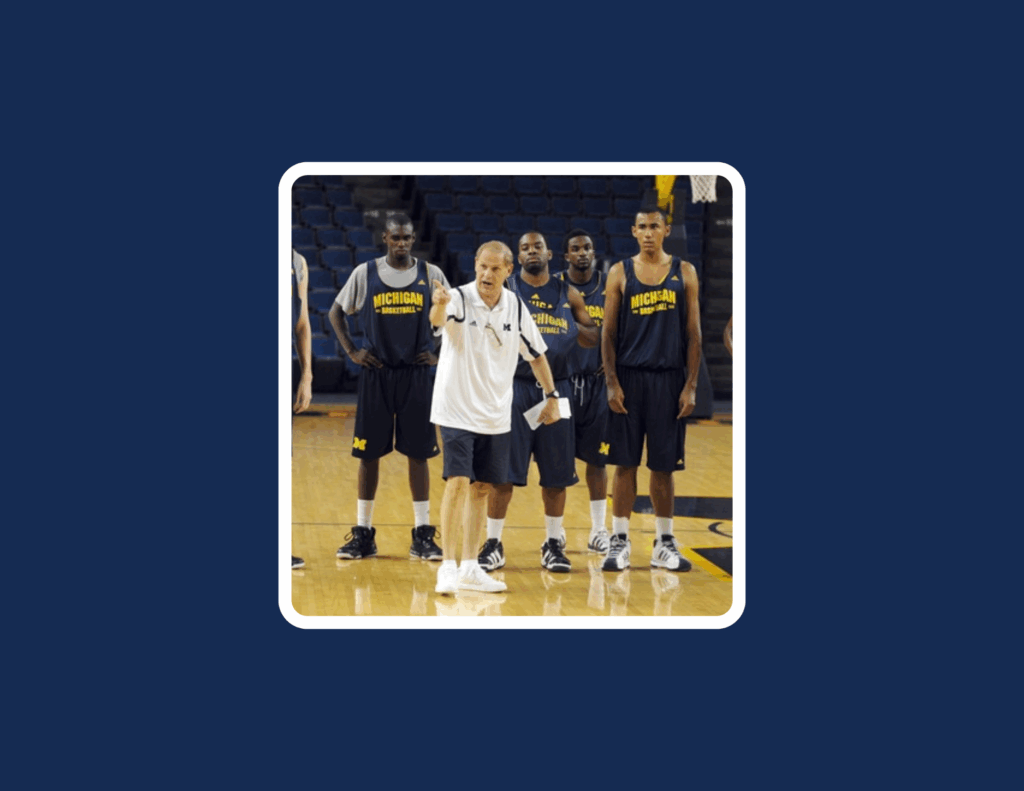
Welcome to the 81st edition of the Coach’s Corner Round Table on the Hoop Heads Podcast. Each episode of the Coach’s Corner Round Table will feature our All-Star lineup of guests answering a single basketball question. A new Coach’s Corner Round Table will drop around the 15th of each month.
September’s Round Table question is: How do you define and communicate roles to players so they buy in and execute effectively?
Our Coaching Lineup this month:
- Jerry Buckley – Bishop Kenny (FL) High School
- Chris DeLisio – Olmsted Falls (OH) High School
- Stephen Halstead – Grace College
- Joe Harris – Lake Chelan (WA) High School
- Bob Krizancic – Mentor (OH) High School
- Cooper Neimand – Performance Coach for College Basketball Coaches
- Don Showalter – USA Basketball
- John Shulman – University of Central Arkansas
Please enjoy this Round Table episode of the Hoop Heads Podcast and once you’re finished listening please give the show a five star rating and review after you subscribe on your favorite podcast app.
Be sure to follow us on twitter and Instagram @hoopheadspod for the latest updates on episodes, guests, and events from the Hoop Heads Pod.

If you listen to and love the Hoop Heads Podcast, please consider giving us a small tip that will help in our quest to become the #1 basketball coaching podcast.
THANKS COACHES!
If you enjoyed this episode let our coaches know by clicking on the links below and sending them a quick shout out on Twitter:
Click here to thank Jerry Buckley on Twitter!
Click here to thank Chris DeLisio on Twitter!
Click here to thank Stephen Halstead on Twitter!
Click here to thank Joe Harris on Twitter!
Click here to thank Bob Krizancic on Twitter!
Click here to thank Cooper Neimand on Twitter!
Click here to thank Don Showalter on Twitter!
Click here to thank John Shulman on Twitter!
Like this show? Please leave us a review here — even one sentence helps! Consider including your Twitter handle so we can thank you personally!
And if you want us to answer your questions on one of our upcoming weekly NBA episodes, drop us a line at [email protected].

We’re excited to partner with Dr. Dish, the world’s best shooting machine! Mention the Hoop Heads Podcast when you place your order and get $300 off a brand new state of the art Dr. Dish Shooting Machine!
Your first impression is everything when applying for a new coaching job. A professional coaching portfolio is the tool that highlights your coaching achievements and philosophies and, most of all, helps separate you and your abilities from the other applicants.
The key to landing a new coaching job is to demonstrate to the hiring committee your attention to detail, level of preparedness, and your professionalism. Not only does a coaching portfolio allow you to exhibit these qualities, it also allows you to present your personal philosophies on coaching, leadership, and program development in an organized manner.
The Coaching Portfolio Guide is an instructional, membership-based website that helps you develop a personalized portfolio. Each section of the portfolio guide provides detailed instructions on how to organize your portfolio in a professional manner. The guide also provides sample documents for each section of your portfolio that you can copy, modify, and add to your personal portfolio.

Hey coaches — you’ve got a game plan for your team… but do you have one for your money?
That’s where Wealth4Coaches comes in.
Each week, they deliver simple, no-fluff financial tips made just for coaches. Whether you’re getting paid for camps, training sessions, or a full season—Wealth4Coaches helps you track it, save it, and grow it.
It’s time to stop guessing and start building.
Subscribe now at wealth4coaches.beehiiv.com/subscribe
And follow them on Twitter @Wealth4Coaches for daily money wins.
Your money needs a coach.
Start with Wealth4Coaches.
TRANSCRIPT FOR ROUND TABLE 81 – HOW DO YOU DEFINE AND COMMUNICATE ROLES TO PLAYERS SO THEY BUY IN AND EXECUTE EFFECTIVELY? – EPISODE 1152
[00:00:00] Narrator: The Hoop Heads Podcast is brought to you by Head Start Basketball.
[00:00:20] Mike Klinzing: Hello and welcome to the 81st edition of The Coaches Corner Round Table on the Hoop Heads Podcast. Each episode of the Coach’s Corner Round Table will feature our all-star lineup of guests answering a single basketball question. A new Coach’s Corner Round Table will drop around the 15th of each month.
September’s Round Table question is, How do you define and communicate roles to players so they buy in and execute effectively?
Our coaching lineup this month includes:
- Jerry Buckley – Bishop Kenny (FL) High School
- Chris DeLisio – Olmsted Falls (OH) High School
- Stephen Halstead – Grace College
- Joe Harris – Lake Chelan (WA) High School
- Bob Krizancic – Mentor (OH) High School
- Cooper Neimand – Performance Coach for College Basketball Coaches
- Don Showalter – USA Basketball
- John Shulman – University of Central Arkansas
Please enjoy this round table episode of the Hoop Heads Podcast. And once you’re finished listening, please give the show a five star rating and review After you subscribe on your favorite podcast app.
Be sure to follow us on Twitter and Instagram at Hoop Heads Pod for the latest updates on episodes, guests and events from the Hoop Heads Pod.
Coaches. The Dr. Dish Basketball Semi-annual sale is on right now. This is your shot to get a major discount on one of the best training solutions for your school. Training facility or even your home gym. Equip your team with the technology that’s proven to improve shot form, consistency and confidence.
Don’t miss this. Head to drdishbasketball.com and get your team ready for the season. Follow their incredible content @drdishbball on Twitter, Instagram, Facebook and YouTube. Mention the Hoop Heads Podcast and save an extra $300 on the Dr. Dish Rebel, All-Star, and CT models. Those are some great deals Hoop Heads. Get your Dr. Dish shooting machine today.
[00:02:11] Mark Christner: Hi, this is Mark Christner, women’s basketball coach at Calvin University, and you’re listening to the Hoop Heads Podcast.
[00:02:18] Mike Klinzing: Let’s hear from our panel about how they define and communicate roles to players so they buy in and execute effectively.
Jerry Buckley, Bishop Kenny High School, Jacksonville, Florida.
[00:02:33] Jerry Buckley: This is Jerry Buckley answering this month’s question about defining and communicating roles for us. It’s a lot of individual meetings with players at different points throughout the year for the upcoming season. The first meeting would be at the end of June.
June’s a busy month for us with team camp and summer league and workouts and that type of thing. So at the end of June, we sit down with every player with at least one assistant coach and myself and just kind of talk about where we think their role. It’s starting to look like where they are on the roster in the rotation, that type of thing.
We’ll do that again at the end of the preseason. Typically in mid-October again, we have the opportunity to play fall games. That helps us to find a little bit more kind of how things are playing out. We have a meeting after tryouts are over and a team is officially picked. Meeting with the player and their parents, just so we’re all on the same page.
This is something I actually got from Mike Jones. Now the coach at Old Dominion when he was coaching at the Matha, and it’s been really effective for us, and I think it gets out in front of a lot of problems. So everyone’s on the same page as far as what’s being communicated as far as roles and that type of thing.
In season meetings, we’ll do that at least once a year, once during the season with the kids, again, get them in probably around Christmas time and obviously as needed, anything more than that. And then a, a post-season meeting after the season where we wrap it up and again, kind of looking forward to the following season.
So, and then the other thing would be communication of role of roles through practice. Obviously making it a point so everyone kind of understands what everybody else’s role is in individual team meetings as well watching film and that type of thing. So I think. The individually being able to have some give and take with the player and answer, answer any questions they have, as well as making sure as things define themselves throughout the course of the season through practice.
And like I said, film sessions and kind of spelling out where guys can be most effective in helping the team.
[00:04:30] Mike Klinzing: Chris DeLisio, Olmsted Falls High School, Olmsted Falls, Ohio.
[00:04:37] Chris DeLisio: Hey, Hoop Heads, Chris DeLisio, Olmsted Falls and defining and communicating roles to players is, I believe one of the most important jobs a coach has.
I think you really have to make sure you spend time talking to players and identifying. What they’re really good at and how they can be valuable to the team. If you just expect a kid to know and to take pride in that role, I think you’re going to have a hard time always seeing those things come to fruition.
I believe every player wants to be valued and appreciated and complimented and whether that’s for something other than scoring. you have to make sure that you can let a kid know that they are appreciated for what they do. I think you have to call all your team’s attention to players who, who do great things in practice that are not always necessarily showing up on the scoreboard or in the box score, things like that.
So I think the more you can push that stuff, the more it not only helps those players know what they’re good at and what they do, but also gets total buy into the team.
[00:05:48] Mike Klinzing: Stephen Halstead from Grace College.
[00:05:52] Stephen Halstead: Hey Mike, this is Stephen Halstead from Grace College for Hoop Heads Round Table number 81. And the question this week was how do you define and communicate roles to players so they buy in and execute effectively?
And I think this is one thing that we do a little bit differently maybe than other schools, is we won’t necessarily specify or define roles for players and the first few weeks of practice, I think that’s a big time for players. To learn and be able to compete and to be able to try to play for certain spots on the team.
So it’s one of those things. We are more of a motion based offense team, and it’s not going to be, Hey, you have one guy who is the guy scoring a lot of points. So I think that’s part of it is naturally the guys that’re going to be able to go through and find and communicate roles. However, once we get to the.
Maybe a week before the first game. If we notice a guy is not going to be in the rotation or if he is not going to be playing, that is something we want to communicate to them. So we’ll bring them in, we’ll talk, we’ll let them know exactly where they’re at on the depth chart and how that works. And then always just to stay ready.
You never know’s going to happen. It’s a long season, whether it’s injury or they just start playing better. You always want them to be ready if they end up with the opportunity.
[00:07:03] Mike Klinzing: Joe Harris – Lake Chelan High School, Lake Chelan, Washington.
[00:07:10] Joe Harris: Hello Hoop Heads. This is Joe Harris from Lake Chelan with this month’s round table question, how do you define and communicate roles to players so they buy in and execute effectively for your program?
Being transparent is a must. You have to be transparent with your players and your coaches. Be open and honest in all your communication. Continually stressing that everyone is equally important to the team regardless of their role on the team. Because building a great team is, is ultimately our goal.
You speak to your players first, then, then you can speak to them as a team. And you can do this during practice. You can recognize a player doing something little in their role so that all our teammates can recognize it and even celebrate it. And then you can also do it publicly in the media recognizing something as little as great effort in a ball game.
With each one of their role in mind, our focus is really on building a great team and letting those outcomes speak for themselves. We all need to work toward a team spirit of belonging, and this comes through our contributions that lead to a team first mindset. Hopefully this is something that can help you and help your team build to a, to a great start for the season.
Thanks again.
[00:08:24] Mike Klinzing: Coaches, you’ve got a game plan for your team, but do you have one for your money? That’s where Wealth4Coaches comes in. Each week, we’ll deliver simple, no fluff financial tips made just for coaches. Whether you’re getting paid for camps, training sessions, or a full season, Wealth4Coaches helps you track it, save it, and grow it.
It’s time to stop guessing and start building. Subscribe now at Wealth4Coaches dot beehive. Dot com slash subscribe and follow us on Twitter at Wealth4Coaches for daily money wins. Your money needs a coach. Start with Wealth4Coaches.
Bob Krizancic – Mentor High School, Mentor, Ohio
[00:09:10] Bob Krizancic: Coach K Mentor High School. Roles, that’s just a huge part of our program. Any program. How we define them and how we have our players understand them. We watch a ton of film early preseason in season and really tell them what we expect of them. We’ve been very fortunate to have very successful alum.
Playing college four, currently playing in the professional ranks in all sports, and if possible, we bring those players in. We also put it in writing and try to make it as simple and as clear as possible. Clarity is everything. Best of luck.
[00:09:57] Mike Klinzing: Cooper Neimand, Performance Coach for College Basketball Coaches.
[00:10:03] Cooper Neimand: Getting buy into roles starts with being transparent, encouraging, and real. that’s what builds trust. And once there’s trust, players will start listening. step one, be transparent about where they’re at now. Roles should be based on where a player is right now. Not where they used to be, not where they hope to be, but where they are today in this system with this group it’s not personal.
It’s about putting them in position to soar to their strengths and bring value to the team. Period. For example, like, hey man, you’re an elite cutter, and right now we don’t have a lot of movement and we got a bunch of all dominant players. I’m not saying don’t dribble when you’re out there, but if you could be our best mover and cutter, you’ll get easy buckets.
Create space for the team. And stay on the court. roles should be rooted in how a player can make the biggest impact right now. And be super clear on that and letting them know that this role is just helping you align to your strengths to impact winning. Next, I think you have to connect the role to something they want roles.
The fastest path to get a player to what he wants. More minutes, more wins, more money a better shot at going pro. And that all starts with owning the role that they’re in. And it’s not a feeling, it’s more of a launching pad. And I think the last step is just to reinforce and praise. once roles are set, you have to reinforce it.
That means catching players when they’re doing it right. Calling it out, showing it in film, telling them one-on-one. that’s what we need for you. You’re doing a great job telling the whole team hey, this guy has, is cutting and moving and he’s killing his role and is making our team better.
When roles are clear, connected to what the players want and respected by the program, players lock in. they take ownership, they take pride in it, and when that happens, every role matters. Everyone contributes and winning follows. Roles aren’t personal, they aren’t limiting, and they’re not permanent.
They’re strategic, they’re empowering, and they evolve.
[00:12:20] Mike Klinzing: Don Showalter, USA Basketball.
[00:12:26] Don Showalter: Hi Don Showalter here from USA Basketball. How do you define roles for your players? That’s a great question and a great thought process that I think coaches need to consider. One of the things I really liked about defining roles is have players define. Their roles and their roles for their teammates.
And you can write, do that by having them write down a, on a, on a piece of paper what, what do you think your role is for our team? And then you discuss it with them individually. See if you’re on the same page. The other thing is we do our communication circle, which many of you have seen.
Done at the end of practice. And one of the questions that we ask the kids to, to answer would be what, what do you think the player beside you did well in practice? Or what do you think his best piece of his game is? And so if he says he tells Johnny beside him, Johnny, I think you did a great job of rebounding that kind of establishes a role for Johnny from his teammates as opposed to coming from you.
I think that’s. A huge factor. If you can have the roles being said by teammates as opposed to coaches. I think it sticks with the players better. I think they have a better feel for what their role is on a team coming from a player. Thank you.
[00:13:49] Mike Klinzing: John Shulman from the University of Central Arkansas.
[00:13:55] John Shulman: This is John Shulman, head coach at the University of Central Arkansas. And this month’s question is how do you define and communicate roles to players so they buy in and execute effectively? Great question, hard question, hard deal. First of all how do you define roles? I don’t think, I think you need some time to define roles.
I think if you. No roles by the first game, you’re ahead of the game. I think guys develop into roles. I love, I love pickup for a couple reasons. I like pickup. I like, I like messy pickup. Send them out there, let them figure out their teams. They will, all of a sudden, somebody’s going to take charge, somebody’s going to take charge, and that person taking charge will end up being the leader.
I haven’t. We haven’t voted on captains or who goes out, talk to the official in the last six years, and we always have someone to go up here for the captains they kind of figure out their roles. So they can figure out their roles as who’s the alpha, who’s the captain who’s going to lead, who’s going to follow?
I think you can get a lot of that in pickup. Who’s going to dominate the ball? I like watching. We may not practice the first week. we didn’t practice the first week of the summer. We played pickup and we used our hours in the summer to watch them play pickup, to see what they were really good at. To see who fit and kind of what role they were wanting to play when they had no structure and no coaches out there.
Very interesting. If you’ll just kind of sit back and watch a little bit. So I think that’s the first, to me, that’s the first step. Defining roles. It is just sitting back and watching making it messy and, hey man, we need, we need, we need eight guys down here and we need eight guys down there.
And just shut up and step away. And it’s going to be messy, but somebody’s going to take upon that responsibility to send eight guys down there and seven with me down there. And now we got it figured out. Now you’ll start seeing who the leaders are by just stepping back and watching communicating to the roles.
To me I just, if they can’t figure it out I just read a book about an elephant in a room. Coach had a stuffed animal of an elephant in a room, and it was just to remind him that sometimes you have to talk about tough things. I don’t think you define roles early. I think they will come to you, but if you have to sit down, if you have to sit down and tell a player his role, I would do that.
One-on-one. I wouldn’t do it in front of the team. And then if he did it well, I’d brag upon him. Boy, let me tell you this. Mike is doing a great job screening. He is doing an amazing job screening and boxing out, keeping acal of glass and what a great role he’s playing for us. Or Mike is the best defender we got, like pump him up even if it’s not a great role.
Everybody wants the role of scoring. Or handling a ball or shooting. No one wants those other roles, but those roles are mandatory and you have to have them if you’re going to be good. Show me a team that’s got a bunch of guys who think their role is to score. there’s a reason, coach. I’m always open.
There’s a reason you may always be open. The other team wants you to shoot it. And so you’ve have to do some of the role development and communication probably in private one-on-one with them and let them figure it out and let them figure out how to deal with it. But if you don’t ever bring it up and you don’t talk to them about it, don’t be mad if they don’t do what you ask them to do.
Sometimes you have to have tough conversations. I hope this helps. A little good luck as you get through September and we’re all getting tired and ready to roll. Tired and excited and a little nervous, but good luck to you as you get through September and the preseason. Thanks.
[00:18:13] Mike Klinzing: Thanks for checking out this month’s Hoop Heads Podcast Round Table. We’ll be back next month with another question for our all star lineup of coaches.
Your first impression is everything when applying for a new coaching job. A professional coaching portfolio is the tool that highlights your coaching achievements and philosophies, and most of all helps separate you and your abilities from the other applicants. The Coaching Portfolio Guide is an instructional membership based website that helps you develop a personalized portfolio.
Each section of the portfolio guide provides detailed instructions on how to organize your portfolio in a professional manner. The guide also provides sample documents for each section of your portfolio that you can copy, modify, and add to your personal portfolio. As a Hoop Heads Pod listener, you can get your coaching portfolio guide for just $25.
Visit coaching portfolio guide.com/hoopheads to learn more.
[00:19:45] Narrator: Thanks for listening to the Hoop Heads Podcast presented by Head Start Basketball.