ROUND TABLE 79 – HOW DO EVALUATE THE EFFECTIVENESS OF YOUR PROGRAM FROM YEAR TO YEAR? – EPISODE 1127
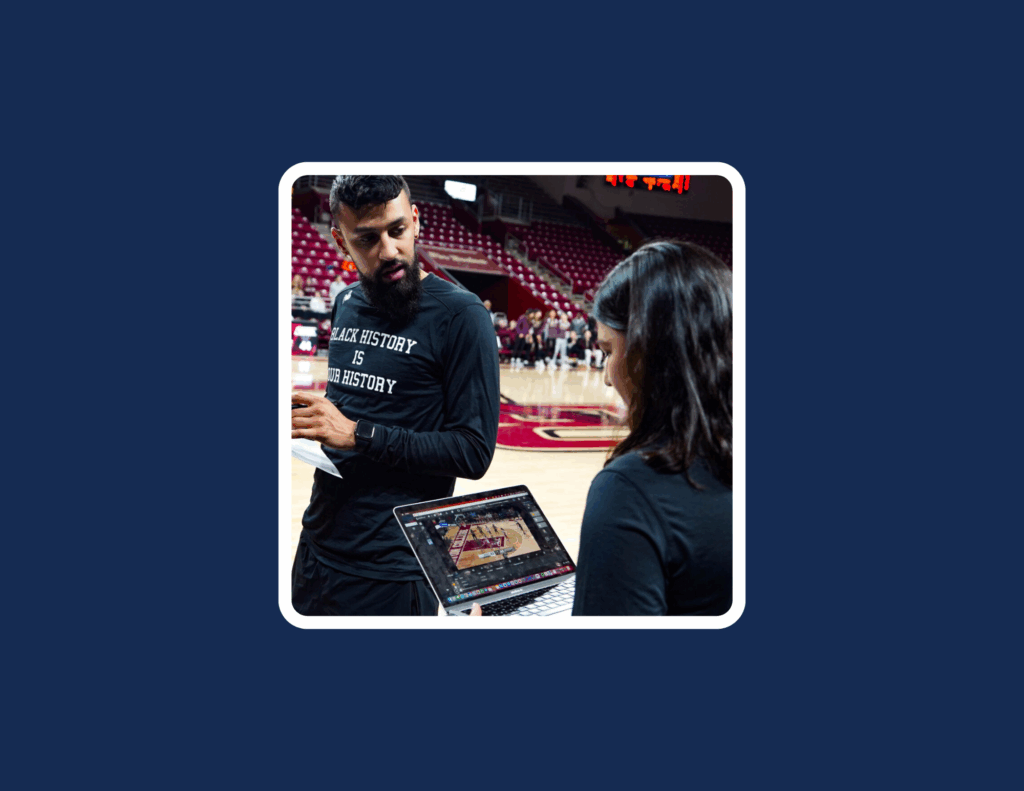
Welcome to the 79th edition of the Coach’s Corner Round Table on the Hoop Heads Podcast. Each episode of the Coach’s Corner Round Table will feature our All-Star lineup of guests answering a single basketball question. A new Coach’s Corner Round Table will drop around the 15th of each month.
July’s Round Table question is: How do you evaluate the effectiveness of your program from year to year?
Our Coaching Lineup this month:
- Coretta Brown – Eastern Kentucky University
- Stephen Halstead – Grace College
- Joe Harris – Lake Chelan (WA) High School
- Bob Krizancic – Mentor (OH) High School
- Dell Leonard – Mountain Home (AR) High School
- Tom McKeown – Author of This is Panther Country
- Don Showalter – USA Basketball
- John Shulman – University of Central Arkansas
Please enjoy this Round Table episode of the Hoop Heads Podcast and once you’re finished listening please give the show a five star rating and review after you subscribe on your favorite podcast app.
Be sure to follow us on twitter and Instagram @hoopheadspod for the latest updates on episodes, guests, and events from the Hoop Heads Pod.

If you listen to and love the Hoop Heads Podcast, please consider giving us a small tip that will help in our quest to become the #1 basketball coaching podcast.
THANKS COACHES!
If you enjoyed this episode let our coaches know by clicking on the links below and sending them a quick shout out on Twitter:
Click here to thank Coretta Brown on Twitter!
Click here to thank Stephen Halstead on Twitter!
Click here to thank Joe Harris on Twitter!
Click here to thank Bob Krizancic on Twitter!
Click here to thank Dell Leonard on Twitter!
Click here to thank Tom McKeown on Twitter
Click here to thank Don Showalter on Twitter!
Click here to thank John Shulman on Twitter!
Like this show? Please leave us a review here — even one sentence helps! Consider including your Twitter handle so we can thank you personally!
And if you want us to answer your questions on one of our upcoming weekly NBA episodes, drop us a line at [email protected].

We’re excited to partner with Dr. Dish, the world’s best shooting machine! Mention the Hoop Heads Podcast when you place your order and get $300 off a brand new state of the art Dr. Dish Shooting Machine!
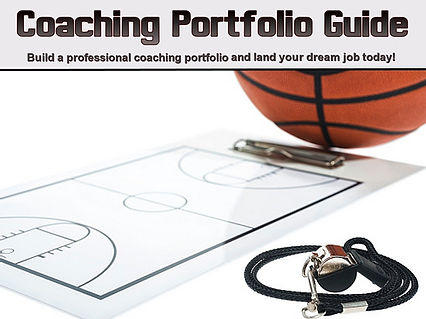
Your first impression is everything when applying for a new coaching job. A professional coaching portfolio is the tool that highlights your coaching achievements and philosophies and, most of all, helps separate you and your abilities from the other applicants.
The key to landing a new coaching job is to demonstrate to the hiring committee your attention to detail, level of preparedness, and your professionalism. Not only does a coaching portfolio allow you to exhibit these qualities, it also allows you to present your personal philosophies on coaching, leadership, and program development in an organized manner.
The Coaching Portfolio Guide is an instructional, membership-based website that helps you develop a personalized portfolio. Each section of the portfolio guide provides detailed instructions on how to organize your portfolio in a professional manner. The guide also provides sample documents for each section of your portfolio that you can copy, modify, and add to your personal portfolio.
TRANSCRIPT FOR ROUND TABLE 79 – HOW DO EVALUATE THE EFFECTIVENESS OF YOUR PROGRAM FROM YEAR TO YEAR? – EPISODE 1127
[00:00:00] Narrator: The Hoop Heads Podcast is brought to you by Head Start Basketball.
[00:00:20] Mike Klinzing: Hello and welcome to the 79th edition of The Coaches Corner Round Table on the Hoop Heads Podcast. Each episode of the Coach’s Corner Round Table will feature our All-star lineup of guests answering a single basketball question. A new Coach’s Corner Round Table will drop around the 15th of each month.
July’s Round Table question is, How do you evaluate the effectiveness of your program from year to year?
Our coaching lineup this month includes:
- Coretta Brown – Eastern Kentucky University
- Stephen Halstead – Grace College
- Joe Harris – Lake Chelan (WA) High School
- Bob Krizancic – Mentor (OH) High School
- Dell Leonard – Mountain Home (AR) High School
- Tom McKeown – Author of This is Panther Country
- Don Showalter – USA Basketball
- John Shulman – University of Central Arkansas
Please enjoy this round table episode of the Hoop Heads Podcast. And once you’re finished listening, please give the show a five star rating and review after you subscribe on your favorite podcast app.
Be sure to follow us on Twitter and Instagram at Hoop Heads Pod for the latest updates on episodes, guests and events from the Hoop Heads Pod.
Hey Hoop Heads. Dr. Dish’s 4th of July sale is here! From now until July 31st, 2025 you can save up to $4,000 on the top shooting machines chosen and trusted by thousands of coaches across the United States. Secure your Dr. Dish CT Plus All Star Plus or Rebel Plus while supplies last. Learn more @drdishbasketball.com and follow their incredible content @drdishbball on Twitter, Instagram, Facebook, and YouTube. Mention the Hoop Heads Podcast and save an extra $300 on the Dr. Dish Rebel, All Star, and CT models. Those are some great deals Hoop Heads. Get your Dr. Dish shooting machine today.
[00:02:07] Jack Leasure: Hi, this is Jack Leasure, head basketball coach at McQuaid Jesuit High School and director of Jack Leasure Shooting and Skills Camp, and you’re listening to the Hoop Heads Podcast.
[00:02:20] Mike Klinzing: Coaches, you’ve got a game plan for your team, but do you have one for your money? That’s where Wealth4Coaches comes in. Each week, we’ll deliver simple, no fluff financial tips made just for coaches, whether you’re getting paid for camps, training sessions, or a full season. Wealth4Coaches helps you track it, save it, and grow it.
It’s time to stop guessing and start building. Subscribe now at Wealth4coaches.beehive.com/subscribe and follow us on Twitter @Wealth4Coaches for daily money wins. Your money needs a coach. Start with Wealth4Coaches.
Let’s hear from our panel about how they evaluate the effectiveness of their program from year to year.
Coretta Brown from Eastern Kentucky University,
[00:03:11] Coretta Brown: How do you evaluate the effectiveness of your program from year to year? I believe you first start by tracking individual and team improvements, making sure that each individual is getting better outside of team practice. And then whatever your team benchmarks are that you’re constantly improving in those, and I think those can be weighted.
Basically numbers don’t lie. Looking at your shooting efficiency, turnover rate, rebounding percentage or free throw rate. If you’re constantly tracking those and those are constantly improving and the individuals are improving that the wins take care of
[00:03:47] Mike Klinzing: Stephen Halstead from Grace College.
[00:03:50] Stephen Halstead: Hey Mike, this is Steven Halstead from Grace College. Here for the Hoop Heads Round Table number 79. And the question this month was, how do you evaluate the effectiveness of your program from year to year? And I think that’s a great question because oftentimes people will just go to a website and try to look how many games your team won and lost the previous season.
And a lot of times people try to value that as the only way for success. But I think one thing that I’ve noticed, at least from our program here at Grace is we are very much a process oriented group. And if we feel like we have done the things in the process that would set us up for success. We’re gonna let the results kind of take care of themselves there.
So it’s a little bit of a loaded question, but it kind of goes to both sides of the ball. And culturally, offensively, you’re trying to get the best shots that you can take. And that changes player to player. And our team does a really good job of just recognizing each other’s strengths with that defensively.
The other side, it’s, can we do those things that we can control and that we deem as like non-negotiables, whether it’s no blow bys? No, no. Uncontested at the rim. Can we constantly keep our man in front of the ball? And then also to top all that off, probably the most important thing is just gonna be the culture of your group.
If that can continue to have a group that wants to grow, they want to get better, they love each other, each year, you’re gonna be okay coaching that group year in, year out, regardless of how they might perform.
[00:05:16] Mike Klinzing: Joe Harris Lake Chelan High School, Lake Chelan, Washington.
[00:05:23] Joe Harris: Hey, Hoop Heads. This is Joe Harris at Lake Chela n jumping in on this month’s round table question, how do you evaluate the effectiveness of your program from year to year? I really felt like you had to be really transparent communicating with your players and your assistant coaches at the end of the year to gain some valuable input. We asked our players and coaches a number of different questions, beginning with what were the best things about this season, and then what were the worst things about this season?
We ask ’em about what improvements did you make in your basketball skills, and also what skills do you wish that you could have improved upon more than you did? We ask our players, what were the best things about your coach this season, and what were the weak points of your coach this season? Giving them a chance to really dive into how they felt.
Finally, we asked them if you could start this season over again, would you want to be on this team? Why or why not? And then we’ve ended with asking for suggestions for making our program and culture of our team better for the next year. Hoping this is something that can help you expand your program.
And best of luck as you navigate this summer season.
[00:06:29] Mike Klinzing: Bob Krizancic, Mentor High School, Mentor, Ohio.
[00:06:36] Bob Krizancic: Coach K Mentor High School, we always evaluate our program, especially yearly. Our evaluation is probably 99%. The intangibles, having strong character when you get out of our program, building great relationships and having lifelong friends, having a phenomenal, not a good, but a phenomenal work ethic.
We definitely believe our most important job is to get our players ready to kick butt in life and to be highly successful and hopefully at the next level. We currently have seven players playing at the collegiate level, which I think is absolutely great for a program, but having our kids succeed in life is definitely the best evaluation for our program.
Best of luck.
[00:07:27] Mike Klinzing: Dell Leonard Mountain Home High School. Mountain Home, Arkansas,
[00:07:35] Dell Leonard: Dell Leonard, Mountain Home, Arkansas. How do we evaluate the effectiveness of our program from year to year? I think for us it starts with academics. We stress that I think it’s very important. We’ve never had a player play in the WNBA or be able to support herself. I mean, as far as a career, making money, playing basketball, hopefully one day we will.
But for now, it’s individually being the best you can be academically, trying to prepare young ladies for college and the, the real world. But also academically as a team. One of our goals is try to win a state championship academically. They do have that in Arkansas and that’s a big deal, and we’ve been fortunate to win it a few times.
Then you go into player development, you look at each individual and where were they when we started and where are they when we ended the year? And did they improve, not just athletically or skill wise on the basketball court, but did they again, improve in the classroom? Did and then they develop and mature as they grow older.
Team goals. We try not to make ’em too complex or unrealistic. We keep ’em simple but challenging. One of the ones we have every year is just make the playoffs and get there and see what happens. Don’t like to set a number on certain wins or things like that, because once you reach that goal then where do you go?
But then you just look at things overall in our program, did we give back to the community? Every year we’re involved with a Make-A-Wish Foundation during Christmas and Toys for Tots. We adopt a highway in our area to, to keep it clean and just volunteer to help groups, businesses, or organizations that, that provide or, or they support people in need.
So we feel like those are some of the things that we do to evaluate the effectiveness of our program from year to year.
[00:09:31] Mike Klinzing: Tom McKeown, the author of This is Panther Country.
[00:09:37] Tom McKeown: Hello, this is Tom McKeown, author of This is Panther Country, the story of the First Ever Long Island Basketball Championship. In order, in answer to the question, how do you evaluate a program success? I could say one big indicator is how many people try out for the team every year. If it’s gradually increasing as a percentage of the student body, that’s generally a good indicator that the program is reaching out to more of the population and is admired by the community.
I hope that helps. Thank you.
[00:10:09] Mike Klinzing: Don Showalter, USA Basketball.
[00:10:16] Don Showalter: Hi! Don Showalter from Usa Basketball. The question this month is, how do you evaluate the effectiveness of your team year to year? That’s kind of a difficult question. But first of all, I would say that you really, you don’t evaluate your program until 10 or 15 years down the road. When your players are out of, out of high school and they’re kind of on their own, what kind of young men and young women do they become, I think that’s the first thing you can do to evaluate your program. That’s really important. Secondly, just from year to year, if you evaluate your program by wins and losses, that’s kind of vain. And the aspect of that you sometimes you can have a, a really, a good coaching year and have a 500 or less record.
So I, I think the effectiveness of your program. Is more from the culture standpoint, how do your kids respond? How do they how do they behave? How do they, how do they like basketball? I think those are all things that you can do. And one of the things we’ve always done is we give a questionnaire at the end of the season for, for the players, especially the seniors what they thought of the program and how they, what they would change if they could.
And I think that’s really important to view that as well. So effectiveness of program year to year. Don’t get caught up in the wins and losses of how to evaluate it. Secondly, the, the real effectiveness comes 10 or 15 years down the road when those kids are out and become young men and young women.
And then year to year evaluated based on your culture and really how much fun probably you had as well. Thank you.
[00:12:13] Mike Klinzing: John Shulman from the University of Central Arkansas.
[00:12:18] John Shulman: This is John Shulman, head basketball coach at the University of Central Arkansas. This question is a tough one. How do you evaluate the effectiveness of your program? It’s a good question, Mike. The answer, it used to be winning.
It used to be whether kids came back to your program and that’s when you knew you were effective. I think it’s probably different in high school and college. Were we effective this past year? Not in winning and losing? Were we effective in changing culture? Yes. Were we effective in helping two young men make a lot of money, but they left our program. Does that mean that we did a bad job or a good job? I don’t know. I would say that you better. I don’t think there is such a tool that is a one size fit all type deal. We came out here to change the program out here at University of Central Arkansas and were we effective at doing it?
To a point, yes. We have changed standards. We have changed culture, we have changed expectations. Did we win our first year? No. We did take a step forward and get to the ASUN tournament and we won a game in the ASUN tournament. Did we keep all of our players? No. Is that normal? Yes. So I think it’s really hard to be able to evaluate year by year.
How effective your program is and what it’s doing. did our, our kids got better. Our kids enjoyed the process. So is that effective, I guess? But at, at Huntsville we had standards. And our standards were, just be honest, go to the NCAA tournament. Our standards were. To play in the championship game, the GSC tournament our standards were to win the regular season.
That was the expectation. And we came close to meeting those every year. Now, does that mean that we were successful? I don’t, I don’t, I don’t know that. I just know that every program I would think is different and your set of expectations are different. And how you evaluate that would probably be a very.
Personal. And it’s just gotta be about you and what’s important to you. Remember, comparisons the thief of all joy. So you can’t be like everybody else. We can’t. I know that we just have to do what we do. So I know it’s round. I don’t even know if I answered any of the question. I know it’s a hard question, but like most of Mike’s questions, it does make you think, and I think that’s like every clinic I’ve been in just makes you think and a little nugget to, to make you think about how you should be evaluating your program each year. I, you know what, one question a while ago was setting goals. I don’t, I’m not a huge believer in we have to win this many games or that many games, or we have one goal and that’s to cut down those nets at the end of the year.
Now if you don’t, does that mean it’s been a failure? At Huntsville? Probably at Central Arkansas, probably not. We’re trying to get to that point. Hope this helps. Hope you have a great summer. Remember to spend time with your family and your friends and take care of your health. As I’m getting older your health’s way more important than a basketball game.
Way more important than a recruit. May way more important than anything you got, take care of your health, take care of your family. Hope you have a great year.
[00:15:57] Mike Klinzing: Thanks for checking out this month’s Hoop Heads Podcast Round Table. We’ll be back next month with another question for our all-star lineup of coaches.
Your first impression is everything. When applying for a new coaching job. A professional coaching portfolio is the tool that highlights your coaching achievements and philosophies, and most of all helps separate you and your abilities from the other applicants. The coaching portfolio guide is an instructional membership based.
That helps you develop a personalized portfolio. Each section of the portfolio guide provides detailed instructions on how to organize your portfolio in a professional manner. The guide also provides sample documents for each section of your portfolio that you can copy, modify, and add to your personal portfolio.
As a Hoop Heads Pod listener, you can get your coaching portfolio guide for just $25. Visit coaching portfolio guide.com/hoopheads to learn more.
[00:16:28] Narrator: Thanks for listening to the Hoop Heads Podcast presented by Head Start Basketball.