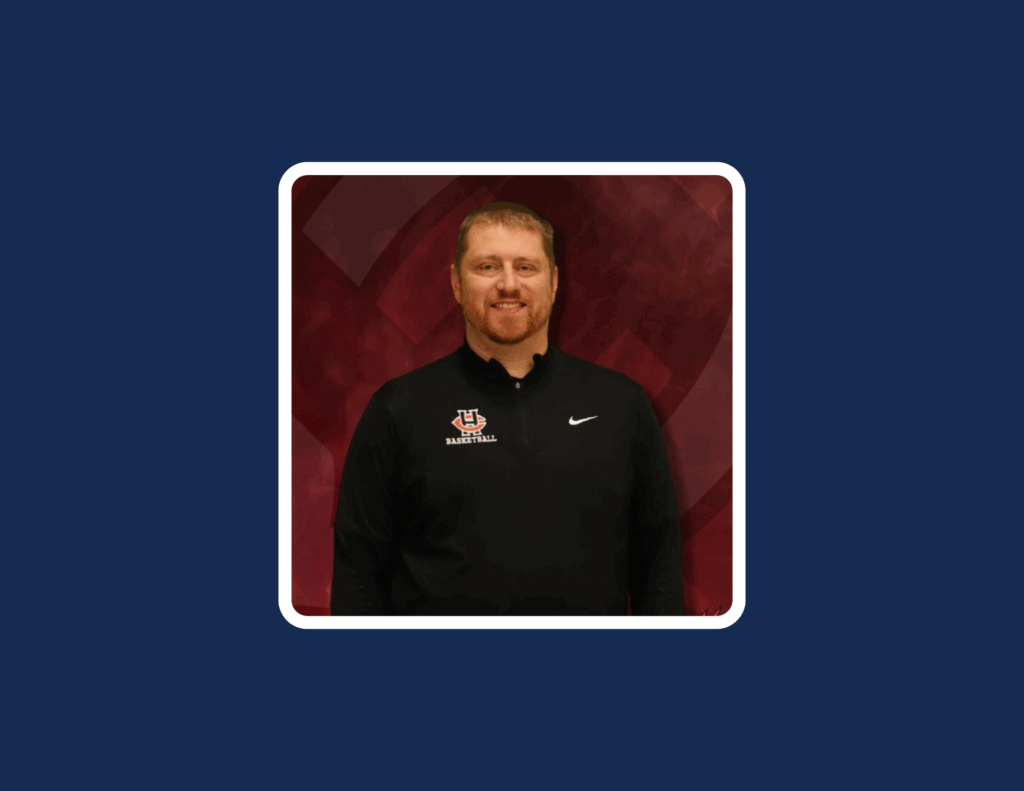
KYLE COOPER – HOWARD COLLEGE MEN’S BASKETBALL HEAD COACH – EPISODE 1128
Website – https://www.hchawk.com/sports/mbkb/index
Email – [email protected]
Twitter/X – @CoachCooper_

If you listen to and love the Hoop Heads Podcast, please consider giving us a small tip that will help in our quest to become the #1 basketball coaching podcast.
Kyle Cooper is entering his third season as Head Men’s Basketball Coach and Athletic Director at Howard College. In his first two years, the Hawks had a 37-23 record. The Hawks had NJCAA All-Americans back-to-back years and sent 10 players to play at the NCAA D1 level. Cooper has helped players to compete in the SEC, WAC, A-10, Southland, Sun Belt, Big Sky, Summit, and SWAC.
Cooper came to Howard after one year as an assistant coach at Tarleton State University. Before Tarleton, Cooper served as the Head Men’s basketball coach at Western Texas College. In his two years, the Westerners had back-to-back Region V tournament appearances, multiple wins against nationally-ranked opponents, several appearances in the NJCAA national rankings, and an overall record of 38-19.
Before his time in Snyder, Cooper spent one season as the top assistant coach at Mississippi Gulf Coast Community College.
Cooper broke into the coaching industry in 2011 and spent his first six seasons as an assistant and associate head coach for North Iowa Area Community College where he also played and was a first-team All-Region player.
On this episode Mike and Kyle discuss the multifaceted challenges and rewards inherent in coaching at the junior college level. Throughout our discussion, Cooper emphasizes the profound educational experience that junior college coaching provides, equipping coaches with the skills to navigate various responsibilities, from recruitment to player development. He shares insights from his coaching journey, highlighting his commitment to fostering players’ growth while simultaneously striving for team success. The conversation delves into the intricacies of developing a cohesive team culture, particularly when faced with a roster comprised entirely of newcomers. Ultimately, Cooper conveys his passion for coaching, illustrating how his experiences have shaped his approach to mentorship and leadership in the game of basketball.
Follow us on Twitter and Instagram @hoopheadspod for the latest updates on episodes, guests, and events from the Hoop Heads Pod.
Make sure you’re subscribed to the Hoop Heads Pod on iTunes or wherever you get your podcasts and while you’re there please leave us a 5 star rating and review. Your ratings help your friends and coaching colleagues find the show. If you really love what you’re hearing recommend the Hoop Heads Pod to someone and get them to join you as a part of Hoop Heads Nation.
Have your notebook ready as you listen to this episode with Kyle Cooper, Head Men’s Basketball Coach at Howard College.
What We Discuss with Kyle Cooper
- His early love for basketball was influenced by his father’s involvement in the game
- The transition from being a player to a coach offers valuable lessons about leadership and teamwork
- Enjoying the moment in youth sports
- The responsibilities of a junior college coach encompass a wide range of areas including academics and operations
- His first head coaching job at Little Priest Tribal College
- Coaching at the junior college level fosters comprehensive growth across various facets of the game
- Establishing a player-centered environment is crucial for achieving success and building strong relationships
- The importance of recruiting players who value teamwork and winning is paramount to program success
- Establishing a strong culture within a new team requires consistent effort and clear communication from the coach
- The significance of body language and effort in identifying potential leaders
- Effective practices should be competitive, fostering an environment where players strive to improve and support each other
- Maintaining a focus on specific defensive metrics can significantly enhance a team’s chances of winning games
- The development of leadership within the team often emerges during challenging situations, revealing true character and fostering a resilient team dynamic
- Clear communication, accountability, and a focus on team-oriented goals
- Film analysis plays a critical role in player development, providing opportunities for honest feedback and collective learning to enhance performance
- Incorporating his family into his coaching life to balance work and home responsibilities
Like this show? Please leave us a review here — even one sentence helps! Consider including your Twitter handle so we can thank you personally!

We’re excited to partner with Dr. Dish, the world’s best shooting machine! Mention the Hoop Heads Podcast when you place your order and get $300 off a brand new state of the art Dr. Dish Shooting Machine!
Your first impression is everything when applying for a new coaching job. A professional coaching portfolio is the tool that highlights your coaching achievements and philosophies and, most of all, helps separate you and your abilities from the other applicants.
The key to landing a new coaching job is to demonstrate to the hiring committee your attention to detail, level of preparedness, and your professionalism. Not only does a coaching portfolio allow you to exhibit these qualities, it also allows you to present your personal philosophies on coaching, leadership, and program development in an organized manner.
The Coaching Portfolio Guide is an instructional, membership-based website that helps you develop a personalized portfolio. Each section of the portfolio guide provides detailed instructions on how to organize your portfolio in a professional manner. The guide also provides sample documents for each section of your portfolio that you can copy, modify, and add to your personal portfolio.

Hey coaches — you’ve got a game plan for your team… but do you have one for your money?
That’s where Wealth4Coaches comes in.
Each week, they deliver simple, no-fluff financial tips made just for coaches. Whether you’re getting paid for camps, training sessions, or a full season—Wealth4Coaches helps you track it, save it, and grow it.
It’s time to stop guessing and start building.
Subscribe now at wealth4coaches.beehiiv.com/subscribe
And follow them on Twitter @Wealth4Coaches for daily money wins.
Your money needs a coach.
Start with Wealth4Coaches.
THANKS, KYLE COOPER
If you enjoyed this episode with Kyle Cooper let him know by clicking on the link below and thanking him via Twitter.
Click here to thank Kyle Cooper via Twitter
Click here to let Mike & Jason know about your number one takeaway from this episode!
And if you want us to answer your questions on one of our upcoming weekly NBA episodes, drop us a line at [email protected].
TRANSCRIPT FOR KYLE COOPER – HOWARD COLLEGE MEN’S BASKETBALL HEAD COACH – EPISODE 1128
[00:00:00] Narrator: The Hoop Heads Podcast is brought to you by Head Start Basketball.
[00:00:19] Kyle Cooper: You got three full-time assistants. You got ops, you got development people, you got GA’s, and you got people on campus that are in charge of your academics. As a junior college coach, you do all that. You’re in charge, which is a great part about being a junior college coach, is you learn how to do that.
You learn how to do all those different areas. When you’re on a staff of two people, It’s you and them. You guys have to figure it out. I think it’s really, really good for overall growth. You learn about all areas, whether it’s about getting the international kid in or whatever it may be, stuff that you’re not going to deal with more than likely at the higher levels, the bigger staffs.
So I think it can be very beneficial.
[00:00:55] Mike Klinzing: Kyle Cooper is entering his third season as the head men’s basketball coach and athletic director at Howard College. In his first two years, the Hawks had a 37 and 23 record. They also had NJCAA All Americans in back to back years and sent 10 players to play at the NCAA Division One level. Cooper has helped players to compete at the S-E-C-W-A 10 Southland Sunbelt Big Sky Summit and SWAC. Cooper came to Howard after one year as an assistant coach at Tarleton State University before Tarleton Cooper served as the head men’s basketball coach at Western Texas College. In his two years there, the Westerners had back to back Region five tournament appearances, multiple wins against nationally ranked opponents and several appearances in the N-J-C-A-A national rankings and an overall record of 38 and 19.
Before his time at Western Texas Cooper spent one season as the top assistant coach at Mississippi Golf Coach Community College. Cooper broke into the coaching industry in 2011 and spent his first six seasons as an assistant and associate head coach for North Iowa Area Community College where he also played and was a first team all region player.
Hey Hoop Heads. Dr. Dish’s 4th of July sale is here from now until July 31st, 2025. You can save up to $4,000 on the top shooting machines chosen and trusted by thousands of coaches across the United States. Secure your Dr. Dish CT Plus All Star Plus or Rebel Plus while supplies last. Learn more @drdishbasketball.com and follow their incredible content @drdishbball on Twitter, Instagram, Facebook and YouTube. Mention the Hoop Heads podcast and save an extra $300 on the Dr. Dish. Rebel All Star on CT models. Those are some great deals Hoop Heads. Get your doctor Dish shooting machine today.
[00:02:46] Jason Franzen: Hi, this is Jason Franzen from Third Side Basketball Academy, and you’re listening to The Hoop Heads Podcast.
[00:02:53] Mike Klinzing: Have your notebook ready as you listen to this episode with Kyle Cooper head, men’s basketball coach at Howard College. Hello and welcome to the Hoop Heads Podcast.
Hello…It’s Mike Klinzing here without my co-host Jason Sunkle tonight. But I am pleased to be joined by Kyle Cooper, head, men’s basketball coach at Howard College in the state of Texas. Kyle, welcome to the Hoop Heads Pod.
[00:003:09] Kyle Cooper: Thanks for having me, Mike. I’m excited.
[00:03:23] Mike Klinzing: Excited to have you on. Thrilled to be able to talk to you, learn a little bit more about you and your career. Want to start by going back in time to when you were a kid?
Tell me about your first experiences with the game of basketball. What made you fall in love with it? What do you remember about some of those first days with the game of basketball?
[00:03:35] Kyle Cooper: Yeah, I mean, I would say it was. Probably watching my dad play, like when I was little, my, my dad was, he was a good player.
And he would still play at that time and like city league games and that kind of thing. So I was little I’d, I’d go watch him play a couple times a week. He also, he coached some, so I really got into it that way. And that’s kind of how I developed the, I think the, the love for the game just being around it and you’re around it so much.
[00:03:58] Mike Klinzing: Yeah. I think when you have a family influence, right? A parent in this case, somebody who drags you along for lack of a better way of saying it, and you get an opportunity to be exposed to the game. When you’re watching your dad and you think about that experience, did watching him play or the way that he played, did that eventually find its way into the way that you played?
Did you find yourself trying to emulate your dad as you got a little bit older?
[00:04:31] Kyle Cooper: Yeah, I mean, it was one of those things coming up. I was always kind of compared to him where I was from coming because he was, he was a really good player. I mean, I think he held, the high school I was at originally, he held the scoring record and the rebound record and he held a lot of stuff.
So, I mean, growing up you always hear you’re not going to be as good as your dad. You know what I mean? You just hear that. You hear that constantly. So that’s kind of the, you’re constantly trying to fight to, to be better than him. You know what I mean? So growing up, yeah, that was something constantly you’re trying to emulate him, look up to him, and then hopefully become better.
[00:05:00] Mike Klinzing: So when you, did you ever compete against your dad? I know for me, growing up when I was a little kid, so I’m talking whatever, third, fourth, fifth grade, maybe my dad and I’d be out on the driveway and I remember I’d get mad at him and I’d tell him, you have to play with one hand behind his back and all these different things.
And then eventually I got to the point where. I could beat him. And I think it was hard for him for maybe a day, and then he realized, Hey, I did something right because Right. Mike ended up being a fairly good player. So just, do you remember kind of battling with your dad in the driveway or anything along those lines?
Yeah,
[00:05:34] Kyle Cooper: it was, it was pretty much every night, to be honest with you. Like when we, when we were younger, a lot of horse, I would say we, we played one-on-one when I kind of got in that middle school age, that kind of thing. He would never Lemme win, which is something I think is pretty, pretty cool. Like, I, he would never let win.
And then I got to where I’m almost in high school and I started to where I could beat him pretty consistently I mean, then turned into more horse games. But even then they were, they were always extremely competitive. And then we, we bonded through that a lot, I think. You know what I mean?
So that’s something I really enjoyed those times.
[00:06:03] Mike Klinzing: Yeah, absolutely. I think that it’s one of the most underrated things about being a parent of an athlete is the amount of time that you get to spend with your kids. I know I always cherish the time that now as a parent, when I get a chance to go to the gym and rebound for my kids or just put together a workout for ’em.
And as you’re doing that, you’re talking and you’re, you’re having conversations, you’re getting to know ’em and be able to spend that time with them. It’s time that you never get back. And I think sometimes, especially in today’s world, the way the basketball landscape is people get so focused on what’s next.
And I’m in middle school and I’m worried about where I’m going to go to high school, or if I’m going to start and if I’m in high school, I’m worried about where am I going to go to college? And sometimes we forget, both as parents and obviously kids sometimes too, that you have to enjoy that moment that you’re in.
It sounds like you definitely had that with your dad as you think about yourself. Trying to become a better player. When you were in high school, what did you do to work on your game as a high school player? Were you in the gym by yourself? Were you trying to find pickup games? How are you going about trying to improve?
[00:07:15] Kyle Cooper: Yes. I originally, I mean, I was from a town of 500 people, so like we’re, we’re constantly like playing outside. There would be some pickup games here and there, but I mean, again, I have to credit my dad for like, as far as us making that, that leap we, I would go to where I would start playing travel a u basketball and before you know it, you get noticed by one of the Nike sponsor teams, so then you’re doing that whole circuit deal and that kind of thing, you know what I mean?
So that’s kind of where it was. But back when I was playing it was a lot of outside. You’re just driving around looking for someone out there, Hey, you want to play twos? You want to play full core? that, that kind of deal was really how a lot of it was if not that, it was just me by myself a lot of the time.
[00:07:55] Mike Klinzing: Obviously a different era than the kids that you’re coaching today who can go on and they can find any drill known to mankind on YouTube or on Twitter and follow and do this and try a lot of creative things and maybe some things that aren’t necessarily worth trying, but certainly there’s a lot out there.
Mm-hmm. Compared to when you’re growing up or certainly when I was growing up. So how’d you come up with the things that you were doing and working on when you were working by yourself? Were you consciously thinking about that before you got to the court or were you just kind of using your imagination as you’re out there working on your game?
[00:08:30] Kyle Cooper: Yeah, I mean, I think back when I played it was a lot of you kind of, when I was younger especially, you kind of just get there and wherever you feel like you kind of work on, then when you get older you get, you’re probably around more people that are more successful and you learn how to like, make your time more efficient when you learn about how like a.
A good hour workout can be better than a not very, very good three hour workout, you know what I mean? Of like really getting after it when you’re in there and being more organized in, in your approach, whether it’s like set shots or coming off of pin downs or whatever it may be. You’re constantly working on things, but in a, in a game speed manner.
So I think once you figure that it’s a big, a big part of it. Yeah. A as you do get older in the game, you do have a better understanding of, okay, there’s specific things that I have to work on to make myself a better player. I do think you become better organized in that way. It’s funny ’cause I always tell people that when I was a kid, I kind of had two workouts.
[00:09:23] Mike Klinzing: I had a workout that I did when I was by myself. Yeah. And then I had a workout when I could find somebody to rebound for me or that would shoot with me and. I always say I must have gotten really good at those drills ’cause I think I did ’em for the entirety of my high school career and the entirety of my college career and never really deviated very much from any of them.
Right. And so now I look at all the different things that I do with players as a coach and that I see players and other coaches doing, and I’m like, man, I wish I would’ve been either a little bit more creative, or I wish I would’ve had access to some of the resources that players have today in order to be able to get better.
’cause again, I got really good at the drills that I was working on and it helped me become a better player. But I always wonder and what could I have done if I’d have just maybe varied up or tried some different things here and there. And it’s just, again, different era of the game for sure.
[00:10:13] Kyle Cooper: Right.
[00:10:14] Mike Klinzing: Tell me about your favorite memory as a high school player Growing up in a small town. Clearly, I’m sure that all your teammates, guys that you grew up with for your entire life, that you spent you spent all your formative years in school playing with them. So what sticks out to you when you think about your favorite memory as a high school player?
[00:10:34] Kyle Cooper: Yeah, so it had to be, I mean, I grew up in a town of 500 people, like I said, but when we, when I was a freshman in high school, we moved, we moved about an hour away to a, a school that was a five a, which is the biggest in Missouri at, at the time. And the school I went to was, was honestly really bad.
Like at basketball, they had just been bumped up to the five A level. They had won one game the year prior total. And they were like a country school that was playing in a big city league. Like the, the league we played in. We had to drive two hours for every conference game. Like every conference game was at least two hours away.
And then our everyone said you really couldn’t win there and our, my first year there, we won the district championship. Which, and we advanced the state in the second year, we did the same thing. So we did that back to back ears which still to state hasn’t been done again there.
So I think that would probably be my favorite high school memory from going from one win to winning. Back to back district titles.
[00:11:29] Mike Klinzing: As a young kid watching your dad, playing with your dad, working on your game, becoming a high school player, was playing college basketball something that was on your radar from the time you were little?
Was that a goal that came more into focus as you became a high school player? What was your mentality, your thought process when it came to potentially playing at the college level?
[00:11:52] Kyle Cooper: It was, it was always a goal. It was something that I worked, I worked for something I really wanted to do. At the same time, I didn’t know how realistic it was but it’s something that I really wanted to do.
Then I got, as I got older into it, you realize you’re, you’re probably going to have an opportunity to play in college. But again, I know that I’m, I’m probably not going to make the NBA more than likely that one of those kind of deals, right. To where. When the ball stops bouncing, I knew I wanted to coach.
That’s something I knew right away that give as much as I could into playing the game. But whenever that was over, then I knew I’d want to get into the coaching world.
[00:12:21] Mike Klinzing: When did that light bulb come on for
[00:12:23] Kyle Cooper: you? How young were you when you knew you wanted to coach? Man, I was, I was pretty young. I would say.
I mean, I’m probably middle school for sure, early high school. Like I knew I just loved basketball I loved, I loved being around it. I love to compete, like, just in anything. I just like to, I like to compete and that’s a great avenue as far as whenever you’re not playing, you can, as a coach, you’re just constantly competing.
So I knew it was something I would really love to do and it more so wasn’t even a job for me, you know what I mean? Like, I knew it was something I would love to do and bring passion to every single day. So I could, I could tell at, at a pretty early age, I didn’t know how I was going to get there. And then like my, my path is not the way that most people’s paths probably have been, you know?
So it’s a very unique way, but I knew that’s what I wanted to do.
[00:13:04] Mike Klinzing: Was there a coach early on in your life, whether it was in basketball or another sport that really had a big influence on you wanting to coach? Was there somebody that when you’re playing on their team, you’re like, man, I I love this guy and I’d love to be able to do what he does?
[00:13:21] Kyle Cooper: Yeah, I would say probably my, my high school coach Dion Hargrove was his name. Playing for him was fantastic and more so too because he cared about us more as, as people not just as basketball players. I mean, extremely smart basketball coach. I mean, I think he’s in the Missouri and, or Missouri and Arkansas Hall of Fame, if I’m not mistaken.
So extremely successful basketball coach, but just even better person, you know? So like he’s someone that I really enjoyed the way he approached it because he really got to know us and develop a relationship. Like, I still talk to him to this day, which is, which is a great thing. His son ended up actually being my first assistant when I got my first head job.
So I think he, he had, he had a big impact for sure.
[00:13:59] Mike Klinzing: When you think about what he was all about as a coach, and you mentioned one of the things right about caring about you as more than just a basketball player, but caring about you as a person. When you think about yourself as a coach and you think about the characteristics that he brought to you, experience, what are some things that when you think about yourself, you kind of see a little bit of him that’s carried over into your coaching style and your approach to, to the game.
[00:14:29] Kyle Cooper: Yeah, I would say there’s a lot of similarities. Like I’m very I would say player oriented. I like to, I like to think I’m a player first coach, you know what I mean? Where I try to get to know our guys and build relationships with them. I’m not like a big, a big custer, a big yeller by any means, but at the same time, like when we do things, we’re going to do it the right way or where I proceed to be the right way, you know what I mean?
Like, we’re going to do things how we want ’em to be done. Like I tell kids all the time, if you have a good attitude and you work hard and you’re about the team, you’re probably going to love playing for me. If you don’t, you’re probably not going to enjoy your time here. You know? I mean, just, just very honest about, about that with them, you know?
And I think with that, you get a lot of trust just ’cause you’re honest, you know? That’s one thing I think about me too, is that I’m very straightforward in what, in what I want you to do and what I expect us to do as a team.
[00:15:14] Mike Klinzing: Do you always have that ability? To tell the truth. I know sometimes as young coaches, right, it’s difficult.
You want to kind of keep everybody happy and you kind of can beat around the bush in those conversations. Yeah. Was that something you were good at right off the bat, or is that something that you learned the hard way? It, it
[00:15:30] Kyle Cooper: was, I was not good at route the bat, like when I was a young as an assistant. It’s that you go from playing to being an assistant and that’s awkward.
Like you’re going to hurt their feelings at times. It’s just the way, it’s, you know what I mean, when you’re, when you’re being honest, which ultimately will help them in the long run. But that, that took a transition the, probably the first couple of years as a head coach you get to where after a while you don’t really, you don’t care as much.
You know what I mean? As far as that goes, you’re going to be very bluntly honest the way I’ve always been. This is my personality in that, in that aspect too. But early on I did, I would say I definitely struggled with that. And again, one, one of the coaches I worked for recently, I would say, helped me in that area too, just watching the way he approached things.
I worked for Billy Gillespie at, at Tarleton State. He’s one where he is, he is very direct I think’s. Being around him. See how he approached things helped me in that area too.
[00:16:15] Mike Klinzing: Yeah, sometimes you need to be able to visualize it, right, and see that, hey, I can give this player the honest truth.
It may not be what they want to hear. And yet a week later, two weeks later, the relationship that you might’ve been worried about, Hey, I’m damaging it, you start to realize that hey, the relationship isn’t damaged. And in all honesty, most good players, right? They want to be coached. They want somebody to tell ’em, Hey, I’m, you have to improve in this.
Or Hey, here’s where you can make this better. And when you can do that, I think as a coach, players might not necessarily love hearing that. In the moment. But upon reflection, and again, the best players, they want that coaching. They want that feedback. ’cause they, they crave getting better. And that’s what I found in my coaching career.
And I just think about it again, as a player, you want to figure out, Hey, what can I do better? And if you have a coach that never corrects you, or never tells you you’re doing something incorrectly or there’s a better way to do it, how do you ever grow and get better? And I think the best players clearly want to get better.
[00:17:13] Kyle Cooper: No, I completely agree. And one, one thing I mean, I tell our guys that all the time that you’re our guy. You know what I mean? And you’re not just our guy when we’re winning the big game and you hit the big shot or whatever it may be. But you’re still our guy when you make a mistake. You know what I mean?
That’s something that we tell ’em all the time. Like, we’re still going to, we’re still going to be there. You’re still our guy, even if you make us mad or whatever it may be.
[00:17:33] Mike Klinzing: Yeah. I love that. I mean, I think it’s a great, very simple way of reinforcing the confidence that you have in a player. And I. Everybody makes mistakes.
That’s, we were talking about basketball camp before we jumped on here, and it’s one of my big things talking about, Hey, how, how can you be a great teammate? It’s like everybody’s going to make mistakes. And when your teammate makes a mistake how do you react to that? Are you putting your head down?
Are you throwing your arms up in the air? Are you rolling your eyes or are you trying to pick that teammate up and maybe give ’em a constructive criticism or pick ’em up with some enthusiasm and get ’em back on the right track? And it’s a, again, it’s, it’s all little things that go into building the culture of a program and so much of that stems from what tone does.
The head coach set right. And you can set the tone for, for how guys interact with each other, how staff interacts with players, and that communication piece and being honest is so, so important. And I do think, just like you mentioned for you, I know I was the same way when I was a young coach, those conversations for me were really, really difficult.
Right. And it took me a long time to be able to understand like, you have to tell ’em the truth. Because if you beat around the bush and you give ’em half truths, eventually it all comes back to bite everybody. And then you end up having to have a lot more difficult conversation than the first one would’ve been.
So mm-hmm. Definitely a good lesson to learn for, for young coaches out there without, without question. Alright. Going back to your, your playing days, tell me about the college decision, what the recruitment was like for you and just again, how you ultimately made, made your college choice.
[00:19:11] Kyle Cooper: Yeah. So I. I had to go the junior college route, something that I had to do academically.
So I had a good amount of junior college offers. I ended up choosing to go to Fort Scott, which was a Division one JUCO at the time in, in the J Hawk. Over now looking back, multiple other top 25 caliber programs. But that school just worked really hard. Like their coaches, they was at all my games, and they were just constantly there and they just, they worked really hard.
So chose to go there. Had a, had a good freshman year. I think average was around 15 a game. Transferred to a school in Iowa, which was also a junior college. Had a, had a good career there at a school called niac. And then after that I decided I wanted to to get, to get into coaching. One of the things I cut, probably cut my playing career a little shorter than I could’ve.
I mean, I led the Iowa League in scoring the year I played. But I got into coaching, so then I got into coaching and started that, that journey.
[00:20:01] Mike Klinzing: How hard was it to walk away? How much did you miss? Playing, playing that first year when you’re trying to get into the coaching profession, how much were you sitting on the sideline going, man, I kind of wish I was still playing.
Or was that something that you were just kind of over and you’re just like, Hey, I’m, I’m ready to move on into the coaching world.
[00:20:17] Kyle Cooper: I that those first couple years, I think you’re, you’re still a player. Trying to figure out how to be a coach is what it felt like for me at least. You know what I mean?
Like, every day you’re thinking when you’re ready to play more than, you know. I mean, I think your mindset’s a little different as, as a player than a coach. And it just takes a while to, to adapt for that. I know it took me a couple, a couple of years, especially when you’re a younger coach. I mean, I think my first year, you’re 22, 23 years old it’s, the players are about the same age as you, or they’re a little bit younger.
Yeah. You know what I mean? So it, it takes a little bit of time.
[00:20:48] Mike Klinzing: While you were playing, did you feel like you thought the game like a coach where a. You were looking at the bigger picture and you were kind of trying to understand what all five guys on the floor are doing. You’re trying to figure out what the greater strategy is or, I always think back to my time as a player, and I’m going to be completely honest, like I never felt like I thought the game necessarily as a coach.
I was trying to figure out what do I need to do right to be the best player I can be to be able to help my team? And I wasn’t necessarily analyzing the strategy that the coach was using or why are we doing this defense? Or that I was just like, okay, this is what he said we have to do. How do I execute it?
I don’t know. Which one of those camps better describes you as
[00:21:35] Kyle Cooper: a player? No, I would say it’s very similar to that. Like what, whatever the coach said, we, I was a hundred percent behind him, you know what I mean? And my, and my whole focus was on myself and then how we were going to win games. And I would hold yourself accountable a lot of times for whatever’s not being executed, you know what I mean?
So I was never one to, as a player to really even worry about that. you’re just out there trying to play and trying to compete and trying to execute whatever, whatever the game plan is, to the best way that, that you can, to help, to help your team. that was just my, my approach as a player.
[00:22:06] Mike Klinzing: Talk to me about the first steps into coaching. What do you do once you make that decision? Hey, I’m going to walk away from playing What. What moves do you make in order to get the, the career started in the, in the coaching profession?
[00:22:20] Kyle Cooper: Yeah, so I was fortunate I ended up coaching my first my first six years at at niac where, where I played in college.
So I coached there. It’s actually where I met my wife. She was an all conference point guard on the, on the women’s side there. And she’s from that city, Mason City, Iowa. So, I mean, I spent six years at niac, which was. Fantastic for me. All those years are part-time. I mean, some years you’re making 2000 up to, I think the most time made was 5,000 in a year.
You know what I mean? So you, you have to find side, side hustles to try to, try to get by. I was a, a poker dealer for the World Series of Poker. I also worked overnight at a mental health institution. I was also, and the thing about that too is I got thrown into, I was the head of our recruiting at, at a young age to where you learn how to how to recruit, how to build connections, that kind of thing.
I was fortunate to have a head coach there, mark Mole, who, who put a lot of trust into me especially at a, at a young, at a young age. And I made a lot of mistakes but, but I think you learn, you learn from that. You learn your philosophies, what you like, what you don’t like, what kind of players you like, what kind of players you don’t like, all, all that kind of thing.
[00:23:24] Mike Klinzing: What do you think you were good at right away? What’s something that you felt like. You took too naturally as a coach, and then maybe conversely, what’s an area that initially out of the gate you were like, Ooh, this is, this is maybe tougher than I thought, or, this is an area where I really need to grow if I’m going to, if I’m going to become the kind of coach that I want to become.
[00:23:44] Kyle Cooper: Yeah, I would think I was pretty good at just like the details as far as like at, at a practice setting for an assistant as far as helping the head coach echo what his message is. You know what I mean? Mm-hmm. I dunno what, what to say, but I know I could kind of understand what he’s trying to say and try to, how to help him back it, you know what I mean?
Like how to talk to the players on the side and how to try to get on guys about the way we’re doing things as far as pace and that and that kind of thing. You know what I mean? Really just trying to make his life as easy as possible just a, as an assistant, I feel like I was pretty, pretty good at, at that.
An area to improve that for sure was right away was recruiting. I mean, recruiting is one of those things where you have to, you have to build connections. You have to figure out how, what’s your approach to talk to kids just really the whole deal like how, just how, how you’re going to approach it, what areas you want to try to recruit, who you’re going to trust if you’re not going to trust that that, that, that whole thing.
So that, that takes time. How long did it take you to develop an eye for, obviously you’re there for six years, so you’re trying to recruit, there’s a certain type of player, right? And a certain level of player that you can recruit. That’s getable for you guys. So how long did it take you to get a feel for.
[00:24:55] Mike Klinzing: Hey, this is the level of the kid that we can go after that we think we can get. This is, this is the type of kid we want. How long did it take you to be able to walk into a gym and look at a group of players playing and identify like, okay, this is a kid that can play at our level that’s getable for us?
[00:25:11] Kyle Cooper: I I would say by by year two for sure by year three, I mean I had a pretty good understanding. I mean, ’cause also I’ve always been one to believe that you always want to try to recruit kids that are above your level, like everyone does. You know what I mean? Sure. But you also need to make them realistic.
Like, can, can you actually get them, you know what I mean? But at the same time, you don’t want to recruit kids that have offers below you that you can just kind of come in there and just get, you know what I mean? So that’s kinda that fine line of. Can you get ’em, can you not get ’em? that, that kind of deal.
But I think by year, by year two for sure, year three, I was there. I was fortunate enough my, my second year, my, my first line ever ended up being a two-time all American. So pretty, pretty fortunate in, in that aspect. They weren’t all that way though, and there was plenty of, plenty of busts along the way too.
But by year three, I had a pretty good understanding of the guys that also, that my head coach wanted I mean, because that’s the big part of it too. You realize as an assistant you might like them, but if they don’t mesh with your head coach, it’s probably not going to go very well. You know what I mean?
So you need to figure out the kind of guys that, that he values. Yeah, so true.
[00:26:14] Mike Klinzing: As an assistant, thinking back to that time now, having been at a head coach at, at multiple places, what do you think in your mind makes. A good assistant coach when you’re hiring somebody to be your assistant, what are the key two or three characteristics that you think are most important for an assistant coach?
So I’m thinking advice for somebody who’s starting their career. Most of us start our careers as assistant coaches. What are some key attributes that you’re looking for as a head coach? In an assistant mean, I would say number one is loyalty. I mean, that’s something I think every, every head coach wants is someone who’s going to be loyal.
[00:26:52] Kyle Cooper: You know you don’t, you don’t have to agree with what I’m saying, but we go out there, you have to, we have to make sure we’re on the same page, you know what I mean? Like, behind closed doors, we can have conversations, that’s fine. But when we’re out there, like we need to be on the same page of what, of what the message is.
So I think loyalty for sure is number one. And then work habits number two, like your worth, that work ethic. like guys who work hard just seem to figure it out. you find a way, in my opinion, like you, you’re going to figure it out. You might not know a lot at the time or whatever it may be, but if you have that work habit and that those desires like you.
You’re going to find a way to figure it out. So those are really the, the two main things that, that I look for and just guys that it kind of goes along with work habits, but guys that just love it it’s the same thing essentially, but guys who, who love to compete, love to be around it. It’s not really a job for them.
it’s something that they’re just passionate about.
[00:27:44] Mike Klinzing: Tell me about the next opportunity after you spend your six years as an assistant at North Iowa.
[00:27:50] Kyle Cooper: Yeah. How do you, so. Yeah. So I mean, I was at NIAC for, for six years. And after a couple years I realized I wanted to be a head coach like everyone does and I’m trying to get head coaching jobs that I probably can’t get.
I got a, I think it’s a funny story. I call, I’m an assistant at niac and I call a school in the Jayhawk, which is a very dominant junior college conference, right. Division one junior college job. I finally get the ad on the phone. I’m, I’m talking to the ad, I’m giving my pitch of why he should hire me, and he stops me mid through the conversation.
He’s like, son, you realize this is the Jayhawk head job you’re calling about. Right? And that was like pretty, pretty eyeopening to mix. I’m be two JUCO assistant at the time. Right. But okay. I might, I might need to set my bar a little bit lower because that, this might not be realistic, you know.
So I ended up getting a, a job in, in the same league we were in. It was actually a job that. Essentially, no one wanted to be honest. It was the school’s name was Little Priest Tribal College. They had an enrollment of a hundred people. They had three full scholarships and 51% of our roster had to be Native American.
We were located on a native Native American reservation. I got paid, I paid $6,000 total for the whole year for my first head coaching job. So it’s a job that everyone said don’t take, it’ll ruin your career before even gets going. They had won one game total in their first three years of the program.
But I wanted to bet on myself and I wanted to be a head coach, so I took that job. With that, obviously I’d have another job, so I worked overnight from 10:00 PM to like 10:00 AM So then we’d get off track some sleep, and then go practice. We didn’t, we didn’t have a gym. We didn’t have a ball rack.
We didn’t have, I remember I had, we had our, our practice jerseys would be at my apartment, wash ’em every night, that kind of deal. You know what I mean? But to me, that was my Duke, you know what I mean? Like, I was very excited for the opportunity. I’m forever grateful for them, for giving me that opportunity.
Was there for, for one year and we actually had a good amount of success. So that’s really where I got my first head coaching job. And then kind of, kind of springboarded to kind of where we’re at now.
[00:29:53] Mike Klinzing: Coaches, you’ve got a game plan for your team, but do you have one for your money? That’s where Wealth For Coaches comes in. Each week, we’ll deliver simple, no fluff financial tips made just for coaches. Whether you’re getting paid for camps, training sessions, or a full season, wealth for Coaches helps you track it, save it, and grow it.
It’s time to stop guessing and start building. Subscribe now at Wealth For coaches.beehive.com/subscribe and follow us on Twitter at Wealth for coaches for daily money wins. Your money needs a coach. Start with Wealth For coaches,
what was unique about. Coaching the Native American players and just coaching in that environment. What do you remember that made that experience unique? Obviously there’s not very many people that get that kind of opportunity and experience, so what do you remember about it? Yeah, I had to learn a whole new culture.
[00:30:51] Kyle Cooper: Just to, just to be honest, like the, the Native American community was fantastic to me. It, it was great. But I mean, I didn’t know, like you learn the different, the different tribes and how they play in different parts of the world, and you learn about res ball which is essentially a, a very fast paced way of playing basketball.
this is what is very common in, in their community. So just figuring out where, where you can try to, to get guys in different parts of the country that, that are Native American and that kind of thing. I went to the Native National tournament in Phoenix, Arizona. Like there was, it, it was different.
It was very eye-opening for me, you know but it was fantastic. It really was, and I was very grateful for it.
[00:31:29] Mike Klinzing: What’s one lesson that you took from that job on the basketball side that you still feel like is impacting you today from that first head coaching experience?
[00:31:39] Kyle Cooper: Man, I think the thing you take from that you don’t, hopefully you don’t want to lose, is to be grateful.
I mean, ’cause it’s so easy when you go to places that have more things because I, when I was there, oh yeah. We didn’t have, we didn’t have a gym. We had to run out of local high school. We could use it from seven o’clock to nine o’clock. We didn’t have a weight room. We had to use a community rec center weight room, but we didn’t have any of that stuff.
We had three buildings total for the whole campus, and I just didn’t care, you know what I mean? I was just so excited to be a college head coach. I just didn’t care. So that’s something that I hopefully keep as, as I go forward is just to be, just to be thankful and that it’s a blessing to be, to be a coach.
it’s something that hopefully I keep from that.
[00:32:17] Mike Klinzing: After that, you get an opportunity to go to Miss Mississippi Gulf Coast. Yep. Back as an assistant coach, was it hard to go back from being the decision maker as the head coach to being an assistant coach? Obviously it’s a, an opportunity, as you said, you, you weren’t you weren’t banking a huge payroll there, you know.
Right. Coaching coaching for, for $6,000. Right. So just tell me about the opportunity at Mississippi Gulf Coast and why it was the right move at the right time for you then.
[00:32:45] Kyle Cooper: Yeah, so the previous assistant there was one of my best friends. He was the best man in my wedding, so I knew him very well and he moved on.
So it just happened to be the situation where I knew that staff really well. I knew the head coach really well. Wendell Weathers is a hall of Famer. It was a full-time position. To be honest, it was the first time I’ve ever, I’ve ever had a full-time position and Coach Weathers had been there for, I mean, probably about 30 years.
even he was very honest with me about how he was going to do it for a couple more years than he was going to look to retire. You know? That was kind of his, his thought process. So, I mean, I thought, what, what better situation to go and learn from someone who’s in the Hall of Fame in a great spot like that, and also a full-time position and hopefully, hopefully get the job whenever he decides to hang it up.
[00:33:26] Mike Klinzing: What’d you do with all your money, man?
[00:33:28] Kyle Cooper: Oh yeah. No, I felt like you lose it all on the move, that’s for sure.
[00:33:35] Mike Klinzing: It is funny because you, people who are outside of the coaching profession, I feel like coaching and teaching are two professions that people who are not in those two professions honestly have such a misperception of what. The real story of coaching is, and what the real story of teaching is. And in coaching, I think the biggest misnomer, right, is everybody watches division one college basketball and Saturdays and thinks that, hey, you just walk right in and boom, all of a sudden you’re on TV and you’re coaching in Florida, or you’re coaching at North Carolina, or you’re coaching at Ohio State, or whatever it is.
And the number of, the number of people who are coaching college basketball who have experiences, Kyle, similar to yours, of spending a bunch of years as a part-time assistant making next to no money. And they just keep doing it because they’re so passionate about what it is that they get to do. And I think that’s one of the biggest lessons that I’ve learned that I’ve tried to share through the podcast is just, if you’re a young coach and you’re getting into the profession, there’s some things that.
You have to be willing to accept one of them is you’re probably not going to make a lot of money in the early part of your career. And number two, you have to be willing to go where the next job opportunity is. And if you’re willing to do those two things, and I’ll take it back to something that you said a few minutes ago.
If you’re willing to work hard, then usually, eventually good things are going to happen for you because you, you’ve put your time in and you’ve done the things that you’re supposed to do. And yeah, it’s a slow start in terms of monetary reward. But when you’re getting to do what you’re passionate about and you work hard at it, eventually you’re going to get better opportunities to come along if you’re, if you’re doing what you’re supposed to do, where you’re at.
And it, it sounds like your career is a, a pretty good example of that.
[00:35:44] Kyle Cooper: I, no, I completely agree. I appreciate that. I’ve always been one too, to where you just put your head down to work no matter what, if you’re having a good day, bad day, whatever it is, you just focus on the work. I’ve always lived.
If you, if you put in the time you put in the work, I think good, good things will happen. And that’s what, yeah, I’ve always tried to do that.
[00:36:02] Mike Klinzing: So after your two years at Mississippi Golf Coast, you get an opportunity to get another head coaching job at Western Texas. Tell me a little bit about how that opportunity comes across your desk and why you felt it was a good move for you at that time in your career.
[00:36:20] Kyle Cooper: Yeah, so that’s, honestly, it’s a pretty crazy situation. So I moved from Nebraska, a little priest to, to Mississippi Gulf Coast. I was there for, for one season. And we had, we had a great season. I think the best season they had had in seven or eight years. We won 20 games, which in Mississippi at the time, you only could play 23 and during the regular season.
So we, we had a, we had a really successful year. I learned so much from coach weather. I still talk to him pretty consistently. he was a, a mentor of mine coaching wise. And after the year he, he decides he wants to retire. And mean, I was told I was going to get the job. I thought I was going to get the job, and that’s the first time I kind of got introduced into what the politics of the business could be because the, the person that ended up getting the job, I mean, he was.
Like every, like, I feel like every SEC head coach was possible, was calling, you know what I mean? Like trying to help that person get the job. And I didn’t have those kind of ties, just, you know what I mean? I didn’t have that kind of, that kind of juice. So I ended up not getting that job, which was pretty devastating.
So then this is like July, like late July, so I just have to find a job and end up luckily enough going to Western Texas as an assistant for Andre Owens. I mean, God works in mysterious ways. Like, so I’m, I’m at Western Texas for for three weeks and Coach Owens gets a, a job opportunity at Sam Houston State to be an assistant there.
And then I’m right back in the same situation, you know what I mean? Then you’re like, did I just move here to not get the job? You know what I mean? Right. And the ad there, Tammy Davis, I mean, forever grateful for her. She just gave it to me like she, everyone was calling. It’s a Whack Jag job, obviously Division one juco and the same league that I’m in now one of the premier junior college leagues in the country.
And she, she had been around me for about three weeks and she didn’t even open it up. We met and she, and she gave me the job and that’s kind of how I got fortunate enough to get that opportunity at Western Texas.
[00:38:13] Mike Klinzing: What do you love about JUCO basketball? Obviously you had an opportunity to play at the JUCO level.
You’ve coached at multiple institutions, at multiple levels of junior college. What makes it unique and what do you particularly enjoy about coaching at that level?
[00:38:31] Kyle Cooper: Yeah, I think, I think it’s a very, it’s a very rewarding level because you get to get ’em usually fresh out of high school or you’re that are one year removed and help them reach.
Their goals. I guess a lot of ’em want to play division one basketball or division two, whatever it may be. But you get to be around them and help them reach that when some of the times they’ve been told they were not good enough for that level or whatever it may be in that situation, you know what I mean?
But that’s extremely rewarding and I, and I really like helping that, like helping those kids get on the right path. Hopefully getting some opportunities that they didn’t have previously. so many times, so many times kids just need to be, have needed exposure. That’s what it’s a lot of the time.
They just need to be in a situation where they’re going to be seen, you know? And it’s, I think it’s very rewarding a level in those areas. So I love coaching engineering college. It’s one thing I, I really do.
[00:39:21] Mike Klinzing: What’s the biggest challenge that you find in trying to balance. The individual players’ goals, which as you mentioned, a lot of guys that go to juco, right?
They want to get an opportunity to become a scholarship player at the division one or the division two level, and yet you’re also still tasked with putting together a winning team and building the comradery and all that stuff. And as a JUCO, you’ve got the two year window with guys and obviously now with the portal and everything else and whatever, that there’s a lot of guys coming in and out for a year.
So how do you balance the individual goals of a player in terms of their aspirations playing at the next level with trying to build a cohesive team and comradery? How do you go about doing that? What are some things that you feel are critical in order to make those two things happen simultaneously?
[00:40:15] Kyle Cooper: Yeah, that’s mean. That one is probably the hardest part of being a junior college coach, to be honest with you. that’s one of things I’ve had a lot of learning experiences is with it I think the main thing you got, you try to sell your guys on that. If we’re winning games, you’re going to move on.
You know what I mean? That’s the, a big thing that we’ve had here. Like we’ve had, I think 17 division one players in three years, and every player who’s averaged five points a game assigned division one that’s something we tell them to like, Hey, if we’re winning, like you’re, you’re going to move on.
That’s something we, we really preach to them. At the same time, I think it really goes back to who you recruit. I really do. Like if you’re recruiting guys that are about the right things and about winning I think it makes it a lot more, a lot easier compared to where if you’re recruiting guys that probably carry more about what they scored compared to if your team won or lost.
That’s going to be hard. It just is like you put all those guys on the same, it’s going to be very hard for be success and to into what you’re a big part of that. Is recruiting winners recruit and I’m, I’m a guy to where it’s really hard to change somebody’s habits. And for those coaches that can do the, that’s fantastic.
It’s hard. I’ve, I’ve struggled with that I mean, you, you take a kid and you’re like, well he didn’t guard for them, but he’ll guard for me. it hasn’t worked great. so again, props to those coaches who can do that, but I really try to find guys that fit kind of what, what we are about and about.
And if they’re about winning and when they’re about that, it makes it a lot easier for them to buy into. If we have success, you’ll have opportunities.
[00:41:46] Mike Klinzing: What are some things beyond that winning pedigree that are intangibles? You look for, obviously there’s a certain level of basketball skill and ability that a player has to be able to have to play at your level, but what are some things that you are looking for when you talk about finding a guy that’s going to fit into your culture, that’s going to buy into that team first mentality?
What are some of the things that are intangibles that you look for in a player when you’re recruiting them?
[00:42:17] Kyle Cooper: Yeah, so for one is body language. Like, I really like to watch a, a kid’s body language. Like I’ll tell recruits, I really, I try to find a game throughout the year where you got beat and you got beat badly.
Like, I try to find that game if I can to watch it, because I want to see how you respond when adversity hits, you know what I mean? Like, are you picking your teammates up the floor or are you just walking past them? I mean that, that kind of stuff. I think you can see a lot about a person’s true character when they’re faced with adversity.
so that’s, that’s a big thing is like, is their body language. And for me personally, it’s multiple effort plays, whether like on, on the defensive side, like you’re getting rebounds out of your area things of that sort offensively you’re, you’re moving, you’re not just standing. Like those kind of things are things that I particularly look for.
And like, do they make the extra pass? Does, does the ball, does the ball move? Obviously you have to be good enough. Like that’s number one. But after that, as far as intangibles, those are the intangibles. I really try to try to focus on
[00:43:11] Mike Klinzing: how do you put together your initial list of guys that. You’re going to be able to recruit.
Is that being done through your contacts throughout the basketball world? Do you use any scouting services? Are you using your own two eyes to go out and see guys? How do you put together your initial list of players that you want to consider, obviously before you start whittling it down?
[00:43:34] Kyle Cooper: Yeah, and so I mean, we, we have pretty big lists and kind of the way I’ve got to where we do it now is we have different avenues.
Obviously the portal is one that everyone has access to as far as division ones and division twos. Also there’s a, a junior college where you can look on junior college portal. We’ll see who’s been released, who has been released from junior colleges. And then another one that we use is We, we use, I use Prep Hoops.
I’m I one of those where I subscribe to prep hoops for all the states so I can see the rankings for every state. And just go break them down. Like see who, who hasn’t signed, who has signed. And I’m not one to go purely off of rankings. It’s just a starting point. It’s really all it’s, you know what I mean?
You get names and you see if you like them and who they’re recruited by and that kind of thing. And if you’re doing those three things, you’re going to have, you’re going to have a lot of names to begin with, and then you get into where you’re going with people, call you about kids and that kind of thing.
But that’s kind of how, that’s how, that’s how we’ve approached it. So that way you’re having a good, you have a big list of high school kids and they can come from, come from anywhere in the country and they can be from anywhere. You have a big list of junior college transfers, hopefully that fit, and also have the portal, which has the division one, the division kids in it too.
[00:44:41] Mike Klinzing: In a given recruiting year, how many guys do you end up getting to the point where. Serious is maybe the wrong word, but when you, when you start getting, how many guys do you get close with, whether they end up signing with you or not, from that big list, how many guys do you get down to the point where you’re actively recruiting them?
You want them to be there, they’re engaged with you, maybe they sign, maybe they don’t, but how, how many guys do you get to that point with in a given year?
[00:45:10] Kyle Cooper: Man, I would say it’s quite a few. I mean, we if a pure ballpark guess is probably 50 I would say probably somewhere, somewhere in that area and you’re looking to sign a 15 or 15, it might be more than 50, to be honest with you.
Because a lot of times just be, a lot of times we miss and we’ll tell kids too because we’re, we’re trying to recruit kids again that are hopefully above our level. You know what I mean? So like, there’s like a couple years ago, I lost like five kids in July. ’cause Division ones came and took them.
because you can’t really stop that nowadays, you know? So there’s a lot of times where we’ll, we’ll miss on kids but again, you want those kind of kids. You have to find a way to get those kind of kids. So I’d probably say 50 if, if not more but it’s, it’s just constantly going, going, going, going.
[00:45:52] Mike Klinzing: What’s something that you took from Western Texas that experience? Same question that I asked you before about Little Priest. What’s something that you took from your experience as a head coach at Western Texas that has continued to impact you now at Howard?
[00:46:06] Kyle Cooper: At, at Western? I would just say at West, I think Western was really good for confidence, to be honest.
I think Western, because it, that’s the first job where I had, where you want to say Big boy? Junior college basketball, you know what I mean? Yeah. As far as just the Division one juco. I mean, you’re dealing with South Plains and Odessa and Howard and Midland and all those, all those kind of teams. New Mexico on a, on a nightly basis.
So there’s a, whenever you’re able to have success there we, we had a really good two years. We actually won the, the region or the conference tournament my second year, which hadn’t been done in 40 plus years. When you’re able to have success there, I think that builds a lot of confidence. like, Hey, we, what we’re doing does work and we can’t have success at this level because before that, you dunno.
I mean, you don’t, you dunno, you think it’s going to work, but until you actually do it, you’re not sure that it’s going to work. So I would say that the, just the confidence piece was a big part. What was something that worked there that after you left you had confidence, Hey, this is going to work for me. Moving forward.
[00:47:07] Mike Klinzing: What’s something that you tried there that you had in your mind that you’ve been, you’ve been thinking about, you’re like, Hey, I want to, I want to see if we can get this done. Or was it just the fact that you were doing some of the same things that you had done previously, but you were just doing ’em at a higher level?
[00:47:20] Kyle Cooper: No, we had to, we kind of had to change that Western teams. I mean, I inherited a lot of it the first year. So I really, just from a strategy standpoint of how we, we approached the defensive side was a big part. we, we, we switched a lot. We switched on those Western teams. We were switching one through five.
We, we were doubling from the baseline. We were doing a lot of things that we hadn’t done in the past, but it made sense for that team. ’cause we were also interchangeable and we didn’t have what would be like a, a true, a true five, you know? So we kind of had to, to adapt. But that’s something I would say that that we, that we had a lot of success with that I’ve kind of carried on.
We, we tweaked it since then. every team is different. But that, that’s something I would say for that.
[00:48:00] Mike Klinzing: You mentioned earlier the opportunity to work under Billy Gillespie at Tarleton. Had you had a previous relationship with Gillespie or someone on staff or how does that chance, how does that opportunity come to you?
Yeah, so I
[00:48:13] Kyle Cooper: mean, extremely fortunate. So when, when I was at Western Texas, my first year the year that we, we got the job at Western Coach Lesi was at Ranger and they’re in our same region. So we, we made the region tournament, which only four teams do per side, which is really hard to do out here.
And we drew Ranger in the first round and they were number three in the country. And we, we beat Ranger in the, in the region tournament. And I think that kind of gained some respect from, from Coach Gillespie. And we kind of started a friendship from, from that. Then the following year he gets, he gets Talton State and I have a relationship with him and he kind of, he calls me and asks if If I’d like to do that.
And that’s, that’s really where, where it came from because I didn’t really know coach prior to that. I mean, I knew who he was obviously Kentucky and a didn’t have a Texas Tech and I knew who he was, but we didn’t have a relationship really prior to that. So you get in there and clearly going back from, again, being a head coach to being an assistant.
[00:49:10] Mike Klinzing: Yep. You’re jumping up to the NCAA division one level. What were some of the differences in terms of being a, an assistant at the division one level where you have a much bigger staff than your previous ex experiences as an assistant where you were part of a much smaller staff, where in many cases you’re part-time.
What was it like being an assistant with a bigger staff at the division one level? Man, it was night and day, like, it was just a totally different ball game because I mean, you’re talking about you got three full-time assistants. You got ops, you got development people, you got GA’s, and you got people on campus that are in charge of your academics as a junior college coach, you do all that.
[00:49:52] Kyle Cooper: You know what I mean? You’re, you’re in charge. Which is the great part about being a junior college coach, because you learn how to do that. You learn how to do all those different areas, you know. But at the division one level, like I had, I think I had to monitor two kids academically. We were all broken up.
Now we had to, I think I had two kids that I had to monitor academically. You’re able to focus on one scout per every, like three games so it’s, it’s a whole different, a whole different deal just from the, a resource, a resource standpoint and kind of what’s expected of you, you know compared to, again, like junior college.
It’s probably you as a head coach or or assistant or one other person. That’s really what, it’s a two person staff. And you’re doing all of it. You’re doing all the, getting the, the FAFSAs ready, the dorms, all the paperwork, all that kind of stuff compared to where at, at that level you might not have to do every class check.
You might not have to make sure they’re on top of their academics for the whole team, that kind of thing. So it’s very different.
[00:50:47] Mike Klinzing: How thankful are you that when you broke into the coaching ranks, that you broke into an environment where you did have to do everything and kind of have your hand in all aspects of the program and were able to learn that stuff and then consequently you’ve been able to apply that over the totality of your career?
I know I’ve talked to different guys that have started at different levels, right. And some guys start at the division one level, and maybe they’re. A ga or maybe they’re lucky enough to get an ops job because they have a connection to somebody, and you start out and you’re, you’re much more, again, you have all those resources, you have those other coaches that you can bounce ideas off of, and you’re all that piece of it.
But when you’re starting at a lower level, oftentimes you get that wide ranging experience of you’re booking hotels on the road, you’re coaching on the floor, you’re doing recruiting, you’re learning a little bit about the academic side of it. You’re, you’re in financial aid. There’s, there’s just so many different pieces of a program that you get to touch as an assistant at a lower level compared to the division one.
So how thankful are you that you were able to break in, in at a level where, not that you wouldn’t have liked to have been getting paid. Paid, yeah. But you get what I’m saying, right? The experience that you were able to gain from having your hand in so many things as a young coach.
[00:52:08] Kyle Cooper: I think it’s the best thing that could happen for me particularly, but just in general, if I had to recommend, that’s what I’d recommend.
like I think you learn so much. Like you, you learn how to, to work on the floor how to make sure kids are taking care of their academics, make sure they’re getting all their paperwork in, which, which is a lot of stuff right there. Then you learn how to recruit and then also your voice is going to be heard, which is a, a big part of it too.
You get on those staffs where there’s three to six, seven people, whatever it may be, those bigger staffs, it’s a lot of voices going on. When you’re on a staff of two people, I mean, it’s you and them, you know what I mean? Like, you guys, you guys have to figure it out. So, but I think it’s, it’s really, really good, really just for overall growth, you know what I mean?
You learn about all areas. I mean, whether, whether it’s about getting the international kid in or whatever it may be, stuff that you’re not going to deal with more than likely at, at the higher levels or the bigger staffs. So I mean, I think, I think it can be very beneficial.
[00:53:02] Mike Klinzing: What was it about?
The opportunity at Howard that made you decide to jump back into the junior college level as a head coach? I know you mentioned a couple times just that the level that you’re coaching at now at Howard and. How you’re at the top of the JUCO ranks, but what was it about that particular job that made you decide, Hey, I’m going to jump back into the JUCO and, and become a head coach there at Howard?
[00:53:35] Kyle Cooper: Yeah, I mean, I think I was very familiar with it for one, I mean, because it was, it was 45 minutes away from Western Texas where I previously coached. Coach Scott Rains, who was here before me, did a fantastic job and was a friend. And then before him, obviously Mark Adams, who’s head coach at Texas Tech a couple years ago.
So there’s, there’s a really big, I think, tradition a along with Howard. So mean, I knew it was a great spot. And for me personally, the reason I did it, I love coaching division one. I love working for Coach Gillespie. He’s, he’s a, he’s a really good friend to this day. We talk probably weekly, you know my wife was pregnant with our first kid, we were Western Texas and which that’s kind a crazy story there too.
The at, we were at Talton. She got pregnant for our second, our second child. So I really wanted to make sure I was present. That was a big part of it for me, is I wanted to make sure I could kind of see my kids grow up. The division one life, especially where we were at, at Tarleton in the whack, I think we were playing, I think it was Wednesday, Wednesday, Friday or Tuesday, Thursday.
So when you go on road trips, you’re gone. Like you, I mean, you’re gone for a full week and then you’re gone for all the summer. It’s just what the job is. I mean, you’re constantly gone. So a big part of it for me was I wanted to be a head coach again, purely so I could make sure I could be around my family as, as they, as they grew up.
So that, that was a big allure for me about the Howard job and also just the tradition associated with it. I know the people here they’ve had so much success over, over the years. That’s a job that I really just cannot say no to.
[00:55:00] Mike Klinzing: When you first get the job and you come in the door, what do you think about in terms of being the most important. 1, 2, 3 things that you felt like you had to establish right out of the gate to get the program to live up to the vision that you had for it as you’re taking the job.
[00:55:25] Kyle Cooper: Yeah, I mean, I think obviously the first thing is you have to get players.
That’s just the reality. You have to, you have to find a way to get, to recruit and get players. But for me, like when I got the job, I wanted to make sure I introduced myself to everyone obviously here on campus and the community, and kind of let them know what I was about just kind of person I was, I was, and the kind of program that we, that we wanted to have.
And then, and then it comes down to trying to find the players that, that fit how you do things. You know? And the program. And the program you want to have. Because I mean, that first year I took it over, we didn’t have a single returner there’s a couple kids that we, we wanted to come back that were very successful, and I get it.
I mean, there was a coaching change and they, and they had offers to go elsewhere and they chose to do that. So we had to replace it. We had to replace a full team. So, I mean, that’s really what, right away you’re trying to to get settled to move, to get settled, to build a whole new team. Also, to get to know everyone on, on campus.
Let them know what you’re about. Be active in the community. Kind of just set your, your, your your values
[00:56:23] Mike Klinzing: how difficult is it to establish your culture when you have. No returning guys to be able to enforce that culture from player to player. Obviously, we all hear, hey, a player led team is better than a coach led team, but in your case, the players really have nowhere to lead, right?
And they don’t really know what the coach wants. So how did you go about, in that first year, how did you establish the culture with 15 new guys on the roster and nobody that you could go to to say, Hey we have to get the guys doing this, or, Hey, what’s the, what’s the feel for the locker room and what, what can we do?
How do you go about doing that?
[00:57:05] Kyle Cooper: So that’s challenging, to be honest. Again, it’s one of the hardest things to do. I think one of the things that I have a big sign on my, on my board every day as far as no slippage that’s the, the hardest thing I think as a head coach to do, is to be on every day.
Because you have to bring the energy, you have to bring the juice, and you can’t have bad days as the head coach you have to hold the standard is the standard, you know? And when you start in October and you finish in March, it’s a long season and to constantly. Something I’m, I constantly have to get better at.
as far as when you constantly have that bar, you have to make sure you set it, you know? So I would say, I would say that’s a, a, a big piece of it just saying the standards are standard, but when we meet our guys to start the year, like I tell ’em all this is my team, like this is a hundred percent my team right now.
as the year goes on, you’re going to understand what I want. It’s going to be 70% of my team, 50% of my team. By the end of this thing, we get in a conference play. This is your team. You, you should understand them, what our values are, what we want to do, that kind of thing. So then it, it is your team. You need to have ownership of it.
Again, like you said, player led teams are going to go farther than coach led teams. So at that point, I think you guys will determine the kind of season we’re going to have. But right now I tell ’em this, this is my team, but at that point, it’s going to be your team.
[00:58:19] Mike Klinzing: How do you develop leaders? Do you look for guys that.
Sort of stand out in the process of, you’re going through your workouts in the fall, you’re going through practice, you’re starting to see leaders emerge.
[00:58:31] Kyle Cooper: Yeah.
[00:58:31] Mike Klinzing: Or is it more organic where you’re trying to, are you trying, how, how are you organically trying to develop leaders? What’s the process for doing that?
[00:58:41] Kyle Cooper: I think you really find out a true leader when adversity hits, and that’s where I like win. When a verse, when they’re going as a hard day for practice like how are they responding? how are you can see like how are they, are they helping others? Are they, are they pushing through?
That’s something I tell our guys all the time too. It’s really easy to be a leader when you’re the one telling someone what to do, right? Like, I think you find out who a true leader is also is when they can tell someone what to do, but when they tell them back, they’re receptive to it. They don’t get defensive.
You know what I mean? So, I mean, I think that’s a, how you find the mark of what what a true leader is. And guys will follow those kind of guys. You don’t have to be the most vocal guy. You can lead by example. But if, if guys see you working hard and taking criticism and that kind of thing too, I think those are the kind of guys you want to be leaders.
And we try to develop that by putting our guys in situations where you have to go through adversity. Like you’re going to be where you have to go through adversity. And also just individual meetings, like talking to guys, showing them on film of body language, that kind of things, areas they have to get improve on.
I think that can help develop leadership as well.
[00:59:46] Mike Klinzing: How do you keep guys competitive in a practice environment? Again, we talked about it earlier in terms of they have individual goals, you still have team goals. You talked about, hey, if we win, sort of the rising tide lifts all boats sort of theory. If, if we win, you’re going to get the kind of recognition that you need.
But how do you keep the competition level high in practice and then have two guys that are competing against each other? One guy, whatever gains the advantage is playing more minutes than another guy. How do you make sure that guy 12, who was beat out by Guy five, how do you make sure Guy 12 is still completely bought into what you’re trying to do and is is a good presence on the bench?
And I know that’s something that’s sometimes. Coaches struggle with, right? Because ultimately the, the currency of the currency of basketball to players is minutes and playing time. So how do you handle a guy who’s competing every day, day in, day out? You’re getting guys to get after each other. And then how do you get ’em back for game night to make sure that everybody’s on the same page, rowing that boat the same direction?
[01:00:54] Kyle Cooper: Yeah. And that, that can be that can be challenging whenever someone’s playing a lot and someone else isn’t. But I think, I think a big part of that, something I struggle with earlier in my career is I think that goes to who you recruit. Okay. I think that is a, that is a big part of it as finding.
Character guys who understand what it’s like to compete, but at the end of the day are all about the team. that’s, I think that’s, that really is because again, it’s, it’s hard to change people, but I think that’s a big part. If you, if you recruit someone who values winning news, who’s a high character kind of guy, they’re going to understand it.
They’re probably going to understand too. We, we stat our practices. So again, they come in my office, like if you tell them, if you walk through the door, we’ll have a conversation and I’ll be very honest with you and I’ll show you right on, on film of why so and so is playing more, whatever it may be.
so we stat everything and we can show them that. But I think that’s really what it comes down to as far as who you recruit about having guys that will compete, that have, that have high character. But that’s always going to be a tricky, a tricky situation. In some years it goes better than others.
[01:02:00] Mike Klinzing: How do you organize. Practices on a daily basis. Do you like to have the same flow and formula to practice where you’re starting with whatever shooting and then you go to offense and you go to defense? Yeah. Do you mix it up day to day? Just what’s your, what’s your philosophy on building a practice?
[01:02:17] Kyle Cooper: Man, I would do the same stuff every day if I could, to be honest with you.
But, but the players don’t, they don’t want to do the same stuff every day, you know? So I, what I do is I kind of get a list of anywhere from three to six or seven drills that accomplish the same thing that we’re going to do and just rotate them, you know? But in practice we try to make it as competitive as possible.
We want there to be a winner and a loser for every drill. And then when, when there’s a loser, there’s going to be a consequence like, whatever it may be. Like, well, for us, we have, we have a big sign, we have a 4,000 seat arena, and we have a big sign on top of it, and the losers have to go touch it.
And they hate that. Like, they hate to be the ones who lost and have to go and have to go drive all those, go all those stairs and touch that sign. They absolutely hate it. So that’s, that’s one thing that that, that we do. I would say is just trying to instill that
[01:03:05] Mike Klinzing: during practice, how do you mix and match lineups when you’re going five on five?
In other words, do you like to always have your five starters playing against your second unit? Do you mix up the five starters with guys in the second unit? How, how do you balance that out day to day in practice? And then how do you let guys know sort of where they’re at in, in terms of how they’re going to, where, what, where they’re going to be placed in practice?
Does it matter Hey, I’m on, I’m on, I’m with the starters today, or whatever. I know that there’s a lot of different ways that players think about that kind of thing, but how do you think about that as a coach?
[01:03:43] Kyle Cooper: Yeah, so I missed the second part of your question last time. So, practice wise, usually we’ll go, the first 60 minutes is very drill oriented.
I try to mix up and be very competitive. Then the last. Anywhere from 30 minutes to an hour usually is we’re going to try to play in some sort of way so that’s what, that’s what a pretty standard practice for us looks like. Again, for me, I would do drills. I love drills I love and particularly defense.
If we could do it for two hours, I do it for two hours, but they don’t want to do it for two hours, you know? So that’s a pretty standard day. And again, everything we do is going to be very competitive. There’s going to be a winner and a loser. And as far as teams go, I like to mix teams up. Every couple of drills.
And because we, we, we, we stat practices and the main stat for us is winning percentage. and we’ll put it up there every week of who won the week, you know? So like when you mix up the teams constantly, you’re able to find out, some guys just find a way to win. you might, if you watch a practice and you’re like, well, he doesn’t score much, he doesn’t do this much, but boy, he wins about 70% of the time.
You know what I mean? And then, and then you start looking at, well, why is he always winning? You know? So we’re, we’re constantly trying to I like to change the groups a lot. And then I’ll know who our starters are too, and I’ll make sure they get a good amount of reps. they’ll probably get, they might get a game or two more as you get into it, like into the conference play, the kind of thing where they’re together more where it’s that top seven or eight rotating in.
But I also like to see, talk about developing leaders. I like to put our best, or maybe our best one, or our best two on a team that maybe are not, don’t have our best players on there and see if they can find a way to win so I like mix ’em up quite a bit. Do you stat practice live or do you stat it off the film?
Oh, we got, we have to go off the film. Yeah. We don’t have the, the staff to, honestly, just to stat it live so we’ll, we, we, we go back and we’ll, and we’ll stat it off, off the film, and again, we stat a lot of different, a lot of different areas. But again, it comes down to, like I tell them most important one for me is the winning percentage, which also makes those guys want to compete.
[01:05:44] Mike Klinzing: What’s something that you look for in your team, whether it’s in practice or whether it’s in games? From an analytics stat standpoint, what four factors? What’s, what’s something that you feel like is important that you track that really drives winning and losing for your team?
[01:06:06] Kyle Cooper: Yeah, I mean, I think for us if you, or we talk about if you’re to hold a team below 40% from the floor.
Below 30 from the three point line and you, you win the boards and you turn the ball over. We, our goal is less than 11, but if you, if you can do those four things, you’re going to win. Like, you’re going to win at I think a very high percentage. If, if you can do those, if you can do those things. So again, it’s, it’s really built for us on, on defense.
Winning the boards and valuing the basketball, all the other stuff is great but if you want to make like a simple version of it, that’s just the simplest thing I can tell our guys. If you, if you’re just winning the paint, because the boards are the paint, if you’re winning the paint, you’re probably going to win the game because you means you’re, do you.
[01:06:48] Mike Klinzing: How much film do you use with your individual guys? So obviously you’re watching a lot of film, you’re watching practice, you’re watching games, you’re watching opponents. How much of the film do you share with the team collectively as a whole, where everybody’s watching together? And then do you do any individual meetings where you’re meeting with one guy just kind of going over whatever, a couple of clips?
How do you handle the film side of it? Yeah, so we’re, we’re probably a little more old school compared to some of the, I would say the division ones and stuff nowadays that watch a lot of clips. In the beginning of the year, we start off in small groups and we’ll watch, I’ll have like groups of two or three in my office and we’re watching the film, what you have to do better.
[01:07:24] Kyle Cooper: And then it turns into when the year is going we’re going to be, everyone’s going to be together and we watch every game for the most part, from front to back. Like where we’re, and those can take a while we were very honest about them. And then we also really dive into our opponents which will be a lot, a lot of clips probably the following day.
But we, we spend a lot of time in, in the film room compared to what I think a lot of schools now do. But you, you’ll do your clips every day compared, they might not sit down and watch a, a full game, but we, we still do that.
[01:07:56] Mike Klinzing: What do you like about watching the full game? What, what do you feel like you get out of it beyond and.
I think when you watch clips sometimes, right? They’re, they’re isolated. And I’m guessing that for you, being able to see the whole picture of, okay, I can see a trend, or we can see a trend by watching the whole game of here’s, here’s a, here’s something we’re doing well repeatedly, versus here’s something maybe we’re, we’re struggling with repeatedly.
Is that kind of what you’re looking for in terms of a whole game is looking for those trends?
[01:08:26] Kyle Cooper: Yeah, I would say that. And then also when you’re watching a whole game, I think, I think honesty is a big part of it. I mean, because when you’re clipping it up, you can clip what you want to clip and you can avoid certain things if you want to avoid them.
Like, if you’re not looking for a spot that could be confrontational, you can avoid it. Like when you’re watching a game with the team, like it’s going to come up and you’re going to address it. You know? I think that’s one of the things about when you’re watching a full game is you have to be, you have to be.
Address those situations that could be kind of awkward, you know what I mean? Again, it goes back to telling them the truth and coaching them. Like, I think when you watch the full game, they’ll understand too, of what, of what you want, you know. Very well, to a tee,
[01:09:05] Mike Klinzing: let’s shift to in-game coaching.
What’s the hardest part of coaching in a game? What’s the aspect of decision making within a game that is the most challenging?
[01:09:20] Kyle Cooper: Yeah, I would say in a game as a head coach, it can be challenging managing, when you’re, if you’re doing like the subs and also trying to figure out what they’re doing scheme wise.
And then for us, we’re, we’ve always been a very set oriented team so we, we run a lot of sets, so I’m trying to figure out what will work against them so I’m trying to like, I have to tell my assistants what we’re looking to do for the next three sets. Like, I’m constantly like, name, hey, this, I think this will work, write it down.
You know? So I’m trying to think of sets that’ll work. I’m trying to watch like how they’re attacking our, our defense like if we’re having problems, that’s where it can be really challenging because they’re giving us problems, what, whatever their actions may be. And then also controlling the subs.
like how do we keep a constant flow of subs? Something I have to get better at. if in my career early in my career, we’re one of those where we would play seven or eight guys. we kind of had to by. Our scholarship situation where we were at. You get now where it’s like we have more bodies and we can play more people.
So you want to try to keep fresh guys out there. So that can be very challenging to manage in, in, in a game, I would say.
[01:10:25] Mike Klinzing: Do you sub more by feel or do you kind of plan out like, Hey, at the 16 minute mark, give or take, I’m going to try to get Guy X in there. How do you approach the substitution patterns?
[01:10:37] Kyle Cooper: You know the, I try to have a idea in my mind before the game goes of the initial ones and I know if they’re playing better or whatever, then they might stretch it.
But you try to guy, I try to get everyone just a run that I want to early and kind of see what they’re doing. Then after that, then you kind of just play by how I do it. Kind of just play by who’s playing well, who’s locked into the game. That kind of thing. But I imagine you try to get everyone in relatively early from the first probably 10 or so minutes to get a couple of minutes in and kind of see what the flow of the game is and how they’re doing.
That’s kind of always been, been, been my approach, you know? So once you get to the second half, even from a player standpoint, I think it’s really hard to put someone in the second half that hasn’t played yet. You can do it. Yeah. But it’s, it can also, at some point it becomes unfair to them too, you know?
So I try to avoid that if possible, but that’s how we try to do the subbing.
[01:11:32] Mike Klinzing: All right. Silly question. You have a game day superstition.
[01:11:36] Kyle Cooper: I wouldn’t say game day, but I got a funny one. So when I was at Little Priest Tribal College we played a team that was the defending during, in our conference.
They were defending national champs. They were really good. I mean, they had, they were really good. I think they were 36 and won the year prior, won the national title and beat multiple division one JUCO National Powers. The time we played ’em, they were 13 and oh. And they had beat us a couple weeks earlier by like 20.
And I used to always wear a suit and I was walking out and my wife says you’re wearing all black. I didn’t know I was wearing all black. She goes you’re wearing all black. And I go it doesn’t matter. We’re going, I’m going a funeral anyways. So walk out the door and we actually end up pulling an upset at Little Priest.
We beat the number one team in the country that hadn’t lost in essentially two years. So after that, superstitious wise, when I had a big game, I’d wear the all black suit.
[01:12:25] Mike Klinzing: There you go. I like it. And ba And based in, based in some reality. There’s some, there’s some reality there. You’re not just pulling stuff out of thin air.
There’s a, there’s, there’s, there’s a track record there of winning. I like it. It’s always funny to hear what guys say to that question. Just in terms of people that have interesting little game day things that they do that that they believe in. What about just your game day routine? Take it away from superstitious just on game day.
What do you like to do? What helps you to get in the best frame of mind? To prepare for prepare, prepare for a game so you can be at your best for your team?
[01:12:58] Kyle Cooper: I like to kind of get away if possible, and I like to try to not, not be in the office a lot on game day. I’ll, I’ll go to my house and I’ll have our scout essentially just on a replay.
That’s kind of my, my game day routine is just sitting there and watching watching the scout over and over and over again. And then as it gets closer to game time, I’ll probably take that off and put on like a movie. It just kind of like, just relax myself. But that’s, that’s pretty standard. It’s nothing, nothing crazy by any means.
But that’s pretty, a pretty standard game day for me is really try to focus in on our opponent. And after that, probably put on a movie to try to relax.
[01:13:31] Mike Klinzing: How do you incorporate your family, your wife, and your daughters? Into your program, what do you do to keep them around your team, to sort of, to sort of share, share time with you while you’re with your, your basketball family, but you’re also with your family at home?
How do you balance that out? How do you try to bring the two
[01:13:50] Kyle Cooper: together? Yes. First of my, my, my wife is a absolute rockstar she’s, she’s amazing. Obviously we’ve, we’ve kind of been all over the country and she was as supportive as could be for, for every single stop. But as far as having the family, like anytime we’re doing team activities, I try to have my family there.
I just want them to, to to be there and I want to spend time with them, but they also like for them to be around my, my players to, so they can also see that, that I’m a father how, how I care for my kids. That that’s something that’s, that’s important to me. like I said, like we, when I leave practice every day when I go home, the phone will be off for those, those three hours, I won’t be really reachable.
And then after that I’ll get, I’ll get back to it, but. That’s, that’s, that’s an important aspect. Alright. Two part question to wrap things up. Yep. Part one, when you think ahead to the next year or two, what do you see as being your biggest challenge? And then the second part of the question, when you think about what you get to do every day, especially considering your journey and the different stops you’ve had along the way and the dues you’ve paid, what brings you the most joy about getting up every day and getting to be the head coach at Howard College?
[01:15:03] Mike Klinzing: So your biggest challenge and then your biggest joy. Yeah. I mean, I would say biggest, biggest challenge obviously where, where you’re at is competing in this league. I mean, this league is extremely challenging. But just from a, a coaching perspective, I think it’s always going to be, is not having any slippage, you know?
[01:15:20] Kyle Cooper: And just every day just. Trying to make sure the guys are ge are getting better and that everything’s your responsibility as, as the head coach you take ownership for, for all of it. So I mean, that, that’s the, I would say the biggest challenge is every day is going forward that way. Biggest joy?
I mean, I would say I just love, I love where I’m at. I love coaching. Just very blessed. So I think just coaching in general is a joy. Obviously winning and competing and that kind of thing as well.
[01:15:52] Mike Klinzing: That’s a really good answer, and I think it speaks to what coaching is all about, right? Those of us that have a passion for the game of basketball, and I always say that. This podcast is one small way for me to give back to the game of basketball. I can never, I can never possibly repay the game for what it’s given me.
And in some small way this is my little token of, of giving back to the game. And clearly, again, from talking to you and listen to what you had to say is the passion that you have for, for coaching and for the JUCO level, I think comes through loud and clear. And the ability to make that impact on the guys that you’re coaching every day and do it through the game of basketball it’s something that I don’t take for granted.
I know you don’t take for granted either. The, the ability to be able to do that day in and day out is special. And. Before we wrap up, I want to give you a chance to share how can people reach out to you, find out more about your program. So share email, social media, website, whatever you feel comfortable with.
And after you do that, I’ll jump back in and wrap things up.
[01:17:03] Kyle Cooper: Yeah, so I mean, if I’m pretty active on, on Twitter I would say It’s @CoachCooper_ I believe is Twitter. Also any email is [email protected] is also on our website. If you get ahold of me on either one of those, I’ll make sure to respond, but I love to talk, I love to talk basketball, I love to talk hoops. Feel free to reach out anytime
[01:17:28] Mike Klinzing: Kyle I cannot thank you enough for taking the time out of your schedule tonight to join us. Really appreciate it. And to everyone out there, thanks for listening and we will catch you on our next episode. Thanks.
Your first impression is everything when applying for a new coaching job. A professional coaching portfolio is the tool that highlights your coaching achievements and philosophies, and most of all helps separate you and your abilities from the other applicants. The Coaching Portfolio Guide is an instructional membership based website that helps you develop a personalized portfolio.
Each section of the portfolio guide provides detailed instructions on how to organize your portfolio in a professional manner. The guide also provides sample documents for each section of your portfolio that you can copy, modify, and add to your personal portfolio. As a Hoop Heads Pod listener, you can get your coaching portfolio guide for just $25.
Visit coaching portfolio guide.com/hoopheads to learn more.
[01:18:27] Narrator: Thanks for listening to the Hoop Heads Podcast presented by Head Start Basketball.