ROUND TABLE 72 – WHAT IS THE MOST UNDERRATED ASPECT OF RUNNING A GREAT PRACTICE – EPISODE 1037
Welcome to the 72nd edition of the Coach’s Corner Round Table on the Hoop Heads Podcast. Each episode of the Coach’s Corner Round Table will feature our All-Star lineup of guests answering a single basketball question. A new Coach’s Corner Round Table will drop around the 15th of each month.
December’s Round Table question is: What is something you try to avoid at all costs as a basketball coach?
Our Coaching Lineup this month:
- Jake Boyd – Luther College
- Jerry Buckley – Bishop Kenny (FL) High School
- Chris DeLisio – Olmsted Falls (OH) High School
- Stephen Halstead – Grace College
- Joe Harris – Lake Chelan (WA) High School
- Dave Hixon – Amherst College
- Bob Krizancic – Mentor (OH) High School
- Dell Leonard – Mountain Home (AR) High School
- Dave McGreal – Penn State Altoona
- Heidi Messer – Oklahoma Wesleyan University
- Don Showalter – USA Basketball
- John Shulman – University of Central Arkansas
Please enjoy this Round Table episode of the Hoop Heads Podcast and once you’re finished listening please give the show a five star rating and review after you subscribe on your favorite podcast app.
Be sure to follow us on twitter and Instagram @hoopheadspod for the latest updates on episodes, guests, and events from the Hoop Heads Pod.
Let’s hear from our panel about what they try to avoid at all costs as a basketball coach.
.

If you listen to and love the Hoop Heads Podcast, please consider giving us a small tip that will help in our quest to become the #1 basketball coaching podcast.
THANKS COACHES!
If you enjoyed this episode let our coaches know by clicking on the links below and sending them a quick shout out on Twitter:
Click here to thank Jake Boyd on Twitter!
Click here to thank Jerry Buckley on Twitter!
Click here to thank Chris DeLisio on Twitter!
Click here to thank Stephen Halstead on Twitter!
Click here to thank Joe Harris on Twitter!
Click here to thank Dave Hixon on Twitter!
Click here to thank Bob Krizancic on Twitter!
Click here to thank Dell Leonard on Twitter!
Click here to thank Dave McGreal on Twitter!
Click here to thank Heidi Messer on Twitter!
Click here to thank Don Showalter on Twitter!
Click here to thank John Shulman on Twitter!
Like this show? Please leave us a review here — even one sentence helps! Consider including your Twitter handle so we can thank you personally!
And if you want us to answer your questions on one of our upcoming weekly NBA episodes, drop us a line at [email protected].

We’re excited to partner with Dr. Dish, the world’s best shooting machine! Mention the Hoop Heads Podcast when you place your order and get $300 off a brand new state of the art Dr. Dish Shooting Machine!

Prepare like the pros with the all new FastDraw and FastScout. FastDraw has been the number one play diagramming software for coaches for years, and now with it’s integrated web platform, coaches have the ability to add video to plays and share them directly to their players Android and iPhones via their mobile app. Coaches can also create customized scouting reports, upload and send game and practice film straight to the mobile app. Your players and staff have never been as prepared for games as they will after using FastDraw & FastScout. You’ll see quickly why FastModel Sports has the most compelling and intuitive basketball software out there! In addition to a great product, they also provide basketball coaching content and resources through their blog and playbank, which features over 8,000 free plays and drills from their online coaching community. For access to these plays and more information, visit fastmodelsports.com or follow them on Twitter @FastModel. Use Promo code HHP15 to save 15%

Your first impression is everything when applying for a new coaching job. A professional coaching portfolio is the tool that highlights your coaching achievements and philosophies and, most of all, helps separate you and your abilities from the other applicants.
The key to landing a new coaching job is to demonstrate to the hiring committee your attention to detail, level of preparedness, and your professionalism. Not only does a coaching portfolio allow you to exhibit these qualities, it also allows you to present your personal philosophies on coaching, leadership, and program development in an organized manner.
The Coaching Portfolio Guide is an instructional, membership-based website that helps you develop a personalized portfolio. Each section of the portfolio guide provides detailed instructions on how to organize your portfolio in a professional manner. The guide also provides sample documents for each section of your portfolio that you can copy, modify, and add to your personal portfolio.
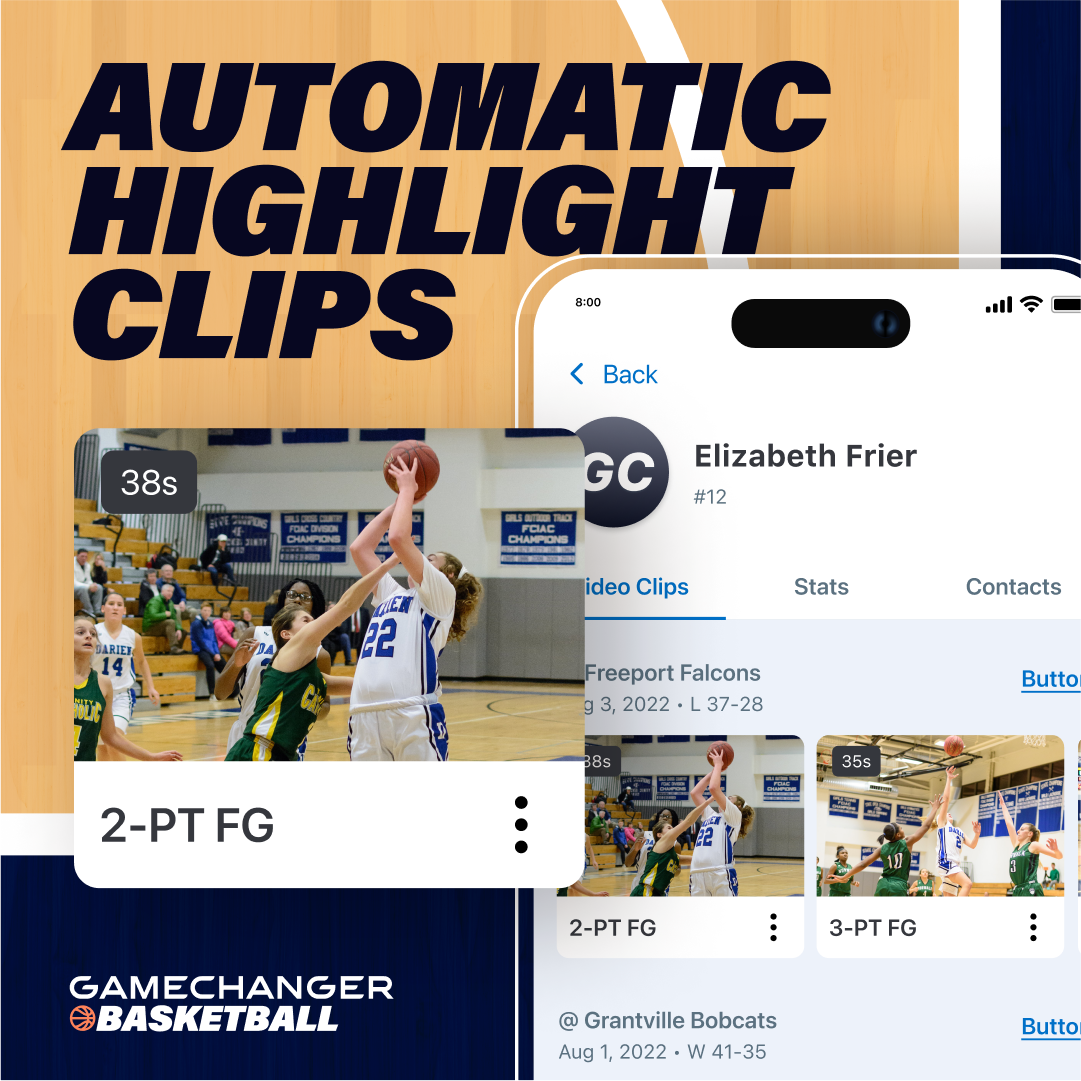
Hey, coach! Want to take your team to the next level this season? Introducing GameChanger, the ultimate game-day assistant with tools to give you a winning advantage. With GameChanger, you can track stats, keep score, and even live stream games, all for free! Get the stats and crucial game video you need to lead your team to victory, all from the palm of your hand. Coach smarter this season with GameChanger. Download GameChanger today on iOS or Android and make this season one to remember. GameChanger. Stream. Score. Connect. Learn more at GC.com/HoopHeads
TRANSCRIPT FOR ROUND TABLE 72 – WHAT IS THE MOST UNDERRATED ASPECT OF RUNNING A GREAT PRACTICE – EPISODE 1037
[00:00:00] Mike Klinzing: Hello and welcome to the 72nd edition of the Coaches Corner Round Table on the Hoop Heads Podcast. Each episode of the Coach’s Corner Round Table will feature our all star lineup of guests answering a single basketball question. A new Coach’s Corner Round Table will drop around the 15th of each month.
December’s Round Table question is, “What is the most underrated aspect of running a great practice?”
Our coaching lineup this month includes
- Jake Boyd – Luther College
- Jerry Buckley – Bishop Kenny (FL) High School
- Chris DeLisio – Olmsted Falls (OH) High School
- Stephen Halstead – Grace College
- Joe Harris – Lake Chelan (WA) High School
- Dave Hixon – Amherst College
- Bob Krizancic – Mentor (OH) High School
- Dell Leonard – Mountain Home (AR) High School
- Dave McGreal – Penn State Altoona
- Heidi Messer – Oklahoma Wesleyan University
- Don Showalter – USA Basketball
- John Shulman – University of Central Arkansas
Please enjoy this Round Table episode of the Hoop Heads Podcast and once you’re finished listening please give the show a five star rating and review after you subscribe on your favorite podcast app.
Be sure to follow us on twitter and Instagram @hoopheadspod for the latest updates on episodes, guests, and events from the Hoop Heads Pod.
Hey Hoop Heads, find your team’s dream shooting machine this holiday season during Dr. Dish Basketball’s December end of year super sale. From now until December 31st, you can unlock the biggest deal of the year. Buy one Dr. Dish CT Plus, get one for $2,000. This offer is only valid while supplies last, so hurry to secure your machines while you can.
Learn more at drdishbasketball.com/financing. You can also follow their incredible content @drdishbball on Twitter, Instagram, Facebook, and YouTube. Mention the Hoop Heads Podcast and save an extra $300 on the Dr. Dish Rebel, All Star, and CT models. Those are some great deals Hoop Heads. Get your Dr. Dish shooting machine today.
[00:02:26] Pete Alexandrou: Hi, this is Pete Alexandrou, coach at CAI Post Grad based out of Clearwater, Florida, and you’re listening to the Hoop Heads Podcast.
[00:02:37] Mike Klinzing: Prepare like the pros with the all new Fast Draw and Fast Scout. Fast Draw has been the number one play diagramming software for coaches for years. You’ll quickly see why Fast Model Sports has the most compelling and intuitive basketball software out there.
For a limited time Fast Model is offering Hoop Heads Listeners, 15% off Fast Draw and Fast Scout. Just use the code HHP 15 at checkout to grab your discount and you’ll be on your way to more efficient game prep and improved communication with your team. Fast Model also has new coaching content every week on its blog, plus play and drill diagrams in its play bank.
Check out the links in the show notes for more. Fast Model sports is the best in basketball
Let’s hear from our panel about the most underrated aspect of running a great practice.
Jake Boyd from Luther College.
[00:03:37] Jake Boyd: This is Jake Boyd, assistant men’s basketball coach at Luther College, answering this month’s roundtable question. What is the most underrated aspect of running a great practice?
I think it’s positive energy. Players are going to make mistakes and miss shots in every practice, but with the incredibly necessary focus on the mental side of the game, I feel it’s really important to balance those struggles with tons of praise and positive energy. Whether it’s a scout, an intense practice or a small group workout, positive energy has never been a negative for me.
But it’s also never been something I’ve had to focus on or prepare to do. So I think that’s what makes it the most underrated aspect of how I can impact a practice to help make it great. Thanks so much for having me on, guys. Best of luck to everyone in your games leading up to break, and I hope everyone has a great holiday.
[00:04:25] Mike Klinzing: Jerry Buckley, Bishop Kenny High School, Jacksonville, Florida.
[00:04:33] Jerry Buckley: Hi, this is Jerry Buckley from Bishop Kenny answering this month’s question about the most underrated aspect of running a great practice. I don’t know if I would say it would be underrated, but I think Definitely the most important thing is going to be the level of intensity and competition. Doesn’t matter if your practice is expertly organized, timed perfectly, fancy drills, everything’s executed perfectly, whatever the case is.
If there’s not a level of intensity and competition that you need to beat the best teams on your schedule it’s probably not going to be worthwhile. So that’s always going to be something that we’re definitely going to emphasize, try to have the intensity and competition each and every practice.
[00:05:12] Mike Klinzing: Chris DeLisio, Olmsted Falls High School, Olmsted Falls, Ohio.
[00:05:19] Chris DeLisio: Hey Hoop Heads, Chris DeLisio at Olmsted Falls. Most underrated aspect of running a great practice is a tough question to answer. I feel there’s so many parts that make up a great practice and what you really want out of your guys. When thinking about the most underrated, I think sometimes, really I love when there’s a practice that has a great pace to it, where there’s great pace.
Energy and flow to it, moving from one drill to another and the pace not only is in the play, but also in just the flow of moving from one activity to the next. I think that’s when your guys have a lot of energy and really it’s kind of a championship pace that you’re working at. I really love a practice that is always moving doesn’t have a lot of downtime, and even the breaks are with a little bit of urgency and pace.
[00:06:13] Mike Klinzing: Stephen Halstead from Grace College.
[00:06:17] Stephen Halstead: Hey Mike, this is Stephen Halstead from Grace College, joining on for the Hoops Head Round Table. Number 72. So the question this week was, what is the most underrated aspect of running a great practice? And after thinking about this for some time, I think a lot of factors go into having a great practice.
And one of the things that you might not think about often is finding the balance of allowing the guys to be competitive in drills, And then not breaking up too much time where you’re teaching and talking or the guys get stand. They have to stand and listen for 15 to 20 minutes before they go back to playing live.
So having a lot of opportunities for the guys to be competitive and then finding that balance of once you get the guys going, still being able to teach things, but not taking too much time that they get out of their rhythm and going from there. And then I also think one other thing. is just moving quickly from one thing to the next.
So whether you go from your transition segment into a half court offense segment, quickly getting everyone there, explaining what you’re doing, and then moving quickly into that next segment is a really key thing. And I think that’s one thing coaching staffs have to keep talking to each other about. So they know which section or segment they’re running.
And can have it prepared and then can get everybody in place to move quickly.
[00:07:36] Mike Klinzing: Joe Harris, Lake Chelan High School, Lake Chelan, Washington.
[00:07:44] Joe Harris: Hello, Hoop Heads. This is Joe Harris with tonight’s round table question. What is the most underrated aspect of running a great practice? I believe it’s real easy to get caught up with what’s flashy or trendy when running a practice or planning your practice. So I think it’s extremely important To have a plan for that practice, an idea of where you want to go with it and what you want to accomplish.
Actually taking the time with some thought to plan it out and really not just winging it. The planning isn’t just for you. It’s for your assistant coaches also. It allows them to think about where they can be of help and really what to emphasize. It also shows your players you care about them and that you are preparing to improve.
And I think players respect that. In our practice plan, we tried to make every drill game like and competitive, meaning we would keep score or go against the clock. Really, in your practice plan, you don’t have to be married to it, but having a place to start from really helps you to stay on time and on task.
If the team isn’t executing the drill particularly well, move on and revisit it the next day. But if the team has got the hang of things, on a particular drill, reward them by stopping that drill early and then letting them know. These are some things I hope you can take with you and appreciate you letting me share my thoughts. Enjoy the upcoming holiday.
[00:09:10] Mike Klinzing: holiday. Dave Hixon, Basketball Hall of Famer from Amherst College.
[00:09:21] Dave Hixon: Hello, Hoop Heads. Coach Hixon here. What’s the most underrated aspect of running a great practice? And I thought a lot about this and mixed and matched a little bit. I mean, I, I think the most important thing is that you run your practice and you demand as close to perfection as you can get from kids.
And I see a lot of sloppy, particularly offensive playing going on out there. And you People limiting what they’re doing now, and I get that everybody’s playing open and everything, but there’s a lot that can be done with preciseness. And when you’re teaching it in practice and you’re, and you’re running it in practice, I see too many people, the practices I’ve attended, that let things go.
And if you let things go on Tuesday, they’ll reappear on Saturday. But anyway, that’s sort of the obvious piece. I think, I think the The most underrated piece is your enthusiasm. I think that if you can run a practice, and I’m not talking about cheerleading, I’m talking about staying getting some momentum working kids hard, you working hard, I think the two hours that you’re out there and it’s your classroom and, and if you’re ho humming it, the kids are going to ho hum it.
If you’re not executing, the kids aren’t going to execute. If you’re letting sloppiness go, the kids are going to be sloppy. All shows up again on Saturday night. So, anyway, I was all over the map on that one. I hope there’s one thing in there that somebody can pull from it. Thanks. Good luck this season. Bye.
[00:10:55] Mike Klinzing: Coaches, GameChanger is making your game feel more valuable than ever. New this season to GameChanger, Film Room allows team staff to analyze full game videos, add comments to specific moments, and quickly share feedback with other coaches, team members, or families. The number one youth sports app automatically skips downtime in the game film, condensing event video into active play so you can focus on the moments that matter.
The best part? It’s completely free for coaches. Download GameChanger now on iOS or Android and take your coaching to the next level with Film Room on Game Changer. Game Changer. Stream. Score. Connect.
Bob Krizancic. Mentor High School. Mentor Ohio.
[00:11:47] Bob Krizancic: Coach K Mentor High School. If and when you have a great practice, that means the energy level was high, the basketball IQ was high, and that your players were understanding your program in the system. I believe the most underrated aspect is that If you do have that great practice, your players are gaining the confidence.
And that is huge in any game, and especially in late game situations. Best of luck.
[00:12:19] Mike Klinzing: Dell Leonard. Mountain Home High School. Mountain Home, Arkansas.
[00:12:26] Dell Leonard: Dell Leonard, Mountain Home, Arkansas. I think the most underrated aspect of running a great practice is competition. I think it drives players to be more creative, encourages them to improve time and score on shooting drills, and every drill creates that competition.
Of course, when you got players going head to head, teams going head to head, it just leads to more efficient. And productive practice by forcing players to adapt and excel just to just to stay competitive.
[00:13:07] Mike Klinzing: David McGreal from Penn State Altoona.
[00:13:13] Dave McGreal: What’s up guys? Coach McGreal, Penn State Altoona Men’s Basketball back at you here with this month’s round table. Question being what is the most underrated aspect of running a great practice? Well, that is a great question. one of the things I’ve learned from my whole college head coach Coach Randy Lambert down at Maryville, was the biggest thing is to be prepared, to have a practice plan ready, and try to stick to it as best as possible.
Sometimes coaches, and I’m really guilty of this at times we’re running a drill where we’re trying to teach a technique or something with the system. Guys just aren’t getting, getting it. You have, let’s say, five minutes playing for this drill. sometimes you do have to take that extra time to make sure the guys are getting it right, which may kind of skew the practice plan a little bit.
But having a plan initially is the most important part of running a great practice. Obviously you can’t go in there and just roll out a ball and do fly by the seat of your pants, so to say. So having a really structured practice plan in place, what you want to cover, what your what your goal is for the day.
We usually start every practice with a word of the day or words of the day. Usually that word of the day or words of the day has to do with, again, a technique or something within our system that we’re going to be working on that day. So having a practice plan, having a set idea of what you want to get accomplished and then having some sort of trigger word or system word in place for that day’s practice as well that you can reinforce throughout the practice. Hope this helps. Hope everybody’s doing well. Hope everybody had a great Thanksgiving. Looking forward to a wonderful holiday season with your friends and family. Again, Coach McGreal, Penn State Altoona. Talk to you guys later.
[00:15:10] Mike Klinzing: Heidi Messer from Oklahoma Wesleyan University.
[00:15:16] Heidi Messer: This is Heidi Messer from Oklahoma Wesleyan answering this month’s Hoop Heads Roundtable question. What is the most underrated aspect of running in
great practice? For me, I believe that one of the things I’ve added in the last couple years has become really important and is very important, I think, across the board is for players to find their voice and do some problem solving within practice. And by that I mean having players talk through What went wrong in an execution?
Why did we get scored on? Who was missing on help side? And just having a voice and being able to talk that out with each other. For us, we’ll play quarters or segments within practice where we might be focusing on something specific. And of course I’m going to do my job in coaching and guiding them. But I think at the end of it we tend to take a timeout at the midway point or a short time at the end of it where, okay, you guys give your feedback, talk each other through it.
What adjustments do you need to make to make this next segment better? How can we get cleaned up? What went well for you? What didn’t go well for you? I think giving them some ownership over the thought process of the game. Is really important. And at the end of the day, when it comes to game days, as coaches, Most of our job is done in the preparation leading up to it.
What can they do and achieve on the court without us? That is a reflection of that time. And I think giving them that voice and practice, giving them that opportunity to talk to each other and problem solve has been something that’s really gotten on my radar in the last couple years is highly valuable.
The players like it and they find a lot of value in it. And at the end of the day we’re leading and guiding them. But in the big picture, how do they take that to the next level beyond the court, right? And how can that help us be successful on court while they’re here? So that’s, that’s something that I think has become really important and can be crucial for any team.
[00:17:14] Mike Klinzing: Don Showalter, USA Basketball.
[00:17:21] Don Showalter: Hi, Don Showalter here from USA Basketball. What is the most underrated aspect of running a great practice? I think there’s a couple things that are underrated that really lend itself to having a great practice. Number one is name all your drills. So players know exactly what you’re going to do and they can get into the drill progression immediately after you call the name, name the drill.
They should know, they should know where they go and what the drill involves. So naming the drills is really one key thing, I think. Secondly is coaches don’t talk too long. they’re not players, players don’t need to hear you speak a long time. I think you, you, I always say you teach in sound bites, not paragraphs.
Give them a little something about the drill and then, and then make sure you. You get on after that. So I think under, underrated aspect of running a practice is when coaches stop, talk way too long, and then get the players out of a great pace that they need to be in for a practice. Thank you.
[00:18:25] Mike Klinzing: John Shulman from the University of Central Arkansas.
[00:18:31] John Shulman: This is John Shulman, head basketball coach at the University of Central Arkansas. And the question this month is what is the most underrated aspect of running a great practice? I think a couple different things here to run a great practice. Number one, you got to spend time.
I do it the night before on what you want to do in practice. It may take you, I mean, it can take you 15 minutes. It could take an hour and 15 minutes. So I think you, you you got to spend time on practice and you got to spend time planning practice and what’s important in practice. And then you got to spend time on getting the flow of practice correct.
Are you going to shoot before? Are you going to shoot after? Are you going to shoot in the middle? If you’re going to teach something, are you teaching it early or are you teaching it right in the middle? If you teach it right in the middle, it just kills practice and deadens practice. If you talk too much in the middle of practice, what are you doing at the end of practice?
So underrated aspect of, of having a great practice is having the right flow of practice and putting things in the right position. So you can flow from one thing to another. So I think flow is, is very important. And then the probably the other big thing is, is having feel. I’ve got 15 minutes for zone O and we didn’t accomplish it.
Well, some people are going to move on regardless and there’s nothing wrong with that. And some guys. Coaches are going to stay until you get it right. And there’s nothing wrong with that. There’s certain days there’s certain days to move on and certain days not to move on. There’s certain days where you got 15 minutes of shell and you’re unbelievable the first five minutes of shell, why would you continue doing it?
You’re kind of pumped up and you’re, you’re on top of it and move on and reward the guys is, is having feel. So I would say the two biggest things is. Flow of practice and probably organization of practice the night before and that everybody knows what everybody’s doing as, as I say, everybody, your coaches, and then having feel during the middle of practice on, on staying too long in a session or not staying long enough.
Not getting things done. So I, I just think those are very underrated organization having feel during practice and making sure your practice has great flow hope this helps good luck and keep battling out there.
[00:21:09] Mike Klinzing: Thanks for checking out this month’s Hoop Heads Podcast Round Table. We’ll be back next month with another question for our all-star lineup of coaches.
Your first impression is everything. When applying for a new coaching job, a professional coaching portfolio is the tool that highlights your coaching, achievements and philosophies. And most of all helps separate you and your abilities from the other applicants, the Coaching Portfolio Guide is an instructional membership based website that helps you develop a personalized portfolio. Each section of the portfolio guide provides detailed instructions on how to organize your portfolio in a professional manner. The guide also provides sample documents for each section of your portfolio that you can copy, modify and add to your personal portfolio.
As a Hoop Heads Pod listener, you can get your Coaching Portfolio Guide for just $25. Visit https://www.coachingportfolioguide.com/hoopheads to learn more.
[00:22:08] Narrator: Thanks for listening to the Hoop Heads Podcast presented by Head Start Basketball.