
STEVE LAMIE – GROVE CITY COLLEGE MEN’S BASKETBALL HEAD COACH – EPISODE 801

Website – https://athletics.gcc.edu/sports/mens-basketball
Email – sslamie@gcc.edu
Twitter – @GCC_MHoops
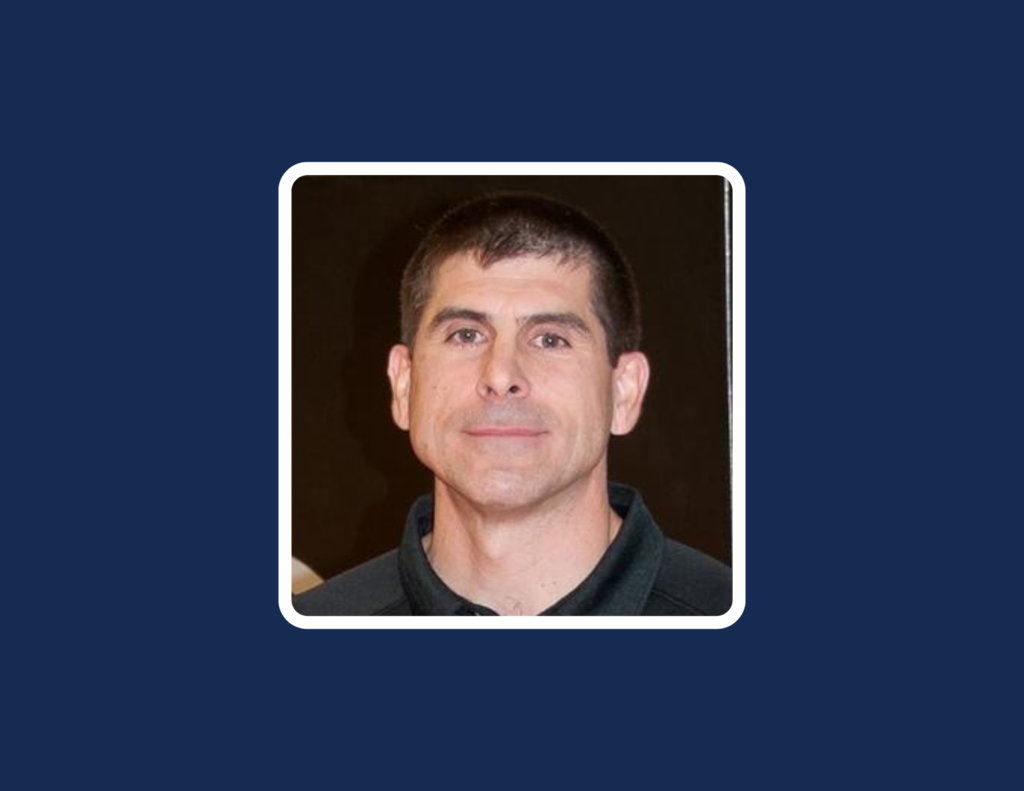
Steve Lamie is the head men’s basketball coach at Grove City College. In his 24 seasons at Grove City, Lamie has directed the Wolverines to five Presidents’ Athletic Conference championships, nine postseason berths and won over 300 games as the head coach.
Lamie is the 21st head men’s basketball coach in Grove City history. Prior to becoming the head coach, he assisted longtime head coach John Barr for four seasons. Lamie’s coaching career began as an assistant at Cedar Crest High School in Lebanon, Pa. After four seasons at Cedar Crest, Steve spent two years as a graduate assistant at Kent State University, earning his master’s degree in biology in 1991. He then returned to the high school ranks for three seasons as a head coach including one year at Palisades (PA) High School and two seasons at Pennridge (PA) High School.
Lamie played four years at Grove City College under John Barr, earning the team’s hustle award and co-captain honors as a senior. As a sophomore during the 1982-83 season, he helped Grove City advance to the NCAA Division III Championship Tournament as the Wolverines set a school record with 21 victories.
If you’re looking to improve your coaching please consider joining the Hoop Heads Mentorship Program. We believe that having a mentor is the best way to maximize your potential and become a transformational coach. By matching you up with one of our experienced mentors you’ll develop a one on one relationship that will help your coaching, your team, your program, and your mindset. The Hoop Heads Mentorship Program delivers mentoring services to basketball coaches at all levels through our team of experienced Head Coaches. Find out more at hoopheadspod.com or shoot me an email directly mike@hoopheadspod.com
Be sure to follow us on Twitter and Instagram @hoopheadspod for the latest updates on episodes, guests, and events from the Hoop Heads Pod.
Take a few notes as you listen to this episode with Steve Lamie, head men’s basketball coach at Grove City College in the state of Pennsylvania.
What We Discuss with Steve Lamie
- Going from a not very good youth player to becoming a college basketball player
- “I never had a bad coach”
- “Basketball gave me a work ethic. It gave me discipline, it kept me out of trouble.”
- His experiences as a player at Grove City
- What he learned in his first four years as a high school assistant coach
- The pain of having to cut a player
- How his college teammate Jody Peters helped him get an opportunity as a GA at Kent State
- “Steve, this is a business. You have to remember that, we’re here to win and we have to make decisions based on that.” – Coach Jim McDonald
- The intensity of the practices at Kent State
- Memories of Steve and Mike’s time together at Kent State
- Steve’s Bobby Knight story and Mike’s Lawrence Funderburke story
- Being willing to admit your mistakes as a coach
- Returning to the high school ranks after getting his master’s in biology at Kent State
- The opportunity to return to Grove City as an assistant under his former head coach John Barr
- “Just do one thing and do it really, really, really well.”
- Untying your personal identity from basketball
- “I had to be broken in order to find the healing.”
- Play to the standard
- How to expose what your team really needs to work on
- Planning a well-organized practice
- The Flex Offense that he runs at Grove City
Like this show? Please leave us a review here — even one sentence helps! Consider including your Twitter handle so we can thank you personally!

We’re excited to partner with Dr. Dish, the world’s best shooting machine! Mention the Hoop Heads Podcast when you place your order and get $300 off a brand new state of the art Dr. Dish Shooting Machine!

Prepare like the pros with the all new FastDraw and FastScout. FastDraw has been the number one play diagramming software for coaches for years, and now with it’s integrated web platform, coaches have the ability to add video to plays and share them directly to their players Android and iPhones via their mobile app. Coaches can also create customized scouting reports, upload and send game and practice film straight to the mobile app. Your players and staff have never been as prepared for games as they will after using FastDraw & FastScout. You’ll see quickly why FastModel Sports has the most compelling and intuitive basketball software out there! In addition to a great product, they also provide basketball coaching content and resources through their blog and playbank, which features over 8,000 free plays and drills from their online coaching community. For access to these plays and more information, visit fastmodelsports.com or follow them on Twitter @FastModel. Use Promo code HHP15 to save 15%

Your first impression is everything when applying for a new coaching job. A professional coaching portfolio is the tool that highlights your coaching achievements and philosophies and, most of all, helps separate you and your abilities from the other applicants.
The key to landing a new coaching job is to demonstrate to the hiring committee your attention to detail, level of preparedness, and your professionalism. Not only does a coaching portfolio allow you to exhibit these qualities, it also allows you to present your personal philosophies on coaching, leadership, and program development in an organized manner.
The Coaching Portfolio Guide is an instructional, membership-based website that helps you develop a personalized portfolio. Each section of the portfolio guide provides detailed instructions on how to organize your portfolio in a professional manner. The guide also provides sample documents for each section of your portfolio that you can copy, modify, and add to your personal portfolio.
THANKS, STEVE LAMIE
If you enjoyed this episode with Steve Lamie let him know by clicking on the link below and sending him a quick shoutout on Twitter:
Click here to thank Steve Lamie on Twitter
Click here to let Mike & Jason know about your number one takeaway from this episode!
And if you want us to answer your questions on one of our upcoming weekly NBA episodes, drop us a line at mike@hoopheadspod.com.
TRANSCRIPT FOR STEVE LAMIE – GROVE CITY COLLEGE MEN’S BASKETBALL HEAD COACH – EPISODE 801
[00:00:00] Mike Klinzing: Hello and welcome to the Hoop Heads Podcast. It’s Mike Klinzing here with my co-host Jason Sunkle, and I am pleased to welcome to the Hoop Heads Pod. Steve Lamie head men’s basketball coach at Grove City College here in the state of Ohio. And Steve and I have an intersection which we’re going to talk about.
Steve was the graduate assistant at Kent State while I was playing there, so I am definitely looking forward to diving into some stories from way back in the day, Steve, way back in the day, making us both feel a little old. But anyway first of all, again, welcome and just want to get your take.
When you think about going back in time to when you were a kid, tell us about some of your first experiences with the game of basketball.
[00:00:45] Steve Lamie: And thanks for having me, Mike. I appreciate it. Absolutely. But my love for basketball started with my dad and he had played at Penn State and was the captain there.
And the leading score when he had graduated. Now this is back in 1950, so we’re going back like 70 years, but and then he had the opportunity to he was drafted by the Baltimore Bullets, but that was in 1951. And of course, the Korean War was going on there. And he was drafted not by the Baltimore Bullets, but by the US Army.
So that was the end of his playing career. But I my love for basketball started with him. And he was also my first coach as we were playing CYO basketball. And I think all those CYO teams were named for Catholic school. So I was on the Seton Hall team. But I didn’t have a very good start to my basketball career.
I mean, I was really bad, Mike, so bad that even in CYO ball, and this is for like nine and 10 year olds I couldn’t even start for my dad’s team. And I didn’t even, I didn’t even score that year. In fact, it got so bad that I remember looking in the book because we even had had score books the old Mark five, right.
You know Kramer score books for sure. And I didn’t have any, I didn’t have any points. And I closed it up and I gave it back to my dad and I’m depressed and I thought I’m, I’m not very good at this game. But then he coached me the next year and that year we were on.
Boston College and I think maybe I scored 10 points so incrementally I got better at the game, but I really loved it. And I grew up in Bethlehem, Pennsylvania, not on the eastern side of the state. An old steel town and a great sports town. And I played baseball and basketball at Saul and Valley High School.
But my great love was definitely basketball and we had some good teams but I do remember and it, it’s one of those moments that just change your life. And I was sitting on my bed, it’s December 23rd, because we had just gotten done with our last game before Christmas break. And I’m sitting there and we had just lost and I was on the JV team, it was my sophomore year.
And I had decided right there and then that I was going to play college basketball. And my whole focus changed. Like, I just started to, I thought I worked hard, right? But I worked even that much harder to, to, to, to get that dream. So I did play my last two years at SA Valley High School. And and by the way, just to back up a little bit I’m, I’m thinking about this now.
I never had a bad coach, like, never whether it was travel basketball or c y o basketball or pony baseball. And, and the vast majority of my coaches were, were not teachers. In fact, they were steelworkers, if I remember correctly. But and, and some had more skills than others, but they were just good guys that.
Taught me the fundamentals. Like I just remember jump, stop, pivot, pass, you know just dribbling drills and defensive slide drills. And this is when we were in elementary school. So that’s just a side, side note. You know, I just had great coaches, but I looked for schools that I could play basketball at after graduating from high school.
And one of the schools was Grove City College, which is on the western side of the state. And I found out about it through my neighbor who had gone there way, way back, and she said, yeah, you should visit. So we, we took the six hour trip across the state and I immediately fell in love with it.
Met the coach, John Barr, and he said well, Steve, do you have any film available and. I said, well, no, we didn’t film our games. The vast majority of high school teams didn’t film their games back then. So I just had to basically plug myself and he goes, well, yeah, you can try out. And, and that was all I needed, right?
And so I was preparing myself and mid, mid-summer I got a note from Coach Bar and in it was the roster, the tryout roster. And as I counted up the names there were like 30. And in the letter he said that he was probably going to keep about 16 to 17 guys. And I thought this is really going to be an uphill battle.
And tryouts were two days long, right? Two days of tryouts. And, and mostly that was just practice, but near the end of the second practice there was like an hour worth of scrimmaging and it was mostly four on four full court and like call your own fouls. And it was just guys just trying out for the team.
And I remember at the end of that I thought, okay, I’ve done all I could I let it all on the floor. I left all, everything on the floor. And all 30 of the guys sat down along the, the sideline and he said, well, gentlemen, thanks for the tryout. If I call your name, go to the far basket underneath a basket, and, and we’ll do some three man weave.
The rest of you guys, I just want to thank you for, for trying out. And he started to read off the names Bob Crow Jodi Peters, Kevin McCue, Steve Lamie, and I still remember this Mike, that as soon as my name was called I just started to walk towards that far basket. And the guy that was called right ahead of me, he was a junior, very good player.
Kevin McCue from Mount Vernon High School in Ohio. And he put his arm around me and I started to cry. You know, he was like, wow. It was that emotional, like my dream had come true. And I know some people are dreaming for scholarships or n i l money. My dream was just to make a team. And I did and had a very average career here at Grove City.
I was on some great teams. We went to the NCAAs my sophomore year. I was like Forrest Gump. I was on the end of the bench, and I could describe everything that happened on that team from and on all the, all the records that were broken and going to the NCAAs. But I was definitely a, a participant on the bench, but ended up being a captain by senior year.
And after that I got into teaching and coaching, which was always my dream. And but that was my playing career, Mike. It ended at Grove City many years ago.
[00:07:33] Mike Klinzing: All right. So how’d you get from a kid who doesn’t get their name in the score book when you’re nine and 10 years old, to somebody who is a college basketball player?
What did that look like? Because I know that when I think about, and I’ve said this on the podcast before, that kids today, You go and try to figure out what you want to work on and you can search up YouTube or you can work with a trainer. You can do all these things. But you grew up in the same era I did, where none of that stuff was really available.
You kind of had to go out and figure it out on your own and work Yeah. And get better. So what did that look like for you? What was the process of going from that little kid who couldn’t really do much on the floor to a guy who impressed somebody enough to, to make a roster? Roster at the college level?
[00:08:20] Steve Lamie: I’ll go back to say that I never had a bad coach. I had a great coach in high school, Fran Barry, who I still am in touch with to this day. And, and I was taught the fundamentals and I knew. I couldn’t consciously say this, but I knew that that was my only ticket. So that was a part of it, just kind of knowing that I really had to be good at the fundamentals of the game.
And part of that was getting my butt kicked in like travel ball and junior high and almost saying that, and if I’m going to compete, I really have to, I have to be good at this stuff. And the other thing that really helped me was going to instructional camps and, and in those days, instructional camps were just that.
It was and it was at Moravian College. I remember that. It was Sunday through Saturday. And it was until you got up in the morning, until you went to bed at night. You know, there were 12 D drill stations in the morning, 12 drill stations in the afternoon some playing in the, in the in the evening.
And more skilled sessions. And I think I learned a work ethic there and I just applied it like every day. And thankfully, I had a a basketball court in my driveway that I utilized all the time. And I don’t know if this is healthy Mike, but I remember that basketball was the only thing I was really good at.
And it became my identity again. I don’t think it was. Looking back, it was probably not healthy, but it gave me a work ethic. It gave me discipline, it kept me out of trouble. And so it was just the, the work and, and I just knew that I had to be really fundamental and I really had to be good at defense.
And, and that was my calling card. I could really defend well, so it was I guess just to, to, to encapsulate it, it was having good coaches throughout my career that just taught fundamentals and, and I imbibed that, you know I wanted to please my coaches, but I also wanted to be successful. And I thought, well, if I listened to them, I should be okay.
And then learning the work ethic by going to those camps and just applying all those things that those coaches said it wasn’t a babysitting camp. It wasn’t let’s just a play. It wasn’t Monday, Tuesday, Wednesday, and you go home. It was like bootcamp. For basketball.
And so I think that enabled me and, and the other piece, again, identity. Again, I don’t know if that’s healthy, but it forced me to just throw all my eggs into that basket.
[00:11:08] Mike Klinzing: Yeah. I think that’s something a lot of people can relate to. I know that I think about my own situation and I would say that, yeah, my identity was tied up in a huge way with the game of basketball for sure.
And as you said I’m not sure that necessarily that that’s the healthiest way to go about life. And certainly we all mature as we get older, and hopefully we come a little, well, more well-rounded. Although at the same time here we are both, both, both on a basketball podcast talking basketball at 10 30, 7 at night, so, right.
We’re obviously, basketball is still a hugely important part of both of our lives, but I know one thing that you’ve mentioned here now a couple times is just the impact that. The coaches that you had across sports had on you. And so that leads to the obvious question. Did you always know that you wanted to coach?
Was that something that you were thinking about from a very young age or was that something that you didn’t really get to till maybe you got to college and you started thinking about, Hey, what’s my career going to be? Just when did you come to the realization that coaching was a place where you wanted to end up?
[00:12:09] Steve Lamie: Yeah, and I remember when that happened after my freshman year at Grove City. And I was a biology major at Grove City and was either thinking you know, maybe medicine or, or teaching and coaching. But I was able to do all summer. In between my freshman year of college and my sophomore year of college.
I was a counselor at the same camp that I had attended in high school. And it was doing those drill stations, it was teaching, it was. Listening to coaches that I knew that I wanted to coach. And from that point on, I knew that was going to be my career path. And I find out that I had a, a gift for it.
And so I’ve done nothing since. So that’s been well, almost four, well, 40 years. Yeah. All I’ve done is taught and coach, either at the junior high level, high school, well, two stints or one stint at Kent State, and then at, excuse me, the division three level.
[00:13:16] Mike Klinzing: Did you think that high school or college was going to be the route?
Did you have a preference? Did you, were you thinking about which one, or was it where the opportunity was? Just, what was the mindset?
[00:13:27] Steve Lamie: Yeah. As soon as I graduated from Grove City I only looked at high school teaching jobs and I got one Pretty soon after I graduated and I was the 10th grade biology teacher, and I was the freshman basketball coach.
And of course after graduating from Grove City, I thought, I’m ready to be a varsity coach. Of course you were. Exactly. Thank God. Really? Thank God I didn’t get that job as the head coach. Okay. The varsity coach, because I didn’t know how to deal with parents. Shoot. I had never put a together, a practice plan how was I going to deal with players that were just four years younger than me now.
So and again, I was blessed with a mentor. His name was Frank Coon, who was the head coach at Cedar Crest High School. And so for four years prior to my arrival at Tent I was the freshman basketball coach. And I taught. Just the fundamentals. But I was given some freedom, so I put together my own practice plans.
I was I had to cut the team. I was told what to what to run offensively. I was told to just teach man-to-man defense and so I was able to kind of grow into the into the profession. And when you’re a ninth grade coach, you just have to coach the fundamentals. You know, honestly, Mike, it’s like no different than what I’m doing now, because we have more skill, right.
But it really I’m so thankful for those four years.
[00:14:59] Mike Klinzing: What did you love about coaching right away?
[00:15:01] Steve Lamie: Really the interaction just with the players. The locker room the camaraderie and, and I still love that to this day, but also seeing kids like come together. They all have these different personalities and then you develop a culture where they’re working together that’s really special.
Seeing, seeing the light bulb go on with a freshman when he starts to get it or, or just when he starts to do things simple things like he’s doing things on his own and he’s kind of mimicking you. Like he’s taking what you’re doing or what you’re teaching, but he’s making it your own.
And that is really special and it’s still special to me today.
[00:15:49] Mike Klinzing: What’s something that on the other hand was more difficult that when you look back you’re like, yeah, man, I was not very good at that when I first started.
[00:15:59] Steve Lamie: Yeah. I would say during my, I’ll never get good at it. And that’s cutting kids.
I’ve told my assistants that if you ever feel comfortable cutting someone, whether they deserve it or not is immaterial, but if, if it doesn’t, if it doesn’t hurt, then you should leave the profession. You know? I mean, you have to make the decisions. I’m not saying that, but if it doesn’t cause you to have a sleepless night or feel guilty, then I don’t think you have much compassion.
So maybe I’m always bad at that, but probably taking, taking it personal, like if a kid is he’s misbehaving or he’s not doing the right thing that taking the taking his. Screw ups, personal, almost as it’s a personal, it’s a personal attack. You know, like, and again, I think this goes back to identity.
And so if my whole identity is just basketball and some freshman is not, is screwing up, or, or even a kid here at Grove City and I’m so invested that my identity is how he plays, then I’m going to lash out in some negative ways. And so I’ve had to kind of mature and say, look, look, okay, that’s basketball and, and, but it’s not who I am and it shouldn’t be taken as a personal attack on my integrity or my teaching ability or my personhood.
I hope that makes sense.
[00:17:37] Mike Klinzing: No, it does. It absolutely does. And I think that’s, look, that’s something that, I don’t think there’s any coach out there that enjoys the process of. Telling a kid that, Hey, your, your dream is over for, for this season anyway. Mm-hmm. Mm-hmm. And you know, I think that having gone through that as a coach many, many times, I think one of the things that just as you said, that you always try to do is to be able to have that conversation with the kid and encourage ’em and, and give them a.
Something that they can latch onto so that you don’t, you don’t snuff their dream out permanently. You want to give them an opportunity to say, Hey, yeah, I’m not where I need to be right now in order to make this team, but they’re, there’s still an opportunity for me if If I do X, Y, and Z, that I can come back and Yeah.
And try it again next year. And that’s, that is one of the most difficult things, I think, as a coach to, to sit down in front of a kid and, and say, Hey, you you didn’t, you didn’t make it. And it’s tough. And obviously coaches have all different ways that that they go about doing that process.
And I always think that it’s beneficial to be able to talk to a kid. You know, you can, you can post a list and there’s a lot of coaches and programs that, that do that. But I think if you can talk to a kid again now, if you have a hundred kids that try out, obviously you can’t Right.
Talk to all. 90 kids that you’re cutting. But in a lot of cases, I think if you can have that personal conversation with the kid, that that makes a difference. And as you said, the relationships are really what coaching ultimately is about and getting to know those kids. And so even a kid that takes the time out to come to your tryout, I think is, if you can have those conversations, it’s, it’s worth it.
Yeah. Good point. All right, so you go from being a freshman coach to the division one college level. So how does that even remotely happen? I mean, what’s the process for, okay, I’m a freshman coach. You’ve kind of, I’m assuming at that point, were you thinking that, Hey, maybe I want to get into college coaching.
Was it a way to gain some experience and you thought that I could take this back to the high school level, I want to get my master’s degree? Where was your mindset at as you were. Reaching out to Coach McDonald to see if you could, you could get one of the GA positions there.
[00:20:00] Steve Lamie: Yeah that’s a great question.
I had no dreams of, no, I should say I had dreams of coaching college basketball, but did not think it was realistic, but I thought that a graduate assistant position could get my foot in the door to have a head high school position at some point, and then also get my master’s degree paid for.
So I applied to probably 50 schools and didn’t hear back from anybody. But the GA at Kent State at the time was Jody Peters, and Jody and I were teammates at Grove City together. And so I think Jody In fact, I know it. I mean, he was, he was my foot in the door with Coach McDonald at Kent.
And he gave me an interview. I drove up to Kent State and it was a brief interview honestly, and I think he went on Jodi Peter’s recommendation. And somehow some way I got the job. It was no question Mike, a connection. You know, it certainly wasn’t my pedigree I was a mediocre college basketball player.
Now I did have teaching and coaching experience, so maybe that helped a little bit. But I was a you can probably say I was just a blank slate. And. Coach Mac took a, took a chance on me. I’m forever grateful for that. And also I’m forever grateful for Jody who’s still a friend of mine to put in a good word for me.
[00:21:42] Mike Klinzing: All right. So what do you remember, what were your first impressions of Coach McDonald?
[00:21:46] Steve Lamie: Okay. Probably like everybody, you know coach Mack looked like the grandfather figure. Self-deprecating probably intense. Probably no nonsense, but kind of a grandfather figure a stern grandfather.
[00:22:05] Mike Klinzing: Yeah, I think that’s probably what most people, I think on the outside, I think when they looked at Coach McDonald, I think that’s what they saw and. On the inside. I think as we went through, and you know, you and I talked about it a little bit when we connected in Pittsburgh back a couple weeks ago, there was a, there was a human element to Coach McDonald that I think was a part of him that he didn’t always let his players see.
And when I think about my experience as a player, I think that’s one of the things that, when I look back at it, that I wish there had been more of that human connection between player and coach, which is obviously something that we talk about a lot more today than we did back in the late eighties, early nineties.
When you were at Kent. And when I was playing, there were many more coaches in the mold of the Bob Knight style of coaching where it was, Hey, you’re going to do this because I said you’re going to do it and. More so than taking the time to explain the why and all the other things that we talk about in today’s game, but what do you remember about the adjustment from a coaching standpoint?
Obviously you’re going from a completely different level of player that you’re working with, where you’re working with freshman in high school versus you’re working with division one college players. What was that adjustment like for you out on the practice floor? Just trying to figure out, okay, where do I fit in and how do I maximize what I’m doing here?
[00:23:45] Steve Lamie: Yeah. I followed Jody’s lead, Jody Peter’s lead. He was the other ga and fortunately we were in on the staff meetings the ga. So they were. Two assistants Dave Grube and Chris Davis, the full-time assistants, and then the two GA’s, and, and we were permitted to sit in and sometimes they were two hours long, the as we developed the practice.
And so I was given certain responsibilities at those practices. It was almost exclusively breakdown drills or maybe doing some statistics, but mostly breakdown drills because Coach Mac and it was his team. And so if he delegated something, it was for a specific purpose and almost always to Dave Grube who was the lead assistant and with him for a couple years already.
And I think that was Chris Davis’s, maybe his first year. I think we were on staff that that was our first year together. That’s right. So You know, one thing, not not being in charge, like for four years, I’ve run my own practices done my own scouting reports, done my own practice plans.
And so I just had to remind myself that, Hey I’m a graduate assistant. I should be very thankful to be here, and whatever he wants me to do, I’m going to do I wanted to please him. No doubt I believed in him. I believed in the system. He was defensive oriented, and I liked that.
But so that was one of the adjustments, the other adjustment and, and coach Mack made it very clear well, well, two things. I remember during the interview process that he, he goes, Steve, this is a business. You know, you have to remember that, you know we’re here to win and we have to make decisions based on that.
And so Coaching ninth grade basketball is not a business. Okay. Not, not even close to being a business.
[00:25:41] Mike Klinzing: No. You didn’t have any n i l deals back in the day?
[00:25:43] Steve Lamie: No, no, no, no, no. Okay. So that was Okay. Alright. I get that. Okay. At least I intellectually understood that. The other thing that he mentioned was don’t think of, but he said basically your experiences of Division one basketball are when you watch the ESPN game of the day or game of the evening and you see us in our coats and ties and the, the crowd is going crazy and the coaches are masterminding the plays and you see all the show that’s about.
5% of what we do. You don’t know about you’re going to experience the long hours, you’re going to experience the highs and lows, all the things that go behi that are behind the scenes to make that, you know that make that 5% work. And, and again, he was very honest with that. And he was absolutely right.
And I had my eyes wide open, but I was almost shocked by how much other stuff has to be done. Like watching literally five, five to six VHS’s of our opponents prior to, to playing them, and then also seeing them play live. You know, just the amount of detail that went into preparation.
That was, I was not ready for that. Now I adjusted obviously, but I was not ready for that. The other thing was just the, the intensity of practices. I thought I practiced intensely at Grove City College. Well no, not compared to the golden flashes under coach McDonald’s tutelage. And again, that, that was a culture, but, but it was, it was really, it was exhilarating just to see how hard you can go, you know?
The other thing was two hour practices were the norm at Grove City College. Two hour practices at the, where the norm when I was a a freshman coach. Well Mike, there are sometimes, and I’m not exaggerating, were we on the floor three and a half, four hours?
[00:27:48] Mike Klinzing: Yeah, three and a half for sure.
And I mean, a lot times. And they were intense for that long.
[00:27:50] Steve Lamie: Yeah. And then you, then you go lift and then you have a film session, so, right. It was Basketball at just a exponentially higher intensity and commitment and complexity.
[00:28:12] Mike Klinzing: There wasn’t load management. Steve, what was that? Look, there was not any physiological testing. Oh, no. You’re right to see, oh man, do these guys need a little break here maybe to refresh their legs? No, that was not ever, that was not ever the case. Which again, I say this all the time, that I am unbelievably grateful, thankful for Coach McDonald and the opportunity that he gave me when I signed with Kent, that was the only division one offer that I had, and I think I fit the mold of the type of player that.
Coach McDonald liked. And once I got past my freshman year where I played sparingly pretty much for the next three years, I didn’t come off the floor unless the game was a blowout or I was in foul trouble, which was basically almost never. So I have no complaints at all about my college career, but it was tough.
I mean, it was tough. Yeah. Practice was a grind. You talked off the top about how much you love basketball, and I feel exactly the same way. And I know there were days where I sat in my dorm room where I sat in my apartment and practiced practices coming on. I think, I think I’ve told this on the podcast, but.
Especially, this was more, I think, in the dorm, but I remember that me and Mike Albertson my second year, who was a walk-on Mike. Yeah, yeah. We would sit in the dorm room and the Dick Van Dyke show would come on at like two 30 and practice was at three o’clock, and we would start to get P T S D every time we heard the Dick Van Dyke show theme song of like, oh no, that means practice is about to start.
And again, like I’m a kid who loves basketball and there were certainly days where I didn’t love practice. And yet at the same time, I do think when I look back that I got just about everything I could have possibly gotten outta myself and the level of talent that I had to be able to play at the level that I did and play the amount of minutes that I did.
And I think that, again, I attribute that to. What we had to go through in order to be able to get out on the floor. And the fact that I was kind of able to, to navigate that and tough it out and figure it out. And obviously you came to Kent during my sophomore year, so Right. I didn’t play very much as a freshman and came in and just like any other player, I was probably more of an offensive player in high school and less of a defensive player.
And I remember just kind of looking around during my freshman year and trying to figure out, okay, what’s our team going to be next year and how am I going to get on the floor? And figuring out that, as you said, coach McDonald was certainly a defensive minded guy and figured out, Hey, I have to be a defender. And that’s kind of what I turned myself into sort of through my freshman year.
And then that. Continued through my sophomore year and we had a really good season that, that first year, and I got myself on the floor, I think, because I could, I figured out, hey, I have to defend. Yeah. And sort of shifted the way that I approached the game. And I think that there’s a lesson to be learned.
I’ve shared that with lots of other young players that I’ve talked to over the years, that sometimes you just have to figure out like, what is your coach like and what do you need to do in order to get on the floor? And sometimes it may not be exactly what you want to do, but if you want to play, sometimes you have to figure that out.
I think sometimes that’s lost in today’s game.
[00:31:49] Steve Lamie: That’s a great point, Mike. Hey. And I like to tell your listeners because I did coach you for two years, your on ball defense was as good as anybody that I’ve ever coached. And One thing I, we may have spoken about this, but wasn’t your dad a an exercise physiologist at Cleveland State?
Yes, sir. Yes, sir. Sir. Okay. And I hope I’m not, it’s been a while now, but I remember looking at your stance and thinking, man, that that’s kind of a shallow stance. You want to get your feet a little bit wider, Mike, and something, I think you told me like, I think you coached me on this coach. No, my dad says like, it should be like this is shoulder with a part and it’s a little bit more narrow than you would expect, but it allows you to, to move those feet faster.
Am I correct. And didn’t he do a study? Didn’t your father do a study on that?
[00:32:44] Mike Klinzing: Yeah, I mean, he had some stuff that we did. Like he and I think after I graduated, we wrote a book and he did some stuff with like, I was doing plyometrics. Not that it really helped me, but I was doing plyometrics and different things that were at the time, way ahead of.
Way ahead of the times. My dad built like boxes that I was jumping off of and we had rubber tubing and platforms and I was running uphill and downhill and at one point I think he strapped me to a motorcycle with a big wrong rubber tube and things. Yeah, I, I can only imagine how slow I would’ve been and how little I could have jumped if I hadn’t done all those things, because it certainly didn’t propel me into the upper atmosphere of athleticism.
But yeah, I think certainly my dad had a huge influence on who I was as an athlete and as a player. And I think that my work ethic and just the things that ultimately made me the player that I was for whatever that was worth, I think a lot of that came from just my dad as at an early age. And you know, even in the summertime you think about the way AAU basketball is now.
It was nothing like that back when I was a kid and my dad. Coached me in what I guess was the precursor to AAU basketball. And we played in some tournaments with just some guys that were, were local from the west side of Cleveland. And so my dad certainly, yeah, had a big influence on the kind of player that I ultimately became, both in high school and then as a, as a college player.
And like I said, I was not, I was not a defender by any means as a high school player.
[00:34:18] Steve Lamie: Well, you transformed yourself big time.
[00:34:20] Mike Klinzing: I did. And I, because I wanted to play, I mean, ultimately. Thank you.
[00:34:23] Steve Lamie: Did your listeners know what your nickname was at at Kent? I don’t know That Iron Mike. Iron Mike.
At least it was to the coaching staff. There you go. I remember. So
[00:34:33] Mike Klinzing: So there you go. I want to say, I want to say maybe Coach Davis. Might’ve started that. Cause I don’t know if that was around, although it might’ve been, I might’ve been Jay Smith, who ultimately, he’s still at, he’s at Michigan now, but yeah, Jay left after my freshman year.
It might’ve been him that that coined that at some point. So, okay. That’s one of those things that you kind of look back on it as a kid and over the course of time, I think I’ve told the story that I had a whole era of Steve where. When I was a kid, like 13, 14 years old, I started going up to the park in my neighborhood and kind of got befriended by an older guy who was probably at the time, he was probably in his mid twenties.
He felt like he was like 50, right? And he started calling me Jerry West. And so from that era of my life, I’ll still occasionally run into somebody who knew me in that time, and they’ll still call me West. And it’ll be funny if I’m with somebody who wasn’t around from that era and they’ll kind of turn their head, look at me funny, like, what?
You know, what are they talking about? Like Jerry West? Yeah. Where’d that, where’d that come from? So it’s, it’s like a very specific era of people who even know that, that you know, that that nickname existed. And certainly Iron Mike is not one that, I don’t think anybody, I don’t think anybody ever called me that like.
Friends or players or, I think that was more of a, I think you guys probably used that more than I did.
[00:35:55] Steve Lamie: Well, it shows you what respect we had for you and yeah, you were a tough defender, my friend and a great shooter too. Well, I think what you, you that, that’s one thing, Mike, like it wasn’t, you were a multi-dimensional player and you may have, I don’t know if you led us in assists that year that we went to the N I T, but you were one of our top assist guys as well as one of our best three point shooters and.
You know, a, a great defender, you were that complete player, you know that and, and, and just the ruggedness that Coach Mac, like that was a prerequisite. Right. It had to be a prerequisite, you know? Yeah. That had to be it, because he had to know that you could go through those practices.
[00:36:41] Mike Klinzing: Yeah. Like I said, I think what is, when I look back, look there’s, there’s no greater respect that when I think about my time there, there’s no greater respect that the coaching staff could have shown me.
Then throwing me out on the floor for 37, 38 minutes a game. Yeah. You know, I mean that, that I think told me everything that I needed to know about kind of how I was perceived within the coaching staff. And again, I appreciate you talking and saying those kind words about my playing career. And certainly it’s something that I look back on extremely fondly.
And like I said, I think that, just like you talked about in your own career, I think really what it comes down to is the work ethic and. Did I try to maximize whatever, whatever gifts I was given, did I try to maximize those gifts? And I think that that’s, that’s really what I tried to do. And, and I just, I wanted to be on the floor like I wanted to play.
And I, I tried to do what it would take to, to be able to do that. And you know, that first year that you were there, obviously we had a ton of success. And I think that was probably the best team that I played on during my four years. And I really think had we not looking back at it we lost we lost in the first round of the Mac tournament after having split with Ball State, who ended up going to the, I think they went to the Elite eight that year.
Yes. And you know, we would’ve, I think even if we would’ve made the final and, and lost to Ball State, I think there was a pretty decent chance that we could have gotten an at large bid that year just because we had a lot of success. I think we won two. In season tournaments that year and
[00:38:24] Steve Lamie: Yeah, that’s right. We did.
[00:38:26] Mike Klinzing: So it was just, we had a, we had just had a really good team. We were well balanced. We had, we had shooting and scoring all over the place and really good defenders and we had size and it was just that was one of those years where you catch lightning in a bottle and then and then the following year we kind of, we started off, we were like seven and four.
And then I’d be interested, I don’t, I don’t know if you even remember the conversations, but I remember at that point we were starting three guards and I was kind of playing small forward there at the beginning of the year. And I think basically, kind of what, at least our perception of it as players was that Coach McDonald didn’t necessarily like the fact that we were playing maybe a little faster than we normally would.
And we maybe had a few more turnovers and we’re shooting a few more threes. And, and he kind of wanted to go back to sort of the way that we, the way that we always played and we kind of switched up lineups and then we got into league play and it just kind of, It’s just kinda all crater, cratered from there.
And you know, then those last, I do remember that, that last year and a half we just never, we never found the magic that we had before, which is kind of strange when you think about just again, the guys, the guys that we had myself and we had Harold Walton who was the, he was the Mac freshman of the year and scored over a thousand points.
And Tony Banks scored over a thousand points. So we had 3000 point scorers all from the same class. And when we were seniors, we won, I think what our nine games or 10 games and you know, we finished nine and 19 with three guys who scored a thousand points in their career. It’s kind of crazy in all honesty, when you think about it.
[00:39:59] Steve Lamie: I do remember, and it was maybe over Christmas that we revamped the offense. We were we were emotional team at least early in the in the season. Yep. And then it was, we just went. A 180 and went back to if I’m not mistaken, a lot of triangle and hypo set Yep. Sets. Yep. Yep. that Coach Mac was much more comfortable with for sure.
[00:40:28] Mike Klinzing: And I just remember, again, it didn’t get our best personnel on the floor, is I think, the way that, the way that the players perceived it in the moment. So, but hindsight is 2020,
[00:40:41] Steve Lamie: You know, as I get older you know, I see that I’m a product of my environment my upbringing and Yeah, like with Coach Mac I think the same with him.
You know, why was he such a hard driver? And I don’t say that in a negative way. Disciplinarian, like just fundamentals, toughness grit. And I remember we were going Mike, we were going to a tournament in New York, New York City. We were playing Iona. Yep. And on that trip, well, I was, I was sitting with him on the plane and I remember him and, and he opened up a little bit.
He was going home. I mean, he’s a New Yorker. He was born there, raised there. So little bit different environment, right in the city. Probably have to earn your stripes every day. And then he was in the Army for three, for three years. And, and that was before he went and, and played at I believe it was Bowling Green Bowl Green.
Mm-hmm. Forget. Yep. Yep. So here’s a, here’s a, a coach who’s again, The streets of New York, then you’re in the army even before you get to college. And there were times Mike, where and this is sometimes at practice, sometimes at a staff meeting, he could look at you and those eyes and that, and that facial expression.
It was like a gunny sergeant. Yep. You know, he would just
[00:42:12] Mike Klinzing: trust me. Remember? I remember those facial expressions very, very well. I can still, I can still shudder when I see him. Yeah.
[00:42:22] Steve Lamie: But that was, again, he was a product of his upbringing and, and that personality and that that sheer will helped us be competitive.
[00:42:36] Mike Klinzing: Yeah, I agree. I mean, I think that there was, look, there was certainly challenges. There were certainly days that were really tough. But like I said, I always come back to, I was a guy who took a chance on somebody who didn’t have any other offers, and I was the seventh freshman in a class of seven, and I was lucky to end up where I ended up and then to be able to get the opportunities that I got to get out on the floor and and play, and basically, like I said, never come off the floor as a.
Sophomore, junior and senior is pretty incredible when I look at sort of how I started. So I mean, I, I have nothing, but I have nothing but respect and, and gratitude for, for what I was able to do as, as a college player and just the, the entire experience. And there were moments again, clearly where it was tough and it was challenging and there was, you certainly had to figure out ways to, to fight through it and, and maybe not always get everything that, that you wanted on the relationship side of it.
But like I said, I think that. He got everything out of me that I think you could possibly get out. Me as a basketball player. And for that, I’m, I’m forever, I’m forever grateful. So, all right. I want you to tell me, gimme a funny, gimme your funniest story. I have two that I’m going to share with you that I want to see if you, I want to see if you remember.
I doubt you remember either of the ones that I’m going to share with, but I know you’ll appreciate ’em. So I don’t know if you have a funny one that, that you remember that that sticks out.
[00:44:08] Steve Lamie: Yeah, that sticks out. Oh yeah. Well, you know one that sticks out and this was your sophomore, this is the year that we went to the NIT.
We were playing at Indiana and assembly Hall Bobby Knight. And we are at the shoot around the evening before the game. And, and by the way, we bus there, if you remember to Bloomington. Yep. Yep. And we’re there shooting around doing our thing and then. The balls stopped dribbling, and the balls were not shot anymore, and everyone turns.
And then there is the General Bobby Knight coming out of he, he’s walking onto the basketball court and I guess he and coach Mack were contemporaries and knew each other. And I remember coach Knight going up to Coach Mack and Dave Grub and Chris Davis. And they’re talking there and I start to walk over to see if I can maybe shake his hand.
Right. And Coach Mac goes, Steve finish up here. I’ll be down at coach Knight’s office. And so I think the three coaches plus Jody Peters, the other GA went down and, and, and I was stuck with the rest of the shoot around.
[00:45:29] Mike Klinzing: There you go. That’s funny. That just that I remember night coming out. I definitely remember, I definitely remember seeing night in person because what I remember is just the fact that he was way bigger than what I would’ve guessed. And you could just feel like his physical presence. Yes. He was just a, he was just a physical presence.
Much bigger than I would’ve thought in person than from having watched him on TV for all those years. Yes. So I have a funny, I have a funny story from the Indiana game. Okay. Okay. So during that game, that was when Lawrence, funder Burke was still at Indiana, right? So it was a timeout at some point during the first half, and.
As we’re walking back to our respective benches, the player we were crossing, so I was going one way, and funder Brook was going the other way. And he walks up to me and he stops and he like grabs my face with like two, with two finger, like his thumb and his forefinger, and like squeezes, like my chin slash cheek.
And I remember like, I looked at him and like, I couldn’t even, I was just flabbergasted that like, I’m like, what is, like, what is happening? Like I have no idea what’s going on. And then I walked back to the bench and whatever. And the game continued. And then at some point later in the game, he did it again.
[00:47:01] Steve Lamie: This, during the game?
[00:47:04] Mike Klinzing: This is during a timeout. This is again, during like a timeout. During like a timeout situation. I remember I turned, I’m like, you know what are you doing? And he just like gave me this like smirk. And then in the locker room after the game, I can’t remember who, what, what teammate of mine, but somebody said, it might’ve been John Wilson said to me, he’s like, he’s like, Mike, you got all over your face because you had I had like this scruffy whatever, hadn’t shaved for a couple days beard.
And so there was towel fuzz apparently on my face. So what funder work was doing, and I didn’t realize it at the time, he was pulling this fuzz, this towel fuzz off my face. Mike, he was grooming you? He was grooming me. The strangest, I mean that’s have to be one of the strangest like player to player interactions.
Yes. That, I mean, just, yeah. Completely, completely bizarre. And like the first time, like I said, cooked totally off guard. I couldn’t, I didn’t even, I couldn’t even. Respond. And then the second time he did it, I remember just saying like, what are you doing, man? Like, what, what’s your problem? Then he just like smirked at me and walked back to his bench.
But then I finally solved the mystery in the locker room after the game that he was walking the TFL off me. Yeah.
[00:48:18] Steve Lamie: None of your teammates were going to let you know about it.
[00:48:21] Mike Klinzing: I don’t think anybody really I mean, I don’t think anybody else, I mean, there was nobody else probably in the arena anywhere that even saw, saw him do saw that interaction.
Right. But yeah, one of those really strange just one of those really strange situations
[00:48:33] Steve Lamie: Hey, Mike, speaking of and this is not a funny story, but just a story about Coach Mac and I think we were, we were at Western Michigan and we had won that game, I remember, and we were getting back on the bus.
And this was in January and I forget which year it was but it was the start of the Gulf War. Yeah, I remember this well. And it was Operation Desert Storm and, and the bus driver had it on the radio. And coach gets on the bus, and, and I don’t remember the words, but basically, and you know, he was a veteran himself said, Something to the effect that here we are playing basketball and young men your age are going off to war and could die.
You know, something of that nature. And it, it just, it was a, a great perspective and a sobering one. You know? I, but I remember that to this day. Yeah, I remember that clearly.
[00:49:34] Mike Klinzing: I can still picture just, I think kind of the, just the atmosphere, like the somber atmosphere that came with winning that game and then western Michigan, like their, I remember their locker room being kind of dumpy Yes.
In their old place. Yellow, yellow lockers. Like yellow metal lockers. Like you almost like what you would see in like a junior high locker room. And then just getting, getting word that clearly today everybody would’ve been on their phones and you know, we’ve all known about it whatever on our, in our own way.
And instead it was kind of like everybody found out sort of at the same time. And yeah, I just remember that being a moment that, yeah, I could still picture, I how you have, you grab like a mental picture of those different scenes and I still have, I have a mental picture of like the CNN feed of like the, the missiles flying.
Yes. You know, and that, that’s kind of what, that’s kind of what sticks with me that the yellow, that and the yellow lockers in the, we in the western Michigan visiting locker room.
[00:50:43] Steve Lamie: But yeah, that’s, and Mike, can I tell you another, just another, just a, just something really small, but It was Bob Coach M again.
I think that, yeah, it was my first year, so it was the our in it year. And I got my, my master’s in biology and I think 99% of the other GA’s were you know, sports administration. But I wanted to just focus on the bio. So I was having a tough, tough road. It, it may have been during finals and somehow he found out that I was just running on empty, right.
And just, it was tough. And our our secretary, you may remember Nancy Soborro absolutely Kindhearted soul, and I may have commiserated to her, or she had that sixth sense, right? And so she tells Coach Mac. And the next morning coach Mac comes out into the hallway or the the suite.
He goes, Steve, And he points, and you know how he pointed, like he, and he gave me like that, that gunny sergeant look. And I think, oh my God, what did I do?
[00:51:54] Mike Klinzing: The finger point. Yes. The curve finger. The finger was always curved.
[00:51:58] Steve Lamie: Yes. And he beckons me into the office and I’m thinking, this is not the right time.
Like, I don’t know what I’m going to do. Right? So I sit down and he goes, and he’s, and he’s writing, okay, he’s writing on a three by five card and it takes some five minutes, but like, I’m just sitting there, I don’t know what it’s about. I mean, is he writing my death warrant? Is he giving me a pink slip? But after he’s done writing and it’s in script, he, he goes, Steve, you may need this.
And it’s a poem. Now the poem was from Because you know how much he loved John Wooden. It was a John Wooden poem, just about perseverance. Again, I don’t remember it. I think I still have it somewhere, but it was his, just his way of saying, Hey, just you’re in finals right now. Suck it up.
You’ll be okay. And it was just one of those kindhearted moments that I’ll treasure, but they’re just something simple. But no how, how coaches, how, how much influence we can have with just those little things. And if I would ask him about it, he wouldn’t remember. He would probably never remember it.
[00:53:07] Mike Klinzing: I say that all the time, that there’s so many things that coaches have said to me or that I, that I remember that there’s no possible way that any of those people, teachers, coaches, there’s no way that they remember the things that they said to me that still I carry with me. To this day. And I think what that speaks to is, as a coach, you have to be really measured with your words and what you say.
And because somebody somewhere is hearing those words and look, a lot of that stuff slips away. But there are certainly things that don’t, there are certainly things that carry with you that you, you, you always you always remember. I I do remember Coach Smith at one point in my freshman year, going back to the Iron Mic thing, saying to me you’re the toughest kid on this team.
And I don’t even remember, I don’t even remember the, where, I don’t remember where he said it. I don’t remember the context, but I know at some point he said that to me. And I do remember thinking back to that at various times where things were really tough and yeah, just thinking, well, if I’m the toughest guy on the team, I have to figure out a way to get.
Through this and, and make it through and, and show other guys that we can, that we can get through it. And again, I’m sure he would have no recollection. I mean, he might remember that he felt that way, but he certainly wouldn’t remember any more than I would the, the context of it. And yeah, it’s just interesting how much of an influence we can have as coaches,
[00:54:48] Steve Lamie: And speaking of that, I know how many times I’ve screwed up and maybe saying something really dumb or disparaging on the bench. Right. You know, or at practice. Yep. And then knowing that it already came out, I can’t take the words back and just owning it, it’s really helped me to just, okay.
You just go to the player and say, look, Mike, I just screwed up. Okay. I’m sorry. And, and, and it’s just, it’s over. Like I know that. When I say that, of course it’s humiliating, right? Because we’re not supposed to make mistakes, but that just, I’m sorry, has helped me maintain the relationships with players 15, 20 years after the fact.
Absolutely. You know? Yeah. And that’s another thing I’m just talking off the top of my head, but just the self-awareness piece. Like knowing where I’m kind of weak there. Maybe it’s my temper here, maybe it’s my sarcasm there or whatever, and just being aware of it so it doesn’t cause an issue.
And the other thing I’m blessed with is that my assistant Sean Severson has been with me 18 years. You know, that that never happens at the division three level, but he’s my, he’s like my accountability partner. And so if I’m. He can give me some eye contact before I’m ready to say something I shouldn’t or he’ll hit me, or and it immediately calms me down.
Or if I have said something or done something stupid we have the relationship where he can come in and say, look that was wrong. Yeah. You know, just, yeah. Yeah. You, you may want to go back to Mike and, and talk to him about that. So, and I appreciate that.
[00:56:37] Mike Klinzing: Yeah, it’s a great point. I think that it’s something that, again, is a lot more prevalent in coaching today.
It was not something that coaches did very often back in the time when you were a player or when I was a player. That’s not to say that it didn’t ever happen, but I think there was a lot more times where things happened and what happened on the practice floor in the game. You just put it behind you and.
Keep moving and everybody just figures out their own way to deal with it. Yeah. And, and you move on. And that’s just, again, it was the era that was the era of, of where we were. And it’s certainly changed over the years, I would say probably for the better. Alright. And I want to, I want to just share my two quick, my two quick stories.
They’re both pretty, they’re both pretty brief, but I think they’ll kind of capture some of the things that we’ve been talking about and then we can, then we can move forward with your career. So one is, I’m realizing now as I’m looking at, I went back and looked at the schedule just to kind of place the years, but mm-hmm.
The first one did not happen while you were there. It was during my freshman year, but I think you’ll appreciate the story because it’ll kind of encapsulate a little bit of what I’m sure you experienced with Coach McDonald and what I experienced. So we went to a tournament, At UAB and we flew in, I’m sorry, the 10, the tournament was at Tennessee Chattanooga.
Okay. And Tennessee, Chattanooga has a really cool arena. It’s called the Roundhouse and it’s just, it’s probably the neatest arena that I think we ever played in. Just really cool fans are right on top of you. But we went in for the shoot around and we got started and we were just kind of warming up before we did our stretching and guys are shooting and all of us are like, man, the floor is really slippery and guys are kind of complaining and talking about it.
And coach McDonald’s kind of over on the side and he’s looking and he’s watching and whatever. And then he comes over and we’re all starting to stretch. And I remember he went up to Coach Grube and he is like, is the floor always like this? And I remember Coach Grube, like the look on his face and. Like he, he could see him processing like, okay, how do I answer this question where I’ve never been here in my entire life.
Yeah. There’s no possible way I would be able to answer this question accurately in any way, shape or form. What do I possibly say? And to be honest, I don’t even remember what what he said, but I just remember in my head as I’m sitting there stretching, just laughing, going hot. Like, what is he going to, what is he going to say?
And what kind of a question is that to when you just, like, we just showed up here like five minutes ago, right? Nobody’s ever been here before. Nobody’s ever played here before. And I just like, I could still remember the look on Coach Groove’s face just of like, Almost sheer terror of like, how do I, how do I answer this question and not make Coach McDonald mad?
So, right. That was that was a good one. And then the other one, which I think you, you may or may not have been here, but I know Rick Blevins was the, was the player who was involved. And we were doing, like, we were te I think we were testing, we must have been testing guys verticals. But basically you were jumping, we didn’t have like the vertical jump thing where you hit the whatever the little, the little pegs.
It was just, yeah, jump up and see how high you could touch on the backboard. Okay. And I think Rick was the first one and everybody was going to get three tries or whatever. And so Rick jumps and then he steps back a couple of steps and he jumps again and whatever his he reached 10 10 feet, 10 inches or whatever whatever, whatever it was that he, whatever he reached.
And I remember coach McDonald’s stopping it going, wait, wait. He needs a break in between. Like he’s have to be, he’s have to be at his full capacity when he’s when he is, when he is jumping. And I just remember like sitting there going, oh my God, like we practice for like five hours at a time and you’re like killing us to try to do whatever.
And now here’s a guy who’s jumping once. And you’re telling him like he needs like a three minute break in between these jumps to to be able to get an accurate, to be able to get an accurate measurement. I just remember in my head going, oh, like the, the, the, the the contradiction right in the, in the toothaches.
So anyway, those are just, those are just a couple of funny ones that just like those things that when you look back on ’em, you’re like, yeah, that was kind of nonsensical. I mean, I realized it was nonsensical in the moment, but they’re just things that sort of happen over the course of time with, with anybody.
And again, it’s not specific to, to Coach McDonald, but those were a couple funny things where I was just like, man, do you, do you get kind of what’s get what’s kind of happening. So we all, we all have those moments as coaches, but it’s kinda fun. Exactly. Kinda fun. So, all right. So let’s, let’s, let’s move on from our collective Kent experience.
What are you thinking as that time at Kent is wrapping up? Did that make you. More want to become a college basketball coach? Did it make you less, want to become a basketball coach? Obviously you go back to the high school level, so just where were you, what, what happened as that experience ended?
[01:01:48] Steve Lamie: I think it reinforced in me that I wanted to teach and coach.
So it was, well, yeah, I’d love to teach biology and coach basketball like I did before, but I want to do it as a varsity coach. And so I didn’t get any in fact, I didn’t pursue the college route. And, and so I went back to the high schools and I was a head high school coach for three years prior to going back to Grove City as the assistant, which was an interesting thing because I remember I called John Barr, who was the my coach at Grove City.
And there was a college job in the area that was open and I thought, well I’d like to apply for it maybe they’ll look at me because I’m now college experience. So I called John up and I said, Hey coach, can you give me a recommendation? And he goes, wait. I just had a meeting with the president and they’re going to give me an assistant coach, and I’d like you to think about it now, little back background is that for the 10 years prior to that, John Barr was the head coach and the assistant coach here.
I mean, he had nobody to help out. And so this was a big deal and I. I thought, wow. Yeah, I’d definitely be interested. Definitely. In fact, here’s another little story. I remember watching Princeton practice. There were a bunch of high school coaches and, and I was coaching in the eastern side of the state, and we all went to Princeton, New Jersey and, and watched Pete Carrill do his thing.
And it was a, it was a brilliant practice. It was like three hours long and all they did was run offense, you know? That was it. And afterwards we went to a local pub in Princeton and there were about a dozen of us coaches, and we just sat at a big table and, and we just said, okay, hey, what is your dream job?
And yeah, as we went around the room you know, duke and Indiana, and North Carolina, blah, blah, blah. And when it came to me, I said, Grove City College. And there was like, Snickers, like, honestly that, that was the only place that I thought I’d like to coach, right? In college. And then literally two years later, I was back at Grove City as the assistant.
But back then it wasn’t a full-time job. It was, they cobbled together a job description. So I was going to be at the a lab assistant in the biology department teaching the labs. I was going to be head resident and then help John Barr be coach the basketball team for $10,000.
And I would’ve taken, it was a huge pay cut because I was a public school teacher, but I was not married. I had no debt. I had, it was a graveyard job, Mike, in other words, it was a high school, a small high school and a large conference. And it was going to be really tough if I was going to stay there.
So I jumped at the chance. And I was John Barr’s assistant for four years, and then when he retired, they they elevated me to the head coaching position. That was back in 1998.
[01:05:12] Mike Klinzing: What’d you learn during those four years that made it easier when you got the head coaching job?
[01:05:18] Steve Lamie: I had played for Coach Barr, so I knew the philosophy and, and I think what I learned from him was he and Coach McDonald were contemporaries.
And, and Mike and correct me if I’m wrong, there was a little bit of contention between them because I think John Barr recruited you out of Strongsville High School. Is that correct?
[01:05:50] Mike Klinzing: Yeah, I mean, okay. I had a lot of connection with a lot of the de division three guys. It’s funny, like I reconnected with Coach Steve Moore, who he Yeah.
Recruited me, I think probably harder than just about anybody at, at the division three level at least. Mm-hmm. I remember that probably more than anyone actually, than my first start, my first career start was against Wooster. Wooster. Yeah. Yeah. So, yeah, it’s a small world for sure.
[01:06:18] Steve Lamie: Yeah. And, and, and I remember coach Barr being, because we, we talked about, he goes, he thought that you were coming to Grove City, like you, it was, it was signed sealed delivered, which probably isn’t true. Right. But he thought it was, and I think he called Coach McDonald and said, how can you dare you steal my recruit?
And, and you can imagine how that conversation, right? Yeah. Two type A personalities from the 1950s. So anyway what I learned was, How to coach here. Like we were not a state school for a high academic Christian school, and these are the kids that you’re looking for. These are the schools that you’ve have to go after.
This is the type of culture that you need. And by the way, I kind of knew all that because I had, well, I didn’t know the recruiting piece at all at Grove City. I had come here, but I didn’t know the nuances of it, but the offense, the defense what was going to work here and I was so comfortable with it having imbibed it for four years.
Right. So that really helped me. It just reinforced that I was at the right place coaching a way that, that I was comfortable under a mentor. And, and he was like a big brother to me. Yeah. And he was old school too. Plenty of times he yelled at me, you know which was fine because, well, he did it for four years as a player.
Right, right, right, right. So I learned that, and, and I remember for those four years, I actually kept a book, a notebook. And so any nugget that came out of his mouth, I remember just writing it down things that I may have not done for the four years that I had played for him. So I had a second chance to learn all of those things.
And he was a wealth of knowledge. He really was very, very good X and o coach, but just knew. What to do in his environment. Like he would not have coached the same way had he been at Worcester or at Kent State or anywhere else he was at this school. It’s a niche institution. You can’t do it like everybody else.
So don’t drink the Kool-Aid just you are at Grove City. Do things the Grove City way and just keep your nose of the grindstone. Like you, you have to be a hedgehog. Don’t be a fox, be a hedgehog. Just do one thing and do it really, really, really well. And those are some of the things I learned from him.
[01:08:46] Mike Klinzing: How long did it take you to look at him as a colleague as opposed to that player coach authoritarian type?
[01:08:54] Steve Lamie: You know, like, I don’t know if I ever got over it. Like I still call him coach. Yeah. To this day. Yeah. And So I, yeah, that’s a great question. He was, but I mean, he would, he would say, Steve, you’re like my little brother you know, and, but No, no, I was, I was He was still the authority figure.
Yeah. I was the assistant. It was his pro. I mean, there was many times where I would give a suggestion and he would say, Steve, I still have a pulse. I’m alive when I’m dead. Then it’s your program, or, or something of that nature. Right, right, right. Or, or he will say, Hey, if I want your opinion, I’ll give it to you.
And, but the thing was, it was never done in a malicious way. Like he could say that and then 30 seconds later say, Hey why don’t you come on over to the house for dinner tonight? Yeah. You know, it, it was that simple like, man, he never held grudges and so I could probably tick him off in many ways. In fact, there was one time I remember we’re playing Geneva and they score with about eight seconds left to go up by one.
We take the ball out, we’re going the other way. He’s up calling something and I whisper in his ear. Do you want a time out? And what he did, he, he elbowed me like right in the face. Like he just took his left elbow and put it right across my face and like, like knocked me out. Okay. And said, I don’t want a time out.
And he just like Beck and the guy to keep on going, which is a great thing because we laid the ball in at the buzzer and won. But, and then after that it was like, like nothing happened, but all the guys on the, on the bench were just laughing their heads off when they saw that. So little things like that I remember.
But he, yeah, he was my coach and a mentor, but I wouldn’t say we were colleagues.
[01:10:48] Mike Klinzing: It is really cool when you think about just, I think the, it speaks to the coaching profession and the respect that we have for the coaches that we played for. Even when I reconnected with Coach Grube over the last couple years and he and I had dinner and he came and watched Cal play once this season and.
He’s still just coach. You know what I mean? There’s not, yeah. Like there, there’s, there’s never a thought of me to be like, Hey, Dave, how you doing? You know? Mm-hmm. It’s just here I am as a, as a 53 year old man, and you still, I think you just have such reverence for the people who, who coached you in your life.
And I think that’s just kind of one of the, it’s one of the great things about the profession, if you do it right, that you have that kind of relationship with the people that you influence as a coach. And I think ultimately that’s really, that’s where the power and coaching lies.
[01:11:44] Steve Lamie: Yeah. I agree, Mike.
[01:11:49] Mike Klinzing: All right. Let’s talk about your time. Obviously, you’ve been at Grove City now for. A long time a lifetime in fact. And you think about what you’ve been able to do with the program, and again, I could ask you to go back to the first day on the job like I sometimes do with people, but that’s a long time ago. So instead, let’s just kind of look at the overview and then we can dive into some detail.
When you think about the success that you’ve been able to have, what do you think are some of the key components or key things that you’ve done throughout your tenure that have enabled you to have the type of success that you’ve had? And you can define success however you want. Define success in the relationships that you built with your kids in terms of the, the scoreboard and one loss records.
But just what do you think has been the key to your success over the years?
[01:12:42] Steve Lamie: You know, I think one thing, it, it goes back to what I mentioned before, is that It cannot be your identity, like as a player, it was my identity. And now that helped in, in great ways to achieve things. But when I first took over the program from John Barr I can remember just the, the self.
It wasn’t from the college, it wasn’t from the administration, but just the self-imposed pressure that I put on myself to carry the torch. Like it was important for me to be successful because I wore the uniform. He handpicked me as his successor. I didn’t want to let him down. And so all those perceived pressures were placed on my identity.
And I remember driving those teams really hard, really hard. And were we successful? Yeah. Yeah. But I can remember telling myself, I can’t do it like this anyway. I just can’t. And I remember waking up one morning, it was my birthday, and this is in the middle of June. And I was like, my muscles were like, I was shaking, I was shaking, and my heart was starting to race.
I’m thinking, I’m having a heart attack. Well, it, it was stress, Mike. It was stress and that that’s all the doctors say. You’re under stress. What’s stressing you right now? I said, nothing’s stressing me right now. It’s the middle of the summer. But I had known that I was pushing too hard. It was my identity and.
At that point, and this was like four years into my, or maybe three, three or no three years in this coaching at Grove, I said, I have to just be me. You know, it can’t be my identity every time a kid, if we lose, I, and, and I never thought this my consciously, but if we lost, it was like, you guys suck. And because you suck, that means I suck and if I suck, I can’t stand sucking because that’s who I am.
Does that make sense? Right. Yeah, absolutely. And so I had to go, like, go through this. It was like a spiritual process of just knowing who my, what my identity really is in God. Okay. And after that, I coached with, with much better perspective and with more freedom and with a different mindset with my players.
In other words, I went back almost to like, when I was coaching in junior high. Okay. And like relationally now for those guys that were on those first three years of, of, of teams that I coached, I had to go back and apologize. I said, guys, I wish you could play for me now, you know? Yep. And, and, and just like always quick to forgive.
Like coach, it wasn’t that bad and it was bad, but it wasn’t that bad. You know, they have a joke around about it. Again, we achieved, but at what cost? So again, I had to. I had to pull my identity away from the wins and losses. Okay. And like, like just focus on the process, the process, the process, you know.
And so that was a huge part of my coaching evolution. And, and I wish I would’ve learned it earlier, but again, maybe those identity pieces were were coming into play.
[01:16:20] Mike Klinzing: How’d you do that? Like, is that just a conscious decision of I really need to be able to step away and see my life in sort of two compartments?
Or what did you do? What was the process? How did you just go about making those thoughts real? Because it’s easy to have those thoughts. It’s another thing to actually. Be able to do that.
[01:16:40] Steve Lamie: Yeah. I remember just driving to a recruiting trip and, and I’m having these heart palpitations now. I was in excellent and still am in good shape.
Like I run bike and lift and all that other stuff. So why am I having heart palpitations, right? Why am I, why am I short with my wife? Why am I yelling at players over insignificant things? I thought I didn’t like myself, right? I just didn’t like myself. And it manifested itself eventually. And I remember telling myself, I can’t coach like this anymore.
Like, I’ll change next year. I’m going to change. No, it actually, I had to go to a doctor who said that, you know what? You just had a panic attack. There’s nothing wrong with your heart. You just had a panic attack. Well, how did I have a panic? I’m not worried about anything. What do you mean you’re not I actually saw my pastor.
Okay. And then I, I went through a Christian counseling and then it, it was, it all dawned on me like, this is my, this is not who I am. And so I was coaching out of woundedness. I was coaching like to perve something that I was, I was just, I was as, I was as good as John Barr was. Right. No, I didn’t have to do that.
And so when I was freed from that and just kind of coached out of my own, I don’t know, my own personality, it was fun again. Yeah. And, and, and but we still had success. So I didn’t have to be an idiot and a jerk and a and no, you, you can still demand a lot, but do it in a positive way and, and then have relationships with your players and it.
Again, it, it sounds like it’s so simple, but I had to be broken in order to find the healing. Yeah, no, that
[01:18:39] Mike Klinzing: makes a lot of sense and I think it’s something that I’m sure that a lot of coaches struggle with. I know that even in the limited experience that I’ve had coaching as a head coach, which is mostly limited to coaching my kids at young ages in AAU basketball, that it’s really, really easy to get tied up in the wins and losses and get tied up in, I’m miserable when we lose.
And ecstatic when we win. And you ride that rollercoaster, and I’m talking about at a level that. Really, again, should be about something completely different than what Yeah. Than what I’m describing. Yeah. And so I can, I can totally relate to, to what you’re talking about. And, and certainly when you’re talking about again, your livelihood.
And I think that’s one of the things that, right. It’s, it’s easy to allow that to happen when the coaching and the wins and losses and the success or failure of your program ultimately has to do with whether or not you’re still employed and have a job. I mean, it’s, I could see where it’s very, very easy to get caught up in that.
And at the same time, I can see how powerful it would be to be able to disconnect those two things where the coaching. And what you’re doing is critically important as you’re doing it while you’re doing it, and it’s something that I’m sure you’re thinking about all the time. And yet at the same point when you can put that to the side and say that I’m about more than just, did I get this recruit or did I win this game?
Or did we have a winning season in this particular year? It frees you up, I’m sure to have a lot more happiness and joy in your life from both parts, from both the part away from basketball and the basketball itself. And I think that’s really a powerful way to look at things.
[01:20:40] Steve Lamie: Yeah. And, and, and almost relishing okay with you, you’re win or lose.
And this is not easy, Mike, but say you lose, but, but you played to the standard, right? The other thing was just better. Now again, you’re not going to get everything right. Your standard can’t be 100. You’re going to shoot 100% from the free throw line. You know you’re not going to no turnovers. But you play to the standard.
Can you relish that? Can you, can you celebrate that? And I’m getting better and better at that. Now. Losses are still hard. I’m not saying it isn’t, but I’m not projecting that onto my team. I’m not taking it home and I’m getting it over. I’m getting over it faster. In other words, okay, hey, we didn’t win this time.
Okay, well let’s go date tomorrow. We’ll learn the lessons and apply it for the next game rather than making it a life and death struggle or an identity struggle, you know?
[01:21:42] Mike Klinzing: No, it makes a lot of sense. And I think if you can do that successfully, it ends up making you a much healthier person on both, I’m sure, a physical level and a mental level as well.
[01:21:54] Steve Lamie: Yes.
[01:21:56] Mike Klinzing: Talk a little bit about how you go about putting together your. Plans for a particular season. When you start thinking about it’s the fall, your guys are coming back to school and you know what you have coming back, you know what the previous season looks like. What’s that pre-season process look like for you as you start to prep for the first practice?
Now this year you’re going to get to your extra days. Yes. For the first, for the first time. But just in general, how do you go about preparing for a season.
[01:22:29] Steve Lamie: Yeah. We already know what we’re going to run offensively and defensively at this juncture. So that’s not the issue. It’s how we’re going to go about teaching it with and molding the incoming freshman to the, to the.
Kids are on the team already. So what I do is I have an idea folder. So all through the summer I’ll watch a podcast or read a book. Sometimes it’s a history book where I can learn maybe some leadership principles. Look at film and then just write, just jot down ideas throughout the summer.
Just jot down knowing that we’re going to run the flex offense and we’re going to switch everything defensively, and then just write those things down. And then as August approaches, okay, now start organizing that. Okay, these are the new ways I’m going to teach. Blocking out, Hey, here are some new drills for the fast break.
Hey, this is how we’re going to have to teach it. Our flex, we’re just going to revamp because we weren’t very good at these particular pieces, and we have to rectify that. So We’ll start doing a master plan of, alright, the first week of the preseason, or I’m sorry, the master plan is, this is what we want to be really good at.
And, and I’ll just give you an example. Like defensively we want to be great at rebounding and field goal percentage defense. Everything else is like secondary. It’s cause we’re going to be hedgehogs, we’re going to be great at those two things. Okay? So if we’re going to be great at those two things, what do we need to do for week one of the preseason, week two, week three, week four, before the, the first game?
And so, we’ll, we’ll organize that for, again, those two specifics. We’re going to be great at those two things. Well how, how are we going to be great at rebounding? And then we just. We fill in those blanks with particular drills to teach that. And it’s all part whole. So, hey, this is the big pictures.
This is what we want. We’re looking at from a 10,000 feet, this is what, this is what our, our mission is. This is our philosophy. These are the two statistical categories that we want be great at all right now. Let’s build those into the practice plan and specific drills that are going to get us there and that, that we can measure.
And so we’ll do that on the offensive end and the defensive end. And then when the bullets really start to fly and you figure out oh, and by the way, it really starts when we, we scrimmage Mount Union. Okay. Which we’ve done the last 10 years, and they just lost in the national championship. So they’re going to expose everything that’s wrong with us.
And it could be everything, right? I mean, they’re, they’re that good. But from that point, okay, now we can start dissecting it. We don’t, we, we, we can do a, a postmortem after our scrimmages and say, all right, we didn’t take enough time on the closeouts. We have to really rectify that, okay, before the first game.
Or, Hey, it looks like we’re pretty good with, with our switching. Okay, this guys seem to get it. So we, we can cut back on that and then place a little bit more emphasis on maybe the closeouts or something like that. So after the first, after the first scrimmage, we’re kind of riding by the seat of our pants, but we’re just rectifying specific issues that we see.
That we may have been blind to, because we’re just scrimmaging ourselves. Does that make sense? No, it does.
[01:26:04] Mike Klinzing: It absolutely does. I mean, again, you can’t really know what you have until you go against somebody else who Yeah. Doesn’t know what you’re trying to do. It’s a lot easier to see what your strengths and weaknesses are as a team.
And then as you said, then you can kind of attack those points a little bit more surgically as opposed to just kind of randomly guessing. All right, what are we good at? What are we not good at? What does that look like? Against our own, against our own guys? How do you plan a practice, like an individual practice?
What’s your process? Do you sit down by yourself and write the plan? What, when do you do it? Where do you do it? Just what’s, what’s the process like?
[01:26:37] Steve Lamie: Yeah, I like doing it by myself. So I’ll write the skeleton practice plan and, and what I am looking at the master plan, just to make sure that it’s almost like it’s identical to a lesson plan and.
When you’re teaching, right? Absolutely. And I like to do it in the morning and then write it all out and then give it the timeframe. And then I will share it with Sean Severson my assistant, and say, Hey Sean I would just take a peek. Anything we that I may missed. So he just kinda looks at it and say, Hey coach, I’m because he may want to teach a particular piece of the defense that I’ve given him responsibility for.
And he goes, Hey coach, I need 10 minutes. I need five extra minutes. Okay. Alright. And so I’ll just readjust the times that are necessary. And then what I try to do is also think of what I want to say at the beginning of practice, because I usually do like a one minute sermon and so we’ll gather the guys together.
And it may be something about our team, it may be something that is happening in, in, in the world, but something that we can apply to basketball and, and it’s often something spiritual, right? And then we come together and then we pray and then we, we start our, our practice. So I also think about something I want, I want to tell the team, you know within that one minute sermon time.
And so it’s all done at the beginning of the day. So the rest of the day I can, if I need to make changes, I can, but I’m not doing it on the spur of the moment. I want to be really organized at practice.
[01:28:20] Mike Klinzing: That makes a ton of sense. And it’s always interesting to me to hear how different guys go about planning their practices.
And you have some coaches that like to do what you do where they’re. Sitting alone by themselves and kind of going through and thinking about it and putting it together. And then other people that jump in and have their staff contribute ideas and thoughts. And again, everybody does it in different ways.
And I think that’s ultimately what you have to do as a coach, right? Is you have to do the things that you believe, yeah. Work for you. Because not everything works for every single person along the way. As you, as you go through your career, you kind of figure out who you are as a coach. And you start out, I think, taking from the people that coached you or the people that you’ve worked for.
And then eventually you’ve kind of co-opted a lot of those things into kind of who you become eventually as a coach. And then that gets you to where, where, where, where you are when, when you feel comfortable in your own skin.
[01:29:17] Steve Lamie: Hey, Mike, I think that’s a great point. Like I, I know I’m, I’m a combination of John Barr who coached me at Grove City for sure.
Jim McDonald and, and Fran Barry who coached me in high school. Yep. You know, in terms of how I. I think it’s a healthy mix, but I’m doing it within my own personality. Right. But all those coaches were highly detailed and, and great. I think they had very organized practices, which I was comfortable with.
[01:29:45] Mike Klinzing: Yeah, absolutely. I mean, I think I remember just seeing coach McDonald’s practice plans and having it down to the minute and having the scoreboard going and all the things that went along with that. And yeah, I mean, I think there’s something to be said. Clearly, anybody who’s coached you better come into a practice being organized and knowing what you’re going to do because it’s really easy to lose your team if you, if you, if you don’t.
And that’s one of those things that, again, I go back to a comment that you made earlier about I played college basketball and I think I’m ready to be a head coach. And then you actually set foot on a court and think you can coach and you find out very quickly that being a player has really nothing to do with.
Being a coach. I mean, it has some, but it has, it has very little you know, when I first started coaching, like I played for one guy in high school, I played for one guy in college and that was pretty much it. I mean, that was pretty much all I knew. And so what did I do? I did stuff that Coach McDonald did and I did stuff that my high school coach did.
And beyond that I look back at the beginning of my career, I wish I would’ve spent more time really learning more about the game and going out and exposing myself to other coaches. But I think as a person with. A fairly healthy ego at that point in my life. You know, I kind of thought, Hey, I’m I was a good player.
I’m going to be, I’m going to be a really good coach. And you find out, you find out quickly that there’s a lot of things that you, you don’t know. And again, I’m sure you can attest to the fact that even at this point in your career, as the game evolves and changes, that you’re constantly learning and having to, to grow and adjust and figure out new ways to, to attack different situations.
Just because the game keeps changing and evolving. And the kids obviously keep changing and evolving and you’re dealing with different groups and yeah. So being able to grow and, and learn as a coach I’m sure you would attest to the fact that that’s been critical to your success over the years
[01:31:35] Steve Lamie: And also knowing who your opponent is, when I first came to Grove City, there were only five, League members, and then it jumped to seven and then it went to eight, and now it’s 11. And because of that, the competitive nature, o o of the, of the conference has changed. And so we’ve had to adjust our defenses and offenses to meet that new reality.
You know, it wasn’t good enough. Like if I were running the same offense in defense that I did back in 1998, it just wouldn’t work. Right. Competition’s too, it’s too difficult now. And so we’ve had to adjust to that in significant ways.
[01:32:20] Mike Klinzing: Yeah. It’s interesting that as your program evolves and obviously as your conference around you evolves and the game itself evolves.
I say this all the time, and you think back to when we were at Kent and we were running. Motion and high post set and all the different things that we ran. And I tell people all the time, like I could probably count on one hand the number of ball screens that I was involved in offensively and defensively during my four years.
I mean, it just wasn’t part of the, wasn’t part of the game at that point. And you think about how different coaching is coaching in the era that we do today where the ball screen, you better have multiple ways to defend it or you’re going to be in a lot of trouble really quickly. And yet, back in the time when I was at Kent, you didn’t have to worry about any of that stuff.
And you were worried about other things and you were worried about defending different actions and the game just keeps, keeps changing. When you think about your career and during the time that you’ve been at Grove City, what’s been the biggest change in the game that’s impacted you as a coach?
[01:33:32] Steve Lamie: When I first broke into coaching, We could go to any high school and, and everyone would run something different.
Even when we were at Kent there wasn’t just one maybe it was the era of motion, but not everyone, not, not even close in the Mac ran that, you know there was more diversity in offenses back in the day. And I think that once the 32nd shock clock came into being, and, and maybe a little bit before that it started to cause offenses to standardize because you didn’t have as much time to maybe work for a shot.
When I was at Kent, it was a 45 second shot. I can remember, so. I would say the vast majority of schools that we play against and, and I see this at the high school, are, are running some variant of dribble drive. And so I think what’s happened is that it’s just like basketball isn’t as create, well may be creative, but it’s, there’s not as much diversity in the systems as there used to be.
Like we, we are a unicorn, Mike a unicorn because we run the flex offense. No one, I mean no one runs that anymore. I think we’re the only school in America. But, but there’s a reason for that. So I think that’s one thing that has really changed is that now it’s standardized. And I think I would blame that on the shot clock.
[01:35:18] Mike Klinzing: Yeah, it’s true. I mean, there’s a certain limit, right, to what you can actually do within the framework of the shot clock. And I think generally speaking, I would be in favor of the shot clock in terms of having it adopted. And I guess I’d like to see it selfishly from in high school basketball after having watched more high school basketball as my son has gotten up into that age bracket again, where I was kind of out of the mix for a while as my kids were littler and we were chasing him around doing other things.
But yeah I think that it’s probably, it’s probably coming it’s probably coming nationwide at some point where all the states are going to, obviously some have already adopted it and it’s, it’s, it’s coming. Yeah. And, and I think probably to get more uniformity in the game for just being able to evaluate players and all the things that goes along with that, so.
All right. Well Steve, we have blown past an hour and a half, so I want to wrap up with my standard.
[01:36:11] Steve Lamie: I’m well past my bedtime. I know
[01:36:12] Mike Klinzing: We’re getting close now. Normally. Look, look, I’m a, I’m a late night. I’m a late night person, but we’re, we’re fast. We’re fast approaching my bedtime too, so. All right.
I want to ask you this two part question. So part one, when you look ahead over the next year or two, what do you see as being your biggest challenge? And then the second part, when you think about what you get to do every day, what brings you the most joy? So your biggest challenge and then your biggest joy
[01:36:37] Steve Lamie: Within the job Mike I think the challenge is that’s a good question. Let me think. I think it’s this way most years, but the challenge is getting 18 guys on the same page, running an offensive defensive system. That is so much different than everybody else. Be and, and, and so we have to bring kids that have a different perspective of basketball coming from their high schools and then saying, this is the Grove City way.
This is our path. And then just making sure everyone buys into that because it is so much different than what they’re used to. So that’s the challenge. The joys, did you say? Yeah. The joy. Yep. Is seeing that through just seeing that just seeing it put it all together and, and guys sacrificing and doing it and seeing it work and seeing the love and accountability on a team, that brings joy to my heart.
That’s well said.
[01:37:56] Mike Klinzing: And I think that when you. Can envision what you want things to become, and then you can see that come to fruition and then share that with your team and your players. I think there’s a tremendous amount of satisfaction to be had from that, and I think that’s well said. Before we wrap up, Steve, I want to give you a chance to share how people can reach out to you, connect with you, learn more about your program, so whether you want to share your email, website, social media, whatever you feel comfortable with.
And then after you do that, I will jump back in and wrap things up. Okay? Yeah.
[01:38:35] Steve Lamie: I can be reached at my email address. It’s sslamie@gcc.edu. That’s probably the easiest way to get to me and my cell phone. (724) 967-2643.
[01:38:57] Mike Klinzing: Perfect. Steve cannot thank you enough for taking the time out of your schedule to join us tonight.
That was a blast getting a chance to spend, I don’t even know how long we spent. 30 minutes, 40 minutes, just reminiscing Yes. About our time together at Kent. It’s incredible to me that that was 30 some odd years ago that we were together for two years.
[01:39:20] Steve Lamie: Hey, Mike, and you look the same man. A little bit grayer, but hey, we
[01:39:25] Mike Klinzing: lay nothing else.
Nothing. You’re, you’re hanging in there too, man. You look pretty solid, Steve. You look pretty solid. Yeah. It’s, I mean, again, time, just time keeps moving. But, but those memories will never. They’ll never go away. And you know, just hopefully it came through in our talk.
And I think from your perspective and from mine that despite the moments that were challenging during that era I wouldn’t change it. And, and I’m thankful that I had an opportunity to be a part of it.
[01:39:55] Steve Lamie: Me too, Mike, you said how thankful you were and, and I would ditto that, like taking someone who was a freshman coach on, on board a division one basketball program, I owe my career.
Yeah,
[01:40:11] Mike Klinzing: I mean, and again, I think about our time and, and I think about you and being on the practice floor with you and, and just thinking back to those days, and again, I, I look at one of the things that I’m so happy that has happened for me is that in the last whatever number of years here, I’ve reconnected with, I think pretty much everybody that was on the staff, except for I haven’t talked to Coach Davis.
And I probably need to reach out to him and, and I have not talked to Tim Stewart, who was also a GA at one point during my four years, but I think everybody else that was on staff at some point in my adult life, I’ve I’ve reconnected with them. And again, as we talked about during the pod, the relationships and the people and the, I think the shared experiences that, especially shared experiences like college basketball that are so intense to be able to, to be able to reconnect with guys that kind of went through that has been.
It’s been an absolute joy for me. So again, I’m glad that you and I reconnected and I’m thankful that you were willing to come on and, and share and, and talk here with us on the pod. And it’s been, it’s been a lot of fun and I know we’re going to stay in touch from this point forward.
[01:41:37] Steve Lamie: Absolutely, Mike, and thanks for the, for the opportunity and again, great connecting again.
Great seeing you in Pittsburgh a couple weeks ago and talking and talking with you tonight.
[01:41:44] Mike Klinzing: For sure. Absolutely. Steve cannot thank you enough to everyone out there, we appreciate you listening and we will catch you on our next episode. Thanks.