
MONTY PATEL – eSTEM (AR) HIGH SCHOOL BOYS’ BASKETBALL HEAD COACH & TEAM ARKANSAS TBT HEAD COACH – EPISODE 820

Website – https://www.estemschools.org/documents/athletics/basketball/high-school/14756
Email – coachpatel928@gmail.com
Twitter – @montypatel
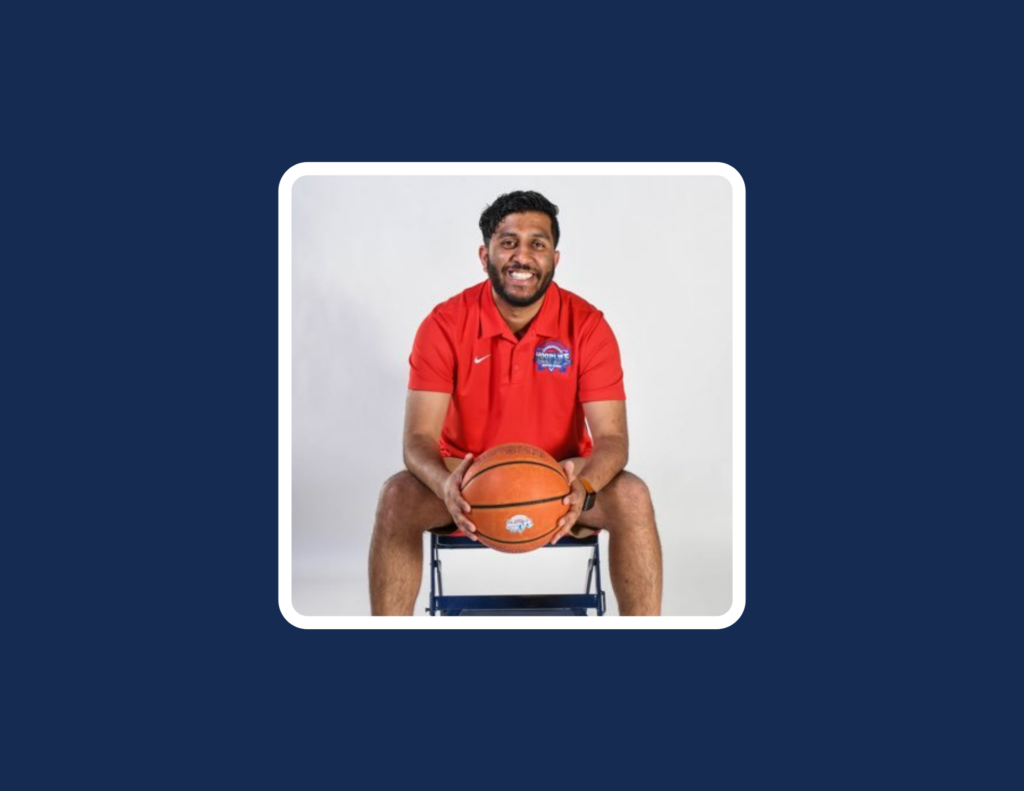
Monty Patel is the Head boys’ basketball coach at eStem High School in Arkansas. Monty also serves as the Head Coach for Team Arkansas TBT. He was previously an assistant coach at Jacksonville, North Little Rock, and Marion High Schools. He won a state championship at Jacksonville in 2020 as an assistant. Monty has helped more than 20 of his players play college basketball at various levels.
If you’re looking to improve your coaching please consider joining the Hoop Heads Mentorship Program. We believe that having a mentor is the best way to maximize your potential and become a transformational coach. By matching you up with one of our experienced mentors you’ll develop a one on one relationship that will help your coaching, your team, your program, and your mindset. The Hoop Heads Mentorship Program delivers mentoring services to basketball coaches at all levels through our team of experienced Head Coaches. Find out more at hoopheadspod.com or shoot me an email directly mike@hoopheadspod.com
Be sure to follow us on Twitter and Instagram @hoopheadspod for the latest updates on episodes, guests, and events from the Hoop Heads Pod.
Jot down some notes as you listen to this episode with Monty Patel, Boys’ Basketball Head Coach at eStem High School in the state of Arkansas.
What We Discuss with Monty Patel
- Finally getting a head coaching job at eStem after more than 50 previous tries
- “I’m not accepting losing, so we will keep doing this over and over until we win the drill.”
- “I wanted guys on our staff that our kids could relate to.”
- “I don’t want a bunch of yes man, I don’t want guys that just agree with me. I want guys to challenge me and tell me, Hey, this is not the right way to handle it.”
- The challenge of not having a home gym, school buses, or even a budget
- “We just kind of found ways to quit making excuses about what we don’t have and look at what we do have.”
- Setting the tone as a new head coach
- Keeping a level head through the wins and losses
- Getting advice from the head coaches he previously worked for
- Adjusting his coaching to the level of the players on his team
- “The sign of a good coach is they adapt to their personnel.”
- How he defined success through improved academics, making hoops fun, and fundraising
- Playing 3 on3 full court with his team in the off-season
- Developing the skills that players actually use in games
- Identifying player types in scouting reports
- “I want to fight with you a little bit. Like, I want that back and forth.”
- “If you are with people that know what they’re doing, you are fine.”
- His experiences coaching Team Arkansas TBT
- “I want to be able to see what’s going on in the court to where we can make the quickest adjustments imaginable.”
- “We are way too critical of other coaches.”
- “My kids know I go to bat for them, but my kids also know that I’m going to tell them the hard truths.”
Like this show? Please leave us a review here — even one sentence helps! Consider including your Twitter handle so we can thank you personally!

We’re excited to partner with Dr. Dish, the world’s best shooting machine! Mention the Hoop Heads Podcast when you place your order and get $300 off a brand new state of the art Dr. Dish Shooting Machine!

Prepare like the pros with the all new FastDraw and FastScout. FastDraw has been the number one play diagramming software for coaches for years, and now with it’s integrated web platform, coaches have the ability to add video to plays and share them directly to their players Android and iPhones via their mobile app. Coaches can also create customized scouting reports, upload and send game and practice film straight to the mobile app. Your players and staff have never been as prepared for games as they will after using FastDraw & FastScout. You’ll see quickly why FastModel Sports has the most compelling and intuitive basketball software out there! In addition to a great product, they also provide basketball coaching content and resources through their blog and playbank, which features over 8,000 free plays and drills from their online coaching community. For access to these plays and more information, visit fastmodelsports.com or follow them on Twitter @FastModel. Use Promo code HHP15 to save 15%

Your first impression is everything when applying for a new coaching job. A professional coaching portfolio is the tool that highlights your coaching achievements and philosophies and, most of all, helps separate you and your abilities from the other applicants.
The key to landing a new coaching job is to demonstrate to the hiring committee your attention to detail, level of preparedness, and your professionalism. Not only does a coaching portfolio allow you to exhibit these qualities, it also allows you to present your personal philosophies on coaching, leadership, and program development in an organized manner.
The Coaching Portfolio Guide is an instructional, membership-based website that helps you develop a personalized portfolio. Each section of the portfolio guide provides detailed instructions on how to organize your portfolio in a professional manner. The guide also provides sample documents for each section of your portfolio that you can copy, modify, and add to your personal portfolio.

Whether you’re a beginner basketball player looking for a place to start or a seasoned vet looking to level up your skills, your new go-to secret weapon is Train.
Train is a basketball training and education platform that gives you on-demand access to premium basketball courses created by expert coaches and trainers from around the world.
Want to get better at blowing by your defender? Learn setup drills with NBA & international pro trainer Marius Williams or how to use the punch drag with NBA trainer Kerry Darting.
Looking to level up your catch and shoot skills? Practice space shooting workouts with former lead female trainer for Kobe Bryant’s Mamba League, San Dixon.
Or if you’re just starting out, learn the basics of shooting and finishing at the basket from international champion, 3 time Romanian player of the year, and Train co-founder, Vlad Moldoveanu.
Train has 32 (and counting) actionable, expert-led, on demand basketball training courses that teach you exactly how to improve your ball handling, shooting, attacking, and more!
For a limited time, Hoop Heads listeners get 35% off monthly, annual, and lifetime plans. Click the button below to start a 7-day free trial and claim your discount.
THANKS, MONTY PATEL
If you enjoyed this episode with Monty Patel let him know by clicking on the link below and sending him a quick shoutout on Twitter:
Click here to thank Monty Patel on Twitter
Click here to let Mike & Jason know about your number one takeaway from this episode!
And if you want us to answer your questions on one of our upcoming weekly NBA episodes, drop us a line at mike@hoopheadspod.com.
TRANSCRIPT FOR MONTY PATEL – eSTEM (AR) HIGH SCHOOL BOYS’ BASKETBALL HEAD COACH & TEAM ARKANSAS TBT HEAD COACH – EPISODE 820
[00:00:00] Mike Klinzing: Hello and welcome to the Hoop Heads Podcast. It’s Mike Klinzing here without my co-host Jason Sunkle tonight. But I am pleased to be joined for his third time, which as we talked about, pre Pod Monty, I think that puts you near the top of the list. Monty Patel, eStem High School, in Little Rock, Arkansas. The head boys basketball coach. Monty, welcome back for number three.
[00:00:23] Monty Patel: They say third time’s a charm, right? That’s it. Hopefully we’re going to do it right this time.
[00:00:27] Mike Klinzing: Excited to have you on, and you and I talked a little bit before and when we got this thing set up, your journey to becoming a high school head coach. For anybody who wants to go back and listen to Monty’s first two episodes and find out a little bit about his background and the different stops that he’s had along the way, it has been quite an interesting journey for you to get to the point where you have your own program and you are a high school head coach. So just talk a little bit about what it was like to get to the top of that mountain and actually get the job that you had been thinking about for a long time.
[00:01:09] Monty Patel: I mean, it felt like a boulder came off my shoulders. I had a list of how many jobs I’d applied for and how many head coaching jobs. And up until ESTEM hired me, I was 0- 52. So now I’m one and 52 for how many programs. I tried to go interview and get a head coaching offer. So finally it happening was just a massive sigh of relief. I couldn’t say yes fast enough.
What was the interview process like? Honestly it was a lot more laid back. I guess once the applicants came in and the athletic director who knew of me, He had seen my name and thought I’d have a really good chance at it just from resume and where I’d been. And then he’d reached out to a bunch of people asking if, if I needed to be the head coach there and if they thought I could do it.
And a lot of my references really took care of me and that, and went in and interviewed and got the job about three days later.
[00:02:07] Mike Klinzing: And I know that from reading, just some of the background, the articles that were written as you got the job and after you got the job, that one of the things that I think led you to the fact that this would be a good job for you to take was the fact that you had some support from the administration in terms of them wanting the basketball program to be successful.
They didn’t have a football team, so it felt like you were going into what potentially could be a quote unquote basketball school. So just talk a little bit about how. Excited you were just about the circumstances around what you thought eStem potentially could become?
[00:02:48] Monty Patel: Well, it was actually cool cause even in the interview process, our principal, he didn’t know an overly good amount about basketball, but he started talking about what I would do and what I wanted to do.
And I started diving into more X and Os and I remember talking about icing ball screens, and he didn’t know what that was. And so I’m literally demonstrating between me, him, and our athletic director what icing a ball screen is, what the teaching cues are. And I think he respected the fact that I could go straight into a lesson without any kind of bumps of how to teach something.
And then just in there, he’s always big on second places, not where he wants to be. He wants to be first. He wants our program to succeed. Our assistant superintendent at the time, she had won a state title there on the girls side, so she knew how important athletics was and how important basketball was.
So there was just a lot of support coming in that, hey, we know that this program isn’t ideal right now and we’re hoping you can help turn it around and make it a spot that people want to be at. And that was really all I needed to hear, to say, okay, this is something that can be successful for me.
Cause I identify with it that this is an ideal spot. I wasn’t an ideal candidate for a lot of people, so let’s prove both of them wrong and try to get this job turned around.
[00:04:08] Mike Klinzing: When you get in there, and you’ve obviously been thinking about this moment for a long time, so you officially get the job, you’re there for the first week.
What does that look like? What are you thinking about? What are some of the first steps that you took? Obviously there’s a lot of excitement for you for the school. What were some of the first things that you felt like you had to do or that you did do in that first week?
[00:04:32] Monty Patel: Well, it’s actually funny. One of the kids on the team played for me in ninth grade at Jacksonville and he was going into his senior year at eStem and he had texted me and said, coach, come be the coach here.
And I told him, I’m not coming to eStem man. Like I’ve already applied there before I got passed over. I don’t think they want me, I’m not going. But I just told him, no man, I’m good. And he is like, coach, please, like we could be good. Blah, blah, blah. And so little did he know, someone else got in my ear about coming to get that job.
So I did. And me knowing the background of this kid, I told him, I was like, man, you don’t want me to be the coach at eStem, you and me will not get along because you have a lot of stuff that you need to clean up personally to be successful in the way I want to run the program. And that first week of practice was so much of tone setting of how disciplined we’re going to be, how we’re going to act, how we’re, how we’re going to be perceived by the public.
Because public perception is huge in the sporting world. And so it was just, we didn’t get past one drill for a week and it was literally make 125 layups in two and a half minutes. And the kids literally came to practice for a week and just, we stayed on the same drill. Cause I told them like, I’m not accepting losing, so we will keep doing this over and over until we win the drill.
When we win the drill, that drill is gone. And that was kind of just where we started our program. And I let the kids know like, look, there’s nothing here that’s going to scare me. It doesn’t matter talent doesn’t matter how tough you think you are. Like there’s nothing here that’s going to make me run away.
I’ve already felt like I’ve been through a lot, so I might as well come in guns blazing and just get after it. And that’s what me and some of the staff had started doing.
[00:06:14] Mike Klinzing: How’d you put together a staff speaking of that?
[00:06:16] Monty Patel: Honestly, it was so unique and I was so lucky. They gave me eight coaching spots to hire.
And that’s like a college. And so I’m sitting there like, I can hire who I want, I can hire who I need. And my first call was to Hunter Mickelson, a former player of Bill Self at Kansas. And Mike Anderson at Arkansas. He had just got done playing T B T, or no, excuse me, he was about to play T B T. But me and him had talked for years about what life after basketball looked like for him.
And he didn’t know. And I said, I have an opportunity for you to stay in basketball, but obviously you would have to retire. And within a week he made a decision to come be the assistant coach and interviewed had a buddy coaching N A I A that I knew he was looking for jobs in Arkansas. Cause his wife needed to relocate for school and convince him to come and be an assistant.
So I’d had my first two major hires that I wanted. There was two in-house candidates that we liked as assistants at the time that I need to fill them out a little longer. And interviews can be. You know, easily people can say stuff in an interview. So I wanted to see what they were actually talking about as assistant coaches.
And I just kind of went through picking out people left and right that I wanted, that I thought could build this place into something. And even took a couple shots on guys that we talk about it may have not had the best reputation in the world. That ended up I told them, I hope y’all are home runs, but they ended up being grand slams and we put together the most fun staff I could have ever been on.
We have a blast. We turned into a family. We enjoy each other. So it’s been great because it’s not like I’m going to work anymore, it’s just we’re having fun.
[00:07:57] Mike Klinzing: What are you looking for in an assistant? When you think about the one or two things that for you are non-negotiables, obviously you spent a number of years as an assistant coach and clearly in doing so, you learned about what makes a good assistant coach.
But now as the head coach, you’re obviously in a different position where you’re going to be those assistant coaches boss, you’re going to be able to direct and figure out how to utilize their strengths. So what are the things, when you think about a great assistant coach, what were the things that you were looking for as you tried to put together your first staff as a head coach?
[00:08:32] Monty Patel: I mean, I wanted guys that our kids could relate to and everyone tries to perceive coaches and teachers as the perfect human beings. A lot of people went through a lot of stuff. So even some of the guys on our staff, they’d had a little rougher background that our kids could identify with if they needed to on top of a different background.
And so a big thing was just how many. Different coaches can our kids relate to from a different background and then can they bond with, because I mean, even I know as an assistant coach and now a head coach, every player’s not going to like me and that’s fine. They need to like someone on staff that they trust going to and I thought we did a good job because a lot of our kids were just broken up into who they really wanted to go speak to all the time versus always coming to me.
And I thought that was important because I wanted guys that Sean Forrest at Memphis, him and I talked and asked him what he was going to do and he got a head coaching job. He’s like, I want people around that. As soon as work is over, I’m still okay going to dinner with. And that’s kind of the mindset I put together with everybody that the kids still want to hang out with after practice ends.
And they did. They’d still go up and joke with the coaches and hang out and had a little carefree attitude around us because we turn into family.
[00:09:46] Mike Klinzing: I really like that Monty because it’s something that I don’t know if I’ve ever heard anybody express it. Quite in that way. But I think that it’s a really, really well taken point that not every kid is going to feel comfortable, especially look as the head coach.
That relationship that you had as an assistant, as being the confidant or being the guy that the players go to, that’s a little bit harder to establish as the head coach who ultimately controls the playing time, which is what players are most concerned about at some point. But I never heard it expressed where you wanted to make sure that you had somebody on your staff for every kid to feel comfortable that they were able to go to.
And I think that’s a really, really good point. And I think it’s something that, man, if you could get that in every program, if every program had. At least one coach that a player felt comfortable going to. And that might be a different staff member, right, for each kid. Because there’s different relationships and different personalities that mesh better than others.
But I think it’s just a really good way of looking at it that if we can have somebody in place for every kid that they can feel confident and comfortable going to that now you really have the opportunity to build that team comradery and that family atmosphere. And as you said, being able to hang out, not just during basketball, not just on the practice floor at games, but once the ball stops bouncing, you can still hang out and be comfortable both as a staff with each other and then talking about the relationship between players and coaches.
To me, that’s a huge piece of it. And it sounds like that’s what you were able to do, especially since they were so welcoming and able to, and giving you that ability to hire eight coaches. I mean, that’s almost unheard of.
[00:11:30] Monty Patel: When people ask about eStem, when people see us, they’re like, y’all roll deeper than anybody.
And I mean, we all wear the same gear. We know the game day attire. So you know that it’s like an eStem mafia of some sort that we’re all here together. So it’s, I mean, that’s the fun part. I mean, even the bigger thing with assistant coaches, which I wasn’t afraid of, cause I’m very comfortable with who I am at this point of life, was I don’t want a bunch of yes man, I don’t want guys that just agree with me.
I want guys to challenge me and tell me, Hey, this is not the right way to handle it. Or this is, this is something you could do better from my perspective. Cause I mean, I ask my assistants this question all the time. I’m like, yo, when I was an assistant, I always felt like there was something I could do better than the head coach.
I’m like, why is my head coach doing this? Why is he doing this? Y’all tell me what y’all feel, y’all would do better. Because at the end of the day as an assistant, you’re picking up all the things you want to do and what you don’t want to do. So tell me the things you wouldn’t do. So I can reflect on it and say, okay, here’s why I do it and this is where why you should agree with me or you are right.
Let me flip my methods. And so I think we were just able to put that together really well.
[00:12:39] Mike Klinzing: Yeah, that’s a really good point. And I think it’s one that doesn’t always take place in terms of you get somebody in who’s an assistant coach and yeah, it’s if you’re just always saying yes to the head coach because maybe you’re intimidated by that head coach or maybe you as an assistant coach, you’re just not confident enough to speak up and voice your opinion.
I think when you get into that group think right, that’s kind of what you want to avoid, where everybody just is sort of rubber stamping everything because then you don’t grow and nobody challenges you. You don’t grow as a coach. You don’t, as you said, you don’t. Look inside, internally at yourself and try to evaluate, okay, is what I’m doing right.
And for you, I would have to guess that in the time that you’re preparing to be a head coach in the course of the 52 interviews that you had previously, that you didn’t get the job, you obviously have ideas and thoughts about what you envision your program looking like. And so when you take this job and you get into that chair and you start trying to take your vision from being a theoretical one that’s on a piece of paper or on a computer file, or in your mind, and you’re actually trying to put it in place, what were some of the biggest challenges of going from the theoretical program that Monty Patel wanted to build to building the actual program?
What was the hardest thing or two that maybe you had to face early on?
[00:14:05] Monty Patel: Well, I mean, here’s something crazy. How many basketball schools do you know? That are at the five A level when we go to six A as the highest, that don’t even have their own gym. Not many. And so the one of the biggest things and why this was a job that a lot of people just weren’t interested in was we don’t have our own game gyms.
We’re on the campus of U A R, which provides a lot of benefits, but one of the disadvantages, we don’t have our own gym. We don’t have somewhere to play. We play and rent out a gym where we can only have home games majority on Friday nights. Otherwise we’re playing road games. We don’t have school buses.
So our kids have to figure out how they’re getting to the games versus us busing there. We didn’t have a budget. There were so many things in this program that when I got the job I was like, yes, I know this is a negative. I know this is a negative, but the positive is I have this job. What kind of people can I call?
Who can I ask for help? And what can we do? And I mean, even in the interview I had stated like even being bold. I plan to be here three more, three years or a little more. But I want to know that we have plans for a gym and that’s what we’re working on right now, is getting our own capital funding secured.
So we have our own place. But you know, the benefits of being on a college campus is they have a rec center. We get two courts to practice on every day. Traditionally, most people have one court, six goals. We have two courts, four goals, so we can go a lot more groups of three on three or four on four.
And I have three varsity assistants that I can divvy up a court to and say, Hey, this is what we’re working on, let’s get this together. So we just kind of found ways to quit making excuses about what we don’t have and look at what we do have.
[00:15:47] Mike Klinzing: That has to be a huge challenge of trying to get guys to be places on time. So what do you do with practice? Like, how far are you away from school? So when school ends, what’s the procedure for getting everybody to practice? How does that work?
[00:15:59] Monty Patel: So we are on ALR campus, like our high school is, so we can just walk to the recreation. It takes five minutes. So we get there and we get everything organized and set up. I walk the kids over, so nothing crazy happens on the way. But you know, a positive also happened too, was we figured out, hey, we’re already in the classroom. I have a projector, we can watch film now, then just go to the court.
And so we just found different ways to maximize as much time as we possibly could.
[00:16:28] Mike Klinzing: Yeah, that makes sense. I mean, obviously there’s challenges with not having your own facility, but conversely to be able to have access to a college facility and as you said, being able to have two full courts and allows you to get.
More work in, you could do more small group work, you can do more player development. I’m sure you can do more small sided games, which is a tremendous benefit to, to teaching kids and, and helping them to, to improve their basketball IQ and improve their ability to play. How’d you handle just getting to know the players in those early days after taking the job?
What was the process for going through and whether it was meeting with them, calling them on the phone, meeting families, how’d you go about just introducing yourself and really getting to know the people who were going to be obviously key components to your program?
[00:17:17] Monty Patel: I mean, honestly, I think it just happened real naturally.
Obviously knowing one kid in the program, he vouched so much for me to the kids, which I’m always forever grateful for. And then just kind of picking a kid’s name and like, like learning the kid’s name, talking to him about this and that. Some kids you knew from aau, so you talked to them about how the circuit’s going, how this is going.
And just, it just really just happened Supernatural. You know, when we’re correcting guys like, hey address them by their name, talk about it, say this can make you better. Obviously some of the kids already knew just from Twitter and Instagram, who I was luckily from just being an assistant coach and being involved in AAU and T B T and all that good stuff.
So it was just more like, Hey, they’d have some questions and we’d talk about it. And then I just told them like, one thing you’re never going to find me do is just like lie to you like there’s too much stuff on the internet now that you could find out the truth. There’s no point lying to people. I don’t know why people still do it, so just ask me and I’ll be an open book about what you want to know.
[00:18:17] Mike Klinzing: Yeah, that honesty piece I think is really critical that. Players know that you’re going to tell them the truth. Players know you’re going to take responsibility. Players know that you’re going to be vulnerable and admit if you make a mistake. And I think once you do that, it really allows you then to have a more genuine relationship with a kid, which I think ultimately allows you to coach them harder and be more demanding because they know where you’re coming from, they know the background, they know who you are.
And once that happens, it just feels like you’re well on your way to building the kind of team comradery and the team connection that ultimately allows you to have more success when you start looking at the players that you have in your program. Obviously East Stem, a charter school, what’s the process for kids enrolling at East Stem?
And just explain a little bit about how your student body is put together and then how that relates to who you get to come out for the basketball team at any given point.
[00:19:22] Monty Patel: Well, so it’s open enrollment for eStem so kids can get in. The biggest problem we faced last year was that our governing body didn’t allow kids to transfer into a charter school past their start of their sophomore year without sitting out a year.
And I thought that rule was very handicapping to a charter school because they don’t give charter schools a district. So if a kid from Ohio wants to fly in every day to eStem, he technically could and play and be legal. So they were like, okay, let’s not let them come after sophomore year. And if they do, they have to sit 365.
Luckily, that rule changed this summer, which had kind of had some good connections that told me, I think this rule’s about to change pretty quick. So if you’re at this place, this could benefit you in your job. And luckily it did change. So I think that helped a lot. And then we’re open enrollment, kids can come in.
They, they vet the kids that come in to make sure that. They would fit in at eStem. And so aside from that, we just we had our tryouts, which this is wild. We have two junior highs. And me, this was young and dumb, just thinking we can knock two of those tryouts out on the same day. We have two courts, so I’ll just split them up.
We had 130 kids come out Wow. Between two junior highs. Wow. And I sit there and look at my assistant. I was like, I’m not saying this word lightly. And it might just be a lot of quantity, not quality, but this could be a gold mine if you got this many kids coming out. And then even for varsity, we had 56 tryout.
And just because we did a one day tryout, we cut it to 37. And that was a jv, a varsity. And then knowing Kids aren’t going to hold up their end of the deal, or they’re going to see the writing on the wall when it comes to playing time, things like that at some point that they may not feel like they want to be a part of it.
And we ended up dropping down to about 25, 26 pretty quick. And it ended down to about 1415. But we had the kids we needed there and the, some of the kids thought, Hey, this is going to be easy. It’s a new coach, I can hoop. But then when I go sit in on their class and their heads down, or they’re on their cell phone and I take it, then they’re just like, okay, I don’t want to do this if this is how much you’re going to be on me to be doing the right thing.
So just again, more back to tone setting than anything.
[00:21:44] Mike Klinzing: What was the feeling like in the pit of your stomach that first time you step out on the floor as the head coach?
[00:21:50] Monty Patel: I think you’d probably have to ask my assistants that more. I do remember just I knew we could beat the team. I knew we were playing smaller schools earlier.
And so in my mind I’m thinking This, this and this. Like, but we should win the game. Like it’s a way smaller school than us. They graduated everybody and end up being a close game. We end up pulling out by like 12 or 15 and I mean, I told the coaches like, look, I know what we have in our locker room.
I’m in the same conference where I’m coming from. These wins probably aren’t going to happen a lot, so let’s just let the kids enjoy it as much as we can early. And then we just fight whatever fights that come later. And I mean, after that game we rolled out and started off a no. And you had guys coming, kids coming to our games and people, oh y’all are awesome.
Y’all are this. And I’m sitting here thinking, man, we beat up on a bunch of smaller schools. Some of these games have been close, we lose the next game. We go eight and one. And I had to suspend three kids for not holding up their end of the deal. Then we start off I think 12, or I want to say we started off 11 and one and ended up.
No, 10 and one and ended up 12 and 24 by the end of the year.
[00:23:04] Mike Klinzing: What lessons did you learn from both that early winning streak and then from the more difficult end of the season?
[00:23:14] Monty Patel: Oof, where do I start? One of the biggest lessons I learned was just trying to keep a level head. The wins are great, the losses suck, don’t dwell on it too much.
I found my spot myself in a tough place. Cause you know, it was the first year I’d come to terms with that. I like the team. I was a part of Wass, not going to be in the state tournament and like in postseason play, I’d never been a part of that. And so I was just so disappointed in myself. I was watching more and more film.
I was having the assistants breakdown more and more. We were trying to find just any which ways to win and we told our kids like, look. I’m not going out without swinging. Even if we’re out of the state tournament, I want to mess up other people’s seeds. I want them mad at us. We have to fight.
And that’s the mentality we tried to put in. And there’s so many, if this, then this would’ve happened. I mean, we were down 20 to a conference team two times. We tied it, we took the lead, just couldn’t finish. We go into overtime with another team. We play that same team later and our best player gets hurt and we only end up losing about 10 without him.
And it’s like, how many of these games could we have won? I mean, we were a possession, two possessions away and every game from having a chance to be a five six and then maybe having some confidence to win some games. I mean, we played Jacksonville. We were up 17. And a kid that’s played AAU for me for two years goes for 32 in the second half.
And I’m frustrated as could be. And he’s texting me after the game Coach, thank you so much for helping like, I’m like, bro, stop texting me right now. I don’t want to talk to you like I love you to death, but just leave me alone. But you know, trying to keep a level head. I didn’t do a great job of that.
That’s something I regret. But I try to remind myself, just be levelheaded when we win, be levelheaded when we lost, lose. Enjoy the time and enjoy the process.
[00:25:05] Mike Klinzing: What was different about being a head coach than what you thought? Was there anything that you thought it was going to feel or be one way and it turned out to be something else?
[00:25:20] Monty Patel: Really just more of the admin work falls on you. Like I thought I did a lot of the admin work and then some random stuff will pop up and having to make decisions about kids suspensions, things like that. Talking to parents about it. Ultimately, a lot of the experience I had luckily had me prepared.
And if it didn’t, I’d always give myself a cushion to call someone that had been in it longer than me. And like some old mentors of Coach Rice, coach Joyner, coach ple any of those guys, coach Cartwright, like ask him like, man, what did y’all do? And even coach Clayborne one time I’d called him and he was like, man, just, it’s not always that serious and you can’t get overly frustrated because he knows I do.
And I just keep trying to take as much advice from the older guys that have got to do it for a little while or been around it a lot longer. Just how to handle myself.
[00:26:09] Mike Klinzing: Yeah, it’s a good approach. Right. To, to advantage of people that you’ve built a relationship with. And utilize their knowledge and what they’ve been through over the course of their career.
To be able to impart that knowledge to you as you’re going through it for the first time. I could see where that would be tremendously valuable. As you’re moving through that first season, what was something to kind of flip the question on its head, what was something that was pretty much what you did expect and kind of went the way that you anticipated it?
Anything that fits that bill?
[00:26:48] Monty Patel: The rough season, like honestly there’s a coach Marty Levinson. He was at s a U Tech Division two Juco and turned into a real good friend and someone I just talked to and I told him like, man, we’re just not going to be very good this year. Like I know that blah blah blah.
And he’s like, well if you know you’re not going to be good, don’t lose your mind on the kids. Cause you’d be a fool to go in there losing your mind on kids that you know just aren’t to the level of kids you’re coaching. And so I was like, man, that’s actually great advice cause like why am I going to yell at a kid or go be mad at a kid and for not doing this, this and this, when really he’s never been taught these skills at this high of a level.
You know, it was our first year in five A too, but that’s really why I took the job. Cause I wanted to be him the toughest conference in the state. So, I mean, I knew the losing was going to come this year and I we try to put a mindset in the kids. We’re not going to play victim to any of it. We’re going to keep fighting.
Change, change style of play. I made sure we did that as soon as I realized, like, what, we don’t have what the kids think we have, but we don’t want to kill confidence. So let’s slowly change to a different style of play. Cause I want to play fast, but. If we play fast, we were getting toasted. So I wanted to limit possessions as we started getting further and further, and it started getting us into games more and more and running a little more offense and running more continuity stuff versus free flowing stuff for the kids to make decisions.
And so just little stuff like that you just figure out on the way.
[00:28:19] Mike Klinzing: Did that make you feel uncomfortable to sort of adjust, thinking again the way that you’d want to play in an ideal world with the ideal type of personnel having to adjust that? Was that uncomfortable in anyway? I don’t know if that’s the right word, but just as you’re making those adjustments, what did that feel like?
[00:28:36] Monty Patel: I don’t know if it, yeah, I don’t know uncomfortable as much as like was I excited about it? No. Right. Yeah. Was I like, okay, hey, did that make you feel, the sign of a good coach is they adapt to their personnel, not the other way around. And so I adapted to what we had. We, I had to make decisions for kids on the court.
We had maybe one, two guys that could make good decisions more often than not. So let me adjust our offense. Let’s go to more screen the screener stuff. Let’s go to more continuity offense versus free flowing and eventually get to that point. But we still have all this other stuff as a cushion to get into, to change the pace.
So we just I talked to my assistant coaches and just asked what their opinions were. They agreed and they helped me look up offenses that I really wanted to run that I thought still fit the shots election we wanted to take. And then we just adjusted. And the kids the kids learned more and more basketball through the whole year, which we were really happy about.
Like they knew terminology and they knew these things. So it was easier to kind of teach them more and more ways to get open.
[00:29:43] Mike Klinzing: If you were to sit down with somebody and. Have a discussion. They asked you, was your first year a success? Or how would you define the success that you had this first year? Cause some people might look at it and see your record and be like, oh that year wasn’t a success.
But when you look at it from your mind, from your perspective, what do you, how do you define the success that you had in this first year?
[00:30:11] Monty Patel: I mean, I thought it was a success just in terms of how we cleaned up the program. I inherited a 2.2 gpa. We turned that into a 3.2 the very next semester of the semester after we turned it into a 3.4.
We had kids buzzing in terms of wanting to come to games. We found fund, like people that wanted to put money into our account for fundraisers. I mean, we had people talking about they wanted to come to Estem, to our kids. Our kids were our biggest recruiters when it comes to like, hey, Y’all should come to East him and play for coach and we have fun here.
And so I thought that was successful. Even when we’re losing, you don’t see a lot of kids these days especially stick around for that. You see more kids run, but these kids were like, look, we lost and we had fun. I can’t imagine what happens when we do win. Right. But I mean, I thought it was a success.
Cause you know, Mike Neighbors said this to me a while back was, you don’t want to start having early success too soon because then people expect that to happen more often than not, versus organically just building up, up and up. And so, I mean, we go 12 and 24, I mean, I hope we can go 20 and 14 and then maybe the next year we go 30 and six and, and you know, any other wins that come on top of that is just bonus.
You know, if you go next year, if we win the state title, that’s just great. But. We wanted to naturally build like something that’s sustainable. And that’s what I think we did a good job of, of what our tone is and the kids telling the young kids that are coming in. Coach Patel hates when you’re late to practice.
Coach Patel hates when you’re late to class. Coach Patel’s checking your grades every Wednesday. You got a hundred buries for every f And real quick, the kids can rattle off everything that goes on. So I think that’s where the success was. And then hopefully it takes care of it on the court. Cause I just think the more often you try to hold kids accountable, the more often success comes because then kids aren’t disciplined as well.
[00:32:05] Mike Klinzing: Absolutely. I don’t think there’s any doubt about that. That if you can establish that from yourself as the head coach and then as you said, once the players start to police that, that’s really when you know you’re headed in the right direction with your culture. Since this season ended, obviously you’re looking ahead to next year.
What are some of the things that you’ve been doing since the season ended to continue to point your team in the upward trajectory? And that could be in terms of culture, that could be X’s and O’s. You could take that question in whatever direction you want to take it.
[00:32:40] Monty Patel: I mean, really when we had our two week dead period in terms of like, Hey, we’re not going to the gym, we’re not doing anything like, y’all get away from basketball.
I’m going to go to the state tournament. I’m going to go to the NCAA tournament. I’m going to kind of take a little break as well. Just, we’re not going to get in trouble, we’re not going to do those things. The biggest thing I did was start reaching out to so many people that are smarter than me about what to do to develop our kids.
Cause personally I hate skill development. I especially hate watching guys dribble 50 times through a cone to get a layup. Like, it drives me insane. And, and sometimes it gets so repetitive, pound it 10 times crossover, pound it 10 times, and I just don’t want to watch that. Like it bores me. And so I talked to so many of these guys John Beck. John Beck is a skills trainer.
[00:33:35] Mike Klinzing: We’ve had John on, yeah, John’s with us. John,
[00:33:38] Monty Patel: John Ad Mara, who was formerly with Baylor, won a national championship with them, went to the Phoenix Sons, guys like them. Just so many different college coaches I just reached out to, what do y’all do in the off season?
And the more I heard the same thing, the more I’m like, I think this is what I want to do. And it, it just turned into every day is small-sided games and that’s it. And, and we’re going to figure out how to do it. So Mondays were our one-on-one, and then sometimes one-on-one days. Then Tuesdays would be two on one, but then two on two.
Wednesdays would be three on two to three on three, and then Thursdays would be intramurals and it’d be full court three on three, which is something I stole from the Miami Heat. And just an article I read of what they do with their guys that aren’t playing in the season. And so we just started doing that and literally a month in, we saw some of our guys who we would’ve probably projected that we’re going to cut, improve so much.
We’re like, yo, he might mess around and play. These guys are getting better because now it’s not a cone that they’re going against. Someone’s actually guarding them. They’ve have to get downhill, they’ve have to score or they’ve have to be able to get their shot off. Cause we have one kid who shot just takes a while to get off.
And so when we’re doing some of these small sided games to catch and shoot on a closeout, he’s speeding up his shot and he’s getting used to the repetition. So that’s kind of where, just where our focus went and still having fun. I mean, they, they come in instead of stretching, we just start playing one on one to two on two to three on three.
I’ll let them do it for 15 minutes. If you lose, you got three down and backs and 10 pushups and then someone else get on and we had four half courts to do it in, so everyone should be playing. Right. So just all those things just added up to, that’s what our skill development is and us trying to teach them how to be basketball players.
I mean, we ran. 37 sets this year, 37 quick hitters. And I’m like, that’s too many. Cause I don’t want to make decisions for the kids all day. So let’s teach them what space is, let’s teach them how to create space. And you know, even John who empowered me a lot in our conversation was just make up a game and, and put the rules on it and let them play.
And essentially after the first week of it looking ugly, it started looking better and better. And now we, we thoroughly enjoy it. What are the contact rules in Arkansas? Forget really we, up until this week and next week, like it goes from dead two weeks, the week of 4th of July and the week before you just can’t work out your kids.
And then you have three days on Christmas break. You have to give them off. Aside from that, you can play every single day.
[00:36:11] Mike Klinzing: Gotcha. Okay. So let me ask you this. So when they’re doing and playing the small sided games, What is, how much are you talking about the decisions that they’re making within that, and are you going back to, okay, they’re playing for 30 minutes, then do you stop it at that point and talk about it with the team, with individual players?
Just how do you incorporate the coaching aspect or the instructing aspect of what you want to do within the confines of small sided games? I think that’s something that a lot of coaches struggle with is, okay, we’re doing this, we’re working on this. I don’t want to interrupt the flow of the practice.
I don’t want to interrupt the flow of the development, but yet there are points or things, teaching points that I want to make. How do I do that? So what does that look like for you in, in some of these summer sessions that you’re talking about?
[00:37:07] Monty Patel: A lot of times we didn’t stop them in terms of like, they make a mistake.
They would hear a word turnover and, and a lot of kids, I’m like, I’d ask them just when they’re on the side waiting their turn to get back on the court. Cause we’re just going continuous a lot of times. What’s the word you hear me yell the most? They’re like, turnover. I was like, then that means you need to make better decisions if you’re hearing it the most from me.
Right. Or set the screen. Set the screen if it’s our big guys, and then make contact like they hear the same words over and over and over that they eventually can tell you. But then when they’re off to the side and they’re waiting and watching their other teammates go at it, that’s when I kind of just pull them over and talk to them.
Like, Hey, you can do this. This is what we expect now. Get back in there. Try again, try again, try again. We tried our best not to stop it a lot. Usually on the one on zero days, that’s where we could stop and just make teaching points of different stuff we wanted to do by the time we got to three on three, as long as it was super competitive.
They’re going to make mistakes in a game, right? And I don’t have more than five timeouts, so you might as well let them start making mistakes and figuring out how to get through it. And then talking to them on the side, on the fly, and then they have to get back in the drill. So just essentially just trying to get it in as quick as you can and letting them get back on the court.
Cause you can’t basketball’s random and everything in the small side of games is going to be random decisions and random, random closeouts, random attacks. So just try to implement that as many times as we can.
[00:38:34] Mike Klinzing: Yeah, it makes a lot of sense. And I think the benefit of small sided games and putting your kids in a lot of those situations, is it the learning translates Because the more you can make your practices and what you’re doing, like the game, the better the translation’s going to be.
And to your point, you do see a lot of people that. Are defining skill development by just going against the static cone or I would agree with you when you talked about seeing a kid make 10 dribble moves and then go take a shot. Well, there’s really nobody in the game that gets to play that way. And this is a discussion we’ve had recently with a couple different guys in the pod about just how do you develop players?
And really the higher the level you go, the more specific the training becomes, where you think it would be the opposite. Like you’d think, Hey, I’m an NBA player, I, I want to be able to train and have every skill in the book, and I want to be able to do everything. But the reality is, is that what most N B A players do is they excel at one or two things.
And that’s not to say that they completely ignore the rest of their game, but there are very few guys like LeBron, who just. Coach says, okay, here’s the ball. You’re going to orchestrate everything. You’re going to have the ball in your hands. You’re going to be able to make every decision. You’re going to be able to get us into whatever it is we’re going to get into.
Or you can go get your own shot. There just aren’t very many players that are like that. More players have to fit into what their role is. And I think it’s just interesting when you start talking about how do you develop players? I think you develop players. Yeah. They have to work on their skill clearly.
But think about it. We’re talking about not skills in isolation. We’re talking about skills within the confines of the game.
[00:40:24] Monty Patel: Sure. And think about this. I told one of our kids this the other day, I was like, all the dudes that everyone used to go pick in 2K that could do all these crazy things aren’t in the NBA anymore.
Yep. You’re replacing JR Smith, Jamal Crawford, Isaiah Thomas, all them dudes that were like, Like come off the bench, get you 50 points by dribbling up a bunch and just throwing up shots that went in with guys like clay Thompson, a guy like Isaiah, Joe, a guy like Joe Harris who are all multimillionaires and that’s what the NBA is getting to.
They’re tired of watching everyone just dribble like crazy. There’s very few that just get off a bunch of dribbles. I mean you got your point guards with the ball in their hands and they resort to iso, but more often than not, they’re trying to get into their pick and roll action and then find where whoever’s open off the coverage.
I mean, the kids, kids don’t realize that, that you don’t have to do all this crazy stuff anymore. I mean, a joke I made to one of our kids was, what do you call an n NBA three-point shooter? And they’re like, I don’t know Klay Thompson. I was like, nah, you called the multi-millionaires. That’s what these dudes do now.
Yep. And so just trying to get off those skills. But even Steph Curry, the question goes around, is he a point guard or is a shooting guard? He’s a guard that can handle the ball and relocates. That’s what y’all need to do. Relocate, make space. And you know, we emphasize that a lot. We’re lucky at school.
We have this time on Wednesday and Thursday where I can have pre film study during school. And so like during class times, so we have our whole team in there and we watch a bunch of film of different games whether it be drills, we’ve had speakers come in and they all say the same message or we show the same message so it gets repetitive.
[00:42:10] Mike Klinzing: Bringing in those outside voices I always think is helpful for people to be able to hear something else. And what’s your philosophy on film? How do you go about utilizing it? What do you do with the team? What do you do with individual players? Just explain a little bit about how you use film in your program
[00:42:26] Monty Patel: I told myself I don’t want to watch film longer than 15 minutes. When it comes to the kids, when it comes to me we got to a point where it was the kids get a playlist sent to them. What can our offense do to score against this team? What kind of defense does this team run? And we’d show them clips and they’d last two, three minutes and be on their phone.
Here’s what they run on offense. Here’s where we can have success on defense. We put in little notes that the kids would read. Sometimes I would be worried that the kids didn’t read it, just because kids sometimes don’t take film seriously. So in some of the comments I’d put, and then text me this word.
So if you’re 12 clips down and then you see, hey, text me the word three. They have and then they text me. Then I know that they watch film. But usually whenever I did that, I also figured out the kids will tell everyone in their separate group chat and I’ll get a bunch of frees in about five minutes.
But we ended up switching and at the beginning, or I say switching, we started the year off and finished the year off for the most part. Sometimes the consistency lacked of Google forms and questions about scouts. So we would go through scouts, we would go through top three players, then top three plus two, then top three plus the two, then plus the three off the bench.
So then when we go over it continuously, they know who the top three players are. Then they know who the starting five is. Then they know who’s coming off the bench. And then they take a Google form quiz. 10 questions got to the point. If you couldn’t make an 80 or better, you owed me a mile. And the kids started studying their, their scouting reports and paying attention to film and, and you start seeing a lot more stuff going on.
And then even on the bench, we gave our kids the scouting report. Heck, I gave our student section the scouting report, and it was a condensed version, but it’d say whether it was a clay, a Kobe, or a Abin. And our kids would yell it out off the bench. He’s a Klay. He’s a Klay. Close out, close out.
And I mean, I told our guys like, look, everyone’s have to role. And right now you guys on the bench that aren’t playing a lot, your role is to call this out. And, and we got to that point to our film and everything mattered. It just, it didn’t translate to wins this year, but we told them the winning is going to come over time when we get better and better.
But this is what it takes. This is how high level we want to be.
[00:44:47] Mike Klinzing: What are you most looking forward to next season?
[00:44:51] Monty Patel: Honestly just success and hoping we have more on the court in terms of wins and losses. The other stuff I just think that naturally comes to us and our staff. We have good morals, we want our kids to do, right?
We’re all in it for the kids, so we’re just trying to clean up little stuff that we would like done better. But I hope the kids can see the big picture. One of our seniors who I’ve built a good relationship with Justin told him like he’s a big shoe guy and I turned into a shoe guy this year mainly because I wore a couple when the kids are like freaking out and I found someone that could get me shoes.
Nice. So I told him, I was like, Justin I’m not afraid to tell our kids like, Hey, Justin is our best player. So Justin, if you’re our best player, you’ve have to get us into the state tournament. If you get us into the state tournament, you sign a college scholarship, I’ll buy you a pair of shoes of your choice that I can get my hands on.
And you know, like we tell our kids, like, we shouldn’t shy away from people who are our best players, but our best players also get it the worst. He hears me more than anybody else in our program. Nobody in our program can tell you otherwise. Like, I am frustrated, I’m furious. I go to him first. And you know, even I sent him the clip of Spo talking about how he runs to confrontation and I figured out that’s me.
Yeah. I want to fight with you a little bit. Like, I want that back and forth. I’m not afraid of you to say something to me like war isn’t one by saying nice things to each other, it’s like getting after each other. So just little things like that we’re hoping that can translate us to wins and translate us to.
Just starting to show that we’re not a joke of a program, that we can actually be successful in this conference and maybe have a chance to get into the state tournament. I don’t want to limit our goals. Like obviously I told the kids, at the end of the day, I want to win a ring as bad as anybody else, but we have to take baby steps to get there.
[00:46:45] Mike Klinzing: Makes complete sense. And based on everything that I know about you, I would say that that’s going to happen sooner rather than later. Let’s talk a little bit about some of the other things that you got going on. Let’s start with aau. Tell me a little bit about your involvement with aau, where you are with that, and just what you enjoy about the AAU part of it.
[00:47:04] Monty Patel: Crazy thing is, the day I accepted the e STEM job, I got a call that we let our AAU director go and they wanted me to take over in the interim. And I just accepted the job, so I’m like, now I didn’t have a head coaching job or any kind of real job like this that I wanted. And now I’m a director of an AAU program and I’m the head coach here.
And so I took over as director. I’m coaching our 17 U team. I got one of my closest friends and coaching friends to be my assistant director for it. And now we’re just navigating, we got ourself on the new balance circuit. So we’re doing that this year and that’s been awesome. It’s been a really pleasant treat for how good the teams are and the amount of coaches that have been there and how innovative Matt Reynolds has been about it.
So I mean, I would say we’re having a successful year. The problem in Little Rock is there’s too many AAU teams, so it’s hard to monopolize the area and getting the best players all the time. But our biggest thing that we came to terms with was we don’t want the best players. We want kids that want to be here, and then they’ll turn into really, really good players.
From last year to this year, right now, our first senior class officially graduated, boys and girls and every single player signed. And so right now we’re at a hundred percent. And I think that’s something great to brag about for us just through the connections that we all have on the boys and girls side.
But it’s been fun. You know, I know it’s a lot amongst all the hats I wear right now, but I can still manage it. I don’t know what happens when I get married and when I have kids and which one of these I have to give up. But right now I’m enjoying it. I’m a little stressed a often, but it’s worth it and I’m just trying to balance time as best as I can.
[00:48:51] Mike Klinzing: What’s biggest misperception that the average high school coach has about AAU basketball?
[00:48:56] Monty Patel: That the kids don’t learn anything. I mean, it truly is more important to me and what I tell our kids in AAU when I tell our kids in high school is, Or if you are with people that know what they’re doing, you are fine.
If they can tell you if, if you’re getting yelled at by a coach and he can’t tell you what you did wrong continuously, you’re probably not playing for the right person. It’s easy to yell, play defense, play defense, play defense. Coach. What am I doing wrong on defense? Are my, are my feet not pointed the right way?
Am I giving a middle? Am I giving a baseline? Am I covering the ball screen incorrectly? Those are the things y’all need to get feedback on. Yes, sometimes playing hard is something a coach has to yell at you because they don’t think you’re playing to the best of your ability or the best effort. But overall, like, tell me what I’m doing wrong.
And if your AAU coach isn’t, you’re probably not in a good program or a program you need to be in. As bad as that sounds, be with people that are teaching you basketball, that are holding you accountable. And more often than not, you’ll be fine. All right. T B T. T B T what do you want to know? How much are you still enjoying it?
[00:50:13] Mike Klinzing: I know last time we talked you just, you had nothing but great things to say about the guys that were involved in it and how you initially got connected to it and just how you felt. It was such a privilege to be able to be a part of that and to be selected to be the head coach for that Arkansas squad.
So are you still feeling the same way? And I guess just expound on what you love about being a part of that whole experience and specifically with Team Arkansas.
[00:50:48] Monty Patel: So did we talk last year after the tournament or before the tournament? Before, I believe. Ok. That’s what I thought. So going back to last year.
We recruited out our team. We ended up making a Sweet 16, and I kid you not, it’s the highest of highs in the world in those games to me, all like my assistant coach Mickelson, he’s used to these games. You played at Phog Allen like you played at Kansas, you played at Bud Walton, you played at, you did all these things.
And me, I’m sitting here, my heart rate’s at a high, like, you’re coaching pros, you’re doing this, you’re doing that. And I mean, it’s, it’s actually so much fun, man. I learned more there in those two weeks than I do anywhere else. And it’s not a shot at anybody else. It’s you’re with guys that are like, I’ve luckily put a staff around me that are all division one, division two grad assistants to pros coaches, and you just learn so much more pickup stuff in these meetings.
So it’s, it’s still so much enjoyable. I mean, last year we win the first game by three. Then we, we make adjustments in the second game. We end up winning by six, I want to say, and we end up falling short and we have to play the ESPN game. But man, it’s so fun. So many things you just learn. Like Courtney Fortson, I can’t brag on him enough.
He comes, he’s our starting point guard. He played, he, he played for the Rockets at one point. He plays for the Clippers. We were friends in some sense before he played tbt and. You hear a guy like him who’s been all over making millions of dollars, playing in China, playing in the league, and we’re friends and he’s calling me coach, and he knows me by Monty and he’s calling me, coach, coach, what do you see?
What do you want me to do here? What do you want to run, coach? And I’m just like, man, there’s so much respect for what I’ve for that conversation. Jalen Barford, another guy, played at Arkansas, played in the G League plays in Russia. We’re in a media timeout and I’m talking to our staff about different stuff.
Cause the media timeouts last forever and a day. We’re sitting there just chatting about like what we need to do in the game, what we see. And I hear Jalen just yelling, will you tell him to come over here, will you? And I’m like, oh God. One of these guys. I pissed him off. They’re not happy with me, blah, blah, blah.
And so my assistant coach comes over. He is like, he wants you. I was like, what do you mean? He was like, he wants to know what you see right now. And so I walk over, he’s like, Hey man, stop talking over there so long. Tell me what you see. I need to fix it. And so we fixed our coverage, we win the game. And I’m sitting there like, yo, like they really do respect my opinion.
And that was a confidence issue for me from, from coming from a high school coach. And even Courtney and Sonny both had kind of just said something to me on the side. He is like, dude, you know what you’re doing. Quit worrying so much. But I just know my personality is to worry. So this year I’ve got so much more confidence going in, so much more expectations for myself on how we want to do things.
We’ve been recruiting like crazy, six degrees of separation of just trying to find the right guys. We got a lot more of a veteran team. But no, I enjoyed it. You know, just like anything else, it comes, it comes with its issues. My biggest issue is I’m in three jobs where I have to fundraise and I calculated out, and I have to fundraise through the whole year about $225,000.
Wow. And that’s, that’s the most frustrating part. If money wasn’t a problem with these programs, I would be on cloud nine every day. Like it wouldn’t be an issue. But man, it is fun. It’s still so fun.
[00:54:29] Mike Klinzing: I think what’s cool for you is being a basketball junkie and being able to coach three different levels of basketball.
Right? You get the high school part of it, you get the AAU part of it, you get the T B T side of it, which not many people have obviously had the opportunity. A lot more high school coaches out there and AAU coaches than there are guys that are getting the opportunity to coach the T B T. But I think ultimately for you, When I think about Monty Patel, what I think about is a guy who loves coaching, and I think about a guy who continuously wants to grow and get better at his craft.
If I took away anything from our first two pods going into this one, that would be what I would’ve taken away is here’s a guy who loves coaching and who wants to be the best coach that he can possibly be. And I think for you, when you start talking about the reps that you get, and I remember I talked with Chris Oliver about this back when we did an episode with Chris, and he’s going to come on again relatively soon, but I don’t know, that’s probably three or four years ago that we had Chris on.
And I know one of the things that he talked about was, as a young coach, the idea of just getting reps coaching is going to make you a better coach. It doesn’t matter if you’re coaching third graders or you’re coaching eighth graders, or you’re coaching the high school varsity, or you’re coaching division one basketball or whatever that you need reps.
As a coach in order to be able to improve, especially when you talk about your in-game coaching, it’s one thing on the practice floor, but in-game coaching, something completely different. And when I look at what you’re doing right now, what better way to continue to grow in your craft than to be able to coach all these games at different levels where I’m sure you’re presented with different challenges at each of the different levels, whether that’s from the player’s personalities, their skill level, the officiating, the Xs and Os, and the quality of the coaches that you’re coaching against.
There’s so many factors that go into it, but I just think about the growth that you’re probably able to get out of participating in those three things simultaneously has have to be off the charts.
[00:56:41] Monty Patel: You know, you say that, and it reminds me of this story. So last year we were playing in the second round of T B T, we were playing the Omaha Team Hunter.
Who’s now my assistant and he was my assistant even then he’s playing in it and he’s getting killed on flat ball screens in the middle on, on the defensive side. But he was player of the game, the game before. He’s been killing. He’s in the best shape he’s ever been in. He’s hooping, you don’t want to take them off the court, but he is getting just killed on the flat pick and roll and they’re what we figured out was all these pro teams are just going to abuse whatever the weakness is.
So they go on a six-0 run eight-0 run on these flat ball screens, just attacking Hunter as the smaller point guard. And it wasn’t Hunter’s fault. He’s doing the coverage we’re telling them to, which we’re trying to get him to hedge and then we’re trying to get him to ice. But icing a middle ball swings a lot harder cause you’re just giving up the goal and I’m asking my assistance, what do we do?
What do we do? We’re all frozen. And so it ta you know, we call a timeout. Of course you give up an eight or run you call a timeout. We’re trying to gather the thoughts and we’re trying to figure out the best thing. We end up making the decision to sub hunter and hunter’s pissed off, you know? And rightfully so, because it’s not on him, it’s on us to make him look better too.
But we sub we win the game. After just, you know what we decided, we’d just switch it. We’d have someone a little more mobile out there and after the game, Seth Greenberg actually told us and showed us what we could do and we’re like, why didn’t we think of that? But that just comes from repetition.
Yeah, absolutely. So now I’m sitting there just like, I hope someone else tries a flat ball screen us with hunters in the games. I know exactly what I’m going to do, but it, it was so cool. Cause then again, that’s just something you can add to your bag. You got someone as respected as Seth Greenberg coming up to lowly owe me, in my opinion, just coming to tell us, Hey, here’s what, here’s what I would’ve done in this situation.
Luckily y’all got out of it. But you know, those pro games, it’s, it’s so crazy to hear the way you have to coach those because if you freeze, you give up runs. And that’s where I’m like, I think I keep going back better and better to high school because I don’t want to be in a situation where I freeze and I want to be able to see what’s going on in the court to where we can make the quickest adjustments imaginable.
Cause that’s what, that’s what pro ball is, is that’s what all these coaches are doing in the playoffs. It’s who can make the most adjustments and as quick as they can without losing those eight oh runs and then not being able to come back. I, man, it was just stuff like that was just so fun and it was something so simple that I’ll never forget just.
With our coaching staff and, and our coaching staff’s relatively young too. I mean, I think I’m the oldest one on our coaching staff. Up until this year we added Coach Mara from the suns just for a vet. And also because who am I to turn down someone like that, that wants to be on staff? I was like, he text me and he’s like, you need someone on tbt?
And I was like, no, I don’t. We’ve got our staff, blah, blah, blah. I was like, but who are you asking about? He said, me. I was like, yeah, let’s go man. Like what do you need from me? Like, why do you even want to do this? And he’s like, I just want to get my reps up and coaching pros. And so I was like, oh, well come on.
I don’t, what title do you want? How do you want me to perceive this? How do you want to do this? And he’s been nothing but great as well. And we’re excited because he brings a national championship experience. He’s obviously on the pro side of things now. So it’s like that valuable information that he has and that valuable experience he has is going to help us just hopefully get further and further.
[01:00:22] Mike Klinzing: I think to be able to have that diversity of experiences and to be able to be put into situations where you’re forced to make decisions and you’re forced to learn from the consequences of those decisions, good and bad about what works, what doesn’t work, what may work in one situation, may not work in another situation that looks very similar, but could in fact be different.
And I think, like I said earlier, just for you, getting the reps as a high school head coach, now as an AAU coach, as the coach of a team and the T B T, you’re just getting more and more and more game reps and getting more and more comfortable with who you are as a coach and how you make those adjustments, which we talked about earlier when you said, I have to look at my personnel and see what I need to do in order to put us in the best position to win.
And it may not be the ideal. It may not be exactly what I would do. If everything was in a vacuum and I could handpick each player on my team to have their strengths and weaknesses be what they were, that would better fit my system. But unfortunately in the real world, that’s not how it works. And you kind of have to play the hand that you’re dealt.
And I think by getting all these reps, that’s really, really what’s worked well for you and it’s going to continue to benefit you as you move forward. Let’s go with one final two part question, Monty, and that is…
[01:01:48] Monty Patel: Let me add this. Yeah, sure. Go for it. I think one thing that I’ve learned from doing T B T, and I think a lot of coaches do this, is we are way too critical of other coaches.
And I’ll tell you the main, main reason I think that is. We won two games in TBT last year, which is the most team Arkansas ever has. And after the second game where I finally have time to relax and actually scroll, social media get caught up on my news, my Twitter is fed with people telling me how bad of a coach I am.
Right? Of course. Like we won. So and I can’t just fire back. But then some people are in our profession when I’m looking at their profiles. So it’s like, I think there’s something from TBT that taught me is I’ve have to stop being critical along with everyone else of each other because we’re all learning based off the experiences we had from whether it be as a player, whether it be as an assistant or a head coach, you’re going off what experience you had.
I can’t do something that I don’t know how to do. Nobody can. And I think that was one of the biggest takeaways from T B T, because even my assistant. Coach Witters, he’s like, Monty, don’t put yourself down that rabbit hole. You’re going to just don’t reply because I know you want to say something, leave it alone.
And I find, and I left it alone, but I still remember who they were that are just on me. And we win. So, like coaches that lose these games, it’s even crazier to me. How many of you get on there, fire this guy, fire this guy, fire this guy. Look at, look at the Denver Nuggets. Everyone talked about Jamal Murray needed to be traded early on.
He’s heard he’s never going to get it done. Mike Malone’s telling, let’s keep him, let’s build this. And they’re the only team I think that’s left, that’s organically built. And if you would’ve fired him, he might not have a championship. If Spo got fired, you might not have a championship. So I think that’s just something, another thing I just thought to take away at T B T was just.
You’ve, you’ve what you know is what you know, and you hope you have people around you that can help you, but sometimes it just doesn’t work out that way. Everyone doesn’t know everything.
[01:03:58] Mike Klinzing: And that applies a little bit, right, as an assistant coach, because when you’re sitting there as an assistant coach, I think anybody who’s been in that chair at some point feels like, why is the head coach doing that?
He’s wrong or she’s wrong for doing that. I know that the decision that I would’ve made in that situation as the assistant, if I was the head coach, that decision would be right. I’d make a completely different decision. And so we get, we can be critical as assistants that I know you talked about earlier when you said building your staff.
You don’t want somebody who agrees with every single thing that you say. You want somebody that’s going to, that’s going to challenge you. And I think that is an important part of it. And yet, at the same time, I think you realize, and I’m sure you would agree with this statement, that. Making suggestions as an assistant coach is completely different than making decisions as a head coach.
And it’s easy sometimes an assistant to look at your hedge coach and be like, well, what? You know, why? Why are you doing that? Or, it seems obvious that all we have to do is X, Y, and Z. But so many times I think as a head coach, there’s factors that other people, even people as close to you as your assistant coaches, may not see that whole picture.
Cause they may be focused on just their small part of what they’re looking at. And I think it’s a great point that it’s easy to second guess somebody. It’s super easy to sit in the stands to sit in an assistant chair and be like, why’d you do this? Or Why are you doing that? Or How could you lose that game?
And yet we all know how hard the job is.
[01:05:34] Monty Patel: With the assistants though, at least you know, and that this is what I told our guys, y’all can disagree with me every freaking day. But it needs to stay in-house. Correct. In the coach’s office. Exactly. That’s all that matters. Our kids have seen me and our assistants go at each other during a game.
I know one assistant and he’s so funny. He’s like, I’d never understand why you sub this kid. Every time you said his name, I would lose it. And I’m like, bro, you’re not at practice every day seeing how hard he works this and that because you’re coaching on the junior high side. So you’ve have to trust that just as much as one of our coaches is telling us, you have to front the post.
He’s yelling at him front, the post front, the post front, the post. And I’m like, yo, we haven’t worked on fronting the post at all because then we need more backside help and I’d rather the post kill us than their best guards. And he just quieted down. I told him at half time, here’s why. He’s like, I get it.
And I didn’t think about it that way and I respect why you told me. And that’s where we just got closer and closer. Cause I didn’t mind the confrontation. Right. We’re going to talk about it and figure it out. And that needs to stay in-house in terms of if you don’t agree, but he agreed with me, we get along great on that.
So it’s easy to share a good story like that. Absolutely. You know, I’m with you on it.
[01:06:53] Mike Klinzing: All right. When you look ahead, biggest challenge and then second part of the question, your biggest joy. So in the next year or two, what do you see as being the biggest challenge? And then when you think about all the different hats you wear, what brings you the most joy in your day to day?
[01:07:09] Monty Patel: I mean, the biggest challenge is going to be time management. You know, one of my closer mentors that talks to me a lot about just stuff I’m doing, he’s like, you’re wearing too many hats and it’s very hard to be good at everything and you’ve have to find something you want to be good at and go full steam ahead.
And I agree with him to a certain extent. Part of it. I don’t think I’m doing just a terrible job of managing all of it, but I do think that I am pulled a lot of different ways and luckily, thankfully I have a lot of help on every bit of side, so I’ve become a lot better of a delegator. But I think that’s just going to be the hardest part is figuring out what I’m giving up in terms of coaching and in terms of which hat I just don’t need to wear anymore and my time might be up on it.
I haven’t come to terms with which side of it yet, and I’m going to evaluate a bunch after t b t of just what I do want to give up. But I mean, the biggest joy for me still, as much as I love coaching the pros and love coaching these dudes and talking to these dudes and getting to know them, my biggest joy is forever ever helping kids get scholarships.
At the high school AAU level. I enjoy it. I know I have a lot of connections with coaches where they find me to be very. Truthful and up upfront about a kid and, and their skillset and where they struggle and trying to know the situation versus telling a kid you’ve got 50 fake offers and then when they try to commit, they don’t have anything.
Right. Like I think that’s my biggest joy is I just want like I told you, probably on both podcasts, I want to be the opposite of the coach I had in high school where my kids know I care about them. My kids know I go to bat for them, but my kids also know that I’m going to tell them the hard truths that time versus making them feel a way that is inferior.
Because that’s how I’d always felt around my coach is like, he didn’t want to talk to me, he didn’t want a relationship with us. And that’s where. With our kids. I’m like, I want to know what’s going on in your daily life? I want to see you after college. Even in T B T.
Some, a college coach called me and asked me to take one of their players. I was like, I’m not taking your player. I’m not taking this player. I can’t, so I’m taking your other player. Cause he played high school ball for me and I’m going to take care of my own and that’s what I will always do. And he understood and he’s like, he’s a great player too.
I just know this guy had asked. And I was like, no, that’s great. I’m glad you’re doing your job for your guys, but I’m always going to take care of mine. Whoever’s in my foxhole is always getting taken care of first. And I think that just brings me the biggest joy because. Just a kid that I watched from senior year now to graduating college gets to play pro ball and play for me again is just as exciting because we helped him get a scholarship.
Yeah. And we helped him grow up. It actually, even now it brings tears to me just a little bit just to watch. Cause I’m just like, dude, you are a grown man now. Like, you’re about to be paying bills, but you are coming to play for me again. I can’t be more excited. And then the crazier part is I told him, you might not play a lick.
I’m getting you ready for playing overseas, but we’re going after a vet team. We’re trying to win it. He’s like, coach, you think I’m worried about playing Tom, I’m with you. Like I trust you. And I was like, dude, that’s all I can ask you for.
[01:10:18] Mike Klinzing: It’s really well said. And I think it sums up who you are as a person and as a coach and what you care about.
And anybody who’s listening to this episode, if you haven’t listened to the first two with Monty, go back and you can listen to him. Talk about how important. Those relationships are and and why the experience that he had in high school as a player led you to coaching and led you to coach, I think, in a certain way so that you could provide the type of experience to your players that was never provided to you.
And I give you all the credit in the world for your persistence, your perseverance, that you could have the door shut in your face multiple times more than multiple times, and still keep coming back and coming back and coming back and chasing that dream. And to finally be able to achieve it. I know that you’re going to maximize this opportunity and that you’re going to be super successful and that the kids that you have in your program are going to be impacted by having you.
As a coach, and so I want to sincerely say thank you for taking the time again out of your schedule, Monty, to jump on with us. It’s been an absolute pleasure. Can’t thank you enough, and to everyone out there, thanks for listening and we will catch you on our next episode. Thanks.