
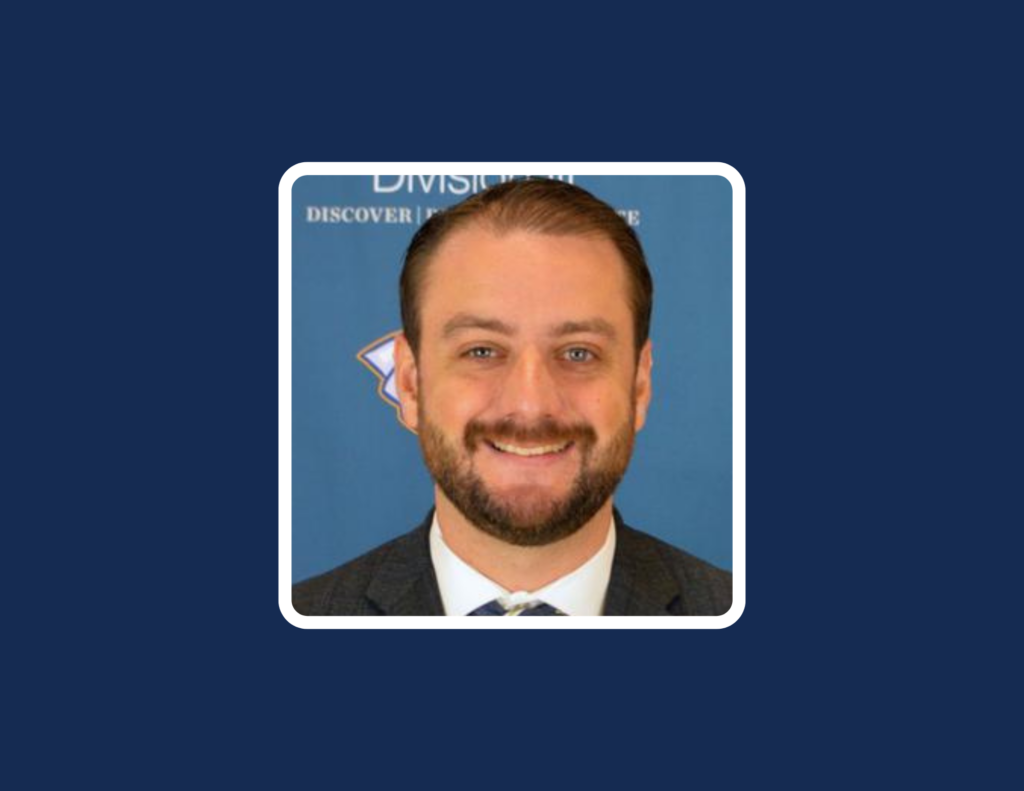
MIKE MCSLOY – DREW UNIVERSITY MEN’S BASKETBALL HEAD COACH – EPISODE 789

Website – https://drewrangers.com/sports/mens-basketball
Email – mmcsloy@drew.edu
Twitter – @MikeMcSloy
Mike McSloy just completed his first season as the Drew University Men’s Basketball Head Coach finishing above .500 in 2022-23 leading the Rangers to a 13-12 record. He took over at Drew following a stint at Joseph’s University Long Island, where he served as the head coach of the Golden Eagles from 2019-22.
Prior to his arrival at St. Joseph’s, McSloy served as an assistant men’s basketball coach at Gettysburg College for the 2018-19 season. From 2016 to 2018, McSloy was assistant coach at New York University. Additionally, McSloy held assistant coach positions at Vassar College (2015-16), Connecticut College (2013-15) and SUNY Maritime (2012-13) before working at NYU.
McSloy played two seasons as a junior and a senior from 2010 to 2012 at SUNY Maritime and spent the previous two seasons at SUNY Oswego.
If you’re looking to improve your coaching please consider joining the Hoop Heads Mentorship Program. We believe that having a mentor is the best way to maximize your potential and become a transformational coach. By matching you up with one of our experienced mentors you’ll develop a one on one relationship that will help your coaching, your team, your program, and your mindset. The Hoop Heads Mentorship Program delivers mentoring services to basketball coaches at all levels through our team of experienced Head Coaches. Find out more at hoopheadspod.com or shoot me an email directly mike@hoopheadspod.com
Be sure to follow us on Twitter and Instagram @hoopheadspod for the latest updates on episodes, guests, and events from the Hoop Heads Pod.
You’ll want to take some notes as you listen to this episode with Mike McSloy, Men’s Basketball Head Coach at Drew University.
What We Discuss with Mike McSloy
- Growing up on Long Island as a fan of Stephon Marbury
- Giving up Lacrosse despite it being his best sport.
- How social media has changed our awareness of players outside our area
- “When adversity hits again in your life, and it always will. You’re going to have different ways of handling it because of your athletic career whether you know it or not in the moment.”
- His college decision and why he he transferred after two years
- Getting to sit in on the coaching interview process at SUNY Maritime right after he graduated
- Being an assistant coach at SUNY Maritime while finishing up his degree
- Coaching at a place where he had just been a player
- Turning down an opportunity at Connecticut College once, before taking a job there later in the year
- “I think what you put into it is what you get out of it.”
- “Being available for the players was something that I really prided myself on and I still do to this day.”
- “The better you treat players, the more you’ll get out of them every single day.”
- The most challenging aspects of recruiting
- Why young assistants should be ok with changing jobs after a year or two
- Identifying the impact players in your program and looking for similar player types in recruiting
- The experience of coaching at high academic institutions like Vassar & NYU
- “I feel like the players that I’ve coached have impacted my life and my career way more than I ever could for them.”
- How going through the interview process for the head coaching job at Vassar got him really excited about the idea of running his own program
- “You just have to do it and figure it out and kind of learn, learn as you go.”
- Coming home to Long Island for his first head coaching job at St. Joseph’s University
- “As a head coach every final decision is yours.”
- “Figure out three or four guys at your level that you really trust and that you can bounce ideas off of.”
- Filtering information as a head coach and figuring out what you can actually use that would be good for your team
- “I always try to structure our offense and our defense around the personnel that we have and I think it’s at least important for me to be flexible. And then try not to overhaul things year to year. Give it a chance for the guys to get better at it and give a chance give them a chance to develop within the system.”
- “Good players make coaches look better and you just try to put them in the right positions to be success.”
- “I don’t think you want to walk into a situation where expectations are not attainableful and then get out of the way.”
- Taking the Head Coaching job at Drew and then having to re-recruit the players who had entered the transfer portal.
- Evaluating players with their high school team vs. with their AAU team
- “What the motor translates to is how passionate they are for the game.”
- “I feel like if you can get more guys in your program, who generally love it, who want to be in the gym, who want to get better, I do feel like you have a better chance of being good consistently, which is really hard to do at this level.”
- “I think it’s really important to have great leaders and guys who are willing to hold their teammates accountable.”
- Having players answer 7 or 8 questions in their exit meeting after the season
- “I never found it useful if a coach sat a player down and told him how he felt the season went, and never asked for the player’s feedback.”
- Getting on the same page during post season meetings with players and developing an off-season improvement plan
- “If you can find a really good pickup game as a college player you can play for longer periods of time, you can get your condition better. You can guard different guys. You can try different things without having a result attached. And I think that’s good.”
- “The guys who are consistently willing to put in the work in the gym and are passionate about it seem to find a lot of success in division three.”
- “The unique thing about recruiting is like you have a strong say in the type of players you’re bringing in that can influence your culture.”
- Varying up the practice plans to keep it fresh
- Putting together an overview of what needs to be done when in practice
- Controlling the impulse to have practice look perfect
- Creating as much of a game environment in practice as possible
- Some of my best friends to this day are people I’ve met through coaching and I feel like everything good in my life has come through basketball.”
Like this show? Please leave us a review here — even one sentence helps! Consider including your Twitter handle so we can thank you personally!
We’re excited to partner with Dr. Dish, the world’s best shooting machine! Mention the Hoop Heads Podcast when you place your order and get $300 off a brand new state of the art Dr. Dish Shooting Machine!

Prepare like the pros with the all new FastDraw and FastScout. FastDraw has been the number one play diagramming software for coaches for years, and now with it’s integrated web platform, coaches have the ability to add video to plays and share them directly to their players Android and iPhones via their mobile app. Coaches can also create customized scouting reports, upload and send game and practice film straight to the mobile app. Your players and staff have never been as prepared for games as they will after using FastDraw & FastScout. You’ll see quickly why FastModel Sports has the most compelling and intuitive basketball software out there! In addition to a great product, they also provide basketball coaching content and resources through their blog and playbank, which features over 8,000 free plays and drills from their online coaching community. For access to these plays and more information, visit fastmodelsports.com or follow them on Twitter @FastModel. Use Promo code HHP15 to save 15%
Your first impression is everything when applying for a new coaching job. A professional coaching portfolio is the tool that highlights your coaching achievements and philosophies and, most of all, helps separate you and your abilities from the other applicants.
The key to landing a new coaching job is to demonstrate to the hiring committee your attention to detail, level of preparedness, and your professionalism. Not only does a coaching portfolio allow you to exhibit these qualities, it also allows you to present your personal philosophies on coaching, leadership, and program development in an organized manner.
The Coaching Portfolio Guide is an instructional, membership-based website that helps you develop a personalized portfolio. Each section of the portfolio guide provides detailed instructions on how to organize your portfolio in a professional manner. The guide also provides sample documents for each section of your portfolio that you can copy, modify, and add to your personal portfolio.
THANKS, Mike McSloy
If you enjoyed this episode with Mike McSloy let him know by clicking on the link below and sending him a quick shoutout on Twitter:
Click here to thank Mike McSloy on Twitter
Click here to let Mike & Jason know about your number one takeaway from this episode!
And if you want us to answer your questions on one of our upcoming weekly NBA episodes, drop us a line at mike@hoopheadspod.com.
TRANSCRIPT FOR MIKE MCSLOY – DREW UNIVERSITY MEN’S BASKETBALL HEAD COACH – EPISODE 789
[00:00:00] Mike Klinzing: Hello and welcome to the Hoop Heads Podcast. It’s Mike Klinzing here with my co-host Jason Sunkle tonight. And we are pleased to be joined by Mike McSloy, the head men’s basketball coach at Drew University. Mike, welcome to the Hoop Heads Pod.
[00:00:13] Mike McSloy: Thank you. Thank you for having me.
[00:00:14] Mike Klinzing: Excited to have you on. Looking forward to diving into all the things that you’ve been able to do in your basketball career.
Let’s start by going back in time to when you were a kid. Tell me a little bit about some of your first experiences with the game of basketball.
[00:00:28] Mike McSloy: Yeah, so I grew up on Long Island. You know, it’s funny everybody says on Long Island, but you know, I first started playing just like in the street with my older brother.
He’s three years older than me. It was, we had a pretty neat setup where like we had a lot of connecting streets, a lot of guys around our age. And we started at a young age just playing outside through all hours of the day. We had a streetlight above our hoop. That was not there on purpose, but it worked out.
So we were able to play pretty late at night and then I got from there I was just playing like in-house stuff as a kid. And then early on was able to start playing some AAU, which back then for every AAU program, there was only like one or two teams. So it was a little bit more selective than it is nowadays.
[00:01:11] Mike Klinzing: Growing up on Long Island, did you have a favorite college or pro player that you followed?
[00:01:14] Mike McSloy: You know, it’s funny, my grandfather had season tickets to the New York Islanders hockey team, and back then they played on what’s called the Sports Channel, which is the same channel that the New Jersey Nets played on.
And so I would watch like the Islanders Games, but I would also, I guess just end up watching the Nets games as well. And Stephon Marbury was awesome. He was a great player. And I actually wore 33. He was 33 on the Nets. I wore 33 in high school because of him. My dad thought it was because of Larry Bird and had to break his heart a little bit and tell him that I was Stephon Marbury the two colored shoes and cradling of the ball when he drove to the basket.
I tried to do all those things and I didn’t do them well, but yeah, that was my guy growing up.
[00:01:58] Mike Klinzing: You couldn’t keep that quiet and not break your dad’s heart?
[00:02:00] Mike McSloy: Yeah, it’s okay.
[00:02:04] Mike Klinzing: So I’m assuming as you’re playing in the neighborhood, you’re playing lots of sports and obviously, as you said, one of the things that’s interesting is just.
From the a a u side of it, how different it’s become, where now basically anybody who plays basketball is playing a a u. But for yourself, was basketball always your number one thing, or if it wasn’t, when did it become sort of your focus?
[00:02:27] Mike McSloy: So, basketball was always my number one passion. It was my favorite sport growing up, but I was actually probably a better Lacrosse player.
At a young age. Lacrosse is pretty big on Long Island. Both my cousins played in college. One played at Duke, the other played at Penn State. So it was kind of like a family thing, but you know, my dad tells me the story, but I would play a lacrosse game and then sprint home and sprint into my room and grab my basketball and go back outside and shoot hoops.
And it was funny. So after eighth grade, I decided that it was time to stop playing lacrosse because it started interfering with aau. And I remember when I told my mom that I was going to quit lacrosse, she actually started crying and she was like, you’re so much better at lacrosse. I was like, thanks, ma.
But you know, basketball was always my passion. I don’t know what it is, what it was about it at that age. But it was so enjoyable. And yeah, so I played, I actually tried to end up going back to lacrosse in high school. Not well, like the skill of my friends and teammates just kind of like surpassed me in a huge way.
So I tried it out again in 10th grade for one year and then focused on hoops all the way through high school.
[00:03:33] Mike Klinzing: What’d you do as a high school player once you kind of got out of lacrosse? What did you do to make yourself a better player? What do you remember about your own training regimen and just how you tried to improve and get better?
[00:03:43] Mike McSloy: Yeah, so I was a late bloomer, I guess. I really didn’t start growing into my body honestly until probably I graduated high school. I grew an inch after high school started adding some weight in college. First it was bad weight, then I guess it was good weight as I got a little bit older.
But in high high school, I was mainly focused on trying to get a little quicker a little bit more athletic. I feel like that’s where I lacked as a guard. In high school. Spent a lot of time shooting, working on my ball handling. And the thing with that is I kind of grew up as a shooter.
And as I transitioned into high school, I was trying to focus more on being a point guard. I feel like in order to get recruited back then I feel like there was 1,000,000 six two shooting guards, but I felt like I was a little unique in the sense that I was kind of a taller point guard, if you would.
So when I stopped playing lacrosse, I was focusing on my foot speed, working on my ball handling a little bit more, trying to get myself in better shape. But it was funny. So in ninth grade, my first aau practice in that spring, so it’s my first year not playing lacrosse and go to AAU practice.
I think I’m one of the better guards on the team, so I’m excited. I’m like, all right, this is great. I’m probably going to start the remainder of the spring. And then in the next practice walked Scott Machado, who played at Iona for four years, played a little bit in the nba, and I think he’s still playing professionally.
And I quickly found out at that practice that I was no longer the starting point guard and that I would be backing him up on a pretty regular basis the rest of the spring. But yeah, good experience, great guy.
[00:05:12] Mike Klinzing: What’s your favorite memory from being a high school basketball player?
[00:05:15] Mike McSloy: Favorite memory? So my sophomore year, this is not the favorite memory, but it, it’ll kind of transition into it. My sophomore year we went two and 17. I was on varsity, but playing behind some older seniors. And the next year we turned it around and ended up winning our regional championship and went to the first ever and first only school state Final four.
And this is where social media, I tell our guys on our team all this story pretty often this is where social media has changed so much. So we’re up at the state championships Final four in Glen’s Falls, New York, and we’re sitting there, we’re playing peaks in the second game. And the first game before us is Glen’s Falls.
And I forget who they were playing anyway, they stopped the game about halfway through. You know, the first half and presented the ball and it was in the new New York state all time leading score. And it actually ended up being Jimmer Fredette. Now we went all the way up there and had no idea who this guy was, right?
Which would never happen nowadays, right? Social media, Twitter, Instagram, this and that. And I can remember sitting in the stands, my buddies looking at me being like, how you’re going to guard that dude? I’m like, well, I’m not, right. Like, it’s not going to happen. But it’s just amazing how much time has changed.
And that was only 15, 16 years ago.
[00:06:30] Mike Klinzing: It is crazy. I mean, I, I think what’s interesting is, as you said, everybody is aware of everybody else, and I think it’s hard on kids. I’m sure you see it in your role as a head coach, that you’re kind of having to deal with it. And I find it to be even more interesting when you start looking at, obviously at the division three level and just the recruiting part of it.
And then you get guys that are going to school and obviously everybody kind of knows what’s going on because you can check box scores, you can c score, all that stuff is right there. Versus again, 15 or 20 years ago, if you wanted to see a box score for a division three game, you had to really search for it.
And Yep. Conversely, you talk about like the division one guys and I, I can’t even imagine being a college basketball player at the highest level and just the amount of feedback, let’s just put it kindly that those players are getting after games on social media and having to try to navigate that and then have a coaching staff trying to help those players to understand and navigate what it means and what they should be looking at and what they shouldn’t be looking at.
It just adds, to me a whole nother layer of complication that I’m glad back when I was playing that I didn’t have to deal with any of that stuff. And I’m guessing you probably feel the same way.
[00:07:45] Mike McSloy: Yeah, I mean, I was telling a couple of our assistants the other day, like everybody nowadays when they commit to a division three school, they post on Instagram and Twitter and it’s great.
But if I did that growing up after I committed to a division three school, like my friends would’ve made fun of me, just cause it wasn’t a thing. Like, you just like, all right, I’m going to college and off you go. But social media has definitely become so prevalent nowadays. And it definitely adds to the pressure.
Like you said, I can’t imagine at the highest level, like what that looks like. Because like you said, every game they’re getting scrutinized and, and at the end of the day, like I know with N I L it’s changing a little bit because these guys are starting to make some serious money. But at the end of the day, they’re still 18 to 23 year old young men.
Right. And they need a lot of guidance, a lot of help. And these are pretty fragile years in their lives and very important years in their growth. And sometimes I feel like social media and the outside noise can kind of negatively affect that.
[00:08:46] Mike Klinzing: Yeah. It has to have an effect. I don’t think there’s any doubt about that.
I think that what you have to do as a coach, as a coaching staff is to just figure out how can you help your guys to navigate it and get the most out of the positive side of it, which there clearly is positive sides to it, but by the same token, you can totally see, I mean, even as an adult we know that, I know that there’s times that you just, I go down a rabbit hole if I’m looking at this and all of a sudden I just spent 30 minutes looking at who knows what.
Sure. And for kids, it’s just, it’s, it’s so, it’s just so alluring to be able to just pull up the phone and look at this or that, or whatever. I think when the recruiting piece of it bring that up. And just in terms of. Guys knowing where everybody else is going or knowing what other offers everybody’s getting.
And you know, from when I was coming maybe I knew who some of the guys I played against in my really centralized local area. I knew where they were going to school, but beyond maybe a 20 mile radius I had no idea to your point, like, here’s Jim Fredette and you guys hadn’t even heard of him.
I mean, it’s kind of crazy when you think about it.
[00:09:52] Mike McSloy: Yeah, I had no idea. And then the other guy that was we were playing against was Moki Jones, who played at Syracuse. We knew a little bit more about him just because I think we scrambled and tried to get some game tape prior to us playing them.
Not that it helped too well, I think we were down eight at half and we were feeling good, like, we’re going to get these guys in the second half. And then we ended up losing by more than 30. But nevertheless, an amazing experience. And I think the older I get, the more I look back on it and think that was a really fun time in my life.
[00:10:25] Mike Klinzing: I think that the older you get, the more you tend to reminisce and look back and realize that you only get one chance to do that kind of stuff. And I think that that’s why athletics, whether you’re a player or I think as a parent, I see this a lot or I think about this a lot that why do we put so much time into our kids’ sports?
There’s times where I’m like, man, what are we doing? Like we’re spending all this time and this money and we’re doing all this. And I think what it comes down to, the more I’ve thought about it, is that you only get one chance to. To be an athlete. By the time most kids are 18 years old, their formal athletic career is over.
And for those of us who are fortunate enough to go on and play beyond high school, once you get beyond college, it obviously the opportunity to play goes down even more. And so I think as a parent, as a kid, when you, when you look back on it, or when you think about it with your own kids, you just want them to take advantage of because it’s such a short period of time in your life and yet it’s one that I’m sure you’ll attest to has had such a huge impact on me.
And I’m sure you, and just looking at who you are today as a person, probably all traces back to your experiences from sports.
[00:11:41] Mike McSloy: Absolutely. I mean I think about my experience probably growing up playing sports every day and kind of how it’s shaped me. And it’s interesting, I don’t wish that our guys go through the adversity that they do because it’s hard in the moment to see them going through that. But as an athlete specifically, but in the back of my mind, I tell them this too, I say, guys, like, you have no idea. This is going to make you a better person, a better a family member.
It’s going to make you stronger in your relationships because you’re facing this adversity. And when adversity hits again in your life, and it always will. You’re going to have different ways of handling it because of your athletic career whether they know it or not in the moment.
It definitely helps shape them as they get older.
[00:12:31] Mike Klinzing: Yeah, there’s no question. I think as coaches, if we take advantage of that opportunity to talk about those things as they happen, and I’ve often said, and I’m sure you’d agree, that there’s a lot of things that are said that we don’t necessarily.
Appreciate right in the moment, but five, 10 years down the road, you know that that’s going to have an impact. And I think about things that happened to me that again, in the moment I looked at it and was like, Ooh this is, this is tough, or this isn’t what I hoped it would be. And then five, 10 years down the road, you’re like, oh yeah, I get it.
I understand what that coach was saying, or I understand what I learned from that particular experience. And that’s the power that sports has. And I don’t think there’s really anything else out there that a lot of people participate in that has the same type of impact that sports can have just because it’s such a visceral experience in terms of it’s so intense and there’s winning and losing and there’s.
Doing it in public and all these things that kind of go along with it that really make sports just such a unique experience that allows you to, to grow as a human being and eventually be able to reflect on that as you get to be an adult and get older and maybe have a little bit more perspective. So it’s interesting to think back on your own experiences, which we don’t often get to do.
I know that so often for me, I’m caught up in the day-to-day of what’s going on, that it’s not all that often. I get to go back and reminisce and think about my days as an athlete, but when I do, clearly I know that it had a huge impact on me. Tell us a little bit about your college decision. You mentioned earlier that you kind of had it on your mind when you dropped out of lacrosse that, hey, I want to be able to maybe play some basketball beyond high school and play in college.
So what did that process look like for you?
[00:14:17] Mike McSloy: Yeah, I think up at the State final four is when I started to get recruited a little bit, at that time a lot of the upstate SUNY schools, Oswego, Cortland, Ona went to those games and different than nowadays, right? Like, again, just to compare a little bit, like the hudl accounts, the highlight tapes.
They really didn’t exist. So I got some feedback a little bit from that tournament and kept in contact with those coaches. And I remember I narrowed it down to pretty quickly, Oswego and Cortland and I went up and visited Oswego in October. I went to their practice, coach Broderick was the head coach at the time.
And then now he’s at Nazareth College. But so I visited Oswego and then I visited Cortland soon after. I think the same, the same weekend actually. I just loved coach Broder and Coach Farden, who was still there as an assistant. I felt like they were just really genuine guys. They showed a lot of interest in me, and I loved the way they played.
You know, a little bit different back then was they shot so many threes and I just thought like it was so cool in practice, watching these guys get up and down, they’re shooting threes. They spent a lot of time just in breakdown drills and getting a lot of rep up. And it was funny, we got home and me and my dad went up on the trip when we got back.
And on Monday morning he left for work. He left a note on my desk and it was like, call coach and tell him that you want to come. And it was early, right? Like SUNY schools, I think even nowadays, like still don’t get guys to commit that early. But basically my dad was like, if you found where you want to go don’t mess with it.
Like, if you think it’s a place where you’re going to be happy give coach a call and tell him that you want to come. So picked up the phone and back then it was the house phone. I don’t even know if I had a cell phone at that point, but called Coach and told him I want to come. And yeah, that’s kind of how it shook out which was definitely a great decision.
[00:16:13] Mike Klinzing: What were you thinking about in terms of what you wanted to study when you first went to school?
[00:16:17] Mike McSloy: Oh man, it’s so funny. So the one thing I love about Drew is they don’t a allow Incoming freshman to be a declared major. So when I went up thereit was all in my intent to become a teacher. I was like, I’m going to become a teacher and coach probably at the elementary level teach.
And then coach at the high school level was like, kind of like what my plan was going into, into my freshman year. And then after two years I decided to transfer and I transferred to Suny Maritime which is a very specific school. Basically all the students who graduated from Suny Maritime like sailing and going out to sea and either working on oil tankers or oil rigs or tugboats.
And I remember when I was going to Suny Maritime, like that was the new plan. And that was a very short lasted plan. I ended up switching my major yet again to international trade. And then you fast forward. Soon after college, like I’m doing nothing that pertains to my degree.
I’m coaching basketball. I don’t regret any of it because I feel like, again, each of those decisions kind of like led me to, to my passion and what I really wanted to do in life after college.
[00:17:24] Mike Klinzing: How’d you get into coaching? Was that something that you, as you, as you started looking and you’re like, oh, okay, I got this degree, but man, I don’t know that this is what I want to do and, and I want to go into coaching.
I know you kind of went into college with that idea. I’m assuming it was still kind of always in the back of your mind, but just talk about the, the actual transition and how you get that first job?
[00:17:47] Mike McSloy: Yeah. So what had happened was I finished my fourth year. I finished my eligibility, but I still had to do another year of school because when I transferred, I lost a bunch of credits in, in the transition and SUNY Maritime was in the process of hiring a brand new coach, and it was pretty cool. It was a pretty cool experience. They, I guess, wanted a player involved in the search, even though I wasn’t returning with eligibility. They kind of let me sit in on the coaching search and the interview process.
And thinking back like, that was such a great experience. I really wish I knew in the moment, just soak it all in and listen to what these guys are saying. But nevertheless, Suny Maritime hired Jake Scott who had been there for a little bit for a little while. Then he went to SUNY Cobo.
And I kind of expressed to all the candidates. In the interview process like that, I wanted to help out in any way that I could. And I remember he wrote me a handwritten note and he was like, if I get the job you can definitely help me out and be an assistant. So I remember like, not that I got on the job by any means, but when his name got put up and the wrap ups I was all for him.
[00:18:57] Mike Klinzing: There’s some backroom deals going on there. It sounds like little backroom deals.
[00:18:59] Mike McSloy: A little agenda on my end, I guess that’s the way life works. It was amazing. So what had happened was he basically I was still in undergrad, still taking classes.
But he kind of threw me to the fire, let me watch film with him, let me get out a little bit and recruit and thinking back, like I’m still making mistakes. But back then I probably made a million mistakes and probably made his job. In his first year. Harder than easier, which is not what you want from an assistant.
But I remember just being in practice and we didn’t have a good record that year by any means, but I was like, all right, I can wear shorts and a t-shirt to work every day. I can be around basketball and if I can make this into a living, like there it is, there’s a dream. And I remember I called my dad and I was like, I think I want to coach.
He’s like, that’s great. Like after work. And I was like, no, I want to do this full-time. And that was kind of my start. And I guess I haven’t looked back since.
[00:19:56] Mike Klinzing: What was it like to coach at the school where you had just played? So clearly you’re on the staff and some of your previous teammates you’re coaching now.
Now granted again, you’re not the head coach and you’re a first year guy, but just what do you remember about that experience and just sort of the transition from, I always think it’s interesting to go from being a player in a program to being a coach in the same program where you kind of get to go.
Behind the scenes. So just what was it like to sort of elevate yourself from player to coach within a program that you were already familiar with?
[00:20:30] Mike McSloy: I think it was eye-opening, right? Eye-opening experience for me. I never knew what the day-to-day entailed for a coach, and I never knew how much like thought went into like each decision, whether it be like what we were going to do for practice, how we were going to prepare for games, like all the ins and outs and details that went into recruiting.
So I think like the first thing was I was just like wide-eyed. Like, wow, this is, this is very different than I expected in a good way. And then it was just it was difficult, right? Like you’re friends with some of these guys, you played with them for a couple years but now you’re their coach and you’re supposed to be the one giving instruction.
So that definitely took me a little bit a while to get used to. The good thing was after my year of eligibility, a lot of the guys were no longer on the team, so outside of a few guys, it was pretty much a new crop of players that we were coaching.
[00:21:24] Mike Klinzing: All right, so after that year is up, then you get an opportunity to go to Connecticut College.
How did that opportunity come your way after that first year at SUNY Maritime?
[00:21:35] Mike McSloy: So this is what I tell young assistants all the time, like, any opportunity to work camp whether you get paid or not, go take it. So another Kings Park guy where I grew up Justin Simon is the assistant coach at Yale University.
They always ran their Yale Elite camps. And I reached out to them and I was like, Hey, like, do you have any openings at camp? I would love to come work. And he was like, it’s not glamorous, it’s volunteer and you’re going to have to ref. And I was like, sure, let’s do it. That sounds great.
So I go up there and my senior year of eligibility, we actually had played Connecticut College and I just saw the coach there, Tom Satran. I went over and said hello. And at the time his assistant was Chris McCue, who’s the head coach now at Washington and Lee, and they had called me soon after and they were like, Hey listen we have a new part-time spot.
It doesn’t pay a lot of money, but if you’re interested in interviewing for it we would love to get you on the phone and talk more about it. So we talked about it, had a good conversation. Coach offered me the job, but it was so little pay and I can’t believe, like, if, if I could go back in time, I never would’ve turned it down.
I don’t know what I was thinking, but I just was like, Hey coach, like, I would love the opportunity, but I just don’t know if I can survive moving up there and survive on the low pay. And he is like, I totally understand. Fast forward. That was in June. So you fast forward now it’s like the end of August at the last week and he called me back and he’s like, Hey Chris just got the full-time assistant job at Emory.
And would you be interested in coming up for an interview for his spot? And I was like, yeah I was like, I can come tomorrow. And he is like, sounds good. I go up there, interview with coach and he offered me the job the next day. So I remember I called, I was on the phone with him and I was like, when do you need me up there?
And he is like, I need you here yesterday. So all of a sudden, like in four days, I’m completely moved into a new place in Connecticut. That experience was so awesome. I was there for two years with coach and I lived in a house with a bunch of other assistants within the department about a quarter mile away from campus.
And I would spend all day in the office and try to learn as much as I could. And Coach was so gracious with his time, like he really taught me what it was like to be a coach. Taught me how to recruit, taught me how to scout, taught me how to handle myself on the road, taught me how to coach in practice how to find my voice.
And those two years completely solidified, like, this is what I want to do. I couldn’t imagine doing anything else after that.
[00:24:15] Mike Klinzing: When you think about that two year period, what’s one or two things that stand out to you that you still feel are a really important part of who you are as a coach?
[00:24:27] Mike McSloy: Yeah, that’s a great question. One of two things that really stood out. I think what you put into it is what you get out of it. Is one thing. So like you know, when I was there as an assistant, I spent a lot of time and I think things have changed since then. Like you can do a lot of work. You don’t always have to be in the office 24 7.
But I think just being available for the players was something that at that time I really prided myself on and I still do to this day. I feel like we’re here to coach, but we’re also here to be mentors and be a support system for them. And I think just sometimes just being around is comforting for them.
So that’s something I try to still carry over to this day. And then the other thing would probably be, so much of coaching is about relationships, right? And how you treat players is super important. I firmly believe the better you treat them, the more you’ll get out of them every single day.
So yeah, that’s pretty much what I would say I took from those two years. I learned so much. Like I said before from coach, just the ins and outs of how to run a program, how to scout, how to recruit, especially how to recruit was probably the biggest thing that I learned from him. And I just thought it was like, oh, I’d call a guy and he’d commit.
Like, there’s so much more that goes into it. And it’s so rewarding when that guy finally calls you and tells you he’s coming.
[00:25:48] Mike Klinzing: What’s the hardest part of the learning curve when it comes to recruiting? When you, for you yourself, or if you’re working with a young coach that’s just kind of getting into it, what do you have to learn?
What do you have to know? What about the process is challenging? I mean, obviously there’s a ton of things that are challenging, but when you think about somebody who’s getting into it for the first time, what’s the hardest part of it in your mind?
[00:26:11] Mike McSloy: I think the hardest part of it is figuring out, now I won’t say figuring out the fit.
I would say the hardest part of it is, is understanding the volume and what you have to do it and how much work you have to put in to each individual in order to try to secure a commitment. And a lot of that, I think the biggest adjustment is all the follow up and how organized you have to be with each individual recruit that you’re going after.
And I think the consistent follow up and the approach is probably the biggest learning curve. And I think along with being a head coach and being an assistant is probably figuring out the fit of each school, right? You don’t want to waste too much time on guys that aren’t a great fit, whether it be academically, socially, too far from home, too close to home.
And trying to weed through that is probably some of the bigger learning curves I think,
[00:27:07] Mike Klinzing: how long does it take you as you go from one school to another to adapt and understand what a player looks like for that school or that level? So that they can play at the school if this question makes any sense.
I always think it’s when you’re looking at players and you’re like, okay, is this kid a division two kid? Is he a division three kid? Is he high level or he is going to come in and be a guy that you can build your team around at the division three, he is a role player. Just how do you get a feel for that?
Or what’s your thought process as you’re evaluating a player trying to figure out can this guy contribute to our team, our program, especially when you go from one school to another.
[00:27:51] Mike McSloy: I think the one thing that has helped me transition to becoming a head coach is I was an assistant at a bunch of different spots and, and I encourage young assistants to take new opportunities after a year, after two years because you get to learn from somebody different.
You get to recruit to a new school which challenges you, it gets you out of your comfort zone. And I also think too, it shows other people that people are willing to hire you and they want you. So I think that’s a good thing in terms of your networking and trying to move up.
But I think how long you mentioned it takes a little while. I definitely think everywhere I’ve been, it’s at least a few months trying to figure out. I think once you get into practice and games that at the school that in which you’re at, you can kind of get a sense of like, okay, like these are the impact players on our program, seeing them in day in and day out.
So when you go and recruit you kind of have a better idea of like, okay, that kid can be a program guy. It might take him a couple years to make an impact, whereas like that kid can really help us, but he might be a borderline scholarship player, but it’s probably worth our time still recruiting him.
There’s no perfect science like to this. You just try to trust your judgment, trust your evaluation and kind of see where it lands you.
[00:29:06] Mike Klinzing: All right, so after Connecticut, you end up at two pretty high academic institutions in Vassar and NYU. What was it like coaching at those two places where the academics are clearly a huge and important factor in who you’re able to recruit, and then what those kids are like when you’re coaching them?
What did you like about that experience coaching at those high academic universities?
[00:29:34] Mike McSloy: Well, it was definitely an adjustment because every room that you’re in with the players, I mean, well, they’re all smarter than you, right? Like at the time at Vassar, I mean, we couldn’t below a 30 ACT was almost too low for us to recruit.
And so now you’re dealing with like the upper echelon students, not only from a basketball standpoint, just in general but it was pretty neat. The biggest thing at those schools were the first thing you had to figure out was the student admissible, right?
At a lot of places, you have to figure out, can that guy play for you? But the first thing at those schools I thought was important was like, all right, can this guy get admitted? Is he admissible to the school? But it was pretty neat. It was pretty unique. I spent a year at Vassar and then two over at NYU.
I can often remember though, sitting there at Team Meals and listening to some of their conversations, right? And their conversations about like finance or what they were going to do in life after college was so far advanced compared to when I was 19 or 20. It was wild.
But it was cool. So at Vassar, the year that I was there I had worked for BJ Dunn, who I later worked with again at Gettysburg. And we’ve developed an amazing friendship and still to this day, he is one of my closest friends. But at Vassar, that was his first recruiting class that were freshmen and there was like 5 of those guys.
And it was really neat. So like that they took up five of 13 guys on the roster. And I feel like those guys really took to me, and I still have pretty good relationships with all of them, even to this day, despite only being there one year.
[00:31:21] Mike Klinzing: It is cool when you think about those relationships that you build.
I think as a coach, it’s something that I think most coaches, especially today, even more so maybe than in the past, really value those relationships. And not just the relationships in the moment, but the relationships as players graduate and coaches move on in their career and players get jobs and have families.
And those connections I think are really, when you talk about reasons why you coach, obviously the challenge of coaching basketball and the competitiveness and all that, I think plays into it. But clearly the relationships that you can build with players, I think are something that across the board with coaches that we’ve talked to on the podcast, one of the things that they always talk about, especially today, is just those relationships that you can build with players are just tremendously special.
And I think when you start talking about. The experiences that you’ve had, even in just being there for one season or two seasons where you’re not even there for the entirety of that player’s coaching group, but yet you’re still able to have that impact. I mean, it’s powerful. It’s powerful stuff, what we can do as coaches, and it’s always fun for me to be able to hear guys like yourself talk about how important that relationship piece is for them.
So as you’re in those two places, are you starting, when do you start looking for head coaching jobs? Is that something that you’re consciously looking for during your time here at Vassar and N Y U, or where are you at in sort of your career thought process at this point?
[00:32:50] Mike McSloy: Yeah, and to go off your point too, like as much as we as coaches try to make an impact on the players that we coach I’m thankful because I feel like the players that I’ve coached have impacted my life and my career way more than I ever could for them.
They’ve given me great perspective and honestly just great joy in the 10 years I’ve been doing this. So as much as I try to help them and impact them, they probably have no idea how much in a positive way they’ve impacted me as a person. But I was never, I would say in a rush, I guess, to become a head coach even though it happened, I guess, pretty young.
I did really enjoy being an assistant. I felt like I wasn’t the bad cop, which was always nice. And I felt like I was able to develop pretty good relationships with players. I really liked getting in the gym with them in off hours and working getting up shots, working on their game.
I really liked the grunt work of the recruiting aspect, the scouting. I did really enjoy that, so I was never really in a rush to become a head coach. But I guess the one experience that I had that I was like, wow, now I really want to do this was after my second year at nyu, our head coach, coach Shi had retired, and the new coach who came in decided to bring in his own guys, which I totally understand.
But in that period BJ Dunn had had left Vassar for Gettysburg, and the head coaching job opened up there. And I obviously didn’t land the job, but I was able to go to campus for an interview. And I remember going through that whole process and, and you start, really start thinking about your ideas, your philosophies, how you would run a program.
It got me so excited about the potential opportunity. And I guess when that opportunity presented itself despite the fact that I didn’t get it. That’s when I really started being like, okay, I want to be a head coach. And I was still young at that time. I think I was 27, 28, but that’s when the wheels started really turning, I guess.
[00:34:54] Mike Klinzing: Did you start putting together a portfolio, for lack of better way of saying it, of just your thoughts and maybe things that you’d collected and ideas when it came to what you wanted to do with your program? Was that something that you started doing at this point?
[00:35:05] Mike McSloy: I did. And honestly, if I could go back and I would encourage all young assistants to do this, I wish I would’ve started from day one with being more organized with collecting practice plans and starting to like watch film in a way of like, okay, if I ran a program, would I run this kind of career like a video library, which a lot of guys do now on social media, which is awesome.
It helps coaches around the country. But yes, at that point I started putting together I guess a little bit of a coaching packet starting to really wrap my head around ideas, if I ever got the chance to take over a program, how would I run the program? But to be honest, you really never know until you’re in that position, right?
And I always remember, I asked mentors how would I know when I’m ready? And they were like, you just have to do it. You just have to do it and figure it out and kind of learn, learn as you go, right? I don’t suggest doing it day one. Not that that opportunity presents itself a lot, but I guess the best way to learn is on as you’re doing it.
[00:36:07] Mike Klinzing: That’s like being a parent, Mike. It’s exactly the same.
[00:36:10] Mike McSloy: I’m not there yet.
[00:36:11] Mike Klinzing: I don’t think you’re ever, well, let me just give you some advice. You’re never going to feel like you’re ready. At least I never did. And then once you do it, you kind of have no idea what you’re doing. You talk to people and you try to figure out, Hey, am I doing this right?
What am I doing? And you realize very, very quickly that. Everybody is just kind of flying by the seat of their pants and trying to figure it out. And I think in a lot of ways I, I loved what you said there about you don’t know what you’re going to do or exactly how you’re going to do it until you’re there, right?
Because you can think about what you want to do as a parent, or what your kid is going to be like, and you can think about your basketball program and what it’s going to be like and what you want to do. And yet there’s always circumstances. There’s always things that pop up that you didn’t foresee or things that just were there, but you didn’t realize you were going to have to deal with them.
And I think that both from a parenting standpoint, I’m a coaching standpoint, I think there’s a lot of similarities there and that you have to really be immersed in the job. I, I’ve talked to so many assistants that have said when I was sitting one seat over, I had all the answers and I just thought it was as easy as, Hey, here’s this suggestion, or here’s what we need to do to win this game, or here’s what the program needs in order to turn around.
And then when I became a head coach, suddenly I realized that. Those decisions are way more complex than what I thought they were as an assistant. So when you got the job at St. Joseph’s first time as a head coach, what were one or two things that really leaped out at you? Like, Ooh, I didn’t know that this was going to be quite as complicated as it is as a head coach.
Is there anything that kind of fit that bill?
[00:37:54] Mike McSloy: So it’s funny when I got the call and I accepted the job, I mean, I was ecstatic, because St. Joe’s back on Long Island, I was moving back home. And that’s so rare. I feel like in coaching, the chance to move back to where you grew up to become a head coach.
So I was calling everybody. I’m moving back, I’m head coach. And then I remember laying in bed that night at like one o’clock in the morning, just me and I was like, oh, this is happening. This is happening.
[00:38:23] Mike Klinzing: Now everybody knows I’m coming home.
[00:38:24] Mike McSloy: Now everybody knows I’m coming home.
Everything you wanted is happening. And like here we go. Like this is, this is your thing now. And I remember when I took the job there, it was spring of 2019, and we only had like seven or eight players in the program. And I remember at that point I was like, all right, we have a lot of work ahead of us.
And then I just try to take it one day at a time, a lot easier said than done. But in that moment I was like, all right, and the other thing that I think you know, is what you don’t, every decision falls on you, as a head coach. Whereas like you were mentioning before, as an assistant, you’re kind of the suggester.
You’re not the one making the final call in a lot of situations, whereas a head coach every final decision is yours. And that takes a little while to get used to.
[00:39:16] Mike Klinzing: I’m sure though, once you get used to it, that that ability to be able to shape your program, shape your team in the way that you wanted to, I’m sure that was and continues to be one of the best parts of being a head coach, is just being able to take an idea from your mind or from the paper or from wherever you get that idea, and then actually see it play out within your program, with your team, with your kids. I can only imagine how gratifying that is. And just from day one and then continuing on to where you are today.
[00:39:52] Mike McSloy: It’s a lot of fun. I think the biggest thing too is like trying to just be a consistent learner, right? I definitely don’t know everything. So I’m always trying to absorb different knowledge from different people. And it’s funny, when you decide to do something and it doesn’t work, it’s not the end of the world.
You just try to figure out something else and put your fingerprint on it. That part of the job is a lot of fun. It’s stressful. Especially because we’re all competitive. We all want our programs to run and be successful. But it’s, as much as it is stressful, it’s even more fun.
[00:40:28] Mike Klinzing: How do you continue to learn and grow? What are you doing? Are you, where do you prefer to watch, grab film and watch? Are you watching other college programs at your level? Are you watching division one programs? Are you watching NBA, are you watching overseas? Are you talking to mentors? Are you reading what, just, what’s your process?
When you talk about getting better and having that growth mindset and continuing to improve, how do you do that day in, day out in the off season? What’s that process look like for you?
[00:40:56] Mike McSloy: Yeah. So right now it’s been, in the spring it’s been a little bit more challenging in the sense that we’re just trying to finish up recruiting and I like to finish up recruiting before I really start focusing in on okay, like, how are we going to play next year?
Right? Because it all is based on players. My advice would be to any first time head coach is like, figure out like three or four guys at your level that you really trust and that you can bounce ideas off of. So for instance for me, like BJ Dunn at Gettysburg is somebody I consistently rely on. I use a lot of his ideologies and implementing them into our program Taylor Roth at Hiram, I call him all the time, text him questions all the time.
Like, Hey, how would you handle this situation? Because those are the guys where it’s most relevant. And if you can find guys that you trust and can lean on, I think that’s super important. But I’m a little over the place in terms of my learning podcasts. I think are extremely valuable. I think.
Also kind of branching out to watching film when you’re watching college basketball, taking notes, going back on Synergy and rewatching those games. And then somebody I got connected with over during Covid was Ryan Pannone, who was just hired by Alabama as an assistant.
He was at New Orleans for the Pelicans last year as an assistant, but he has been around at a bunch of different places. But during Covid, he had put on one of those coaching clinics online. At the time he was with Happel Jerusalem and he put on a clinic about the 3-2 pick and roll offense. And it was very unique in European.
It was basically trying to figure out a system, the pick and roll system with playing with two bigs, which is unusual nowadays, and playing with two bigs who were good passers, but not particularly good shooters. Right. Everybody plays with a stretch four right nowadays, but he had this offense where if you could play with two bigs, good passers.
And I just became enamored by the offense. And I remember I sent him an email, Kevin Hopkins Muhlenberg suggested he is like, Hey, here’s his email if you, if you want to reach out. He’s very good at helping coaches. And I sent him an email expecting no response. And within an hour he sent me back his cell phone number and he is like, call me anytime.
And now I talk to him on a pretty consistent basis. He’s always sharing film with me, and at least a couple times in the office, he’s not calm and kind of bounce my ideas off of him. And he’s almost like my offensive therapist, if you would. And it’s funny we’ve never met he probably doesn’t even know to the extent of the impact he’s had and how much of a help he’s been.
But I feel like he’s such an unbelievable offensive mind. And he’s so willing to help other coaches, which is awesome.
[00:43:38] Mike Klinzing: Yeah, Ryan’s great. We had him on, I don’t know how long ago it’s been probably maybe two years ago. I really enjoyed the conversation with him and obviously he’s worked at all different levels of the game, which I think is something that when you talk about a diversity of background, which you mentioned earlier, and being able to learn from different coaches, you talk about learning from different levels and being in the G League and being in minor league and being in the college game, and then being with the Pelicans this past year, and just the different things that you pick up, working with different coaches and working at different levels.
And then it’s amazing when you say, Hey, I’ve never, I’ve never met the guy in person. And yet you consider him to be one of your most important mentors. I mean, that’s a huge, it’s just incredible when you think about what the power, we talked earlier about social media, right? And there’s good and bad to it.
But when you talk about a situation like this where here’s a, here’s a guy that 20 or 30 years ago, What you’d had to call them on the phone and the odds of you guys meeting up and actually becoming friends were probably next to nothing. And now it’s just so easy to be able to hop on and do a, do a zoom or just be able to connect with somebody, and then to be able to share, like you can share film, you can share video.
It’s so much easier than it was back in the day to be able to do that. So I think it’s powerful when you start talking about learning as a coach. There’s just so many more avenues to be able to get better as a coach than there was 20 or 30 years ago where we just didn’t have the power to connect to the internet the way we do today.
[00:45:11] Mike McSloy: I agree. I think it’s the hard thing almost is filtering all the information. Absolutely. When you watch all these videos, it’s like, okay, I want to press. Like VCU. I want to run offense like UConn. I want to have my time out structured like Brad Stevens, and at the end of the day, it’s probably not realistic, right?
So it’s probably not translatable to your program. So it’s filtering out all these amazing ideas and ideologies and figuring out what are you comfortable coaching? And then b, would it even help your team? I think that’s such a fun challenge in what we do.
[00:45:52] Mike Klinzing: Yeah, it’s a great point. And I think it’s really easy when you go and you want to learn whatever, and I think you can say this as a player, I’ve often said that when I was a kid, I did basically the same workout every single day from the time I was in ninth or 10th grade until I graduated from college.
I had two workouts. One I did by myself and one that I did. If I had somebody that was, I. Willing to shoot with me. And so those are my two workouts. I did the same exact drills and never varied from any of that stuff. And now you look at what kids have access to and to your point, you go on there and there’s 10 bazillion ball handling drills and there’s a million shooting drills and there’s all this stuff and you have to be able to filter it.
And I think from a coaching standpoint, it’s the same way You can go on and be like, oh, I love that action. Or Wow, that’s really something that, that looks cool and I, I’d really like to try that. And then you start thinking about it and you’re like you really have to get good at 2, 3, 4 things and all the rest of this other stuff looks really good.
Looks like it’d be a lot of fun. But to your point, you really do have to be able to filter that stuff out and, and understand what you’re all about as a coach, what you feel comfortable with coaching. And when you talk about that part of it, and you talk about coaching philosophy and what type of offense you want to run, what type of defensive team you want to be, When did you feel like, and maybe the answer is, I think probably in some cases it might be never, but when did you feel comfortable with, Hey, this is who I am as a coach and this is kind of the style that, again, given my personnel, this is sort of ideally how I’d like to play.
When did you feel like you had a grasp on that?
[00:47:28] Mike McSloy: Yeah, so it’s I’ve been a head coach for four seasons four years, three seasons. During the covid year at St. Joe’s, we didn’t play any games. But during that year, we had the chance to practice in the spring about 15 times or so.
But you got to spend all winter thinking about, all right, like next year, hopefully when we play because right Back then it was kind of still the unknown. How would we want to play? I always try to structure our offense and our defense around the personnel that we have and I think it’s at least important for me to be flexible.
And then try not to overhaul things year to year. Give it a chance for the guys to get better at it and give a chance give them a chance to develop within the system. But it’s funny, going into being a head coach, I thought man to man was always going to be kind of like the calling card for us defensively pack line, tough, all these different things.
And then for the last two seasons as a head coach we haven’t played a possession of man-to-man. We’ve played all two-three zone, right? So it’s funny just kind of how it all transpires and then it’s fun to go back to the drawing board each off season and, okay, was that the best?
Did we put our team in the best position to be successful? What’s the plan going to be going forward? And I think so much of it has to do with personnel and, and everybody says it, but it’s so true. Like it’s all about players like, right, you good players make coaches look better, and they’re the ones who make the shots.
They’re the ones who affect the game defensively. And you just try to put them in the right positions to be successful and then get out of the way. Right? Like try to not overload them with information.
[00:49:16] Mike Klinzing: I think it’s a really good point that you make about not completely overhauling your system every single year, but allowing it to build.
I’m pretty sure it was Jason Zimmerman from Emory, who we had on recently who said that you can’t do that because when you do, then you never really build an experienced team. It’s like every year you have. You don’t ever have seniors because you don’t have guys that have gone through if you’re changing your philosophy every single year.
And that’s not to say that you’re not tweaking things and making it fit, but if every year you’re like, okay, this year we’re going to play two three zone and next season we’re going to play, man, and the next season after that, well that didn’t work, so we’re going to press. And so your team never develops that identity.
And I thought that was a really good point that he made. And you obviously made the same one. And I think it’s when you start talking about trying to put together a great team, obviously the more experience your team gets and the better your upperclassmen are, the better off you’re going to be when it comes to winning and losing out there on the court.
[00:50:17] Mike McSloy: Yeah, it’s a great point. Coach made, I mean, he is one of the best coaches out there. And it’s a great point, like if you overhaul everything every single year, you’re basically, despite the guys being older, you’re almost dealing with freshmen and teaching them a new playing, but. I do think tweaking is important.
And it’s also, again, like that’s, for me at least one of the more enjoyable parts of coaching is like just trying to rack your brain and figure out the best way to play.
[00:50:49] Mike Klinzing: Absolutely. All right, so you’re at St. Joe’s on Long Island, you’re home. Why Drew, what about Drew University made it a job that was appealing to you to leave a job in your home state where you’re from?
[00:51:08] Mike McSloy: Yeah, leaving was hard. I remember when I told the guys I was leaving, it was a lot of emotions, a lot of tears. I mean, we kind of rebuilt the program from the ground up and the unique thing about St. Joe’s is there’s no dorms there. So all of those players are commuters.
So we had guys, I mean, some guys lived 10 minutes from campus, but we had other guys who were committing to us and driving 50 minutes every single day to practice, to school. And my concern taking over that job was like, all right, how are we going to build a good team culture when everybody just disperses after practice?
But that group was extremely close. And I think maybe because they were kind of all in it together but we recruited really good guys really high character guys who we knew would be willing to work hard and was super excited what we accomplished in a short time there. But then when Coach Keckler left Drew and took the job at MA and I had been here before when I was at nyu, we had played here in a Tipoff tournament, the Rose City Classic.
And look like life comes into play. And my now fiance has a really good job on Long Island at the Merchant Marine Academy. So I knew if I took another step in my career, it wasn’t going to be across the country. I think that part of my life is over. So I kind of like drew a big circle on the map and it was like, all right, like if jobs open within these areas, let me at least go for them and see kind of where it takes me.
And I applied to Drew and honestly speaking, I didn’t think I was going to get even an interview. And luckily I was able to land a Zoom interview, which kind of led to the on-campus portion and being offered the job. But I remember going through the process, becoming more and more excited about the job.
I think the biggest thing that kind of like led me to this to really wanting it was that they had a lot of recent success. Coach did an awesome job building up the program, especially the last six or seven years they’ve been really good. But the area in which Drew is located is really unique.
The campus is beautiful, but the surrounding towns, Morristown, Madison, have a lot going on, very close proximity to the city and thought that from a recruiting standpoint we have a lot to offer. Which kind of made the job a little bit more attractive.
[00:53:28] Mike Klinzing: What were some questions that you had for the administration at Drew during the interview process that you wanted to have answered to make sure that you felt like it was the right fit for you?
[00:53:43] Mike McSloy: I think one of the questions I had for them was what are your expectations for the new coach? Right? And I think kind of clear in the air and figuring out like what their expectations are as a department as a whole, but also from the new basketball coach is super important because not that you are afraid of any challenge, right?
But if I asked that question and they were like, we want to win a national championship next year. Well, I don’t know if that’s possible, right? Like, who knows? Maybe at some point like that if all the stars align and that becomes a reality. But I don’t think you want to walk into a situation where expectations are not attainable.
I felt very comfortable with and I thought those were realistic things to achieve.
[00:54:32] Mike Klinzing: When you come in and you look around and you try to figure out, okay, what’s my plan? So you had done this once at St. Joseph’s. Now you’re in your second stint as a head coach, what were some of the first things that you needed to do, wanted to do, had to do when you got the job?
I’m assuming that meeting with the returning players was probably high on your list, but along with that, maybe you talk about what that process was like. But if, if there’s something else that you felt like, okay, in the first week or two, I have to get this done to kind of get us off on the right foot as we start building what we hope is going to be a really successful program.
[00:55:11] Mike McSloy: The first thing was when I got the job and this kind of came up in the interview process was four of our best players were in the transfer portal. So Howard mc, who is graduating this year 20 points, 11 rebounds for a CMO conference. First team all met in the transfer portal, Malcolm Newman, returning second team all conference guard in the transfer portal.
Andrew Turco, this year he shot 40% from three. So you got a lot of good players in the transfer portal. So I was like, all right, I have to re-recruit those guys. Right. And I remember that was the main focus, and luckily for us, all four of them, decided to stay so then I felt comfortable about taking the next steps, which was getting on the phone with every single one of those guys.
And just trying to get to know them on a little bit of a deeper level. And just have casual conversations like, why’d you choose Drew? What about the program? Are you excited about going forward? Because I got the job in the summer. So I knew I wouldn’t see a lot of these guys face to face until the school year started.
[00:56:14] Mike Klinzing: What were some of the things they told you about why they had chosen Drew in the first place that you felt like, okay, I can see what the positives are, why they came here. What do you remember them telling you about that?
[00:56:28] Mike McSloy: Everybody’s answered this question. I think everybody answered this question the same, but in a different way, if that makes sense.
So it all came back to the players, right? I chose Drew because on my visit, they made me feel like family. And I saw how well they all got along with each other and I wanted to be a part of that. And that answer was the same, just worded differently from everybody I talked to.
And I felt like from that cultural aspect I was like, wow, this must be a really good place to be. And since I’ve been here That remains true. Like we have really good guys in our program, just very welcoming, very easy to be around. And the school is the same way. But at one point, I asked him, I was like, did you guys plan this answer?
Like, you’re all saying the same thing. I’ve noticed it too firsthand, like when we have recruits visit campus, like our guys are just natural. And making them feel welcome, making them feel comfortable. And I knew like, okay, they have something special in that regard here too.
[00:57:36] Mike Klinzing: When you get the job, how do you go about figuring out what you need to do in terms of recruiting? Looking at your roster, what was that first year of recruiting like?
[00:57:49] Mike McSloy: Yeah, so we’re still in the midst of it right now. We actually had a commit about an hour ago. So we’re pretty excited about that.
When I got the job, we had so many players on the roster. I’m talking north of 20. So we kind of had an idea of what we needed to, like, of the type of player we needed to recruit. It just, we didn’t really know the number of guys that we needed to bring in until we started our season and kind of to figure out like, all right, these are where we, we might see some holes.
And that probably put us beyond the eight ball a little bit. And I probably wish we would’ve spent a little bit more time kind of like racking our brains around about that a little bit earlier in the year. But it’s a challenge when you have so many guys even though we graduated six guys having a roster north of 20 trying to figure out how many guys you’re looking to bring in is definitely a challenge in and of itself.
[00:58:44] Mike Klinzing: How do you feel about the difference in watching a kid with their high school team? Versus their AAU team, and how much do you weigh one versus the other? I think it’s probably shifted, again, something that’s changed over the last 15 or 20 years is when you were being recruited or when I was being recruited.
Certainly the high school season and the high school coach was more important in the process. And I think now talking to a lot of coaches just because of the ease of being able to see a whole bunch of players at once, and also seeing those players play with and against a lot of other high level players that AAU is sort of maybe taking precedence and just how do you look at that balance between evaluating a kid with their high school team versus with their A A U team?
[00:59:30] Mike McSloy: I think you nailed it by saying it’s definitely a balance. You know, seeing them over the summer with their AAU team is extremely valuable. Like you mentioned, they’re playing with really good players, right? Sometimes when you go to a high school game, it maybe there’s two players on each team that can really go.
And a lot of times when you go to an AAU game, all those players on the court are aspiring to be college players. So typically all those guys can really play. So you’re seeing them play with really good players against really good players. And then in the spring and summer, it’s just natural, like we have more time to go out and watch these guys, whereas opposed to our season, we get a week off around Christmas, but we really have to carve out time to go watch them with their high school team.
The challenge I think sometimes with AAU is they play so many games in a weekend where it’s hard to see them play at a consistently high level in terms of their motor. Over and over again if they’re playing three or four games in a weekend, which is just natural, right? That’s where I like to go watch them with their high school team because especially as we get closer to the playoffs it’s a little bit more pressure, a little bit more crowd and influence.
And typically they’re going to be one of the couple better players in their team. So maybe it is an opportunity for them to showcase what they can do a little bit more offensively and have a little bit more of an impact on the game and a totality.
[01:00:49] Mike Klinzing: Yeah, I mean, that makes sense. I think it’s one of those things that you want to just see them in as many different environments as you can so you can get a full evaluation on who they are as a player.
What about in terms of the intangible things that you’re looking for? Obviously fitting them into your culture, and you mentioned about when you bring them on campus that your guys give you a pretty good feel for. Hey, what this kid is all about, we think he’d be a good fit or we think he wouldn’t be a good fit, but what are some things that you personally look for that you value in a player beyond just the talent that they have on the floor?
[01:01:22] Mike McSloy: I think the biggest thing is the motor in which they play with. I just think if they play hard with their AAU team and they play hard consistently with their high school team regardless, I guess, of how many minutes they’re getting. Usually with their high school team, they’re going to play a majority of the game.
Sometimes with their AAU team, they might play half the game. And I think what the motor translates to is how passionate they are for the game. And I think you really need to love it. At the division three level to see it through and to be a really good player. Because it’s a long season right there, there’s no scholarship binding you to being on the team.
You know what I mean? You get an academic merit scholarship whether you stay on the team or not, you’re still going to get that to go to the school. So I think just trying to figure out in the process, does this guy really love basketball from a genuine level? And you don’t always nail it, right?
Recruiting is not, like I said before, it’s not a science or a perfect equation. But I feel like if you can get more guys in your program, who generally love it, who want to be in the gym, who want to get better, I do feel like you have a better chance of being good consistently, which is really hard to do at this level.
I mean, I’ve been blown away. You mentioned Coach Zimmerman before, they’re always good and that’s so hard to do at this level because you consistently have to bring in good recruiting class after a good recruiting class without really skipping a beat in there.
[01:02:53] Mike Klinzing: Yeah, and I mean, I think the challenge too is you mentioned it earlier about guys committing early and with social media, as you said, there’s a ton of pressure out there.
There’s a ton of guys looking, and obviously players are looking for scholarships, right? It’s something that they’ve been hearing probably from their parents and people around them for a long time. And so they’re, a lot of people are chasing that scholarship, whether that’s realistic or, or unrealistic.
And so to be able to consistently get those players and Right, it really, if you want to be successful at the division three level, you’re, you’re recruiting and you’re, you’re bringing in guys that are. Probably scholarship players and for whatever reason they’re able to choose in your school for the academics or the culture or the coach or whatever it might be.
And in order to win big at Division three level, you have to recruit players who are probably capable of playing a level above where they’re actually playing. And I think that’s how you really have success. And as you said, that is really, really hard to do year after year. I mean, you can catch lightning in a bottle once in a while, but somebody who’s doing that year after year is doing something right. There’s no question about it.
[01:04:00] Mike McSloy: Absolutely. I mean, there’s numerous guys who do it coach Z who you mentioned before, coach Broder and Nazareth, like it seems are always good. Jason Leone out of Oswego, I mean, they won 28 games this year, 27 games last year upstate New York State School. I mean, it’s just remarkable what he’s done.
And again, year in and year out, getting good players, getting them to buy in, playing the team game these are all challenges nowadays, and these guys have seemed to nail it. So maybe try to pick their brain a little bit more than I do.
[01:04:37] Mike Klinzing: How often when you sit down with your staff and you’re talking about a player that you’re recruiting, how often is there a general consensus that, Hey, this guy’s a good fit?
I don’t know if I’m asking the question quite correctly, but I’m just curious of what the discussion is when you’re talking about, Hey, is this guy going to be one of the players that we really want to target, that we want to bring in? How, how, how much of a consensus is there that, hey, this is a kid we want to really target?
[01:05:11] Mike McSloy: Well, we talk as a staff pretty consistently. You know, we have consistent fluid conversations, so I think just. Naturally in those conversations we’re talking about certain guys and like, okay, this is a top guy for us. We feel like he can really help us from day one. We feel like it’s a good fit for so many different reasons.
So I don’t know if we ever sit down and say like, okay, like who are the five top guys? We’re all just, everybody’s kind of on a recruiting board, but I think if we find ourselves talking about certain guys every day, pretty much I think we all know that there are top targets for us and guys that we need to be consistently on.
[01:05:46] Mike Klinzing: Yeah, that makes sense. Right now at this point where the season’s over, obviously at the division three level, the amount of contact that you can have with your players. You’re getting your eight days here for the first time, which I’m sure as all the D three guys we’ve talked to are excited about that.
But for the most part, you’re limited in the amount of contact that you can have with players on the floor. What are you guys doing right now in the spring to sort of put a bow on last season and then start to prepare for what’s going on next year?
[01:06:15] Mike McSloy: Yeah, so I think it is really important to have good leaders in your program.
You know, and leaders can come in all forms. They can come in all ages, right? Like when I was at St. Joe’s in the spring of 2021, we had named the freshman a captain, right? We just thought he was mature, kind of got what we were, kind of understood what we were trying to do as a program was very bought in.
I think he commanded the room and I think it was a decision at the time where he kind of maybe throwing some people off, but he ran with it and he’s still a captain there now, and doing a great job. But again, I think it’s really important to have great leaders and guys who are willing to hold their teammates accountable.
I’m a firm believer when the season is over, trying to give them some space, time away, especially right when the season ends, like emotions are high. So I give them three weeks, honestly three weeks to a month off. And then after spring break we meet with each guy individually, kind of have wrap up exit meetings.
And in those exit meetings we give them questions ahead of time, usually seven or eight questions. And we give them the questions ahead of time and, and let them kind of think about their experience, right? So we ask them different things. You know, what did you like, what does the coaching staff have in place that helps you and your teammates?
What can the coaching staff do differently to help you and your teammates? What do you think your strengths are? What do you think your weaknesses are? Just so there’s a lot of back and forth in those meetings. I never found it useful if a coach sat a player down and told him how he felt the season went, and never asked for the player’s feedback, especially in the current climate.
And I think it’s important to get their feedback. And also too, it’s interesting what they say and sometimes if you’re hearing a consistent message, maybe it’s time to look in the mirror, in what they’re talking about. It’s also funny when you ask somebody what their strengths are, And they say shooting, and they shot 22% from three on the year.
Maybe it’s a great opportunity to kind of bridge the gap and have a conversation. And we always tell them when we go into those meetings, it’s okay if we’re not on the same page, but let’s do our absolute best in this meeting to leave here on the same page and to give you a plan going forward.
But then in the spring we’re just checking on guys. I know they’re playing pickup and they’re getting their work in. But more of just being here as a sounding board and a support system for them before they head into the summer.
[01:08:37] Mike Klinzing: How do guys, at your level, how do they get better and where do they find games to play in the off season?
I know that this is something that has definitely changed. I think back to when I was a player, again, this is a long, long time ago, but there was pickup games. Everywhere I could go and play outdoors, I could play indoors. There was good high school players, good college players, good adult players that you could find pickup games.
And now it feels like the ability to find a good pickup game with high school or college players, unless you’re actually on a college campus, I think is really a challenge. So when your guys go home for the summer, what do they do when you’re checking in with them and talking about, Hey, how are you getting better?
What are those guys doing? Where are they finding games? How are they working on their game in the off season?
[01:09:28] Mike McSloy: I think it’s definitely important to have those conversations before the summer. Right. To kind of get a sense of like where their head’s at. Like, okay, do you have a gym to work out in?
Do you have a place to get shots up? And it’s okay to get shots up outside. I know that’s kind of seems like a foreign concept to a lot of guys now. Do you have consistent pickup and if they don’t, then we try to locate places for them to play.
We try to get in touch with our resources, our network. I think pickup is summer pickup with plenty of other college guys. Older guys is the best. I think leagues are fun. There’s definitely some good value in those leagues too. But if you can find a really good pickup game as a college player because you can play for longer periods of time, you can get your condition better.
You can guard different guys. You can try different things without having a result attached. And I think that’s good. Our guys. The local guys at least play in a summer league together, six or seven guys. So that’s good. They’re able to see each other, play with each other in Summer League.
And there’s some other colleges who do the same thing in and around this area. So I think the biggest thing is as long as they’re playing or playing consistently, the lifting and, and they’re working on their game because it’s a reality. Like so much is team focused between October and March that there’s a lot of time to get better as a player.
The guys who are consistently willing to put in the work in the gym and are passionate about it seem to find a lot of success in division three.
[01:11:07] Mike Klinzing: Yeah, I mean, it seems like I don’t want to say the playing field’s not even, but when you’re talking about the higher levels where they have more access, you think about at the division one level, the amount of access that players have to the coaches. Coaches have to the players. It’s almost like you, it’s have to be really hard to make a jump compared to your teammates because you’re basically, everybody’s doing the same thing. Whereas at the division three level, there’s I’m sure a separator where guys who put in a lot more time and a lot more work, you can see them grow from somebody who maybe is out of the rotation to somebody who becomes a really important player all in the course of one summer.
Just because again, they’re not all doing that same workout, they’re not all getting the same amount of work with the coaching staff. They kind of have to figure it out and put that work in on their own. And it’s, it’s sort of a, again, an sort of an old school way of looking at things in terms of just being able to improve and grow and get better in the summertime, which is the way that I think we used to think about players getting better from one season to the other and sort of taking that leap and, and improving, and I’m sure you’ve seen it over the course of your different experiences at the different places that you’ve been.
From a coaching standpoint. So I think one of the things that people always wonder about is, okay, division three, you don’t have access to your players. Your season ends sometime in March. You don’t start up practicing until October 15th. What are you doing from March to October? So let’s say it’s a day in average day in June.
What, what’s, what are you doing in the office working to try to prepare for the next season? What does, what does a typical day look like kind of in the off season? I know there probably isn’t a typical day, but just what are some of the tasks that you’re trying to get done in the off-season?
[01:12:49] Mike McSloy: I think the biggest challenge for me is trying to find a consistent workout plan to clear my head.
I finally, I think I have it figured out now, but trying to keep that going forward. I don’t know. I think it’s important to be an example for your players. If you’re going to ask them to be in shape and to show up in shape. I think if you’re young enough and you’re healthy enough I think it’s important you are that example for them.
But no, on a more serious note recruiting every day is the lifeblood of, I would say most college programs, right? Like, players are the one who win games. And I think players too are the ones who dictate the culture and what you’re trying to create, right? Like the unique thing about recruiting, everybody talks about culture and what the culture you’re trying to build.
The unique thing about recruiting is like you have a strong say in the type of players you’re bringing in that can influence your culture, right? From a character standpoint as well. So I think recruiting really never stops. There’s, really never a day off from doing it. But I think it’s important to be organized in the off season.
You can kick and kind of shuffle around and trying to accomplish too many different things. But in a typical day in June, I think at that point is when we’re starting to figure out, all right, how are we going to look to play next year? And, and I kind of like to break it down into different areas within our program.
So like practice structure offensively, half court offense, full court offense half court defense, full court defense, and kind of take time to, to kind of narrow in on each of those, right? Like it’s not offense, one day defense and that, so we might really like lock in on offense for the whole month of June and really try to figure out how we’re going to play and then when July hits, move on to the defense side of the ball and then you get into specials sideline out of bounds baseline, at a bounds end of game.
And just trying to be super organized. As you head into October or, or now I guess we can do it in September, which I think is probably throwing a lot of division three coaches for a loop, having these extra eight days, we’re not going to know what to do with ourselves. Do you, do you know what you’re doing with them?
[01:14:53] Mike Klinzing: Do you know what you’re doing with them? Have you figured out kind of what the plan is?
[01:14:54] Mike McSloy: I have an idea of what, how I want to structure the days. I kind of want to build our guys up a little bit before we start the 15th. So I think we might do like two days a week, a three day week and a three day week before we really get going just to kind of build up their legs and I think we do want to spend a lot of time with player development because when October 15th hits, we’re going to have three weeks before our first game.
And it’s really hard to spend a lot of time with the individual. So I think maybe taking parts of these eight days to really work on their footwork, work on their fundamentals kind of break it down slowly for them so that when the 15th hits, like everything is not completely new to them.
But I think the biggest thing in the off season is being organized creating its do list. Like a monthly plan. A daily plan and just trying to stay on task, because when the 15th hits, I mean the, the rest of your life kind of shuts down a little bit.
[01:15:52] Mike Klinzing: What’s your practice planning look like for you?
How do you sit down? When do you sit down? Are you doing it as a staff? Do you come up with it first and then share it with the staff? Just what’s the process for putting together a practice?
[01:16:03] Mike McSloy: Sure. So for the first practice, I mean, I start thinking about it way too far in advance, too excited.
And it’s probably not the best use of my time, but I create a document on my computer leading up until our first game, and it’s like, all right, these are the things that we have to get in before our first game. And we try to keep it to a very basic level, right? We don’t want to overload the guys, we don’t want to rush things in, but you need to press break before the first game in case that team presses right?
So like, we have to make sure that’s in, you have to have a certain amount of baseline out of bounds plays. You have to make sure you have half court sets that you want to get to in those situations. But so we create that document and then we create a little bit of a longer document of like, all right, what are we trying to get in by Christmas?
And then, It, it never fails, like after the first day or two, like you have to go back to it and like rearrange it a little bit, but at least you have an idea of what you’re trying to input as a season goes on. And then with practice I spend an awful lot of time thinking about practice. I think the one thing I’m trying to get better at as a coach is, as a season goes on, not being as repetitive with our practice plans, trying to create like a little bit different I don’t know, create a little bit of a different look for our guys.
But usually when practice ends, I come back to the office, we talk about practice, how we think it went, and then I spent a couple, at least an hour at least writing down the ideas of what I want to do for tomorrow and kind of revisiting it the next morning, right? Like you write down your ideas kind of in the emotional state, all right, this is what I want to try to accomplish tomorrow.
And then when we come back to it in the morning, then we spend, I spend a couple hours, two to three hours planning practice and we’re trying to get the most out of our time on the court, we rarely ever exceed two hours. And then as the season goes on, we even cut that down quite a bit.
So just trying to maximize our time. And we spend a lot of time try trying to make sure we’re organized. The one thing about practice that I think I struggled with as a first year head coach, I wanted it to be perfect, right? Like, I wanted all the drills to run smoothly. I wanted it to look good.
And I got so caught up in my first year of like, it has to be clean to the eye. And I remember listening to Chris Oliver’s podcast and him talking about, it’s supposed to be messy, right? This whole idea of practice is supposed to be messy because that’s how the game is. And the game is very unpredictable.
A lot of things happen in the course of the game that you can’t have control as control of as a coach. So almost creating that environment a little bit in practice. Forces me to step out of my comfort zone a little bit, but I think it makes it a little bit more game-like for our guys.
[01:18:43] Mike Klinzing: That’s sometimes hard to do As a coach, I know that that obviously has changed over the years in terms of how much do you do the block practice of repetitive, I’m working on this move and I’m just doing it over and over again versus the random and games based approach that I think is much more prevalent now that the prac practices have to look like the games in order for the learning to translate.
And yet sometimes I know that as a coach, it’s sometimes, it’s sometimes hard because as you point out that you want things to be perfect. And I’ve often said on a podcast that I remember my first day as a coach, I coached a JV team and I went into my first practice and after five minutes of the first drill, I was like, oh my God, there was 500 things that they did wrong that I wanted to fix.
And I quickly realized that there was no possible way that. I was going to be able to fix everything and stop play every time I saw something that I thought should have been done differently. And so you learn, I think as a coach, that you have to deal with some degree of those mistakes and you have to focus in on, okay, what am I looking for in this drill or on this day or in this practice?
And some of the other things, not that you’re letting them slide, but some things you just have to be able to put to the side for another day so that you can focus on what your main goal is for that practice or for that drill or for that day. And that’s, I think, a skill that it takes coaches a lot of time to develop.
And to your point, I think your experience it, and I know I still experience it, that it’s always a work in progress. Because I think you’re always wanting to, you’re always wanting it to look perfect. It never does, if that makes any sense.
[01:20:27] Mike McSloy: No, it does. I mean spent so much time the first year just okay, it’s have to be perfect.
And then when you watch a game, it’s anything but Right? And creating that environment and then picking and choosing like when you’re going to stop practice and I think it takes a little bit of while to get used to. And you know, we do one thing in practice and I think it’s we scrimmage a lot.
We play a lot. We don’t always just like going up and down five on five, but we try to score it differently because we’re trying to get, again, like to your point as create as much of a game environment in practice as we can, right. Because that’s what translates. So we try to play a lot of 5 on 5, 4 on 4 in practice.
Because we feel like, doesn’t mean we’re right, but at least we think it’s translatable to the game.
[01:21:12] Mike Klinzing: No it makes a ton of sense and I think it’s definitely the way that the game is trending. And I don’t think you can really argue with the, the concept of if you’re going to be good in the game, then you want your practice to look as much like the game as they possibly can.
And then you start talking about putting in the constraints and sort of focusing the action on particular things that you want to work on. And I think that’s where you really get the most bang from your buck with a practice. And that’s how you win, is you get the most out of your practices, you develop your players and you try to get them to be the best that they can be.
And that’s when you’re on your way to having a successful program. We are coming up towards an hour and a half here, Mike, so I want to ask you one final two part question. Part one is, when you think about the next year or two, what is your biggest challenge? And then part two, when you think about what you get to do every day, what’s your biggest joy?
So your biggest challenge and followed by your biggest joy.
[01:22:13] Mike McSloy: I think the biggest challenge is just, you know like I mentioned before, Darryl Keckler had done an amazing job the last six or seven years. They won over 20 games multiple times. They won a conference championship. So it’s just trying to move the program in the right direction, keep it at the level that came before me. And that’s definitely a challenge. But also too, we graduated two really good players this year. Harry Mc, who I mentioned before, over a thousand point scorer, first team, all conference player, 6-6 220, great player. So we graduate him in our second leading scorer. And then next year our starting back court will be seniors, right?
So the challenge is going to be finding guys to replace them. And I’m not saying we’re going to find guys that are going to be as good as them but maybe You know, maybe they’re close and maybe they can develop over time and, and being patient as we transition to the next year or two. And then I think the biggest joy that I have found in coaching is the relationships of the people that you get to interact with every day.
The players are assistant coaches. The people within the athletic department, to me that’s the best. Like you mentioned before what do you do on a day in June? Today I was just bouncing around to different coaches offices, picking their brain, asking them questions, just having conversations.
I feel very fortunate that’s what I get to do for a living is to be around other coaches, to be around players, to be around good assistants. It’s been extremely enjoyable over the last 10 years. Some of my best friends to this day are people I’ve met through coaching. And I feel like everything good in my life has come through basketball, whether that be friendships, relationships people I’ve met different experiences.
So I feel I feel very lucky in that regard and hope to keep it going for another however many years.
[01:24:04] Mike Klinzing: It’s well said. And I think that when you talk about being able to use the game to make an impact on people and build relationships, that’s really what it’s all about. Before we wrap up, I want to give you a chance to share how people can find out more about you, about your program, whether you want to share social media, email, website, whatever you feel comfortable with.
And then after you do that, I will jump back in and wrap things up.
[01:24:29] Mike McSloy: Yeah, so drewrangers.com. Best way to find out about our program Instagram, drew_ mbb. Another way to find out a little bit more that’s going on within our program, but if anybody wants to reach out through email and mmcsloy@drew.edu, I’m hopeful to answer any questions that you have or if I can be a resource in any way, especially to young coaches.
I always, I know it’s, it’s super hard business to break into. So if I can be of a resource, if any way if I can help all along the way I hope you guys reach out.
[01:25:03] Mike Klinzing: Cannot thank you enough for taking the time out of your schedule tonight, Mike, to join us. Really appreciative, and to everyone out there, thanks for listening and we will catch you on our next episode.Thanks.