
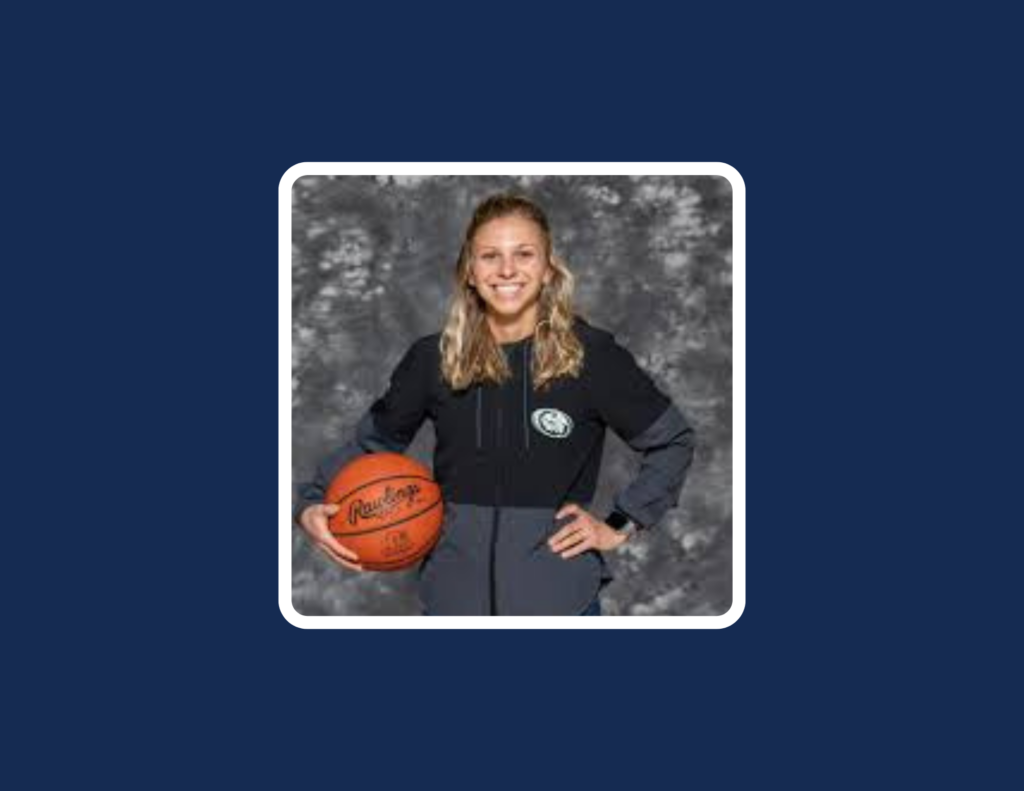
MADY FARNBAUCH – STRONGSVILLE (OH) HIGH SCHOOL GIRLS’ BASKETBALL HEAD COACH – EPISODE 965

Website – https://strongsvilleathletics.org/teams/3749741/girls/basketball/varsity
Email – fogle.mady@gmail.com
Twitter – @LadyMustangGB
If you listen to and love the Hoop Heads Podcast, please consider giving us a small tip that will help in our quest to become the #1 basketball coaching podcast.
Mady Farnbauch is entering her third season as the Girl’s Basketball Head Coach at Strongsville High School in Ohio. The Mustangs won the Greater Cleveland Conference in her second season posting an overall record of 21-3. Prior to taking over the program Mady served as an assistant varsity coach on the Strongsville girls basketball staff for two seasons. She coached for three years at Marysville (OH) High School, prior to coaching in Strongsville.
Mady played her college basketball at Wittenberg University before beginning her coaching career.
If you’re looking to improve your coaching please consider joining the Hoop Heads Mentorship Program. We believe that having a mentor is the best way to maximize your potential and become a transformational coach. By matching you up with one of our experienced mentors you’ll develop a one on one relationship that will help your coaching, your team, your program, and your mindset. The Hoop Heads Mentorship Program delivers mentoring services to basketball coaches at all levels through our team of experienced Head Coaches. Find out more at hoopheadspod.com or shoot me an email directly mike@hoopheadspod.com
Be sure to follow us on Twitter and Instagram @hoopheadspod for the latest updates on episodes, guests, and events from the Hoop Heads Pod.
Make sure you’re subscribed to the Hoop Heads Pod on iTunes or wherever you get your podcasts and while you’re there please leave us a 5 star rating and review. Your ratings help your friends and coaching colleagues find the show. If you really love what you’re hearing recommend the Hoop Heads Pod to someone and get them to join you as a part of Hoop Heads Nation.
Have a notebook handy as you listen to this episode with Mady Farnbauch, Girl’s Basketball Head Coach at Strongsville High School in the state of Ohio.
What We Discuss with Mady Farnbauch
- The early influence of her Dad on her athletic career
- “Control what you can control. That is the one thing my Dad always told me.”
- Having the keys to the gym as a high school player
- Her decision to attend Wittenberg University and play college basketball
- “I get to utilize my knowledge and help these young girls achieve dreams. Just like I wanted that one day.”
- Learning to be more vocal and active during games
- Connecting with mentors early in her career
- Talking through games with her Dad and the value of his advice to her as a coach
- “Always having the head coach’s back and supporting them and their decisions is definitely huge.”
- Coaching at a small vs. a large high school
- Changing the culture in a program as a young coach
- Watching her players play in the off-season
- Using Twitter to promote her players and her program
- Connecting with youth players in the community
- Increasing the number of girls participating in basketball
- The value of a good youth camp
- “I’m very big on we cheer for everybody, we clap for everybody.”
- “I don’t care about time. We’re doing well right now. Let’s keep doing it.”
- What she looks for when scouting an opponent
- Players holding players accountable
- Game day superstitions
Like this show? Please leave us a review here — even one sentence helps! Consider including your Twitter handle so we can thank you personally!

We’re excited to partner with Dr. Dish, the world’s best shooting machine! Mention the Hoop Heads Podcast when you place your order and get $300 off a brand new state of the art Dr. Dish Shooting Machine!

Prepare like the pros with the all new FastDraw and FastScout. FastDraw has been the number one play diagramming software for coaches for years, and now with it’s integrated web platform, coaches have the ability to add video to plays and share them directly to their players Android and iPhones via their mobile app. Coaches can also create customized scouting reports, upload and send game and practice film straight to the mobile app. Your players and staff have never been as prepared for games as they will after using FastDraw & FastScout. You’ll see quickly why FastModel Sports has the most compelling and intuitive basketball software out there! In addition to a great product, they also provide basketball coaching content and resources through their blog and playbank, which features over 8,000 free plays and drills from their online coaching community. For access to these plays and more information, visit fastmodelsports.com or follow them on Twitter @FastModel. Use Promo code HHP15 to save 15%

Your first impression is everything when applying for a new coaching job. A professional coaching portfolio is the tool that highlights your coaching achievements and philosophies and, most of all, helps separate you and your abilities from the other applicants.
The key to landing a new coaching job is to demonstrate to the hiring committee your attention to detail, level of preparedness, and your professionalism. Not only does a coaching portfolio allow you to exhibit these qualities, it also allows you to present your personal philosophies on coaching, leadership, and program development in an organized manner.
The Coaching Portfolio Guide is an instructional, membership-based website that helps you develop a personalized portfolio. Each section of the portfolio guide provides detailed instructions on how to organize your portfolio in a professional manner. The guide also provides sample documents for each section of your portfolio that you can copy, modify, and add to your personal portfolio.

Hey, coach! Want to take your team to the next level this season? Introducing GameChanger, the ultimate game-day assistant with tools to give you a winning advantage. With GameChanger, you can track stats, keep score, and even live stream games, all for free! Get the stats and crucial game video you need to lead your team to victory, all from the palm of your hand. Coach smarter this season with GameChanger. Download GameChanger today on iOS or Android and make this season one to remember. GameChanger. Stream. Score. Connect. Learn more at GC.com/HoopHeads
THANKS, MADY FARNBAUCH
If you enjoyed this episode with Mady Farnbauch let her know by clicking on the link below and thanking her via Twitter.
Click here to thank Mady Farnbauch via Twitter
Click here to let Mike & Jason know about your number one takeaway from this episode!
And if you want us to answer your questions on one of our upcoming weekly NBA episodes, drop us a line at mike@hoopheadspod.com.
TRANSCRIPT FOR MADY FARNBAUCH – STRONGSVILLE (OH) HIGH SCHOOL GIRLS’ BASKETBALL HEAD COACH – EPISODE 965
[00:00:00] Mike Klinzing: Hello and welcome to the Hoop Heads Podcast. It’s Mike Klinzing here with my co-host Jason Sunkle tonight and we are pleased to welcome from my hometown, Head Girls’ Varsity Basketball Coach at Strongsville High School here in the state of Ohio, Mady Farnbauch. Mady, welcome to the Hoop Heads Pod.
[00:00:17] Mady Farnbauch: Hi, thank you so much for having me. I’m so excited to be a part of this.
[00:00:21] Mike Klinzing: Thrilled to have you on, probably long overdue, but nonetheless, thank you for taking the time to join us tonight. I want to start by going back in time to when you were a kid. Tell me a little bit about your first experiences with basketball and kind of how you got into the game when you were younger.
[00:00:38] Mady Farnbauch: Yeah my both my parents were college athletes and they were very into sports. So I started at a very young age, around like second, third grade. I played softball, volleyball, basketball. I did basically any sport you could imagine at that age. I really was into basketball and softball growing up.
I knew with my size, I’m very skinny. Very small, very short basketball was going to be the hard route to go when it came to choosing what sport I really wanted to dedicate my time to. So at first I actually chose softball. My mom actually played in college, so I was very all about softball and my dad just was like, basketball is your sport, you really need to stick with it.
And we had a little youth league down in my hometown in Columbus and I played in that. I remember there was like an A team and a B team and my first year I was on the B team and I worked my butt off because I was like, no, I’m very competitive. I want to be on that A team. And I made the A team the next year.
And that’s just when I fell in love with the sport. Yeah, I mean, once I got to middle school I continued to play multi sports. But once I got to high school is when I really just keyed in on basketball and basically played 24 seven.
[00:02:05] Mike Klinzing: When you were younger, so pre high school and you’re playing multiple sports, are you playing in the neighborhood or are you playing more organized?
Because I feel like you’re kind of right on the cusp of, it could have kind of gone either way for you. Like, obviously kids today are growing up, they’re not playing in the driveway, they’re not playing. in the sandlot. They’re not doing any of that stuff, which is the way that I grew up. Old guys like me versus you’re kind of in that, you’re kind of in that mid range.
So which, which one better characterizes your experiences?
[00:02:39] Mady Farnbauch: I mean, I played in all like organized things. But my dad was huge when it came with me in the sports. I mean, it would just be him and I out in the driveway playing or my brother, he’s five years younger than me.
Once he got a little bit older too, it was the three of us playing. I mean, my mom would even go outside and be the pastor while my dad has me running through drills. So, I mean, yes, I played in like organized team things, but I definitely did the work at home.
[00:03:12] Mike Klinzing: What’s the best piece of advice he gave you as far as being a basketball player? What’s something that sticks in your head that you remember him, like, beating into you over and over again, saying, hey, this is what you got to remember?
[00:03:25] Mady Farnbauch: Yep. When I say this, he tells me this now to the stay. Control what you can control. That is the one thing he always told me.
And Again, I was, I still am, very small. I was shorter than a lot of players. I picked the worst sport probably to go into with my height. So my dad’s like, you got, you can control how hard you work, the effort you put in and how your attitude is with this. Everything else you can’t control.
You control that, that’s what you’re going to get out the best experience out of this. You know, and to this day, he still tells me that. Before every game, I’m about ready to coach. So, that’s probably like the one piece of advice that I have always used, I would say, till this day.
[00:04:10] Mike Klinzing: Makes sense. Alright, so, as a player, When you’re playing in high school, what are some of the things besides being on the driveway with your dad, your brother, how are you getting better?
Are you in the gym by yourself? Are you going and playing? Just talk to me a little bit about your, if you had a plan, what that looked like when you were a high school player.
[00:04:31] Mady Farnbauch: I trained with Huntsman Elite down in Urbana, Ohio. I’m from Plain City, down in Columbus. So, my brother actually played AAU for his organization, and he did training on the side, so I would do individual training with him.
Ball handling, shooting. I played AAU throughout the spring. I would then do different fall leagues in the fall before my season would start and then whether it was during season or not during season, I lived in my high school gym. I think I burnt out the shooting gun and my dad, I had my own little key to get into the school.
I grew up in a very small. Country area. So I had a, I was division four, high school, division five, I think it was now back then. Very small school. So like I could kind of do what I wanted to in a way.
[00:05:29] Mike Klinzing: When you showed up in the gym, they were like, oh, that’s Mady. That wasn’t like, who’s this?
Yes. Girl that’s sneaking into the gym. Yes. Nice. Yep,
[00:05:35] Mady Farnbauch: Yep, yep, yep. Even after my high school games, if I didn’t. shoot well, or if I didn’t hit a certain percentage for my foul shots. Oh buddy, we were in that gym until I would hit that. My dad and I were. So yes, I lived in the gym.
[00:05:53] Mike Klinzing: What’s your favorite memory when you think back to high school basketball?
Whether it’s a game, a moment, something in the locker room with your teammates. What, what stands out when I say favorite memory from high school basketball?
[00:06:05] Mady Farnbauch: Okay. How geez, honestly, it was probably my senior year. My best friend at the time, she was a senior too. It was just the two of us. And she had actually torn her ACL right before her season started.
So she was out, but she was still a part of the team. So I was the only senior with a couple freshmen playing with me a couple sophomores, like barely any juniors. My high school coach at the time, he was my, my freshman year. He was my varsity assistant. He left and then he returned my senior year and he was also my AAU coach at the time, so getting anything my senior year was just such a good experience because it really made me grow as a leader, having such a young group behind me and being the only you know, dominant player in my school and basketball.
It made me, like I said, grow as a leader, just not in basketball, but just as a whole and everything. I actually ended up chipping my wrist. I fell the third game of the season. I basically broke my wrist. I torn like three tendons in my wrist. They told me it was just a sprain. I hit it again. I fell again.
I went back in there like, yeah, you need surgery. I said, absolutely not. I’m taping this up every game. It’s my left hand. I will figure it out. So I played my whole senior year taping my wrist up every practice and every game because I was like, there’s no way I’m missing my senior year. So, and even though that was such like a horrific thing during the time again, it just made me really grow.
And appreciate the sport so much more and appreciate me playing as a player and just being that leader and Those younger girls got to see that they’re resilient and my hard work even with me being injured Just that whole year was really a good experience for me I think.
[00:07:59] Mike Klinzing: When did playing college basketball get on your radar? Was that something that you and your dad had been talking about for a while? Was it something that as it got closer you started to really think about it? Just tell me a little bit about the process of becoming a college basketball player.
[00:08:14] Mady Farnbauch: Yeah I kind of knew in middle school, I’d say my dream was to go to the Tennessee Vols.
Pat Summitt was, is my, is, was everything my favorite coach of all time. My family’s from Tennessee, so I grew up going to those games. And I think that middle school time was when I was like, I want to play in college. I want to go to Tennessee. I want to go to WNBA. You know, you have these big dreams as a young kid.
But it was really in middle school is when it like really hit me that I want to go play in college. So then once we got to high, once I got to high school, my dad really, we did everything we could for exposure wise to get me there.
[00:08:54] Mike Klinzing: And how much of what happened in terms of that exposure and just the process, did your dad have sort of an influence on your decision making, just sort of being the information gatekeeper?
What was his role through the whole process?
[00:09:10] Mady Farnbauch: He was, honestly He was really just that, like, positive, motivating person to have. Where send it out to who cares how big you are. Send it out to these big Division 1 schools. Send it out to Division 2, Division 3. Send them out, I really did a bunch of my work.
My high school coach, my senior year, he really helped me out with like making my highlight film and all that, those little things. The exposure nowadays is so different than it was back then. But you know, signing me, he went to everything with me. My dad did. I mean, you name it, we did it together. We drove to, I think, In Indiana to go to an exposure event, we tripped down to Kentucky.
I mean, like, anything I wanted, my dad was right there and let’s do it. Is this what you want? This is what you want? Awesome. Let’s go. So, yeah.
[00:10:08] Mike Klinzing: And then as you started to go to those events and you start to see the schools that, you are talking to you and what that looks like, and how do you begin to narrow it down?
What were some of the criteria that you were going to make your decision based upon?
[00:10:22] Mady Farnbauch: Yeah. So at first, obviously your big dream is to get a full ride scholarship to a big school and I kind of had a reality check of, okay, That might not be my, my future. That might not be my dream I’m going to get.
So once I started realizing I got to look at some smaller schools I wanted to be a little bit closer to home. Very close with my family. So I picked Wittenberg and once I started visiting all these other division two and division three schools, it was more about where I felt that if I were to quit basketball, was I still going to be happy here academically, socially, everything.
So that played a big part into why I did choose a division three school that was only 30, 40 minutes away from home.
[00:11:15] Mike Klinzing: When you got there. What do you remember about the adjustment, both basketball wise and just, again, academically, socially, getting onto campus and trying to accommodate yourself to college?
Like, what do you remember about that part of it?
[00:11:30] Mady Farnbauch: The basketball part wasn’t hard. My teammates were awesome. I loved my coaches. They really embraced us and they all the lifting, all the conditioning stuff was a whole different level, obviously. You know, my biggest thing was being told, well, you have to, you have to gain about like 50 more pounds on you, like you’re so small, they’re like, here’s a calorie cal, you have to, this is what you need to eat.
And I’m looking at this and I’m like, there’s no way this is all going in my body. I don’t think I can do that, but that was a big adjustment as far as that. Academically I really had to work hard in school, and me being me, I just, that’s just me. I don’t take the easy route on anything.
I like to be challenged. I want to go hard at everything I do and be perfect at it. So. You know, I had to learn, oh, I probably need to study a little bit harder or take some more time with certain, certain things. So that like first semester was a big adjustment on a couple of those aspects. But once you have a good support system around you, family wise and your teammates and your coaches and your professors, it’s usually, it was smooth sailing for me from then.
[00:12:49] Mike Klinzing: What did you go into school thinking you wanted to study or what you wanted to be for when you grew up?
[00:12:54] Mady Farnbauch: Yeah. I wanted to be an athletic trainer or a physical therapist. I did two in internships doing both, and did not like it at all. , I realized, nope, this is not for me. So my major was in sport management and went through all that and wanted to do like marketing.
For a professional team. I did another internship after I graduated college on with the Akron racers that were up here, the professional softball team wasn’t really for me. I figured, I figured out that I just, I don’t know the time commitment with all of it. I just, it wasn’t fitting with me and what I wanted to do with my life.
[00:13:39] Mike Klinzing: Those hours are tough. Those hours working for professional sports teams. Oh, What you got to do are crazy.
[00:13:48] Mady Farnbauch: Honestly, like, and you have to start at ticket sales and you have to do so well to get somewhere else. And I love the challenge of it, but like, I was like, I don’t think I can be fully committed to this.
And I if you’re not fully committed to something, then if you’re not giving your all, then what’s the point? You know? But then I found coaching, so.
[00:14:10] Mike Klinzing: So you did not grow up thinking. That was not something that was on your radar the whole time. Yeah, it’s interesting because we’ve had so many conversations.
And honestly, what happens is, is that the people fall into 2 categories. So category 1 is the person who’s like 8 and they’re playing, but they’re also. Drawing up plays in the napkin and telling their teammates what to do and are basically acting like a coach. Know they want to coach from the time they’re eight years old.
And then there’s another group that is playing, they’re playing, they’re playing, they’re playing, they’re playing career ends. And then all of a sudden they look around and they’re like, Well, man, the game is now gone and I’m not going to be around it anymore. And so how can I stay in it? And so then that eventually leads him to coaching.
It sounds like that’s kind of how you got there.
[00:14:57] Mady Farnbauch: Yeah. My dad has, he told me, I don’t know, ever since I was little, like, you’re going to coach one day, like you will coach, you’re going to be such a good coach. Like you need to coach, no, no, no. Finished my last college game. Yes. I was heartbroken. And then I’m like, okay, I’m done.
Done with basketball, I was committed. how many years of my life to the sport, like I need to move on. And then I had the opportunity at Marysville high school down in Columbus. And I was like, you know what? Let’s just try it. Let’s just try it. There at the first practice. I was like, Oh my goodness.
Thank you. I’m so glad I’m here because I did not realize how much I miss this and just being around the kids and everything, the atmosphere. I was like, Oh my goodness. Yes.
[00:15:43] Mike Klinzing: So. When you think about that first practice and going in there, what was, what was it? Is there one thing or multiple things that you can pinpoint that you were like, yeah, this is, I know that this is why I want to coach.
What was it that sort of grabbed you, if that makes sense?
[00:15:59] Mady Farnbauch: Well, once everybody realized I was not a student and I was a coach. Okay, I think just, I’m trying to go back to that moment. I think it was just giving one of the players some advice and then actually going out there and doing it, and you get to see it as a coach and outside of not being on the floor and on the sidelines, it’s so fulfilling.
It’s like, oh my goodness, I actually helped them. I helped them achieve a goal that and I think that’s when it was like, Oh yes, this is, I love this. Like I get to give back, I get to utilize my knowledge and help these young girls achieve dreams. Just like I wanted that one day.
[00:16:49] Mike Klinzing: What’s one thing when you think back that you were pretty good at?
Right from the beginning, something that you feel like you had a pretty good grasp of, maybe not because you had prepared yourself for it, but just something, some aspect of coaching that kind of came relatively natural to you.
[00:17:06] Mady Farnbauch: Yeah. I would say my energy and my like, motivation with it, or the fact that, especially when I first started out me being able to relate to the girls from a very close perspective, just because I was pretty young.
And just I’m not that far. I’m literally just graduated. This is what I would do as a player, but now I see it from a different perspective. So let’s talk about this. Let’s say those two different little aspects there were definitely my where I don’t think I struggled at all with confidence or anything like that.
[00:17:44] Mike Klinzing: All right, let’s flip it around. What were you bad at right away?
[00:17:48] Mady Farnbauch: Oh, talking. But just being like, because I started out as the head JV coach and I used to be very shy and I wouldn’t like, and now I’m completely different, but like I used to not be that talkative or I would go to the side and talk to them instead of like yelling out during the game.
And not being so loud, I think. See, that’s completely changed now. But that’s definitely something that like I learned, like, okay, I need to be more active during the game.
[00:18:20] Mike Klinzing: Is that a gradual process of figuring that out as you go along?
[00:18:26] Mady Farnbauch: Yeah. And I think that was just like the confidence behind it and just being comfortable actually helping these girls and talking to them and again, just that confidence behind it.
[00:18:38] Mike Klinzing: Once you sort of realized that, hey, I think this is something that I might want to do for a long time moving forward. How did you start to go about improving your craft and looking around and who’d you go to to learn? Were you going and watching video? Were you trying to find mentors, were you watching video?
Just how, what was your process for getting better as you started to realize like, Hey, I think coaching might be a place where I can be for my profession.
[00:19:08] Mady Farnbauch: Yeah. I think a little bit of everything I would go back and watch film. Again, My dad is very involved with me and my coaching like he was with probably more now than he was when I was a player, just because he’s so invested in it.
But we would go back and watch some game film together, like, Oh, what could I have done differently here? I went to a couple of coaching clinics when I first started out on, and just Making those like connections with mentors, mentors that coached me and just getting their advice and talking through situations and picking at their brain on what they would do, just learning different things or I love to go scout.
So before I was a head coach and just a JV coach or an assistant, I would go scout and I would go and just watch both coaches and what they did in certain situations. And I would take different plays or things like that. That’s how you learn. But I say like a little bit of everything I tried to do.
[00:20:12] Mike Klinzing: Okay, I got another dad question for you. And I don’t know if you can answer this question because you’ll probably would have had to ask your dad this question, but I’m just curious. So I’ve had now as a parent, as a coach, I had my dad say this to me. And then I had actually the parent of somebody who played AAU basketball early on when Cal was younger, said this to me.
And I’m trying to think of the right way to phrase it, but basically the question I’m trying to ask you is, does your dad find it easier to watch you coach or did he find it easier to watch you play? Have you guys ever talked about that?
[00:20:53] Mady Farnbauch: I feel like we have talked about that, but I feel like he would say it’s easier to watch me coach than it was to play.
[00:21:07] Mike Klinzing: Yeah, I think that’s the consensus because. Like, so I’ll, I’ll give you the, the two conversations that I had. So my dad said to me, this was probably within, my dad’s like 80 years old now, so this was be, this was probably within the last year that we had this conversation. He said something to the effect of, yeah when you were playing and watching you, like it was so much fun, but at the same time.
It was so stressful because we just went into this game and we’re watching want you to do well and you’re kind of living and dying with like every moment that your kid has. And around that, you still want the team to win and do well, but as a, but as a parent, there’s certainly a part of you that’s always.
More focused on just what is your kid doing? So I said dad, I said, I totally relate to that. And he’s like, yeah, now. And my parents moved to Florida like 20 years ago, and they, so they’ll sit and they’ll watch, like they’re watching like big 10 women’s volleyball games and they’re watching University of Florida basketball and they’re just.
They’re watching all these different things. My dad’s like, I just like to watch sports and I don’t have to, I don’t have to worry about like one person’s performance. As much as I miss watching my kids play, I don’t necessarily, it doesn’t feel, it doesn’t feel the same way. So that was the conversation with my dad.
And then the other conversation I had was with a parent who, they actually had a daughter who ended up getting a head coaching job and they had watched her play for years and years and years and years. And then she becomes a coach and they’re like, Oh, we so much like. Watching her coach so much better because we’re not worried about what any one person on the team like we could care less which one of the 12 players on the team.
does well. It doesn’t matter if it’s Mary or Susie or whoever it is. It makes no difference. All we care of, all we care about is the team. And I just thought it was an interesting perspective that again, prior to like a year ago, I never would have even thought of having that conversation, but it’s just interesting.
And I’m sure when I think about somebody like your dad, who’s been so invested in you, first of all, as a player and as a person, but then now as a coach, You kind of feel like, man, you’re just you’re, you’re living and dying with, you’re living and dying with that, with that person as they go through their experiences, whatever they might be playing or coaching. So it’s interesting.
[00:23:24] Mady Farnbauch: No, I would definitely say that though. Yeah. That’s how he is. I mean, He’s all about me coaching and he like is so invested into like every player and like he’s so involved with it but like yeah I definitely agree though I feel like the stress and like him wanting me to do well as a player and you know he knows how he knew how badly I wanted to win or I wanted to do well and he was very hard on me so I definitely think it’s a lot more fun to watch me coach now.
[00:23:56] Mike Klinzing: Now, when you’re coaching, do you talk to him on game night or do you guys wait to talk right after games?
[00:24:07] Mady Farnbauch: We, my dad and I talk probably twice a day on game day. I usually call him when I leave work on the way to the gym. Or in the morning on my way to work on and then he usually comes to every game.
If he doesn’t come to a game, he watches online and I usually call him up as soon as I’m done. He’s like, yep he’ll go through the whole thing with me or whatever. But yeah, we usually talk. We’ll talk before or after the day before a game. I practice like I go through everything with my dad.
We that’s just so cool. That’s always been our relationship. We obviously more than that, but like, that’s our one thing that we’ve always connected with is sports.
[00:24:53] Mike Klinzing: More brutally honest with you as a player or a coach or the same, it doesn’t matter.
[00:24:58] Mady Farnbauch: That’s actually a tough one. I would say the same, but I think he was harder on me as a player.
Now he’s more like blunt and very like, well, why did you do that? Like you need to explain me. And he wants me to think about things and talk me through like why I did what I did or why I’m second guessing and you know, things like that. I think he’s harder on me as a player, but he makes me think more and he wants me to talk through things differently now.
[00:25:28] Mike Klinzing: Makes sense. All right. Tell me a little bit about your experiences as an assistant coach. You talked about how you started out being the JV head coach, which gets you reps, which I think is something that’s underrated in terms of eventually becoming a head coach. The difference between being a varsity assistant versus being a JV coach.
I started out my career and I was a varsity assistant for a long time. And so I never really coached a game, if that makes any sense. I didn’t have to sub. I didn’t have to call timeouts. I didn’t have to organize, organize a timeout and tell players what I was doing. And then one year I did, I did, yeah, I did double, right.
I did double duty and I coached the JVs and I was the assistant varsity coach. Yeah. And it took me like half the season to get comfortable again, making decisions and figuring things out and making sure like, Oh man, I just played six players and there’s four more sitting on the bench that I meant to play before the game, but I just kind of got caught up in what was going on.
And so there’s, there’s that rep piece of it, but just as an assistant coach, what are some things that you think are characteristics of a good assistant coach. Some things that you learned along the way in the two stops where you were an assistant.
[00:26:39] Mady Farnbauch: Always having the head coaches back and supporting them and their decisions is definitely huge.
Dawn Thall was my head coach before I took over and we have a really good relationship as coaches and obviously as friends, but making sure I was always supporting her and what her game plan was and things like that. But I was always very honest and I was always very, this is what I think.
You’re the head coach though, like you make your decision, but from a different perspective you know, this is what I think. But I think bringing that intensity is huge too, especially in practices. The head coach is trying to run everything and watch everything. Your assistant coach is supposed to be that person that, okay, I need you to watch this.
I need you to watch the defense. And as an assistant coach, I was very big on like, well, I’m going to be the best at it. Then like, let’s go. Making sure that everybody was prepared. I’m trying to think of everything else. Like, I think the main thing is just always being honest and supporting whatever the head coach is trying to achieve.
Always being on the same game plan, always everything like that.
[00:27:59] Mike Klinzing: Yeah, I think that’s a piece where when we talk to coaches on whatever level, whether they’ve been an assistant and a head coach, or whether they’ve just been an assistant, one of the things that kind of gets talked about, and I think it’s what you’re pointing out here is that you have to have someone when you’re an assistant coach, you have to be willing to share your opinion, you have to be willing to challenge the head coach, but those things have to happen in the locker room, in the coach’s office, you Behind closed doors and conversations that are not for public consumption.
And then once you hash everything out behind closed doors, and then you walk out to your players or your community or your school, Whatever decision has been reached by the head coach, the assistant coach is 100 percent supportive of that decision, even though in the coach’s office, you may have completely and vehemently disagreed with the decision.
You still have to put on that public face of. Hey, this is what we’re going to do. And I believe in it a hundred percent. And that’s sometimes that’s sometimes for some people, unfortunately is difficult to do. And I think that speaks to what you talked. Yeah. It speaks to what you talked about just being loyal and supportive.
Right. So to me, that’s like a, it’s not really a fine line because to me, it seems like it’s pretty straightforward, but I think sometimes when you get in that, okay, we’re going back and forth, we’re arguing, we’re arguing, we’re arguing, I got one point and you got another. And then all of a sudden we walk out.
careful if I’m the assistant coach with what I say and who I say it to and how I phrase it or very quickly you can create a lot of problems in a program.
[00:29:37] Mady Farnbauch: Yeah, because if you guys, if coaches aren’t on the same board, then the players aren’t going to believe in it. They’re not going to be on the same board. It’s a tricky little factor there.
[00:29:47] Mike Klinzing: Absolutely. All right. Tell me about how you get the opportunity to come up here to Strongsville after three years being the assistant at Marysville, and you get the, get the job here. How does that come across and, and why are you looking for another spot?
Or maybe it just came, just explain to me the process.
[00:30:05] Mady Farnbauch: Yeah. So my husband, his job is up here in Brecksville. So after we graduated college, I stayed down in Columbus for three years and then we got engaged. So I had to move up here which I was kicking and screaming the entire time, did not want to come up here at all.
But I would not want to leave now. So very grateful for that. You know, at the time I was just like, well, Like, I have to find a coaching position, like, I need to be, I need to coach. I looked at a couple schools kind of in the area. Yeah, kind of in the area. I had my interview with Dawn and Denny at the time.
And it went great. I came up here for an open gym, met everybody, and I just felt like I was at home. I was like, this is perfect. I mean, and then going forward I was her JV, I was the JV coach. And then I sat assistant varsity, sat on the varsity side and everything. And then, The year after that, it was COVID but a couple of the other coaches left.
So it just turned into me being the JV coach and the varsity assistant. And then my last year before I took over, I was just the varsity. So I kind of went in a good little, like. Wave there where I went the right way gradually getting up to the head coach position
[00:31:33] Mike Klinzing: What’s the difference in terms of the level and the size of the school in terms of your approach if there is any?
[00:31:41] Mady Farnbauch: Yeah, coming from a very small school, you know my whole life even at college level a division three school, you know going to a big school like this at first I’m like, oh my goodness. There’s so many girls like you’re playing all these big teams But I think it’s awesome. You get so many different athletes, multi sport athletes.
You get to meet so many players and develop different players. And I feel like the level is just so much more intense. And there’s so much more, you get so many players that are truly dedicated to the sport and that do all these exposure events and play AAU. And you get all these great athletes. I mean, I love, I love coaching at a big division one school. I think it’s great. You know, you get great competition with all the other great schools around here.
[00:32:31] Mike Klinzing: The transition from being an assistant coach to taking over as the head coach for the first time, what was the most exciting part about getting to become a head coach?
And then we’ll come back and ask you what some of the challenges were. So let’s start with, let’s start with the exciting part. What you were most excited about when you first got the head coaching job?
[00:32:53] Mady Farnbauch: I think there was probably two things. One, the girls I loved. Obviously I’d been there for three years, so I knew the seniors.
I knew all the other returning players coming back and loved that group so much. So I was so excited to. still be there here at Strongsville and to be able to coach these girls who I once coached at JV or helped out last year on varsity. So I got to stay with them and develop them. And then I think just finally like reaching that goal that I wanted not just a head coach position, but a head coach at a big division one school being so young, I finally had gotten there. So those are probably the two most exciting parts of it, I think.
[00:33:37] Mike Klinzing: What was the challenge that you felt like you had to, I mean, I’m sure we could probably list 25 of them, but let’s just stick with it. So let’s just go with what, when you first get the job, what are a couple of things that you knew kind of in your mind going in as you’re taking over?
Cause obviously you’d been in the program. So what were some things that you were thinking were going to be important to you and the program in order to be able to have success?
[00:34:06] Mady Farnbauch: Yeah I was making some changes with something, with some like offense things and some defensive things, so I think the biggest thing was getting these girls to buy in to what, the culture I was trying to change you know, and these girls, yes, I had helped out and everything, but they hadn’t really seen like the true Coach Mady yet.
And what I’m going to bring to the table as a head coach now what’s my vision? How do I want to build this? And I think getting these girls to truly buy in and understand that this is going to make us successful. This is maybe different, but it’s. We’re going to get there. It’s going to there’s a process with it.
I think that was probably the most challenging part of it. And you know, all the logistic things, the fundraising, the scheduling, all those things. I’m just like, whoa, I knew what I had my head in store for, but just managing all that. And I’m a very organized person, so once I got a grasp on it I was just fine.
Dawn really, really was such a good mentor to me. She really helped me out. She guided me through everything. I could not be more blessed to still have her with me. She plays such a huge aspect to my transition there, I believe, too.
[00:35:35] Mike Klinzing: All right. So talk about that. Cause there’s part of it that I think is always interesting when an assistant takes over and becomes the head coach.
Obviously there’s a change in dynamic in your relationship with the players and versus if you have somebody who’s a head coach who comes in from an out from outside the program, nobody knows there’s sort of, again, there’s a different way of approaching it, I guess, you know what I’m saying? And then, and then you were in a very unique position in that Dawn was the head coach and you were her assistant.
And then your roles. flipped. So talk a little bit about how that’s worked, why that’s worked, and just again, how, how that transition was helped by that relationship that you guys had already built.
[00:36:19] Mady Farnbauch: Yeah. Like I said I was making changes. I wanted to change the culture at Strongsville and I had all these different ideas that hadn’t been done in the past.
And so that was so challenging, but I think Dawn was so supportive of everything that I wanted to do. So with her and I, there was never any tension. Nothing towards that at all. When it comes to the players, obviously, yes. I am young. I know these girls like to talk to me about things.
I want to be a mentor to them a role model to them, and I’m a very open person, and you need to come talk to me, come talk to me, like, I outside of basketball, I’m here for you always I’ll always support you, whatever and I think just finding that respect. outside of that part of things.
And as a coach now, as your head coach with my changes and everything, getting them to buy in and just getting them to respect me with me motivating them, with me pushing them in practice holding them to a certain standard. You know, yes, it was a little bit of a challenge and a struggle that first year with that group.
But again, I mean, there were so many factors that went into it. And first year I was changing a lot, really trying to change the culture of things. So I definitely think now it’s truly has made its course and it has changed a lot.
[00:37:52] Mike Klinzing: How much of the vision that you had before you took the job and sort of how you saw yourself as a head coach, how close are you to that version of yourself that you thought it was going to be before you got a head coaching job.
In other words, I think sometimes when you get your first job. you feel like, okay, I’m going to do this, or I’m going to be like this, or this is how we’re going to play. And then because of your personnel, because of whatever you have to obviously adjust, not everything is just, Hey, this is a perfectly how it’s going to work.
So when you think back to kind of what you thought the head coaching position was going to look like, how has it sort of followed your vision and how has it deviated from your vision? If that question is, yeah, this makes any sense.
[00:38:41] Mady Farnbauch: Yeah. I mean, Obviously this past season I lost nine, my first season, I’m sorry, we lost nine seniors.
So I knew coming into last season, like, okay, I don’t really know what to expect. This is kind of the unknown, right? This is my second year. Those girls are all gone. You know, these younger girls, they got to listen to me. They probably really learned from me. They’re buying in. Let’s see how that translates.
And it definitely did. And then we had people come in. We had a freshman takeover. I didn’t think it was going to go how it did. So my vision of it was like, Blown away last year and but to me like that’s just the start of it like they set the standard last year of what our season can look like and we add little things here and there And going into this season, it’s just going to be even better.
But we got a lot of hard work to do but yeah, I’d say like just the vision has, it’s getting there. I still have so many goals, so many things I want to do you know, outside of basketball building the program up and the culture and so many things I want to do on the floor too, and changing different dynamics and things like that, but it’s getting there.
It’s going to take some more time and I’m okay with that. But I think last year definitely exceeded that and pushed it a little bit further. And I’m like, Oh, okay. So, and then obviously we have a very good group this year, so I’m very excited for it.
[00:40:21] Mike Klinzing: When you think about the culture of your team and you think about building relationships with the girls in your program, how do you approach that?
What are some things that you try to do to. Build the type of culture you want and build the kind of relationships that you want to have with the girls in the program.
[00:40:41] Mady Farnbauch: Yeah. I mean, when it comes to my high school girls Always checking in on them. When we’re in season, off season I make a lot of time outside of season to go to their AAU games, to go to their fall league games.
I usually try to go in the spring. I’m going to go here in July down to Kentucky to see a bunch of the girls play. I’m just showing that support and that I think them seeing me make that time to go do those things and even the multi-sport athletes going to watch their volleyball game or their softball game too, showing that support and other aspects too.
You know, and again, it’s something very little, but social media is huge. Today’s age and these girls shouting out to them on Twitter thing. Little things like that I think really go a long way. And then when it goes to the younger girls, my youth side of things during the season.
I usually go to a couple of the youth practices and I sit and I’ll practice or I practice with them and things like that. And then on, they play on Sundays, we go and work the concession stands. I always make sure my high school girls go talk to the girls and I go talk to them. Or I sit behind the bench and little things like that and just, you know.
Knowing their name and knowing that, or making sure that they know I’m who they are, I think is huge because they’re big school. There’s a lot of kids. So I really tried to make that a big point when I do go see them and things like that.
[00:42:17] Mike Klinzing: Yeah. Those little things that you do in terms of connecting with the youth program, I think, is really when you talk about public high schools, to me, it’s such a, I think, overlooked thing and underutilized thing by a lot of coaches. And look, I get, we’ve had so many conversations and I’ve seen it firsthand from just about every perspective. The amount of time.
That you’re asked to put in as a high school coach, just to let’s put it this way to just even be at the baseline amount of, I’m not even talking about going above and beyond. I’m talking about just to be sort of status quo competitive. The amount of time that you have to put in as a. head coach is borderline ridiculous at this point.
And then you start talking about having to be able to go and be involved with the youth program and get to know those kids in the younger grades. And so that I always say that to me, one of the things that I loved growing up was the high school kids used to, and again, different era, it’s never going to happen anymore.
different era when the high school kids would coach the Saturday morning rec basketball.
[00:43:32] Mady Farnbauch: They would do that for me too when I was younger.
[00:43:33] Mike Klinzing: Yeah. Didn’t have parents involved. It was just high school players were coaching. And I would say, I have, I have guys that coached me that I’m still friends with. And I have guys that I coached that I’m still friends with.
And to me, like there’s nothing more valuable than that. And then it also, I think back in that time, It made it so kids aspired to be like, Hey, Joey’s coaching me on Saturday morning and I’m in fifth grade someday. I want to be like Joey and run out there and do my layup line and hear the pep band and all those kinds of things.
And it’s one of the things that I feel like across the board as a generality. In high school basketball, some of that has been lost just because of the way that youth basketball and sort of the landscape has transformed since certainly since I was a kid, but sounds like since you were playing as well.
And so I just think that the more that a high school coach can do to make those connections. That’s just, it’s just a huge positive and I can speak to what you do and what I’ve seen you do in the time that you’ve been here, that I know that the girls that are playing in middle school and I know the girls who are playing in the elementary travel program, I know they know who you are and I know that you know who they are.
And to me, that relationship that you have and that you build and that they build with you, again, gets that aspiration going of, hey, someday I want to be able to put on that uniform and play for coach Mady. And I just think that that’s an invaluable thing that so many coaches overlook for lack of a better way of saying it.
So. I guess from my perspective, just talk a little bit about how you envision the ideal. And obviously I’m on the travel board here. So we can just hash it out right now. What’s the ultimate vision? What do you want to see it look like if you could design the perfect travel basketball program for Girls basketball and Strongsville, what would it look like?
[00:45:40] Mady Farnbauch: Yeah, I mean, obviously getting numbers up more. I would really like that, but that’s going to take time, obviously. I know like with the boys side, they have two teams per Great. And that’s something I want and I know that we run like the TNBA and all that, but like, like you said, growing up, like I grew up with my varsity girls coming down on Saturday morning and coaching us and doing our games for us.
And I would love for us to get back to that point. I think that’s huge. You know, yes Maybe even if it’s just three weekends or whatever it is, but I think that’s, that’s something I would love to have on trying to think of what else.
[00:46:26] Mike Klinzing: I think both ends love that. I just think both, I think the older girls, once they got going on it I think they would love it. And the younger girls doing the youth camp.
[00:46:40] Mady Farnbauch: They have so much fun at the youth camp. We just had ours last week.
[00:46:44] Mike Klinzing: Makes such a difference. All right. Anything else on the youth? And then we’ll jump to something else.
[00:46:52] Mady Farnbauch: I do plan on hopefully this year doing like a mini ballers club and doing it like kindergarten through second grade. Come in for an hour, I don’t know, a week every two weeks or a week they get a t shirt and Thursday nights they come in for an hour and literally my girls would just teach them how to juggle a ball.
How to make little passes and it’s going to be like a little club and they can come to my games and dribble at halftime. Little things like that. Get those younger ones, not just the third grade, but start it from kindergarten through second grade, I think is very important.
[00:47:32] Mike Klinzing: And again, it just gets them thinking about being a part of the program. And I think if you can make it feel like a K to 12 program instead of a nine through 12 program and a six, seven, eight program and a one through five program, I think that’s really where. the secret sauce is, because then you get everybody kind of pulling together, then you get more people to come to your games and it just kind of snowballs.
[00:48:01] Mady Farnbauch: I really just want them to feel like we’re one big family and that we’re here to play basketball. We all love basketball.
[00:48:08] Mike Klinzing: Absolutely. All right. Let’s jump back to the high school and the varsity. Tell me a little bit about practice design, how you go about putting together a practice plan when you’re sitting down and let’s just say it’s preseason and you’re planning a practice for a random Tuesday afternoon.
What’s your process for planning a practice? How do you go about doing that?
[00:48:31] Mady Farnbauch: Yeah, depending on obviously scrimmages or whenever games are coming up, I usually dedicate each day to something different that we’re going to focus on whether it’s offense or defense. We always start out with a warm up drill.
We always start out with jump roping. My girls love their jump ropes. But I think it’s important. So, start out with some warm up stuff. We do some shooting. We do our regular transition things. And then we usually break down to talking about defense today. We’re going to talk about one on one.
Then we’ll go to two on two. We gradually go up to it. Just the basics and everything like that. And then just really Really try to teach my vision of defense or what offense and then we do team stuff. We go through our offense or our defense that we’re running, get better at what we’re doing.
But when it comes to preparing for games, that’s a little different. A little bit more game focused.
[00:49:39] Mike Klinzing: When you’re putting together your plan, does it look the same every day? In other words, are you going with, okay, warmup, shooting, offense, defense, and then there’s obviously drills that are broken down within each of those categories, or do you mix it up and one day it’s defense first, one day it’s offense first? Just how do you approach that part of it?
[00:49:56] Mady Farnbauch: Yeah. That’s usually what I try to do in the, especially the preseason. I try to mix things up. You know, the one big thing is just always have an intensity with it and always having energy. I’m very big on we cheer for everybody, we clap for everybody, we make a foul shot instead of running.
You go down, you clap for everybody. Little things like that. But planning practices. That’s usually what I do. I try to mix up as much as I can. We usually stick with like the same warm up kind of thing. But every day is kind of different. And I usually just base it off of things I see that we need to get better at or that from previous practices, I go off those two.
[00:50:40] Mike Klinzing: Are you sitting down in front of the computer to plan the practice? Are you pen and paper? Yep. How do you, how do you, how do you do it both? Just depends.
[00:50:48] Mady Farnbauch: Yep. I usually jot down things or like throughout my day, I’ll jot down things that I remember or I’m thinking about that. Ooh, we got to add that. And, but I usually always type up a structure of practice plan and then how that goes.
Oh, we went too long in this, or, oh hey, I remembered we did this yesterday in practice, I want to, let’s go off of that and let’s add more to that. So sometimes it doesn’t always go as planned, but we’re always doing something to better ourselves.
[00:51:19] Mike Klinzing: Are you a strict time person or are you more, Hey, we need, I had 10 minutes planned for this and we’re going to need 15 or I had 10 and we’ve got five. How do you think about that part of it?
[00:51:31] Mady Farnbauch: I usually start out like that where, okay, we’re very timed, it’s structured. And then it usually turns into no, like the girls were feeling this right now. We’re doing great. Let’s stay at it. Okay. We. Dinner transition. We did so good doing five on 0, you know what?
Let’s go live. Now keep the energy going off of that. So usually I do break down and it’s like, you know what? I don’t care about time. We’re doing well right now. Let’s keep doing it,
[00:51:58] Mike Klinzing: All right. You mentioned earlier that when you were an assistant, you really enjoyed the scouting process and going out and watching teams play.
So when you’re thinking about scouting an opponent as a head coach, what are some of the key things that when you’re watching? What are some of the key things that you’re looking for to be able to help your team to have success?
[00:52:20] Mady Farnbauch: Yeah personnel, obviously, and how we play, how is our game different than their game?
What are their strengths? What are our strengths? What’s their weaknesses? Matchups, little things like that. And then as I go to watch them I pick up on their plays and how certain girls read off the screens, little things like that. And I always try to envision Sydney Bass is guarding this girl.
Okay. I got to remind her, this is how she goes off these screens or things like that. But that’s usually how I do scout. I usually go in person. I’ll usually go in person. And then I watch about five games.
[00:53:06] Mike Klinzing: Well, it’s so much easier now to watch film, right? Oh, it’s so much
[00:53:09] Mady Farnbauch: Oh, it’s so much easier. Hudl’s huge, so it’s great.
[00:53:12] Mike Klinzing: Just being able to break down everything and see it all. Yeah. So then, the tendency is, right, in the old days when it was a lot harder, coaches would say, Eh, maybe I watched two games, and whatever. Now it’s like, I could watch five in the same amount of time. So it’s, even though it’s a time saver, it really doesn’t end up saving you much time.
You just end up being, I guess, more efficient. more efficient and and watching more of what you of what you do. So how much of what you put together for yourself and the coaching staff in terms of a scouting report. How much do you find that you can share with the players? Because we often hear coaches say, yeah, I can’t give them obviously everything that I’m giving to my coaching staff.
I’m going to overwhelm them. So how do you approach that part of it? What do you give to the players based off of what you see when you’re scouting?
[00:54:04] Mady Farnbauch: Yeah. So when we’re preparing for a game, I always type out a scouting report on my assistant coaches, they always watch. one or two of the games as well, too.
So that way we’re all on the same page. We’re all seeing the same thing. So then we all talk about it. We’ll all meet. We’ll go off of each other and what we, each of us saw. And then when I go to make my scan report, I usually make it, I don’t want to say basic, but like, I go into detail, but I don’t go, obviously, in that much detail.
But they get their scan report and then we go watch film. And then when I break down film, we go off of each player what offensive sets they do, what defensive sets, how do they react to this, that, and that. Whoever they’re playing, their opponent is, this is the defense they run.
That’s what we do as well too. Let’s watch this team and how they react to that. Can we do that? But I usually try to keep it pretty I don’t, again, I don’t want to say basic, but straightforward with it.
[00:55:07] Mike Klinzing: So you want it to be something that they can use, right? I think a lot of times when you think about And I don’t know about how you were as a player, but I know that when I was playing way, way, way back a long time ago, that you’d get those scouting reports and there’d be little tidbits that you’re like, okay, I can pick up if I know I’m guarding this player and there’s something in the scouting report that I can use.
And maybe there was a couple of offensive actions that the other team ran that I could maybe try to anticipate and see. But a lot of times you get down and the more detail. I found that you give to players or that I was given as a player, the less valuable it became because then I had to sort through and try to figure out what’s valuable and what’s not.
So I think your description of basic, I get what you’re saying. I get what you’re saying and what you’re trying not to say at the same time. So you want players to be able to have information that is beneficial that they can actually use and process. Because again, so many times at the high school level, right?
You’re pretty much happy if they’re remembering what you’re going to do, let alone, let alone remembering what the opposition is going to do in many cases.
[00:56:16] Mady Farnbauch: Well, what is so great about my group that I have, they hold each other so accountable that they go in there, they have access to hudl.
So they go and they watch so and so is guarding their best player on the dinette. That player, they hold each other accountable, even without me telling them sometimes, they’ll go and just watch film on that player, and then talk to me at practice the next day, like, I watched film I know this is how I should guard things like that.
So I’m very thankful that my girls are so invested and so dedicated and that they really hold each other accountable on that.
[00:56:58] Mike Klinzing: Yeah, another great thing about Hudl, right, is that they all have access and can watch it whenever, wherever they want. And I mean, that’s just such a benefit that if a kid, and again, not obviously every kid is going to want to do that.
But for those that do, I mean, it’s such a valuable. back. Awesome. Again, whatever, 30 minutes after the game ends and you can go back and you can watch the game while it’s fresh in your head and then you can always go back and compare where you are at one point in the season to where you are later and it’s just, to me, it’s just a huge, huge value in terms of a teaching tool.
How much do you guys watch film of your own play? And then when you do, when and if you, when and if you do, how do you balance out showing them? Hey, here’s some things that. Maybe we didn’t do so well that we need to improve. And then balancing that with things of like, hey, we’ve been working on this and look at how good We did this particular whatever it might be.
So just how do you think about that in terms of using film with your team?
[00:58:01] Mady Farnbauch: Yeah obviously it’s based off of when we play and things like that, but I usually always try to watch us from the previous game going forward going off of some positives that we saw and then showing some things that okay look, we’re playing so and so next like we do this that it’s going to be Worst or whatever it is.
Not negatives, but you know, things that we can improve on. We usually, I usually try to balance that out. So that way we’re focusing on us too, and not just the opponent. I mean, no, we, we do watch a lot on us as well too.
[00:58:42] Mike Klinzing: Game day. Do you have a superstition?
[00:58:45] Mady Farnbauch: Yes, I do. I have a very big ritual that I do.
[00:58:51] Mike Klinzing: Where did it come from? First of all, where did it start before you go into what it is? Where did it start?
[00:58:57] Mady Farnbauch: I honestly, I could not tell you. I think it, I really could not tell you. I think I’d like to say that it all kind of started this season, and I don’t know if it was just because the girls were very, like, they had a ritual too, so I just kind of went with the ritual.
But I always have a Starbucks coffee. I always get to the gym like an hour or two beforehand, and I usually, like, I don’t want to say manifest, but I like envision everything, and I like mentally prepare, not, I don’t want to say mentally prepare myself, but I just get my mind right. I’ll go in the locker room by myself or in my office, and I just sit there.
I don’t talk to anybody. I usually don’t eat. I’m usually a nervous wreck for every game. It doesn’t matter who we’re playing, but as soon as the, or I listen to the same songs. before every game. But usually once the game starts, I’m absolutely fine. The nerves all go away. And I was like that as a player as well, too.
[01:00:07] Mike Klinzing: Funny how you get into certain habits. I think your answer 100 percent honest and spot on and that sometimes you don’t necessarily even know where those things come from. It’s like, well, maybe I did this one thing once and We played well, so let me repeat it. And it’s not necessarily, you’re not thinking about it as a superstition or even a ritual at that point.
It’s just, okay, I’m going to do it. And then before you know it, you look around and you’re like, man, I’m doing like 15 things here before the game that I do every single time. Yeah, right. Exactly. And it’s just interesting how that happens to, it definitely happens to coaches and you can go and think about just the different routines that we’ve talked with coaches over the years about and things that they’ve done and sort of like you described, they, they sort of have stumbled into them. It’s not necessarily an intentional like, okay, I’m going to get my Starbucks and I’m going to go here and I’m going to do that.
I’m going to listen to this song. It just sort of evolves. And then all of a sudden you’re, you’re in this situation where you’re like, okay, here’s what we’re going to do every game. And it’s just sort of is how you, how you go about things. So it’s interesting. Yep. Tell me about. What’s the most fun of coaching a game?
When you’re actually on the sideline in a game, what do you love the most about being an in game coach?
[01:01:25] Mady Farnbauch: I love just like when we hit that first shot and my bench goes crazy and like, Again, as a player, I was nothing like I am as a coach. I was very quiet, very reserved. I hardly yelled, but I was a point guard.
So I would always talk and everything, but I was just very reserved. And I think just feeding off the energy from the crowd and the bench. I just, I don’t know, like I just get so into it. And me, I’m always clapping. I’m always like. On bending my knees like just like on the floor almost like walking up and down you know talking like talking to my players. I mean I get really into the games
[01:02:13] Mike Klinzing: What about officials talk to me about handling officials?
[01:02:17] Mady Farnbauch: I i’m usually pretty good. I’ve only ever gotten one technical before but no I’m usually really good. My biggest thing is, listen, if I have a question, just please come over here, just answer it so I can explain it and better my girls and I can teach them.
That’s all I ever ask. They’re making the calls, they’re not going to overturn much. Like, well, I can’t control all that. Like we can control how we react and what we do next now. And so I always try to tell the girls whenever we get upset by anything, like, listen, call’s done, move on, next play.
[01:02:50] Mike Klinzing: There’s your dad’s influence right there. We started with your dad and we’re getting right to the end. There’s your dad’s influence, right? control. It’s right there. It’s right there for you. All right. Before we finish, I want to ask you a two part question. So part one, when you look ahead to the next year or two, what do you see as being the biggest challenge ahead of you?
And then number two, when you think about what you get to do every day, what brings you the most joy? So first, your biggest challenge, And then secondly, your biggest joy.
[01:03:30] Mady Farnbauch: So biggest challenge going forward, like I’ll go off of this season I think, and I’m kind of dealing with it now, just knowing the pressure and that what we have and what everyone’s saying, like how good we could potentially be.
And I would say just having that challenge for myself, like, okay, I can’t get ahead of myself. Like we have to do the work, things like that. And then obviously the next year or two, it’s going to be a little bit more, the dynamic will hopefully not, but could potentially be a little bit different.
And just having to learn myself, like, how do I got to put that time into these younger girls as well, too, because that’s who’s coming up. That’s who’s rebuilding that where I’ve never been in that situation yet. So that will be a challenge for myself, but again, I’m not worried. I’m going to put the work in for it.
They’re going to do the work. It’s going to be great. So then what was the second question again?
[01:04:35] Mike Klinzing: Biggest joy.
[01:04:36] Mady Farnbauch: The biggest joy with basketball or just in general?
[01:04:39] Mike Klinzing: You can give me both.
[01:04:42] Mady Farnbauch: Well, in general would be my son, obviously. He just turned three and then my husband, my family is by far the biggest joy in my life.
But when it comes to coaching, like that coaching is right there with him. Like this is such a passion of mine. I love waking up every day and knowing I get to go to practice, knowing I get to be around the athletes and the coaches that I have. They just so fun and knowing I get to challenge them and help them achieve goals, individual and team goals, and just being a part of that atmosphere it brings so much joy and I love it.
[01:05:25] Mike Klinzing: All right, before we finish, I want to give you a chance to share how people can connect with you, find out more about you, your program. So you want to share Twitter, which you talked about earlier, website, social media, email, whatever you feel comfortable with. And then after you do that, I will jump back in and wrap things up.
[01:05:45] Mady Farnbauch: Okay. Yeah, I mean, email for sure. Do you want me to give my email address? Okay.
[01:05:50] Mike Klinzing: Sure, go for it. We’re going to put it in the show notes anyway, but go for it.
[01:05:54] Mady Farnbauch: Okay. Yeah. You know, email address is my last name or my maiden name. fogle.mady@gmail. com. We have our Twitter account. Which I do not know the name. I think
[01:06:08] Mike Klinzing: We’ll find it. Don’t worry. We’ll find it. We’ll put it in the show notes. You’re good.
[01:06:10] Mady Farnbauch: Twitter’s on there. I would say those are the two big things. I hold the Twitter account, so I run all that. But yeah.
[01:06:19] Mike Klinzing: So full disclosure for our listeners, my daughter, my daughter, Madeline, who goes by Maddie everywhere except for in our house.
I’ve never once called her Maddie in her entire life. So she’s always Madeline or Mads at our house, but full disclosure, she’s going to hopefully at some point get an opportunity to play for coach Mady at Strongsville. So this has been a lot of fun for me to get to know a little bit more about you and get to know a little bit more about your thoughts of building a program.
And we really appreciate you taking the time to jump on here with us and talk a little Strongsville girls basketball. And like I said, it’s probably long overdue, but thank you for taking the time out of your schedule to join us tonight, Mady. Really appreciate it.
[01:07:02] Mady Farnbauch: No, thank you so much for having me. I really, really appreciate that.
So much fun.
[01:07:06] Mike Klinzing: Awesome. And I want to say thank you to everyone out there in our audience for listening. We really appreciate you and to everyone who is out there. Thanks for listening and we will catch you on our next episode. Thanks.