
LEE WIMBERLEY – BEEBE (AR) HIGH SCHOOL BOYS’ BASKETBALL HEAD COACH – EPISODE 980

Website – https://www.beebebadgers.org/o/high-school/page/athletics
Email – lwimberley@beebeschools.org
Twitter – @CoachWimbo
If you listen to and love the Hoop Heads Podcast, please consider giving us a small tip that will help in our quest to become the #1 basketball coaching podcast.
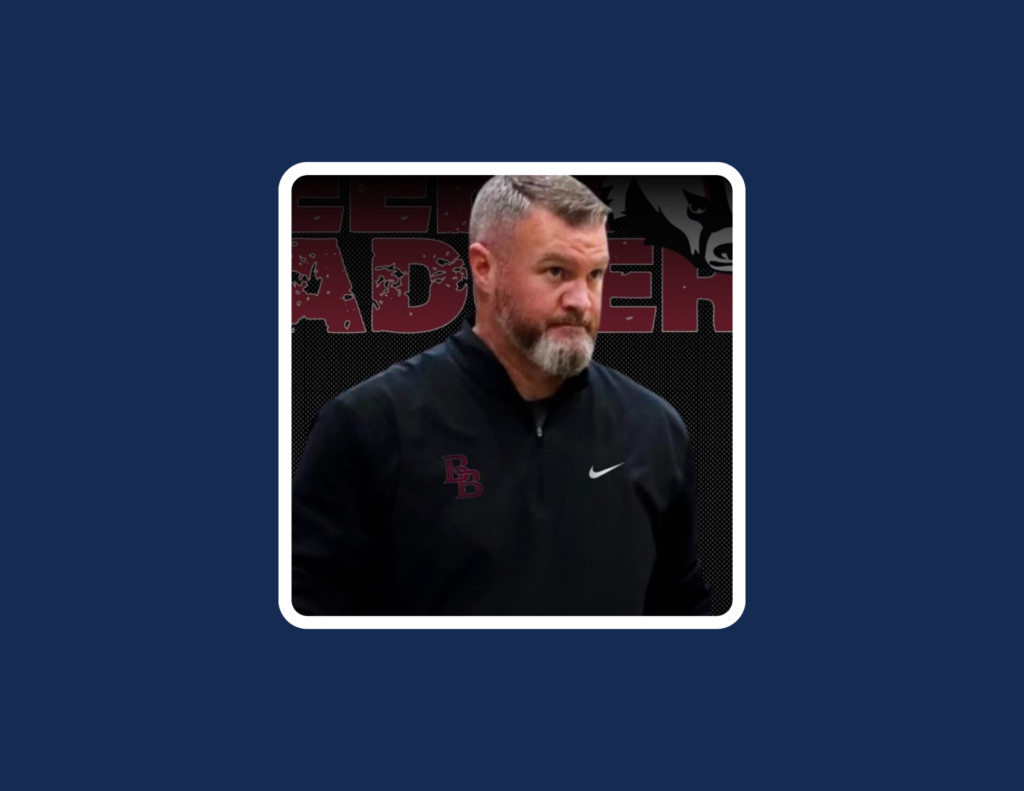
Lee Wimberley is entering his first season as the Boys’ Basketball Head Coach at Beebe High School in the state of Arkansas. Wimberley previously served as the Head Boys Basketball coach at Manila High School in Arkansas for 11 seasons. In 2023 he led the Lions to the Class 3 A State Championship.
Before arriving at Manila, Coach Wimberley spent the 3 previous years as an assistant to Jerry Bridges at Cabot High School (the 2nd largest high school in Arkansas) and 7 years as an assistant at Wynne High School under Bobby Gross.
If you’re looking to improve your coaching please consider joining the Hoop Heads Mentorship Program. We believe that having a mentor is the best way to maximize your potential and become a transformational coach. By matching you up with one of our experienced mentors you’ll develop a one on one relationship that will help your coaching, your team, your program, and your mindset. The Hoop Heads Mentorship Program delivers mentoring services to basketball coaches at all levels through our team of experienced Head Coaches. Find out more at hoopheadspod.com or shoot me an email directly mike@hoopheadspod.com
Be sure to follow us on Twitter and Instagram @hoopheadspod for the latest updates on episodes, guests, and events from the Hoop Heads Pod.
Make sure you’re subscribed to the Hoop Heads Pod on iTunes or wherever you get your podcasts and while you’re there please leave us a 5 star rating and review. Your ratings help your friends and coaching colleagues find the show. If you really love what you’re hearing recommend the Hoop Heads Pod to someone and get them to join you as a part of Hoop Heads Nation.
Get out your notebook now so you can take some notes as you listen to this episode with Lee Wimberley, Head Boys Basketball Coach at Beebe High School in the state of Arkansas.
What We Discuss with Lee Wimberley
- “I’m just maybe a coach, no matter if that’s what I want to be or not, it’s just in my blood and I love it.”
- Leaving Manila (AR) High School after winning a state championship to take an administrative job at Beebe (AR) High School
- How matchups play a role in advancing at tournament time
- Coaching a competitive team where effort is a given
- “The game is the reward for the hard work in practice.”
- Getting back to teaching the game and not taking for granted what the players do and don’t understand
- The keys to putting together a great staff
- Empowering assistant coaches so they feel like it’s their team too
- Developing stability in your program
- Establishing the standards from the very first team meeting
- Putting together a master outline of what you need to accomplish in practice before game 1
- The feeling of “That’s all there is?” when you win a championship
- Making sure you enjoy the process of climbing the mountain, not just getting to the top
- “Start something that these younger kids can be proud to be a part of.”
Like this show? Please leave us a review here — even one sentence helps! Consider including your Twitter handle so we can thank you personally!

We’re excited to partner with Dr. Dish, the world’s best shooting machine! Mention the Hoop Heads Podcast when you place your order and get $300 off a brand new state of the art Dr. Dish Shooting Machine!

Prepare like the pros with the all new FastDraw and FastScout. FastDraw has been the number one play diagramming software for coaches for years, and now with it’s integrated web platform, coaches have the ability to add video to plays and share them directly to their players Android and iPhones via their mobile app. Coaches can also create customized scouting reports, upload and send game and practice film straight to the mobile app. Your players and staff have never been as prepared for games as they will after using FastDraw & FastScout. You’ll see quickly why FastModel Sports has the most compelling and intuitive basketball software out there! In addition to a great product, they also provide basketball coaching content and resources through their blog and playbank, which features over 8,000 free plays and drills from their online coaching community. For access to these plays and more information, visit fastmodelsports.com or follow them on Twitter @FastModel. Use Promo code HHP15 to save 15%

Your first impression is everything when applying for a new coaching job. A professional coaching portfolio is the tool that highlights your coaching achievements and philosophies and, most of all, helps separate you and your abilities from the other applicants.
The key to landing a new coaching job is to demonstrate to the hiring committee your attention to detail, level of preparedness, and your professionalism. Not only does a coaching portfolio allow you to exhibit these qualities, it also allows you to present your personal philosophies on coaching, leadership, and program development in an organized manner.
The Coaching Portfolio Guide is an instructional, membership-based website that helps you develop a personalized portfolio. Each section of the portfolio guide provides detailed instructions on how to organize your portfolio in a professional manner. The guide also provides sample documents for each section of your portfolio that you can copy, modify, and add to your personal portfolio.
Hey, coach! Want to take your team to the next level this season? Introducing GameChanger, the ultimate game-day assistant with tools to give you a winning advantage. With GameChanger, you can track stats, keep score, and even live stream games, all for free! Get the stats and crucial game video you need to lead your team to victory, all from the palm of your hand. Coach smarter this season with GameChanger. Download GameChanger today on iOS or Android and make this season one to remember. GameChanger. Stream. Score. Connect. Learn more at GC.com/HoopHeads
THANKS, LEE WIMBERLEY
If you enjoyed this episode with Lee Wimberley let him know by clicking on the link below and thanking him via Twitter.
Click here to thank Lee Wimberley via Twitter
Click here to let Mike & Jason know about your number one takeaway from this episode!
And if you want us to answer your questions on one of our upcoming weekly NBA episodes, drop us a line at mike@hoopheadspod.com.
TRANSCRIPT FOR LEE WIMBERLEY – BEEBE (AR) HIGH SCHOOL BOYS’ BASKETBALL HEAD COACH – EPISODE 980
[00:00:00] Mike Klinzing: Hello and welcome to the Hoop Heads Podcast. It’s Mike Klinzing here without my co-host Jason Sunkle tonight. But I am pleased to be joined for the second time, Lee Wimberley, head boys’ basketball coach at Beebe High School in the state of Arkansas. Lee, welcome back to the Hoop Heads Pod. Glad to have you back on, man.
[00:00:20] Lee Wimberley: Thank you, Mike. I sure appreciate you having me, man.
[00:00:23] Mike Klinzing: We are thrilled to have you back for your second tour of duty here. Since we last talked, you have taken a new job. So I’m going to let you kind of pick up the story from where we left off and kind of give us a quick synopsis. And then we’re going to kind of dive into the details from there.
[00:00:38] Lee Wimberley: Sounds good. Last time we talked, it was during COVID. And came back from that debacle and had a good season that year. Had another one after that got upset both years in the regional tournament in Arkansas, you in your lower classifications. And when I say lower, that’s 1A through 4A. You have to play your district tournament, regional tournament before you get to state tournament, man, you just go off of your conference record. And so both years had really good regular seasons, had good district tournament, and then would get upset in the regional. And you know, it makes you question some things. We, I mean, went back to back 23 and 24 win seasons and got beat in the. Didn’t even make the state tournament.
And so I’ve got three children and of course they live in a different town. And so I had been looking at moving closer to them, especially when my son started senior high football. And so that was something I looked at the year before we actually won it and the jobs just, they just didn’t line up and nothing, nothing really looked right.
And I had a little bad taste in my mouth. I wanted to finish what we’d started at Manila. And so I come back we went 31 and five one state championship, first one in 61 years at Manila. And it was just, it was a storybook. I mean, you couldn’t have, you couldn’t have written a better, better script.
And after that was done, I knew that I wanted, my son was about to start playing senior high football and I knew I wanted to be there for him. And that was about a two hour drive. I was able to make that when he was in junior high because they played on Thursday nights, et cetera. I didn’t have to overlap.
And so and also after, after one it, there was just kind of a little, I don’t even know how to explain the feeling. Almost. Not disappointment by any means, but there’s a, there’s a moment of, was that really, I mean, I worked all this time to get that and that it was kind of fleeting. And so I was dealing with that and I was dealing with trying to get closer to him.
And then my daughter had started college at U of A, which is across the state. So I could move down here closer and. And be close to her, closer to her and then be there with him. And an administration job opened up here at BB and I went ahead and took it, interviewed for it and the basketball job at the same time.
And guy called me on the way home and I said, I think I want to try the administration job and knew pretty quick in the year that that was not my cup of tea. And so they struggled a little bit last year. They came to me late February and asked if I’d be interested. And at first I was like, I just, I don’t know.
I don’t know that I want to get back in yet. Well they said, look take, take spring break, make up your mind. Come back spring break. We’ll talk about it. And so we talked I’m the assistant AD and the head boys basketball coach. And when I came back from spring break, I just kind of had a clarity that it was something I want to tackle.
And Was able to start we kind of split my job up after that. Once I accepted it they went ahead and let me start as far as off season and then so I started my administration, I kept doing my administration job during the day and about seventh period that I would like leave that behind and go to practice.
And so I was able to get in 20 to 25 practices before summer. And then in Arkansas, we have you know, basically every week we can practice except for the two dead periods, two weeks of dead period in late June and early July. So I’m able to get another 20 something practices in. And I feel pretty good about our squad.
They won six games last year, seven the year before that. We’re very, very small. We are 5A team and probably the best conference. It’s the central, it has all your Little Rock schools. And then you’ve got your Sylvan Hills and some other schools around Bologna. But it’s a challenge that I feel like I need to kind of see get, I guess, get the, the, the coaching out of my system.
And it may, it may not ever go. And that’s something I need to look at as well. That. This may be what I am. I’m just maybe just be a coach and whether no, no matter if that’s what I want to be or not, it’s just in my blood and I love it. I feel comfortable doing it and I’ve got some good kids.
We finished the summer up, I guess a week and a half ago. Had a team camp here at our place and then played pretty well. And so size is the main thing we’re going to, we’re going to deal with. Lack of size, I should say. And so those are things that we’ll, that we’ll, we’ll get tackled or get after and, and start tackling those things over the next couple of months before November.
[00:04:54] Mike Klinzing: All right. So let’s. Work backwards to kind of talk through some of the lessons that you’ve learned over the course of your career that you’re going to apply as you start to build your program at BB. And let’s go back to the point that you made about those first two seasons or the two seasons at Manila when you had a great regular season records and came up short of getting to the state tournament and then finally you end up breaking through winning the state championship.
What was different about that team from your perspective? Whether that was something different in the way you approached the season, whether that was something different in the way the players came together, what made that team able to get over the hump that maybe your first two teams that had similar success in the regular season weren’t able to do?
[00:05:42] Lee Wimberley: Right. You know, I was there for 11 years and we won 20 or more all but two and those two, we won 19 and one regional tournaments in both of those years. So we had a really good run. Went to the state quarterfinals twice and For a school our size, it was really, it was a really good run for us.
And you know, those two years, we just, we had bad draw one year, really bad draw for us. Team in another conference that we matched up with had gone 16 and 0 in their conference season. We’d gone 15 and 1. We lose in triple overtime to OCL in the district finals. Their best player gets hurt in the semifinals, they lose.
And so we have to play in the first round of regionals. And in reality, it was probably about a, it was a final four game really. And then we matched up with another team the year after who had a, not a very good regular season and play us in the first round of the regional and then win seven in a row and one state championship.
Got hot and so I, And but then I had a really good player. He ended up going to Bethel in Tennessee, Bethel University there in Tennessee. And he was, he was bound and determined. He was like I, this, this isn’t going to happen again. And we had a kid that was with us through the eighth grade, moved off and came back his senior year.
He was an all state. Both of them were all state players. We played six kids pretty much all season state finals. We played six kids. We played an overtime game and one kid played four minutes and the other five played, one of them played 32 and the other ones played 36. So they bought into what we were doing.
The kids on the bench bought into their role. We had 14 players on the team, but you know, they knew that they just, they weren’t gonna get to play very much. Those, those six were just, We’re just better. And everybody accepted it. And it was just from, from day one. You could just tell they had a little bit of a, I don’t know if it was a chip on their shoulder or if they were just very determined.
And We had a three game losing streak. We went 31 and five. So we lost three games in a row right at Christmas. And after the third game, I, we, we were on the road and we were staying in a hotel and we got in a room and kind of had it out with everybody. And after that, we just, we took off and then got a really good draw in the state tournament, as far as once we got past our first round, we locked our match ups and Not saying those teams weren’t good.
It was just a better matchup for us in the quarterfinals and the semis. It was the best team, but they played a style that was similar to ours. And we felt like we matched up with them better than the team we actually played in the finals. So I always put, and I will always put a lot of emphasis on, on the, on the regular season, because I think that’s where you get a lot of enjoyment out of I mean, if you can win.
23 out of 29 games all year long, you’re happy. And so I don’t want to say that we, we didn’t look at the regular season that last year, we just, that wasn’t our, it wasn’t our goal. Like we were, I felt like that team really competed with itself. Like they, they wanted to get better every day. We have a lot of drills that we keep scores on and it gets clocks and, and they were bound in a tournament of break records that I’d had.
Almost daily. Like they were trying to break them every day. And that’s a, that’s an odd thing to have with a bunch of you know, high school boys who have a lot of things on their mind, but they got zeroed in and, and it was, it was fun. I, it was a fun trip. I’m glad they let me ride along.
[00:09:01] Mike Klinzing: That kind of team where the motivation didn’t have to come from you on a daily basis, because anybody who’s out there listening, if you’ve coached multiple teams or thinking back to your playing days, if you played on teams, there, there’s all different types of teams when it comes to motivation.
And some teams need somebody lighting a fire on them. on a daily basis. And those teams are draining to coach. And then you have a team like the one that you just described. Yeah. I mean, but then the team, like you just described where you just throw a challenge out there and they’re, they’re making more of the challenge than you might’ve even made of it as a coach.
And that’s when you really know that you have something. And when you get that, then you have a special group and obviously you have a chance to do something really special like you guys did and, and win a state title. So yeah, As you think about the totality of your time there at Manila and kind of what you were able to do in terms of building the program, let’s start with what do you think if you had to boil it down to one or two key things that you’re like, man, when I look back on what we did there, these were the most important things.
And then how those lessons are going to apply to what you’re going to do and what you’ve already started to do at BB.
[00:10:18] Lee Wimberley: I think we’re at Manila. We had Kids that were just, I mean, they, they were competitive. They were competitive when they were young. Like I can remember having team camp or you know, individual camps when those kids were young.
And I’m not just talking about the team that won it. I’m talking about for, for 10 years they loved to compete. And I can remember making a shirt when I first got there and it said the real, cause I, I, I can, I can cuss occasionally every now and then something might slip out. And I said the real we had a shirt that said the real four letter word.
And they bought into that and had a kid text me that was on my first team there. He was a senior my first year there and he is a drill instructor with National Guard. And he, he was telling me that he said the one thing that I really got from you was, it was How important it was to work at things and how to show up and, and you know, always give everything you got.
And so I think that was the key as we, we set a standard that every kid that came into our program knew that they were going to have to put the time in and we’re going to have to work a day to every day. And it wasn’t like we get to work here and there, we killed it in the weight room.
I’m a two hour practice guy, but those two hours are chocked full. And you know, they just, it was an odd dynamic in the fact that you know, we weren’t always the most athletic team, but there was never, I don’t ever feel like there was a year where we had a team that. Was going to get outworked by anybody.
And so that made it a lot of fun. From the standpoint of I didn’t have to worry about there was, there was no rah rah stuff for me to have to do with them before games and try and try to get them worked up. They were ready to play. Cause we worked so hard in practice that the game was, Was their reward.
And I think that’s something that we’re going to have to do here at Beebe is get these kids bought into the process the hard work, the mental side of what that does and what it looks like, and then understand that you do all of that so that the games are a whole lot of fun.
And that’s your reward. And so that’s what I feel like we really left there. What, what our stamp was. And, and that comes from, that comes from those kids that comes from something inside of them. And, and you know, like I said, you could see it in them when they were young. And so I don’t want to say that was just upbringing, but a basketball is a really big deal in Manila.
And that’s a change for me here. I’m, I’m. BB’s more of a football school. I love football. My son was all state linebacker this past year as a sophomore. My other son played for me for two years and then his senior years, like dad died to play cause I mean, he wasn’t getting playing time, but he was a good cornerback and played for a football team.
So I love football. I want to be around it. And I think it brings a toughness. To your basketball players that play football. And so to leave an environment at Manila, which we had football, but basketball was number one by far. And so when you come to this to a different school that puts the emphasis more on, on football We’ve got to get these kids to look at it like they’re important and like what they’re doing is appreciated.
And the only way to do that in my opinion is to show the fans, show the parents, show the community that we’re going to work. You know, we’re going to earn y’all’s, I guess you, you come in here and you’re going to watch us play, but we’re going to earn y’all, y’all paying that five bucks.
You’re going to, you’re going to have a good time when you come watch us play. We may not win every game, but we’re going to work our tail off. And so I think that’s what I’m going to have to do here. I think that’s what we did really well in Manila. And I think that was the key to our success there.
[00:13:58] Mike Klinzing: Well, how does that look different in year 11? In a program, in terms of your approach to a practice versus how it looks in year one, in terms of what you have to do as a coach to prepare for practice, to maybe bring that energy. How have you changed your approach in terms of being able to sort of indoctrinate players?
The kids at BB into that program, because obviously, again, in year 11, when you’ve had kids that have come up through your program and they’re coming through as, as a youth player and they see, and they know, and they’ve been at games and everybody kind of knows, Hey, this is the way it goes. And now suddenly you’re in a new place where nobody knows what coach Wimberly is all about.
Right. So you got to try to teach that. So what does that look like on a day to day basis?
[00:14:46] Lee Wimberley: We talked, we talked about that two days ago in our office. The fact that I had taken for granted. Literally taking for granted what it was like to start fresh because my kids knew you know, I was in on every junior high practice.
I had a head junior high coach, but I was in there. So we did what I wanted to do as far as we ran the same offenses, the same defenses. And so by the time they got to senior high all the little bitty teaching things were, we would, we’d already done that. And so as we start this here, we were talking about how we were You forget how many little bitty things that you take for granted.
And that’s what I think we’re having to do right now. You know, year one is, is get the, I don’t want to say fundamentals, but get the, I guess the, the backbone of your program in place. And there’s a lot, it takes a lot out of the coaches, you know what I’m saying? We have to work a little bit harder.
I’m not gonna lie. Daily in practice than what I did in year 11. I can promise you that. And that’s not to say I didn’t work my tail off. It was just a different type. And so I think that each year at BB that we put a product out there on the floor that Younger kids are seeing and crowds start to get a little bit more get a little larger and then more boisterous.
And these little kids see that and want to be a part of it. I think that’s, that’s key to us. And so that’s going to have to start this year. You know, we’re, we’re going to be young. So I think it can carry over to next year. And then hopefully again, I’m in on every practice here. I’ve got a seventh grade.
We basically have a period for every basketball. So it was seventh grade, eighth grade, ninth grade. I’ll be in all the practices. So hopefully they’ll get to know me pretty well. And then hope in year two, three and four we’ve, we’ve got things going in the, in a direction that doesn’t take as much, oh the, the attention to detail right now is, is off the charts, what we’re having to do you know, the coaches are on everything and I’ll have to I’ll put coaches in different spots and we’re not able to split up as much, we got to stay together more right now than we’re what I want to, where we can get more reps in right now it’s just.
It’s a battle daily just to make sure that they understand that competing is a necessity and that’s something that really floored me. I just, I didn’t. Understand how a kid could play a sport and not know they had to compete every day. So I was spoiled to that. And so those are, those are the little things right there that, that are jumping back up and, and they’ve kind of revived me as a coach.
Giving me a little bit more I don’t want to say passion by any means, but giving me more of a sense of that a teacher you know what I’m saying? And, and I’m enjoying it.
[00:17:39] Mike Klinzing: Yeah. You got to go back again and sort of revisit. All those details, right. And all the small things that you didn’t necessarily even have to teach because they had been taught in the early years.
Now, all of a sudden, boom, I’m having to go back and you kind of take for granted that, Hey, kids don’t even know the names of my drills yet. And so normally you just snap and say, Hey, we’re doing, we’re doing, we’re doing X, Y, or Z and the kids are, boom, they’re right into it now. You’re like, Oh yeah, they don’t.
And so we got to kind of train, train all that kind of stuff. And then I’m sure from a staff standpoint, right, you’re, I don’t know, how’d you put together your staff? Did you have anybody that came, came with you or what did that, what did that hired
[00:18:15] Lee Wimberley: My assistant. We did an interview process ended up with a, a man that I feel very comfortable with.
He’s very Very knowledgeable. We’re a little different personality wise. He’s a little bit more calm than I am. So we, we’re a really good yin and yang duo. We had a, an assistant that had been here. So part of our problem at the moment is that we’ve had five different head coaches the last four years.
And these kids have just had no stability and therefore they get taught one thing one year, and then it changes the next year. And then it changes the next year. So like right now, still in our man to man, I’m a sideline baseline you know, keep it out of the middle while they were pack line for two years or for a year they ran a lock left for a year.
And so they’re still having to break habits. Just so they can play it the way I want them to play it. And that’s the coaches are the same way because I kept my junior high coach and I moved the senior assistant to, cause I, if we don’t get our seventh graders, I think that’s the most important grade right now for us.
And so I asked him if he would take over our seventh grade program. He said, yes. So there’s four of us I feel very comfortable with. I’ve got a fifth guy that is he’s a student teacher right now. He’s from BB. He has helped a lot. He’s done a, done a travel team with some of our younger kids. So I feel, feel comfortable with him that we might be able to hire him next year. And if so, then I think we’ll have a complete junior high, senior high staff that, that will rival anybody. And you know, as I’m, as we’re talking earlier about teaching the kids, your drills, teaching the kids your terminology, teaching your kids.
I’m a dribble drive guy. And so these guys have, none of these coaches have ever worked with the dribble drive. And so just going through and little things that I took for granted that I’ve done so long that I didn’t even like, I would, I would tell them to go the drop two or three. Well, they didn’t even know what side of the floor was.
And so those are things that we are that I’m learning to not overlook. And so it’s made me more detailed again, like I was when I first started at Manila. And it’s been, it’s been a good change. It’s been a very good challenge. But yeah, I’m very, I’m pleased with my, with my staff and I’m pleased with my players so far.
[00:20:33] Mike Klinzing: As you start to put together that program, that staff, that working with the players, how does it look when. You are trying to get your staff to teach the game in the way that you want to talk. So not only do you have to work with the players to get them to understand the terminology, the drills, the philosophy, the things that you’re wanting to do, but you also have to do that with your staff.
What does that process look like for you?
[00:21:04] Lee Wimberley: You know, I think it’s very important for any coach to feel like they have a team and to have that team have their identity. And so I’ve told my seventh grade head coach and my junior high head coach. I want you to coach your way. I will be your assistant.
You use me how you need to, but I want you to coach in your fashion. Well, it’s tough when you’re out there with them and there’s something that you’re seeing and you don’t want to buddy in or, or you don’t want to, I guess correct them in front of the kids. So you have to wait. And then the next day or after practice, you talk to them about it.
And then hopefully the next day they fix it as far as terminology or You know, we’re different. I mean, all of us are different personalities and getting to know them, I think is very crucial. Just like, I think it may be as, as crucial, if not more crucial than getting to know your players as far as personally and finding out what makes them tick.
And you know, I was an assistant coach for 10 years before I became a head coach. And I always felt like those were my teams. And so I wanted my, my assistant, I wanted him to feel the same way. And I hope that. I think he does. I hope he does. And then I want my seventh grade and my, and my junior high coach to feel like those are their teams that they’re leading up to senior high basketball.
And so I think you’ve got to give them a sense of here’s what we’re going to do, but you still have to have your spin on it and you still have to have your personality in it. And so I don’t want to say that’s been difficult because I have two really good, good teammates. Guys in, in those positions.
But it’s something that I’ve had to work with because at Manila that was me and another guy, like there were two of us. And then I had a an ex player that was a volunteer force, but having five of us you, you’re kind of, you got to make sure that you’re coaching them before practice of what you’re wanting.
And because like when practice just gets going and you’re rolling from drill to drill especially in those first few weeks and you’re looking over at them to try to get them to do something. And then you realize, man, I haven’t told them, I haven’t told them what to do or I haven’t told them what the way I want it done.
And, and so I would say that was as much of a challenge for me at the beginning, but I think right now we’re, we’re pretty, it’s, it’s going smooth with that aspect of it in the fact that we all have a, have a really common I guess our, our, the, what we believe is the way to do things. As far as there’s a right way, wrong way, and we all have the same right way.
We all look at things the same way. Now our personalities are very different. And so I think that’s going to be great for the kids. They’re not going to have I’m, I’m allowed. I’m just a loud guy where even when I’m not mad, I’m loud. And my junior high coach is, is a little different. My seventh grade coach, he’s.
Patience of the, of Job. I mean, he, he can, that’s why I wanted him down there. Cause like, I’ll be in there with him and I’ll want to strangle one of them. And he’s, he’s just calm and he’s getting them through drills and like, they’ll do something and I’ll be like, oh my gosh. And he’ll just, he’ll just keep teaching.
And so I think it’s going to be a really good flow. As far as from kid, as he, as they, as they move up, there’s a good continuity there, but also there’s their each, each of us has a personality and it’s, it’s coming out. And so the kids won’t ever they won’t burn out on a coach.
They won’t they wouldn’t, they won’t have had me screaming in their ear for five years. So I’m, I’m excited about it. I think the the staff is as good as I could have, as I could have ever dreamed actually.
[00:24:32] Mike Klinzing: In an ideal world, once you have everything set, what does a varsity practice look like in terms of the responsibilities that you delegate to your assistant coaches?
Do you set things up as, I’ve got a guy who watches offense. I’ve got a guy who watches defense. Anybody can jump in at any time. This person takes this breakdown or works with this position or just how do you in an ideal world, once you have things going exactly the way you want them, what would that look like?
[00:25:04] Lee Wimberley: Hopefully by next summer we’ll have at least there’s four of us in almost every one of our senior operations. And so next summer, I’d really like to be able to do a lot of split you know, this year we were able to do a little bit of it, but let’s say we have 16 kids and take six and six and put your other four, maybe they’re the postman and, and split them up in different goals and then run through stations of different things.
But I have, I was, I’m a defensive minded coach who really loves offense. And with the shot clock, I’ve begun to love offense even more. And so. The guy I hired as my assistant is a very, very good man to man teacher. And in a perfect world, we would be able to split the team in half and have me do an offense.
And him doing shell drill. And then for 12, 14 minutes and then split, I send my group down there, he sends his group to me and hopefully that’s what’s going to happen. And then he would have a guy down there with him. I would have a guy with me. So like in our dribble drive, we like to do breakdown drills, two on O, three on O.
And then into five on O. Well, in that we’re always talking about spacing. We’re talking about timing. Dribble drive is a hard offense to work on when you don’t have a defense out there, cause it’s, it’s basically predicated off what the defense does.
[00:26:30] Mike Klinzing: Right.
[00:26:31] Lee Wimberley: But you have to get reps in. And so kids will get lazy.
You know, they’ll get out of the corner too quick. They’ll, we say always on top, I want you to high, wide and late. And. I had a person this whole spring that stood at the top when we were working offense and basically kept them high, wide and late. And hopefully that’s something that we can do in the future with all of our stuff, not just our offense.
We’ve, we’ve had to spend a lot of time on putting in offense because I just feel like we’re really behind. And Defensively, we’re really undersized. So I’m not even sure what, what defense we’re going to be able to use yet. But obviously we’ve been working man to man. I want. Coaches that I can trust to when I turn around and start coaching, I don’t have to look down there.
I know that whatever is on that practice plan is getting done. And I feel like I have that a lot this summer when we did split, it would be me and Jackson, who’s my, who’s the younger one. And then the old assistant with my new assistant, but that would be on the other end. And we got to do that towards the end of the summer, quite a bit.
And it worked out really well. The two of them worked fantastic together. And then Jackson, he’s just hungry. He’s wanting to, he’s a sponge right now. And so he’s really good about getting spots. I need him to get in, watching things. There’s a lot of moving parts. I mean that. And so the more eyes you have on it, the better, but yeah, that’s, that’s the plan is hopefully have a full JV squad next year.
This year we we’ve had to, we’ve had some attrition. There’s, there’s been some movement had, I think 20 to start with. We’re down to 13. There is, I think next year we’ll have back up to close to 20. That will stick this year. We had to get rid of a few. I knew it when I took the job. Some of them got rid of themselves and some of them I had to, but I feel like we’ve got the right kids out there and I feel like we’ve got the right coaches out there.
And I think that it’s going to, it’s not going to be a quick process. It’s not, there’s nothing quick about it. It’s not, we don’t have a transfer. Transfer portal and, and high school basketball. So it’s not going
[00:28:34] Mike Klinzing: to, this
[00:28:35] Lee Wimberley: is true, not, not
[00:28:37] Mike Klinzing: officially, depending on where you’re at, where you’re at.
You may, I
[00:28:39] Lee Wimberley: definitely don’t have an AAU program feeding mine. Some of those Little Rock schools do. Matter of fact, I lost a good one probably my best player at the time because he had been a ninth grader that started some this year for him. He transferred out, he started playing with an AAU team and, and transferred after, after that happened, transferred out.
And that’s it. I mean, I didn’t know him and we didn’t have a personal relationship yet. So I don’t hold anything against him. I don’t hold anything. I hope, I hope he does well, but we can’t dwell on it. We got to move forward and. But yeah, there’s, there’s not an official transfer portal that I can go out and start getting some kids.
We’ve just got to grow. That’s, that’s our main thing. We need to start growing some. But no, I thought I really liked the makeup of our coach staff. And I think that they’re, they’re people that I can trust as soon as they feel comfortable enough. That’s one of the things like an offense right now, they don’t feel comfortable enough.
Teaching it because of the details that I want done now defensively. He feels really well, it feels really good and he’ll go down there and then I’ll give him some days where I’ll be like work on breakdown drills while I work on shooting, et cetera. And so those are those type of things that I want to do daily.
And right now I feel like I don’t have to watch I, whenever I say this, what I need to do, they, they handle it and I can turn around and coach the group that I have. And that’s going to be the key. Because reps are going to be tremendously important for us. We need a bunch of them. And so that if you can tackle that from different goals and different places on the floor, then you can get a whole lot more done.
So that’s, that’s something that we’re looking at.
[00:30:08] Mike Klinzing: All right. Go back to day one. When you first get the job, what’s the process for. Talking to your new team. Are you meeting with the kids individually? Did you have a big team meeting? What were some of your goals in the first week or two of getting the job in terms of communicating with your players and your and your new families?
[00:30:25] Lee Wimberley: We had a team meeting day one. Explain to them what the expectations were. Very clear about that on the floor, off the floor in the community on the road, in other people’s gyms. I mean, you name it, we covered it. And then I started talking, which I had, I’d gotten to know some of them because of my position as the administrator this year, and so I already had that relationship with some of them.
Some of the older kids just had one on one meetings with them asked them, what do you feel about basketball? I honestly, the seniors. coaches. And so that’s tough. And then my younger guys they’ve had New coaches almost every year. So I have to sell them on. I want to provide y’all with some stability in this.
I want, I want to be here and help y’all get comfortable doing something that you love to do. I have talked to the most of the parents, but I haven’t had a parent meeting yet. I’ll do that probably next week. You know, we’ve, I told him the other day in the white room. I said, I’m, I’m glad I like y’all finally.
Cause you know, the first few weeks you don’t know them and they’re all grumpy and they’re, they don’t know how, they don’t know how to take you. I went in the. I don’t know that I like very many of these kids and it was one of those deals where you’re, you’re getting, your expectations are way up here and they can’t meet them yet.
And you’re being absurd thinking that they can. And then as each week went along and they Just started grasping more and they worked harder and that respect started being there and then all of a sudden I like them and they’re fun. They were able to kid. They know my limits as to when you can joke and when you can’t the things that you learn about people when you’re around them more.
And so I think it’s, I’ve, that’s one thing. I don’t think I’m the best basketball coach ever by any means. I think one of my best qualities is being able to relate to kids and have a personal relationship with them. And that’s something that is starting to take hold. And when that happens, I feel like they play harder for you.
You are more understanding of them, obviously. And so those are things that are taking time and it will continue to take time. And that’s why I really enjoy being in there with the younger ones so I can start getting to know them now. But you know, when you start that first week, Those first, actually that first month, they don’t know anything that you’re doing and they don’t know you.
They don’t know when you wear them out one day for them, not doing something, they don’t know you. They don’t know that you’re not attacking them as a person. And so those are things that just, that take time. And you’ve got to be patient and that’s not my best quality. But I feel like we all kind of grew with together on that.
And I needed it in this point in my career. I’m at year 22. And I’d gotten, I’m not gonna say I was bored. I was kind of stagnant. Because we had, we were so good at doing the same things that we had been doing that I had lost some of the, I guess not, not, not edge, but you know, do you understand what I’m trying to say?
Like I’d lost that, that focus a little bit of, on some of the things that I liked and enjoyed teaching. It was more repetition because we were, we were really good at it. And so we were repping things over and over and over again. And then when I got, when we started this, those first few weeks, we knew nothing.
And I was like, Oh my gosh. I, I’ve got to start teaching again. And absolutely. And it, and you know, it’s woken me up a little bit and it’s been fun. So we’re going to see November rolls around if it’s still fun. But I’ve told them all expectations right now are, are solely set on effort.
That’s all I’m looking at right now. I want full, full blown effort every day. And when that’s done, I can live with all the mistakes on the basketball end of it. And so that’s what we’ve really hammered down on. The last, I guess, 30, 35 practices, whatever we’ve had is getting them to. Give us a consistent effort.
And during that first meeting, that was one of the things I hammered is that we’re going to compete every day and you’re going to give me effort every day. I don’t care where we are. If we’re in the weight room, you’re going to give me effort every day. And they have really bought into the weight room some serious gains after our first cycle.
So I think that they saw that when we started playing this summer. I had a kid that literally, when I, when I started, I made a comment to, he was a three point shooter. I went, that kid’s not going to shoot a free throw all year because he refused to go in the lane. He was small and he’s put on some serious weight.
He has gone up 35 pounds on bench. And some things like that. And this summer he’s attacking the basket. He’s getting fouled. He’s finishing through contacts and he’s a completely different player. And so it’s been fun. That, that part of it’s been fun to watch.
[00:35:07] Mike Klinzing: When you first get the job and you start looking at all the practices that you’ve been able to have since you started, and you’re obviously trying to get prepared for your first season.
How do you prioritize from a basketball standpoint? You talked about how important, what you’re basically looking for at this point is sort of, Hey, I want my guys working hard at whatever it is that we’re doing. And obviously that’s something that, although sometimes it seems like, Hey, that should happen automatically.
We all know as coaches that that does not, that’s a culture that you have to build, but to go beyond that, from a basketball standpoint, what did you try to put your focus on basketball wise? As you first started to get your team out on the floor, were you looking more offense, defense, team, individual skills?
[00:35:55] Lee Wimberley: What direction? Individual skills and offense. Individual skills and offense. We were so far behind. I’ve got scores like we do it. We do a Maryland shooting drill that I don’t know if you’ve ever seen it. It’s Coach Neighbors at the University of Arkansas, the girls coach there, the women’s coach there he has a lot of really good shooting drills that he does, and one of them is called Maryland Shooting, and it’s, it’s everybody, we do it for a minute at six different stations, so we get six minutes of three point shooting, and it’s constant, it’s constant movement, you’re communicating because there’s eight balls going all at one time, it’s chaotic, and My goal at Manila’s was 175 threes made throughout that six minutes and you’ve got your whole team out there.
And so the first day we do that drill, obviously we had to do it three or four, five, six, seven times each day for about a week before I even put a, put a score out there for them to reach. And the first day it was 120 and we didn’t get it. And I’m sitting there going, Oh my gosh, we’re, we’re, we’re bad.
Like we can’t, we can’t even put the ball in the hole. And so that made me go back and look at what we’re doing and why we were doing it. And so we started doing breakdown drills. Things that I hadn’t done with a senior high team in, in, in a long time. Ball handling you know, we’re, we’re in a conference that’s going to have a lot of really good pressure defenses.
And we’re, we weren’t very good at ball handling and if you’re going to run a dribble drive, you need to be able to dribble a little bit. So we attacked. Individual skill work every day. And we’ve done it every day, a lot more than I had to do towards the end there at Manila because they were working on their own.
And that’s one of the things that we’re these kids are going to have to understand that once we give them that stuff, they’re going to have to go in the gym and do it on their own some. And I’ve got some young kids that are, have bought into that. Some of my older ones are still, still trying to learn that part of it.
But, I would say probably 80 percent of our practices were, were offensively geared. And matter of fact, we haven’t done a blockout drill yet. And so this summer we were rebounded the ball pretty decent. And I said, we might be able to read cause we’re smart. I mean, we really are small. We don’t have a kid over six two and we’re in the five a and that’s, that’s not good.
You know, we were three at Manila and I had last year, I started a six, six, a six, five, a six, three, a six, three, and a six, one. My postman now would have been the same size as my point guard. So we haven’t done any drills for blocking out at all because we, I know we’ve got time to do that. You know, that’s an effort drill.
That’s something that we can teach pretty quickly. And so those are things like this summer, there were numerous times during our games that we were playing that I would just look at. You know, transition defense or transition offense. And they’d be like, and we’re not very good at that. And I was like, we haven’t worked on it.
So let’s be patient with them because we, we haven’t had time. We’re spending 80 percent of our practices on, on teaching them how to dribble and pass and, and try to put the ball in the hole. And so Definitely offensive geared with the shot clock, it, it, any offensive deficiency you have is quickly magnified.
I love the shot clock. I think it’s a great thing for basketball especially high school. I I hate the stall games. I, I, even though I used them some when I was really good at holding the ball and shooting free throws. But I feel like it, it’s, it’s more, it’s more fun to watch. It’s more It’s more enjoyable for the kids to play, but any of your weakness offensively, it gets, it gets magnified really fast.
When you can’t. Slow the game down as much as you want to. So I felt like that was of utmost importance was to get our skill up. Been really pleased with the progress we’re making. Our, our point, our scores on, on most of our most of our drills are going up. They’re not close to where we were at Manila, but I had those kids doing those drills for 11 years, and we’ve been doing them for eight weeks.
So yeah, that’s that I didn’t realize that I thought we’d be able to to spend more time defensively, more time in transition, more time on the, on some of the other things. We just haven’t had to. I mean, we haven’t been able to, I should say because of our lack of skill. And so that’s something we’ve really hammered.
And then also that I was like, we’ve, we’ve got to start it in our younger grades too. We don’t have a, I mean, our Pee Wee program is more of an intramural thing. So when they get seventh grade, that’s really the first time that they’ve had organized practices on a daily basis. And so we’ve been doing that all summer with them and hopefully it takes hold pretty quick and we’re able to start.
teaching the game overall, not just not just the breakdown stuff that they have to do to be able to play the game.
[00:40:38] Mike Klinzing: You want to get in by, by the end of the summer, by the end of the fall, before the game, obviously, if you had one, when you started the job, it’s probably been chucked out the window four or five different times.
[00:40:50] Lee Wimberley: It’s still there. The dates on it have changed a lot.
[00:40:53] Mike Klinzing: I’m sure.
[00:40:53] Lee Wimberley: Yeah. Yeah. We you know, I, there are certain things that I want to have done before September, before November, before January.
But when I started these were little, I just, I made out a master. A master plan of everything I thought was important in the game of basketball. And when I wanted to see us where I wanted to see us at certain times throughout the year, and I just, I’ve just had to change it because my expectations were a little higher than what we were able to do at first.
And then after I changed it at the beginning, then we got better quicker. And so I was able to change it back a little bit. And so those are the things that we’ve been, it’s a, it’s a working document right now. Yeah. There’s no set date on anything we have. I’m just going, I’m playing it by ear right now, but I do have a master plan that we go by as far as let’s just use transition defense.
We’re still working on picking the ball. Like we, I literally, during one of our games, I’ve got a guy, he’s, he’s, he points at the ball and then he points at his man who’s 20 feet behind the ball. And he slows down as the guy with the ball runs past him and shoots a layup. And I lost it. I was like, what are you what are you doing?
I realized that he didn’t. He didn’t know that he had to stop the ball. He was worried about his man. And so those are things when you talk about transition defense, there’s, there’s a lot of little things. Included in transition defense, but if you can’t stop the ball, then you chuck the rest of that stuff out.
And so those are things that we’ve been working on here lately is just the the little aspects of each part of the game before we can put it all together as a, as a unit. And so that was that was a little surprising to me. And yeah, it’s just everything that we started with has, has changed dates on it have changed.
But some of the things that I thought we’d be more behind in, we actually. are maybe even or even in front of but then there are other things that are just opposite. So it’s been a, it’s been a wake up call for me as far as my expectations. And back to don’t ever don’t take for granted that the kid knows something.
I’ve done that numerous times. Like I would say something and they’d look at me and I was like, You don’t understand what I’m saying, do you? And they just, they’d be like, no. And I was like, okay, I’m taking for granted that you know that already. And so those are things that, that I’m learning as we go along, just like they are.
And so that’s, that’s been, that’s been a, that’s been a, it’s been fun. Like it’s been a, it’s, it’s kind of one of those things where you forgot that you enjoyed that kind of stuff. You enjoyed the teaching of those little things and because you hadn’t had to do it so long.
[00:43:32] Mike Klinzing: That’s been the most energizing thing for you.
In getting to a new environment. Oh, you’ve talked about a bunch of things that you’ve enjoyed. You weren’t doing or didn’t have to do at Manila that now that you’re a BB, that you’re getting an opportunity to do, or that you’re having to do that you didn’t do before. But when you think about something that’s really energized you as you take over this new position, what jumps to mind?
[00:43:57] Lee Wimberley: Being around the kids this past year I was gaining students. So I did nothing but discipline. And I had to call parents and basically tell them that their kid had done something bad. I had forgotten how much I enjoyed being with kids. Like in a, in a team standpoint, like today when we’re in the weight room we got cracking jokes on each other after we got done.
And I just, I missed that. And that has I started kind of feeling old. I’m 48 years old and I was like, I’m feeling kind of old. I forget how much energy those kids can give you and how much they can keep you young. They you learn learn your new music, you learn new sayings, you do all these things that just make you feel a little bit happier.
And to me, that’s, that’s what I had lost. Like, it’s so hard to explain to people that when you want a state championship, you’re, you’re ecstatic. But then two weeks later, you’re sitting there and you’re like, okay, did I just do all of that? All the things that people don’t see the stress, the, the years that we didn’t make it and you feeling like you failed all of that, was it good enough?
Like, was this feeling good enough to, and it just threw me for a loop. Cause I thought once you want to say championship, you’d just be in, in heaven and everything would be just great afterwards. And so it kind of like I had, I had to reevaluate everything. And so I’d get out. I mean, it was really. It’s one of those things where I, I had to, I knew I couldn’t do it the way it needed to be done.
And I needed to see something else. I needed to another job, something, another responsibility for me to appreciate the process and understand that that was what was the fun part. Anyway. You know, you hold that trophy or you hold, you get that ring. I’ve put my ring on like two times ever. It’s too big.
I can’t even make a fist with it on my hand. So like. Everything you do for those two things, the, whether that’s the ring or the, or the trophy, you’re holding those things for very small amount of time. But yet you, you tried to say to yourself, that’s my measuring stick. When in reality, Your measuring stick was those relationships you had with those kids and the fun you had with those kids and the process of getting to each year at the end of the season, be like, Hey, this is what we’ve accomplished.
And you know, each team that was something different. And that’s what. Has re energized me is the fact that I get that again with these kids and the fact that we’re learning each other, but we’re also in this together win or lose we’re going at this together. And I forgot how powerful that was and how oh gosh what’s the word I’m looking for?
How, how energizing, I guess, how, how much that makes you feel alive when you’re working for a common goal with a team. It’s just to me that it doesn’t get much better than that. And I had lost sight of that and I’d let some of the other things on the outside come in and affect me. My blood pressure was out of control.
I was letting all these, like just everything and I wasn’t having fun. And I had to take that year away to say dude, you missed the point. You, you, you were, you were focusing on this, the finished product, and you’d forgotten how much fun it was to get to the finished product. And so I think that that was part of my process of, of having, and what I had to do.
And no, I think when, when they offered that, when I interviewed for that and the administration job at the same time, I was in no way, shape or form ready to coach basketball again. So I think the year away re energized me and not only just looking at things the way you did. When you started, but also just taking a step back and realizing, Hey man, you enjoy being those, those kids, your relationship with those kids is what is what makes you get up every day is what makes the day enjoyable and, and it’s been very comforting to me to get back into that.
[00:48:13] Mike Klinzing: When I hear you say that and talk about that, when you got there and finally won a state championship, that it didn’t feel exactly the same way that maybe you thought that it would, and it’s a refrain that I’ve heard from several different coaches of variation on that same theme of. I worked so hard. I had this prize in mind.
We wanted to get there. We wanted to get there. We wanted to get there. And then you get to the mountaintop and you get it and it feels great and you did it. And then all of a sudden you look around after a day or two days or a week or two weeks and You realize that you’ve got to go back and get to work to work towards the next one or the next thing.
And if all you’ve been focused on is that prize at the top of the mountain, that when you get there, it can feel empty.
[00:49:12] Lee Wimberley: It did.
[00:49:12] Mike Klinzing: I think you talking about how you have to look back and look at that climb and look at all the steps along the way and look at the impact that you had on the kids and look at the growth you had and look at the camaraderie we built and look about, the process of how we took a team from this skill level to this skill level or a team that could only do x y or z and now suddenly they can do x y and z and they can do a b c because of all the work that we put in and that really is the process that brings the joy because that’s what you’re doing every day you’re only winning that state championship one day One game and then it’s over.
And that’s not to say that it’s not worth striving for.
[00:49:52] Lee Wimberley: It’s awesome. Don’t get me wrong. It’s fantastic.
[00:49:55] Mike Klinzing: Exactly. There’s, I mean, anybody who’s competitive, that’s where you want it. That’s where you want to end up. And yet at the same time, I think it’s a common message. And I think it’s one that I’ve heard people talk about.
On our podcast, I’ve read a bunch of different books that have had a similar theme of you have to make sure that it’s about what you’re doing day to day, that that is what’s important. And that’s, again, not to say that winning a championship isn’t fantastic because it obviously isn’t. Anybody who’s competitive wants to do that, but you also have to keep in mind that it’s the journey.
If you’re not enjoying the journey, it’s not worth it. Right. What are we really getting out of it? If it’s just, if everything is just this big ball of tension to get that championship and you’re miserable the whole time while you’re doing it, how good is that championship ultimately going to feel? And look, it’s still going to feel bad.
[00:50:48] Lee Wimberley: It was still, it’s still good. Yeah. .
[00:50:50] Mike Klinzing: But, but, but you’re gonna, you’re gonna at some point look around and go, man, is that, is that really, was that it? Mm-Hmm. . Yeah. Was that it? Is that all there is? And so it’s interesting to hear, I love hearing guys describe it in different ways because I think it’s something that.
If you haven’t won a championship, I think you can almost sound like a foreign language. Like, what do you, come on, Lee, what do you think? You guys won a state championship. Like, that’s what most of us are striving to do for our entire career. Most of us never get to do it.
[00:51:16] Lee Wimberley: Yep.
[00:51:16] Mike Klinzing: And here’s the guy who got to that mountaintop and now looks around and says, eh There had to be more to it than that.
And, and I think that sometimes it’s easy as a coach to take for granted all those little small steps and small moments.
[00:51:30] Lee Wimberley: It’s a refocus is what it is, right? You know, you lost, you lost your focus of what was important. And you know, it makes me, I’ll tell you what it does. It makes me respect the guys who have won multiple, especially when they’ve done it years in a row, because of your ability.
To refocus right back after it’s done and just go, Hey, that was great. And let’s get back to work. Because they understand that that was awesome. Now let’s go get us another one, but let’s enjoy the getting there. And that’s what I didn’t understand. And so I’ve, I’ve looked at there’s some coaches in, in Arkansas.
Well, Jerry Bridge is the one I worked for one state champions. I think it’s third year of coaching. Then he won another one like at year 10. Then he won another one his last year before his last year. And every year he had that fire West Swift and Jonesboro. He’s won multiple at Jonesboro and he still has that fire.
And so I was, I don’t want to say like, I respect that so much more now. I thought it was just, you know. These guys, I thought you would never not be striving for that. But then I had to re, I mean, I literally had to refocus what was important to me and why, and it made me question a lot of things.
And I think I have a better understanding of a team. I have a better understanding of kids. I have a better understanding of how to go about things as far as what we’re doing daily because of it. But it sure was, it was confusing. It was, it was a very confusing time for me.
[00:53:09] Mike Klinzing: Go back to what you said about the first thing that you’re trying to instill with your team is an understanding of what hard work is all about.
And I think when you talk about somebody who is able to win a championship and enjoy it and then refocus and get back to work. It’s that you got to enjoy the hard work. The hard work has to be part of the payoff that, like I said earlier, you’re Getting your team, each individual kid is getting better.
Your team collectively is getting better. Your, your staff is getting better. You yourself are growing and improving as a coach. And that’s really where the value lies. And if you keep doing those things, if you love the work, if you love the process that no, are you going to win a state championship every year?
No, you’re not. But you put yourself in a position to A, enjoy the process, Of what you’re doing and you also give yourself the best chance to get to the top of the mountain again If that makes any sense,
[00:54:10] Lee Wimberley: it does it does. I have felt like there were nights when we would go And play teams that we were supposed to win and the game would be over and I wouldn’t I would feel relief I wouldn’t feel you know what I was supposed to feel I was feeling relief and I Have caught myself a few times this summer when we’ve had a really good practice after the game having that Euphoric feeling of accomplishment.
And I, I’m like, this is sad. I feel, I feel better after our practice than I did after some of our wins, because I wasn’t looking at things right. And. I took some things for granted and that’s it’s, it’s helped me refocus on a lot of things and it’s been really good for me. I kind of wished I’d had, I’d have been able to handle it better, but I don’t, I, you’re not prepared for it.
You’re not, you don’t. You’ve never done it before. And so it’s, it’s got, it’s got me refocused and it’s got me hungry again. And I really liked the challenge that, that this job here presents. And so I’m, I’m, I’m ready to go.
[00:55:10] Mike Klinzing: All right, let me ask you this final question because I think it’ll do an excellent job of allowing you to summarize where you are right now in the journey.
When you look back next March, April, and you’re sitting down to reflect on this past season from the moment you got the job until The last day of this coming 24, 25 season, how are you going to define success for your team? What’s that going to look like in your mind?
[00:55:37] Lee Wimberley: I’ve, we’ve, we’ve written that up on our board.
We we’ve talked a lot about that very thing because they went six and 20 this year and lost four starters. Lost a 6’8 kid, a 6’5 kid. So is success going to be solely built on wins and losses? Obviously it’s not. I think that if I have kids that this time next year or in March, look back on our season and go, Hey, we got better from the time we started playing with you till now, we’re better at everything when it comes to basketball, We know how important it is to be on time.
We know how important it is to show up every day. Those are little things that when you take over a program that hasn’t been winning, you take for granted. Like, I had never had to have a contract with kids for summer workouts. You know, if you miss this, you’re going to have to do this. Well, we had to do that.
And now I’ve got like, I, it’s just, they understand that they’re going to have to be there. And at first it was, Oh, I’ve got this vacation. I’ve got this, I’ve got this. I’m like, no, you don’t. You’re going to if you’re going to be on this team that you’re going to have to sacrifice some things. And I want them to look back and go, okay, it was worth it.
It was worth me not going with my buddies for two days to a fishing trip because we were able to come together as a team and, and accomplish something that I wanted to accomplish. And those are the things that I think we’ll look back on and say, okay, this year was successful. And then three years from now when we I’ve turned the corner as far as wins and losses.
Hopefully they can say, I was part of what started that. And that I think is what the ultimate goal is for this, for these two, we’ve got two seniors and I think that’s their ultimate goal is to start something that these younger kids can be proud to be a part of. And that is what I want to do.
That’s what I want to start and then also see come to fruition in the fact that, yeah, they do protect pride and they do start like we, we would be doing drills and we would be competing against each other. And one of the teams would lose. And they were just like, Oh, okay. Well, the other day they, we were doing something and they were going against each other and I mean, they’re going at it and they were talking trash to each other and it was great.
I was like, they want to win. And so those are things that those are little things right now that I’m, I’m counting as huge. victories for us. Changing a kid’s just his entire, okay. It is important for me to do this so that I’m better than you. This is important for me to have one day where I can say, Hey, I beat you.
And that’s where they’ve got to get to is that, that competition. That’s the most important part. It’s not the winning or the losing, but the competing. And when we have a group that competes every day at the end of this year, I think that will be a success.
[00:58:39] Mike Klinzing: Well said Lee. And I think it speaks to everything that we talked about.
During the pod, just about what it takes to re energize yourself, to build a new program, to go from a place where you had a tremendous amount of success to, to get to somewhere where now you’ve got to refocus and re dial in on all the details. And again, that’s what’s going to be fun. And I know that when you get to next March or April, you’re going to sit down and all those things that you just ticked off are, are what, are what’s going to be fun.
It’s going to happen for you. So before we get out, share with people how they can get in touch with you, email, social media, website, whatever you want to share. And then after you do that, I’ll jump back in and wrap things up.
[00:59:18] Lee Wimberley: Okay. I put out a one through one video last year. I did not, I was not a zone guy ever.
We got the shot clock. I put that out. It’s on championship productions. It has all of my contact information on it. I don’t. If you have, and I didn’t, I’m not saying that to plug cause I don’t make enough money off it for anybody to buy it. I’m not worried about that. What I’m saying is that if you ever have questions, anybody ever has questions and they want to ask about anything, not dribble drive.
I’ve done it for 20 years almost. You can reach me at LWimberley@beebeschools.org I’m on everything basically on, I don’t know. I don’t, yeah, I do have Instagram. I think, yeah. Twitter. I still call it Twitter. I’m not calling it X. Everything’s @CoachWimbo. It’s just, I mean, I’m pretty simple.
It’s CoachWimbo on any of those things. And I will be more than happy to discuss anything basketball related or career related with anybody that has any interest. I love the game. It has taken me places. It’s helped it’s helped turn me into the man I wanted to be. It’s, it’s made me a better father.
I think athletics is, is very important. To teaching these kids, especially the more and more as we go into this technology, technological lifestyle that they’re living. Just basic courtesy I think comes from playing sports important aspects of being successful still comes from sports and I’m pleased and proud to be a part of that.
And so if anybody ever has any questions, they’re more than welcome to contact me and I’ll do whatever I can to help anybody.
[01:00:52] Mike Klinzing: Well, you can’t thank you enough for taking the time out of your schedule tonight to jump on with us for a second time and wish you nothing but the best in your first season at Beebe high school in the state of Arkansas and to everyone out there, thanks for listening.
And we will catch you on our next episode. Thanks.