
KYLE BOWLSBY – PRESIDENT OF BOWLSBY SPORTS ADVISORS – EPISODE 938


Website – https://www.bowlsbysportsadvisors.com/
Email – kyle@bowlsbysportsadvisors.com
Twitter/X – @kbowlsby
If you listen to and love the Hoop Heads Podcast, please consider giving us a small tip that will help in our quest to become the #1 basketball coaching podcast.
Kyle Bowlsby is the President of Bowlsby Sports Advisors. He works closely with clients in the areas of executive search, career development, and strategic counseling. Kyle shares insights on how his firm works with colleges and universities to locate, research, and interview coaching candidates for Head Coaching positions across the country.
In addition to his duties at Bowlsby Sports Advisors, Kyle has been a speaker at the LEAD1 Institution, Women Leaders in Sports, and the Collegiate Athletic Leadership Symposium (CALS).
If you’re looking to improve your coaching please consider joining the Hoop Heads Mentorship Program. We believe that having a mentor is the best way to maximize your potential and become a transformational coach. By matching you up with one of our experienced mentors you’ll develop a one on one relationship that will help your coaching, your team, your program, and your mindset. The Hoop Heads Mentorship Program delivers mentoring services to basketball coaches at all levels through our team of experienced Head Coaches. Find out more at hoopheadspod.com or shoot me an email directly mike@hoopheadspod.com
Be sure to follow us on Twitter and Instagram @hoopheadspod for the latest updates on episodes, guests, and events from the Hoop Heads Pod.
Make sure you’re subscribed to the Hoop Heads Pod on iTunes or wherever you get your podcasts and while you’re there please leave us a 5 star rating and review. Your ratings help your friends and coaching colleagues find the show. If you really love what you’re hearing recommend the Hoop Heads Pod to someone and get them to join you as a part of Hoop Heads Nation.
Listen in on this episode as Kyle Bowlsby from Bowlsby Sports Advisors shares insights on how coaches can be better prepared when seeking a new coaching position.
What We Discuss with Kyle Bowlsby
- His journey growing up as the son of a college athletic director
- The career path that led him to starting Bowlsby Sports Advisors
- Working in commercial real estate and digital ticketing early in his career
- “The ability to be transparent as possible and to put yourself in a candidate’s shoe that, hey, they’re, they’re going after an opportunity that is potentially life changing for them. Life changing for their family. I think at times in search, you can kind of put up a wall and focus on your client enough about, and not enough about the candidate.”
- The three services Bowlsby Sports Advisors provide – executive search, career development, strategic consulting
- The process of conducting a search for a college basketball head coach
- Putting together a list of criteria for a certain job and sticking to it
- “So you’re kind of looking for those criteria out of the gates and once you can zero in on that, then you start looking at cultural fits, coaching styles, personality traits, but I think it starts with a defined criteria of what the job is and has the candidate pool done that job or been a part of it or has the blueprint to do it.”
- Setting up the parameters of the interview process
- “The best thing you can do is align yourself with good people. Good head coaches, people that do it the right way that are well respected in the industry.”
- “Why most people fail, whether it’s a coaching search, an AD search, or a commissioner search, is using their opening to essentially regurgitate every career stop.”
- “Come up with a few different ways to talk about why you’re interested in a job, why you’re the right fit for the job, and how your experiences can integrate into a winning formula for that institution.”
- “How are you going to distinguish yourself from the others in your elevator pitch?”
- “I think the search committee wants to know who you are as a person, what makes you tick what your ideas are around leadership, around campus and athletic alignment and collaboration.”
- “The interview is a data point, right? It can’t be the entire thing.”
- “I don’t think it’s going to be what it is now, which is. NIL disguised as pay for play.”
- “I don’t know if I give a lot of credit to a coach that’s at a school that’s buying players for $800,000 and they’re trying to get a job where NIL is at $30,000 per year. That’s a tough evaluation for me to make on whether or not you can actually coach or win at a different institution.”
- “There certainly needs to be guardrails and a different model, but there’s also some little things like the portal window and when it opens and the dates that just don’t make any sense and they’re compiling the issues.”
- “I think at the end of the day I just like to absorb all these different hires and I like to study them and see why they were done or why they weren’t successful and try to take away learnings from successes and failures, even if I wasn’t part of them.”
Like this show? Please leave us a review here — even one sentence helps! Consider including your Twitter handle so we can thank you personally!

We’re excited to partner with Dr. Dish, the world’s best shooting machine! Mention the Hoop Heads Podcast when you place your order and get $300 off a brand new state of the art Dr. Dish Shooting Machine!

Prepare like the pros with the all new FastDraw and FastScout. FastDraw has been the number one play diagramming software for coaches for years, and now with it’s integrated web platform, coaches have the ability to add video to plays and share them directly to their players Android and iPhones via their mobile app. Coaches can also create customized scouting reports, upload and send game and practice film straight to the mobile app. Your players and staff have never been as prepared for games as they will after using FastDraw & FastScout. You’ll see quickly why FastModel Sports has the most compelling and intuitive basketball software out there! In addition to a great product, they also provide basketball coaching content and resources through their blog and playbank, which features over 8,000 free plays and drills from their online coaching community. For access to these plays and more information, visit fastmodelsports.com or follow them on Twitter @FastModel. Use Promo code HHP15 to save 15%
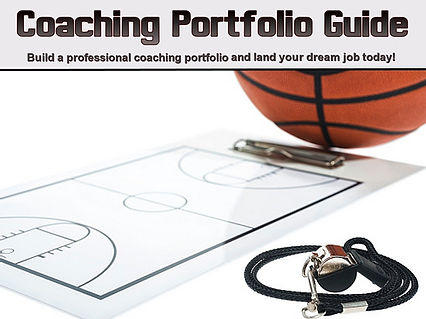
Your first impression is everything when applying for a new coaching job. A professional coaching portfolio is the tool that highlights your coaching achievements and philosophies and, most of all, helps separate you and your abilities from the other applicants.
The key to landing a new coaching job is to demonstrate to the hiring committee your attention to detail, level of preparedness, and your professionalism. Not only does a coaching portfolio allow you to exhibit these qualities, it also allows you to present your personal philosophies on coaching, leadership, and program development in an organized manner.
The Coaching Portfolio Guide is an instructional, membership-based website that helps you develop a personalized portfolio. Each section of the portfolio guide provides detailed instructions on how to organize your portfolio in a professional manner. The guide also provides sample documents for each section of your portfolio that you can copy, modify, and add to your personal portfolio.
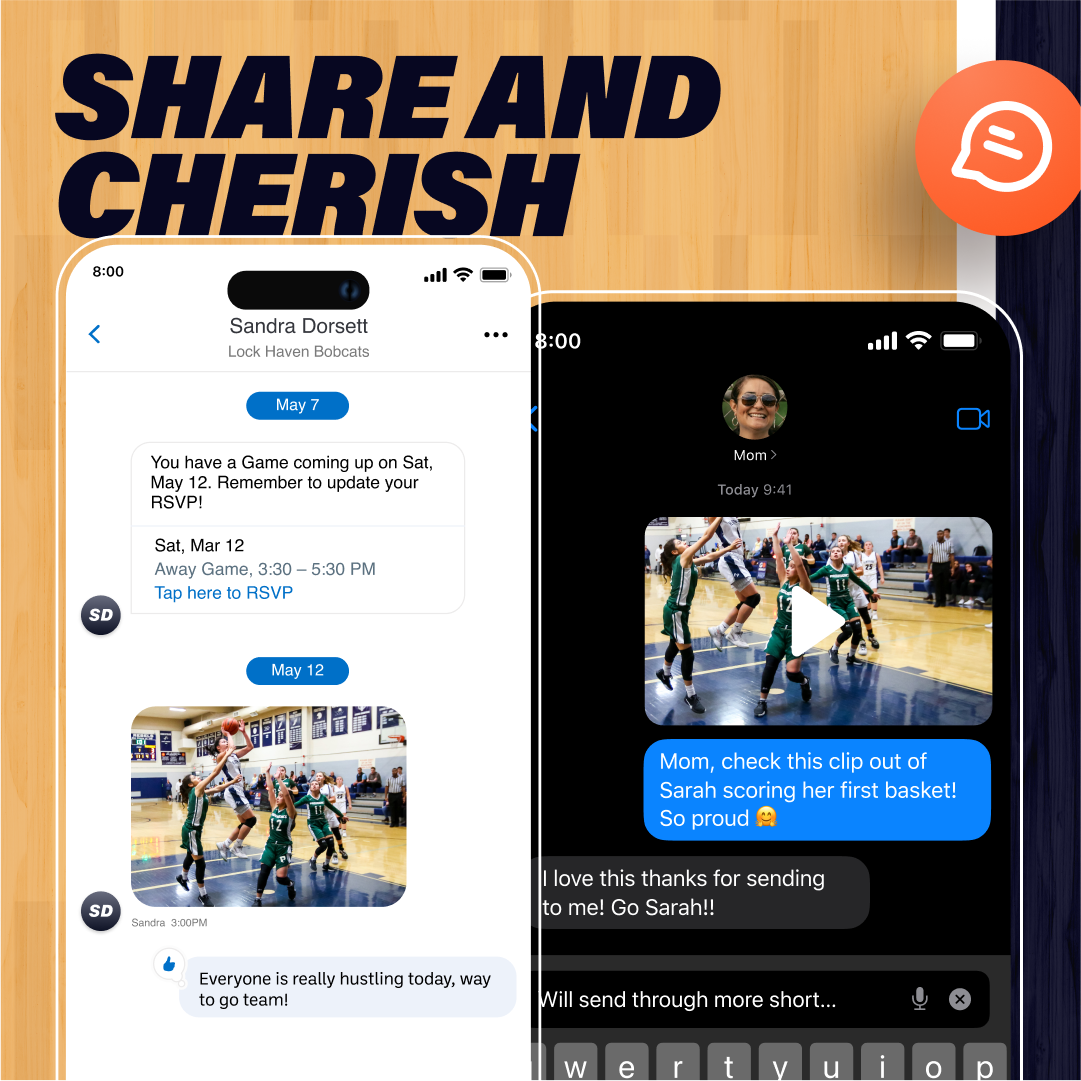
Hey, coach! Want to take your team to the next level this season? Introducing GameChanger, the ultimate game-day assistant with tools to give you a winning advantage. With GameChanger, you can track stats, keep score, and even live stream games, all for free! Get the stats and crucial game video you need to lead your team to victory, all from the palm of your hand. Coach smarter this season with GameChanger. Download GameChanger today on iOS or Android and make this season one to remember. GameChanger. Stream. Score. Connect. Learn more at GC.com/HoopHeads
“Integrity Insight” is a transformative mini-course designed for coaches, focused on examining and improving team conduct in alignment with core values and ethical standards. This course encourages coaches to engage in a reflective and analytical journey, examining past behaviors and incidents to foster a culture of integrity and accountability in their teams.
THANKS, KYLE BOWLSBY
If you enjoyed this episode with Kyle Bowlsby let him know by clicking on the link below and thanking him via Twitter.
Click here to thank Kyle Bowlsby via Twitter
Click here to let Mike & Jason know about your number one takeaway from this episode!
And if you want us to answer your questions on one of our upcoming weekly NBA episodes, drop us a line at mike@hoopheadspod.com.
TRANSCRIPT FOR KYLE BOWLSBY – PRESIDENT OF BOWLSBY SPORTS ADVISORS – EPISODE 938
[00:00:00] Mike Klinzing: Hello and welcome to the Hoop Heads Podcast. It’s Mike Klinzing here with my co-host Jason Sunkle tonight, and we are pleased to welcome in Kyle Bowlsby from Bowlsby Sports Advisors. Kyle, welcome to the Hoop Heads Pod.
[00:00:11] Kyle Bowlsby: Thanks for having me, Mike. I’m a big follower. Enjoy enjoy your content.
[00:00:16] Mike Klinzing: Thank you. Appreciate that. Always good to know that there’s some people out there listening and you’re not just talking into an empty microphone, which is always a plus. So again, we’re thrilled to have you on, looking forward to diving into what you do, how you do it. and how you’re able to help coaches, sports administration, schools, professional teams, just the variety of different areas that you touch upon.
Want to start by going back in time to when you were a kid, tell me a little bit about your athletic background. What do you think eventually ended up driving you into a career in sports?
[00:00:52] Kyle Bowlsby: Yeah, I mean, I think it starts with just probably the family lineage grew up in a, in a big family, the youngest of four and having my dad be a director of athletics from the moment I arrived on this earth.
You know, college athletics was everything I knew as a kid, ranging from Hey, holidays were spent at college football bowl games. Spring breaks were spent at NCAA men’s and women’s basketball tournaments, NCAA wrestling tournaments. So college sports is everything I knew growing up. And so I always had a passion for the NCAA college athletics, the sports business.
You know, I tried to escape it. When I graduated from the University of Iowa, I went into commercial real estate for about five years, but Kind of always had this pull to get into college sports. And after doing real estate for about five years, I said, Hey, I got to get out of this chase of passion moved to Chicago from San Diego and got my master’s degree at Northwestern in sports administration.
While simultaneously switching my career from real estate to sports consulting after doing some sports consulting for two or three years, I had an opportunity to go work at Korn Ferry International within their sports practice, which. At the time was the leading sports practice in the world for executive search and kind of cut my teeth under Jed Hughes, who was a pioneer and in sports consulting and we had the opportunity to work on a wide range of searches stemming from, NBA, NFL, GM, head coaching searches all the way to college athletics, ADs, commissioners, Head football and basketball coaches. So that felt like home to me. But I also had a desire to focus specifically in college athletics and get away from pro sports. So after being at Korn Ferry for about five years, I decided, Hey, Can I take what I’ve learned at a big corporate company, put my own spin on it and bring it to college athletics.
And that’s kind of what I’ve been doing the last five years within college athletics of executive search, career development, and then some strategic consulting as well. So. You know, I’m a product of a lifetime in college athletics. I’ve really grown up around some great leaders ranging from Tara Vanderveer at Stanford, Lisa Bluder at Iowa Dr. Tom Davis at Iowa you know, on the football side. Has had a lot of exposure to Hayden Fry, Kirk Ferentz, Jim Harbaugh these are all people that I knew on a personal level and got to witness kind of their growth at career stops that my dad was a leader in and that kind of gave me the bug to go into executive search. I was really passionate about looking at cultures, looking at a certain person’s skill set and experience and seeing how those things could align to ultimately bring success to a coaching position or a leadership position in college athletics.
So it’s been an interesting time to be in college athletics. It’s certainly changed a lot since I’ve grown up around it, but wouldn’t want to be doing anything differently.
[00:04:17] Mike Klinzing: You touched on it a little bit, but the impact that your father’s profession and the different things that he was able to do in his career, being involved in the NCAA selection committee on the basketball side, obviously he’s an AD at multiple schools, including Stanford.
He works with. NCAA football. Tell me a little bit more about his influence on you growing up. And obviously, you said, hey, I grew up around college athletics, but what exactly did that mean? Where were you? Are you in the locker room? Are you just around your dad’s office? What does that look like?
[00:04:55] Kyle Bowlsby: Yeah, I mean, it’s a lot of what you said. I mean, for, for example I go back to when I was eight years old, my dad was going through Iowa basketball search in 1999. So I guess I was 11 years old at the time, but you know, he drove from Iowa city to Springfield, Missouri and took me with him. And at the time I didn’t think anything of it.
But I was in the hotel suite while he interviewed Steve Alford one on one. And I was just kind of in the background and doing who knows what, but that seemed normal to me. And now that I’m an adult, it certainly wasn’t you know, fast forward to his days at, at Stanford we hopped in the car when, when Jim was at the university of San Diego and.
My dad put on kind of a disguise, put his hood up and we went and watched UC Davis versus San Diego and kind of scouted Jim Harbaugh during one of his last games at San Diego. So I’ve just had some unique touch points and certainly what you alluded to I grew up in locker rooms Literally every Saturday after Iowa football games, I was in the locker room chatting it up with players, getting autographs, the same for basketball and many other sports.
And then even the little things like going on bowl games where you’re on the charter plane with the team. It’s just been a unique setting for me and gave me some exposure at a young age that most people don’t get. And I think just being around those types of leaders positioned me well to have success in this line of work.
[00:06:33] Mike Klinzing: Who was your favorite athlete that you got to interact or see on a regular basis when you were a kid?
[00:06:39] Kyle Bowlsby: Probably Bob Sanders was the guy at Iowa who was transformational during a time when Iowa football maybe wasn’t what they were now. I mean, everyone loved Bob. He was a great person first off.
Secondly, he played with a giant chip on her shoulder and he’s always been a fan favorite. So I would say Bob Sanders and then on the basketball front. You know, probably Jess Settles, who many people know as a color commentator and in the basketball space, but Jess was an Iowa guy through and through growing up in the state and had a great career at Iowa.
And he was always, he was always a favorite of mine because he gave me attention and knew my name and, and would be nice to a little kid when he didn’t have to be.
[00:07:29] Mike Klinzing: All right. So you graduate from Iowa with a degree in sports management, correct?
[00:07:36] Kyle Bowlsby: Yep. Yep.
[00:07:37] Mike Klinzing: Okay. So how do you go with that background in sports and all the things that you just described and your dad and all that, how do you go from, Hey, I’m in sports management, that’s what my major is.
Then into commercial real estate, what’s the thought process there? Is it more just a case of opportunity? Was it a case of you thought you could make more money? Was it something that just how did you end up in commercial real estate versus kind of staying in the sports field initially right out of the gate?
[00:08:03] Kyle Bowlsby: It certainly wasn’t opportunity because going into real estate at that time was a terrible decision. I mean, it was not a great economic time period, but for me, it was a desire to not take the easy path. I thought going into college athletics, which was the alternative, in my opinion, to going into commercial real estate, it was just an easy path.
I could have gone worked at Stanford, probably could have leveraged some connections and gotten into some good athletic departments, but just thought. Hey, coming out of college, this is the time to burn your own trail. This is the time to think differently, maybe, maybe do something different than what you’ve grown up around.
And in a way it was a great decision because the culture I witnessed in commercial real estate was kind of like a frat brotherhood. I met a lot of people that were former college student athletes that had excelled in the real estate space. It taught me a great deal about just hard work business development, building relationships many of those things that I’ve taken with me into my sports career post real estate.
So although it was a change in career it, it taught me a lot in a difficult period for the real estate industry, made a lot of great friends learnings from it as well. But certainly have drastically changed paths since that point in time.
[00:09:33] Mike Klinzing: So when you first make the decision to change paths and you get into the sports side of the business, what were some of the first, I don’t know if the right word is tasks, jobs, clients, what were some of the first things that you were kind of, put in place to do.
[00:09:52] Kyle Bowlsby: Yeah, I was working for a company called Property Consulting Group out of Chicago that’s since been acquired by Legends, which is a big sports property in the college space. And we were working on some startup companies Within the college space actually and professional sports, but the company was built around programmatic ad buying As well as digital ticketing campaigns and my role within that company was basically business development, so I would be reaching out to Senior associates of external marketing associates of marketing whoever kind of controlled what the athletic departments were doing from a ticketing and, and ad buying standpoint.
And when we started that company we had about five clients by the time I left after about two and a half years, we had 50 different athletic departments on various ticketing campaigns. On helping them expand their digital footprint helping them model what a fan would look like from a digital standpoint.
So when you see ads on Facebook or Twitter it’s kind of the backend programmatic buying of that. So it was certainly an interesting time period. And again, it was similar to commercial real estate where it was a business development role. I was building relationships. So I did that for about two years and then was approached by corn fairy about joining their sports practice and kind of the rest was history.
Property Consulting Group was an interesting two and a half years where I was working for a small startup company that was growing at a fast rate. Met a lot of great people there learned a lot of, a lot of different things in terms of digital technology, programmatic buying, a lot of the, the progressive advances that were happening in sports. So certainly a great experience for me.
[00:11:52] Mike Klinzing: At that time, where was the digital ticketing market as you’re in this? In other words, were you having to sell and convince people that digital tickets were the wave of the future?
[00:12:02] Kyle Bowlsby: Yeah, it was totally unknown. The idea of tracking your fans based off of where they shop and then kind of creating this profile of who your fan is.
And then we would go out and model that and try to find fans that met that criteria and serve them ads for Basketball games, mini season ticket plans. And we would track all this stuff on the backend and we were really able to produce strong ROIs on their investments. And we would create stories around what they were able to do from a, from a digital ticketing campaign.
And it was a very, I mean, just like a cool, cool area of sports to work in.
[00:12:47] Mike Klinzing: Almost a lot of education of clients, I’m guessing, right? You had to go in and kind of give your presentation of, Hey, this is what it is. This is where the market’s heading. And you want to be on the forefront. I’m guessing you did a lot of that, correct?
[00:12:57] Kyle Bowlsby: Yeah, no, absolutely. And most athletic departments and pro organizations are doing that today, but when we were entering the space, it was relatively new. There weren’t that many competitors and we were really at the forefront of it and presented at NACDA and different national conventions on why you should be doing this and why it makes sense. So certainly a impactful period.
[00:13:24] Mike Klinzing: When the opportunity at Korn Ferry comes across your desk, And you decide to jump on that. How does what you’re doing day to day change? How does the job at Korn Ferry compared to what you were doing previously?
[00:13:37] Kyle Bowlsby: Yeah, it was drinking out of a fire hose to a certain degree.
I mean, I generally knew about executive search, but it was only from the lens of growing up in college athletics. I wasn’t corporately trained. I didn’t know the psychology behind executive search, the motivations of why people take jobs and don’t take jobs. So in a way it was a great introductory to executive search because at Korn Ferry, you get some of the best training you can in that field.
Was able to work under two remarkable senior leaders and Jed Hughes and, and Liz Boardman, now Liz Moulton. I kind of worked under both of those individuals and each had a different style of how they approached and built teams. But we did a lot of good work.
We worked on some high level searches ranging from a head coach of the Atlanta Falcons to Jacksonville Jaguars coaching search, Minnesota Timberwolves GM and head coaching search, several commissioner searches across the sports landscape. So you’re getting to deal with team owners like Shad Khan and, and different people like that.
You’re dealing with team presidents on CMO searches, you’re dealing with school presidents on AD searches. So. It was a chance early in my career to get exposure to some very exceptional leaders in the sports business and higher education world. And if I wasn’t under those individuals never would have had that exposure.
So it was a tenure I was ready for because I kind of grew up around it, but certainly eye opening working with those types of clients and working on those types of searches.
[00:15:29] Mike Klinzing: What’s a lesson that you learned there that sticks with you today? Something that’s kind of at the forefront of what you’re doing now.
So if you can pick it, I mean, there’s probably a ton of things I’m sure, but if you can boil it down to something that you think, man, that’s something that has really benefited me as I’ve moved forward and ended up opening up your own shop.
[00:15:49] Kyle Bowlsby: Yeah, I think executive search there’s kind of a cloud around it.
So I think the ability to be transparent as possible and to put yourself in a candidate’s shoe that, hey, they’re, they’re going after an opportunity that is potentially life changing for them. Life changing for their family. I think at times in search, you can kind of put up a wall and focus on your client enough about, and not enough about the candidate.
So what I’ve taken to Bowlsby Sports Advisors and what I’ve learned at Korn Ferry is just really try to be as transparent as possible to not play the game of. Hey, toying with people if they’re not legitimate candidates toying with people because they may check a box or anything like that. Just to really run a transparent process where people feel and know their legitimate candidates, if they’re involved with me and they’re going to get honest and candid feedback that it’s, it’s not going to be fluff and they’re going to get something.
Out of a search with me, regardless of them getting the position anyone that I have in a search would love for them to get a takeaway of, Hey, you need to improve in this area. You could have been different here. So probably the transparency is something I’ve taken so far in my search career.
[00:17:20] Mike Klinzing: Makes sense. All right. How long before you actually made the jump to open up Bowlsby Sports Advisors? When did the idea come to you? How long did it take for you to pull the trigger and get things started?
[00:17:33] Kyle Bowlsby: Well, it’s an interesting story because I was getting my master’s at Northwestern and my capstone project in my final year ended up being a search business.
Started by me. So it’s something I had been thinking about since I got into executive search. I’ve always had an entrepreneurial mindset. I’ve always wanted to start a business for myself. And after going to Korn Ferry, I found myself really enjoying executive search enjoying the placements and seeing some of those searches produce great results.
So when I had an opportunity in Northwestern to work on my capstone, I said, why don’t I do a business plan for executive search in the event that I want to do this someday? So, in a way. It was already done and completed by the time I was getting ready to think about leaving Korn Ferry.
And the choice was, Hey, go start your own business or continue on the Korn Ferry path of becoming a principal, which is more of a revenue generation role. And I think at the end of the day, I was just more interested in betting on myself and challenging myself to see if I could, Build something sustainable.
[00:18:55] Mike Klinzing: All right. Tell us about the services that you provide, and then we’ll dive into some of the specifics around those services.
[00:19:04] Kyle Bowlsby: Yeah. When I started the business in 2019, I had envisioned a balance of executive search, career development, which was. Mainly working with up and coming coaches up and coming senior leaders on how to better position themselves for that head coaching chair, that AD chair.
And then the third tier was strategic consulting. Can we find can we find a way into college athletics through title nine reviews, looking at conference realignment are there things that we can provide through my network that would be useful? So went into it with these grand plans of having three prongs of business had a good start, had some clients, COVID hits.
Basically, all athletic departments cut out all the, all the fat, right? So things like career development outsourcing Title IX reviews they put on hold. And even to a certain degree, executive search. So during the COVID period, I really had to focus on business development and executive search.
And even during that time, I really didn’t have much engagements. I mean, it was very lean times for about a year and a half, but we were able to stay with it, navigate it and continue to grow. And I think you’ve kind of seen the fruits of that labor the last 18 months for Bowlsby Sports Advisors as, as we’ve grown.
So at our core, we’re an executive search firm, but we’ve started to get more involved in strategic consulting again, partly because we bought on a new vice president, Katie McKittrick, who was a former deputy AD in the Patriot League who is kind of spearhead that line of business for us.
I would say executive search is 70 percent of our business. The other 30 is strategic consulting around a variety of, of pain points for college athletics and, and career development has somewhat fallen by the wayside, even though a lot of what we’re doing in both lines of work, in a sense is career development based on who we’re working with.
[00:21:16] Mike Klinzing: All right. So for our audience of coaches, when they hear you say. executive search. Explain to the audience exactly what executive search means when it comes to its relationship to specifically the coaching profession.
[00:21:33] Kyle Bowlsby: Yeah, specific to the coaching profession, we can be utilized in a multitude of ways.
Your prototypical engagement with an athletic department and a university is to be with them from the start of a search to the end of a search and that ranges in terms of responsibilities and what the school wants you to do for a full search that would be starting out the engagement by getting a very strong understanding of what the opportunity is.
So we’re having stakeholder calls. Let’s, let’s say it’s a men’s basketball search for the university. Of Iowa since that’s where my ties are we would engage with the AD. They would say, okay, we, we have some friends of the program that need to be part of the process. Will you engage them, interview them, come back with findings?
Talk to our president, talk to other leaders, talk to donors that are in with the program make sure that we are making people feel included create an inclusive process that creates buy in. From various stakeholders on and off campus. So I think the learning phase is the first part of it.
The second is we do a ton of original research in terms of the candidate profile and, and actual candidates for the job. So. That entails myself, my VP, and our team of four researchers going into the marketplace and really leaving no stone unturned. So if it’s a mid major job, we may be looking at D2, D3 Juco sitting head coaches, in addition to D1 head coaches that we think we can move based off the opportunity.
And then kind of that other bucket is those associate assistant coaches. That are ready for the next step in their career that would you know, look upon this opportunity as something they want to pursue. You know, and, and creating that candidate pool happens 365 days of the year, that that’s not just.
Us going in and looking at standings in the conference and looking at RPI ratings, but it’s really challenging ourselves to get to know a lot of these candidates throughout the year, either through their agents, through personal calls, going to various coaching conferences and conventions. Getting to campus to interview them and see them in person.
So when searches do come up, we feel like we know them on a personal level. We know what they’re about. We know about their reputation in the marketplace. So you know, In a search real time, Hey, we are studying stats. We’re looking at analytics. We’re looking at program trends. We’re looking at recruiting maps.
We’re looking at the transfer portal. We’re looking at all these different data points, but we’re also learning about those candidates throughout the year. So that’s a lot of where our value comes from is our network knowledge of various coaches. So once we produce that information, those candidate lists to our clients.
The next phase is kind of that recruitment aspect of going out and engaging the candidates to see if they have interest in the role, talking to agents, kind of laying out what the opportunity is in terms of resources, budgets, head coaching, salary, all those things. And then it’s kind of creating that strategy and process of, Hey, is it eight zooms?
Is it four zooms? Do you know who you want? Do you go fly to them? And behind the scenes, we’re creating a process of keeping candidate B, C, D, and E warm. So we can be used in a multitude of different ways, but long story short, I mean, we’re, we’re with the school from the start to the finish closing it in terms of negotiation and counsel with agents and, and all those types of things, but we try to be as turnkey as possible to allow our clients to focus on the candidates at hand and, and to.
Take all that heavy lifting off them. You know, route all the agents, all the candidates to us so they can focus on really evaluating the candidate pool and research in the marketplace.
[00:26:03] Mike Klinzing: All right. I want to go. back slightly to that first part of the process where you’re meeting with the stakeholders of the school that’s hired you and you’re kind of putting together that profile of what they’re looking for.
Is it almost like what you mentioned before when you were kind of creating this avatar of a fan for the digital ticketing? Are you almost creating an avatar of the coach that this particular school is looking for, or how do you think about creating the profile? Is that the way that you’re looking at it kind of as an avatar?
[00:26:41] Kyle Bowlsby: Yeah, to a certain degree, you’re right. I mean, you’re creating the DNA, the criteria, the qualifications that are going to guide you throughout the search, right? And I think why we do that is because it’s easy to get into a search and all of a sudden a candidate comes out of the woodwork that maybe doesn’t meet those criteria, but hey, they’re the hot name coach.
Well, I look at our role as, hey, we’re a consultant, so we’re always going to come back and say, hey, these are the parameters we outline. We need to focus what we laid out what we wanted to go after essentially. So yeah, you’re kind of building the profile throughout that stakeholder interview.
And if we hear, Hey, our last coach was not very engaged in the community. And we really feel like to have success and to create buy in with our fan base. We need a very engaging coach that’s willing to get into the community, take part in donor functions, maybe even fundraise himself. That’s going to change how we look at the marketplace and change how we kind of put together the candidate pool.
So I agree with what you’re saying. What we learn in those findings can certainly dictate the profile, the criteria, and the experience that we’re ultimately engaging in the marketplace.
[00:28:05] Mike Klinzing: So, what I hear you saying is that you might have a candidate that could be an outstanding candidate for a job, but maybe not the specific job that you’re conducting a search for in that moment, simply because they don’t fit the criteria that you’ve established prior to actually going out and putting real human beings Yeah.
You have this idea of, okay, here’s the characteristics. This guy, like you said, might be the hot candidate. This guy might’ve made an NCAA tournament run. Maybe he’s an assistant at UConn who’s somebody that, man, now they won two national championships in a row. That’s somebody we got to get our hands on, but maybe that person doesn’t fit the criteria of that particular job. Is that kind of where you’re coming from?
[00:28:52] Kyle Bowlsby: Spot on now with the caveat that there are candidates, there are leaders throughout the sports business, the coaching industry that I call unicorns, right? They can come into any situation, but at bottom line is I’m big on criteria, so if I use. Hey, USC Upstate, as an example, we did their men’s basketball search you know, a really interesting search a place that, hey, they need a builder.
They need somebody that can recruit the Southeast. They need somebody that has maybe been in leaner resource environments. than an associate head coach that’s only been within the power five. So we set out and we try to find people that, hey, have you recruited the Southeast? Have you, have you built relationships to the point that in the transfer portal you have a network to be able to get to guys to talk to your coaching network and they’re going to endorse you as a coach and send you guys your way or say good things about you?
Have you been in a program where you’ve had to make the dollar go far or have you only been in programs where it’s extremely siloed? Basketball is on an island and it’s the premier sport at that institution, right? So you’re kind of looking for those criteria out of the gates and once you can zero in on that, then you start looking at cultural fits, coaching styles, personality traits, but I think it starts with a defined criteria of what the job is and has the candidate pool done that job or been a part of it or has the blueprint to do it.
[00:30:37] Mike Klinzing: So, as you bring those people in who meet the criteria and you’re starting to vet them further in the school is bringing them in for interviews and as you said, you’re trying to figure out what are, what’s the structure of the interview process look like? How involved are you and your team in putting together the types of questions to ask?
Are you meeting with. The AD, the assistant AD, whoever else you need to meet with within that administration to kind of put together, are you getting down to that level of specificity in terms of being involved in the interview process?
[00:31:13] Kyle Bowlsby: Yeah, it depends. It depends on the institution, but for the most part, my company will host any Zoom that a client goes through.
So hosting means we are there. Hey, we’re engaging the candidate. We’re engaging the agent. We’re getting their schedule. We’re sending out the Zooms many times for public institutions. Hey, we’re creating codes for the people on the Zoom call that work for the university. So the names aren’t foyable on the email list.
So we may have secure sites where we’re uploading documents that have those codes. So they know which candidate is where we’re holding candidates in the waiting room, getting people ready on the other side to welcome them. As you asked about interview questions, most of our clients will at least ask us, Hey, Give us some, some past interview guides or banks of questions that we can use to kind of help formulate it.
Not every client does it. Some have their standard questions that they like to get to in an interview process, but yeah, we’re really there intimately within that zoom process of scheduling being in the background, listening to what they’re saying, giving our input after the interview we’re creating force ranking grids, assessment tools to provide to the school to help them weed through 10 different interviews. So we’re there every step of the way.
[00:32:46] Mike Klinzing: Let’s flip it around and think about it from the coach’s perspective. And I know you and I, on our pre pod call, we talked a little bit about some of the do’s and don’ts. So let’s talk about the process from a candidate’s point of view as they’re being identified as someone that potentially could fit What are some things that you’ve seen, just again, talking in generalities, that coaches have done that help them to be a more attractive candidate. Obviously, nothing that you’re going to do is going to guarantee you a specific job. But when you think about things that maybe as a general rule, coaches who are out there in our audience who are thinking about looking for a new job or thinking about the opportunity to become a head coach, what are some things that they should think about to sort of prepare for the process of applying, interviewing for a head coaching position?
[00:33:39] Kyle Bowlsby: Yeah, that’s challenging. Cause I think there’s a delicate balance between, Hey, being all lobby at the final four and trying to track down and build relationships with the search firms seeking out ADs and trying to get on their radar. You know, I think there’s some coaches out there that are big on podcasts, or they’re big on YouTube of getting tutorials up there.
So I think all that stuff is good in certain doses at times it’s a little over the top. So I think kind of finding a balance between creating a brand, but also Not creating it to the point where people think, man, all this guy cares about is himself, right? All he’s doing is YouTube videos and I see him talking to everyone in the lobby and, and he’s not building genuine relationships.
So that’s a tough one to answer, but I would say kind of finding that delicate balance of building a brand while also doing a really good job of where you’re at. The best thing you can do is align yourself with good people. Good head coaches, people that do it the right way that are well respected in the industry.
You know, I think in terms of getting involved in the search. You know, one thing that I would recommend not doing is getting five, six, seven, eight, nine people in your network to reach out to an AD on your behalf or to a search firm on your behalf. I think it’s important if you want to do that to find one or two credible people that have a impactful say to reach out on your behalf. And that, that should suffice. But a lot of these coaches, it’s just an endless list of people reaching out. And to me, it’s a turnoff. I know to most ADs and presidents it is. So that’s another kind of finding the balance of, Hey, this is an impactful reference.
And it that one person has more of an impact than nine or ten people that maybe aren’t that at that level as I look at the actual interview Of do’s and don’ts the most important thing to me and it’s an easy one is your opening this is where I see The most people fail, whether it’s a coaching search, an AD search, or a commissioner search, is using your opening to essentially regurgitate every career stop that the hiring committee, the AD, the president you’re sitting in front of has already been educated on by the search firm, by the committee who’s created the documents.
Your opening Is an elevator pitch in some way. I’m not saying it’s 30 seconds. It’s probably going to be four or five minutes, but your opening needs to be a powerful and attention grabbing, because I’ve seen so many people lose an interview and not be able to recover from a poor opening you don’t want it to be scripted, but you want to have practiced it and phrased it in a few different ways in your own time, because you don’t know the specifics of what the question will be in your opening. So what I would say is, hey, come up with a few different ways to talk about why you’re interested in a job, why you’re the right fit for the job, and how your experiences can integrate into a winning formula for that institution. I think so many people fall back to their comfort zone, which is talking about themselves, talking about their background, their career stops because they’ve memorized that.
But what’s more powerful is selling a committee or a leader. On why you want to be at that institution. And I think that is, that is lost on a lot of candidates. I don’t know why I’ve coached people right before an interview, I’ll say, Hey, use that opening to tell them why you want to be there, why you’re the right person.
And sure enough, they go right back to, Hey, I was here for two years. And then I went here for three years and it’s just. It’s not, it’s not attention grabbing for a committee and you got to remember a lot of times the people on these zooms have sat through five or six. So how are you going to distinguish yourself from the others?
in your elevator pitch your first four or five minutes of how you really make a powerful impact and a powerful impression on whoever’s on that other end.
[00:38:24] Mike Klinzing: So when I hear that, what I think of Kyle is the amount of time that your firm and the institution that’s trying to hire a coach is putting into the process prior to even meeting with the candidate in terms of the research, looking at what you want, what the criterias are, all those things, the amount of prep that goes into it to get ready to interview a candidate. And what I hear you saying is that a lot of times candidates go in and what institutions would prefer to hear is how are you going to impact our job? What do you have as a vision for our institution, our program, for what you’re going to be as our head coach versus kind of just reading through your resume of your past accomplishments, which again, all fine and good.
But if I’m sitting there and I want to know, okay, well, that’s what you did at school X, maybe I can’t quite see how that is applicable to our institution. And so to me, and I know I’ve heard Various people that we’ve interviewed at times talk about when they’ve gone in their first interview that they’ve done exactly what you just described, where they just kind of read through, well, I was at this school and then I was there and this was my responsibilities and I’d love to be the head coach here, but there’s nothing about the vision of what it looks like for that particular school.
So when you think about that, I guess vision statement or that five minute elevator pitch. What are some things like, what are some talking points? I know you mentioned a couple, but if you could boil it down, what are some talking points that you think candidates should be sure to hit on? And again, every job is different.
I get it. But just, if you can give me some just general ideas of something that a coach could take away from this that, Hey, if I’m interviewing and I got five minutes at the beginning to make a first impression, these are some things that I should make sure I include in that five minutes.
[00:40:21] Kyle Bowlsby: Yeah. And I think you hit the nail on the head with your comments.
I don’t know if I have like a specific topic, but what I will say is a lot of times we’ll get through an hour long interview and I’ll have an A. D. say. Man, I don’t even know who this candidate is on a personal level. All they’ve done is come on here and given me John Wooden, Coach K quotes, and talked about everything this other head coach they worked under, what they did at their institution.
And I still don’t feel like I know them on a personal level. You know, what shaped their coaching career? What has shaped their philosophies? What are their ideas around the modern day student athlete and how you coach them do you, do you love to win or hate to lose? There’s things that you can talk about on a personal level that will resonate with the people on the other end of that zoom. I think they want to know who you are as a person, what makes you tick what your ideas are around leadership, around campus and athletic alignment and collaboration. So those are some things that come top of mind. It’s not, hey, we did this at this program, so I’m going to bring it there.
Or, Hey, I’m a big John Wooden pyramid guy. And this is what I’ve taken from them. That doesn’t tell me anything about who you are as a person. But talking about some of those, those personal experiences of how they’ve shaped you and how they’ve impacted your coaching style do.
[00:42:03] Mike Klinzing: Any specific questions or thoughts on stuff that coaches could be asked that could kind of get at that question. If I’m a coach and I’m trying to prepare for an interview and someone’s going to ask me something that kind of gets at who I am, not necessarily Bye. Again, my X’s and O’s, not my philosophy, not on culture, not, and none of those things, but as you said, trying to get at who I am as a person, what’s important to me.
And again, if you can figure out what kind of person that coach is, you’re going to get a pretty good idea of how they’re going to handle a stressful situation or a crisis, which is something that I know institutions, schools, professional organizations, right? Everybody’s concerned about everybody’s great when things are going.
But when things aren’t going well, how are they going to handle it? So what’s, what’s some things that you like to ask or that you’ve seen institutions ask that kind of get at the heart of what this guy’s all about?
[00:42:59] Kyle Bowlsby: Well, it’s an ever changing set of questions, right? The coaching profession has changed a great deal. You would never have talked about roster management, NIL and the portal as much as you do now. So I think ads, senior leaders, presidents they’re, they’re trying to get different answers nowadays than they maybe typically were. But you know, I think at the end of the day, it’s not all that unique or hasn’t changed that much. It’s some of those topics I just talked about. You know, what does alignment look like? How do you as a head basketball coach integrate yourself into the other sports and the head coaching community within that campus. How do you engage the external community and build relationships?
What kind of relationships have you built in the past at former schools? And have you been asked to get in front of a group of donors? Have you done media appearances, those types of things? I’m trying to think what else nothing comes to mind. I may revisit that one.
[00:44:21] Mike Klinzing: So if I’m sitting down and I’m preparing for an interview as a coach, what are some material things that I should be putting together that are helpful in I know some coaches have a coach’s portfolio that may put together some of the things again, specific to the institution where they’re interviewing for that job. Maybe they have things about how they would build their culture, how they might handle certain situations, their experience with budgeting, those kinds of things.
So is it worth a coach candidate sitting down and putting together an interview? An actual document that kind of lays out their thoughts. Should they be rehearsing and going through mock interviews? Just what in your mind, what makes for someone who’s a good. interviewee, for lack of a better way of saying it.
[00:45:17] Kyle Bowlsby: Yeah. Regarding coaching profiles, portfolios, I’m actually not a huge fan of it. I think if you get an opportunity to interview anything that you would put in that document to send pre or post, you should be able to articulate that in a one to 90 minute interview setting. Right. So I’m actually not a big fan of sending coaching portfolios.
Now, with that being said, if it helps a particular candidate organize your thoughts and to kind of refine some of your philosophies, your pillars those types of things. I think it’s, it’s good. It’s good practice to it’s somewhat of a business plan, right? So I think it’s sound practice to do it.
But what I found is the best candidates almost rarely have a coaching portfolio. They’re really intelligent and concise and how they articulate all those things in an interview setting. So that’s not surprising.
[00:46:23] Mike Klinzing: Let’s flip it back to the institutional side of it. Going through the first round of interviews, you bring in a bunch of candidates.
And again, depending on what the process and how it’s set up, maybe you interviewed three people, maybe you’ve interviewed eight in the initial process, whatever it might be. What is the conversation like after that first initial round of interview interviews between you and the members of the institution who are going to end up making decisions?
What are you talking about? What are things that often get discussed when you start talking about who are we going to bring back for the next round of interviews?
[00:46:58] Kyle Bowlsby: Yeah, it kind of varies on how that process plays out with each client. If we’re going through the zoom process and say we have seven candidates over two days There may be 15, 30 minutes in between each that an AD wants his committee to kind of break down their thoughts while there’s other clients that say, Hey, we don’t want to discuss.
Any of the candidates until the end, until we see everyone. And then we have more of an official, Hey, let’s add an hour onto the last interview and really get into the weeds on what we thought about their interview, the interview is a data point, right? It can’t be the entire thing.
And I think a lot of my clients or clients I’ve seen in the past, like they put everything on the interview, but the interview can’t be everything Some people have mastered the skill. Some people they haven’t done it enough and some people are just lousy interviewers, but they get in person and they kind of blow people away.
So I think it’s kind of guiding clients on, Hey, this is one data point. What are the other data points say? Have they experienced the job that you’re hiring them to do? Have they been in a resource environment similar to what is at hand? Have they done the community engagement? Have they built relationships across campus?
You know, it’s going back to that defined criteria that we laid out in the beginning of the search, and hopefully you’re choosing the candidates that most align with that criteria. So then you’re kind of whittling it down to, Hey, are we bringing two candidates? Do we feel comfortable with bringing one?
Is it going to be four? You know, is there a specific order to how those people come to campus? Do we want it to be random? What is the design of on campus interviews look like? What are the logistics? How do they play out? In terms of hotels, flights, getting them in at certain times, getting other candidate in so they don’t overlap who are the important people that you feel they need to meet with, whether it’s student athletes, donors, the president, So it’s a lot of, hey, going through the criteria and ultimately selecting the candidate to quickly go into, hey, what’s the next step in designing the in person interview process.
[00:49:33] Mike Klinzing: So I want to summarize this as best I can from a candidate’s point of view. And basically what I hear you saying, correct me if I’m wrong, is that the more you can take your resume and what you’ve done and the experiences that you’ve had, and then tailor those experiences, those skills that you have, and how they apply towards the job that you are interviewing for and trying to get.
That is when you are putting yourself in the best position. When you can take what you’ve already done, and then, to that institution, how it’s going to apply to the job you’re trying to get and how that’s going to lead to success in that job. That’s kind of the best position that you can put yourself in.
Is that correct?
[00:50:25] Kyle Bowlsby: Yeah, I believe so. And if you’re a coach that happens to get in the interview process and you don’t have the experience that aligns with the job at hand. Say a team’s coming off, Hey, they won 10, they went 10 and 22 next year. They go five and 27. And you as a candidate have only been at a program that was successful from the day you got there.
But they’re winning at a high level. Like you better have a pretty good answer to how you’re going to take a program from the ground and build it up when you haven’t experienced that in your career. So I think it’s easy for the guys that are going into an interview that have come from a situation and been part of that growth.
It’s harder for the guys that maybe are in better situations. That are interviewing and they don’t necessarily have that experience. But again, I go back to my point, like you better have a pretty well thought out plan to how you’re going to be able to do that and why you’re qualified to do that because your experience says otherwise.
[00:51:36] Mike Klinzing: How do different institutions view coaches from different levels interviewing at the next level up? In other words, if I’m a Division 3 head coach and I’m trying to go after a Division 2 job or I’m a Division 2 head coach and I’m going after a Division 1 job, how do those discussions behind the scenes go with administrations?
And obviously it’s different. But just in your experience, for a coach that’s trying to jump a level, do you have any suggestions of how that coach should think about the interview process?
[00:52:08] Kyle Bowlsby: Well, I go back to probably my most recent very successful search where we, we had a D2 coach go D1 with Josh Schertz at Indiana State.
And I think at the time we were doing the search with Sherrod Klinkscales Indiana State was they weren’t in terrible shape, but hadn’t necessarily gotten to the level consistently they wanted to get to. And we wanted to be creative. And how we looked at the candidate pool, which meant, Hey, we’re not just going to look at associate head coaches from Indiana, UCLA, Louisville that maybe would look at this as a next step in their career.
But maybe we should be looking at some profiles that have done it before, have been a sitting head coach. But the gap can’t be insurmountable, right? And for us, Josh had taken a program at Lincoln Memorial that was not all that well funded, and he had really been part of the growth. He had built the donor relationships.
He had articulated a vision of, Hey, why they needed this, why they needed a new arena, why they needed these benefits. And he’s somebody that had grown a D2 program. And in our assessment and in Sherard’s assessment, the talent gap between Lincoln Memorial, who at the time was number two in the country and division two had gone to multiple final fours was not all that great from the talent that Indiana state had.
And to take it further there’s some D2 programs that aren’t built the same, right? They’re winning with one year kids, two year kids, JUCOs. Josh was really winning with three year kids that he was able to develop. And we wanted that at Indiana State. We wanted somebody If they were coming from the D2 level, they had developed kids, they were doing things the right way.
There was transferable experiences to the job at Indiana State. And I think after watching film, after looking at Lincoln Memorial, we said, hey, from a talent evaluation standpoint, Josh is recruiting the same caliber of kids that are going to Indiana state. He’s raised money. He’s engaged in the community.
He really understands what the head coaching job means at a mid major, which is, Hey, there’s not silos. You got to engage with a variety of stakeholders. You got to be in the weeds on a day to day basis. You got to be talking to donors. So he fit all these criteria that really made a lot of sense. And he also ran a style that we felt was going to be challenging to compete with in a Missouri Valley conference based off style.
And thankfully it all worked out. He was a great hire and has since gone on to St. Louis. So that’s kind of how we look at those types of hires. You know, I think there is, hey, you’re looking at D2 to D1 or D3s to some of the high academics like the CAA schools, the Patriot League, the Ivy. Where are the gaps?
Not that big, but then you look at maybe a D2 going to a Louisville. Okay. That that’s a pretty big gap. That’s a big evaluation gap. It’s a big resource gap. So I think when you’re going to take a risk on going to a different level and maybe it’s not a risk compared to going with an assistant coach, but I do think there’s a defined criteria that needs to make sense.
[00:55:48] Mike Klinzing: That absolutely makes sense. I mean, I think, again, it goes back to kind of what we’ve been talking about, that you want the experience to be applicable. And if you’re talking about going from a school that doesn’t have very many resources to, as you said, you’re going to try to apply for the head coaching position at Louisville.
Yeah, it’s a huge jump that you may not have the necessary experience. And who knows, maybe you do have the skill set, but you’re taking a much bigger risk, obviously, as an institution, if you don’t have at least a little bit of working knowledge of what that candidate is going to do in a similar setting to the one that your job is offering.
So let me ask you about NIL and the transfer portal and how that has, if at all, affected what you guys do in the search process.
[00:56:37] Kyle Bowlsby: I think it affects our evaluation. Not just in the ability to be successful, but our evaluation of how certain coaches and programs have built rosters. So one of the things that we didn’t use to do that we do now when we build out coaching profiles for candidates is, We’re polling who the transfers were and we’re breaking down what their stats and statistics were at their previous school and what they’ve done at the current school.
We’re tracking how many people have transferred out. We’re tracking what areas of the country they’re coming from. So from an evaluation standpoint of the actual roster, Again, we’re kind of looking at the impact like you would on a high school recruiting class. Like, are they as a coach identifying players that come from a different program and make an impact in their current one?
And then from a resource standpoint I don’t know if I put a lot of credit to a coach that’s at a school that’s buying players for $800,000 and they’re trying to get a job where NIL is at $30,000 per year. That’s a tough evaluation for me to make on whether or not you can actually coach or win at a different institution. So I think we’re looking at it from a resource standpoint, but we’re also getting into the weeds on, hey, are you making the right moves? Are these people part of the culture that you want to build? And are they actually making an impact based off of their previous stop or institution?
[00:58:21] Mike Klinzing: It’s going to be interesting. the way that this plays out. Do you have any general thoughts about how you think that NIL is going to eventually settle out? Is it going to look the way it looks now, five years from now, or just what’s your general thought process? Again, getting away from search, but just when you look at with your experience throughout your lifetime, the college landscape, just where do you see NIL eventually settling in.
[00:58:46] Kyle Bowlsby: It’s going to change a great deal. I think NIL and the compliance aspect of it is going to be brought entirely in house. I think athletic departments are going to manage their collectives. You know, and, and that’s not new news that’s being discussed. All across college athletics in various NCAA meetings, it’s top of mind for commissioners.
I think it’s inevitable at the major level, power five, whatever you want to call it, that there’s going to be some sort of a revenue sharing model. Now, how that affects the other 280 basketball schools, I don’t know. I’m not, that’s well above my pay grade and my expertise, but I do think collectives are going to come in house.
I don’t think it’s going to be what it is now, which is. NIL disguised as pay for play. I think we’ll go back to more of, hey, true NIL. You can get money for autographs, endorsements, sell selling jerseys, making appearances, but the pay for play right now is not a sustainable model for college athletics.
It’s not sustainable to continually ask your fans to foot the bill to keep people on your roster or recruit people to your roster. So it’s certainly going to change. But again, I don’t know enough to speak intelligently about it of the specifics.
[01:00:25] Mike Klinzing: Very interesting. When you start looking at five years ago, before this even existed, and now we’re kind of in this wild west phase of, almost anything goes.
And I think you’re right in a general sense that eventually, and again, I don’t know how long eventually is, but you’re going to get it to settle out into certainly a different form than what it’s in now, but definitely the college. landscape when it comes to athletics is certainly different from the one that you were looking at back when you were a kid sitting in the hotel room while your dad’s interviewing Steve Alford.
A little bit different situation in terms of what the expectations are and what a coach has to deal with and manage. And I always say I have a, it’s a, it’s a huge challenge. I would have to think as a, as a college coach, and it’s something that we’ve talked to guys about. And of course, doing their best to manage it and different schools handle it in different ways.
But I think it’s one more just thing on a coach’s plate that they have to kind of figure out and how does that affect team dynamics and all this stuff. So it’s very, it’s going to be very interesting to see how it all settles itself out. Let’s look to the future. Go ahead.
[01:01:35] Kyle Bowlsby: And not to interrupt, but it’s just, it’s kind of flat out ridiculous right now.
Even how the entire timeline and schedule is constructed with the portal and the windows, I mean, to have coaches entering NCAA tournaments to have two three day turnarounds to scout two different teams for first and second round games while the portal opens the next day they’re having to have associate head coaches In a full time role monitoring the portal and recruiting while they’re trying to get ready for a game.
And it just, some of the things that are happening just don’t make any, any sense. So there certainly needs to be guardrails and a different model, but there’s also some little things like the portal window and when it opens and the dates that just don’t make any sense and they’re compiling the issues.
[01:02:37] Mike Klinzing: I think it’ll eventually get itself worked out, but there are definitely challenges ahead in front of the NCAA. And that says nothing about kind of what college football is going to look like. I mean, thinking about it on the basketball side, I think, I think the path to figuring it out on the basketball side is maybe a little bit. easier football. There’s such a huge difference between the haves and the have nots that I’m not quite sure exactly how that ends up playing itself out. But for sure, there’s going to be changes all the way across the board to get this in the best spot for both the athletes, the coaches and the institutions as well.
So it’ll be interesting to see where the future goes. And so thinking about the future, When you look ahead with Bowlsby Sports Advisors, where do you see yourself going? Do you see yourself doubling down on the executive search? Do you go back to sort of maybe eventually those three tiers, those three branches that you talked about off the top that you had kind of envisioned?
Where do you see yourself going and taking the firm over the next few years?
[01:03:44] Kyle Bowlsby: Yeah, it’s certainly centered around executive search and over the last 18 months. One of my pain points but also one of the positives is trying to grow the business while still providing the same level of service white glove process that I’ve really pitched to clients and proactively done.
So how do we scale while taking on more searches? How do we provide a really great service that is valuable both from an expertise standpoint and for a financial standpoint to our clients. So always trying to think about new ways to improve our services, new ways to improve our process and strategy different ways to analyze the data, whether it’s football, basketball, softball, or tennis.
It’s trying to find trends. It’s trying to find criteria that has worked and basically help clients a avoid making disastrous hires, but be helping guide them to making really impactful ones.
[01:05:01] Mike Klinzing: Well said. And I think if you can continue to provide that level of service.
To your clients, you’re going to continue to grow and scale and do all the things that you just talked about there. Before we wrap up, Kyle, I’m going to give you a chance to share how people can connect with you, find out more about what you’re, what you’re doing, whether you want to share website, social media, email, whatever you feel comfortable with.
And then after you do that, I will jump back in and wrap things up.
[01:05:30] Kyle Bowlsby: Yeah. I would say for me with the workload and certain times of the year. I’m essentially unreachable from November to about the end of March with football and basketball searches where I do most of my connecting and building relationships is kind of over the summer.
So always welcome those conversations and in the downtimes. I’m very active on social media. I feel like in my role, I like to add some transparency to a somewhat secretive industry. So you’ll see me talking about different placements and I also talk about placements that I don’t work on if I see something that.
Hey, this looked like a great hire. I’m going to give credit where credit’s due. I think at the end of the day I just like to absorb all these different hires and I like to study them and see why they were done or why they weren’t successful and try to take away learnings from successes and failures, even if I wasn’t part of them. So I’m continually talking about different sports topics and, and hot button issues and college athletics. So you can probably find me on Twitter @kbowlsby.
[01:06:47] Mike Klinzing: Awesome. Kyle, can I thank you enough for taking the time out of your schedule tonight to jump on and join us?
Super informative. I think anybody who listened through the entire episode as a coach, you can take a lot of the advice that Kyle gave. And have yourself more prepared for the next time you step into an interview. So again, Kyle, thank you. And to everyone out there, thanks for listening and we will catch you on our next episode.
Thanks.