
JAMIE SMITH – FOUNDER OF THE U OF STRENGTH – EPISODE 830

Website – https://basketballathleticdevelopment.com/ https://www.theuofstrength.com/
Email – theuofstrength@gmail.com
Twitter – @theuofstrength
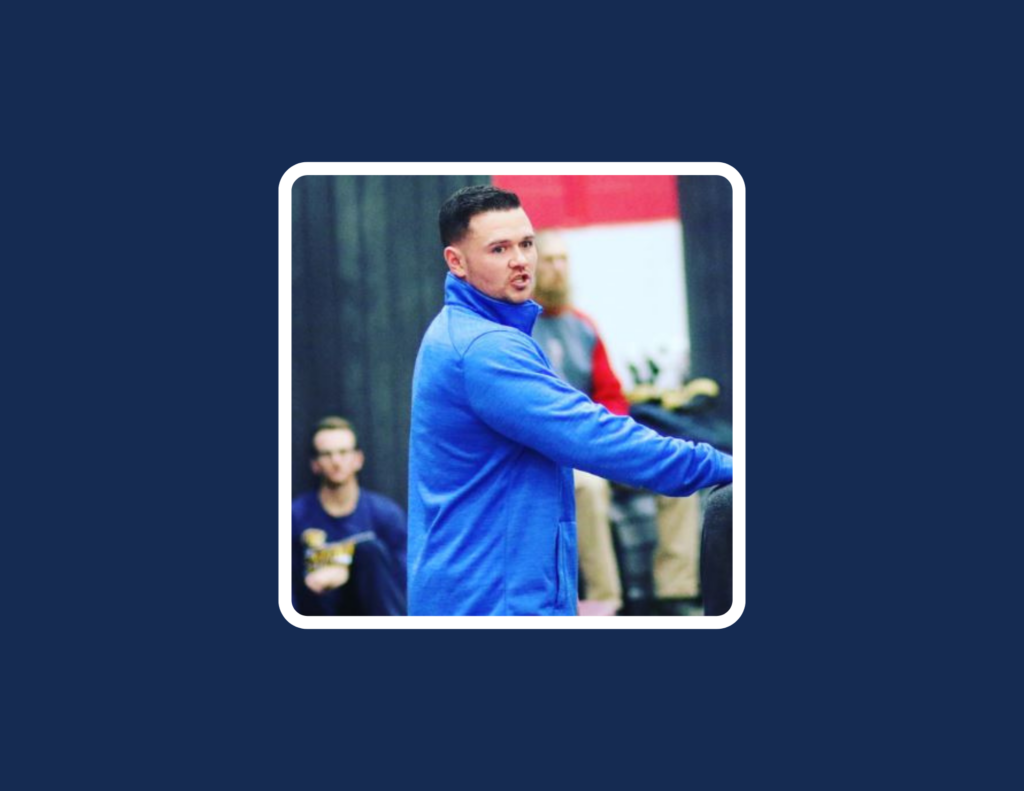
Jamie Smith is the founder and head sport preparation coach of The U of Strength. He is passionate about guiding his athletes through their developmental process and discovering unique ways that blend physical preparation and skill adaptation. As a former basketball player at Merrimack College, he graduated with a degree in Sports Medicine and a concentration in Exercise Physiology.
Jamie has had the opportunity to coach under some of the most knowledgeable and experienced coaches in the industry and has worked with a variety of athletes from the novice to the elite skill levels, some of which include current NHL, NBA, and MLS players and the 2011 NCAA Men’s Basketball National Champion UConn Huskies. Through adaptive, creative and experienced based program design, Jamie assists his athletes in reaching their full potential on and off the court, ice, and field.
If you’re looking to improve your coaching please consider joining the Hoop Heads Mentorship Program. We believe that having a mentor is the best way to maximize your potential and become a transformational coach. By matching you up with one of our experienced mentors you’ll develop a one on one relationship that will help your coaching, your team, your program, and your mindset. The Hoop Heads Mentorship Program delivers mentoring services to basketball coaches at all levels through our team of experienced Head Coaches. Find out more at hoopheadspod.com or shoot me an email directly mike@hoopheadspod.com
Be sure to follow us on Twitter and Instagram @hoopheadspod for the latest updates on episodes, guests, and events from the Hoop Heads Pod.
Get ready to take some notes as you listen to this episode with Jamie Smith, Founder of The U of Strength.
What We Discuss with Jamie Smith
- “You would go out, you’d make your own games. You would make your own sports. You would make your own teams. You would do all these different things. That in my opinion, is just missing in the modern day athletes development.”
- His obsession with basketball during his high school years
- How injuries cut short his playing career, but led him to athletic development
- “I’m trying to fill in gaps created by kind of doing the same thing over and over and over again as a result of specialization.”
- Helping athlete’s see the bigger picture and not just the short term
- How he ended up at Merrimack College
- “Basketball is an unbelievable tool for so many different aspects of life.”
- Gaining experience from working with great mentors
- Working with the 2011 National Champion UConn Huskies as a part-time volunteer
- The challenges he faced when starting The U of Strength
- “I don’t base my decisions and my program design and what we do based on how much money is coming in.”
- “I look at the human before the athlete.”
- How he uses non-traditional small sided games to tap in to the psychological, the emotional, the social aspects to human growth.
- Developing the perception, the action, and the attentions
- Taking traditional concepts and principles and applying them in a more chaotic way
- Developing an athlete’s movement toolox
- “It’s all game based. Everything is gameplay. Everything is exploratory. Everything is fun.”
- “I’m really big on, I call them training menus. Building in options, ranges, and just allowing kids to have a say. And it’s more engaging. It’s a partnership, but it’s not for everyone.”
- Utilizing small groups
- In season vs off season training
- Why he believes you should ditch dynamic warmups and what you should replace them with
- “The missing piece is giving them contextual opportunities in different environments.”
- “The biggest reward I get is getting kids to believe in themselves.”
Like this show? Please leave us a review here — even one sentence helps! Consider including your Twitter handle so we can thank you personally!
We’re excited to partner with Dr. Dish, the world’s best shooting machine! Mention the Hoop Heads Podcast when you place your order and get $300 off a brand new state of the art Dr. Dish Shooting Machine!

Prepare like the pros with the all new FastDraw and FastScout. FastDraw has been the number one play diagramming software for coaches for years, and now with it’s integrated web platform, coaches have the ability to add video to plays and share them directly to their players Android and iPhones via their mobile app. Coaches can also create customized scouting reports, upload and send game and practice film straight to the mobile app. Your players and staff have never been as prepared for games as they will after using FastDraw & FastScout. You’ll see quickly why FastModel Sports has the most compelling and intuitive basketball software out there! In addition to a great product, they also provide basketball coaching content and resources through their blog and playbank, which features over 8,000 free plays and drills from their online coaching community. For access to these plays and more information, visit fastmodelsports.com or follow them on Twitter @FastModel. Use Promo code HHP15 to save 15%
Your first impression is everything when applying for a new coaching job. A professional coaching portfolio is the tool that highlights your coaching achievements and philosophies and, most of all, helps separate you and your abilities from the other applicants.
The key to landing a new coaching job is to demonstrate to the hiring committee your attention to detail, level of preparedness, and your professionalism. Not only does a coaching portfolio allow you to exhibit these qualities, it also allows you to present your personal philosophies on coaching, leadership, and program development in an organized manner.
The Coaching Portfolio Guide is an instructional, membership-based website that helps you develop a personalized portfolio. Each section of the portfolio guide provides detailed instructions on how to organize your portfolio in a professional manner. The guide also provides sample documents for each section of your portfolio that you can copy, modify, and add to your personal portfolio.
Whether you’re a beginner basketball player looking for a place to start or a seasoned vet looking to level up your skills, your new go-to secret weapon is Train.
Train is a basketball training and education platform that gives you on-demand access to premium basketball courses created by expert coaches and trainers from around the world.
Want to get better at blowing by your defender? Learn setup drills with NBA & international pro trainer Marius Williams or how to use the punch drag with NBA trainer Kerry Darting.
Looking to level up your catch and shoot skills? Practice space shooting workouts with former lead female trainer for Kobe Bryant’s Mamba League, San Dixon.
Or if you’re just starting out, learn the basics of shooting and finishing at the basket from international champion, 3 time Romanian player of the year, and Train co-founder, Vlad Moldoveanu.
Train has 32 (and counting) actionable, expert-led, on demand basketball training courses that teach you exactly how to improve your ball handling, shooting, attacking, and more!
For a limited time, Hoop Heads listeners get 35% off monthly, annual, and lifetime plans. Click the button below to start a 7-day free trial and claim your discount.
THANKS, JAMIE SMITH
If you enjoyed this episode with Jamie Smith let him know by clicking on the link below and sending him a quick shoutout on Twitter:
Click here to thank Jamie Smith on Twitter
Click here to let Mike & Jason know about your number one takeaway from this episode!
And if you want us to answer your questions on one of our upcoming weekly NBA episodes, drop us a line at mike@hoopheadspod.com.
TRANSCRIPT FOR JAMIE SMITH – FOUNDER OF THE U OF STRENGTH – EPISODE 830
[00:00:00] Mike Klinzing: Hello and welcome to the Hoop Heads Podcast. It’s Mike Klinzing here without my co host Jason Sunkle this afternoon, but I am pleased to be joined by Jamie Smith from the U of Strength. Jamie, welcome to the Hoop Heads Podcast.
[00:00:12] Jamie Smith: Hi Mike. Thanks for having me.
[00:00:15] Mike Klinzing: Absolutely. Thrilled to have you on. Looking forward to diving into all the interesting things that you’ve been able to do throughout your career.
Want to go back in time to when you were a kid. Tell me about some of your first experiences with athletics. What you remember about just getting involved with sports.
[00:00:31] Jamie Smith: Yeah. So the big thing sports was a big part of my life early on. My father, my uncles, all were college athletes. So sport was a big part of my life from the minute I could crawl to middle school, high school, college, et cetera. I just had a special special place for sport at the beginning. You know, it was a wide range of. You name it. I played it. And then once I kind of got to the high school and the collegiate level, I chose to play basketball.
But it’s just, it’s a different day now where I wouldn’t, and I’m sure you had similar experiences. It’s like, you would go out, you’d make your own games. You would make your own sports. You would make your own teams. You would do all these different things. That in my opinion, and I’m sure we’re going to talk about it’s just missing in the modern day athletes development.
And so I was lucky enough where I grew up in the nine I was born in 87. So I grew up in the nineties, early two thousands, and I just got to play playing until it was pitch blackout or playing until mom or dad screamed off the back porch, but I played every possible thing you could think of.
Which gave me the best, gave me the best chance to reach my dream of playing college athletics. So early on it was, it was everything and anything I love to compete. I’m a very competitive person and we can talk about that too. That’s why I started my own business. But yeah, I played everything.
And then once I got to high school, I got obsessed, whether, whether you want to say it’s right or wrong. I got obsessed with basketball. I am not your typical basketball I’m, I’m five, nine a white kid from the suburbs but I just got obsessed and I wanted to do everything I can, whether it was right or wrong at the time, I wanted to do everything I could everything that I could to give me a chance to play to play you know, college basketball.
And so through that process. You know, now we’re talking about the college level. I did a lot of the wrong things and ended up having major knee surgeries, which you know, cut in my, it ended my career pretty short. But it got me into the sports medicine field, it got me into athletic development, strength and conditioning.
And so everything happens for a reason and I wouldn’t change a darn thing. But I played every, everything you can think of. And then I probably would say now, and this is kind of the advice I give my athletes, I specialized too soon. I still think high school athletes, I mean, you should be playing.
If you’re a real athlete, you should be playing at least two, if not three or four different sports, and then once you get to that college level, then that’s when you can kind of specialize. So you know, I’m learning from my mistakes and I’m, and I’m sharing that message now with a lot of the younger athletes I have, but again, it’s live, learn and pass on.
[00:03:38] Mike Klinzing: So let me ask you this. At what age did you drop everything else and become basketball exclusive?
[00:03:43] Jamie Smith: Yeah, so I don’t want to throw anyone under the bus, so I got bad guidance. And again, this was at a time where we didn’t have the access to the information, right? The internet was just becoming big.
It was, it’s just a different time now. So information wasn’t as abundant. And so I got advice as a freshman in high school that if you wanted to play varsity, if you wanted to be our point guard, if you wanted to play college athletics, it had to be basketball year round.
And I bought into that. I bought into it. And I really wish I didn’t cause I was pretty good at some other sports too. But I this is coming from a head coach. And so what you’re going to I’m 14, 15 years old and I’m, I’m taking in this information. I’m like, all right, I’m going to do everything I can to please the coach.
And to give myself an opportunity to play varsity basketball at a freshman or sophomore level which then will give me a better chance in my in my opinion to play college basketball. And so I made that decision freshman year. And again, you live, learn and pass on.
I have a child. Would I give that same recommendation and guidance to my daughter? Absolutely not. So if I could do that over, I get it is what it is, but again, it’s just, you learn from it. And that’s why I’m so passionate in taking this kind of strength and conditioning the, I’m in that strength and conditioning world, but I’m trying to tap into human development and athletic development and understanding.
That a lot of these kids, a lot of these younger athletes. So I work with elementary, middle school, high school, college level. A lot of these kids, they’re playing one sport. So where I am, so I live in Southern New Hampshire. My business is in Massachusetts, Kingsborough, Massachusetts, which is right on the border between New Hampshire and Mass you know, there’s a lot of, I have a lot of basketball, a lot of hockey.
And a lot of these kids they, they early specialize and they play at nine years old, at 10, 11 years old, they play just one sport and they play on four or five different teams. And it’s just something that it’s like in my opinion, what I’m trying to do is I’m trying to fill in gaps created by kind of doing the same thing over and over and over again. And so that’s where a lot of my gameplay, my small sided games, a lot of this stuff that not many strength and conditioning coaches are talking about, that’s the primary reason why I have created and have really. Try to put out a strong message that saying, Hey, these kids these athletes are kids.
Right. And that we got to look at the human before the athlete. And it’s all from the mistakes I made growing up.
[00:06:38] Mike Klinzing: All right. So when you think about the mistakes you made and the regrets that you have, what specifically Are you talking about, do you feel like you missed out on the opportunity to play other sports?
Do you feel like the overuse injuries that eventually led to your knee problems that you described? What are the regrets that you’re talking about?
[00:06:56] Jamie Smith: Yeah. So I’ve had multiple surgeries. I’ve had five. And I had them all before I was 21. And so understanding biomechanics and physiology and motor learning and all these different things, and it’s the time.
It was the era. It was the generation growing up where it’s like pain was weakness, right? And it was something where I just fought through it, fought through it, fought through it. to the point where both my patella ligaments were completely ruptured at the same time.
And I was still trying to play through it. I’m still trying to get through it. And it was just one of those things where it’s like, it’s just, it’s negligence. It’s asinine. It’s ridiculous. And I see that I see the behaviors and I see, and that’s where I try to connect with these kids on their level, where it’s like, I understand the obsession.
I understand the drive and the competitiveness To be completely honest the kids that come and see me, they are reaching out to me because they have a specific purpose of coming to me. This isn’t something where I have 20 to 25 kids in a group. This isn’t one of these kind of bootcamp fitness factory type programs.
There’s a lot of intent and there’s a lot of attention to detail with my program. And so I get the kids that they have that obsession, they have that drive. And it’s so, and there’s, there’s times where it’s like, I’m looking in a mirror from 20 years ago. 15 years ago.
And it’s like, all right, how can I get, how can I connect, how can I relate to these kids and just get them to kind of change their lens and to change their perspective instead of everything being so short term, because that’s where I was, that’s where all the guidance I got, whether it was right or wrong, everything was the now when I’m trying to tell these 12, 13, 14, 15 year olds.
Look at the bigger picture. All right. We got to stop looking at right now at this moment in time, but how is this session or how is this decision going to impact and affect and influence you 10, 15, 20 years down the road? And so I don’t have regrets because it’s definitely played a huge part. And everything that I do but that’s definitely something where it’s like, yeah, I honestly don’t ever want to have surgery again.
Cause I had such a negative experience with it. And I got so frustrated during that timeframe that it’s, I just don’t want any kid to go through that.
[00:09:42] Mike Klinzing: Yeah, I can completely understand where you’re coming from. And obviously, no matter what you do, your own experiences impact the way that you view and see things.
And so, when you start talking about being able to help kids to understand that early specialization, which obviously we know that that’s an issue that goes far beyond any individual kid, and we start looking at the landscape of youth sports. And part of that is because the incentives aren’t always aligned, right?
We have a lot of adults that… Make a living from getting kids to participate in whatever sport you want to name. They got to keep them in their club, in their building, in their programs in order to continue to be able to feed their own families. And you understand the motivation. And again, like I’ve got a basketball camp business and, and you’re running you’re running a strength conditioning business.
And so you understand. That there are adults that make money from you sports. And yet there are times where I think the people who do it right are the people who are giving kids what they need and are not just trying to squeeze every last dollar out of every family. I think that’s where sometimes you run into challenges is where, okay, this coach says, Hey, you’re nine years old.
And if you want to be a high school soccer player, you got to be on our soccer club year round and play four different seasons. And then in between those seasons, you got to be training and you can’t be going to do this or that, or you can’t be playing on this team at your middle school. And I think that’s where.
We start to get into trouble and that’s where you run into situations like what you described, where an adult is kind of pushing you in one direction. It’s no longer being driven by the kid’s ambition or the kid’s desires. And that’s, that’s a challenge. I mean, it really, it really is when you think about your.
Experience as a high school and a college athlete. What do you remember about your recruitment and just the process that you went through to be able to play college basketball reach, which obviously was an important dream for you at that point in your life. So what was the process like for you making a decision and ended up going Merrimack?
[00:11:46] Jamie Smith: Yeah. So it’s wild. And I don’t know if I’ve ever publicly talked about this. So after my, after my senior year at high school I basically, I gave up. And I’ll be completely honest. I said, I’m done with this. I’m so frustrated. Cause I was starting to have knee pain. I was starting to have hip pain. And it just got to a point where it’s like, I did everything I could, but I could not please the right people to give me the right opportunity to, in my opinion, play at the next level. And so there was a period, there was a three month period. Where I said, F this. I said, I’m done. I said, I will figure out.
I will go to school. I might take some time and then, and then go to school because again, this was 2005 at this time, it’s like, if you didn’t go to college, you were a failure. If you didn’t further your education, you were a degenerate.
And so it’s, you, I had that. And kind of that little thing in my ear where it’s like, all right, I’m done. I want to be done with basketball. I don’t know if college is for me and it just, at some point during that process I just, I got the itch back. I took some, so basically I took some time off and that was the first time probably since my 7th grade, my 7th grade year to my senior year, I did not take any time off.
It was always go, go, go, go, go. Basketball, soccer, baseball, go, go, go, go, go. But then I finally took some time off and I allowed me to be me. And I allowed my body to a degree heal. I allowed my emotional system to heal. I allowed my social systems to heal. And then I got that itch back and. Oh, I had a great mentor throughout this process.
I had a great mentor. He was an AAU basketball coach, but he was a family friend. And so he got me, he was my AAU basketball coach really young. But then he was just a friend in the family and he just would offer me guidance here and there. He has recently, he’s passed on and he basically had, I had a conversation with him and I told him, I was like, Hey man, I really, I want to play.
I was like, is there any opportunities where I could go to prove myself? Even if I had to walk on, I was like, is there anywhere I could go? And so the two schools were St. Anselm’s. And Merrimack college. And at the time Burt Hamill, who’s a legend there, he, he has recently passed on too, but he was the head coach at the time and I got an opportunity to go work up at their summer camp.
And I fell in love. I fell in love with the campus. I fell in love with the players. I fell in love with coach and it was one of those things where it’s like, I didn’t want to leave. And so I did everything I could to help out, to be in the right place. And then basically once, once my freshman year and I enrolled at Merrimack, you know I was, I was part of the team and I earned some money and it took some time, but he did take care of me.
And it was just one of those things where I let my body, I let everything heal. I needed to be in the right frame of mind. To make a decision that was going to impact the rest of my life. And so I don’t know if you’re familiar with Merrimack college, but so Burt Hamill, who was the head coach, Joey Gallo was my assistant coach.
He’s the head coach now at Merrimack. It was just a great, it was awesome. I had such a good time. It was just an, it was, it was an unbelievable experience. Cause I was a 17 year old freshman and our point guard, he was 23 at the time. So there was a six year age gap where I had no idea what I was getting myself into, but it was a, it really, and I know this is going to sound corny.
It was a family. And it was one of those things where I knew I was going to have to pay my dues. And that wasn’t anything that I wasn’t like, I was prepared for that. The one thing though, is that with Bert, all he cared about was that if you paid your dues and you did everything you can, he was going to reward you no matter what.
And so he was, he was just, he was an awesome basketball coach. He was a better man, better father, better husband. And I learned so much from him.
[00:16:40] Mike Klinzing: What’s your favorite memory from your four years of being a college basketball player?
[00:16:43] Jamie Smith: Oh, God. Oh, favorite memory. Honestly, I had, it had to be that summer of unknown of that summer where I went in.
I just, so I’m from Connecticut. I’m from outside the Hartford area. South Windsor, Connecticut. I went to school in Manchester, Connecticut. And so I made the hour and 45 minute drive up and just not knowing, I had no idea where I was staying. I had no idea where the basketball court was.
Like I had no idea where anything was. But I just took the chance and that chance just, it built friendships. It built relationships. The guy that I roomed with Mickey Bertinick, who’s still one of my good friends, he’s the assistant at Merrimack now he’s the one I stayed with that first weekend I was there and he just took me under his wing and it was just an unbelievable from going from I’m done with the sport to within four to five months.
Just being rejuvenated and being like, all right, this is why basketball is unbelievable. It’s an unbelievable tool for so many different aspects of life. I’d have to say it was just that uncertainty, that unknown, and just being able to figure out a way to shut my mouth, put my head down and just eventually become one of the guys.
So I’d have to say the early stages was the best.
[00:18:12] Mike Klinzing: That shows you how important people are, right? I mean, you’re talking about your teammates, your coaching staff, that if without those guys, that turnaround and how you felt about hoops, I doubt it happens without the people. You just ended up in the right place with the right people and boom, all of a sudden, man, it just.
It just turns it back on for you. And I think that’s one of the things if I’ve learned nothing from doing this podcast, Jamie, it’s, it’s how important just relationships are, whether it’s coach to coach, coach to player, player to player, that those relationships are what really drives success, both success on the floor.
But then when you start thinking about The connections that the game allows you to build over time, I mean, it’s just incredible. It sounds like that’s what you were able to, that’s what you were able to find. And in doing so, you were able to have a great experience as a college basketball player. Going into school, did you know that.
Sports medicine was where you wanted to go, or did you have other thoughts when you first got there?
[00:19:08] Jamie Smith: So I loved training and I did a lot of the wrong things and I made a lot of mistakes on that side of things, but I loved it. I just, I loved the weight room. I loved all the extra little things, anything that I could do to gain the advantage or what I thought I could do.
To gain the advantage. I just loved it. I just, I obsessed about it. And so early on, my major was sports medicine and this at the time it’s different now, but at the time it was a brand new, I want to say that it was like year three or four of the sports medicine program at Merrimack College.
And it was one of like the only ones in, in, in the New England area. There weren’t many. That had a specific degree in sports medicine. So I knew I wanted to do something in that, but it’s when I hit my adversity where I had to have my knee surgeries and I had to do that consecutively. That’s where I kind of really was like, all right, I want to take this stuff seriously because I want to figure out a way to.
Not knowing that it was going to change the rest of my life and allow me to do things that honestly, I never thought I would be able to do. So yes and no. It’s kind of funny a lot of my close friends and my father and family members, they always said I was going to be a coach.
And I never, like early on, I was like, no, I probably will never just because it’s, it’s, it’s just, it’s a long career when you if you play college basketball and especially now it’s just year in and year out, it’s like a lot of times you just get, you get burnt out. And it’s, if it wasn’t for like you said, the people, and if it wasn’t for the environment I was in it, it definitely shaped, it definitely shaped my decision making and it helped me not only from the basketball side, but also I had a bunch of different strength and conditioning coaches and different mentors at Merrimack as well.
And one of them is still, he’s the director there now Mike Kamal, who helped me out a ton early on in my career.
[00:21:31] Mike Klinzing: Did you think that you were going to end up owning your own business or where did you see yourself once you kind of got to that career? Okay. So what, so what was the, what was the initial plan once, once you had established, okay, sports medicine is where I want to be.
And, and my own experiences have kind of led me to this. Now we’re all want to go. Did you think you wanted to work for a college? Where, where were you at? Where was your mindset?
[00:21:50] Jamie Smith: Yeah. So my biggest thing is that you have to get experience. And so I did some stuff at the college. It was very informal.
Cause I basically lived, everyone joked about that. It’s like, I had a key to the weight room. And so when the, when the place was closed down, I could still get in there. And it was me and one other guy on the hockey team that had a key to get in because they just knew I was obsessed and I wanted to try everything.
I wanted to learn, I wanted to do, and I’m a big, a big believer on if you’re going to talk to talk, you better damn, damn well, walk the walk, right? And so I got experience. So I just wanted to get experience. And so I was fortunate enough so that Mike Kamal, who’s still at Merrimack he helped me get an internship at Boyle Strength Boyle Strength Edition, Mike Boyle.
He’s a huge name in the, in the private sector. I worked at the North Andover. He’s got one. At the time it was Worchester at the time it was Winchester. He’s got facilities in Worcester, Mass and now Middleton, Mass. But he was a big name and it was one of those things where if I get in there, he’s had so many people go to NFL, division one, NHL.
It’s just mind blowing the amount of. Amount of people he has helped because he was, he was an early, he was one of the early guys t0 kind of make strength and conditioning to give strength and conditioning a platform. Mike was one of those early guys. And so I got an internship there.
So I got experience at the private sector. Obviously I was working for someone and I was the low man on the totem pole, so to speak, but I got experience to see, okay, I’m working with kids. I’m working with adults. I’m working with people with a bunch of different backgrounds, sports and cultural. Then from there, I was like, all right, I need to get more experience.
And I got a great opportunity to go back to go home and to work at UConn. So I was a volunteered. Part time assistant strength coach at, at the university of Connecticut under Chris West, who he had, he had men’s basketball and he had women’s and men’s soccer and me and Chris developed an unbelievable relationship within a 48 hour window. It was unbelievable. We went out to dinner and we ended up talking for like six hours and he’s like, I want you to come. I watch whatever, whatever we need to do, let’s get you here. And so I took advantage of it. And it was the year that I’m very this was probably the, probably the most memorable of my career where it was the year that we it was the last true big East tournament.
Where UConn won five games in five days and we won the national championship. It was just an unreal not only from a coaching, but from understanding kind of understanding the collective process and understanding the do’s and don’ts, the pros and cons to a major university. But to get a group of kids from all different ways of life, but to get them to struggle to deal with adversity during the regular season, but then to mesh and to buy in at the right time to then dominate.
And it was just because we had a young team and it was just, it was just such a unique time where it was. And I was very young. I was 22, just turned 23. But it was just so cool. It was so, it was, it was a really unbelievable time for me. So I had that experience. Towards the end there, the only way they would, the only way they would hire me is if I got my master’s.
And so I got an opportunity to, to basically take a GA spot at, at UConn, but I turned it down. And looking back at it, it’s like, should I have taken it? Probably. But I knew after going through that process that I wanted to be my own boss. I wanted to make the decisions. I wanted to put everything on my shoulders.
So if I do something and it’s, and it works. Or if I do something and it doesn’t work, it’s on me. I’m not going to rely on 15 different people. So that’s when I made my decision. I was like, all right, we’re going to me and my girlfriend is my wife. Now at the time we, we came back up to mass and, and I basically started a year after we moved back up, I started the US strength.
But it took experience. It took a lot of lessons. It took a lot of like great memories and a lot of a lot of learning lessons to make that decision to say, Hey, I want to go out on my own and kind of do this thing in the private sector, but really focus on athletic development. You know, from the ground level up from seven, eight, nine, 10 to the co up to the college age.
[00:27:05] Mike Klinzing: What was the hardest part from the business side of it, forget about the actual, you’re working with athletes, but thinking about it, there’s obviously a whole nother component to, you can be a great Trainer, but you can be a really bad business person. So what was the hardest part from a business standpoint of getting this thing going?
[00:27:23] Jamie Smith: I’m excuse my language. I’m a shitty business owner. I’ll be completely honest. And I tell my athletes that like I’ll get kids. And so we were talking about early specialization.
I get kids that come in and they’ll say, I want to train with you, but I really want to try field hockey, or I really want to try baseball. And what do I do, Mike? I tell them to go try the sport. And so the one thing I have noticed is that, again, we can’t just look at them now. My retention rate is super high.
I get kids that want to stay. I get kids that whether, I, so basically I run a program every quarter. So every season we start every season there’s a 10, 12, 14 week program. And so I’ll get kids that, okay, they might be with me in the winter. They might be with me in the summer, I got some kids that stay all year round.
If financially and logistically from a scheduling standpoint, it works, but there’s constantly, I tell kids, go try something else, go do it. So from a business standpoint, I’m still learning, man. You know, it’s one of those days where it’s like, I don’t have a big budget. I don’t have deep pockets. The nice thing is that everything I have, I own.
You know, I did that the right way. I’m in a great facility where I have a ton of foot traffic, a ton of, there’s a ton of eyes on me. You know, I’m in a great location. It’s right off the highway it’s right between ass and New Hampshire. So I get a combination of both. Yeah, but the business stuff, it does a lot, there’s a lot to it.
And then on top of that you look at the online, you look at the social media, you look at the newsletters, you look at insurance, you look at maintenance, you look, there’s so much that goes into it that I didn’t, I mean, I had an understanding because I did have some good, I did have some good mentors and I had some guys that have been doing this at a high level.
Offered me guidance. But you don’t know until you do it. You don’t know until something breaks that you don’t know until you know, shit hits the fan, excuse my language again, but that’s how you learn. And that’s one thing that what I tell every single human being at work, I’m transparent and I’m as honest.
As possible. There is no hiudden agendas with me. There’s no BS. What you see is what you get. And I’m honest. And I think that that’s really important, especially with the younger athletes. Everyone has an agenda. Everyone. It’s a bottom line. And yes, I have a business. You have a business. Yes. I need to make money, but that’s not my decision making.
I don’t base my decisions and my program design and what we do based on how much money is coming in. Is that a shitty business owner? 100%. I get that. I’m not, I look at myself. I I’m a coach. I’m a facilitator. I’m an educator. And over time, my business, the business will be okay because I’m going to have good people.
I’m going to attract the right families that are going to represent the U of Strength, and that are going to represent my brand, instead of getting kids that have unlimited resources, that have no direction, that don’t have any purpose. It’s just, that’s the decision I made early on and I’ve stuck with it.
[00:30:53] Mike Klinzing: I think when you start talking about telling kids the truth about what they should do, where, where they should be and, and being honest and not being worried about how that honesty could affect the bottom line. I don’t care whether you’re in strength or conditioning and conditioning, or I’ve talked to a number of basketball specific trainers that are working with basketball skill development, and they all say the same thing.
Look, I’ve lost clients because I’m telling them what I think they need to hear. And sometimes people don’t, sometimes people aren’t that receptive to what they need to hear. And they may end up taking their business elsewhere. But ultimately, you’re going to attract the right kind of people, the people that you want to work with.
By telling them the truth. And again, that may mean that somebody’s, somebody may not be right for your business, but ultimately you’re going to end up finding the right people, which in the long run is going to lead to your business success. All right, let’s leave the business world behind. Let’s talk training.
Tell me a little bit about your philosophy. What makes what you do in your mind different, unique? What’s your value proposition when you talk to athletes about what you bring to the table?
[00:32:02] Jamie Smith: Yeah. So. My big thing is I look at the human before the athlete. So when I have new athletes, so every time I take on a new athlete I have a very informal, but I have a meeting where it’s face to face.
I get to know the kid. I get to know the family. And a lot of times the fathers, the mothers, They address their son, Johnny, as a hockey player, as a, or their daughter, Sally, as a basketball player or whatever. And so my first thing is that. They’re a human and they’re kids. And so I get to their level, meaning I’ll talk about what’s their favorite food, what’s their favorite color, what’s their favorite music, what’s their favorite, do they like Tik Tok, what’s their favorite video game, I get to their level and understanding like who they are.
And so that’s the big thing is that I look at the human before the athlete. And I think that’s really important because my big thing, when I look at. Like from a bigger picture, my, my training process is built upon the physical, the psychological, the emotional, and the social systems. And that might seem a little weird because I am, if you, and I’m giving air quotes right now, I’m a strength and conditioning.
Coach, or I have a strength and conditioning facility, but the weight room or the physical side of things is just one tool that helps with this human development or this athletic development. And so I use a ton of non traditional ways through gameplay, through small sided games, through plyometrics, through a lot of these stuff that I share on social media.
I use these tools to tap in to the psychological, the emotional, the social aspects to human growth. And I just see that very limited in today’s youth and honestly, in all of sports, I don’t care if it’s elementary, I don’t care if it’s middle school, high school, college we are all humans.
All right. We are all designed to jump, cut, sprint. You know, we’re all designed to do these things just because you’re a basketball or a hockey player, whatever. It doesn’t mean that you can’t do those things. And so in my opinion, if you, if you look at the fundamental principles to movement, I just think a lot of places, they put their focus, they put all their eggs in the wrong basket, where I’m putting an egg in a bunch of different baskets.
To help grow and help develop this adaptable, robust, and resilient individual.
[00:34:51] Mike Klinzing: All right. So what does that look like? I know I’ve heard you mentioned a couple of times, small sided game. So when a lot of people think of strength and conditioning, right, they’re thinking of the traditional weight room.
Maybe you’re mixing in some plyometrics, that kind of thing. Most people don’t think of, Hey, I’m showing up at my strength and conditioning workout to play some small sided games. So what does that look like? When you have an athlete and you have a workout and you have a group, what kind of small sided games are you playing?
Give me an example or two.
[00:35:18] Jamie Smith: Yeah. Yeah. So we, so it’s, it’s built into our program. And so we do stuff. We have traditional stuff. We left and we lift heavy. We lift weights for speed. We do stuff. I have a 20 I have a 2000 square foot rate weight room, but I also have access to over 500, 000 square feet of turf, indoor, outdoor turf, basketball courts, hills, et cetera.
And so I use the small side of games, whether it’s more gameplay, where I’m allowing the kids to design, or it’s all about engagement. It’s all about fun. So emotional like an emotional stimulus or social. Aspect where it might be more of a team based game, but I also do stuff from an agility standpoint, where, what I tell coaches that are, that this is a foreign concept, it’s basically think of your QV2 stuff you do with on a basketball court, it’s just without the ball.
And so that’s a lot, the stuff that I did with Alex, with basketball immersion it’s, it’s called basketball athletic development. It’s a video series I did. It shows a lot of these unorthodox things you’re not going to find. In the traditional kind of educational system.
But what I have found is that finding this blend of lifting, of sprinting, of jumping in these closed traditional environments, it’s only half of the equation, so to speak. And so what these small sided games or these agility activities do. They respect this idea of the perceptual motor landscape.
They look at the input and the output. So it appreciates what the athlete is hearing, seeing, feeling, and how that influences their movement patterns. And so that’s a big thing. You know, maybe some coaches I’ve heard the perception action coupling, but that’s the big thing where it’s like, all right. I want to find things that are sticky.
And so what I mean by that is that we put kids into contextual, let’s just say it’s a 2v2 situation where we have offense and defense. All right, the offensive guys have a task where they’re trying to, let’s just say they’re trying to score where I set up, think of like flag football without a ball.
Where the kids have flags on, the offense is trying to get their bodies between a goal. Let’s say it’s just like two large orange cones, but they’re trying to get their body through a a specific area where the defense, they have a task where they’re trying to pull the offense’s flag. And so what this does.
Is this develops the perception, the action, and the attentions. And so now we’re looking at behaviors. And so now we’re creating these contextual, sticky situations. When we do these more traditional environments, these situations… Allow it to transfer or transition into a more chaotic competitive environment.
And so it’s, what I’d say is it’s a bridge. It’s something that we can do our, our speed and our strength our resistance training, but we need to find that activity or that opportunity. To get them to feel it and then be able to take these concepts and these principles and be able to apply it in a more chaotic way.
And so that’s what these small sided games, these agility activities, the purpose is that I’m looking for transfer. And it might not necessarily just be the motor patterns, but it’s the motor behaviors. And it’s these offensive and defensive intentions where these kids learn these key. Concepts that can be applied in any invasion based sport like basketball or hockey or soccer or lacrosse.
[00:39:23] Mike Klinzing: So what’s interesting about that, there’s two things that strike me when I hear you talking about that. And obviously for anybody who’s listened to our podcast or is. Mike is in basketball as a coach at this point. We’ve all heard of the games based approach to coaching where you’re trying to make the learning more translatable, which is what you’re talking about, where you’re not just doing a drill, a skill in isolation, you’re doing it within the context.
You’re working on that skill within the context of the larger game so that eventually you have better skill translation, which is the goal. You want your practices and the things that you’re working on. To be able to make you a better player and that ultimately is what it comes down to is can you play better in the games and can you execute those skills better in a game?
And so, when you start talking about those kinds of things, what you’re talking about, what you’re describing is can a kid take what you’re teaching them from a technique standpoint and then can they actually make a decision around when do I use that? And that to me is super interesting. And then the question that I always come back to Jamie, and it’s not really even necessarily a question that anyone can answer.
But when I think about the way I grew up, and I think in listening to you describe the way you grew up. Where. At least when you were younger, before you went specifically to basketball, you were playing lots of different sports and you were probably playing those sports in the neighborhood. And like when I was a kid, I was playing those sports in my driveway, in the backyard, in my neighbor’s backyard, going down to the playground.
And in the course of doing that, I was also climbing over fences and I was I was climbing up onto people’s garage roofs and I was throwing apples at my friends and doing all these things that when you look back on it now, those were all athletic running and jumping skills that I was doing them in context.
I wasn’t just, Hey, I’m going to pick up some apples and practice my throwing. You know, I was trying to beam the kid next door in the head when we were having an apple fight or whatever the case may be. And so now the way kids grow up today. Where they do specialize really early. We don’t send them outside to play in the same way that my parents sent me outside to play where I feel like a lot of the small sided games, for example, that you’re doing were things that.
Like I just did in my backyard we were playing kill the carrier or you’re playing whatever, any kind of tagging game and, and things that you just, like you drive down any neighborhood street and you just don’t see kids doing those things. So what I guess, and again, like I said, it’s not necessarily even a question, but have you ever thought about what it’d be like to take what you do?
And work with kids from 1980 and what they would be like and how they would react to these games compared to how kids today react to it. Because I think it’s just kind of an interesting thought experiment.
[00:42:16] Jamie Smith: Yeah. So what you’re talking about is you have that movement diversity, right? And it’s all about, I call it a movement toolbox.
And so many of these kids, at 10, 11, 12 years old, their toolbox is very limited. And then throw on puberty, in the maturation process, their movement toolbox becomes even more limited. And so instead of trying to force a specific speed technique, or a specific jumping technique, I said, I’m going to meet the kid where he is, or she is, and I’m going to look at this in more of a holistic manner.
And I’m going to, the big thing is, is, is I just didn’t want to force cause that’s what everything was dictated. Everything was commanded. Everything was too structured. And so that’s where kind of this whole athlete centered model, nonlinear pedagogy, a constraints led approach, ecological dynamics, dynamical systems theory, all of these different knowledge tools that I was fortunate enough to, to, to, to read and to learn. It really helped me kind of expand and change my lens to like human development instead of it just being, I’m trying to get the athlete just stronger. Or I’m just trying to get the athlete faster. And so yes, kids are like when we were growing up, absolutely.
But again, kids aren’t doing that. If I had a kid from the 1985 or 1992, they would eat this stuff up. Honestly, it really doesn’t matter. Kids are kids. And kids want to play and the real athletes, they want to compete. They don’t want to be told what to do. They want to just go out and do their thing.
And so that’s where like my, everything we do, it’s not just random. It’s not chaotic. It’s not just like, yeah, we’ll do whatever. I have a very, everything has purpose and I do have several resources that I dive really deep into the gameplay and the agility stuff where there’s intent behind all this stuff whether it’s.
Where we’re focusing more on individual situations in the emotional well being, whether it’s more team and social aspects, whether it’s with the small study with the agility stuff, is it more strength, power, change of direction type patterns, or is it more speed and elastic? So there’s a lot of things we do with these activities.
It’s not just like, yeah, I’m going to do whatever the hell I want, but it’s pretty powerful to give, when you allow kids the autonomy and you build a partnership, it’s really cool to see what the kids are capable of instead of putting them into pre planned boxes and making them all, okay, you’re going to be this, you’re going to do this.
It’s pretty powerful to see kids over the course of three, five, 10 years, have them create their own. How, so to speak, or their own bot, so to speak because that’s the stuff that stays with them the rest of their life. And that’s what I call, that’s the stickiness. That’s the stuff that transcends past my walls.
That’s the stuff that transcends past the basketball practices. And that’s the stuff I care about. And that’s the stuff that these closed cone drills or just lifting as heavy as you can while I scream in your ear that stuff doesn’t last. I’m just being honest. That stuff is here and there and it’s, it, that kid will forget about that in five minutes, but you give them some of these really, you know you know, non traditional situations.
It’s that stuff lasts forever, man. I still have kids when I made this change about seven years ago, almost eight now. And I still have kids that still, they talk about stuff we did seven, eight years ago, but it’s not the weight room stuff. It’s the stuff we were doing all in the field on the court.
And you know, these, these more competitive, these more, these environments that. It’s just the, the engagement is through the roof. And so you can learn a lot about a kid. Again, I’m not just looking through a physical lens. It’s you got the physical, psychological, emotional, social components to movement into human development.
And those all four are interconnected and you can’t have one without the other. And so that’s where these environments, I don’t care if you’re a kid from 30 years ago or now it’s still important.
[00:47:01] Mike Klinzing: I agree. I mean, I think that when you start looking at how do you make connections with kids and how do you help them improve?
If you can get them engaged, if you can get them buying in, if you can get them excited, if you can get them remembering things that, Hey. I remember seven or eight years ago when we did this, that that’s something that had an impression that went with them. And that’s when you know that you’re doing something right.
Let’s go back to the beginning of the process and your onboarding of a new athlete. What does that look like from the time that person first sets foot in the facility? And I’m assuming you put them through a little bit of testing. There’s conversation. Just walk me through the onboarding process of how you make sure that what the athlete is looking for Is what you’re able to deliver.
[00:47:43] Jamie Smith: Yeah. So it’s that initial meeting. And so we run a program every quarter. I take athletes up to a two week period after the start date. And then I don’t take anyone. I don’t take any new kids because all of our programs are organized by age and experience level. When we first start off, it’s this introductory period.
It’s called the, I call it a block zero where it’s just every, we get every athlete, every kid on the same page where it’s, they understand where it’s like, I’m teaching them my terminology. They understand the flow. They get to know me. They get to know the other kids in the group. They get to know they get to know the facility, et cetera.
And so there’s that, they call it the block zero, the introductory period. But typically through my initial meeting, that’s when I know, and I, and I’ll be honest, Mike, there’s been countless of times where I said, hey, this isn’t going to be a good fit, and I’m honest, but the good thing is that a lot of these families, they, I’m, I’m lucky.
I’m in a very affluent, a very nice area. A lot of these families, they have, They have other kids, they’re siblings. And so the parents appreciate the transparency. The parents appreciate the honesty. And those are the, like I said, the families I want. Because brothers and sisters are going to eventually come through my doors.
And so the parents, even though I said the oldest kid of three, like this isn’t going to be that good of a fit, but maybe it’s a great fit for the younger brother, or maybe it’s a great fit for a cousin, or maybe it’s a great fit for a best friend, a next door neighbor. And so I use a lot of marketing just, just by.
You know, spreading the word and just being an honest person, a good person that initial meeting, I can get a lot from the kid. I can get a lot from the family. And again, a lot of times I’ll it doesn’t work. Sometimes it does. But typically through that, we go through the block zero.
And that can be a two week, three week, four week. It all depends on the kids. It all depends on the individual and the collective. And then from there, after that block zero period, then that’s when. You know, and this is now I’m talking for like middle school, high school, college, then kids will start to get individualized programming where whether it’s stuff, speed or plyometric or lifting or whatever, coordination based stuff, then they start to get their custom program for our youngest level, our fundamentals, whereas anywhere between kind of six and 10, maybe 11 years old.
It’s all game based. Everything is gameplay. Everything is exploratory. Everything is fun. Everything and the big thing I do with that younger age is that early on it’s athlete driven or excuse me, athlete centered design, meaning I have a say in it, but then the athletes kind of, so it’s, it’s, it’s, I create the game and then I allow the athletes, To just create their own problems, create their own movements, create their own opportunities.
But then at some point I transition and try to make it more athlete driven. We’re now the athletes, the kids, or what I call the youth elites have the say in the design where they get to design the games. They get to choose the games. I’m really big on this autonomy idea. I’m really big on, I call them training menus.
Building in options, ranges, and just allowing kids to have a say. And it’s, again, it’s more engaging. It’s a partnership, but again, it’s not for everyone.
[00:51:49] Mike Klinzing: When you put them in groups, what’s that process like? How long does it take to evaluate? Okay. Who should be in what group? I know you talked about, Hey, it’s has to be age wise, but just how do you make sure that the level of athlete and then do you group them by sport or you do a cross sport, how do you put the groups together?
[00:52:05] Jamie Smith: Yeah. Everything’s cross sport. I want kids, I want kids learning from kids from different backgrounds, sport, cultural, financial, everything. I want that, I want that integration. So all my groups are it’s, it’s, I have every, I’ve trained and currently train every possible sport you can think of. When I, the only level that is tricky is the middle school foundation level because you can get a 12 year old that looks and acts like an 18 year old, 12 year old. That looks and acts like an eight year old. And so it’s that constant and that’s where that meeting and that’s where I recommend whether, okay, you’re going to go to the fundamentals, which is our youngest, or you’re going to go to our foundation.
Again, I have such a high retention rate that when I make a new, when we run a new program, I only take four to six kids per group. So that’s another thing. Like my groups are very, very small. A lot of times there’s only one or two new kids. Typically my groups fill up and they’re all returning. There might be 15, 20% new kids in the entire program.
And so it’s very manageable. And I designed it that way. How many groups are you running in a quarter? So right, so right now I do only do four. I run four sessions per day. That’s it. I will not do any more than four sessions. That’s enough for me. I, I used to do six and my energy, my quality, you can even sound, you can even hear my voice right now because I’m in the heat of things in the summer.
It was just, it’s too much. Cause it’s just me. I’m a one man shop. I run everything. I handle everything. It’s me. So I run four programs that fit our four sessions. The thing is, so with my younger group, it’s an hour commitment once a week. And that’s it. But then as you climb the ladder, then the time commitment increases, the training frequency increases.
So then with our foundation or our female development level, it’s a 90 minute commitment, two times a week. And sometimes for some kids, depending on the person, it might be three times a week. And then once you get to the development or the peak level, which is my oldest group, it could be anywhere between two, three, four, sometimes five sessions a week.
And those are two hour sessions. With my older athletes, I give them that two hour window so we don’t rush. Sometimes sessions are 45 minutes, sometimes sessions are two hours. What I tell parents and I tell new athletes is that you’re not paying for the time, you’re paying for my, my knowledge. You’re paying for the information and the guidance I’m giving you.
Whether that’s a 60 minutes, whether that’s two hours, it’s all dependent on what that person needs on that given day. So that’s kind of how I organize all of the different groups, but in the summertime, I run a group in the morning and then I will run three groups in the afternoon and evening. And that’s it.
And then on Wednesdays, I just run three groups in the afternoon and evening. So I run a Monday, Tuesday, Thursday, Friday in the summer. And then the evening time evening time, it’s three groups. And then when we transition to the fall, when kids are in, in season, then I will run four groups in the afternoon and evening, and I will run one or two groups on the weekend.
[00:55:52] Mike Klinzing: How does it look different when an athlete is in season versus out of season? So, if I’m a basketball player, what does my workout look like in terms of intensity, in terms of time in, let’s say, June when I’m gearing up for my summer and I’m really in the heart of trying to develop myself as an athlete versus I get to January when I’m in the middle of my season, how do you, how do you account for again, where those kids are in terms of the cycle of the year?
If that makes sense.
[00:56:26] Jamie Smith: It’s very simple. I cut things in half. I follow a very simple principle. I cut the volume. I cut the training frequency. I keep the intensity, but I draw, so I follow a low high model. And what that means, Mike, is that I consolidate stressors, meaning I have easy days and I have hard days.
The easy days are what we call low CNS stressors, and then the hard days are high CNS stressors. So the low days, that’s where we have gameplay. That’s where we have medicine ball throws. That’s where we have maybe upper body lifting. Maybe that’s where we do some of our assistance and auxiliary lifts.
That’s where we do more of our coordination based stuff. So stuff that’s just a little bit easier that athletes can recover from where the high days, that’s where we’re hitting our speed, our plyometric, our traditional high intensity weight room stuff, lower body wise. That’s where we’re hitting our agility, small sided games, small sided situations.
And so during a season, We will, we will, the whole idea is that I want them feeling better when they come through our doors, nine out of 10 times, I want them feeling better than when they came in. So a lot of the times we do more low sessions than high sessions where in the off season or say now.
There’s going to definitely be more high sessions and there’s going to be some more fatigue. But again, with this youth, there’s really, I, from my perspective and from where I am, we don’t have off seasons. Kids play year round. It is the truth. And so I need to factor that in and I need to appreciate that, especially with the foundation, the female development.
Hell, even the fundamentals level it’s a balancing act. And so I have some things that I do that is non traditional. You know, when a kid comes in, I pay attention. Are they smiling? Do they have normal behaviors? Are they not talking? Are they not, are they acting differently? We have a thing called the DWQ, a daily wellness questionnaire.
Where it’s just kind of like a daily checkup where they have to rate themselves. We do a finger tap score. We do a jumping score. So I try to collect some information upfront early on in the session to then make a decision. It’s like, all right, are we going to stick with the plan or are we going to abandon ship and go off script and do everything I can to make this kid enjoy this and enjoy this day. Enjoy this session.
[00:59:24] Mike Klinzing: Yeah, it’s interesting. I mean, you’re a hundred percent right. When you start talking about an off season and it’s funny that the way that you or I probably envision an off season, the way versus the way kids today envision an off season.
I just think about the kids I know playing various sports. So my son playing in high school basketball and then playing AU basketball, where from March until. This coming weekend will be our last week in AAU. He’s probably going to play, have played 55 AAU games since March. So is that really, is that, is that an off season?
You know, I would, I would argue, I would probably argue no. And you think about on the girl’s side who played, girls who play JO volleyball you got your volleyball season and JO you’re traveling all over. You know, similar to AAU basketball and then the travel soccer, they’re just go, you just go from one season, it just rolls right into the next season.
And so, yeah, trying to figure out like, okay, when’s the, when’s the off season? Yeah, good luck. Good luck trying to figure that out, Jamie. It’s, it’s crazy. So. It’s almost like where you have to, you have to design you know, you have to design the program and then be as I’m sure like you’ve talked about, you have to be so specific in terms of each individual kid, get to know them and know where they are, know what they’re doing and, and know how to design that program to best benefit.
Them in the, in the, in the stage of life, but also in the stage of the year where they are, it’s a challenge to stay on top of all that. And and I think what I like about what, what you’ve talked about today for sure is, is when you put it into a quarterly session and you’re like, Hey, after two weeks, we’re cutting it off and we’re not taking anybody else.
And, and that’s, again, a decision similar to one like you talked about earlier, where that’s. Probably not the best business decision for your bottom line where you could just, Hey, let’s grab a couple more kids and squeeze them in and we can make it work and whatever. But ultimately what you’re trying to do is provide the best.
And I think when I start looking at how you do it and then the uniqueness of what you do and how much it dovetails with the direction that we’re going in terms of coaching the actual sports. When I think of coaching basketball, like I said, and how it’s changed and how I would approach something today versus how I might approach teaching a skill 10 years ago.
Completely, completely different. And the things that you’re talking about when you start saying, okay, we’re going to do agility. Well, it’s one thing to do a shuttle run and yeah, I got to change direction. I got to do this and that. But when you start talking about putting kids in dynamic environments where they have to react to other human beings out there.
In their training session, that’s what they’re going to have to do in a game. They’re going to have to make those movements with other athletes out there that they can’t predict what that other athlete is going to do. So the more it just makes sense to me. It’s kind of amazing when you really think about it that we didn’t get to all this.
As you think about the evolution of of strength and conditioning and just coaching in general, man, why weren’t we thinking that making the games or making the practices more like games weren’t, wasn’t going to be, wasn’t going to be beneficial. Right? It’s like, I’m sure when you were growing up and whatever.
There’s all the sports you’re playing, but then even basketball when you’re playing pickup basketball, you’re not thinking about, I got to put my foot here and I got to do this and I got to cut to this spot. You’re just playing in it. And what ultimately ends up happening is you end up being more creative.
You end up moving in different ways versus the kid who only learns from a coach from the time they’re six or seven years old. It’s just, it’s so interesting to see how these different tracks of how the way we Coach kids and what we do with them, how it impacts the type of athletes that they are. It’s just because of the way the system is today versus the way it was when you and I were kids.
And then because of the advancement in coaching from when we were kids, it’s just amazing how different things are, Jamie. It really is.
[01:03:25] Jamie Smith: No, I really is, man. I completely agree.
[01:03:32] Mike Klinzing: All right. So let me ask you this. If I’m out there listening and I’m a high school basketball coach, And I’m thinking about, Hey, what are some simple things that I can do?
Maybe I don’t have access to a strength and conditioning coach in my high school. Maybe it’s something that I’m responsible for putting together my program. I don’t have somebody who’s doing the innovative things that you’re doing there in Massachusetts. I just don’t have access to. Be able to do this with somebody right there in front of me.
So what are one or two things that you would suggest to a high school basketball coach who kind of has to run their own strength and conditioning? What can they do to make their athletes better athletes to eventually make their team better? Are there one or two things that you could just, again, they’re probably a million, but, but just throw out one or two things that a high school coach could do to make their athletes better.
[01:04:21] Jamie Smith: Yep. So this is going to piss off a lot of people. And I talked about this a little bit on the, on the basketball immersion podcast is it’s throw out your dynamic warmups, use that time, that 5, 10, 15 minutes at the beginning of every practice or skill session and be more productive instead of doing lines of, of high knee grabs and butt kickers or layup lines or the agility ladder, throw that stuff off out and.
Throw in games, come up with something without the ball, whether it’s a 1v1, keep it simple, create a 1v1 tag game, and more importantly, what I challenge basketball coaches is that get them out of their basketball sneakers and off the basketball court. Get them onto grass. Get them onto sand. Get them onto hills.
Get them… It’s amazing when you, especially with the age we’re talking about, middle school, high school, instead of doing all of these corrective exercises and physical therapy drills and rehab and prehab movements, it’s amazing when you allow. These developing human bodies, when you give them more opportunities to move, they thrive.
And so getting them out of their high tops, getting them out of their ankle braces, exposing their foot to different sensations, exposing their eyes and brain to different sensations. It will dramatically, absolutely dramatically, not only impact them from a human standpoint. But you’re going to be so much more productive come practice time or you know, come specific situational basketball practice time.
So that’s the big thing is re rethink, redesign, reconstruct your, your warmup and try to be more productive. From just allowing more movement diversity, allowing different movement problems. And the big thing, like I already talked about is respect the perceptual motor landscape. Understand that another human being connecting your movements to another human being is so important and it doesn’t have to be crazy.
It can be extremely simple and you can manage the amount of information or you can manage the type of movement problems that the kids are feeling, seeing, and hearing by just, just doing a 1v1 in a small space or doing a 2v2 in a bigger space, or maybe it’s a 1v2 or 2v1, whatever, but changing your dynamic warmups to create more contextual opportunities to get them out of their basketball shoes off a hard basketball court will, will help so much. So, and obviously there’s so many other things. But that’s the big thing where it’s like, all right, how can we influence it? How can, and I just see the same stupid crap every single time. I see it now in, I’m in a sports center.
We have two beautiful basketball courts in our, in this facility and I see the nonsense. And it’s like, do you really think? Just blowing the whistle every 10 seconds or screaming at the kid’s ear while he’s doing an in place dribbling drill. You really think that’s making that 10 year old better? You are wasting your time.
And I’m very passionate about this and that’s why I’m kind of getting into this, but it’s got to change and just simple gameplay or, or small sided game situations for five to 10 minutes. You tell me once you do that. You tell me that the kids are not firing on all cylinders ready to get after it in your first basketball specific situation.
It’s mind blowing. And that’s the missing piece. That is the bridge that is going to connect a lot of these things that the kids are doing in the weight room. Or these kids are doing with, and I’m giving air quotes again, they’re basketball gurus. That is the missing piece is giving them contextual opportunities into different environments.
Like I said, different surfaces without sneakers, with sneakers, et cetera. It’s going to go a long way.
[01:08:58] Mike Klinzing: And I also think it’s fun, right? When you put kids. In a game environment against other people, kids like to compete. I mean, that’s the reason why you pick up a sport in the first place, right? Because you like to compete.
You like to play. And rather than, as you said, running up and down the floor, doing high knees, if you put kids in a tagging game, that’s dynamic, that has other athletes involved in it. Now, suddenly you’ve not only created movement, but you’ve also created competition. And you’ve also created an ability to have fun and compete.
And that’s ultimately, I think what kids are looking for and the more you can incorporate that stuff, whether you’re actually coaching the sport or whether you’re trying to develop better athletes like what you’re doing, I think the more you can make it dynamic, the more you can make it where, as you said, you put another athlete out there so that it’s contextual, it makes a ton of sense.
All right. I want to wrap up with one final two part question. So part one, when you look ahead over the next year or two, Professionally, what do you see as being your biggest challenge? And then part two, when you think about what you get to do every day. What’s your biggest joy? What brings you the most joy and what you get to do day in and day out?
So your biggest challenge and then your biggest joy.
[01:10:06] Jamie Smith: So let’s go positive first. So my biggest joy is the smiles every single time I don’t care how how talented I don’t care of the college scholarships Like if you ask me this question 10 15 years ago that my answer would have been Oh getting kids in there You know helping them get into college helping them sign a multi million dollar contract. The biggest reward I get is getting kids to believe in themselves.
And I know this sounds corny, but getting kids to buy in, to enjoy, and to look forward to the next session. That is the biggest joy I get because that means I had a positive impact on that kid’s day. And there’s so much negativity. There’s so much structure. There’s so much just whatever. There’s, there’s just too much, too much chaos in these kids lives that I want when they come to my facility, I want them to know that when they come in through my doors, they know what they’re going to get.
They know that the energy is going to be high. They know there’s going to be purpose and they’re going to enjoy it. And again, I don’t care what the sport is. I don’t care what the level is. I want kids to thoroughly enjoy the training process and want, and want to learn and are eager to learn or asking questions, all right, or critiquing me and questioning me.
I love that stuff. Why are we doing this? What if we do this this way? Would this way be better? I love that. The more I get kids interactive with this process, the happier I get. So the big thing is getting kids to enjoy. The training process. Cause it’s just, there’s so much negativity. There’s so much if you do this there’s just, if you do this the wrong way, you’re going to run suicides or there’s just negative consequences and I’m tired of that stuff.
I went through it and it’s bullshit. All right. Sport is a game. It’s supposed to be enjoyable until maybe you get to the professional level because that’s one business. Maybe that you could say high, high, higher level collegiate sports too. But when we’re talking about elementary, middle school, high school, you’ve got to love this.
And so that’s my biggest thing is seeing the joy and getting kids to do things that they never thought that they were, they could do for the other part. The thing that I see, it’s just balance. I think it’s the balance because I love coaching. I’m always going to coach. I’m trying to grow you know, the consulting I’m trying to grow. More of the online and spreading this message and sharing the stuff I’ve been doing for the last 7 to 8 years and really my entire life I’m trying to share that through different platforms and it’s just trying to find a balance because.
Again, I am not just a coach and business owner. More importantly, I am a husband and father. And so those two things are the most important, most important aspects to my life. I could give up coaching. I could give up this gym right this second, but my wife and my daughter, all right, and my dog, Izzy, no way in hell.
And so it’s figuring out that balance where it’s like, all right, I’m going to be in the trenches. I’m going to be coaching. I’m going to be in my facility. But I’m also going to be doing things like this. I’m going to be sharing stuff on our membership page. I’m going to be writing my eBooks. I’m going to be doing video series and I’m going to be doing some of these you know, course based online applications, but I’m also a husband and father and it’s just finding the balance because my daughter’s turned seven in a couple of days and it’s, and I’m sure you see it too, Mike.
It’s just, it goes by so fast I feel like she was just born yesterday and it’s like, she’s seven and it’s like, I truly, and I, I made this decision probably three years back where it’s like, no, I’m going to be home more. Yes. Is the business going to take, it’s got my, I’m going to have to have sacrifices.
I get that. But again, it goes back to being honest. It goes back to first principles. It goes back to just being a good human being. And part of that is I has to be, if I’m going to be a good mentor to my athletes and my kid, and to the kids that come here, I got to do the same thing for my own child.
Right. And I got to be there. I want to go to her games. I want to go to her recitals. I want to go to her PTA meetings. I want to go, I need to be there. And it’s, so the big thing for me is just finding balance because it is just me. And you know, I am a one man shop, so it’s the balance piece, man. And I think it’s going to be like that the rest of my life.
[01:15:18] Mike Klinzing: Yep. I have no doubt. I have no doubt after talking to you for an hour, I have no doubt that that’s going to be, that’s going to be a constant. That’s going to be a constant challenge. All right. Before we get out, I want to give a chance, Jamie, share how people can connect with you, find out more about what you’re doing, share your website, share social media, tell them where they can find the course again, that you did with Chris Oliver and Basketball Immersion.
And then after you do that, I will jump back in and wrap things
[01:15:42] Jamie Smith: up. All right. Awesome. Well, first and foremost, Mike, thanks for this opportunity, man. This is a great conversation. I truly appreciate this conversation went a completely different direction than I thought. And I thoroughly enjoyed this.
So first, thank you. I really appreciate this. Cause usually when I do these podcasts, it’s all. I don’t know. It’s, I don’t want to say it’s kind of the same stuff, but it was, this was personal and, and I really respect that. And I enjoyed it. So thank you first. Thank you. Second for me my website is theuofstrength.com my socials I’m basically Instagram and Twitter it’s @theUofStrength. You can contact me. My email is the Uofstrength@gmail. com. And just you can get all of this stuff. I try to share as much as I can for free. There’s a bunch of stuff on my Instagram, on my Twitter.
I also have a membership page where basically I think of this as my, this is the spot where I share all my ideas. So every day. I’m going on this and I’m just sharing what I’m seeing, what the things that I’m doing at my facility, the problems, the good things, and I basically I use that, it’s kind of like a social platform on my website.
And so it’s updated every day. I have thousands of posts of all these different things we’ve been kind of talking about. But it just gives me a chance to kind of. Kind of just share things that it’s just, it’s not common knowledge and just not many people are doing it just yet. And so my mission is hopefully by doing things like this we’re just getting people to getting coaches, parents, athletes, to kind of rethink this whole training practice developmental process.
And so those are, those are the best spots to reach me. Thank you so much.
[01:17:37] Mike Klinzing: Absolutely. Jamie, cannot thank you enough for taking the time out of your schedule today. Glad we were able to get it done. And to everyone out there, thanks for listening and we will catch you on our next episode. Thanks.