GLENN SMITH – FOUNDER OF HOOPFEST BASSKETBALL – EPISODE 1096
Website – https://hoopfestbasketball.com/
Email – [email protected]
Twitter/x – @HoopfestB

If you listen to and love the Hoop Heads Podcast, please consider giving us a small tip that will help in our quest to become the #1 basketball coaching podcast.
Glenn Smith is the founder of Hoopfest Basketball, based in Dallas, Texas. Hoopfest is a national sports marketing firm specializing in scholastic and college sports properties, event management, and unparalleled consultation. Glenn’s Thanksgiving Hoopfest has grown from a single event to the Hoopfest Basketball Series with stops in Lufkin, Dallas and Texarkana, Texas; Salt Lake City, Utah; and Nassau, Bahamas.
On this episode Mike & Glenn discuss the intrinsic value of relationships within the sporting community, Glenn recounts his journey from humble beginnings to the establishment of a nationally recognized sports marketing firm. He highlights the significance of treating individuals with respect and kindness, a principle that has fostered loyalty among coaches and players alike. The discussion delves into the logistical intricacies of managing diverse events, including the introduction of unique locations that provide players with memorable experiences. Ultimately, Glenn’s narrative serves as both an inspiration and a testament to the power of perseverance, community, and genuine connection within the realm of sports.
Follow us on Twitter and Instagram @hoopheadspod for the latest updates on episodes, guests, and events from the Hoop Heads Pod.
Make sure you’re subscribed to the Hoop Heads Pod on iTunes or wherever you get your podcasts and while you’re there please leave us a 5 star rating and review. Your ratings help your friends and coaching colleagues find the show. If you really love what you’re hearing recommend the Hoop Heads Pod to someone and get them to join you as a part of Hoop Heads Nation.
Have your notebook nearby as you listen to this episode with Glenn Smith, founder of Hoopfest Basketball.
What We Discuss with Glenn Smith
- His journey from a young athlete to a successful entrepreneur
- Growing up in Texarkana, basketball was a way to connect with friends
- The unique growth of Hoopfest, highlighting its expansion from a single event to a nationwide series, showcasing local talent
- Understanding the business side of sports can lead to career opportunities
- The importance of treating people well and how that has shaped his relationships and business in the basketball community
- The first Hoopfest event showcased local talent in Dallas
- The challenges of expansion and maintaining quality while building a trustworthy team for future events
- Fear of failure should not overshadow the pursuit of dreams
- Building genuine relationships allows for long-term benefits, creating a network of trust and support among coaches and teams
- Asking for help and networking are crucial for success
- Smith’s approach to event organization includes meticulous planning, ensuring a premier experience for both players and coaches
- Notable players like Jalen Brown and Cade Cunningham have participated in the event
- The success of Hoopfest Basketball is attributed not only to competitive play but also to the overall experience provided to participants
- Creating a welcoming atmosphere leads to repeat participation
- The transition from high school basketball events to college showcases illustrates a strategic expansion in his entrepreneurial journey
- Quality officiating is crucial for maintaining event standards
Like this show? Please leave us a review here — even one sentence helps! Consider including your Twitter handle so we can thank you personally!
We’re excited to partner with Dr. Dish, the world’s best shooting machine! Mention the Hoop Heads Podcast when you place your order and get $300 off a brand new state of the art Dr. Dish Shooting Machine!
Your first impression is everything when applying for a new coaching job. A professional coaching portfolio is the tool that highlights your coaching achievements and philosophies and, most of all, helps separate you and your abilities from the other applicants.
The key to landing a new coaching job is to demonstrate to the hiring committee your attention to detail, level of preparedness, and your professionalism. Not only does a coaching portfolio allow you to exhibit these qualities, it also allows you to present your personal philosophies on coaching, leadership, and program development in an organized manner.
The Coaching Portfolio Guide is an instructional, membership-based website that helps you develop a personalized portfolio. Each section of the portfolio guide provides detailed instructions on how to organize your portfolio in a professional manner. The guide also provides sample documents for each section of your portfolio that you can copy, modify, and add to your personal portfolio.
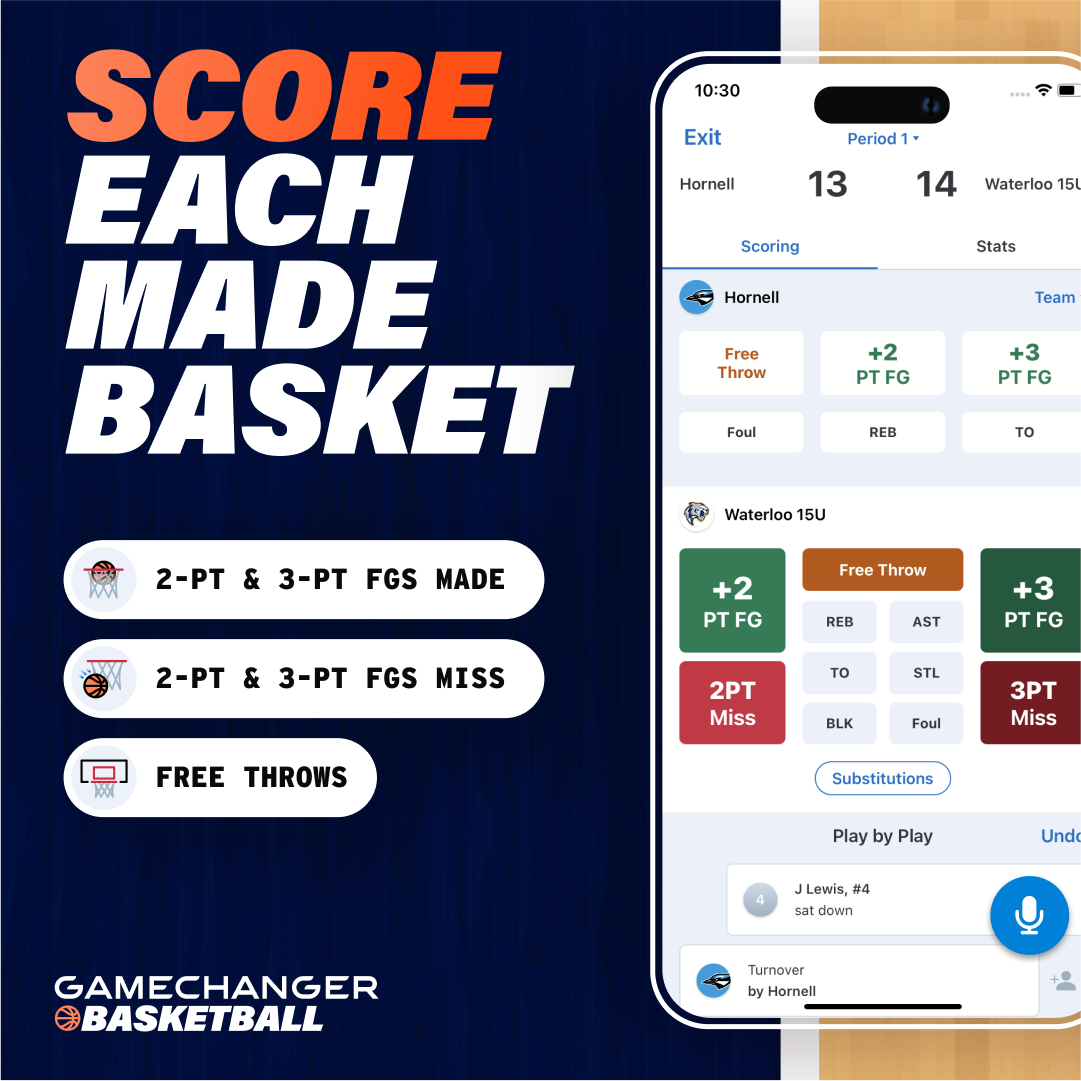
Hey, coach! Want to take your team to the next level this season? Introducing GameChanger, the ultimate game-day assistant with tools to give you a winning advantage. With GameChanger, you can track stats, keep score, and even live stream games, all for free! Get the stats and crucial game video you need to lead your team to victory, all from the palm of your hand. Coach smarter this season with GameChanger. Download GameChanger today on iOS or Android and make this season one to remember. GameChanger. Stream. Score. Connect. Learn more at GC.com/HoopHeads

High school and middle school basketball program directors, listen closely. Coaches are expected to do far more than just coach. You know this. It doesn’t matter if you’re doing the coaching yourself, or you have a full staff of coaches with you. You know very well that coaches handle scheduling, academic issues, parent communication, leadership development, and even mental health concerns for athletes. A lot to deal with, and they haven’t even gone home yet to balance those responsibilities.
No matter the passion for the game, and burning desire to help athletes develop, this level of responsibility can lead to burnout, inefficiency, and less time spent on actual coaching. You know it’s true.
When coaches are stretched too thin, it impacts the development of athletes, team morale, and the overall success of the program. Now here comes the outsiders throwing their two cents in about what’s happening. Then come the parents complaining about how you’re running things, as if they know what they’re talking about. When’s the last time you went to their place of work chiming in from outside their window?
Before you let that fire fizzle out, know that it doesn’t have to be that complicated. There are several ways to prevent you or your coaches from feeling overwhelmed. However, I’ll tell you one of our favorite ways to keep coaches firing on all cylinders, and that’s athlete-driven accountability and organization.
Instead of coaches constantly reminding players about assignments, grades, and practice schedules, our programs at Playmaker Planner puts the responsibility back on the athletes. By tracking their own academics, goals, and commitments, student-athletes become more self-sufficient, which of course allows the coach to put their babysitter hat in the closet, and put their coaching hat back on, allowing them to focus on what they love doing.
Are we offering planners that you can get at the dollar store as a solution? Of course not, but we are starting a conversation with you to see if our programs can be a compliment to what you’re already doing. Let’s find out. To learn more visit https://playmakerplanner.com/stop-is-this-for-you
THANKS, GLENN SMITH
If you enjoyed this episode with Glenn Smith let him know by clicking on the link below and thanking him via Twitter.
Click here to thank Glenn Smith via Twitter
Click here to let Mike & Jason know about your number one takeaway from this episode!
And if you want us to answer your questions on one of our upcoming weekly NBA episodes, drop us a line at [email protected].
TRANSCRIPT FOR GLENN SMITH – FOUNDER OF HOOPFEST BASSKETBALL – EPISODE 1096
[00:00:00] Mike Klinzing: Hello and welcome to the Hoop Heads Podcast. It’s Mike Klinzing here without my co-host Jason Sunkle tonight. But I am pleased to be joined by Glenn Smith, the founder of Hoopfest Basketball.
[00:00:13] Glenn Smith Mike, thank you for having me, my man. Pleasure to be here.
[00:00:19] Mike Klinzing: Let’s start by going back in time to when you were a kid. Tell me about some of your first experiences with the game of basketball. What do you remember? What made you fall in love with it?
[00:00:28] Glenn Smith: Just growing up in a not so big city, I grew up in Texarkana, so mostly all those sports was played at the local Boys and Girls Club so it, it was really just a place to just to hang out with your friends. because I wasn’t allowed to have video games and things like that so it was a way to hang out with my friends and get out of the house and, you know, just do something fun with basketball.
[00:00:50] Mike Klinzing: Your first love when you were a kid, or did you have another sport that you liked more when you were younger? I think I liked baseball,
[00:01:00] Glenn Smith: And football a little bit more just because I grew up in a family that played a lot of baseball and a lot of football. And I had older brothers that were really good in football and baseball but then they kept growing and getting faster?
And I started liking basketball more than the friends that I had. We all just kind of just gravitated to basketball.
[00:01:24] Mike Klinzing: When you think about your time as a young athlete, was there somebody in your life that you kind of looked to as a mentor? Whether it was a family member, whether it was a coach, a teacher, somebody that kind of took you under their wing?
Is there anybody that fit that bill for you?
[00:01:41] Glenn Smith: I think at all levels that I had different people that kind of, that I kind of took things from not knowing at the time. and like I said growing up in Texarkana, half of us in Texas, half of us is in Arkansas. So you, so we used to go to both boys and girls clubs on Arkansas side and Texas side, and both of them kind of had like their own person that was kind of like that staple or whatnot.
And then as I grew up, I just kind of saw different people that I liked and kind of took different mannerisms and, and different ways that they handled themselves and how they reacted to certain things and how they approached just life in general that I just kind of took, took those things from.
[00:02:25] Mike Klinzing: When you think about those life lessons that you learned, is there one particular thing that you can point to, like a piece of advice that you remember that somebody gave to you back when you were a kid, that you still kind of pull up in your mind when you have a situation that comes at you in life as an adult and you think, man, I remember when so and so told me that and that still is impacting me today.
Is there anything like that? Yeah, I always treat
[00:02:48] Glenn Smith: people how you want to be treated. I think that’s it. It sounds simple, but it’s something that a lot of people don’t do. And I think that as long as you’re kind and you treat people right, that, that that’ll open up a lot of doors for you.
[00:03:01] Mike Klinzing: So true. I teach school as my real job, Glenn, if you didn’t know that.
And so that’s a message that man, I try to get across to my students every single day. And as you well know, that can be a battle to try to get kids to understand, hey, if you just be nice, you’re going to get a lot more nice back when you’re, when you’re not nice to somebody, guess what you’re trying to get back.
You’re going to get, you’re going to get not nice back. And that’s a lesson that, I mean, I really try to, to, to pass that along to my students. And I think that’s something that when, when I think about the impact that that statement. On a young person and obviously that it had on you and that you’ve carried on into your adult life that’s, that’s kind of a gift that, that keeps on giving if you can be nice and treat other people the way that the way that they, you want to be treated.
What do you remember about your time as a high school athlete? Tell me a little bit about just your experiences in high school, what it was like for you. What are some of your favorite memories?
[00:04:03] Glenn Smith: My high school years was . Some of my best years of my life just, just the, the ups and downs, ?
because that’s kind of like where you kind of set the foundation for what your personality’s going to be, or like what kind of character that you’re going to be. Right. And I feel like during high school you have your first heartbreak you, you meet friends, you have your first argument with your buddies and and things like just the high school, like the whole high school experience in itself it kind of helped shape the man that you’re going to become.
I think for me I learned a lot just growing up with older siblings that, that were, extremely talented and relatives that were extremely talented in the sports realm. And then seeing some of them not pan out and seeing how people went from treating them a certain way.
Then once things didn’t go the way everyone thought they was going to go for them in sports, they treated them a different way. I, I, I really took a lot from that just learning a lot about people. just watching how people changed up on a lot of people that I know.
[00:05:18] Mike Klinzing: Did that have an impact on you in terms of how you looked at yourself off the floor, maybe as a student or thinking about what you wanted to do with your life? Because I think a lot of times, right, we get caught up in those of us who love sports, right? We get caught up in that being our identity. And then as you said, when the ball stops bouncing, either, just because we reach a level that we can no longer play at or something off the court or off the field derails us in some way, then we have to figure out, okay, I have to be more than just.
A basketball player or a soccer player or a football player or whatever it might be. So did watching those situations that happened with people in your family, did that sort of impact you in terms of what you wanted to do as far as your, your lifestyle? Yes, it did. it,
[00:06:07] Glenn Smith: it did have an effect on me, but I also was kind of also intrigued by the business part of sports.
like even in high school I was fairly good but I was still always intrigued. Like when I watched professional sports and things and college sports, I’ve always been, I intrigued with how salary caps work or how concessions work how ticket sales work things like that almost intrigued me more as when I was young as actually playing the sport.
Did.
[00:06:44] Mike Klinzing: And so when you think about that, and I think that’s kind of unusual, right? For a kid who’s a high school kid, to be thinking about those kinds of things. because again, most of us are thinking about just us as athletes on the floor. So as you’re thinking about those things and you’re curiosity is peaked and you’re wondering whether you’re watching on TV or you’re going to an event and you’re seeing things that are happening, were you at all equating that curiosity with a potential career?
Or was it more just, hey, I wonder how that works and I’d like to learn a little bit about that? Or were you starting to think about what direction you might want to head as you, as you moved into again, your college years, years, and then obviously on into your adulthood?
[00:07:24] Glenn Smith: so for me it was just curiosity.
I didn’t know that that was what I really wanted to do until my first or second year in the military after, after I graduated from college. that’s when I knew that that was something that, that I, I was not only interested in, but that I could potentially, make a living doing.
[00:07:49] Mike Klinzing: When you’re in school and before you kind of get through and you get to the military piece of it, what are you thinking about at that point in terms of what you were going to do and then how did the military sort of change maybe that outlook and, and steer you in that direction? Or was it just, again, you’re kind of looking around at what opportunities are out there for you, just how did you get to that point through your college experience and then through the military?
So,
[00:08:16] Glenn Smith: when I was a second lieutenant in the air Force for extra money, I used to work the concession stand at the Nike Peach Jam, and an individual by the name of Jeremy Nies who runs the Riverview Park Center where they hold the Peach Jam at. And he, and he still runs it to this day. This is back when teams used to actually play a a u sanctioned events.
Right. And he used to take me with him throughout the Carolinas because he was like the regional a a U guy. And he used to take me with him and. I learned how to assign officials. I learned how to take registration. I learned logistics. I learned how to run an event. I learned how to price events. I learned how many courts you need depending on how many teams that you have.
just different stuff that that I picked up that I was like, okay now I’m starting to pick this stuff up. And then it came a time to where it was like, okay my service commitment was up. And it was like, okay, do I take a take one of these jobs that had been offered to me by one of these alphabet organizations?
when I say that, I mean like the FBI, the IRS or CIA and things like that. Or do I move back to Texas and really buckle up and, and see if I can make this happen? ? And I felt like. I, I felt like I could do it, and so I moved back. I, I moved back to Texas, moved to Dallas, and kinda hit the ground running.
[00:09:56] Mike Klinzing: So what’s the first step when you decide I’m going to try to do something on my own? What was the first iteration of your idea? Because obviously, I’m sure over time it kind of morphed and changed as you started to figure out, Hey, what can I do? How can I do it? So what was your first thought when you’re like, okay, I’m going to go back.
I’m going to try to get this thing going on my own. I want to start something, I want to run events, whatever it is. What was the first iteration then? How did it sort of change as you got into the process?
[00:10:23] Glenn Smith: So I moved to Dallas and when I moved to Dallas, I was kind of already like in the mix of knowing who the best players were, who the best teams were.
And then when I moved to Dallas, I realized that in the, in the next five years, like in the 2008, 19 11, 12 classes that each class there was a kid from Dallas-Fort Worth and or Texas that was ranked in the top 10 in the country. But there wasn’t a, there wasn’t an event in Dallas that showcased Dallas kids.
Right. And so my first hoop fest it was called a Thanksgiving hoop fest. And the first one was at a place that is now a overflow parking lot for the Dallas Cowboy Stadium in Arlington. And had that one there and then it just kind of took off.
[00:11:21] Mike Klinzing: So initially when you start that, did you start it with, did you form a company right away?
Did you just kind of put the event on without doing that? What was the bus, what was the business side of putting that all together?
[00:11:35] Glenn Smith: Got you. Okay. So what I did was I started a another thing that I noticed is that there was a, there wasn’t a recruiting service that just focused on Dallas-Fort Worth area basketball.
And so I started that. It was called DFW Metroplex Hoops, and then I started a magazine called Metroplex Hoops. And those I kind of learned that. And then all of this fell under a company called Metroplex Hoops at the time. Right. And, and also at the time I had had a concierge company that catered to athletes and celebrities.
because I learned early on that I, all the basketball players wanted to be rappers. How other rappers wanted to be basketball players. Right. And so I did a solid for an NBA player and then he flew me up. Well, the solid was, he was waiting in line to get into the club. Right. And I’m like, I mean, I, I got a little stroke, but I mean, why are you waiting in line?
And I’m not the, and I’m not about to wait in line. And so I get him into the club and get him set up and then I’m thinking, hold up. If he didn’t know that he could have called ahead and got and got the table service and all this set up, it’s probably a million other NBA guys just like Right. And so I such good carry him that night that he flew me up to DC the following week.
And I went up to DC and then he says, Hey, we’re Finn to go to the studio and meet a buddy of mine who’s recording the album in there. I said, alright, cool. I said, alright, roll turns out. Ends up being a guy who’s one of my closest friends now Wale. And so that’s when I realized that our rappers wanted hoop and I wanted to rap and then so while that’s going on I’m doing that and I’m doing metroplex hoops I have her scouting services going everywhere, and then now people want to play, in the event and, and then that’s just kind of how it, how, how, how it got started, rather.
[00:13:35] Mike Klinzing: How did you build your knowledge base? When you’re talking about from a scouting perspective and getting an understanding of, okay, I watch a kid and what level do I think they can play at and how do I start to build the trust with both there’s always two sides to that, right? Like you have to build some trust with the players and then you also have to trust, build some trust with the coaches on the other end of it.
So how did you go about developing those relationships and then also just developing your own eye for talent and doing what you did and doing it well?
[00:14:07] Glenn Smith: So for me the scouting stuff, kind of getting better at, it happened with time so when I first started, I was more of a a information source.
I could tell you, okay you want to recruit this kid? Well, you don’t need to talk to Uncle Johnny. You don’t need to talk to the dad. The mom played college basketball. She went to lot, she went to Louisiana Tech. Her best friend is married to this guy and they’re recruiting him hard, so you may not want to waste your time.
Yes. So I was more so when I first started, I was more so giving detailed information that, that that saved coaches time as opposed to winding and dying. This one guy who just wants a couple free meals out of you, but he has no say so in that particular kid improvement. Right. and a lot of coaches appreciated that and what happened was a lot of people kind of gravitated to me because I was kind of honest with them.
Like, Hey, you don’t want to recruit that kid, not because he’s not good enough, just because he’s not going to go there anyway. ? And then what happened is that I formed this relationship with about 10 to 15 guys. That I, that, that I all, that we all became close, right? And then that’s those relationships, we all kind of grew up in the business together.
So a lot of those guys used to sleep on my couch when they were JUCO coaches, or they were grad assistants. And then now those same guys are head coaches of top 10 programs, associate head coaches at top 10 programs assistant coaches and or athletic directors now, and things like that. So that, that timeframe right there when I first got started, because I didn’t treat anybody bad, whether you were Cali Perry at Memphis, or you were Grant McCaslin at a juco, I was treated everybody the same, ?
And then. And then I never changed, ? because I still talk the same smack to those guys now that I did back then. And so those relationships were genuine and then that’s because those relationships were genuine. It was a easy transition for me as I started to, as I started to progress and as I started to expand.
[00:16:27] Mike Klinzing: So clearly. Then there’s a synergy between the event side of it and then that concierge side of it, right? As you build more relationships, you get more connections. That gives you access on both ends of that part of the business. So from the concierge standpoint, you told the story there, you, you get connected to NBA guy, you set him up and it, it goes well.
How did that networking piece for you work as you started connecting with you, connect with your first NBA guy? How does that work as you continue to build and con and build those connections within that world of doing that concierge work?
[00:17:04] Glenn Smith: Just being credible and being transparent and just with anything not over promising, and then just trying to, and just being a hard worker.
like when people would come to Dallas, they would say, Hey just one story in particular Hey, can we, can you there was a certain a a U program in Dallas and they wanted to meet Justin Bieber, right? I was like, Hey, this, that, that’s a tall ask, but let me see what I can get done, ?
And so I just started tracing back. Okay, cool. I know where everybody normally stays at when they come to Dallas at the time they, somebody like that. They’re either going to stay at the mansion on Turtle Creek or the w across the street from, from the American Airline Center.
Okay, let me reach out to the concierge there. Let me reach out to the bellhop and lemme reach out to to the lady at the bar who knows everything, right? Hey, if you see Scooter Barn I’m sorry, scooter bro. Show up. Give him my card and just tell him to call me please. and then. He calls like, Hey man, I got somebody that wants to meet Justin Bieber.
You don’t know me. I’ll, I’ll be downstairs in 10 minutes. Just meet me. ? He comes downstairs, I like, Hey man, this is what I do. My name’s Glenn Smith. I run a company called Iconic Lifestyles. He’s a concierge service. I got a guy, he’s one of the richest men in, in America. He has two sons that want to meet Justin Bieber.
Can you make this happen for me? He said, who’s the guy? I tell him the guy’s name. He looks him up. He’s like, oh, this shit’s real. I said, yeah, it’s very real. I wouldn’t be doing all of this if it wasn’t real, ? And then he was like, okay. And then he was like, well, hey Justin likes to play basketball.
I said, I got the perfect place for him to play basketball. He can play basketball at this guy’s house. I said, he was like, huh? I said, yeah. He stays, he stays across the street from Mark Cuban. I said, he has a full water park in his backyard. I said, so this is, this is for real, for real. And then it goes off.
And then that particular a, a u programs guy, he just opened up the door for me from that from having access to his court side seats so when rappers come into town, I be I can be able to get them courtside seats when rappers want to be able to play basketball in somewhere in private or have a private run, I was able to use the basketball facility at his house then now the word gets out okay, hey when you’re in Dallas, if you want to get something done, glen’s the person to call.
? And then of course I had some other stuff that I had helped help guys with, but I’m trying to keep it PG 13 for you, ?
[00:19:48] Mike Klinzing: Understood. Understood.
[00:19:50] Glenn Smith: but it was just kind of understood that. And then it grew from there to where. I was taking anywhere from 15 to 20 black SUVs to the Super Bowl and NBA All-Star weekend.
And then I signed contracts with certain sports agencies and record labels to where I was handling all of their ground transportation so, and then I, I kind of got connected with all the club promoters and things like that. And then it fortunately for me, one promoter in Dallas, he was one of the bigger ones in the country.
So when the Super Bowl and the n the All Star came he was the one that was throwing some of the bigger parties and he would always look out for me because he knew I was reliable. Yeah,
[00:20:39] Mike Klinzing: absolutely. I mean, it’s, I, I, so as, as you’re talking, Glen, what, what I keep coming back to is, and I’m thinking about lessons that can be learned from.
The stories that you’re telling, right? And somebody who’s in our audience, who’s coaching, or maybe they want to get into and be a basketball entrepreneur and get something started. The thing that keeps coming to my mind as as you’re talking is, and maybe you can back me up on this, or maybe, maybe you’ll disagree with what I’m about to say, but it seems to me that a big lesson that I’m taking away from your story is that you, you can’t be afraid to ask.
And you can’t be afraid if somebody says no, because I’m guessing there were times where somebody said, no. You ask them for something. And there’s also, again, you’re talking about somebody calls you up out of nowhere and says, Hey, can you help me meet Justin Neber? And you’re like, man, I don’t even like I don’t have any connection to that guy.
And all of a sudden, boom, you’re asking, you’re asking, you’re asking, and then you get it done. And I think so many people in life right there afraid to ask because they’re afraid that. What the answer’s going to be. And it always appears to me, right? The worst case answer is somebody says no, and then you just move on to the next opportunity, or you go to the next person or whatever.
So I don’t know if those are lessons that, that you’ve taken from those stories, but when I hear you talking, those are the things that come out for me.
[00:21:57] Glenn Smith: Yeah, most definitely. I think for me, I tell people all the time don’t let your fear of failure overshadow your drive for wanting to accomplish a dream or a goal.
? And we’re in the basketball space, what they say, shoot or shoot you can’t score, don’t shoot. and like you said, a lot of people have told me no okay, cool. But lemme talk to somebody else, ? And they, and they just try to figure it out, ?
And then I think that people have saw that a lot of times I don’t take no for an answer but I respect it. But then I also am like, okay how do we get this done though? I understand what you’re saying, but how do we ultimately get this done? ? And then how do we get, how do we get there?
? And then I think people have respected me about that. because I’ve always been respectful to people, ? No one can say that Glen is over promised or underdelivered on me. Nobody can say that Glen has owe, owes me money or anything like that. so, and then I try to keep a good name in this space.
In
[00:23:02] Mike Klinzing: the course of doing the concierge side of things, give me the coolest experience that you got to have. Not that you necessarily need to name names, but just when you think about something that you had an opportunity to do or, or what an experience that you had the ability to provide for someone else, what, what’s one that stands out for you?
[00:23:21] Glenn Smith: I set up for a group of performers to play Madden on the big screen at at t stadium.
[00:23:33] Mike Klinzing: Yeah, that’s pretty cool. Getting a guy, getting people the chance to be able to get their did you have some people, some high level Madden skills that got a chance to do that? Nah, it was trash. It was, it was, it was just what they,
[00:23:46] Glenn Smith: that’s what they wanted.
That’s what they wanted to do though, huh? Yeah. They had a concert in American Airline Center. Okay. That night. And they wanted to do that for, for whatever reason. That was like, I don’t know if it was a bucket list or what, but yeah. It cost them though. It was an expensive game of Madden, but
[00:24:04] Mike Klinzing: Very cool. All right, so let’s, let’s dive over to the Hoop Fest side of it. So you get the first one going. And how many teams do you have involved in that first one? Just kind of gimme the, the lay of the land for that very first event. So
[00:24:17] Glenn Smith: the first one was at a school called Metro Academy of Math and Science.
It’s a overflow parking lot for Cowboy Stadium. Now I think that I had 12 teams for that one. I think it was 12 teams. And it was, it was, it was, it was, it was good. I had some guys that could hoop. I had Isaiah Austin there Ricardo Gathers, both of those guys ended up playing at Baylor. I had a kid who was Steve who was Trey Young before Trey Young in high school.
A guy, a, a guy named Stevie Clark. And if you ever ask Trey Young, who he pats his game after, he’ll say Stevie Clark, he was, he’ll tell you, Stevie Clark was the one. And just a bunch of other guys that may or may not have made it to the league. But it was just good to finally get that one off the ground though.
[00:25:05] Mike Klinzing: So what does that look like in terms of, are you just playing six games and trying to match up the teams so that you get the best matchups in terms of level? Is that how you ran it?
[00:25:15] Glenn Smith: Correct. Correct. I wanted to put the best teams up against the teams from Dallas and I. because of the relationships that I had, I had a lot of different national media guys there and, and I knew that they were coming.
So the way that I sold it to teams was I was like, I know that your kids play in all these different events throughout the year, right? But this will be the only time where the focus will be solely on them. And the coaches ask, well, what do you mean? I said, when your kid plays in a live event, somebody will watch them play at 9:00 AM but then at 10 45 they’re going to be on court 13 watching somebody else.
And then they’re going to be watching somebody else, and then they’re going to be watching somebody else. I said, for these two days, the eyes and ears are going to be on Dallas-Fort Worth and this will be your kids’ time to get all the ink that they want. And then on that following Monday. All over rivals.com and all over scout.com.
All you saw was the Thanksgiving hoopfest. this is when, this is when my guy who’s a president, what’s his role now for the Spurs? Dave Teop this is Dave tell, was with scout.com. this was when Evan Daniels before he became an agent for coaches this is when all these guys were still in the high school ranks and they were showing up, and then now just out, out the gate for the first year.
So now everybody’s wonder, okay, how did he get these guys to show up and hire, hire these teams, ? There when at the time it was really just a regional event, but it had a national feel to it because like I mentioned earlier, I looked at the next four or five classes in Texas and Dallas and, and Dallas.
More importantly, we, we had a kid that was ranked in the top five in the country from the Perry Jones’ to the LeBron Ns, the Nolan Denniss, and all those guys. So it kind of had a national feel, even though it was really just regional teams.
[00:27:15] Mike Klinzing: And then how’d you get the word out to the general public in terms of building your attendance?
[00:27:21] Glenn Smith: Old school hand bills? ABIs on cars for the three weeks from the season started at the beginning of November until the event we I’m tagging cars old school street team at everywhere. putting posters up in barbershops handing out flyers going to games and having each team pass out flyers.
[00:27:44] Mike Klinzing: What was the biggest change you made from year one to year two? In other words, what’d you learn that you’re like, Hey, I gotta do this part of it a little bit better?
[00:27:53] Glenn Smith: Well, the biggest change was I changed venues. So the second year I went from there to Duncanville High School, and it’s been there every since, outside of a couple years when I moved some games to the American Airline Center and at the time, nobody had done anything at Dunking be high school just because it was kinda like a prestige thing, especially at Sandra Meadows Arena, ?
And that was the biggest change for me was kind of setting a mystique for it. And just kind of selling it. As we’re selling Rolls-Royces over here. that’s, so, that’s why we’re going to have the top talent. We’re going to have the best players, the best teams. I’m going to put you guys in the best hotels I’m going to get the best officials in the state I’m going to do all of that and I may not make as much money, but here I am, 16, 17 years later whereas I’ve seen other events come and go because they’re all about the money on the first year.
it’s like, right. Yep. It’s, it’s a lick for them or a hustle as opposed to a business.
[00:29:01] Mike Klinzing: Yeah. Putting together a first class event, right, where you sacrifice a little bit on the front end, but as you. Load this many years later. You’re, you’re making it back on the back end for sure, by doing it in the right way and doing it first class.
Tell me a little bit about some of the players that you’ve had over the years that have played and, and I know we’ll talk, we’ll talk a little bit about the expansion to other locations, but just talk about some of the guys that you’ve been fortunate enough to have, be part of your, be part of your events events.
Jalen
[00:29:28] Glenn Smith: Brown who’s playing right now with the Celtics, I had him as a freshman when he was at Wheeler, Jalen Brown, Marcus Smart Jalen Green, K Cunningham, Marcus Smart Deron Sharp de Aaron Fox. Man. Who else? Bobby Portis. Man, my mind’s drawing a blank now.
[00:29:46] Mike Klinzing: Which guy impressed you most? Which guy impressed you most? Is there one guy that stands out that you’re like, man, this dude, when he was here, when I saw him in high school, so like, I had the, I had the good fortune. So I’m from, I’m from Cleveland, Ohio.
And the two guys, when I think back to my experience, so when I was probably, oh, I bet I was, I must have been maybe a high school. Well, I would put in junior high. I was in ninth grade freshman, me and my dad, we went to a, we went to a high school game. We saw Jimmy Jackson play and Jimmy Jackson when he was in 10th grade this is pre-internet, so like, I don’t even know what he looks like, what I mean?
Me and my dad just like, it was just this, like this ghost, right? Like we’ve heard, hey, there’s Jim Jimmy Jackson from Toledo McCumber. This dude is he’s unbelievable. And so he was playing close to us here in Cleveland and went to the game and we, we don’t even we don’t even know what he looks like.
And so you’re sitting there, you’re waiting for the team to come out for warmups and. Comes out and he was in 10th grade at the time, and I mean, just completely a man among boys. I mean, just looked, had an NBA body in, in, in 10th grade and then just proceeded to dominate. And then of course got a chance to see LeBron when he was a junior at St.
Vincent, St. Mary saw him play it. They played a game at, at Cleveland State and saw him and just, again, LeBron’s going up and down the floor in four steps. Like just playing against playing against normal, normal high school kids. I mean, just completely ridiculous. So when I think about the guys that I’ve seen, those are the two that stand out for me.
So I don’t know if you have a particular memory of any of those guys that you just mentioned that you’re like, wow, man, like this guy is, is, is incredible.
[00:31:28] Glenn Smith: I liked Cooper when I had Cooper Cooper flag. He, he, he, he definitely did some stuff. I would probably say Trey Young, Tyrese, Maxey and Cade.
they definitely kind of made their mark when they played in the WHO Fest.
[00:31:49] Mike Klinzing: Yeah. It’s just, I mean, again, to be able to see guys sort of before they fall onto the national radar, at least for again, obviously there are people that follow high school basketball closely across the country that, that know those names when those kids are in high school.
But most people, the average basketball fan, even if you’re following high school basketball in your state, you don’t necessarily know or get an opportunity to see a lot of these guys and to kind of see ’em before they, before they break out or become the guys that they eventually become is, is kind of cool to be able to have that opportunity and to be able to again, give those guys an opportunity to showcase their talents.
Tell me about the expansion from Location one, how soon after location one do you go to location two, and then just kind of talk about the expansion plan and, and what that entailed on your end of it from a business side.
[00:32:43] Glenn Smith: Yeah. So I after I went to American Airline Center and then I went to Dickies and put about 10 plus in both, I was looking for a new challenge and I knew that I, well, at least I felt like I had something special with the Thanksgiving hoop fest and people kept asking me to do stuff in other places.
So in a matter of three, starting in 2022, I believe, or 2021, I expanded to salt Lake City, Utah. I expanded to Texarkana, which is my hometown. I expanded to Lufkin, which is a a small town just north of Houston, about an hour and a two hours north of Houston. And then I sau Bahamas. And I wanted each location to have its own.
Hoopfest field, but also have its own local field to it. So almost like a like you have this one big apartment building, but then each location is a condo which had that building and, and then that’s kind of like how I, I treated it each one, ? And so like the one in Texa County though that, that one’s called the Red River Hoop Fest, because that area is known as the Red River region so I, I pull a lot of regional teams the Piney Woods is a small town version, and I draw a lot of town small school teams that may or may not have football.
But when the event happens and their team plays, the whole town comes. So it gives it this awesome environment and the one in Salt Lake I love that one because it gives kids from different parts of the US the opportunity to come to Utah and see a different type of beauty. where with, with the mountains and the the whole aura of it, and a, and a different brand of basketball too because I’ve had teams that, that I brought in that are from the inner city and then they’re, they’re all African American and they look down at the other end of the court and they see a bunch of blonde white guys doing layup and then they thinking, okay it’s about to be sweet out of the gym.
And I’m telling the coach, nah, it ain’t going to work like that. You need to get your guys locked in and then before they know it, Colin Chandler, who plays for Kentucky now is got 30 on them and he’s talking smack to them because
basketball, you.
I’ve always wanted to do something in The Bahamas. And so it took me two years to find a credible source over there. And I found somebody and then did a partnership with the Bohemian government and the Ministry of Tourism and the Ministry of Sports and Culture. And then this will be my third or fourth year over there, .
And then last year we moved the events from the Kendall Isaacs gymnasium where they have the the Caribbean Feba games, and we moved it to our host hotel, which is the Baja Mar. And the kids loved it, ? And and not to move backwards, but about 10 years ago, I added my first girls game.
I added girls, and it really just kind of took off from there, ? And then now at every location that I go to, I have girls. So what’s the biggest
[00:36:00] Mike Klinzing: one? Is the original one now the biggest?
[00:36:02] Glenn Smith: Yeah. Yeah. Without question, without
[00:36:04] Mike Klinzing: how many teams, how many teams do you get for that every year?
[00:36:08] Glenn Smith: This year, this past year I had about 80 but it’s kind of unique because ho having it at Duncanville, Duncanville has seven, has seven gyms, but I only use four.
And so like Duncanville is probably one of the best public school. It’s definitely the best public school job in the country, but it’s possibly, it also may have some of the best public school facilities. Just off the fact that when I say I’m using four gyms, I’m not saying I’m using four courts next to each other.
I’m using the Arena, which is one gym, the Red Gym, which is a gym by itself, the Blue Gym, which is a gym by itself. And then they have another gym, which is, so all these gyms are gems by themselves with, with seating and everything, . And the cool thing about it is that you can be on in the Red Gym at nine o’clock watching a kid who in 24 months is going to be a lottery pick or a young lady in the arena who’s the number one player in the country, ?
So you can have Aaliyah Chavez playing at the same time. Is austin Gbe, who’s the top 15 2026 in the country and then at the same time have Jermaine O’Neill Jr. Playing at the same time. So it’s like a, a a basketball fan’s paradise if you want, if, if you want to put it like that.
[00:37:34] Mike Klinzing: All right. So tell me about staffing these things. How do you go about again, when, when it’s you? I think this is one of the things that, when I think about entrepreneurs who are successful, right? The, you, you’re driven, you, you talk about all the things that. You do and how the way you treat people and the culture that you establish for yourself, when you start hiring people, obviously you have to instill that those same values that you want your organization to stand for.
So when you think about just hiring and, and, and putting together a staff, where do those people come from? What do you need from them? How do you put that together to make sure that your event stays first class, when it’s not just you running things and doing stuff, people have to interact with people who work for you.
How do you make sure that that culture of your employees stays true to your vision? So the good thing for me is that,
[00:38:28] Glenn Smith: I’ve had the same people, right? So, and I take the same people to every location and everybody that you see is, has either been with me all those years or they’re related to me. So every event that I have, I have the same dj.
I have the same announcer, I have the same ticket people, my mom’s in the back doing check-in, ? My sister’s the one that handles all the merch for me. My other sister is the one that handles all the ticketing for me. So it’s like, it’s, they know how I am and, and they know, okay, don’t play Glen.
No, no attention right now. He’s on one right now. just, just don’t take it personal. he, he’s on one right now. We’ll, we’ll, we’ll talk to him about it tonight, but y’all know how he is right now, ? And so they kind of know how I, how I run stuff, ? And so everybody knows that if you see me, they already know the other 10 people that you’re going to see right on with me.
Just like the teams know. I’ve had the same young lady who’s been with me for like the past 10 years. They all know that, hey you probably not going to talk to Glen, but. To McKenna is like talking to Glen. And so they, they all know, okay, well we ain’t even going to ask Glen because he’s just going to say, talk to McKenna anyway.
so, and then, so I’ve kind of had the same group of people with me around the whole time and so people kind of already know that. And then that’s why it’s kind of been like the kind of the culture of it has been set because, so with it being people that I know personally and family, that, that people, people people take that like that and they know that all my family and the people that work for me, we treat people as such like, like it’s, you’re not just another team.
I’m probably one of the only event guys who the last night of the event, everybody knows that the host hotel I probably shouldn’t say it like this, but everybody knows that the host hotel, my dad’s going to show up with a cooler. Everybody knows Miss Nicole so it’s me, you all the coaches in the lobby till four or five o’clock in the morning just talking, shooting the just shooting the crab.
And some teams, some coaches just stay up until it’s time for ’em to fly out the next morning, ? But everybody knows that at each event the last night in the lobby where we all going to be at and then, and then we’re all kind of just talking and just shooting it around and and things like that.
And then, yep. That’s why I think people, people like, they may win or lose the game, but they’re always going to re remember, what, Glen, Glen hung out with us. Glen made sure he showed his and at all the games, I try to make sure I at least show up for one quarter for every game for, for all the teams.
and then that way they can, I’m not just this omni cent figure who they, they don’t know, ? Right. And then I’m real personable with everybody a lot of the teams, I try to be there when they check in, but if I can’t I make sure I have someone there. Or I’ll lease something for the coach.
like, Hey, here, here’s a cup of Chick-fil-A gift cards. take care of your team for breakfast tomorrow, or something like that. Or, Hey, coach what’s your favorite adult beverage? Alright, cool. Well I got a six pack of Modelos waiting for you in, in the room for, for that night or whatever.
And then they all come back and tell like, Hey man, nobody treats us like you do. they, they’ll be like, Hey man, not only do we get some great runs, putting in some great competition, but your people really treat us really, really well. And so that’s why I’ve never really had a problem, getting teams.
because like my biggest advertisement is the coaches telling other coaches like, Hey man, we went to Texas, man. And like Glen is off the chain he had his he had his mom make some, some some Turkey and dressing for us from scratch and the shit was good. like I have a team from St.
Raymond’s out of New York. They came to Thanksgiving, Hoopfest two years ago. They had such a good time. They was like, Hey man, tell us about your Utah event. I was like, man, come on. They came to Utah. So now the coach calls me this morning, he says, Hey man, don’t you have an event in your hometown, a Texarkana?
I was like, yeah. He said, I want to come to that. I said, I said, Lopez, you sure? I said, YI want to come to Texarkana. He said, yeah. He said, I rock, Shreveport or Dallas is two and a half hours away. He said, we coming. I said, I said, I said,
Texarkana, I told you we’re coming, man. ? And then, and now it’s like whenever, like when the, when the the final four was here in San Antonio this past year, all the coaches was hitting me up. Like, Hey man, are you going to be there? Yeah, man. Yeah, yeah. Hey man, come see us. Come have a drink with us, or like meet us for coffee.
Come have lunch with us. Come have breakfast with us. because they’re like nobody treats us like you do, man. I’ll, I’ll text ’em and call ’em I got all their birthdays in my phone, so I always send a birthday text to ’em. Like, Hey man, happy birthday. And then one guy was like, man, my fucking kids didn’t even remember.
It was, it was, it was my birthday, but you hit me with a text message and said, happy birthday to me. Goes a long way.
[00:43:55] Mike Klinzing: Yeah,
[00:43:56] Glenn Smith: absolutely. I mean, it’s an
[00:43:57] Mike Klinzing: experience, right? You what you’re talking about is that Yeah, they’re coming there for the basketball, right? The game and they’re, they’re trying to get some exposure for their players, and that’s all a big part of it.
Guys that want to come back, or guys that want to come from New York City to Texarkana, you’re talking about, you’re providing them with an experience. And it goes back to what you said right off the top, right? The lesson that you learned when you were younger is man, treat people nicely, treat people the way that you want to be treated.
And if you do that, it’s going to come back to you. And I mean, your story that you just told there, I mean, clearly that illustrates the fact of if you treat people right and you do things that you, you try to put yourself in their shoes. Hey, what would I want if I was coming halfway across the country to participate in an event like this?
What would make the experience good for me? And then when you’re looking at it through that lens, which clearly then you’re able to kind of take it maybe one step beyond what. Somebody who’s just kind of trying to run an event and squeeze every nickel out of it, they’re not going to do go that extra mile, right?
That that six pack comes off the bottom line, man. it’s like you’re going to if you, if you buy that six pack that’s that’s, that’s 18 bucks that you you could put in your pocket if you don’t, if you don’t splurge for that. But with somebody who’s shortsighted doesn’t see is, hey, those people aren’t, they’re not coming back.
If you don’t do those things yeah, you can maybe get a one-off, but you’re not going to get people who are as loyal and coming back to you year after year after year. So, to kind of go along with that, how many teams do you have to turn down each year that want to come, that you just don’t have room for?
And how do you make the decision about who gets to come, who doesn’t get to come? What’s that process look like?
[00:45:41] Glenn Smith: So I turned down a lot of teams, not because I don’t want them right, but just because there’s about 10 teams that when I first got started, they told me, yeah. Probably shouldn’t have told me.
Yeah. Because they was like kind of already there. Mm-hmm. And how this thing goes with, with these basketball programs, they’re, they’re peaks and valleys and sometimes those teams may not be as good as they used to be and things like that. But it’s, it’s like 10 coaches that whenever they tell me they want to come, they know that they gotta open invitation.
? And then sometimes, sometimes I, I may not be able to add a a certain team out of state or this, that, the other, because one of these teams wanted to come, but those guys gave me a shot when nobody would so I look out for those guys first. And as far as like, turning out other teams, I, I, I wouldn’t say that I turn out a lot because sometimes it kind of works itself out.
Yeah. because some teams are, reach out early in the year, say, Hey, I want to come, but then their roster doesn’t look the way that they think it was going to look. And so they’ll kind of circle back like, Hey, maybe this may not be the year for me, or a teams. State association may say, Hey, you guys got too many gains.
Like, these are just different scenarios that I’ve had. Sure. So I haven’t had to count a whole lot but some of ’em kind of know that, hey, like if I go, I better come. Right? Because it’s a lot, I’ve had a lot of, I won’t say the name of the team, but they’re supposed to be like one of the best teams in the country.
Right. And it’s, it’s al it’s always funny because I kind of have teams based, like like some teams get the Jay-Z package. Some teams get the, the little boosty package. Some people get like the the, the different packages. Right. And it was a team. And at the time they had maybe they, they were late to wanting to say that they wanted to come, and at the time they may have had.
Nine guys ranked in the top 15 to 20 in the country in their respective classes. And so their coach, he made a big deal about asking for all this stuff. I was like, coach you’re kind of late to the party. So my budget is kind of it’s kind of like thin right now, ? And if it was just up to me I would’ve said, yeah, but like, that’s the good part of like having if you notice, when I tell you who all helps me, it’s all women, right?
Right. And they’re all, all, they’re better with attention to detail and sticking by their guns with certain stuff. They’re like, no, Glenn, you can’t invite nobody else. Or No, you can’t offer this because the budget isn’t there. ? And then they kind of put me in check, like, Hey we can’t do that.
so don’t offer that, ? And so I told ’em what I could offer and they ended up coming. Right. So the first night they played they played a team that had one division, one player. Now, don’t get me wrong, that one division one player did get drafted. He was a lottery pick last year. He is a rookie this year, and they beat that local team on a buzzer beater by one.
Right? The next night they got beat by 35. Yeah, 35. And then, and, and then the team they played was a regular Texas high school team. Now, don’t get me wrong, one of those players did end up going lottery as well. And he’s really good. But they, they had him and another division one player and they beat him at 35.
And this isn’t an exaggeration, like it was, it was 42 at one point, and it was, it was on national TV too, that hadn’t came back.
So, yeah, I see the coaches at, at different BLS and Adidas event. While, while, while they’re out recruiting and he just says, what’s up to me from the, from the other side of the gym.
[00:49:28] Mike Klinzing: That’s it. He’s not, he’s not running over for a hug, is what you’re telling me.
[00:49:32] Glenn Smith: Nah, nah. And then I told him, I said, Hey man, it’s a little different out here, ? Yeah. and I, I think that’s why I like each different event. because it kind of has its own personality, ? For sure. The hard thing for me is at each location, getting the officials to understand that this probably won’t be your regular high school game and I need you to officiate it as such because like from my Thanksgiving deal.
I have one guy who, who I’ve been using for the entire time that assigns my officials. But I had to tell him about six years ago, okay, for these three games on this night and these three games on this night, I don’t want any referees within 200 miles of Dallas. And he’s like, and then I said, tell the referee that you bring in that I’ll cover their hotels and their meals in, in addition to paying them their, their their their game rate or whatever, right?
And man, you sure because we got some good officials here in Dallas. I said, I understand that, but I don’t want Kevin boy had of the damn excuse of why he may lose. what I’m saying? I don’t want this coach to have an excuse of why he may lose saying I got some Dallas officials. ?
So I kind of check that box too, because that, that’s one of the, like the two things that I’ve noticed that coaches always complain about is officials and locker rooms. That’s two things. That’s the thing. That is true. That is true. That’s, those are the two things that they go. So I, I make sure that I have quality officials, like I want the best ones in the state and I want, for, for the, for, for the girls as well, . And then I think another thing that’s kind of taken all my events to a whole nother level is one, I’m getting the best girls teams in the country, and I’m also having all female officiating crews for their games but they, they aren’t just Madea from down the street.
these are like high level women officials that I have that are doing their games as well. And it’s really just kind of. Skyrocketed the whole, the whole series.
[00:51:41] Mike Klinzing: I can see that. I can totally see where being able to, again, empower women to be able to have that opportunity both on the court and then thinking about the officials.
It’s something that when you look around at the game, the growth, obviously the women’s game here in the last couple years, and just the attention that it’s gotten, I mean, clearly there’s, clearly there’s a market for it that maybe didn’t exist 15 years ago. And to be able to have events like yours and just the exposure that that the girls’ side is getting is something that is definitely a good thing for the game all the way around.
What, what’s the next step for you in terms of, is it, is it a new location? Is it continuing to grow the current locations? Kind of what’s next on your horizon when you look at sort of where you are business wise?
[00:52:28] Glenn Smith: So I’ve gotten into the college space. For the past 10 years, I’ve helped other people get teams for their events.
And then about two years ago I started doing my own college events. And then that’s the space that I’m in now. College basketball events that I’m close to. Finalizing my first college football event. it kind of took a backseat for a little while. because one of the coaches was debating on if he was going to sign his extension.
And now that he’s there, I think there’s a good chance that I’d be able to get them to play a high level game. So that’s, that’s, that’s, that’s the, that’s the kind of space that I’m going now in the collegiate space. And I think there’s a market for it.
[00:53:09] Mike Klinzing: So give me an idea of what, when you say college event, for people that are listening, what does that mean?
What kind of event are you doing with the col with college athletes?
[00:53:17] Glenn Smith: Okay, so last year I I did TCE versus South Carolina women at Dickies Arena. Earlier that day I had Texas Tech versus Texas A and M Men. Both of those were in Fort Worth. Earlier in the season, I had a doubleheader at Lee’s Family Forum out in Vegas.
I had UCLA versus New Mexico and Arizona State versus Santa Clara. This upcoming year I’ll have I have an 18 women’s MTE. In Dallas at the Comerica Center, which is where the the Dallas Mass G League team plays. Me and my team are also in the process of putting together a a women’s double header as well as I have a couple men’s home MTEs that I’m putting together for a couple colleges, college, and a lot of that on the men’s side has been possible because if you remember, I was telling you a lot of these coaches who I kind of got started with in the business Yep.
Those guys are associate heads and head coaches. Yep. And they’re like our guys, our guys have been doing this thing in the high school side. And so now it’s kind of return the favor. And then on the women’s side, I’ve got two guys that have really helped me out. And I wouldn’t, I I shouldn’t even say, helped me out.
Two guys that I’m working with that are really been really valuable. On the women’s side. And that is Jason Key and Shane Laughlin. they’ve really kind of exposed me to the women’s side, a lot, . And then they introduced me to a guy named KP who’s really been instrumental as well.
he kind of kind of gives me a different way of looking at things. And then another guy that I met from, a buddy of mine on the men’s side, a guy by the name of Ray Caldwell, he’s been really instrumental too. because he kind of each one of those guys kind of have, kind of has like a different way of looking at things.
And then they all kind of have instilled in me. I kind of know, like, like on the men’s side, I can tell you who’s full of it. Right. what I’m saying? Yeah, no, I got you. But between those four, I, I kind of have a different lens that I can look at and then kind of, kind of kind of like, okay, what, he’s full of it.
He’s full of it. He’s full of it. He reminds me, this guy on the side, it reminds me of this guy on the side, ? But, those four have been great but Shane and Shane and, and, and J Key have, have really been instrumental a lot though. I
[00:55:51] Mike Klinzing: think the big thing, right, is finding people that you can trust.
And you talked a little bit earlier about just building genuine relationships, right? Where guys know that hey, you can trust me and I can trust you. And then as a result of that, then things can happen and, and I can just tell from our conversation that as you’re talking about the different people that you’ve been fortunate enough to be connected to and have relationships with, that every one of those relationships that you’re taking the time to, to learn and pick someone’s brain and try to, try to gather from them, try to learn from their wisdom and their knowledge, and then be able to apply it to your situation.
Which again, when I think about what’s a lesson that somebody who’s listening to this episode can take? I. First of all people talk about networking all the time, right, Glenn, and hey, you gotta network, you gotta meet people and whatever. And that’s easy to say, but it’s harder to build genuine relationships when you build a genuine relationship.
Now you’ve got somebody that is in your corner, somebody that’s going to look out for you, and maybe that won’t happen for five years. Maybe it won’t happen for 10 years. And maybe you might end up doing four favors for that person before they end up being able to help you out in a situation.
Maybe they never do, ? But when you build a genuine relationship, ultimately both people end up benefiting from, from that connection. And I think that’s something that, when I think about coaches out there that may be listening, that you, you really have to build relationships with everybody. And then I, I, I think the other thing that goes along with that, which you’ve said a couple times is right when you started out, you had guys who maybe they were a GA or they were the, they were the film guy, or they were a whatever they were, they were the, they were the lowest level of assistant and.
10, 15 years on down the road. Now those guys are getting into positions where now they have a little bit more juice and now all of a sudden, hey man, Glen’s been treating me good for 15 years. He treated me well when I was living in somebody’s basement on a couch and making no money as a graduate assistant.
Now all of a sudden I’m in a position where I can turn around and return that favor. And I think to me, that’s a tremendous lesson for anybody. It doesn’t matter what walk of life you’re in, whether you’re in coaching, whether you’re an entrepreneur or whatever, that if you build good relationships with people that.
What ends up happening is both people end up benefiting from that, from that relationship because you have, you’ve built trust with somebody that and again, that trust goes, goes in both directions. So I think that’s a, I think that’s a great lesson. I want to ask you final two part question before we wrap up, Glen.
So when you look ahead over the next year or two, what do you see as being your biggest challenge? And then the second part of the question is, when you think about what you get to do every day, what brings you the most joy? So the biggest challenge and then your biggest joy.
[00:58:37] Glenn Smith: I think the biggest challenge for me is being able to trust new people, because it’s very difficult to bring people in as you expand because nobody’s going to care about your baby the way that you do.
Right. But we’re in a time now where. Everybody wants to use the microwave, nobody wants to use the stove. Right. because when I speak with people who want to come help or they want to be a part of what we’re building, I ask them, do you like mashed potatoes? And most people like mashed potatoes unless they’re like on some kind of keto or something.
Right. And but then if they say, Hey we just put add water and put ’em in the microwave. that’s not the kind of person that I want. I want the person that’s going to say, Hey I’m going to peel the potato, cut it up, put it in the water, boil it, drain it, mash it, add the butter, and all of that.
Because if you have appreciation for that and understand the process, it may not come to you as quick, but the end result’s going to be better. I think for me, that’s my biggest challenge is finding people that want to do the work but don’t mind working. what I’m saying? Because like now between everybody wants something overnight and ai, it’s hard to find people that really want to tough out and grind without some type of instant gratification.
My biggest joy is having my kids there with me everywhere I go because for me, I didn’t have, my pops worked in a in a factory for 50 years. he worked for Cooper Tire so, I mean, I saw what hard work was like but I would, I would’ve traded him not working those 12 hour shifts to spend more time with him.
Right. stepfather my stepfather worked at a worked at a Army Depot making bullets and so for me, my biggest joy is. Being at one of my locations, being stressed out, but then going back to the hotel that night and being able to play with my kids and then recharge because if, if they weren’t there, I probably either be drunk or crashed out or something, ?
I hear you but, but, but, but for me, that’s my biggest joy that’s my biggest joy as well as seeing these kids’ faces when I have them come to different locations that they normally wouldn’t be able to be able to come to, whether it’s The Bahamas and seeing the water, or having the kids from Miami come up to Utah and this has been their first time seeing snow seeing their faces kind of make it all worth it for me.
[01:01:33] Mike Klinzing: That’s great stuff, man. Really well said. Before we wrap up, I want to give you a chance to share how can people find out more about what you’re doing? How can they connect with you? So share website, emails, social media, whatever you feel comfortable with. And then after you do that, I’ll jump back in and wrap things up.
[01:01:49] Glenn Smith: Okay, no doubt. So you can go contact me at [email protected]. That’s my email. Social media Instagram is at @hoopfestbasketball and Twitter is @hoopfestB and normally either I respond or if it’s something directed to me the person that has my social media be like, Hey, you might want to respond to this one yourself. Perfect.
[01:02:12] Mike Klinzing: Glenn, I can’t thank you enough for taking the time out of your schedule tonight? Really appreciate it. And to everyone out there, thanks for listening and we will catch you on our next episode. Thanks.