
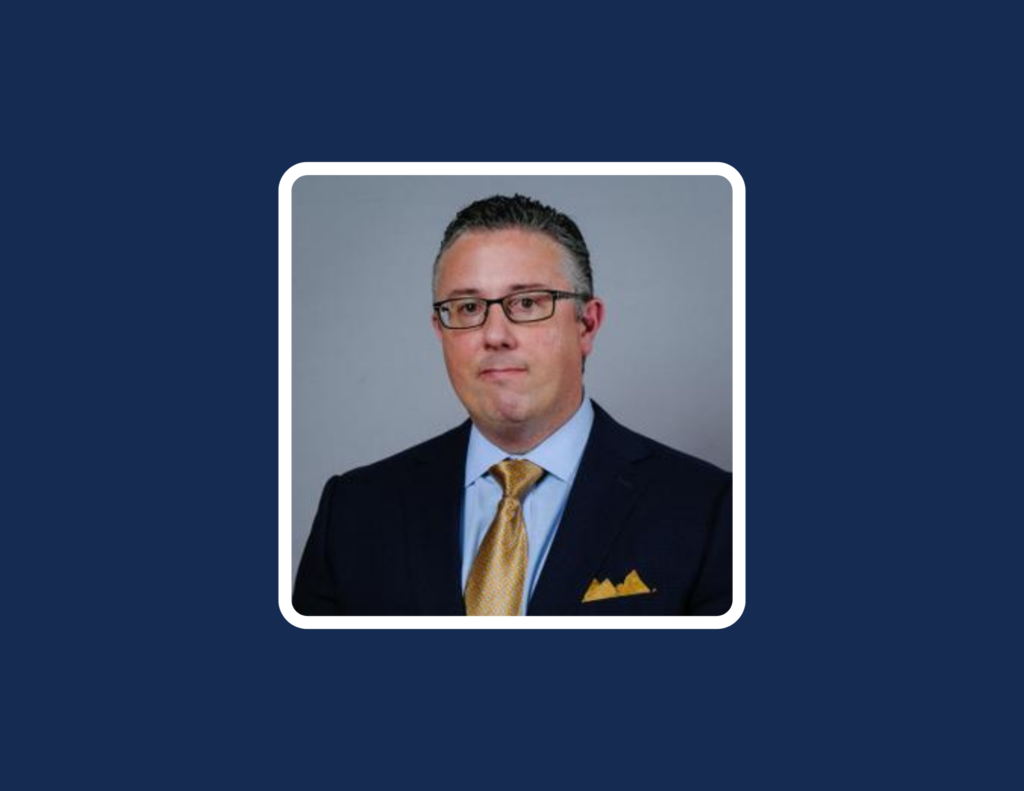
DALE WELLMAN – NEBRASKA WESLEYAN UNIVERSITY MEN’S BASKETBALL HEAD COACH – EPISODE 806

Website – https://nwusports.com/sports/mens-basketball
Email – dwellman@nebrwesleyan.edu
Twitter – @Wellmand21
Dale Wellman completed his ninth season as the head men’s basketball coach at Nebraska Wesleyan University in the 2022-23 season. He was named the HoopDirt.Com NCAA Division III Coach of the Year in 2019 and received NABC/NCAA Division III National Coach of the Year recognition in 2018. Wellman has led the Prairie Wolves to four conference championships, four national tournament appearances and the program’s first National Championship during his tenure. Overall, Wellman has a career coaching record of 205-128 in 13 seasons as a head coach.
Wellman came to NWU after spending six seasons as the head coach at Alfred University, a NCAA III Institution located in Alfred, N.Y. Before his stint at Alfred, Dale spent two seasons as an assistant coach at Williams College in Massachusetts.
His collegiate coaching career began in 2002 when he was an assistant coach at Kenyon (Ohio) College. A year later he was appointed assistant coach at Union College in New York. He then spent two seasons as an assistant coach at NCAA Division I Eastern Kentucky University where he helped EKU set a school record for wins and earn a spot in the NCAA Tournament.
Wellman is a 1999 graduate of The University of The South in Sewanee, Tennessee. He played four seasons for the Tigers, participating twice in the NCAA Division III National Tournament (1997, 1998) and earning SCAC All-Academic honors.
If you’re looking to improve your coaching please consider joining the Hoop Heads Mentorship Program. We believe that having a mentor is the best way to maximize your potential and become a transformational coach. By matching you up with one of our experienced mentors you’ll develop a one on one relationship that will help your coaching, your team, your program, and your mindset. The Hoop Heads Mentorship Program delivers mentoring services to basketball coaches at all levels through our team of experienced Head Coaches. Find out more at hoopheadspod.com or shoot me an email directly mike@hoopheadspod.com
Be sure to follow us on Twitter and Instagram @hoopheadspod for the latest updates on episodes, guests, and events from the Hoop Heads Pod.
Take down some notes as you listen to this episode with Dale Wellman, head men’s basketball coach at Nebraska Wesleyan University.
What We Discuss with Dale Wellman
- Growing up in Lexington, Kentucky as a fan of the Wildcats
- His memories of Rex Chapman
- Playing basketball and baseball in college at Sewanee, The University of the South
- His original career plan of becoming an architecht
- Coaching American Legion Baseball in Wyoming
- His first coaching experience at Kenyon College in Ohio
- Learning offense during his time at Union College in New York
- Getting a D1 GA opportunity at Eastern Kentucky and learning to do a lot of the things he does now as a D3 Head Coach
- Leaving EKU for Williams College where he could continue on the path to becoming a D3 Head Coach
- Getting his first head coaching opportunity at Alfred University in New York
- Coach your personality
- “You can say you want to play fast, but you have to be able to coach it.”
- The basketball tradition at Nebraska Wesleyan
- The National Championship Season at Nebraska Wesleyan
- How zone defense helped them win the National Championship
- “We have to be able to recruit some guys that do at least one thing really well.”
- “I want some guys that I enjoy being around and work hard for me.”
Like this show? Please leave us a review here — even one sentence helps! Consider including your Twitter handle so we can thank you personally!
We’re excited to partner with Dr. Dish, the world’s best shooting machine! Mention the Hoop Heads Podcast when you place your order and get $300 off a brand new state of the art Dr. Dish Shooting Machine!

Prepare like the pros with the all new FastDraw and FastScout. FastDraw has been the number one play diagramming software for coaches for years, and now with it’s integrated web platform, coaches have the ability to add video to plays and share them directly to their players Android and iPhones via their mobile app. Coaches can also create customized scouting reports, upload and send game and practice film straight to the mobile app. Your players and staff have never been as prepared for games as they will after using FastDraw & FastScout. You’ll see quickly why FastModel Sports has the most compelling and intuitive basketball software out there! In addition to a great product, they also provide basketball coaching content and resources through their blog and playbank, which features over 8,000 free plays and drills from their online coaching community. For access to these plays and more information, visit fastmodelsports.com or follow them on Twitter @FastModel. Use Promo code HHP15 to save 15%
Your first impression is everything when applying for a new coaching job. A professional coaching portfolio is the tool that highlights your coaching achievements and philosophies and, most of all, helps separate you and your abilities from the other applicants.
The key to landing a new coaching job is to demonstrate to the hiring committee your attention to detail, level of preparedness, and your professionalism. Not only does a coaching portfolio allow you to exhibit these qualities, it also allows you to present your personal philosophies on coaching, leadership, and program development in an organized manner.
The Coaching Portfolio Guide is an instructional, membership-based website that helps you develop a personalized portfolio. Each section of the portfolio guide provides detailed instructions on how to organize your portfolio in a professional manner. The guide also provides sample documents for each section of your portfolio that you can copy, modify, and add to your personal portfolio.
THANKS, DALE WELLMAN
If you enjoyed this episode with Dale Wellman let him know by clicking on the link below and sending him a quick shoutout on Twitter:
Click here to thank Dale Wellman on Twitter
Click here to let Mike & Jason know about your number one takeaway from this episode!
And if you want us to answer your questions on one of our upcoming weekly NBA episodes, drop us a line at mike@hoopheadspod.com.
TRANSCRIPT FOR DALE WELLMAN – NEBRASKA WESLEYAN UNIVERSITY MEN’S BASKETBALL HEAD COACH, – EPISODE 806
[00:00:00] Mike Klinzing: Hello and welcome to the Hoop Heads Podcast. It’s Mike Klinzing here. I will eventually be with my co-host Jason Sunkle, who will be joining us momentarily, but I am pleased to be joined by Dale Wellman, the head men’s basketball coach at Nebraska Wesleyan. Dale, welcome to the Hoop Heads Pod.
[00:00:14] Dale Wellman: Hey, thanks a lot for having me. I appreciate it.
[00:00:17] Mike Klinzing: Absolutely. Excited to have you on. Looking forward to diving into all the things that you’ve been able to do throughout your basketball career. Want to start by going back in time to when you were a kid? Tell me a little bit about some of your first experiences with the game of basketball, what you remember from being younger and getting introduced to the game.
[00:00:34] Dale Wellman: You know, I grew up right outside Lexington, Kentucky, so, I mean, as soon as you bring up Lexington, Kentucky, when you’re talking about basketball it’s like a religion there. So it was very early on, my dad played college basketball. He played back he was actually on the freshman team at Kentucky.
He played there for year. He wasn’t good enough to play varsity in Kentucky back then. So he transferred, played at Southern Mist. They weren’t Division one back there. Played a little bit, so he had some basketball. Liked the sport a lot. I can remember back then Kentucky Games used to be played on tape delay in where I lived in Lexington, Kentucky, would stay up late, watch the Kentucky Games.
But just growing up in Kentucky just basketball very early was the first sport that I really started playing, shooting around in the driveway, starting to really have a team and root four in the Wildcat. So very early on basketball was kind of in my blood. Who was your guy? Well, I think it was fifth grade when Rex Chapman you know, growing up and he wasn’t there for four years.
But Rex Chapman, but I can remember when Kenny Walker was there. You know loved Kenny Walker when he was there. Loved Rex Chapman a few years later, Winston Bennett, like those guys back then. You know, were my guys and every game. I mean, I would just, I’d just sit there on the ground just praying like if they were down by 10, like, the only thing I want this week, make sure the Wildcats win.
You know, so I live in Lincoln, Nebraska now, and it’s very it’s very similar to, to how Lincoln here go about business except, well on the football field around here.
[00:02:13] Mike Klinzing: Absolutely. It’s funny, when I think of Rex Chapman, I always think about when I was a kid and, and a high school player and.
Rex Chapman is a little bit older than me, so kind of always knew of him. And that’s at the time where I’m following college basketball, I’m following high school basketball. And I know like the top 50 guys, I used to read the Blue Ribbon College basketball yearbook, if you remember that at all.
Yeah, And I’d pour through that thing and I’d know every high school guy and this and that. And I remember watching Rex Chapman. I, I can always think that one of the things that when I watched him play, I always was like, man, I would love to play one game in my life with that kind of athleticism.
And just see what that felt like to be able to play and be able to run and jump the way that Rex Chapman did. And that’s still, when I think about Rex Chapman, that’s the first thing that pops into my head is man, like just. The tools that that guy had to be able to play, and obviously he had a tremendous career at Kentucky.
[00:03:09] Dale Wellman: Yeah. He was before social media and even just what media is today because I did live in Kentucky and he was a Kentucky kid. I mean, growing up in Owensboro, playing at Apollo High School, like that was like you knew about him before. You know, he got on campus at Kentucky, like, right?
Oh yeah. I mean, high school basketball was king back then. Everyone knew who Rex Chapman was before I ever stepped on campus. It was awesome.
[00:03:36] Mike Klinzing: So what was your experience like as a high school player?
[00:03:38] Dale Wellman: My experience as a high school player, I played at Woodford County High School, which is again, right outside Lexington.
My house, you can be downtown Lexington, 20 minutes. I was a very average high school player, to be perfectly honest with you. I was, I’m five 11. I was a shooting guard, not a point guard. Had no left hand. I was a decent shooter. But I mean, five 11 point guards are a dime a dozen. I mean shooting guards are a dime a dozen in high school, so I was very average.
We had a very average high school basketball team. Loved it. Obviously played with all my friends and, but we were probably about .500 for my four years of high school. And you’re not going to see my name any record books or anything at Woodward County High School for basketball.
I was a much better baseball player growing up. I played both in college. But growing up I was known a little bit more as a baseball player, just cause I was, it was a little easier for me. But basketball’s what I always wanted to do and that, and it’s, it’s one of those things and I was recruited a little for baseball going into college and, and that’s what I did and that, but I wanted to make sure I ended up at a, at a college where I could play basketball as well, because that that was my true love.
[00:04:50] Mike Klinzing: So how’d that work? Tell me about that recruiting experience and just how you went about making that decision.
[00:04:54] Dale Wellman: Yeah, it’s a really roundabout way. I was going to walk on at Ball State University and play baseball. I kind of had my eyes set on going to Ball State in Muncie and had talked with her coach a little bit and planning on going up there and walking on and then for baseball and they kind of fell through.
And then, then coach left. They hired a new coach in the fall. I ended up going to Ball State anyways, and did a, did a year there, but really missed being a part of a team. You know, playing baseball, playing basketball, like something was definitely missing. And, I knew I was a better baseball player, but I also knew that I wanted to play basketball.
So I called up schools. I really tried to recruit schools more than you know, have them recruit me a little bit. And I had gotten some letters from Sewanee, the University of the South out in Tennessee when I was in high school. So I went to them and kind of sold myself as a baseball player.
And the baseball coach remembered me and wanted me to go there to play baseball. And then after I kind of decided on going there to play baseball I hit up the basketball coach and said, Hey I’d love to try to play basketball as well. And I think fortunately, they probably, that next year they only had about 11 guys on the team.
And so they didn’t mind having a 12th guy out there for practice. And I was I was probably the 11th or 12th guy my freshman year. But I was absolutely living out my dream being on a college basketball team, working every day and, and going to the gym. And we had some good teams in college.
You know, for Division III basketball, we played in some NCAA tournaments and they were good teams again more in spite of me than because of me. But I played basketball and baseball for four years at the University of South in Tennessee. And who had it better than me?
Basketball teams were very good. Baseball teams were very bad. I didn’t play a lot on the basketball court, played a lot on the baseball field. But it was like the, the, the perfect place for me. So how’d you balance those two? You know, I was a basketball player first. I always say that, that that’s where my love was.
So even like right when I got on the campus every year they had fall baseball. But I didn’t do fall baseball. You know, I, I told the basketball coach, that’s my time leading into the basketball season. That’s what I love most. And he understood. I actually had three baseball coaches while I was at Sewanee and had one basketball coach, but it was always basketball first.
Basketball first. And really, to be perfectly honest, the baseball part, I say I played two sport, two sports. But I did everything basketball until that last game. And then I hopped right out there in baseball as an outfielder so I just had to get my timing back a little bit at the plate.
You know, my arm was fine. They didn’t need me pitching or anything. Catch some fly balls and throw some grounders back to the infielders, which just had to get my timing back of the plate. And baseball for me would only run about maybe six weeks.
So talking about managing the time, it was really just managing the time for baseball. I mean for basketball, excuse me. You know, and it’s just five or six weeks of ba baseball. It goes by so f so quickly. That it wasn’t too bad. It, it’s, it’s not like I was doing both all year round.
You know, I did play baseball in the summertime, but obviously I didn’t have to balance any schoolwork or anything like that. But it was, I was basically just a basketball guy that played you know, five, five or six weeks of baseball at the end of the year. And, and, and that was it. So it wasn’t too bad managing time.
You know, back then it’s, it’s probably a little easier maybe than it is nowadays.
[00:08:42] Mike Klinzing: Did you know it was going to work out that well? I mean, it seems like he kind of fell into a really good situation.
[00:08:47] Dale Wellman: No, I didn’t know it was going to work out that well. But I guess I didn’t think it wasn’t going to work out.
You’re young and dumb and you think everything’s going to work out. At least I did. And it did it worked out. You know, and I couldn’t have been happier being a, a role player on basketball. That was perfect. And then, yeah, baseball went really well for me while I was there.
But no, just you know, some things in life were kind of dumb luck, I guess. And fortunately it was a big part of my life that was kind of dumb luck.
[00:09:19] Mike Klinzing: What were you thinking about in terms of jobs as you’re going to school, where was your head at?
[00:09:24] Dale Wellman: If you think I had a roundabout way to kind of start playing college basketball.
It’s a really roundabout way how I became a basketball coach. I had zero interest in being a coach coming out of college, zero interest, like I was a history major, so, and I really didn’t know what I was going to do with a history degree. But I had told my parents I was going to go to grad school and major in architecture.
You know, you can get a master’s degree in architecture and they, you don’t really have to get a bachelor’s degree. They’re willing, it obviously takes longer. So I applied to a bunch of grad schools to become an architect to major in architecture. Had a couple uncles that were architects. I really appreciated architecture.
I didn’t really understand that it’s more designed than it is appreciating. So I actually went to the University of Florida. To major in architecture for grad school. And I was there for one semester and realized that everything I loved about architecture, it was the history, the appreciation.
It wasn’t the design process. I’m not an artistic guy. I didn’t really realize how much creativity and, and artistry kind of went into the design process and especially in architecture school. So I was like, I have to figure out what I’m going to do in life. So one of the guys that I graduated with, I played four years of college basketball with at Sewanee Peter Jones.
He had taken a year off before he was going to go to law school at the University of Georgia, and he’s living out in Jackson, Wyoming. So I packed up in January right after first semester at Florida and, and drove out and, and lived in Jackson, Wyoming and it was basically a ski bum in the wintertime.
Nice. Yeah. And then that’s a time of life to do it. Yeah, I was working at Jackson Teton County Park and Recreation Center, which was awesome because right outside I was a front desk attendant night kind of night manager. Right outside the door to the office was the basketball court. So like, if I wasn’t there working, I was there playing basketball against all the tourists that were running through town.
And, and then it was awesome. It was great. And then once the snow melts, then we just, Peter and I just started hiking around the Tetons I was in shape it was beautiful out there. We took advantage of that.
[00:11:45] Mike Klinzing: What’s your best hike in the Tetons?
[00:11:47] Dale Wellman: Man? Oh man. I have no idea what the names are.
I know that we did one. It was about a 20 mile hike in one day, and it’s one of the sores I’ve ever been and I was in great shape. And you have to remember too, it’s the air’s thin up there too. Yep. For sure. I was in pretty good shape, but it was I don’t remember any of the names of any of those hikes that we did.
It’s funny, I can remember Grand Targe and Jackson Hole and you know, all the places we skied out there, but I can’t remember any of the places that any of the, any of the trails that, that we hiked. But while I was doing that, I actually decided, hey, I have to figure out my life. I’m not going to go to architecture school.
I appreciate it too much, but I wanted to do something with architecture. So, so I applied and got in grad school at the University of Georgia. I was going to live with Peter again. We had such a good time in Jackson and went there to study historic preservation. I was going to be an architectural historian, so moved to Athens, Georgia start this program in the historic preservation.
And then, so now I’m not working at the Jackson Teton County Recreation Department playing basketball every day oh, I should have mentioned while I was out in Jackson, I’m driving around town and I’m listening to the radio. And on the radio there’s an advertisement for a coach for the Jackson Summer League baseball team, the American Legion Baseball team.
And I’d heard it a couple times and finally as I’m driving, I write down the phone number and I called the guy up and I said, Hey I played baseball in college. I. He’s like, Hey, let’s have lunch at Denny’s. So I met him the next day at Denny’s. He hired me on the spot to be the summer baseball coach for Jackson Wyoming American Legion baseball team.
Traveled all over Idaho and Montana, Wyoming, coaching this baseball team in the summertime. And that was my first taste of coaching. And, and to be honest, I really liked it. I never thought I would, but I had, I had I was part of a team again, you know the stuff that I thought was pretty basic.
The guys for Jackson had never heard of before. They don’t have any, at least at the time, I assume it’s still the same way. They don’t have any high school baseball in Wyoming, the highest level of amateur baseball, and I don’t think the University of Wyoming has baseball either. The highest level amateur baseball is American Legion.
And I was doing some pretty basic stuff, in practice and, and I really felt like they thought I was like, this genius baseball and I thought it was all pretty basic stuff. And, and, and I had a fun time coaching. But anyhow, then I go to University of Georgia. Now I’m not playing basketball every day at the rec center.
I’m not coaching this team. I’m not part of a team. And I felt a little lost, but I was having a lot of fun in Athens. And finally I was like, you know what? You know, I’m just going to, I’m going to be a coach. That’s the only other way I can be around basketball every day. Be a part of a team is, is I’m going to have to be a coach.
Never really thought of it before. And then I kind of made it my full-time job. I mean, I’m not in coaching right now. I mean, at the time I wasn’t part of a team. You know, I’ve been out of it for two years I’m a little older. I’m not that 22 year old you know, coming out of college or whatever who’s going to hire me.
I made up my job to to get a job. And back then it was different. I was mailing out letters, writing letters writing some emails as well. But it’s you know, not all the social media, finding out jobs as quickly as you find out about ’em today when something pops up real quick.
That, that there’s not all the gossip sites and Twitter, where you can find out who’s leaving here, who’s leaving there or whatever. And just kind of Dumb luck. Dave Conka was the head coach at Kenyon College, and they had played Sewanee that year. And he kind of emailed me back and said, Hey, I went to Sewanee’s tournament got to know Coach Tony real well, blah, blah, blah.
Seems like a standup guy. And Coach Tony was my coach at Sewanee and he was you know, trying to help me out a little bit get a job. And next thing I know, Dave Con has taken a chance on some guy who hadn’t coached in a few years, hadn’t coached at all. And I get my first job at, at you know, Kenyon College in Gambier, Ohio.
And at the time I was making about $10,000. And again, that, that was a lot of money compared to what I was living on in, in Jackson, Wyoming. So I was the happiest guy in the world to be coaching basketball and making a little bit of money doing it, be part of a team. And it was awesome. It was awesome.
[00:16:27] Mike Klinzing: So you go from, Hey, I’m not really sure. What the heck I want to do to, now I’m going to get into coaching. And you get this experience at Kenyon, you have the opportunity. What’s your first experience like as a basketball coach? What were some of the things that maybe you really liked about it?
What were some of the things that were surprising about that first experience that maybe you were like, oh, hmm, I didn’t know coaches spent so much time Oh, doing this. Just what do you remember about that first experience.
[00:16:54] Dale Wellman: Well, let me start off with saying Kenyon, that year we went three and 22 and like I said, we went to some NCAA tournaments when I was at Suwanee, won the conference a couple times and it was a unique experience for me.
Like, I’d never been that bad. I’d never been three and 22 before. I never realized what really went into a scout. They all just kind of showed up on my desk in the film room. I didn’t really realize everything that the assistant coaches and head coaches were really doing to try to put a scout together.
And you have to remember, I’ve never put put together a scout, and now the head coach is asking me to put together a scout. You know what, like, just like what, where do you start looking? Like, what do you start looking at? How is it? And it’s not the technology we have now, you know? You know, it’s back then you’re just kind of watching film.
And I was doing it all wrong. You know, I think I learned a lot that first year, what not to do. You know, it’s trial and error a little bit. And, and I love Dave. I still talk to Dave this day. He’s not in coaching anymore. I thank him so much for just taking a chance with me.
You know, but it, it was it was just the two of us and, and he was still a young head coach and it was trial by error a little bit, learning what not to do and you know, but got through that year three and 22 and I was still like, I wasn’t jaded at all. It was like, this is awesome. Like, I can’t believe I’m getting paid for this.
You know if I can handle a three and 22 season and have as much fun and enjoy it as much as I did and, and see the relationship, it’s a different type of relationship, obviously, as I had with my teammates. But the relationship I had is kind of the liaison between the guys on the team and the head coach, especially in a trying season like the one we had.
Man, it was a lot of fun I enjoyed it. And, and then just the camaraderie that I had there at Kenyon with the other young assistant coaches, you know And in, in a small town like Gambier you know, always hanging out, going to each other’s games. It was just a lot of fun. And Dave ended up leaving after that first year.
His wife was actually the volleyball coach at Kenyon, and she ended up getting a job back in the Chicago land area. He went back there, which is where he’s from as well. And I didn’t really plan on leaving after one year, but when that happened I was like, oh maybe I’ll throw him send out some emails, throw my resume a few places, see, see what happens.
And it just so happens coach Murphy, long time head coach at Hamilton College in, in upstate New York you know, one hundreds to hundreds of games there. He has no idea about any of this, but I emailed him, I’m sure he doesn’t remember this at all, and he was just He said, I don’t have any openings here.
But you know, a friend of mine, Bob Montana, union College in Schenectady I think he has two openings for assistant coaches. So I emailed Bob Montana Schenectady College I mean Union College in , Schenectady ,New York. And Bob liked the fact that I had recruited a little bit at a high academic he didn’t realize that I really had no idea what I was doing with recruiting.
He had no idea at all. And Bob was a well-respected coach kind of in the upstate area. And he hired me and I moved to Schenectady, and that’s when he was, he was a veteran coach. He was a good coach. He knew basketball. You know, nowadays I’m very much an offensive minded coach like I. You know, the way I look at the game, offense always comes first.
It’s just the way I’m wired. It’s, and I think a lot of that happened because of the year I spent at Union College. Cause I do think Bob Montana was a very, very good offensive coach and we ran some good actions and had good team. We won 20 games that first year. And it was a lot of fun.
I had another assistant Kenny and I was the only guy. I had another assistant. We’d sit in the office all the time, Ian McShane and, and you know, we kind of figured out the you know, the game, the profession a little bit that year together a lot. But Bob really that year at Union really started my development as a coach.
I mean, it was eye-opening. Yeah, here’s nothing too, like when I played. You know, in high school we ran nothing but sets. That’s all we had was sets. And then when I went to college, all we did was motion. All we did was motion. And because I was still young, I didn’t really know, like I didn’t realize there was other things out there you could do, like sets motion, like what, what are these other offenses?
Swing Princeton, what is all this stuff? And it was really with Bob Montana because of the offense that he can’t kind of ran that I began to understand, hey, these continuity offenses out there, these system offenses out there, like a Princeton or Bob was real close with John Beilein and what Beilein was doing, his offense was very similar to kind the two guard offense that Beilein was running.
And it just opened my eyes to everything that you’d be able to do in coaching. And I, I plan on staying there. I actually. Met my wife. I didn’t know at the time she was going to be my wife, but I met my wife you know, in Schenectady. She was grad school working at the university as well. She was getting her MBA there and, and I met her there and we were hanging out dating a little bit.
I’m from Kentucky. I’d always gone back to kind of see my family and whenever I did that, my dad was a professor at Eastern Kentucky University and, and I’d hang out. His office was in Alumni Coliseum, which is also where the basketball offices were. So I’d go hang out with my dad.
I got to know Travis Ford and the staff at Eastern Kentucky a little bit. I worked their camps when I came back home and I came back and worked in Eastern Kentucky camp just the week I was home. And I go back and to union, like, like I said, I had no plans of really leaving union at all. I loved it there.
Great school, great coach. We had good teams. Just so happened that an assistant job opened up at Suwanee as well, where I went to school. So I, and it was, it was more money and I I thought I owed it to myself. I flew down, you know and they coach Tony treated me as a, as a true candidate, even though he had coached me for four years.
And I interviewed, and this is kind of the crazy thing about the business too. If he had offered me the job while I was there, I would’ve accepted in a heartbeat. And I probably would’ve gone to Suwanee as an assistant. But he didn’t, which was fine. Like he is going through the process just like any other search out there he is treating me.
He wasn’t trying to give me preferential treatment, which was fine. And I fly back you know, to Schenectady and I drive out, I’m working camp over at. At Yale and you know, I get out of camp that Monday. And the first message on my phone was this was back when I didn’t check my phone every, every two minutes.
It was like it was actually a in a bag for hours. First message was from Travis Ford offering me a job at Eastern Kentucky University, and I was like, through the roof. I didn’t know it. Like I didn’t apply for anything there. He was just calling out for me the GA position there, even though I’d been to grad school.
And obviously I thought that was kind of cool division one coach calling me up, offering me opportunity at you know, at a school. And then this very next message I had two messages was Joe, Tony, my college coach, who, who I absolutely love, and the door called me and offered me the job at Sewanee.
And I was really, really torn. Again, I hadn’t even necessarily thought too much until maybe two weeks before when I knew the Sewanee job was open about leaving union. And here it is. I got two job offers. One the coach that I love at the, at the university that I love. And the other, hey, it’s back right outside my hometown.
I get his my parents are there, my friends are there. Travis Ford. I told you how much I was a Wildcats fan earlier, right? You Travis. I watched Travis Ford play basketball. And I was really curious about the division one level just. You know what’s what’s the difference? I didn’t play it, hadn’t coached there.
So I took a job at Eastern Kentucky as the ga you know, gave up my full-time gig to go back and make a little stipend money and have to go back to classes again at Eastern Kentucky University. This would be my, if you’re counting, that’s the third school I’ve taken graduate classes
[00:26:00] Mike Klinzing: Just travel the country for grad school.
[00:26:02] Dale Wellman: Yeah, it is. And that was awesome. That was unbelievable that season. Travis was there. I was the ga And we won, we won the conference and won the Ohio Valley conference tournament. As much as I taught, I thought, and again, Travis is unbelievable coach, and you know, a lot of what I learned in, you know at union was offensive side.
Like I take a lot from that. And then you go there with, with Coach Ford, and it was a lot of defense and preparation and I being the low guy in the totem pole I had to put a lot of the film edits together. And that’s when, man, now it’s all kind of coming together. I can understand this.
I’m working with all the assistant coaches there putting their scouts together. Now I’m really kind of understanding how all this works. I’m also as the low end of the total pole, I’m doing all the stuff that I actually do now as a head coach at division three. You know, I’m ordering all the gears, right?
I’m ordering all the gear. I’m getting the meals. We didn’t have a director of basketball operations there, so basically the GA position was kind of the ops guy as well. And then how about this? So then we have a great. You know, great season. At the time, it was the most wins in E K U history.
I think it’s been broken since. So we go to the NCAA tournament, we got a 15 seed and who do we play? But the number two seed, the Kentucky Wildcats in Indianapolis, of course, obviously the storylines coach Ford coaching against his team that he played for, but also here there’s another Kentucky kid on that staff.
Me that’s kind of pumped to be playing Kentucky Wildcats that was back in the Hoosier Dome. It’s not there anymore, but Hoosier Dome in front of 30,000 people that, that Thursday that the we were the very first game of the NCAA tournament that year and, and played a great game and ended up losing by, I think it was eight points to a Kentucky team with Tubby Smith and.
You know, Rondo was on that team and it was for me it was just really cool. It, it, not only did I learn so much that year we had a great season top of all playing Kentucky in the n NCAA tournament. It was man, I I’m not sure if I could have written it much better than that.
I guess, unless we beat Kentucky, that probably, that probably would’ve been better. Yeah. That probably would’ve been better, but I get it. Yeah. So and then coach Ford obviously did a great job at Eastern Kentucky and he had to take the next step and strike and while the iron’s hot he takes the job at, at UMass and there I am, like I’m not through my graduate degree for the third time.
And it just so happens that each Kentucky hires Jeff Neubauer. And I had no idea that, that, that might have been the best thing that happened to me ever. So Neubauer comes on board and I’d, I’d actually met him before because again, I go back, I told you about Montana was good friends with John Beilein and just because of that, Bob Montana knew Jeff Neubauer.
Cause Neubauer worked with him at Richmond, at West Virginia. And I’d met him before. So Neubauer gets the job he comes in to the office and I’m the one I’m there and he’s like, Hey it’s just me and you get some assistance here. And it was just Jeff and I for like the first probably a week and a half spending ungodly amount of hours together.
I’m not only talking basketball with them, but I’m trying to figure out how to fly these assistants in and then I got, because I’m from there, I give him the tours. I give Jeff the tour, I give all the assistants, the tour that are coming in around Lexington and Richmond, Kentucky.
And I end up sticking there. And, Newbauer did something great. He did away with the GA position, turned it into a full-time I think the title was administrative assistant coach, but it was a full-time position at d Eastern Kentucky. And what happens with when you become full-time is you get six credits, you get six free credits a semester that you can take.
So I could continue graduate school so I could finish my graduate degree. Nice. So now, now I’m getting those classes for free I’m getting a salary getting benefits
[00:30:38] Mike Klinzing: How about that man? Getting a salary?
[00:30:40] Dale Wellman: How about that? It was crazy. Nice. Yeah, it was, it was unbelievable. And. So Neubauer comes in and he comes in with the two guard offense and bee line’s been running at this was West Virginia and before he got to Michigan.
And now I start falling in love with this offense. The more I learn about it, the more I find out about it, the more you know, clips I have to break down and, and everything, he couldn’t have been more different and, and not in a positive or negative way, just more different than Coach Ford was the year before.
Just very, very different. Both tremendous coaches. They got very lucky with the coaches that, that I got to work with. And this offense was awesome and he ran a little Princeton in it. He hired Ted Hoteling on his staff there. And you know, Ted’s coming from. I’m the Ivy League. You’ve had Ted on, right?
I’ve had Ted on, yeah. Great guy. Yeah. Oh, he’s an unbelievable guy. And you know, he’s coming from the Ivy League where obviously you have Princeton. I can’t remember if somebody else was running Princeton, that league back then, like Columbia or somebody. You know, so he was giving his, Hey this is what Princeton does and we’re learning two guard and we’re running some combinations in two guard in Princeton.
And then he, he runs a lot of zone. Cause back then Beilein ran 1-3-1 and all this. And just again, continued to open my eyes up about all the different things that you can do. And it was, I tell you what, so that season who do I share an office with? But Josh Merkel you know, so not trying to get out of myself too much in, in this long, boring story about myself, but you know, I win the 2018 National Championship. And then Merkel comes along a few years later and wins the 2022 Crazy three national Championship. We were sharing an office that year back in Richmond, Kentucky, hanging out all the time, you know two single guys back then. And it was great and had a lot of fun.
And by this time I, I really feel like I’ve learned a lot you know, just kind of in this profession and I guess there’s a couple different paths that you can take. I wasn’t necessarily all division one, like I could have gone anywhere. And I kind of wanted to see if I could go the route to become a head division three coach.
Cause I love Division three basketball. I was a division three player, like I’m a D three guy. And I knew I wasn’t going to become, A head Division III coach as the administrative assistant at Eastern Kentucky University. Like I just wasn’t going to get the interviews. And just so happens, one of my old friends, Josh Loeffler who I got to know when he was at Hamilton and I was at Union just got to Stevens job, Stevens since to a technology job, and he was assistant at Williams College.
You know, so I’m talking with Loeffler and Loefflers like, Hey, you should take my job. You know, Paulson does a great job. Paulson at Williams, does a great job at getting his guys jobs. I’m like, well, that’s great. Can you talk to him? He’s like, sure. And then Ted holing, just because of Ted’s background being at at Yale he knew Paulson real well too.
And he talked to Paulson as well. And then I had one I remember standing outside my apartment in Richmond, Kentucky talking to Paulson for about an hour and a half on the phone. And that was my interview. And then about a week late later, I’m packing up the car and I’m moving to Williamstown, Massachusetts to be an assistant at Williams College.
Meanwhile, you know the girl that I met at Union College, she then followed me to eastern Kentucky. Got a job there. We’re moving again. Well, she didn’t move right? She was making good money. She was making good money in the advancement staff, and she didn’t have a job at Williams yet, so she stayed and we weren’t buried yet.
So she stayed back there. Well, I moved to Williamstown, Massachusetts and working for Dave again, I couldn’t have been luckier, just getting unbelievable coach after Unbelievable coach. You know, talking about a guy who just absolutely did a great job in, in every facet offense, defense the relationships that he built with players.
And I think Dave and I were very different and it was great. You know, back then he was running this pass and cut motion. He was a pack line defensive coach where I was very much like Princeton, two guard, Hey, we’re going to play some zone or we’re going to be like, denial, man, defense.
Like, and, and it was really nice to kind of work for Dave and every, and he was, I was always amazed like, here’s this guy who’s won a national championship and he is been national coach of the year, I think twice by that time. And he’d ask me things at practice and I’d just be like, he wants my opinion like, That’s crazy.
And I’d say it and he’d do it, and I’d be like, what? Like, I can’t, like why is he listening to me? Like he’d ask me stuff in games and I’d give him my opinion and he’d do it. And I’m just like, what? Like, and, and I really appreciated that a lot from him. I think Dave helped give me a lot of confidence.
I had some but helped really gimme a lot of confidence just in my growth as a coach. You know, and I don’t think, I don’t, I don’t know if I’ve ever really even really shared that with Dave before, but that was something that I really appreciated. I really appreciate yeah. And I was, I was with Dave for two years and we went to NCAA tournaments and that second summer, I kind of told him, I was like, because I took a pay cut. Remember that salary I said I had at Eastern Kentucky. So much for that, huh? Yeah. Well that didn’t, you don’t really get that at Williams. I think I can do this for two years and then I need to get a head coaching job.
And also, because remember I got into it a little later you know, so here I am early thirties, not making a lot of money. My wife’s parents probably wondering why. Well why are with this guy like traveling the country for no money? And my wife and I did she’s about the second year.
We actually got married in between my first and second year at Williams. And she did move out of Kentucky. Took a job at the University of Rochester, which is not that close to Williams College. So but it was a little closer, so and it was a good job at the University of Rochester that she took.
So I was like, I got about a year. Yeah. You know, after got married, we have to figure some stuff out. We got, we have to try to get in the same city. So, and then after that I interviewed for a couple division three jobs after that first year. And, and I know some of that was obviously because of the Williams name, that that was attached to my resume.
But that second year I kind of felt like I was ready. I felt like I was ready. I don’t, I’m not sure anyone’s truly ready. But I kind of felt like I was ready, like, thi this is the time I need to start making my own mistakes as a head coach and, and seeing what I could do. So applied for a few jobs and, and just so happened.
And I, and I would’ve taken a job anywhere. I, I’m sure I applied for jobs on the West coast, like I’m sure I did. You know, because I mean, we had a bunch of kids on our team, California and we recruited that direction. Like, I can’t remember all the places I applied. I’ve taken one anywhere. Just so happened that I got a job at Alfred University in Western New York, which people, one’s listening, they don’t know the geography.
That’s not too far from Rochester. So it’s also not too far from where my wife actually grew up in Corning, New York. So, Now it’s all kind of coming together. You know, my wife’s hour away in Rochester and, and her family’s there. And she had, she had a good job at Rochester and because of that, she was able to get a pretty good job at, at Alfred doing the same stuff in advancement development.
And now we’re living together and now I have a head coaching job. And now when I got Alfred, it was you know, they were two and 23 the year before I got there. So it was, I was hoping I, it was, I wasn’t going to leave it worse than it was, you know? So you know that.
What’d you like about the potential? What I liked about the potential, there was nowhere to go but up. I think that was it. It was whatever I built it was going to be. I. What I built. I know that kind of sounds arrogant and a little egotistical, whatever, but whatever was going to be built, it was going to be mine.
You know, I was going to be able to kind of start over, start from scratch, do what I wanted to do. You know, I think that those were the things that I was really kind of excited about. And the, it was in the Empire Eight still is in the Empire Eight, but it was a little different landscape back then too.
It was, you know you had teams like RIT and Ithaca and Stevens Institute of Technology and you know, a lot of those schools aren’t in that conference anymore. So I liked the conference, I liked the competition. And I at the time, I liked the fact that it was in a small town where I was just going to spend all my time in the office trying to turn this thing around, trying to build this program and.
You know, that first yearI had nine guys on my team. That’s what I inherited. I got the job in late July, so it really wasn’t much time to get anybody new. I had nine guys. Tough to go five and five in practice when you have nine guys. And you know, I hired two assistants you know, and it was Chris Amer was the head coach of Sarah Lawrence now, like poor guy, like, he, he poor guy had to be thrown in there.
I mean, he was our 10th guy so we could do some five on five stuff. Go in there and you have to know the stuff as a coach, but you’re going to have to know it as a player too when you’re running around there making sure you’re doing the right thing. But it was really cool. You know, first time I’m hiring my assistants, first time I have to really come up with practice plans that make sense day after day and, and but I was ready for it.
You know, I was, I, I had a plan and went about it and we went eight and 17 that first year. And I mean, I still to this day think that that’s one of the best seasons I’ve had as a coach in terms of just what we were able to get out of the, out of the kind of talent that we had. We played in a classic right after Christmas where I had one, one kid had to go back for a family issue in New York City and another kid was hurt, couldn’t make the trip.
I played with seven guys and no one was taller than six three. So and we ran we ran what. It was like Jeff Neubauer out there. We ran two guard into Princeton and we played zone and that was it. Like we had, we had, we had to play zone and I just had a lot of fun tweaking stuff, putting stuff in, coming in, you know tweaking the two guard a little bit, coming up with some sets that looked like two guard and then you know, would run for some different actions.
And it was great. And that was the thing was to try to build the program there. And it happened slowly we went from eight and then you get up to 11 and then you get up to 15. And then we went backwards one year and. You know, that was kind of the,I say today, that was one of the best things that ever happened in my coaching career was we we’re going in the right direction.
And then I go back and I have a year where I’m seven and 18 and it was a disaster. It was a bad year. It was for all the years I’ve been a head coach, it was, it was the one trying year where it was really tough. But it made me really take a step back and like, why do I do this? Why do I do that?
Why do I do this drill? Why do I do this drill? Is it just, because other coaches did is so what I realized is I wanted to coach my personality. And I wasn’t a good player like I had mentioned earlier, but I wanted to like, Coach my personality and my personality. You know, we were running this two guard into Princeton and you know, the games that we did win we were winning 62 to 55 68 to 61 and that really wasn’t my personality.
My personality is I wanted to play faster. You know, but I didn’t really know how to play faster. You know, you can say you want to play fast, but you have to be able to coach it. You have to be able to practice it. You have to be able to talk to your guys and tell ’em how to play fast. So that summer, I really spent a lot of time on how can I play faster?
And I watched, even though we weren’t going to be Grinnell, I watched Grinnell tapes. R p I back then was doing a similar thing to Grinnell. You know, I wish I could remember her name, the women’s coach at UMass Lowell. Was playing super fast, doing some Grinnell type of stuff and talked to her and she had a, an older gentleman who was her number one assistant and I talked to him and it was, and one of the, I remember one the things he was saying is, they’re going to make a lot of mistakes.
You’re going to have to sit back, you’re not going to be able to coach every possession. Like, and that, and that’s the thing. And I wanted to press and I never really been part of a, we pressed a little at each Eastern Kentucky. Not nothing crazy. I never really been part of a team that oppressed though.
So you kind of put one in, in case you we always put one in, in case we needed in the games or something, but like I wanted to be a pressing team like every day. So I had to ask about that. And the staff at that time at VMI, because VMI, that’s when Duggar was there and they were playing fast.
And some of those assistants, and honestly I wish I could remember which assistants they were. They were great. They sent us stuff, they sent us video clips, my assistants video clips. They sent us games on DVDs and I’m sitting there watching some of their stuff and I’m like, this is how, like this is how I want to play.
Yeah. And but I have to put it in. Like, how are we going to do that with, with what we have? So that, that next year we end up pressing, we end up playing fast, we get away from the two guard stuff. Cause that stuff, although I loved it and it was part of my personality, it did slow us down.
And we won eight we went from seven wins. We went to 18 wins. And I think we ended up third in the country that year in scoring. We were second for most of the year behind Grinnell. Castleton in Vermont came in like last game and ended up second, we ended up third in the country, averaging like 98 points a game.
And it kind of rejuvenated me a little bit too. And again, just a big point in my maturing as a coach was this is some of the stuff you, you need to do to tweak you know, And coaching. My personality worked and because we were able to have a good season that year and I end up getting a job at Nebraska Wesleyan, which is another, I think, kind of, I think it’s interesting if anyone’s still listening to this by this point, if I didn’t lose them on the skiing in Jackson earlier, it was like I applied to, I tell people this around here, and I think they think I’m kidding.
Like, I had actually had my eye on Nebraska Wesleyan for a couple years because I’d been to Lincoln. It reminded me a lot of Lexington where I grew up and I wanted some cities for me are probably too big, like Chicago, Atlanta, like that could I live there? Yes. Like ju just like I could live in Alfred and Gambier, but I’m also not a small town guy.
Like that 200 to 300 to 400,000 people. Like, that’s my sweet spot. And you know, just having grown up in Lexington, I think that’s cause Lexington’s probably 300, 350,000 people that was my sweet spot. So here was this job that followed a little bit and it opens and I apply and I don’t tell my wife.
So I’m sitting there whatever send some stuff in and all of a sudden I see something on hoop dirt it says, oh, I can’t remember exactly, it was like two, three three finalists for the Nebraska Wesleyan job or whatever. And I’m like, oh, guess I didn’t get it. Oh, well and you know, I’m kind of curious who gets it and never really posted who got the job and then all of a sudden I get a call sitting at my house.
You know, I lived in the next town over in Alman, New York, Alman, new York’s about 300 people. And you know, it’s Ira Zeff, the athletic director at Nebraska Wesleyan, and introduced himself, talks a little bit, talks about the program, and we kind of have a phone interview right there. That I didn’t know that I was going to have I woke up that morning and not realized I was going to have a phone interview.
But I had this phone interview and we talk, I can’t remember, it’s an hour, hour and a half, whatever it might have been. And it just so happens Ira used to be a division three basketball coach and he was the president or the head of the selection committee back when Dave Paulson won the national championship at Williams.
So he knew Dave. So, and Dave was one of my references. So he calls up Dave after he gets off the phone with me and Dave does what he does. Like he like I said, he gets guys’ job he, he, he helped get me jobs on the pad. He’s, he did, he did what he does and you know, IRA calls me back and says, Hey, can we can we put you on a plane tomorrow to fly out to Lincoln?
And I said, sure, yeah, let’s do it. You know, I’m excited. Yeah, absolutely. Let’s do it. So I get off the phone with Ira. Now I have to call my wife who’s still at work and tell her that I’m going to go to Lincoln, Nebraska to interview for a job. And my wife she’s a New Yorker. She didn’t take it real well.
She didn’t take it real well when I first told her that. But then I was like, Hey, look, you lived with me outside Lexington, at Richmond. You loved Lexington. I’ve been to Lincoln. Lincoln reminds me so much of Lexington. You’re going to love Lexington. Like just be open to minded enough to look into it.
And I gave her all the credit. She did. She looked into it and she didn’t fly out with me to Lincoln. We also realized she had never been to Nebraska or one of the six states that borders Nebraska. So I fly out. I go through the morning doing the interview stuff in the back of my mind, I’m thinking, I know they interviewed three guys.
Like I saw it on hoop dirt like three weeks ago. Like, what happened? So I get to lunch it’s like 11:30 or noon. I still have like three or four hours of stuff to do after lunch for the interview. And I’m just kind of talking with the ad at lunch and say hey what’s the timeline next, next part of the process.
And he is like, he’s like, well, I think I’ve seen enough. I think I’ll just offer you the job right here. I still have, like, I, like I said, I still have three hours left in my interview and I’m already getting the job offer. So I was like, alright, well hey I need to talk to my wife about this.
And he was like, oh, I understand that. Absolutely. So I go through the rest of the day and obviously not stressed or anything, like I know I already have the job offer. You know, let my wife know. And she she’s looking through the internet and everything. Like I said, parents were close to us.
So she went and see her family, they talked about it, whatever. I get back and we talked about it for a couple days and, and took the job. I think a couple things. You know, we liked Alfred, we liked the people there. We obviously liked having her parents relatively close.
By that time we had had two kids and it’s nice to kind of have some babysitters 40 minutes away and go, go hang out with when I’m on a road game or recruiting and shouldn’t take the kids there, whatever. But we also just liked Lincoln. And I think it was very much a too it wasn’t just professional, it was also very You know, personal in that they’re going to have all these cultural opportunities that we just probably wouldn’t have had in Almond New York.
You know, I use you know, where we lived, where our house was, the closest movie theater was an hour away. And just everything that for our kids and we just thought it was the right move. And came here and, and Nebraska Wesleyan, we were the only school in the country at the time, kind of had this dual affiliation that we, not only did we kind of have it, we did have it you know, where we were in an NAIA conference, but we were playing by Division III rules.
And everybody else, all the other schools in our conference were you know, giving out scholarship money. They were starting weeks earlier than we were able to start. And Nebraska Wesleyan had this rich basketball tradition and they had been to I think at the time, five final fours in division three and, and you know, a bunch of other NCAA tournaments.
And you know, because of the number of NAIA schools that were actually in the conference, they hadn’t been able to go to the NCAA tournament in a while. So I didn’t really understand all that and I had to obviously got caught up to speed pretty quickly. And you know, it, it was great that first year you know, we went 13 and 13 and we only had three guys that were varsity guys the year before.
And you know, I give our guys a lot of credit it was kind of perfect in that. The coach that was here before was a very defensive minded coach. You know, played a little slower. And I came in and that was complete opposite, kind of like when Neubauer came in right after Travis Ford, it was the complete opposite.
You know, I was all about offense scoring you know, very different. And the guys bought into a hook line in sync are very early very or very quickly. You know, we’re talking about shooting 40 threes a game and trying to score a hundred points and all the things that come along with that.
It’s sometimes that can be an easy sell, especially when it’s you can back it up with the stats that you had the year before at Alfred. Right. And it was great. I mean, it, and it was I think, I can’t remember exactly, we averaged 94, 95 some, something like that, that first year.
And well we let it fly. You know, we weren’t very tall. It was very similar to my first team. But we let it fly. And we fortunately had some guys that could shoot, you know and those guys really worked out in that second year we, we had basically everyone back.
And that second year was kind of you know, magical year a little bit in that. Now we had six seniors. Trey Bardsley was going to be a senior that year, and he ended up winning the Johnson’s Award national Player of the Year Award average, average 30 points for me. Just an unbelievable player.
You know, he completely bought into the system and he was like, You want me to shoot it like every time I touch I’m like, yeah, pull from anywhere. Now they’re Trey Barley’s highlights are on YouTube. You can go watch where he shot from. He shot like 46% from three his senior year. And they weren’t close to the three point line.
I mean, he was an unbelievable player for me. And he was only five 10 poor Travis Geiselman was on that team. He averaged 21 points and nine rebounds. No one asked me ever about Travis, because everyone just wants to talk about Trey. Cause of how good Trey was. But you know, we, we had a great year.
We got the automatic bid out of our conference. We go to the NAIA national tournament down in Branson, Missouri, and we lose the first game. But just an unbelievable season and, and you know, we were losing six guys and I think with what those guys were able to do in the first two years, kind of laid the groundwork.
And especially because we were losing everyone, we were losing four, four of our five starters you know, five of our first six guys. But because of what those guys were able to do, it made recruiting a little easier. I, I’ll never say recruiting’s easy, but it made it a little easier and we were able to bring in an unbelievable freshman class and we ended up starting, starting three of them.
And then the first guy off the bench was a transfer that next year. And that’s also the year that we made the transition to just division three got out of the N A I A and with that young team. And we were young we won the conference that first year in it. We were picked last and won the conference.
And again, I think a very similar thing happened where they gave everyone a lot of confidence to work hard in the summertime. So then when we get back that next year, those freshmen that started we were really a sophomore team that next year we had a bunch of sophomores. We had a D one transfer that I told you about.
And that was the year we ended up winning the national championship. You know, I always say like, I thought that that year I was kind of hoping that we would win a couple games. You know, I, I thought we could be pretty good, win a couple games, so maybe the next year we could really make a push for maybe a trip to the Final Four.
But it was really the perfect season, eh the way everything happened. It was, it, it was nuts. I don’t know how, how much you want me to get into it, but it was it, it was really an unbelievable season.
[00:57:47] Mike Klinzing: Tell me just what made that team special. Obviously when you win a national title, there’s things that that team has that just, right, you have a feel as a coach.
Like this team just has it together, it’s on another level. So just what were one or two things that you remember about that team that stood out that you think made them special and gave them that ability, that potential to be able to win a national title? Obviously you had to have some things go your way and, and all that.
Nobody, nobody wins it automatically, just because you have a great feel for your team. But just what do you remember about the things that made that team so special and gave them what you thought might be an opportunity to do that?
[00:58:22] Dale Wellman: I think there were really two big things that kind of happened during that national championship season that, that really helped us.
Number one, we had an exhibition game. I. Before we had played a game that year. We played Peru State, NAIA here in Nebraska, and the good team it was a really competitive game. It was right what, what we needed. And Nate that’s our best player, went down with 0.7 seconds to go in the game. We didn’t know what it was.
We know his knee. We found out later it was his m mcl. And here’s Nate Schmitz is a guy that’s by the time he graduates, he’s going to be first team all American. He is going to lead us in scoring all four years average 26 you know, conference player of the year, 2000 point score. And we lose him.
And he had just led us in scoring the year before at 18 points a game as a freshman first team, old conference, six, four point guard. He goes down and I, I’m devastated. I go home and I’m like I think we still have a good season, but I really thought we could win some games in the n c tournament without shim.
Like, it’s going to be tough. It’s going to be tough. I feel bad for the guys on the team because Shim had had 20 something that game. I mean he was just playing unbelievable. But what really happened, I didn’t realize it in the moment, was it allowed Shmance had had gotten that experience those other guys on the team had the experience, but he goes out and that allows Nate Ball and Austin Hall, some guys who didn’t play as freshman year before to get a lot of experience to step up in some big situations in those first 10 games when Shmance wasn’t playing.
You know, shim missed the 10 games and came back and it took him a couple games to knock the rust off, get his conditioning back so for half that season, and, and fortunately we were winning those games, so those guys were getting experienced while we were winning. And that would help us later you know, in the national championship game we only played seven guys and it was the five starters and Nate Baugh in Austin Hall, those two guys that needed that experience the beginning of the year.
And I didn’t, I didn’t realize that at the time. You know, and the other thing was you fast forward and we’re 17 and three, we’re having a great season. No one’s show showing us any love in the top 25. Our guys are all upset about it. You know, I told ’em, obviously don’t worry about that stuff.
That’s out of our control. It doesn’t matter. Who cares? I mean, we’re flyover country here in Nebraska. Of course this is only our second year without this kind of dual affiliation. Like, don’t worry about that stuff. Just control the things that you can control. And you know, what ended up happening is we lost that third game.
Two of the three games we’d lost were in overtime. So basically one possession games we’re number one in the country, offensive efficiency number two in field goal percentage top 10 and three point field goal percentage averaging 97 points a game. And it sounds arrogant, but I thought if we’re not the best offensive team in the country we’re in the conversation.
We’re obviously losing these games because of defense. So after that loss, Simpson and overtime we played co and we played nothing but man that year and we’d had this kind of secondary defense is three, two defense that we had put in you know, every year just in case we needed to show something for possession here or there, whatever, and occasionally practiced it.
But for two practices before the next game, that’s all we did is we went over the zone. And we threw it out against CO and it was unbelievable. I mean we had something like 12 or 13 steals. I think Ryan Garber had eight steals that game. CO was a good team. We ended up winning and that gave our guys confidence in that offense.
They thought it was fun. Like it wasn’t just your sit back on his own. It was aggressive, it was get some steals. It was like, what are these teams going to do against it? And you know, our guys bought into it bought in. It allowed ’em to buy into it quick. Because for the rest of the season that’s all.
We ran for 13 games. We ran a three, two zone. And it was great. And I tell people it was the easiest Scout and it was the hardest Scout. It was the easiest scout. Because we had no idea nobody had played nobody’ll be in the NCAA tournament that year, had played against the three, two you know, go through Synergy.
We’d kind be like, well this is what they do against the two three. And we’re like, I’m not sure if that’s really going to work against the three, two. I don’t know what they’re going to do. You know, some teams like Oshkosh playing in the WIAC, they just didn’t have many games against zone at all in that conference.
So we weren’t sure, and then we really had to focus in those first three or four minutes of the game and really see how each team was going to attack us and try to communicate that to the guys on the court. You know, in live during live playing, like this is how they’re going to attack.
And then when there was an occasional you know, time out or whatever really try to. I explained it to ’em and they had to really focus in, they can’t just days off in those timeout timeouts. And they did a good job. Our personnel, our our scouting reports were very personnel based. And we had in between all these games when we didn’t really know these 13 games, we didn’t really know what teams were going to do.
Two things we did, number one is first thing we did is like, hey, every, everything that we could think of, of how teams are going to guard it, we tried to practice on our own. Like, if guys go horns two guys at each pinch post what are we going to do? Teams overload. What are we going to do?
Ball goes to the middle puncture. Like, how are we going to rotate out of it? How are we going to get the ball out ball screen on the wing how are we going to guard that ball screen in the middle? How are we going to guard that? And then we almost did it backwards too. Like if we played Wartburg and Wartburg attacked it a certain way, then the next practice after Wartburg, we would practice that.
You know, we, if we played whoever Buena Vista and they attacked it this way, well the next practice, Hey, not only we’re going to practice what Wartburg did, but now we’re going to practice what Buena Vista did. So we kept trying to learn different things that way. And then we did that throughout the n NCAA tournament and that was it.
You know, the game after we beat Springfield in overtime in semi-finals of the Final Four. It’s late. You know, we Trevor Johnson and I, you know my one assistant case McGraw had already taken the guys back to the hotel and Trevor Johnson had to stick around the arena for a little longer.
We just went to Waffle House grabbed a bite to eat, went home, went to bed. There was nothing else we could watch with. Oshkosh, there was nothing that they did in that semi-final game that was going to change anything that we already knew about them and what they were going to do against us.
Either guarding our Princeton or attacking our three two. Like, we, we already knew it. Well, we knew as much as we could at that point. And fortunately it worked out for us and, and you know, capped off a a, a great season. I mean, everyone who says it is true.
It’s a magical season. It was unbelievable. You know, I was going to say too, it’s I confetti comes down, you do your interview for television, they pull you out, do the media stuff and then you come back in the arena and it’s empty. And it at the time I was kind of like, that’s it.
Like you win an national championship, that’s it. Like that just went by so fast. Like, but. You know, that’s when it really begins, that’s when the celebration really, it’s not just for the night, but being able to take the trophy back and share it with the university, share it with the campus community and Lincoln.
I mean, I had so many speaking engagements and taking the trophy to different things and this and that and whatever. I mean, it was, it was awesome and it was fun every time reliving and telling the stories of different games leading up to the finals and everything. It was really unbelievable.
[01:06:53] Mike Klinzing: One of the things that you have to do, obviously to be able to have the kind of success that you’ve had, including win a national championship, you have to get players in the door. So when you’re out recruiting, what are some of the things that you’re looking for, both from a skillset standpoint on the basketball court, but then also.
What are some of the intangibles that you look for and how do you evaluate those things when you’re out watching a player either with their AAU team or in their high school environment?
[01:07:20] Dale Wellman: Yeah, I mean, I’ll tell you one thing that we like, and I think a lot of people around here coaches kind of say, oh he looks like a Wesleyan player or whatever is, we like tall, long guys.
And I say that are starting point guards five 10 and he was a Lincoln player of the year. He is a really good player. So if he is listening to this, I don’t want think I’m talk, talking bad about him. He’s great. I mean, his honorable mention this year as a sophomore all conference, he’s, he’s a great, great I’ll ride with him anytime.
He’s great. But typically we like tall guys. We try to kind of just recruit wings here. And we’ll sometimes figure out who the point guard is a little bit. And then we don’t recruit five men within Princeton you know, Ryan Garver was our five men when we won the national championship.
He was six three years our. Our shortest starter you know, senior year though he led the country and assist 7.7 assist the game. You know, we want guys that can make good decisions. You know, it’s part of there’s different ways to play slow, there’s different ways to play fast. One of the ways we play fast is being able to make good decisions early in the offense rather than just transition every time.
And that was something Garver was really good at. And, and you know, he’s not the only one. Clay. You know, been able to do that as well. This year, Walker Andrew, like we’ve had other guys have been able to do that, but we don’t know who that is a lot of times. Cause no one runs. It’s not like every kid out there is running Princeton and there’re a five man in their offense.
And we can figure out who we want, have wait we get here on campus and put through drills to kind figure out, hey, that guy he can make some good decisions. He’s not a flashy passer, but he’s going to make the, the right pass at the right time. And you know, we’ll fit him in. We have a six 10 kid on our team right now.
And we don’t have him making the decisions of the pinch post. We have him running on the outside, shooting some threes, tight Carlin vacuum cutting, hopping fronts, posting up our, our perimeters post up a lot more than our five man, to be honest with you. So we want some tall, long guys because we do like to post up our wings.
Part of that being long is also because we play zone. We like having some long arms out there in the zone. You know, this is past few years since the national championship was really when I started recruiting guys that I thought, oh, I think they, I think they can be good defenders in the zone, which sounds, sounds kind of weird.
I think probably to some coaches. You know, we don’t want to pass the zone. We want to be out like we let the conference in steels this year. Like we want to get out and get some steals, get some deflections. We practice those. They’re rewarded from practice and practice for steals and deflections. But when it comes to guys, we always say in recruiting, they have to do one thing really well.
You have to understand where we’re located. There are no other division threes. We don’t. We recruit against NAIA’s and Division Twos out here. That’s just the landscape out here. And you know, if they’re able to do one thing really well shoot really well and obviously having the three point line move back a couple years ago, it’s really put three point shooting at a premium.
It’s a big jump for high school guys nowadays and it’s something we’ve really tried to focus on and in this class where we just graduated seven guys but you know, some guys maybe they’re just okay shooting three, but there’s six, five wing guys, but hey, they’re good at getting the rim and finishing.
You know, maybe they’re really good at handling the ball and hey, like a shim who’s a six four point guard for us. Some guys are really good at footwork, good hands, and, and, and hey, he’s a, he’s a perimeter guy. We can post up a lot. They have to be able to do something really well because out here, if you’re six five six six and you can finish at the rim and you can shoot threes and you can handle it.
Like you’re going to end up the NAIA, division two basketball, are you going to get a full tuition to GPAC school? So something that’s you know, a little cheaper than the division three where we can’t control the financial aid. So I think that’s the tough part about our recruiting is we, we don’t get to go up against division three guys where it is a little bit more even across the board in terms of financial aid.
You know, everybody we have is getting some sort of division two or, or in AI money. So we have to be able to recruit some guys that do, do at least one thing. You know really well.
[01:11:43] Mike Klinzing: Yeah, it makes a lot of sense, right? I mean, I think anybody who has success at whatever level, you’ve have to ultimately get guys that could probably play at a level above where you are if you really want to excel.
And so I think especially as you talked about, just in terms of your location and the other schools that are in your area and what you’re looking for, yeah. You have to be able to put together a package that’s attractive for them from an academic standpoint and, and then obviously be able to bring in guys that can allow you to compete at the highest level so you can continue to be in the national championship mix year in and year out, which obviously is your goal.
And I think just hearing you talk and thinking about your style of play, What, that’s what every player, I think dreams about being able to plan, right? You’re going up and down. You got the freedom to be able to shoot when you’re open and just be able to play loose and free. And I think just if you talk to players, that’s what, a lot of times that’s what they state, that’s what they say they’d like to play like, but obviously there’s a lot of things that go into that to be able to play that way in terms of conditioning and just all the work that goes into playing that particular style that I think sometimes people don’t necessarily think about.
So obviously you’ve had a tremendous amount of success with that in both places where you’ve been a head coach and I, I think as, as you continue to move forward and you, you continue to build and have that program where it is today, and you’re just going to compete year in a yacht on a national level, you’re going to continue to be able to attract the kind players that are going to allow you to do that.
Before we wrap up, I want to give you a chance to answer this one final two-part question. Part one, when you think about the next year or two, what do you see as being your biggest challenge? And then part two of the question is, What do you see as being your biggest joy? So your biggest challenge and your biggest joy when you think about what you get to do every single day?
[01:13:25] Dale Wellman: Yeah, no, I think the biggest challenge next year is I think we’re going to have some expectations, we bring back a lot of guys and we brought in a couple transfers and, and I think we’re going to have some expectations and I think those are the good challenges.
I don’t want to shy away from challenges, that’s where we want to be, is to have some expectations, we had a good team this year. We didn’t make the tournament. It’s tough. It’s going to be tough to get in the tournament now with the new regions unless you get the automatic bid.
So we want to put that pressure on us to go out and be able to try to get in the tournament next year after not getting there this year. I think that’s going to be the challenge is competing at that level, even though the guys on the team haven’t been at that level and getting ’em to play there.
You know, biggest joy for me, it’s always like my family. Like if we’re talking about that, like it’s, it’s always just the, the free time. You know, where I get my son’s turned in I know this is a dad talk. He’s turned into a pretty good little player. I love watching him play.
My daughter’s completely different bird and seeing what she’s, she just, we, we actually have an art room in our house, it looks like an art room and just seeing all the stuff that she does all the time. Like she, she’ll come home and she just goes right to the art room. My son grab a ball and go the elementary school and shoot at.
Some reason he likes shoot on those double rims at the elementary school. I don’t wrong with it. You know, that’s my biggest joy is just that family time when I’m not working. But in terms of work, I do think the joy is, I think that’s a great thing about recruiting too. You talk about recruiting is I the guys that I, that, and I’m sure other people say this too, the guys that I work with, like, I’m 47 years old.
They’re obviously 20, 21 years old. I’m not looking for best friends, but like, I genuinely enjoy being around those guys every day. Like, I try to recruit guys that I want to be around that you know, I don’t have to worry about on Friday or Saturday night. You know, we don’t have study halls here because these guys are motivated in the classroom.
These guys I always wait we sit down for meals on the road, like, what are we going to talk about today? Like, it always goes different places and it’s always fun and let’s spend more time with, with those guys than my family from you know, October to March.
So I want some guys that I enjoy being around and, and they work hard for me. But no one has more laughs than us as well too. So it’s, it, it’s going to be a fun year. You know, I always, I always enjoy kind of April and May you know, you’re still wrapping up recruiting a little bit, but the there’s still some free time, a little bit.
And then usually the guys left, left school about two weeks ago. I think we had graduation like two weeks ago. And here about another week, I’m going to miss some and I’ll start thinking about practice and hey, here’s what we’re going to do. You know, try to piece together tweak a few things that need to be improved a little bit and, and just sit back and wait until our first practice, you know?
[01:16:54] Mike Klinzing: That’s good stuff, man. I mean, I think when you start thinking about what, what it all means and talking about your family and just trying to keep on top with your program and, and keep it at the level that you expect it to be. So it’s well said. Before we wrap up, why don’t you share how people can get in contact with you, reach out to you, social media, website, whatever you feel comfortable with email.
And then after you do that, I’ll jump back in and wrap things up.
[01:17:17] Dale Wellman: Yeah, no, absolutely. I mean, they can go to nbrwesleyan.edu I get, that’s a lot of letters I have to spell out that you know, they go to that actually the athletic websites, nwsports.com. I have my office phone, my email are on there.
I’m on Twitter. So, you know @WellmanD21 is on Twitter, so I’m always available, like if anyone does have any questions, like specific. No one’s going to have any questions on my life. I think I pretty much laid it all out right there today. But if they have any questions about Princeton or three, two zone, or, or the zone that we run now, or whatever it may be, or this and that, feel free to hit me up.
I mean that, honestly, I get a lot of that this time of year and, and guys don’t bug me. I like talking. It’s good. It, it like keeps me sharp to talk about some stuff and it also allows me to sometimes I’ll be talking to somebody about something and I’ll be like, oh, we need to do this. And I’ll go off on a tangent and it doesn’t help them, but it helps me, you know by answering questions.
So feel free to reach out.
[01:18:28] Mike Klinzing: Dale, can I thank you enough for taking the time out of your schedule tonight to jump on? Really appreciate it. And to everyone out there, thanks for listening and we will catch you on our next episode. Thanks.