
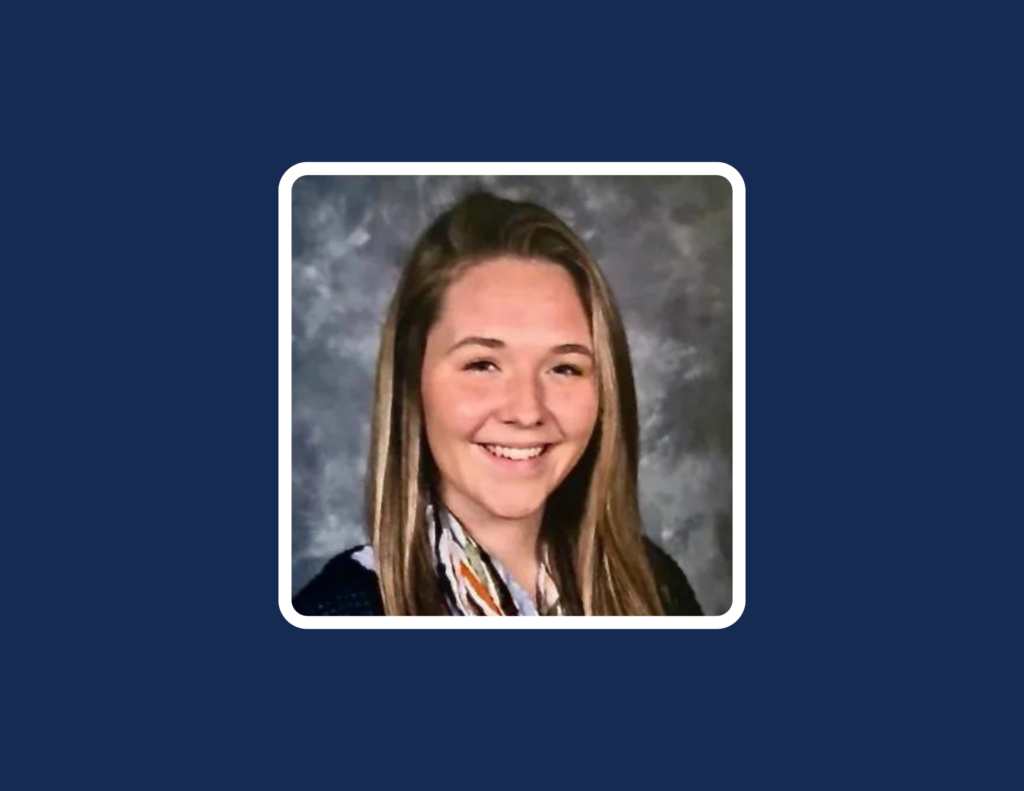
BRITTNEY MCNAMARA – MIDVIEW (OH) HIGH SCHOOL GIRLS’ BASKETBALL HEAD COACH – EPISODE 923

Website – https://midviewathletics.com/sports/wbkb/index
Email – brittmac423@gmail.com
Twitter – @_coachbritt_
If you listen to and love the Hoop Heads Podcast, please consider giving us a small tip that will help in our quest to become the #1 basketball coaching podcast.
Brittney McNamara is the Head Girls Basketball Coach at Midview High School in the state of Ohio. She took over the Midview program in 2021 and led the Middies to the state Final Four in 2023.
She previously served as the Head Coach at Berea-Midpark High School for two seasons.
Prior to her first head coaching job with the Titans, McNamara was a varsity assistant coach for four seasons at Trinity High School. She began her coaching career as the junior varsity coach with Mayfield High School in 2014.
McNamara is also active on the AAU circuit where Brittney’s father, Kevin McNamara, runs the successful AAU program MAC Basketball in northeast Ohio.
McNamara was a two-time All-Ohio standout and the 2013 Lorain County Player of the Year while a student at Elyria Catholic. The Panthers basketball team made it to the OHSAA Final Four during her sophomore year. She is the All-time leader at Elyria Catholic in three-pointers made in a season (59), career (121) and game (8).
If you’re looking to improve your coaching please consider joining the Hoop Heads Mentorship Program. We believe that having a mentor is the best way to maximize your potential and become a transformational coach. By matching you up with one of our experienced mentors you’ll develop a one on one relationship that will help your coaching, your team, your program, and your mindset. The Hoop Heads Mentorship Program delivers mentoring services to basketball coaches at all levels through our team of experienced Head Coaches. Find out more at hoopheadspod.com or shoot me an email directly mike@hoopheadspod.com
Be sure to follow us on Twitter and Instagram @hoopheadspod for the latest updates on episodes, guests, and events from the Hoop Heads Pod.
Make sure you’re subscribed to the Hoop Heads Pod on iTunes or wherever you get your podcasts and while you’re there please leave us a 5 star rating and review. Your ratings help your friends and coaching colleagues find the show. If you really love what you’re hearing recommend the Hoop Heads Pod to someone and get them to join you as a part of Hoop Heads Nation.
Be sure to grab pen and paper before you listen to this episode with Brittney McNamara, Head Girls Basketball Coach at Midview High School in the state of Ohio.
What We Discuss with Brittney McNamara
- The influence her father had on her as a young player and person
- “It’s just been crazy to watch and crazy to be a part of just to see how girls basketball has just kind of exploded over the past couple of years.”
- “I always thought that at some point I would end up back with the game of basketball coaching, helping girls love it just as much as I did.”
- Coaching with her Dad as an assistant at Mayfield (OH) High School and Trinity (OH) High School
- “It’s finding those special moments in time where you can put them on that pedestal. I think that those other kids get to be on all the time.”
- “My job is to love you. Your job is to love each other.”
- What she learned from her first head coaching interview at Bay (OH) High School
- Fundraising for her program at Midview
- Organizing a team trip over winter break
- “I’m here to work as long as you’re here to work.”
- Putting together a summer program for her players
- Developing leaders on your team
- “A lot of my coaching style comes from how I played.”
- Putting together a well-rounded coaching staff
- “If you don’t have a good youth program, you don’t have a good high school program.”
- “It’s really important to me that these younger kids know who I am and know what I’m about and make sure they’re having fun at that level.”
- Having fun and building fundamentals at the lower levels
- “If we don’t do what we need to do, it doesn’t matter what the other team needs to do.”
- Her “game day text” tradition
- “Pass the ball to the girls in the same color jerseys as you.”
- Pre-game music selections
- “I think if you really love and truly care for their kid, that’s their whole world They’re gonna give you that respect and love and really be that advocate for you and your program.”
- Strategies for engaging parents
Like this show? Please leave us a review here — even one sentence helps! Consider including your Twitter handle so we can thank you personally!

We’re excited to partner with Dr. Dish, the world’s best shooting machine! Mention the Hoop Heads Podcast when you place your order and get $300 off a brand new state of the art Dr. Dish Shooting Machine!

Prepare like the pros with the all new FastDraw and FastScout. FastDraw has been the number one play diagramming software for coaches for years, and now with it’s integrated web platform, coaches have the ability to add video to plays and share them directly to their players Android and iPhones via their mobile app. Coaches can also create customized scouting reports, upload and send game and practice film straight to the mobile app. Your players and staff have never been as prepared for games as they will after using FastDraw & FastScout. You’ll see quickly why FastModel Sports has the most compelling and intuitive basketball software out there! In addition to a great product, they also provide basketball coaching content and resources through their blog and playbank, which features over 8,000 free plays and drills from their online coaching community. For access to these plays and more information, visit fastmodelsports.com or follow them on Twitter @FastModel. Use Promo code HHP15 to save 15%
Your first impression is everything when applying for a new coaching job. A professional coaching portfolio is the tool that highlights your coaching achievements and philosophies and, most of all, helps separate you and your abilities from the other applicants.
The key to landing a new coaching job is to demonstrate to the hiring committee your attention to detail, level of preparedness, and your professionalism. Not only does a coaching portfolio allow you to exhibit these qualities, it also allows you to present your personal philosophies on coaching, leadership, and program development in an organized manner.
The Coaching Portfolio Guide is an instructional, membership-based website that helps you develop a personalized portfolio. Each section of the portfolio guide provides detailed instructions on how to organize your portfolio in a professional manner. The guide also provides sample documents for each section of your portfolio that you can copy, modify, and add to your personal portfolio.

We know you’re invested in the next generation of athletes, so why not give them the star treatment this season with GameChanger. Introducing GameChanger, a free app that provides you with data to make strategic coaching decisions and to deliver memorable moments to your team and its fans. Engage your players, empower your coaching decisions, and give parents the thrill of watching every play unfold in real time this season. Download GameChanger now on iOS or Android. GameChanger equips your team with the tools they need to succeed. Download it today and make this season one for the books. GameChanger. Stream. Score. Connect. Learn more at gc.com/hoopheads.
With GameChanger you’ll get automated highlight clips for all scoring plays as well as rebounds, steals, assists, and more. Plus free live streaming, advanced scorekeeping, and team management. No complex setups required, just easy, free streaming from your mobile device. AI powered technology will automatically pan and zoom…
Coach: the season just wrapped up and you need a break. Take your family on a much needed trip somewhere and leave the launch of your off season film review to #TeamsOfMen and our brand new #CoachsMirror product. Combining your game film & schematic goals with an experienced coach’s eye and the time saving power of AI, we will have an entire self scout of your film ready for you when you come back refreshed from your time off. Packages are available now breaking down 1, 3 or 5 games from this season.

Pro Skills Basketball is thrilled to announce that they are expanding their reach and seeking driven individuals to join them as City Directors in new cities across the country. This is an exciting opportunity to be at the forefront of revolutionizing youth basketball development and fostering a culture of excellence inspired by European-style basketball academies. Learn more now!
THANKS, BRITTNEY MCNAMARA
If you enjoyed this episode with Brittney McNamara let her know by clicking on the link below and thanking her via Twitter.
Click here to thank Brittney McNamara via Twitter
Click here to let Mike & Jason know about your number one takeaway from this episode!
And if you want us to answer your questions on one of our upcoming weekly NBA episodes, drop us a line at mike@hoopheadspod.com.
TRANSCRIPT FOR BRITTNEY MCNAMARA – MIDVIEW (OH) HIGH SCHOOL GIRLS’ BASKETBALL HEAD COACH – EPISODE 923
[00:00:00] Mike Klinzing: Hello and welcome to the Hoop Heads Podcast. It’s Mike Klinzing here with my co-host Jason Sunkle tonight. And we are pleased to welcome the head girls basketball coach at Midview High School here in the state of Ohio, Brittney McNamara. Brittney, welcome to the Hoop Heads Pod.
[00:00:14] Brittney McNamara: Hey, thanks for having me. I really appreciate it.
[00:00:17] Mike Klinzing: We are excited to have you on looking forward to diving into all of the things that you’ve been able to do throughout your basketball life. Let’s start by going back in time to when you were a kid. Tell me about some of your earliest memories of the game of basketball.
[00:00:31] Brittney McNamara: I remember a lot of having like the little tykes ball in my hand at all times doing all the little stuff.
The funniest part about me going back to in the time I think about my dad, obviously he’s a huge, huge person in my life that has really pushed me into this game of basketball that I love. But at first he didn’t really want me to be the best player or the tomboy per se. He kind of wanted me to be his little princess.
So I did Competitive cheerleading for a really long time. And it kind of it was a breaking point in elementary where it was either they wanted me to be like their cheerleader or I had to play all the other sports that I wanted to play and I chose basketball and softball and volleyball and all that over. So I might have broken my dad’s heart a little bit, but..
[00:01:22] Jason Sunkle: He probably turned it out okay.
[00:01:23] Mike Klinzing: I’m sure, I’m sure he’d rather go to your basketball games than go to dance recitals and all that stuff.
[00:01:29] Brittney McNamara: Oh, yeah. I would rather go to a basketball game now.
[00:01:35] Mike Klinzing: I have two daughters, Brittney. So I have one who’s a sophomore in college, and then I have another daughter who’s going to be a, well, she’s in eighth grade now, so she’ll be a freshman next year.
And my older one never did any dance at all. Never any interest nothing. And then my younger one, she did like, I don’t know, maybe like four months of dance. And then she was like, I don’t want to do this anymore. This is probably when she was like, I’m like, yes, let’s move on and get, yeah, let’s go do something else.
So I can completely relate. Talk a little bit about once you did decide on basketball, talk about the influence of your dad and just kind of how he impacted who you became as a player.
[00:02:17] Brittney McNamara: Yeah. My dad means everything to me not just in the basketball world, but in life, obviously. And he really started out, he realized that my love of basketball was just as big as his.
And he wanted to find a travel league for me to play in, to play with better competition. All the girls that are like minded like me around myself. And so that’s when he started the girl’s side over at TNBA. And we really started going and it was something that I just got to meet all these other girls around the area and really just fell in love more and more and more with the game of basketball.
And we grew up in Avon. So Avon obviously has a really rich history of having great sports and all that stuff surrounding them. At the time it was just starting to come up. Like, I remember having cornfields in our backyard in Avon. Who would think that Avon would have cornfields?
[00:03:09] Mike Klinzing: Hey Strongsville, the mall in Strongsville, Jason may not even remember, the mall in Strongsville was, that was a cornfield when I was a kid.
Oh, wow. Long time ago. I’m a lot older than you.
[00:03:20] Jason Sunkle: Hey, yeah, I do know that, Mike. Do you know what they originally were talking about putting in Strongsville? Do you know this?
[00:03:23] Mike Klinzing: The Brown Stadium.
[00:03:26] Jason Sunkle: No, no, the Cavs stadium. They were talking about putting the Cavs stadium when they were relocating, they were trying to get it, they didn’t want to get the they didn’t want to get too close Richfield was too far away, but they were thinking of not going all the way into Cleveland, Mike.
[00:03:40] Mike Klinzing: Boy would that have been dumb. I mean, like, don’t get me wrong. I love going to the Coliseum, but obviously moving it into the city was the right decision. Yeah. And if you thought if they’d have come halfway and put it in Strongsville, man, that would have been, that would have been a mistake. No, the Brown Stadium is going to be at
[00:03:57] Jason Sunkle: Brea or Brook Park, right Mike?
Brook Park. Give me a break. Brook Park
[00:04:02] Mike Klinzing: Brown. That’s right. That’s it. There we go. That’s interesting. All right. So tell me a little bit about what the travel basketball AAU situation was like for you as you’re starting to get into it. Cause obviously now we know where it is and how it’s exploded and everybody’s playing.
But what do you remember about it at that time, especially on the girls side?
[00:04:27] Brittney McNamara: Yeah. You know, it wasn’t as it is now for sure. You know, there was these big tournaments here and there, but that’s all that there really was like one or two big tournaments. And then everything else was really local. We kind of played the same people all the time.
Just because it wasn’t as big and it was kind of fun cause you got those rivalries that you had in like school basketball with AAU basketball. But yeah, as I’ve seen the game grow and grow over my time of playing and now coaching, it’s, it’s just been crazy to watch and crazy to be a part of just to see how girls basketball has just kind of exploded over the past couple of years.
[00:05:05] Mike Klinzing: Yeah. How do you see the opportunity? I think this is something that, again, I go back to my time as a player. So now we’re going back 30 some odd years. And I just think that the opportunity for girls to be able to play basketball back when I was playing, there was no travel basketball. There was no AAU basketball.
Basically you had no rec basketball. And then at that time, there was a lot of pickup basketball on the guy’s side. But if you’re a female and you wanted to be able to try to play pickup basketball, good luck trying to find the game of all females and good luck trying to get into a game with a bunch of guys, depending upon where it is that you’re going to go.
So just maybe talk in general a little bit about what you see as a female head coach, just in terms of the opportunity that girls in general have in the game compared to. 10 years ago, 30 years ago, whatever perspective you want to take on that.
[00:06:01] Brittney McNamara: Yeah. You know, it was actually pretty hard for me to get my first coaching job, not just because of my age, I kind of went into it really young. I interviewed for my first coaching job over at Bay high school when I was 23. So, and I was probably one of the only females that were going up for that job at that time. And so one, it was hard because I was a female with no experience.
As a head coach, I was my dad’s assistant coach for a few years prior before that. But just from then to now it’s just been so great to see the love and support that girls basketball gets not just at the collegiate level and the professional level, but even at the high school level.
I get along really well with our boys head coach, Jim Brabenick, and I think it’s just because of great people now that just want to keep supporting each other. And we have so many great people in our lives, like at MAC Basketball where the men that are coaching these women, or these young women, are really trying to push that aspect of you can do anything that a boy can do.
You can do anything that whatever you put your mind to, you can do it. And giving these girls that confidence that I believe that all girls, all females, all athletes really should have. That confidence. That mindset of I can really do anything I put my mind to if I work hard enough at it.
[00:07:26] Mike Klinzing: As you were coming up through high school and college was, and obviously with your dad’s coaching background, was coaching something that was in the forefront of your mind that, hey, when I graduate, I want to get into coaching or was it more something that happened as you got closer to the point where you had to make a career decision?
Or were you always thinking about being a coach?
[00:07:49] Brittney McNamara: I think I was always thinking about being a coach. I don’t think my. Necessarily how it panned out was always what I thought it was going to be.
[00:08:00] Mike Klinzing: The plan didn’t necessarily follow the script.
[00:08:02] Brittney McNamara: Yes. You know, I always wanted to be a coach just cause one, my dad has always been my coach and that I always, wasn’t the easiest, but it has, we definitely yelled at each other, did what a daughter and father would do when they’re competitive and stubborn as we are. But yeah, it just didn’t fit the script of what I was planning with my life as getting to being a coach at some point in time. I knew no matter what, going into college my first year, I was doing education so I could be a coach in the schools to coach. But yeah, it just didn’t end up like that. But I always, yeah, I always thought that at some point I would end up back with the game of basketball coaching helping girls love it just as much as I did.
[00:08:50] Mike Klinzing: All right. So talk us through If it didn’t go according to script, maybe what did you envision happening and then what exactly did happen?
[00:08:58] Brittney McNamara: I envisioned playing all four years and getting that degree and kind of being a graduate assistant at the school I was at. or getting a graduate assistant job somewhere else. And then if that took me to a college job, then it took me to a college job. I really never thought of coaching high school.
I always thought it was going to be at the college level doing the things that I’ve always dreamed of doing. But after my first year, I decided to come home. I went to Chestnut Hill College out in Philadelphia. Which I loved. It was this small town. They have like a Harry Potter weekend.
The school looked like it was a castle out of Harry Potter. It was crazy. And they really dove into that.
[00:09:47] Jason Sunkle: You’re speaking Mike’s language. He loves Harry Potter. It’s his favorite show.
[00:09:50] Mike Klinzing: Don’t start listening off to all those characters. I might fall asleep over it.
[00:09:57] Jason Sunkle: He can’t stay awake.
[00:10:00] Mike Klinzing: If you guys want to step, talk Harry Potter, I can step out for a few minutes.
You guys can, we can do a little Harry Potter interlude and I can come back in. Oh, that’s so funny.
[00:10:09] Brittney McNamara: But yeah, so they just like, they did all that stuff and it was like really a cute little small town in Philly. And that whole city was so great to be around for that year, but basketball wise, it didn’t pan out the way I wanted to.
The coach sold me a dream pretty much. And at the end of it, I just hated basketball. My love was taken away from the game and I didn’t want anything to do with it. So when I came home, I told my dad I was done. Like, I’m not playing, I’m not transferring anywhere, I’m done. I’m just gonna go to school, blah, blah, blah.
Well, he goes, well, you’re not done. I kind of laughed, I go, no, I’m done. And he goes, no, you’re gonna help me out. Because you’re not just gonna come home and stop doing basketball. And I’m like, what? Whatever like the typical teenage whatever and so I started coaching with him and I realized that my whole thing is I’m never going to want a girl to leave my program, my team, anything hating basketball, changing their mind that this was the worst decision they could have made playing, you know?
So. I wanted to take what my coach did to me in college and reverse that and make sure that nobody ever left my program feeling less than feeling like they couldn’t do it, feeling like they weren’t appreciated ever. So my dad brought that love back into my heart for the game. And I was able to start coaching with him at Mayfield.
And then we moved to Trinity and I got to meet some pretty great girls and I had a couple of head coaching interviews and nobody would want me and that was pretty hard. And then then I got the chance to go to Berea mid park, which was pretty cool. So. Just being able to change that narrative of some girls that never wanted to play, never thought they’d pick up basketball to be the person that changes their mind about loving something that’s so fun in my mind is pretty special.
[00:12:09] Mike Klinzing: All right. So let me ask you about this. I think one of the things that’s always a challenge, right? As a coach is that you have your players that play a lot, which is obviously what players want. And nobody ever gets enough minutes or enough shots. So the players who are playing a lot, they tend to be happy.
They tend to have positive attitudes. And occasionally you get somebody who isn’t playing as much as they might think they should, or they’re not getting enough minutes. And those are the kids sometimes that it’s difficult to maintain. That love for the game of basketball, like you talked about. And yet I think when you look around the landscape of coaching, right, the best coaches are the ones who, yeah, they win a lot of games and yeah, they have a ton of success, but they also develop a program where player 12, even though they may not be getting the minutes that they would love to get, they still love being a part of that team.
That program and the good coaches do it well by building that relationship and making sure that that kid feels valued and all those types of things. So how do you approach that end of it, where you’re building that entire program, where every kid who, who touches your team is valued and feels the way you described that you want those kids to love the game of basketball.
You want it to be a positive experience for them. You don’t want them to come home from. their experience, like you came home from Chestnut Hill feeling like, man, the basketball got, it got taken away from me. So how do you do that?
[00:13:39] Brittney McNamara: Yeah, it’s a hard thing because every person every kid is different.
But I try to create that personal relationship with the kids in my program. Last year, for an, for an example, we had seven seniors and really only four of them got to play big minutes or really the minutes at all. And so I had a few of them sitting in the rear not really playing.
But I try to be open, like an open book, open communication. Trying to tell them from the get go, you probably won’t get a lot of time but we’re going to have a lot of fun. And if you’re starting to not have fun, you need to let me know so I can make sure that you’re included, you feel special, you feel a part of it.
You know, it’s finding those little moments in practice or during a game or even during the day or a team bonding that you can really take those kids and put them on the pedestal like we put all like the kids that score the thousand points or that make the game winning shot put them on that pedestal that they want to be at, but in a different light.
And I tried to be able to do that with all my girls. No matter if they’re going to play or not. Sometimes I have my slip ups. Everybody does in the moments or stuff like that. But in the end of the day, like I had a girl that never touched the floor. Not once last year.
And she just called me like two days ago, telling me how she loves Cincinnati. It’s like the greatest thing in the world, just having a great time, just checking up on me. You know, it’s those things that that’s more special to me than the wins and the than the trophies, the nets, anything.
Just to be able to have those girls be able to call you later on in life and be like, hey coach, what’s up? How you doing? I’ve been thinking about you lately. You know, it’s finding those special moments in time where you can put them on that pedestal. I think that those other kids get to be on all the time.
[00:15:38] Mike Klinzing: Yeah, there’s no doubt. I mean, it’s making that investment in them as a person and not just as a basketball player. And I think when you do that, then you get to have those phone calls and there, there’s very few things in life. If you’re a coach. That are more satisfying than that phone call that you just described of somebody calling you up that, and just saying, Hey, here’s what’s going on in my life.
And I want to share it with you because you were such a big influence on me and and who I am. And I think that anybody who coaches knows how special those, those phone calls are. Let’s talk a little bit about your time working for your dad as an assistant. Let’s start with, what do you think? has been his biggest influence on you as a coach.
In other words, when you think about who you are as a coach, what are one or two things that you feel like you’ve taken from him that you’ve incorporated into your coaching style?
[00:16:32] Brittney McNamara: So one of the things that popped right into my mind is at the beginning of every season ever since I was little, he would tell every team that he coached, my team, whoever, whatever team it was, my job is to love you.
Your job is to love each other. And I really have resonated with that my entire life and I take it and I say it to every team that I coach at the beginning of the year. Let them know that that’s my job of the season and what their job is for the season. Because if we can do that, we can be really successful.
And it’s really shown over the years if you, if you show these kids that you love them and respect them and they love and respect each other good things are going to happen. Great things are going to happen to us. We’re going to get those wins. We’re going to at the buzzer, those kinds of things because we really care about each other.
So taking that from him has been huge for me because I think at the end of the day, most teens are families and just to have, start that off in a family positive atmosphere, I think is huge. Just to tell them from the get go that my job is to love you to show that these kids are loved, to show them that you will love them no matter what is huge to them.
[00:17:46] Mike Klinzing: No question about that. I think that’s spot on. And again, when you can build that. Right from the get go and it’s something that you put out there right away and then you live it. Then everybody gets to feel that and again, that shows that everyone in the program can be valued.
And like I said, I think that that, that’s a lot easier to say than it is to do. And so you really have to be intentional about how you go about doing that. And obviously that’s something great that you learned from. Your dad and your time with him when you’re working with your dad and you talked a little bit about it as button heads a little bit when you’re a player, player coach.
So how about one of the things that’s always interesting, right? Is assistant coaches. Sometimes your job is to say, Hey, are we really doing this right? And obviously, eventually you have to come to a consensus in the coach’s office and walk out and everybody’s on the same page. What was the most challenging aspect of being your dad’s assistant in terms of obviously the relationship that you have father daughter, but then head coach, assistant coach, that relationship is different.
It’s a business, it’s a business relationship. So just talk a little bit about maybe what was the most challenging aspect of working for your dad?
[00:19:02] Brittney McNamara: Yeah, I guess it would be we’re both very vocal. And we’re both kind of set in our ways type of people. And I think I got that from him. My mom likes to rub that in my dad’s face when I’m being stubborn towards him.
And when I started to really come into my own as a coach after a couple of years learning from him and under, underneath him as an assistant coach. I’ve developed my own coaching style and what I think I would do in situations. And I think it would be hard for me to watch him put a play together or say we’re going to run this.
And in my mind, I’m like, Ooh, I don’t think that’s going to work. I would think I would do this better and I’d say something and he’d be like, no. No, it’s not going to work. Or he’d say, well, however he would, cause he’s stubborn, just like me. And then I’d get mad about it and then we’d have to drive home together.
And so we’d have to tell, we, it would have to come out. But I think that was really hard. And then also when I started coaching AAU and having my own team. The hardest part would be myself coaching, and then he comes into the huddle and says the same exact thing I say, and I’m like, I, well, I just said that, but thanks.
[00:20:23] Mike Klinzing: There you go. That’s funny.
[00:20:24] Brittney McNamara: Yeah. So I think those are the hard things, because it’s like the control factor, I would say, every coach likes to have control of their own team. And for sure, you’ve got two big models like ours. It’s hard to step back and say, okay, maybe he’s right.
[00:20:44] Mike Klinzing: All right. You mentioned going on a couple of interviews for head coaching jobs and not, not getting those jobs initially. And when you think back to that time, as you’re working to try to, to get your first head coaching job, what do you think were, or what were some of the questions? in the interviews that you remember that you thought, Oh man, like that one, that one maybe jumped up and got me like, I wasn’t thinking about that or just where were you in terms of feeling prepared for a head coaching job at the time when you first started interviewing?
[00:21:19] Brittney McNamara: So my first interview with Bay high school, I think was kind of, I went into it like, Well, preparing a little bit, but not as enough, not as enough as I should have, I should say, because you’re like going into, you’re like, Oh, we’re just going to talk about basketball. You don’t really see the behind the scenes as a player with the boosters and fundraising and the money aspect of it all.
Or they ask you the parent question, like, how do you deal with this situation that a parent comes up to you with? So I think my first. interview with Bay, that, that is something that really stumped me a couple the first couple of times they asked me, it was like, Oh, I don’t actually know.
I’ve seen my dad do it, but like, in my mind, I’m like, Oh whatever. So I think that those kinds of questions that to really prepare, I really should have prepared myself more for those first few interviews you know, for those head coaching jobs of understanding the role of the head coach beyond the plays, beyond defense, beyond the kids really understanding how much fundraising goes into it and what you need to buy and how you need to buy it and all this other stuff. It really has been a learning curve over the past last few years of being a head coach because that stuff I don’t like. Right.
[00:22:51] Mike Klinzing: Yeah, absolutely. I mean, I don’t think any head coach likes doing any of that stuff. That’s one of the things, right, that I don’t think that the average Person, whether you want to call the average person, even a parent within your program or people who are coming to the games or whatever. I think that’s one of the most underrated things about being a head coach. And I don’t care what the level is.
Obviously, there’s different types of responsibilities that you have, depending on if you’re coaching at the high school level or college level or whatever. But there are so many responsibilities that are outside of Hey, it’s not just, I get to go to practice and do my Xs and Os and watch film and I can just ignore all this other stuff.
There’s so many other things that go into building a successful program. Is there any part of it off the floor like that, that I don’t know if, I don’t know if I want to say like, but that, that you don’t, that you don’t mind that you’re kind of like, ah, no, this is kind of, this is kind of fun doing this particular thing off the floor that.
Maybe you didn’t realize before you got the head coaching job that, man, I didn’t realize head coaches spent a lot of time doing this. So is there any aspect of the off the court stuff that you, I guess, tolerate?
[00:23:59] Brittney McNamara: Hi not any of the fundraising stuff I can tell you about.
[00:24:04] Mike Klinzing: So what kind of fundraising, I’m just curious, what kind of fundraising do you guys do?
[00:24:08] Brittney McNamara: Oh, we do like calendar fundraisers. I mean, I’ve tried to do a bunch of different ones that like, Could be like a staple, like, Oh, we’ll do this every year. I say that every year. I’m like, this is the one we’re going to do every year. Never ends up that way. It’s just like, it’s one of those things where like every day there’s a winner and they get this gift card.
That was the one that we did last year that I really liked. Okay. Because every day it was a winner and I’m really big on social media. I’m like showing off what we do at practice, showing off what the girls are accomplished, accomplishing, like outside the basketball, like in school and stuff like that.
So that’s really huge to me. So being able to put that out there and have the girls have fun with it was a good time. I wouldn’t say I like much off the X’s and O’s. I like hanging out with the girls. There’s such a being around the girls, it’s a fun group. And especially high school girls, it takes you back and you’re like, Oh man, was I like this in high school? I didn’t write. Of course you were.
[00:25:03] Mike Klinzing: Sure. It doesn’t feel that way, but it definitely is. That’s one of the hardest things. I mean, again, you’ll figure it out as you get even older that you sometimes you look back and I’ll, I’ll watch a game or whatever, and I’ll be like, man, was that, was I like that?
I don’t know if I was, or I wasn’t, or whatever. It’s just kind of interesting to think back on it. From a fundraising standpoint, what do you, what do you fundraise for? Like, what are some of the things that you feel like are important to, again, I don’t know if you want to call them add ons, but what are the things that you feel like fundraising helps you to do within your program?
What are your goals for fundraising?
[00:25:44] Brittney McNamara: I like to make sure that our girls they put all the time, the effort, the hard work time away from their families, homework, things like that. I try to give them as much things as I possibly can. So this year and every year they get a travel suit.
Our varsity team gets brand new pairs of shoes every year. We did a media day where we had a photographer come in and take our pictures, and then we did a hype video. Cause they’ve been asking me for it since I got the job.
[00:26:14] Jason Sunkle: Nice. You did Tearaway Pants, Brittney. I remember seeing those on Twitter.
[00:26:18] Mike Klinzing: Tearaway Pants are awesome.
[00:26:23] Jason Sunkle: They couldn’t figure out how to use them, Mike. They couldn’t figure out how to use them. It was pretty classic. It was pretty classic.
[00:26:28] Brittney McNamara: I’ll have to send you the video because it was, I told them, I actually told them to practice ripping the pants off.
And they thought I was joking until they’re getting their numbers called to for the starting five and they can’t get their pants off.
[00:26:45] Mike Klinzing: Can’t rip them off. That’s funny!
[00:26:46] Brittney McNamara: So, well, one of, Olivia DeFranco, who is our all time leading scorer at the school really probably has every record in the book.
She’s wanted them since like sixth grade. And when I was able to, and I knew we’d have the money for it, I put that order in as fast as I could. And then, like, a game later, she tears her ACL out and it was like the saddest thing ever. Cause she’s like, I’ve been wanting to wear these pants for so long and now I’m not going to be able to.
Right. Like we can still wear them.
[00:27:17] Mike Klinzing: Right. Exactly. You can just run out of the house. Hey, here we go.
[00:27:22] Brittney McNamara: But yeah, we got the tear away pants this year. I like to give them all, I gave them all practice shorts. They get practice jerseys, they get sweatshirts, I think I gave him like two sweatshirts this year.
So all the gear. All the gear that I can buy them I will. So we did the photo shoot, the videography, the video. And so my next goal for them is we’re trying to take that that big trip that all the high schoolers take over their winter break to all the, I think Olmsted Falls went to Arizona like two years ago, Medina went down to Orlando this past year.
So I’m trying to take that big, that big trip that all the girls want to go to show off that they’re in Florida for winter break.
[00:28:08] Mike Klinzing: Can I give you a tip for that? Sure. Okay. So I got to experience this trip as a parent. So last year my son’s team went to Florida. And so what I will say is, this is my advice to you, you need to make sure that you communicate as well as humanly possible what the trip is going to cost from the beginning and then don’t change it a week before the trip is supposed to start.
So that’s my unsolicited advice is try to get it organized early, and communicate early and often with people how much it’s gonna cost and how much is gonna be fundraised. So it was a little bit of a challenge for us.
[00:28:52] Brittney McNamara: Oh my gosh. Yeah. No, I think we wouldn’t do it. We won’t do it next year, but we’ll do it probably the year after so I can get Nice. So I can see all the breakdowns of everything and be like, all right, now we have a year, full year.
[00:29:05] Mike Klinzing: Well, your kids will have it’ll be a great, it’ll be a great experience for, for your players for sure.
Like my son had a great time. Their team had a blast doing it and I think it’s definitely something that if you do it right is worth doing without question.
[00:29:21] Brittney McNamara: Yeah. We’ve seen all these kids, all these teams do it and it has looked so much fun. Yeah.
The boys basketball coach and I have been talking about it for the past couple of years trying to get both of us to go to the same place at the same time so we can have that huge like not just like a fan section, but like being able to support each other throughout the whole thing.
[00:29:43] Jason Sunkle: That’s what Falls did a few years ago, right?
[00:29:48] Brittney McNamara: Yeah. So we saw that. I feel like that’d be great. I feel like that’d be a great idea. the breakdown and everything. So it seems very expensive. Don’t get me wrong. But hopefully we can have a few donors here and there.
[00:29:59] Mike Klinzing: Yeah, absolutely. All right. So you’ve now taken over two different programs.
So you take over Brea Midpark and now you’re at Midview. When you first get a job, what are some of the first things that you’re looking at in terms of this is what I need to do in order to establish, whether you want to say a winning culture, a winning program, just what do you think about when you first take over a job?
What are some of the first aspects that you’re going to try to take care of?
[00:30:30] Brittney McNamara: You know, when I have that, that, that team meeting, that parent meeting, just introduce myself, give them my background. And I like to give as much background as I can just to show that like I’ve been saying that it is, I’m trying to create that family atmosphere.
I’m just starting my family. I have an almost two year old. So having her around and being around is huge for me and just to have good people there. And then really getting down to the nitty gritty of getting the girls in the gym and seeing what we can work with and how we can play and compete against some of the other teams that we’re going to have to play and compete against.
Walking into Berea the first time it was very overwhelming, I would say a young coach who three cities in one and that is a monster. for a first time head coach to walk into trying to wrangle their youth and try to understand that and how they have all three cities and they flow into one high school and you know it is crazy and I you know it’s not for the week that’s for sure trying to you know get all that straightened out and figured out but you know just trying to you know understand you know what has worked with them before and what can be fixed and what can I bring to the table to help them and kind of show that mutual respect that I’m here to work as long as you’re here to work.
And then hit the ground running trying to get those wins and get those girls to the competitive level that we need to be at.
[00:32:07] Mike Klinzing: What do you think about in terms of your summer basketball program and what you put together for the girls in the off season? Maybe just walk us through.
What you like to do from obviously your season ends and you got a month before you can get anything cranked up, but just what do you try to accomplish in your summer basketball workouts and season? And what does that look like for you?
[00:32:30] Brittney McNamara: Yeah. So funny enough last summer. was my first actual summer to be able to go through a June because of COVID.
Right. I was hired late for both Berea and Midview. So I didn’t have my first summer for both of those jobs and then COVID hit at Berea. So really last summer was my first summer to actually like be a head coach during June. And I like to try to get in the gym and open the gym as much as possible.
I’ll go up and have the gym open for two hours this summer as much as I can just to have the girls have a place to go to, to shoot and then use really maximize those 10 days of instruction to start the thinking process of how we’re going to work. When October 27th comes, whenever our first day of practice is that next year.
So I like to do our summer leagues. Last year we did a summer league with my dad over at Berea which was really competitive, really good. We do a middle, or JV one where I have my middle schoolers actually come up and play in that. So, having those girls come up and play as much as possible I think is really key.
We didn’t do a lot of like shootouts or overnight camps. Last year just because I kind of wanted to have a easy, breezy, cool summer with how crazy our ending was. So this year though, I think we’re going to do like an overnight camp at Findlay, which has always been fun. I went there in high school and was able to do that.
And so just having those team atmospheres, team things where these girls could be together for longer periods of time, just get that camaraderie going and getting back together after not being with each other for a month, two months like that in the gym.
[00:34:21] Mike Klinzing: How do you put together and develop the leaders on your team. How much of that comes through conversation in the summer? How much of that comes through, again, their experience on the floor together during the season? Just how do you think about leadership on your team and developing the kind of leaders that you know it takes in order to build a winning team?
[00:34:46] Brittney McNamara: I kind of take a step back when it comes to that stuff and kind of let the girls figure out who those leaders are going to be, who those people. are that are going to want to step up. I always have my own thoughts and who’s it going to be and who I think is our floor general and stuff like that.
Most years it shocks me about who actually steps up and at what points and I let our girls vote on captains in the season because I’m not going to sit here and pick who you need to go talk to if you have an issue. I want you to be able to vote on those people to talk to who you’re comfortable talking to.
So being able to give them that kind of power, if you say, to be able to figure out who that person or those leaders are going to be, I think is really huge to have that respect factor back into the game. And typically like this year they voted on four captains and one of those girls like probably wasn’t going to play a lot and then Liv got hurt.
So it was interesting that somebody that isn’t one of the star players getting voted as captain, I think is really big in my eyes that some girls see that. It’s okay not to play all the time. It’s okay not to have like this eye popping stats. As long as you’re a good person and helping each other out in practice and outside of practice.
So I like to reward those girls that aren’t just the stat people, but the ones that are there for the younger girls at all times.
[00:36:24] Mike Klinzing: Yeah, absolutely. I mean, I think it also speaks to when you let the players, Make those decisions, right? Is sometimes they’re seeing stuff that maybe the adults don’t necessarily see and they know how influential you know, influential a girl could be in the locker room or maybe just in school or maybe just again with the friend groups that cross over from one this group to that group and kind of bridge the gap with everybody and clearly that, that’s something that you don’t necessarily need to, as you said, be the best player on the floor and it’d be able to, in order to be able to bring those traits to a team.
So I think that it’s sometimes underrated in terms of, yeah, sure. In an ideal world, maybe you want your captain to be your hardest worker and your best practice player and your best player and your leader and all those things. But sometimes that package comes in it comes, it comes in different packages.
It doesn’t always come in one package. Sometimes it does. And, you know. When it does, that’s, that’s great, but it doesn’t, it doesn’t always turn out to be, doesn’t always turn out to be the case. Yeah. In terms of style of play and who you are as a head coach from a X’s and O’s philosophy standpoint, Do you feel like you have a pretty good grasp on, again, obviously year to year it may change slightly because of your personnel and who you have and at the high school level, you’re obviously not recruiting your players, so you kind of got to play with who you have.
When you think about who you are as a head coach, how comfortable are you at this point with, hey, I kind of know what I’m about. Not that you’re not continuing to grow and evolve and learn, but just you feel like you have a pretty good handle on how you want to play the game. pretty accurate statement at this point?
[00:38:12] Brittney McNamara: Yeah, I would say so. But a lot of my coaching style comes from how I played. When I was younger, I was like all over the place, constantly up and down, up and down, running, running, running. And if you see me coach, it’s I’m constantly moving, constantly yelling. I’m sweating just as much as the girls half the time.
I’ll walk into halftime and I’ll need a towel to wipe my face off. But I think being able to coach like that and the girls respond to it in such a positive way has been so fun for me, just to be able to be myself and coach at the same time. Cause not a lot of people are able to do that.
Just because of their personality or the way they coach and how they want to run things. But I’ve been so lucky enough to have such a great group of girls over the past few years to really be able to let me come into my own and be myself as I’m learning and growing through it.
[00:39:10] Mike Klinzing: How do you think about putting together your coaching staff? Which I know, look, when you start talking about being at a public school, And you’re trying to get a varsity assistant. You need to have a JV coach. You got to have a freshman coach. And then you start talking about trying to get coaches to coach at the middle school level to be able to find enough people who are qualified and are going to be able to do the job well.
What’s been the process for you putting together a staff and what are some things that you’re looking for in assistant coaches?
[00:39:39] Brittney McNamara: Yeah, I’ve actually been really blessed with that because you know with Mac basketball
[00:39:47] Mike Klinzing: You’ve got a farm system
[00:39:52] Brittney McNamara: I really I haven’t been able with the girls I’ve coached They’re just now graduating college and finding their job.
So it’s gonna come, I think it’s gonna come back to that sooner than later. But I’ve been lucky enough to have my JV coach who’s been with me since the start. Bob Kaufman, he knew my dad and coached with my dad when he was over at North Olmsted. And so having Bob on my staff since the beginning has been just so great because He’s taught me so many things along the way as like the older voice that I needed to kind of figure out he’s been under so many coaches.
I think he went from North Olmsted to Olmsted Falls and now Midview, I think again, because his wife was a coach over at Midview. years and years ago, but just having somebody that’s been seasoned and being there having that veteran look on things has been really wonderful for me.
So that was really huge for me to have somebody like that on staff. And then, and also another female voice. I have Tiffany Dotson is another one of my assistants and she played at Hiram and then was a head coach over at Oberlin, Oberlin High School for a year or two. And then she coaches AAU for us too as well.
So it’s nice to have that that other woman kind of figure around the gym. And then last year we added Chad DeFranco, which is one of my players dads, but he does he’s not the typical dad of a player, he doesn’t really care if his player His daughter’s very good. So that helps.
[00:41:34] Jason Sunkle: Makes it a lot easier, right?
[00:41:35] Mike Klinzing: Makes it a lot easier. She’s not the 12th man.
[00:41:38] Jason Sunkle: He’s a good dude. He’s a good dude. I’ve coached against him many years at the middle school level.,
[00:41:45] Brittney McNamara: So it’s yeah he’s just, they’re just great people. Great, great family. So it’s nice to have somebody like that.
And he also has really been helping me organize like our concession stand and Our budget that we have to turn in. So the things that I don’t like to do, he’ll do for me. So that’s been really awesome to have, but unfortunately he’s leaving us. Cause Olivia is moving on sadly.
So I’m actually in the hunt for another assistant coach. I’m hoping to get one of these younger girls that are graduated onto my staff this next year, but we’ll see what happens how, how everything falls. But I’m excited the way things are moving in the direction of looking for that assistant coach, someone to be out there with the girls really understanding and having that basketball mindset, basketball IQ to push them to where we need them to be.
[00:42:36] Mike Klinzing: How do you divide up the responsibilities amongst your coaches? In other words, in practice, do you have one person that’s watching the offense, one person that’s watching the defense, just obviously you just talked about how Bob’s taking over and doing some things off the floor. How do you go about assigning roles and figuring out what everybody’s going to do on your staff?
[00:42:58] Brittney McNamara: I kind of it just comes out, kind of comes off of like personality, you know. And how we work together and what they like to do. I don’t want to push anybody to do something that they absolutely hate. So at the end of the day, it’s really my job to make the final decision, but if they don’t want to do it, I’m not going to force them to do it, but Chad has been kind of my right hand man the past two years, and he’s really helped me defensively while I’ve been the offensive person for us. And then you know, Bob and Tiff really work with our younger group, our JV kids, and get them ready to come up with us at the varsity level. And then when we go at each other, it’s great. It’s fun to practice against the JV and have those two over there and Chad and I over here and they’re trying to push those JV girls to really make us make mistakes.
Before we scrimmage them, the girls have told me, Bob has told them, all your goal is to make Britt yell. So that’s his goal for me every practice. He wants me to yell or kick a ball or do something crazy. Just to make sure they’re pushing our varsity kids and it’s a really good cohesive thing we’ve got going on.
So it’s been nice to have them all.
[00:44:18] Mike Klinzing: Nice. Yeah. To be able to have people that you can count on that are going to espouse the same things that are important to you as the head coach. Clearly that’s a real key to being able to develop a good program. When you think about working with those, either the coaches or the players at younger levels, how do you take that as your responsibility as the varsity coach, obviously this gets into the amount of time that you put in and that it takes to have a quality program and to be a really good coach.
So how do you think about going down and getting to know those younger players, getting to know the coaches and working with them to make sure that as the players are coming up through your program, that they know kind of what the expectation is?
[00:45:06] Brittney McNamara: Yeah, I think that’s a huge part of it.
You know if you don’t have a good youth program, you don’t have a good high school program is how I kind of look at it. Now we’ve just started when I got to Midview, there was no youth program. The youth program that there, when there was one, were these seniors now. So I had to start that back up and kind of get that going.
And so being able to have a hand in it and helping and being there for the tryouts and stuff like that. And having these younger kids know who I am and see my face. And when I walked to their, over to their school and see what’s going on they, they see me in the hallway and they’re like, Oh, Hey, Coach Britt.
What’s up? You know, rather than like, who’s that girl? Right. Kind of thing. It’s really important to me that these younger kids know who I am and know what I’m about and make sure they’re having fun at that level first off, because If you’re not having fun, then why are you there, kind of thing because that’s first and foremost all that I want is that these kids at the younger level, younger through high school is to have that fun time because these are some of the best times of your life that you’re really not going to get back.
So as long as they’re having fun, that’s all that really matters to me. And then learning on top of it the fundamentals, that’s really important to me. At a typical varsity JV practice, we work on fundamentals two ball dribbling, dribbling with a tennis ball form shooting for 45 minutes of each of our practices.
Just trying to like hone in on our skills and really work and get those little things down because those little moments in games. Those little things that we need to do are the ones that win them. So if I can get those girls at the elementary level to understand that now, when they get to that high school level, it will be easy peasy.
I won’t have to really tell them what they need to do. And we could just start the 45 minutes of practice them on their typical fundamentals.
[00:47:09] Mike Klinzing: Right. Makes sense. So. When you’re putting together a practice, and obviously it depends on the time of the season and whether or not you’re preparing for a specific opponent, just what’s your process for sitting down and putting together a practice plan?
Are you sitting down with paper and pencil? Are you sitting down at the computer? How do you go about designing one of your practices? So maybe just the process for how you do it. And then do you have kind of a set way that you like to do it? Obviously, you just talked about doing that fundamental work at the beginning. So just how you put together a practice plan.
[00:47:48] Brittney McNamara: Yeah, no, I love to sit down and with me, I’ll need to write it like 15 times for whatever reason. I’ll write down a paper and then I’ll go on the computer and then I’ll write it in the computer and then I’ll have to change something. So I’ll have to write it all over again and then fix it on the computer.
So, and then I printed out for all my coaches to have, even if they’re like, oh, whatever. But no I love that 45 minutes of our practice, 30, 45 minutes of our practice, really working on our fundamentals trying to get that ball handling. And then move on to we have a gun, like the shooting machine and gun at our school.
So we like to use that a lot. When we’re using that, we’ll have the guards down there, our posts working out. On the other hand, so really technically more fundamental, easy, little things that you have to do. And then the last 45 minutes of our practice to a half hour is game planning, strategizing for who we have coming up that week.
A lot of times I like to watch film. Two to three times a week, whether it’s on ourself or our opponent. And hudl is an amazing thing. I really learned to love it. It really is. You can have it break down your opponent’s stats and it gives you their shot charts and their scouting reports and things like that.
And the girls laugh every time I hand them the book, they call it the book because I want to make sure they have everything they need to know on the team. Whoever it is. So really just, I like to old fashioned way just getting, getting down to the nitty gritty, doing the little things.
And then because if we don’t do what we need to do, it doesn’t matter what the other team needs to do.
[00:49:31] Mike Klinzing: Right. How much film that you’re watching, do you end up sharing with the team? your players. So when you say you’re watching film two or three times in a week, how long are those film sessions and kind of what are you trying to focus on or show them?
Are you showing things that they’ve done well themselves? Are you showing things that, Hey, here’s some, here’s some mistakes we made that we got to work on and get better on? Are you showing them film of their opponent? Just how much of. Each of those different categories of film are you sharing with your players?
[00:50:06] Brittney McNamara: So probably it depends on really the game that we had last. If, if we go over you know, our film of ourself sometimes it’s really not a great game and it blow out and you can learn things from it, but at the same time you kind of have to move on and try to do the next thing.
I’ll pull clips here and there of things like of our offense or we, we ran a 2-3 zone this past year because That was the best way we thought we could slow people down and save our legs really. So I didn’t play that many girls. So understanding our 2-3 zone better, I pulled our defenses off that just to show them.
Typically our film sessions are 30 to 45 minutes long. And then on the other side of it, we watch their film and I pull their offenses and defenses and they have all the information sitting in front of them. And really we go over the main points that the other team does really well.
Their presses, their zones, their mans, whatever they do on defense. their typical offenses that they do run. So we really try to break down it as best as we can for the girls to understand what the opponent we have is what they’re going to do.
[00:51:23] Mike Klinzing: Absolutely. I mean, I think that the more information that players have, and obviously it probably changes from team to team and year to year in terms of how much film they can handle and how much they can process and different teams probably enjoy the film and get more out of it than other teams, depending upon.
how that particular team processes the information. So as a coach, you kind of got to get a real read and feel for your team and how you’re you know, how you’re going to put that together. On game night, how do you like to get your team prepared day of the game? What are some things that you want to go over with them prior to the game, whether that’s in the locker room immediately before they take the floor.
Just kind of talk a little bit about your sort of your game day ritual.
[00:52:09] Brittney McNamara: So I like them to get there for the entirety of the JV game. So they’re there and they’re awake because sometimes on Saturdays, of course, they’re asleep. Some Saturdays we like to have like a breakfast kind of thing to make sure they’re up and shoot around before the JV games. So I know they’re there. But then it comes down to it. I kind of let them do their thing. They get taped they watch a little bit of the game. They shoot in our aux Gym, things like that. I and I have been yelled at by them more than once because I send them every game I send them a game day text, whether it’s game day and I send a little like inspirational quote or something that I have to say.
And then a song. So if I don’t send it, then I get yelled at. Because they’re all very superstitious. I’ve given them my superstitious ness, whatever, however you say it.
[00:53:09] Mike Klinzing: Give me one of your superstitions.
[00:53:11] Brittney McNamara: Oh I always, in high school, I always had to wear the same socks.
Okay. It was so weird. I always had to wear the same socks. Coaching Last year when we made our state run, this is really gross, I did not clean my car. All right, there you go. So like my car, whatever was in my car, if I needed to move something from it, I didn’t do it. Like, it got to the point where it was really bad, but I was like, I can’t do it.
I cannot clean my car. It’s just gotta stay the way it is until we go to state and that is what it is. But the game day text is really one of those rituals that it’s like they, I started the day I got the job, the game I got, the first game that we had, and then all last year we did it so they were like, No, you have to do it every game.
So I do that every game and then I tell, we go in for our pregame speech and I like to tell them pass to the girls in the whatever color jersey we’re wearing. So in the white color jersey or the black color jersey. That is something I got from Coach Rothgeary over at EC when I played for him.
He would always tell us to pass the, pass the ball to the girls in the same color jerseys as you.
[00:54:22] Mike Klinzing: Good advice. There’s some simple coaching advice that’s very smart
[00:54:27] Brittney McNamara: Hey, it’s stuck with me for all these years. So I was like, Hey, it must mean something. And then we pray. That is something that is really big.
With us, we all hold hands, lock hands in that circle. We just say a quick prayer for being able to be here in this moment be here for this game. We pray for the people that are injured and that are healing that are on the court. We pray for a safe game things like that.
And we get moving and grooving and then we have one of the girls dads who is the We call him DJ Tommy Scrow. His name is Tommy Scrow. Nice. He likes to play some good jams before the game and he picks our walkouts, picks the girls walkout songs. So it’s a great time.
We like to have fun with it.
[00:55:13] Mike Klinzing: That’s very cool. That’s very cool. Yeah, you gotta have good music. You go to some schools. And you wonder like, man, who’s picking the, who’s picking this music? This is terrible. And again, like, don’t get, don’t get me wrong.
I’m a 53 year old man, so I don’t expect to have the same musical taste as what’s going to hype up a 16 year old girl. So I get that there’s some that are like, man, they got to at least have some, the music’s got to at least have some energy and some gyms you go in and you’re like, man, there’s, this is all right.
And then other gyms you go in, you’re like, ooh, man, who. Who picked this? Like, It would be hard to get up and get going for this song, this playlist. It’s like
[00:55:55] Brittney McNamara: It’s like some slow song playing. You’re like, what is that?
[00:55:57] Mike Klinzing: Yeah. It happens way more than you think. Honestly. Yes. I agree. It’s crazy. All right. Let’s talk about a topic that I know that a lot of coaches spend a lot of time on. That’s parents. Yeah. Talk to me a little bit about how you try to engage the parents in your program to get them to be advocates for your program as opposed to be adversarial.
[00:56:25] Brittney McNamara: Yeah, I try to have as much open communication as I possibly can.
My parent meeting in the beginning I give them my email, my phone number I tell them if they don’t, if I don’t get back to them right away, I’ll get back to them within that 24 hours. I kind of set really good standards of when to contact me, when not to contact me and boundaries.
And so I think that respect has gone a long way. In the past, this will be my third year at Midview knock on wood, but I have not had one parent issue, one girl fighting in team fighting issue, and you know, I really have chalked that up to the great people Midview in that area because they really just understand where we’re at and how we’re trying to build this program.
Moving forward and you know, they’re really supportive and I really haven’t had one bad parent issue But I think it’s because they see that I really care for the girls I really want them to do best not just on the court but off And if a parent sees that I think if you really love and truly care for their kid, they’re their person That’s their whole world They’re gonna give you that respect and love and really be that advocate for you and your program.
[00:57:53] Mike Klinzing: What do you think about in terms of? communicating with parents? How much do you, like, do you send out a newsletter? Are you talking to them pre-season? Do you have a meeting with individual parents, a parent meeting as a whole program? Just how do you approach the communication piece? Because I think that one of the things that that I’ve learned across the course of time, both from the coaching side of it and from the parent side of it, is that you tend to have a lot less challenges when the communication lines are open and the communication is positive because then if you ever do have any type of a difficult conversation that needs to be had, if you’ve done that proactive communication, it just helps, right?
Because as you said, those parents know that you love and care for their kids. And ultimately, that’s the most important piece of this whole puzzle. So how do you make sure that you’re communicating with parents clearly so that they kind of have an understanding of where their child is and kind of what your program’s all about?
[00:59:03] Brittney McNamara: Yeah I have that pre-season meeting with the parents middle school through high school. So I have two separate meetings. You know, give them the guidelines and understand like I am available for you guys to talk to at any point in time. If I don’t answer, I don’t get back to you.
I will get back to you, that kind of thing. But just making sure they know that I’m still learning and growing in this whole process and to give me as much grace as they can. But I do give them like a step by step of what I’d like to see if there is an issue.
I don’t really necessarily like to talk about playing time because I believe that’s at the coach’s discretion and playing time’s earned during practice and have open practices. So if they want to come and watch practice and see how their kid acts at practice and participates and how they’re playing in practice and they’re more than welcome to, we just want to make sure that we have all our ducks in a row trying to make sure we’re as good as possible with these parents and I tell the parents, if there’s an issue during a game, give everybody 24 hours, myself, them, their kid, 24 hours post game to calm down and relax because there are very heightened emotions during any type of sporting event.
So give us 24 hours, and then I want their child to come to me and talk to me because when they leave high school, mom and dad aren’t going to be here anymore. You know, they’ll be here in your life, but mom and dad aren’t going to email your professor for you or email your boss for you.
And go and be like, why aren’t you playing my kid more? I want the child to advocate for themselves at some point, because if they feel like they’re not getting what they deserve, well, then they need to start speaking up and talking about it because when it’s time for them to feel like they need a raise how are they going to learn that skill to go talk to their boss and say, Hey, I feel like I’ve done X, Y, and Z to get better and to have more money.
So why am I not getting it? You know, having that conversation. And then once that conversation, if it still doesn’t feel like they’re resolved, then we have that parent and coach and athlete conversation to just try to clear the air and figure it out. So I think laying out those boundaries, laying out those expectations are really huge for some of these parents to understand, like, oh, so there is a a pecking order or whatever you call it to try to figure these little tiny details out and again, like I said showing that you really care and love for their kid because you’re right, at the end of the day, that’s really all that matters is they’re having fun and they’re loved and they’re safe.
[01:01:53] Mike Klinzing: Yep. That goes a long way, right? When parents know that their coach cares about their kid as more than we talked about earlier, as more than just a basketball player, that really makes a big difference. I mean, it really has a huge impact on what you do with your program and how you put it all, how you put it all together.
Yeah. All right. Let me ask you this final two part question. Okay. So part one, when you think about what you get to do every single day. What brings you the most joy? And then the second part of the question, when you look ahead over the next year or two, what do you see as being your biggest challenge? So your biggest joy and your biggest challenge.
[01:02:36] Brittney McNamara: Honestly, my biggest joy is being able to see these girls every day. I work in the high school. So I get to see more of their life than I do if I was just their coach. So being able to see there’s the girls grow up through the years and graduate and boyfriends and whatever.
You know, it’s fun to be a part of that. Fun to be a part of their life in a different way than just their coach. So that’s really what gives me the most joy and to have my kid grow up around such great young girls. And most of them come and babysit and be there for Noel when she’s around.
And any picture you see of my team after a win, Noel’s in there. So it really gives, gives that family atmosphere and just to have such great role models and great girls. It’s really like the biggest joy I could have is to have that family outside of my own family. And the parents are really wonderful as well.
I just. I’ve had a blast getting to know every single one of them and getting as we go on through the years. And my biggest challenge, my biggest challenge will probably be kind of starting over because last year we went to the final four and I had a really great group of girls this year.
We did have to start over without Olivia cause she tore ACL the third game into the season. And that was all of our expectations in my head, we were going back to the districts and winning. You know, and that did not happen for us this year because things change, people get hurt, and you have to move on.
But kind of flipping what we’ve done over the past two years, three years of how we play and how we go about. I’m I think I’m probably going to have to play some younger kids these next few years just to get them ready. But it’ll be an exciting new challenge for me. And even though it will be challenging, I’ll be excited to go about it and do it every day.
And try to figure out a way we can win and beat my dad twice a year again. And hopefully one of these days we can beat Falls.
That’ll be the day. It’s never happened at Midview for girls basketball. So that’s the one team that I would like to…
[01:05:06] Jason Sunkle: A lot of SWC teams goals and aspirations, right, Brittney?
[01:05:13] Mike Klinzing: Yeah. It’s good to have a standard bearer, right?
[01:05:17] Brittney McNamara: I love it. I love what Jordan’s doing. I love what they do over there. He’s a great coach. He’s a great person. And so. You know, I love that we have that, that, that team in our conference. It’s like, that’s the standard I hoped that was going to be us after this year and being right up there with falls you know, but sometimes it doesn’t shake out that way and it’s for the best.
[01:05:38] Mike Klinzing: Yep. And I think again, when you have somebody that you can measure yourself against. There’s always benefit in that without question. So, all right, before we get out, Brittany, I want to give you a chance to share how people can connect with you, social media, email, website, whatever you want to share. And then I’ll jump back in and wrap things up.
[01:05:58] Brittney McNamara: Okay. I don’t even know what my social medias are half the time. Well, my Twitter @_CoachBritt_ And then our Midview account is @LadyMiddieHoops. So you can find me there.
I tweet about all my girls all the time, whether it’s AAU or Midview and then at Mac basketball, whatever his one is. We’re always all over there, but we like to have a good time. That’s for sure.
[01:06:35] Mike Klinzing: it’s all about. That’s what Brittney, cannot thank you enough for taking the time out of your schedule tonight to jump on and join us. Really appreciate it. And to everyone out there, thanks for listening and we will catch you on our next episode. Thanks.