
ALEX SARAMA – AUTHOR OF THE NEW BOOK “TRANSFORMING BASKETBALL” – EPISODE 956
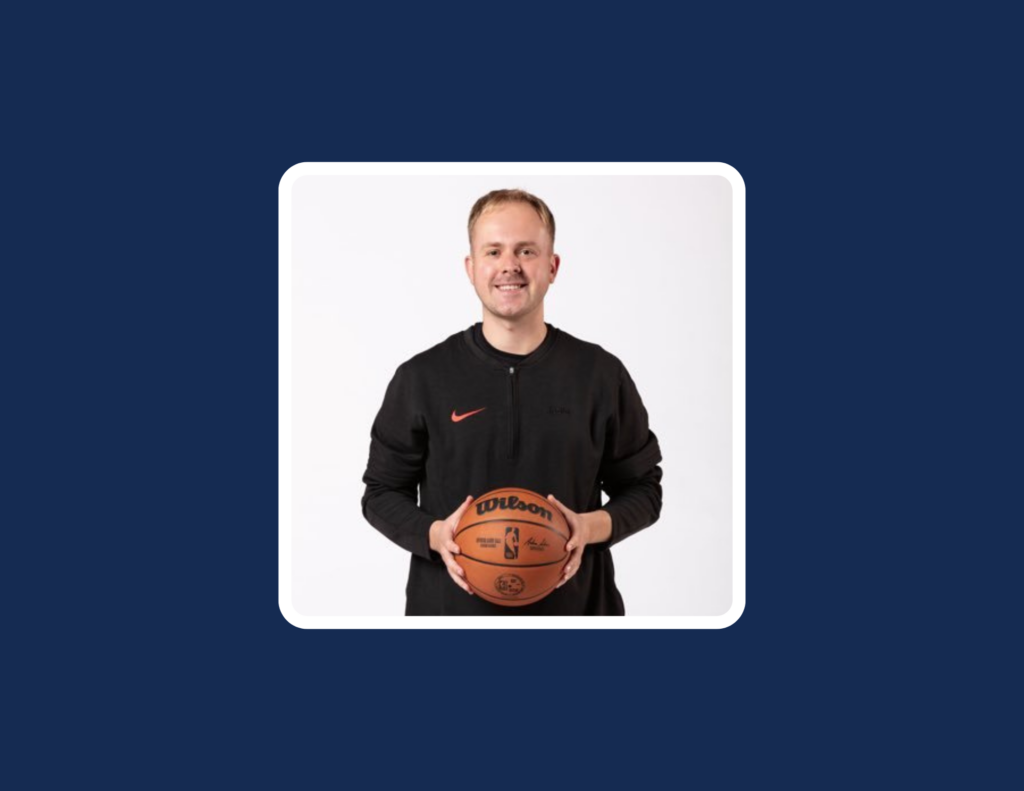

Website – https://transformingbball.com/
Email – Alex@transformingbball.com
Twitter – @AlexJSarama
If you listen to and love the Hoop Heads Podcast, please consider giving us a small tip that will help in our quest to become the #1 basketball coaching podcast.
Alex Sarama is the author of the new book, Transforming Basketball: Changing How We Think About Basketball Performance. In the book, Alex shares contemporary skill acquisition ideas for coaches, practitioners, organizations and federations all over the world. The book will help coaches combine their personal and practical experiences with the empirical evidence which exists within the field of skill acquisition. Many of the ideas that Alex shares are based upon the constraints-led approach underpinned by ecological dynamics.
Alex has consulted for a variety of NBA, NCAA and professional teams. His work has been adopted by coaches at all levels of the game, with the delivery of coaching clinics and player camps in over 40 countries. This has included running coach education events for the German, Polish, Saudi Arabian, Swedish and Czech Basketball Federations.
His career has included time based in Spain, Belgium, Italy, France, the UK and the USA. Alex founded Transforming Basketball in September 2023 to be a vehicle for change within the basketball community and wider sporting landscape.
If you’re looking to improve your coaching please consider joining the Hoop Heads Mentorship Program. We believe that having a mentor is the best way to maximize your potential and become a transformational coach. By matching you up with one of our experienced mentors you’ll develop a one on one relationship that will help your coaching, your team, your program, and your mindset. The Hoop Heads Mentorship Program delivers mentoring services to basketball coaches at all levels through our team of experienced Head Coaches. Find out more at hoopheadspod.com or shoot me an email directly mike@hoopheadspod.com
Be sure to follow us on Twitter and Instagram @hoopheadspod for the latest updates on episodes, guests, and events from the Hoop Heads Pod.
Make sure you’re subscribed to the Hoop Heads Pod on iTunes or wherever you get your podcasts and while you’re there please leave us a 5 star rating and review. Your ratings help your friends and coaching colleagues find the show. If you really love what you’re hearing recommend the Hoop Heads Pod to someone and get them to join you as a part of Hoop Heads Nation.
Get your notebook and grab a pen so you can take some notes as you listen to this episode with Alex Sarama from Transforming Basketball.
What We Discuss with Alex Sarama
- “Transforming Basketball. It’s really a vehicle to help coaches at all levels from NBA to beginners, make sense of evidence based ideas.”
- Skill acquisition research informs us of how, as coaches, we can create really effective learning environments for our players
- “It’s all about how you’re actually shaping the games through the use of constraints.”
- “One of the best things about the book was it allowed me to explain these ideas in a far more coherent manner for coaches.”
- Why including the research in the book was so important to making the concepts come alive for coaches
- The overuse of repetitive drills at all levels of the game
- “Path dependency, where we’ve become so dependent on certain ideas that really aren’t informed or backed up by a solid underpinning to suggest that they are effective. And because these things are so entrenched in our culture within basketball coaching, it makes it very challenging to go down a different path and adopt something new.”
- “The body cares little for what the coach has to say.”
- “What we want is for players to not be consciously thinking about their movement and we want movement to be more of a natural process.”
- There are multiple ways to solve movement outcomes
- “Instead of trying to teach the same finishing move over and over again through a beginner. Can we create an environment where they’re going to finish a slightly different way every time?”
- “We’re going to constrain the defense so that the defense cannot jump. Or maybe they can only play holding a basketball or playing defense with one hand. So what this is going to allow the offense to do is have a greater a greater number of repetitions where they experience success.”
- Incorporating variability into shooting practice and why coaches should not tell the player exactly how to shoot
- “Players are still getting reps, but every repetition is going to be slightly different.”
- “We have to embrace variability to unlock skill performance.”
- Why “muscle memory” is a myth
- “We perceive to act and we act to perceive.”
- Functional perception action couplings
- “Reframe skill as an interaction between the player and their environment as opposed to techniques.”
- “With American players, we see the incredible things that they can do in a practice environment. But then a lot of the time, I’d say their understanding of the game and the principles of play in terms of how to do these things at the right time in the game, it doesn’t match what they’re doing in training.”
- “Playing outside, playing in the park is being replaced with skills trainers and AAU. So I think this is why it’s even more important that we replicate these environments in practice because players these days are simply not growing up and actually accessing these opportunities like they used to.”
- “It’s the principles of play which underpin the effectiveness of any set. And principles of play are related to overarching themes such as shot selection, spacing, how we want to space, triggers, coverage solutions.”
- “Three concepts of dominoes. Whenever we have an advantage, we want to play in zero seconds to keep the advantage or make it greater. We want to prevent one defender from guarding two, and we want to escape the lava. The floor is lava, so that means not catching in the mid range, getting back out to space as quickly as you drive into it. So the idea is that if the players are constantly applying those three things, we are going to be able to successfully convert advantages or make them greater.”
- “Imagine what we could see if the development process was vastly accelerated through attuning players to these things so that they didn’t have to just rely on the game to get representative reps and to actually learn.”
- Conceptual offense vs. sets and patterns
- After learning to work with triggers – “A set is going to be more impactful and effective because the players have these coverage solutions and they’re looking to create these advantages in every part of the set.”
- “We’re trying to shatter the ice and create that opening by exploiting the defense.”
- “You have to have an opponent in practice.”
- “It’s not just having the opponent, it’s having the constraints. That’s the real magic sauce.”
- How teams at all levels should practice out of bounds plays
- “What we often see in the NBA and NCAA and even youth basketball is that player development is completely different from how the team plays.”
- “Player development has to be completely integrated and linked to principles of play and what a team does.”
- “If we’re not having players work on the specific things that they’re actually going to do in games. In my opinion, we’re really just wasting time or just leaving player development up to chance.”
Like this show? Please leave us a review here — even one sentence helps! Consider including your Twitter handle so we can thank you personally!

We’re excited to partner with Dr. Dish, the world’s best shooting machine! Mention the Hoop Heads Podcast when you place your order and get $300 off a brand new state of the art Dr. Dish Shooting Machine!

Prepare like the pros with the all new FastDraw and FastScout. FastDraw has been the number one play diagramming software for coaches for years, and now with it’s integrated web platform, coaches have the ability to add video to plays and share them directly to their players Android and iPhones via their mobile app. Coaches can also create customized scouting reports, upload and send game and practice film straight to the mobile app. Your players and staff have never been as prepared for games as they will after using FastDraw & FastScout. You’ll see quickly why FastModel Sports has the most compelling and intuitive basketball software out there! In addition to a great product, they also provide basketball coaching content and resources through their blog and playbank, which features over 8,000 free plays and drills from their online coaching community. For access to these plays and more information, visit fastmodelsports.com or follow them on Twitter @FastModel. Use Promo code HHP15 to save 15%

Your first impression is everything when applying for a new coaching job. A professional coaching portfolio is the tool that highlights your coaching achievements and philosophies and, most of all, helps separate you and your abilities from the other applicants.
The key to landing a new coaching job is to demonstrate to the hiring committee your attention to detail, level of preparedness, and your professionalism. Not only does a coaching portfolio allow you to exhibit these qualities, it also allows you to present your personal philosophies on coaching, leadership, and program development in an organized manner.
The Coaching Portfolio Guide is an instructional, membership-based website that helps you develop a personalized portfolio. Each section of the portfolio guide provides detailed instructions on how to organize your portfolio in a professional manner. The guide also provides sample documents for each section of your portfolio that you can copy, modify, and add to your personal portfolio.
Hey, coach! Want to take your team to the next level this season? Introducing GameChanger, the ultimate game-day assistant with tools to give you a winning advantage. With GameChanger, you can track stats, keep score, and even live stream games, all for free! Get the stats and crucial game video you need to lead your team to victory, all from the palm of your hand. Coach smarter this season with GameChanger. Download GameChanger today on iOS or Android and make this season one to remember. GameChanger. Stream. Score. Connect. Learn more at GC.com/HoopHeads
THANKS, ALEX SARAMA
If you enjoyed this episode with Alex Sarama let him know by clicking on the link below and thanking him via Twitter.
Click here to thank Alex Sarama via Twitter
Click here to let Mike & Jason know about your number one takeaway from this episode!
And if you want us to answer your questions on one of our upcoming weekly NBA episodes, drop us a line at mike@hoopheadspod.com.
TRANSCRIPT FOR ALEX SARAMA – AUTHOR OF THE NEW BOOK “TRANSFORMING BASKETBALL” – EPISODE 956
[00:00:00] Mike Klinzing: Hello and welcome to the Hoop Heads Podcast. It’s Mike Klinzing here this morning without my co-host Jason Sunkle, but I am pleased to be joined for a second time by Alex Sarama from Transforming Basketball and the author of the new book by the same name. Alex, welcome back to the Hoop Heads Pod.
[00:00:19] Alex Sarama: Mike, thank you so much. It’s a pleasure to be on. I think it was actually I was thinking so much has changed. I think, I believe it was four years ago we last spoke. So really excited to talk about all the latest kind of developments and yeah, just an honor to be back on this great platform.
[00:00:37] Mike Klinzing: Yeah, I think the last time we talked, Alex, was right before you jumped over to work with Chris at Basketball Immersion. So give us a quick update on kind of where you’re at, what you’ve been doing in the last four years, and then we’ll talk a little bit more about the book, but just kind of give people an update of where you’re at and what you’re doing.
[00:00:56] Alex Sarama: Absolutely, Mike. So I believe at the time I was actually coaching in Belgium at a place called Elite Athletes. And it was quite funny because I think I was fired like a few weeks after. I’ll talk about why, but it’s funny because it was basically me doing all the things that led to the book in terms of really going down deep into a constraints led approach. And obviously it’s, especially four or five years ago, it was even more, I guess, different to nowadays where it is, I think, becoming more known and maybe more used.
So I spent a. really enjoyable kind of four year period learning and figuring this stuff out. And I think on the first podcast, I was very much probably just in the very early stages of learning some of this stuff and how to approach coaching in a different way. I had obviously a really enjoyable three and a half years working with Chris and Basketball Immersion.
And then I decided to do my own thing in in August. So. That’s kind of transforming basketball. It’s really a vehicle to help coaches at all levels from NBA to beginners, make sense of evidence based ideas. And I spent the year working with the Portland Trailblazers and their G League affiliate the Rip City Remix.
So that was really cool. Just figuring out how to apply these ideas at that level. And then I had three years running my own academy in Italy, where I had players from all over the world from 16 to 20. Whereas work with them on a daily basis. So certainly a lot has gone on over the last few years.
[00:02:31] Mike Klinzing: Yeah, absolutely. I mean, when you start thinking about just the different places that you’ve been in the world and the different levels of basketball and the basketball minds that you’ve been able to expose yourself to, and then to test out your ideas, which we’ll get into as we talk more about the book, just as you said, to be able to work with players at all different levels and try to apply some of the concepts that we’re going to talk about. I’m sure it was just an amazing experience for you and just the learning process for you as a coach to be able to go through and kind of take and look and watch and see and then to be able to test it out.
I’m sure it was tremendously valuable for you. And that’s probably the reason why you wrote the book. So just give people an overview of the book, what it’s all about, and what people can expect if they pick up a copy.
[00:03:20] Alex Sarama: Yeah, absolutely. So it’s really helping coaches make sense of research that we have available.
It’s called skill acquisition research. And all this is, is it informs us of how, as coaches, we can create really effective learning environments for our players Which I’d say really differ to kind of what we’ve always done in basketball. How I first started in terms of kind of using drills, teaching fundamentals, et cetera.
So a lot of the focus on the book is this constraints led approach where we’re coaching through. very specific small sided games. So it’s not kind of just, oh, let’s go play three on three or two on two and hope the players get better. It’s all about how you’re actually shaping the games through the use of constraints.
So I wanted to use the book to highlight a lot of the misconceptions that exist. For instance that you can’t use this approach with beginners, or that there’s kind of lots of different ways, for instance, that you could shoot the basketball as opposed to one universal technique that applies to every player.
So it’s really a mix between making sense in very practical terms of what the theory is and how human beings, how we actually move, and then how we can coach in a way which aligns with that. I’d really just reframe what skill is within the basketball world.
[00:04:40] Mike Klinzing: All right, let’s go before we dive into some of those specifics, let’s dive into the backstory of when the idea for the book came to you and then what your writing process looked like. I’m always fascinated by authors and just how they go about actually getting their ideas that they have in their head onto paper and then going through the writing process. So when did you first start thinking about writing this book?
[00:05:04] Alex Sarama: Yeah, great question, Mike. So I think it was probably about two and a half years ago. And I was in a really unique position because I was, I think what I did in Italy, to the best of my knowledge, I think it was kind of one of the first basketball programs in the world where we were really kind of 100 percent in with the constraints led approach.
And it was a great environment because it was a very authentic one where myself and my coaches, we were learning something new every day. And we were really committed to learning, like reading the research papers and then trying it out in the afternoon. So it was an amazing environment for development for all of us.
And so the book really just became a vehicle for me to share what was going on authentically within the program in Italy. And to unpack and address some of the misconceptions that coaches have had. And I think it’s very normal because when you see snippets on social media, it’s easy to not completely get the full picture and understand what’s going on.
And I think the best advantage of a book is you can really lay everything out in one place. And that’s really what I’ve tried to do. I’ve tried to make this the complete resource where if a coach is completely new to these ideas. They can pick the book up nd feel like they’ve got a good understanding of where the future of basketball coaching and the future of coaching in all sports is going to and be able to actually try and incorporate some of these methodologies into their coaching immediately into their next practices.
[00:06:38] Mike Klinzing: So once you get the idea. And obviously you’re involved in it every day. You’re in the muck, you’re getting in there, you’re doing your coaching, you’re in Italy, you’re, you’ve got, you’re working with your coaches, you’re working with your players, and you’ve got this idea. How do you carve out time to actually sit down and write the book?
Are you a, hey, I’m going to write for an hour every day, or are you a guy who blocks out like today, I’m just going to work on the book? How did you go about the process of writing it?
[00:07:05] Alex Sarama: Yeah, absolutely. So I’m quite, obsessed with just efficiency and, and routines. So I was very intentional about freeing up my time to write.
So it did take huge amounts of time. I mean, any opportunity I could to write, I stole it, whether it was on flights, train rides, etc. And I think most of it was done just in the working week where I just blocked out most mornings to go about it. And I purposefully didn’t kind of take Zoom calls with anyone else.
I didn’t do any other meetings. And it was a really nice feeling because I just knew that every morning was free for me to use it for the book. And I think that was, without that, I wouldn’t have got done because it actually took far longer to go in and rewrite all the chapters and change the phrasings versus actually getting all the ideas in the chapters and the first drafts of the chapters done.
The first draft was the easiest piece, I’d say it took four times longer to actually edit it and get it to the level where I’m a perfectionist at heart. And it was tough because I had to stop the urge to keep going back and rewrite sections. But, a really enjoyable process. And I think, too, I am a continuous learner.
And I think one of the best things about the book was it allowed me to explain these ideas in a far more coherent manner for coaches.
[00:08:36] Mike Klinzing: What’s funny is that as you were saying that, my next question was going to be, how different is the final version of the book compared to the original first draft.
And I guess the answer to that question you sort of already gave to us, which is it was probably fairly different. I’m guessing the outline was kind of the same or no?
[00:08:55] Alex Sarama: I’d say the outline definitely, but yeah, I would say it the base, contents was there, but it was so much more fluid. The last kind of draft versus the early ones.
A few close friends of mine kind of read the early drafts and I have no idea how they’re able to get through it and not say to me like, this is utter rubbish, but hey, luckily they gave me some really constructive feedback. And that really kind of helped just bring the book to life. It’s not easy because you hear some of the words like ecological dynamics and the first impression of hearing that as well, like, what on earth is this? So it was an enjoyable challenge to take quite a complex area and really break it down into practical coach language for coaches at all levels of basketball.
[00:09:49] Mike Klinzing: Did you have to get feedback from coaches and share paragraphs, sections, chapters and say, Hey, is this too much based on the, is there too much jargon?
Is there too much research in here where it gets lost? And so trying to balance the research part, so you provide the evidence. But yet also bring it back to the practical. So when a coach picks it up, they’re like, okay, I can understand the research, but I also want practical things that I can put into my coaching. How did you balance that part of it out?
[00:10:23] Alex Sarama: Exactly, Mike. That’s a really interesting question because I was constantly torn between this, but I didn’t want to dumb the theory down too much. And my rationale for that was because if I didn’t really describe the theory, well, then there’s really. no firm rationale for my ideas and actually why we do need to coach so differently within basketball.
And it would really just be, if I didn’t have that theory in there, it would really just be my opinion. And I think that’s why we’re kind of where we are as a basketball community with coaching being so based on experiential knowledge and just personal opinions because we haven’t brought in and been informed by research.
So at the same time though, I didn’t want to put, like you say, coaches off and have them just go through all this theory and have no clue what it means. So kind of how I went up, went about doing it was dead. I dedicated the first three chapters to the theory, but I made it very practical. So anytime I did introduce a new word, I had loads of examples of how that word would be used within the context of basketball.
I think it really helps coaches understand what is something like self organization? What is an affordance? What is perception action coupling? And they sound like, out of context, they sound like really weird, big words. But once within the book once I started putting them in very specific examples, I think a lot of coaches like, Oh, this makes a lot of sense now.
And then with the theory understood, it gives us a clear idea of how we can coach in an evidence based way and why we’ve got to start thinking a little bit differently as coaches.
[00:12:08] Mike Klinzing: It definitely, I think, brings the why home in that you have the research behind it and then as you present more practical ideas, a coach can read that and be like, Oh yeah, now I understand.
Why Alex is presenting it in this way and what is that evidence that backs up what he’s saying out on the court. So when I’m working with players, I know I’m not just doing it. As you said, I think it’s interesting in terms of social media, right? That so many coaches Look, there’s lots of good stuff on social media and we can all find things that are interesting and things that maybe we can steal and use and whatever, but oftentimes they’re very much out of context and we don’t really know exactly what we’re looking at or why we’re looking at it.
Or sometimes it’s just a matter of like, Hey, that looks really cool. Let me try that. And to your point, you want to be able to have an actual reason why It is that you’re doing with it. So let’s start at the beginning of the book where you talk about some of the myths and misnomers that we base coaching on.
And we don’t have to go into a bunch of different examples that you share in the book, but just what, if there’s one takeaway from this chapter, something that coaches have always done, that is a practice that we need to sort of revisit or something that we need to kind of put behind us and look to the future.
What are some of those myths and misnomers that we have in coaching right now?
[00:13:33] Alex Sarama: Yeah. Great question. So, I would say, I mean, we really don’t need to rely on very repetitive drills. And I think this is often a difficult one because also like I said at the start, I’ve used to do all this stuff, but when we, when we first start discovering skill acquisition, even the first research 60, 70 years ago showed us that when athletes in any sport are doing these very repetitive drills, it really is not effective for transfer to the game, to performance. And it’s very difficult because even you look at NBA, if you were to watch almost every NBA practice, barring a few NBA teams who are using contemporary methods, you would see very scripted drills.
And what I kind of introduced in that first chapter is this notion of path dependency, where we’ve become so dependent on certain ideas that really aren’t informed or backed up by a solid underpinning to suggest that they are effective. And because these things are so entrenched in our culture within basketball coaching, it makes it very challenging to go down a different path and adopt something new.
So what I really hope that the book does is just provide an alternative path so that we can move away from path dependency. And I’m not here to say to anyone, you’re doing it wrong, or you’re not coaching in an effective way. All I want to do is give you the overwhelming kind of resources and information to explore what the alternative is, and then coaches can make their own minds up as to what is going to be more beneficial for the players that they’re working with ultimately at the end of the day.
That’s all I want. I just want to see players be able to fulfill their complete potential. And that’s really what I think the power of skill acquisition research gives us as coaches.
[00:15:37] Mike Klinzing: So you just mentioned the opportunity that you had earlier to work with the Portland Trailblazers and their G League team.
So obviously you’re working with players there at the highest levels of the game. And I know that I often have conversations or hear arguments about, well, you can do the CLA approach with players at a certain level, but you can’t really do it with players who are just new players. beginning. And I think when you start talking about from a coaching standpoint, how you design your practices or how you talk about skill development, how you talk about player development, it’s always interesting because at different levels of the game, obviously you have to design and what you do, it has to be slightly different.
But to me, it comes back to, and I think this is a point that you continuously make throughout the book is just that when you have a skill, right, this, the skill has to be, it cannot be learned in isolation because then you might have the physical ability to perform that skill. But there’s so much that goes into it in terms of your decision of when you use the skill and then your perception of what’s going on around you with that skill, everybody else that’s out on the court. And so you have to be able to do it in context. And I think so often, especially with players who are very, very young and learning the game, we think, well, there’s no way we can just throw them out there and have them playing or have them in a situation where there’s an offense and a defense, they’re having to make decisions.
We first have to teach them how to shoot a right handed layup and jump off their opposite foot. So just kind of talk me through that. Maybe I don’t know if argument that a coach might present who works with younger players.
[00:17:16] Alex Sarama: Great, great, very well described. So, I’d say what we got to start at is just look at how we move as human beings.
And I think at the end of the day, beginners are the exact same as NBA players in terms of how they’re moving, how they’re perceiving things in the environment. Now, of course, there’s going to be a huge difference in the skillful intentions, But the human movement process is the same.
And what I’m getting at here is that we do not move well when we are, as human beings, when we’re explicitly told how to do something. For instance, where to put our foot, where to put our hand, how to perform a basketball move, et cetera. And there’s this, this very good quote, which I included in the book from Franz Bosch.
Where he said, the body cares little for what the coach has to say. And it’s, it’s a great quote because what this is referring to is that we move through a process of self organization. In other words, we are not consciously controlling our movement. So we’re not thinking basketball as we’re going to finish against the help defender.
We are not thinking, okay, I’ve got to put my right foot here, my left foot here, and place the ball up here. It doesn’t work like that. And if we were actually doing those things in the game, well, actually, we would be, performance would be worse. And there’s a lot of research suggesting that when these internal cues kind of creep into performance.
It’s associated with choking and detrimental outcomes. So what we want is for players to not be consciously thinking about their movement and we want movement to be more of a natural process. So even with the beginners, this means we’ve got to create environments where they can be successful, where it’s not too challenging, but they are not moving the same way.
And this is kind of a very complex topic called degeneracy. And all I mean by that is there are multiple ways to solve movement outcomes. So in the example of finishing against this health defender, there’s a never ending amount of different ways you could do that. It’s endless, right? So instead of trying to teach the same finishing move over and over again through a beginner. Can we create an environment where they’re going to finish a slightly different way every time? Now, if it’s a completely live defender and you’ll say, all right, you’re going to drive from the three point line. And then this help defender is going to come over and it’s completely live.
It’s probably not going to be very effective. because it’s going to be too difficult for that beginner. So this is where the constraints come into it and the constraints that approach. So the CLA constraints led approach, it’s all informed by this research, this motor learning research, skill acquisition on how we move.
So what we’re going to do is maybe we’re going to constrain the defense so that the defense cannot jump. Or maybe they can only play holding a basketball or playing defense with one hand. So what this is going to allow the offense to do is have a greater a greater number of repetitions where they experience success.
So it’s not just throw them in the fire and hope it works. So this approach is all about being really creative as a coach. And I think what some of the best I get from coaches all over the world who Kind of using our ideas at transforming basketball is that they feel like they’re unlocked because they can be so much more creative as a coach and using the CLA is just a great vehicle for their creativity.
So. Really think about ways that you can change these constraints. It could be a one-on-one where instead of just allowing the defense to play completely in front, maybe you give the offense an advantage and you put the defender behind the beginner. Or maybe they’re in front and they’re holding a ball.
So lots of different ways we can go about it. And that’s kind of what I try and do with the book, just show all these practical ideas so that coaches, regardless of whether they’re working with NBA players or beginners, they’re going to leave with lots of ideas on how to implement the CLA effectively.
[00:21:28] Mike Klinzing: What about a player that a coach is trying to work with on shooting? Let’s say the player has form that from a textbook standpoint, from an old school standpoint, their form isn’t perfect. How do you go about Using the science, using the research, what’s your recommendation for a coach who wants to work with a player who’s struggling with their shot and maybe doesn’t have perfect form?
Because I know there’s a lot of different ways and ideas out there about how coaches can help to improve slash fix a player’s shot. So I know that you talk about that in the book. How do you go about what’s, what’s your recommendation? What’s your thoughts on a player becoming a better shooter?
[00:22:12] Alex Sarama: Absolutely. So it’s actually funny because one of my favorite chapters in the first draft was shooting and it ended up where I didn’t have the space for it because it was already, it’s almost 400 pages. So it’s a pretty lengthy book as it is. And I knew that if I had anything longer, it would just be a barrier for coaches reading it.
So unfortunately, I’ve had to shelve the shooting chapter for part two, but I can give a glimpse now Mike, as to what that is. And essentially It’s number one, if what a lot of coaches say to me is what about the two hands? Well, just use a constraint where you say to the player, you’ve got to shoot with one hand and the key difference is we’re not telling them, all right, put your hand here, put your elbow here.
There’s a lot of different space within that constraint for players to figure out a more optimal shooting solution using one hand. Without giving the prescribing the very specific positions. Now, what I would get to, because obviously if we’re just doing different types of one on one activities, whether we’re shooting against contests and closeouts, Is that going to be more effective in form shooting and kind of drills?
Yes, it will be. Just doing that because there’s actually basketball specific research. There’s a paper by Gorman and Maloney where they proved empirically that when you shoot with a defender or without a defender, it’s a completely different shooting movement. So even if you have some type of time pressure, like a long closeout situation, the way you’re going to shoot the ball is going to be different to a spot shooting or one on zero when there’s no time pressure whatsoever.
So what the problem is, however, if we’re only doing that, and like you said, a player is not an optimal shooter. They might not self, they might not be nudged enough into exploring alternative shooting, like, movements. It’s called the science of it is an attractor state, right? And, and all an attractor state is, is it’s a very entrenched movement coordination, right?
So we kind of call them these attractor wells, right? So imagine it’s this well, and it’s that movement coordination is something that they’re frequently attracted to. And if they’re not a successful shooter, well, we’ve got to get them exploring something else and shooting in a slightly different way.
So the challenge becomes, all right, how do we do that where we are not correcting their technique and actually saying to them, this is how you must shoot. So this is where it’s actually another methodology called differential learning, which comes into the equation. And a lot of that chapter on shooting is me talking about differential learning and how I use it.
And I think it’s excellent for youth players, for NBA players who don’t shoot, who shoot kind of like 32 percent and under from three. I think differential learning is a must. And what this looks like is, okay, we’re going to practice with as much variability as possible. So it’s one on zero. But maximum variability.
So maybe we’re going to see a player shoot from a different stance every time. So it could be really wide, really narrow, off one leg. And what this does is it gets the moving and shooting differently and they start exploring different ways to shoot. To move out of that very entrenched attracter state and explore something else.
It could be shooting with different arcs. It could be using different size basketballs, could be shooting and jumping and landing in a different position. So there’s I’ve got several hundreds of these activities to do it, but I think it’s very important, especially for youth coaches to understand and use differential learning if they do want to develop good shooters, because I don’t think that you can just use the CLA.
[00:25:56] Mike Klinzing: And so I know what the counter argument is going to be, Alex. I can already tell, right? What’s, what do, what do people, coaches, players, what’s the, what’s the common myth of shooting is all about reps, right? I’ve got to get my reps up. And when you start looking at what you’re talking about, you’re obviously decreasing the number of reps that.
You’re taking because you’re, again, you’re doing it in a different way. You’re moving. It’s not just somebody shooting on the shooting machine where the ball’s flying at them over and over and over and over and over again. So how do you just, how do you combat that? Which I know would be the argument.
What’s your, what’s your response to a coach would say that my, but my player has to get, has to get their reps. That’s how they get better at shooting.
[00:26:40] Alex Sarama: Absolutely. So I understand what coaches mean because yes, reps are important and a player is never going to become more skillful if they’re not getting reps, right?
It’s going to be much harder for that to happen. But it’s not the type of repetition which we’ve seen, not just in basketball, but the whole sports world where players are doing the same thing over and over again. So what I call it is you got two types of repetition. You got repetition after repetition where it’s basically a very similar movement being repeated over and over again.
So take form shooting, take spot shooting what we see in most traditional basketball drills. And then we’ve got the type of repetition which I advocate for transforming basketball, which is repetition without repetition. So, players are still getting reps, but every repetition is going to be slightly different.
And this is the key difference, Mike, because players don’t learn by sheer repetition, but they learn from differences in repetition. And that’s a key distinguishing factor. And that means as coaches, in order to achieve this, we have to embrace variability in practice where instead of seeing variability as an undesirable noise and trying to avoid variability to have these very controlled practice environments like we see in the NBA. We have to embrace variability to unlock skill performance. And the easiest way we could do it in shooting is just the lowest hanging fruit. And something I did in Portland was just saying to the players, instead of doing spot shooting, we’re just going to change the location every time.
You’re just going to take one step, slightly change the location, the range, and I’m just going to pass the ball from very different locations every time. And that really became a very basic type of differential learning. So the thing is when, and the reason why I kind of introduced the theory to Mike is to disprove this notion of muscle memory, which we hear, we hear a lot in all sports and coaches often exactly like you just said, as the pushback, because you’re completely right.
That’s kind of what we hear the most. A lot of coaches assume that muscle memory is kind of the rationale for how athletes develop skill, but it’s not. And muscle memory doesn’t even exist. It’s a misnomer. And that’s why it’s very important to understand human movement, as I kind of outlined in the book, because when we understand that, we understand that It’s impossible for there to be any type of construct such as muscle memory.
[00:29:20] Mike Klinzing: Makes complete sense. And I think when you really look at how a player has to perform in an actual competition, I don’t care if it’s basketball or any other sport, you don’t just get to stand in one spot and Be grooving what you’re doing where it’s just over and over and over again. And so you can totally, again, as you start looking at the theories, as you start looking at the research, it makes total sense that a player is going to be able to transfer their learning much better when they’re in an environment during their practice sessions, that looks more like what the game is going to look like. And I think to your point, one of the things that I think has been difficult for coaches over time to get rid of sort of their favorite drills and some of the things that we think of as being traditional coaching is that it just doesn’t look quite as And then you go to a messier version and you go to a CLA approach and suddenly you have lots of things that are going on that maybe don’t look quite as beautiful, but again, are things that are going to, to translate. So talk a little bit about how important it is to be able to put a player in a position during your practice sessions. And you talked a little bit about it in terms of finishing and ways that you can change that up to allow players to work on different kinds of finishes, but yet still find success.
But one of the things that I think is interesting is, When we talk to coaches on the pod, it’s always, there’s been a lot of discussion about how players today in the game compared to 20 or 30 years ago, that players today are more skilled. And when coaches talk about skilled, and I’m probably guilty of this too, when I think of skilled, a lot of times, and when we’re having these discussions, you think about a player who can handle the ball, in a drill and they can go between their legs and they can do multiple things or they can shoot the ball with range really deep in a practice setting in a drill.
But yet, one of the other things that I hear coaches talk a lot about is that players today don’t necessarily have the same level of basketball IQ, that they have these skills, but they don’t necessarily translate to a five on five game. And I think what your approach is talking about is the player who has skills in an empty gym by themselves with some cones isn’t necessarily as skilled as we all think.
So just talk about how important it is to put your players into positions where they’re using the skills, but they also have to perceive what’s going on within the team. the practice setting, which is again, enables them to transfer more to learning. So I know that was a wordy question, but just again, when you’re looking at, when you’re looking at it and you’re trying to design your practices, why is the perception part of it so important?
[00:32:32] Alex Sarama: So perception is key because we perceive to act and we act to perceive. So very, very simple. Let’s say a player is dribbling the ball up the court. Well, as the act is what we see, the dribble, right? And as they’re dribbling, they are constantly perceiving things within their environment and that shapes the subsequent actions that we’re seeing.
So maybe they’re seeing that there’s space to advance the ball and to dribble. So, as they take that dribble and they advance up the floor, they are continuously perceiving new things acting accordingly. And it’s a continuous loop. It’s a cycle which has to be completely integrated because that’s what we see in performance.
It’s to be a successful basketball player, you have to have these functional perception action couplings, where you’re very attuned. You’re very in sync to your environment and what the environment is affording you. And the biggest problem that we’ve seen with the dominant approach is the there’s been a sole focus on action as opposed to perception and action, right?
And a player would never dribble in the game. They would never finish, they would never shoot without perceiving that opportunity to do one of those things and perceiving that as an attractive opportunity, right? So the problem is when we teach these actions, players then essentially have to relearn this in a context.
And I’ve never met a coach who believes that they have enough time. It’s just not an efficient way to go about it. And it’s more efficient if we can develop with these perception action couplings from the get go immediately, even with beginners. So it’s, again, this is kind of why it all comes down to the importance of a theory and understanding that.
And I think the more we kind of reframe skill as an interaction between the player and their environment as opposed to kind of techniques, the more widespread this approach is going to become. And I think it’s great because there’s an enormous traction. I’m really excited because we have new coaches every day who kind of follow transforming or send us a message.
And I think it’s in order to keep kind of changing, transforming the basketball landscape, we’ve got to rethink what skill is. And it’s like you said, it’s not just about how a player dribbles or what finishing move they’re going to do. It’s about how they’re interacting with their environment.
That’s what’s most important. And we can see especially with American players, we see the incredible things that they can do in a practice environment. But then a lot of the time, I’d say their understanding of the game and the principles of play in terms of how to do these things at the right time in the game, it doesn’t match kind of what they’re doing in training.
And I think the reason why is because. They’re not training in a representative setting. And this is why a lot of coaches who even who’ve been coaching 20, 30 years, we’re actually having a lot of traction with those coaches because they often say, well, back in my day, we were playing outside a lot. And it’s so true.
And nowadays we don’t really see that because playing outside, playing in the park is being replaced with skills trainers and AAU. So I think this is why it’s even more important that we replicate these environments in practice because players these days are simply not growing up and actually accessing these opportunities like they used to.
[00:36:13] Mike Klinzing: You’re 100 percent right, Alex. That’s a conversation. I mean, I can’t even tell you how many times we’ve had that exact discussion. of the point that you just made over the last minute. We talk about that all the time. And I grew up in that era. I’m 54. So I grew up in the era where I was playing on the playground.
I was outside. I was going and trying to find games and playing tons and tons of pickup basketball. And when I think about my, development. Did I do some of the repetitive drills and that kind of stuff when I was on my own and working on my game? Sure I did. And I wasn’t very creative back when I was 18 or 19 years old.
So I think about just how I practiced when I was on my own. But I also know that I spent an inordinate amount of time in lots of different environments with players of all different kinds of levels and abilities, which forced me again, when you talk about variability, sometimes you show up at a place and you’re the best player and your role is one thing.
And sometimes you show up at the park and you’re the worst player and suddenly your role is completely different. And so you learn how to play the game. And I think that goes to my next question, which is kind of what we’ve talked about up to this point is sort of from the individual. player standpoint in terms of how can an individual player better acquire the skill that’s going to transfer to a game.
But I know you mentioned the term principles of play, and I know that’s the title of one of your chapters, and that’s a chapter that as I read the book that I really found to be fascinating. So talk about principles of play, just how the ideas that we’ve talked about to this point from an individual standpoint, how do those translate to a coach who’s working with their entire team and is trying to use this approach to help their team to fit better together and again, to have their practice sessions better transfer to what they’re going to see in games?
[00:37:58] Alex Sarama: Absolutely. So let’s use the example, maybe kind of NBA offense right now. And I think what, what we see a lot of is the player’s kind of experience of offense is very much confined to a collection of various set plays and different patterns. And what they often do is they practice these things through five on zero script, where they’re just rehearsing these patterns over and over again.
And often what happens is obviously, because what they see in the game is so different to how these set plays are practiced. Often there’s a breakdown and players are not able to create an advantage out of these sets or these quick hitters, whatever they are. And so without having principles of play and actually knowing how to play instead of what to play, we often see very random offenses where it just reverts in kind of random one on one, random isolations, and there’s no kind of real intention behind what the offense is trying to achieve.
So my idea for The Basketball World, from NBA to beginners, is coaching through principles of play. Because, yes, you can still have set plays, but it’s the principles of play which underpin the effectiveness of any set. And principles of play are related to overarching themes such as shot selection, spacing, how we want to space, triggers, coverage solutions.
And all these things are constantly involved, layered, interacting, right? So the idea is that we have these sub concepts. So let’s take spacing and advantage basketball. I call it dominoes. So we’ve got three concepts of dominoes. Whenever we have an advantage, we want to play in zero seconds to keep the advantage or make it greater.
We want to prevent one defender from guarding two, and we want to escape the lava. The floor is lava, so that means not catching in the mid range, getting back out to space as quickly as you drive into it. So the idea is that if the players are constantly applying those three things, we are going to be able to successfully convert advantages or make them greater.
And what this means is that the effect of every offense is not about running a pattern. It’s not about running a five on zero set play scripted to get from A to B to C. It’s about creating advantages, starting dominoes. So therefore, it can be a very, very risky affair to develop very passive offensive behaviors where players run a pattern, because I call it, I call it the Harvard Gorilla effect.
And you even see it with NBA players where they become so engrossed with running the pattern. that they’re not attuning to what the environment is offering them across every split second of a possession. So a slip might be wide open off the second trigger in a set play, but they don’t see it because they’re so used to running the set.
Now, what often happens, Mike, is seasoned NBA players, they become skillful just through the sheer number of games, 82 games that they play, right? But especially for players in their first five, six years. Imagine what we could see if the development process was vastly accelerated through attuning them to these things so that they didn’t have to just rely on the game to get representative reps and to actually learn.
And that’s really what I believe has been happening. So it’s all about having these principles where, say, within a conceptual offense, we’ve got triggers, we’ve got very clear, intentional coverage solutions for what we’re looking to do based on the type of defense. So a lot of NBA teams would run triggers like pick and roll off or screen things like a pistol without a real focus on the coverage solution that just run the pattern.
And to me, that’s completely counterintuitive because the whole essence of an offense is you responding to punish whatever type of defense they use. So if we’re running conceptual offense as a pattern, I believe it defeats the whole purpose of running that offense, right? So I’d say it’s all about far more specificity and enhanced intentionality with what we’re actually trying to do as a team in every phase of the game.
[00:42:23] Mike Klinzing: What’s interesting, Alex, is when you start talking about that and obviously most coaches who are out there listening have not coached at the NBA level, but I can guarantee, and from my own experience, that we’ve all been in situations where our players, we have either a patterned offense, or we have a set play, or we have this or that.
And we, again, teach it sort of in the old school way, right? We go five on 0, and then we put a defense out there, and the defense is kind of jogs along with the offense and we’re going through the pattern. And if the players mess up the pattern, we as coaches get upset. Like, how did you not remember? And this and all that kind of thing.
So we’ve all been in that situation. And then you get in a game and you’re running your pattern or you’re running your play and the ball gets to a player and there’s no defender on them and they don’t even look at the basket because they’re just so focused on trying to remember the pattern.
And it’s interesting when you talk about that, the NBA level, I think most coaches who are coaching at the youth or high school level would probably say, Hmm, that probably doesn’t happen at the NBA level. These guys are so smart and they’re, again, reacting to what they see.
And yet, what I hear you saying is that sort of the problem from youth all the way up to the NBA is that we get so reliant on the patterns that we’re not looking at what’s actually happening on the floor, which again, goes back to what we were talking about earlier, your ability to perceive what you’re seeing and then make a decision off of that.
And so the, the phrase that I go back to that I think about and that I was considering while you were talking again is that you’re trying to teach kids how to play. You’re not trying to teach them plays. And that’s something that you hear people say all the time. So then it’s a matter of, okay, that sounds good.
But then from a standpoint of what does that look like when I design my practices? And I think that’s what you’re getting at here when you’re talking about, okay, what’s the trigger from the defense that then pushes me into this next action. And so it’s not just a matter of here. I catch the ball and now I throw the pass here and then I make this cut.
It’s no, I catch the ball. I make a quick decision based on the positioning of the defense and the positioning of my offensive players and what I’m going to do. So if you were going to give coaches an idea, and again, I know it’s more complex than a 30 second answer on a podcast, but just what can coaches do just in general to make their practices more based on those triggers, the principles that we’re talking about and less old school?
[00:45:04] Alex Sarama: Great question. So I think really the first step lies in using more of a conceptual offense. I’d say trying to move away from kind of motion and continuities where it’s just triggers. So a trigger could be a pick and roll, could be an off ball screen. And the idea is that the players run these triggers and they just flow into them organically from different spacings and they punish the coverage.
So, and obviously this can be very difficult because within basketball culture, we’ve kind of, even at the NBA, there’s this myth that the coach always has to be in control or completely certain as to what’s going on, but we cannot control the uncontrollable. The game of basketball is not aligned to be played in a way where you’re trying to control every possession.
It just does not work like that. And I think the sooner coaches can appreciate that. And. and appreciate that you can’t control every detail. You could influence it in a major way, but you can’t control it to every detail of a possession. And, and the sooner we appreciate that the sooner we can make sense of conceptual offense and know how to use it.
So I’d really say focus on having a couple of triggers that you can get into and then really just having these coverage solutions where let’s say you’re getting into a pick and roll from some different spacings and that’s your main trigger in your offense. And you play against the switching defense.
So maybe you really emphasize the reject, the angle of the pick to get a good angle of where you’re picking from below. And you’re looking to slip against the switch. Maybe you emphasize a relay pass, a skip pass. So these are all called coverage solutions. So maybe it’s a get where you throw, you go get it back.
Maybe you emphasize the reject, the cut, the keep it, the pitch and slip, the twist. So you’re teaching your players how to play. Like you said, not what to play. And then the idea is then when you do run a set play on a dead ball, when the ball goes out of bounds, the set is going to be more impactful and effective because the players have these coverage solutions and they’re looking to create these advantages in every part of the set.
And something I often say to my players is, well if we get to the end of the set, every single time, We’re not running the set the right way, with the intention of how I’ve designed it, because I want the set, if there’s dominoes, the first, second part of the set, then we take the dominoes and the set plays off and we’re just playing dominoes.
Now it, how I kind of present it to my players is that every part of the set, we’re trying to shatter the ice and create that opening by exploiting the defense. And that’s where you’ve got to decide, has the ice been shattered so decisively that you can break the set off? Or are we going to go over to a next part of the set because we feel like we can create a bigger advantage and that’s how we’re using sets as opposed to just running them as these passive patterns.
So easiest way now answering the question, Mike, easiest way to do it is you have to have an opponent in practice. If you’re in the NBA level, that has to be coaches who can play representatively. If it’s the youth level or the college level, other players. And that’s the only way we can do this stuff. And it’s about a lot more.
It’s not just having the opponent, it’s having the constraints. That’s the real magic sauce. It’s how you’re coaching within it, how you’re creatively using the constraints. And that’s where it’s taken me six years to figure this stuff out. Right? So I think it’s, that’s where if coaches really want to head to head to conceptualoffense.com. We’ve actually got some videos on there of high school teams running this offense. And just have a look at what it looks like.
[00:49:02] Mike Klinzing: All right. Let me ask you this question. I couldn’t agree more with everything that you just said in terms of like, it all rings true to me when I think about my own experience as a coach and how players react to some of the things that.
Myself and coaches that I’ve worked with are trying to do, let me give you a real life example and you throw at me what this looks like. So my daughter’s in eighth grade and we’re coaching her AAU team and we have an out of bounds play that has Multiple different outcomes. But there’s obviously, to your point, there’s an endgame.
Where if option A, B, C, D, E, F. If all those are exhausted, then we go through the entire pattern of the out of bounds play and the ball ends up in spot X. So, When you’re running it in practice, right? A lot of times we start out and it’s five on 0 and everybody’s running the practice. Everybody’s running through it.
We’re going through the whole pattern. And sure, sometimes the ball goes to the first option. Sometimes it goes to the second option, but it’s not being done in context where we’re throwing it to the first option, not because the first option is open, but just because coach said throw it to the first option.
So then oftentimes what happens is you get into games And even though the first option might be there, or the second option might be there, or the third option might be there, the players aren’t reading the triggers, the cues to be able to see that, hey, I have to get the ball to option C here because of how the defense is playing.
And so we bypass option C and before you know it, we’re running through the whole pattern and the ball just gets in bounds and we don’t really score or take advantage of what the defense is giving us. So this is, I guess, just a question. If I’m trying to work on an out of bounds play that has multiple options and I want to put constraints in there to get my players to be able to see all these different options, obviously the first thing is I have to have a defense in there clearly, but what else can I do to make my players see what’s going on?
The different options. How can I make that practicing that out of bounds play better than just going five on 0, or even throwing five defenders out there who all know the play and are cheating the play as we’re practicing it.
[00:51:11] Alex Sarama: I love it. So I’m really enjoying this episode because you’re asking great questions about, and I get to give very practical responses and this is what, this is what coaches need to make sense of the CLA.
So I’ve been thinking about this a lot in the context of improving NBA shootarounds and instead of just running them, what I’d do is I’d actually break the setup into the main triggers within it and have the players working on it both ends. So let’s just imagine, right, that you’ve got an out of bounds play.
What we often see in the NBA, these shootarounds, is that the players who aren’t involved in the trigger are just basically standing around aimlessly, and it’s super boring for the players because they hardly get any reps and it’s all predetermined. And actually what you end up seeing, Mike, the behaviors in 5 on 0 script are actually what you don’t want the players doing, and they start doing things which are actually counterproductive, which we wouldn’t want anyway. So that’s the easiest thing would be take the triggers within the set and add guided defenders. It doesn’t even have to be live, who will basically replicate that coverage of how you think the opponent is going to defend that trigger.
And so say you’re doing, let’s say you’ve got a really simple. Because most NBA teams have the same sets, right? It’s copy paste. So, a big play is like a screen to screener, a very common play where you have a player kind of start NBA spacing at the top of the key, but like, past, far past the 3 point line you have a player under the basket who will go and set a back screen for them, and you have two players in the corner.
As that happens, this is like a baseline out of bounds. As the back screen happens, one of the players will creep in from the corner to set another screen that becomes a screen to screener. So what I would do is break it down. So the players are really attuned to all the ways that they can create dominoes out of that back screen.
So we might just do it first without getting to the second part of it, Mike, and just say, I might play it three on three and not have those players in the corners, so they get more reps. And I’m going to say, you can, we’re going to play in a long rectangle. So you can’t go out of, out of the lane line extended.
Right. And. We, we have a four second shot clock and the defense is going to switch the back screen or maybe stay with your own however you think the next opponent will guard it and we’re just playing off their four second clock and what you’re going to see Mike is the players are now going to be really creative using that back screen.
So you do that for a few minutes, And now you get to the the screen. And you say, all right, now we’re going to go four on four off this. We’re going to add in the screen kind of near the block. So you could score off the back screen. If you don’t get something off that, then we’re flowing to the next part of the set.
Right? And then we do that for a few minutes. And then maybe there’s a final part to the set, whatever it is, then you do that last. So the idea is we’re breaking it down, we’re constraining the defense, and we’re playing with a short cock. And what this is going to do is instead of players just rehearsing this pattern, we are developing highly skilled players who know how to create advantages out of every part of it.
So then it’s going to It’s going to mean that any set you put in from that moment on is going to be far more effective because the players know how to actually do things within that set as opposed to merely repeating the pattern.
[00:54:40] Mike Klinzing: That I think is, it goes to our entire conversation in that you’re teaching players to perceive a situation and look at it and figure out how can I get the result that I want within the framework of what this particular action is, whether again, it’s the back screen or it’s the second screen off the screen, the screen or whatever it might be. I have to figure out, it’s not just, okay, I always fake right, cut left, and I’m coming right down the, right down the lane towards the inbounder.
No, that’s not just the only thing that you can do. There’s multiple things that you can do. But so often. As coaches, and I will say to your point that oftentimes I’m guilty of this, is you just want your players to learn the pattern and sure, they learn the pattern, but then when it comes time for them to actually play the ball,
[00:55:38] Alex Sarama: yeah, I used to do that too and it’s like I said, like the thing I just described, I don’t think it’s that revolutionary.
But I think it’s like, when we start doing that, oh my word, the difference is unbelievable. And then you can go back to the set and you just do it five on five, right? So, and the biggest advantage is you get your defense in at the same time. Right? Because you actually taught, you have to show them the coverages for how you want them to defend the set.
But then they’re learning defense and the consequences for using different coverages at the same time. So it looks messier when you do this 5 on 5. But the effectiveness of when that set is used in the game, is it’s going to be far, far better than just kind of doing it five and zero and running the pattern.
[00:56:32] Mike Klinzing: And so what I think, Alex, and correct me if I’m wrong, but when I have a discussion like this, or I think about when I’m trying to put together a practice, I’m trying to put together a drill, for lack of a better way of saying it, when I’m trying to teach an offensive concept, a defensive concept.
What it seems like to me, and this is again in my own experience, and I’m just curious to get your opinion on this. It feels like to me that a lot of my coaching is then done in the prep work for the practice for the situation in terms of I’ve got to figure out what are the constraints that are going to best allow my players to learn and then obviously have that learning transfer as opposed to traditional coaching is I’m setting up the drill and then I’m stopping all the time to make this point or hey you should have gone here this or that or again breaking down the technique as opposed to I’ve created the learning environment in advance and now it’s almost to the point where the players are learning through that experiential situation that you’ve put them in.
And so I guess what I’m saying is, is that it feels like the coaching is the prep. It’s almost like, again, the old saying of, I do my coaching in practice and then the games is the players demonstrating what they’ve learned in practice. But I guess from a coaching standpoint, I think about the prep for a practice session or a training session is where, that’s where the secret sauce lies. And then when you put the players in the right position, then the players are learning because the coach has put them in the right position to be able to have opportunities to make those decisions. Am I summarizing it in any way correctly?
[00:58:20] Alex Sarama: You are. And this is why I say that this is the next money ball.
Because like, let’s say even in the NBA where you maybe have 20 practices a year, right? Well, it means that every practice counts even more. And obviously you’ve got all the player development time too. And imagine if players are doing really specific, intentional things in their player development, instead of just random generic moves, techniques, etc.
And imagine if you connect your player development cannot be disconnected from team development. And what we often see in the NBA and NCAA and even youth basketball is that player development is completely different from how the team plays. And it shouldn’t work like that because it’s how a player finishing, well, how do they get into the situation where they finish?
It’s going to be of some type of principle of play. So it’s all connected. So we cannot have this silo. Player development has to be completely integrated and linked to principles of play and what a team does. And this is why the first kind of thing I say in my consulting and my coaching is, these principles of play have to be written down and everyone in an organization from the head coach to the physio, to the video coordinator has to know these principles of play inside out because it impacts how they go about their work, right?
And then you can go about designing these very specific environments and just reaping the rewards essentially. I really think that practicing in this manner, I just think it’s, it’s accelerated learning. It’s allowing players to learn and develop at such a greatly enhanced rate compared to the dominant approach because at the end of the day, it’s enhanced specificity, right?
And it’s not only is there tons of research kind of showing why this is better how can you not improve at a far greater rate if you’re actually practicing in a far more specific and intentional manner? And that’s essentially what I say in conversations with NBA personnel, because obviously people are, this is so different to what we currently see.
But I really don’t know. I don’t see what the risk is because. Even players, people often say, well, I’m concerned about what the players will think about it. Well, players appreciate competency and they appreciate themselves getting better, right? And players from 12 years old to an NBA player, when they start to feel themselves improving at a drastic rate, well, you have buy in from the first minute you step on the court.
[01:00:54] Mike Klinzing: Well, and I would double down on that, Alex, by saying also that if I’m, and let’s just use NBA players as an example. If I’m an NBA bench player and I’m trying to increase my role, get more minutes, get more time on the floor, if I can improve my skill level, sure, that’s great, right? If I can do that. That’s great.
That helps me, but if I can take it one step further and improve my skill level within those principles of play that you described, like if I understand exactly, I’m the ninth man and I’m our backup for, and I know exactly what that backup for, what that role, what that player, that archetype is supposed to do.
And then I can work in my player development sessions on the skills, on the things in the context of what our team does, where I can make better decisions. I just don’t see how in any way that couldn’t help a player. I know I’ve talked to different NBA guys at points on the pod and they’ve all talked about that oftentimes the guys who succeed at the back end of an NBA roster are guys who figure out like, I’m no longer in a position where maybe I was when I was the best player on my team in high school and I was the best player on my team in college where I kind of get to do everything.
If you’re the ninth man on an NBA team, you don’t get to do everything. Like you have a very specific role of this is what we need you to do. So your skill development, if you’re the ninth man on an NBA team looks a lot different than the skill development that Luka or LeBron might do, where those guys have the ball in their hands all the time.
If you’re the ninth man on an NBA team, you’re never going to have the ball in your hands all the time and making those kinds of decisions. There’s other things, there’s other skill acquisition that you have to do. But to your point, if the organization isn’t aligned and everybody doesn’t know what, Hey, this is what you have to do within the confines of what we as a team do, it just seems like it all fits and makes sense.
And again, I know you have the research behind it and anybody who wants to read the book can obviously find it. But man, to me, it just, when I hear it, I don’t know how anybody could really logically argue against it other than the old, Hey, this is the way we’ve always done it.
[01:03:13] Alex Sarama: Agreed, Mike. And unfortunately that is kind of what it often amounts to. And I understand why, because this is very different to what coaches have been doing and what the NBA is, what we’ve seen for decades and decades. But what I always say is that we have this research now, which didn’t exist in previous decades. So it’s life around us. We see developments and evidence based ideas incorporated, whether it’s medicine or it’s technology.
And I think basketball coaching should be the same. And if we’ve got such valuable research available, why would we not use it? And like you said, it’s without even having to go into the jargon of the research, everything we’ve just spoken about, it seems very logical, right? So that’s kind of why in the book I had that whole chapter on player development and linked to what you said, if we’re not identifying these rate limiters that are highly specific and individualized to each player, and we’re not having players work on the specific things that they’re actually going to do in games.
In my opinion, we’re really just wasting time or just leaving player development up to chance, and especially at the highest level now where we have all these incredible resources, facilities. etc. I don’t think there’s any reason why we shouldn’t be having skill acquisition research incorporated. And I think we’re in the very early beginnings of it, Mike.
I think in 10 years, every NBA team will maybe have one person on the staff who understands skill acquisition. But obviously, the first teams who are actually intentional with doing it and hiring multiple people who actually do this stuff, well, naturally, they’re going to have the greatest competitive advantages.
And I think it’s a copycat nature, the industry. So as soon as one team does it, they start having some success, then word’s probably going to get out and the rest of the NBA will copy. And that’s probably what we need for this to really change basketball. But yeah, I’m just really intrigued to see when this happens and how long it’s going to take.
[01:05:18] Mike Klinzing: Yeah, the future of basketball is coming. Just a question of how fast is it going to get here? All right, before we wrap up, Alex, I want to give you a chance to share where people can find the book, how they can find you, connect with you, social media, email, website, all that good stuff. Tell us where we can get it. And then after you do that, I will jump back in and wrap things up.
[01:05:43] Alex Sarama: Absolutely. Well, firstly, Mike, I really enjoyed this conversation. I love doing these because I get to learn and kind of take on the challenge of trying to reframe and explain ideas in a slightly different way every time. So big thanks for that.
I’d say for the coaches listening, if you’re interested in the book, head to amazon.com and just put in transforming basketball book and you’ll see it right there in the rankings. Our website is transformingbball.com. We’ve got many free resources. We’ve even got a skill acquisition workshop, which you can enroll in for free.
And you’ll get loads of small sided games for your next practice, which you can incorporate immediately. And then our social media is just transformingbball. We’re on Instagram, X, YouTube. We share resources every single week to help coaches make sense of these ideas and apply them in practice.
[01:06:34] Mike Klinzing: Oh, that’s great stuff. To anyone who’s out there in our audience, Number one, start looking at the things that Alex is putting out there and it will, just like the title of the book, Transforming Basketball, it will transform the way you think about coaching. The book is extremely well done. Please go out and pick up a copy.
Alex, I’ll echo your sentiments. Always love conversations that we’re having. challenge me to think about some of the practices that I have and I know that the things that you’re doing, the things that you’re putting out there are, as we’ve talked about, ones that coaches can take, can use. And ultimately, as you said, your goal is to make players and make the game better.
And when I think about kind of what my mission has been or our mission has been kind of with the podcast, it dovetails exactly with that. So again, congratulations on the book. It’s really well done. And please, if you’re out there listening, make sure you go out and pick up a copy of Transforming Basketball.
And again, Alex, thanks for joining us tonight. And to everyone out there, thanks for listening and we will catch you on our next episode. Thanks.