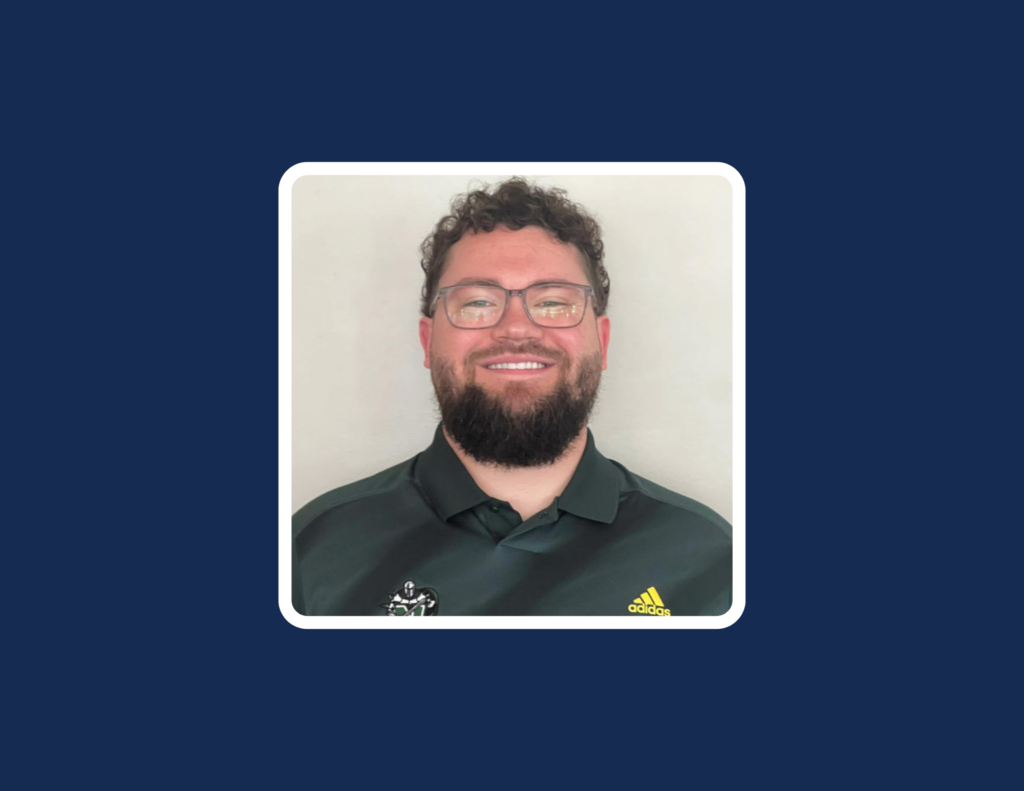
DARIN FORD – NORDONIA (OH) HIGH SCHOOL BOYS’ BASKETBALL HEAD COACH – EPISODE 1007
Website – https://nordoniaathletics.org/teams/4405024/boys/basketball/varsity
Email – [email protected]
Twitter/X – @dford9526

If you listen to and love the Hoop Heads Podcast, please consider giving us a small tip that will help in our quest to become the #1 basketball coaching podcast.
Darin Ford is the Boys’ Basketball Head Coach at Nordonia High School in the state of Ohio. He spent the past two seasons as an assistant at Westlake (OH) High School. As a high school head coach in New York and Florida Ford compiled a 41-29 record over three seasons.
Darin has also had several stints as a college coach including stops at Indian River State College, Pratt Community College, and the University of Akron where he served as a graduate assistant.
Ford’s father Geno is currently the head coach at Stony Brook with previous stops at Bradley and Kent State, while his brother Dustin is the associate head coach at Akron. His grandfather, Gene Ford, was also a long-time successful high school coach in the state of Ohio.
Be sure to follow us on Twitter and Instagram @hoopheadspod for the latest updates on episodes, guests, and events from the Hoop Heads Pod.
Make sure you’re subscribed to the Hoop Heads Pod on iTunes or wherever you get your podcasts and while you’re there please leave us a 5 star rating and review. Your ratings help your friends and coaching colleagues find the show. If you really love what you’re hearing recommend the Hoop Heads Pod to someone and get them to join you as a part of Hoop Heads Nation.
Be prepared with a notebook and pen as you listen to this episode with Darin Ford, Boys’ Basketball Head Coach at Nordonia High School in the state of Ohio.
What We Discuss with Darin Ford
- His strong family history in coaching.
- Coaching starts with understanding players’ strengths and adapting strategies to fit them
- A successful public high school basketball program relies heavily on a strong youth development system
- The importance of collaboration and communication within a coaching staff
- Building trust with players requires consistent honesty and transparency in interactions
- Success in coaching is measured by player development, understanding of the game, and passion
- The importance of finding your voice as a leader in coaching
- Developing a coaching philosophy involves learning from various roles and experiences across different levels
- Effective leadership development involves giving players opportunities to use their voice and lead
- Delegating responsibilities and trusting your staff
- Creating a supportive and non-toxic team environment
- Learn and adapt by observing other successful programs and practices
Like this show? Please leave us a review here — even one sentence helps! Consider including your Twitter handle so we can thank you personally!
We’re excited to partner with Dr. Dish, the world’s best shooting machine! Mention the Hoop Heads Podcast when you place your order and get $300 off a brand new state of the art Dr. Dish Shooting Machine!

Prepare like the pros with the all new FastDraw and FastScout. FastDraw has been the number one play diagramming software for coaches for years, and now with it’s integrated web platform, coaches have the ability to add video to plays and share them directly to their players Android and iPhones via their mobile app. Coaches can also create customized scouting reports, upload and send game and practice film straight to the mobile app. Your players and staff have never been as prepared for games as they will after using FastDraw & FastScout. You’ll see quickly why FastModel Sports has the most compelling and intuitive basketball software out there! In addition to a great product, they also provide basketball coaching content and resources through their blog and playbank, which features over 8,000 free plays and drills from their online coaching community. For access to these plays and more information, visit fastmodelsports.com or follow them on Twitter @FastModel. Use Promo code HHP15 to save 15%
Your first impression is everything when applying for a new coaching job. A professional coaching portfolio is the tool that highlights your coaching achievements and philosophies and, most of all, helps separate you and your abilities from the other applicants.
The key to landing a new coaching job is to demonstrate to the hiring committee your attention to detail, level of preparedness, and your professionalism. Not only does a coaching portfolio allow you to exhibit these qualities, it also allows you to present your personal philosophies on coaching, leadership, and program development in an organized manner.
The Coaching Portfolio Guide is an instructional, membership-based website that helps you develop a personalized portfolio. Each section of the portfolio guide provides detailed instructions on how to organize your portfolio in a professional manner. The guide also provides sample documents for each section of your portfolio that you can copy, modify, and add to your personal portfolio.
Hey, coach! Want to take your team to the next level this season? Introducing GameChanger, the ultimate game-day assistant with tools to give you a winning advantage. With GameChanger, you can track stats, keep score, and even live stream games, all for free! Get the stats and crucial game video you need to lead your team to victory, all from the palm of your hand. Coach smarter this season with GameChanger. Download GameChanger today on iOS or Android and make this season one to remember. GameChanger. Stream. Score. Connect. Learn more at GC.com/HoopHeads
THANKS, DARIN FORD
If you enjoyed this episode with Darin Ford let him know by clicking on the link below and thanking him via Twitter.
Click here to thank Darin Ford via Twitter
Click here to let Mike & Jason know about your number one takeaway from this episode!
And if you want us to answer your questions on one of our upcoming weekly NBA episodes, drop us a line at [email protected].
TRANSCRIPT FOR DARIN FORD – NORDONIA (OH) HIGH SCHOOL BOYS’ BASKETBALL HEAD COACH – EPISODE 1007
[00:00:00] Mike Klinzing: Hello and welcome to the Hoop Heads Podcast. It’s Mike Klinzing here with my co-host Jason Sunkle tonight, and we are pleased to welcome in the head boys basketball coach at Nordonia High School here in the state of Ohio, Darin Ford. Darin, welcome to the Hoop Heads Pod.
[00:00:16] Darin Ford: Appreciate you guys letting me crash the party here.
[00:00:24] Mike Klinzing: We are excited to be able to have you on. Looking forward to diving into all of the things that you’ve been able to do in your career. You’ve been at a variety of levels, which we’re going to get into here as we develop the conversation. But let’s start by going back in time to when you were a kid. Tell us a little bit about your first experiences with the game of basketball. What made you fall in love with it?
[00:00:45] Darin Ford: So it’s, it’s not a hard origin to figure out. I would probably say it started even back before I was born, just because my grandpa was just entrenched in basketball, especially in Southeast Ohio. He coached high school and college basketball for a total of 40 years.
And that obviously his connection to the game and what he was doing had a huge impact on my dad and my uncle who then got in the game and then by I, I guess I’m not a math guy, maybe the distributive property. Is that the right term? I don’t know, but sounds good.
Right. Yeah, it sounds right. by, by, by virtue of that, just, I grew up in it. I was born when my mom and dad were, were sophomores in college, so I actually, while I don’t remember it I’ve got a pretty good memory, but I don’t remember, but like, I remember glimpses of his professional career, but I got to watch as a kid I got to watch my dad play two years in college, although, like I said, I don’t remember it, but.
That was really kind of the, the beginning of it all. Right. And I’m sitting over there probably with a couple of action figures and enjoying the game and the sounds and the sites. And I’m, I, I’ve got a mascot phobia now, but I’m told that I used to walk around the convo and Ohio university holding the bobcats hands, I guess, I don’t know.
But there’s the stories of me kind of toddling around practices probably I wish I like I said, I wish I could remember it. the great coaches. on the staff at OU at the time when my dad was playing there Larry Hunter obviously passed away a few years ago now, but he was a heck of a coach, heck of a career.
I wish I could, I could go back in time and listen to some of those practices, but that’s kind of the, the start of it all, just kind of my dad just being entrenched in it and me being around it so much. Especially while he was early on in his career. And so, but what I remember the most obviously is his coaching career.
He’s got his first coaching job when I was three. And he I got to watch that ride all the way through. Right. And he’s still fortunately coaching to this day. And. It’s, it’s a unique experience for me just because like I said I’ve, I’ve got to watch it all the way through.
And it’s a little different than the experience my little brother has. My, I’ve got a little brother, he’s, he’s, he’s in college age now. And he just remembers the, the, like when he, when my dad started getting head coaching jobs, right, like he remembers that. I remember the when he was first year assistant at Ohio, right?
his first head coaching job at Shawnee State. I remember those types of things. So being able to see that rise for him in his career and The challenges he faced and things like that just made me fall in love with it. And I just constantly hearing him on the phone going to practices, going to games sitting in on recruiting dinners, I just got obsessed with it at a very young age and it the, the, the foot’s not come off the,
[00:03:54] Mike Klinzing: They’re a light bulb moment when you knew for sure that, Hey, coaching is going to be where I’m going to end up.
Or is it more just this gradual burn of that’s just the life that you were surrounded by at all times. Right,
[00:04:10] Darin Ford: I would say it’s a two parter. So, grew up always wanting to coach, never was a good player, and that’s probably my first instinct that I should coach. Yeah, just was not a good player. And my dad and uncle, like, they were great players.
My grandpa was a great player. Yeah. And I quickly figured out self awareness. I’m not good at a lot of things. I do think I’m self aware. And so I figured it out early on, wasn’t a good player. And and so with that, I think just kind of having a sense of that and really enjoying the coaching aspect.
Because again, like I said what I remember the most is my dad’s coaching career. I mean, I remember glimpses, images maybe of him playing in England, but, but, but nothing in college. Like I, I, I don’t, I don’t have it like that. So I think just always being around the coaching thing was part of it, but the other thing I will say, and I will give credit to when I was a freshman in high school, I played for what I would call a popular Northeast Ohio high school coach.
A lot of people know about him. Andy Vlachovic, he’s now the head coach at Canfield. has been the head coach at Kent McKinley, Orangey Harding, Ruttstown, that’s where I was for him as a freshman, and I open enrolled there because I wanted to play for him, and Andy just such a sicko in the basketball world, and I think one of the things that my dad did for me that not a lot of Coaches might do for their kid is he kind of let me fall in love with it on my own And catch that bug if you will on my own never press that on me never, and I hope i’m not a dad yet But eventually one day hopefully I am and I hope i’m half as good at at that as my dad was And that helped me fall in love with it.
So Back to my point on Andy, when I was playing for him as a freshman at at roadstown You I just fell in love with it. Andy was super smart he got down on your level and he explained it. It didn’t help me right away that I was kind of swinging back and forth, JV helping varsity.
I didn’t get in a ton as a freshman, but had to help in practice, obviously, and be there on the bench. But I had to learn the entire Princeton offense in whatever it was, three, four months. And for a 14, 15 year old, even though I was around the game my whole life, I, at that point in time, I was not as sharp as I should be at all truth be told, I remember distinctly I’m in an open gym and a kid goes, Hey, down screen, down screen.
I’m thinking like, what is he talking about? But I think I was just kind of in my own head at that point. But just my freshman year of high school really just fell in love with it. And it wasn’t too long after that year started that I was calling Andy on the weekends, telling him, Hey, I got this play we should try this.
We can do this out of our secondary break. And he entertained me, what I mean? And I think that was kind of what helped me catch the bug too, is he kind of helped me grow and, I, I, I give him a lot of credit for helping me catch that bug. And, and it was always there, always obsessed with basketball, but getting obsessed with those little things, the X’s and O’s side of it, the coaching side of it really kind of shined through then and it just continues to go and go from there.
[00:07:32] Mike Klinzing: You went to college. Did at that point that coaching was where you were going to end up? And then I guess to go along with that. Were you at that point when you made a decision that coaching was the direction that you wanted to head? Were you thinking high school college, high school coaching?
Were you thinking college coaching? Did it matter? Were you just looking for an opportunity? Just what was the thought process as you headed off to college?
[00:07:56] Darin Ford: It’s a great question. So it did that, that kind of started in high school. So going into my junior year I took a good look around of high school.
I took a good look around the team and I said, I don’t think I’m going to be in the top 10. And I know that kind of sounds crazy to say, but again, the self awareness, I just was like I don’t think I’m going to be in the top 10. And I have an affinity for coaching. I would love to maybe find a coaching opportunity one day soon.
And I would jump all over that. Cause again I, I, I like I said, I wanted to coach. And all of a sudden my brother gets called up for this opportunity to play AAU basketball. The guy asked me if I wanted to help and I jumped all over it. And I told the high school coach that week, like, Hey, I’m going to take on this opportunity, helping a 10U team.
And So I did that in high school. I, I coached and then they gave me my own team that spring. I was coaching thirteens and had my own roster and recruited it and met with the parents and then had an older team the year after when I was a senior in high school. I had high school age kids, a couple of our kids wound up playing division one basketball, one went on to play Illinois.
So I had a lot of success with it and loved it. So The plan, though, all the way through, once I got to college, right, when I was a freshman at Bradley was, hey I’m, I’m gonna chase the college thing. Chase the college thing, chase the college thing. So I was a manager gave up the AAU stuff, was a manager for my dad.
And despite our season not going as planned that year. And he had just finished up his fourth year. So we did one enough games. They, they they, they do that. That happens to you in coaching and they let him go. And we picked up and we moved to Florida and I still stayed on that path of want to do college, want to do college.
So I got a junior college opportunity at that point. And I was 20 years old, not in school. I took the year off. It took a gap year. Because Florida in state tuition is so cheap compared to out of state and I didn’t know if we were going to stay there or not. So took the year off of school and I just coached the whole year coached the Helped coach the team at 20 years old.
They thought I was older than that We had a 22 year old big man who I used to yell at every day he had no idea and but it was it was great like And that that was another awesome opportunity and experience for me. And so it was always college, until I I started doing it for a little bit longer and all the things that kind of go on in your career maybe itching to have a family, things like that, that eventually is what got me out of it, but but, but getting into it all the way through up until that point early on in my career, it was, it was all about the college stuff, never, never had an itch for the pro game.
Although I, I looking back, I, I wish I would have like dug deeper on that, but it’s hard when you didn’t play. And I, I, I certainly don’t look like a player, so I wouldn’t have fooled anybody. And at the end of the day, I think the, the college thing was just the, the most natural fit for me.
And loved it while I did it.
[00:11:06] Mike Klinzing: What was something that initially right out of the gate, when you think back to that first AAU experience, when you’re coaching a bunch of 10 year olds, what did you love about it right away? When you got quote your own team?
[00:11:21] Darin Ford: The, the ability to put in place I, I, I, I hate that as an answer, but it’s the most genuine one I can give.
Cause that’s what it was. And here I was 17 years old. I remember the day that. The head coach of that 10U team couldn’t make practice. His kid had something. I don’t, I don’t remember what it was. And we foolishly had like 12, 13 kids on this AAU team. Which you can’t do that. It’s just too many kids.
But I, but the director of it was also the one of the assistant, other assistant coaches. And he called me and said, Hey, you, Hey D you’re running practice tonight. And I was in high school and I was on my lunch period or something like that. And I just remember like dropping the phone, just so excited, pumped up.
I laminated my practice plan. And I had a whole thing ready to go. And like I just was in love with that. I was in love with having a team, being able to be the leader of that. I craved that my whole life up until that point, having that opportunity to coach. And just being able to, like I said, it’s a, might not be the greatest answer, but it’s it was exciting to put in plays and put them through drills and it just, that was, it just got me going.
It was so exciting.
[00:12:36] Mike Klinzing: Tell me about the JUCO year in terms of, for somebody who’s getting into coaching, because we’ve talked to several guys who’ve spent some time. at the JUCO level. And I think guys either love it or they just don’t have a taste for maybe the level of supervision that guys may or may not need.
So just tell me a little bit about what your experience is like and maybe just a piece of advice you’d give to somebody that Is considering going that route in their coaching career.
[00:13:04] Darin Ford: So, yeah, man, I mean, that’s a great question. I think being in those positions early on in your career are invaluable and can do so much for you because like you said, that level of supervision or just like the amount of work that it goes into.
Running a small college program or helping run a small college program, particularly at the JUCA level where you may or may not have a ton of resources and might have that constantly looming. Hey, we might even have less resources next year, next, next month, next quarter, whatever it is, right? Kind of that hanging over you.
there’s, there’s some insecurity with that, that, that, that, that, that looms, but at the end of the day, my experience, cause I, I, I did I, I did two years at junior college different places. I coached in Florida at Indian river in 15, 16, and then eventually was at Pratt in 20 21, that the COVID year.
And both experiences were awesome, but the one in Florida. when I was so young at that point 20 years old, just really kind of trying to catch my footing. coaching guys older than me, really, like I said the head coach really gave me leeway. Like the first meeting I had with him, he told me, he’s like he’s like, obviously most kids your age would be a manager.
I’m not going to call you that and call you assistant coach. And like, that was my title. I was on the website and everything. And it just it, it, it was fulfilling and it, and it, and it gave me responsibility and I was doing position groups and, and things like that. And I think that. while our head coach did just an incredible job, I probably didn’t do enough to help him in those little areas of, like you said, just all the things that go into it with just kind of housing or academic class checks.
And I, I had certainly helped in recruiting and, and but didn’t do enough, I think, looking back. But the experience still wasn’t valuable. Cause I was in the huddles. I was in the pregame. in the pre game planning process, in the coaching decision process whereas at that point, up until that point, it was only doing that.
On the AAU side of things, obviously as a manager at Bradley for my dad, I did the video stuff, but he wasn’t turning, asking me any questions, trust me. So it was, it was an awesome experience. And my thing to young coaches, like I said if you can get in a, in a job or in a position where you’re around talented guys, because in that world you’re constantly networking, you have to constantly network with four year coaches.
And high school coaches, prep school coaches, whatever. And I think being able to kind of establish a breeding ground and pipeline for you to be able to recruit guys, right? Cause players get jobs for you. that, that, that’s a big thing. And I think if you’re surrounding yourself in that type of situation, especially if you might come from a kind of a, a, a a less deep network, I think.
That can be a great place for a coach. And I mean, it’ll teach you it’ll teach you how to run things, right. Keep guys disciplined for sure. my, my experience in Kansas was much of the same in terms of, I was a lot more hands on, obviously older, better in my career at that point.
But there’s just so much that goes into it. like I said, the class checks, all those things. So I think having a hand in that early on in your career. Really trying to I don’t want to say trial by fire cause most people have some experience going off of before they get a bigger opportunity like that.
But it’s invaluable. It’s great.
[00:16:40] Mike Klinzing: What have you learned in your various stops as an assistant that have helped you as a head coach and the opportunities that you’ve had?
[00:16:52] Darin Ford: I would say the biggest thing. Is not trying to carry it all on your shoulders. I think as a head coach, it’s oftentimes natural and it’s easy to try to wear it all on your shoulders and that is something in previous stops I have Tried to hold myself accountable to being okay with delegating, to being okay with not trying to wear it all because I think it’s, it’s so easy, especially for someone like me, who’s just grown up around it and is just like admittedly obsessed with basketball.
I’m constantly thinking about how we can do this better, how we can do that better. And as the head coach, it all falls on you. And I think as the in past experiences as an assistant, whether it was at the college level and I, I even spent two years as a high school assistant.
I call those like my sabbatical years, like to kind of get back into it. At the end of the day, I think you, you learn a lot about not having to wear it all on your shoulders. I think you also to find ways to, to be okay with the, Hey, what? We don’t always have to disagree or I’m sorry.
We don’t always have to agree. Yeah. There might be some disagreements, but we got to keep it all moving forward. Cause at the end of the day the the, the head coach is the guy who’s supposed to be making those calls, but being able to trust your, your staff is huge. And I think having that assistant perspective gives me more.
confidence in being able to do that as a head coach, because guys on the bench, they, they, they want to coach, they, they want to help you win. And I think in the past when I was young as a head coach, I mean, I got my first head varsity high school job at 22 years old, like I was, I got to do this myself, I got to do it and that’s not the right way to do it.
And that’s how you can create burnout early and hurt yourself and stunt your growth even. it’s, it’s, it’s, it’s about. kind of taking it possession at a time. And I, and in my past, I’ve definitely not done that well and looking forward to this opportunity this year, cause I know I’m going to be better about that.
[00:18:56] Mike Klinzing: And so let’s jump to that and then we’ll come back to a couple of your other stops. When you think about delegation, what does that look like for you now in terms of sort of the ideal vision of what your program, your staff is going to look like compared to. Maybe how you would have done in the past, which again, I can completely relate to your idea of micromanaging might be the wrong word, but just wanting to have your hand.
But because you’re obsessive, right? You, you want to know you, you, I know this part of the game. I know this part of the program. I want to have my hand in there. I know I can contribute. I know I can add value. And yet. But to your point, that’s a very, very good way to A, burn yourself out and B, also to devalue your staff who is always like, well, he gave me, he gave me this, but now he’s jumping in and kind of superseding.
What I’m trying to do. So just talk to me about the vision for putting together a high school staff, what it looks like and kind of how you’re trying to arrange things at Ordonia.
[00:19:57] Darin Ford: And I, I would say I’m very thankful, very fortunate to have a great situation here in Ordonia. We’ve put together what I think is just the top tier.
And we did it in a short amount of time. I got the job, like officially got the job, like really late in June, like mid late June, whatever it was. And we went from technically one coach on staff, me, to a matter of eight, nine between. me all the way to middle school, like really quick.
And feel really good about the group in the mix having now this been my third head high school job. I I’ve, I’ve obviously had the opportunity to build staffs at different places. And I think the big thing that I missed previously at previous stops was identifying and being honest with myself in where I feel like.
I can get more help and again, kind of playing on what I just talked about with trying to wear it all on your shoulders. and, and just trying to find the best coaches you can find. And I think that didn’t matter as much to me in previous stops. Admittedly, I think it was more about the, the feel and this is important to like, just kind of the feel between the staff member, just kind of chemistries.
Like that was important to me more than anything. Was the fit of the staff and just in terms of communication and chemistry. But now I look at it through a different lens of, okay, I can’t oversee everything. I can’t possibly. say every word in practice and tonight we had weightlifting.
I, I, I think I said two words like, let’s go. I think that’s all I said like that, what I mean? Like just delegating to the staff and being able to trust them and empower them. Because you can’t have 15 guys on your team or what, however many guys you have on your team coming up and asking you questions, like you’re the only guy that can answer that.
Like, it just, it’s just, it doesn’t make sense. And when I was younger, that, that mattered to me. Now I took a lot of time and I say a lot of time, I mean, gosh, it, it all came together and about, like I said it wasn’t long, like two, three weeks, whatever. But I took a long time, even before officially getting the job, identifying exactly what I wanted in the staff.
I wanted experience, but I also wanted a blend of, of, of, of youthful energy. And I think at the end of the day too, I think JJ Redick’s such like a buzzword right now in coaching because of his from media to head coach of the Lakers, right? I won’t get in debate on if he was the right hire or not.
It wasn’t at all. I’m a big JJ fan, but it’s like he had experience. He played in the NBA he’s got all this experience in basketball. So the experience doesn’t have to look the same way. It’s not mutually exclusive with, you Years on a resume in a specific position. Right. So what I really wanted to do with the staff here in Ardonia was find guys, like I said, experience, youthful energy at the same time.
But also get guys that can really coach and get guys that can come to the table with ideas. Get guys that can come to the table with suggestions. And the big buzzword that I use with them in interviews was collaboration. We need to be able to collaborate. We need to be able to communicate and do this together.
And I will say that compared to my other stops as a head coach, like this is far and away the best I’ve done in that. And just in terms of being really committed to that and making everybody feel a huge part of it, a huge value. At the table and we, we’ve, we’ve got an awesome mix of player development guys on the staff that, that know how to train and get guys better.
We’ve got an awesome mix of experience with being able to draw on several years of head coaching experience, we’ve got guys that coached college, like in fact, our staff we did the math the other day and I’m not very good at math, it took me a while, but. we’ve got five guys on our staff that have spent a year, at least, in college basketball, at some capacity.
And that matters to me. Like, like, that’s important because I think you have a different lens in a high school gym that way. And, and we’ve got a bunch of guys that Know the game, different experiences and can bring something to the table on game day practices, whatever it is, whether it’s guards, bigs, whether it’s offense, defense, whether it’s, Hey this guy really knows zone.
Well, whatever it is we’ve, I feel like we’ve done a nice job of piecing that together and. And trying to empower those guys because I want them to coach. It can’t only ever be my, my voice. Like I said previous stops, I tried to kind of control that off and it just, that’s hard.
And I’m sure it was hard for the kids too. So like now just trying to be a lot better about that and and, and, and, and just doing right by the kids and giving them the best possible staff they, they, they can learn from.
[00:25:06] Mike Klinzing: Go back to the interview process at Nordonia and tell me what questions you had for them about the job so that you could sort of parse with your experience.
Knowing that, hey, this is a place where the pieces that I need to be able to win games and have an impact were there. What were some of the things that you wanted to ask them?
[00:25:34] Darin Ford: Ah, that’s a great question. So, I those our poor administration, especially our AD, who’s awesome, I, I probably gave him the, the local Tylenol stock was probably drilled because I had to address a million questions.
And he did a great job handling every single one super fast too, so I’ll give him a lot of credit. But for me, if I was going to take, if I was going to try to get another head, high school head coaching job and in between different high school head coaching job stops, I’ve, I’ve gotten married and, my, my wife would, would tease me and be like, nah, you don’t need that.
Like, what I mean? And, and it’s it’s worked out we, we, we find, we found a way forward with it. It’s a great opportunity. I spent a lot of time before the interviews, like doing research, watching every YouTube. Made a run at trying to get into somebody’s huddle that I mutually knew, but that, that didn’t work out.
And I thought that’d be too close to the situation. So I left that alone, but did a lot of YouTube’s research. So I knew the team at least on film and asked around, asked people that knew the team, knew the program, a million questions, just kind of on the outside of that before I got the big questions to the, to the admin and.
I, a lot of my questions were answered. I went and saw them play live. I went in they, they played on June 4th in a. Summer league game at Warrensville and I went and I sat on the other side of the gym and just watched and observed And a lot of my questions were answered because I wanted to know if they wanted to win because if I was going to try to get another head coaching job I wanted it to be at a place that what?
There wasn’t gonna, there wasn’t gonna be any effort. I don’t know if that’s the right phrase, but there wasn’t going to be pulling teeth, trying to get guys to love basketball and trying to get guys to want to win. And I saw that right away in that summer league. The guys looked like they had fun despite being in the middle of a coaching change.
And the guys look like they they, and they’re pretty good players too. Like we’ve got some talent. So that, that was important to me. And then when I talked to the, the people on the, on the search committee and I asked those questions specifically is do these kids love basketball?
Do do, do they are, are, are they, are they about it? like what, what, what’s what’s it like what’s the culture like amongst the program? And fortunately had a really diverse diverse background. Search committee and the people were in that room that could answer those questions because they knew the kids, they knew, they knew, so that was awesome and it was really honest with our administration too, just like how important is winning and of course academics at Ordonia is very important, it’s actually amazing, 700 athletes in the building, the average GPA last year was 3.
7, just incredible. For so academics are obviously on everybody’s mind, but winning’s important too. And I know that that, that, that, that they want to win and that’s the type of place I want it to be at.
[00:28:45] Mike Klinzing: What was the most interesting or surprising question that they asked you?
[00:28:52] Darin Ford: Oh, the most interesting, surprising question they asked me.
I, I would say the AD asked me a question and it was, it was a great question. He said, do you think, something to the effect of, do you think head coaches should be able to select their own staff? And that is for anybody that hasn’t been asked that question before could possibly kind of think or feel like it may, is this like a trick question or are you trying, what I mean?
Right. Absolutely. Yeah. And, and to be honest, I answered it as honestly as I could. I said, absolutely. Right. we’re the guys working together every single day. And. and, and, and he did say to me, he was like, absolutely. He’s like there is a right or wrong question to this area.
There is a right or wrong answer. And, and it’s yes, absolutely. You should want to have your own staff. you, you shouldn’t be a head coach and be okay with it being handpicked for you. And I’ve been fortunate everywhere. I’ve been To be able to have the opportunity to inherit staff members.
And while sometimes that can be a tricky situation for, for new head coaches at the high school level, I’ve been fortunate where I’ve had good experiences, so. there were there, we, we’ve got two members between our eighth grade and one of our varsity assistants are returning at Ordonia, obviously several a whole lot more new, new guys, but in the past have had at least one guy staying over.
So from old staff. So, and that’s important. And I think for a young coach or just any coach in general to go to a high school, that might be in a situation where. maybe administration is telling you, hey, you gotta keep that guy or that guy or hey, you gotta hire that guy or that guy. That can, that can be hard.
And I think that can kind of already start the, just kind of the friction process that that could happen in the midst of working together in a season. So yeah, I was very fortunate to have their support. That’s part of the reason why I think I was able to get it done a little bit quicker.
We were able to get it done a little bit quicker just because I wasn’t feeling like I needed to run anything by, what I mean? Like, I was able to just kind of sit there with the whiteboard and figure out, okay, what do we want out? We wanna get this done. And.
that was that
[00:31:12] Mike Klinzing: once you get the job, who gets the first phone call?
[00:31:17] Darin Ford: We, my, my wife. So I, I, I wasn’t quite home after I wasn’t, I was in the car when I got the call, so I wasn’t quite home. I just had a good feeling I felt really confident in it, and I’d been super excited.
I’ll, I’ll even use the word geeked out. I was, I was like, I was itching for this opportunity and. My I just came home and I walked upstairs and, and my wife walked around the corner and I, I got to tell her. So that, that was the first person in terms of first call. I did, I did call my dad.
I wound up seeing my a couple other family members, very important to me, my brother and my mom shortly thereafter, they, they, they were over here at my house. And then but I did pick up the phone. I called my dad and. he, he obviously Poked at me a little bit. He’s like, all right, T minus however many days till you get fired.
So that’s, that’s that’s, that’s that’s our family for you in a nutshell yeah it’s our, our, our dinner tables growing up, man. It was you, you had to be ready to fight for yourself a little bit. I can
[00:32:19] Mike Klinzing: believe that. All right. So after you get done talking to family and then it’s obviously time to get to work and you got to start talking to people who are associated with the program.
Are you reaching out to players first? Are you talking to parents? Are you talking to people associated with the program to kind of get a feel for where things are at? How do you go about starting to get to know the program? Obviously you talked a little bit about knowing that going into the interview process.
But once you’re hired, clearly you have the opportunity to do a much more deep dive into what you need to know. So how do you go about getting the information that you need to start to build the plan for how you’re going to take the program where you want
[00:33:01] Darin Ford: it to go? Absolutely. In my interview process, I did give them having been through this now two other times, I, I gave them like an immediate action plan with like, I won’t say timestamps, but like within week one, I’m doing this, this, this, and this within week two, I’m doing this, this, this, you just like, et cetera, from there.
And in my, like I don’t want to call it a portfolio, but the, the book that I went into the interview with and within that first weekend. So I get the job on a Friday. and then it gets board approved Like the next day or whatever. Well, I can’t remember exactly how it felt dates wise But I’ll give our AD a ton of credit again.
He’s a monster with like logistic stuff operations that like scheduling things like that He he had a meet the coach night already planned with time with times and everything for that Monday He put it out there all I really did on Saturday was put out an Instagram post that I was pumped up to be the coach, but ultimately that, that weekend I communicated right away with the existing varsity staff member, varsity assistant staff member.
Because I wanted to talk to him right away and we met that weekend. Cause I wanted to just kind of see where his head was at, what he was thinking, and we hit it off and we had mutual threads and ties all the way back to He played for Larry Hunter. My dad played for Larry Hunter.
So we sat there. I mean, we, we, we talked for like three and a half hours on his back porch, just going back and forth. And, and I right away knew like, got to keep this guy around. But outside of that kind of getting that taken care of and squared away immediately had a pulse on scheduling.
Immediately started I, I got like huddle access and which was probably a little early for that, but I, I, I contacted and got in touch with our youth one of our youth program directors gotten got to talk to him. And we were able to schedule gym time literally within a few days cause our high school gym at the time was, was, summer treatment, whatever you want to call it, wax, whatever it is.
So the first month I had the job, we didn’t have gym access. So we had to be creative where we went. We went to a couple of different places, but. that, that had to get done right away. and, and, and just trying to meet the people that are important in trying to share the vision of where we’re trying to take Nordonia basketball.
And then like I said that job, it was announced on a Friday, whatever it was. And then by Monday I met all the kids. We had like a meet and greet. Meet the parent hour right after and and it was it was off to the races from there, and just every day you’re in it, you do just a little bit more, probably and, and I was fortunate to walk into a situation where game scheduling was squared away, so I wasn’t like, fighting uphill with that.
And like immediately grabbed all the uniforms, did inventory, things like that. Like the, all those little things you have to do early on, was able to get that done quick in the process and. was, was fortunate that a lot of the groundwork was laid there, but got to meet the kids right away.
And that’s the most important thing talk to those guys and share, share the vision you have. and, and then obviously start identifying staff. And like I said, that, that went pretty quickly as well.
[00:36:25] Mike Klinzing: You heard some things when you talk to the kids. What are you talking to them about?
Are you asking about their experience in the past as part of the program? Are you asking them what they’d like to see? Are you telling them a little bit about your vision? What do those meetings look like? And are you doing those individually or are you meeting with a team in a, in a, in a whole group?
[00:36:44] Darin Ford: So I if, if I was to do it again and I hope I’m never doing it again because I wanted, I wanted Ardonia to be super clear, but I, the way we did it here is the way I would do it again if I were ever to do it again.
And I, like I said, I don’t want to, I, I want to be here forever. But we I, I got a chance to meet the kids as a group. kind of share the vision for the program. Had like a whatever slide, slideshow, just kind of about all the little things you can think of, but it wasn’t like a million bullet points.
It was pretty sectioned off into maybe seven, eight categories. obviously including style of play and, off the court expectations and things like that, right? the things that you would think. And and then from there, getting to them individually, one on one and asking those types of questions that you just said getting, getting a real feel for what their experience in the past has been like getting a real feel for what they want to see what they want to be a part of.
And I use that buzzword collaboration in staff members interviews, like I said I use that buzzword collaboration with them that night that I met them. So and continue to use that with them and just trying to get them to understand where I’m coming from, where I want them to play without the fear of failure.
And I think that’s something that if you can unlock it, high school kid, and they can start to figure out how good they can be, you, you, you can turn some, some, some players that have an extra level. You, you, you can turn that for them, you, you, you can, you can help them find that. And.
at the end of the day, it’s them, they, they got to be the ones that, that kind of figure and sort that out. But sometimes they got to hear it they got to hear it and they got to get that confidence from you. And that, that, that, that stamp of play without the fear of failure, cause way too many kids play with that.
And I think we’re fortunate to have a really good group that has been honest cause I’ve held them accountable and have told them like, Hey man, like if I’m asking you a question about Hey, did you like this? Hey, do you like that? Hey how did that go last year? Yeah. Be honest cause we’re, we’re not going to go anywhere forward if, if, if, if, if there’s no trust and if there there’s going to be no trust if there’s no honesty.
So I think they’ve wrapped their arms around that and embrace that and have had awesome conversations with these kids. Like we’ve got some, like, I’ll give our kids a lot of credit good basketball players, really good kids, but they’re mature. And I think that’s the thing that’s kind of jumped out to me more than anything.
It’s a mature group and I got to give the people that have been around them previously, a lot of credit on that. Obviously them included.
[00:39:24] Mike Klinzing: Absolutely. I mean, I think, right, it comes down to when you start having those conversations with kids, building that trust and getting them to be able to open up and to be honest, that’s sometimes a challenge, right?
I mean, it doesn’t happen overnight. And so it takes time. It takes. them seeing you, okay, talk to Coach Ford, I said this, and now what he said is happening, or I know that he’s taking into account what I’ve said to him. And that’s how you start to build trust. And obviously that takes, as I said, a little bit of time to get to that point.
But once you have that, and now that the players know, hey, they could trust you, they can now give you honest feedback. And then that helps you build trust. to continue to improve what you’re doing for their benefit, for the benefit of the team, for the benefit of the program. When you look at what you guys did since you got the job, so obviously getting the job in June doesn’t allow you a tremendous amount of time to plan specifically for what you wanted to do at Nordonia, considering that at least here in the state of Ohio, the month of June from a high school standpoint is probably the most important off season month.
So just tell me what the plan was, what the process was, and just what your summer program looked like with your guys.
[00:40:44] Darin Ford: I, I would be lying if I didn’t admit this. So, we, that Midwest Live. High school event was that Friday right after I got the job and I I made a run at trying to get us in that’s that’s how bad I wanted to get on the floor with them it didn’t work out great
[00:41:04] Mike Klinzing: event great great event, by the way, Darin fantastic I mean what I think what I think about A high school event and what it should be.
To me, what the Ohio High School Basketball Coaches Association has done in putting that thing together is just incredible. When you look at the amount of A, great teams, and B, the number of colleges at all levels that are there watching kids compete with their high school teams, to me, it’s just a win win all the way across the board for high school coaches, players, programs, and the same thing.
Cross the board for colleges as well.
[00:41:43] Darin Ford: 1000%. And so I, I did, I did make a run at trying to do it. It didn’t, it didn’t quite work out. But we were in the gym that week. Like I said, I met them on I get the job officially on that Friday or maybe a Thursday night, whatever that board meeting was. And then we met Monday.
I had us in the gym. By Wednesday. And like I said, we had to kind of fight uphill just a little bit. Cause our, our, our high school gym was, was closed. So and, and we’ve got two gyms and maybe like maybe some people would be like, Oh, just go to the other gym while the other gym was getting the same thing done.
Right. So we were, we were trying to figure it out as we went, but yeah, I mean, we got in the gym right away those next two days. And then of course, July 4th was like that next weekend. But we still got in the gym and we were fortunate. Another school let us in there and then a church let us in a lot.
We were fortunate. We did be consistently with the exception of that July 4th week and that in the week right after I got the job where we were able to scrounge together a couple of days. We were fortunate. We, we, we did three to four days a week until we were allowed to. And as long as we were allowed to rather, I should say throughout that whole month of July, we, we, we did, I think three days every week, three or three or four days every week for sure.
after that July 4th holiday. So we weren’t able to lift until that last week because it was a tall ask for me to say, Hey guys meet us at this gym, 15 minutes from Nordonia high school. And then we’re going to go back to our junior high school to lift. we didn’t have enough guys that drop, that drove, that I felt like comfortable doing that with.
Right. So we weren’t able to lift until we we, we got back into the high school gym officially. Ironically, it was my first time ever in there like late June or sorry, late July. And we used we were there four days that week, we got in the weight room. this fall we we’ve done four days.
a week weight room and on the floor every day. And our numbers are consistently high. The lowest numbers we’ve had we, we had 14 one day. And I was just over the moon with that. I mean, we, 14 was the lowest we’ve had. We’ve had as many as like 27, 28. just last week we had.
Middle school in, in our other gym middle school, seventh and eighth grade and high school in the, in our, in our large gym. And we had 61 kids in open gym between all the grades. So just, I love the energy and I love the enthusiasm and effort we’ve had for kids coming out and trying to be a part of it.
[00:44:22] Mike Klinzing: How have you designed that program in terms of when you were doing your small group workouts, as you’re getting to know the players, are you able to tailor things specifically to individual guys? Are you still Sort of just kind of try to put together, Hey, here’s a workout that’s going to develop the skills that they’re going to need to sort of play in your system.
Or how did you think about the design of what you did within the, within the individual workout?
[00:44:52] Darin Ford: So, so I, I will admit, so over the summer, my plan was to do exactly that, to have the three man group workouts and execute those as much as we could. Instead, once I got around the guys, I was like, what, kind of in the same breath of as a, as a, as a head coach, as it pertains to the staff, I got to find ways to kind of just kind of open it up and, and, and, not try to wear it on my shoulders.
So, so as kind of a piggyback off that when it came to the guys we did a ton of playing, like we just let them play. There were a couple of days where guys were getting shots up on the gun and things like that, but. I try not to do too much and really just kind of where, where I talk to them one on one individually about concepts and how we’d play and things like that.
I kind of wanted that to happen organically to a point, but also when I would ask them questions about past stuff. The plan was to go full bore on that though. And cause I’ve done that obviously as a high school coach. And I’ve, I’ve done that as a college coach, three man workouts, two man workouts, whatever it is.
As a college coach, you get pretty good at doing six, seven man position groups, right? So it’s, it’s had a plan to move forward with that in the future, like next summer and next spring, all that kind of stuff. Like, we’ll utilize all that. But, but really I’ve just tried to do a good job of letting them play, letting them kind of figure it out.
One thing that we’ve done in open gyms though over the summer and this fall, we’ve given them some rules. Like, the one day we, we introduced just kind of, and it doesn’t mean we’re going to do it during the year necessarily, but hopefully no coaches in our league are listening to this, but like we introduced some double drag stuff and then one day we said, Hey, you have to trap all ball screens.
And another day it was, Hey, we’re going to press, you guys pick the press or, It was Hey take your team. we got three, four teams in open gym. Hey, take your team and design a play that you guys are going to be able to call and run on, on, on made shots. Right. So just things like that, I think has made our guys think the game.
Which is the one of the biggest things I talked to them about in our very first meeting is I’m gonna we’re gonna as a staff be Extremely committed to teaching you the game. And and I I let them know right away Like i’m i’m passionate about that. I love this game. I know you guys love this game.
We’re gonna grow together we’re gonna go through this thing together, so There’s been a lot of benefits with that getting into next summer and the way we’ll kind of structure that we’ll do a lot of it just concept driven three man workouts. We’re allowed to do a variety of that here in Ohio.
So we’ll probably break it up a little bit by position but also at the same time, a lot of three man actions. don’t always include three guards, so that might not make a ton of sense, so it might be two guards in a big, or whatever the mix is and depending on your personnel maybe it is all three guards doing a lot of stuff together, but just being really, really precise in maximizing what your game shots could look like based off the offense you’re installing, and trying to hammer home repetitions and not only teaching them that on the floor, but also giving them things that they can take home or take with their buddies, whenever they go to the rec center together, like showing them the little intricacies of your offense and your game that you’re trying to develop over time and show them, Hey, this is how you’re going to get this shot.
Hey, this is a shot you’re going to get often get try to get good at this. Right. So we’ll be really attention to detail oriented, but I’m happy to report, and I’m proud to say, like, we’ve really done a good job, I think, of just letting them play and try to figure things out as we go, and it’s actually given us some good ideas, too, and, and I listen to a lot of podcasts, including your guys’s, and TJ Saint did basketball immersion recently.
He did slap and glass this year too. And something he talked about in one of those episodes was kind of reverse engineering your identity, reverse engineering, your offense. So kind of figuring out what you’re good at and then going from there, how do you get there? So and that’s one of the benefits of just letting them play.
And I think that that’s been great and it’s been good for me. It’s been healthy for me. Not not out there with the whistle on September 20th. Right. trying to do this and that while keeping them excited.
[00:49:19] Mike Klinzing: All right. So to go along with that, as you’re going through your career, you’re obviously developing your philosophy of kind of what you like your teams to look like and how.
You want to play and clearly when you’re coaching at the college level, as a head coach, you would have some control over what players you bring in that may fit the particular philosophy or style of play that you want to have. On the high school level, especially at a public school, you have very little control over the skill set that your players bring to the table.
So my question is, how do you balance Sort of your idealized way that you would like to play all things being equal and you being able to have the type of personnel to execute the systems offensively and defensively that you’d want to install versus trying to adapt as you just talked about watching your players play at Open Gym and sort of seeing hey It looks like we’re maybe good at this.
Maybe we need to shift things a little bit that way. And maybe we’re a little bit weaker over here. So we need to shift away from that. So how do you think about that as a head coach in terms of your idealized vision of how you want to play versus what your personnel dictates that you maybe have to do or should do in order to maximize that?
[00:50:43] Darin Ford: Number one, you better be flexible, right? And you better be okay with it’s not going to go exactly how you think it’s going to go. And you learn that early on when you start coaching, whether you’re an assistant or a manager or a head coach, it doesn’t matter. Like you that’s a lesson that shines through coaching all the time.
it’s, it’s, it’s it, it, things like that just, I think ring true. But in terms of, I think as a high school head coach, you’ve got to be super adaptable to your personnel and while, while convinced and convicted and, and you can love a style of play and want to do a certain thing. You have to keep in mind at the end of the day, you’re not going to change those guys.
too much and that’s and that’s why at the end of the day, college basketball, the lifeblood, what is it? It’s recruiting. High school basketball, what’s the lifeblood? Player development. So a lot of that has to start early on. You’ve got to build up an extremely good youth program.
That would be like the the, the, the, the easy out answer, right? you got to build up a really good youth program that has those types of concepts in your teaching and developing kids a certain way, all the way from kindergarten through, . State championships is a little crazy to say, but state championships literally start in kindergarten.
With the way they’re taught the game and held accountable and things like that and, and how they love the game so that and stay with it. But when it comes to, I think as a head high school coach coming in first year yeah, I have an idealistic way that I want to play and that, that we want to play.
And yeah, like the coaches and I like all the way from our seventh grade coach to our any of our three varsity assistants, like we’ve been talking about certain concepts and things we want to drill home. And at the end of the day, it’s, it’s, it not one size fits all, so our JV team might look a little different than our freshman team.
And our seventh grade team might look a little different, obviously, or we’ll look a lot different than our varsity team. But I think as you establish an identity, number one, it’s got to start with. the play after the play, and that’s something I hammered home in the interview process that I felt we could really, really, really hammer home with this group, like the play after the play the emphasis of playing off two feet, the emphasis of kind of positioning on the floor and proper spacing and all of those things that.
Coaches say, but, but maybe don’t always get super picky about, or it can get old and kids just kind of move on from it. Right. I mean, that stuff’s important. And, and, and it, it can separate good offensive teams from bad offensive teams and great offensive teams from good offensive teams. So I think that’s really important.
The other thing I would say to just in general of being really Understanding what they’re good at and finding a way for them to get in the areas that they can be good because that’s a coach’s role, right? And Teaching them is, is, is a big part of that because maybe a kid’s not very good at something the first time he does it because he’s never done it before, he’s got no clue.
But if you are committed to teaching and passionate about that, you’re showing them film and walking them through it and making sure that. kids feel comfortable asking questions like that’s how you develop. That’s how you get them better and get them excited about the game. Who doesn’t enjoy things that they’re good at, right?
So that, that’s kind of where I think it’s, it’s born from and something that we’re really trying to impress upon our guys in terms of trying those new things. That’s kind of where that rule of or not that rule of, but, but the, the different rules in Open Gym have, have born from. Just kind of like trying to teach them different concepts.
obviously. the day we were working on trapping ball screens, trying to get really good at getting it out of that, right. And playing four on three getting to the advantage right away. So and we saw a ton of great things out of that. thankfully a bunch of our guys just kind of hit the short roll and it went from there.
So. They get those games real quick, but I think that’s how you start to really establish the, the style of play. And then obviously just kind of hammering home again, the, the player development stuff is key. You have to hit that you have to you have to hammer that nail as much as possible.
Because at the end of the day, that’s, that’s, you get what you get right at the, at the public high school level in particular. You got to make it work.
[00:55:21] Mike Klinzing: What’s your mindset on developing your middle school kids and then going back to, you mentioned a few minutes ago, the youth program and how important that is at a public school and what have sort of you done to this point or what do you envision eventually being able to do with the Nordonia travel youth basketball program up through the middle school?
[00:55:45] Darin Ford: we’re, we’re fortunate where we’re at we, we, we have two youth programs. That one’s a little newer, the other one’s been around for a long time, and run by people that are passionate about the game. And that’s what we that’s what I love. Like when I kind of figured that out, I was like, holy cow, like, this is great.
You’d much rather be in a situation where you’ve got two youth programs, right? Versus you’ve got nobody and it’s pulling teeth to get people to show up and, and, and referee a, a seven year old game on a Saturday morning, right? Like so, so we’re fortunate with that in terms of number one, they got to know who our staff is and they got to know who our players are.
They got to know us. They got to be able to see us at games see us at a practice randomly whatever it might be. getting our guys involved with that. And in the past, the varsity team has been really good about being involved with. The youth programs, being around, high fiving the kids, knowing their names that’s important.
In fact, the, the week right before I got the job, there was like the kids clinic. I actually, or the kids camp. Like, I, I hated that I missed that, but like, that’s the type of stuff that matters, and being really involved in that matters. Middle school, we’ve been fortunate. To get them gym space up at the high school.
this fall so far and, and have the they have a full slate, probably a lot more than I would assume some other middle schools can pull off in terms of open gyms the rest of the fall. And like I said, I mean, we just had a ton of kids come seventh and eighth grade. So there’s a lot of interest.
There’s a lot of buzz and we’ve got to be committed to nurturing that obviously teams are made, teams are made in November, but you, you, you, you’ve got to make sure they know us. And in terms of that player development piece specifically, the big thing I’m hammering with those guys is play after the play.
Like I talked about being really good in space, knowing how to space and then of course, little things offensively and being picky about like name on a pass and. things like that are, are things that we’re going to really care about and try to hammer home to our young guys.
So that way, when they do get to high school we’ll, we’ll, we’ll have those things in place.
[00:58:11] Mike Klinzing: What’s your planning process look like this fall in terms of setting up sort of your practice plans for the preseason? Obviously a new team that you haven’t coached before, other than the experience you’ve had with them since June.
And you have an idea of what you want to do, how you want to play, but what’s the planning process right now here at the end of September? What are you working on? What are you trying to get prepared for so that when the first week of practice rolls around at the end of October, you’re going to
[00:58:51] Darin Ford: be ready for that?
Number one, getting the guys ready and starting the groundwork and teaching them in little moments of the things we’re going to try and the things we’re going to do. So it’s not such a holy cow, what I mean? Like that, that’s, that’s extremely important. For me personally and our staff, like we’ve got some plans.
We’re going to try to get over to some college practices in our area. I mean, Ohio, we’re, we’re you guys are Northeast Ohio guys. we’re, we’re blessed to have a lot of college basketball in our state in particular, got a nice handful in Northeast Ohio, so we’re going to try to get some college practices just to kind of see, and who knows, you might pick up one thing from that practice, .
One thing that translates you probably pick up a whole lot more, but, you might only pick up one thing that translates to your team, but hey, that’s, that’s a win. So, or, or it maybe makes you think about something differently and hey, that, that’s a win. And so that, that’s a part of it. So being open and not being dead set on any one plan and any one thing in, in being flexible, like I’ve talked about.
But also too, I think trying to keep it simple in that and that’s something I neglected to talk about earlier in terms of offense installation, but you, you being simple with your guys as much as you can. To, to kind of help empower them a little bit in terms of that transition period of practice and try not to, again, like I said, not throw everything, everything at them at once.
And just trying to maximize our time too, in practice Obviously with my college background, I’m like, go, go, go, go, go in practice. we’ll probably hit several different things. I know some traditional high school practices might spend a little bit more time on things and do less items but we’ll be quick.
We’ll be, we’ll be moving. We’ll be, we’ll be covering a lot of bases and trying to play as long and trying to play live as much as possible and trying to compete as much as possible. that first week or two, there might be a little bit more slow the game down, break down but we’re going to try to hit the ground running and make sure that or, or maybe I’ll say hit the court sprinting rather but try to, try to get this thing going and, and, and, and a big thing, I think, Is kind of drawing back to the staff thing.
Like we’re, we’re, we’re lucky. We’ve got three varsity assistants that are just varsity assistants. And then of course we’ve got a JV coach and a freshman coach. And the way we’re planning to be organized with that is we’re going varsity only in, in, in our one gym. And then JV and freshmen will be together.
And I think it presents a really unique dynamic for our varsity guys in terms of just being able to kind of play. against them, oftentimes you think about a JV varsity practice, kind of smushed together in a gym I’ve already talked about, we’re fortunate with a certain amount of coaches, but also you got 25 kids in the gym maybe.
And when you’re going live or you’re doing things in the half court I’m trying to teach something, JV coach is down there trying to teach something. It just unless we’re doing it together, it’s just hard to sell that. So I think the way we’re structuring it and I’m excited about it our JV and freshmen will go together and then.
we’ll practice together just the varsity guys and guys would get more reps. if you take a certain amount of guys you get, you got, you go five on five, you got subs, like, I just think it’s a great way to balance your practice and get the most out of it because at the end of the day high school practices might not always be pretty and you have to be able to maximize that time with your dudes.
And I think a lot of teams that fall short of their ceiling, it, it, it comes back to the practice and, and kind of the the, the stone skip in that, in that regard.
[01:02:50] Mike Klinzing: Tell me a little bit about how you develop leaders and obviously the more you get around the guys, the more you have an opportunity to determine, Hey, Who maybe has some of those leadership skills or who do the guys look to sort of as their natural leader, but what do you do or how do you think about developing leaders in your program?
And maybe to go along with that, what role do captains play in what you’re trying to do with your
[01:03:18] Darin Ford: program, if any? That’s a great question. So I’ll hit the captains thing first. We, we, we, I’ve never done captains just always done like the seniors, like our game captains and they rotate it. I, I think that’s, it’s, it’s kind of like pick your battles.
like, like no no what in some coaches, I know there’s a lot of coaches that have a huge emphasis on it. I think the more I’ve been around it in my experiences, I think it can just kind of toxify the locker room at times, at least in my experiences. Now, again there’s probably a million way smarter, better looking coaches than me out there saying, Hey, no, that’s the right way to do it.
You got to have captains, right? But I think to then your other question of It all starts with giving them a voice, and that voice usually starts in a one on one with you, where I’ve tried to be pretty picky with our seniors and our returners cause Nordonia does we have six guys that are planning to return from last year’s varsity team.
that were the top six or six of the top, whatever six, six of the top seven, eight, whatever. And, and they’re all back and, and they, and they love hoops that was the group I went and watched or a mix of that group. I went and watched this summer. So was excited about and saw on film and all those things.
So. I think giving them a voice, asking them things one on one, getting comfortable with them one on one and making sure that they feel comfortable with me and kind of our vision and where we’re going with things. And they feel like they can ask questions and things like that. And then what starts happening is you start teeing them up for little opportunities.
So quick example. A couple weeks ago one of our guys, I pulled him aside and I said, Hey, question for you. Open gym observation. What do you think? He rattled off right away. Spacing. He thought the spacing with his team in particular, and the teams he was playing against in open gym, Cause our numbers have been big.
So like, oftentimes like we’ve got 20 something 25 something kids and he talked about spacing, just not being great and guys kind of crowding the ball and things like that. I said, okay, perfect. I said, when we get over to the huddle, I’m going to tee up and I’m just going to talk about a defensive thing.
I’m going to challenge the guys to don’t even care about ball screen coverage they’re in. But just want them to communicate with each other. And if they mess it up, Oh, well, as long as they communicated, right? Like, that’s what I’m going to care about. So I’m going to say, and I want you to say something about spacing.
I want, I’m going to tee you up for that. And he hit it out of the park and he’s traditionally, I won’t, I won’t name him, but traditionally a quieter kid who. Since I met him over the summer, I can tell has getting, has gotten a little bit more comfortable opening his mouth, saying his saying words and like trying to challenge the guys.
And I think that’s where it all starts. Like I said, just kind of in that one on one, getting them comfortable, trying to level with them, find that common ground and then giving them an opportunity. Where they can then just get their toe their, their their toe in the water and then maybe they, they put a whole foot in, right.
And, and I think that’s kind of where leadership is born again. Like, I think there’s obviously I mean, there’s obviously leadership qualities out there that people are born with naturally or personality traits that they’re born with naturally make them a natural leader. I get it.
But you can learn how to use your voice. You can learn. That type of behavior. And I think leadership really starts with, with that feeling comfortable with your voice.
[01:06:58] Mike Klinzing: And I think those opportunities, right. That’s one of the things that I’m a big believer in is that a lot of times you’ll hear coaches say, Hey, we need more leaders or this team lacks leadership.
And yet coaches never really give them room to be able to operate and demonstrate leadership. And so I think that’s something that’s really, really important for coaches that are out there. If you want to develop leaders on your team, you got to figure out ways to give the kids an opportunity to lead.
And to your example, it doesn’t have to be this huge, big, giant thing. It can be these small, subtle things that happen every day that just put different kids in leadership positions. And that’s really how you develop those leaders in your program. Exactly. When you look ahead and think about getting to March of next season.
And you look back on your first year, how are you going to define success as you go through the year? And then when you envision sitting down next March, when the season’s over and sort of analyzing how the year went, what are some of the markers that you’re going to look for that you’re going to think about when somebody asks you, Hey, was, was it a successful season?
What are those markers you’re going to look for?
[01:08:17] Darin Ford: I, I would be, I would be remiss if I didn’t, if I didn’t say that I feel like we we’ve got the talent and we’ve got the guys that want to do it, man. Like, like we, we, we want to try to win. So obviously do, do we punch through our ceiling of of winning, right?
And that’s kind of ambiguous and maybe a little vague, but at the end of the day, I think that’s obviously, and winning’s a part of it, yes, but the other elements of what I’m going to look back on is hey, did, did this kid get better? Did, did we get better as a team from June and, and then November all the way till March?
Did we get better? Did we hold them accountable to become better players? And then the other measurable I would use is, did they learn the game? Does that kid know the game more than he did before the season? Did we do our job on that front? And then lastly, I would say, does he love the game still, slash more, slash, like, like, did where is his heart?
And I think if we answered yes to those three questions, the wins and losses probably took care of themselves. And, and I think that’s kind of what I will draw on and our staff will probably have plenty of other ideas too, what we can, how you define success. But if you, if you checked all those boxes did he get better?
Did he learn the game and does he still love it and love it more? And likely you, you, you’ll won a lot of games and, and, and made real strides. Absolutely.
[01:09:54] Mike Klinzing: I mean, I think that is a good way to balance out. Obviously, every coach, no matter what level is, you want to win games. And I thought you did a really good job there of balancing out.
Yeah. Winning is important, but it’s also about that other development piece. And especially as a first year coach, you’re trying to put things in place that are hopefully going to build that foundation. That’s going to pay off in the years to come as you continue to grow and build and get the program to where you want it to go.
Before we wrap up, I want to give you a chance to answer two a two part question. So part one, when you think about what needs to happen over the next year to get the program where you want it to go, what do you see as being your biggest challenge? And then the second part of the question is just in general, when you think about what you get to do every day as a basketball coach, we talked about it.
At the very beginning, how basketball has been such an important part of your life, how coaching has always been something that’s been a passion of yours. What brings you the most joy? So your biggest challenge and then your biggest joy.
[01:10:54] Darin Ford: I think our biggest challenge is, is, is did we let ego, did we let the people in our heads get in our way?
And And I think if the locker room can stay the locker room, right, if we can go a season without being, I use that word earlier, toxified, right if we, if we can do that your team’s going to have a chance for success, no matter how good or bad you are, right? And I think if, if you can kind of get on that, that, that same heartbeat level.
That that’s going to be that’s going to be huge. And I think that is, is, is, is, is definitely the biggest challenge year over year, especially high school kids. I mean, it’s, it’s hard. It’s a little different, the college level, right? they’ve been there, done that. all. need the game to, to do the next thing in their life.
not all high school players need the game to do the next thing in their life. So, trying to keep the main thing the main thing is hard. And keeping everybody on board is hard. And I think that if, if you can overcome that, you got a great opportunity. The, the, to answer the second part, the, the, the, the, the greatest joy, correct?
Correct. Yep. The, the great, I mean, that, that 1000 percent would be them being able to say we got better and I love the game and I want to do more with this game. I, and it kind of echoing off the thing that I just said, right I, I would love to hear to hear those guys feel that way come up with us as a staff and say, Hey we.
Like, like that matters that, that does matter. And that, that, that that would tell me that we’re putting the program in the right direction. cause once you can kind of get that just like I talked about I was 15 years old and that’s really when I caught the bug playing for Andy, for Andy.
not saying these guys are all going to want to become college coaches and be psychos like I was, but, but that’s not what I’m getting at, it’s more of just do they help the the, the bug catch where we are in kids care about basketball in our district.
And, and, but there’s another element to it. You got to be obsessed with it. You got to really try to drive and want to win. That’s why there’s a lot of really successful Northeast Ohio basketball programs across the region, they, cause they, they started with a couple of good teams and all of a sudden, before you knew it, everybody just cared and bled hoops.
So that’s a big part of it. And then I’ll, I’ll give my one B answer. Or maybe my one, a answer for the greatest joys is as long as my wife is allows me to go back and do it a second year. Right. That would be a big win. No, she’s been on board. She’s been great. I got to poke at her on that one.
[01:13:56] Mike Klinzing: You better have a supportive spouse. If there’s one thing that we’ve learned for sure on the Who Peds podcast, after talking to however many coaches that we’ve talked to, that having a supportive spouse who understands what the coaching life is all about is critically important, both to your success as a coach, but also just to your mental health and ability to handle all the stresses that go with the job, it’s critical.
So, shout out to all the coaches wives and coaches husbands out there who are supporting behind the scenes all the things that we as coaches do because we all know that it wouldn’t happen without them. So that was very well said. Before we get out there and I want to give you a chance to share, how can people connect with you, reach out to you, find out more about your program, if you want to share social media?
email, website, whatever you feel comfortable with. And then after you do that, I will jump back in and wrap things up.
[01:14:54] Darin Ford: Yeah, for sure. I’m pretty easy to find. I sat through a social branding. I think it was called class in college. So I’ve always tried to have the same thing. So my Instagram and my X I’m so bad. I still call it Twitter.
[01:15:14] Mike Klinzing: I call it Twitter too. I’m with you.
[01:15:15] Darin Ford: Right. I’m the same on both handles. It’s @dford9526 And then my Gmail is you guessed it dford9526@gmail.com
So just some easy branding there and, Oh yeah, easy to connect and happy to make anybody dumber.
[01:15:37] Mike Klinzing: Darin, cannot thank you enough for taking the time out of your schedule tonight to join us, really appreciate it. And to everyone out there, thanks for listening and we will catch you on our next episode. Thanks.