CHRIS MCMILLIAN – CENTRAL MICHIGAN UNIVERSITY MEN’S BASKETBALL ASSOCIATE HEAD COACH – EPISODE 998
Website – https://cmuchippewas.com/sports/mens-basketball
Email – [email protected]
Twitter/X – @CoachMcMillian1

If you listen to and love the Hoop Heads Podcast, please consider giving us a small tip that will help in our quest to become the #1 basketball coaching podcast.
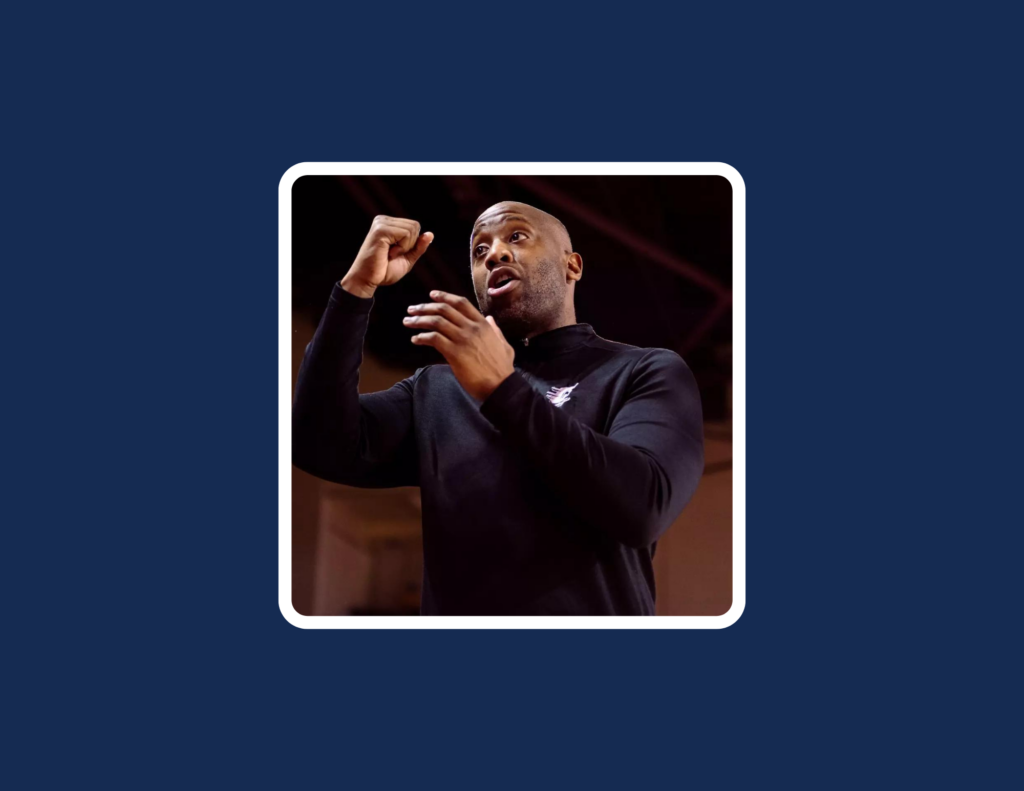
Chris McMillian is the Men’s Basketball Associate Head Coach at Central Michigan University. He joined Head Coach Tony Barbee’s staff as an assistant coach in May of 2021 and was promoted to associate head coach in August 2024.
Prior to Central Michigan, McMillian spent two seasons at Idaho State (2019-21), after serving as the Director of Player Performance at Illinois-Chicago for four years, overseeing the design and implementation of the Flames’ strength and conditioning program.
McMillian’s resume also includes stops as an assistant coach at the College of Southern Idaho (2014-15) and at Hawaii (2010-14), where he served first as the strength coach and video coordinator before being promoted to the director of basketball operations. He began his coaching career as the director of operations at Centenary College in 2009-10.
As a player, McMillian was a four-year starter at Wyoming from 1998-2003 where he helped lead the Cowboys to two Mountain West Conference titles and an NCAA Tournament berth.
If you’re looking to improve your coaching please consider joining the Hoop Heads Mentorship Program. We believe that having a mentor is the best way to maximize your potential and become a transformational coach. By matching you up with one of our experienced mentors you’ll develop a one on one relationship that will help your coaching, your team, your program, and your mindset. The Hoop Heads Mentorship Program delivers mentoring services to basketball coaches at all levels through our team of experienced Head Coaches. Find out more at hoopheadspod.com or shoot me an email directly [email protected]
Be sure to follow us on Twitter and Instagram @hoopheadspod for the latest updates on episodes, guests, and events from the Hoop Heads Pod.
Make sure you’re subscribed to the Hoop Heads Pod on iTunes or wherever you get your podcasts and while you’re there please leave us a 5 star rating and review. Your ratings help your friends and coaching colleagues find the show. If you really love what you’re hearing recommend the Hoop Heads Pod to someone and get them to join you as a part of Hoop Heads Nation.
Have your notebook handy as you listen to this episode with Chris McMillian is the Men’s Basketball Associate Head Coach at Central Michigan University.
What We Discuss with Chris McMillian
- Growing up in Orange County, CA. and playing AAU basketball in middle school with Tayshaun Prince
- The impact of outdoor pickup basketball on his playing career
- His decision to play college basketball at Wyoming
- The leg injury that set him back heading into his senior year
- Working in the fitness industry for six years after graduation
- The process and people that helped him get into coaching in 2009
- “Anytime somebody at this level says, send me your resume, trust me, you ain’t getting the job.”
- Taking a $6,000 per years DOBO job at Centenary College to get into the business of coaching
- “When you’re playing it at that level, you miss the camaraderie. You miss your teammates, the locker room, the bus rides, the meals.”
- “Understand what kind of learner you are and how you digest things and then make sure you do that so you don’t make any mistakes.”
- “This college basketball world is a fraternity. And once you’re in, if you do a good job, you can stay in.”
- Working as a bouncer in Chinatown while he was a GA at Hawaii
- The situation that landed him in JUCO at Southern Idaho
- The challenges of coaching JUCO and monitoring academics
- Getting hired by his college Coach, Steve McClain, at Illinois-Chicago as the strength coach
- His first full-time assistant job at Idaho State
- Developing skills in all areas of coaching to make yourself an asset to your head coach and your program
- “I didn’t know anything about coaching basketball. All I knew how to say was, yes, sir, I’ll get it done. And that was my approach. Yes, sir, I’ll get it done. Whatever it takes.”
- “Most guys are grinding it out from the absolute mud. And if you’re willing to be humble and hungry and have a servant mentality, you can see the other side of it.”
- “I tell players all the time, half an hour may not seem like a lot, but if it’s a half an hour, six days a week, All of a sudden you’re two and a half, three hours a week, 12 hours a month, those hours start adding up.”
- “I’d rather you make a hundred game shots at game speed than to make 300, just you going in there chucking the ball”
- “90 percent of your work should be game speed, going as hard as you possibly can, so it feels harder than the game. So when the game comes around, it feels easy.”
- “Now you’re asking two questions. What’s your price? And what’s your price to say yes to us?”
- The impact of NIL on recruiting and relationships
- Solutions to the NIL challenge
- Watching guys who win at the D1 level to help prepare for a potential head coaching opportunity
- Being a great copycat
- Rebuilding the program at Central Michigan with Head Coach Tony Barbee
- I always tell guys this, if you’re doing it for the money early on, and that’s your drive, you’re wasting your time. It’s never, ever going to work out.
Like this show? Please leave us a review here — even one sentence helps! Consider including your Twitter handle so we can thank you personally!

We’re excited to partner with Dr. Dish, the world’s best shooting machine! Mention the Hoop Heads Podcast when you place your order and get $300 off a brand new state of the art Dr. Dish Shooting Machine!

Prepare like the pros with the all new FastDraw and FastScout. FastDraw has been the number one play diagramming software for coaches for years, and now with it’s integrated web platform, coaches have the ability to add video to plays and share them directly to their players Android and iPhones via their mobile app. Coaches can also create customized scouting reports, upload and send game and practice film straight to the mobile app. Your players and staff have never been as prepared for games as they will after using FastDraw & FastScout. You’ll see quickly why FastModel Sports has the most compelling and intuitive basketball software out there! In addition to a great product, they also provide basketball coaching content and resources through their blog and playbank, which features over 8,000 free plays and drills from their online coaching community. For access to these plays and more information, visit fastmodelsports.com or follow them on Twitter @FastModel. Use Promo code HHP15 to save 15%
Your first impression is everything when applying for a new coaching job. A professional coaching portfolio is the tool that highlights your coaching achievements and philosophies and, most of all, helps separate you and your abilities from the other applicants.
The key to landing a new coaching job is to demonstrate to the hiring committee your attention to detail, level of preparedness, and your professionalism. Not only does a coaching portfolio allow you to exhibit these qualities, it also allows you to present your personal philosophies on coaching, leadership, and program development in an organized manner.
The Coaching Portfolio Guide is an instructional, membership-based website that helps you develop a personalized portfolio. Each section of the portfolio guide provides detailed instructions on how to organize your portfolio in a professional manner. The guide also provides sample documents for each section of your portfolio that you can copy, modify, and add to your personal portfolio.
Hey, coach! Want to take your team to the next level this season? Introducing GameChanger, the ultimate game-day assistant with tools to give you a winning advantage. With GameChanger, you can track stats, keep score, and even live stream games, all for free! Get the stats and crucial game video you need to lead your team to victory, all from the palm of your hand. Coach smarter this season with GameChanger. Download GameChanger today on iOS or Android and make this season one to remember. GameChanger. Stream. Score. Connect. Learn more at GC.com/HoopHeads
THANKS, CHRIS MCMILLIAN
If you enjoyed this episode with Chris McMillian let him know by clicking on the link below and thanking him via Twitter.
Click here to thank Chris McMillian via Twitter
Click here to let Mike & Jason know about your number one takeaway from this episode!
And if you want us to answer your questions on one of our upcoming weekly NBA episodes, drop us a line at [email protected].
TRANSCRIPT FOR CHRIS MCMILLIAN – CENTRAL MICHIGAN UNIVERSITY MEN’S BASKETBALL ASSOCIATE HEAD COACH – EPISODE 998
[00:00:00] Mike Klinzing: Hello and welcome to the Hoop Heads Podcast. It’s Mike Klinzing here with my co-host Jason Sunkle tonight, and we are pleased to welcome in Chris McMillian, men’s basketball associate head coach at Central Michigan University. Chris, welcome to the Hoop Heads Pod.
[00:00:16] Chris McMillian: Hey, thanks for having me on, man. I really appreciate it.
I always like doing stuff like this, so thanks for reaching out.
[00:00:22] Mike Klinzing: Absolutely thrilled to have you on and looking forward to diving into all the things that you’ve been able to do in your career. Let’s start by going back in time to when you were a kid. Tell me a little bit about some of your first experiences with the game of basketball.
What made you fall in love with it?
[00:00:35] Chris McMillian: Yeah, man, it seems forever ago. My dad, my parents moved me, moved us to California when I was seven years old. Prior to that, I was just a little snot nosed kid running around getting into trouble riding bikes and doing, doing random things. And he moves us to California, my mom, my sister, and started second grade and it was just like a big sports school.
The young kids that I was hanging around, whatever season it was, Football season, we play football. Basketball season, we play basketball. And I don’t know, for me, basketball was just the thing that I felt it came the easiest for me, to be honest with you. And the rims were low so we could dunk and that was just fun.
Right. And so from there, this is all so new to me. Started playing like little rec leagues and then the city leagues and super competitive and I just got really good, really fast, quite honestly, and I had speed and I was shooting the ball with two hands, but I was trying to steal everything.
So those are my early memories looking back on it. I was a train wreck. I was out there like a wrecking ball, not knowing what I was doing, but just playing really, really hard. So that’s how it all started for me. That really took me through from second to sixth grade and then my life changed.
I was playing with my city team, which is Brea. I grew up in Orange County, California, a city called Brea, which is next to Fullerton near Anaheim. And we played in a Christmas tournament that NJB put on. But travel teams would come in to play in these tournaments as well. So we were good for Orange County, but we ran up against a team.
Slam and jam was the name of their team. I’ll never forget it. I still have pictures of the team from when I, when I then joined them on that team was a kid named Tayshaun Prince. So here I am I’m 10, 11 years old. I’m the man in Orange County. I’m doing my thing. And we run up against this team and they just, they bulldoze us. I mean, it was a 25 point slack. And you talk about the fab five with the black socks and the black uniforms and everything. It was bad, but I played well I held my own against these guys and when they ended up happening was we lost the game.
Couple of days later my dad and I, we were walking into another gym and the coach from that team was walking out. They had just played in the championship game at Fullerton College. I’ll never forget it. It’s a Saturday morning. An older gentleman, his name was George Hunter. You can tell he lived a lot of life, but just very, very wise.
You knew he was in it to help the kids. And he pulled my dad aside and he said your son’s talented. I can help him get a Division I scholarship. Right? So like this is in 1990, you know what I mean? I’m 10, 11 years old, whatever sixth grade is. And my dad here my dad always wanted me to go to college, but to hear that I think that was the first time he had heard somebody with wisdom that really knew basketball say, Hey man, your son’s got a chance.
So long story short, they. They want him going to my dad goes to his house in Buena Park a week later or so. I remember my dad leaving the house saying, you know what, I think this guy wants money. I don’t know if I want you to play for this guy. Long story short. Three hours later, he comes home.
He has a black Slam and Jam jersey, and then the rest is history so through those years you play different stops in AAU and things like that, but it was myself, Tayshaun Prince, and like eight other Division I guys that went through this team, this Slammin Jam team together, man.
So it was pretty special. Now, we didn’t stay together all through high school. But that sixth, seventh and eighth grade, those pivotal years as you’re kind of making a name for yourself, man, I, I was, I was blessed to be a part of that. So that’s kind of how it all started. I didn’t mean to talk you off on that one, but those years are really, really special to me, man, because what felt like my world ending when my dad moved us from New Jersey where I was comfortable and moving us to California was actually my life started, you know? And so that’s kind of how it went.
[00:04:55] Mike Klinzing: So obviously the development and getting an opportunity to play with kids who are on that level is obviously huge in your development, being able to practice them and then go and play on the road with them. That’s clearly key. What were you doing individually on your own to work on your game?
Were you in the gym by yourself? Was your dad, your workout partner? Were you just going to the playground and playing more pickup? What were you doing to get better when you were, let’s say late, late in junior high, early in high school?
[00:05:24] Chris McMillian: Yeah. Late junior high, early high school, I was a gym rat. This was before trainers.
Like trainers are fairly new. All this stuff you’re seeing right now, it’s probably 15 years old. You know what I mean? Back then. In our complex where we lived, I’ll never forget it every day. I had in junior high and high school, I had a pager, right? This is back when pagers were a big thing.
I remember that’s how I kept time. Had a pager and I would walk down to where our clubhouse was. It was probably a 10 minute walk. And it was outside and I was shooting for two hours, man. And I just, I was on my own. My dad was at work, mom was at work and I was just shoot and shoot and shoot and shoot and dribble and shoot.
I didn’t know what a Euro step was. I didn’t know what a step back was. It was just old school, hard work at that time seventh and eighth grade. And then in high school because I was playing up, I played JV, but I was always with the varsity guys. I was always with them dudes, man.
Like I was always playing pickup at Jasmine park, Aravista park, going down to 38th street and Huntington beach. Like I was always around at 14. I was around 17, 18 year old men, essentially, and I wasn’t physically strong enough to play with them, but my speed was right. And so I’m able to dribble by guys that make the right reason, drive to the paint.
So obviously as I got stronger, I became more effective, but I would say my growth and development just came with playing every single day. Like this is before social media, right? This is when you could play outside. You could find an outside game every single day back then. Now kids are afraid to play outside.
I don’t want to get hurt. I don’t want to scrape my knees, my joints, whatever it is. Right. Back then, six, seven days a week, man, you were hooping. I mean, for hours now, not one and a half an hour, not one, two, I mean, you’re hooping for two, three hours, man. And when you lost, you had to wait. So you didn’t want to lose.
And so again, I didn’t have a trainer. My dad would rebound for me, but my dad wasn’t a basketball guy. You know what I mean? That’s not what, right. That wasn’t what it was. I had some good coaches and things like that. But back then again. Your coaches saw you two, three days a week for that 90 minute practice.
And then you saw him at games for the two or three games you had on the weekend. So for me personally, I was scratch made, man. Like I didn’t again, I shot the basketball with two hands, both thumbs out just cause I wasn’t strong enough to shoot threes, but I wanted to shoot threes.
It wasn’t until I got into like the seventh grade where I literally said, okay, I got to shoot with one hand. I started watching some films and like, I created my own shot really without a coach, like my dad God rest his soul. He just knew snap your wrists and get your elbow high. That was what he knew. And so that’s what I did. And it paid off.
[00:08:13] Mike Klinzing: It’s amazing, just again, the difference in how kids come up in the game today versus the way, what you just described is exactly the way that I grew up in the game, trying to find games outdoors. Like you said, now you tell a kid, Hey, you can find a good basketball game outside and they look at you like you have four heads.
You know what I mean? It’s like, come on, how can we be playing outside? And it’s just a completely different animal from what kids go through today. And obviously. You didn’t, as you said, have the trainer. You didn’t have YouTube to figure out, hey, this is the drill I got to do, or I got to work on this.
It’s kind of like, you’re just, as you said, kind of made from scratch. You figured out along the way, and that’s how you go about getting better, between the combination of, of working on your game by yourself, and then obviously the opportunity to play pickup, as you said, playing against older players. I mean, I can’t even begin to describe how valuable that was to me in my development.
And it’s just interesting, again, how the game has changed in terms of the youth basketball landscape and just The way that players develop, whether it’s better or worse, you could probably argue. I think probably you and I as old school guys, we’d probably say, man, we love the way that we came up in the game, but I can also see all the positives that kids have today in terms of just the access to better coaching and drills.
And just some of the things that you and I might have had to figure out for ourselves. They kind of have somebody there they can find. More sources to it. Cause I did the same workout basically every day, man. I had no creativity. It was just like, I was doing this. I was doing the same thing. Now, now you look at what’s out there today.
And I mean, it’s incredible what kids, what kids have access to. So, all right. So you’re, you’re obviously on track from the time you’re a middle school player and you joined this, the slam and jam team with Tayshaun Prince. You kind of have in your mind that the college basketball is something that you want to do.
So tell me a little bit about what your high school experience was like. And then sort of how the recruiting process starts for you and the direction that you take it and who kind of helps you to kind of go through that process.
[00:10:16] Chris McMillian: Yeah. So I want to say seventh or eighth grade, I left Slam and Jam well, Slam and Jam actually went away, that George Hunter got old.
And so a guy named Keith Howard, who is like a second father to me, mentor. Started a program, IEBP Inland Empire Ballers and Players. It’s still going on. Guys like Darren Collison have come out of there. Some like really, really good players. So I think for me I always knew I wanted to play Division One basketball.
I knew that, right? I didn’t know. And at the time my goal was to play in the Pac 10, right? That was what it was at the time. And so as I’m in my freshman year of high school, I play JV, have a great year I get moved up. For varsity during the playoffs. So I always knew I was trending in the right direction.
I think what was uneasy for me is I grew up in Orange County predominantly white area, right. Not highly recruited, you know division one coaches weren’t just going to come banging on my doors. we’d had a few guys over the years go division one, Keith Walker went to UC Irvine, Kevin Walker went to UCLA our women’s team was world renowned.
They had all kinds of girls going Pac 12, Big 10, SEC, everything. So for me, I knew the AAU landscape was where I was going to have to make a name for myself. And. Keith Howard did a phenomenal job putting a team together. IEPP, there were like six or seven division one guys on that team.
And every single summer, man, we just got better and better. And quite frankly, my junior year, I started to get noticed and making top 20 teams at these camps. Back then it was the, the Pump brothers. Remember, I don’t know if you were David and Dana Pump. They had this camp at Cal State Dominguez Hills.
Made it, that was probably the first time I made a name for myself making the top 20 game. And then I played in a Rockfish league. Dave Benezra ran a league called Rockfish, went there, played well. Now on the top five point guards in the state, like now things are starting to like pick up and rock and roll.
And then the, the summer began going into my senior year, we’re playing in the Las Vegas big time. This is back when everybody went to Vegas in July. And we’re playing the New Jersey Roadrunners who had Al Harrington at the time NBA player. And we beat them. And like that, that game put us all on the map.
Now I was like, okay, IABP is not just some thrown together team of random players, like they got, they got dudes that can really hoot. And so the last kind of Tournament of that, that life period. I had always known I wanted to commit early. I wasn’t going to mess around with it. My dad was an old school dude.
Like he would always tell you, if when you, when we find something that’s right, like we’re, we’re not doing this, this offer, that offer we’re going, we’re going to take it in. Wyoming had, they were there just to find a point guard. They talked to Keith, the game, they came to see me play again, had a great game.
They called me that night, offered me I got Cal State Fullerton, San Jose State. Like I had a bunch of stuff coming in, but I knew I didn’t want to be in California, you know? So those, those teams were kind of ruled out. They didn’t know that, but I didn’t want to be there. In California, I wanted to get away from home.
So it was right to answer your question. When did I know? I probably knew my junior year, like I got a chance to do this. The summer going into my senior year, I knew I was going to play division one basketball somewhere. I just, it was the way the recruitment was going and how I was playing. And all the lists I was on Jerry Freitas had me on his list.
Like it was just. It was trending that direction. And so when it finally came to when I committed, man, it was just like a weight off my shoulders and I was glad I did it early. I had toyed again with waiting because I wanted to play in the pack 10. Right. And I had a Washington state and Washington. I was like third on their board.
My ego said, wait, and then dad did what dad was supposed to do instead. No, sir, we, we are, you’re going to call Wyoming and that’s what we’re going to do. So it all kind of shook out the way it was supposed to.
[00:14:24] Mike Klinzing: When you visited Wyoming, obviously a little bit of a different place that is not necessarily always what people would think of as, hey, that’s a, that’s a hotbed, that’s a destination for basketball. When I think Wyoming basketball, I always think Fennis Dembo. That’s the first name that always comes to mind.
But Yeah, there you go. So, and so tell me about just what was it like when you visit there and again, obviously you stayed there for your entire college career and graduated and everything to go along with that. So obviously it ended up being a really good choice. So just tell me about your first impression and then kind of how that whole thing went when you get there.
[00:15:01] Chris McMillian: Yeah, I can tell you this. It was in, it was September of 1997. And this is back before your parents can go on the visits with you, right? So it was just me. They fly me in. I was on a visit with Jimmy White, who I’m still friends with, lives in Las Vegas and Vance Longhorn, also from Las Vegas. Two really good players.
Jimmy came with us. Vance didn’t. I don’t think Vance qualified, but I remember you landed in Denver. You drove two hours. I’m thinking, holy God, man, I don’t know, man, this is, this is crazy. This is wild. And so, but when you get into Laramie, it’s the college town, right? And it looks a lot different now than it did back then, but it’s a, it’s a true college town and it’s what I wanted.
Honestly I’m a social guy. I knew being in a big environment would be distractions for me. And with Laramie, it was a great college town. You could have a good time, but to go like and be a complete college kid moron, you had to go an hour to Fort Collins. Or two hours to Denver, right? Which who’s going to make that drive every single week.
And so it just made sense, man. The arena was beautiful. Coach Larry Shyatt and Scott Duncan did a good job, recruited me and. It just, it felt like home quite honestly. They took me to a rodeo when I was there. So that was fun for me. I went snowmobiling. I wrecked the snowmobile.
I always tell that story where I think I’m hitting the brake, but I’m hitting the gas and I run into the back of the tour guide. So it was just for me, I think that the going, there was one, their mascot was the Cowboys. And the nail in the coffin, so to speak, why I ultimately said like, maybe this is fate to some degree.
When I was three my, my parents did a photo shoot. In that photo shoot is me in a cowboy outfit, standing next to a horse. So my dad doing what he does, this is just fine and you got to do this. It just, everything again, I keep saying just kind of lined up and it felt right. And then we were going from the WAC to the Mountain West Conference.
My initials are CWM and Mountain West obviously is MWC. Right. So there was just a lot of things that made it feel like, Hey man, what are you looking for? Right. And so that’s kind of how it went. Easy decision in the right decision.
[00:17:20] Mike Klinzing: This is like the Lincoln Kennedy conspiracy, man.
All these, all these connections that got you to Wyoming. Yeah, it’s crazy, crazy,
[00:17:27] Chris McMillian: crazy. My mom, my dad was alive. He tell it, I knew we should have went there, but
[00:17:32] Mike Klinzing: it worked out, man.
[00:17:33] Chris McMillian: Like I say, we won the league twice. I was a four year starter. If I don’t break my leg I probably get a chance to be in the hall of fame there, but yeah, no regrets, got a degree. And honestly, we’ll talk more about it obviously later on in the show, but every single job I’ve had in coaching is high to Steve McClain at Wyoming, who I played for every single one.
[00:17:57] Mike Klinzing: All right. So as you go into school, What are you thinking about career wise? Are you just focused on, Hey man, right now at this point, I’m a basketball player, are you thinking coaching?
I we’ve had so many of our interviews when we talk to people, Chris, they usually go one or two directions, right? It’s the, it’s the guy who. is drawing plays on a napkin when they’re eight years old. And even though they’re playing there, they’re already kind of sort of thinking about, Hey, maybe someday I want to be a coach or I’m a coach.
And obviously you’re a point guard. So point guards, I think, tend to maybe think the game more in terms of coaching, but then there’s other guys who you’re just so focused on being a player that the idea of coaching really never comes across your mind until the game sort of gets taken away from you. As a player.
So I don’t know what you were thinking about going into school, but just talk a little bit about your journey to coaching and where you were when you were 18 and you show up on the campus at, in Laramie.
[00:18:52] Chris McMillian: Yeah. So 18 showing up to campus and Larry, but I’ll never forget my, my parents dropped me off. I had an apartment.
That was one of the big things for me. I didn’t want to live in the dorms cause I didn’t want to share a community bathroom. Like I was just, I was worried about that. Like I was the, I was the guy that wouldn’t go to the bathroom at the high school. I drive home during lunch, go to the bathroom and then go back to school.
So they pull up to the apartment, they move me in, they go to Walmart you spend 400 to get the apartment perfect and then all that. I remember my dad, they dropped me off. My mom and my dad, they’re in their own car in front of the arena. And he looked at me and said, listen, man, I want you to have fun, but this is going to go by really fast.
And you’re 18, right? Like how fast can it really go by? And in that moment, I was just like, man, I’m a division one basketball player. I’m going to come in here and work as hard as I can. Of course I want to be a starter, but in that moment I was okay with, I just want to play, I just want to be a part of it.
Right. And so as you’re going through the workouts and everything, I’m a freshman. I haven’t worked this hard. I think I’ve worked hard, but what we’re doing, I, my shoulders are burning so much. I’m airballing shots. I’m like, this is crazy. The elevation is 7,200 feet. So what I used to be able to do run for days, I’m up there dying.
Like, man, they’re going to kick me out of school here. If I’m, I mean, golly, I can’t make a basket right now. But you adapt, right? And so by October, leading into practice, I’ll never forget Coach McClain said, Hey, I’m going to start having these meetings. And he called me in and he said you’re going to be my starting point guard, right?
We’re going to build this thing out around you and Josh Davis. And I think you two got a chance to be really, really good. And like the rest, as they say, was history. Of course, I had dreams of playing in the NBA. I think I averaged nine and four or nine and five as a freshman. To be honest with you, I didn’t realize how good that was until I became a coach, right?
18 year old true freshman averaging nine and four, nine and five in the WAC. Like that was pretty good, you know what I mean? And so I never scored it the way I wanted to in my college career. I was always more of a facilitator, defender, try to be a good leader type guy. But the confidence coach McClain gave me and put me, man, was, I can’t put it into words.
And so it was just so grateful and so thankful and we were good they thought we were going to be a seven or eight win team that first year we went 18 games and you’re starting two true freshmen like sky was going to be the limit, you know? And so we won 19 the second year, didn’t make a post season.
And then my junior year, we won it. We won the league. Didn’t win the conference tournament, so didn’t make it to the NCAA tournament, and sure as shit, unfortunately, going into my senior year, man, I’m playing rec league softball slide into second base like an idiot, break my leg, and honestly, man, my career never really recovered from that.
[00:21:54] Mike Klinzing: It’s amazing how When you think about an injury and I think that sometimes, and I equate this with, with, with coaching, when you, when you think about, Hey, there’s you got next year, there’s always next year. And then when you’re a player, man, those years losing a year is like devastating. I mean, to have an injury, to have an injury.
I mean, I’ve seen kids and I never experienced it. And thankfully the, my own kids have never experienced that, but man, I’ve seen kids that you lose. You lose a year like that, or again, you have an injury that again, affects the way you play and man, that that really, really has an effect. So did that injury as you’re sitting on the sideline, did that get you thinking about coaching?
[00:22:38] Chris McMillian: No, I honestly, I didn’t think to start thinking about coaching till 2009. I was six years removed from college. So that, that injury, I look back on it now you talk about mental health. I was depressed at that point in time, you know the, the break was bad. I came back that year. So it would have been my true senior year and coach, I’ll never forget it.
Jason Strada came in. He was a freshman from Chicago and I couldn’t do any of the preseason stuff as I’m rehabbing and going through everything. And they played an exhibition game. Maybe it didn’t go well. Jason was at the point and I’ll never forget Steve. He called me in and sat me down. He said I need you to play this year.
I don’t care if you practice, but this team needs you. I need you to play. Right. And so for me, I look back on it. I know why I made the decision. I did not, I don’t want to leave college. I didn’t want to play that last year and hurt and not go out the way I should have or the way I wanted to, I should say.
And so I played five games I was in a boot when I wasn’t playing. And I just told him, Hey, I got a red shirt. I don’t want to do this. I want to have a really, really good senior year. And He called me and he said, listen, I love you. I respect you. He said, I’ve got to tell you this.
I can’t guarantee you because Jason now becomes a starting point guard for what’s my redshirt year. He said, I can’t guarantee you your starting spot when you come back for your fifth year senior year, well, my ego was like, well, I don’t care. Like I I’m better than this guy. I’ll just beat him out.
Right. But what was really happening was what the true message was There’s nothing you can do to get this spot back once you do this, right? That was what was really being said. I just couldn’t see through that. Does that make sense? And so. going into, I redshirted and then my, my fifth year senior year I’m playing eight, nine minutes a game, you know what I mean?
Unhappy doing things and going out night before the game because I knew I wasn’t going to play. Just doing, just being a, not being a good teammate, not being the person that got me to the point I was at before the injury, right? And so when I got done playing, I’ll never forget it. My fifth year, senior year, my very last college game was at Chapel Hill.
We lost to North Carolina in the second round of the NIT Raymond Felton, Sean May, whoever else was on that team. They were good. They were good. And I left that game knowing that my career, I’m, I’m probably Right. Like I just didn’t love it anymore. I didn’t have the passion for it. One of my best friends is Miles Simon played in Arizona.
Coaches in NBA. They just got let go by the Suns. So he’s out for the time being, but I graduated, moved to Tucson. I moved in with him. We got a place together, me and another, another one of our buddies. And I was training in Tucson. Myles got me his agent, which I was grateful for because not many agents want to, want to rep a guy that average.
Two points a game and played eight minutes a game his senior year. Right. So had an opportunity to go to Ireland for a couple grand a month and a bicycle maybe. And I just thought, you know what, man, I I’m done. Moved to Scottsdale lived there for six years, worked in the health and fitness industry.
And quite frankly, man, I did all, I had all the fun then that I didn’t have when I was in college, right? I just, I didn’t watch basketball, didn’t touch basketball, literally stopped it all cold turkey, man. And honestly, man, woke up one summer Sunday in 2009, now six years removed and was just like, man, I can’t keep doing this, man.
Like I gotta get back around this game started making phone calls, cold calling people legitimately, like made a list of people that Had knew me, I caught me and Coach McClain by this time. It’s because we stopped talking because I was so mad at him, right? Him and I had already reconciled at that time.
So I called him, I literally called everybody that I knew. And they’re all saying the same thing. Yeah, we’ll help you out. Right. The whole lip service thing, help you out. I got your resume. Anytime somebody at this level says, send me your resume, trust me, you ain’t getting the job. Right. So I got to the last name on the list, guy named Blaine Patterson.
And at this time, Blaine was a manager when I was at Wyoming. And by now he had worked himself up on the women’s side. He was the head assistant at Illinois on the women’s side. So I called Blaine. C Mac, what’s going on, man? Like, great to hear from you. But before I finish that, the story leads in with this is why you got to treat people well.
And when you’re in college, because you never know who can help you out call Blaine, tell him what I want to do. He said, let me call you back in, give me 15 minutes. Sure. Shit. He calls back in 15 minutes. He says, I need you to call Greg Gary. He’s the head coach at Centenary College. I told him about you.
He’s looking for operations guy. So great. Call Greg. We talked for, I don’t know, 30, 40 minutes or so. He’s like, listen, man, if Blaine vouches for you. If you want the job, the ops job, it’s yours. Okay, cool. He’s like, I can pay 6,000 and he kind of raised over that.
So it didn’t, it didn’t trigger to me what he said. Right. So I heard the 6,000 and I’m thinking at the time, okay, 6,000 a month, like that’s not bad. A little less than what I make now in the fitness industry, bu I can make that work. And I don’t know what I said, but he stopped me.
He’s like, Chris, I wanna make sure you understand the six thousands for the year, right? I’m 29 years old, , and I’ve just been told that my first job in college coaching, if I decide to do this, is gonna pay me $6,000 for the year. Right? I’ve got a, a house and a car and credit card bills and the whole nine.
And not for nothing, man. I was at a Y in the road. Right? Keep doing what I’m doing wind up whatever, dead, jail, whatever the case may be or change. And I made a decision to shed that skin, that lifestyle I was living. And I took the leap of faith. And four months later, man, I was driving my car across Texas to Shreveport, Louisiana. And that’s how it started.
[00:29:06] Mike Klinzing: So how long into that experience at Centenary. Was it before you said, Hey, this was, it was the right choice. Did you know immediately when you got there or did it take you a little bit of time to kind of build into what that coaching career was going to look like?
[00:29:25] Chris McMillian: Oh, it was right away. I knew right away. After that first workout, man, again, I was making the least amount of money I’d made in the last six years. And I was just happy as a clam and just being around. You know what you realize, man? When you’re playing it at that level, like you miss the camaraderie. You miss your teammates, the locker room, the bus rides, the meals.
I yearn for that, man. And like, I couldn’t believe I was mad at myself for not getting in sooner. But the reality of it is, is I wasn’t ready for that responsibility at 23. And so love the journey, man. Again, knew right away, kind of that I made the right decision. And this year I’m starting year 16.
[00:30:05] Mike Klinzing: What were you good at right out of the gate? And what was something that maybe was a struggle or something that was a challenge that you had to really grow in over the course of those 16 years?
[00:30:17] Chris McMillian: Right away off the gate, I think my energy’s always been good as a point guard who used to talking and communicating.
So I was always able to kind of talk defense and give guys juice in life. Again, I worked in the fitness industry, so I spent 10, 12 hours a day motivating people who were unhealthy to get in shape, you know what I mean? And so that always came very easy to me. I think. Scouting because it was really hard for me, man.
Like watching games and looking at teams tendencies, what they were doing, I had to get really good at. And then our own personal offensive stuff too. It just felt like there was so much stuff. I mean, I almost like the game passed me by in six years. So I was trying to have my IQ catch up to what I felt like I had missed out on, but three, four years into it, when you start watching enough film, you start to realize how it is you have to learn and how it is you have to digest things like now when we put a new play in me personally, I know me, I’ve got to draw it up myself. I draw it on the board four or five times and all of a sudden it sticks. I don’t forget it. So I think a big part of that too is just understanding what kind of learner you are and how you digest things and then making sure you do that so you don’t make any mistakes.
[00:31:34] Mike Klinzing: Yeah, I think the other thing too is when you transition from playing to coaching and then obviously you had the gap in between besides, but as a player, You kind of know what your coaches did, right? And you don’t necessarily know, especially if you’re not thinking from a coaching perspective, you’re not necessarily looking at, well.
What’s this team running or how are they designing their defense or all those little details of X’s and O’s. And so when you finally get to be a coach, it’s like, okay, I know what, I know what my coaches did, but I wasn’t necessarily studying what everybody else did. So I can completely understand where you’re coming from, where you’re like, okay, now suddenly I’m watching all this film and I got to figure it out and understand what’s going on.
So I completely get where you’re coming from with that one. You only spend a year at Centenary and then, then you get to go to Hawaii. And so how’s that happens?
[00:32:24] Chris McMillian: Ah, just dumb luck. Like I just this is back when hoop dirt was just kind of started to come out, right? And hoop dirt was breaking what jobs were open and things like that.
So I’ll never forget it once again at Centenary at by this time Centenary after our first year had already said They were going to be going to a division three team. They were dropping down to save money. Great Gary had already said he was leaving. And so I knew, I always felt like I would move up fast.
I just had to get in, right? This college basketball world is a fraternity. And once you’re in, if you do a good job, you can stay in. I just had to get in. So long story short, I’m on Hoop Dirt. The Hawaii job pops up. I see Gib Arnold got it. Gib Arnold recruited me when he was at Pepperdine when I was living in California.
Let me back up. I called the Pumps, David and Dana Pump, right? That was who was kind of running the California scene back then. Played for the Pumps a couple all star games. David’s the one that told me, because I called him, hey, looking for a job da da, have anything. He said, call Gib Arnold. He just got the Hawaii job.
Gib and I started talking and then we realized he’s like, Oh, you’re Chris McMillan from Brea, da, da, da. And we started putting it one on one together. And he’s like, man, I came to your gym a handful of times. Like we recruited you. So. That was how it went down. Gib and I talked twice on the phone. He offered me the GA job at Hawaii.
And that summer I moved to Honolulu at age 30. I was the graduate assistant there that went from making 500 bucks a month to a thousand bucks a month. So I was doing good, man. I doubled my pay in 10 months. But I was living in Hawaii and thank God a buddy of mine knew I had a friend out there that had a condo.
That they let me rent right across from the beach, 20th floor, sky rise. Now they wanted the whole thousand bucks a month. So I got a night job. I worked nights Wednesday, Thursday, Friday, Saturday in Chinatown as a bouncer for extra money, right? So it was it was a world, it was an absolute grind for me, man.
But I just knew because I was going to reset my life and chase this chase this dream that I had to make it by any means necessary.
[00:34:40] Mike Klinzing: Glamorous life of college basketball, man, is what you’re telling us right here. That’s what’s crazy. That’s the story you’re selling, Chris, man. I get it. I hear you.
[00:34:49] Chris McMillian: Man, listen, it’s so funny because your friends see you on TV and traveling and they think everything’s sweet. They don’t know that I was up at 6am, practiced all day, in the office all day, classroom checks, had practice again. Then went to class cause I was a graduate assistant and then left class.
Then went and worked till two o’clock in the morning. I did that for two years, man. Like nobody knows that. They only see the finished product.
[00:35:12] Mike Klinzing: They saw you at the games and thought you were on the beach the rest of the time, man. That’s what was going on. I was just hanging out. That’s what was happening.
[00:35:17] Chris McMillian: Yeah, they thought I was at Duke’s down there sipping on pina colodas or something
[00:35:21] Mike Klinzing: All right. So at this point. As you said, you got your foot in the door, you’re starting to establish yourself and you spent a couple of seasons in Hawaii and then the opportunity comes at Southern Idaho. Tell me how that takes place.
[00:35:37] Chris McMillian: Yeah. So honestly, man, and I’ve actually never shared this story publicly before but I will because it’s important that when you get into this business, you understand the There’s an ugly side to it. I spent four years at Hawaii. I was a GA for two years. My second year I was GA slash video coordinator.
So I got more money. And then my third year I got bumped up to operations role. And so I did that year four before the end of season, one of our assistants, I won’t say his name, long story short, made a bonehead mistake. We go through an NCA investigation. I get, I get called in for it. I had nothing to do with it, by the way.
And we were, Gib Arnold, who was the head coach at the time. He, he calls me in the office like a week or so later, and he’s like, Chris, I need you to, I need you to get a job by August. What the hell are you, what are you talking about, man, you just told me how great of a job I did and you can’t wait till I’m an assistant coach and dah, dah, dah, and so went through all that and he’s like, well, your name came up in the investigation and like, they’re trying to build a case against me for lack of institutional control.
So I need you to get a job in August and I, Chris, I swear I’ll bring you back. So. That’s what happened. I got fired essentially, which was completely blindside to me. I’ll be right. It rocked my world because when you put, when you do, espewhen you think you’ve done a good job and they’ve told you, you’ve done a good job I felt it.
Cause I could just sense he was moving a little bit different that last week. But I was really upset by it. Right. And so I take it on the chin. I take it responsibly said, Hey, no problem. I appreciate you. I handled it like a professional came in. I finished all my work and then I got on the phone and started making calls.
And within three days I had three, three job offers. Cal State LA was one of them. Langston University was another one, and then CSI was what was the final one, and I chose CSI because one, yes, it was going to put me on the road to be able to recruit, but CSI is one of the top JUCOs in the country. Had a chance to work for a good guy named Jared Fay, and it just worked out.
It just worked out. But I’ll say this, going to CSI or getting or having to go that direction was not in my master plan. That’s for sure. I thought I’d be a division one assistant by year five and at a high major by year eight and a head coach by year 12, Those were my plans.
And so it got completely derailed, but. I took it on the chin. Again, I learned the ugly side of the business. I replanted my feet and we figured it out.
[00:38:33] Mike Klinzing: Went to a different level. What was the adjustment like going from Hawaii to, to Southern Idaho in terms of just the level?
[00:38:40] Chris McMillian: Well, we have some really good players now. I mean, we had some high major dudes on our team. So the basketball was good. At Juco you’re just dealing with guys that are at junior college for a reason. I’ll say that, right. Whether they don’t like going to class, whether it’s behavioral issues, whether it’s anger issues, whatever it is.
There’s a lot more babysitting at the junior college level, right? And again, I go back to it. They’re at junior college for a reason. It’s one or two, again, grades, behavioral things. Maybe they did something wrong with the law, whatever it is. They’re there for a reason. So it was just managing that.
The hardest part for me was just monitoring academics. I mean, these kids the year I was there, they just hated school and they weren’t dumb, they just didn’t want to do the schoolwork. So having to monitor that daily and know you’re going to write this paper and things like that, which is that wore on me a lot, I knew I could only do one year of junior college.
And that, that’s one thing for me, I can say, honestly, excuse me, I would, I would never go back to junior college. It’s just, I’m not cut for that.
[00:39:42] Mike Klinzing: Yeah, that’s tough. I mean, I always think there’s, that’s one of those things that in terms of, we were talking a minute ago about just kind of what your friends see and something there where, man, here I am with a 18, 19, 20 year old kid and I’m just sort of having to cajole them all the time into getting work done.
Yeah, that’s, that’s not a fun aspect of the job and that’s not something that people think about when you sign up to be a college basketball, certainly. So when’s your job search start for the next one?
[00:40:14] Chris McMillian: So from there, I went to UIC and like I say, going to the junior college, I knew, okay, if you’re an assistant at a junior college with good players, you’re going to have interface with other division one assistants and head coaches and things like that.
So that was the master plan. And then hoop dirt I’m on it and I see Steve McLean, who I played for at Wyoming. Is getting the UIC job. So I’m, and again, Steve and I by now, and obviously been in contact cause I’m in the business now and things like that. So I’m thinking, shit, it’s my head coach.
Like he helped me get in. I’m for sure going to UIC as an assistant, right? So. One day goes by, no call. Two days go by, you know what, let me just call him. I mean, maybe, maybe he forgot my number. Three, four days, five days go by, nothing. I’m like, golly, this is, this is probably not good. This is probably not a good sign.
And again you talk about core memories and moments. I’m in the Salt Lake airport. I get my phone rings at 6 AM. Well, coach, what’s going on, man? I’m like glad you called and wanting to know you’re busy. And, and he got right to it. He said, Chris, I can’t hire you as an assistant. He said, I’ve got to keep one guy on staff and then I’ve got to hire two Chicago guys.
Again, because of my experience with, with Gibb at Hawaii, I knew you have to handle those situations the right way or you’ll never get a job. Right? Yep. Coach Mac, I love you, man. The fact that you had enough respect for me to call and tell me no is enough for me. So about 10 days goes by and I get a call from our strength coach who was at Wyoming.
His name is Jenae Jackson, still a very good friend of mine today. He’s like, Hey man, Steve wants to hire you. So what are you talking about, man? He called me 10 days ago and said he can’t hire me. Now you’re telling me he wants to hire me. Like, what are you talking about? And he said, no, he wants to hire you as his strength coach.
I said, strength coach? Again, I worked in the fitness industry. I was a personal trainer, right? Now I was training the average Mrs. Jones who’s 35 pounds overweight, but it’s all one in the same, right? You just got to figure out who you’re training and their mechanics and you can put a program together.
And I know now he put Janae on the front line to gauge my interest. So I told you that, yeah, I would do that. Like, have him give me a call, like, let’s talk about it. And so that’s how it happened. Steve called me, we met at the final four in Indy. He said, here’s the plan, you know do this for me.
And then when a spot opens up on staff I’ll bump you up. I said, okay, great. He said, but here’s the thing. The NCCA just passed a rule. You have to be certified. It’s like, Oh man, I don’t like school. I might just, you go guys, man. I don’t want to study. What are you talking about? So I had to get my CSCS, right?
Which is like the gold standard strength coach certification. The book was 700 pages and I had three months to get it done. I bet on myself again. I did it. Simple as that. I went, I was a strength coach, director of player performance. I had a ton of responsibility. He treated me like an assistant.
I was involved in all the meetings. I mean, I did a lot of stuff he took care of me financially. He was my guy, man. He helped me a ton. A couple of times assistant spots had opened. And he didn’t bump me up, right? Once again, twice that happened. I had a choice to make.
Are you a crybaby brat like you were when you were in college? Or do you handle this like a man? I’m gonna handle this like a man. Again, he took care of me. I was grateful to be there and have a job. And then after year four there, Idaho State, the opportunity to go to Idaho State happened.
And the reason why that happened is because Jared Fay, who I worked for at CSI, was taking the associate job at Idaho State, so he connected me with Ryan Looney, and the rest, as they say is history. And then finally now after, what was it? Nine years in the business I became a full time assistant.
Now here’s the kicker, right? And everybody thinks this job is so glamorous. I left a job making 90 as the strength coach to make 36 as an assistant at Idaho State. I had my fiancee at the time, we just had a daughter, like she thinks, she thought I was crazy. And looking back on it, I probably was a little bit crazy, but my goal and my vision was just so strong that I knew I had to do this in order to keep growing and progressing. So that’s what happened, man. I did two years there after that first year, Idaho state got a big bump in pay. And then after that second year was able to get Central Michigan.
[00:45:29] Mike Klinzing: Did your wife know what she was signing up for?
[00:45:31] Chris McMillian: Oh, man. Let me tell you that conversation. Well, it was hard to, because when her and I met I had told her, Hey, listen, I love this profession. Like I will move forward. I will up and go at the drop of a dime. So if that’s something you’re okay with, then like, let’s do this.
Right. And so in that moment, you’re in the honeymoon phase, everything sounds good. Right. Yeah. Right. Oh, yeah. Let’s do it. Absolutely. And then, so what happened was her and I had actually moved from one apartment to another to an upstairs unit. And literally 10 days later, I got Idaho state. So I moved twice in 30 days for a lot less money.
And her family lives in Hillsdale. Michigan, which is only two hours from Chicago. And I’m moving her to Idaho with a kid to make three grand a month. Like if that’s not crazy, I don’t know what is. But bless her heart, man. She has faith in me. Like she didn’t hold me back. She, she didn’t, I can safely say she didn’t agree with the move.
We had money saved, so we were okay, but in her mind, she didn’t understand. I would also argue now with where we’re at now in my career. I think now she understands.
[00:46:48] Mike Klinzing: Yeah, a difficult conversation, right? I mean, again, for some people who grow up in the coaching world, they can kind of understand that.
So if your fiance or your wife has coaching in their background, then yeah, maybe they understand it. But I think most people look at some of the decisions you made from the outside and be like, Oh, okay. Man, how are you possibly, how are you possibly making those decisions from a financial standpoint and just from, again, uprooting yourself and going from here to there?
I mean, look, geographically, you’ve been in as many different regions of the country in a short period of time as just about, as just about anybody. And look, I played, I played at Kent, so I’ve been to central Michigan. Many, many times. And it’s not, it’s not like central Michigan is right there in a, in a huge metropolis great, great school and Mount Pleasant’s awesome.
But again, it’s not, it’s certainly not Chicago. Let’s put it that way.
[00:47:41] Chris McMillian: No, it’s not.
[00:47:44] Mike Klinzing: But again, now you get the opportunity where you have you’re in a good program. You’re with a great head coach. You’ve got an opportunity to continue to, to move up and progress. So tell me a little bit about as you get to central.
What do you think are your best qualities that you bring to a staff as you arrive at central Michigan?
[00:48:07] Chris McMillian: Well, let me tell you this first, getting to Central was huge because again, my wife’s from Michigan. Yeah. And the way I got her to agree to Idaho State was, honey, I promise you, I’ll get you back to Michigan.
Let me just tell you this. I was lying. I had no way of getting her back to Michigan. So I was very, very happy that. What was then a ball phase lie, because I couldn’t guarantee it was, was able to come to fruition. Two things to come in here. Number one, coach Barbee was my assistant coach, my freshman year at Wyoming.
So there was familiarity there. So coming here for me personally, I had done video, I had done ops. I’ve been an assistant at the junior college level. Now division one level, I’ve been a strength coach. For me personally, I just feel like I was a jack of all trades, master of none. Like if you needed me to step in and do strength, I could do that.
You needed me to be the ops guy and run camp, which I did do. I can do that. Need me to help with video? No problem. So for me, I look back on it early on. I was trying to speed up my path when the reality of it is, is I was going at the exact pace I needed to be so that I can be an asset to a program with whatever they needed.
Right? And so I knew I was going to be great on the floor with energy and talking defense and things like that. And I always felt like I had an act of building a great relationship with the guys. So that, that was what I thought when I got the job and then obviously getting her back home was, I mean, I went from sleeping on the couch to sleeping back in my bedroom all the time, guys.
[00:49:45] Mike Klinzing: That’s good stuff. I mean, so basically you’re picking up skills along the way that you don’t necessarily realize as it’s happening. That, Hey, this pace that I’m moving in my career is actually exactly what I need because it’s giving me all these different skills that eventually are going to allow me to be super valuable to a program. And I think there’s a lot to be said for that.
[00:50:07] Chris McMillian: There is no question. I think Buzz said it best. By the way, I never forget where I, where I saw him talking and he said, when he first got his first GA job, I believe is what it was. He said, I didn’t know anything about basketball. All I knew how to say was, yes, sir, I’ll get it done.
And that was my approach. Yes, sir, I’ll get it done. Whatever it takes. If I know how to do it, I was going to ask somebody how to do it. And then I was going to make sure it was exactly how my boss wanted it. Right. And so for me, I love it because now when I ask one of our GA’s, Hey man, I need you to go do this and go get so and so for class or go pick this up.
I don’t feel bad for him. You know why? Cause I did it. Right. And it’s almost like a rite of passage to get to this point, like there’s very few guys coming in, jumping right to a mid major assistant, going up the ladder, becoming a head coach. I’s hard, man. Like that, that hype dream is like hitting the lotto.
Most guys are grinding it out from the absolute mud. And if you’re willing to be humble and hungry and have a servant mentality, you can see the other side of it.
[00:51:18] Mike Klinzing: Absolutely. I mean, I think that’s one of, if you look at it from the outside, right, and it goes back to what we were talking about, the percept, the perception of what your friends thought you were doing in Hawaii versus what you were actually doing, I think when people see coaches on TV or they think about a career in college basketball, if you talk to, if you talk to high school players or you talk to college players and they’re like, Hey I I want to be a coach someday.
They’re not talking about all the things that you and I have been talking about. They’re talking about, Hey, I’m on TV and I’m doing this and, and that kind of stuff. And I got the gear and I’m working with the future NBA guys and all this stuff. And it’s all the glamor things that that’s what people think about.
And they don’t think about all the things that you just described. And again, when you really talk about what brings value to a program and eventually what brings value and maybe it’ll get you an opportunity someday to be a head coach. It’s all those things, understanding what. Everybody’s role is on the staff, what they do.
And you can say, Hey man, I’ve been there. Like we need to get this done. I’ve done it before. And here’s why that contributes to a winning program. As you’re there at Central and you’re thinking about what it is that you guys are, are doing as a staff, how do, how does your role, has it changed since you first got there?
Obviously you got a promotion this summer to associate head coach, but just how has your role changed? And what are some of the things day to day? How do you guys divvy up responsibilities?
[00:52:42] Chris McMillian: Yeah, good question. One, I love our staff. Number one, coach Barbee’s unbelievable. He is X’s and O’s wise now been in it 16 years.
He’s the best I’ve been around. Unbelievable coach. And so he gives us a ton of freedom. it’s not being 5 a. m. till 10 p. m. He’s a family guy, like working for him has been an absolute breath of fresh air he has given me a ton of responsibility. The head coach’s meetings, C Mac go for me, C Mac, what do you think about this?
C Mac, I need you to draft this. And it’s fun because you get to do it and see it work right when it goes good. But the fact that he has enough trust in me to give me that responsibility for me is what, is what I really appreciate. Our staff, Coach Terry, who was a head coach at High Point Coach Niz, who was a junior college head coach, took his team to a D2 national title game.
No ego. None. Zero. I work with some of the best dudes in college basketball. Coach Terry’s the offensive coordinator, him and Coach Barbee together. Myself and Niz, we’re the defensive coordinators. And we sit and we bounce ideas off each other, man. And like, there’s no right or wrong answer.
There is just four dudes. Talk and hoop for the team, right. For the greater cause, which is winning. And we all have our academic pieces and I took on travel this year because I’ve done it before. I don’t care about the associate head coach title. Again, I got no ego.
Is it nice to have? Yeah. I hope it helps propel my career. And I hope I’m looked at through a different lens to ADs eventually. I’m happy for that. But at its core, man, I don’t mind rolling up my sleeves, doing travel and booking flights and talking to hotels. I don’t care, man. Right. Because it’s about the team, right?
I don’t mind going and picking up guys or taking them to class or doing classroom checks. Like we are all hands on deck. We’re understaffed, right? We don’t have a, Well, we have three assistants, an ops guy, and a GA. A lot of other division ones, they got secretaries and a special assistant and a video coordinator and five GAs, and they got all these things like we don’t, we don’t, so we are a blue collar staff man that’s just gonna bring it every single day to help our guys try to get better on the court and understand now too, now we have some really, really hard conversations with guys off the court so that they understand what it means to be a part, not just at Central Michigan, but to be a Division I athlete as a whole and the opportunity they have and how they have a chance to have this opportunity change the trajectory of their lives.
[00:55:37] Mike Klinzing: How has the rules in terms of, we’ll get to NIL and the transfer portal in a second, but how the rules in terms of access to players and just how much you get to do with guys in the offseason in terms of workouts and having guys on campus, how has that impacted you as a coach and how do you guys approach that as a staff, what you do with your summertime?
[00:56:00] Chris McMillian: Well, we don’t break any rules. Let me just say that. So there we go. There we go. We don’t break rules here. We stay within those hours now. But here’s the thing. You get four hours in the summer on the court. You get four hours in the weight room. You can do as much voluntary lift as you want.
We stay within those guidelines. I’ve worked at schools before where compliance didn’t care about that. Man, man, get better. You guys want to get in the gym, get in the gym. I’ve worked at schools where it’s, if you’re in the gym for five minutes, you better add it to Kara. We work with the confines in which we have, right.
So for us our guys we, we do practice three, four days a week. we take our four hours and the rest of the time we tell them, listen, love you to death. Wish I can get more time with you, but we can’t, cannot do it. Now. When the 20 hours kicks in, September 23rd, that’s when you can really, really start getting that player development in, right?
Because you get four hours a day, which you’re never ever going to use. So we always make sure we got at least a half an hour in there where guys can come into the gym with the coach and get extra work in. Right now, I tell players all the time, half an hour may not seem like a lot, but if it’s a half an hour, six days a week, All of a sudden you’re two and a half, three hours a week, 12 hours a month, those hours start adding up.
And then those added up hours started equating to performance and that good performance started equating to wins. So that’s kind of our approach.
[00:57:35] Mike Klinzing: How much of that is teaching a guy what the pace of a 30 minute workout looks like? in order to really get better. Because look, I know you’ve seen guys and I’ve seen guys that if they go in and they’re in a gym for a half hour and they’re kind of walking around and man, that half hour goes fast and they haven’t accomplished a whole lot.
So how do you talk to your guys about maximizing and being efficient in terms of utilizing that kind of time for player development?
[00:57:58] Chris McMillian: Yeah, it’s standard. We only have one way of doing things. And here’s the thing, because of Coach Barbie’s pedigree and the guys he coached at Kentucky and Auburn and Memphis, you better listen, right?
You better listen to how Devin Booker and Tyler Herro and Karl Anthony Towns and Anthony Davis, you better listen to how they trained and the schedules that they kept in order to get where they are now, where those guys. Five star guys. Yeah. Now, but Kentucky has some dudes who were three and four stars that were supposed to be four year guys that turned into one year guys because of the way they worked.
So that’s up to us as coaches to demand that type of work and that intensity when they’re with us. I tell guys all the time, man, I’d rather you make a hundred game shots at game speed than to make 300, just you going in there, chucking the ball, but the rim on the gun, huge, huge difference. Right. Now, there’s times on a Sunday where that’s important, low impact, take care of your body, joints, knees, etc.
But 90 percent of your work should be game speed, going as hard as you possibly can, so it feels harder than the game. So when the game comes around, it feels easy.
[00:59:12] Mike Klinzing: Absolutely. Makes a ton of sense. And I think that’s something that not every player has that on their own. Not everybody gets that and understands it.
So to have a staff, and again, you guys are fortunate with coach Barbie’s experience and the guys that he’s worked with to be able to point to that and point to those names that guys know clearly that holds some weight. I’m sure when you’re talking to players, tell me a little bit about the impact of the transfer portal, NIL, on you guys in the MAAC mid major.
How do you see it? What are the positives? What are the negatives, the challenges? Just how do you approach both of those things?
[00:59:50] Chris McMillian: Last year we didn’t have NIL. I would argue we were probably one of maybe two or three teams to win 18 games and have no money. Zero, none. Now this year we were able to rub some pennies together to be able to take care of handful of guys with a little something, but.
This NIL thing is crazy, man. It’s crazy. And the, the recruiting piece is no longer about relationships. How much can you give me? Right? Like these guys at high majors, I would argue back in the day, 20 and 30 years ago, you had to recruit a guy, man. You had to go and see him every day and recruit mom, recruit dad and auntie and uncle and sister.
You got to do things different. Now you’re asking two questions. What’s your price? And what’s your price to say yes to us? That’s what it is right now. For us. We’re not recruiting that kind of kid. So it’s still the relationship. Yeah. NIL comes up a little bit, not as much as you might think for us, but here’s what we sell.
What we go after, what we’ve been able to go after is guys that are coming down from the AAC, ACC, things like that. They couldn’t put up numbers or couldn’t play for whatever reasons. Hey man, use us, come here. We’re going to make you great. And then the following year, you’re going to have a decision to make.
Stay here and continue being great. Or your NIL value has now gone up and somebody is going to pay you 200,000. Right? So we embrace it. Do when we recruit guys, we always tell them, listen, I want you to be here four years. I do. But the reality of it is you come here and average 13 a game on a 20 win team in the Mac, you’re going to be getting phone calls.
NIL agents are going to be hounding you. Somebody is going to want to pay you 150. You got a decision to make, cause we can’t do that. So that’s not what we have here. So I think it’s just, it’s unfortunate. Cause I would love to see guys go through like how I did a full four year cycle, but the reality of it is, is unless the NCAA is going to step in and really, really make some significant changes with this NIL thing, it’s sharks in the water, man. It’s all one year deals at this point in time.
[01:02:08] Mike Klinzing: Can you even wrap your head around what it would have been like for you when you were playing to have some of, I guess, maybe the opportunity financially, but then also just the decisions kids are having to make again at the age that they’re making them.
Thinking back to yourself when you were 18 or 19 years old. Cause I can’t honestly imagine being in a college basketball locker room as a player and having all that NIL, that money stuff kind of floating around in addition to guys battling for playing time and all the other things that. You as a coaching staff and again, players have to kind of deal with from a psychological standpoint of, of coming together as a team and building that camaraderie.
I just can’t wrap my head around what that’s like day to day in the locker room for, for kids. I don’t know how you think about that. Obviously you’re meshed in it as a coach, but have you ever thought about it? Kind of thinking back to your own experience as a college basketball player.
[01:03:04] Chris McMillian: Yeah, to be honest with you, I, I have, I wouldn’t have been mature enough to handle it, quite frankly like the social media thing and how easily accessible pictures and videos is and just it would have been a train wreck.
You would have gave me 60, 000. As an 18 year old kid, or let’s say after my freshman year, which I had a good year. So I would have been highly, if going back to then I averaged nine and five as a freshman, I would have been highly coveted all things being considered going into my sophomore year. I would have had an NIL value, 60, 70 grand maybe.
I probably would have paid no taxes. So I would have owed Uncle Sam at the end of the year, however much money. And I just think I would have blown it, man. I think I would have blown it. I don’t think I would have been equipped to handle that kind of money. Now I had a good circle. So maybe with my dad and my mom taking control of it a little bit different, but I look at this NIL stuff, man.
There’s two things I wish I wish this NIL stuff, like, especially these large sums of money, I wish they would give the kid say a hundred grand. And then put the rest in an interest bearing account for them, right? Invest for these guys, put it into real estate for them, and then say, Hey, listen, when you turn 25, we’re going to pay you out eight, 9,000 a month for 30 years.
That’s creating true generational wealth for these guys, man. Right. And I’m not saying all these guys that are getting this money are going to squander it, but I would argue there’s going to be a half of these guys that are going to wake up in 10 years. Like, damn, I should have saved that 600,000.
Right. So I, and that’s where I think the NCAA has got to step in and start doing something, man. Like what, what are you teaching these guys financial literacy, man? Are you getting them set up with the right advisors? Are they putting 30 percent away for taxes? Every single Division 1 player should have an LLC.
Every single one. I should have an LLC should be an S corp so they can write things off like, but nobody’s talking about that, right? You’re just giving these kids all this money and saying, Hey, here, go run a muck. It’s not what it’s supposed to be for, man. So that’s my stance on it, not to get off on a tantrum, but the whole NIL thing, I just think we’re doing these kids a huge disservice and I just wish that there was some way to give them the money. But make sure they’re set up for the long run.
[01:05:30] Mike Klinzing: I mean, I think that again, it’s sort of become the wild, wild West. I think that, and I, again, I’m not smart enough to know what it eventually looks like, I think hopefully the NCAA is able to in some way manage or, or as you said, just to be able to educate players to make that sort of a mandatory part of what schools are doing.
But again, who knows? It’s just, I always laugh when I hear coaches talk and you think back to 10 years ago and some of the things that were huge, huge, giant scandals of you think about the money falling out of the envelope for Chris Mills back in the day. And it’s like now you couldn’t stiff Chris Mills with the amount of money that was in that envelope back in the day.
And so it’s just, it’s kind of crazy when you really break it down and it’ll be interesting five years from now to see what, what it all looks like.
[01:06:24] Chris McMillian: Yeah.
[01:06:24] Mike Klinzing: What have you been doing, what have you been doing over the course of the last seven or eight years to prepare yourself for potentially an opportunity at some point to, to be a head coach?
Are you kind of keeping a, whether it’s a, now it’s, now it’s a digital file used to be the three ring binder, but just what, what, what have you been, what have you been doing so that when. That call, if it eventually does come, you’ve got an idea of what the, what the plan is that you could present to an AD or you know a school in an interview process.
[01:06:54] Chris McMillian: it’s crazy. I’m not ashamed to admit this. Like I I’m a copycat guy, man. Like, I don’t, I have my own ideas, but I like to see things written down other people’s ideas and then make them my own so I’ve been able over the years to get my hands on probably seven or eight resumes. Of high level guys and now they’re nicer.
They’re the PowerPoints and they’re the they’re pictures and words, and who you’re going to recruit and dah, dah, dah. And I look at them, I’m like, I like this. I’m going to take this piece. And I like that. I take this piece and it’s got the first 30 days, 60 days, 90 days in the pillars. And I don’t like that word.
I’m going to use this word. So I won’t tell you the coach’s names. I don’t want them to get mad, but I’ve got about eight of them and I’m morphing it all together. Right. And I’ve got a guy that’s going to work on it for me. But I’m gonna start putting something together, man. And again, I, have a good idea of what I want it to be.
And I’d argue it’s going to be different from the time when that time comes to three or four years, hopefully into a head coaching career. Hopefully God will bless me with that opportunity. But to answer your question, yes, I’m studying. I’m studying the good ones. I study Brad Stevens, Nate Oates, who was a high school coach and then Buffalo, like I watch him.
Buzz. I love watching Buzz’s content. I think he’s a leader and a teacher of men. Obviously, Steve McClain is very near and dear to my heart. I watch the guys that that are winning at this level, honestly, man, that’s, it’s huge.
[01:08:27] Mike Klinzing: Yeah. I mean, being able to take from guys who have had success and then be able to incorporate that into sort of your philosophy and what you want to do.
I mean, that’s, again, very few people are reinventing the wheel, right? You want to take pieces of, Hey, I like what this guy does in this area. And I like what this guy does in this area. And now you start pulling those things together and then it’s no longer, it’s no longer theirs. melds into, as you said, it melds into what Chris is all about.
You take all these different pieces and. And put them together. All right. I want to ask you one final two part question. So part one is when you look ahead over the next year or two, what do you see as being your biggest challenge? And then the second part of the question is when you think about what you get to do every day, what brings you the most joy?
So your biggest challenge and then your biggest joy.
[01:09:17] Chris McMillian: Yeah. Biggest challenges for sure, I love being in Central Michigan. I do again, my, my wife being from here, my daughter in school now, my other daughter in school now, even though my dad uprooted us and it was the best thing that happened to us doing that.
My youngest daughter has down syndrome and she’s doing great here. So everything is like perfect here. So the biggest challenge would be. Having to potentially leave this for whatever reason, whether it’s a different job or we won’t get like, Oh, I don’t, that’s not in the cards, but you know what I mean, though, that change for me is a little daunting, to be honest with you.
And like, if I was single by myself, no big deal, but now you’ve actually we bought a house here, you plan a real route and so that’s going to be really, really hard. Second part of your question was, what am I looking forward to? Biggest joy? Biggest joy, I think this team we have is the best team we’ve had since we’ve been here.
I think we are loaded from top to bottom. And the biggest joy I’m gonna have is being able to say, I helped coach Barbee flip this program. 7 wins, 10 wins, 18 wins. He beat it. And I think, I think if we do it right, this can be a 20 plus win team. And once you get into March, anything can happen, like anybody can take something that’s sustained, right?
Something that’s already good, man. We took a program that was at the very, very bottom and should have had the breakout year, year two, had some injuries, we finally had any year three. And now you’ve been able to go another year and recruit some really, really good players and you return what will be the preseason player of the year.
Yeah, that’s, that’s gonna be a big joy for me saying that I helped him flip this thing. And to say I was with him. Yep. Right. Like I was with them when we lost 12 in a row, But you
[01:11:29] Mike Klinzing: You were digging the foundation below ground level. Right. Oh man. Now it’s starting to go up.
[01:11:36] Chris McMillian: Now it’s starting to go up. and you know what’s great with, with, with even more fun to see is I’ve never been a head coach. Again, hopefully I’m blessed to be able to do that. But what’s been fun to see is his demeanor and energy change as we’ve gotten better. Right. And so head coaches, man, they’re there for a reason.
These dudes are alpha and they’re strong personalities and their moves are direct correlation with wins and losses. So the more you lose, the worst the mood gets. Right. So to see where he’s at now, man, like, and he’s always been a joy to be around, but I think this staff has done a really good job with coaching, helping him.
And it’s going to be fun. I think this time March of next year, seeing what this team does.
[01:12:20] Mike Klinzing: Yeah, I mean, that’s what it’s all about, man. When you talk about building and being a part of something from the ground up, there’s nothing more satisfying when that eventually comes to fruition and you put together the kind of team that You want to put on the floor and you see like, Hey, this was the vision four or five years ago.
And man, now, now we really see it out on the floor to be able to be able to share that vision with the world, man. That’s a, that’s, that’s good stuff. That’s, that is exciting. All right, before we get out, I want to give you a chance, share how people can connect with you, find out more about what you’re doing, find out more about the program, social media, email.
Website, whatever you want to share. And then after you do that, I’ll jump back in and wrap things up.
[01:12:58] Chris McMillian: Yeah. I’m, I’m pretty easy to find on on Twitter. It’s probably the easiest thing to find me on. You guys can hear me. Yeah. I don’t know. What’s my Twitter handle? @CoachMcMillian1
[01:13:08] Mike Klinzing: Yeah. Yep. That’s it.
[01:13:09] Chris McMillian: You can email me. [email protected]. I gave you my personal email because you never know when Central Michigan might ask me to leave for a day. I’m an open book, man. I love getting messages from random young coaches that say, I mean, how’d you do it?
And, We’ll love to hear about your journey and people love talking about themselves. So but I do love to try to give insight and wisdom. I always tell guys this, if you’re doing it for the money early on, and that’s your drive, you’re wasting your time. It’s never, ever going to work out. So that’s that.
[01:13:54] Mike Klinzing: Well said, Chris, I cannot thank you enough for taking the time out of your schedule to jump on with us tonight. Really appreciate it. And to everyone out there, thanks for listening, and we will catch you on our next episode. Thanks.