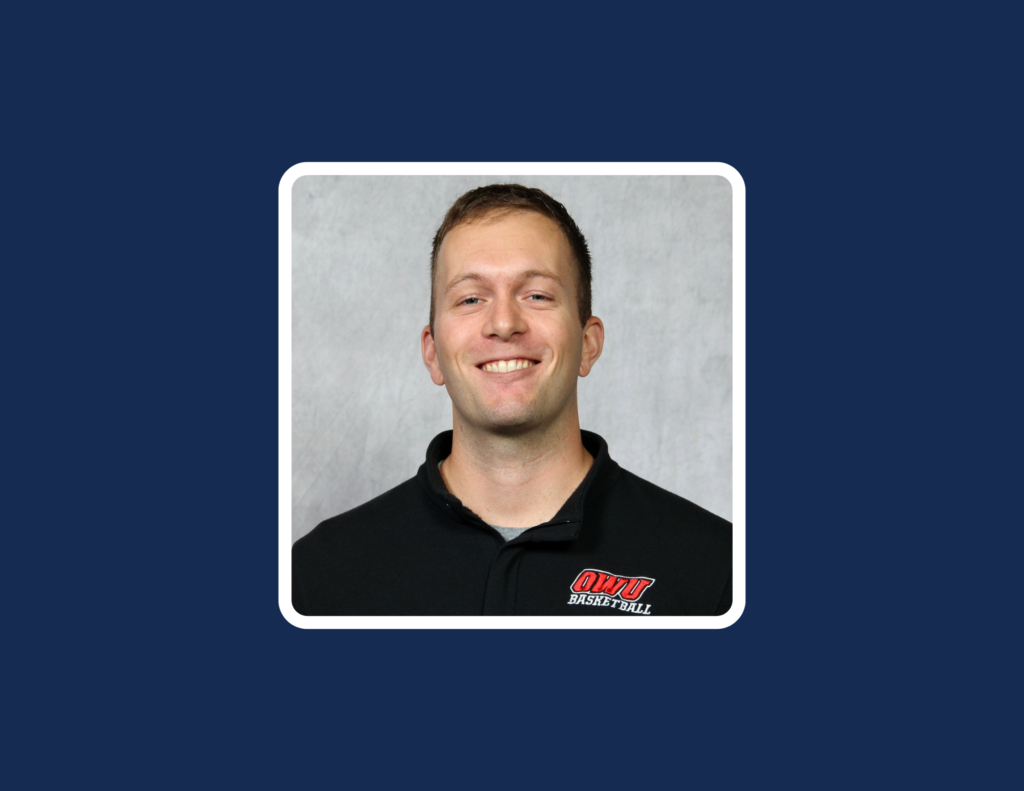
DAVID VOGEL – OHIO WESLEYAN UNIVERSITY MEN’S BASKETBALL ASSISTANT COACH – EPISODE 975

Website – https://battlingbishops.com/sports/mens-basketball
Email – davogel@owu.edu
Twitter/X – @DavidVogel22
If you listen to and love the Hoop Heads Podcast, please consider giving us a small tip that will help in our quest to become the #1 basketball coaching podcast.
David Vogel is entering his third season as a Men’s Basketball Assistant Coach at Ohio Wesleyan University under Head Coach Mike DeWitt. Vogel came to Ohio Wesleyan from Wittenberg University, where he served as an Assistant Men’s Basketball Coach from 2020 – 2022.
David began his coaching career at Texas Christian University where he was a graduate assistant for 2 seasons and helped the Horned Frogs to a 23-14 record and a National Invitation Tournament semifinal appearance during the 2018-19 season.
Vogel is a 2018 graduate of DePauw University, where he was a 4-year letterman in basketball. During his undergraduate career, he helped the Tigers win the North Coast Athletic Conference tournament in 2015 and was a 3-time academic all-conference selection.
If you’re looking to improve your coaching please consider joining the Hoop Heads Mentorship Program. We believe that having a mentor is the best way to maximize your potential and become a transformational coach. By matching you up with one of our experienced mentors you’ll develop a one on one relationship that will help your coaching, your team, your program, and your mindset. The Hoop Heads Mentorship Program delivers mentoring services to basketball coaches at all levels through our team of experienced Head Coaches. Find out more at hoopheadspod.com or shoot me an email directly mike@hoopheadspod.com
Be sure to follow us on Twitter and Instagram @hoopheadspod for the latest updates on episodes, guests, and events from the Hoop Heads Pod.
Make sure you’re subscribed to the Hoop Heads Pod on iTunes or wherever you get your podcasts and while you’re there please leave us a 5 star rating and review. Your ratings help your friends and coaching colleagues find the show. If you really love what you’re hearing recommend the Hoop Heads Pod to someone and get them to join you as a part of Hoop Heads Nation.
Get ready to take down some notes as you listen to this episode with David Vogel, Men’s Basketball Assistant Coach at Ohio Wesleyan University.
What We Discuss with David Vogel
- Growing up in small town Indiana in a basketball family that runs the McCracken Basketball Camps
- Why meeting other players is so important on a recruiting visit
- How a career counselor at DePauw helped him to see that coaching would be his profession
- Don’t be afraid to reach out to people and don’t close any doors
- “There’s a lot of different ways to be successful.”
- The breadth of experience you get working with different head coaches
- “You’re not playing the exact same way year to year, and you’re always trying to really get the best out of who you got.”
- How one of his Mom’s connections resulted in him getting a GA job at TCU under Jamie Dixon
- Working video and graphic design at TCU
- “If you really want to make yourself a little bit more indispensable it’s good to know how to watch film.”
- Getting a part-time assistant’s job at Wittenberg University
- “Instead of trying to do 50 different things in one day. Pick two or three things that you’re really going to focus on and grind on for four or five hours.”
- Telling a story in recruiting that is authentic to your head coach’s vision
- Fit over everything in recruiting
- The hard work, self motivation and time management skills it takes to succeed as a D3 athlete
Like this show? Please leave us a review here — even one sentence helps! Consider including your Twitter handle so we can thank you personally!

We’re excited to partner with Dr. Dish, the world’s best shooting machine! Mention the Hoop Heads Podcast when you place your order and get $300 off a brand new state of the art Dr. Dish Shooting Machine!

Prepare like the pros with the all new FastDraw and FastScout. FastDraw has been the number one play diagramming software for coaches for years, and now with it’s integrated web platform, coaches have the ability to add video to plays and share them directly to their players Android and iPhones via their mobile app. Coaches can also create customized scouting reports, upload and send game and practice film straight to the mobile app. Your players and staff have never been as prepared for games as they will after using FastDraw & FastScout. You’ll see quickly why FastModel Sports has the most compelling and intuitive basketball software out there! In addition to a great product, they also provide basketball coaching content and resources through their blog and playbank, which features over 8,000 free plays and drills from their online coaching community. For access to these plays and more information, visit fastmodelsports.com or follow them on Twitter @FastModel. Use Promo code HHP15 to save 15%
Your first impression is everything when applying for a new coaching job. A professional coaching portfolio is the tool that highlights your coaching achievements and philosophies and, most of all, helps separate you and your abilities from the other applicants.
The key to landing a new coaching job is to demonstrate to the hiring committee your attention to detail, level of preparedness, and your professionalism. Not only does a coaching portfolio allow you to exhibit these qualities, it also allows you to present your personal philosophies on coaching, leadership, and program development in an organized manner.
The Coaching Portfolio Guide is an instructional, membership-based website that helps you develop a personalized portfolio. Each section of the portfolio guide provides detailed instructions on how to organize your portfolio in a professional manner. The guide also provides sample documents for each section of your portfolio that you can copy, modify, and add to your personal portfolio.
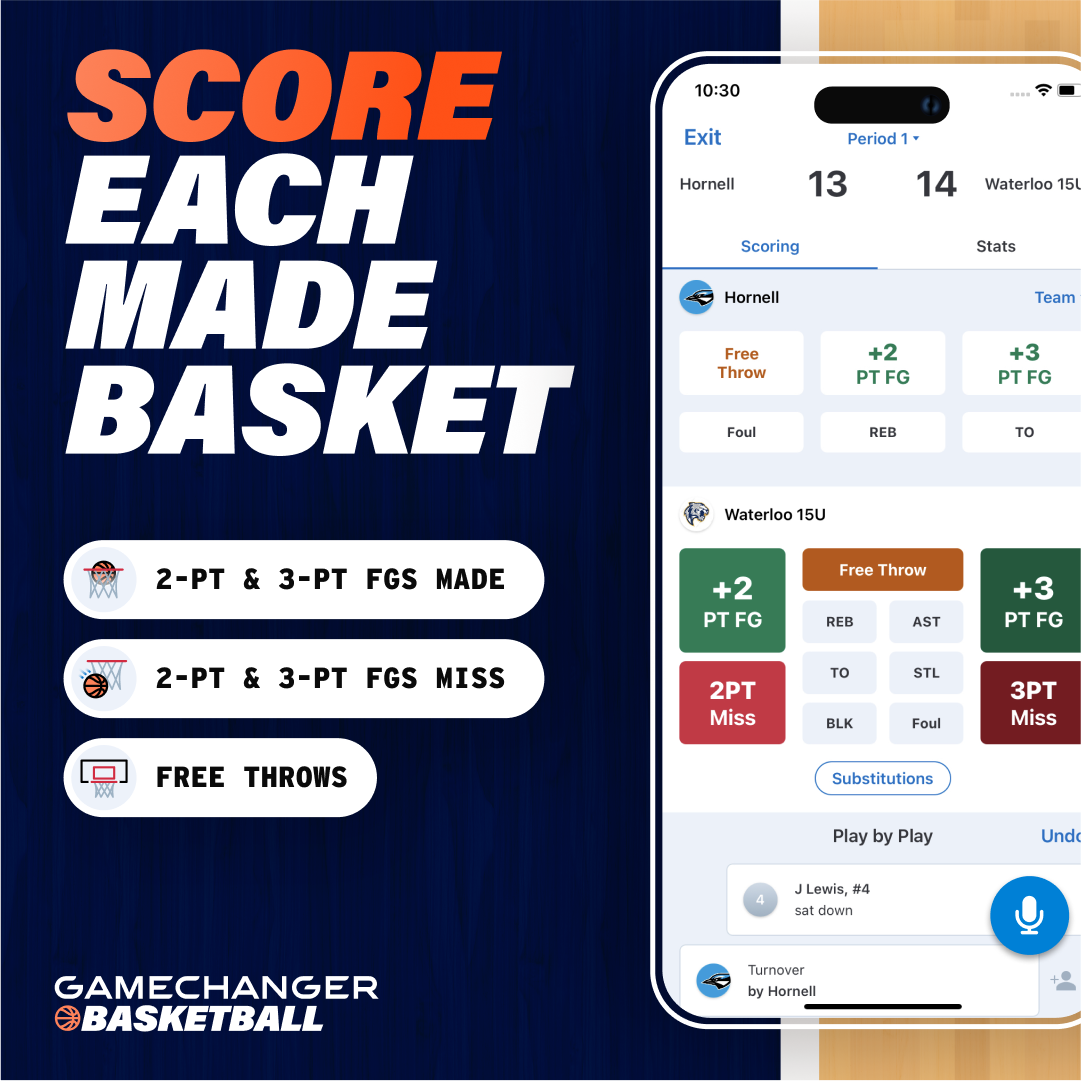
Hey, coach! Want to take your team to the next level this season? Introducing GameChanger, the ultimate game-day assistant with tools to give you a winning advantage. With GameChanger, you can track stats, keep score, and even live stream games, all for free! Get the stats and crucial game video you need to lead your team to victory, all from the palm of your hand. Coach smarter this season with GameChanger. Download GameChanger today on iOS or Android and make this season one to remember. GameChanger. Stream. Score. Connect. Learn more at GC.com/HoopHeads
THANKS, DAVID VOGEL
If you enjoyed this episode with David Vogel let him know by clicking on the link below and thanking him via Twitter.
Click here to thank David Vogel via Twitter
Click here to let Mike & Jason know about your number one takeaway from this episode!
And if you want us to answer your questions on one of our upcoming weekly NBA episodes, drop us a line at mike@hoopheadspod.com.
TRANSCRIPT FOR DAVID VOGEL – OHIO WESLEYAN UNIVERSITY MEN’S BASKETBALL ASSISTANT COACH – EPISODE 975
[00:00:00] Mike Klinzing: Hello and welcome to the Hoop Heads Podcast. It’s Mike Klinzing here without my co-host Jason Sunkle tonight, but I am pleased to be joined by David Vogel, men’s basketball assistant coach at Ohio Wesleyan University. David, welcome to the Hoop Heads Pod.
[00:00:14] David Vogel: Hey, thanks for having me, Mike. Excited to be here.
[00:00:17] Mike Klinzing: Thrilled to have you on, looking forward to diving into your career, your basketball journey. Let’s start by going back in time to when you were a kid. Tell me a little bit about how you fell in love with basketball and some of your first experiences that you remember.
[00:00:30] David Vogel: Well I was actually just with family on the 4th of July before I knew I was coming on. And they reminded me that my first word when I was a little kid was ball. So I think that’s kind of the first experience. And yeah, just grew up in a, in a family with not just immediate family, but extended family too, where sports was pretty much all around. My sisters grew up playing a bunch of sports.
My parents played in high school and college. And I pretty much played everything. I could get my hands on growing up mostly basketball, baseball football, and then really kind of started taking basketball skill wise a little more seriously. My family runs the McCracken basketball camp.
My uncle still runs it and it’s 62nd year. So started going to that when I was five or six and just kind of never stopped.
[00:01:14] Mike Klinzing: Was basketball always number one or was there a time where one of the other sports was one of your favorites?
[00:01:21] David Vogel: Yeah, it was definitely whichever one was in season. If it was spring, I thought I was And if it was the fall, I thought I was Peyton Manning.
So it’s just, just. Probably basketball didn’t really become number one until probably just eighth grade, ninth grade.
[00:01:36] Mike Klinzing: Once it did, how’d you go about getting better? And how does the way you practice, the way you work, the way you try to become a better player, how do you think that differs from how kids today grow up in the game?
[00:01:51] David Vogel: That’s a really good question. I mean, number one, I didn’t really have a trainer. I mean, I had a lot of great coaches and great people in my life who taught me a lot about the game. But you know, when I was in the gym my mom was actually an elementary school counselor, so we had a key to the gym not a key to the lights.
We had to use the paper clip and get the lights in somehow, but we were able to get in there and for the most part, it was just my mom rebounding for me or me just out in the driveway. My dad put some paint down and for the lane line, just really getting out there by yourself.
I think that’s one thing. Being kind of on the other side of things now is you don’t see a lot of kids or hear about a lot of kids just going into the gym for an hour and getting a bunch of shots up on their own. So I think that was one thing we did a lot as kids is either just go down to your friend’s house and play one on one or 21 or just go out on the driveway by yourself and try to make some shots.
[00:02:39] Mike Klinzing: It’s definitely a lost art. I mean, you just don’t see kids and it goes to your other experiences that you talked about too, in terms of other sports. I say this all the time, like I’ll drive around my neighborhood on a Sunday, sunny, summer day. And there’s like nobody outside. Like I never see kids play pick up baseball.
My Neighbor and I used to play one on one baseball, like in my backyard, just toss the ball to yourself and hitting it. And you just don’t see kids outside playing in the same way. And I, I always lament that on the podcast. I’m sure people are sick of hearing me say it, but it’s just, I always feel bad for my kids that they didn’t get that same experience of just kind of going out.
And as you said, playing in the neighborhood and going down playing basketball in the neighbor’s driveway or going to the neighbor’s backyard to play some football or baseball or whatever it is. And so it’s just a different way of kind of growing up in the game and in sports that I don’t think it’s ever going to change and come back.
But it’s just the way, just the way it is at this point, David, I don’t know what to say about that.
[00:03:40] David Vogel: Yeah, no, definitely. I can still remember how many points I scored on my friend Jacob’s driveway just as well as I can as the games in college. So just a different way to grow up for sure.
[00:03:50] Mike Klinzing: For sure. I used to grow up playing one on one too. We had, I had a buddy that lived in town and we used to drive, ride our bikes back and forth at each other’s houses and we’d play one on one to a hundred. And now you tell kids that and they look at you and we’re like, Hey, we played outside. We played one on one to a hundred and they look at you like you’re insane. Yeah, they think you’re insane.
[00:04:08] David Vogel: 100 seconds.
[00:04:09] Mike Klinzing: Exactly. Definitely a different world. All right. So tell me about your high school basketball experience. What’s your favorite memory from playing high school ball?
[00:04:16] David Vogel: So I was really lucky to play on a lot of good teams in high school. So in Indiana, we won sectionals all four years, which in Ohio, I believe that’s the equivalent of district.
So I played on a lot of really good teams. My sophomore year was definitely our best year. We made it to the state championship. And lost, unfortunately. So I’d say definitely the best memory is semi state and in Indiana, it’s its own weekend. So we’re, we actually lucked out and got to play about 20 minutes down the road.
So we had our whole town there, small town, Indiana. So that was cool. And the best part about it was we, most of the guys that we played with, we grew up playing together since we were in third grade. So it was really cool to kind of look around and say, Hey I’ve been with this guy since we were nine years old and here we are about to make it to the state championship. So that’s probably the best memory.
[00:05:02] Mike Klinzing: You weren’t transferring, going to six different high schools. That wasn’t in the plan.
[00:05:05] David Vogel: It was not in the plan. I, first of all, I don’t, at that point, I don’t think you were able to do that. But I think my parents would have just said, all right who are you going to live with and see you later?
But, No, they were really supportive. I think if that, if it had come to that you know, we’ve, maybe there wasn’t a good program we could have had the conversation, but we had a lot of good coaches. A lot of people. Not just for basketball. I mean, our baseball teams throughout the years, one state championships, football, girls basketball.
So a lot of, a lot of good people around the area and a lot of people who really take sports seriously, so it was kind of a perfect match.
[00:05:39] Mike Klinzing: When did college basketball get on your radar? When did you start thinking about maybe having a college career?
[00:05:44] David Vogel: Well my older sister played Division II at Urbana back when that was still a school.
So I kind of got to see her kind of go through the whole recruiting process. And hers was a lot different than mine. She had some Division I, Division II interest. But got to see that and then really, I’d say after sophomore year kind of is when you start to play. I think that was the first year we really traveled a little bit for AAU going to Chicago and some other places like that.
But I think that’s kind of when I knew it could happen. I thought it could happen. I thought at that point I was going to Indiana to play as do, I’m sure most kids, but I think it was probably around that time and that’s kind of when I started to hit a growth spurt a little bit as well, and definitely Started to feel like I wanted to keep playing.
I knew I didn’t want to just be be done after high school.
[00:06:30] Mike Klinzing: When did you get a more realistic picture of where you could play? How old were you then?
[00:06:34] David Vogel: I was, it was the next year. It was junior year. Not, we had a really good conference in high school as well as a lot of other good players around the Fort Wayne, Indiana area.
So just kind of seeing guys who. BJ Beachum went to Notre Dame you know, Caleb Swannigan who obviously went to Purdue. A lot of other guys who played in a lot of places. Just kind of realizing hey, I can maybe compete with them a little bit, but it’s a little bit different of a beast.
And I actually got invited to a Division II elite camp. Thought I played really well, and then the guy they offered actually still plays in the G League. So it definitely was a little bit of a different beast for sure. And I had both my parents actually played at DePauw where I played.
So I had a pretty good idea of how good I, or at least how good I thought division three sports were.
[00:07:18] Mike Klinzing: So I’m assuming then that your parents helped in the decision that eventually led you to go to DePaul, but just what was your thought process for you as a player? And then I guess maybe to go along with that, how does that help you when you’re talking to kids that you’re recruiting?
[00:07:32] David Vogel: Yeah, so my parents throughout the whole process were awesome. At first, because they both went there, I said, absolutely not. You know, I kind of wanted to do my own thing and you know, go either look maybe a little further from home to probably in about two and a half hours. But I took a visit there at the end of my junior year and really liked it.
I’m not sure how interested they were at that point. But we kind of Both stayed in contact. And then I got to meet a lot of the players when I went back in the fall. That’s kind of what sold it. And that’s kind of what on the other end of things now doing a lot of recruiting at some stops I’ve been in now at OWU is just how important your players are in terms of recruiting.
Because you can talk to a kid until you’re blue in the face about what you think about the program, how you feel it should be. But when they get to meet the guys and hopefully spend some time with them, not just five minutes they can figure out pretty quick, in my opinion, Hey, these are the guys I can see myself being with, not just on the floor, but you know, Tuesday night in the library or Sunday afternoon hanging out.
Like, I think that’s a big thing that I realized because when I went to DePauw, my last recruiting visit met some, some really good guys and that definitely sold me.
[00:08:38] Mike Klinzing: When you get there, what’s the adjustment like for you academically, socially, basketball wise? What do you remember about your freshman year?
[00:08:45] David Vogel: Yeah, you hit the nail on the head. Adjustment is the right word. Academically, probably not too bad because my first year in college, really liberal arts you’re kind of taking a variety of courses. So it’s not really too specific, but on the basketball floor talked about our high school teams being pretty good.
We were good because we had a lot of good players and good coaches, not, we didn’t necessarily have a, a really strict offensive or defensive system. So when I got to, To college and the first day in practice our coach is telling us to jump to the ball and bounce back on a closeout.
I’m like, Oh my gosh. Okay. Maybe I don’t know as much as I thought I did. So it was, it was definitely an adjustment. And you know, we had some, a good team that year as well. And we started, I believe it was five seniors and some upperclassmen and a really good sophomore off the bench. So we had some good guys to learn from and kind of see how to operate. So that was nice.
[00:09:37] Mike Klinzing: When you get to school, what’s your thought process academically? Is coaching at this point at all on your radar? Are you still thinking mostly like a player?
[00:09:48] David Vogel: I listened back to your episode with Shiva from Oberlin not too long ago. And I remember you talking kind of about the two different paths.
A lot of people take to get into coaching. I feel like I was probably more similar to I always knew I wanted to stay within basketball, whatever that looked like. I wasn’t sure. But my freshman year in college just was kind of focused on getting good grades and trying to get on the floor for basketball.
And after my first semester, right before it was over, my mom told me I couldn’t come home until I saw the career counselor. Cause I guess she was a little bit worried that I didn’t quite have a direction, which she definitely was right. So I met with the guy, he was awesome. He was young, really energetic.
At the end of the third session, he goes, Hey, what do you think about being a basketball coach? I’m like, well, I could have told you that, man. But then that kind of solidified it a little bit for me. And then it was, it was kind of all I really wanted to do from there.
[00:10:40] Mike Klinzing: Were you thinking college coaching right from the start or was there any thought to go on the high school coaching teaching route?
[00:10:47] David Vogel: Yeah, there was really no thought in my head in terms of level whether that be high school, college, whatever that may be. I really always enjoyed school, so I thought teaching might be good or maybe someday working my way up into the administration. But I did, I got to work a lot of different camps in the summer in college, which was good advice I got from my, from my college coach, just try to meet a lot of people and I was able to work some small college camps, division one camps, and I really kind of fell in love with the process of trying to just make things work in college because I like, I had a good college experience and I kind of wanted to see if I could help some kids have that same kind of deal.
[00:11:24] Mike Klinzing: What was your favorite camp you went to or who was the most influential person, coach, director that you met during that time when you were going to camps in the summer?
[00:11:35] David Vogel: Well, I, I’d be remissed and I think my family might disown me if I didn’t say Todd Garman of the McCracken basketball camp, who I will say is my uncle.
So he’s known me since I was a little baby, but other than that, really I’d say there’s a lot of other people at McCracken who, Who I got to work with as counselors or actually be more of a a player under you know, Mark Anderson, Gary Chupp guys who coached at all different sorts of levels, high school levels, pro levels Steve Case, who was a college coach for a long time.
Those guys all helped a ton. And then I, one thing I’ll never forget, and he, he has no idea. But I worked at Butler’s camp when Ryan Pedon was there. And he, he pulled me aside one day and just started chatting after camp. He said, Hey what do you want to do? And you know, who are you?
And he gave me some really good advice just on kind of how to go about not just going to camps, but networking while you’re there and not just networking to network, but really try to build some genuine relationships.
[00:12:29] Mike Klinzing: What did that advice look like? What were some of the things that he suggested?
[00:12:33] David Vogel: He was really good and just told me, don’t be afraid to reach out to people.
And that’s some of the best advice I’ve ever gotten is don’t the worst thing you’re going to do is either say no or not respond. And almost everybody you talk to is going to be willing to share some advice or, or something like that. And then also Don’t close any doors.
I don’t remember exactly how he said it, but he basically said, you never know what opportunity is going to come up. And that was some of the best advice I’ve ever gotten is you never really say never, especially as a young guy trying to get into coaching.
[00:13:06] Mike Klinzing: I can echo that David completely from this podcast, like it’s very interesting when I think back to the beginning of this thing and kind of what we envisioned it back then versus what it’s become.
And then also just the idea that having this silly platform also just allows you to reach out and ask people, Hey, would you want to come on? And the number of people that we’ve had on the podcast that Otherwise, trying to reach out to them feels like it would be almost an impossibility. But to your point, people are super willing to share.
That’s one of the things that, it doesn’t surprise me anymore, but when I first started, it definitely surprised me. A, the number of people that were just willing to come on when, You reach out to them randomly. And then two, once they do come on, how willing people are to share. And I think that the coaching profession, although I think it’s always been to that way, to some degree, I do think that just because Everything now is the video is just so widely available that you can’t, even if you want to keep a secret about this or that or the other thing, it’s almost impossible to do it anyway.
So I think everybody has just kind of gone the other way where like, Hey, you want to know something that we’re doing, or you want to learn about this or that. It’s like, I’m an open book. And that’s something that, again, it doesn’t surprise me anymore, but it certainly surprised me in the early first year or two of the podcast.
I was like, man, I can’t believe this guy’s coming on, or I can’t believe this guy’s talking about. Such and such. It just is, again, I think a testament to the kind of quality of people that we have in the coaching profession without question.
[00:14:41] David Vogel: Yeah, no doubt. My college coach always used to say it’s a relationship business.
And as college kids, we believed him, but we always rolled our eyes a little bit, but looking at it now, it is such a relationship business just because. It’s a hard thing to do. And you really need all the help you can get. And I mean that in a positive way there’s a lot of different ways to coach or help your guys.
And I think that’s one thing I’ve learned a lot too, is like you said, people are really, really willing to share things, but it’s also, I’ve been surprised about how many different Ways of there are to do things. Just it’s opened my eyes a lot, especially, I mean, listening to the podcast or just watching clinics or videos on YouTube, like there’s a lot of different ways to be successful. So that’s definitely something that’s been interesting.
[00:15:27] Mike Klinzing: Yeah, that’s for sure. And I’ll go back to and kind of reference my own experience. So I think about when I. Got my very first coaching job. So it was, I guess it was my second coaching job because my first year when I graduated, I went back and I was helping out as like an assistant JV coach, kind of as a volunteer at my high school.
And to be honest with you, I don’t really remember, I don’t really remember too much about that experience at all. But then I do remember when I got my first sort of real coaching job where I was getting paid and I was a JV coach. At Bay Village High School. And when I think about that and I think about who I was as a coach, like everything I did was either from my high school coach or my college coach.
And other than that, to your point, I had no idea that there was any other way to do anything other than those two people who had coached me. That was all I knew. So any drill I did was from one of the two of them or whatever. And again, YouTube wasn’t available at the time when I’m starting out. And I was one of those guys that probably was based on who I was as a player.
I was probably pretty arrogant about who I thought I was or could be as a coach. And so I probably didn’t go back and just like all the advice that guys give on this podcast about you got to go out and really work on your craft and learn the game and get a mentor and do all these different things.
And I kind of was just sort of in my own little cocoon of, Hey, I know what I’m doing because I was a good player. But really, honestly, all I knew was The two guys that I had played under and there’s so much more, obviously that’s out there. And I think sometimes the sooner you learn that and the sooner that you understand, there’s way more different ways that you can be successful and start to try to tap into those, man.
It just makes you, I think that much better of a coach. And plus it also helps you to kind of adopt, Hey, this is how I want to play, or this is how I I want to set up a program or all these different things that when you haven’t had that breadth of experience, it’s almost impossible to know.
[00:17:36] David Vogel: Yeah, it’s definitely impossible. And like you said, the breadth of experience is huge. And that’s why I feel like I’ve been pretty lucky to. Work at a few different places and move after a few years. Just learn from a lot of different people as has been awesome. And like, yeah, like you said, not only on the court and how you want to play, but also you, how you want to run the program.
You know, we could talk probably about recruiting for 10 hours and how many different ways there are to do that. And I know they’re all good, hopefully. But yeah, there’s all sorts of different stuff that I feel like. Me just haven’t been in the profession for about six or seven years. I don’t think I’ll ever stop learning.
And that’s probably one of the best things I’ve learned from my current boss, Mike DeWitt, who, if you haven’t listened to his episode of this podcast from about maybe a little over a year ago he’ll talk about things much more eloquently than I will, but. He’s big on never stop learning whatever it is, what whether it be X’s and O’s or culture, program philosophy, things like that.
He’s got obviously we’ve got program standards and how we want to do things, but every year if you, you watch us play over the past few years or his teams over the past 25, 30 years you’re not playing the exact same way year to year, and you’re always trying to really get the best out of who you got.
[00:18:50] Mike Klinzing: Yeah. There’s no doubt that I think the best coaches have an idea of. This is how we want to play. And this is our standards. But then we also kind of look at, okay, what’s our personnel look like? And then let’s take this framework that we have and then shape that framework around the talent, the personnel that we have.
And that’s not easy to do. I mean, that takes a lot of experience. It takes an ability to. adapt and look at what you have and then figure out, okay, what’s the best way for this group to be coached and for this group to be able to win. And so that’s something that again, I think the best coaches do, but it’s easy to say, and it’s a lot harder to do that.
So look, looking back when you got done at DePauw, what’s the first job search? What’s the process? What are you thinking as you graduate? What do you do? What’s one of the first steps you take? Just kind of take me back to that moment.
[00:19:42] David Vogel: Well I feel like my first job search was very atypical of a typical coaching search.
I met with my college coach. In the fall of my senior year and kind of talking to him, all right let’s get some resumes together. Let’s see who might have an open job and things like that. But I actually got the job at TCU in October of my senior year which I know now is very not normal.
I kinda, Got a little bit, or I should say very lucky in how it happened. So I kind of knew I was going there for the whole senior year. And then I moved down to Texas pretty much a week after graduation. So it was definitely a whirlwind, but not probably your typical how you got a job story. How does that happen?
So again, the small liberal arts college connection is when, and partially why I’m so passionate about small college athletics, D2, D3, Juco, NAIA, whatever it may be. Is this kind of the relationship you build? So my mother, like I said, went to DePauw and both my parents, huge influences on me the best people and parents you could ever ask for, but she was actually during the fall of my senior year at a sorority reunion with her sorority sisters from DePauw and one of her sorority sisters is the wife of TCU’s chancellor.
And when they got to talking, she asked what does David want to do? And my mom probably said he has no clue. But I do think she said that he wants to coach and she said, well, we know coach Dixon pretty well, and I know he’s going to have a job or two open this year with David. You know, one interview and my mom called me and asked if I knew who Jamie Dixon was.
And I was kind of like, I mean, yeah, why are you asking me this? You know, I, I just watched him on TV in the tournament last year, but you know, got down there for an interview probably a week later. I didn’t realize it was an interview to be completely honest with you. I thought I was just going down there just to meet them, kind of see how they did things and pick their brains a little bit.
But I quickly realized that they were going to be the ones picking my brain. Okay. And it was really good. Got to meet them. And I have a ton of respect for Coach Dixon and the program and did at the time too. I remember at the end of the interview, I went to dinner with Coach Dixon and his family and one of our assistants at the time, and I’ll never forget, he said, yeah, it seems like you know what you’re doing.
So you want to work here next year. And I said, well, I can’t believe you think I know what I’m doing, but he stuck his neck out for me probably cause he had to. But that was one of the best things that’s ever happened to me. And it got outside of my comfort zone and in a ton of different ways, and I learned probably more than you could count from Dixon and all the guys that we worked with at TCU.
[00:22:23] Mike Klinzing: All right, so you obviously are making a jump from being a player at the Division III level to coaching at the Division I level. So there’s clearly an adjustment there. Tell me a little bit about what struck you, surprised you about it. Good. Division I basketball compared to kind of what you had been through in Division III and maybe what your perception of Division I was versus what it actually was when you showed up on campus.
[00:22:50] David Vogel: Yeah, that’s a really good question. During my senior year in college, our assistant coach at DePauw helped me a lot with Marcus Bledsoe helped me a ton with video and kind of maybe what I might get into at TCU. So I had a bit of a jumpstart, but it quickly I quickly realized that. It’s 24/7, 365.
And I knew there’d be a lot of work, but I had no clue the amount of work that it took not just one person in the program, but everybody in the program to try to be successful. And at TCU, and I’m sure it’s similar, maybe a little different, but pretty similar in most Division I schools most people have Kind of their own specialty.
I was a graduate assistant. We had a couple other guys who were really good and, but all of us were a little different. So at the time I was also the video coordinator. And I don’t know why, but they made me the graphic design coordinator with no, but so I quickly, and I got a lot of help learning all this stuff, our operations director.
I don’t think I would have made it. If it wasn’t for our operations director at the time Thomas was unbelievable. Not just at his job, but he was able to kind of tell us. You know, hey, here’s how you should do things. And then he gave us a ton of responsibility. Kind of let us run wild with it, but yeah, it definitely struck me how much of a business and how 24 seven it was not just on the floor, but in everything you have to do off the floor as well.
[00:24:12] Mike Klinzing: How long did it take you to grasp the video side of it to where you felt like, Hey, now I kind of really do know what I’m doing instead of just kind of fake it till you make it.
[00:24:24] David Vogel: It definitely was a lot of fake it till you make it at the beginning. I know that the first week I was there, or maybe it was, excuse me, the second week I was there, we had started summer practice and we’re in the, in the the film room and I’m up front kind of obviously not talking during the film session, but kind of just making sure everything’s up there and.
And coach asked for a certain clip and I didn’t have it. And that’s, that’s not a good thing. So definitely I’d say after the first month, I kind of had a pretty good grasp. We sports code is what we were using at the time. And obviously some synergy things in there as well, but definitely the first month, one of our other GAs had, had Chris Jones had used it before and helped me quite a bit as well.
So I think that’s. The first thing I realized is you have to be technically proficient, but then it doesn’t really stop after that. There’s obviously when you’re watching film, it’s, it’s good to be able to clip it up and have it ready for coaches. But if you really want to make yourself a little bit more indispensable it’s good to know how to watch film and that’s probably the one thing I learned from Coach Dixon the most and it’s just how to watch film and what to look for and how to see it.
And then not only that, but how to communicate it to the players. So. I don’t know if I still have a grasp on that, but that part’s definitely, I think, going to be a lifelong kind of journey which is one of my favorite parts and I could watch video for hours.
[00:25:45] Mike Klinzing: Being able to watch it and understand what you’re seeing and what you’re looking at, I think is probably a super underrated skill. And it’s probably something that I think that a lot of young coaches don’t necessarily realize what goes into that when you really sit down and start looking at film and trying to figure it out. I know even when I’m watching film with Cal and trying to do that, and we’re looking at stuff and it’s, it’s kind of just, It’s a process.
It’s a process of trying to sit down and be like, okay, like, what are we looking for here? And are we looking for, and again, when you’re looking at it as a coach, a lot of times you’re looking at the whole picture. And then when I’m watching it with one individual player, it’s a little different when you’re kind of focused in on one person.
So there’s definitely, without question, I think that That learning curve piece that, yeah, it takes a little bit of time to know what to look for. And obviously you have a good mentor and somebody that’s willing to sit down with you and take you through that. It accelerates your learning curve as opposed to you just kind of sitting down and trying to fly blind for sure.
[00:26:47] David Vogel: Yeah, definitely. I think that’s the one thing like that you hit the nail on the head with is it’s different watching film as a team as opposed to an individual. And I think it’s great to send whatever level you’re at, send players film. Give them full game film, of course. But you know, send them clips.
But I know when I played, if our coaches sent us film, I’d watch it. But I’m probably mostly just watching myself and thinking, Oh, that’s a great, that’s a great looking jump shot. And I’m not probably critiquing myself. So I think one of the worst things in my limited experience that I could do Especially as an assistant now or you’re able to kind of actually get with the players and watch film with them is just send them film and say, Hey, go watch this.
Let me know what you think. Instead Hey, watch this film. How do you feel like you rebounded or why box outs, things like that. You can go on and on, but I think that’s a huge thing of player development is Like you said, knowing what to watch and then being able to accept it as well.
And being able to accept it and adapt on the court is huge.
[00:27:52] Mike Klinzing: Yeah, absolutely. During your time there at TCU, how did you balance going to school and getting your master’s while you’re also trying to coach at the level of intensity that we know division one basketball requires?
[00:28:06] David Vogel: Yeah, it was a challenge at first. That first summer you’re down there you’re trying to work 12 hours a day and then go to class. But I was really lucky to have both head coaches, head coach, assistant coaches. at TCU and also professors that understood that you can’t really do your job as a best, as a GA without going to school and, and vice versa.
You know, we were there for more of the basketball, but the education is important as well. So it was really a balance. I know a lot of the guys did online classes, but my program was in person. So usually about three nights a week, it’s either six to eight 30 or five to eight classes at night.
So You kind of had to be on your stuff and make sure that when you get home, try not to burn the candle at both ends and you’re getting some sleep. And that probably doesn’t happen as much as it should, but you can’t have one without the other. And that’s one reason why I loved it is I got to learn a lot on the court and in the classroom. So it was awesome.
[00:29:10] Mike Klinzing: When you finished with that part of the program and you’re now in a position where you got your master’s degree and it’s time to figure out, okay, what’s the next step? What were you thinking at that point? What was your process for going through and trying to figure out, okay, what do I want to do next?
Are you now focused on, hey, this level? Division one feels like the right level for me. Are you feeling like, Hey, I’d like to take a look at some other levels. Are you just thinking, Hey, I just need to get a job that pays me a salary? Kind of where are you at that point?
[00:29:47] David Vogel: Yeah, that, that was probably rule number one was probably try to make a little bit more money. Although at TCU, they treated us extremely, extremely well. But I knew the one thing I wanted was to get closer to home. I love living in Texas, but I, I was really far from family and friends. And I definitely wanted to, to be closer to them. I’ve got two older sisters and they were starting to have kids around that time and cousins as well.
And I knew I wanted to get closer to home. So that was kind of. Rule number one. And so I graduated in May of 2020 with my master’s. So that was right during the heat of COVID. And, but, but, but before that, I, this might sound weird, but because I love the video aspect so much, and we had a GA who was a year kind of ahead of me in the program.
He went on and now still works for Utah jazz, but he went on to Utah jazz kind of in a video player development role. And that was something that really intrigued me. So I was open to trying that. And then also like what I’m doing now, small college, I know those are two vastly, different things, but I either kind of wanted to be on the video side or do kind of what we’re doing now and have your hand in a little bit of everything.
But yeah, May of 2020 you know, you’re kind of just trying to survive. And I don’t mean to make a joke about that, but really just trying to just graduate and then see what’s up. So I moved from Texas back home with my parents and Really just started applying to any coaching job at any level that came open.
I was a finalist for a couple of high school jobs, actually got offered one. And then I was a finalist for another small college assistant coaching job, but I was really fortunate to get the Wittenberg part time assistant job in late June, early July of that year. And it couldn’t have been a better timing and situation.
So yeah, it worked out well that it was something that I wanted to be doing, but at that point, honestly, probably would have just. Coached anybody, anywhere as long as I was able to make it a profession.
[00:31:47] Mike Klinzing: So when you get that job, what’s it like coaching with all the COVID restrictions compared to the experience that you had just come out of, obviously the end of your season?
2020 gets affected by COVID, but what, where are you guys at Wittenberg wise in terms of just, what does that look like when you come on board?
[00:32:11] David Vogel: Well, before I had gotten there in 2019, 2020 Wittenberg was I can’t remember the exact record, but it might’ve been close to 28 and two and they were going into the sweet 16 to play Mount Union.
And, and the season got canceled right before that game. So. And they’d been really good for a few years before that, even when I played too so they were rolling. And it definitely took the wind out of the sails. You know, I have a lot of the guys that had, that were graduating in that class.
I’ve gotten to know quite a few of them and they’re good dudes, but we were, yeah, like we were in a weird spot and I know it wasn’t just us, it was everybody. So that summer though, fortunately Indiana still hosted a ton of AAU tournaments. So we were still able to get out on the recruiting trail, mostly in Fort Wayne.
A little bit in Indianapolis. So we were able to get a real kind of recruiting AAU experience, even though things were locked down. But we did that. And then in the fall, the COVID rules were able to do a lot more individual workouts and there was all masks and it was a whole, a whole deal. But that was good for me just because a typical fall in division three now we get the eight days, but then it was normally you start practice October 15th.
So as a new assistant and as, as a guy, who’s really coaching. For the first time during those small group workouts coach Croy, Matt Croci gave our head assistant and our ga a lot of responsibility during those to actually coach and teach and do a lot of things. So that was a, a great experience for me, even though it probably was not a great experience for small college athletics everywhere.
So it was definitely a mess, but I know that everybody was affected by it. So it was, I’m glad that’s hopefully in the past.
[00:33:50] Mike Klinzing: Immediate differences between being part of a division one staff and I’m assuming the specificity of what you were assigned to do versus sort of the do everything position that you typically get when you’re coaching at the division three.
How did you sort of adjust to that?
[00:34:08] David Vogel: I loved it to be honest with you. I still got to do a lot of the video and a lot of the behind the scenes stuff, but my favorite thing and still is, is just being on the court with the guys and. Being able to actually Hey, if you see something, you’re actually now kind of able to say it and.
And try to help them get where they want to go and get where we want to go as a team. But definitely took a little adjusting in terms of just being super organized. That was probably what helped. I feel like my first and still helps as I’m still kind of learning and growing in this, but being super organized, making lists and kind of dividing your list into different categories.
You know, you got your, what you need to do for recruiting, what you need to do for kind of the operation side, what you need to do for X, Y, Z throughout the week or the month. That’s kind of how I feel like we all did it at that level, which was nice. And some of the best. Things I’ve ever read. I think it’s Mandy Green, who, who I subscribe to her newsletter.
She always talks about one day focus, kind of try to go all in on recruiting. And I’m going to, if she’s, I know she’s not listening to this, but I’m going to butcher it. She, she writes, she writes it a lot better than what I’m saying, but you know, instead of trying to do 50 different things in one day.
Pick two or three things that you’re really going to focus on and grind on for four or five hours. So that way you, you’ve got that done and now you don’t feel like you’re grasping at straws. And that took me a long time to learn is trying not to spin your wheels. Especially at the D3 level, you could always be out recruiting.
There’s not really any restrictions on that. And in college athletics, there’s always something you could probably be doing. So just prioritizing that was a big adjustment from previous experiences.
[00:35:47] Mike Klinzing: What advice do you have for a coach who’s starting out like you were and you’re on a part time salary.
How’d you make ends meet? How’d you just make your life work under that circumstance? Well,
[00:36:01] David Vogel: I was really lucky. Our head coach, he was unbelievable. Croci was great with. Kind of allowing me and all of us to kind of, especially during COVID, you don’t really have a choice because we weren’t doing a whole lot.
But even in my second year there, when things were close to being back to normal I substitute taught probably three or four days a week, just in the Springfield schools. And he was great with kind of knowing that I, in order to keep a roof and do things like that. I was, I had to do that, but he was great with just as long as you’ve got your stuff done and you’ve contacted your recruits and film’s done you, of course you can get that going.
So advice I’d have is just try to, try to find something that you, that you can make work. And just be really honest and communicate with. Whoever it is, whether it’s your boss or people that you’re working with outside of basketball, just before you start and even as you’re working, just be honest, try to communicate as best you can.
And I think the honesty will help build trust. And that’s the biggest thing I think in a staff and in an organization is just the trust, knowing that you’re there for the right reasons and that you’re going to do what you do and do it in the time you’re going to say it.
[00:37:13] Mike Klinzing: From Wittenberg, how does the opportunity at Ohio Wesleyan come across your desk?
[00:37:18] David Vogel: So that one was good. I knew that their assistant was leaving. I had actually seen him at a AU tournament and had kind of heard that he was, that he might be out. And Coach DeWitt just reached out, gauging interest. And I know he reached out to a few people and I It was hard to leave Wittenberg.
I loved it there. I loved all the guys, loved where we were. And I thought that we were starting to, and they are, they’re doing a great job now. But I thought, yeah, at the time we were starting to kind of build it back out of the COVID kind of rut. But DeWitt full time position.
So that was, Huge for a lot of different reasons. And like we’ve kind of talked about earlier, I knew that it was going to be another opportunity to learn from another really, really, really good coach. I coached Dewitt’s teams when I played in college were every year in the NCAA tournament with a ton of good players.
So I knew that it’d be an opportunity to try something different. Cause I feel like I still have a ton to learn and I always will. But at the, at that time, I felt like I was kind of ready for a new challenge. And it was an exciting one. So I went down there and interviewed and I thought the in person interview went pretty well and was able to, to get the job.
[00:38:31] Mike Klinzing: Coming into your time at Ohio Wesleyan, what do you feel like were your strengths as a coach? And then what do you feel like you’ve really improved in the time since you’ve gotten there?
[00:38:42] David Vogel: Strengths as a coach, I feel like would be. One that I feel like I really did well at the beginning was just communicating with the guys.
I think, I don’t know if they were, but in my head, I was worried that they’d be hesitant from a coach coming from in the conference and my, yeah, at Wittenberg, we had beaten Ohio Wesleyan my second year, right before I went. So I was worried that there might be some, some animosity, but they welcomed me with open arms.
So I think yeah. The strength was just building the relationships with the guys getting to know them off the floor before kind of the season started, just trying to. Being around study tables, things like that meetings, all that kind of stuff. And I think that was one thing that helped me at least, I don’t know if it helped them at all, but it helped me feel more comfortable there.
It definitely helped me kind of grow as a coach in terms of at OWU currently our only assistant coach, we’ve had a few good student assistants and managers and things like that, but really helped me. Take on more responsibility. And then one thing I feel like I’ve, I’ve gotten better at is the recruiting aspect of just kind of making sure you’re telling a story and that story just being as authentic as you possibly can to the vision that your head coach, and in this case, Coach DeWitt.
It wants to tell and what he wants the program to be about and you’re not going off just grasping straws. You’re going after the right kids and trying to figure out who’s going to fit and are they interested? And I think that’s one thing that my first few years, I’ve just thought recruiting was you got to go persuade kids who have no possible interest and that’s still part of it.
You got to get the ones who persuade them even if they’re not the top choice. But I think that’s, One thing is being a little bit more selective and making sure you’re spending time on the right guys. And it’s not always going to work out, but definitely I feel like it’s helped us over the last few years.
[00:40:32] Mike Klinzing: Is that a balance between your conversations with Coach DeWitt and kind of talking to him about what he wants, what he’s looking for, and then also just kind of your own intuition of being around the guys that you do have who seem to have success and then just getting to know the institution better?
[00:40:49] David Vogel: Yeah, I think that’s a big part of it. From year one to year two, I feel like my first year I had a decent grasp of what Ohio Wesleyan’s about, but now after being there for a year and now two years, definitely have a bit of more of an idea of who might succeed there. And I feel like a lot of different kinds of kids can, which is great.
We’ve got kids from all different backgrounds, all different mostly Ohio, but even some kids from out of state, all different parts of Ohio. So yeah, it’s definitely knowing a little bit more about the school and then, yeah, being around our guys, seeing how they interact, then talking to a recruit, seeing how they interact with maybe some of their high school teammates or AAU teammates.
And that’s just both Coach DeWitt and I both going out and seeing kids in their high school setting, talking to their coaches, talking to their families, especially if they come on a visit. And chances are, if you don’t have a good feeling about somebody, you’re, it doesn’t mean they’re a bad person. They just might not be the right fit.
And at the end of the day, that’s pretty much the name of the game. And in my opinion, is fit over everything almost.
[00:41:54] Mike Klinzing: Yeah, it’s funny just again, seeing it from a parent perspective and obviously full disclosure here for anybody who isn’t aware, my son Cal is going to be going in with Coach Vogel and Coach DeWitt at Ohio Wesleyan this fall, so we’re super excited about that.
And again, obviously, we got to see What the recruiting process looked like on the parent slash player side. And I will say that just going through it, it is interesting to see the different ways that different coaching staffs recruit and communicate. I think one of the things that you and coach DeWitt, your program did very well was to help us and to help Cal understand exactly what he was looking at and why.
The program from a basketball standpoint and why the school from an academic standpoint would be a good fit. I know when we went down and had our visit and got an opportunity to walk around campus with a couple of the guys from the team made a big difference for Cal to be able to see those guys. And obviously you’re going to spend a lot of time with.
You and coach DeWitt, but you’re still also going to spend a lot of time with the guys who are part of the team. And as you well know, a lot of those guys are going to become your lifelong friends. And so that becomes a big part of what that decision looks like. And so it is interesting just when you start talking about recruiting and being able to identify who fits where, and you’re trying to find, you guys are trying to find the right fit for your program.
And then conversely, looking at it from. our perspective as a parent, a player, you’re trying to find what’s the right fit for our son academically, what’s the right fit for our son basketball wise, what’s our, what’s the right fit with the relationship with the coaching staff. And so there’s all these factors that it’s just so interesting when I think back to my own experience, it was so different just in terms of like, I was like, I want to play division one basketball.
And everything else was kind of, Almost irrelevant. Like I never, I never once thought about like, Hey, I wonder what majors they have, or I wonder about this professor or this program. It was just like, I just had one, one singular, one singular thing in mind and that was it. And so then when my kids and my older daughter, who wasn’t, you A basketball player trying to give them advice about, Hey, this is what you should think about or whatever.
I’m like, well, I kind of just got to go with my parent hat here because when I was a kid, my decision was not based on any of this stuff that you guys are basing your decisions on. So it’s just interesting.
[00:44:21] David Vogel: Yeah. No, it is interesting. And yeah, again, we’re super excited about Cal and having him and the family be part of the program.
So that’s definitely something that yeah, I wasn’t sure if we talk about that or not, but I was going to let you bring it up. For sure. But yeah, I think it’s definitely interesting. Kind of like what you said is what decisions are based on and hopefully decisions at the division three level are based on the academics.
The people that you meet and then, and then the basketball program. But I think one thing that gets lost a little bit in recruiting is just every person’s different. And you might have a kid that comes to campus and you really like him. And he might talk about the travel abroad program for a half hour.
It’s kind of up to the coaching staff who whoever’s there at the time or the players, if they bring it up to you to Hey, in a couple of months or in a few weeks, send him some information about that. Number one, cause he’s interested. Number two, cause it shows that you were actually listening.
And I think it’s definitely something that, yeah, the recruiting process and I get asked sometimes, and I’ve only been doing this for a few years and I know that there’s a lot of other people out there who have been doing this a lot longer than me, but I get asked sometimes what is the recruiting process look like and how does it look like at your school?
And I think if you talk to any small college podcast, every school is way different from the other. In terms of timeline you know, how the coaches communicate, like you said so I think it’s just good for, to run your own race as a coach and as a family and then hopefully find the right fit from there.
[00:45:48] Mike Klinzing: I think to me, the most interesting question that I always like to ask about recruiting is like, where does your initial list of guys come from? Like, how do you even begin to, I mean, again, you go out and you’re at an AAU tournament with, I mean, God knows how many players and teams and levels and all this different stuff.
And it always feels like you’re kind of walking around. And then obviously you as a coach, you have a better understanding of who you think can play at your level. And so you’re able to kind of discern that. But it always is amazing to me when you start thinking about just the sheer number of kids that are out there playing, whether it’s AAU or high school basketball, and to just kind of figure out like, okay, here’s, 50 dudes that we got to check out.
And then we got to start to narrow that down with some of the other things that we talked about, but it’s always like that initial list question that I guess is interesting to me. So where do you guys come up with the initial list of, Hey, these are some guys we at least got to take a look at on film, or we got to go see them in a tournament or somebody catches your eyes.
What’s the process for just kind of starting for somebody that gets on the radar?
[00:46:52] David Vogel: Yeah this might be a cop out of an answer, but I’d say anywhere and everywhere. There’s not really one way I feel like, at least for us, and we might be similar or different to some other schools.
I’m not sure, but we can find out about guys for, through a ton of different ways. Coach DeWitt haven’t been at Ohio Wesleyan for a good amount of time. He’s so well connected in Ohio, especially central Ohio. So he’s got great relationships with high school coaches club coaches, and that’s a huge asset for us.
So that’s a big one. AAU obviously I think it’s hard to just go into an AAU tournament, kind of like you said, cause there’s, there’s a lot going on. But it’s hard to go in just blind. You got to have a little bit of a plan, whether it’s a kid you’ve heard about or Ohio team.
And you just got to throughout the coaching staff, split it up. And that’s kind of the time commitment that it takes, but that’s also the fun part is trying to find kids that diamonds in the rough or try to go in some recruiting battles. So yeah, I think it’s definitely can kind of come from anywhere.
They might send you an email. You might’ve heard about them from maybe their brother or sister goes to Ohio Wesleyan, things like that. And I think that’s how the initial list looks and. I think people would be surprised about how big initial lists are for small colleges. And I’ve talked to a few other coaches about that.
It’s a big number. But you have to have that big number in order to whittle it down and get to that final number. However many kids you feel like you need to bring in. And it’s not going to be perfect every year, just with the nature of division three recruiting. I think one thing that is helpful is to never just stick to that initial list, and I know I did that my first year at Wittenberg, is just you had your initial list after AAU and you never really talked to anybody else throughout the year.
So you got to have that initial list, but if someone emails you in November or you see a kid play in February and he’s pretty good, like it’s okay to add some kids later if they’re the ones that, that are the best fit for sure.
[00:48:45] Mike Klinzing: Yeah, that makes sense. I mean, again, it’s always right. You can’t as wide as the net is.
And as much as there’s social media and video and the amount of time that you guys are out on the road, there’s still guys that I’m sure all of a sudden they’re like, Hey, where’d this guy come from? Or you switch as a, you teams to maybe playing with a better group. And it was a team that you hadn’t watched before all that kind of thing.
So, yeah, I think it makes sense to be able to, again, flexibility, right? You want to find the right guys that are the right fit. And maybe that happens in the end. the summer, maybe it happens on into the fall and you got to be ready to ready and willing to adjust to find the right people for the program.
How do you guys Divide up responsibilities or what’s the conversation like between you and coach DeWitt in terms of what your responsibilities are versus what his responsibilities are.
[00:49:37] David Vogel: So that, that’s a good question. I mean, I feel like that just like we talked about, it just kind of goes, at least when, at least when I first got hired at Ohio Wesleyan, we just kind of had a conversation.
It was pretty. Organic. We didn’t really, I don’t think set a meeting time to talk about what every responsibility was, but he was pretty good about Hey you’re, you’re a recruiting coordinator, things like that. And then he does obviously our scheduling. He does more than I feel like a lot of, and then he probably should just cause he’s, he likes to have a hand in a lot and he does an awesome job.
So which that’s again, awesome to work for a guy like that, but. No, I mean, I think it just depends on the program, but for us, just kind of talking about, I think it’s, Hey have you done this? Or have you done this? Or, Hey coach, especially me asking him, Hey, what do you need? Or, Hey, where you need help with this or things like that.
So it just kind of is a, is a conversation. And that’s kind of the, where the communication piece comes in. And that’s the, the good part about it’s a, we obviously have a really small staff. And you know, you know who to go to if you’ve got a question or if I didn’t do something, if I didn’t do something, he’s, he knows that I was the one that didn’t do it, so I better get it done.
[00:50:51] Mike Klinzing: All right. So what part of it. Maybe compared to, let’s say, the Division I side where you were a little bit more focused. What’s something that you get to do in Division III that you didn’t do in Division I that you really enjoy that maybe surprised you?
[00:51:08] David Vogel: I would say one thing would be just dealing with probably more people on campus. You know, at TCU, such a big staff and our men’s and women’s basketball offices were pretty sequestered from most of the other people in the athletic department. So I don’t feel like I did a very good job of going out and obviously you get to meet people from being in the building and going to some other games and everything like that.
But I feel like I’ve been at the small school level it’s much more of a whole campus community, if that makes sense. Like if, if you’ve got a question for an admissions counselor, chances are you’ve either got their phone number where their office is you can just go down and talk to them.
And, or if somebody in financial aid, if. You know, the fat with the whole FAFSA thing happened this year. And just, I definitely enjoyed getting out on campus and getting to know more people as opposed to just kind of being with the, the, with the basketball program. And I didn’t really realize that I didn’t do that before.
If that, if that makes sense. I think that’s one thing. excuse me, that, that I’ve enjoyed is just getting to know more people and more people in the athletic department as well. You got a little bit more time at this small college level to go to some other games go to whatever teams are playing in the fall or in the spring.
And it’s nice. A lot of our men’s and women’s basketball games are either double headers or kind of around the same time. So you get to see a lot of the other student athletes. compete and get to see how all the other coaches are doing as well.
[00:52:34] Mike Klinzing: When you think about the Division III athletic experience, both for you and for the guys that you coached, what do you think is the biggest benefit or the thing that makes the Division III athletic experience so unique?
[00:52:52] David Vogel: Well, I think a lot of it is at our level, there’s no scholarships and there might be some, but there’s not much NIL. So the kids, the guys and the girls, they’re doing it cause they love it. And cause they want to not because it’s gonna, and there’s a lot of kids at the higher levels that do that as well.
And I’m not besmirching that at all, but our guys in, at least from my experience, they, they love to hoop. And they know that this level is super competitive and there’s a lot of good players out there. So they know that because they love it and they want to be good at it, they have to work hard and they learn a lot of self motivation and time management.
So I think that’s one thing that if you, if you like something or you love it, you gotta work hard and try to be the best you can be in order for the team to be the best they can be. And I think that’s why so many division three athletes. Go on to succeed in whatever it is they do after college.
[00:53:50] Mike Klinzing: Did you read the D3 book, Pipeline to the Pros? Did you read that yet?
[00:53:53] David Vogel: I haven’t yet. It’s on the list, but I, I have not read it. Have you?
[00:53:58] Mike Klinzing: Yeah, it’s good. You should definitely read it. It’s really well done. And there it’s, you, you will definitely enjoy it. And it speaks to, I think, kind of just what you just described that the, the things that you learn, I think, as a Division III athlete in terms of integrating yourself into campus and being a part of, Being a part of that that aspect of it that Division One, you’re spending so much time with athletics and with your teammates that you don’t necessarily integrate out into the greater campus in the same way.
And I just think that a lot of the stories in that book are, again, really interesting. From a perspective of, Hey, why are these guys so successful? And obviously this book focused on guys going from D3 to the NBA and executive and coaching roles and that kind of thing. So I think it’s a book that if you haven’t gotten a chance, not just you, but anybody out there, if you haven’t had a chance to read the book, it’s, it’s really, it’s really well done.
You would, you would really enjoy it. Before we finish up, I want to ask you a two part question. So part one, when. You look ahead over the next year or two, what do you see as being your biggest challenge? And then number two, when you think about what you get to do every single day, what brings you the most joy?
So your biggest challenge first, and then your biggest joy.
[00:55:14] David Vogel: So I think our biggest challenge is probably just getting back to the level that we want to get to. Being Ohio Western’s got a rich tradition in men’s basketball, and a couple of years ago we were Tied for second in the league. And this year didn’t quite have as good of a year as we want.
And the league, I feel like is going to be probably even stronger than what it was. There’s a ton of good teams, players, and coaches. So it’s going to be a dog fight for sure. And I think our challenge is ust putting our guys in the right position and to be successful. Cause we’ve got a lot of good guys and good players and we know they’re going to work hard, which is awesome.
We don’t really have to worry about that. So kind of trying to put them in the best position to succeed and try to win some championships, cause that’s what we definitely want to do. And then I feel like what brings me the most joy is just, again, the guys and working with, Coach DeWitt, working with the guys just really fires me up to kind of be around them and see them succeed.
And I think the thing that now having gone through coaching it long enough to where some guys are either still playing or in the working world, seeing them succeed and do that kind of stuff too, is just as fun as seeing them make a huge three or something like that.
Cause. That’s what it’s really all about. And it’s just fun building the relationships and, and seeing guys do what they want to do and have fun doing it.
[00:56:37] Mike Klinzing: Before we get out, share how people can get in touch with you, social media, email, whatever, find out more about the program at Ohio Wesleyan.
And after you do that, I’ll jump back in and wrap things up. For sure. Yeah.
[00:56:48] David Vogel: Email is probably the best way. davogel@owu.edu. That’s probably the best way to get in touch. Social media, my Twitter is @DavidVogel22. I’m probably not as good at responding to DMs as I should be, but get in touch with me there.
And then, yeah, I’d love to hear from you and see if we can talk some hoops.
[00:57:09] Mike Klinzing: David, cannot thank you enough for taking the time out of your schedule tonight and being flexible, really appreciate that. And to everyone out there, I guess before I say to everyone out there we will be seeing a lot of each other, hopefully over the next four years and definitely looking forward to that and coming down a lot to campus and seeing Cal be a part of the team. So again, thank you for that and looking forward to those next four years. And to everyone out there, thanks for listening and we will catch you on our next episode. Thanks.