
KENT WASHINGTON – AUTHOR OF “KENTOMANIA” & THE FIRST AMERICAN TO PLAY PROFESSIONAL BASKETBALL BEHIND THE IRON CURTAIN – EPISODE 931

Website – https://www.amazon.ca/Kentomania-Basketball-Virtuoso-Communist-Poland/dp/B09P3ZRN5G
Email – swashing55@icloud.com
If you listen to and love the Hoop Heads Podcast, please consider giving us a small tip that will help in our quest to become the #1 basketball coaching podcast.
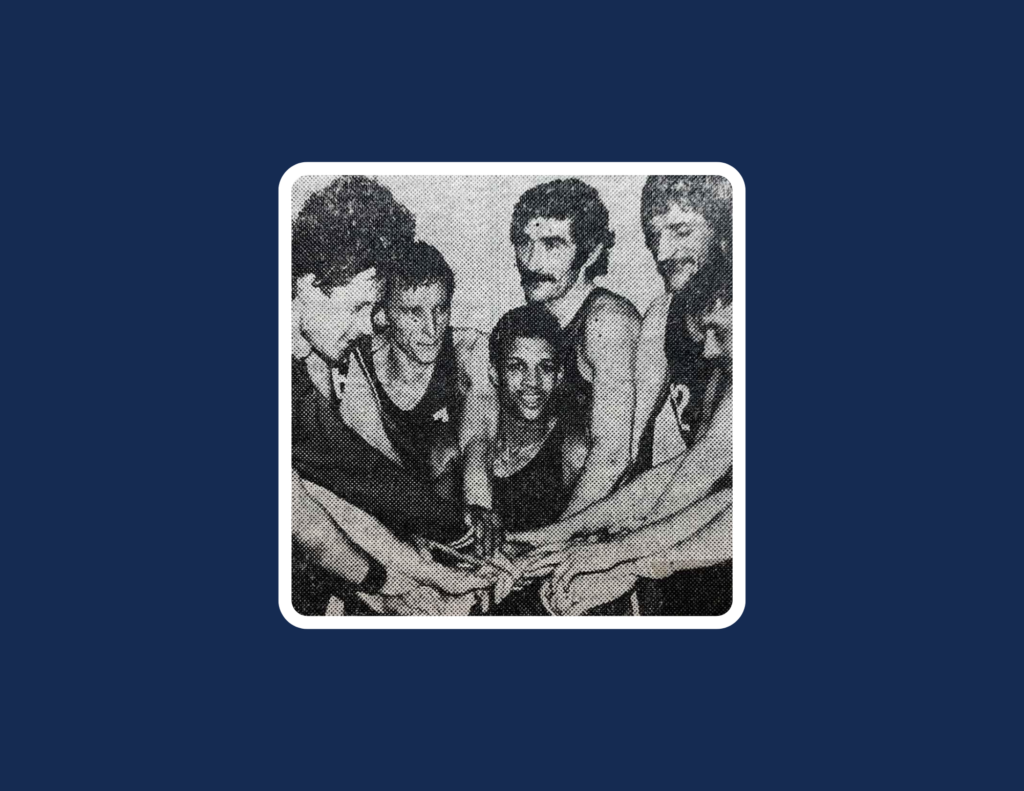
Kent Washington made history by becoming the first American to play professional basketball behind the Iron Curtain. In his memoir, Kentomania, he recounts his journey from grade school, when he was known as Peanut, to become the first Black American to play professionally in the top league in Poland.
Kent began to tap into his talent as a basketball player in junior and senior high school in New Rochelle, New York. His obsessive work ethic started to pay dividends as he elevated his game and became a college player at Southampton College in Long Island. During a basketball tour of communist Poland with his team in May 1976, Kent took the country by storm and became an overnight sensation.
After finishing his education, he returned to Poland under contract to play professionally. The Polish press dubbed his popularity “Kentomania,” and fans lined the sidewalks hoping to get into a game to see him play – and to get his autograph.
Kent’s athletic and cultural journey is unique as shares insights on his life behind the Iron Curtain.
If you’re looking to improve your coaching please consider joining the Hoop Heads Mentorship Program. We believe that having a mentor is the best way to maximize your potential and become a transformational coach. By matching you up with one of our experienced mentors you’ll develop a one on one relationship that will help your coaching, your team, your program, and your mindset. The Hoop Heads Mentorship Program delivers mentoring services to basketball coaches at all levels through our team of experienced Head Coaches. Find out more at hoopheadspod.com or shoot me an email directly mike@hoopheadspod.com
Be sure to follow us on Twitter and Instagram @hoopheadspod for the latest updates on episodes, guests, and events from the Hoop Heads Pod.
Make sure you’re subscribed to the Hoop Heads Pod on iTunes or wherever you get your podcasts and while you’re there please leave us a 5 star rating and review. Your ratings help your friends and coaching colleagues find the show. If you really love what you’re hearing recommend the Hoop Heads Pod to someone and get them to join you as a part of Hoop Heads Nation.
Get ready to take some notes as you listen to this episode with Kent Washington, the author of “Kentomania”.
What We Discuss with Kent Washington
- “Around age 13, I began to get this unquenchable thirst to actually practice basketball.”
- “Practice makes you better, not games. In games, you usually play to your strength. In practice, you can practice weaknesses.”
- “I played certain players one on one, full court, because if anybody asked me to work out, I would say I only play one on one, full court.”
- The value of playing one on one full court
- “I realized that diligent work ethic and setting goals allow you to achieve and you don’t have to talk about it. You just have to do it.”
- Playing his college basketball at Southampton College on Long Island
- Developing an understanding of how and why his college coaches drove him and pushed him to his max
- “My itch to practice basketball couldn’t be scratched. I mean, I was out of control, and I knew it. But my obsession took over and I over practiced, I knew it, I couldn’t help it.”
- The tour Southampton took in 1976 that exposed his game to the people of Poland
- His decision to play professionally in Poland
- “I don’t know anything about communism. I just knew when I was there, basketball was great. That’s all I cared about.”
- The small, daily challenges of living in a communist country
- The differences between the European and American game back then
- Seeing European great like Arvydas Sabonis, Detlef Schrempf, Drazen Petrovic
- Being the only African-American player in Poland
- “I faced. little if any kind of racism at all.”
- “No American comes into Poland without them knowing and being spied on.”
- The conversation he had with a Polish journalist in 2019 that led to him writing “Kentomania”
- The possibility that the book turns into a documentary chronicling his story and time playing in Poland
Like this show? Please leave us a review here — even one sentence helps! Consider including your Twitter handle so we can thank you personally!

We’re excited to partner with Dr. Dish, the world’s best shooting machine! Mention the Hoop Heads Podcast when you place your order and get $300 off a brand new state of the art Dr. Dish Shooting Machine!

Prepare like the pros with the all new FastDraw and FastScout. FastDraw has been the number one play diagramming software for coaches for years, and now with it’s integrated web platform, coaches have the ability to add video to plays and share them directly to their players Android and iPhones via their mobile app. Coaches can also create customized scouting reports, upload and send game and practice film straight to the mobile app. Your players and staff have never been as prepared for games as they will after using FastDraw & FastScout. You’ll see quickly why FastModel Sports has the most compelling and intuitive basketball software out there! In addition to a great product, they also provide basketball coaching content and resources through their blog and playbank, which features over 8,000 free plays and drills from their online coaching community. For access to these plays and more information, visit fastmodelsports.com or follow them on Twitter @FastModel. Use Promo code HHP15 to save 15%

Your first impression is everything when applying for a new coaching job. A professional coaching portfolio is the tool that highlights your coaching achievements and philosophies and, most of all, helps separate you and your abilities from the other applicants.
The key to landing a new coaching job is to demonstrate to the hiring committee your attention to detail, level of preparedness, and your professionalism. Not only does a coaching portfolio allow you to exhibit these qualities, it also allows you to present your personal philosophies on coaching, leadership, and program development in an organized manner.
The Coaching Portfolio Guide is an instructional, membership-based website that helps you develop a personalized portfolio. Each section of the portfolio guide provides detailed instructions on how to organize your portfolio in a professional manner. The guide also provides sample documents for each section of your portfolio that you can copy, modify, and add to your personal portfolio.
Hey, coach! Want to take your team to the next level this season? Introducing GameChanger, the ultimate game-day assistant with tools to give you a winning advantage. With GameChanger, you can track stats, keep score, and even live stream games, all for free! Get the stats and crucial game video you need to lead your team to victory, all from the palm of your hand. Coach smarter this season with GameChanger. Download GameChanger today on iOS or Android and make this season one to remember. GameChanger. Stream. Score. Connect. Learn more at GC.com/HoopHeads

“Integrity Insight” is a transformative mini-course designed for coaches, focused on examining and improving team conduct in alignment with core values and ethical standards. This course encourages coaches to engage in a reflective and analytical journey, examining past behaviors and incidents to foster a culture of integrity and accountability in their teams.
THANKS, KENT WASHINGTON
If you enjoyed this episode with Kent Washington let him know by clicking on the link below and thanking him via email.
Click here to thank Kent Washington via Email
Click here to let Mike & Jason know about your number one takeaway from this episode!
And if you want us to answer your questions on one of our upcoming weekly NBA episodes, drop us a line at mike@hoopheadspod.com.
TRANSCRIPT FOR KENT WASHINGTON – AUTHOR OF “KENTOMANIA” & THE FIRST AMERICAN TO PLAY PROFESSIONAL BASKETBALL BEHIND THE IRON CURTAIN – EPISODE 931
[00:00:00] Mike Klinzing: Hello and welcome to the Hoop Heads Podcast. It’s Mike Klinzing here with my co-host Jason Sunkle tonight. And we are pleased to be joined by Kent Washington. The author of the book, Kentomania. Kent, welcome to the Hoop Heads Pod.
[00:00:17] Kent Washington: Thank you very much for the opportunity.
[00:00:19] Mike Klinzing: We are thrilled to be able to have you on, going to obviously dive into your book, what it’s all about. We’re going to let people know where they can go out and pick up a copy, but let’s start by going back in time to when you were a kid, tell me a little bit about some of your first experiences with the game of basketball.
[00:00:34] Kent Washington: Yeah, I’ve played all sports up to the age of 13, and then around 13, I began to get this unquenchable thirst to actually play basketball. Practice basketball. Playing games was not something that I really cared about. I loved to practice and I began at 13, 14 to practice alone. I started to practice full court alone. I would find a park, a playground a basketball court, and I would have to go full court all by myself. And what it did was it enhanced all parts of my game, conditioning, ball handling, get my shots up.
And I just was obsessed with practicing basketball. I can’t explain why in my book. I just tell you how, why, and when I tried to articulate that. It was just in my DNA that I became addicted, obsessed with practicing basketball.
[00:01:55] Mike Klinzing: Okay. So two questions come to mind. First one is why full court? Why are you going full court as someone practicing by their self?
Not many people go full court. And then number two, what was the aversion to playing games? Was that you couldn’t find games or you just enjoyed practice more than going out and playing pickup basketball?
[00:02:21] Kent Washington: Great question. Full court was something that gave me a game like situation in my mind so I could bring the ball up against man to man, zones and I was able to use my imagination to practice at game speed.
Break, press, break, Running jumps set my team up and then make shots. So I would go full court because it gave me game-like imaginative games, situations. I could play pickup anywhere and I did, but I always got my full court practicing before. Because I had to get, because practice makes you better, not games.
In games, you usually play to your strength. Practice, you can practice weaknesses.
[00:03:32] Mike Klinzing: So were you pulling out most of the stuff that you were doing just from your imagination? Because I often think, again, when you look back at the way basketball was when you were growing up or when I was growing up. So I’m 54 years old and I’m growing up well before the time that we have access to YouTube and all the drills and different things that players today can find and coaches and all trainers, all this stuff that’s out there today.
So I was kind of like you in a sense of When I was going out and doing my workout, it was just things that I created that I felt would help me become a better player. So how did you kind of design what you were going to do each day? Did you have a set workout of, okay, when I get to the court today, this is what I’m going to do.
And I do that for whatever X number of minutes, or was it more improvisational?
[00:04:27] Kent Washington: It was improvisational. As I got into the 11th and 12th grade, I went to Walt Frazier’s basketball camp the summer of my junior year, and I learned a lot of dexterity drills, and I would use those more often during my practices.
So, Each summer, I would learn things from certain camps and things, and form shooting too, and I would implore those into my practice as well. But most of it was improv. I was a very creative player when I played and I used my practices to kind of develop, create my ball handling skills, because I couldn’t pass to my, myself.
[00:05:26] Mike Klinzing: Hard to work on passing when you’re out there by yourself.
[00:05:28] Kent Washington: Exactly. So when I played the pickup games, that’s when my instincts came into the passing, which I have a interesting imagination when I actually passed the ball. This is what kind of captured a lot of like the coaches that saw me play. They were amazed the way I could pass.
[00:05:54] Mike Klinzing: Do you ever have anybody join you at all for your workouts or are you always by yourself?
[00:05:59] Kent Washington: Yes, because in the book, I tell a few stories. I played certain players one on one, full court, because if anybody asked me to work out, I would say I only play one on one, full court.
And a couple of people that dared came out. And as soon as they saw that I would actually press them full court, and when they, they missed or something, I would just drive it right back down and shoot jump shots. After a couple of times up and down, they said, eh, this is not quite what I want to do.
But I had some friends that could really play and we would play one on one full court games.
[00:06:50] Mike Klinzing: I’ve got a one on one full court story for you. So when I was a kid, this is probably when I was, oh man, I bet I was 14, 15 years old, maybe 16. And there were some local courts by my house that were outdoor courts.
And I used to drive up there. And of course in the summertime, often I was up there in the middle of the day, the hottest part of the day. And one day I’m up there by myself and I wasn’t. working on full court drills. I was just working on my shooting or whatever. And a guy drives up and he was from a neighboring community and his name was Scott Roth and he had played at the University of Wisconsin.
And he had an opportunity to play a couple of years in the NBA, kind of drifted in and out of the league, played in Europe for a time. And Scott pulls up into the of the courts and he gets out and I had kind of grown up watching him because he’s probably seven, maybe eight years older than me and pulls up to the court and he’s like, Hey, it goes, I’m looking for somebody to play one on one full court with me to help me get in shape.
And I’m trying to work on certain things. And do you want to be that guy? And here’s a player that I had watched when I was in elementary school and he was in high school and obviously great player went on to play in the Big Ten, play in the NBA. And next thing I know, here I am playing one on one full court in July, 90 degrees on these courts.
With a guy who is a professional player. And so I can attest to the value of playing one on one full court. I can also attest to the challenge of playing one on one full court in terms of your skill level, your conditioning, your. For lack of a better way of saying it, your will, right? Because if you don’t get back on defense, there’s nobody else getting back to, to cover you.
If you feel like you’re going to jog back one time, guess what? You’re giving up a bucket. So it was very interesting to experience, to play one on one full court. And again, just to have a guy of his caliber, just kind of roll into the parking lot and ask a kid who was seven, eight years younger than him, Hey, you want to go one on one full court?
Great for me. And then him and I became workout partners. We did a lot of stuff together from that point forward, but it’s just kind of funny how that all came together for me. So let me ask you this, as you are working on your game by yourself, and. You’re seeing yourself obviously get better and then you’re testing yourself in pickup games.
As you get into high school, how does what you’re doing by yourself and what you’re doing in pickup games How does that translate for you into, I’m going to just use the term organized basketball, when you get on your school team?
[00:09:47] Kent Washington: Yeah. So every summer I rededicated myself to getting better and I would pick up new drills, new challenges, and my teammates knew me and they realized that I was unlike them, I was really driven.
And I became. a quiet leader without saying much because they realize how much time I put in. So when I started playing junior varsity on, like, varsity, I was already known as the court general. Because everybody had that built in respect because of how much work I always put in. And slowly but surely accolades came just because I kept getting better.
And it was a testament to myself that I realized that diligent work ethic and setting goals allow you to achieve and you don’t have to talk about it. You just have to do it. So My discipline, the work I actually put in, paid off in organized ball, and I eventually, surprisingly, got a scholarship.
And I didn’t dream about playing college or pro. I’m not a dreamer, because dreaming takes no energy. You can’t dream without doing anything. I’m the kind of person that’s gonna set a goal and practice toward it, and then, you set that next goal. And a college coach saw me at Walt Frazier’s camp.
And while people were eating lunch and taking breaks, I was on the court going up and down full court anytime I could, getting better. And he said, I’m gonna keep an eye on this kid. So that worked out for me.
[00:12:15] Mike Klinzing: What’s your favorite memory from playing high school basketball? And then we’ll jump into your college experience.
[00:12:21] Kent Washington: Well, anytime we played against Mount Vernon High School, which was loaded with pro players, my rival then was Ray Williams, who played for the Knicks. But I also played against Earl Tatum, the Lakers, Gus Williams so there’s a ton of people that came out of Mount Vernon High School.
So anytime I played them, I knew that that was the measuring bar for how good good is.
[00:12:58] Mike Klinzing: Yeah, it makes a lot of sense. And I mean, I think when you get a chance to test yourself, right, if you’re a competitive player, you want to be able to go against the best players that you can find. A, it’s a challenge, and B, that’s how you ultimately improve your skills and how you get better.
So you get an opportunity to get a scholarship, talk a little bit about what that process was like in terms of making your decision about where you were going to go to school. Was it just strictly, hey, this is my one offer and this is the scholarship that I’m going to take? Or was the process more drawn out and difficult than that?
[00:13:35] Kent Washington: Yeah, it was very simple. So at the camp, Walt Frazier was a coach, Jim Cokelaw from Southampton College on Long Island, which is now Stony Brook University out there. And he was interested in me. My senior year, I got letters from junior colleges, D3 schools. I had little interest St. John’s wrote me, but I knew I couldn’t play there. So the Southampton the college coach really pursued me. And I knew him from camp and I knew that he wanted me there. So I put my trust in him and he recruited me a four year scholarship. And that was the year after the NCAA allowed freshmen to play varsity.
So I could play varsity right away. A lot of people, don’t know the rules back then, but that was it. And back then also, I’m a little bit older. There was only about 150 D1 schools, which people, there’s like 360 now. I mean, all the schools I played against at Southhampton, most of these schools were like D1 now.
You know, so, and there were no conferences. Most teams were independent back there, so it was a totally different college field then. But I was committed to Southhampton College because the coach showed a lot of interest.
[00:15:31] Mike Klinzing: What was the adjustment like for you, going from high school basketball to college basketball?
[00:15:35] Kent Washington: Yeah, because practices are so much more demanding because simply you’re playing against 22 year olds in practice and so you have to engage yourself in a different way. It’s just not like physical now. It’s, mental, emotional, you have to receive more information quickly because the college coaches don’t have a lot of time to waste on explaining things.
They kind of break you down from what your high school character is to now mold you into what they want there. So there’s a lot of criticism that you have to kind of deal with without breaking down. And back then coaches were screaming at you constantly. So it’s not a feel good thing.
They’re on your chest constantly. But I have thick skin and I had a assistant coach there, Coach Lezak, that he was on me one day. I mean, just on me. And I got upset. I was downstairs getting dressed and he came over and said, Kenny, let me tell you something. I see something in you that you may not see.
So it’s when I stop getting on your case that you should be worried because then I’ve given up. And once he said that, I realized his role was to drive me and push me to my max. And I accepted it. I understood it now.
[00:17:36] Mike Klinzing: Yeah, that’s a great lesson. And it’s one, I think that when you start looking at the changes since you and I were playing college basketball to where we are today, And you’re a hundred percent right when you think about just the style of coaching back then, where most coaches were sort of that fire and brimstone, my way or the highway, and you didn’t question or ask anything.
You just kind of did what you were told. If you wanted to stay where you were and continue to be on the team, you just did what you were told. And obviously today things are a little bit more, a little bit different where players can ask why coaches share thoughts and ideas behind them. And it’s much more collaborative than it certainly was when you and I were playing.
And so I think that the lesson that you took away from that in terms of, Hey, you just have to keep working. You have to persevere. You have to fight your way through that. I think that’s a great lesson that you were able to take away. What were you thinking about in terms of a career at this point? What was your major?
What did you go into college with the idea that you wanted to do when you got out? Or were you still just kind of focused on, hey, I’m It’s basketball right now.
[00:18:59] Kent Washington: That’s funny because when I left high school and I stepped on Southampton’s campus, I realized time management, I was in control. So I spent a lot of time practicing basketball, way more.
During high school, because now, no one was there asking me, did I do my homework? Did I eat for dinner? Am I doing this? Am I doing that? I was in the gym way too much. My itch to practice basketball couldn’t be scratched. I mean, I was out of control, and I knew it. But my obsession took over and I over practiced, I knew it, I couldn’t help it.
And the janitors and the guards, security guards always, they would tell me, just turn the lights off when you’re done, close the door and just make sure it’s locked. And I was a sociology major. But basketball, and it wasn’t because I wanted to play like pro or anything, I just wanted to play in college and be impactful.
And in order to do that as a freshman, I had to be really, really good because I was playing against juniors and seniors, and in order to perform on a high level, I had to be better than everyone else. So that just took over.
[00:20:55] Mike Klinzing: I think it’s easy when you start talking about college basketball and a desire to really excel. And let’s face it, at any level, I don’t care if it’s high school, I don’t care if it’s college, I don’t care if it’s a professional level, the players who put the kind of time in, like you obviously did, are the ones that have a lot of success. And one of the things that this led to for you is an opportunity where your team traveled overseas and was able to play and it got you some recognition and it got you some adulation.
So tell that story about going overseas with your team and kind of what happened while you were there and then we’ll dive into what the ramifications were for you moving forward.
[00:21:52] Kent Washington: Okay. So my freshman year I started, played well. Sophomore year started, played a little bit better, got more mature, cut the turnovers down.
And then I realized I’m not shooting the ball well so I rededicated my summer going into my junior year, form shooting. A lot of form shooting. My junior year, I played really well. Average went up, assists stayed the same. I was always a good Floor General. And that summer our college went on a trip to communist Poland.
This was 1976, may we won a 20 day seven game tour and. In Poland, our first game, we got beat because the style of play, the rules and everything was so different, but they were real, real good. We were playing against men, pro men. But during the game, the rules they had there, the FIBA, basketball rules enhanced my game.
And although we lost, I scored a tremendous amount of points and my imaginative style of play. The fans went gaga for, and I didn’t kind of realize why. I mean, this is just how I play, but they’d never seen ball handling and passing the way I did fans come running out of the stands and signing autographs and everything.
The translator for us, we’re doing like interviews with all of these like journalists. They want to know how I play like this and all this stuff. And during one of the tournaments there, the coach for a team asked me through the translator, would I want to come back and, play. And I was like that’s flattering, but I don’t plan on playing basketball in Poland.
You know, I had a couple of teammates that actually went to Sweden. So I said, Oh, well, since they’re there, maybe they’ll speak highly of me. You know, who knows? And so that trip really unbeknown to me started his something historical that I was going to someday engage in.
[00:24:43] Mike Klinzing: Do you know, sort of the how, the why behind your team at Southampton taking that trip?
Like, why did you guys go to Poland? Obviously, communist country, probably not the most likely destination for a college team from Long Island to travel overseas to go play. in that particular country. So do you know the origin of why the trip took place in the first place? I’m just curious. Yes,
[00:25:10] Kent Washington: I do. So the mayor and the city council of Southampton Township was Polish. They received an invitation.
[00:25:19] Mike Klinzing: Interesting.
[00:25:20] Kent Washington: If they had a college that wanted to go and tour. So it was just, they was Polish and that the city council.
[00:25:32] Mike Klinzing: That is, I mean, when you start talking about little moments, right? That change sort of the course of your life. I mean, it’s kind of, it’s kind of incredible. When you think about it, there’s just so many small things that can make such a huge change. It’s crazy. What’s your favorite moment from playing college basketball?
Was it that opportunity to go over to Poland? Was there something else that stands out? Just like I asked you with high school basketball. What’s your, what’s your favorite memory when you look back upon your college career that sticks out for you?
[00:26:09] Kent Washington: I think there’s no one thing. I think it’s my growth from freshman to senior coming in as a freshman averaging 6 assists, and then finishing off averaging 23 points being the most valuable player at college, the division on Long Island All American small college honors. Things like that. There was this steady growth, and that’s what, what I’m most, I guess, proud of, because practice actually pays off. Now, my grades suffer.
[00:26:55] Mike Klinzing: So, you eventually, though, We’re able to graduate and then what do you do from there? What’s, how do you end up back in Poland? And then we’ll dive into all of the interesting things that happened as you traveled back to Poland, just kind of what that experience was like for you. But let’s start with graduation and kind of where you went from there, what your mindset was at that point.
[00:27:18] Kent Washington: Yeah. So I was chosen by, I graduated in 77. The Los Angeles, like there are like 15 round draft choices back then. It was ridiculous.
[00:27:33] Mike Klinzing: Back then there was a lot of rounds.
[00:27:35] Kent Washington: So I was drafted after the 10th round. And when you’re drafted that late, you go to the Los Angeles Summer League first and they, they have about 80, there’s so many players there, and you practice and they break you up in the teams and you play games and there’s a lot of coaches there from the, all of the NBA teams and they try to pick off some players and long story short, I played well but didn’t make it.
And, but I got to see how good, good is. And good is very good on the pro level. So I returned back home and I have the Polish coach’s address. So, I got my degree, I was a few credits short, finished up, and I asked my dad, can I telegraph Poland and see if there’s any interest? And he knew that I’m going to do it anyway.
I did. We corresponded back and forth. And January 4th, 1979, I was on a flight over to play professional basketball in communist Poland.
[00:29:07] Mike Klinzing: Were you at all? And I know you had obviously been there with your college team. And so you had had the experience of going into a foreign country, going into a communist country, an area where, again, at that time in the world, clearly the politics of that era and the cold war and the rivalry between the Soviet Union and its allies, the United States and its allies, were you at all?
It’s different when you’re going with a group and it’s. At least I’m assuming semi organized when you’re over there with your college team. Here now, it’s just you going over there as one individual. Was there any hesitation, worry, or did you feel comfortable with it because of your experience previously?
[00:29:49] Kent Washington: I felt comfortable with it because I knew Basketball wise, I was okay. The fans loved my style and it was a high level, so I was fine. The deli culture, I didn’t know because we stayed in hotels there, so. But I wasn’t concerned. I’m such an obsessive basketball person that those thoughts don’t even enter my mind.
I’m going over there to practice and play basketball. That’s the only thing that concerns me. Nothing else does. Now, my mom was the absolutely bravest person for allowing me to go. You know, I wasn’t brave at all. She was like to let your 23 year old son go to a communist country is like, you gotta be kind of brave as a mom.
But communism doesn’t mean anything to me or my family because they haven’t harassed my family in any way. I don’t know anything about communism. I just knew when I was there, basketball was great. That’s all I cared about. When I got there, I had to endure a lot of daily challenges.
[00:31:25] Mike Klinzing: How difficult was it to maintain your high level of practice? In other words, were you able to get into a gym, whenever you wanted to be able to sort of deal with and, and satiate your obsession, for lack of a better way of saying it.
[00:31:51] Kent Washington: Absolutely. So we practiced twice a day, 10 to 12, and 4. 30 to 6, 6:30. And I would come an hour before we started the first practice, workout, practice, go home, eat lunch, rest, then I would come back an hour before the second practice, work out first, and then practice with the team.
[00:32:23] Mike Klinzing: So you mentioned that you had some daily challenges, which clearly, completely different culture, Completely different style of government, completely different society. So just talk through some of those daily challenges and what you kind of had to face day in and day out to, just to be able to live your life.
[00:32:42] Kent Washington: Yeah. You had to do a lot more with a lot less plumbing, electricity, refrigeration, things like that were substandard. But that’s just how it is. A lot of Public facilities don’t have toilet paper, they have ripped up newspaper. Food, you have to be careful with what you eat because refrigeration is not great, so you don’t know what is expired or not.
Transportation on the bus. My street wasn’t paved. I lived a couple of miles outside of the center. Streets outside of that aren’t paved. So when it rains, it’s like a muddy freaking like mess. It’s just, you know. Small challenges, things like that, that you run into daily that you have to get used to.
It’s part of your life now. Getting my clothes washed was something that I had to kind of figure out who could do it. But it got done. So things like that, there would be gymnasiums, the floors, a lot of them had a lot of dead spots. So I would spend a lot of time on away game floors, our floor, dribbling around lengthwise, widthwise, to find where the dead spots are so I could stay away from them.
The lock rooms were interesting to say the very least. You know, it’s just things like that you have to kind of deal with on a daily basis. But I was there to practice and play basketball. And that’s what kept me focused. And it’s because of my basketball bringing that I was such a disciplined player that liked to practice alone, because by practicing that way, it put me in my place to play.
of like solitude. So loneliness was, to me, solitude. And if I wasn’t raised that way athletically, I could never have survived those challenges in communist Poland.
[00:35:27] Mike Klinzing: How was the language barrier with you, your teammates, your coaching staff? How were you able to Was it strictly the language of basketball?
Did some of the people associated with the team speak English? Did you pick up any Polish while you were there? Just how did you communicate with your teammates and coaches that you were interacting with every day?
[00:35:47] Kent Washington: Yeah they hired a translator my first year. He was dead both practices and a couple of away games so he would help me through certain plays and like timeouts of, wanted to run something special.
He didn’t have to translate that much because drills are drills and it’s a universal language. The players I played with are instinctive, highly skilled. serious ballers, you know basketballs. But as soon as they got used to my passing and they started to look for it because I used to hit guys in the head with the ball in the first practice.
And until we the, the coach stopped practicing. He explained, listen guys, you know Kenny, you’ve seen him play during college. So keep your hands ready and keep your eyes on him and it worked out fine. You know, it took a practice or two, but they taught me more about basketball than I taught them because the game there is body moves, ball moves.
Here it’s point guard dribbles all the time when I used to play in college and I had the ball too much. But there, the ball’s gone out of my hands. So, I learned how to play a different way. There big men are so skilled in on a screen, they don’t always roll, they pop because they can shoot. Our big men have to roll because they don’t trust them shooting.
Over there, they pick and pop. So, I was seeing our centers, like seven feet, pop out, catch, and, and they would shoot. So it was a different game, but I loved it. It was much faster, much more physical than what I was actually used to. Because of the rules too, they allowed you to play fast.
The referee hardly ever touches the ball back then. The foul lane’s a trapezoid, so there’s not a lot of deep low post stuff. The low post is quite a bit further out. So it was an interesting game. That was the first time I ever came in contact with the dribble handoff. I never saw it before in American basketball.
That was the first time there. So that was different than what and the Eurostep here now, which was, that was actually traveling back when I played. That’s, they were doing that all the time then. So I was trying to take the charge. They were just like stepping around me, laying them all in.
[00:38:50] Mike Klinzing: You’re like, what is this? Yeah. I say that all the time. There’s so many things that I see in the game today that I’m like, yeah, I wouldn’t have been able to get away with that. That would have definitely been called. I tell people all the time, Kent, my, one of my moves that I love to do when I was playing pickup basketball was just go for a regular layup, but instead of picking the ball up normally and kind of have it at my waist.
I would dribble the ball and then kind of take a, pick the ball up and then kind of loop it above my head to bring it to my left hand and then go up and shoot. So you kind of lift it above the defender if somebody was reaching in from the side and pull that ball up above them. And I used to get called for traveling all the time on that when I tried to do that in a regular game.
And I would try, I’d stop and I’d try to explain to the ref, I’m like, look, Just watch my feet. It has nothing to do with what my hand is doing with the ball. I’m just shooting a regular layup. It’s just the way I’m picking up the ball is different. And I think too, man, that’s, I mean, it was such a simple move and a simple adjustment that I was making.
And yet I couldn’t convince referees that it wasn’t a travel. And now I look at all the footwork stuff and what guys do. I mean, it’s kind of, it really is kind of incredible. Just how, how the game has evolved and changed in that way. It’s, it’s really is amazing. So it’s interesting to me that you were already seeing that type of footwork going on in Poland back in the seventies.
That’s kind of amazing when you really think about it.
[00:40:16] Kent Washington: Yeah, I mean that was everything. They had to modify the NBA rules as the Europeans come, because they wouldn’t be able to play here. Everything would be something like that. So as they engaged them and I saw back then, I played against the Russian national team in West Germany and Arvydas Sabonis was 19, 18 or 19.
And you saw him at his peak. Yeah, their whole team could have played in the NBA then, but they weren’t allowed to. I mean, picture Russian national team then. There are six different Russian countries that it’s been broken up into. They were one national team back then.
[00:41:18] Mike Klinzing: That’s crazy. That’s crazy. The talent level.
[00:41:20] Kent Washington: Yeah. Yeah. The Yugoslavs too. That was one national team. There are like four different national teams that are still good. Serbia is good. Croatia is good. They were one national team then. The Russians were too. They were tremendous. I played against Detlef Schrempf when he was 18 out of West Germany.
I played against Drazen Petrovic. He was like 17 out of Srebrenica. I mean, I saw This, this influx coming back then, because they were so good, but they couldn’t get out of their country.
[00:42:00] Mike Klinzing: All those guys, when you think through the history of basketball and they’re sort of the first wave of players who eventually now.
By the time Sabonis got here, he was a shell of what he was athletically because of all his injuries and his age and whatever. But when he was 18 or 19, like when you saw him, everything that I’ve ever read, seen, heard people talk about was just that Not only was he phenomenally skilled, which we still saw when he got to the NBA at age 33 or 34 when he got to Portland, but that he was also just an incredible, unbelievable athlete before injuries robbed him of all that.
And, and you think about some of the other names you mentioned and just, those are guys that are pioneers in bringing that European style of basketball here to the United States for you to be able to see that, witness it firsthand. And as you said, kind of. Almost get a sneak preview of, of what was coming as we moved into the future is, is really, really cool.
What was your experience like as an African American? Obviously as you walk around the streets, you become fairly recognizable if for no other reason than the color of your skin. So what do you remember about just your experience in that way? Just being an African American in communist Poland.
[00:43:29] Kent Washington: Yeah, well, of course I’m a novelty at first because I’m black and everybody there’s a lot of curiosity, of course about that.
And then as I start to like, like settle in, everybody knows who I am, Kent Washington. So the novelty of me being black and now I’m just a basketball player who’s Well, kind of famous there. I hate that word. But to my neighborhood or to outside areas where my translator and me would maybe go for lunch and travel like an hour out outside of town to the country or something.
And most people there never seen a black person. So they’re staring and stuff like that, but you know, it’s curiosity. It doesn’t bother me, but of course they want to ask questions and my translator’s gotta we gotta stop and answer a lot of questions and things like that, which is, yeah it’s cool.
But I never there was one game we were in Warsaw playing against Legia and they’re a, a soccer club, but they have notorious soccer fans that go to the basketball games. And they, so Roots was being shown in Poland and I didn’t really know this and I’m, I’m warming up and all of a sudden they’re chanting Kunta Kente, Kunta Kente, Kunta Kente, you know.
So I start to smile and I’m like, are they saying what I think they’re saying? You know? So I, I think to myself I’m going to show them. So the basketball, they’ve never seen before. They’d never seen what I’m going to shut up. And I went to work on this team after the game, flying out the stands, hugging me and kissing me and want my autograph last time.
So there was, I faced. little if any kind of racism at all. You get the occasional drunk that says something, but as soon as they find out Ken Washington, the basketball player, they apologize, they come over, they’re going to kiss you on your cheek and they’re going to hug you, you know. So I drew a lot of attention in both ways.
[00:45:55] Mike Klinzing: Would you say that as a society at that time, I think the perception probably would be that it’s a very strict, butt down environment. What did you find in terms of just your freedom to kind of move about and do what you needed to do, do what you wanted to do? Were you able to kind of just Live your life.
Obviously, again, there’s a language barrier and you’re focused on basketball and all those kinds of things, but just what was the society like in general, just in terms of the living conditions for the citizens and your freedoms to be able to move around and live life.
[00:46:37] Kent Washington: Yeah, interesting question. Very intriguing.
So from their standard of living. Like it’s a poor country. There’s no question about it. People have a good time because they smoke, drink, and they party at the restaurants when there’s like a live band. So that’s pretty much what they do. Life is pretty humdrum there. There, everybody works because the state provides you with a job, whether you like the job or not.
It can be seen as pretty depressing my life there. I, with my translator, the first year and a half I had a translator for that long I went around, I went to practice by public transportation, I walked in town as I got to New York. be able to do things on my own, which I did. I would go to restaurants and eat, and I would do things with no problem.
Now, I was back in Poland, September, for the first time in 40 years. I met my translator. I asked him, do you think I was spied on while I was there? He said, you absolutely were spied on. There’s not a question about it. No American comes into Poland without them knowing and being spied on. He said he was him, himself asked to keep tabs on me, but refused.
So I went about my business. I did what I thought I wanted to do when I wanted to. But apparently I was always being watched.
[00:48:39] Mike Klinzing: You didn’t sense that. You didn’t feel that in the moment.
[00:48:42] Kent Washington: They were very good at it. Cause I didn’t sense it at all.
[00:48:45] Mike Klinzing: When did the idea for the book pop into your head. Was that something that you had been mulling over thinking about for a long time and it just took you a while to sort of pull the trigger and get started on it? Or was it something that one day you were kind of sitting back and reflecting upon your experiences and thought, Hey, I think there’s a book here.
Just give me the genesis of where the idea for the book came from.
[00:49:18] Kent Washington: Yeah. In 2019, I was contacted by a Polish journalist on the forty year anniversary of me actually being there. She, after we spoke she said, do you realize how you impacted Polish society? And I said, no, I’m just playing basketball.
And she says, no, it was much more. She said, you are a legendary figure to us. I’m like, what are you talking about? You know, I mean, that’s just playing basketball. She said, no, she said, you should seriously think about writing a diary, a memo or something down because the Polish people would love to hear about you.
So, after the interview, I took out my articles, I got, like, photos, I started to research, and I found out that I was the first American to ever play pro behind the Iron Curtain. I contacted a Russian sports authority. He said he knew of me there and he guaranteed that, that I was the, not only the first pro basketball player, but probably the first American to play any sport.
So I said, really? He said, Oh yeah. There’s not even a question. So I started to write the book of my time in Poland. And when I finished that part, I said I didn’t just go to Poland in a vacuum. Something came before. So then I wrote about my basketball journey from sixth grade on. And I wanted the Polish people to understand how I felt about them and their country at that time.
I owe them that. And I wanted Americans to hear my story and realize that communism is not an indictment on the people that live there. They’re people and that’s how it got done.
[00:51:55] Mike Klinzing: What was your process for actually sitting down and writing the book? Were you Sort of the 30 minutes a day guy, would you write for long stretches?
Just how’d you go about, what was your process for getting the book written?
[00:52:08] Kent Washington: Yeah. So first I invited a friend over who spoke fluent Polish and she went through the articles. And as she was going through them, she started to cry. And I was, are these tears of joy or pain? And she says, joy.
You have no idea how they wrote about you here, even in sports and just about how they adored you there. I mean, these articles are unbelievable. So she helped me through that. And then I chronologically went back through each year I was there and told different stories, situations, I was in both daily, like, like cultural, and just basketball too.
So I would just write randomly, randomly is not the right word, in a chronological order. as I could, because when I started to think back and see articles and I got a lot of pictures, I knew exactly what happened at that time. Like, it is embedded in my mind. So I just went, started writing and re reading and re writing and editing and re reading, writing.
I gave it to a editor. And she said you need more dialogue to make it come to life. So I did that. And then she read it and said, this is a great book. And I was like, yeah, well, you’re saying that cause you’re on my episode. She went, let me tell you, the story is unique beyond, like, I wouldn’t believe it.
She said, it sounds like a Hollywood script that somebody came up with and then they said, Ah, nobody’s going to believe it. Let’s throw it away. Because who would believe that you would go to communist Poland to play basketball? It doesn’t sound real. So after I read it, she said, it’s so simply written and so understandable.
It’s really good. So I was saying, well, I guess we’ll see how good when we actually publish it.
[00:54:48] Mike Klinzing: What was that process like the publishing? Once you have the book done and you’re getting it out and trying to market it and get it in front of people, how did you think about that? Or who’d you have helping you? And how’d you go about trying to promote it and get it out in front of people?
[00:55:03] Kent Washington: Yeah, well, while I was writing it, I was constantly in contact with Polish professors at various, like six different universities who knew about me playing basketball.
And I would write, and after I wrote it, I let them know. read it to see if it was authentic to them. It had to pass the Polish test. And they said, bore tears to their eyes, how I depicted communist Poland at a time where they were trying to get out. I was coming in. and actually finding a joyous life there.
So I had Cold War experts. I’ve done podcasts. They can’t believe that I was there. Can’t believe that I could go back and forth. Can’t believe that I was never contacted by the embassy during martial law. They are just, so the academically, everybody likes it. So now I had to figure out how to get it to the average person.
So I’m not a big technology guy friends read it, colleagues read it, and it’s kind of word of mouth. I think I sold about 700 books here and in Poland, it’s in Polish now. I sold about 500 there, but it’s just the tip of the iceberg there. It’s going to start to just really blow up there. I just got it out there.
So marketing no publishing company would do it because I guess it’s such a simply written book, I’ve been told, it’s not professionally written. You could have maybe used a ghostwriter. I said, I didn’t want anybody else. These are my words. This is my voice. I can’t have somebody else writing it.
It wouldn’t be my voice. So it’ll, I’m waiting for A national everybody tells me this is going to make a great documentary get in touch with ESPN. Like, I’m going to call up ESPN and say, yeah, I’m Kent Washington, I got no name recognition here. You know, none. You know, call up Stephen A. Smith, they’d love this, and how am I going to get in touch with these people?
But there are film production companies in Canada and in in Holland that are researching my story and are interested in making a documentary. ESPN contacted me, I contacted them, they wrote back, but I haven’t heard anything yet. I’m not sure if it’s a, it’s more of an international story than a national story because here we only talk about integrating sports.
I didn’t do that. I not sure what I did, but I didn’t do that so it’s not a story where Jackie Robinson, Sweetwater Cliffton. It’s not that type of story. There was an essay written by a person that read my book and he compared my story to Jackie Robinson. And his last comment was, Kent Washington went through much more than Jackie Robinson did.
[00:59:12] Mike Klinzing: Well, here’s what I will say, Kent. I know that it’s a very, very interesting story. It’s a very unique story. I’m not sure that you or I or anyone else can define it or put it into a category, but when you consider all the different pieces that go into it, you have a communist country, you have a lone African American basketball player, you have the time in the world where The story is set, and it’s just, again, your experiences there were extremely, extremely unique.
There are very few, and in fact, no one else who had a similar experience to the one that you had. So to be able to share that story, first of all, in your book, and then secondly, if your story does eventually get told in the form of a documentary, That would be amazing and it would be a story that I think that anybody who watched it would be compelled by it because, like I said, It’s so unique.
So before we wrap up, I want to give you a chance to share, let our audience know where they can find the book, how they can get it, how they can support you. And then after you do that, I will jump back in and wrap things up.
[01:00:36] Kent Washington: Okay. The book is called Kentomania: A Black Basketball Virtuoso in Communist Poland.
It’s on Amazon Books, 14.99. And before you purchase it, you can go on and read ratings, reviews, and see what’s said about it. And I think it’s a telling read for basketball parents, basketball players, historians, because parents always say, Oh, my kid loves basketball. And I, yeah, you know what they love?
They love watching it and playing it. Do they love practicing on their own? Not with a coach, not with a shooting coach, not with a paid person. Do they enjoy practicing it on their own to the point where you have to say, Jimmy, Joni, come inside, stop practicing basketball. See, that’s the love. Parents see it as, oh, they’re always watching it.
They like to play games. You like it very much then. There’s a difference.
[01:01:59] Mike Klinzing: There certainly is. There is no question about it. So I would urge everyone in our audience, everyone who’s listening, please go out, support Kent, pick up a copy of Kentomania. It’ll be well worth your time. Excellent book, excellent story.
Kent, cannot thank you enough for taking the time out of your schedule to jump on, share your story, let our listeners know about your book. We thank you for that. And to everyone out there, thanks for listening and we will catch you on our next episode. Thanks.