
SCOTT FITCH – FAIRPORT (NY) HIGH SCHOOL BOYS’ BASKETBALL HEAD COACH & USA BASKETBALL – EPISODE 891
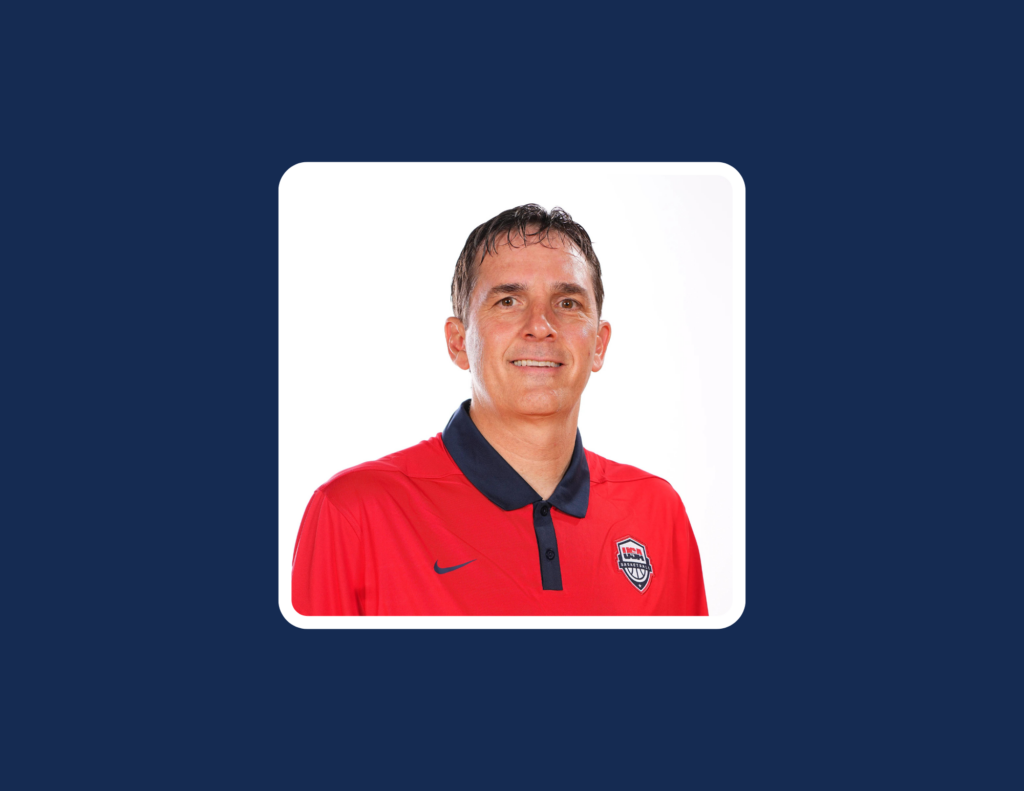
Website – https://fairportbasketball.com/
Email – [email protected]
Twitter – @FCSDSports

If you listen to and love the Hoop Heads Podcast, please consider giving us a small tip that will help in our quest to become the #1 basketball coaching podcast.
Scott Fitch has been the head boys basketball coach at Fairport High School in New York since 2001. Fitch has been honored five times as the Monroe County Coach of the Year, twice as the Section V Coach of the Year and twice All-Greater Rochester Coach of the Year. He led his team to back-to-back Section V Championships in 2006 and 2007 and to the state final four in 2007. In 2016-17, Fitch led Fairport to a 22-2 record, a section title and the state championship game.
Coach Fitch has also been deeply involved with USA Basketball. He has served as a court coach and assistant coach for various junior national team events and minicamps as well as a head coach for the USA Nike Hoop Summit. Scott was an assistant coach for the gold-medal-winning 2018 USA Men’s U17 World Cup Team and 2017 USA Men’s U16 National Team.
As a player at State University of New York at Geneseo, Fitch was the 1994 NCAA Division III National Player of the Year, a 1993 and 1994 DIII All-America first-team selection, a four-time All-Eastern College Athletic Conference first-team member and the ECAC Player of the Year in 1993 and 1994.
He played professionally for a brief time and currently works at Jostens where he specializes in class rings. He also speaks to students all over the country about leadership and social media.
If you’re looking to improve your coaching please consider joining the Hoop Heads Mentorship Program. We believe that having a mentor is the best way to maximize your potential and become a transformational coach. By matching you up with one of our experienced mentors you’ll develop a one on one relationship that will help your coaching, your team, your program, and your mindset. The Hoop Heads Mentorship Program delivers mentoring services to basketball coaches at all levels through our team of experienced Head Coaches. Find out more at hoopheadspod.com or shoot me an email directly [email protected]
Be sure to follow us on Twitter and Instagram @hoopheadspod for the latest updates on episodes, guests, and events from the Hoop Heads Pod.
Get ready to take some notes as you listen to this episode with Scott Fitch, head boys basketball coach at Fairport High School in the state of New York.
What We Discuss with Scott Fitch
- Learning the game from his Dad who coached at the same school (Fairport (NY) HS where Scott coaches now
- Developing as a late bloomer and how his experience as a player may have been different today
- “I want kids that when they leave my system, they can go play in any system because they know how to play the game.”
- Using “tools” to gain an advantage
- “I’ve named all our terms so I can communicate a high level real quick.”
- ” I love controlled scrimmaging where we’ll go two or three trips. I’ll hit a couple of key points I saw and then we’re right back in and going.”
- Why he loved playing high school basketball for his Dad
- “My mom stepped in and told him that he couldn’t talk to me about basketball until I asked him. And it was a great rule for us because when I asked him, it meant I was ready to take it in.”
- The delicate balance required when coaching your own kids
- Choosing D3 Geneseo over a scholarship opportunity
- Why connecting with players is the advantage today and not coaching IQ
- “Basketball to me is a tool to connect with people and impact people.”
- “I love the game. I love teaching the game, but it’s the people that matter to me.”
- His experience at Geneseo and developing into the D3 National Player of the Year
- Why he didn’t transfer to a Big East school after his sophomore year
- The downside of the transfer portal
- “These kids that run from it they’re always going to run from it.”
- His brief experience with the pro game as a player
- The opportunity to replace his Dad as the coach at Fairport High School
- “I think my Dad thought I was standing for the right things, even though I was going about it maybe a little different way.”
- “It’s not about me. It’s about them.”
- Running “program practices” on Saturday for all the levels of his program at Fairport
- “Kids will run through a wall for you and I’d run through a wall for them.”
- How he first got involved with USA Basketball
- The accountability and truth telling with USA Basketball
- The influence of Coach Don Showalter
- “They’re all on a level playing field. It doesn’t matter what ranking you have. It doesn’t matter who you are. Everybody’s treated the same and the kids that buy into it.”
- “I welcome the hard conversations.”
- Training Isiah Stewart from the Detroit Pistons
- The impact of social media on kids today
- “Every post matters. Every post impacts somebody some way.”
- Why coaches need to be talking with their teams about social media
- “I want to make sure I keep in the correct balance and have my family first, along with all the things that I want to do and accomplish within my coaching realm.”
Like this show? Please leave us a review here — even one sentence helps! Consider including your Twitter handle so we can thank you personally!

We’re excited to partner with Dr. Dish, the world’s best shooting machine! Mention the Hoop Heads Podcast when you place your order and get $300 off a brand new state of the art Dr. Dish Shooting Machine!

Prepare like the pros with the all new FastDraw and FastScout. FastDraw has been the number one play diagramming software for coaches for years, and now with it’s integrated web platform, coaches have the ability to add video to plays and share them directly to their players Android and iPhones via their mobile app. Coaches can also create customized scouting reports, upload and send game and practice film straight to the mobile app. Your players and staff have never been as prepared for games as they will after using FastDraw & FastScout. You’ll see quickly why FastModel Sports has the most compelling and intuitive basketball software out there! In addition to a great product, they also provide basketball coaching content and resources through their blog and playbank, which features over 8,000 free plays and drills from their online coaching community. For access to these plays and more information, visit fastmodelsports.com or follow them on Twitter @FastModel. Use Promo code HHP15 to save 15%

Your first impression is everything when applying for a new coaching job. A professional coaching portfolio is the tool that highlights your coaching achievements and philosophies and, most of all, helps separate you and your abilities from the other applicants.
The key to landing a new coaching job is to demonstrate to the hiring committee your attention to detail, level of preparedness, and your professionalism. Not only does a coaching portfolio allow you to exhibit these qualities, it also allows you to present your personal philosophies on coaching, leadership, and program development in an organized manner.
The Coaching Portfolio Guide is an instructional, membership-based website that helps you develop a personalized portfolio. Each section of the portfolio guide provides detailed instructions on how to organize your portfolio in a professional manner. The guide also provides sample documents for each section of your portfolio that you can copy, modify, and add to your personal portfolio.
THANKS, SCOTT FITCH
If you enjoyed this episode with Scott Fitch let him know by clicking on the link below and sending him a quick email:
Click here to thank Scott Fitch on Twitter
Click here to let Mike & Jason know about your number one takeaway from this episode!
And if you want us to answer your questions on one of our upcoming weekly NBA episodes, drop us a line at [email protected].
TRANSCRIPT FOR SCOTT FITCH – FAIRPORT (NY) HIGH SCHOOL BOYS’ BASKETBALL HEAD COACH & USA BASKETBALL – EPISODE 891
[00:00:00] Mike Klinzing: Hello and welcome to the Hoop Heads Podcast. It’s Mike Klinzing here with my co-host Jason Sunkle tonight. And we are pleased to be joined by Scott Fitch, Head Boys Basketball Coach at Fairport High School in New York State. And also, a very prominent member of USA Basketball, has played a number of different roles, which we’re going to talk about tonight. Scott, welcome to the Hoop Heads Pod.
[00:00:24] Scott Fitch: Yeah, thank you so much. Appreciate you guys having me.
[00:00:27] Mike Klinzing: Thanks for being willing to jump on with us, number one. And then let’s go back in time to when you were a kid. Tell us a little bit about how you got into the game of basketball when you were younger.
[00:00:33] Scott Fitch: Yeah, my dad coached at the high school I was at, at Fairport High School, and he coached there for 33 years.
So I grew up being a coach’s kid. I would sit on his lap when I was two and three years old and he said that I would just watch film with him and most kids want to run around, but yet I would sit there and take a whole game. And so I think I always saw the game from a coach’s eyes. I grew up, but I think definitely playing for my dad was a goal and being immersed in it was something that I truly loved from an early age.
[00:01:04] Mike Klinzing: You and I are kind of the same era. So I graduated from high school in 1988, graduated from college in 92. And I know that one of the topics that we always kind of talk about, Scott, is just how different it is to grow up in the game today versus the way that I grew up in it, I’m sure the way you grew up in it.
So just tell me a little bit about your experiences as far as how you worked on your game, how you got better. Pick up basketball. Just kind of what was the scene like as you were trying to become a better player through middle school and high school?
[00:01:33] Scott Fitch: Yeah, I think pick up was big. We just, we would make games and go play and it’s definitely so much different than it is now. I feel like I was a late bloomer. I was skinny. I had big feet I wasn’t quick. And you look at all the youth stuff now, like I wonder if I would have made it through at times just because those early bloomers have such an edge like I’ve had kids that peaked in sixth and seventh grade, they had facial hair and, but they don’t end up growing anymore and I think sometimes the way we’re set up now with all this youth craze we hurt those late bloomers a little bit, but I grew up, I was always playing a little bit ahead.
In eighth grade, I got pulled up to the freshman team, which was a big thing, but then I ended up playing freshman for two years. And I moved up to JV as a sophomore. I thought I’d improved quite a bit, but my dad’s team was really good and it wasn’t the right fit. At the time, I was disappointed, but I also trusted my dad.
And then I only played varsity for two years. And I feel like in this world where everybody gets pulled up quick the reasons that I stayed down, I think they were big reasons as to why I was successful. I learned how to be a leader. I learned how to be the man that people look to score. I think it really helped me actually down the road, even though I think it’s hard for people to see it at the time.
[00:02:53] Mike Klinzing: Yeah, it’s interesting. I think, again, different era. When I went to school, our ninth grade, we were not even at the high school. So I was at middle school, or I guess at that point it was the junior high.
So we didn’t start organized basketball in our community. in the schools until eighth grade. So you didn’t play at all until eighth grade. And then in ninth grade, we were just at the junior high. And so I think after I graduated in the next few years after that, that started to change a little bit. And some kids that were in eighth grade got pulled up to play with the freshman team, kind of like your experience was, but that really wasn’t even an option when I was in school.
And I do think that there was some benefit, like you talked about, where you have to play different roles, right? And then you learn how to adapt. And I think that’s something too, that when you think about pickup basketball, that Kids miss out on today. I know when I was 14 or 15 and going up to the park and playing with adults and high school kids and college players, and hey, I just wanted to be on the floor.
And so if I’m playing, sometimes I got to share the ball and I got to play defense and I got to pass and I got to figure out what can I do to help my team win, even though I’m not going to be the guy. Get a chance to shoot all the time and kids today when they always play with their own age group, it feels like sometimes they miss out on some of that stuff like you were describing.
I think you’re 100 percent right in terms of the role that you play and then that eventually benefits you as you continue to move up the levels. I just, I just see a lot of benefit that sometimes I think kids miss out on today.
[00:04:18] Scott Fitch: No question. And just learn how to play the game. In my first two years I took over at Fairport I felt like I had to teach how to play again.
Like, kids knew how to run from A to B, and they knew how to run a play that a coach had run when they’re seven years old, but they didn’t know why they ran it. They didn’t know what the reads were, and so I felt like one of my first things I had to do the first couple years was teach them how to play again.
So what did that look like? Well, I had to we had to play more free, we had to play more pickup. I had to play a little bit more motion. Like I had to try and teach them as to understand why they were picking and how to use the pick instead of being a robot on the floor.
And I feel like we’ve continued that on even to today. Like I want kids that when they leave my system, they can go play in any system because they know how to play the game. And I think it’s been something that’s been obviously it’s helped us be really successful, but I think it’s also allowed my kids to really enjoy the game.
[00:05:13] Mike Klinzing: I think there’s definitely something to be said for that. It’s something that too often is missing and you can go to any youth tournament and walk through it and go to court A or court B or court C. And you’re almost inevitably going to run into that coach that’s running a million set plays with. Kids who are eight years old and then parents and coaches are yelling because the kids can’t remember those plays and nobody really knows what they’re doing.
And instead, you go to a court where you have a coach who’s letting them play a little bit freer and sure, there are going to be mistakes, right? Kids are trying to learn to make decisions on the floor and basketball is obviously a dynamic game where there’s lots of things that can go on. But to your point, if you can teach a kid to be able to play the game, and I think that’s something that when I think about my own, I mean, I learned that on my driveway first, and then I learned it at the playground, and then I learned it in gyms, kind of driving around the city of Cleveland, trying to figure out how do I play and where do I play and how do I fit in on this court?
Maybe I go to one pickup game and I’m the best player there, and maybe I go to the next one and I’m the worst player there. And so you got to figure out, again, how to play the game. And I think that IQ piece is something that you got to do it right as a coach in order to help those kids develop. IQ, because I just don’t think they play enough free play the way that you and I probably did, the way even Jason did, who’s a little bit younger than us, but Jason played his share of pickup basketball too.
[00:06:37] Scott Fitch: Yeah, and I think what I’ve gravitated to a little bit now is I like to give them tools. so we always want to run an offense to gain an advantage. And then hopefully we know how to play to hurt you then. But the tools are what help them gain an advantage sometimes. I don’t have kids that can just go break a kid down.
Like, usually we’re less athletic than the team we’re playing. But if we can use tools and teach the game through tools. let some play, but yet you’re still organized in a way. And so I feel like that’s been a good balance for us.
[00:07:06] Mike Klinzing: What’s an example of a tool if a coach is out there listening, when you say, I need to give the kids tools, what are some examples of that?
[00:07:13] Scott Fitch: Yeah. So like a handoff, right. Or like we call that a Zeke like I’ve, I’ve named all the terms so I can communicate a high level real quick, but like a handoff would be one knowing how to use the handoff. Do you go back door? Do you come off and get downhill? Do you. Tart it or pop, which is we call it because a pop tart is a pop tart.
So we call it a tart, you know? But like that would be one a ball screen or a double ball screen or a pick away or an action that’s a handoff into a ball screen. But I think all these tools that you can give these kids and teach them how to use those tools with like, Playing three on three which I love to play, but we’ll play three on three to get great at those tools.
So then when we implement them in five on five, we hopefully gain that advantage and then comply.
[00:08:00] Mike Klinzing: Yeah. Being able to make decisions out of different actions that come up frequently in the game. We hear coaches talk about that. And I think that it’s something that again, the game in terms of how it’s coached, I think has changed for the better in that way.
I think if you went back even 15 years ago, I’m not sure how many coaches were coaching out of. Those live actions, instead it was more, again, breakdown or, hey, we’re repeating this over and over again. And it wasn’t necessarily about the decision making. It was kind of just repeating the same thing over and over again without the decision being as much of a part of it.
And I think people are now starting to realize, and rightfully so, how important that ability is to be able to say, okay, here’s a screener role. What are the different reads I have as the screener? What are the different reads and passes that I have available to me as the ball handler? What are the different options that I can use within this?
One simple action. And then when I get in the game, I’m sort of prepared for whatever it is I’m going to see. And I just think that When you can do that as a coach, you obviously put your kids in a much better position to succeed. I think the game has definitely, and coaching has definitely trended in that direction in the last 10 years for sure.
[00:09:09] Scott Fitch: Yeah, I definitely agree. And you have to be willing to it’s going to look ugly at times and I think that’s the downside of it is it can really look ugly and be frustrating and you want to jump in. And I think again, then it’s just, break down the tools again and help them gain that advantage.
But yeah, it’s a, I love it. I think it’s a fun way to play. I think it’s a fun way to coach as well.
[00:09:33] Mike Klinzing: How do you balance jumping in? Like you just said, where you see something that, Hey, I might’ve made a different decision there and I want to be able to teach that versus keeping the flow going of practice.
How do you know and balance when to jump in and what? What coaching points you want to make and what things maybe you have to let go in the moment and then maybe grab a kid later or have a kid come out, sub out of the drill or the game or the practice, whatever, and maybe talk to an assistant coach. How do you balance that all out?
[00:10:00] Scott Fitch: Yeah, I think it’s a feel. I think it’s your connections with the kids and know what makes them tick. How much can they handle? I love controlled scrimmaging where we’ll go two or three trips. I’ll hit a couple of key points I saw and then we’re right back in and going. These kids attention spans are not good, right?
Like, they’re like goldfish. It’s like seven seconds and they’re gone. So I think you got to meet that. I think your good coaches are engaging and we move, our practice is high energy. We’re teaching, no doubt, but like we’re teaching in quick fragments and then we’re playing so they can keep learning on the move and learn on the fly.
But I think to your point, I think it’s a feel. I think there’s some teams that let go more and there’s other teams that have to stop because they can’t do it or process it or they get too out of control. But my goal is that we start now we’re doing two and three trips at a time, and that’ll turn into five or six as we keep going through the season, because hopefully they’re learning and they’re coaching themselves in a sense.
[00:10:58] Mike Klinzing: Yeah, absolutely. That makes a ton of sense. How would you compare your coaching style to your dad’s?
[00:11:02] Scott Fitch: Definitely a little different. I think there’s certain things that are similar and that I’ve maintained, like certain things that we don’t stand for certain high levels of respect that we have from our players, but also that we give them.
But I’m definitely a little bit more looser than he was. He was definitely old school. But I think that’s also changed as a kid has changed. I feel like if I were to coach the same way he did, I’m not sure I would have the same connections I have on my players right now. So I feel like the kid has changed and I feel like I’ve probably reflected that in my coaching style.
[00:11:38] Mike Klinzing: What was your favorite part of playing for your dad?
[00:11:38] Scott Fitch: Making him happy, making him proud. I mean, how many kids get to play for their dad? it’s just, it’s a special thing. And I know you’ve interviewed a bunch of, of coaches sons. I’ve heard them and, and I don’t think there’s any there’s not many things that are that special that you can say you played for your dad and experience those things those highs and lows together.
[00:12:02] Mike Klinzing: What was the hardest part?
[00:12:06] Scott Fitch: Hardest part was learning how to balance it. He was tough on me and my mom had to step in and make sure that he stopped talking about basketball all the time with me and remembered to be a dad. And then when I asked him, then he could talk about it.
Cause I wanted to hear his opinion. I respected the heck out of him, but I didn’t want it 24 seven. And when I went to college my freshman year, I stepped in and I was very blessed. I stepped into a great situation and he would come to the game and I would do well. But right after the game, I’d come out and he’d tell me the four or five things I could have done better.
And by like the third or fourth game, I didn’t want to see him like I’d sneak out the back door, like I’m out, man. And that was tough but again, my mom stepped in and told him that he couldn’t talk to me about basketball until I asked him. And it was a great rule for us because when I asked him, it meant I was ready to take it in.
And I thought that helped our relationship so much. And we’ve been so close all the way through, but I thought that really took us to another level.
[00:13:09] Mike Klinzing: Yeah. It’s hard to walk that line. I mean, I think even as a parent who, I mean, I’ve coached my kids, not at the high school level. But I’ve coached him in AAU.
I coached all three of them at various points. And it’s hard sometimes, especially when you’ve got to blur that line between coach and parent. And sometimes it’s hard to turn that off when you want, again, you want as a parent or as a coach, you want the best for your kid. And obviously somebody like yourself or somebody like me that.
I have hopefully at least a little bit of knowledge that you want to pass along to your kids. It’s sometimes hard to bite your tongue and say, now’s not the time to have that conversation. And you got to really, I think, focus on, focus on the positives. And then there’s always a time later that you can sit down and say, Hey, maybe here’s something that you could work on.
But it’s hard. It’s very, very difficult, especially if you’re a competitive person and you want to pass that along to your kids. It gets, it’s definitely a challenge. And I know. I’ve had enough experience and talked to enough people to, to know what the right thing to do is. And I find it hard sometimes to do that.
So I know people who maybe don’t have the same level of experience, find it really difficult to walk that line.
[00:14:17] Scott Fitch: Yeah, it’s really hard. I mean, I’m living it now. My kids are 10th grade and eighth grade and it’s so hard. I mean, so first thing you want to do is like tell them everything that they could get better at.
And It’s so hard to bite your tongue, but I do think it’s the right thing to do. I think it’s healthy for your relationship with your child and I’ve seen enough relationships that I’ve coached and seen a parent and kid just separate because they couldn’t balance it. And I definitely don’t want to be that with my family or with my kids.
You asked me what one of the hardest things was when my dad, my junior year, we had a losing season and my dad didn’t have many losing seasons. We were nine and 13 and I felt like I let him down and everybody down in the town and we didn’t have as strong of a senior class and you talk about different times in my career I feel like I got really motivated to be a great player and that was one of them because I just I didn’t want to let him down again, but that was one of the hardest ones.
[00:15:13] Mike Klinzing: I mean, that makes total sense. I mean, you can totally see as a kid from that perspective of feeling like, Hey, I have to do this not only for myself, but for my dad. And to be able to look and draw from that, to be able to draw that motivation to head into the following year as a senior and just get out and have a great year.
What do you remember about your recruitment, the college decision process and just what that was like for you? Back in those days.
[00:15:42] Scott Fitch: Yeah, I was low division one, probably skill wise, but body wise wasn’t there. I was still skinny. And like I said, big feet. I was a late bloomer. I grew an inch in college.
And so I got recruited heavily by D3 softly by D2 and D1. I had a couple of situations where I could have taken a scholarship, but it was for a School that didn’t have a great academic reputation. And I just didn’t want to do that. It wasn’t part of who I was. I didn’t see the benefit with it. And my parents were blessed enough where they didn’t force me to take a scholarship.
They wanted me to be in the right fit, which I talked to my kids all the time that are playing for me. I ended up choosing Geneseo, which was a small state school in New York. The reason I chose it was because when I visited, I really connected with the team. It was a school that academically was better than I probably could have gotten into on my own.
So basketball kind of helped me get into a better situation, which I took great pride in. And I felt very lucky to end up where I ended. It was funny though, right when I decided I was going to Geneseo, The next day in the paper, an article came out about me choosing Geneseo and the coach at the time, coach Tom Pope came public and said that his quote was, I’d be a great JV player for a couple of years and then hopefully make an impact on varsity.
And when you’re going through the recruiting process and everybody tells you they love you and then the first quote you get when you make your decision is that that was another time I got really motivated to be really good. Cause I wanted to prove him wrong.
[00:17:14] Mike Klinzing: That’s funny, Scott, because I think one of the things that we’ve talked to a lot of different coaches about, and it sort of applies in that situation, what you just said is that coach probably didn’t necessarily process or think that, Hey, this is really going to affect Scott.
But yet that’s something that to this day, Clearly, you still remember and it motivated you then. And there’s probably still a part of you that’s like, you hear that and you’re like, I want to go pick up a ball right now. And prove that that’s not going to be the case. And I think a lot of times as coaches.
What I always use stories like that to illustrate is everything that you say, somebody might remember it and it could have an impact on somebody. You may never remember it. You may never remember saying it as a coach, but it can motivate somebody or demotivate somebody depending upon how those words are used.
And I guess I always think of it as, as a coach, you got to make sure that you’re pretty intentional about what you say. Again, you can have a huge impact with your words. And I think that’s a really good example of here’s something that I’m sure it wasn’t intended to motivate you, but you took it as such and obviously use it as a positive.
And that’s again, hopefully as a coach, you’re the things that you say, hopefully mold your players in a positive way.
[00:18:33] Scott Fitch: No question. No question. Words are powerful. they’re really powerful. And I think connections with kids right now. is what separates a lot of coaches, to be honest. I mean, everybody has all the information in the world right now at their fingertips on the web.
When I started coaching, I thought my IQ, my coaching IQ, really helped me as an advantage, but anybody can learn anything now online, but the connections with your players and knowing how to talk to them and knowing the words to use and how to motivate them to me, that’s a big separator right now, at least in the coaching world.
And yeah, you got to choose your words very, very carefully. No question.
[00:19:10] Mike Klinzing: How far into your coaching career were you before you? I don’t know if flipped is the right word, but before you started to come to the realization that that relationship part and that connection part was as important or maybe more important than the X’s and O’s side of it.
[00:19:28] Scott Fitch: I think when I flipped from being a player to a coach coaching, I started to become something I started to think about. I went out to eat with my dad and four of his ex players and I just sat at the table and I listened. And to hear the stories that they told and see the impact that he made on them.
That’s what impacted me. Like I left that conversation saying I wanted to coach because I wanted to have that impact on guys and people like that. And when I left that I knew relationships were going to be my driver. Basketball to me is a tool to connect with people and impact people. And I’ve always treated it like that.
And so, yeah, I love the game. I love teaching the game, but it’s the people that matter to me. Like, that’s why I coach. And so I feel like I actually had that love early on. I think I’ve appreciated it even more. As I’ve gotten older in my coaching career, and I cherish the relationships even more, but I definitely got into it because of the relationship side, because I saw that at the dinner with my dad.
[00:20:34] Mike Klinzing: All right, tell me about the development as a player when you’re at college, because obviously people don’t know Scott’s story. You end up being the Division III National Player of the Year, two time first team All American Division III. So obviously you go in there and you develop as a player and you become an awfully good player.
So just talk about that process, what it was like, the adjustment from high school to college, and then just kind of how your college career progressed.
[00:21:05] Scott Fitch: After my quote from my coach, I got motivated and one thing that is different with today’s kids and probably what I did and you did is I’d go in the gym by myself.
I didn’t need a trainer or have a trainer. And I think there’s a lot to that because when you go in by yourself, you have an ownership about it and accountability about it. No one’s there to push you. And to me, every time I kind of took a big jump, I felt like I took my workout to another level.
And so I went into Geneseo, I was hoping to make the varsity team and I was lucky enough to step into a situation where the guys really appreciated me and accepted me, wanted me to be successful. And I ended up stepping in and then the scorer of the program had graduated. And I kind of stepped right into that role and started scoring over 20 a game, which got a lot of recognition.
But the reason I was able to do that was because of the team and the acceptance of me and them wanting me to be successful. And so I was lucky enough to step into a great role. We made the NCAA Tournament for the first time in school history as a sophomore. Junior year, trying out. I go up for a rebound and I come down, I land a little awkwardly and my knee gets stuck in a bent position.
We were ranked in top 25. I ended up having to sit the whole year and that was a really powerful year for me. It was one where it was really hard, but it was also when I learned a lot about myself, people doubted I would be able to come back and it made me hungrier. And I was lucky enough to come back the next two years and kind of take it to another level.
And then the last year it was national player of the year, which it was lucky to be voted that, but a lot of my success. was because the team I had and the guys I played with to me, that’s what made the college experience special for me.
[00:22:51] Mike Klinzing: All right, listen, let me ask you this question. I think it’s an interesting one and I don’t know if you’ve thought about it or what your perspective on it is, but when you think about just the way that basketball is today, again, we’ve already been talking about some of the differences and clearly one of the differences today is that kids at the high school level, at the college level, all the way down to the youth level, they change teams a lot more frequently than that happened.
When you and I were, not that there weren’t transfers, not that there weren’t guys that went to different schools, but it certainly wasn’t as prevalent as it is. When you look back on it, if you were in basketball today, do you think that when you look at your career playing at the Division III level, and obviously you wouldn’t change it, and I’m not asking you to go back and rewrite it, but when you think about just playing at the Division III level and obviously being the national player of the year, does any part of you ever wonder, hey, what if I would have gone to, Division one, school X, and what that would have looked like for me.
Was that something that, is that something that you ever think about?
[00:23:51] Scott Fitch: Yeah. So very relevant for me after my sophomore year, I played in the empire state games, which were big games in New York and everybody played in them. And it was a chance for me at the division three level. I played with a couple of guys from Syracuse and we played in the empire state games and played New York city who had eight big East players.
And I played great. I competed well with them. And after that, I had a chance to go into the big East. So you’re a sophomore at Geneseo. You just finished your sophomore year. You get two years left. You’re at division three. You can transfer to big East, but you have to sit a year and then you get two. And if you look back at it, like I’ve asked that question a bunch, right, and I’ve talked about it with my current players, I was lucky enough to maintain the road I was on and the relationships I had in a spot that I knew I was growing, and I got Division III National Player of the Year, which gave me more recognition than I would have probably ever gotten being an average player in the Big East. Now the average player in the Big East got to play in big venues, you got to go play big names, but I might have been sitting the bench, they might have been over recruiting me.
So I think it’s very relevant in my situation and I don’t second guess it at all from the standpoint of my happiness and what I’ve achieved in my career. I truly believe that I probably was better off where I was. I think it was the right fit for me. It allowed me to excel and have lifelong friends.
It kills me to see the number of transfers when something gets hard or the transfer portal in college, it’s just It’s really made it to me less appealing to coach because to me, it’s the relationships and coaching them for three or four years getting them through those hard times to achieving something great and now when something gets hard, everybody runs and it’s against my makeup.
[00:25:37] Mike Klinzing: I agree with you a hundred percent on that. I think, I mean, a lot of the college coaches that we talk to, obviously that’s the world that they live in and so they have to make it work and figure it out. And I completely understand that. And yet at the same time, I think that in a lot of ways it is way more difficult than it’s ever been, because to your point, it goes both directions too, where you have a kid who maybe things aren’t going well, and that kid leaves because they’re not getting as much playing time as they think they deserve, or as much as they think they should be getting, whatever it might be.
And then on the other hand, you also have those players who play really well, and then those guys can go and leave for a bigger, theoretically better opportunity. And it just feels like, man, you’re stuck in this position where you’re constantly having to recruit your own players. And that doesn’t sit, recruiting is hard enough trying to get a guy to come to your program in the first place, let alone when you have to recruit them all throughout every four year every year of their four year career to try to keep them, try to keep them in the fold.
It has to be tremendously, tremendously challenging. And I think that Your story that you just told, I think is super interesting when you start talking about kids and the advice that they get today in terms of the grass is always greener on the other side, right? They can always look and see, Hey, this over here is good, would be better, or that would be better.
And so often it’s like you’re trading. one set of challenges for another. Cause as well as anybody that wherever you go, there’s going to be challenges that are placed in front of you. And then part of the joy of the process is getting through, as you said, those tough times so that eventually when you come out on the other side, it makes whatever success you have.
even better. And I think too often, like you said, players run away from those challenges. And I know like when I was a freshman, that was the only year of my career, high school, whatever, youth. And eventually in college I played like, I don’t know, maybe five or six minutes a game. And it was tough.
I mean, that was a tough year to go through a whole year and know that. typically you grind your way through a tough practice, right? And at the end, there’s a carrot waiting for you and that’s the game. And that year there, that carrot, that direct carrot wasn’t waiting for me. So I had to look a year out and say, I’m putting the time in now to become a better player.
Build some equity with my coaching staff and hopefully that’s going to present me an opportunity. And it did, but I could see in a different world where you’re in a situation today where a kid gets in that position and comes into a school and you don’t play as much as you think. And boom, all of a sudden I’m out the door.
And for me, I stayed and ended up being a three year starter. And it worked out tremendously, just like, the way it did for you. And I think too often today, kids run away from that. And I think the more people we can have giving them advice of, Hey, sometimes you got to persevere and that’s where the good things are on the other side of that.
[00:28:28] Scott Fitch: Yeah. And those are the life lessons that stay with you the rest of your life, right? I mean you persevered you can accomplish things and these kids that run from it they’re always going to run from it. And I think that’s tough. And at the mid major level, as you brought up, I think it’s really tough, right?
Cause the only kids that are staying are the mediocre kids, the kids that struggle, they’re leaving. The kids that did great, they’re leaving. what are you left with? And I just to me, that’s a sad state that we got to try and figure out.
[00:28:56] Mike Klinzing: Yeah. I mean, I think that eventually something’s going to change. There’s going to be some, I don’t know what it is, but I feel like there has to be some type of, again, happy medium, something that they put in place to be able to I do think, and I understand the reason behind the portal, and you look at coaches having the ability to leave and go wherever they want, a kid gets recruited and all of a sudden boom, you’re stuck and you can’t go anywhere.
So I completely understand the right of a kid to be able to transfer. But I think there’s a happy medium in there somewhere. Somebody smarter than me is going to have to figure out what that happy medium is, but I think there’s a way that, that both sides can. Can get what they need and yet not have it be kind of the free for all that we have out there in college basketball today.
But who knows? We’ll see. We’ll see where things go. Talk a little about your professional experience after you graduate. What that was like and how, just how you got that opportunity.
[00:29:51] Scott Fitch: Yeah, so I won Player of the Year, which gave me some recognition. The Seattle Supersonics at the time, they were they had come in as like the one seed and getting upset.
And George Karl was frustrated with the bench a little bit. And I was a guy they were looking at. And so they flew my coach out for a couple paid visits. I was kind of going to go in right into camp and have an opportunity to make the team. It seemed like a good fit because I was a year older, a year more mature.
Hopefully I was a decent fit shooting wise. But then right before camp started, they got fired, went to Portland Trailblazers, and I wasn’t a good fit for that team. So I got put on the back burner. I had some tryouts with the Supersonics and, or I mean with a Quad City Thunder and Harrisburg Hammerheads in the CBA.
So did that a little bit and then actually went on a trip to Spain with a guy by the name of Ryan Ford, who was a college coach up in Buffalo at Niagara University. And we went and played like Real Madrid and some of those teams in Spain, which was an incredible experience. And when we came back, Ryan Ford, Coach Ford, left and went to Jostens to work.
He left a coaching career and I was debating all over the world that England and Netherlands and Mexico and I just, and they Ryan had told Jostens about me, so they came after me and recruited me and I ended up going into the Jostens world and running my own territory, which was a totally different path.
I thought I’d do it for just maybe six months or a year and then go back and play overseas. And I ended up staying with it and kind of flipping onto the coaching hat from there.
[00:31:26] Mike Klinzing: So as you get into the business world, right, you take a different career path than what you thought. Where’s coaching at in your mind as you’re getting started on that aspect of your career?
Is it still something that you think, Hey, I’m going to find my way back to coaching, or was it something that you just kind of completely shelled for the moment because you were enjoying what you’re doing?
[00:31:48] Scott Fitch: Yeah, I think I was a player first and then right when I put the player hat off, then I looked right to coaching.
So it was almost instant for me and I was going to be in the classroom and I was going to teach and coach. I was going to teach secondary math. That’s what my degree was in and that was going to be it. And this Josten thing kind of gave me like a little avenue that I looked at and I said, all right, I got to at least see if it’s real and see if what they’re telling me makes sense.
And then can I balance it with coaching? Because if I can’t balance it with coaching, I’m going to go back into the classroom because that’s where I want to be. I knew I wanted to go to me. Coaching is the dream classroom. It’s where kids want to be you can teach life lessons through it.
So for me, that was the dream classroom. And right away, I started figuring out that with the Josten thing, I was my own boss. And I can make it happen. So that’s when I kind of jumped into the coaching mindset right away that, all right, I’m going to make this thing happen.
[00:32:41] Mike Klinzing: So what’s the first job that you take as a coach?
[00:32:45] Scott Fitch: First job I take is replacing my dad as varsity basketball coach at Fairport. I did camps, I guest spoke. I helped out with a girls team actually for one year as I was balancing my business world. And as I helped out that girls team, my love for coaching continued to grow. But it was more volunteer kind of when I could make it, and I kind of volunteer with my dad for a year.
And then my dad ends up retiring after 33 years. And I apply for the job and I think there was some questions of whether I was ready, some questions, whether I could handle it who’s going to replace the legend. he went to New York state hall of fame, the courts named after him right now.
Like would I be able to do that? And I felt like for me, I’d always. Had to live up to the name I had to live up to it as a player. My dad was a great player. He played in the Pan Am games NAIA level, like a high level player and the ABA. So I felt like I’d always lived up to the name that didn’t scare me.
And, and I felt like I was ready. So I applied and like for me, the school took a chance on me.
[00:33:51] Mike Klinzing: From a difficulty standpoint, I think the one thing whenever you talk to, or whenever I think about a coach taking over for somebody who had been there, for so long and had so much success. Or you think about somebody who’s an assistant taking over for a head coach, maybe somebody who had been on that staff for a while.
One of the things that obviously when you come in, you have some ideas, some things that you want to do differently. And in your case, not only are you replacing a legendary coach, but you’re replacing your dad. So when you take that job in the first year and you start thinking about that you want to do and obviously your dad was a huge influence on you both as a player, I’m sure, and as a coach.
So a lot of the things that he did were things that I’m sure you believed in and continue to believe in. But when you think about trying to change things and maybe you do something differently, what were those conversations like with your dad when you? Made a change to this or that and then you’re having just a casual conversation with your dad about it.
He’s like, Hey, why are you doing that? What, what was, what were those conversations like? Or what do you remember about that transition?
[00:35:03] Scott Fitch: Yeah, it was interesting. I think first of all, my dad had the vision and, and just the knowledge to space away from the program. And it was probably killing him because I know he’d want to be there the whole time, but he knew that he had the space so the kids would look to me to coach.
And he would sit in the highest seat up in the bleachers and we would talk after all the time and we talked all the time, but he had the foresight to know he had the space that first year. And then since then he comes every practice and sits in the corner. We call him Yoda because he’s like the guy, the Jedi that knows everything.
And, and, and I can’t tell you how much I enjoy sharing it with him. But back to your question, I kept the fundamentals. He was big on fundamentals. I kept that we played for each other. I kept that we treat each other the right way, that we compete extremely hard. So there were things that to me, they were the same.
I think I let him play a little bit more free than he did. We like to play maybe an up, like a up pace tempo. I like to get up and down. It was fun way for me to play and also to coach. So those conversations though, because I was true, I think to kind of the essence of who he was and how he coached, I feel like he was very accepting of it because I think he thought I was standing for the right things, even though I was going about it maybe a little different way.
[00:36:24] Mike Klinzing: Yeah, that makes sense. I mean, I think that when you start looking at it and You think about replacing, again, a legend and replacing your dad and knowing that you’re coming at it from the same philosophical viewpoint, it was probably easier for him then to understand that maybe there were some slightly different things that you were doing, but the general direction of where you were.
Taking the program and your vision for it were, were similar to the vision that he had. When you think about yourself as a young coach, what’s something that from that first year to where you are now, if you had to pinpoint one or maybe even two areas of growth, where do you think you’ve gotten so much better at?
What do you think you’ve improved upon since those early years?
[00:37:13] Scott Fitch: I think relationships, even though I knew they were important. I think I’ve gotten better at building them, building stronger ones really connecting with kids outside of basketball. So I’d say that’s one. I think another thing would be really knowing how to pick your words and how to teach the game.
I think early I probably talked too much I probably said too many words like now I’m trying to be very pointed get my point across and get out. It’s not about me. It’s about them. And I think every year you coach, at least for me, it’s more about them and less about me.
And I think it just keeps going that way. And I want to win so bad for these kids to experience the wins. Like, that’s what I want. It doesn’t matter about me anymore. I feel like I would have said that when I was a young coach, but. I think now you just believe it and you live it so much more.
So I’d say those are kind of the transitions. I think teaching the game though, and really learn how to pick your words wisely and get in and get out, I think is something that I’ve probably evolved quite a bit from my first years.
[00:38:21] Mike Klinzing: When you’re going to study the game and try to improve your basketball IQ. Where do you go? Who do you talk to? Obviously you’re talking with your dad, but what are some of your go to sources, places that you like to go? a book, video, games. Where do you go if you want to improve your basketball IQ?
[00:38:46] Scott Fitch: Yeah, I’ve been blessed there because now I’ve got a USA Network of coaches that I respect on a huge level and, and I call them all the time.
And through COVID, we rewrote the USA Basketball Handbook and it was like this. haven of like two years of just relearning the game a little bit and reassessing everything with high level guys. And like, so I’m very blessed on that front. I think I’m constantly going to practices.
I love seeing people in action and we’ve got a lot of division three guys that are talented around here, but also high school coaches. So I love going to those things, just going to practices and learning. And then I listen to the podcast. To be honest with you, I listen to yours. I listen to a couple other podcasts.
I think books are great. I try and get a book a year. A guy that I appreciate is Phil Beckner, which I connected through USA, which I think he’s real and genuine, and I love how he teaches the game. So I think those are avenues. And then I would also say I learned from my players.
I feel like I’m learning every day from players and coaches around me. But I think you have to be willing to learn and, and willing to listen. And I feel like I consistently try and do that.
[00:40:00] Mike Klinzing: If you look at what you’ve been able to do at the high school level at Fairport and you could boil it down to One or two things that you think have really driven your success I’m guessing I can already predict one of the answers which is relationships with your players So I’m guessing that probably is number one.
So maybe let’s go for number two. What do you think are what what’s driven your success? So what do you think makes for? a successful high school basketball program? Cause obviously not everybody can put together a sustained run of excellence. So what do you think it takes in order to do that?
[00:40:35] Scott Fitch: Well for me it’s connecting with all levels of my program. Every Saturday in fact this Saturday will be our first one. I do program practice. I run the practices for all the modifieds. So we have three 7th and 8th grade teams and two freshman teams and I’ll run the practice for all of them. It’s a way for me to connect with all the kids in the program. I get to shake their hands and slap them up and teach the game the way I like to teach it.
My coaches hear the terminology and the vocabulary I use and the energy I use. So hopefully they can be an extension of me that week. I’ll have my varsity guys come in and connect with them. So I feel like one, I’ve built a program that kids at young ages aspire to be involved in. And so I think that’s one thing.
I think another thing would be the connections. And I know that you joke about that or I joke about it. But I think it’s something you got to work at. Like I keep kids after practice and talk to them every day. Like I’ll reach out to him after practice at home and just talk to him.
But I think that by and I had one reporter asked me he goes like kids will run through a wall for you. And my response was I’d run through a wall for them and I think they feel that and see that. But I think when you get the connection, then it lets you teach the game at another level because you got kids that care, kids that want to be there.
Kids that are driving your off season workouts, instead of me opening the gym and trying to force kids to be there, they’re driving me to be there. And so, I think the program piece and the Saturday practices are something that I think is a staple of our program and probably separates us from a bunch.
[00:42:11] Mike Klinzing: Yeah, it’s huge. I mean, I think when I look at the programs that are successful, that’s one of the definitely the common threads that I see is that the varsity program, the varsity head coach is connected to the youth programs, the middle school programs. And there’s a direct connection where I love when you said that it gives something for those kids to aspire to be right at some point they want to be.
a part of your program. They want to come out and they want to run out of the tunnel and be a part of the warmup line. And they want to play on a team and they want to eventually play for coach Fitch because they know who coach Fitch is because he’s been around since they were a young kid. And I think to me, there’s so much value in that.
I don’t think the average person understands how important that is for a seventh grade kid to know and have a relationship with that varsity coach. Because again, now that kid has something to aspire to, but also right, then those kids. want to come to your games. They want to support your team when they’re in 7th grade and hopefully eventually when they get to be on the varsity that 7th graders at that point will want to support them.
So I think that through line from youth basketball to middle school to your freshman to your JV and all the way up to your varsity, when you can build that cohesion to me, that’s a huge piece of I think any high school program, especially from a public school standpoint, obviously. To be able to have the kind of sustained success that you’ve been able to have.
And then talking about, you mentioned it a couple of times here, but USA basketball, tell us a little bit about how you got involved with USA basketball for the first time, just what that looked like. And then we can dive into some of the different roles that you’ve had. Cause I know you’ve done a bunch of different things with the guys at USA basketball.
So just tell us a little bit about first, how you got involved in it.
[00:43:55] Scott Fitch: Yeah, in 2000 and what was it? Nine. I took a team to Russia and it was it wasn’t a competitive national team. It was one that was an extension of the Obama Treaty between the US and Russia. And so I took these kids over with three other coaches.
We had 12 boys and 12 girls, and we connected with the Russian government and we went around and played with their national team. We coached the Russian kids. And then worked with Russian coaches and then we worked with our kids and kind of had this amazing experience. And I was blessed to be a part of it.
And we came back and things went well. And so then in 2016, when they were ready to interview for the assistant coaching job with Don Showalter going through his last two seasons there I was on a short list that I guess had kind of, Connected with USA Basketball and hopefully it brought something to the table.
And so I was on an interview and things went well and they ended up hiring me there to be an assistant with Stan Waterman out of Delaware for Coach Showalter and the national team for the U 16 team. So we got hired to do that and our first camp was October there in 16, which was the older kids were Zion Williamson, Trey Jones those type, the camera that shows that group.
And then the younger kids, which we were blessed to coach for, for gold medals in Argentina would be like your Scotty Barnes and Jalen Green and Evan Mobley, Isaiah Stewart that whole group. And so that was my intro and really didn’t know what to think going down there being a guy coaching a public school, I’m not coaching it like the math or program that’s known throughout the country and to show up there.
And see this, like this basketball heaven that I would call it was really truly incredible. And, and then I quickly learned that I aligned with it very well. The belief system that’s there the level of truth and honesty. It just kind of worked with me and fit with me. And so I felt very at home right away for whatever reason.
And I’ve been doing it now a long time and feel very lucky.
[00:46:06] Mike Klinzing: All right. So what was it like, what is it like to work with those type of elite players who end up obviously going and being NBA players, a lot of them, and being among the very best players in the entire league? What’s that like? I know a lot of coaches, when you start thinking about that opportunity, And you’re like, wow, that would be a great opportunity.
And then I think to some degree you sort of feel maybe a little bit, Ooh, these guys are not, as you said, you’re coaching at a public school in New York, a little bit different level of player. Just what do you remember about going into it? And then maybe how was your perception of what it was going to be like different?
And then just what’s it like working with players at that level?
[00:46:48] Scott Fitch: Yeah, so when I showed up, I didn’t know if they were going to listen to me. I mean, who am I? why would they listen to me? And I remember my first experience, I was coaching Zion, Zion was on my team and, and he didn’t get up and pressure the ball.
And so right on the first stop, I’m like, Zion, man, we play harder D than that, man. You got to get up. And he looked at me and I was like, Oh, how’s this going to go? Right? Like what’s going to happen? The next play, kid drives baseline and shoots it on the baseline from the corner. Zion goes up on a help defensive rotation, and I swear the ball was above the top of the backboard and he went up and punched it off the wall.
And I was like, oh, . Like I’ve never seen athlete like that, you know what I mean? And so he ran right over to me and goes, coach, was that better? I said, hell yeah, that was better Zion. But the thing that was so cool about it that, that I loved was he wanted to be coached, right? Like he wanted to get better.
And that’s one thing I love about. My USA experiences, these kids, man, they want to be coached. they may not act like it sometimes, but deep down, like they want to be better, at least the special ones do. And right when they found out that I was passionate and I was going to hopefully make them better in some way, then it was like a great match.
And you could tell that they were listening. And right when I felt that, then it was game on. Like I’m coaching them just like I coach my kids at Fairport. I mean, there’s a whole different level of athleticism and ceiling. But you know what, man? You still can hold them accountable. They’re still an effort level.
You still want to push them to be great. And, and right away I sensed that and felt that. And then I think that’s partially why I felt at home the whole time.
[00:48:20] Mike Klinzing: What makes Coach Showalter, we’ve obviously had him on the podcast a bunch of times and been out to Snow Valley and all those things, but what in your mind, get an opportunity to work with him, what makes him such a special coach?
[00:48:36] Scott Fitch: Great relationships. The culture he set I think that was the thing I was most impressed by. Like, we get our kids at USA and they’re talented, no question. But you’re trying to set a culture with them in about seven days and they’ll, and then go compete on this world stage where everybody else has had their teams for like years.
And he had the ability to get the buy in from the players and set that culture in about seven days. And I just, I was always so impressed by that and, and I felt like he, along with Sean Ford have really shown me kind of the value of truth and honesty, and the, the truth that we can bring at USA Basketball for these kids, because sometimes they don’t get the truth a lot.
But just how powerful that truth is. And, and I think that he was great at that too. So I feel like that and I think he lets his coaches like coach he trusts people. He puts the right people in the right spots. He’s great at knowing when to sub players or an in game change. I feel like he was great at that.
So I learned a lot from Coach Showalter and still learning from him all the time. To be honest. He’s, you talked about resources. He’s one of the best resources I have.
[00:49:47] Mike Klinzing: Absolutely. There’s no question. And he’s been so good to us through everything that we’ve done since we started this silly podcast, to be able to have him be supportive.
I tell him every time I talk to him, that I feel like his support of what we do has lent us an air. of credibility that I’m not sure that we deserve to support, but for certain he’s been one of the people that I think has, has advocated and been a part of what we’ve done.
And again, I, we can never Repay or appreciate him enough what, what he’s done for us. So tell me about some of the other roles that you’ve had in addition to working as an assistant with coach Showalter. I know you’ve been a head coach. I know you’ve been a court coach. Just talk about some of the different opportunities that you’ve had and what you’ve enjoyed about them.
[00:50:33] Scott Fitch: Yeah, it’s been incredible. I’ve won three gold medals, been a part of three gold medal teams and I’ve worn all those hats, but I feel like. The value of truth and honesty is something I’ve taken away. And these kids, they come in and sometimes people are trying to get in their inner circle.
And I think at USA Basketball, the thing is so nice is we’re going and we don’t want anything from them. Like we’re just there to pour into them. And it’s something that I’ve just cherished in whatever role I’ve had. But every role, I go in with the same mentality. I want to impact the kids. I want to make an impact on them and the coaches that are there.
And I think I’ve gotten a lot more out of it than obviously what USA has gotten from me. But I also would say that I feel like it’s one of those last. safe places in basketball at least in the States I’ve, I feel like with the transfer portal and the NIL deal and going pro and how early and going to prep school USA basketball is a spot where they all come.
They’re all on a level playing field. It doesn’t matter what ranking you have. It doesn’t matter who you are. Everybody’s treated the same and the kids that buy into it. You can see them go through the roof, man, because they explode out because they thrive in that situation. They thrive in the competitiveness.
And ones that aren’t, you can see they struggle. And so I think it’s one of those things that I’ve taken so much from it. And hopefully I’ve impacted it in some positive way as well.
[00:52:07] Mike Klinzing: Yeah. I think that truth piece, I remember the very first time we had coach Showalter on, that was one of the probably first things that he said in terms of his experience with USA basketball was, look, that these guys don’t always hear the truth because they have so many people, as you said, that want something from them.
And That USA basketball, it’s not about that. It’s about, Hey, you’re going to play for that USA on the front of the Jersey. And we’re going to tell you the way it is. And as you said, guys that buy into that and guys that want to get better, which when you start talking about the very best, right, the elite of the elite, that’s what you always hear is those guys want to be coached.
If you can help them, they don’t care what your background is. They don’t care. You did this, you did that. Can you help them get better? And if you can help them get better, that’s what they want. And I just remember Coach Showalter talking about, they just don’t get to hear the truth very often. And at USA Basketball, we tell them the truth.
And I think there’s something to be said for that. It’s a lesson that can be learned from any coach at any level, right? I always say that it’s a lot easier. To tell the kid the truth. There might be a tough conversation in the moment, but in the long run, everybody is better off when the truth is out there, as opposed to try to beat around the bush and sugarcoat things.
And before you know it, stuff’s misinterpreted and then people get mad. And then that’s when you have, you’ve created a whole nother set of problems by not just coming out and saying how it is. And I think even though. Somebody might not like to hear it in the moment. It’s not always easy to hear something that maybe is critical or maybe something that you can work on.
But I think when you have a moment to reflect, people would much rather be told the truth than be lied to and try to figure it out. So I think there’s, I think there’s a lesson to be learned there for coaches at all levels of the game, for sure.
[00:53:57] Scott Fitch: Yeah. I feel like I’ve brought it back to Fairport. Not that I lied to my players, but I more welcome the hard conversations.
I think I might have avoided them in the past just because they’re hard, they’re, they’re scary but those hard conversations, the more you have them and I, I think when you see the value that comes from them, then the more you want to have them and value them and there’s a lot of coaches that they’ll say, well, I won’t talk to parents.
I’m like, I’ll talk to anybody. Like, if a parent’s festering over something, struggling with something, like, I want to talk to them. Like, let me share with you my version and where I’m coming from because I, I believe in what I’m doing. And now they may disagree and we may have to agree to disagree.
But I think a lot more positive has come from those conversations than just letting a parent be mad and upset and killing your culture outside of the gym. That I guess I’ve just really come to appreciate those conversations and seeing how they’ve impacted my program.
[00:55:02] Mike Klinzing: So, yeah, when you give people answers, right, when you have those conversations and you answer questions and you have that discussion allows for the truth to come out. And if you don’t address those issues, somebody is going to address them and it’s not going to be you. And the story is going to get out there. That is not the story that is the truth because that vacuum is going to get filled. And to your point, it’s probably going to get filled with things that aren’t going to be good for your culture and aren’t going to be good for your program.
And you’re much better off getting those conversations out of the way. up front and letting everybody know where everyone stands as opposed to if you just kind of let it linger on. We all know that those problems, they don’t go away. They just get bigger as opposed to as opposed to disappearing. And so I think that truth telling is huge and I can understand completely how that’s a great takeaway that you had from your time with USA Basketball.
You’ve also had an opportunity to work with Some really high level players that are playing in the NBA on a personal training side of it. So talk a little bit about that experience, how that came to pass, and then what are some of the things that you enjoy about working with guys at that level?
[00:56:16] Scott Fitch: Yeah, I started with Isaiah Stewart mainly because he’s a Rochester kid and when he decided to go pro out of Washington, his agent was trying to get him to go with the best trainers in the country.
And he kept saying he wanted to work with me and they would go eat with the trainer and he’d say, I like them, but I want to go with Fitch and then he’d meet another one and. And so, and I didn’t even know this was going on. So the trainer called me and asked if I would work with him. And I had had a relationship with him through USA and I really respected his work ethic and what he was about.
His pride really enjoyed him as a person. So I said I would take it on, but I wanted to make sure that I wasn’t going to do him wrong. I mean, doing a guy’s pre draft is a big undertaking and I wanted to make sure that I. was capable of that. And so I did my homework and I felt good about it and took it on.
And it was something as a coach, you love to, you love to see a kid get it and grow, right? And when you train, you have the opportunity to do that. And the thing that was so weird was I agree to do it. And then like basically a week later, COVID hits. And so we sit there and we basically worked out for eight months together because it put the whole draft process on hold.
And so we basically quarantined together for eight months, which it’s like that never happens, you know? And I wanted to change his shot. And so we overhauled the shot cause he wasn’t much of a shooter before. He didn’t take a lot of threes and just wasn’t part of his game. it was more just an inside five man and worked on his handle.
And it was just so fun to see him evolve and grow. Again, you just as a coach to get like a few months with a guy and be able to see him grow and keep working on his game with no distractions. I mean, we didn’t have any distractions. Right. Exactly. I mean, everything was shut down. It was like a dream.
And lucky enough he moved up the draft board pretty good and the workouts were great when we worked out for NBA teams and it gave me an appreciation for trainers. It also was a very fulfilling experience for me just to see him grow and be able to really work with a guy at a high level and try and take him to the next level and he just signed a second contract, which was our goal from day one, because that would have gotten him financial freedom basically.
And he just got that. And so like, just as a coach that’s worked with them, it was just so fun and so fulfilling to see them get that that’s like, that was like the dream. So to work with guys at that level is it’s really fun when they have that drive to be great. sometimes at high school, you don’t have that or you do have it, but their ceiling obviously just isn’t as high. And when you see a kid that has that athleticism, but also has that drive to be great, and is willing to do two a days and three a days even it’s, it’s pretty incredible to be a part of. So it’s very fulfilling. Helped me as a coach. It helped me go back to Fairport and work with my kids and help train them maybe better.
And doing workouts maybe a little bit differently which was really, I think, evolving for me. But I, again, very positive experience and something that I still train him on the side, which I’ve also trained other guys now at the NBA level. And it’s fun to see him grow. It’s fun to see a guy that’s that motivated.
[00:59:38] Mike Klinzing: So do you see yourself as having a training business or is it more just an offshoot of something that you love to do that’s not necessarily a business pursuit?
[00:59:49] Scott Fitch: Yeah, I really don’t think of myself as a trainer. I think of myself as a coach and, and I won’t, I don’t have enough time to make it a full time business or the desire to, I still love coaching the team.
So for me, it’s on the side and it’s when I can help a guy and it’s the right fit with the right person, then I’m in. I’ve had other agents call me to work with guys, but it’s got to be the right situation for me, at least at this stage of my life and this time of my life.
[01:00:17] Mike Klinzing: Well, another thing that you’re doing is getting out and doing a lot of speaking to schools, teams about the use of social media, which we all know is a huge issue for kids at every age, not necessarily just athletes, but kids in general. The dangers of what social media can be, can do. And clearly we all know there are huge positives that can be gained from it if you use it correctly and don’t overuse it.
But just tell us a little bit about why you started doing that and then we can dive into some of the things that you share in terms of the proper use of social media.
[01:01:05] Scott Fitch: Yeah, about 10 years ago, I was driving my car and a college coach called me and I said, Oh, how are you doing coach? He’s like, Oh, good coach, Fitch.
How are you? He said, I’m doing great. He said, Hey, I saw two of your players play an AAU tournament, man. They were impressive. I said, Oh I think both could play. I think both could play for you. He said, Yeah. He said, Hey, we’re going to keep recruiting Joe, but we’re not going to recruit John anymore.
I was like, whoa, whoa, whoa, what do you mean? You said you saw him play? Great kid. He said, yeah, part of our recruiting process. We go back and check out their social media stuff. He’s got on there. We don’t want on our university. I was like, man, you got to recruit this kid. I’ve known the kids since he was eight years old.
Like, I don’t know what you saw, man, but this kid’s a good kid. And the coach said, Hey man, I really respect you. Your kids always do well. So I hung up the phone pretty crushed, man, because I want my kids to have opportunities and social media was kind of in the beginning stages at that point. I went home that night.
I couldn’t get off my head. I look at the clock. It’s 2 a. m. I’m like, I got to see what’s on this kid’s social media so bad. They won’t recruit him. So I go downstairs. I don’t know how to look it up. I just Google the kid’s name and it pops up. And the stuff he’s got on there is just wrong, like it’s not the kid I know at all.
So I’m like, hey man, if this kid has this, what’s everybody else got? So I had 110 kids in camp the next day. I stayed up all night. Google kid’s name, Google kid’s name. Went through all of them, four or five more kids. I would have sworn my reputation on the stuff I had on there was just brutal. So I went into camp, I put a lock on the balls and I sat them down and I read the social media to them because I want them to feel it.
I didn’t just want to talk about it. I want them to feel it. And kids faces were getting red. I mean, embarrassed, but it was like the most powerful day of basketball camp I’ve ever had. Didn’t even involve a basketball. And so now. I, I leave that conversation and I start talking to a lot of the schools in our area and they’re like, Scott, like this social media thing, it’s like what we’re dealing with all the time.
Will you come speak to our school on it? And so I started speaking to schools on the social media, but really just on the impacts it’s had on my team and my players. I had another player that had found his sister that had, that had taken her life. And it came back to because of social media. And so it’s reinforced my passion for really just talking about it with kids and making sure they keep it in the proper context, social media is an incredible tool, man, but it’s a long term impact on, on kids that think short term.
And so it’s a bad, it’s a bad fit on paper, right? It just doesn’t make sense. But the more we talk about it, the more we share stories if we can get the kids just to think a little bit I think it can really impact them. And so I’ve been speaking to school assemblies and student bodies and just trying to make an impact if I can.
[01:03:45] Mike Klinzing: What are the things that you tell them on the positive side that social media can and should be used for?
[01:03:57] Scott Fitch: You look at DeMar Hamlin, the Buffalo Bills he sets up this site where he’s trying to impact poverty like kids are less fortunate and then he gets hurt. And then there’s like this spread over social media about how to. donate to his cause and all of a sudden he gets eight or nine million.
And now he’s given back to the community. I mean, it’s unbelievable what social media can do. You look at the kids we coach at USA basketball, some are making over a million dollars a year already in high school because of their social media. I mean, It is an unbelievable tool and you can impact people in such a positive way.
The problem is a lot of them get impacted in a negative way, right? Like our relationships aren’t as strong. They’re not as true and genuine. Most of the kids relationships now are technology driven. So when something bad happens, they have a tough time dealing with it. And that’s why suicide with our teenagers is like our leading killer. It’s crazy. So I feel like there’s so many positives. We just got to use it in the right way and understand it. We have to control our experience online. We don’t want to be zombies and just go where the algorithm takes us. We want to control it.
And if kids are passionate and control it, man, they can make a big impact on other people.
[01:05:14] Mike Klinzing: What are some of the dangers that you talk to the kids about? Maybe some things that they don’t perceive? as being negative or perceived as being dangerous in the moment, but are things that can have an impact maybe immediately, but also long or medium term when they make decisions on social media that they should. What are some things that you talk to him about in terms of danger?
[01:05:37] Scott Fitch: Yeah, I think that it’s every post matters. Every post impacts somebody some way. And when I share the story about my player that found his sister and it came out, she got cyberbullied. That’s a powerful story. And when they hear that and feel it, I think it makes an impact.
But for me, it’s that every post matters and trying to get them to think about that a little bit. But it’s hard. It’s hard because again, they’re short term thinkers. And I guess the other thing would be like going through like the pre draft with Isaiah Stewart the number of teams that went back and the background checks that happened were just insane.
And you can pull up examples basically every day of someone that’s getting impacted by their social media, something they did when they were in junior high is coming back to haunt them. So I use examples. I use real life examples because I think that’s what kids relate to. And again, like that back to like that honest conversation and I want to be real with them.
And I think they understand that and seem to appreciate it and relate to it.
[01:06:42] Mike Klinzing: Yeah. I mean, you can just see it. And I mean, I’ve here at my house, we’ve limited our kids and they got phones far, far later than anybody else. My daughter who’s now a sophomore in college, she got hers when she was in ninth grade.
And my son who’s now a senior, he got his in 10th and my daughter’s in eighth grade. Doesn’t have one at this point. And you see that one, keeping them away from it is a good thing. At the same time, like you talked about, a lot of the communication that’s done, it’s not done face to face the way we did it when we were kids.
It’s, it’s done through the phone. So in some ways you’re, you’re limiting what they can even do from a social standpoint. And then once they have the phones, I can vouch for the fact that you still have to be as a parent super vigilant about. what it is, because we know as adults that it’s easy to get sucked into the rabbit hole of just scrolling through different things and looking at this and that.
And so you have to, you have to really police it. And I can only imagine, I know how vigilant that we are at my house, my wife and I about it. And yet, and it’s still, I mean, it’s, it’s challenging all the time of, put down the phone, this phone’s got to be here. And I know that there are a lot of people out there that don’t, aren’t nearly as vigilant.
And as you well know, 15, 16, 17 year old kids, their ability to judge what they should and shouldn’t be doing on there sometimes is, is debatable. And so I think the more we can educate both kids and parents about. What’s good and what’s, what to watch out for. I think, I think you’re doing a tremendous service with, with getting out there in front of people and just sharing that because I know what a challenge it is and I know I’m, I’m about, I’m probably as on top of it as anybody possibly could be. And I still feel like I’m barely crawling up that mountain, if that makes any sense.
[01:08:36] Scott Fitch: Yeah, no question. And I think I used to take my kid to basketball practice and they’d have all these inside jokes. Because he didn’t have a phone. He didn’t know what was going on and I had to re evaluate and go like, okay, am I hurting my kids socially because I don’t have the phone, you know?
And so I think the conversations are so important because you got to keep reminding them it’s got, it’s got to be constant. And yeah, do you check the phone and, but understanding too, that they can go online anywhere, right? Like they can, I have parents say, well, I’m friends with them and so I can follow everything.
I’m like, yeah, but they got two accounts you see one, you’re not seeing the other. So that’s why the conversations are important. And I think another thing is like, as a coach, I think a lot of our team chemistry lies in the social media. Like we sit there in the gym and we got them buying in, then they go out and sell one of your players is making stupid comments on social media.
It kills your chemistry. So like, as a coach, are you talking about as a team or are you not but to me you’re missing the boat if you’re not talking about it in some way.
[01:09:38] Mike Klinzing: I couldn’t agree with you more. I mean, it’s, it’s a, it’s such a slippery slope. And I think the more, whether it’s a coach.
Hopefully a parent, a teacher, any trusted adult, the more you can talk to your kids about responsibly using that phone and like we’ve said, there’s, there’s tons of positives to it. And I do think that the communication piece is one that it’s just the way it is. It’s hard to avoid. Like you said, you, you’re, you have to be in the inside jokes and those kinds of things and just communicating.
It’s difficult if you don’t have the phone and you’re not on there. And so I think. To your point, having those conversations, responsible adults in a kid’s life, there, there’s nothing in terms of important conversations, that’s, that’s one of the most important conversations you can have with your players, your kids, your students, is just how to use social media responsibly.
There’s no doubt that it’s super important. I want to ask you one final two part question here, Scott. Part one, when you look ahead over the next year or two, what do you see as being your biggest challenge? And then when you think about what you get to do every single day? What brings you the most joy? So your biggest challenge and then your biggest joy.
[01:10:49] Scott Fitch: Well, we’re just starting our season. So when I look at this season, the biggest challenge is going to be guys buying into their roles and talking about them a lot. And we’ve already had conversations, but for me, it’s going to be that, and then it’s going to be balance, life balance. And that’s a challenge for me all the time because I put my family and my kids first. It’s why I’m still coaching high school and haven’t gone to college or the NBA at all. And so balance to me is something that I want to make sure I keep in the correct balance and have my family first, along with all the things that I want to do and accomplish within my coaching realm.
So I think that that would probably be a thing that’s on my mind most right now with that. Biggest joy. I think my biggest joy is seeing, still just seeing a kid get it, even if it’s like a little skill that you were doing in practice each day before practice to help a kid get it, but to see him get it and see the joy in his face of getting it and then have that love and passion to want to do more.
I still think that that is it, man, whether it’s a big level or a little level. That’s what keeps me coming back to see that kid smile and have a passion and love for the game, learning life lessons. Like I just said, that’s special.
[01:12:02] Mike Klinzing: Yeah. Absolutely. I think that I’ve said it numerous times, but then I heard you say it earlier in the pod that the ability to use basketball as a tool to be able to impact the people that you’re coming in contact with, your players, fellow coaches, the game itself, I mean, there’s nothing better than being able to use something you love to be able to have an impact on people’s lives.
So that’s really well said, Scott. Before we get out, I want to give you a chance to share how you can, how people can reach out to you, find out more about what you’re doing. Social media, email, whatever you feel comfortable with sharing. And then after you do that, I’ll jump back in and wrap things up.
[01:12:39] Scott Fitch: Yeah. Email [email protected]. And I’ve got a website that’s going up in about about one week. That’s going to kind of talk about all the things that I’ve been doing as far as speaking and things on those lines. And so that’s going to be at scottfitch.com Awesome. So I’ll follow up with you on that, but thank you so much. I appreciate that.
[01:13:03] Mike Klinzing: Yeah, absolutely. Scott, can I thank you enough for taking the time out of your schedule tonight to jump on with us? Really appreciate it. And to everyone out there, thanks for listening and we will catch you on our next episode. Thanks.